Author: artoronto

  • Ito Laïla’s KASALA at Walnut Contemporary

    Our human history represents a continual transition towards civilization, whereby we have shed our intrinsic primitive nature in favor of constructed social conventions. Holistic methods, which were derived from a close relationship to the natural world, have since been replaced by technological and artificial procedures. As such, much of what makes us characteristically human has become unfamiliar to us. Ito Laïla’s exhibition – KASALA – tries to mend this divide by creating sublime, animalistic sculptures that embody these primal qualities and strive to reintroduce them into our psyche. Ideals of freedom and independence have become purely conceptual aspects of our society, however it seems to neglect what these ideals truly are. Instead, Laïla creates works that appeal to our primitive nature, admiring both the beauty and obscenity of living beings.

    Ito Laïla, Mimi got a crab in her eye, 2016, glass, clay, Canadian wool blanket, polyester, Trois Pistoles pebbles, shells, cedar, deer fur, sheep wool, otter fur and recycled wool crochet, dimensions variable. Courtesy of Walnut Contemporary

    KASALA focuses on a new human dimension in Laïla’s work; friendship between 5 women, her and four of her friends, one of which recently passed away. These are the praises to her friends, an ode to friendship, where she sketches their imaginary portraits, of dreams, of power and beauty, in which her vision and theirs are interleaved. Incorporated into the exhibition by the sensitive curating of Ibérina Raquel Vilhena there are works by guest artists: Myrianne D. Guigère, Mélodie Dulck and Sophie Séguin, artworks that were inspired by Laïla.

    Laïla works employ a vast array of mediums, ranging from solid materials like clay, concrete, wood, and metal, to animal furs and fabrics. In effect, the combination of these hard and soft, manmade and natural elements further lend to the intrinsic complexity of the works. They are solid yet they have a certain ambiguity of form; although they are largely surreal and nondescript, the composition of these sculptures are familiar. They mimic animalistic features, only enigmatically reimagined into dream-like beings.

    Ito Laïla, Sophie — I don’t give a damn!, 2016, glass, felt, polyester, Canadian wool blanket, moose fur and partridge feathers, dimensions variable. Courtesy of Walnut Contemporary

    Upon looking at the works, one can immediately notice the mastery behind the use of the materials, especially when the materials used are so diverse and require completely different processes. For example, “Mélodie – Because we have it all” is a human-sized, imposing creature fashioned with glass, clay, polyester, coyote and fox fur, cork, fabric, and granite. The result is not only a sculpture that harmoniously combines a multitude of contradictory objects, but also embodies both earthly and biological elements. At first, it is slightly unnerving to see: an ominous figure standing motionless in the corner that, although stands level with the viewer’s eye, looms over the entire space. However, drawn in by awe, I was compelled to examine the details and how each component and material interacts with one another: namely between the terrestrial and the anatomical.

    Ito Laïla, Mélodie — Because we have it all, 2016, glass, clay, polyester, fox fur, coyote fur, felt, recycled satin blanket, cork and granite, dimensions variable. Courtesy of Walnut Contemporary

    Then, of course, there are Laïla’s more delicate and light-hearted works like “Melany – one life to live.” Depicted is a fox-like creature seemingly nestled in a cloud with glass wisps flying above. The delicate glasswork is meticulously crafted to imply an airy, weightless effect, which detracts attention from the structural supports and supplants that attention to the figures.

    Ito Laïla, Melany — one life to live, 2016, clay, felt and glass, dimensions variable. Courtesy of Walnut Contemporary

    The inherent polychotomy of Ito Laïla’s works – with regard to the array of mediums used, concepts explored, and feelings conveyed – is truly unique and interesting. She demonstrates an expertise and curiosity in a wide array of material processes along with a drive to seamlessly draw them together. Ideas regarding human and animal relationships with the primal are complex and non-uniform, leaving the audience complete freedom to derive their own understanding of the pieces. The simultaneous liveliness and hollowness, dynamism and immobility, earthliness and humanity creates a fascinating exploration into our common primal heritage.

    Ito Laïla, Night Shift, 2016, clay, wool and Polyester, dimensions variable. Courtesy of Walnut Contemporary

    Simon Termine

    *Exhibition information: September 8 – October 15, 2016,  Walnut Contemporary, 201 Niagara Street (entrance at side lane). Gallery hours: Wed – Sat, 1 – 6 p.m.


  • 10th Anniversary: Special Group Exhibition at Thompson Landry Gallery

    On Thursday, 22 September, the opening of Thompson Landry Gallery’s 10th Anniversary: Special Group Exhibition was characterized by precisely this: tactility. Yet, the tactility of the exhibition did not cause the visitor to meander. On the contrary, it enveloped the visitor in its total and cohesive experience. The exhibition showcased one hundred contemporary works of painting and sculpture by nineteen of Thompson Landry Gallery’s artists.

    Installation view at the VIP Opening Reception, September 22, 2016. Photo: Laura Hutchingame

    Thompson Landry Gallery boasts two venues: the locations which housed this exhibition, Stone Building (established in 2006), and the second space, Cooperage Space (established in 2008). Both venues are housed in Toronto’s Distillery District. Joanne Thompson, the Gallery’s owner and director, noted that the Gallery has evolved significantly from its earliest days, remarking that, originally, the gallery’s space was “very raw.”

    Thompson Landry Gallery, Stone Building. Courtesy of Thompson Landry Gallery

    Thompson Landry Gallery, Cooperage Space. Courtesy of Thompson Landry Gallery

    From the beginning, Thompson Landry sought to represent up-and-coming Québecois artists — of which there are numerous. Artists such as Sylvain Tremblay, Yoakim Bélanger and Virginie Beaucaire have achieved international recognition; yet, there remains a strong sense of loyalty to Thompson Landry, a gallery that has provided them with consistent support and artistic freedom. Sylvain Tremblay, the first-ever artist on the gallery’s roster, was even present at Thursday night’s opening to perform an interactive work of art. Even so, Thursday night’s exhibition also featured work by artists who had more recently entered the Thompson Landry fold. United by their Québecois origins, Thompson Landry’s artists have arrived at the Gallery from eclectic vocational backgrounds — and this is precisely in line with the gallery’s goals. One theme is infinitely apparent among the gallery’s artists and the gallery itself: newness. Evolution. Change. Artists are continually exploring new avenues and Thompson Landry happily provides its blessing. Joanne Thompson emphasized that the Gallery’s success was due to the quality of work exhibited by the artists, as well as the risks that the artists have taken, and continue to take, within their oeuvre. This exhibition is a visual testament to this cohesive mosaic of artists and artworks that has distinguished Thompson Landry for a decade.

    Stikki Peaches, fugetaboutit starwars, mixed media on canvas, 80″ x 60″. Courtesy of Thompson Landry Gallery

    Dominic Besner, Les grandes machines, mixed media on canvas, 68″ x 84″. Courtesy of Thompson Landry Gallery

    Ognian Zekoff, The Light Keepers XXIII, XXIV, XXV, oil on canvas, 3 panels of 36″ x 30″. Courtesy of Thompson Landry Gallery

    Before even entering the gallery, the visitor may notice the tactility of the building’s exterior. Honouring its mandate of showcasing Québecois artists, the Thomas Landry Gallery alludes to Québec’s tradition of stone houses through its rustic brickwork. Whether the visitor is aware of this invocation or not, it is immediately presented to him. While the entire Distillery District is characterized by similarly-bricked structures, it is difficult to ignore this particular brickwork and its connections to both the gallery and the exhibition. One could determine whether the brick exterior ought to influence the visitor’s experience; however, this is beyond the scope of this piece. The gallery’s brick exterior primes the visitor for the experience within — the visitor’s unawareness thereof proving how effectively the gallery does so.

    Installation view with works by Tommy Zen (left) Yoakim Bélanger, Ego Death (on the wall) and Yann Normand (front). Photo: Laura Hutchingame

    Once inside, the visitor has entered not an exhibition space, but a type of gallery-wide installation. The tactility that may have been discerned from outside is manifest once in the space. Canvases are built-up with thick ridges of paint that overflow into the viewer’s space. Steel is wound into two dogs chasing each other. Ceramic glaze bubbles beneath the gallery lights. The paintings and sculptures detect the tactility from the exterior (and interior) brick walls and, like a frequency tower, emit this same tactility outward throughout the gallery space. With each work that the viewer interacts with, the current of tactility is heightened. Each and every exhibited work complements each and every other.

    Detail from Sylvain Tremblay’s painting. Photo: Laura Hutchingame

    Installation view with Yann Normand’s sculpture (front) and Sylvain Tremblay’s painting (right). Photo: Laura Hutchingame

    I equate this entire exhibition with an installation because, by definition, the latter both transforms the viewer’s space and is tailored to a specific location. No other characterization of this exhibition could be more accurate or more complementary. This exhibition is a total experience, a gesamtkunstwerk in the truest sense. The works seem to emanate from the gallery and the structure envelops the viewer with its consistently-curated rhythm. It is as though the works had always existed, and should always exist, within the gallery. The viewer is the temporary component circulating the exhibition, not the works of art.

    Installation view with works by Sylvain Coulombe (back) and Louis Boudreault (front). Photo: Laura Hutchingame

    VIP Opening Reception, September 22, 2016. Photo: Laura Hutchingame

    The cadence of the thick impasto paint, earthy wooden beams and carefully-moulded steel crescendo into an immersive expression of tactility. This tactility echoes the gallery’s entire physical space, as well as the continuity of the initial “raw” quality described by Thompson. Ensconcing the visitor, 10th Anniversary: Special Group Exhibition offers an installation-like experience where one can commune with the building and its essence: the artworks exhibited within. This exhibition recalls Louis Sullivan’s famous maxim stating that “form follows function.” Departing with the residue of the exhibition’s united scheme, and bearing Sullivan’s words in mind, one knows to expect only exciting and innovative projects from the Thompson Landry Gallery.

    Laura Hutchingame

    *Exhibition information: September 22 – October 16, 2016, Thompson Landry Gallery Stone Distillery, 32 Distillery Lane, Toronto. Gallery hours: Tue – Sat, 11 am – 6 pm; Sun, 12 – 5 pm.

  • Matt Crookshank: Violent Whimsy at General Hardware

    Behind the rather simple facade of General Hardware Contemporary, inside the gallery, a truly dynamic viewing experience awaits the art lover. I am happy to report that the most recent exhibition has certainly lived up to this expectation.

    Violent Whimsy is Matt Crookshank’s second solo show at General Hardware wherein he boasts his fearless approach to art-making. A series of multi-media works aim to identify what he calls “the car crash moment.” That is, those climactic instances in life when we become recklessly possessed by violent emotion.

    Installation view of Matt Crookshank’s Violent Whimsy, main floor

    The traditional meets the technological as Crookshank employs watercolour and oil to the canvas in layered lines that appear digitally rendered. These works call to mind the compositions I would create with Microsoft Paint as a child on the family desktop. Colourful gestures collide in an unconscious manner, pointing to the effects of randomness and chance in the artists practice. The “Fever/Fervour Resonance” exemplifies this childlike whimsy well. Consider the imprecise nature of Crookshank’s scribbles, the interchanged opaque and translucent media, and the bits of canvas left untouched by paint entirely.

    Installation view with Matt Crookshank, Deadlines & Strategies, oil on canves, 72″ x 192″

    Violence is also discernible in this body of work, which I presume stems from an equally violent process. It would seem as though Crookshank attacked the surfaces with his technological lines, as in “Awesome Cheesecake” where red shapes meet belligerent black markings to establish a sense of bloodshed. Crookshank turns to other unconventional material which he applies to the works with similar vigour. In No “Snacks/Broken Rhymes,” for example, shards of resin and entire rocks are trusted onto the canvas and in “Dark Triangle” a variety of textured papers overlap chaotically.

    Matt Crookshank, Awesome Cheesecake, oil and watercolor on canvas, 36″ x 48″ diptych

    Matt Crookshank, No Snacks/Broken Rhymes, oil and collage on canvas, 48″ in diameter

    Matt Crookshank, Dark Triangle, Redux, mixed media

    When I look at Crookshank’s works I cannot help but see organic entities before me. This is particularly true of “Risk and Reward 7” which is displayed in the gallery’s lower level. Resin, rocks, paper, and paint collide to create what I perceive as a dynamic, abstract flower.

    Matt Crookshank, Risk and Reward 7, mixed media

    Crookshank’s ability to take unnatural materials and create an enlivened object that communicates a distinct moment of tension to its audience, is simply inspiring.

    Text and photo: Vanessa Zeoli

    *Exhibition information: September 9 – October 8, 2016, General Hardware Contemporary, 1520 Queen Street West, Toronto. Gallery hours: Wed – Sat 12 – 6 pm.

  • Nuit Blanche 2016

    Saturday, October 1, 2016, sunset to sunrise
    Various locations in Toronto

    PHIL ANDERSON, publisher/writer/photographer:

    Despite the threat of rain I went out to experience Nuit Blanche once again. The streets downtown were crowed with others doing the same. I recall the first year rain had also been a treat but was then ignored as well. I started at City Hall  and had decided to focus on the large curated projects rather than independent projects. At City Hall I  saw my first big line up to get inside the rotunda to see Ocean by Philip Beesley.

    Death of the Sun was impressive as was Pneuma by Floria Sigismondi at the reflecting pool. I continued down Bay St.to see The Guardians, by Vladimir Antaki  and then to Everyone Thinks the Same Thoughts by Kurt at Commerce Court. Fallen Water – Niagara Escarpment was an impressive installation by Kevin Cooley at Brookfield Place.

    Death of the Sun

    Pneuma by Floria Sigismondi

    Bay Street with the crowd

    The Guardians by Vladimir Antaki

    Everyone Thinks the Same Thought by Kurt

    Fallen Water – Niagara Escarpment by Kevin Cooley

    Making my way south I came upon Asalto by Daniel Canogar and I continued to a series of video installations and projections including Inuit Knowledge and Climate Change by Zacharias Kunuk  & Dr. Ian Mauro, The Ghost of Modernity by Lixiviados. At the Power Plant Espace du Silence and finally Silent Dedication by Shary Boyle. It was good to sit and watch these videos but I would have preferred some more interactive experiences. Perhaps I would have found that at the Independent Projects.

    Well there’s always next year.

    Asalto by Daniel Canogar

    Silent Dedication by Shary Boyle

    ANDRIY BILENKYY, writer/photographer

    On the rainy, foggy night of Nuit Blanche, only illuminated objects could be seen clearly in the courtyard of the Aga Khan Museum. Among them, situated amidst the garden ponds, their surfaces dark, save the soft glitter of small multi-coloured water lamps, was Virginia Melnyk’s Sparks, an installation composed of several interconnected polygonal cells, each emitting a soft coloured light. The installation blended with the surroundings without losing its character. Its colourful abstract construction formed a bridge between the two buildings that dominated the landscape: the Ismaili Center, with its tiled glass dome, and the Aga Khan Museum, filled with elaborate arabesques, girih designs, tessellations made of many-pointed stars, and other coloured geometrical formations widely seen as characteristic of Islamic visual art.

    But there was more to Sparks than its sensitivity to architectural and artistic context; unlike the museum exhibitions and the impressive structures that housed them, the installation encouraged the viewers to engage with it. The structure could be approached from all sides, and one could also climb inside of it, as many, in fact, did. The artist, braving the weather, was present at the location, handing out remote controls that allowed viewers to change the colour of individual cells; and many took advantage of the offer, flipping through red, blue, and yellow, testing their ability to alter the artwork’s appearance, and occasionally, challenging the previous viewers’ choice of colour.

    Your correspondent also had the pleasure of interacting with the artwork before moving into the museum, where a concert by a Tuvan throat singing band Huun Huur Tu was taking place that night. And, as he departed to listen to the voices of the nomadic tents of southern Siberia, he noticed that, underscoring another way in which Sparks blended with their surroundings, a child and an adult climbed inside the installation, and stood there, staring upwards, as one could, perhaps, stand inside a yurt, looking through the smoke flap at the foggy sky glimmering with stars.

    The author wishes to thank Ivan Petrov for the generous invitation to Huun Huur Tu.

    JULIE MCNEILL, writer and ADRIAN OOESTERMAN photographer:

    This year’s more condensed zones were both a blessing (less distance to travel) and a curse (less opportunity to discover independent shows on the way to other zones), but overall, I found that Nuit Blanche 2016 offered large-scale highlights like The Death of the Sun and Pneuma as well as a small gems like Browsing (Kelly Jazvac at David Mirvish Books).

    Death of the Sun

    Pneuma by Floria Sigismondi

    Browsing by Kelly Jazvac

    There did seem to be more bureaucratic issues. For example, I was at the Design Exchange, waited in a small line to get in, then was directed into Vertigo Sea (John Akomfrah) — which was wonderful — but when we left there to go to The Body Behind the Body (Angelo Musco) we were directed to wait for an elevator (no stairs????) and when we got on it, it would only go to the main level. We explained that we were going to The Body Behind the Body and staff/volunteers said they needed a key for that. Got the key. Went up as far as Level 2 (the level we had started from several minutes earlier) where we were told to get off the elevator and wait… so a bunch of people were stuck in this hallway until the elevator finally returned… but no, they only wanted to take ‘media people’. Sigh. We waited for the elevator to return, which it finally did, and the ordeal was over. Gratefully the work of Angelo Musco is certainly worth the wait. Diverse and meticulous, his photographic/video images were projected onto 2 screens and reveal his composition of a butterfly or a forest made entirely out of naked bodies. The sheer amount of work is staggering but well worth it. If you ever have a chance be sure to see it. Ironically, when we left that room we were directed out into the trading floor balcony where we walk down stairs and end up in Vertigo Sea! Other “must go in this door only — must exit over there only” happened at Waiting (QRC West) and at the Bata Shoe Museum.

    Vertigo Sea by John Akomfrah

     The Body Behind the Body by Angelo Musco

    I always think of Nuit Blanche as a great adventure, but as far as art goes, it’s a ‘hit-or-miss’ thing. I enjoyed many projects in the “And the Transformation Reveals” zone curated by Camille Hong Xin, mainly because there was real attention to view-ability and scale of presentation.>

    Literature vs. Traffic

    Eunoia II by Lisa Park

    There’s a great audience for art in Toronto and there were crowds throughout the night. I went to all four curated zones plus 10 other projects. I want future artist participants in Nuit Blanche to understand that there will be crowds, so don’t put your art on the ground if at all possible. Light it. This is a nighttime event so it will be  dark. If we can’t see it, we can’t like it. And try to make it ART — I didn’t consider the tractor-trailer load of grave liners as anything at all. Why was it included — especially in a curated zone? Lastly, this is a 12-hour event. Participants should commit to being there for the duration. I had a lovely conversation with Rosary Solimanto (Weight outside the Royal Conservatory of Music) and she was walking the whole time. Thanks Rosary. Art is sometimes heavy. You have to really believe in your work.

    Urban Syncopation at the Gardiner Museum

    Silent Conversation, University of Toronto Schools

    SIMON TERMINE, writer/photographer

    Nuit Blanche has finished this weekend, and once again, the Downtown core was filled with people seeking out the numerous attractions and exhibitions. Likewise, the streets were alive with performers, artists, and spectators contributing the fun, vibrant atmosphere. My journeys took me to the area of Spadina and Richmond, where in addition to the interesting exterior shows, the “401 Richmond” gallery was clambering with people eager to see its installations: paintings, drawings, and sculptures of all sorts were placed throughout the historic site. Though this year’s variety was slightly smaller than previous years, it was no less impressive and awe-inspiring.

    Mapping People by Julie Cosgrove

    The Museum of Broken Watches by Trevor Mahovsky and Rhonda Weppler

    [R]ed[U]x Lab by Nova

    Waiting by Erwin Loaf

  • IN/FUTURE at Ontario Place

    IN/FUTURE – A Transformative Experience
    September 15 – 25,  2016

    IN/FUTURE is a reimagining a brief reanimation of Ontario Place that once was an educational theme park with beautiful views of lake Ontario and the city skyline. Ontario Place itself was site-specific as its educational focus was primarily about the ecologies and weather systems of the lake and drawing its inspiration from Montreal’s Expo 67. It is also a monument to how we perceived innovation and foresaw the future. Co-Artistic Directors Layne Hinto and Rui Pimenta brought together 100 art projects, site-specific installations, 40 international lands/musical acts and 32 art institutions to answer the question: “what do we learn about ourselves in the present when we look to the past to see how we imagined the future?”

    The park was split up into five areas: Pavilion Village, the Silos, South Shore, Temple Bell Plaza and the Cinesphere. The entrance, Pavilion Village included an Art Metropole pop-up, two makeshift galleries in the Atom Blaster and Arcade, and the Small World Music Stage where the Small World Music Festival’s fifteenth edition was held. The Temple Bell Plaza and the South Shore areas included a staggering number of lake views, large sculptures, outdoor installations and performances including musical rounds on the iconic swan boat and campfire stories on the beach.

    Ben Watt-Meyer, Rubble Pile at Temple Bell Plaza

    The Cinesphere was the first permanent IMAX theatre in the world as of 1971 and its shape not only echoed Buckminster Fuller’s dome shaped architectural proposal, it also referenced the USA pavilion at the Montreal Expo. Among the 44 contemporary works screened in the IMAX, footage was shown that had not been viewed since the 70s and 80s, including videos of the building of Expo 67. The fifth section, and the largest portion of contemporary site-specific works took place in the Silos. Sections of the old water rides are occupied by soothing tones or re-framed as picturesque gardens where nature reclaimed the space. Many of the decapitated and dismembered mannequins as well as old water toys are brought back to life as artworks or as visitors to some of the exhibitions including one very awkward horse.

    Appropriated mannequin at the Silos

    The Silos themselves each contain an installation responding to their original topic of education – primarily weather based – including nature sounds, tornadoes, eclipses, ice and fog. Beyond themes of nature, the cylindrical space was perfectly complimentary to Ed Pien’s installation format, and Gareth Lichty’s field tape installation drew attention to the dizzying height of the Silo. 

    Ed Pien, The Silos

    Gareth Lichty, Warp The Silos

    There was some overlap between performance, film and music, but every work was either of an appropriate length to engage with or easy to appreciate for its beauty, sass or clear special-response. The installations could be viewed in one long evening, but the benefit of attending multiple days was to catch the works only performed or screened on one day. For me this included a film and vinyl performance duo Zephyr at the Cinesphere. Using 16mm film loops on five projectors, filmmaker Sylvain Chaussee assembled a visual score of pulsing, spinning images, manually shifting, layering and burning the film as he went while vinyl DJ and composer Adrian Gordon provided ambient tones that seemed neither simply to compliment nor inform the film so much as to exist in a synchronized rhythms. This piece of film was a performance as it was not previously planned or rehearsed and some of the materials were altered in the process. Other artists whose works I will certainly look for again include Faye Mullen’s performance works – who walked in along the water breaker as a fluid silver object – and Markus Heckmann whose fog machine had me experiencing a nearly atomic level of light. 

    Faye Mullen, Breaker Point Performance

    Markus Heckmann Fog Machine at the Silos

    Each of the contributing artists at IN/FUTURE deserve recognition as innovative dreamers, inspiring visitors to revisit the environments of their childhood. To answer the original question, the future is never how we imagined it – whether you are a fan of Steampunk or the Jetsons – and to revisit that vision from the present we must see our hopes, our failures and successes. This monumental project by Art Spin and Small World is an incredible testament to Toronto’s artistic community and in attendance inspired my question: how will future artworks contribute to rebuilding iconic public spaces?

    Text and photo: Alice Pelot

  • CHIHULY at the ROM

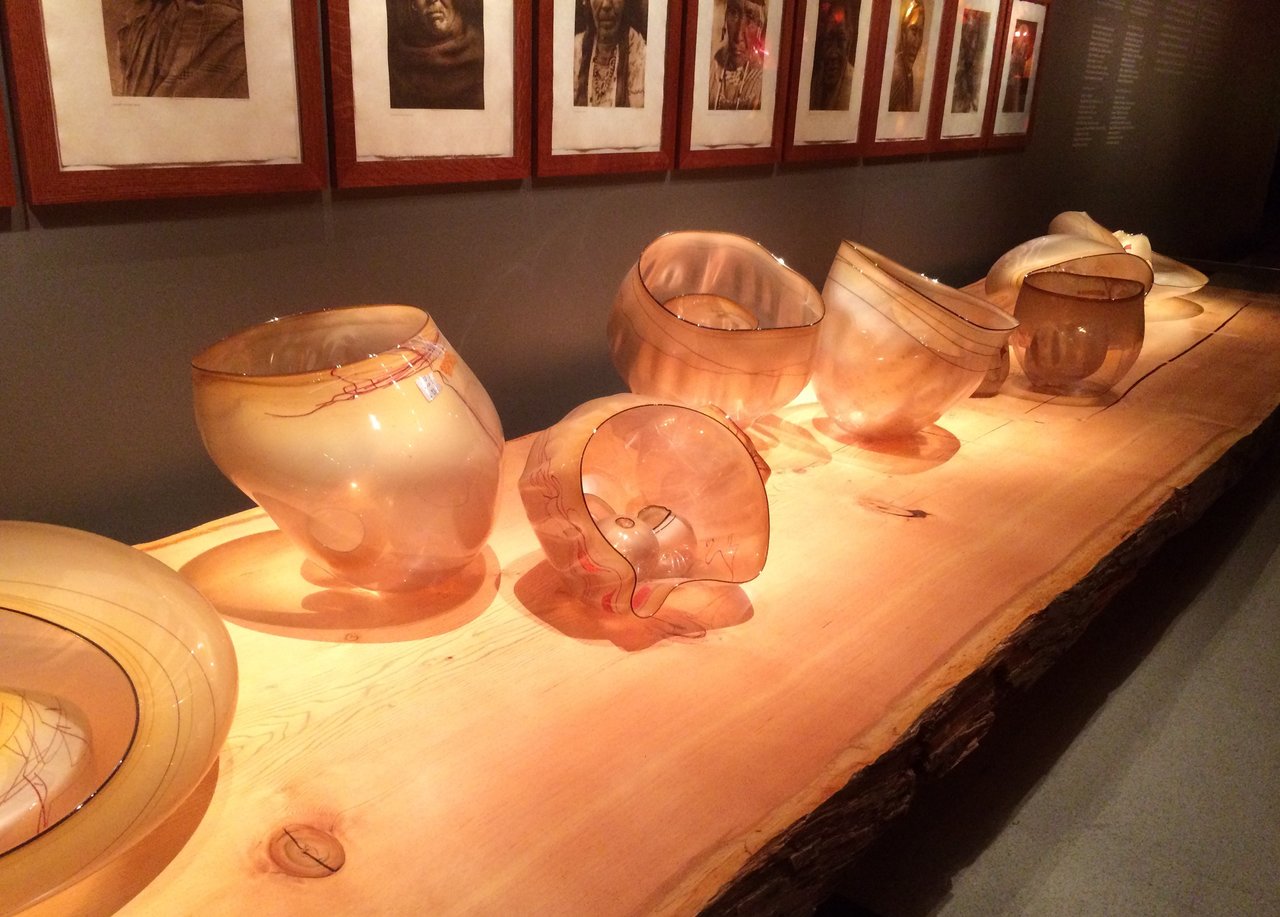
    Known internationally for his fantastical glass blown sculptural installations, American artist Dale Chihuly’s work and I have crossed paths multiple times this year. First, at the Botanical Gardens in Phoenix, Arizona, where from a distance I mistook his blue spiked glass sculptures for alien-like mega-cacti. Then there he was again—this time in the form of a yellow frazzled glass “sun” sitting at the front entrance of the Musée des beaux-arts de Montreal. I’ll be the first to admit that I passed Chihuly off as a designer of appealing sculptural décor, rather than a significantly important artist of our time. Thus, I was slightly surprised when the Royal Ontario Museum announced CHIHULY as their summer 2016 blockbuster exhibition. Had I been too quick to judge? Was there more to Chihuly than colourful glass bent into perplexing shapes. Curiously, I went to see for myself. 

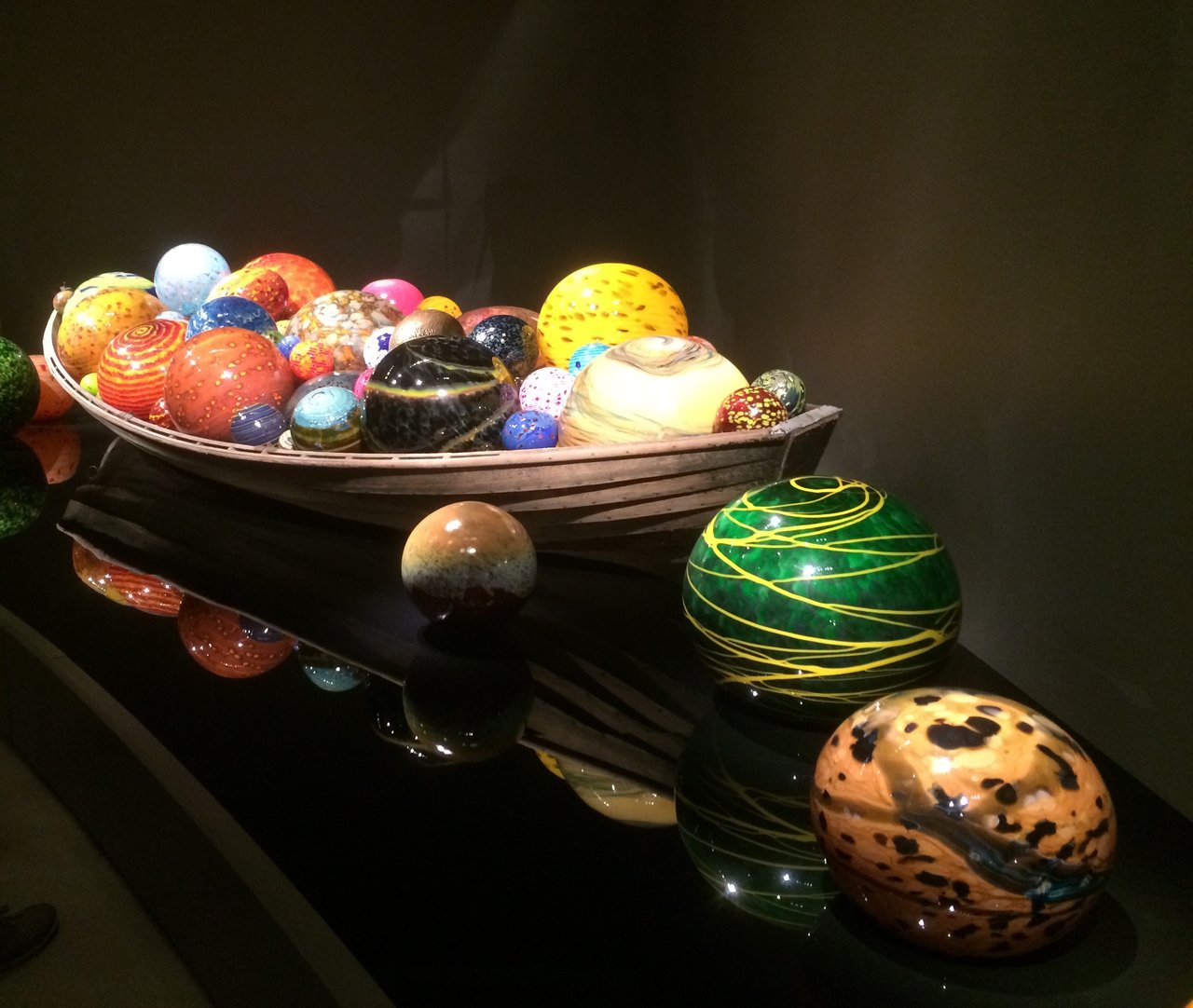
    Dale Chihuly, Float Boat, 2014, blown glass and wooden boat

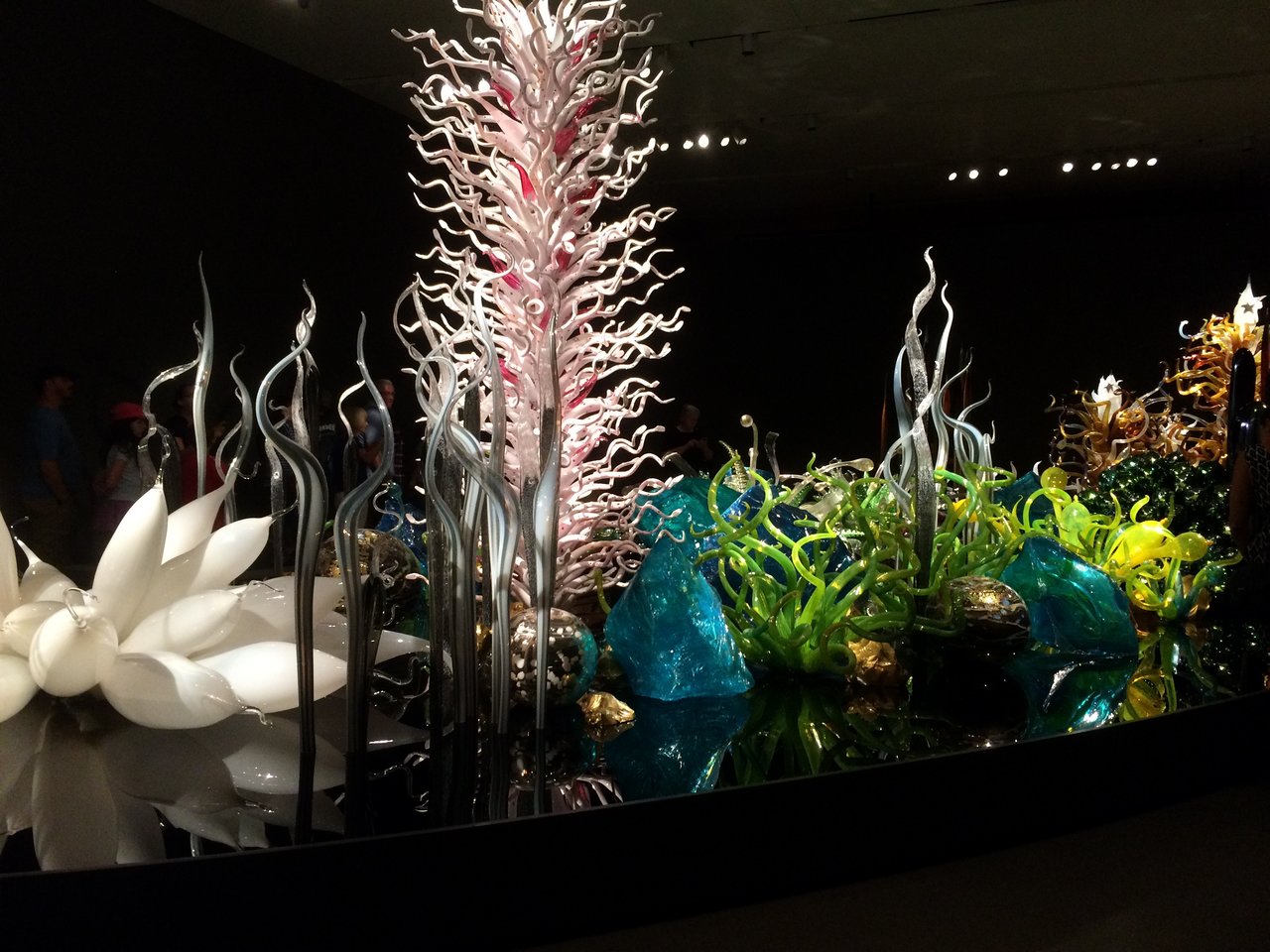
    Going into the show, I knew that Chihuly was an artist who capitalized on the “wow factor”—everything is larger than life, brighter than life, and leaves the viewer questioning how on earth a material as fragile as glass could be molded into so many different forms. In room one, “Float Boat” and “Blue and Purple Boat” stun with beach ball-sized marbles that resemble psychedelic planets. In room two, the surrealist garden installation “Laguna Torcello” features human-scale spiral plant formations extending for meters upon meters across the exhibition space. The museum walls are painted charcoal grey, elevating Chihuly’s vibrant hues of purple, red, yellow, and blue to reach their full aesthetic potential. As you walk further into the show, spiked and spiraled glass overtakes the space to the point that you realize there are no longer any discernable forms left, only Chihuly-isms. Quite suddenly you realize—you have entered into the Chihuly vortex.

    Dale Chihuly, Laguna Torcello, 2012, blown glass and steel

    For me, the Chihuly vortex was a lot of things: impressive, vibrant, tapping into the viewer’s tactile sensibilities (I really did want to touch everything), and full of many, many artworks. But as full as the show was (with both visitors and art) it was also quite empty—devoid of the conceptual aspect of contemporary art that we as viewers so often seek out. As noted by the didactic panels, everything was as it appeared on the surface, and the core meaning of most of the work was simply that Chihuly—being the craftsman that he is—just wanted to make.

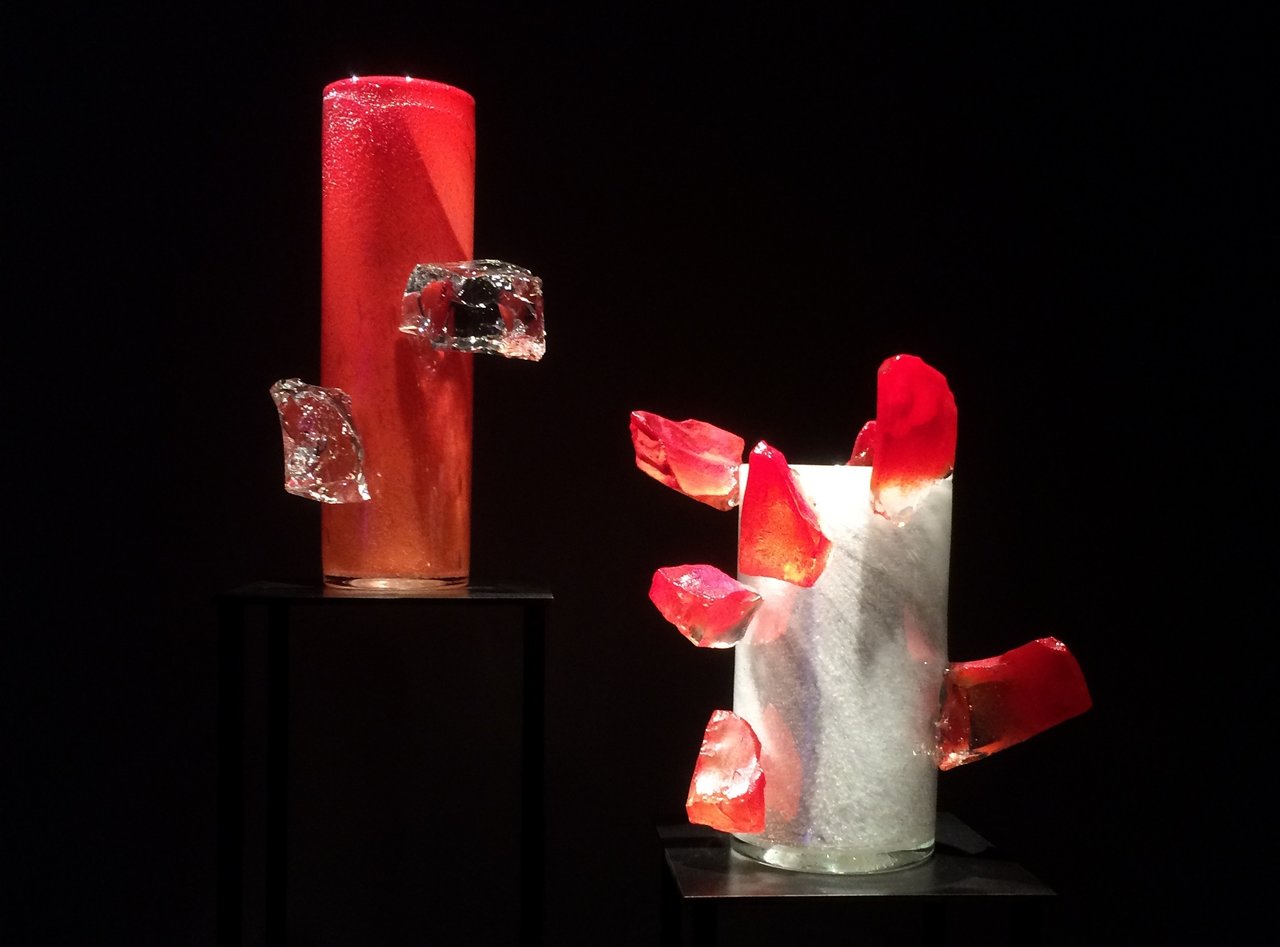
    Dale Chihuly, Jerusalem Cylinders, 1999-2012, blown glass

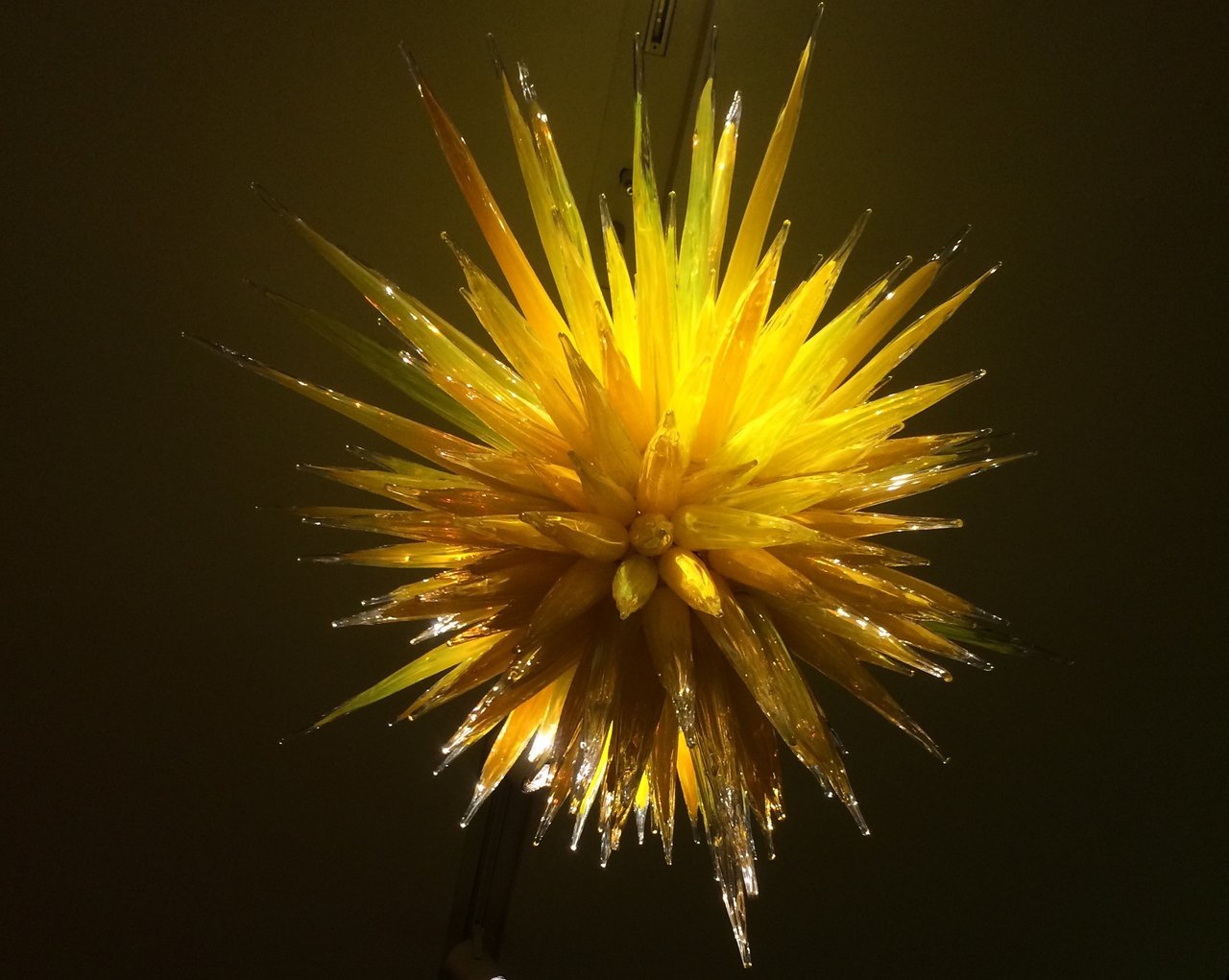
    For example, in his series “Jerusalem Cylinders,” Chihuly fulfilled his desire to create cylindrical shaped glass with crystals sticking out of them, because he simply “[loved] the look of glass crystals.” Another example includes the body of work “Icicle Chandeliers and Towers,” which demonstrates the artist’s fascination with light and glass: “shoot the light through them, then that’s going to be something to look at,” a quote on the wall elaborates. Sure, Chihuly’s glass sculptures do look quite nice in all of their extravagantly whimsical eye-catching glory, but is there more to them than just surface aesthetics?

    Dale Chihuly, Icicle Chandelier (detail), 2015, blown glass and steel

    Evidently, not really. Aside from the few artworks inspired by the artist’s own life (like the pieces in “Northwest Room,” inspired by the Native American communities from Chihuly’s hometown on the Pacific Northwest coast), finding concept in Chihuly’s glassworks is a journey that yields little result because for him, craft and beauty trumps concept.

    Dale Chihuly, Northwest Room (detail), 2012, blown glass

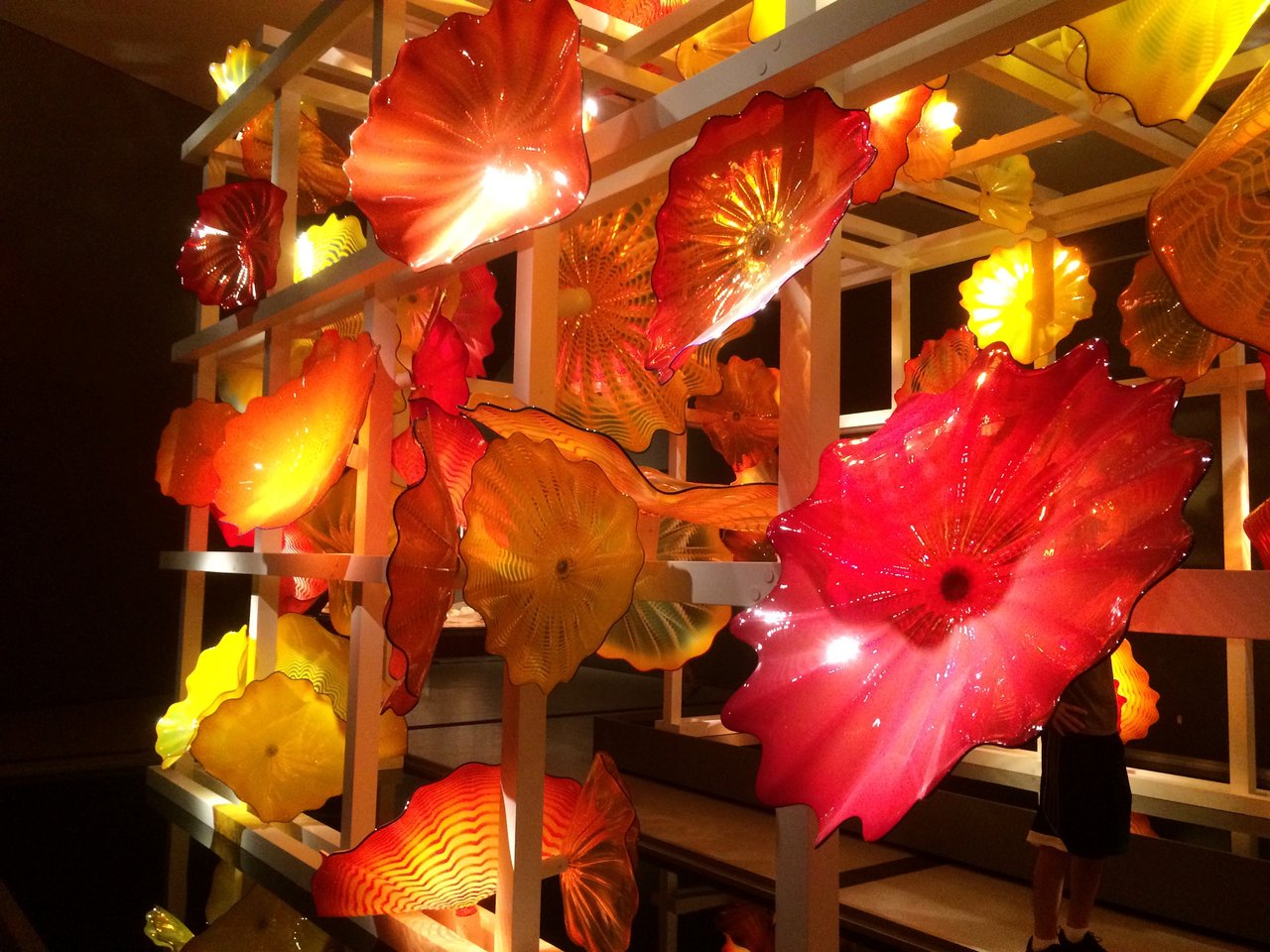
    But is prioritizing aesthetics over concept a bad thing? As I walked by “Persian Trellis” and the numerous visitors staging mini-Instagram photoshoots with the whimsical floral structure, I realized that maybe Chihuly’s works were adored because they were beautiful, and maybe that was okay. If the artist’s primary concern is emulating their own conception of beauty through a body of work, then that is perhaps a concept in itself.

    Dale Chihuly, Persian Trellis (detail), 2016, blown glass

    Beauty is in the eye of the beholder, and while I may find particular enjoyment in finding or learning the meaning or references behind an artwork, perhaps others enjoy art for the visuals—which is after all, the most traditional understanding of the discipline. Thus, CHIHULY is undeniably something in and of itself—Chihuly’s aesthetic world, through and through.

    Text and photo: Emily Lawrence

    *Exhibition information: June 25, 2016 – January 8, 2017, Royal Ontario Museum, 100 Queen’s Park, Toronto. Museum hours: Mon – Sun 10 am – 5:30 pm.

  • Life Bearings / Georgia Scherman Projects

    My recent visit to Georgia Scherman Projects left me feeling that I had bore witness to the most fragile edges and dustiest corners of the heart of Woman. The warm afternoon sunlight that streamed into the pristine white space was sublime. The rhythmic I Love You’s of Vessna Perunovich’s video installation “Finding Love” pulsated with passion. And the contrasting red elements that trickled throughout in the form of thread, line drawings, and dipped paper edges, pumped a vigour into the space that is essential in both life and art.

    Life Bearings, curated by Magda Gonzalez-Mora, brings together the works of five artists alike in their womanhood, dissimilar in their places of origin. Each offers a conceptual, autobiographical narrative that confronts the realities of love and looks toward their modification by means of endurance, patience, and sacrifice. Collectively, these emotional narratives suggest that a woman’s call to bear life is universal.

    Elsa Mora, Core #1 and Core #2, 2016, digital print, string, canvas, 60″ x 40″ each. Photo: Vanessa Zeoli

    Two works in a series stand apart in the otherwise colourless exhibition. Elsa Mora’s “Core #1” and “Core #2” are composed of a digital print of a pig’s heart on canvas. The Cuban born artist cites sacrifices she witnessed in childhood such as the slaughtering of swine and the imprisonment of her father. An urgency to survive is discernible in these works, as is a longing for presence. Over the top of each photograph is a Cuban coat of arms, one of which is rendered in a meticulous etching, the other with tangled thread and far less precision.

    Elsa Mora, Core #1, 2016, digital print, string, canvas, 60″ x 40″. Photo: Vanessa Zeoli

    Mora bears even more in her “Weightless” series. The multi-media works incorporate self-portraits taken during a challenging period in the artist’s life when she felt compelled to turn inward and confront the human mind. Heaviness and lightness are at play in these pictures. While “Weightless #3” uses stones to convey life’s burdens, “Weightless #5” takes flight with a translucent paper moth wing. Mora’s work certainly has a charming aesthetic but at its essence is tender, honest, and capable of inspiring self-awareness.

    Elsa Mora, Weightless #5 (left) and #3 (right) 2016, mixed media (photos, cotton thread, paper), 20″ x 20″ framed each. Photo: Vanessa Zeoli

    “Finding Love”, a video by Vessna Perunovich is included in the exhibition as well as “Moments of Consequence”, an ongoing project consisting of a series of figurative red ink drawings. Each work captures a life-defining moment that provides insight into the human condition. While some depict interpersonal relationships, many display a solitary figure in relationship with the environment and self. There is universality in this variety of emotion as there is vitality in it’s rendering.

    Vessna Perunovich, Moments of Consequence, 2010-ongoing, watercolour paper, ink, 16″ x 12″ each. Photo: Vanessa Zeoli

    Installation view with Vessna Perunovich’s work. Photo: Vanessa Zeoli

    Anila Rubiku uses chain imagery to explore the pleasures and pains of love relationships. Having the capacity to lift and protect, chains can also be used to control and punish. In her “Consequences of Love” series, silkscreen impressions illustrate heaps of chains accompanied by American blues lyrics. “Set Me Free,” “I Can Hardly Speak,” “Why Do Fools Fall In Love” convey the heavy realities of some love affairs, alluding to themes around domestic violence. In contrast, “He Ain’t Heavy, He’s My Lover” is a testament to the lightness of some other kinds of love. What appears to be a weighty chain is in fact a plastic replica and measures less than a tenth of an ounce.

    Anila Rubiku, 250 grams of love; 8,82 ounces of love series: He Ain’t Heavy, He’s My Lover, 2016, plastic, paint, 39.5″ x 10.25″ x 6.75″. Courtesy of Georgia Scherman Projects

    Drawing on her experiences living in the West Coast, Carly Butler’s work looks at themes of physical and psychological survival. “Certain mistakes are of frequent occurrence” is a truly striking work of resin that takes the form of an anchor and suspends in mid air. When met by the suns rays from the overhead skylight, it appears illusory. A sense of longing is established for something or someone to swoop down, grab hold of us, and assume the weight that often feels too heavy to bear.

    Carly Butler, Certain mistakes are of frequent occurrence, 2016, resin, edition of 3, 48″ x 22″, detail.Courtesy of Georgia Scherman Projects

    “Hourglass” and “Sphered” are two contrasting sculptures by Hyang Cho. Each is constructed from glass but while one work expands the material to establish lightness, the other compresses it to establish weight. Together they represent a dichotomy that I found runs throughout the exhibition both in practice and theme. It would seem that strength and weakness, heaviness and lightness, and absence and presence are dualities that are part of most every woman’s narrative despite place of origin, experiences past, or realities present. As long as the heart continues to beat, there is opportunity to modify the future.

    Hyang Cho, Hourglass, 2013, glass, 6.6″ x 3.5″ (left), Sphered, 2016, found glass jars, 6.5″ x 6.5″ right). Courtesy of Georgia Scherman Projects

    Vanessa Zeoli

    *Exhibition information: Life Bearings by Carly Butler, Hyang Cho, Elsa Mora, Vessna Perunovich and Anila Rubiku, September 9 — October 8, 2016, Georgia Scherman Projects, 133 Tecumseth Street, Toronto. Gallery hours: Gallery hours: Wed – Fri 10am – 5 pm, Sat 11 am-5 pm.

  • Like an old friend at Gallery 44

    Like an old friend at Gallery 44 places a strong emphasis on the concept of image making, and the ways in which humans and images – and the traces that they leave – can serve to define a place. This exciting exhibition, which contains works by the Toronto-based collective composed of Parastoo Anoushahpour, Faraz Anoushahpour and Ryan Ferko, along with independent artists Gabrielle L’Hirondelle Hill and Nicole Kelly Westman, seeks to reveal the intimate relationships of power that exist between people and the places that they inhabit. 

    The title of the exhibition is taken from one of Westman’s works, which is composed of a large veneer case covering a lightbox that reads, “it smells like sage in here like an old friend.” As explained by Leila Timmins in her essay on the show, this sentence is taken from a misquoted conversation between friends, which as been then further misconstrued by translation. This separation or slippage between language and image characterizes Westman’s work and serves to underline the persistence of human presence, even when humans are visually absent from the work.

    Nicole Kelly Westman, only, she would know, 2016, lightbox, Fujitran

    Even the title of her video installation “Rose, Dear” is a play on the hamlet of Rosedeer (known today as Wayne), which exists now as a ghost town in Alberta’s badlands. While it is now deserted, Rosedeer once served as a haven for coalmine workers and their families before the collapse of this overtly masculine industry. However, by including only women in this video installation, Westman emphasizes instead the women who lived and died in the service of these male workers. These women lumber slowly through the landscape, echoing the ghosts of those who once inhabited this now abandoned hamlet. These eerie images are also combined with an intriguing projection technique, in which folds and bends serve to create a series of planes that imply a sense of tension between the past and the present. While this renders the video somewhat disorienting, it is nonetheless very sensual and this serves yet again to emphasize the absence of people in places like Rosedeer.

    Nicole Kelly Westman, still from Rose, Dear, 2016, HD video projection, 16 min

    In fact, this sense of tension exists almost everywhere within the exhibition. In “The grass must have been mown” by the Toronto-based collective of Parastoo Anoushahpour, Faraz Anoushahpour and Ryan Ferko, the artists attempt to represent, through a series of video installations, the tension that exists between a customs office and the Mohawk First Nations community on Cornwall Island, Ontario. Using archival footage, the collective shows the ways in which the government has suppressed the mobility rights of the Mohawk while also emphasizing the redundancy of forced surveillance and registration. Through an interesting combination of text, video and re-recording, these three artists show quite vividly how the intimacy between people and places can be distorted and manipulated by power structures.

    Faraz Anoushahpour, Parastoo Anoushahpour, Ryan Ferko, The grass must have been mown, 2016.

    Finally, the works of Gabrielle L’Hirondelle Hill serve to underline the persistence of human presence in the world, and the ways in which our presence alone can imply a sense of ownership or propriety. Through a series of mixed media and photographic works, Hill masterfully shows how humans are always present, and the ways in which even the most caring gestures can affect a place and its identity. In “Braided Grass,” the artist photographed a small piece of land on which she had gently woven braids into the grass. This act implies a sense of direct intimacy between the artist and the land, while also emphasizing the lack of any real human presence in the photograph. This tension between absence and presence also exists in her series titled “Wastelands,” where objects meant for humans are combined with industrial materials. Through these works, Hill seems to be emphasizing the fact that humans will forever be present, and that our traces will continue to be left on the places that we once gathered in.

    Gabrielle L’Hirondelle Hill, Braided Grass, 2012, archival inkjet print, 36″ x 24″

    Gabrielle L’Hirondelle Hill, Wastelands, 2012, mixed media

    Overall this exhibition is one that should not be missed by anyone who is interested in contemporary video installation, and in the ways in which video manipulation can make us question how we interact with our surroundings. Like an old friend is an interesting combination of video, photography and mixed media installation that makes us question our own presence and whether or not it is fleeting or eternal.

    Jordan Fee

    *Exhibition information: September 9 – October 15, 2016, Gallery 44, 401 Richmond Street West # 120, Toronto. Gallery hours: Tue – Sat 11 am – 5 pm.


  • Joseph Tisiga / IBC: Death Prophecy Denied at Diaz Contemporary

    Joseph Tisiga, Improbable Praxis, 2016, watercolour, acrylic, and oil on paper, 51.75” x 51.75”. Photo: Alice Pelot

    Joseph Tisiga’s dark mythologies are narrated through watercolour in correspondence with formats of early colonial documentation in his second solo exhibition at Diaz Contemporary. His chosen scale and pallet were employed 150 years ago to document the Native people across Canada, and the land that was to be settled. By appropriating this style and format Tisiga is able to subvert the context of this first encounter between home and visitor by inserting his contemporary agenda into the historical (and continued) visual fetishization of First Nations culture. As an artist born in Edmonton, Tisiga was raised in a Western tradition, and after becoming connected with his ancestry as Kaska Dene Nation informed his investigation into the complexity of cultural and personal identity.

    Joseph Tisiga, Ritualized Comfort without Historical Authority, 2016, watercolour on paper, 22” x 30”. Photo: Alice Pelot

    Kent Monkman employs a similar technique of cultural subversion. In the tradition of large-scale history paintings of seascape encounters between Pioneer and Native, hung in National collections, Monkman reimagines/rewrites the shock of Native flamboyancy or the Pioneering boredom. Or conversely, Brian Jungen uses Western materials such as Nike Airs or plastic lawn chairs to produce traditional symbols. Tisiga’s painted scenes are all narrative, storytelling at the height of action, containing traditional threads and allegories as well as personal symbols and subtle Western content.

    Joseph Tisiga, Obscured Provenance, 2016, watercolour, acrylic, and oil on paper, 51.75” x 51.75”. Photo: Alice Pelot

    The bleak landscape scenes – informed in part by Tisiga’s Yukon workspace and Samuel Beckett’s writing – include sections of unnatural gated cut grass; surrealist dreams of Western medicine; allegories of man against man-made nature; Christian symbolism; Classical mythology; sexual scenes; and a man wearing a top hat who seems to represent either an archetype of indigenous man in the modern world or even the artist himself.

    Joseph Tisiga, Liberties on the Verge of Permissiveness, 2016, watercolour on paper, 22” x 30”. Courtesy of Diaz Contemporary

    In one particularly confounding painting titled “Conflicting Reflections of Purpose” (2016), a hatless naked man lays in bed outdoors holding high a white sheet of surrender as birds peck at his open stomach and an animal chews off his foot. This figure’s grave is dug in the foreground while behind him one man in scrubs holds a scalpel, one man takes notes and another looms ominously holding a cup. Behind these figures, a man holds a light bulb atop a cross while another struggles with lumber. The mixture of symbols and sources is inscrutable, it is clear which figures and objects are symbols or part of the narrative but with no discernable direction or guidance.

    Joseph Tisiga, Conflicting Recollections of Purpose, 2016, watercolour on paper, 22” x 30”. Courtesy of Diaz Contemporary

    Despite the impenetrability, the complexity of the scenes and the layers of the landscape are captivating. In addition to the watercolours, an installation of Tisiga’s works “The Game is Not a Game” (2016) and three assemblages titles “An Exercise in Resilience 1” (2016) cover an entire wall. There is a clear message “The Game Can Not Be Won” on 26  original blue prints for the construction of residential schools. Even as they are hung around three plywood pieces covered in astro turf and pieces of cut off fur resembling a mini-putt course, it is not clear what the game is and how it might be won.

    Installation view with the The Game Can Not Be Won, 2016 (26 posters, ink on blueprints, 40” x 26.5” each) and An Exercise in Resilience 1, 2016 (Animal furs, astro turf, on plywood, 60” x 60” each). Photo: Alice Pelot

    Nonetheless as a young artist Joseph Tisiga has found an incredible measure of success with work included in Mass MoCA’s exhibition Oh, Canada as well as works in the National Gallery Collection, at the Montreal Museum of Fine Art and in the RBC Collection.

    Alice Pelot

    *Exhibition information: September 8 – October 8, 2016, Diaz Contemporary, 100 Niagara Street, Toronto. Gallery hours: Tue – Sat, 11 – 6 pm.

  • Nuit Blanche 2016 / Artoronto.ca picks

    PHIL ANDERSON, publisher/writer/photographer

    Sparks / Virginia Melynk (Buffalo, USA)
    Aga Khan Park
    77 Wynford Drive

    Sparks Plan Rendering, 2016

    Ocean, 2016 / Philip Beesley (Toronto)
    Toronto City Hall (Rotunda)
    100 Queen Street West

    Growing On You / Andreas Buchwaldt
    Whippersnapper Gallery
    594b Dundas Street West (near the North-East Corner of Dundas Street West and Augusta Avenue.) 

    Growing on You (Detail), 2016. Photo: Andreas Buchwaldt

    EMESE KRUNAK-HAJAGOS, publisher/writer

    Ocean, 2016 / Philip Beesley (Toronto)
    Toronto City Hall (Rotunda)
    100 Queen Street West

    Artist Rendering of Ocean © PBAI, 2016

    The Merging, 2016 / Nicola Verlato (Los Angeles, USA)
    OCAD University
    100 McCaul Street

    The Merging (rendering), 2016

    The Body Behind the Body, 2016 / Angelo Musco (New York, USA)
    Design Exchange Exhibition Hall
    234 Bay Street (Third Floor)

    STEVE ROCKWELL, publisher/writer

    Pneuma, 2016 / Floria Sigismondi (Los Angeles, USA)
    Nathan Phillips Square
    100 Queen Street West 

    Human Heart, 2016

    White Line, 2015 / Jason Peters (New York, USA)
    The Drake One Fifty
    150 York Street (Patio)

    White Line, 2015

    The Modest Eyes, 2016 / MULTIPLEX
    OCAD University
    100 McCaul Street

    ANDRIY  BILENKYY, writer/photographer

    CharBagh / Faisal Anwar (Oakville)
    Aga Khan Park
    77 Wynford Drive

    CharBagh (rendering), 2016

    Sensational Words / Various Artists
    Aga Khan Park
    77 Wynford Drive

    JORDAN FEE, writer/photographer

    Death of the Sun, 2016 / Director X (Toronto)
    Nathan Phillips Square
    100 Queen Street West

    Inuit Knowledge and Climate Change, 2010 / Zacharias Kunuk (Igloolik, Nunavut)
    Harbour Square Park East
    25 Queens Quay West

    Still from Inuit Knowledge and Climate Change, 2010. Photo: Courtesy of Isuma TV

    Melting / Evan Steingarten and Jason Van Horne (Toronto)
    The Bata Shoe Museum
    327 Bloor Street West (Beside the Bata Shoe Museum entrance on Bloor Street, just west of St. George Street)

    LAURA HUTCHINGAME, writer/photographer

    Facing the Sky / Curated by Louise Déry
    Bay Street to Harbourfront Centre

    Electrosmog Toronto, 2016/ The Brigantine Room / 235 Queens Quay West (Accessed via main entrance to Harbourfront Centre’s Main Building.)

    Beauty vs. the World / Robert Mongomery (London, UK)
    Cloud Gardens
    14 Temperance Street

    MEGAN KEE, writer/photographer

    Ocean, 2016 / Philip Beesley (Toronto)
    Toronto City Hall (Rotunda)
    100 Queen Street West

    Death of the Sun, 2016 / Director X (Toronto)
    Nathan Phillips Square
    100 Queen Street West

    Death of the Sun, Artist Rendering by Smith, 2016

    Pneuma, 2016 / Floria Sigismondi (Los Angeles, USA)
    Nathan Phillips Square
    100 Queen Street West

    JULIE MCNEILL, writer

    Vertigo Sea, 2015 / John Akomfrah (London, England)
    The Design Exchange Trading Floor
    234 Bay Street

    Vertigo Sea, 2015

    Melting / Evan Steingarten and Jason Van Horne (Toronto)
    The Bata Shoe Museum
    327 Bloor Street West (Beside the Bata Shoe Museum entrance on Bloor Street, just west of St. George Street)

    Residential School Memorial
    St. Joseph’s College School
    74 Wellesley Street West

    Cymatic Theremin / Varipix Art Collective, Micha Dahan (Toronto)
    401 Richmond Street West

    LIZA MIRONOVA, writer/photographer

    Utopia’s Ghost (Fallen Flags) / Arturo Duclos (Santiago, Chile)
    John Street & Stephanie Street

    Fallen Flags (rendering), 2015

    Everyone Thinks the Same Thoughts / KURT (New York, Los Angeles, USA)
    Commerce Court
    199 Bay Street

    The Museum / Novka Ćosović (Toronto)
    Artscape Youngplace
    180 Shaw Street (Studio 108)

    ALICE PELOT, writer/photographer

    Silent Defication, 2013 / Shary Boyle (Toronto)
    Harbourfront Centre Theatre
    235 Queens Quay West

    Stills from Silent Dedication. Film and text by Shary Boyle, starring Beth Hutchison, 2013. Film still photography by John Jones, 2013 c John Jones, 2013. Photo: John Jones

    Transfiguration, 2007 / Bill Viola (Los Angeles, USA)
    Campbell House Museum
    160 Queen Street West

    New Project, performance, 2016 / Rebecca Belmore
    AGO
    317 Dundas Street West (Walker Court)

    SIMON TERMINE

    Transfiguration, 2007 / Bill Viola (Los Angeles, USA)
    Campbell House Museum
    160 Queen Street West

    Visitation, 2008. Photo: Kira Perov

    Ocean, 2016 / Philip Beesley (Toronto)
    Toronto City Hall (Rotunda)
    100 Queen Street West

    Utopia’s Ghost (Fallen Flags) / Arturo Duclos (Santiago, Chile)
    John Street & Stephanie Street

    VANESSA ZEOLI

    Built for Art: A Secret Garden / Urbanspace Property Group
    401 Richmond Street West (Accessible entrances off Richmond Street and at Richmond Street/Spadina Avenue.),

    Eunoia II, 2014 / Lisa Park (New York, USA)
    First Canadian Place
    100 King Street West (Enter the lobby from Bay Street)

    Eunoia, 2015

    Navigating Wellness / Workman Arts and New Adventures in Sound Art
    Centre for Addiction and Mental Health
    1001 Queen Street West (outdoors on the grounds of CAMH behind the Workman Arts “Pop Up” Gallery at Queen Street West at Gordon Bell Road.),

  • Kelly Cade & Candida Girling at loop

    For centuries, artists have been recording, altering, and reconfiguring natural phenomena for aesthetic and philosophical means. From the mapping impulses of 17th century Flemish masters, to Alberto Burri’s as-yet-unfinished Grande Cretto, the visual arts have dedicated centuries of artistic expression to the various landscapes and forms that surround us. Whole stylistic epochs and geographical hubs are historically linked to subject matter constructed from naturally occurring things. loop Gallery’s latest dual exhibition finds Candida Girling and Kelly Cade looking outward to the bucolic sprawls, serpentine streams, and other environmental matter for their disparate artistic explorations.

    Kelly Cade, Moss Dream, photographic print

    Kelly Cade’s conceptual fall ● stream ●Ÿ wake finds the artist fusing psychological ponderings with artistic impulses. Cade’s installation visualizes  “water dreams,” which are unrestrained, constantly shifting streams with no formal beginning or end point, and without any clearly defined meaning or purpose. Furthermore, the artist examines how images can be indicative of subliminal impressions, fashioning her work around psychoanalytic underpinnings. The viewer is called to stare at these painterly fragments and contemplate the randomness of thoughts and dreams, and how our cerebral impulses slide down a proverbial stream that continually renews itself.

    Installation view of Kelly Cade, fall ● stream ● wake, photographic print installation

    Candida Girling’s Shifting Landscapes explores the notion of the contemporary landscape in a world so thoroughly altered by human intervention. Using a kaleidoscopic multi-media approach that includes ink drawings, wood etching and laser cut sculpture; Girling vividly recreates the modification of natural settings through technological means. Here, the artist recalls the entropic work of Robert Smithson, who similarly focused his efforts on mankind’s irreversible mediation on our environmental surroundings. While Smithson’s work was monumental and site-specific, Girling tones down the ambitions of her land art forebear in favour of something quainter and more institutionally appropriate with these peculiar objects.

    Candida Girling, Seascape 2, ink drawing on canvas (left) and installation view with Metal Sculptures (right)

    As attention to environmental concerns has become engrained in the discourse of politics and activism, loop Gallery presents two separate artistic explorations of similar subject matter. From Girling’s outward examination of fragile physical appearances, to Cade’s inward probing of the uncanny relationship between the mind and streams, these exhibitions manifest vivid considerations about the world that surrounds us.

    David Saric

    Exhibition information: September 10 – October 2, 2016, loop Gallery, 1273 Dundas Street West, Toronto. Gallery hours: Wed – Thur 12 – 5, Fri -Sat 12 – 6, Sun 1 – 4 pm.


  • Blake Ward: Fragments at the Canadian Sculpture Centre

    The Tragic Beauty

    Could beautiful things represent tragedy? Laocoön, an ancient sculpture group excavated during Renaissance, displays suffering figures entwined by serpents. Paradoxically, scholars constantly refer to its beauty.

    Blake Ward’s sculpture show Fragments represents the paradox of beauty and tragedy. Ward sculpted this collection to promote the devastating effects of landmines he experienced in Vietnam. Each piece is named after the various landmines as a way to raise awareness and address complications in war-torn nations today.

    Upon entering the Canadian Sculpture Centre seven bronze sculptures reveal their stories to the audience. One of them titled “GEMSS M128” displays a female curvilinear nude torso. Her beautiful muscular abs, her round bosoms and her protruding collarbones animate her like a once beautiful human being. Contrary to the ancient sculptures, Ward had intentionally created sculptures without arms, legs, or a head; other parts of the bodies are barely intact.

    Blake Ward, GEMSS M128, 61 x 25 x 25 cm, 1999, bronze. Courtesy of the artist

    Works like “Claymore M128” presents Ward’s intents to sculpt bodies of victims. Destroyed and battered, the woman’s torso lacks her right breast, a symbol of her womanhood. The intentional marks and scratches on her body reminds us the everlasting scars from war. Nothing remains of this woman, whose family and friends probably have been sacrificed like her. 

    Blake Ward, Claymore M18A1, 2004, bronze, 34 x 20 x 21 cm. Courtesy of the artist

    Ward also sculpted a man who stretches his arms and legs as if to fight; nonetheless, all that remains is his limbless body. His beautifully sculpted abs and muscular thigh signals otherwise a perfectly healthy body. The work itself is a paradox; the beautiful torso lives without his limbs.

     Blake Ward, Pineapple Cluster BLU-3 / Dying Man, 2001, bronze, 58 x 26 x 33 cm. Courtesy of the artist.

    The sculptures exhibited in Fragments are more than simple sculptures, they symbolize destruction. Through artistic representation, Ward constructed a sophisticated exhibition promoting critical effects of landmines and other Explosive Remnants of War (ERW). In his sculptures the bodies are still beautiful, even after their tragic mutilation.

    Katerina Bong

    *Exhibition information: September 15 – October 5, 2016, Canadian Sculpture Centre, 500 Church Street. Gallery hours: Tue – Fri: 12 – 6, Sat: 11 – 4 p.m.