Author: artoronto

  • Peter Kingstone: Trying to do Two Things at Once

    Two intense eyes greet me as I step in. The owner of the eyes is in the process of a hunt. The prey? Artists.

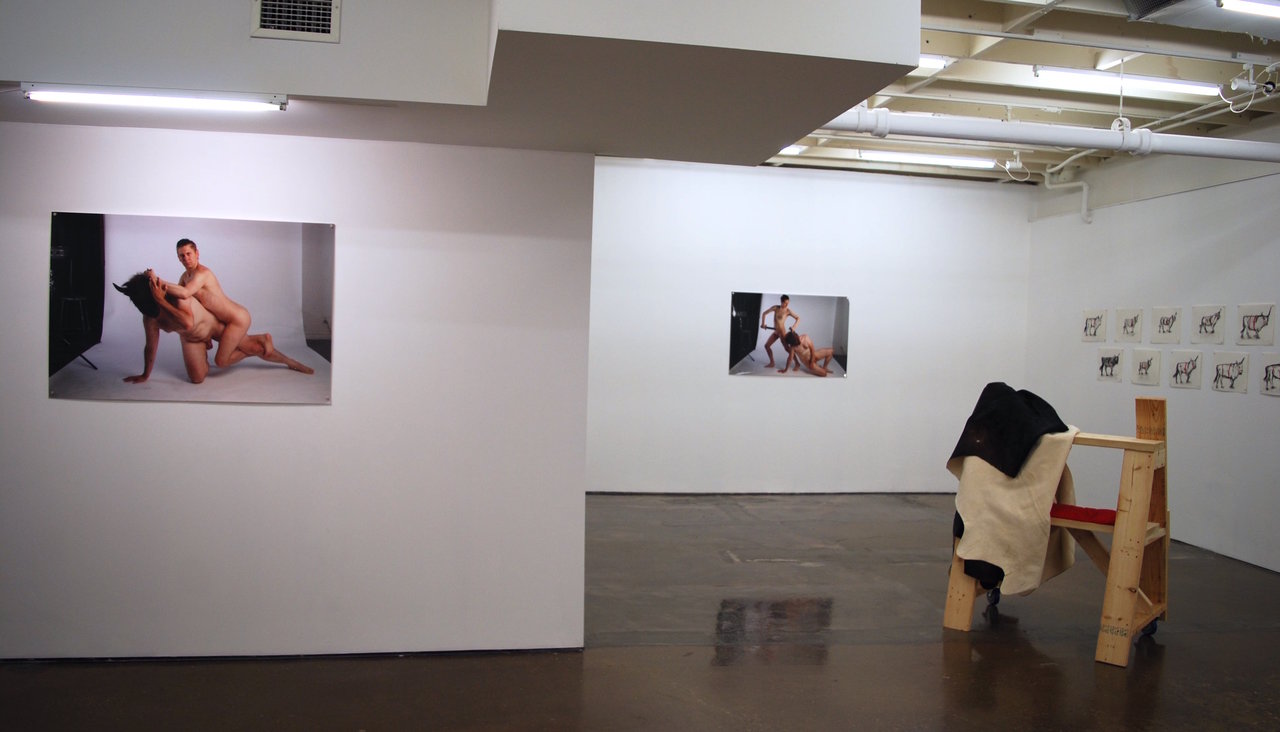
    It’s not that Kingstone reconciles artists’ torn existence, but recognizes and acknowledges it. Trying to do Two Things at Once (Tale of the Minotaur) presents twenty-eight drawings, five photographs, and one sculpture. The three types of works are connected through hybridity. Using the Greek myth of the Minotaur, these works point a light on the difficulties of living as an artist today.

    Not to be eliminated nor nourished, artists are imprisoned by those who demand art, but wish to control it at the same time. We are forced into the mask of a bull, with our naked bodies exposed to the public where vulnerability is not met with compassion, but discomfort.

    Peter Kingstone: Trying to do Two Things at Once (Tale of the Minotaur), 2017, installation view at Pari Nadimi Gallery. Photo: Sunny Kim

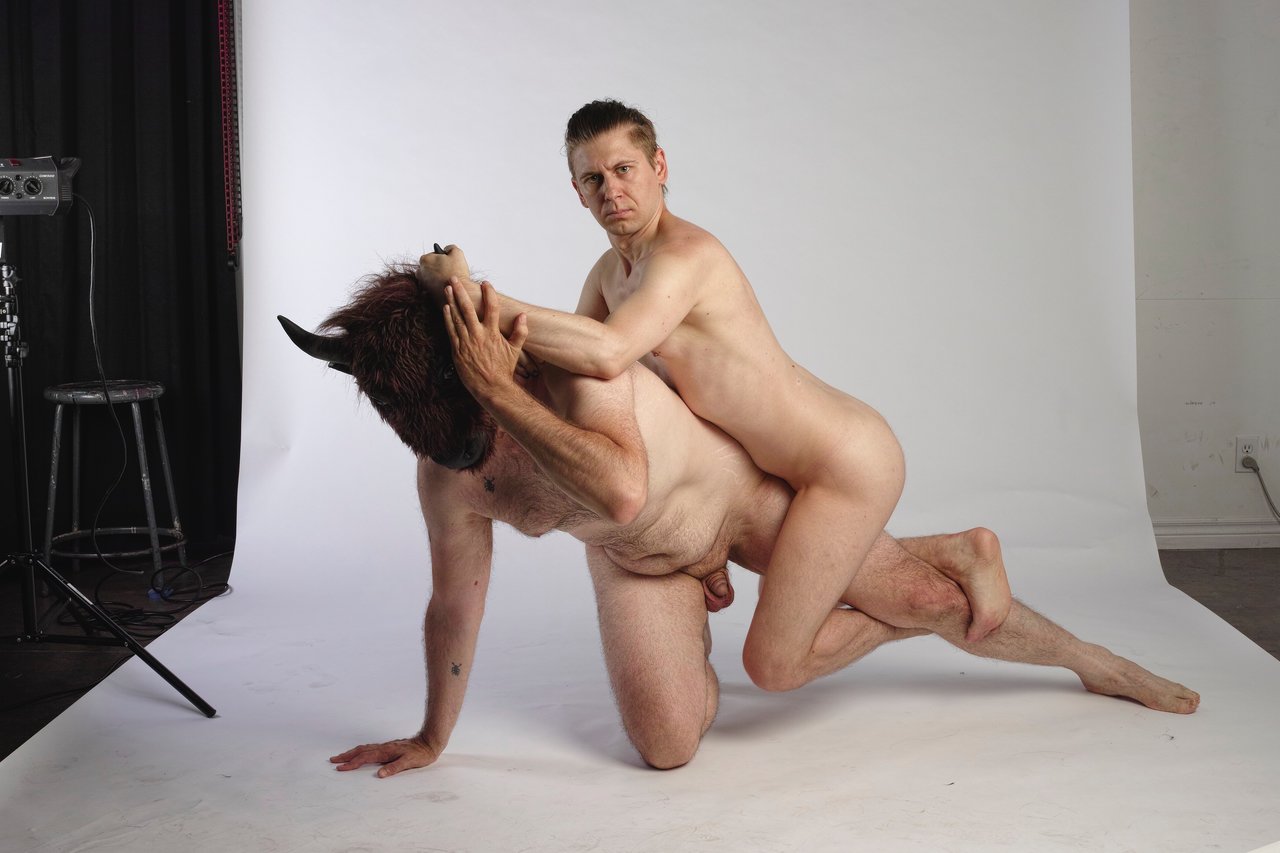
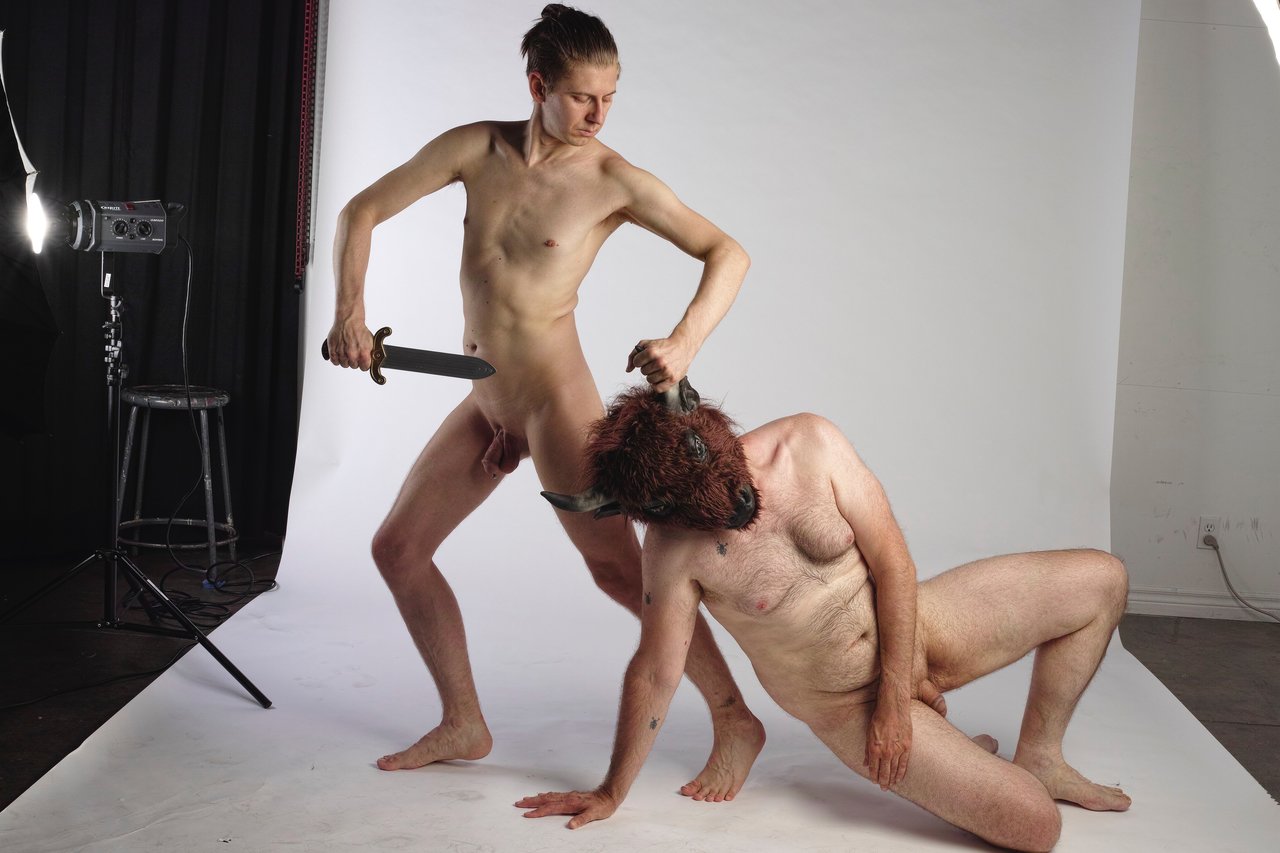
    Five glossy, high-quality photographs hang loose on the walls; in every single one are a human and a Minotaur. The two battle in a staged set, deliberately exposed to show the theatricality and the fakeness. Images are deliberately cropped so that stools, laptops, and lightings are visible, as well as edges of the dirty white backdrop. In every single one, Minotaur is overpowered. Human consistently holds the dominant position, wielding a prop sword at its prey. Body language is an important expression of their dynamic: fully-flexed, fit, and widely-stanced human body against the soft, limp, and aged body of the Minotaur.

    Theseus and the Minotaur I, 2017, C-print, 45 x 30 inches. Courtesy of Pari Nadimi Gallery

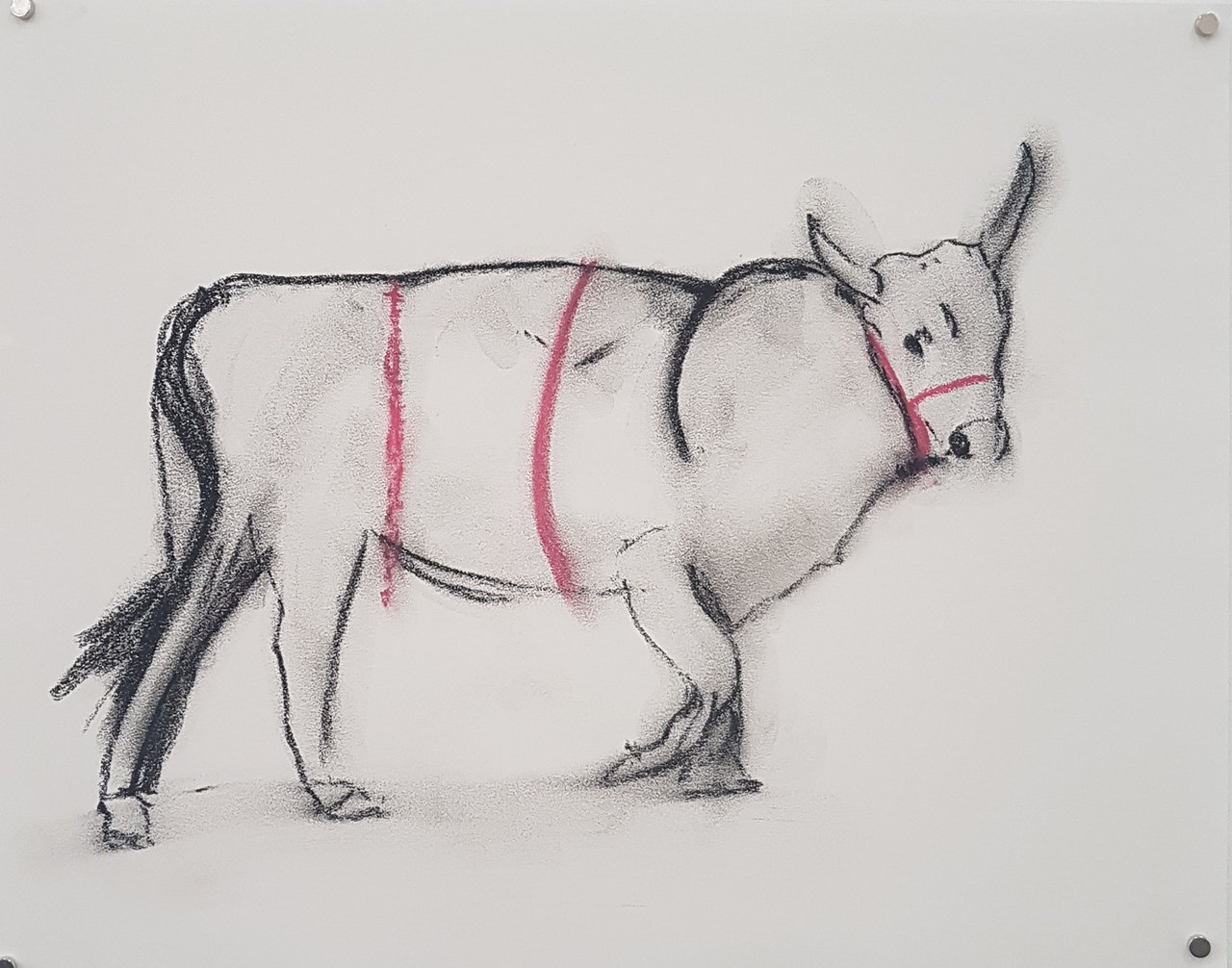
    Cretan Bull (series of 28), 2017, Pencil on Paper, 14 x 11.75 inches. Courtesy of Pari Nadimi Gallery

    Theseus and the Minotaur IV, 2017, C-print, 45 x 30 inches. Courtesy of Pari Nadimi Gallery

    Though not in order, pieces of the exhibition narrate the Tale of the Minotaur (attached to the printed statement). The snow-white bull emerges in the sketches; machine with which Pasiphae copulated with the bull is replicated in the sculpture; and the ultimate demise of the Minotaur is reenacted in the photos.

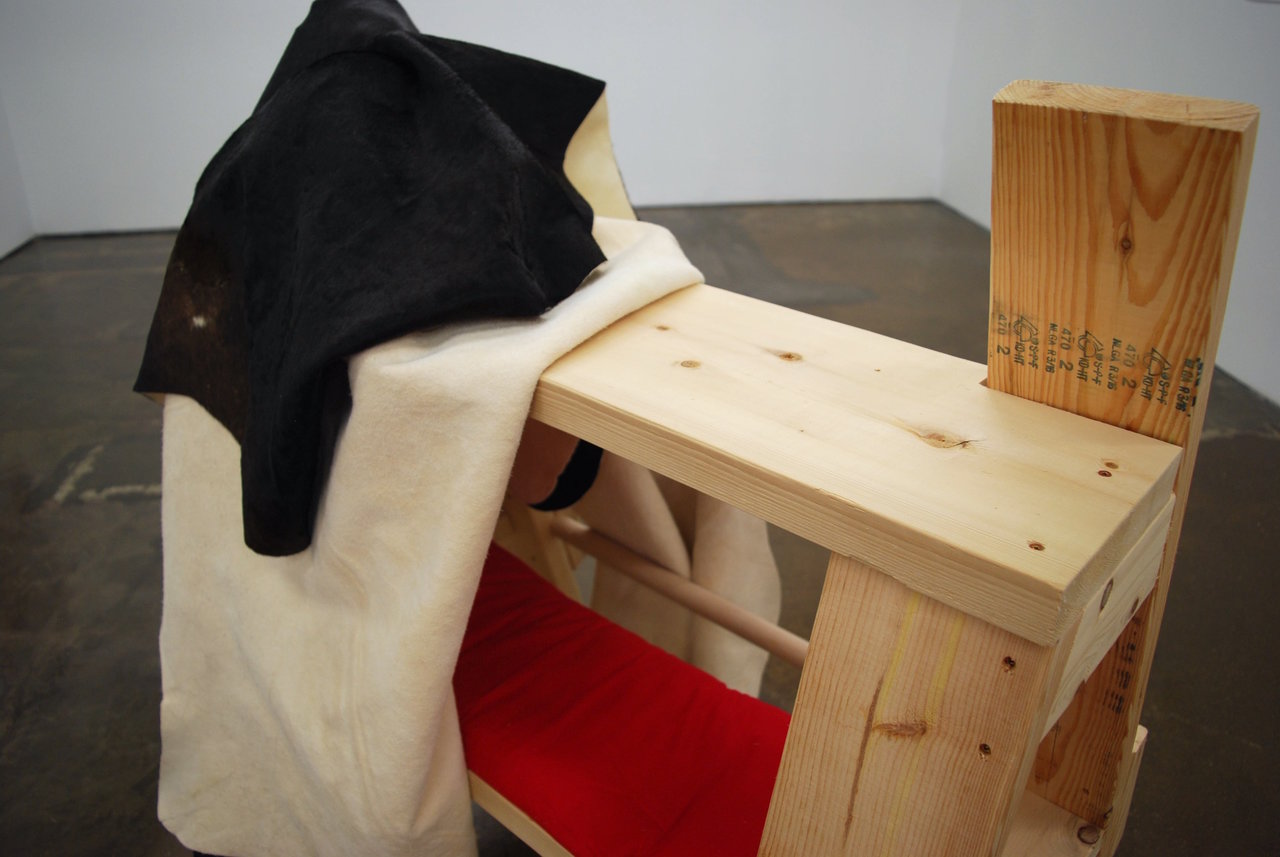
    Pasiphae’s Simple Machine, detail, 2017, Wood, Fabric, and Cowhide, 30 x 32 x 40 inches. Photo: Sunny Kim

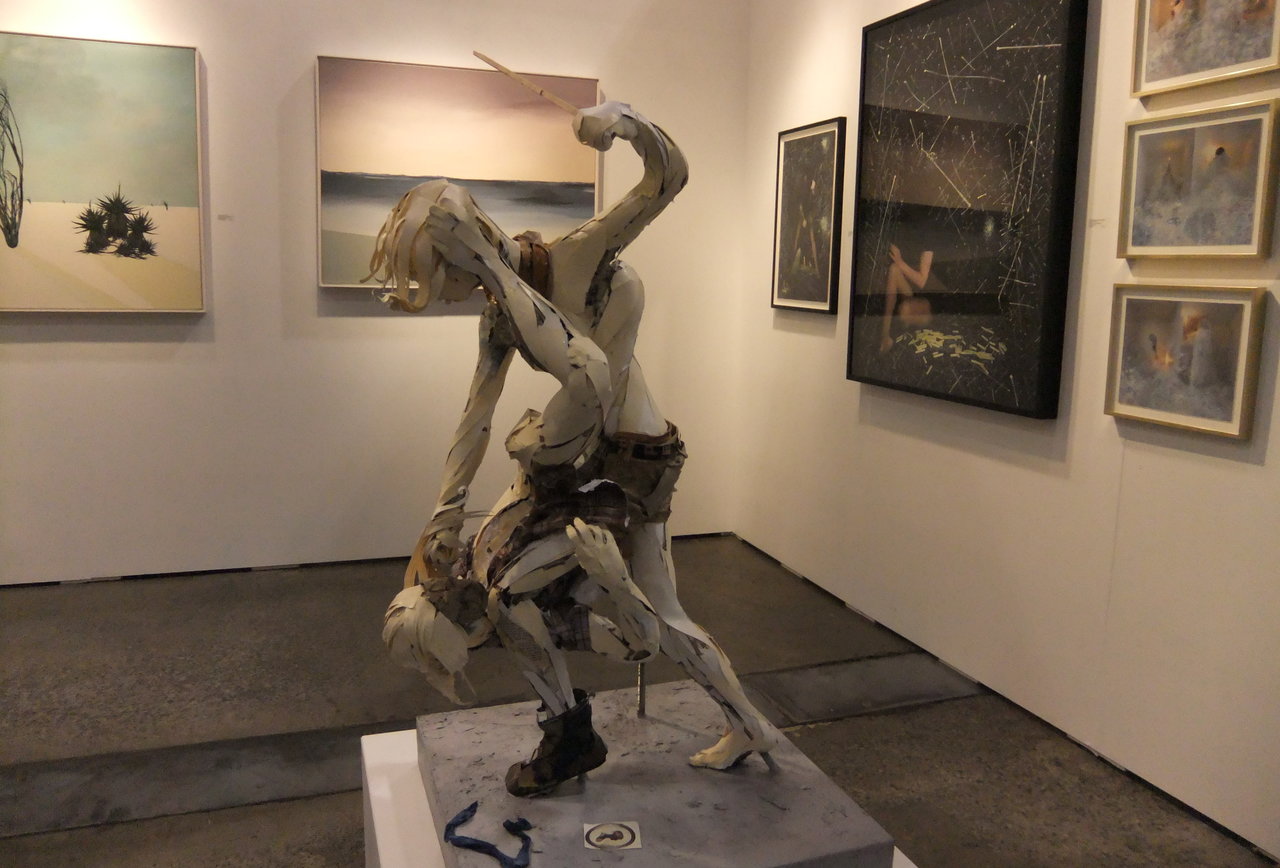
    Pasiphae’s Simple Machine shows hybridity by combining a rough wooden structure with a cowhide. The sculpture exists both as a ‘sex machine’ and the coital aftermath. On one hand one can see where Pasiphae’s knees would have been (hinted at with a red cushion). At the same time, the structure vaguely resembles a quadrupedal being. Half covered with hide, half left naked, not unlike the Minotaur in the photographs.

    “Its suffering becomes trivial to our society’s quest to contain, dominate, and finally terminate it.” Crete and Athens are forced to accept the Minotaur’s existence, since the ferocious monster is too strong and too human-like. They, however, do all they can do to suppress and control its transgression and subversiveness. Trapped in the maze of contemporary sociopolitical climate, artists face everyday the warriors – lack of support, financial difficulty, instability, crushing self-doubt, etc – that attempt and eventually succeed in killing them.

    It is not discouraging, however. It is therapeutic. The always-working, double-jobbing artists are all in the same maze, trying their best to battle their way out. Is there a way out? Who knows.

    Sunny Kim

    *Exhibition information: Peter Kingstone, Trying to do Two Things at Once (Tale of the Minotaur), November 10 – December 22, 2017, Pari Nadimi Gallery, 254 Niagara Street, Toronto. Gallery hours: Wed – Sat, 12 – 5 pm.

  • Joan Kaufman: Surface Tension II at Lonsdale Gallery

    The anthropocene epoch, an unofficial offspring of the current Holocene era, essentially defines a period of time in Earth’s history that emphasizes the significant impact of human beings on the natural world. Modern geologists have coined this term in response to the massive destabilization of environmental phenomena via industrialization, poaching, deforestation, and other entropic interventions caused by mankind. Whether informed by capitalist logic, or a result scientific nescience, Earth has undergone a colossal metamorphosis from a bio-diverse Arcadia to an increasingly bleak concrete jungle. While not as immediate, Joan Kaufman’s latest exhibition at Lonsdale Gallery tackles similar environmental concerns, albeit in a more meditative and visually sumptuous manner.

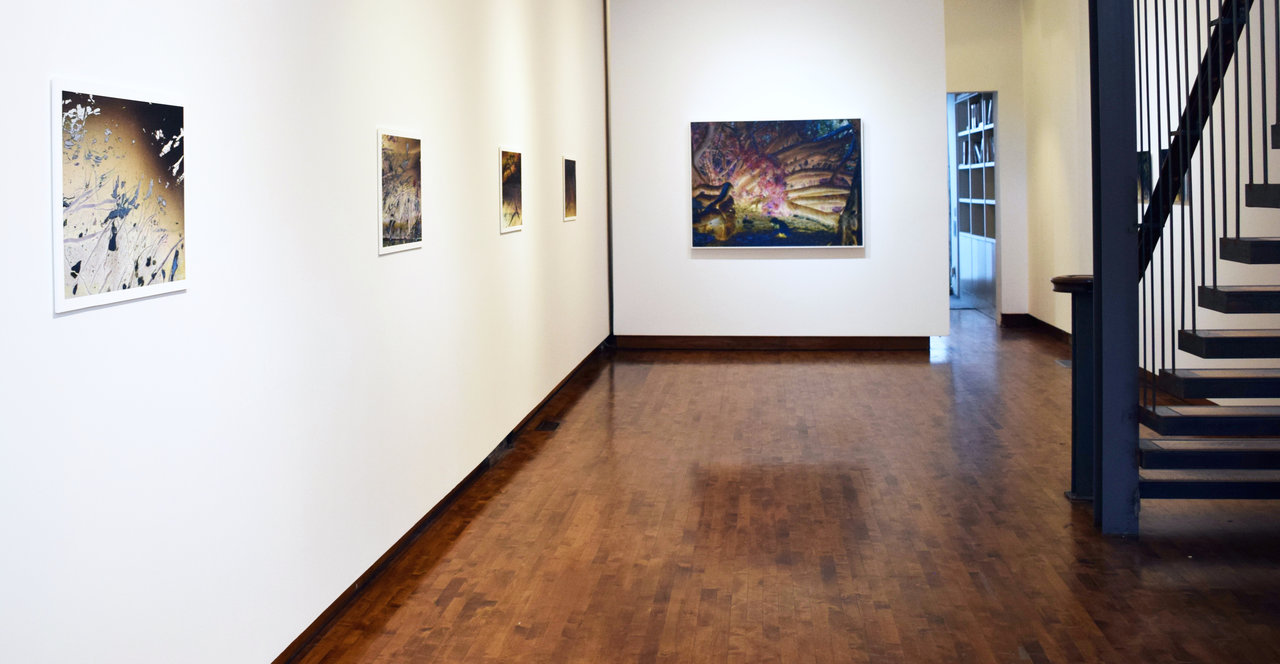
    Joan Kaufman, Surface Tension II, 2017, installation view at Lonsdale Gallery

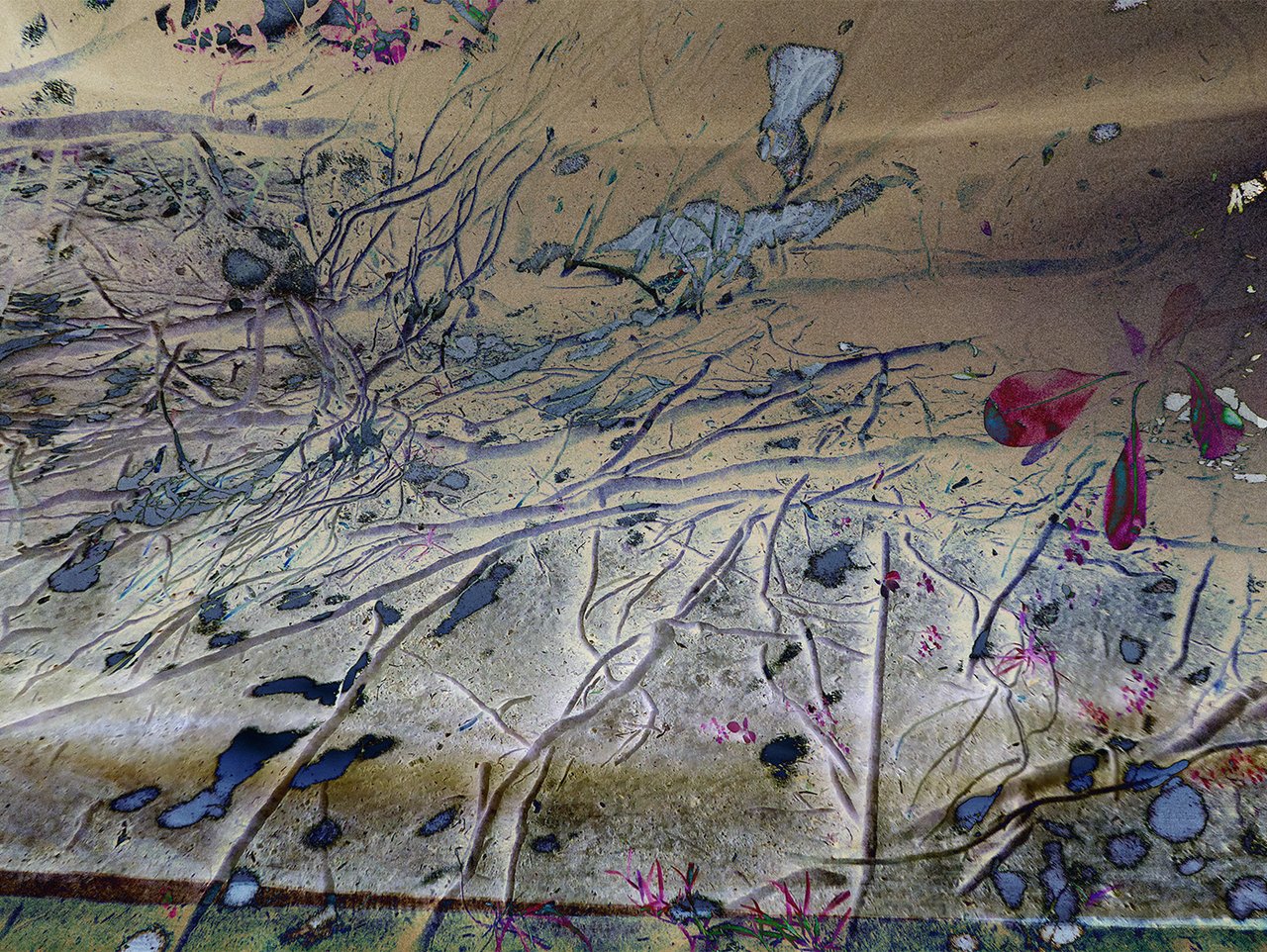
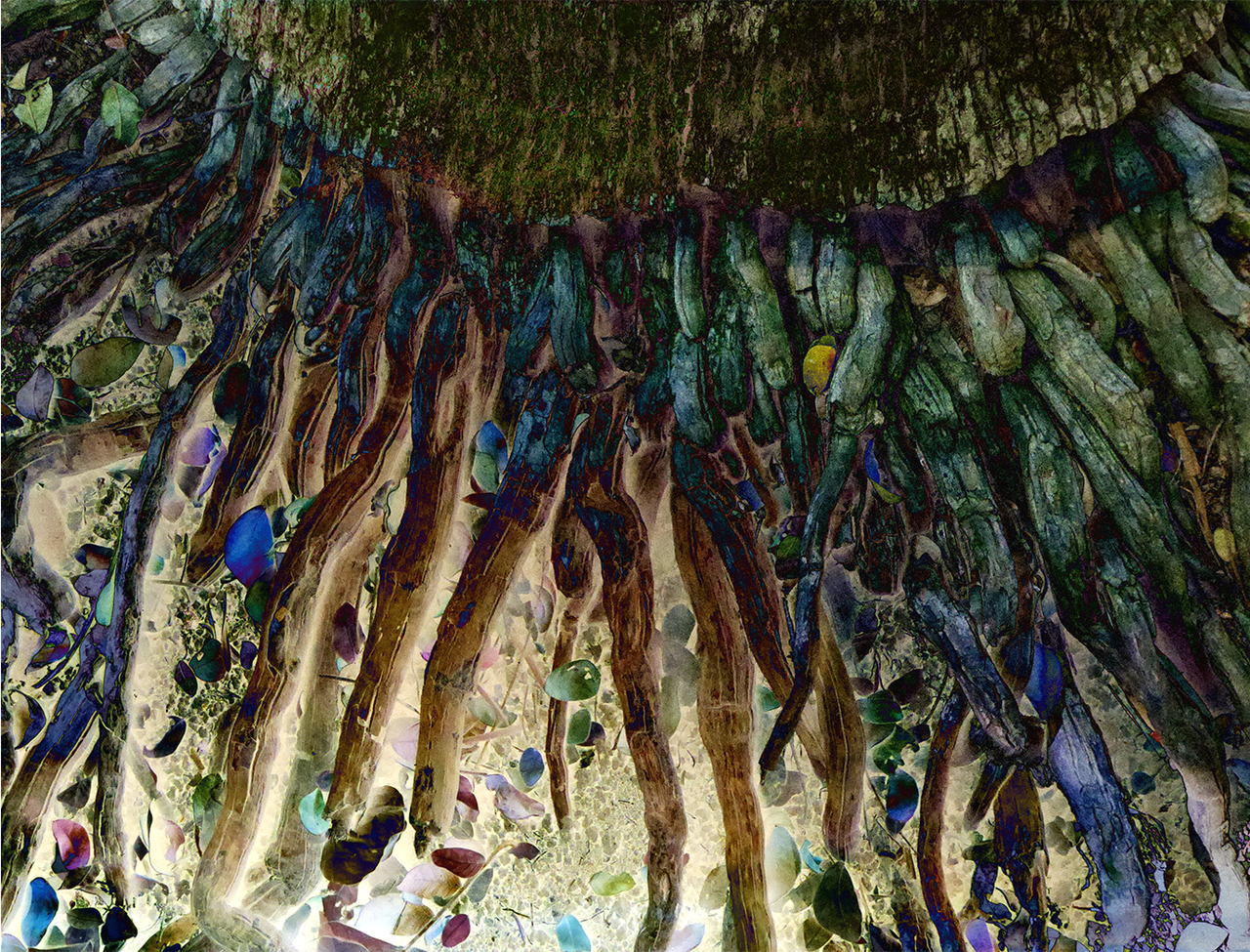
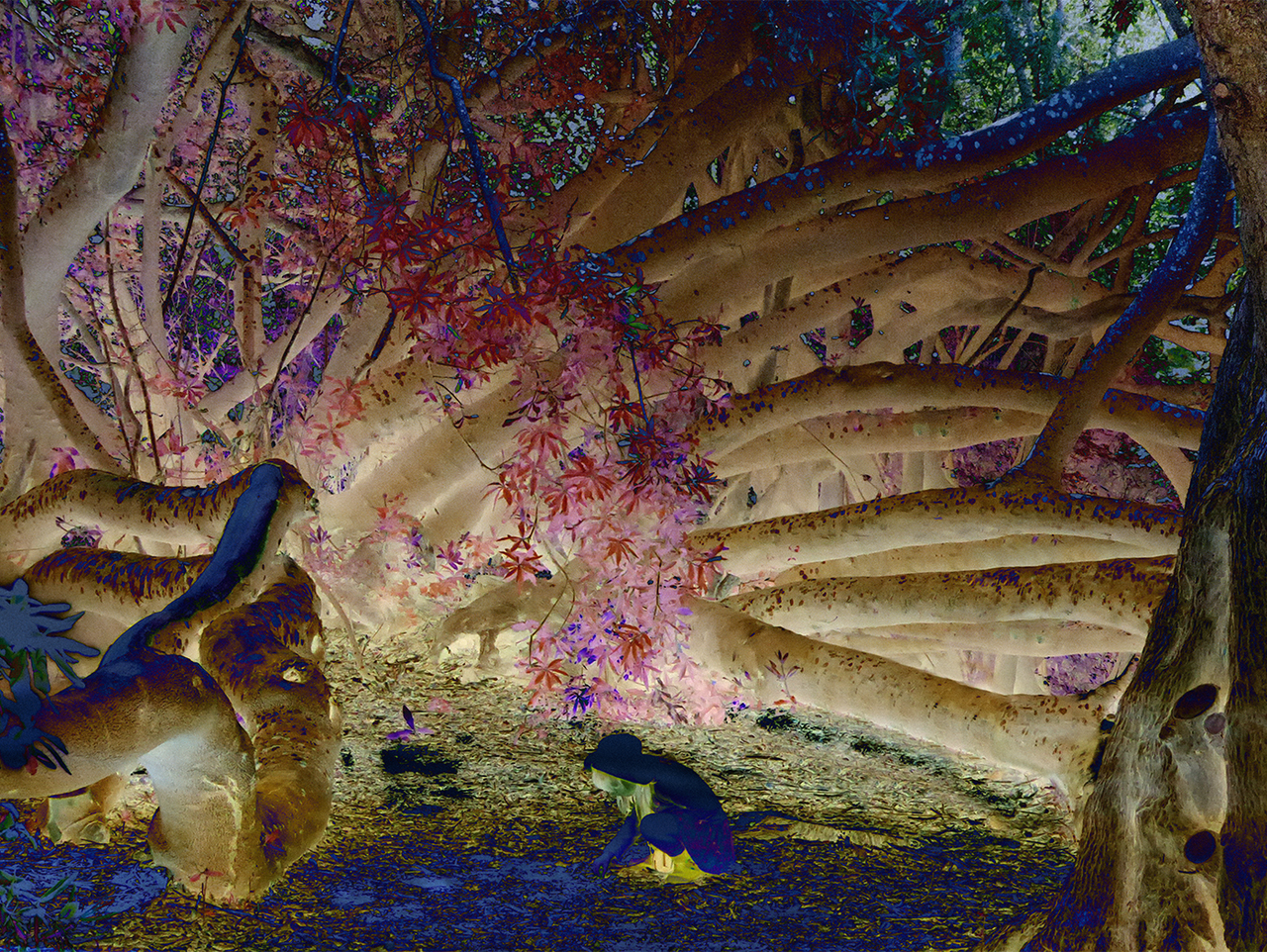
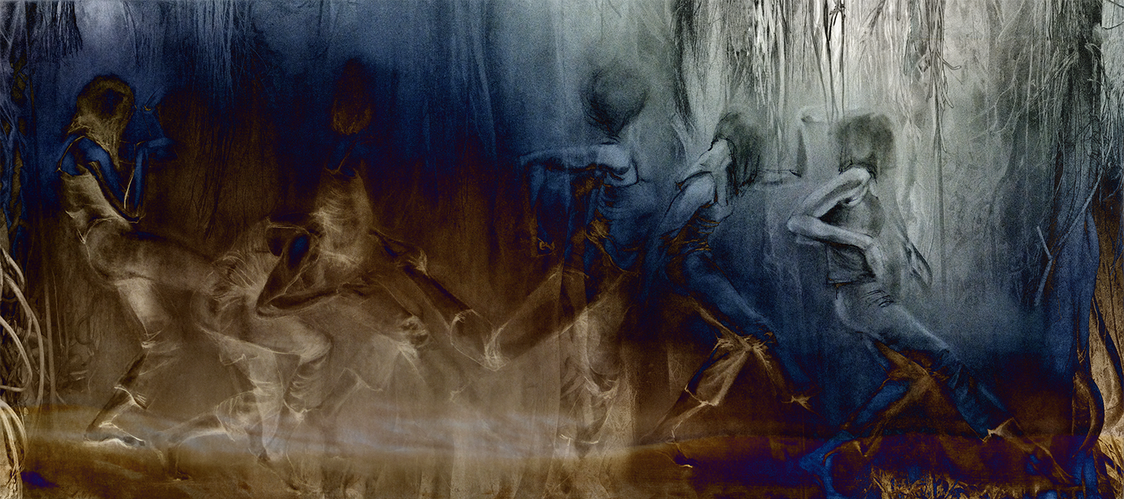
    This current body of work is an extension of the artist’s exploration of anthropocentric matters that have persisted throughout her distinct oeuvre. Using the photograph as her primary medium, Kaufman’s kaleidoscopic work resembles images of a subterranean landscape removed from any real-world referent. Shot primarily in a South African forest, these artworks are repeatedly stripped of denotation through a rigorous studio process that involves textile screens and alternative lighting techniques as a means of manipulating her source material. This insistent trickery deftly recalls Man Ray’s fascinating studio experiments, as well as Stan Brakhage’s celluloid mutations. Furthermore, a series of photographs that are lined in procession in the upper gallery recall decorated friezes on Greek temples from antiquity, inviting historical iconography into her modern abstractions. Kaufman’s photographic interventions transform her organic subject matter into alien images of biomorphic proportions. Large root systems that comprise her Roots and Radicles series resemble arteries of a fantastical creature, while the figures present in the Night Procession sequence are given moth-like appendages.

    Joan Kaufman, Roosts and Radicles 1, 2017, C-print, 17 x 22 inches

    Joan Kaufman, Roosts and Radicles 3, 2017, 13 x 18 inches

    Joan Kaufman, Roosts and Radicles 12, 2017, C-print, 40 x 60 inches

    As a viewer moves throughout the gallery space, it becomes evident that the artist approaches her socially conscious body of work in a more symbolic manner. While artists such as Olafur Eliasson and Naziha Mestaoui wear their activist tendencies on their proverbial sleeves, Kaufman allows her art to elicit a more contemplative response. Her photographs do not immediately confront; but instead, slowly percolate throughout a viewer’s consciousness as they slowly digest the contextual implications hidden throughout these compositions. While it may not seem obvious at first, when considering the human activity involved in creating these pieces, a viewer will begin to find a correlation between the artist’s anthropocentric concerns and these unique images.

    Joan Kaufman, Night Procession 1, 2017, C-print, 18 x 40.5 inches

    Throughout the exhibition, Kaufman brings attention to increasingly fraught relationship between mortals and the natural world, as the human mind can create images of wonder, but also significantly contribute to the rampant deterioration of a once-thriving global ecosystem. This inherent dichotomy enlivens the work beyond its gallery setting into more cerebral territory.

    David Saric

    Images are courtesy of Lonsdale Gallery

    *Exhibition information: November 17, 2017 – January 21, 2018, Lonsdale Gallery, 410 Spadina Road, Toronto. Gallery hours: Wed–Sun 11 am – 5 pm.

  • Scene Not Herd / 5 Lovely Guys

    Opening Reception: November 23, 2017
    Gallery 1313
    1313 Queen St. West, Toronto

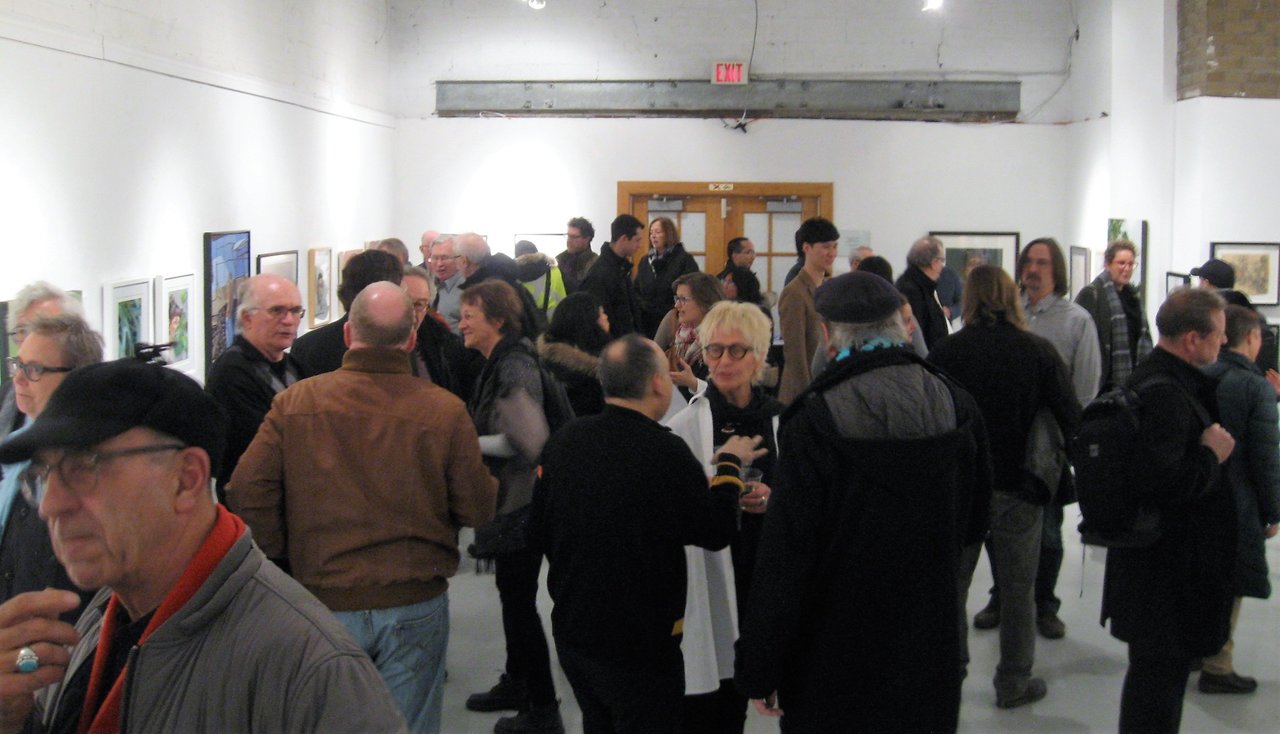
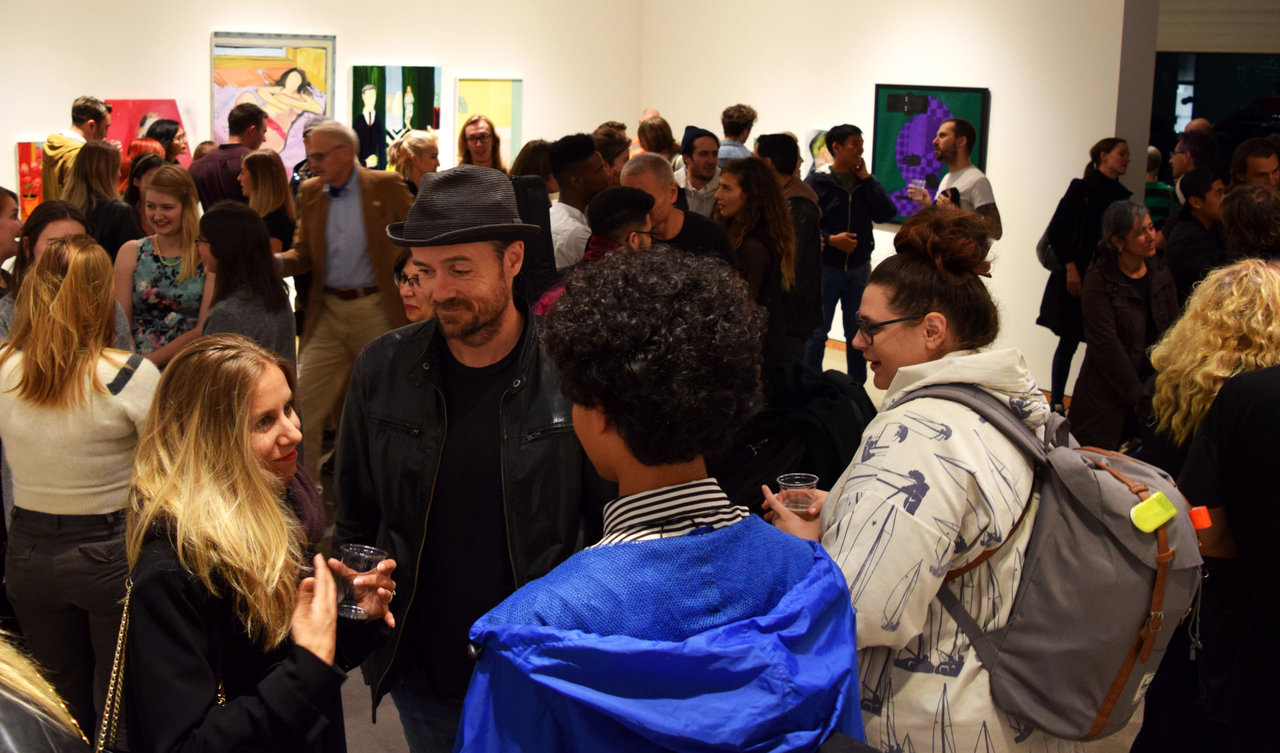
    Opening reception, November 23, 2017, Gallery 1313

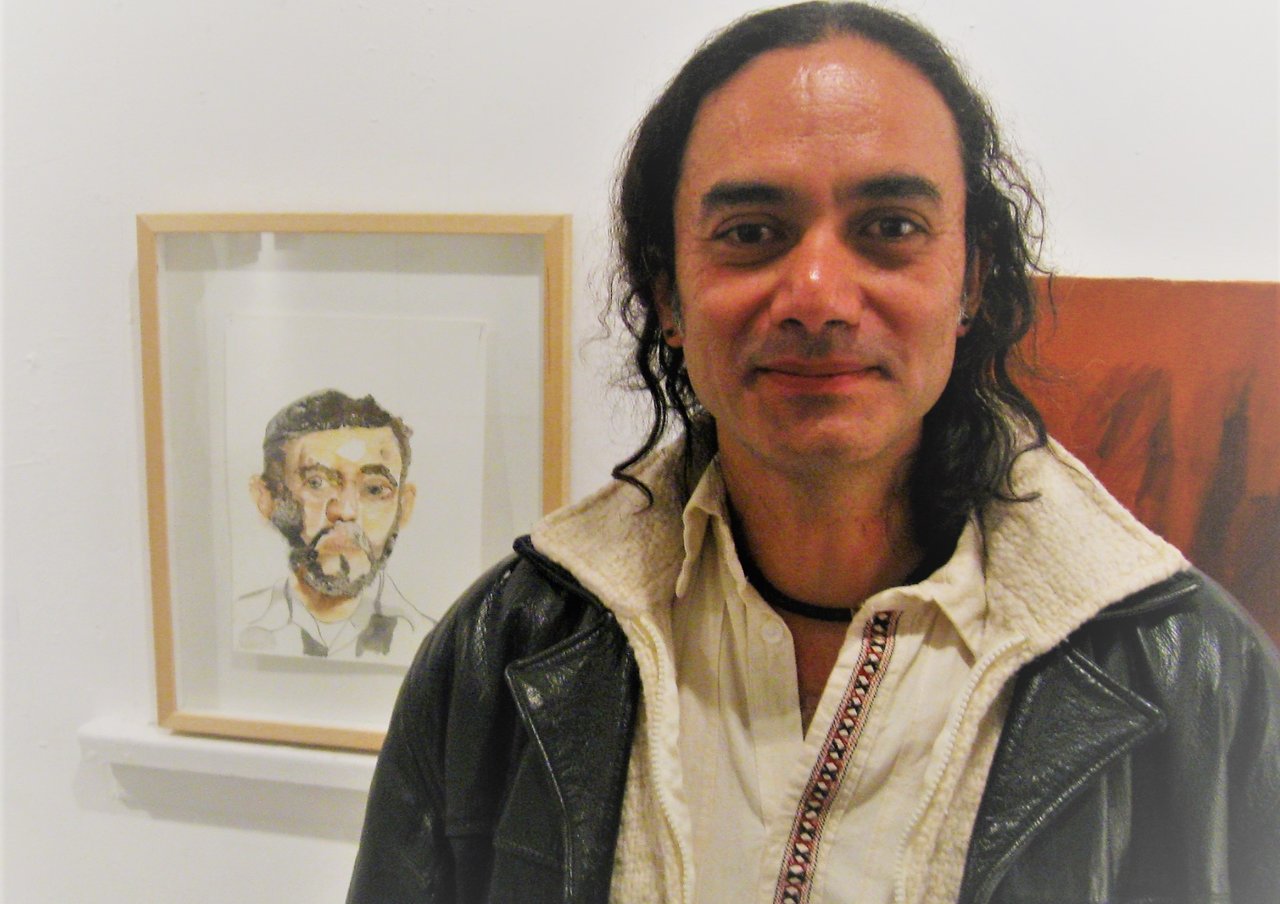
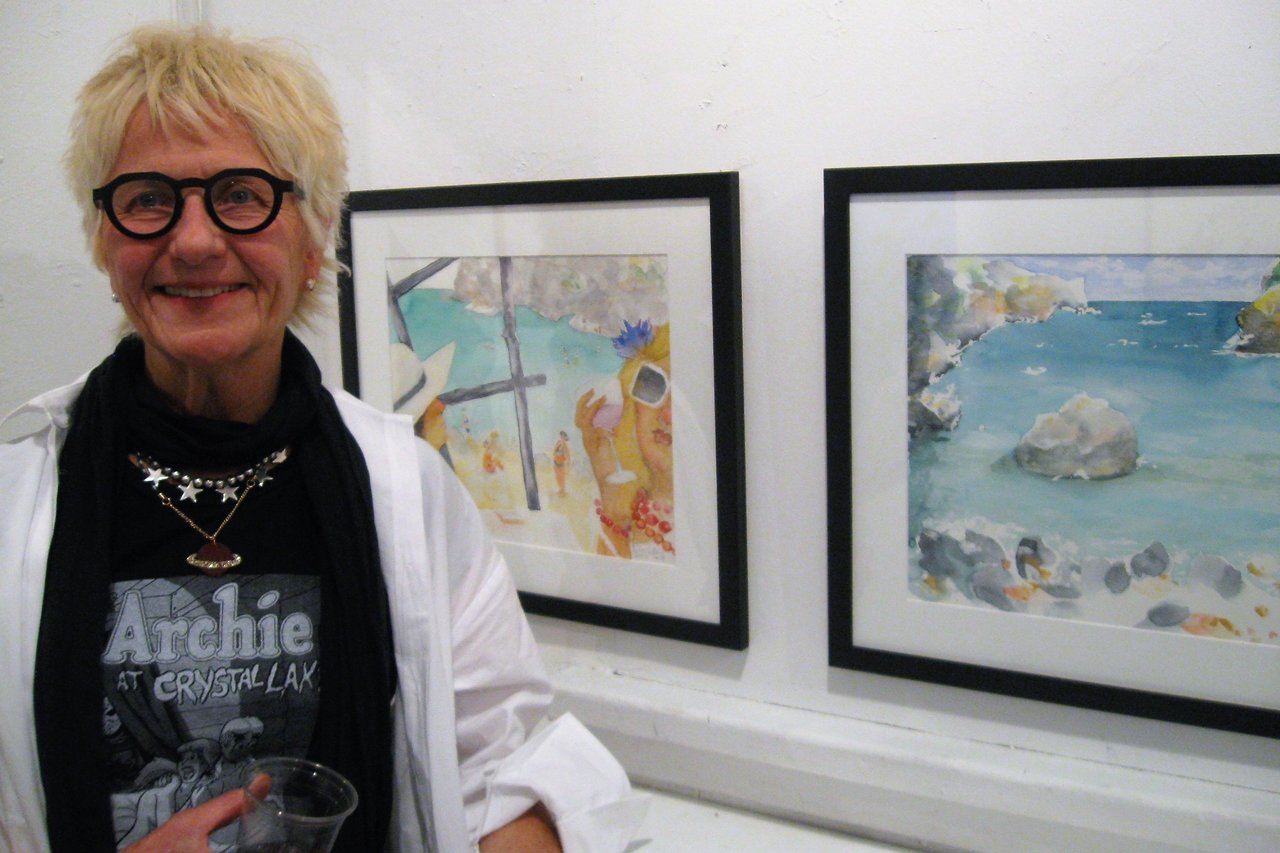
    This collective exhibit of 20 artists who draw was as diverse and eclectic as it gets in the art world. A jam packed crowd came to see and celebrate at the opening reception. While the actual five guys who started the tradition of these weekly drawing sessions thirty years ago were not there, the spirit of what they started was certainly present. Artist and filmmaker Chris Landreth who said he had been part of the drawing ritual for only 20 years had some great works using paint on cut wood that had a film reference. Landreth had won an Academy Award for his animated short film, RYAN, in 2005 and has been a developer of animation software. As it turned out it was not just life study drawings on display but paintings and some other medias of contemporary art.

    Chris Landreth

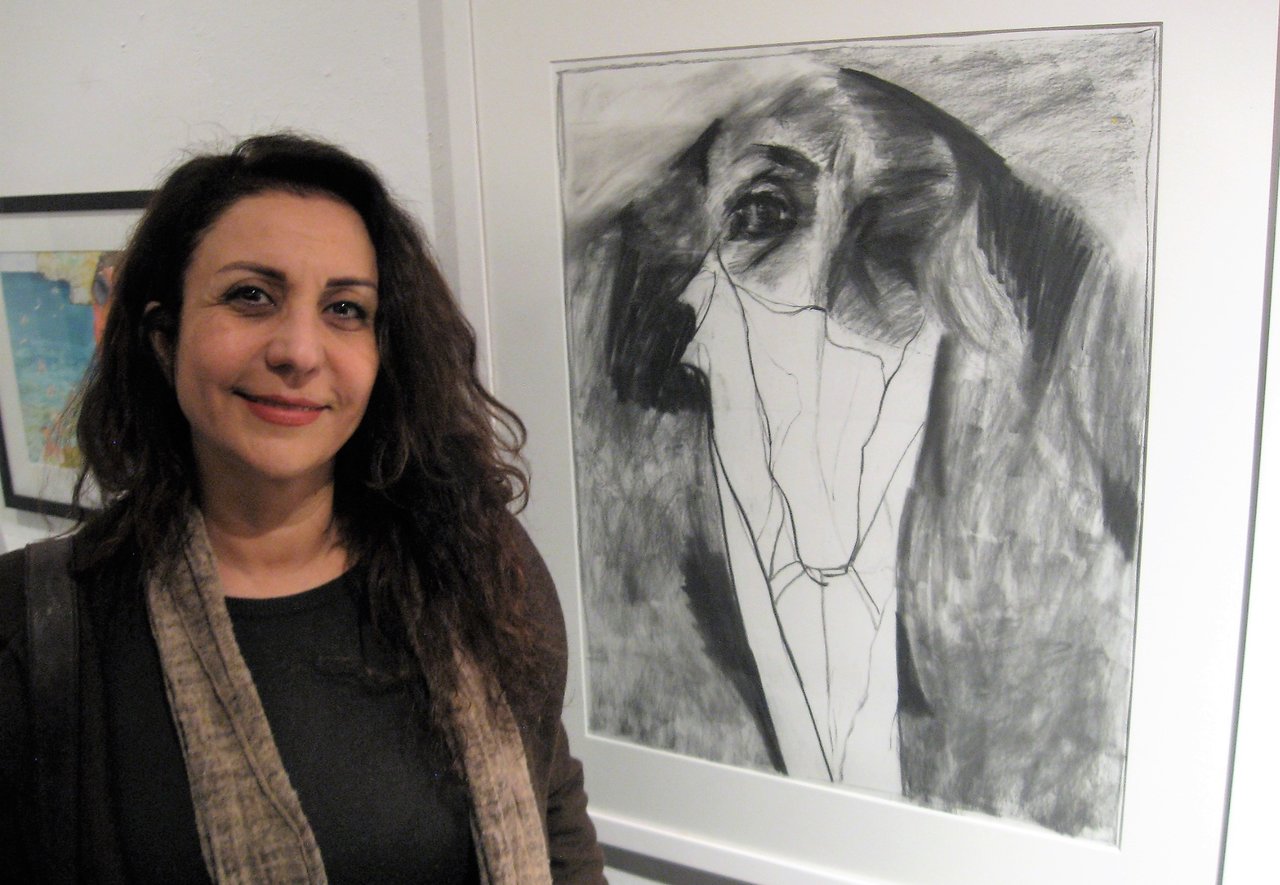
    Paria Shahverdi, an Iranian Canadian, had worked as a journalist in Tehran during the war. The drawing sessions provided her with a welcome group of artists to join in with. Mexican Canadian, Jesus Mora, a prolific local artist, had a work with a drawing of a Mexican journalist who was murdered in Mexico.

    Paria Shahverdi

    Jesus Mora

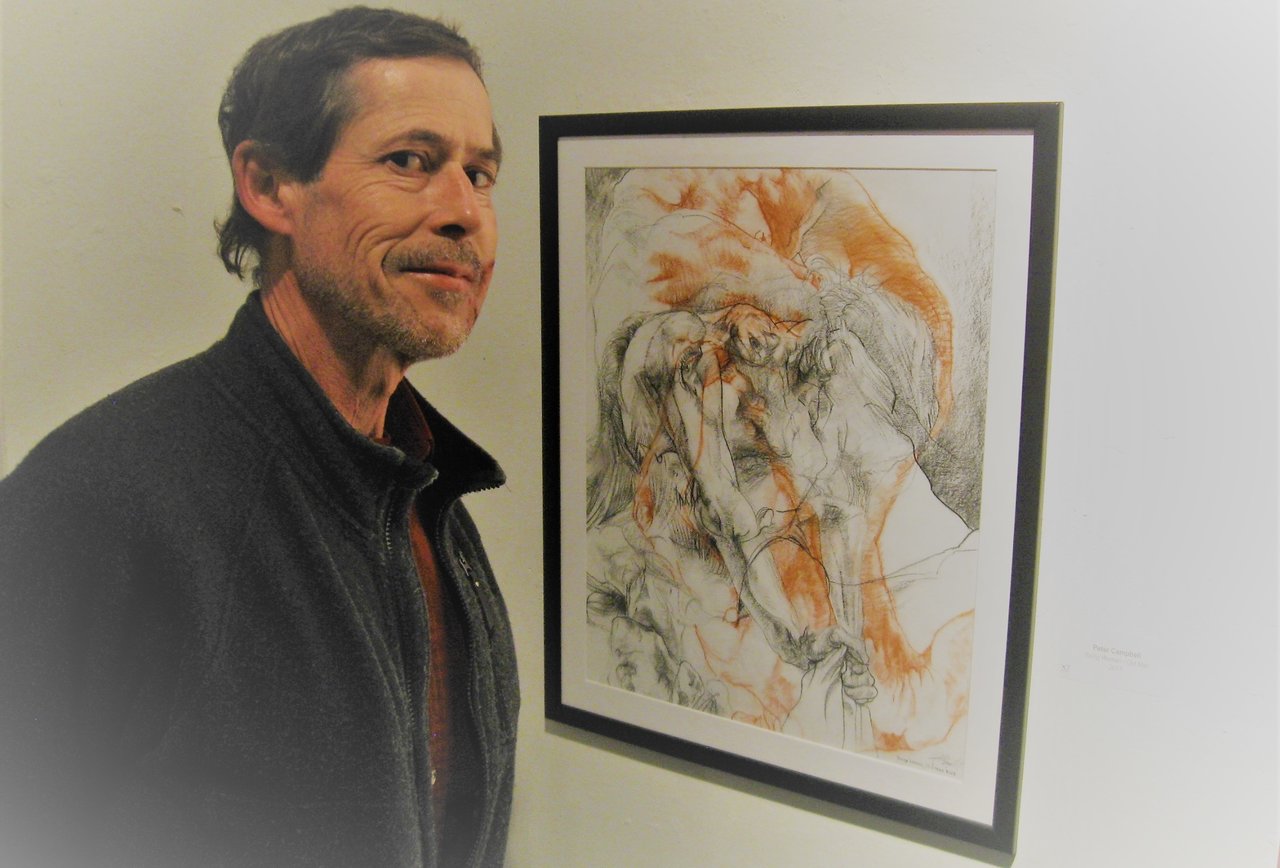
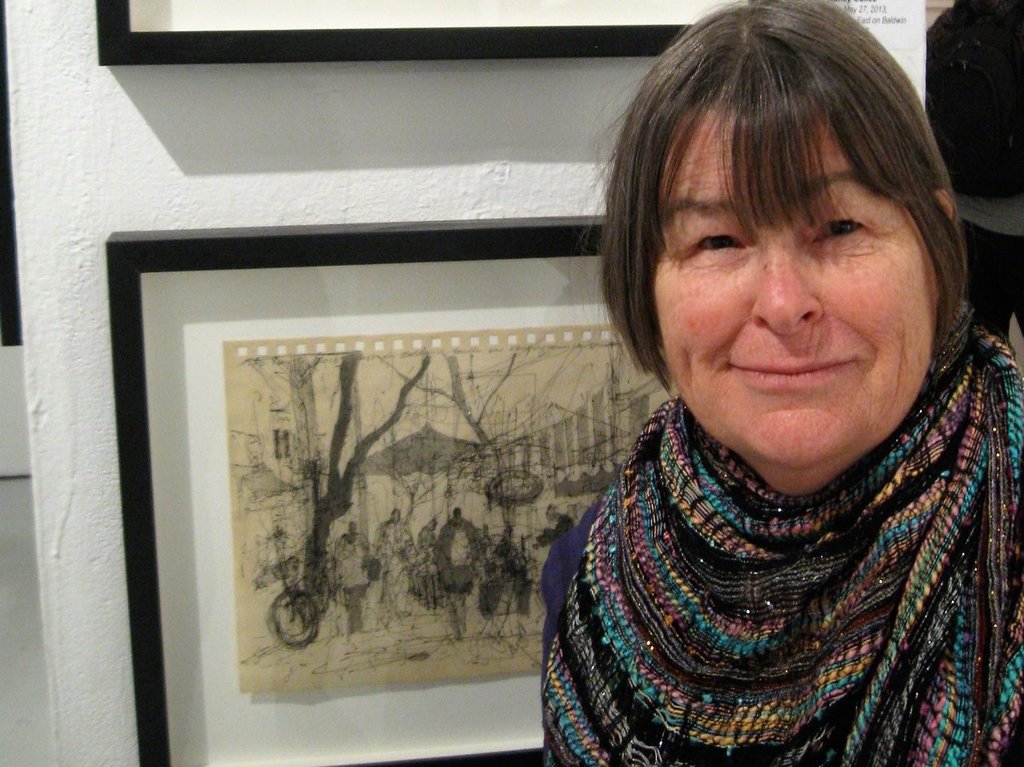
    Exhibition organizer, Peter Campbell, had two striking works in the show, one of them was also featured on the invitation. He had been busy putting together the details of the reception and was clearly exhausted by the evenings end. Artist, Nancy Oakes, a former Gallery 1313 member, was pleasantly surprised when she sold a piece. Though it shouldn’t have been a surprise at all, in fact it was only a surprise that more works had not been sold at the opening reception.

    Peter Campbell

    Nancy Oakes

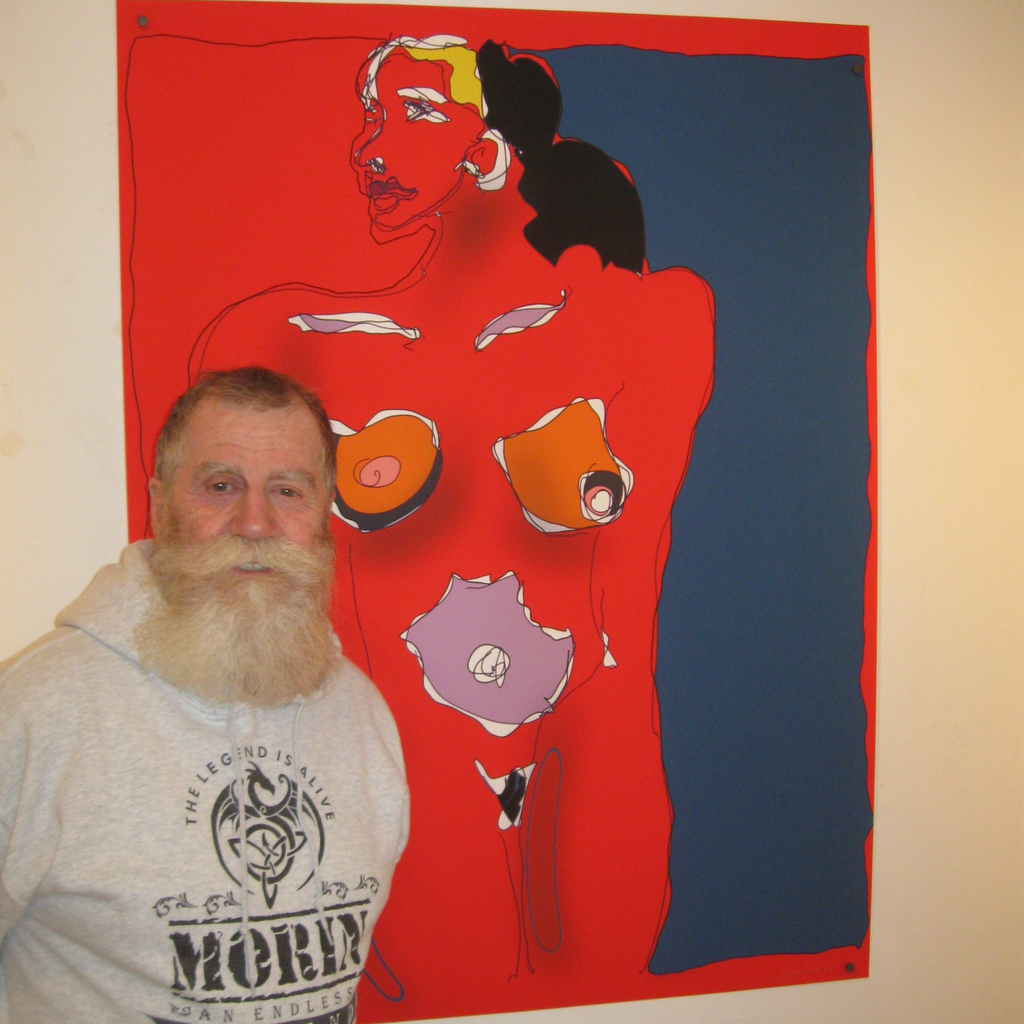
    While not part of the main exhibit Gilles Morin’s computer-generated paintings, Blurred Lines in the Cell Gallery, were a good match as a complimentary exhibit. His bold use of colour in capturing the human figure in a modernist fashion was striking. In the back, in the Process Gallery Artifacts, Artefacts added some humour in Pam Patterson and Leena Raudvee’s clever parody photo documentation. They donned some military garb and posed in the cockpit of aircraft at the National Airforce Museum of Canada. Patterson could not be at the reception but artistic partner Raudvee reveled in the reactions of gallery visitors to their fictitious recreations and text.

    Gilles Morin

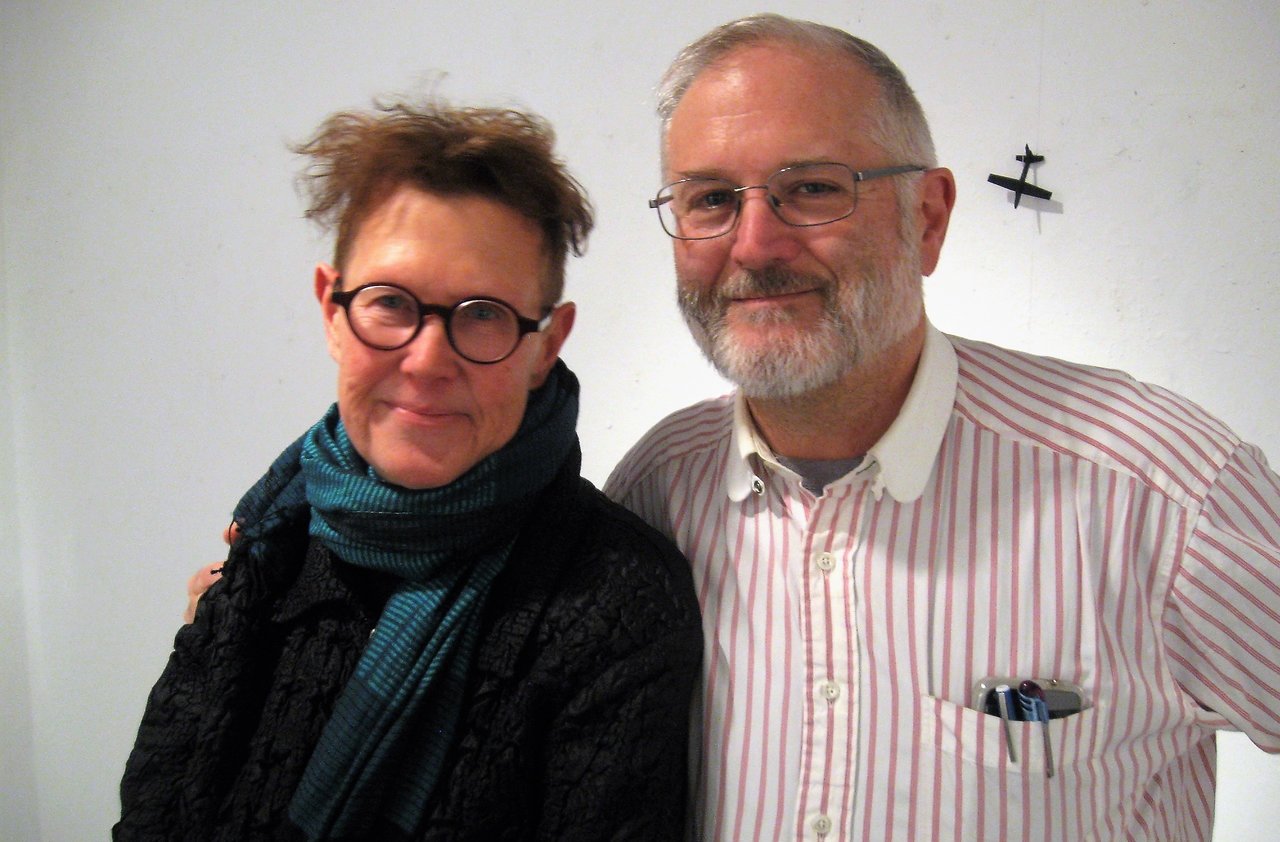
    Leena Raudvee (left) with her partner Clement Kent

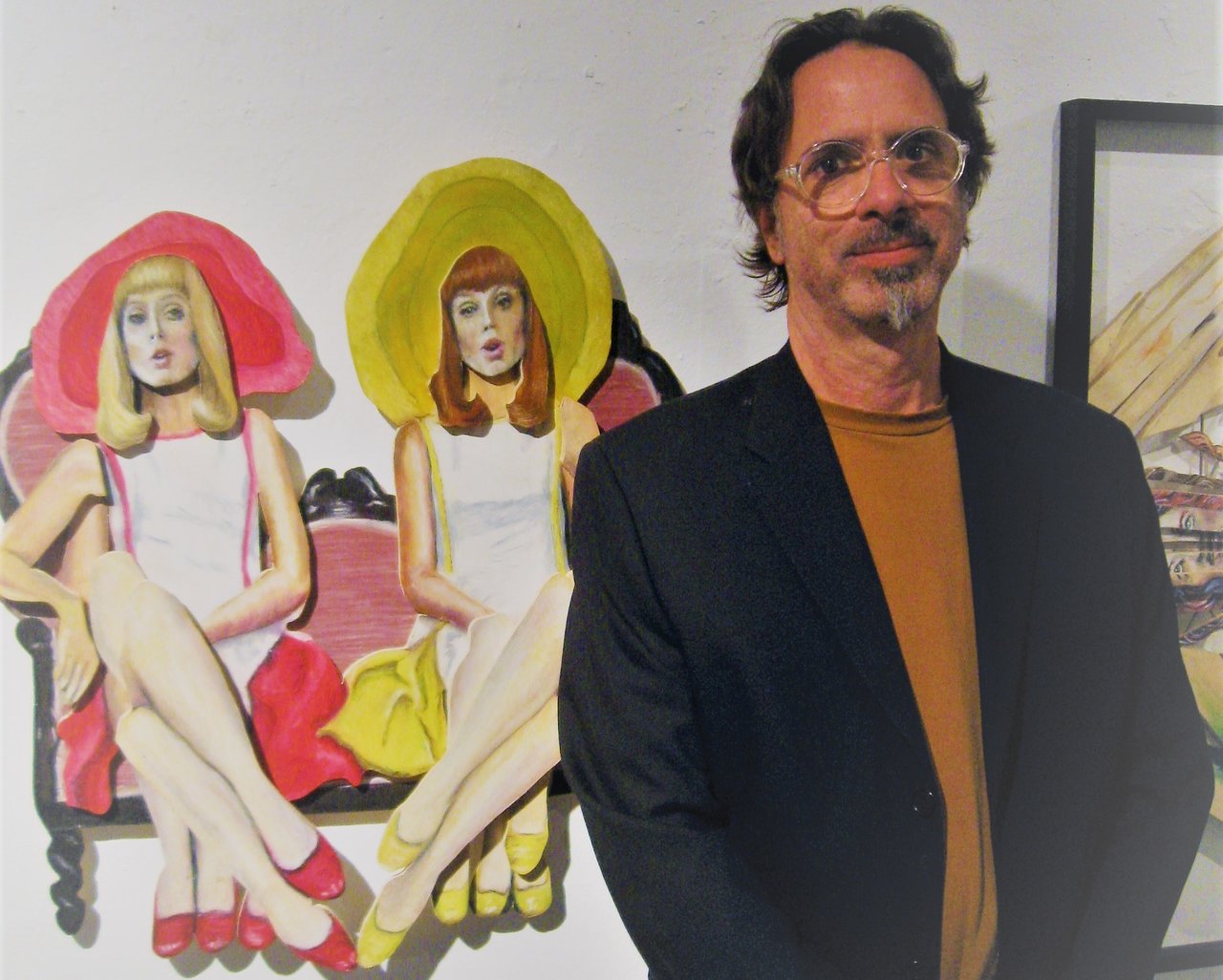
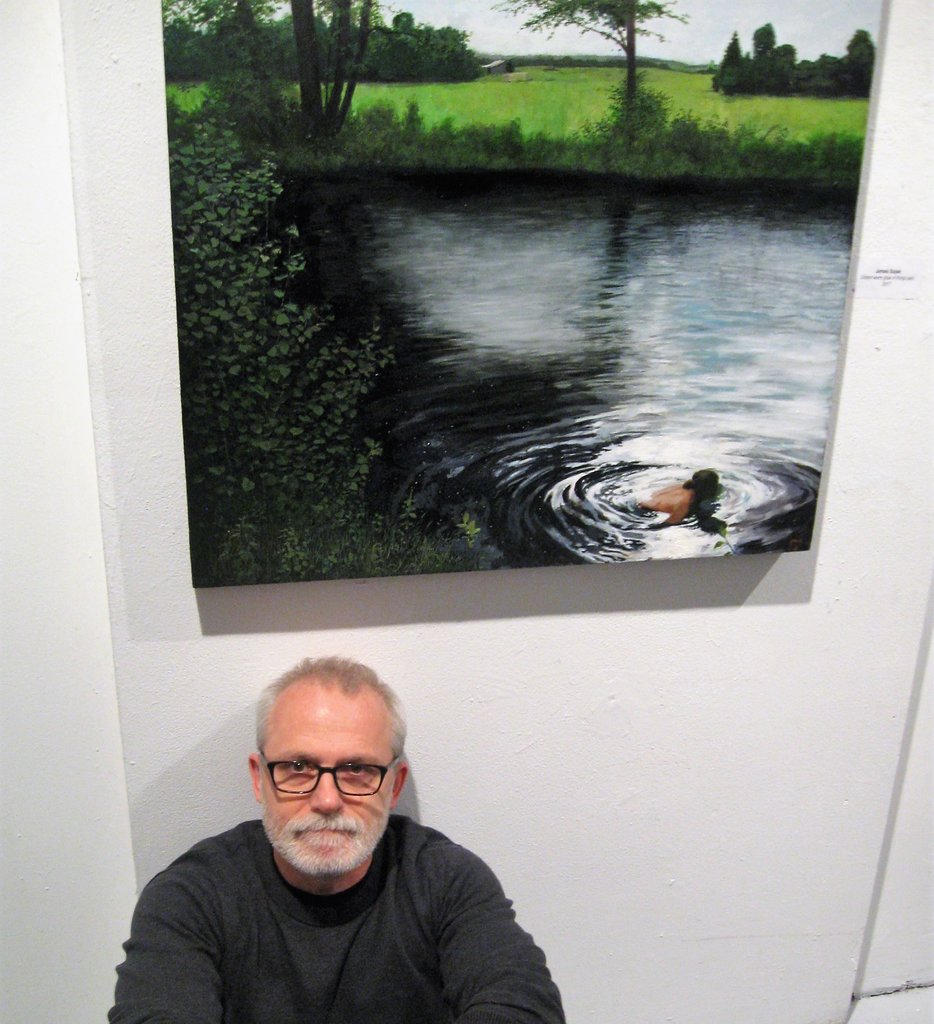
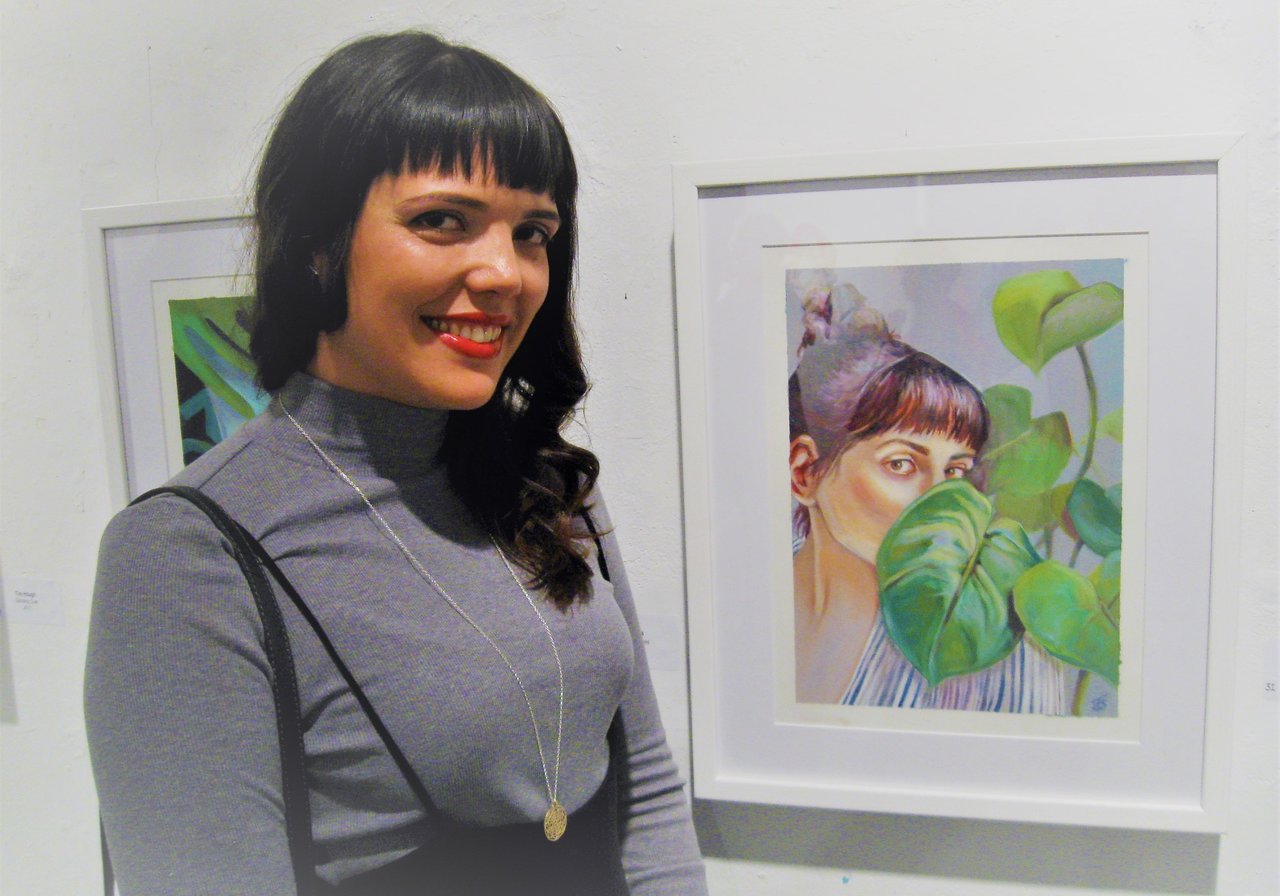
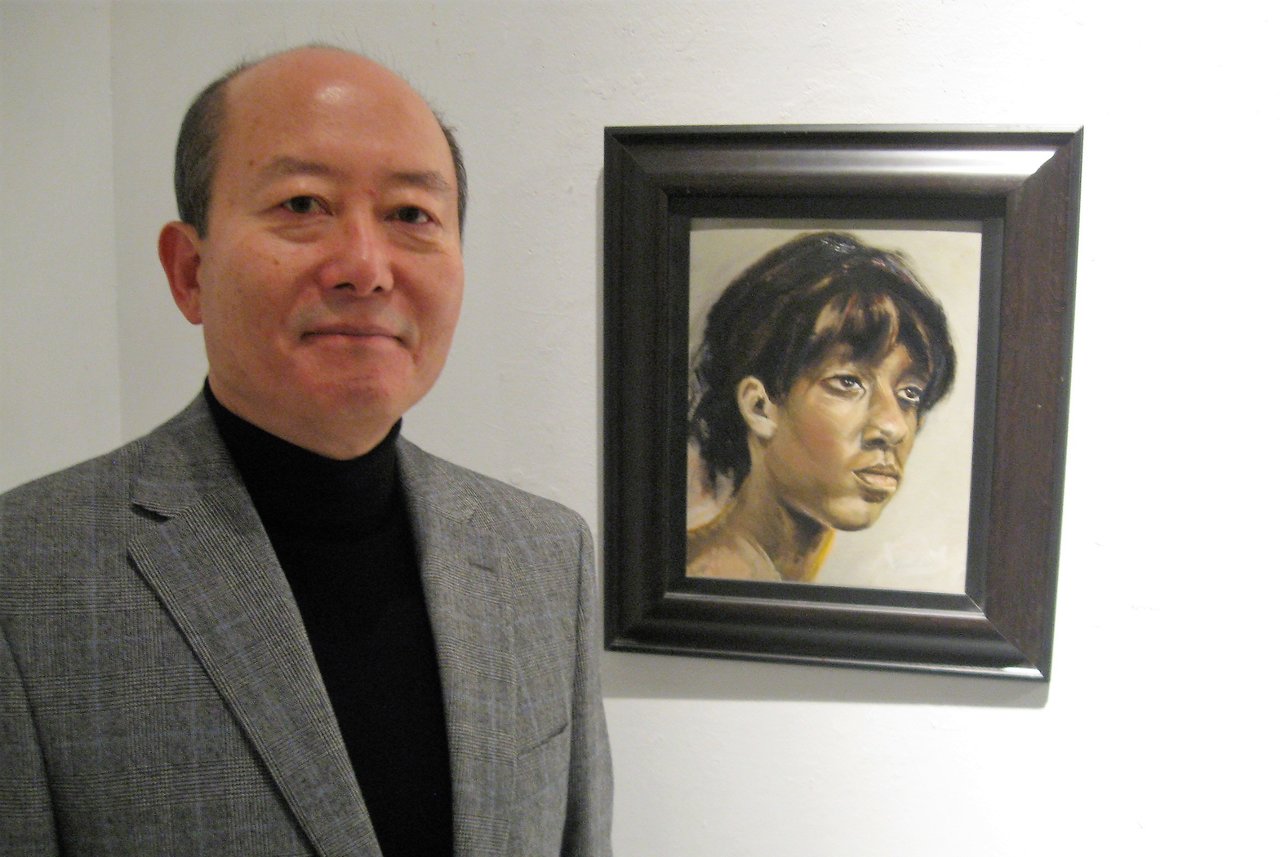
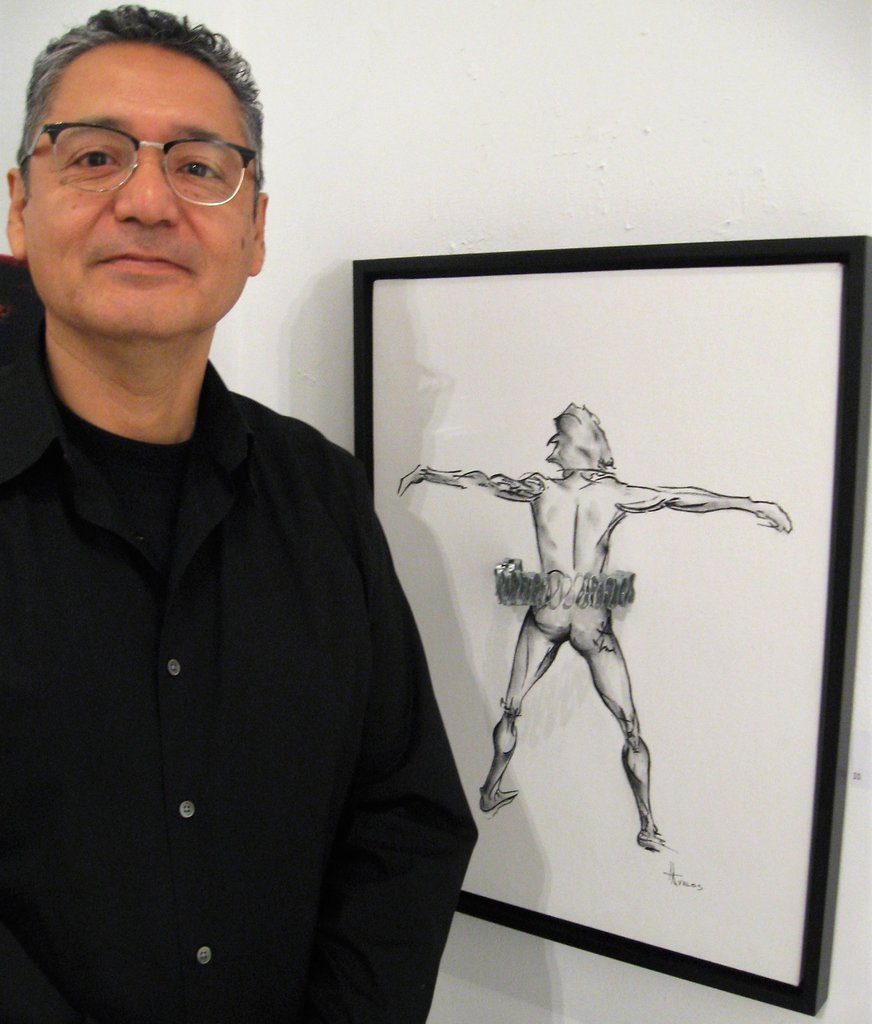
    Artist James Soper‘s landscape painting got lots of deserved attention and artist Tania Simoes had a wonderful self portrait in a green leafy background with a little Georgia O’Keefe influence. Kerry Kim, who has been teaching as well as installing at the AGO in the past, had two well crafted portrait paintings in the exhibit. Andrew Avalos added a little humour with his mixed media work. North Clark’s work had a contemporary touch to it, and retired teacher Doug Stratford had a painting study in the show. Steven Lewis, not to be confused with the politician, participated with a very respectful life study. The 5 Lovely Guys exhibit was hardly gender specific and painters Meri Collier and Anupa Khemadasa with their colourful works brought that message home.

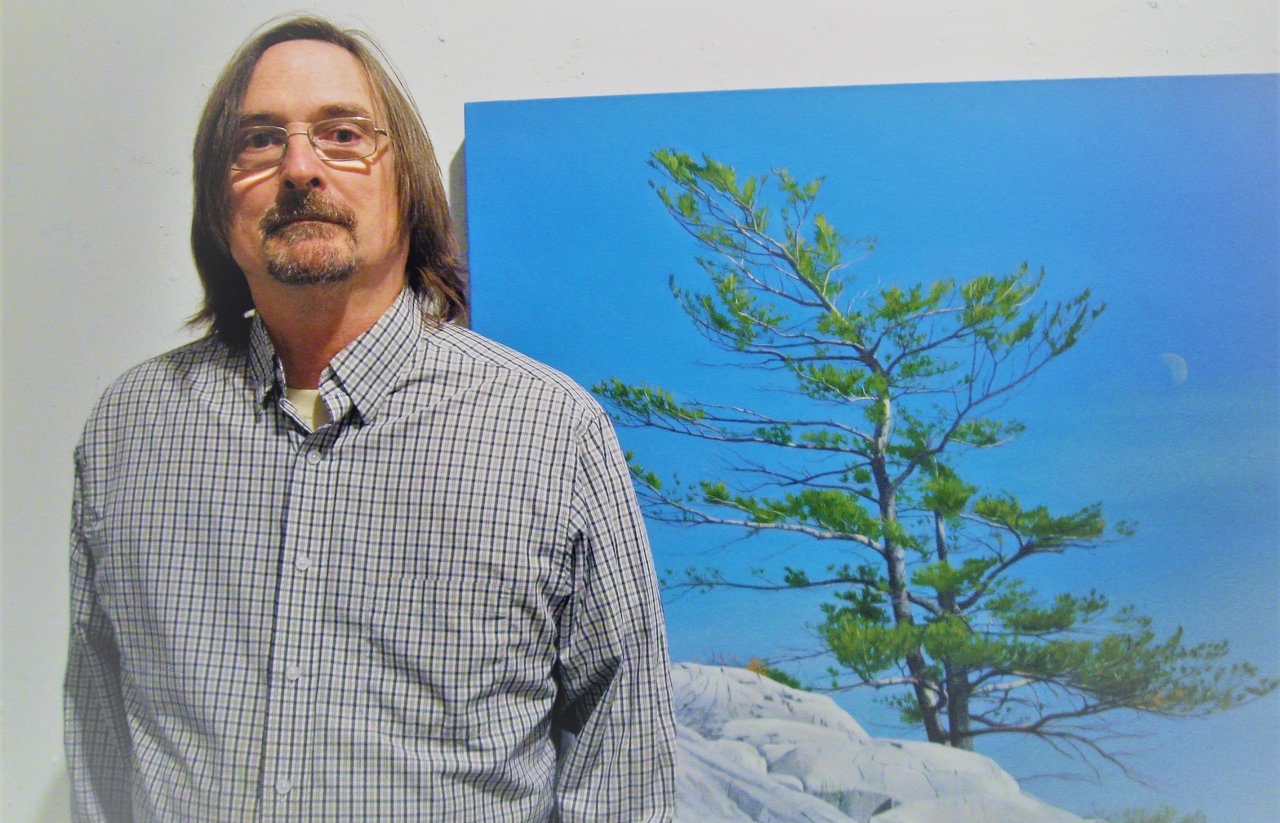
    James Soper

    Tania Simoes

    Kerry Kim

    Andrew Avalos

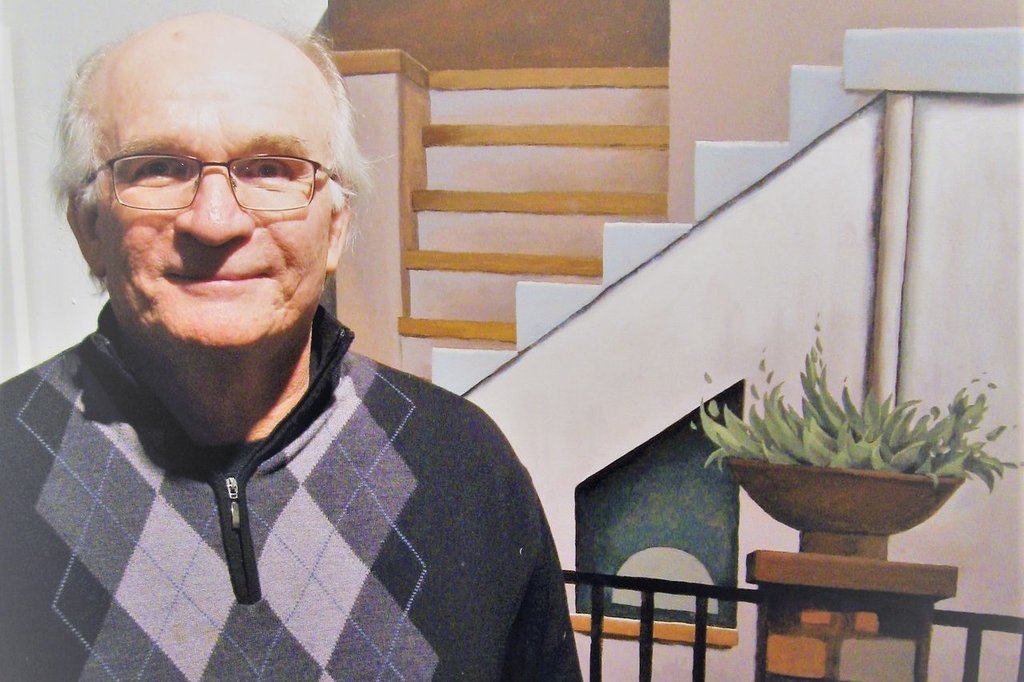
    Doug Stratford

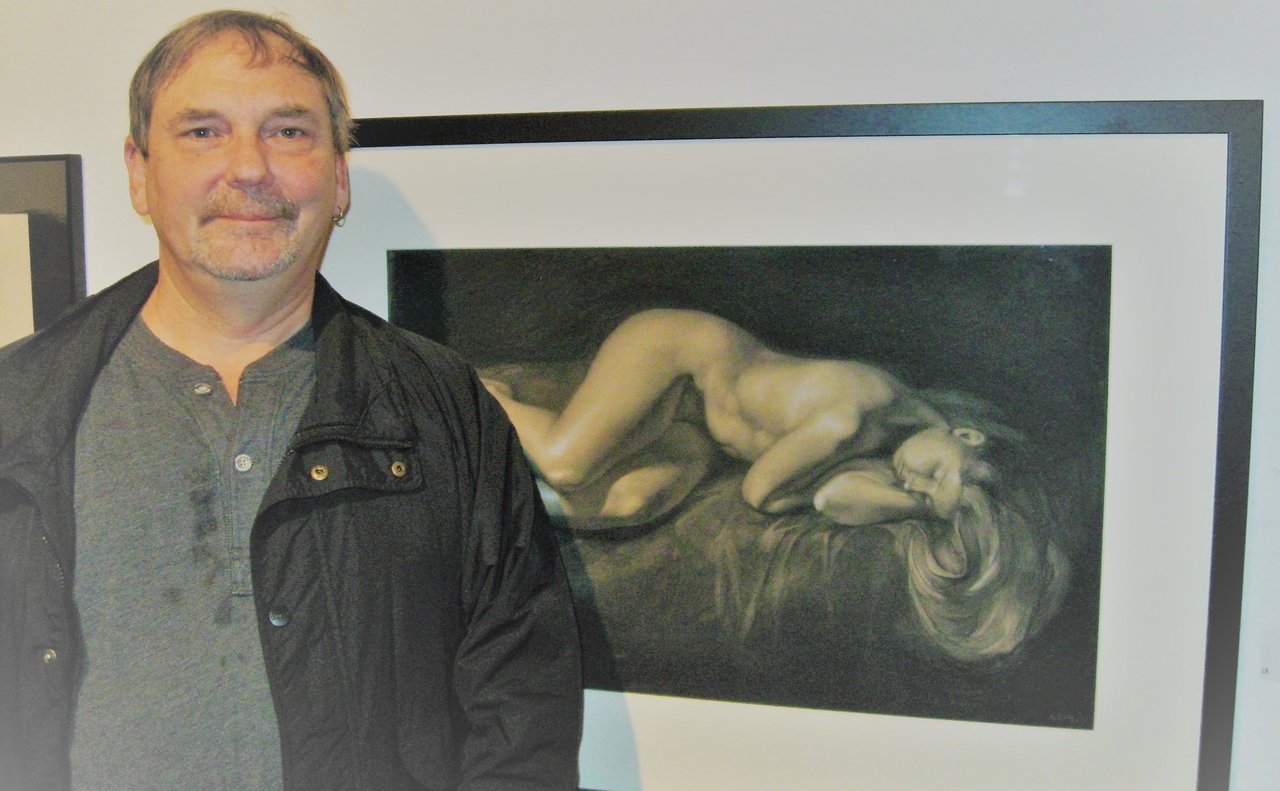
    Steven Lewis

    Tim Hough

    Meri Collier

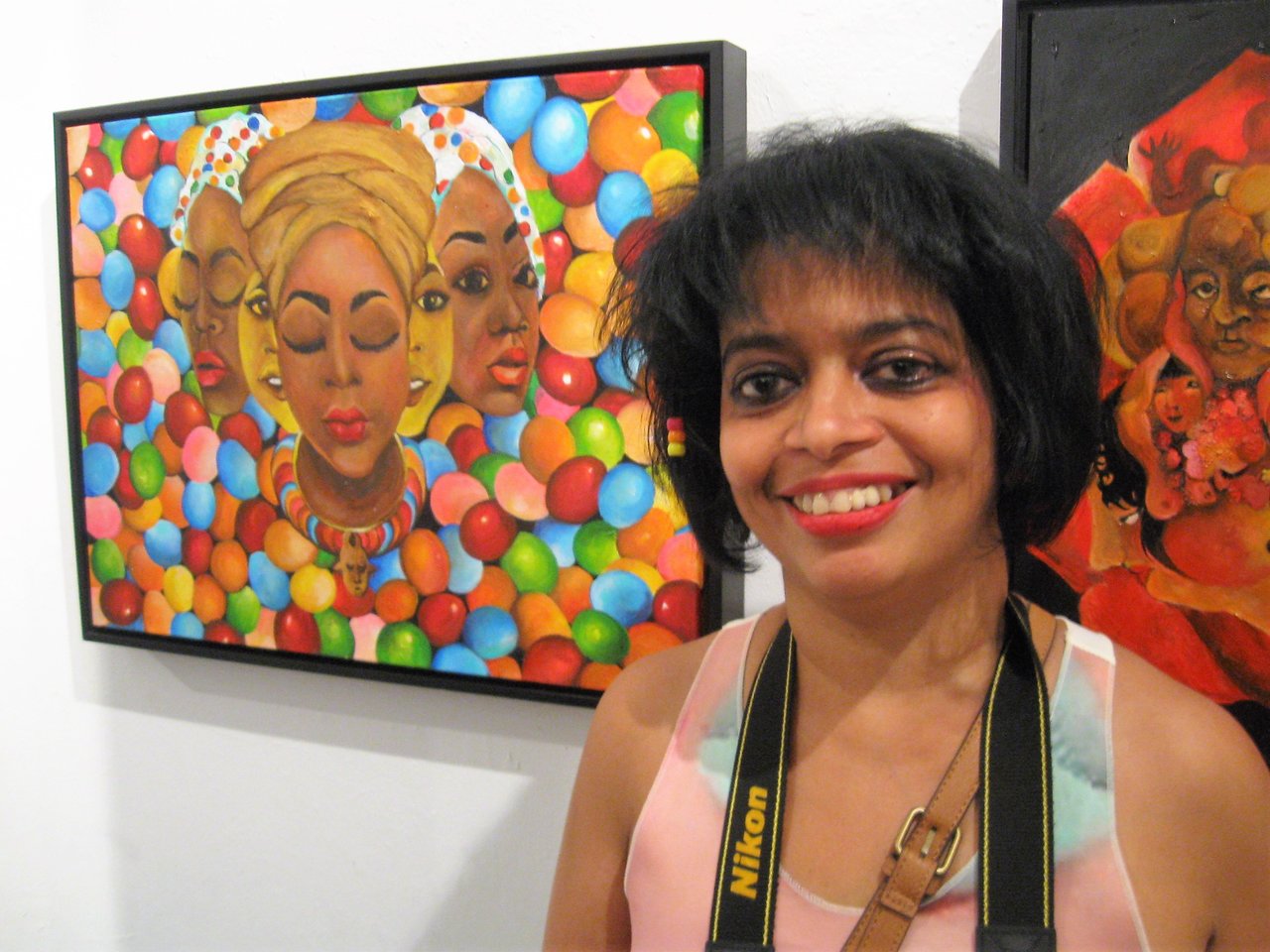
    Anupa Khemadasa

    The legacy of the 5 Lovely Guys seems to be on a continuing path. Organizers are looking at a future exhibit next year and, of course, the weekly sessions will continue to give these artists a regular way to hone their craft and keep drawing. Go figure.

    Text and photo: Phil Anderson

    *Exhibition information: November 22 – December 2, 2017, Gallery 1313, 1313 Queen Street West, Toronto. Gallery hours: Wed – Sun, 1 – 6 pm.

  • Gareth Bate and Sung Ja Kim at loop

    Looking at loop’s website before visiting their latest show, I imagined Gareth Bate’s garden-scapes as large canvases with strong brushstrokes and Sung Ja Kim’s compositions as small and delicate — but I was wrong about both.

    Opening reception of Gareth Bate and Sung Ja Kim shows, loop Gallery, November 4, 2017

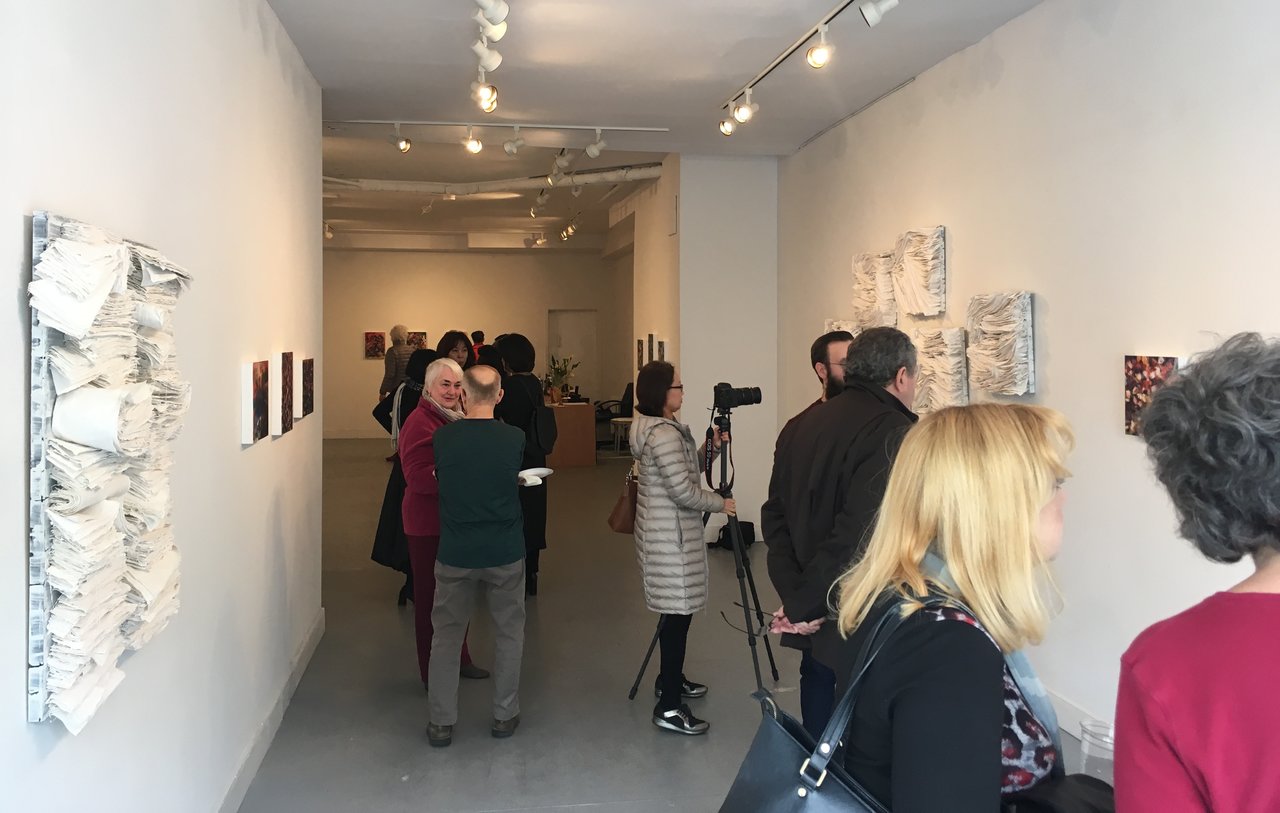
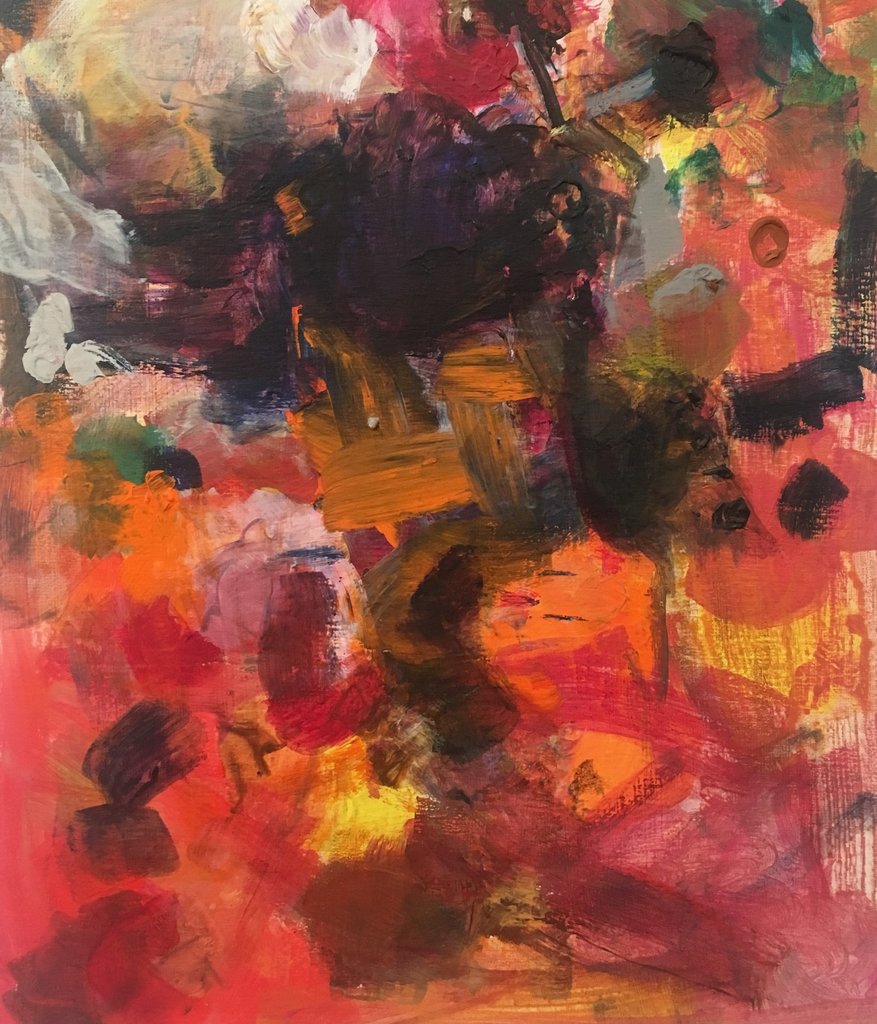
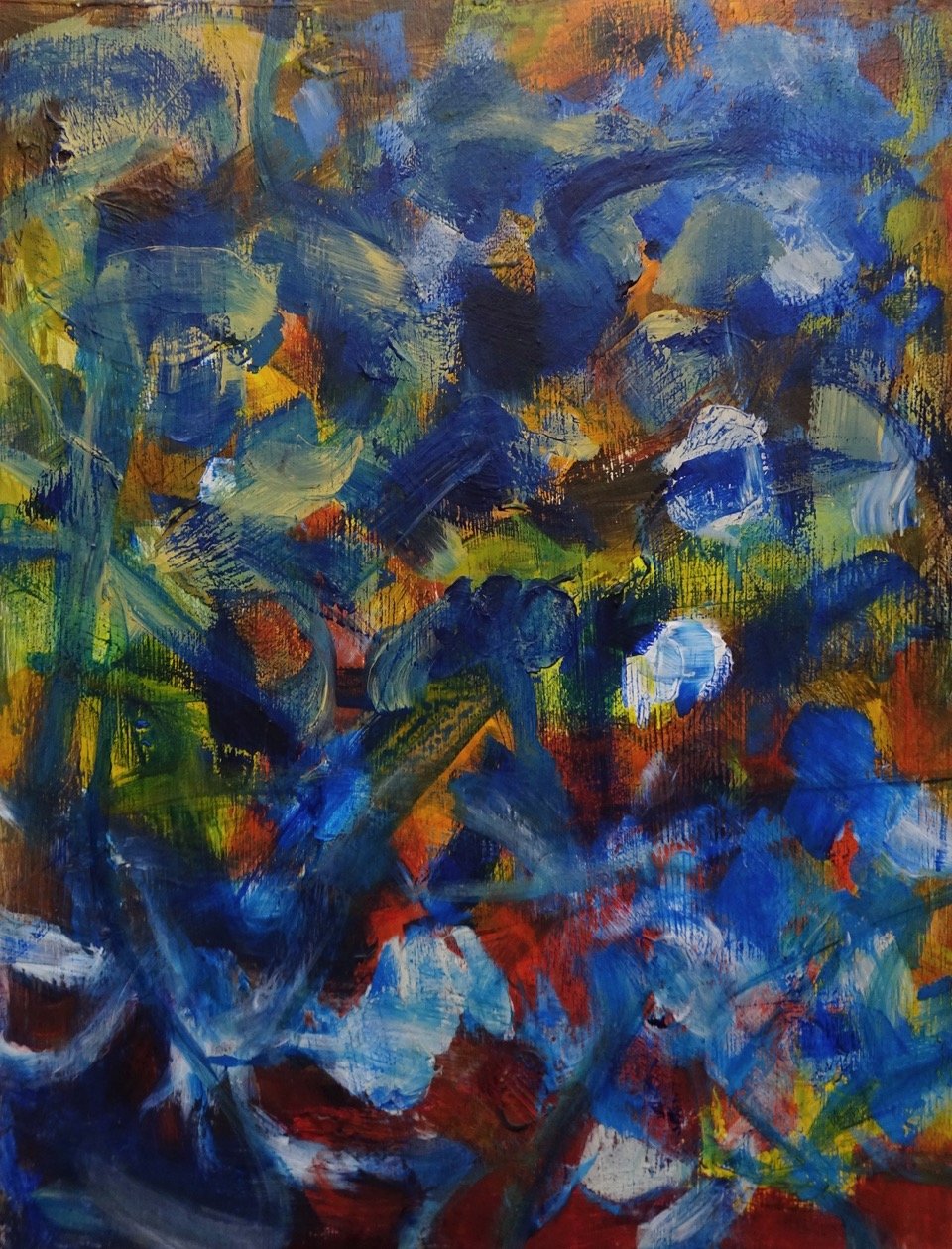
    The show is well curated by mixing the works of the two artists. Bate’s strong colours and Kim’s shades of white compliment each other well. All the In the Garden series canvases are relatively small. As Bate says, they are almost “accidental” compositions, their creation started as he cleaned his brushes on those canvases. “The universe is like a garden”, he wrote. Looking at the abstract compositions you can, indeed, see the chaos as well as the order the gardener/painter created out of it. You can easily imagine growing plants and blooming flowers in the abstract shapes as they swirl with life and energy. Bate walked the streets of Toronto and made hundreds of photographs of plants, seeing a “beautiful mess” that became somewhat orderly in his paintings, while still encapsulating their original, unruly nature. He organized their rich colors into complimentary colours of yellow-red-purple or shades of blues, and created a series of compositions that are still raw at their roots, but also powerful and exiting.

    Gareth Bate, In the Garden 10, 2017, acrylic on wood, 12″ x 16”

    Gareth Bate, In the Garden 14, 2017, acrylic on wood, 12″ x 12”

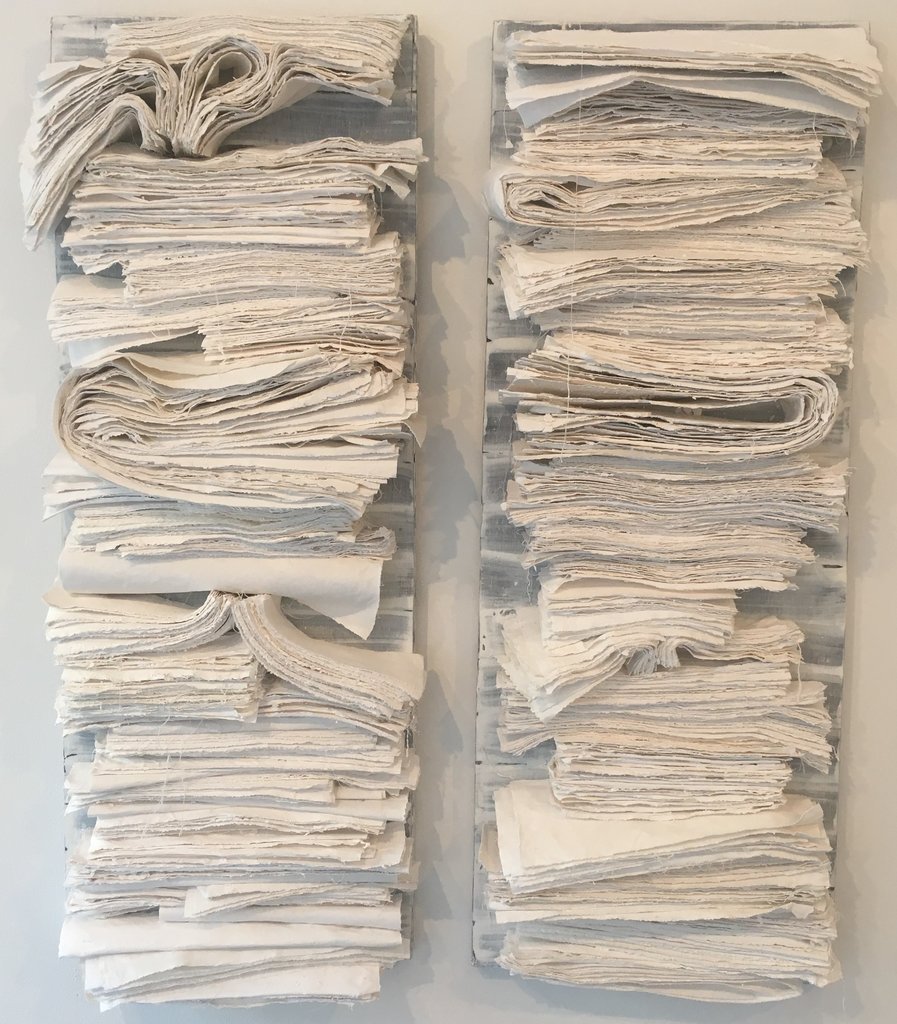
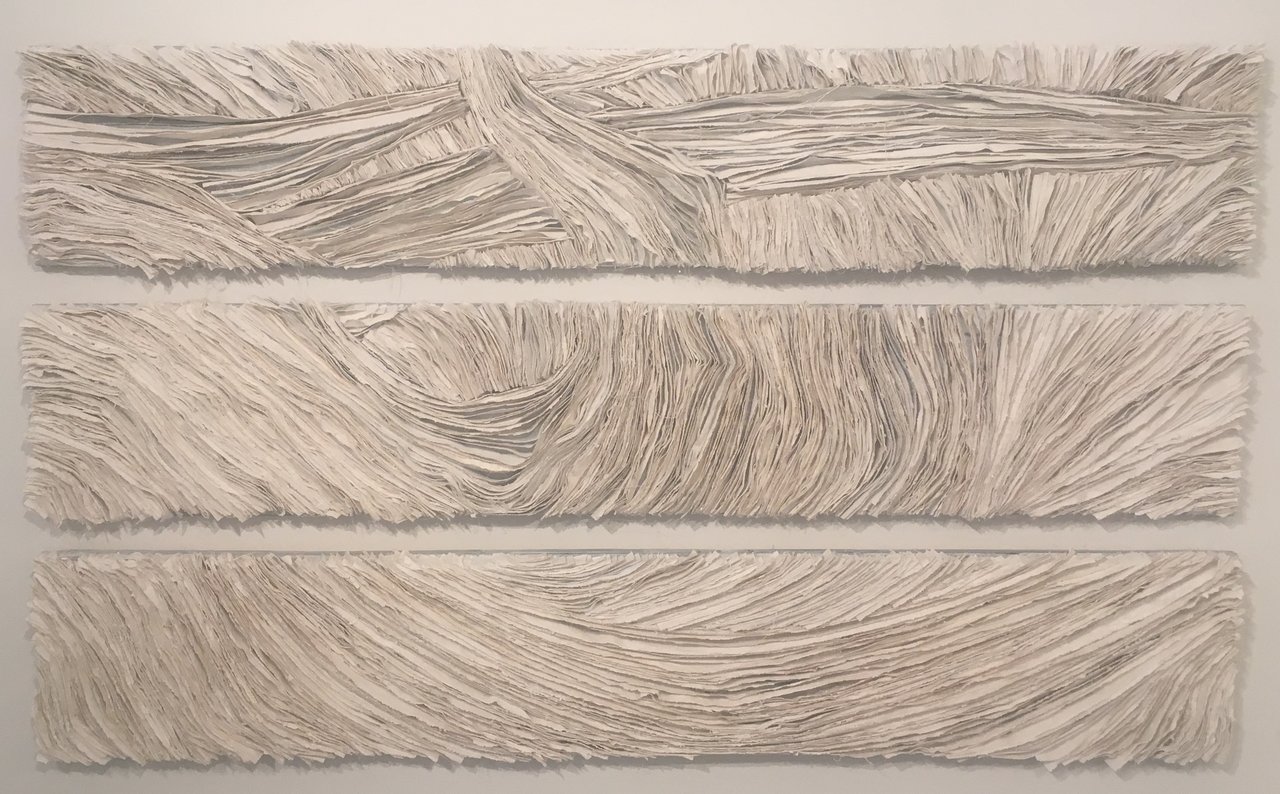
    In strong contrast to Bate’s vivid colours, Sung Ja Kim’s show, Connection is built on the colour white. White supposedly absorbs the full range of other colours and creates richness by itself that can’t be easily captured in any other way. As the artist wrote of these works, “Straight lines and curved lines connect us to our destinations. Connecting with these personal destinations occurs through a journey involving new ways to live our lives.” The layers in Piling Up remind me at first of bed sheets or table linens stored in a cupboard, witnesses of old holidays and lovely times from the past that are also heavy with the possibility of future events. They capture time. Shaping Reality Through Time shows our movements toward our chosen destination – movement that becomes time and time that becomes movement as we move from past through present into the future. Reality becomes almost abstract in Trading Together, when the layers are no longer recognizable. What amazes me in these works is the shadow of white — white shadows to be precise — that can swallow time and make it stand still.

    Sung Ja Kim, Piling up, 2017, mixed media 12″ x 46”, 2pc

    Sung Ja Kim, Shaping reality through time, 2017, mixed media 12″ x 60”, 3pc

    Both Bate’s and Kim’s exhibitions deal with time; the captured moments of the universe in Bate’s case and the layers of time and destiny in Kim’s work.

    Victoria Rainoff

    Images are courtesy of loop Gallery

    *Exhibition information: Gareth Bate, In the Garden & Sung Ja Kim, Connection, November 4 – 26, 2017,  loop gallery, 1273 Dundas Street West, Toronto, (three doors west of Dovercourt). Gallery hours: Wed – Sat 12 – 5, Sun 1 – 4 p.m.


  • Joe Fleming: The Escape Club at General Hardware Contemporary

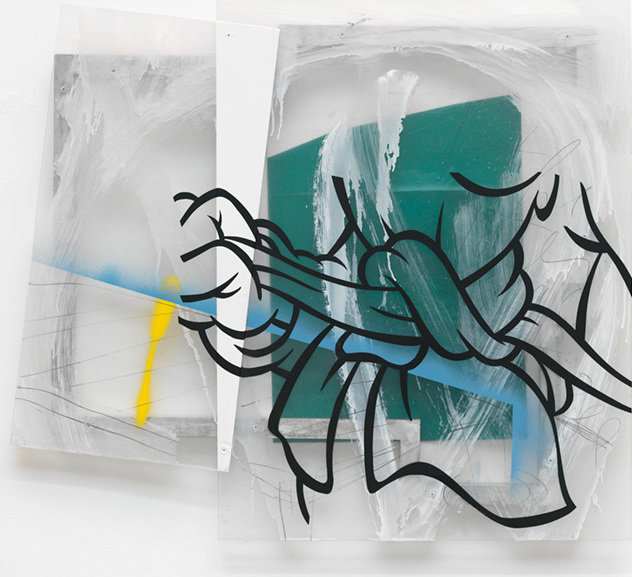
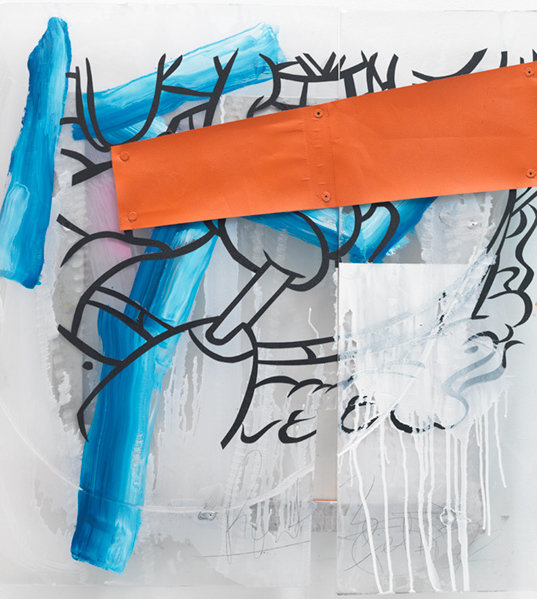
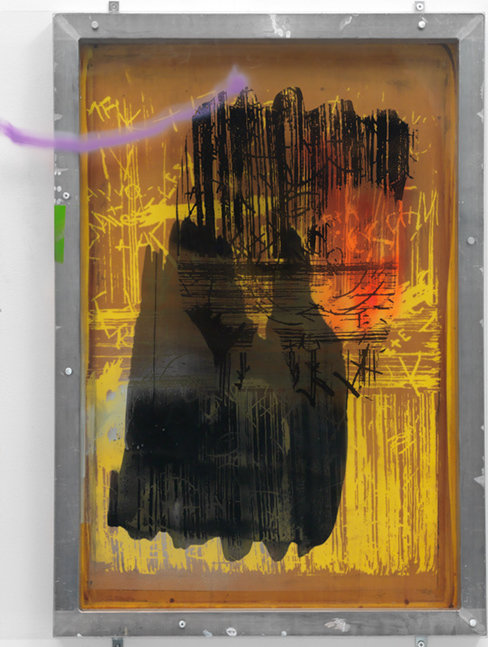
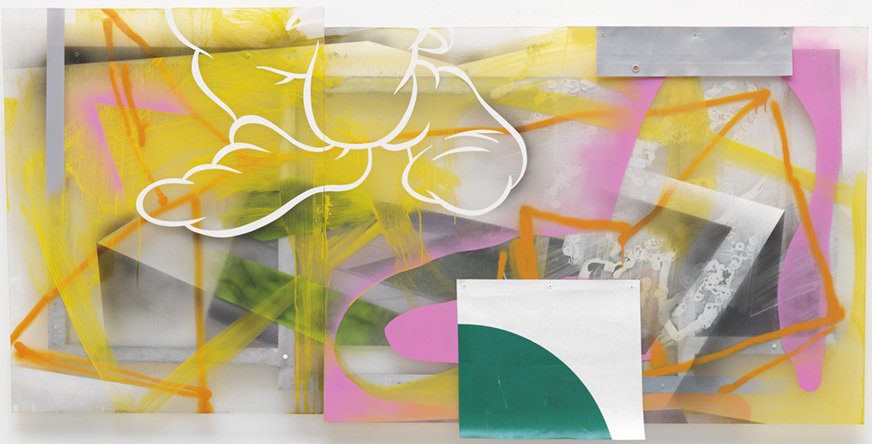
    Joe Fleming’s The Escape Club  exhibition at General Hardware Contemporary delivers  its “Pop” aesthetic mainly through appropriated fragments of black and white figures Walt Disney-fashion. These cropped slices might be of Mickey Mouse. It was hard to tell. His “Synch” piece seemed to show a belt or scarf being knotted at the waist of a jacket. It brought to mind Mickey’s role as “The Sorcerer’s Apprentice,” though the cloak didn’t match, something which a bit of research revealed. Just the same, in Fleming’s work, this “synching,” or tying elements together did the trick, reference or no reference.

    Joe Fleming, Synch, 2017, enamel on polycarbonate and aluminum, 34″ x 39″. Courtesy GHC

    I wanted to believe that the show’s title, The Escape Club, might have a direct tie to fantasy in the Disney sense, serving as an invitation to go on some magical tour of, say, a Fleming Fantasia. The polycarbonate supports with their rivets and aluminum supports, however, brought it all down to earth abruptly. These washed-over, scuffed objects might have been the found left-overs of a storefront make-over.

    Joe Fleming, Float On, 2017, enamel and collage on polycarbonate, 24″ x 22.5″. Courtesy GHC

    To be sure, Fleming’s “performative” paintings are vehicles, not only the evidenced vestiges of his own creative output, but works that are skilfully executed to boot. The artist always has been firmly in the driver’s seat when it comes to paint-handling. To Fleming, slicing through patches of sloppy washes are not a problem. The tight, black ribbon curves of a cartoon drapery fold are negotiated in silky smooth strokes. This deft juggling of image, paint, and support aid in an easy glide from wall to viewer. Each work seems to waft or float, hovering momentarily at the point of retinal ingestion.

    Joe Fleming, Scratched, 2017, mixed media, 40″ x 28″. Courtesy of GHC

    If all this signifies a fragmented, Humpty-Dumpty world, it’s not Fleming’s fault, surely. The artist is merely playing back judiciously assembled clips from a swirling media stream, over-saturated and achingly bereft of coherence. Small wonder that the exhibition title seems to be an invitation to join this Escape Club.

    Joe Fleming, There Goes the Neighbourhood, 2017, enamel on polycarbonate and aluminum, 36″ x 76″. Courtesy of GHC

    Steve Rockwell

    *Exhibition information: October 12 – November 18, 2017, General Hardware Contemporary, 1520 Queen Street West, Toronto. Gallery hours: Wed – Sat, 12 – 6 pm.

  • The Anxious Body / Angell Gallery

    Installation view of the The Anxious Body at Angell Gallery, 2017. Photo Simon Termine

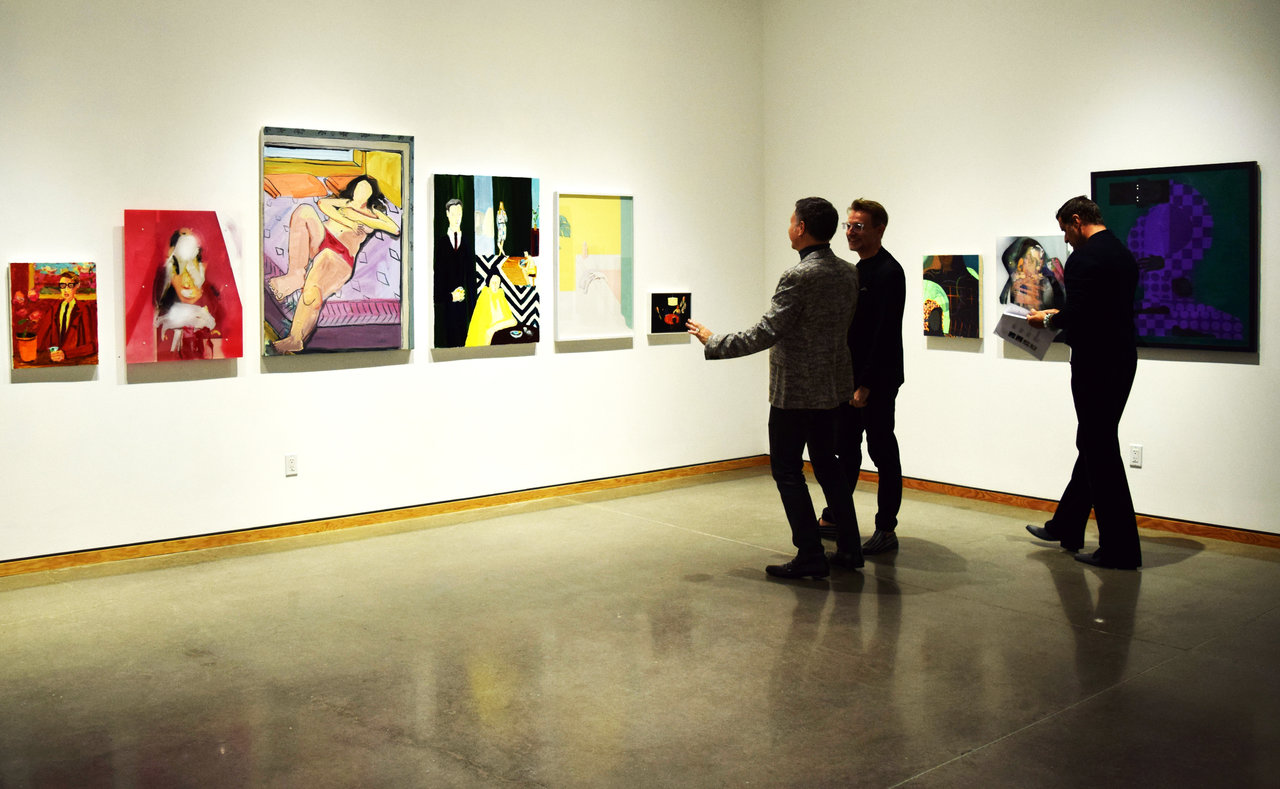
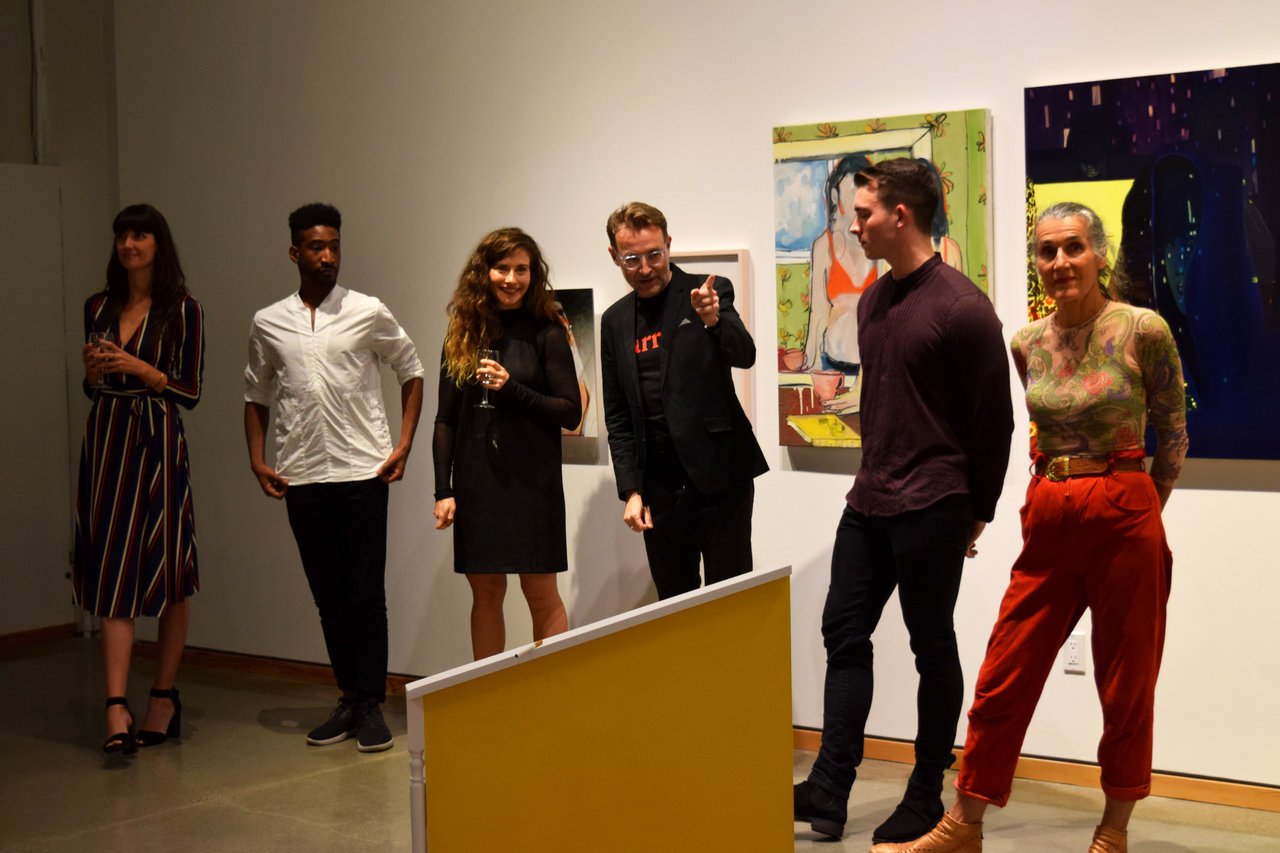
    In our increasingly social world flourished through technology, The Anxious Body is an intricate group exhibition striving to the influence of social media and current socio-political paradigms on contemporary visual art. The Angell Gallery draws from the talents of nine contemporary artists from Toronto and New York, all of whom use figurative styles in examining elements of humanity and society as it is shaped in our given context. In contrast to the instantaneity and accessibility of digital images, paintings and drawings allow for slowed, contemplative moments that compel its viewers to consider laden aspects of their lives. Artistic traditions, especially with regard to genre painting and representations of the body, physically portray societal conditions, and this particularly relevant in a time when our bodies – with regard to race, gender, and self-identity – are socially emphasized.

     Artists (from left to right): Kathy Osborn, Johnathan Key, Stella Cade, Bill Clarke (curator), John Holland and Natalka Husar. Photo: Simon Termine

    Every artist in this exhibition explores the anxieties associated with our outward identities. Kathy Osborn’s works depict haunting moments of daily life that are deceptively candid and mundane. Despite their modest luxuries, there is an intrapersonal tension and social awkwardness that are instinctively unnatural. During the exhibition’s introductory artist talk, Langdon Graves explained that her drawings and installations are inspired by ghost stories told by her grandmother and other women in her family. Fearful of the loss of these narratives, the drawings are meant to visually record these stories of ethereal experiences in the lives of the women in her family, thus striving to unite the women of her family through these shared narratives.

    Kathy Osborn, Lamp, 2017, oil on paper on board, 14 x 10 inches. Courtesy of Angell Gallery

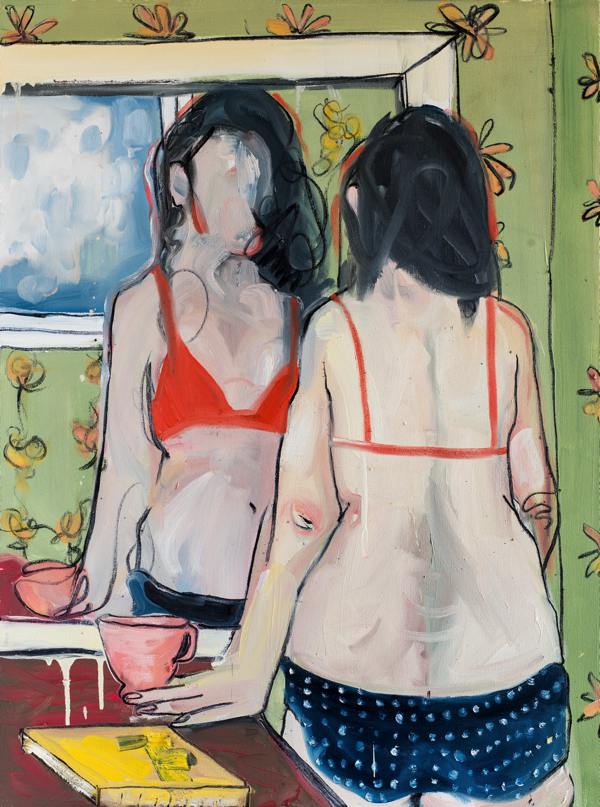
    Stella Cade shifts this focus from familial to personal identity. Her works consist of feminine bodies positioned in self-centering, often evocative positions. They contain elements of self-portraiture that are meant to juxtapose the contemporary phenomenon of “selfies,” which are generally intended for public vanity. However, rather than capture these moments for the purpose of open consumption, they are intended as moments of solitary healing from the constant traumas of society, emphasizing the experience as opposed to the identity.

    Stella Cade, As a Reminder: People Have Rich and Full Lives that they are Living Outside of Your Immediate Reality, 2017, oil on canvas, 40 x 30 inches. Courtesy of Angell Gallery

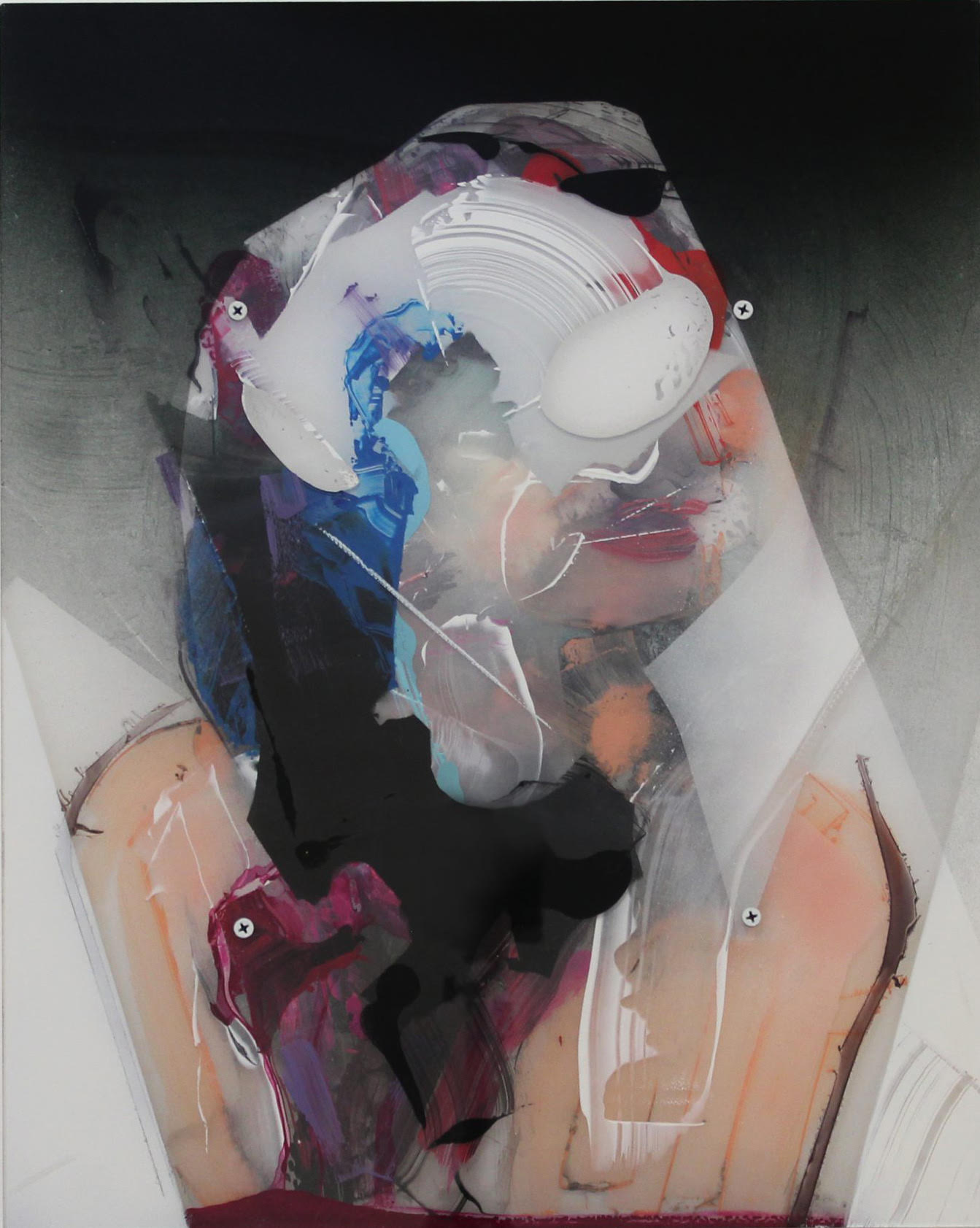
    Following the selfie motif, John Holland goes on to address the medium directly and how it shapes notions of curated identity. Painted on translucent Plexiglas with image after image layered over one another, this method alludes to use of digital filters that give further possibilities to the user in shaping their appearance. Yet the more that these figures edit their portraits, the more their identity is stripped away and reduced to a carefully-shaped façade.

    John Holland, Brannan, 2017, acrylic and plexiglass on panel, screws, hardware, 20 x 16 inches. Courtesy of Angell Gallery

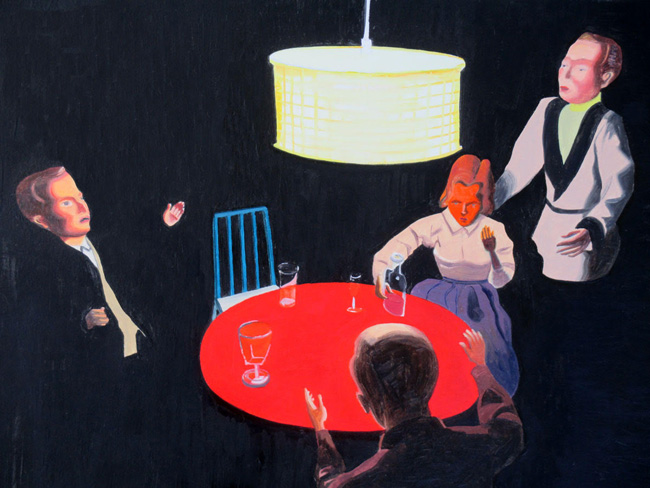
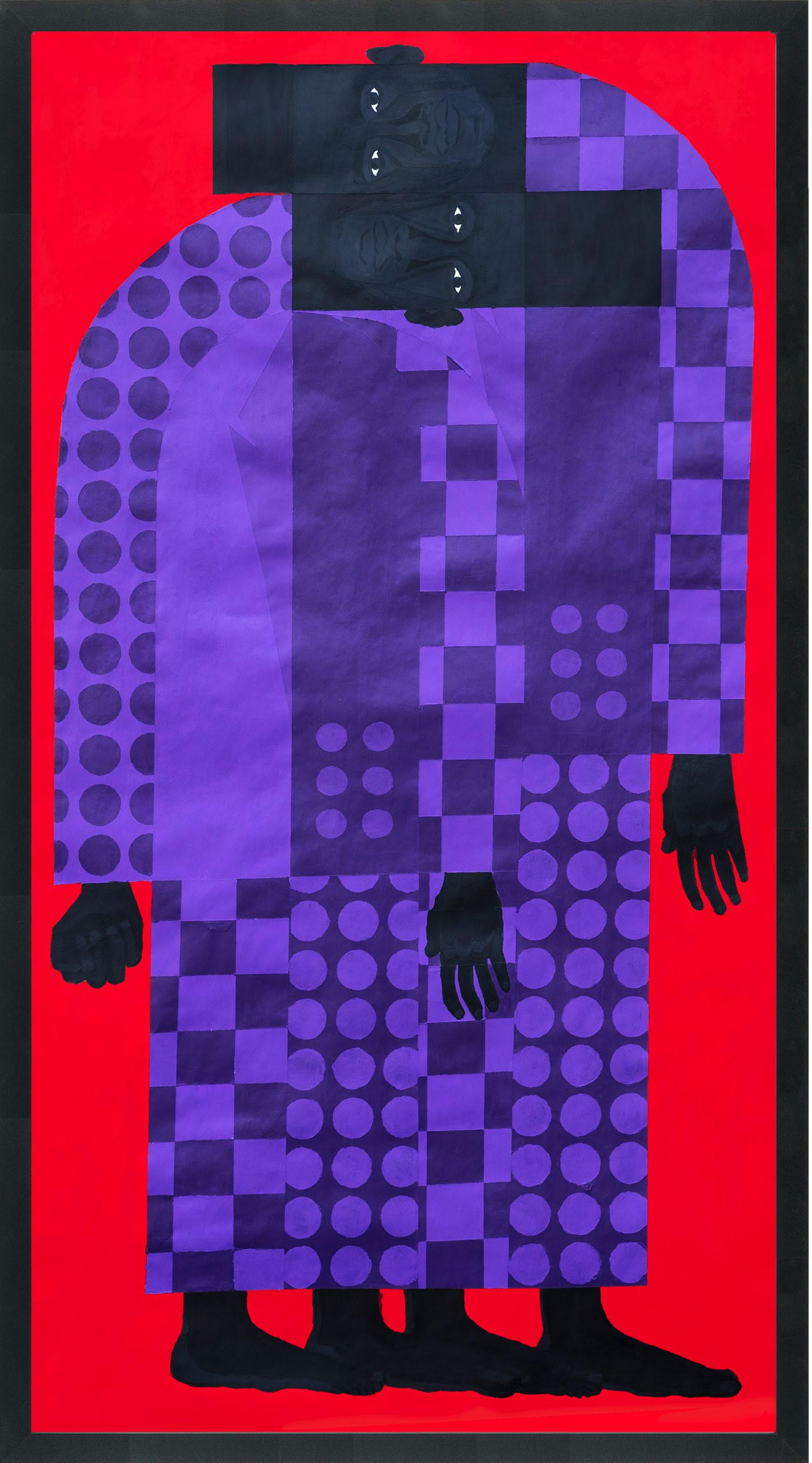
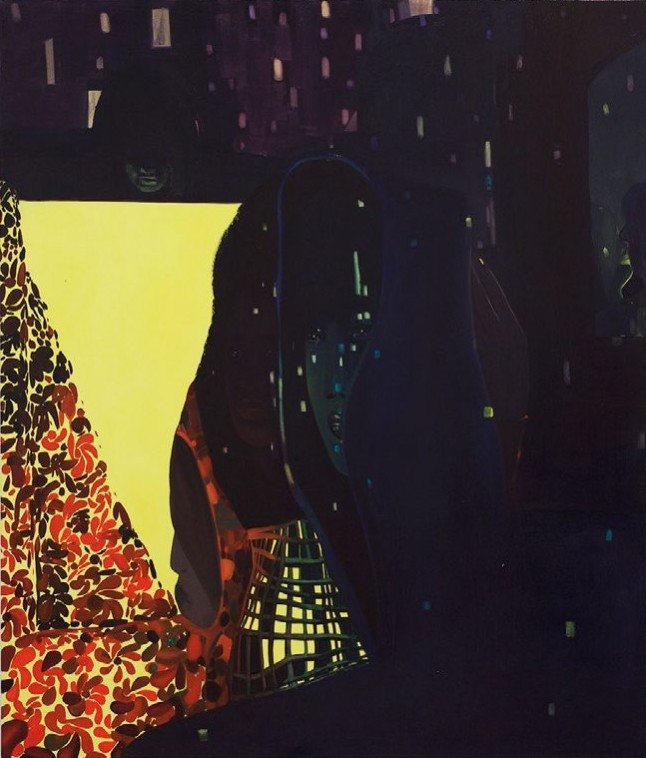
    One of the most controversial aspects of social identity stems from the notion of race and how they too are victims of external influence. The works of Johnathan Key depict young black men adorned in cultural garb that are then forcibly contorted within the picture frame. Their formidable expressions suggest an internal solidarity despite their confinements. The distinctive choice of colors is – as explained by Key himself – an allusion to his own identity: his origins in Alabama, his family, and his queerness among many other personable qualities. It is in face of these societal hardships and forced perspectives that authenticity can truly be found.

    Jonathan Key, Man in the Violet Suit, no. 6, 2017, acrylic on paper, 61 x 40 inches. Courtesy of Angell Gallery

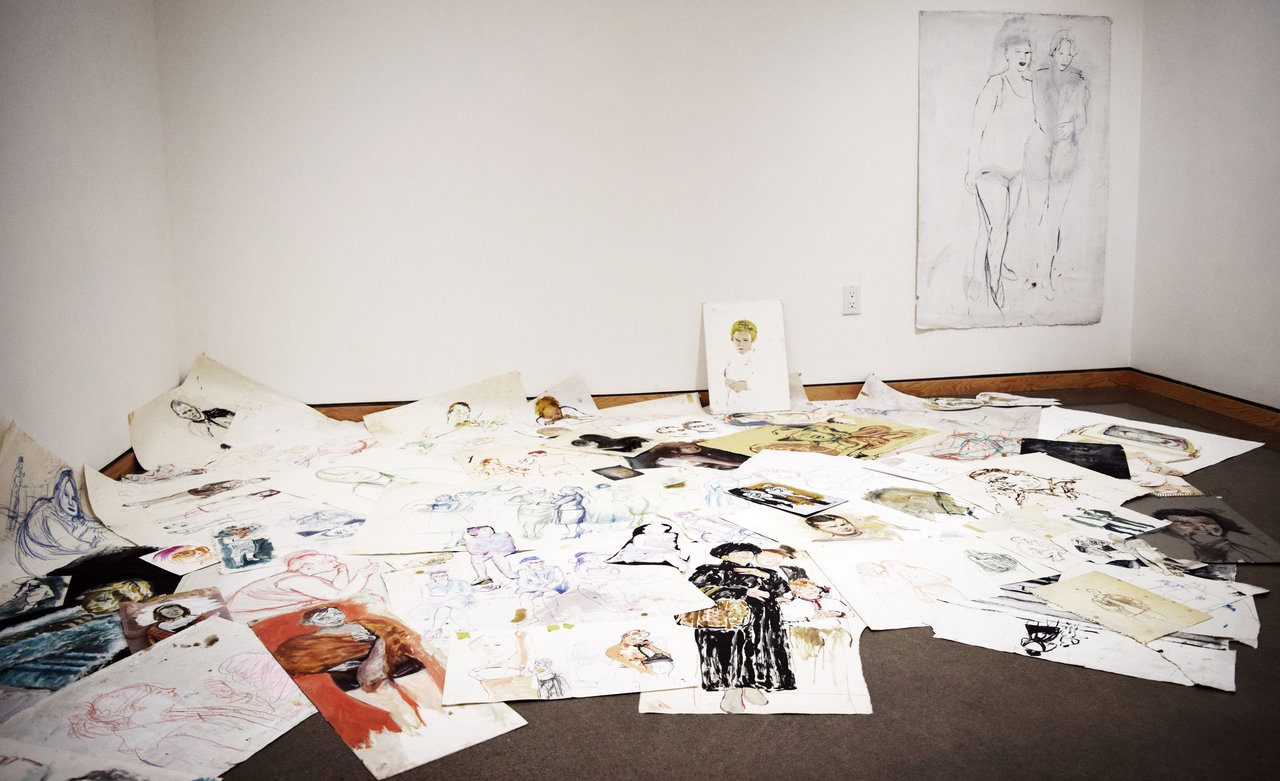
    Natalka Husar adds her own extensive collection of character drawings to the exhibition as a multi-faceted approach to her Eastern-European heritage as well as her own creative manifestations. Thirty years of sketches flood the floor of the room, some complete and others forgotten. She procedurally generates her sketches as ideas of new personalities and moments arise.

    Natalka Husar, Inventory (collected 2017), 1987 Present Preparatory sketches, dimensions and medium variable. Photo: Simon Termine

    The culmination of these artists’ works provides an extensive exploration into the impact of our modern world on the creation of visual art and the very concept of self. I have written here only the artists that were available to attend the opening and speak to their own works; I have yet to delve into the sublime, Baroque-inspired works of Rafael Ochoa, the vibrant expressionism of Bradley Wood, or the online illusion of identity as captured by Coady Brown.

    Coady Brown, Signal, 2017, oil on canvas, 42 x 36 inches. Courtesy of Angell Gallery

    Bradley Wood, The Ivy, 2017, oil on canvas, 20 x 16 inches. Courtesy of Angell Gallery

    Nevertheless, the true gravity of this exhibition could only be enjoyed through one’s own non-digital experience.

    Installation view of the The Anxious Body at Angell Gallery, 2017. Photo Simon Termine

    Simon Termine

    *Exhibition information: October 13 – November 11, 2017,  Angell Gallery, 1444 Dupont St., Unit 15, Toronto. Gallery hours: Wednesday – Saturday, 12 – 5 pm.

  • Interview with Judi Michelle Young

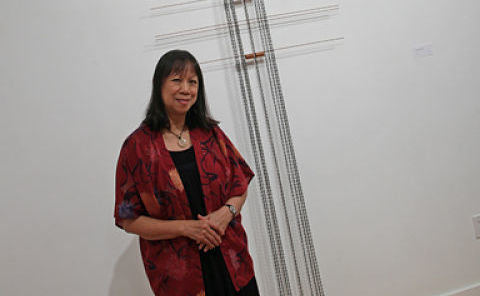
    Judi Michelle Young in front of her sculpture, Roots (detail). Photo: Marg King

    Interview with Judi Michelle Young (JMY) by Alexis Moline (AM)

    AM: You are using your Chinese name, Tsuii Yiin for this show. Why? Could you briefly explain the history you explore in the exhibition?

    JMY: I felt that I should use my “real name” for father’s sake since it’s a historical narration about him and our family. Judi was a “name” given me by a family friend, since elementary school teachers could not pronounce my name.

    June Callwood (Canada’s revered writer and activist) had encouraged me to write down my family’s story – but I felt I had to do the “visuals” first…. as I am a “visual artist.”

    China was experiencing the worst period of famine ever! Even though father and his brothers (my uncles) were from a well-to-do landowners family – they felt forced to join the “help Canada build the western part of the railway” group in late 1870s. These labourers were paid a “princely sum” of 75 cents/day. That amount was to cover their expenses: winter clothing/gloves, cooking equipment, food supplies, and tents that they bunked in. Other workers were paid more without those expenditures. Unfortunately the directors of the labour group had also reneged on their original agreement. It was stipulated that they would bring the workers in, and once that portion of the railway was completed – the labourers would be sent home. Instead the workers were left in Canada as “aliens” and a “Head Tax” was implemented on all “in-coming” immigrants from China after the completion of the railway.

    Mountain #1 & 2, cotton, anodized aluminum, glass, steel, copper, 345 x 240x 10 cm each

    Due to the fact that father was literate, learned English quickly and assisted in translating for the CPR – may have helped to be awarded Canadian citizenship in 1899.

    Even though father received this “great honour” – he felt it was time to settle down with a wife from China. But he was still subjected to the Head Tax, which he paid – $50 for himself and $50 for his bride #1. She was deported on entry. Sadly when he went back to look for her, she had already left, feeling that he had deserted her. Yet he never knew he had fathered a daughter – nor ever saw them again! Marrying a second wife, he paid $100 for himself and $100 for bride #2. She was also deported on entry. That did not deter father! On his third try – he found bride #2 and paid $500 for each. But this time he was successful.

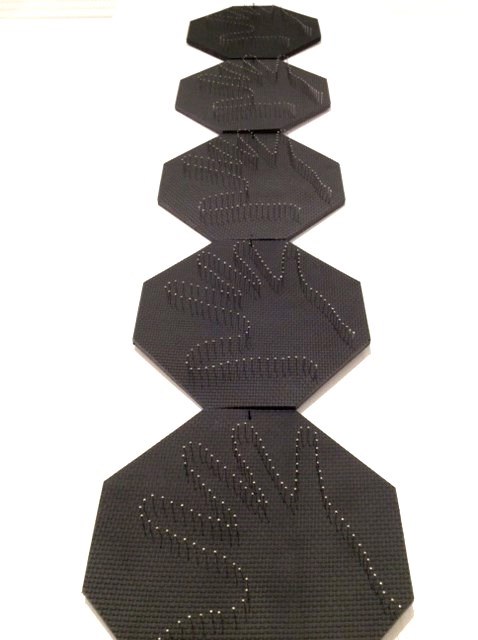
    Hands of Pain, stainless steel pins, latex, 240 x 27 x 3 cm

    By the 30s, outliving his second wife, father returned to China to marry a third time. Due to the “Exclusion Act” mother could not enter Canada at all. Once again, communication had ceased, due to the Japanese invasion, and all funds sent by father was confiscated. My brother died of starvation and father never knew that mother had given birth to a son.

    After the war father returned to search for mother – and amazingly – bumped into her on a busy street in the city.

    Unfortunately life took another sad turn as father completed his new brick house for wife #3. Civil war had broken out forcing them to leave for Canada. Luckily the Exclusion Act had already been repealed!

    AM: How has your father’s experience inspired your work until now? Have you created any other art works on this subject before?

    JMY: Father’s and mother’s experiences have influenced my life and my work in many ways. Being raised in Toronto by very traditional Chinese parents helped me to “grow up quickly”. There was no time for regular “childhood.”  I did laundry and scrubbed floors by the time I was 7- 8 year old. My financial experience took place as a cashier by the time I was 9. I was always the first to get a summer job. Saving what little I earned helped to put me through school and university.

    Working hard, having integrity and taking pride in doing my best was important in our family.

    I’ve always challenged myself to be creative and truly original in my work. As it was once said by one of my professors: I’m always “fighting with my materials.”

    Encouraged by June Callwood to focus on my family’s history, I started working on various parts for many years.

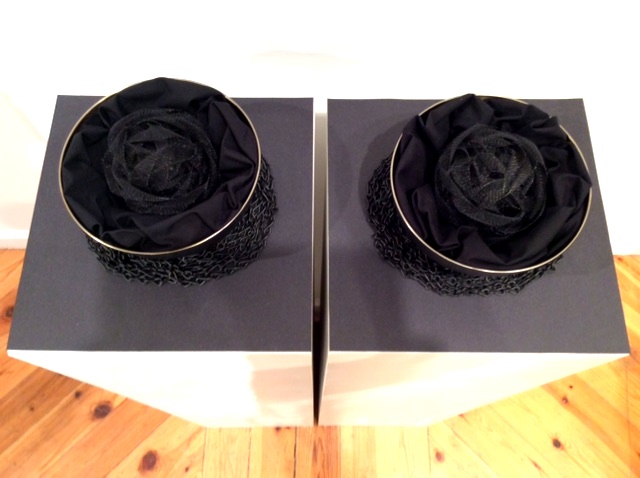
    Bowl of Cherries? #1 & #2, cotton, anodized aluminum, glass, stainless steel, 14 x 23 x 23 cm each

    AM: How were you able to translate your emotional and personal connection of Chinese labourers working for the CPR into sculpture? Did you find it difficult to distill such a complex history into art?

    JMY: It was quite difficult to separate the two, especially in the beginning. That may be why I couldn’t tackle this at all for quite a long time. Self analysis helped to “distance myself from the emotional” – enabling me to that creative space in order to explore these industrial materials. These materials narrated my story.

    AM: The theme of shrouding eyes and hanging heads is present in these works. How do you feel this metaphor works and what do you want to express with them on various levels?

    JMY: Each of the shrouded eyes are made individually by hand: glass balls representing the eyes – shrouded by anodized aluminum screening – is a metaphor for “blindness.”  These men were brought here “blindfolded” to blast through the Rockies….where more than 4000 died in order to consolidate Canada’s confederation.

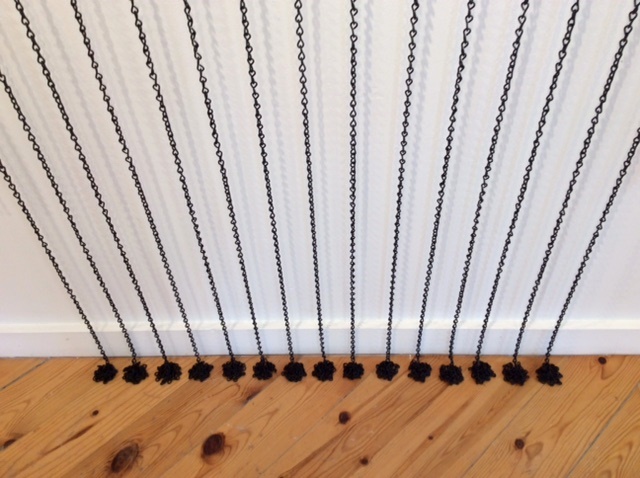
    Mourning Veil, steel, 378 x 107 x 7 cm, detail

    AM: The use of industrial hardware and dark imagery is significant in this exhibition. How did you decide to use these materials and visuals?

    To be honest – I don’t know exactly. I like non-typical materials. And by combining various materials helped me to tell my story.

    AM: This show reveals a very introspective and intimate perspective on a very significant moment in Canadian history. Do you want to increase awareness and understanding of this troubled part of the past?

    JMY: Of course! Many Canadians are not aware of this important part of Canada’s history. Chinese contribution in consolidating confederation is not taught in schools. In fact – it’s not mentioned anywhere! Pierre Burton’s 2-volume book on the building of the railway contains one small paragraph which mentioned that the Chinese workers were paid “the lowest.” And that’s it!

    Very few people have personal knowledge of this sad part of Canadian history. My sister and I are probably the only “living direct-descendants” of a CPR railway worker in this country!

    And finally – I’d like to thank Susan Crean (Author of Emily Carr – The Laughing One) who curated my show –  for her understanding, patience, and encouragement.

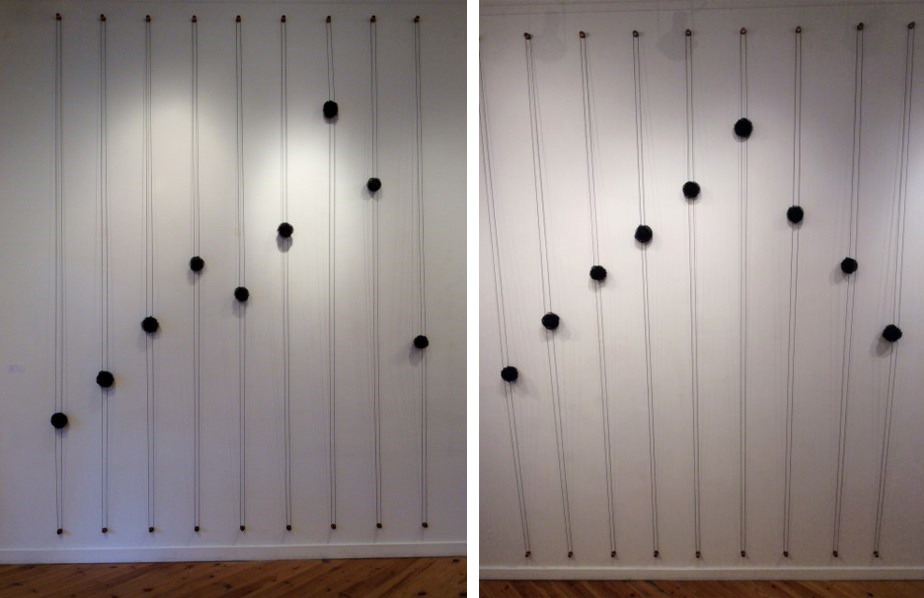
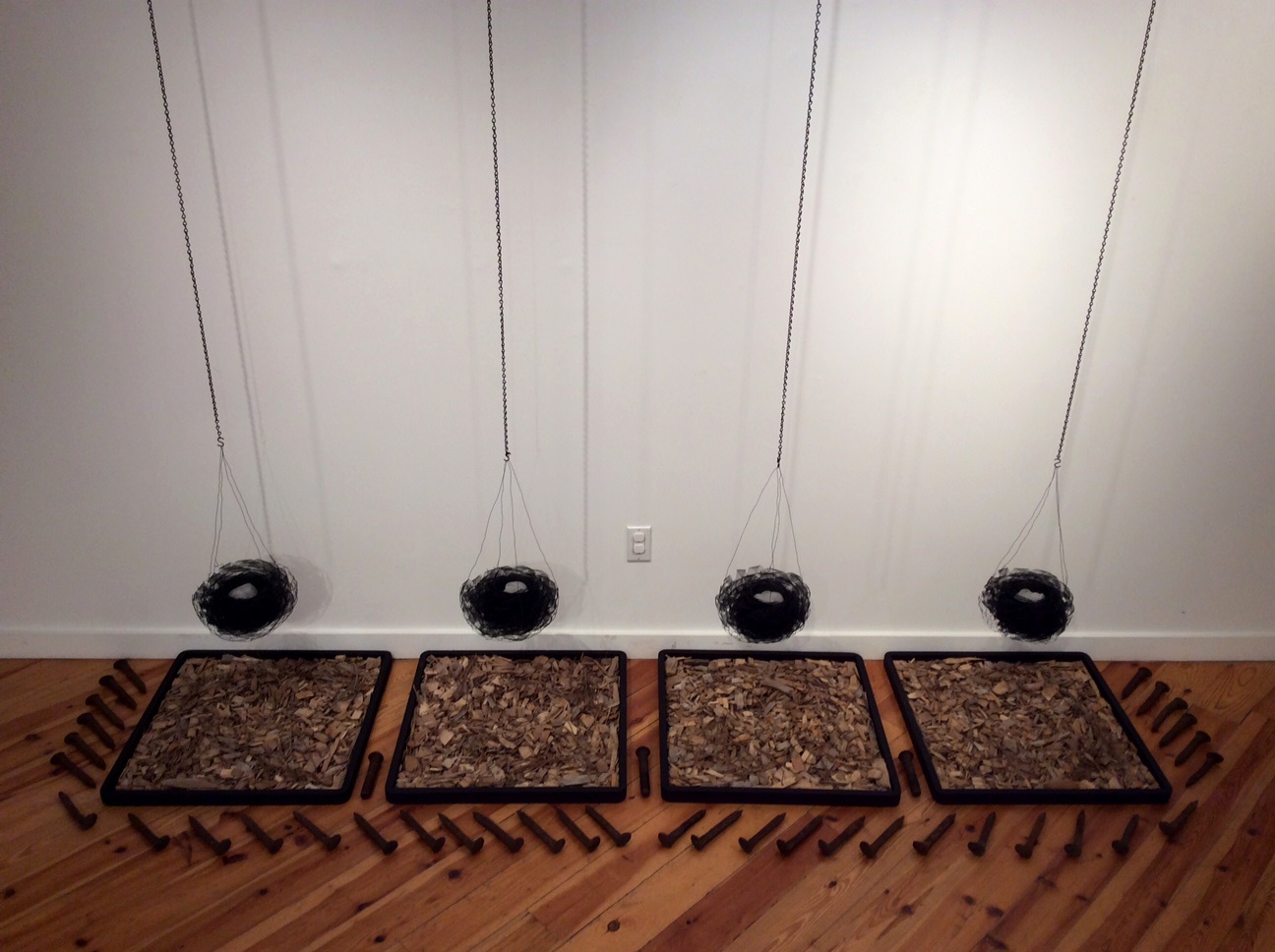
    Portraits I – IV, steel, anodized aluminum, wax, aluminum, cedar, longan twigs, iron bolts, iron spikes 315 x 285 x 80 cm

    AM: What’s next Judi?

    JMY: Wait … and see…

    Images are courtesy of the artist.

    *Exhibition information: Tsuii Yiin, Just-US III, curated by Susan Crean, October 14 – November 3, 2017, Canadian Sculpture Centre, 500 Church Street. Gallery hours: Tue – Fri: 12 – 6, Sat: 11 – 4 pm.

  • FOCUS: Los Angeles / Art Toronto 2017

    FOCUS: Los Angeles / Art Toronto 2017

    Two days should have been enough to cover FOCUS LA at Art Toronto. Blame interruptions by well-meaning friends, lazy feet, and occasionally getting lost in the art fair weeds. Ferreting out all the pieces to the Santi Vernetti-curated LA Project Series: And the Sky is Grey would have been great. What I did manage, was spend some time with the eight FOCUS LA participating galleries, and snatch about half the panel discussion LA Talk: Beyond the Hype. My own familiarity with LA art scene begins to thin out somewhat in the middle of the 2010 decade. So much has happened in Los Angeles since. What I managed to glean was merely a core sample of a vital, if not explosively dynamic arts community.

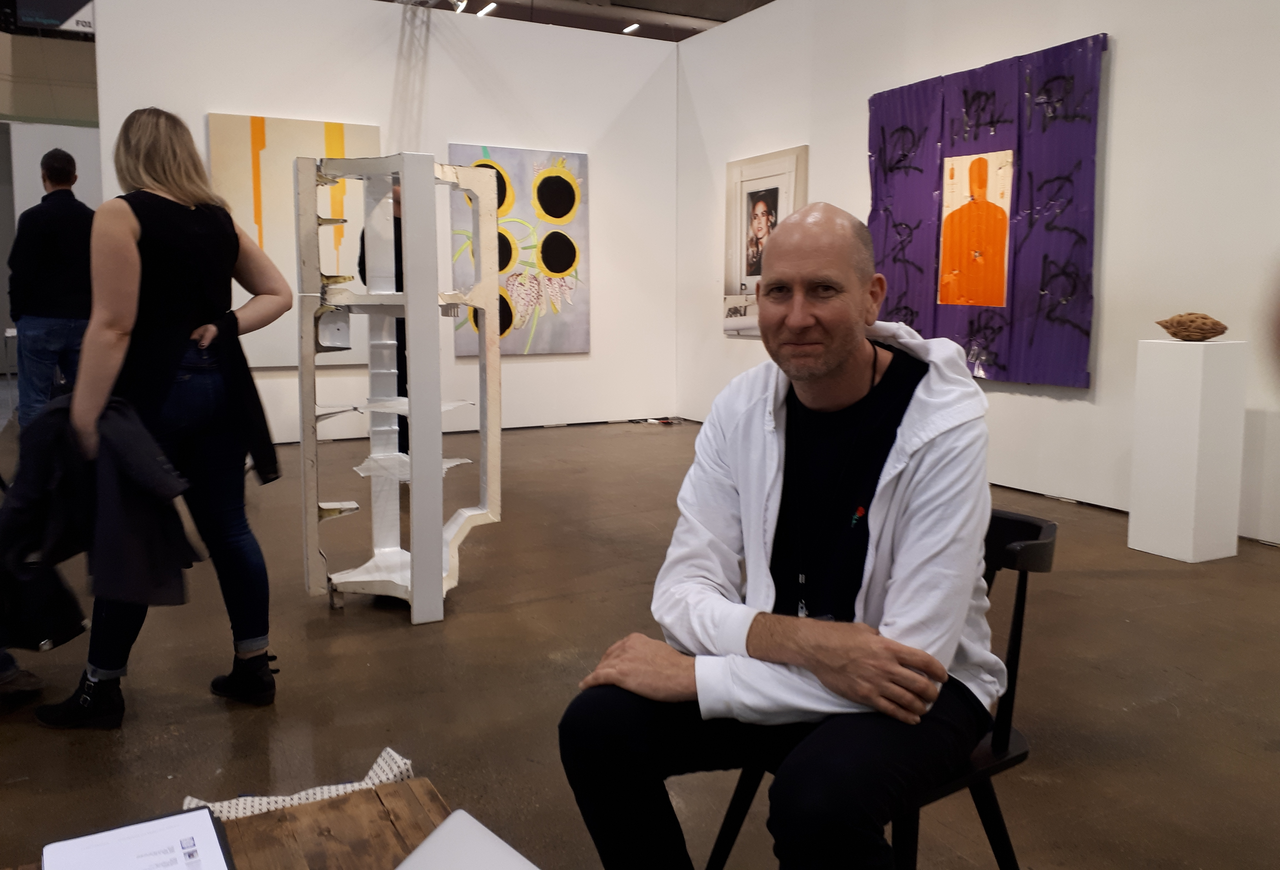
    Santi Vernetti, Curator of FOCUS: Los Angeles said, “The best thing about LA are the artist-run galleries. Hundreds of artists are moving here. These artist-run spaces are often extensions of the schools, such as Cal Arts. LA is welcoming. There are spaces here. With the shifting geography of the city’s cultural landscape the lack of funding for re-development is a problem, however. While a dozen major international galleries may set up here, there is a lack of dialogue with the community.” He sees the lack of support and funding as a crisis, not only in Los Angeles, but across the U.S.

    Santi Vernetti, Curator of FOCUS: Los Angeles 2017. Courtesy of Art Toronto

    Anat Ebgi

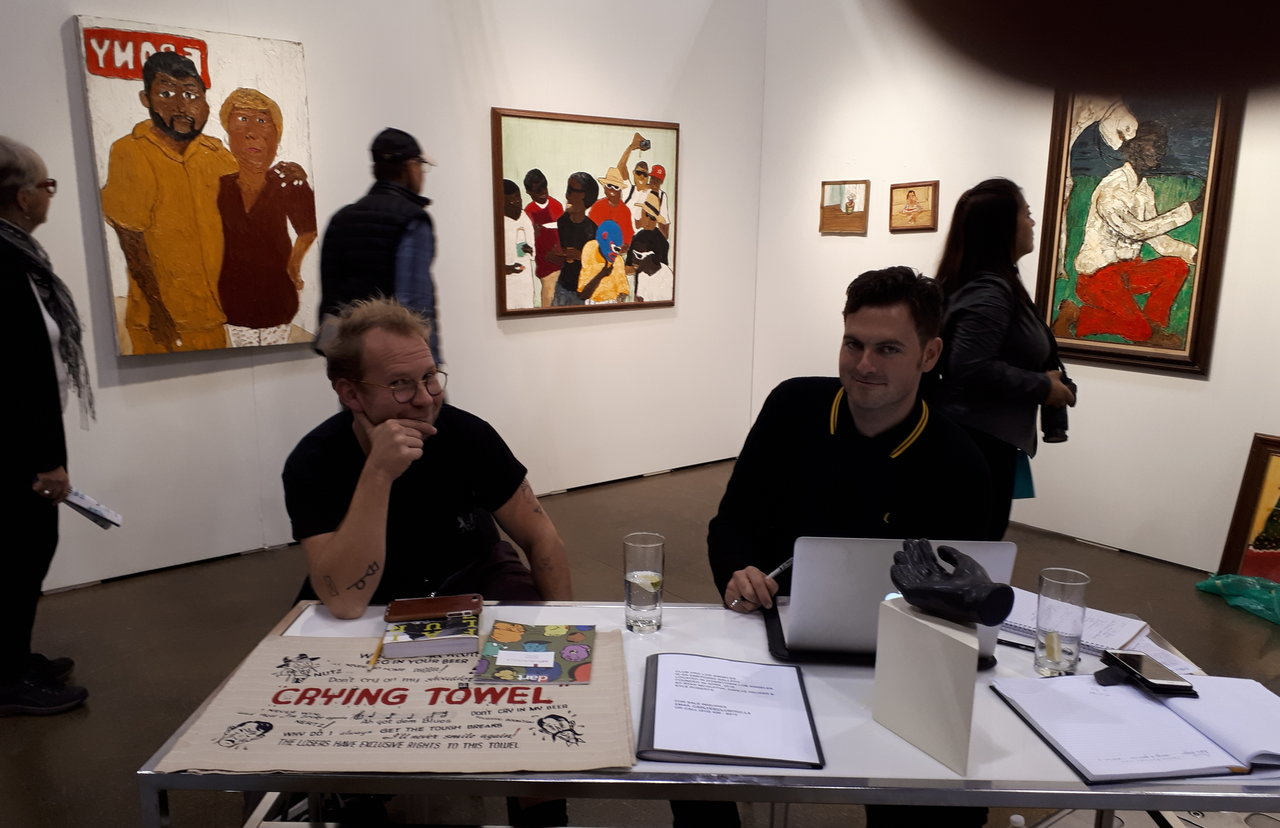
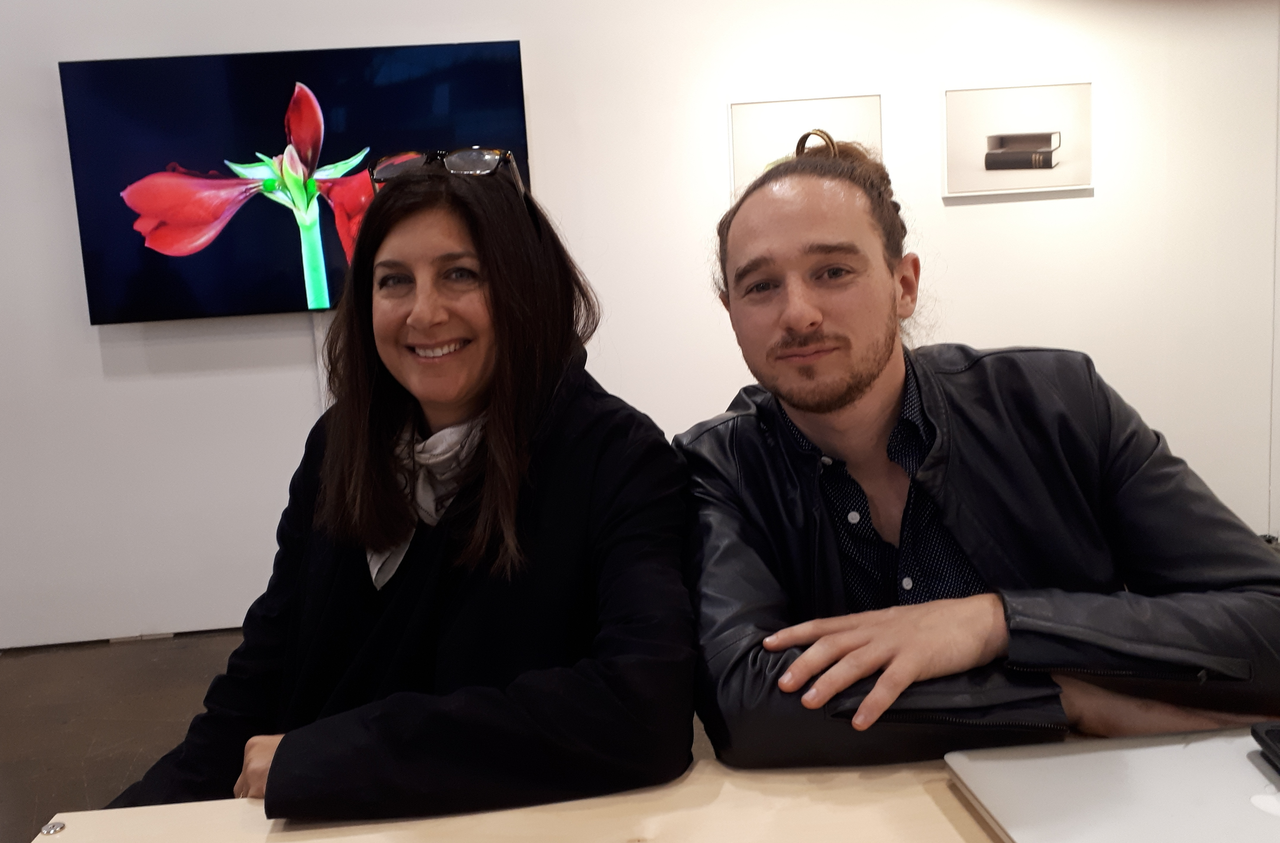
    Gallery director Stefano di Paola studied art history at University of Southern California with an interest in academics and research. He likes working in a gallery because he gets to work directly with the artist and their work. Every six weeks there is something new. It is Anat Ebgi’s first time at Art Toronto. They were invited by curator Santi Vernetti to come here. It turns out that Stefano and Santi were at college together in different programs. The gallery brought Montreal artist Magalie Guérin here as a way of introducing her to collectors and curators here.

    Gallery director Stefano di Paola

    BBQLA

    BBQLA describes itself as a migrating installation, rather than a gallery. Conceived by Timo Fahler, Thomas Linder, and Adam Beris, who went to school together in Kansas City, they host BBQ’s that might be attended by 200 people. “The Gallery” evolved, 2-1/2 years ago from back yard and shed, to a temporary studio space, with BBQ’s of course. It was, and is, very casual. Timo Fahler said, “It’s been great. We’ve sold work.” I spoke with BBQLA artist, Daniel Gibson, who describes his performance as doing a public service, a spirituality. He invited me to take part. This turned out to be Cee-lo, a gambling game with three dice. First throw, I rolled a perfect 4-5-6, winning the bank.

    BBQLA comes to Toronto

    Club PrCo Los Angeles

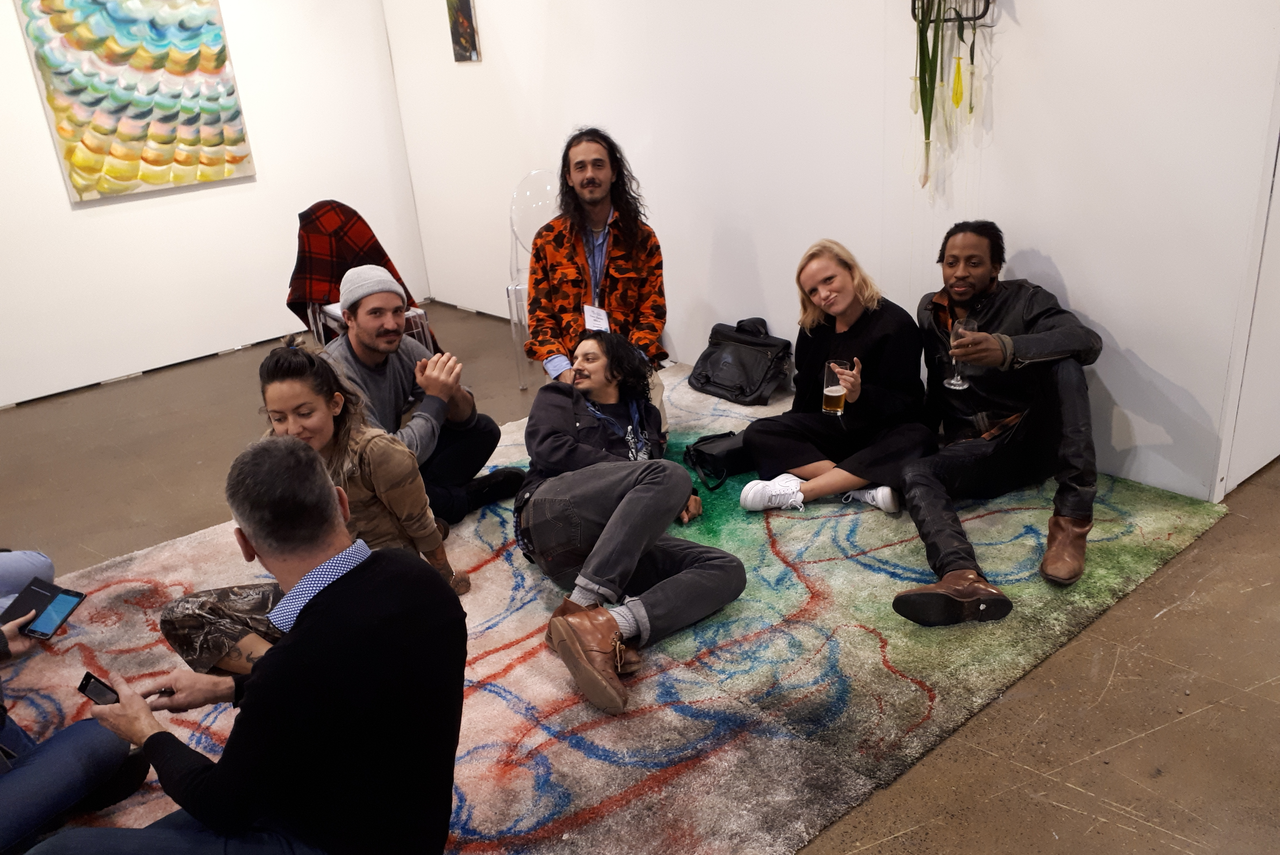
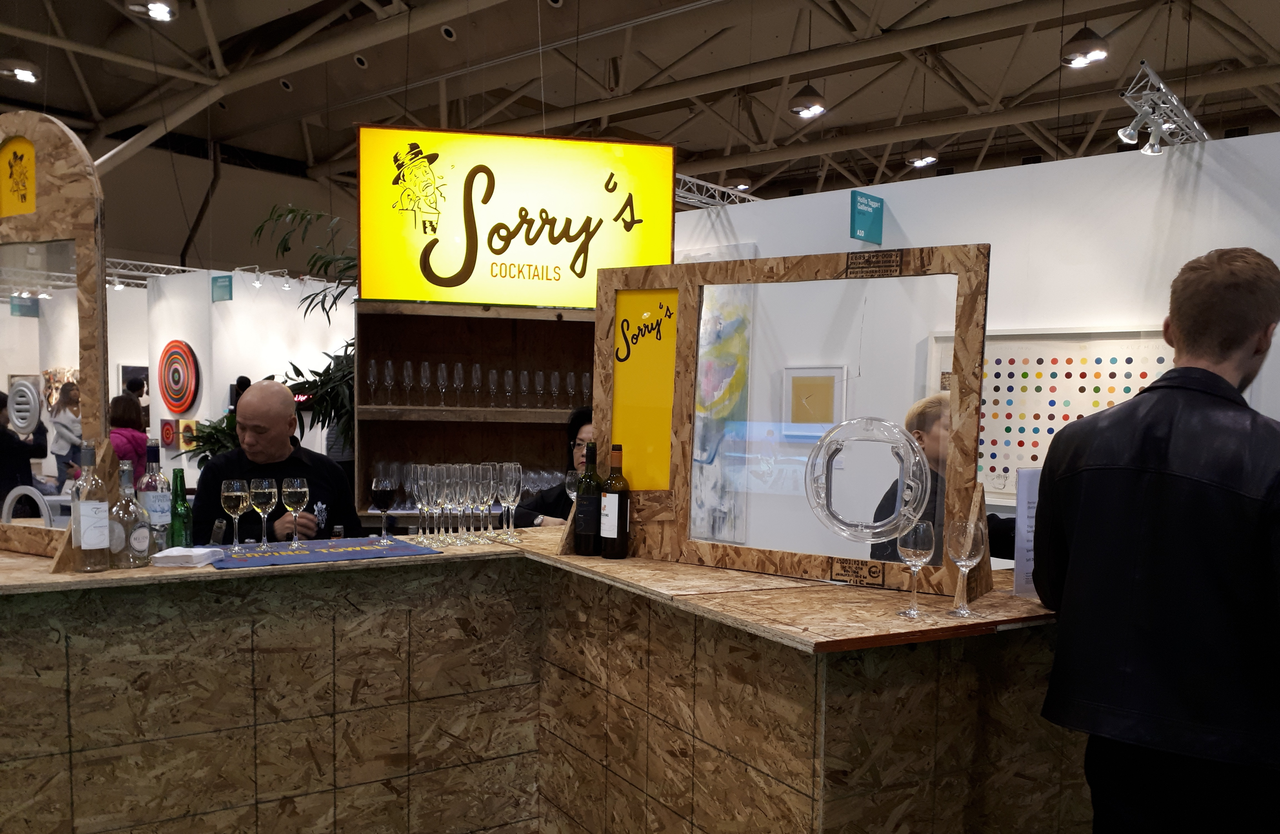
    Kyle Roberts of Club Pro Los Angeles said, “There is so much art happening in Los Angeles, that there is tension, artists making work and trying to fit with the politics. It’s a mixture of dog shit and lavender.”  Sitting with Kyle was artist, Adam Stamp who created the working bar at Art Toronto, called Sorry’s. I tested it out. It serves wine like any other bar. Adam is a bit disappointed that people don’t get that it’s art.

    Artist Adam Stamp (left) and club Pro Los Angeles gallerist Kyle Roberts (right)

    Adam Stamp’s Art bar, Sorry’s

    Luis De Jesus Los Angeles

    Luis De Jesus represents three Canadian artists, so he decided to come to Art Toronto. He was part of the Speaker Series Power Talks, FOCUS: Los Angeles: Beyond the Hype. His gallery is located in the Culver City gallery district, a new gallery area where there were previously no galleries. The change occurred after Chinatown as a gallery district began to decline, with the departure of Perez Projects for instance. The ebb and flow of culture in urban areas has become a sensitive community issue. De Jesus maintains that it’s not the artists and galleries that are driving gentrification, it’s the developers.

    Luis De Jesus (standing) at his booth with Jay Wingate (seating).

    ltd los angeles

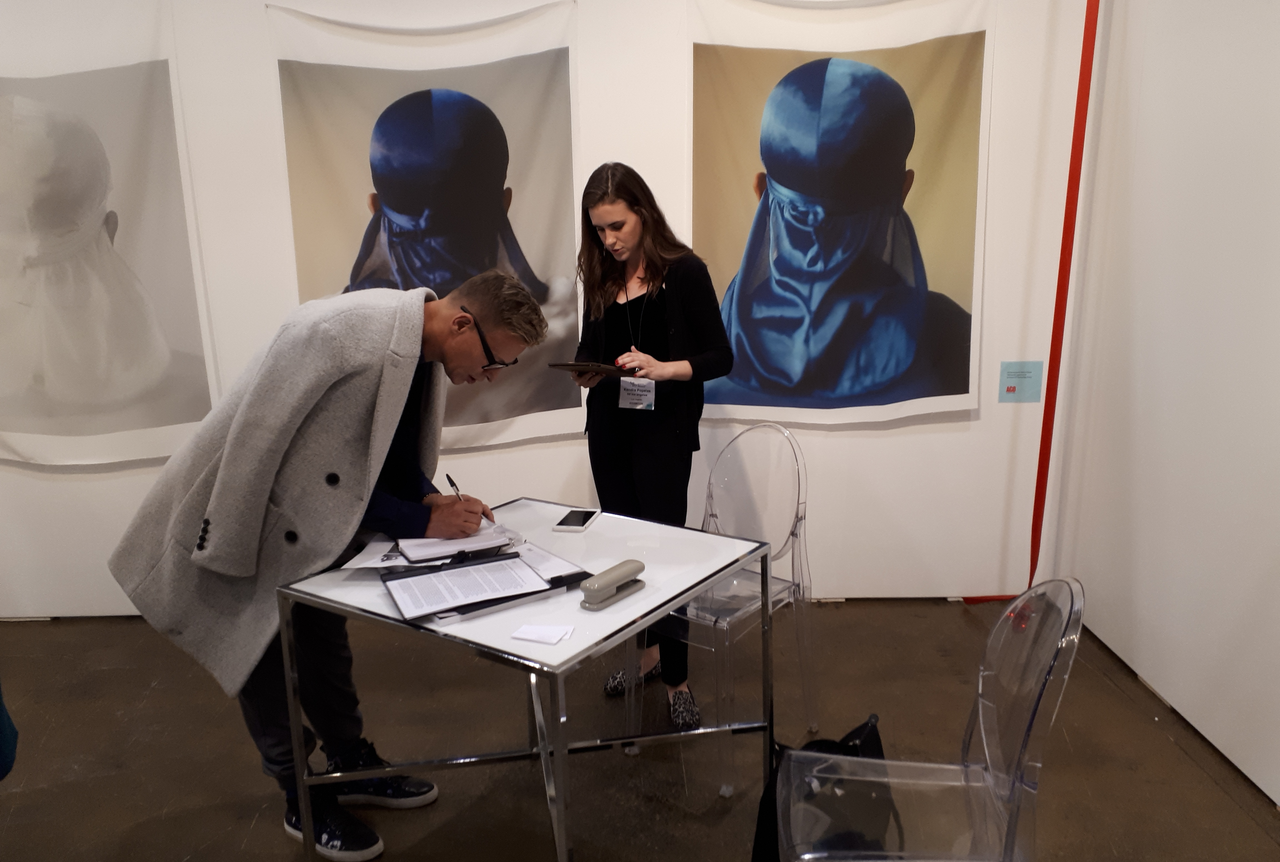
    Gallery owner Shirley Morales of ltd Los Angeles was away in Dallas when I stopped by the booth. I spoke, however, with Kendra Popelas who said, “It’s been very successful. We sold three of John Edmonds’silk prints to the AGO. TD Bank bought five of Esmaa Mohamoud’s basketballs. Her work is about masculinity and race, particularly as they relate to athleticism.”

    Kendra Popelas of ltd Los Angeles

    Moskowitz Bayse

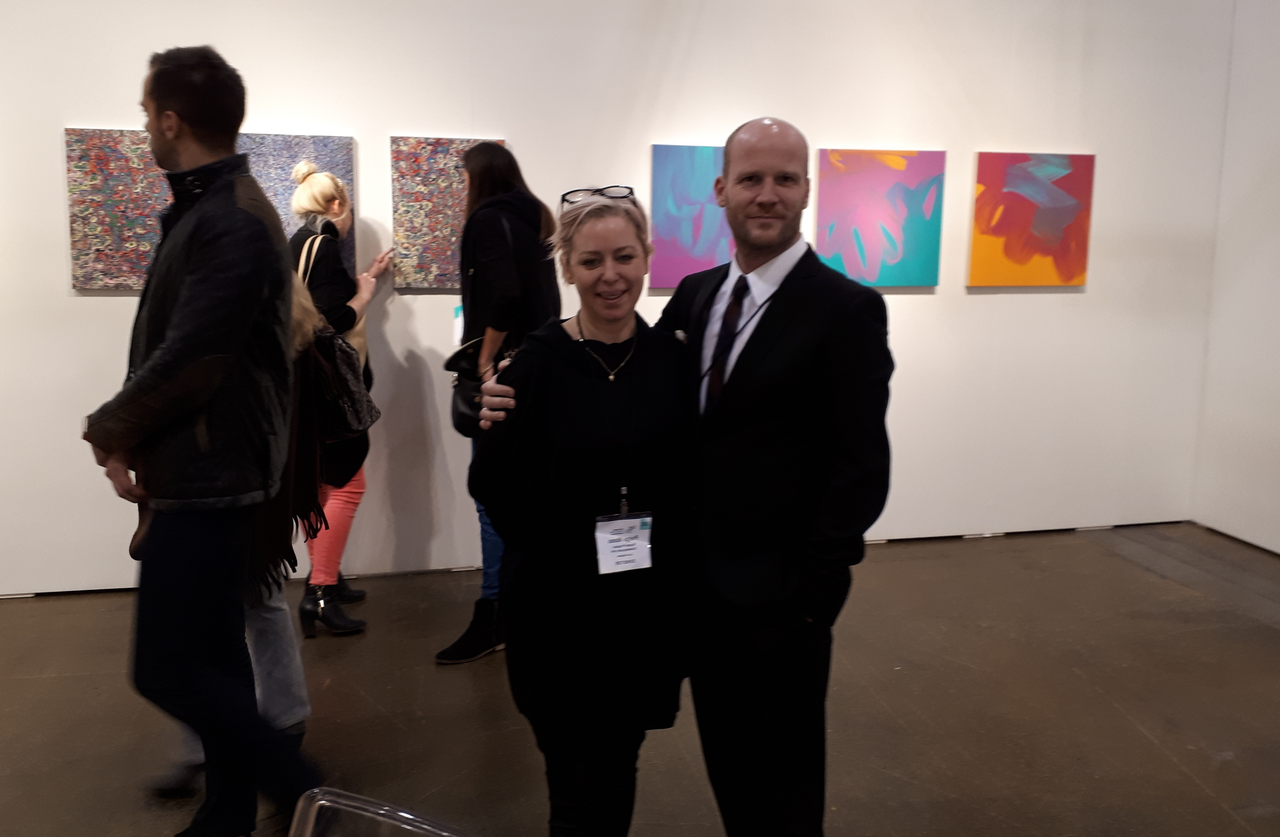
    Meredith Bayse operates the gallery with partner Adam Moskowitz in Hollywood. She noted, “The Melrose/LaBrea gallery district of Los Angeles emerged when post production in film went digital and these great spaces became available.” Adam admits that it was risk to bring only one artist to the fair, but said, “It was worth for us to be here. There have been some sales.” The artist, Kim Shoen was part of the FOCUS Los Angeles panel. She brought up the fact that a lot artist-run galleries are apartment galleries, as well as store fronts and garages. Her empty book works have an analogy to the city of Los Angeles as a site, spaces where things could take place, emptiness as possibility. She was surprised that issue didn’t crop up during the panel discussion.

    Artist Kim Shown and Adam Moskowitz of Moskowitz Bayse

    Night Gallery

    Davida Nemeroff of Night Gallery is from Toronto, but moved to Los Angeles eight years ago, opening her gallery after six months. She represents mainly L.A. artists. Her gallery is located in the downtown warehouse district. She said, “People are really drawn to the work. FOCUS LA has given momentum and interest in LA galleries.”

    Night Gallery artist Josh Callaghan with his deconstructed refrigerator behind him.

    Royale Projects

    Gallerist Rick Royale wanted to show an aesthetic through-line between four different artists at display at Art Toronto. Their only similarity is that they have lived and worked in Los Angeles for about ten years. He set out to expose a formal connection to surface, colour, and light, aspects associated with the geography of Los Angeles.

    Paige Moss and Rick Royale of Royale Projects

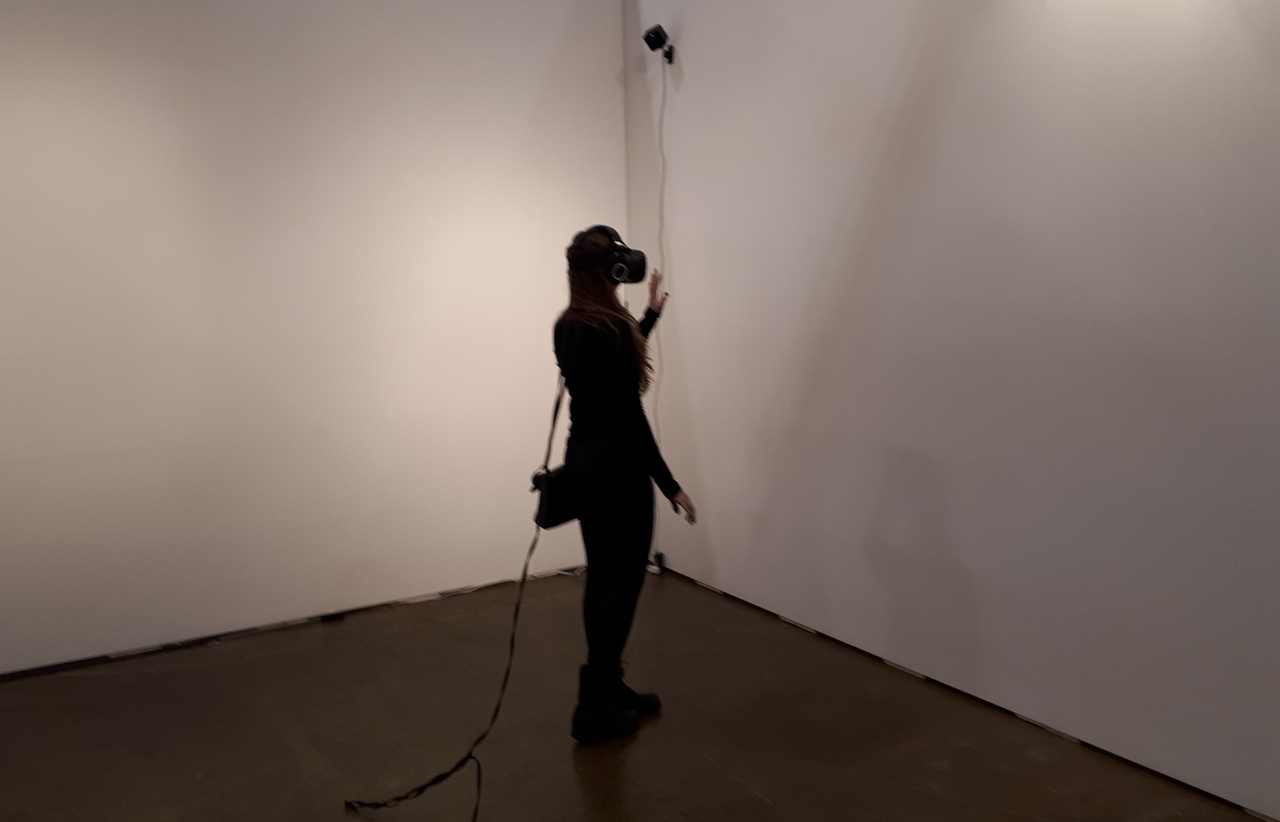
    FLOAT Museum, a future-facing virtual institution from Kate Parsons, was part of  the FOCUS LA  Project series.

    Kate Parsons VR installation at FLOAT Gallery

    Text and photo: Steve Rockwell

  • ART TORONTO, 2017

    Photo: Emese Krunák-Hajagos

    October 27 – 30, 2017
    METRO TORONTO CONVENTION CENTRE

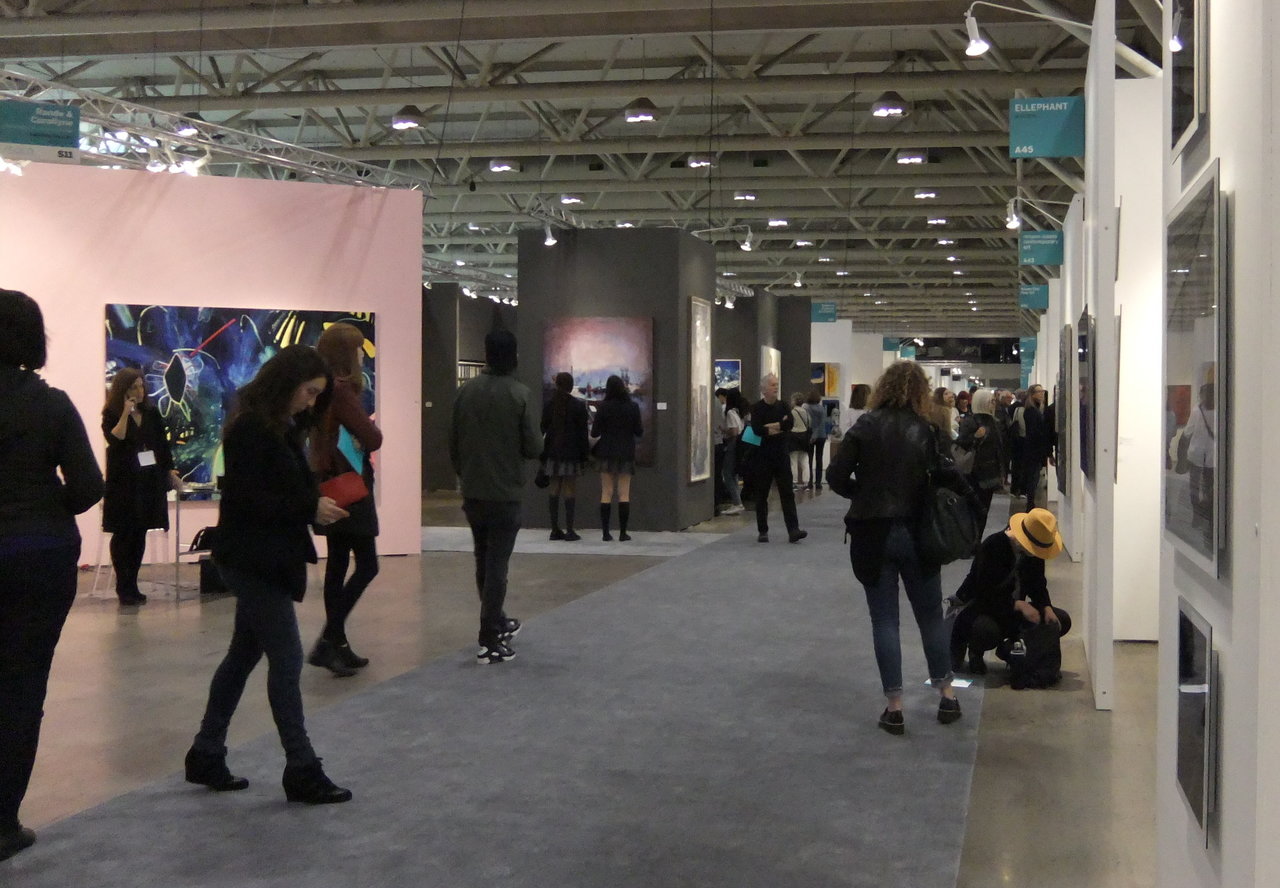
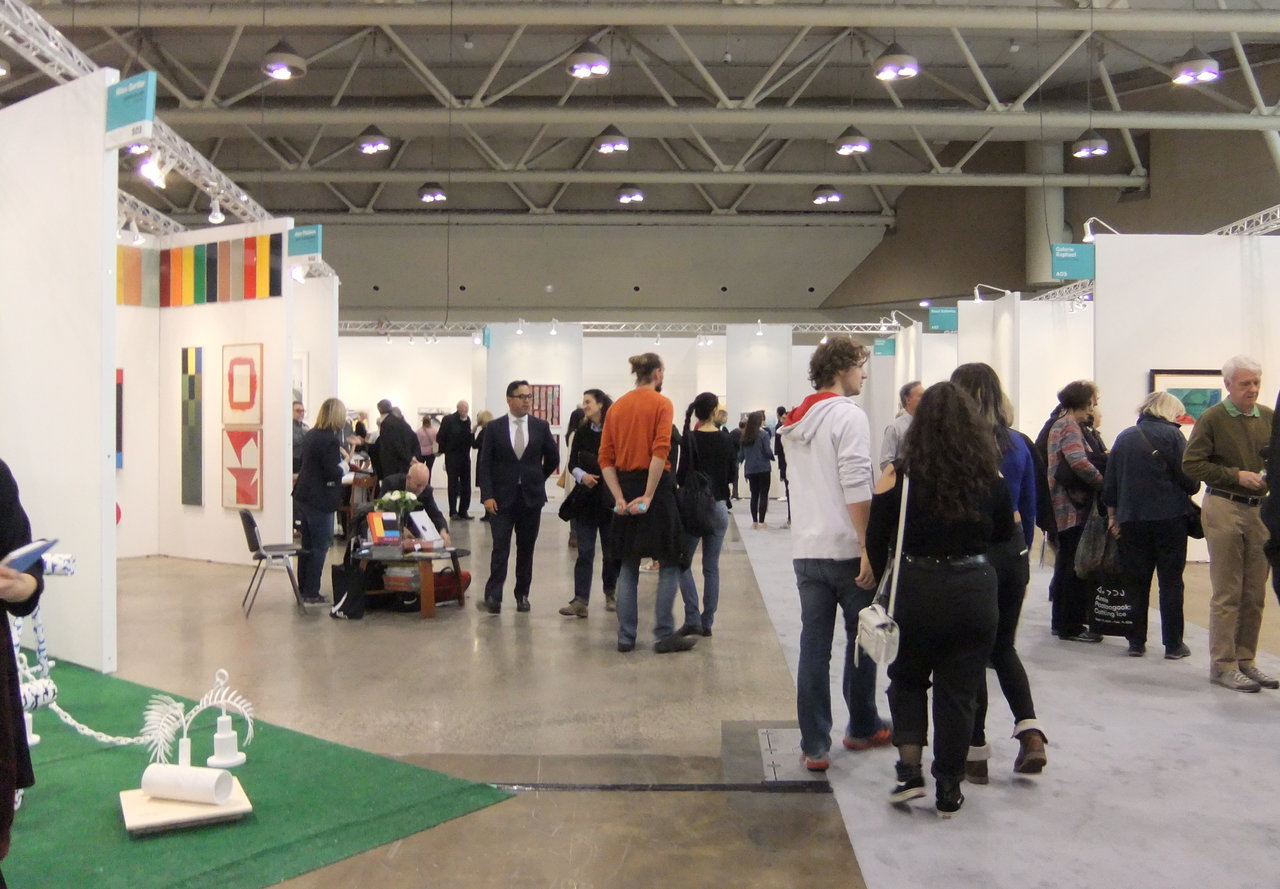
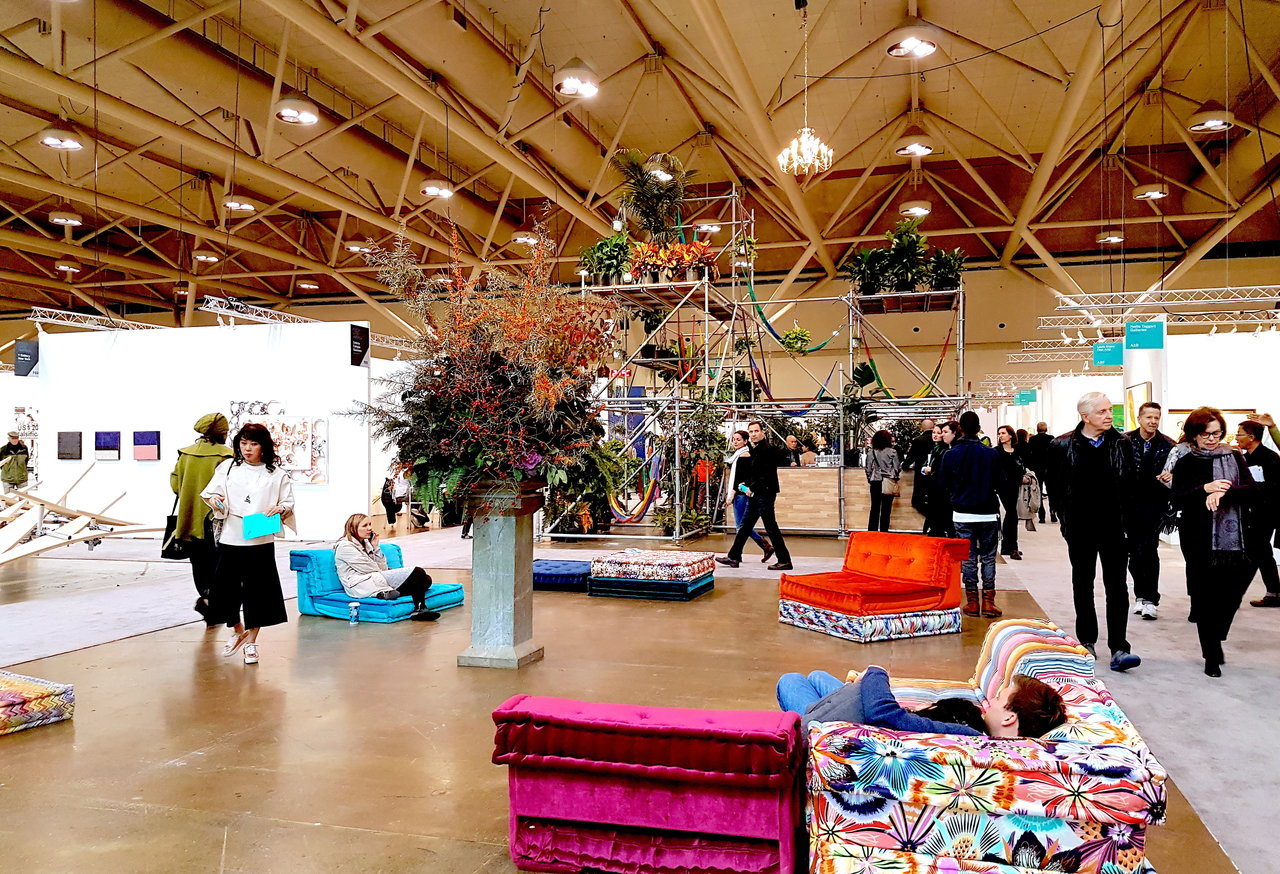
    We went to Toronto’s International Art Fair on Friday early afternoon, thinking that it wouldn’t be so crowded, so we would have more chance to talk to gallery owners and attendants, have more space to look at the exhibited pieces. Well, we were wrong, it was already crowded, buzzing with a positive energy.

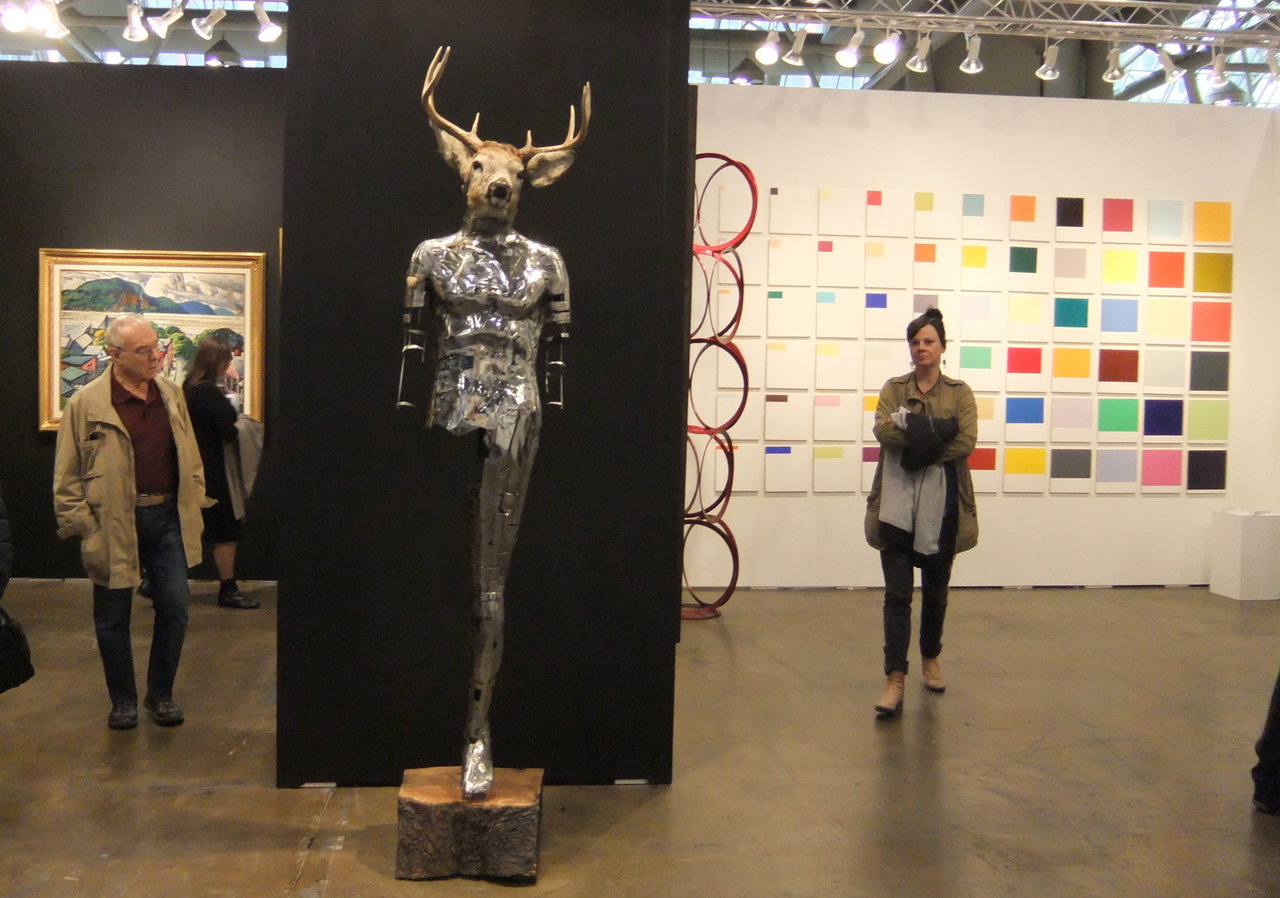
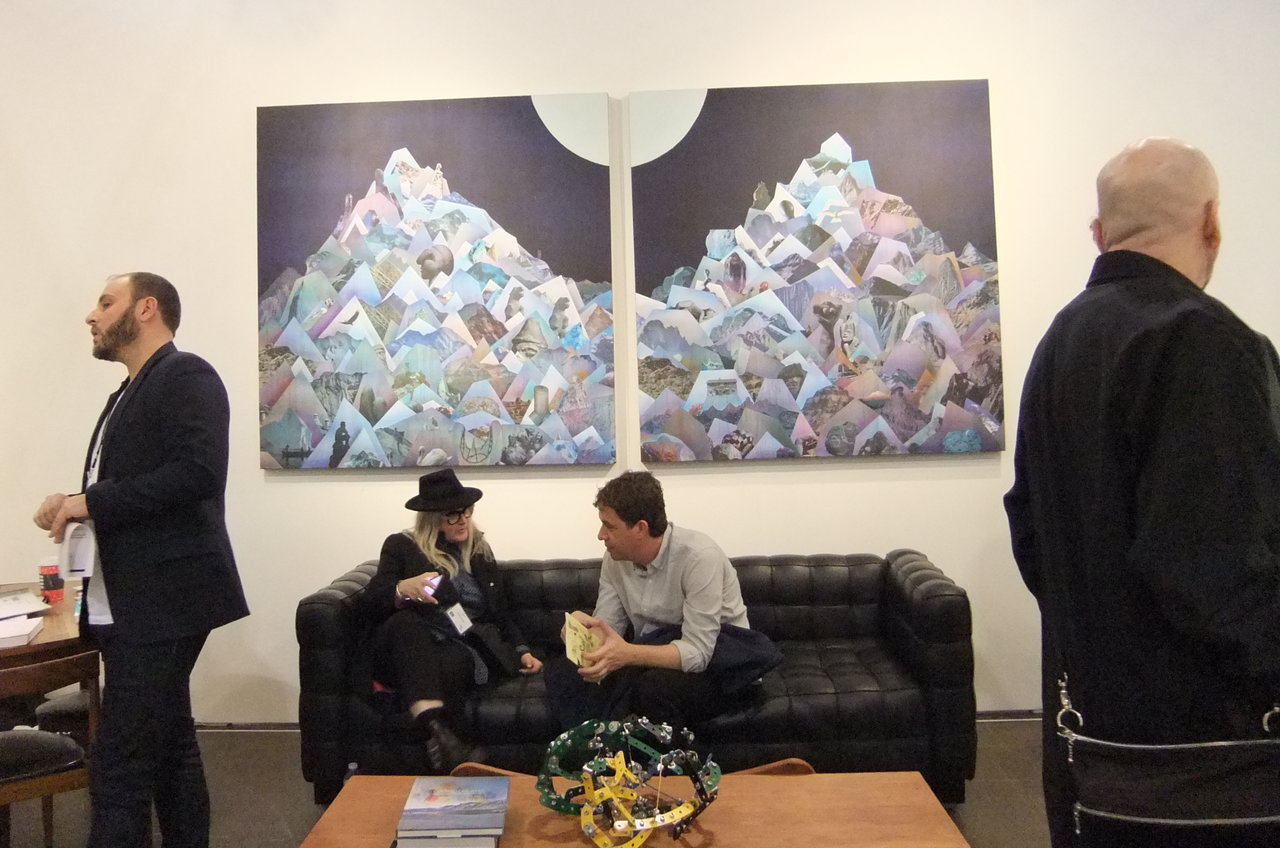
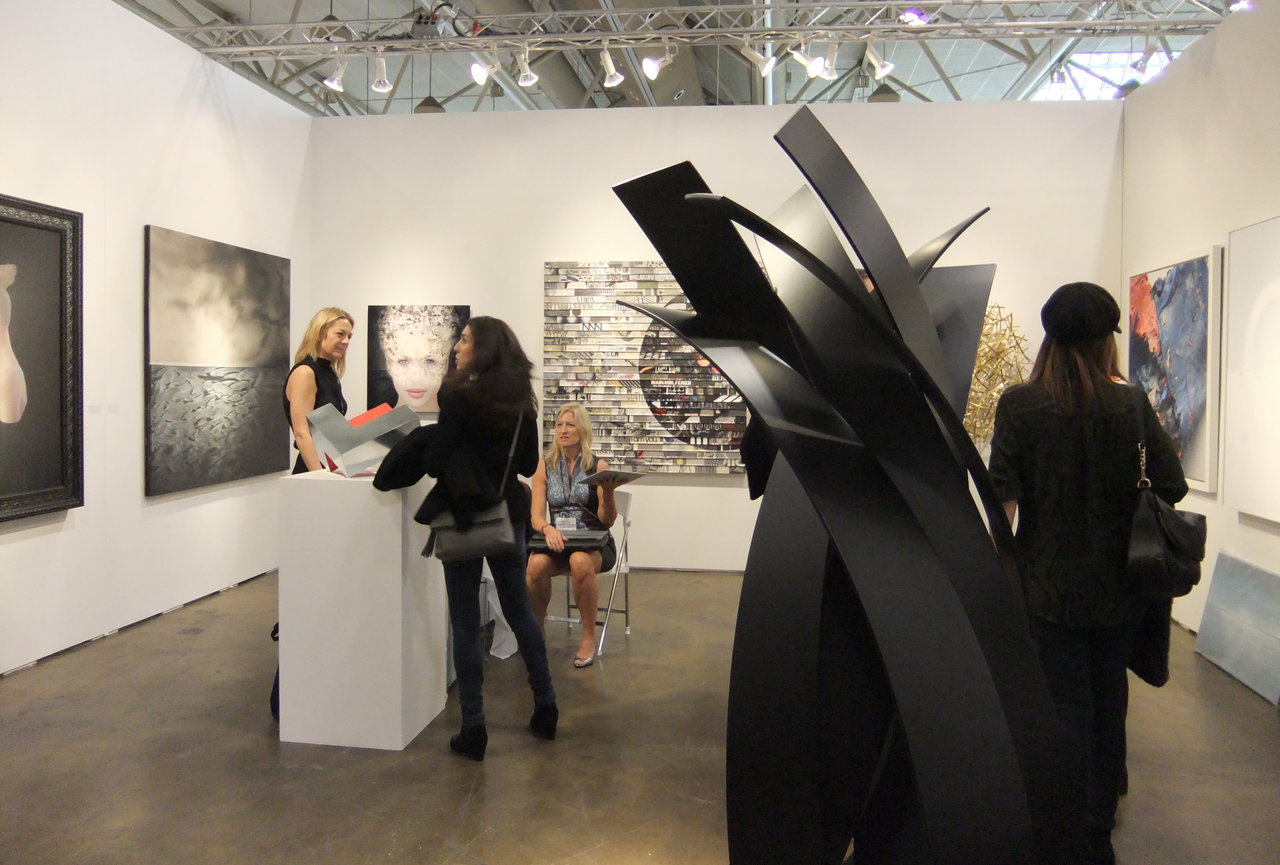
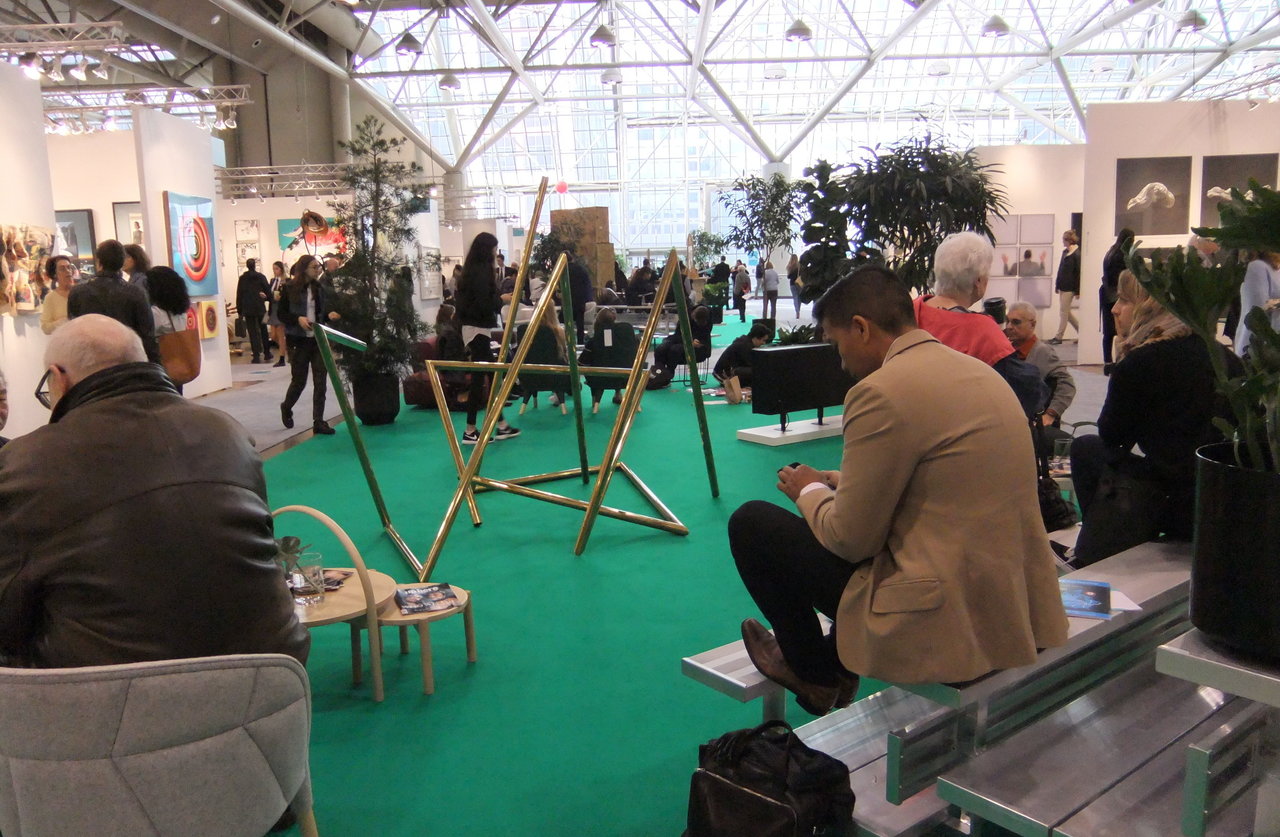
    The Fair looks very different from previous years, much better. It seems more organized, easier on the visitor to walk the floor without missing out too much. We decided to walk around the perimeter first, then walk in circles in the middle section – and it worked, sort of, because I kept walking in all directions when something caught my fancy, like superkül’s seating structure that responds to the mushroom column heads found in the Tower Automotive Building, MOCA’s new home. MOCA with superkül is sharing proposals for its future entry floor landscape and you can join in.

     Art Toronto installation view with MOCA’s and superkül’s seating structure. Photo: Emese Krunák-Hajagos

    There are four major section in the fair: MAIN, having many galleries, SOLO with solo shows of galleries, some still having their own booth as well, VERGE in the middle from where you can walk to this year’s FOCUS Los Angeles, that we will cover in a separate article.

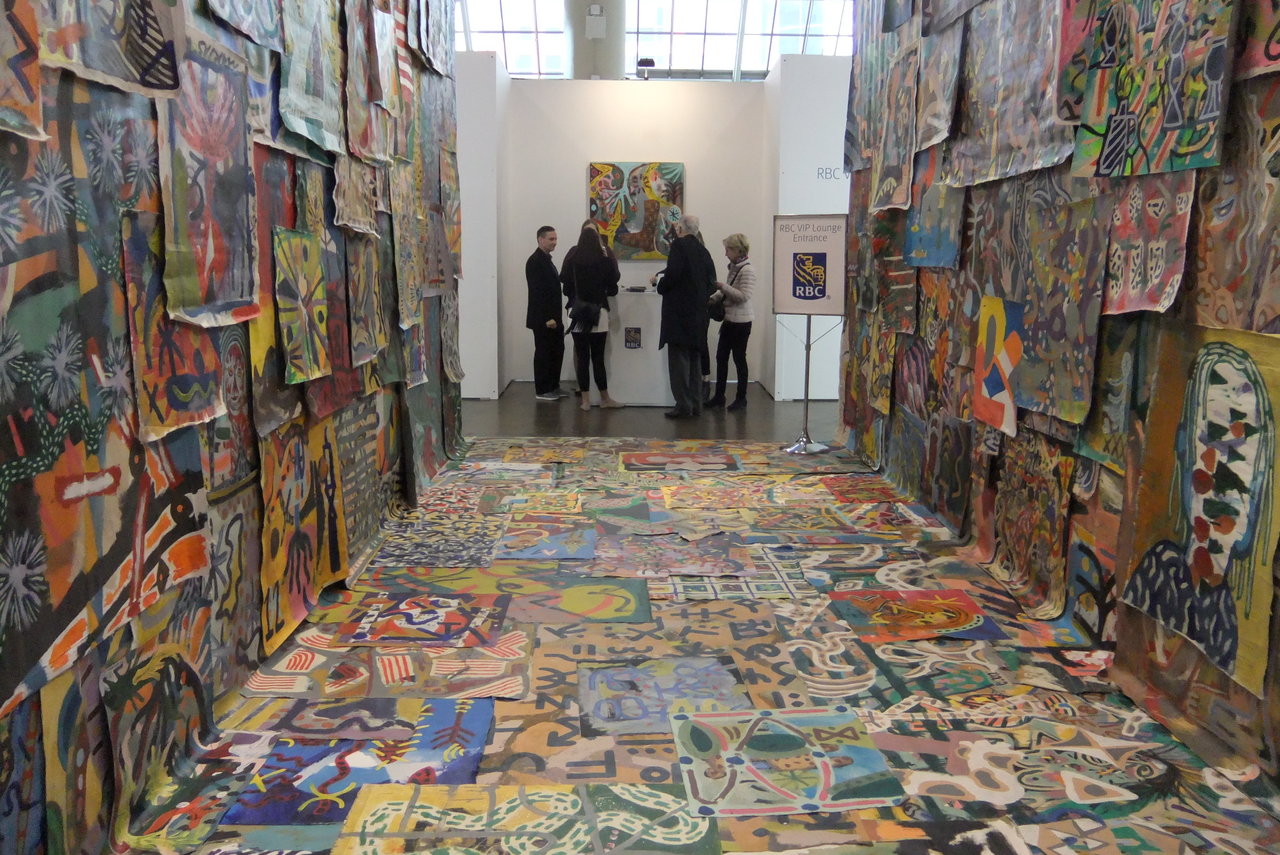
    One of the first things you run into upon entering the Fair is the RBC Lounge where you walk through a tunnel covered by paintings followed by the RBC Painting Competition. Walking further on the right side we talked to Alex Leibner from Galerie D’Este. He said that the Montreal Gallery exhibited in Art Toronto many times and this time seems to be successful too.

    RBC Lounge. Photo: Emese Krunák-Hajagos
    Galerie D’Este. Photo: Emese Krunák-Hajagos

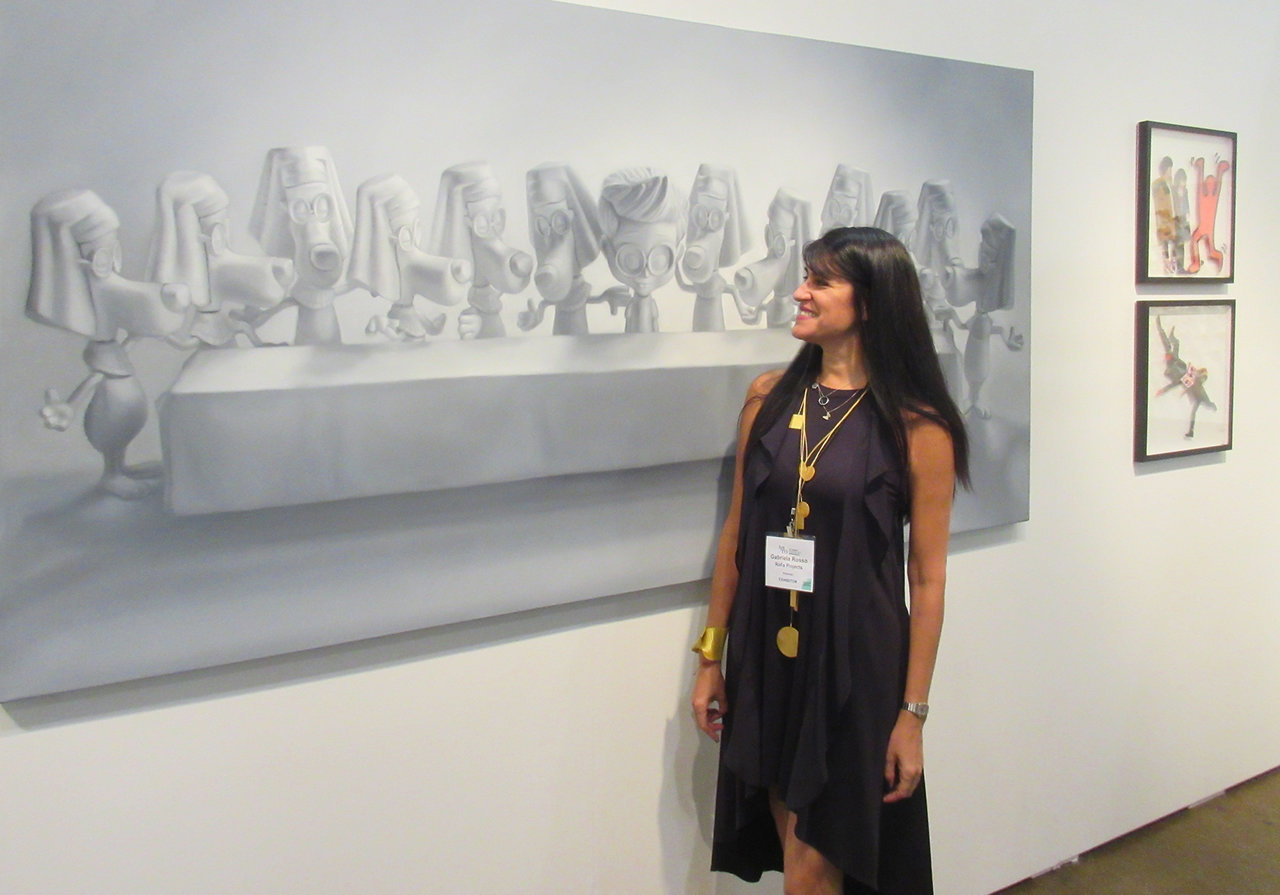
    Last year’s focus was Latin America and many of those galleries decided to return to Toronto this year. The Marión Gallery from Panama has returned for the second time to Art Toronto. Valentina Lairet finds it more crowded this year with sales already from the start. RoFa Projects of Venezuela are back at Art Toronto after a very good first exhibition last year, said director Gabriela Rosso. RoFa, with a centre of Potomac, is an international gallery showing all over the world.

     Valentina Lairet from Marion Gallery, Panama. Photo: Emese Krunák-Hajagos
    Gabriela Rosso from RoFa Projects in front of Walterio Iraheta’s work. Photo: Steve Rockwell

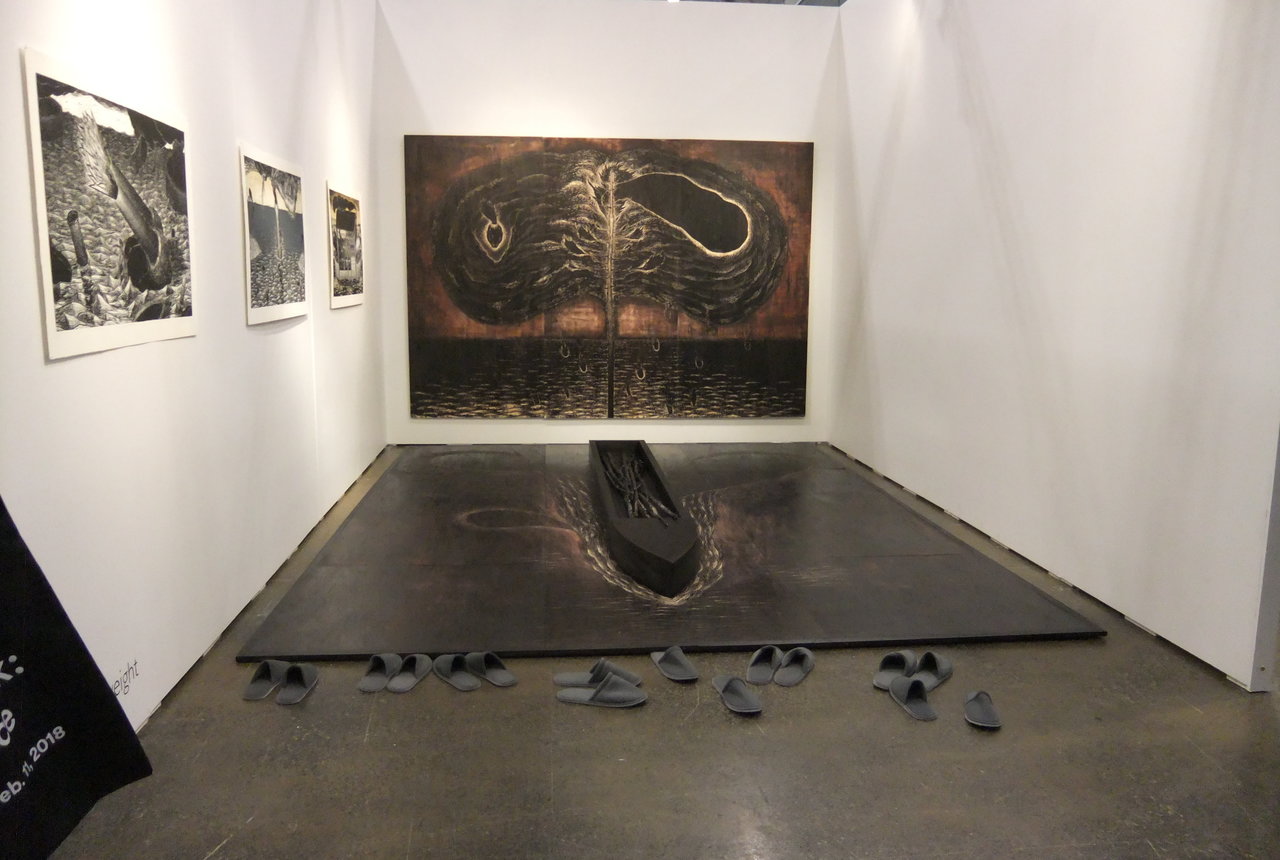
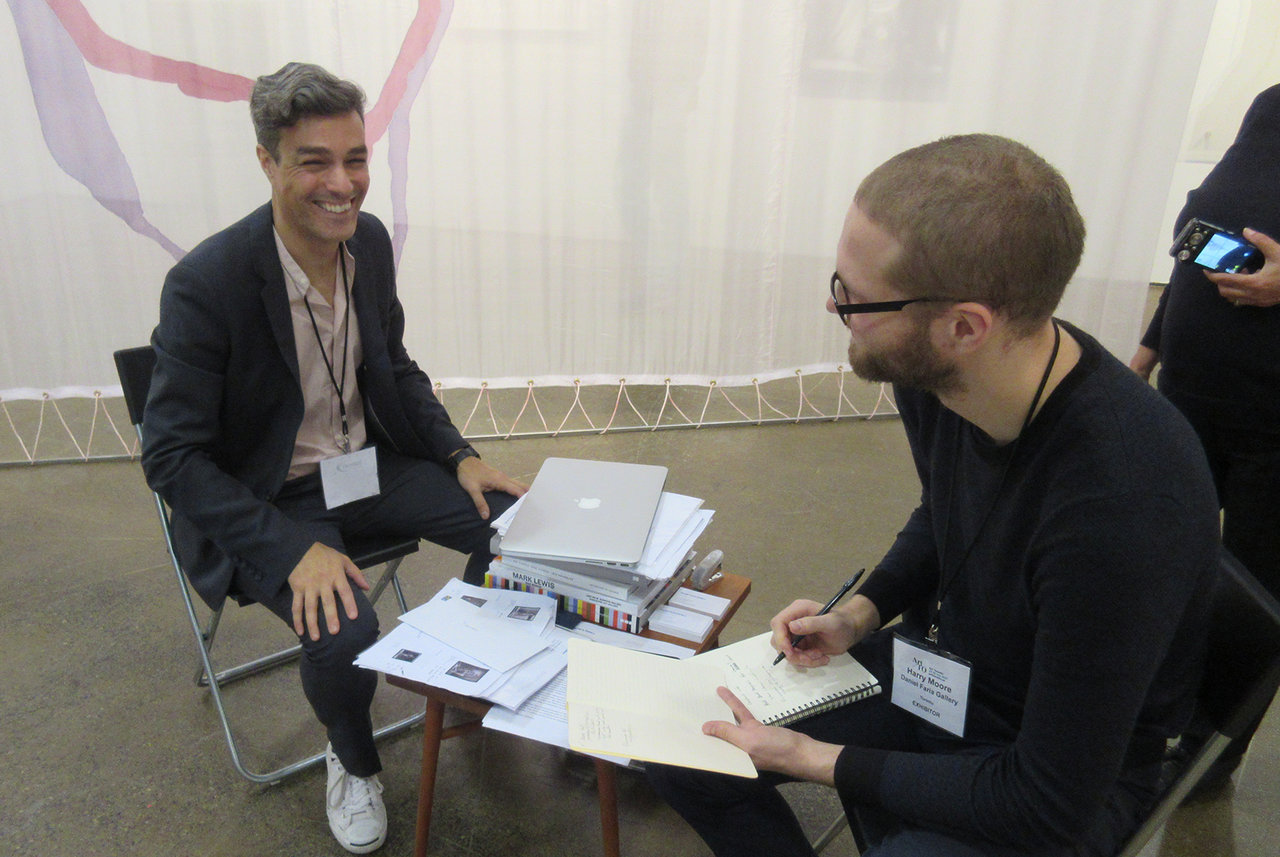
    dc3 Art Projects from Edmonton, Alberta have been busy on the art fair scene, with exhibits at Art Basel, Volta and Moving Image, New York, and Montreal. This is their 5th year at Art Toronto. This year they are exhibiting print maker, Sean Caulfield works, including some large wood blocks themselves, as they appear in his Deadcut show here. Rebecca Travis from Birch Contemporary said that all is going well for them and visitors and collectors keep her very busy. Indeed the fair is extremely busy as Daniel Faria said, “I haven’t been able to leave my booth. It’s been great!”

     dc3 Art Projects from Edmonton with Sean Caulfield’s Deadcut. Photo: Emese Krunák-Hajagos
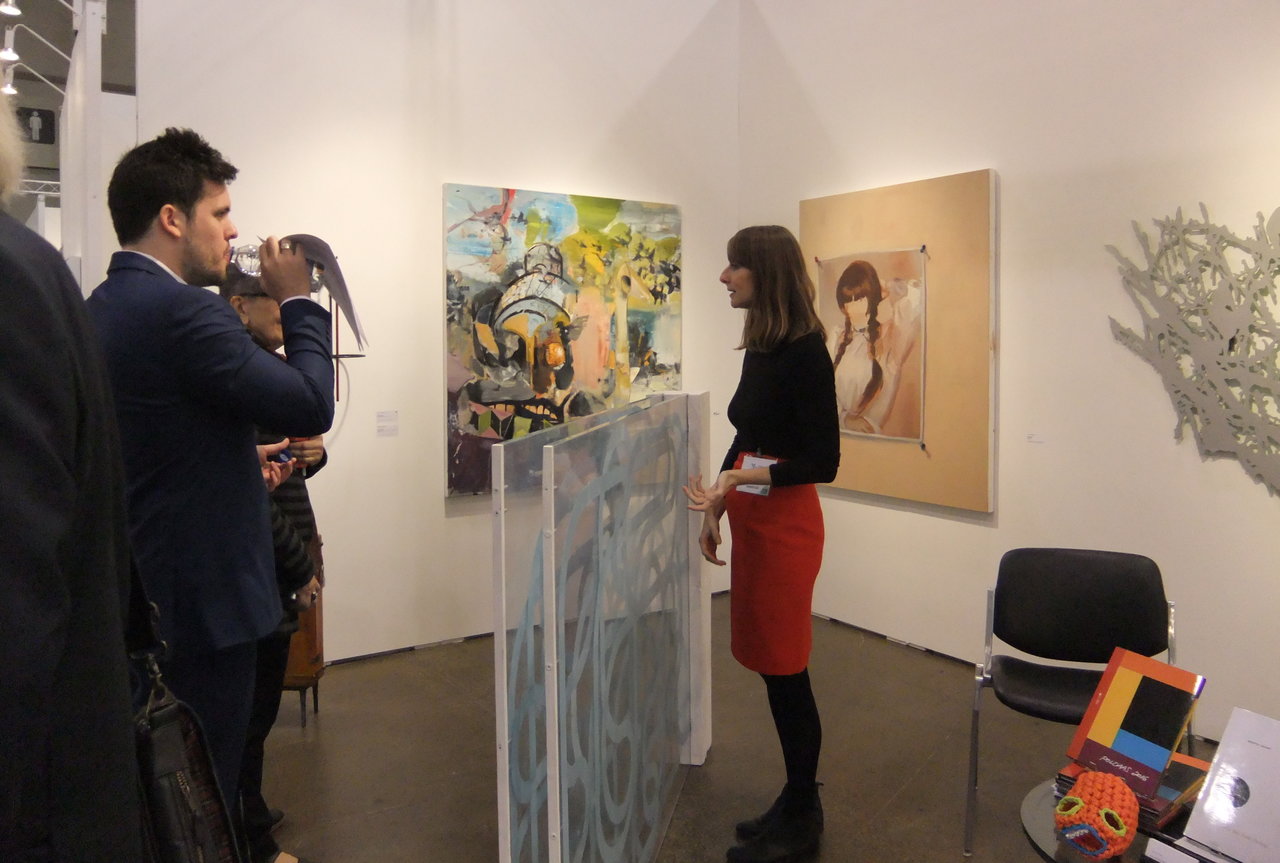
    Rebecca Travis talks to visitors in Birch Contemporary’s booth. Photo: Emese Krunák-Hajagos
    Daniel Faria of Daniel Faria Gallery. Photo: Steve Rockwell

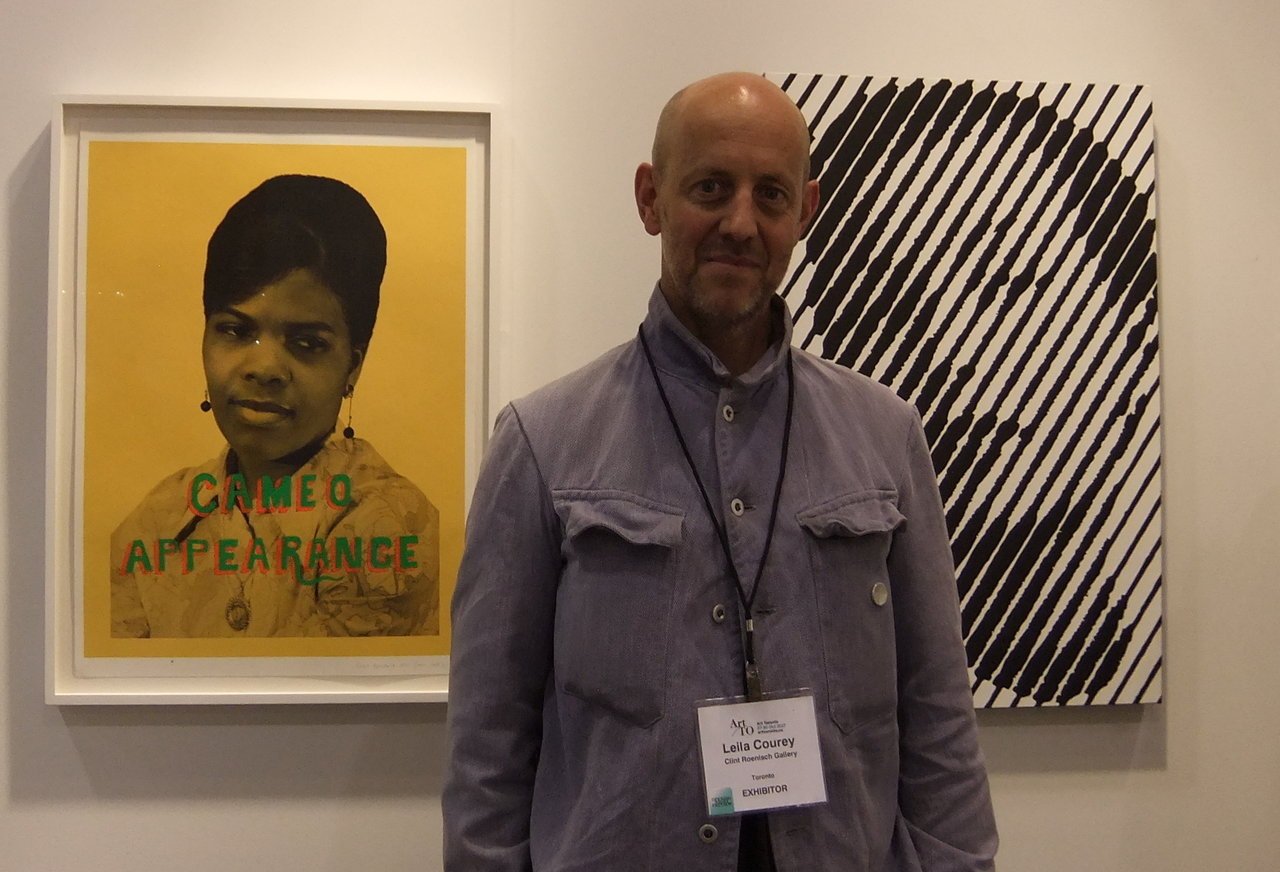
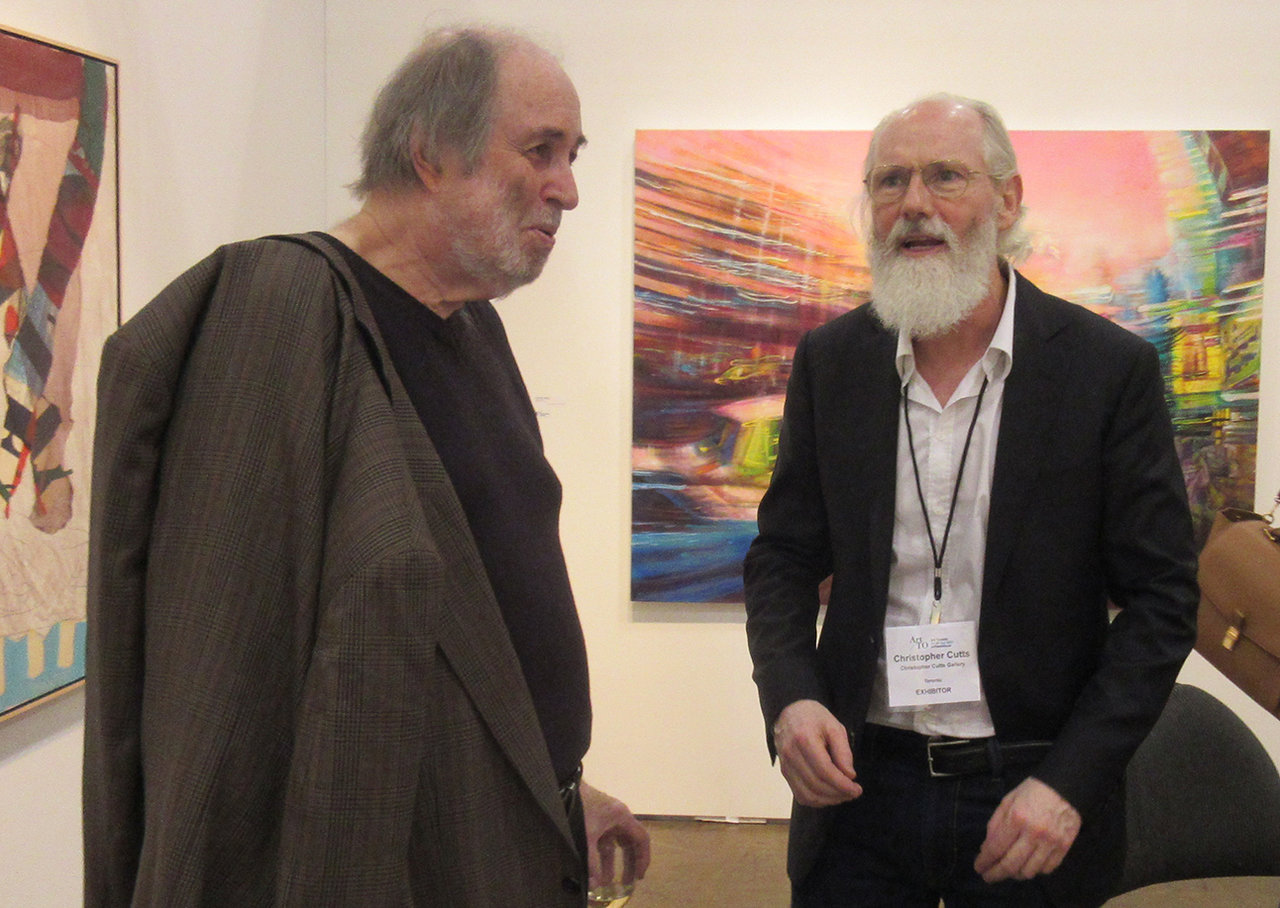
    The crowd is getting bigger and bigger by the hour. It is almost impossible to talk to gallery owners and representatives. I can’t remember any art fair in Toronto without Odon Wagner, owner of one of Toronto’s oldest and most successful gallery, focusing on both traditional and contemporary art. Meghan O’Callaghan, the assistant of the gallery said that they’ve already sold so many pieces and the fair just opened. We got the same information from Angells Gallery associate director, Bill Clarke, telling us that Bradley Wood, Steve Driscoll and Gavin Lynch were among the best sellers. Clint Roenisch and Christopher Cutts were also satisfied with their sales.

    Photo: Emese Krunák-Hajagos
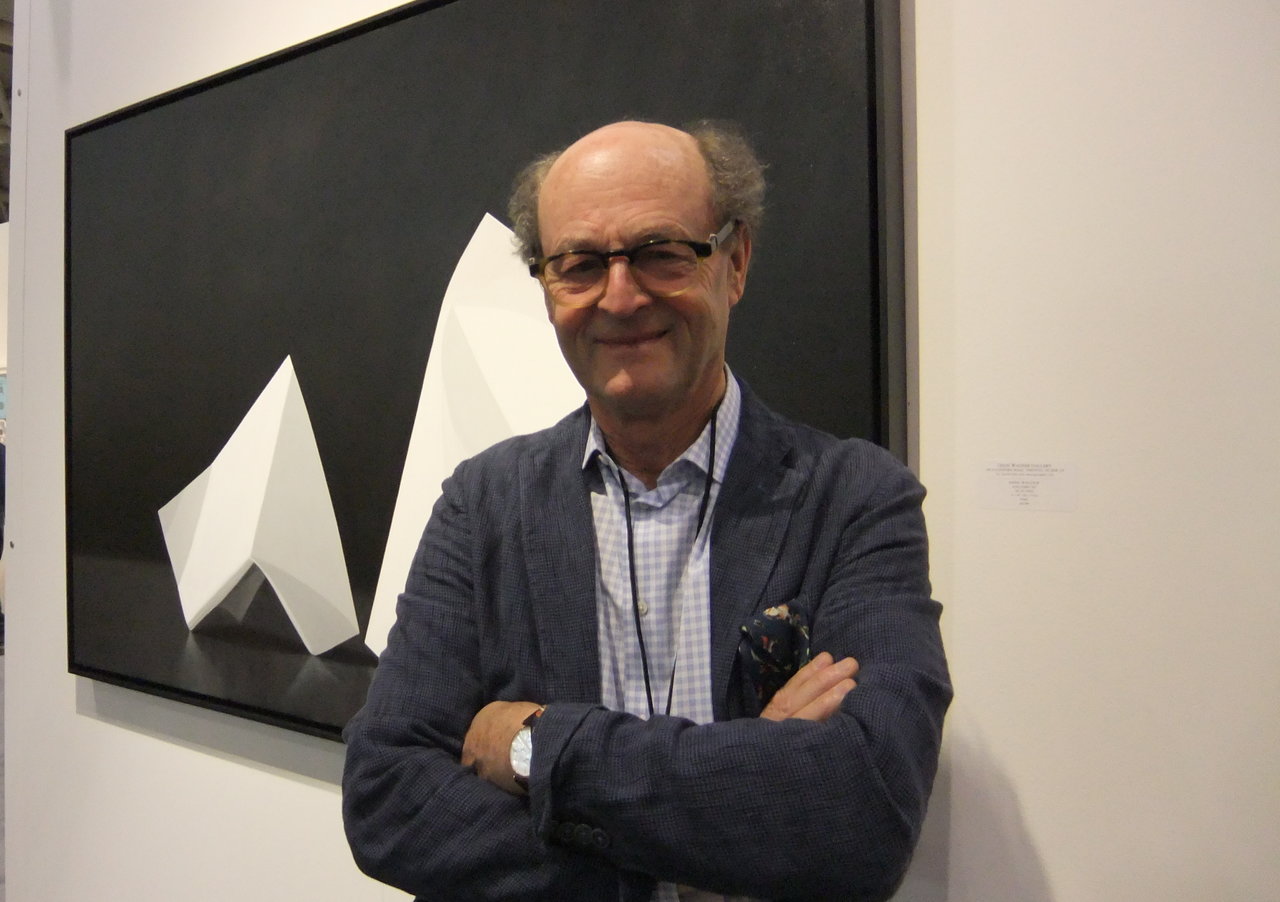
     Odon Wagner of Odon Wagner Gallery. Photo: Emese Krunák-Hajagos
    Angell Gallery’s booth. Photo: Emese Krunák-Hajagos
    Clint Roenisch of Clint Roenisch Gallery. Photo: Emese Krunák-Hajagos
    Gary Michael Dault (left) and Christopher Cutts (right). Photo: Steve Rockwell

    Dana Charles, Communications & Logistics Coordinator of the Oena Gallery, based in Prince Edward County, said, “We do almost 50% if our business online.” It is Oeno’s first time at Art Toronto. There are so many good galleries with high quality, interesting work at the Fair that it is hard to pick just a few.

     Oena Gallery. Photo: Emese Krunák-Hajagos
    Division Gallery, Toronto. Photo: Emese Krunák-Hajagos
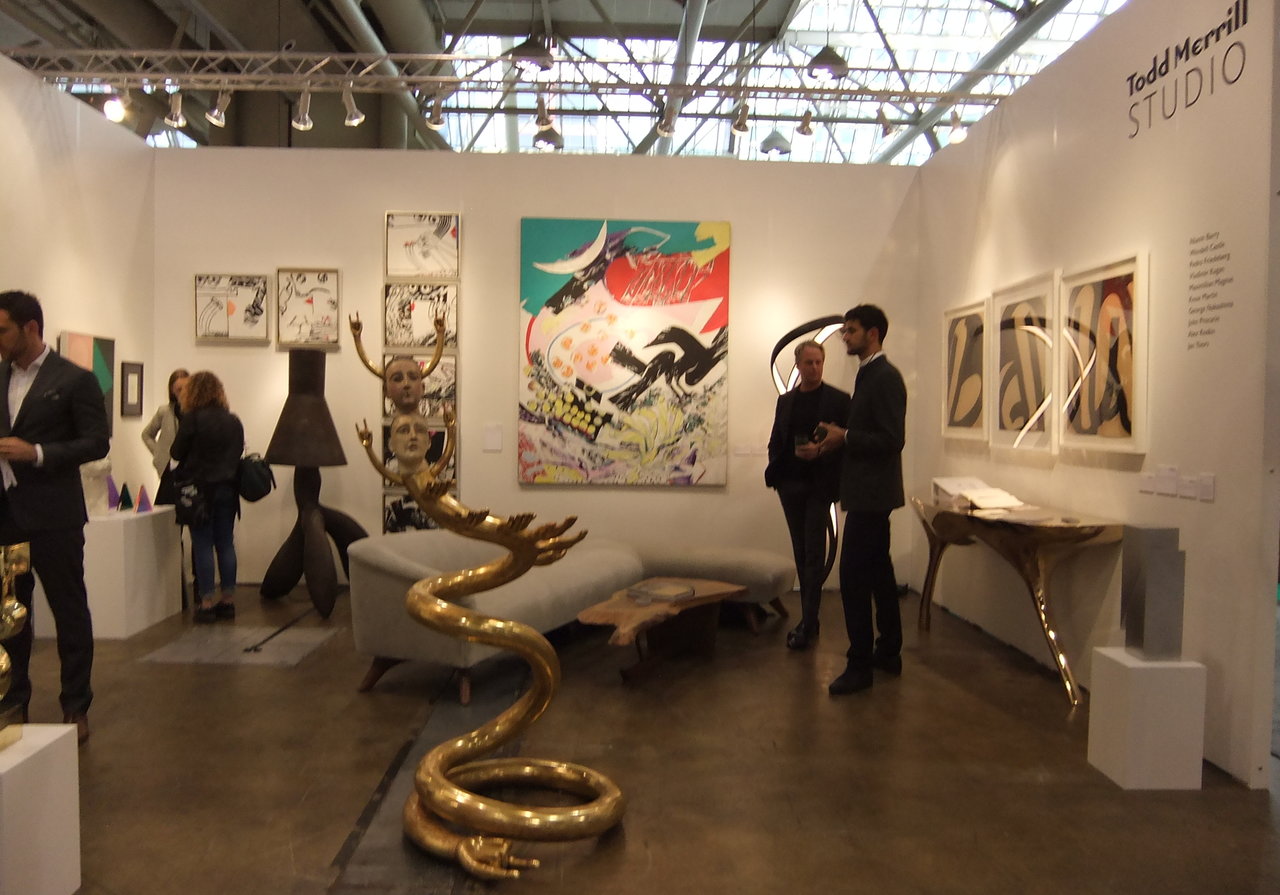
    Todd Merrill Studio, New York. Photo: Emese Krunák-Hajagos
    Kostuik Gallery, Vancouver. Photo: Emese Krunák-Hajagos

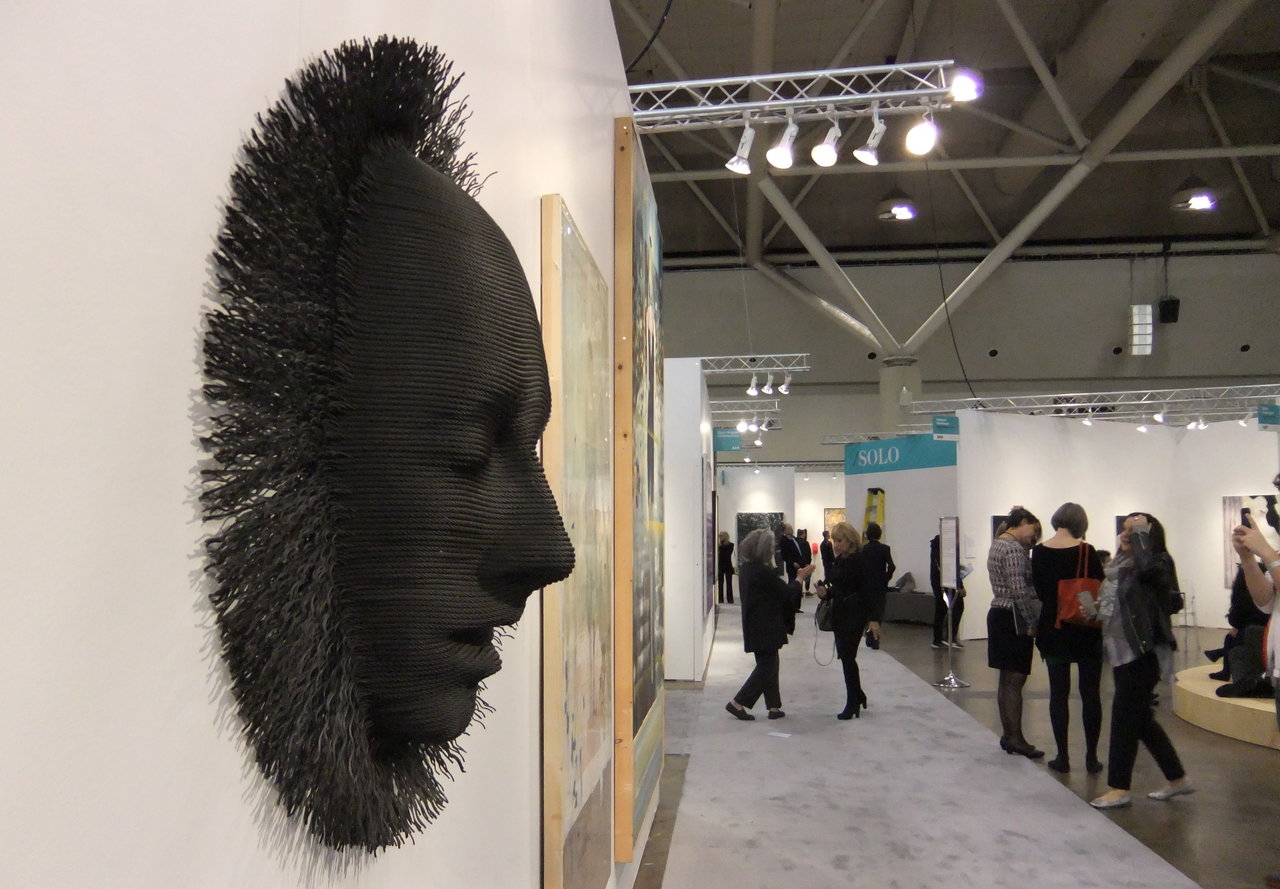
    SOLO Section introduces the visitors to the latest work of a favoured artist from each gallery. Juno Youn, the former owner of Spin Gallery in Toronto, opened Galerie Youn in Montreal, showing Jay Dart at Art Toronto this year. Corkin Gallery is exhibiting Miles Gertler. Besides the solo shows there are many strong pieces that make you stop.

    Juno Youn of Youn Gallery, Montreal. Photo: Steve Rockwell
    Miles Gertler at Corkin Gallery, Toronto. Photo: Emese Krunák-Hajagos
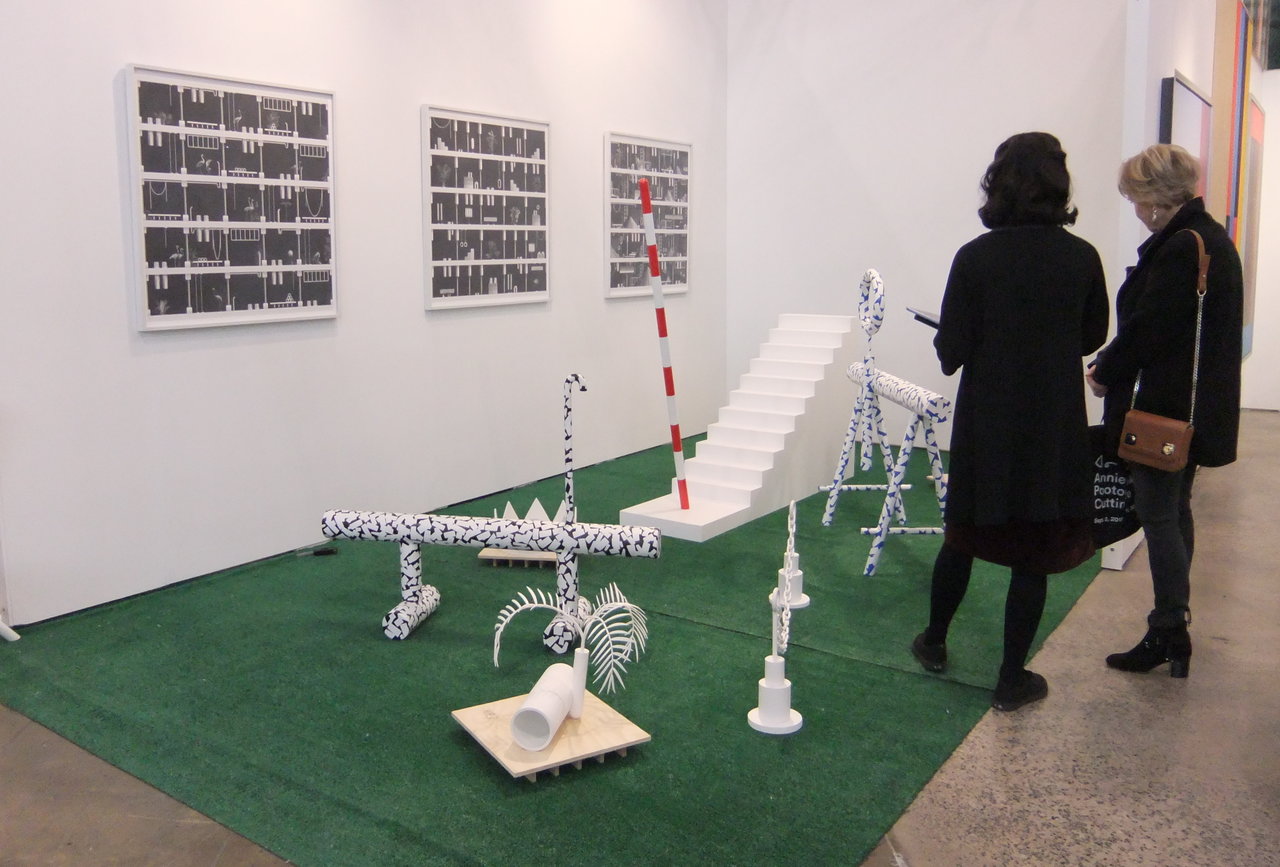
    Installation view with Dale Dunning Aureole. Photo: Emese Krunák-Hajagos
    Valerie Blass, Le principe de la sueur transpiration, evaporation, chaleur at Catriona Jeffries, Vancouver. Photo: Emese Krunák-Hajagos

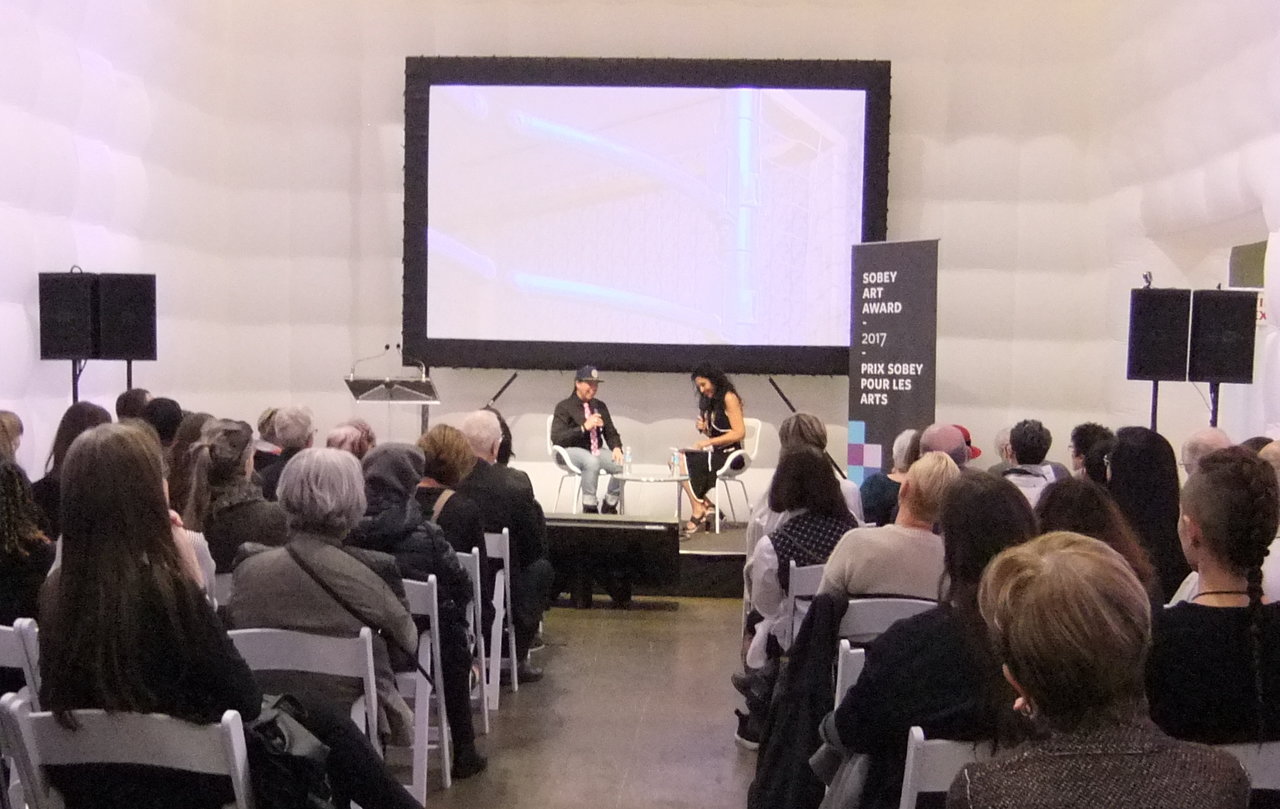
    The rich events programming include Speaker Series, such Gary Michael Dault’s about Sorel Etrog at Barbara Edwards Gallery, the Sobey’s Award winner’s announcement and many more.

    Speaker Series, Gary Michael Dault about Sorel Etrog at Barbara Edwards Gallery’s booth. Photo: Emese Krunák-Hajagos
    Sobey’s Award announcement and interview with winner, Ursula Johnson at the Art Toronto Stage. Photo: Emese Krunák-Hajagos

    “The fair is better,” said Antoine Ertaskiren of Montreal’s Galerie Antoine Ertaskiren. “It was a great opening last night. The Focus L.A. really works.” The fair is indeed better and almost impossible to see it in one day, so go back if you can.

    It is hard to find a sitting spot. Photo: Emese Krunák-Hajagos

    Steve Rockwell & Emese Krunák-Hajagos

    Most likely due to the tight-knit arts community fostered in Toronto, the art industry in Canada often feels small. However the Art Toronto fair reminds me that the art created and displayed here is often at an international level. Not to mention, that the arts community here has a much larger reach beyond our city and country than I often remember. I was thoroughly impressed by the quality of work displayed by Toronto galleries at the fair — proving extremely relevant to the concerns of artists around the world. It is an excellent opportunity for works by Canadians to be purchased not only by fellow Canadian collectors, but also international ones too.

    The fair is also remarkable for the international galleries that show there. For a weekend, the Metro Convention Centre turns into a one-stop-shop for hot works in the modern and contemporary art market. This is the second year I’ve attended the art fair, and it’s always a great opportunity to see a variety of art that often moves to and remains in private collections.
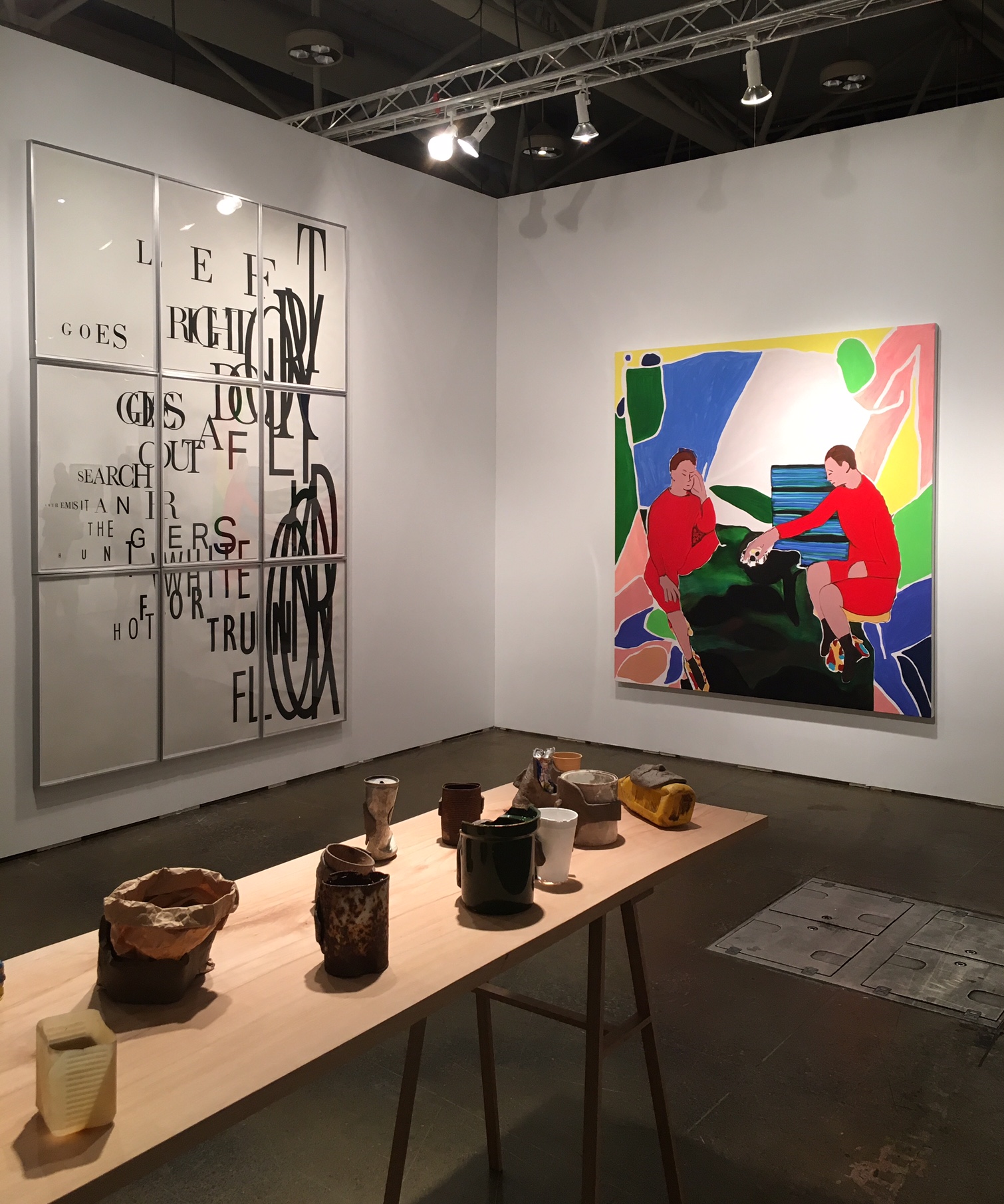
    Catriona Jeffries, Vancouver
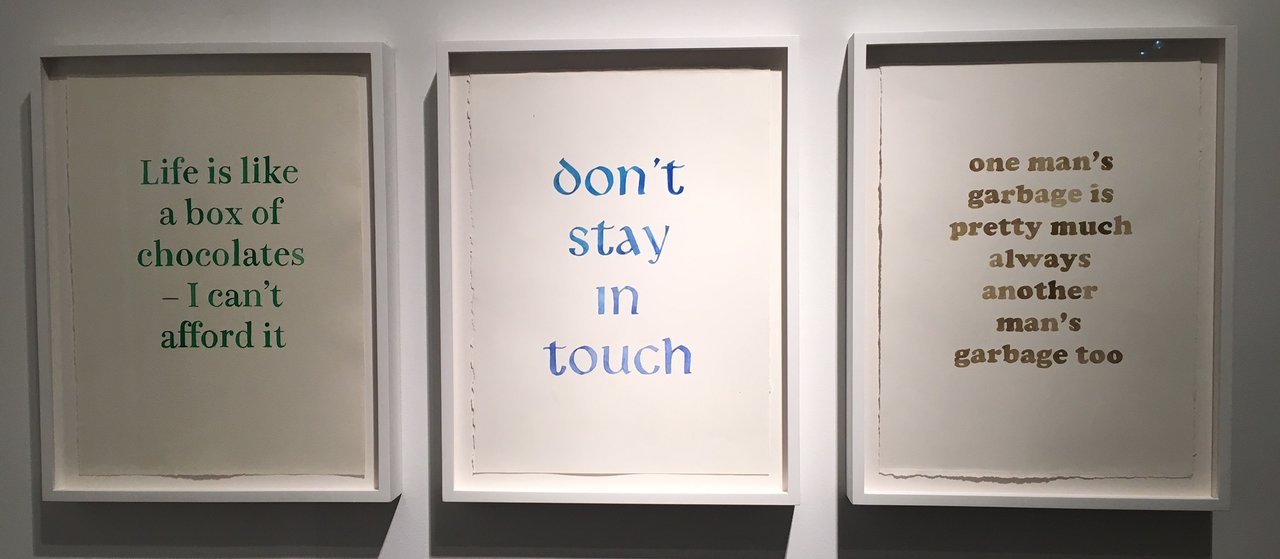
    Division Gallery, Toronto
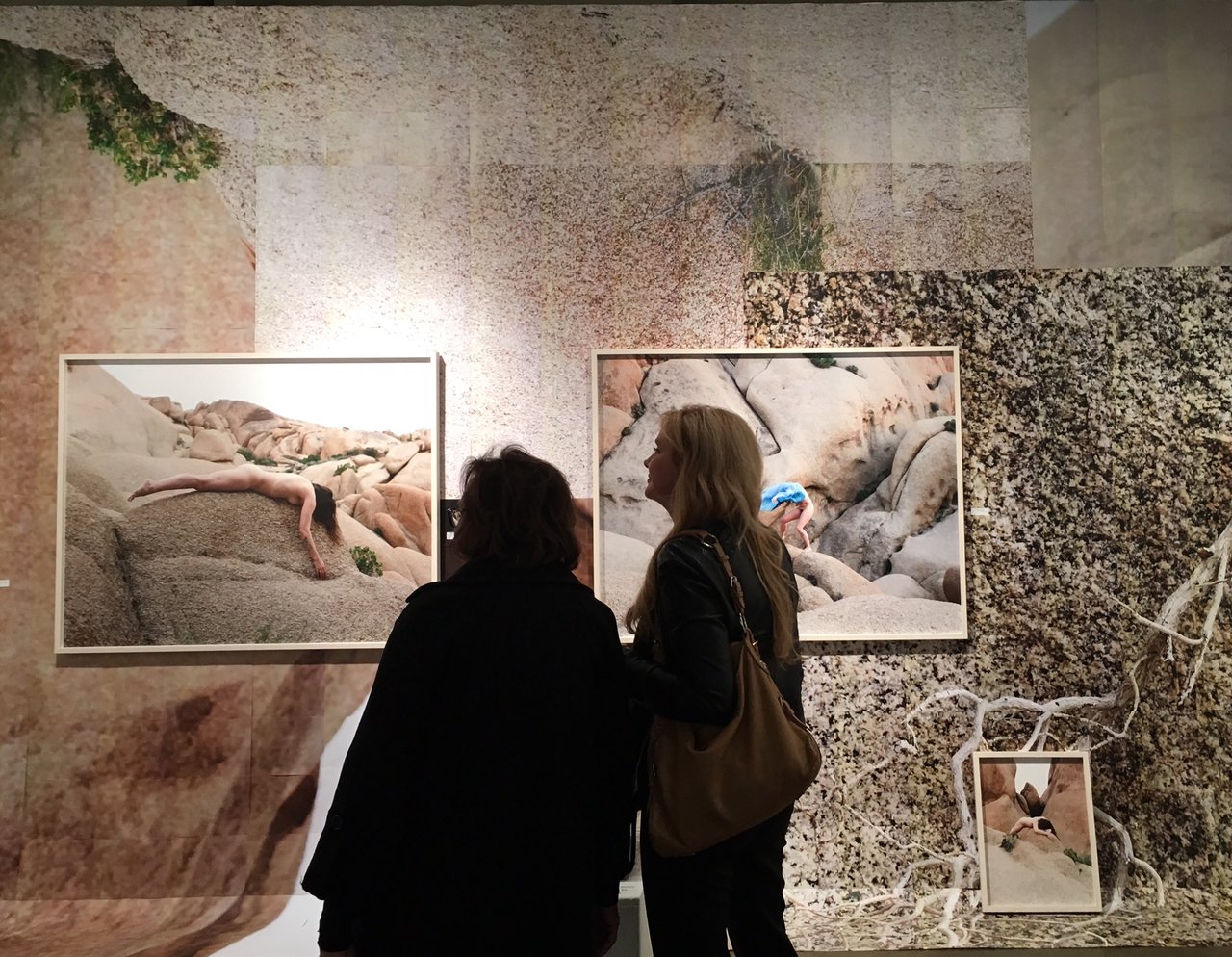
    Black Project Gallery, Vancouver

    Text and photo: Carolyn Peralta

    *Exhibition Information: North Building, Exhibit Hall A & B, 255 Front Street West. Hours: Fri & Sat, 12 – 8 pm., Sun & Mon, 12 – 6 pm.

  • ART TORONTO 2017

    Art Toronto, 2016. Photo: Megan Kee

    October 27 – 30, 2017
    METRO TORONTO CONVENTION CENTRE
    North Building, Exhibit Hall A & B
    255 Front Street West
    Hours: Fri & Sat, 12 – 8 pm., Sun & Mon, 12 – 6 pm.

    Founded in 2000, Art Toronto is Canada’s international contemporary and modern art fair, located at the Metro Toronto Convention Centre in the city’s downtown core. Providing unique access to the Canadian art market, the fair is one of the most important annual art events in Canada. Now in its 18th year, Art Toronto presents important artwork from leading Canadian and international galleries combined with PLATFORM, our engaging series of lectures and panel discussions from prominent art world figures, curated projects, an extensive VIP Program, and top-tier cultural offerings throughout the city.

    FOCUS: Los Angeles is a curated section of the fair highlighting galleries and projects from Los Angeles, California.

    Art Toronto is excited to announce the FOCUS project for the 18th edition of Canada’s fair for modern and contemporary art with a west coast focus on Los Angeles. In recent years, Los Angeles has redefined itself as a major centre for artistic production and curatorial vision. What is it precisely about LA, its history, values and physicality that draws artists, curators and gallerists to it today? In addition to the galleries that have been selected to be part of this section, Independent Curator Santiago Vernetti will organize a central group exhibition entitled And The Sky is Grey, bringing together works by LA’s most exciting practitioners to help introduce new audiences in order to unpack and highlight contemporary cultural practices in the city and what compels people to it.

    PLATFORM SPEAKER SERIES:

    PLATFORM is Art Toronto’s original series of lectures and panel discussions from prominent art world figures. Included within PLATFORM are POWER TALKS, a series of lectures organized in partnership with the Power Plant Contemporary Art Gallery.

    Find out what’s trending and happening in the international scene from artists, writers and curators and immerse yourself in all things art in this comprehensive line up of talks on the PLATFORM stage.

    SOLO SALON:

    Join a selection of Art Toronto’s SOLO artists as they discuss their work through the lens of shared themes. Each talk will feature four artists and analyze works exhibited within the context of the fair in conversations moderated by art professionals. SOLO Salon talks take place at 5 PM in the SOLO space. Talks are approximately 45 minutes long and are complimentary with admission.

    EDITION ART BOOK FAIR:

    Edition Toronto, is dedicated to the promotion of art book publishing, in all forms, while building an appreciation for artworks produced in editions of more than one.

    WEST-END GALLERY HOP:

    Friday, October 27, 2017 / 6 – 10 pm
    Art Toronto invites you to gallery hop across 13 of the top contemporary galleries in Toronto’s west-end. The galleries will be welcoming all art enthusiasts for a night of refreshments, cocktails and incredible art! This event is open to the public and free of charge.

    For programming and more information please go to http://arttoronto.ca/.

    Featured image: Art Toronto, 2016. Photo: Phil Anderson

  • 10th AIMIA | AGO Photography Prize

    The nominees for the 10th AIMIA | AGO Photography Prize reveal the distinct and compelling ways in which artists are using photography today. From political to personal, documentary to conceptual, these artworks prompt us to think about the nature of photographic images. What information do photographs convey? How is this information transmitted to us, and how does the transmission influence our relationships to one another? Each of the four nominees, in their own way, aims to transform our understanding of the world we live in.

    The Prize awards $50,000 to one winner, who is chosen by public vote. The four finalists will present their work in an exhibition from September 6, 2017 to January 14, 2018 at the AGO. Voting could happen in person at the AGO upon the exhibition’s opening and on the Prize’s website

    The winner 10th AIMIA | AGO Photography Prize is Hank Willis Thomas.

    2017 Short List: 

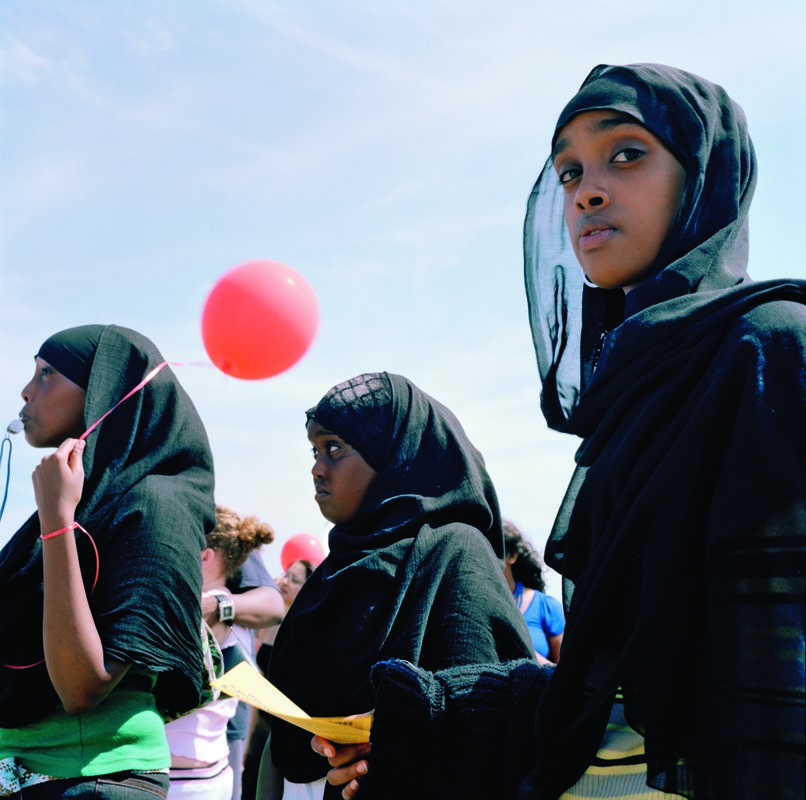
    Liz Johnson Arthur (b. 1964) is a Russian-Ghanaian photographer based in London. For the last 28 years, Johnson Artur has been working on a photographic representation of people of African descent, capturing compelling nuances of blackness, highlighting family, love and friendships.

    Untitled, 1986 to 2010, Black Balloon Archive. Courtesy of the artist

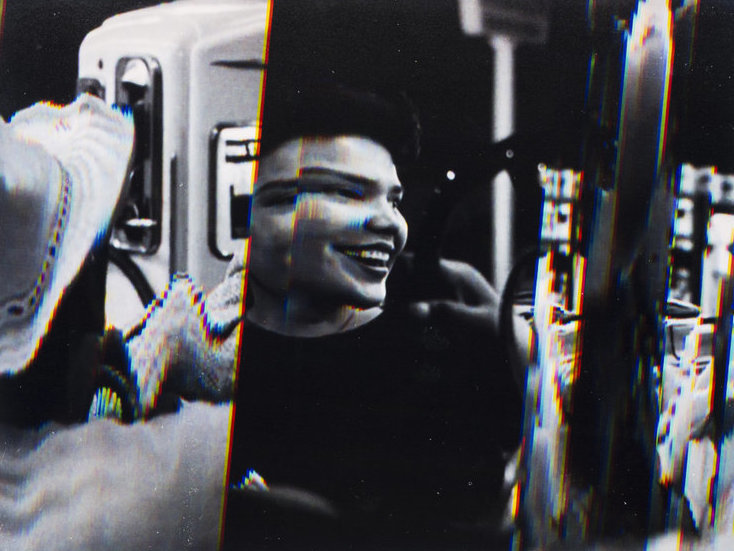
    Raymond Boisjoly (b. 1981) is an Indigenous artist of Haida and Québécois descent who lives and works in Vancouver. He has exhibited extensively across Canada and internationally in both solo and group exhibitions. Boisjoly investigates the ways images, objects, materials and language continue to define Indigenous art and artists, with particular attention to colonial contexts.

    Station to Station (image detail, 1 of 5 prints), 2014, 5 screen resolution LightJet prints mounted on dibond, each 45.75 x 61 cm. Courtesy of the artist and Catriona Jeffries Gallery, Vancouver

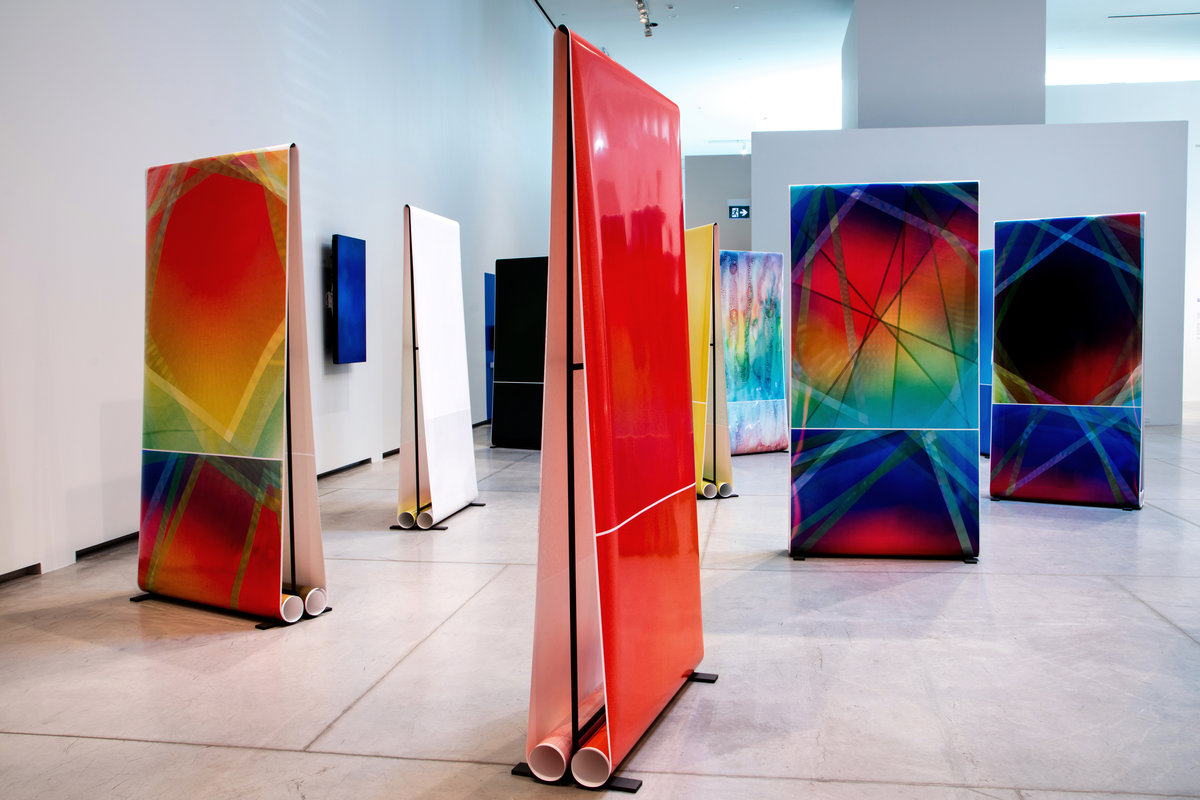
    Taisuke Koyama (b. 1978) is a Japanese artist, who explores the possibility of image making in the digital age. His abstract photographs and moving images employ experimental production methods to investigate the relationship between organic processes and phenomena and the technologies that facilitate their visual capture.

    Rainbow Variations (Installation view), 2009-ongoing, pigment prints. Courtesy of the artist and G/P Gallery, Tokyo

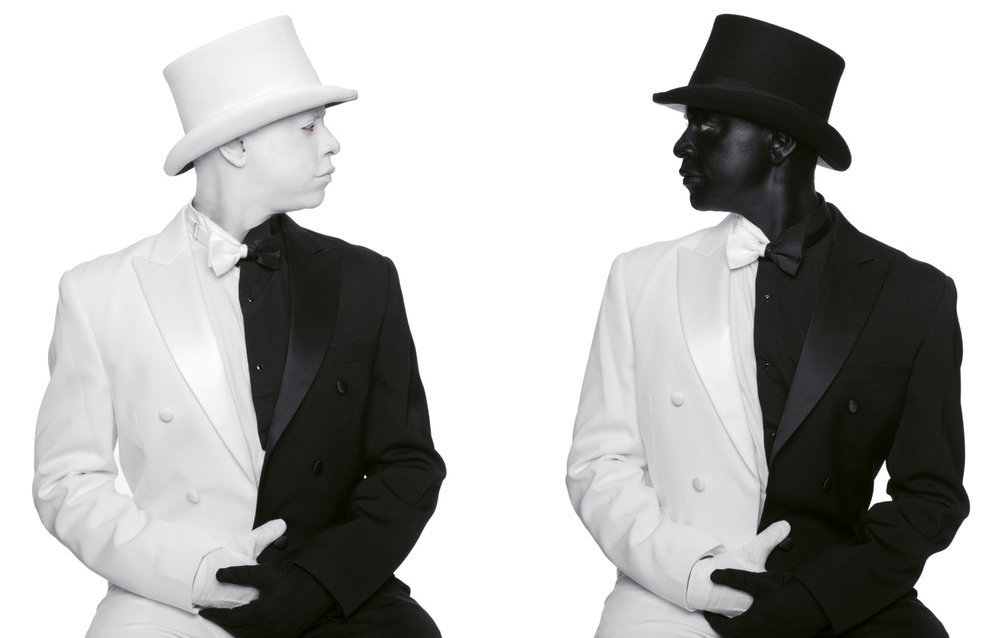
    Hank Willis Thomas (b. 1976) is a multidisciplinary contemporary African-American visual artist, photographer and arts educator, working primarily with themes related to identity, history and popular culture.

    Crossroads, 2012, Digital c-print, variable sizes. Courtesy of the artist and Jack Shainman Gallery, New York

    For more information please check 2017 Aimia | AGO Photography Prize.

  • Guillermo Del Toro: At Home With Monsters / AGO

    The word ‘monster’ evokes images of beings that possess human or animal physicality that have been distorted in some ways. They are all invested with physical characteristics or a repertoire of movements that are meant to unsettle the viewer with the intention of generating fear.

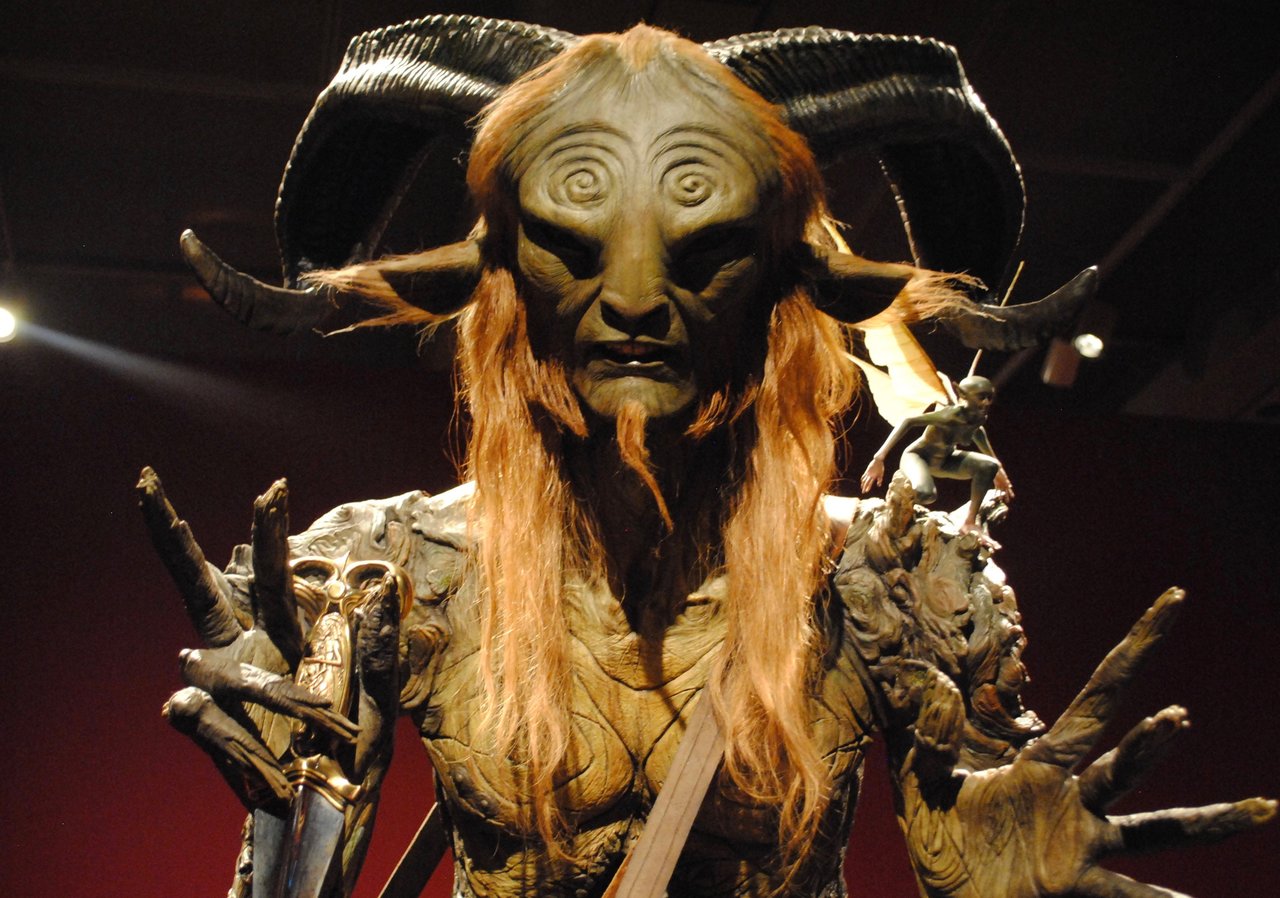
    Guillermo Del Toro, At Home with Monsters, the Faun from Pan’s Labyrinth. Photo: Patricia Tabascio

    Monsters are the focus of the Art Gallery of Ontario’s latest exhibition, At Home With Monsters – taking us into the home (and ultimately into the mind) of acclaimed filmmaker Guillermo Del Toro, for whom monsters have provided a source of inspiration. Comprised primarily of Del Toro’s personal art collection (normally at his California compound, Bleak House) the exhibition includes many of his first artistic purchases and all those he amassed thereafter, including memorabilia from his famous films that have made him one of today’s greatest storytellers.
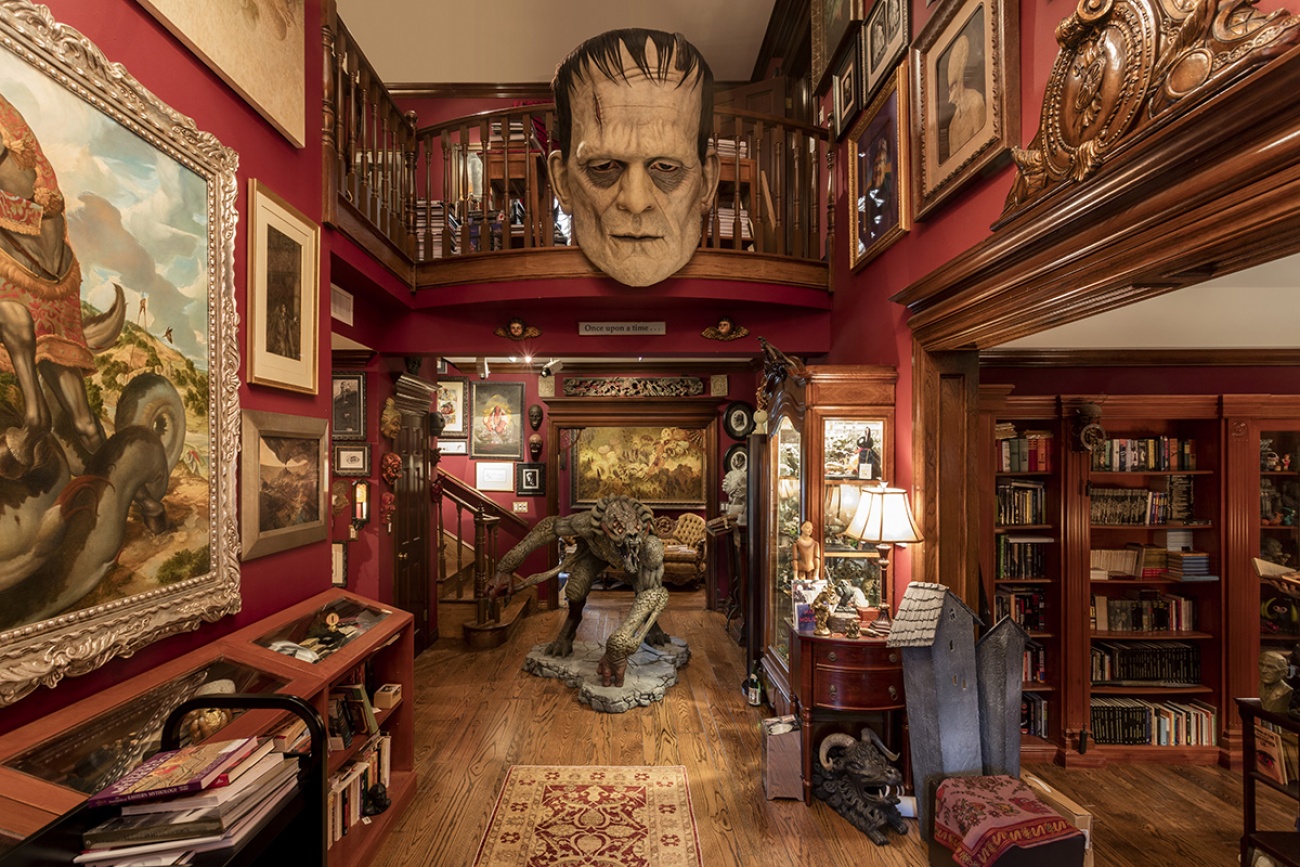
    Guillermo Del Toro’s Bleak House. Photo: Josh White / JWPictures.com
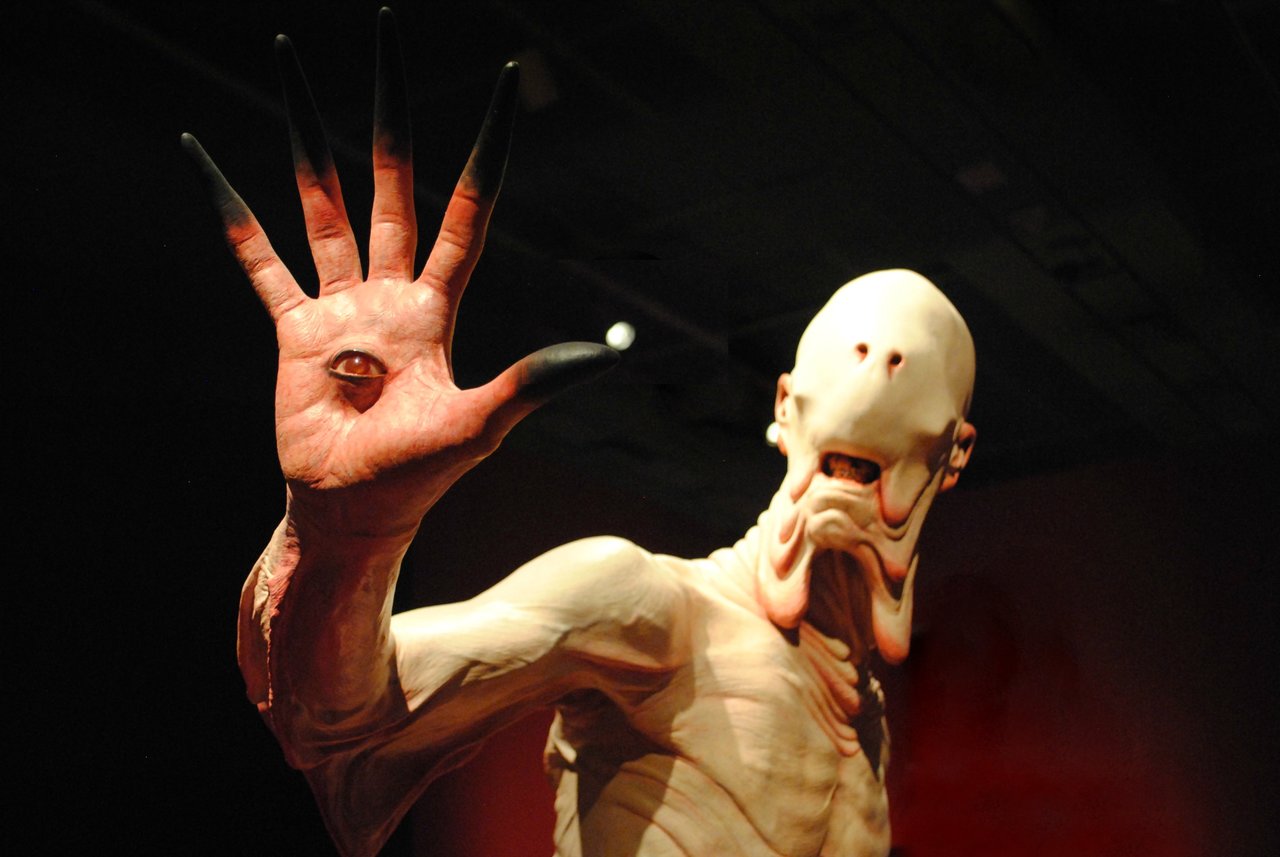
    Made up of a variety of media, Del Toro’s entire collection is thematically organized into thirteen sections, seven of which are on display in the AGO’s exhibition. Bleak House, as the artist describes in his audio tour, is a large Cabinet of Curiosities where there is no division between high and low culture. A section is dedicated to the importance of Del Toro’s childhood influences and inspirations. He was five years old when he first visited Disneyland and it was the dark side that caught his attention, like the witch in Snow White. Horror genre literature and arts are also intrinsic to his unique visual style as a filmmaker. Children often play central roles in Del Toro’s films, like the little girl in Pan’s Labyrinth. Large areas are dedicated to his most recognized films, Pan’s Labyrinth and Hellboy. Pan is not only the eater of children but eats innocence as well. One of the scariest figures is the one without a face, having his eye displaced in his palm. Removing the eyes from the face is like removing the soul — a horrifying gesture that also reminds us of a stigmata.

    Guillermo Del Toro, At Home with Monsters, the pale man from Pan’s Labyrinth. Photo: Patricia Tabascio

    Del Toro was obsessed with cinema, from B-movies and horror films of Alfred Hitchcock and Luis Buñuel to magic, alchemy and the occult. Frankenstein’s portrait by Mike Hill (2011) was a must to have, since what Frankenstein represents, as Del Toro said, is instrumental to his view as a filmmaker. He feels that we are all alone, our innocence lost. This loneliness drives him to sympathize with outcasts, causing his life-long affinity with monsters because of their shared feeling of otherness.

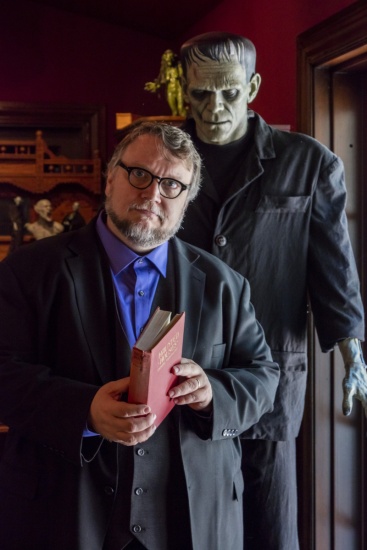
    Portrait of Guillermo Del Toro at Bleak House. Photo: Josh White / JWPictures.com
    At Home With Monsters peaks a child-like curiosity in the viewer, whether one is a fan of Del Toro’s films or just generally fascinated by horror movies and literature. The exhibition provides a glance into the preliminary creative process of filmmaking that is often overlooked, resulting in a more stimulating experience than an average art exhibit.

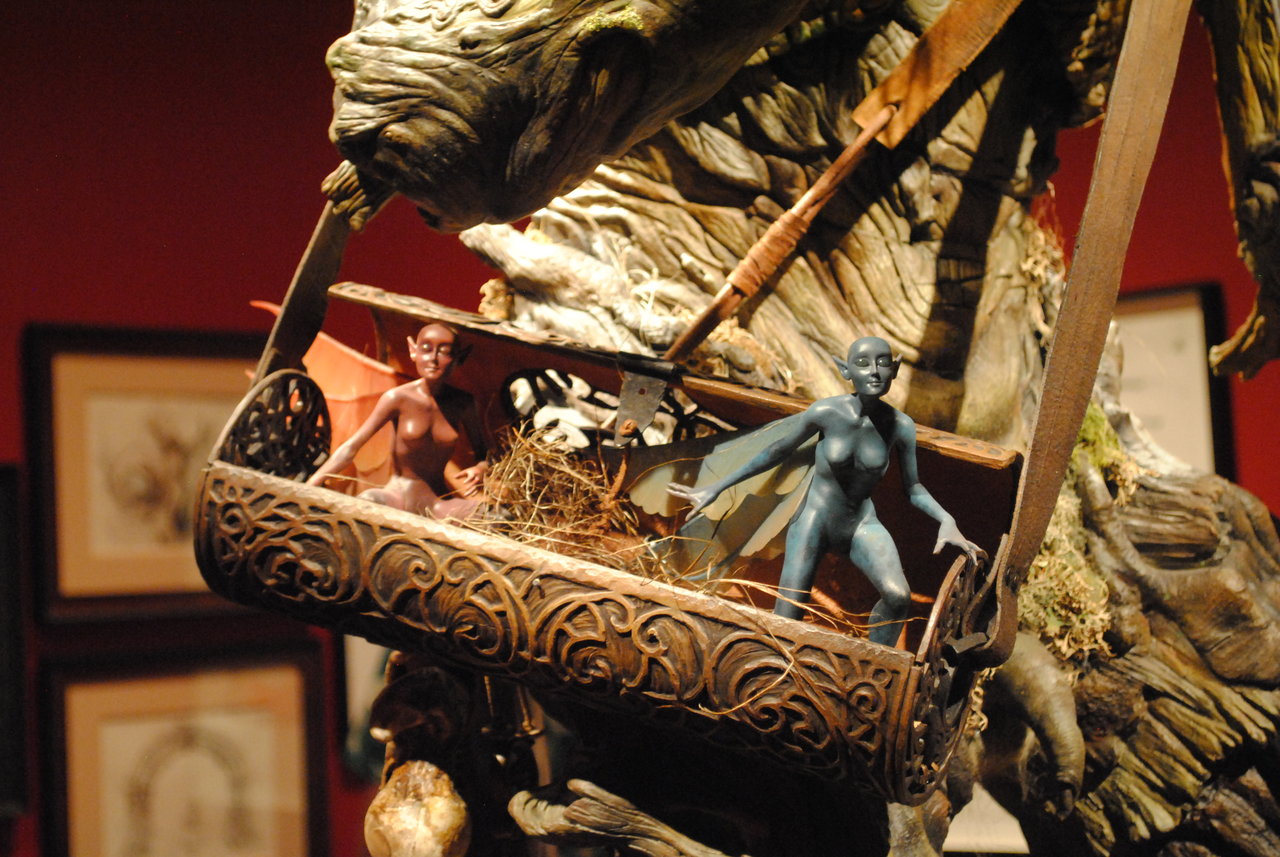
    Guillermo Del Toro, At Home with Monsters, fairies from the Insects section, installation view. Photo: Patricia Tabascio

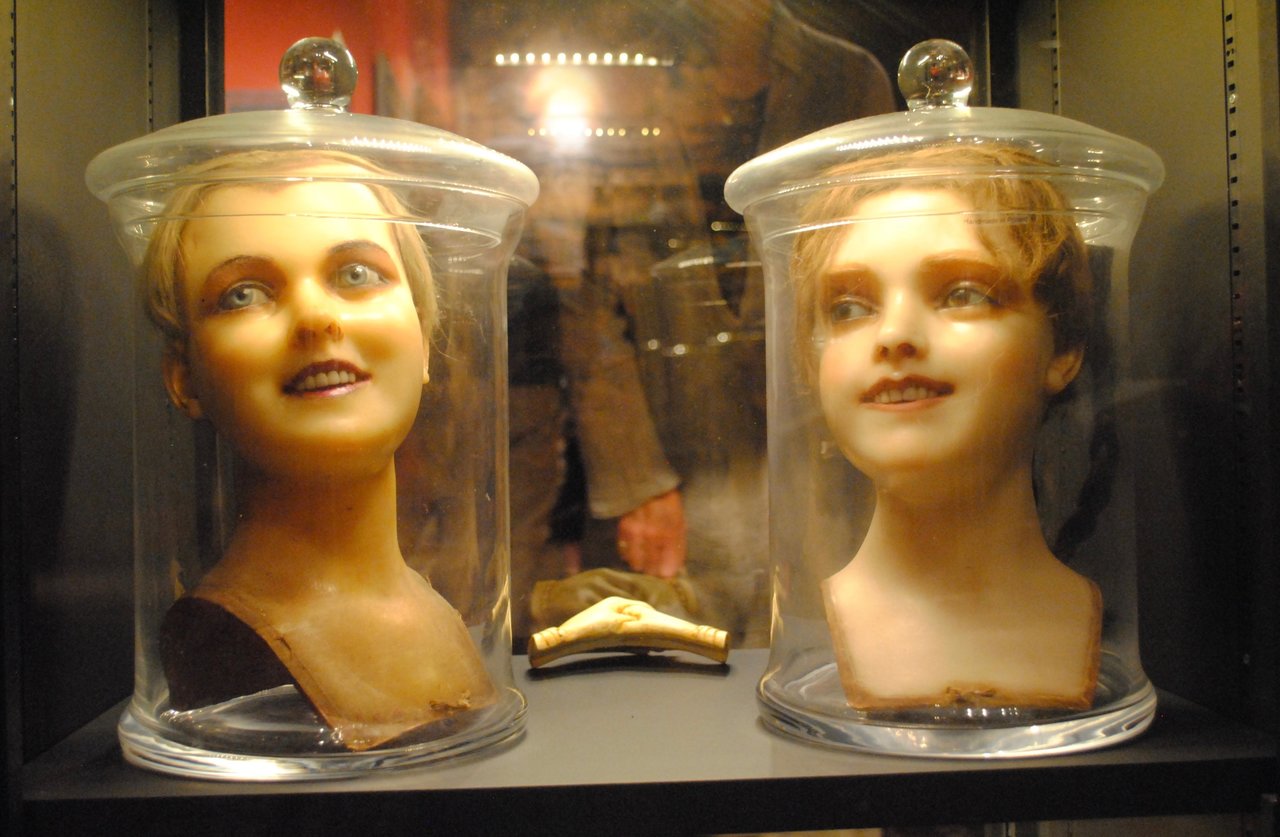
    At Home With Monsters, installation view with doll heads. Photo: Patricia Tabascio

    The number of art objects in this exhibition might seem overwhelming and their significance difficult to grasp, however, with a second run through the exhibit, one can interpret them as a window into Del Toro’s mind. At Home With Monsters challenges the exhibition-goer’s expectation of viewing art that is horrifying, unsettling and that is highly personal to Del Toro and his work, while also questioning the very idea of monsters. As the viewer proceeds deeper into the exhibition and gains more understanding of Del Toro’s view that “what make us human is that we can choose to be heroes or villains.” The monsters that are charged with symbolic power are often misunderstood, since the real horror lies not in their noticeable physical differences but our attainment of perfection and uniformity. At Home With Monsters appropriately concludes with a drawing from Del Toro’s most recent film, The Shape of Water. The image displays the film’s protagonists (a mute woman and a sea monster) lovingly holding one another as they are submerged, encapsulating the totality of the filmmaker’s perception of monsters and the objective of this exhibition.

    Patricia Tabascio

    *Exhibition information: till January 7, 2018, AGO, 317 Dundas St. W, Toronto. Gallery hours: Tue & Thur 10:30 – 5 pm; Wed & Fri 10:30 – 9 pm; Sat & Sun 10:30 – 5:30 pm.