Author: artoronto

  • Bursting Bubbles

    Bursting Bubbles

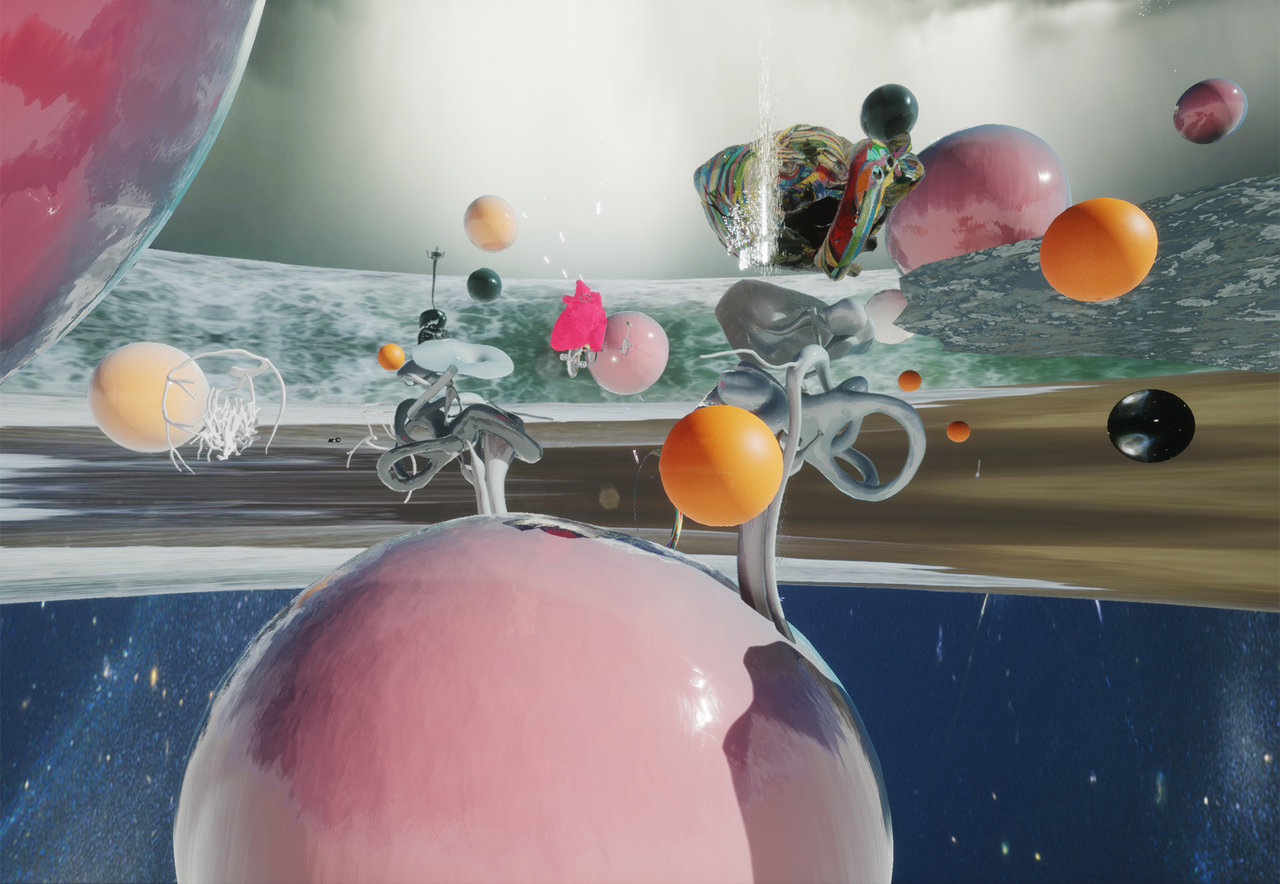
    More and more, Toronto’s Media Arts festivals are incorporating Virtual Reality into their programming. And rightly so: the new medium has the potential to push media arts into unprecedented bounds. In Bursting Bubbles, part of the Rendezvous with Madness Festival presented by Workman Arts, Wendy Whaley presents an interactive, biometric VR piece

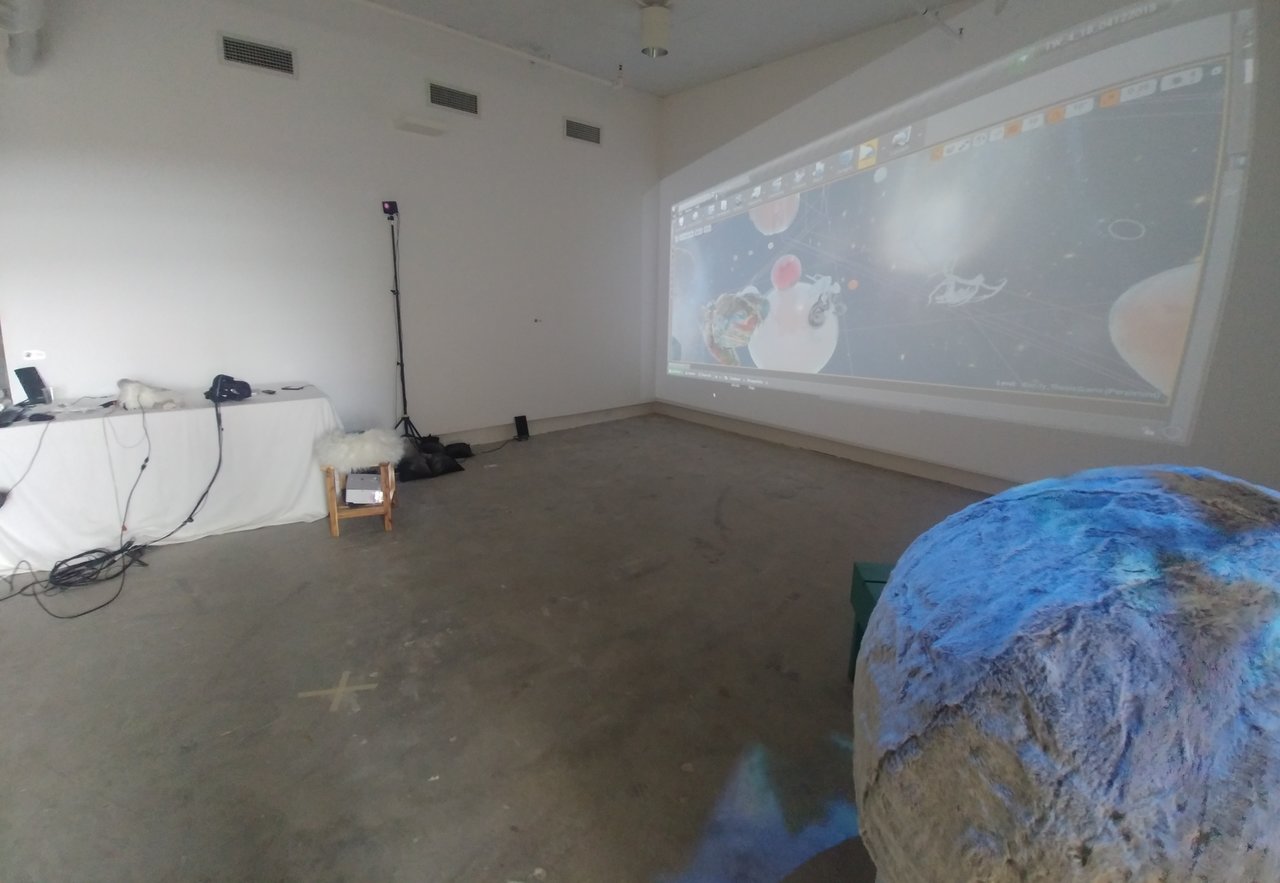
    Nestled in a simple cube of a room, Coenesthesia takes the interactive component of a VR experience a step further. I was greeted by an attendant who instructed me to stick on electrodes onto my body (like an EKG test). Once I connected to the electrodes and the headset, I was instructed to face the fuzzy ball on the floor (another piece called Frisson Portal which visitors are encouraged to hug!), after which I was promptly plunged into Coenesthesia’s universe.

    Wendy Whaley, Coenesthesia VR video still. Courtesy of Bustling Bubbles

    It’s quite hard to describe everything in this universe. Massive planet-like objects float in outer space, surrounded by an even more massive ring made up of waves. I put my arms out and twist it in order to fly forward, and the first stop I make is to the red heart that is beating to the beat of my own heart, due to the electrodes. I fly into the heart, which is so giant it envelops me whole, and watch and hear my own heart beat – in my own heart. It’s an indescribably surreal sensation – to be outside and inside my heart at the same time. Embodied by my own heart, the extension of my body becomes hazy.

    Installation view with Wendy Whaley, Coenesthesia VR video still and Frisson Portal (right). Photo: Sunny Kim

    I fly through the other objects. Some are vague spheres of moving water, some are abstract shapes. There’s even a brain I can fly through. If not for the motion sickness and tired arms, I would have explored this universe for hours. In this universe, I am simultaneously my original physical body, a fellow planet, and a soaring star. Fragmentation in the most intriguing sense.

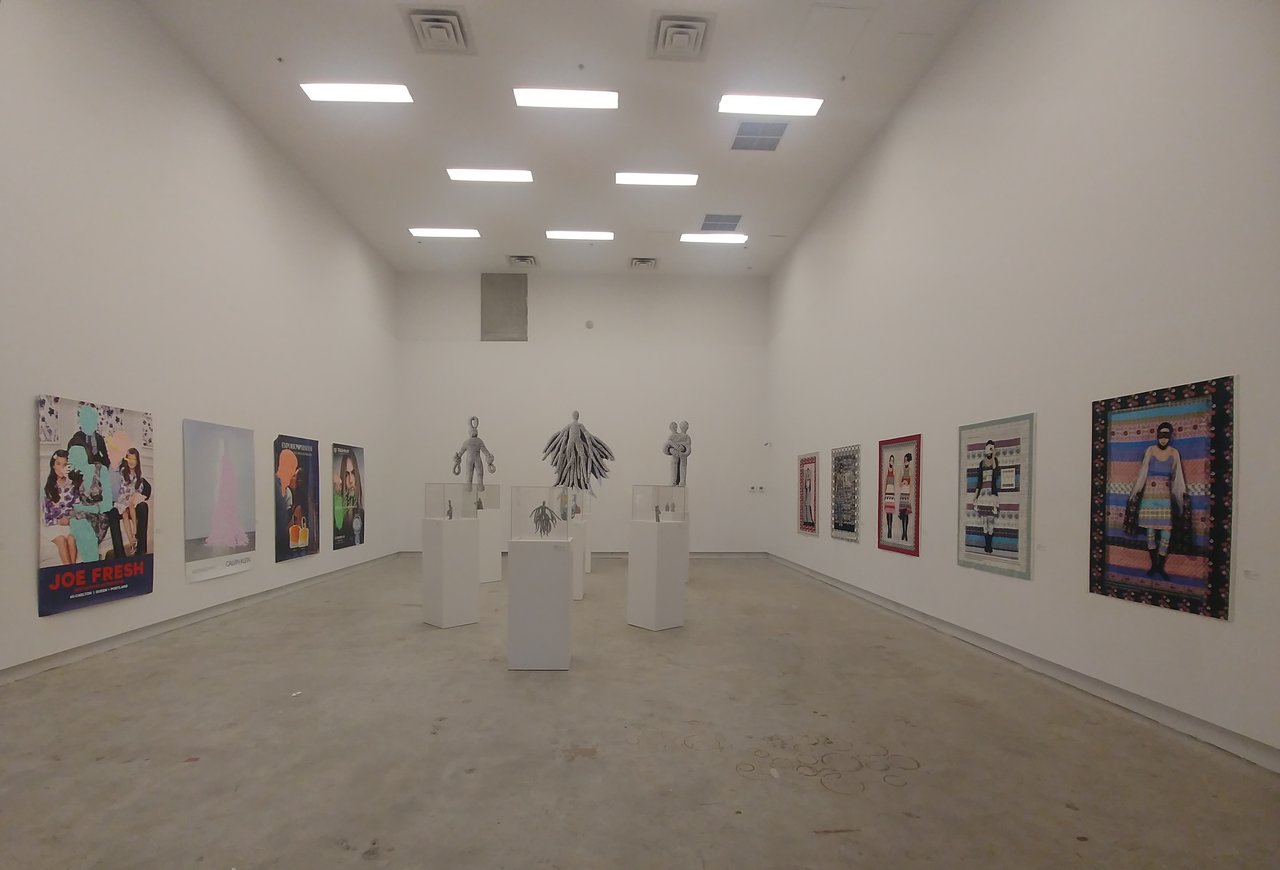
    Installation view with Kat Singer’s sculptures (in the middle). Photo: Sunny Kim

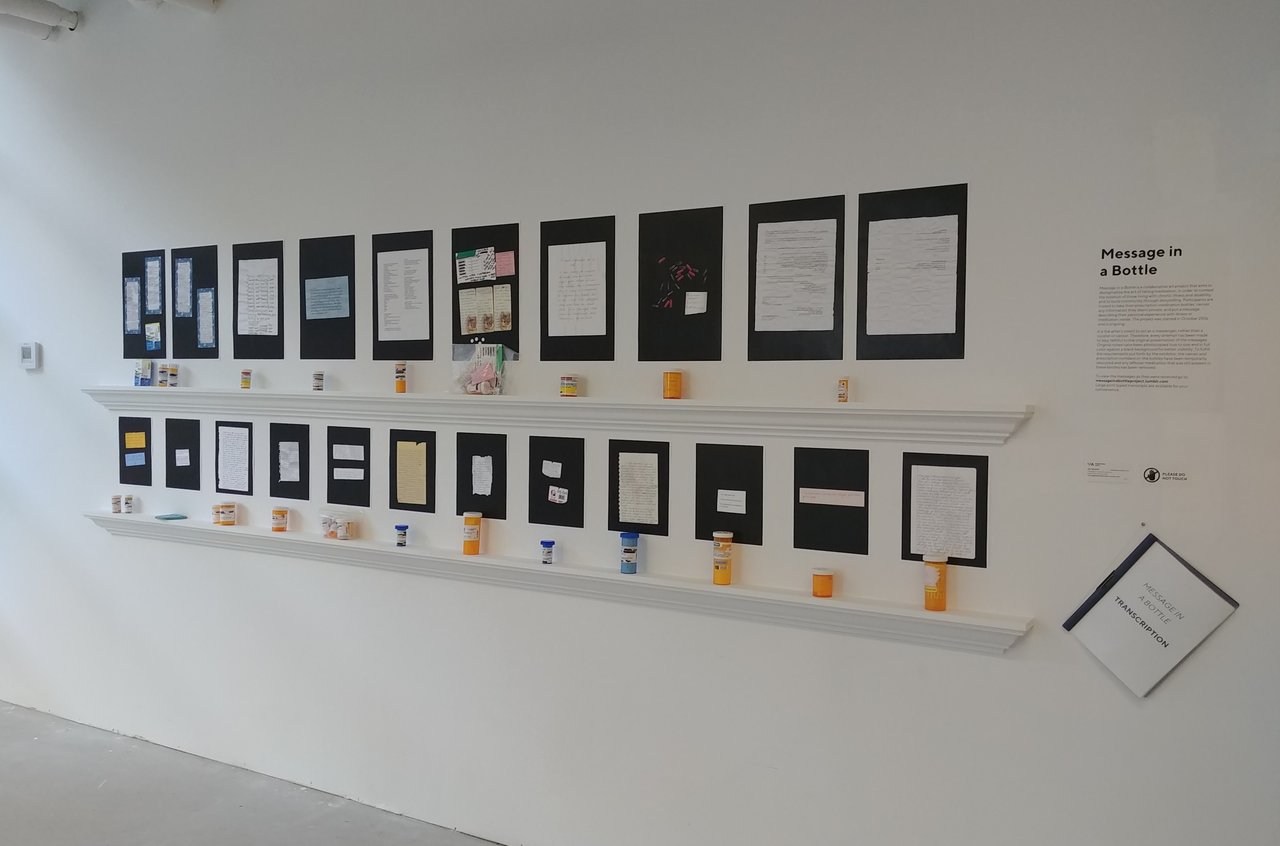
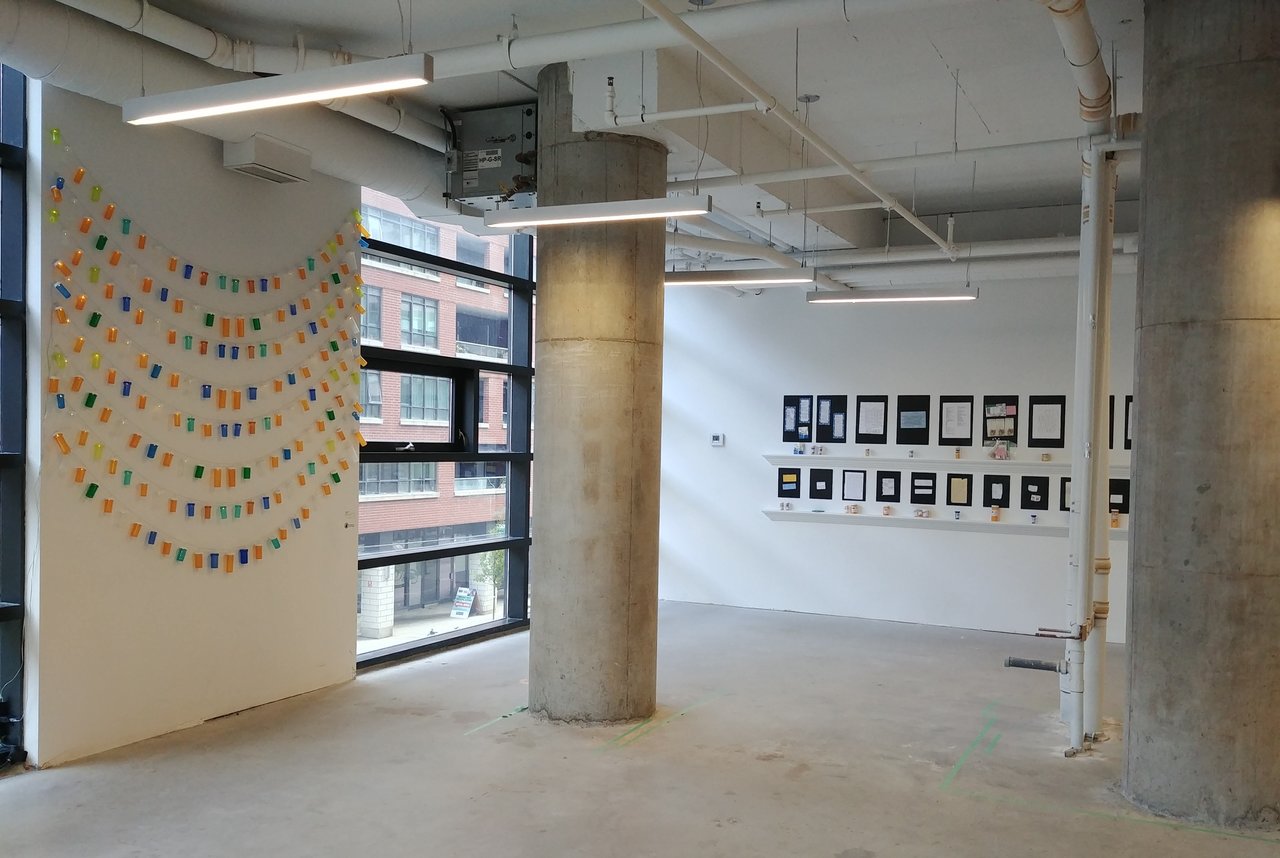
    The main exhibition space is not without its merit as well. Presented are more poignant works about the confusing nebula that is the mind-body relationship. On the wall facing the entrance, notes written by those living with mental illnesses are displayed along with their prescription medication bottles. Kat Singer’s Message in a Bottle is a collaborative project about the stigma of mental illness, but in a broader sense it comments on the common human condition. The emotions underlying the writers’ personal stories are things that everyone feels in a lifetime – isolation, hopelessness, pain, and shame.

    Kat Singer’s Message in a Bottle. Photo: Sunny Kim

    Through these shared emotions, these messages connect the readers to not only the writers, but also the people in the reader’s lives. In a small but significant step, Message in a Bottle gently soothes the helplessness, impatience, and misunderstanding that comes from seeing loved ones suffer, but not being to help, running out of sympathy, and lacking compassion because it blurs the dichotomy between self/other; those living with/without mental illness.

    Installation view with Kat Singer’s Message in a Bottle (in the back). Photo: Sunny Kim

    Bursting Bubbles collectively work to cultivate empathy and blur this dichotomy. Investigations into identification, embodiment, codependency, autonomy are explored in this dynamic group exhibition. Thanks to these investigations, we are able to gain a deeper understanding of others’ madness – as well as our own.

    Sunny Kim

    *Exhibition information: Bursting Bubbles / Creative Context for Evolving Solitudes, October 12 – 21, 2018,Toronto Media Arts Centre (TMAC), 32 Lisgar Street, Toronto. Gallery hours: daily 12 – 6 pm

  • Mikael Sandblom and the Art of Perception

    Sandblom titles his three paintings in this exhibition Phosphenes. A phosphene is most often that phenomenon we ‘experience’ with our eyes closed just after rubbing them vigorously, namely moving geometrical kaleidoscope-like patterns of light. This sort of experience can have other causes, but most importantly they are appearances that are generated internally rather than by anything we see in the outside world. Curiously, the pictures themselves are images of things we find in the world – stormclouds, buildings and lakes. So why the allusion to such private spectral imagery?

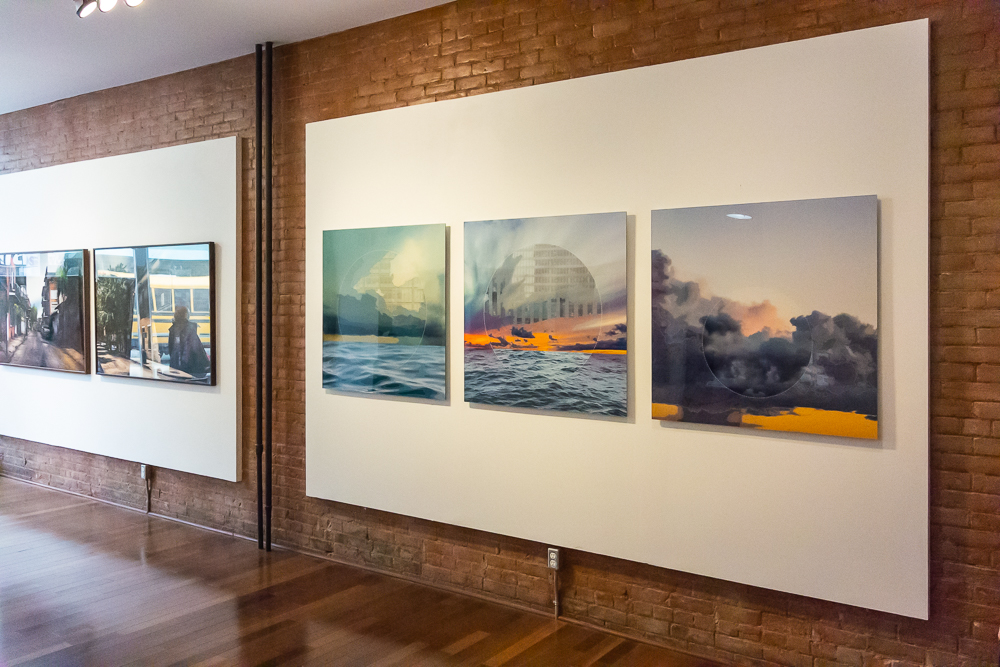
    Installation view of Mikael Sandblom’s exhibition, Phosphenes, at Elaine Fleck Gallery

    Sandblom holds that what we see looking out on the world is largely determined by ourselves, that is, internally. We do not passively perceive things. He describes the situation thus: “What we see in the world is not what is ‘objectively’ out there; most of it is a projection of ideas that we’ve formed or learned.” This echoes the eighteenth century German philosopher Immanuel Kant’s maxim from Critique of Pure Reason (1781): “Without sensibility no object would be given to us; and without understanding no object would be thought.” In other words, the very act of seeing depends on our concepts. That is why in the rare cases when a person, who has been blind from birth, newly gains her vision she cannot see anything; rather she experiences a buzzing confusion. Concepts in this sense are built up from the multiplicity of associations we make between the things we experience that allows us to navigate and operate in the world. For example, we learn to understand how a car two metres away from us is larger than the same car seen at fifty metres. In general we are constantly processing the raw visual data we collect (sense), that is, ordering it under our concepts – giving structure to our experiences, making them coherent.

    Mikael Sandblom, Squall, Digital Composite, 40 x 40 inches

    Sandblom’s central concern is with the essential nature of how we perceive things, about how our brains process visual data. On this topic the American philosopher Daniel Dennett gives the example of a painting of a distant bridge in Dresden (Dresden from the Right Bank of the Elbe, above the Augustusbrücke, 1747) by the Venetian painter Bernardo Bellotto. At a normal viewing distance one will ‘see’ the bridge populated by various pedestrians. But when one walks up close to the painting the figures on the bridge dissolve into a collection of blobs of paint. Dennett explains (TED talk, The Illusion of Consciousness, 2003) that this experience demonstrates how limited our detailed perception of things really is. For most of our field of vision we can discern very little even though we are continually under the illusion that we can see everything in it as clear as day. Our brains do not literally fill in the details, rather we let it go and just assume they are there.

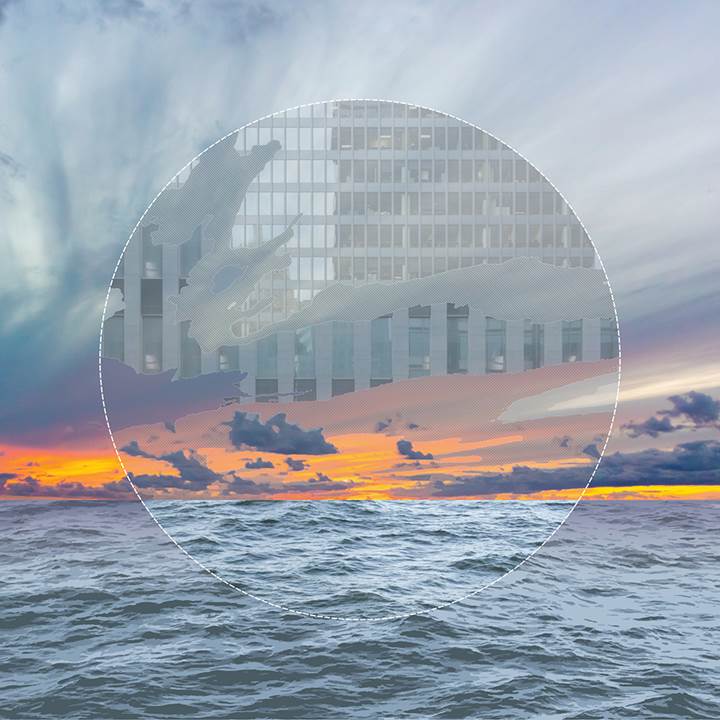
    Mikael Sandblom, Mirror/Window, Digital Composite, 40 x 40 inches

    So like Bellotto, Sandblom exploits the illusions we all fall prey to when seeing things in the world. But for Sandblom these illusions are the central subject of his work. He aims to make the viewer aware of them. In Mirror/Window, for example, he is concerned with the way in which the transparency of glass under certain light conditions changes to reflectancy. And under very specific light conditions the glass becomes both transparent and reflective. The windows of a high-rise office block merge with and reflect the sky at once. Sandblom is so fond of this motif that he chooses to display his images behind thick glossy acrylic. That way the viewing of the picture is disrupted by the gallery environment reflected slightly in the acrylic.

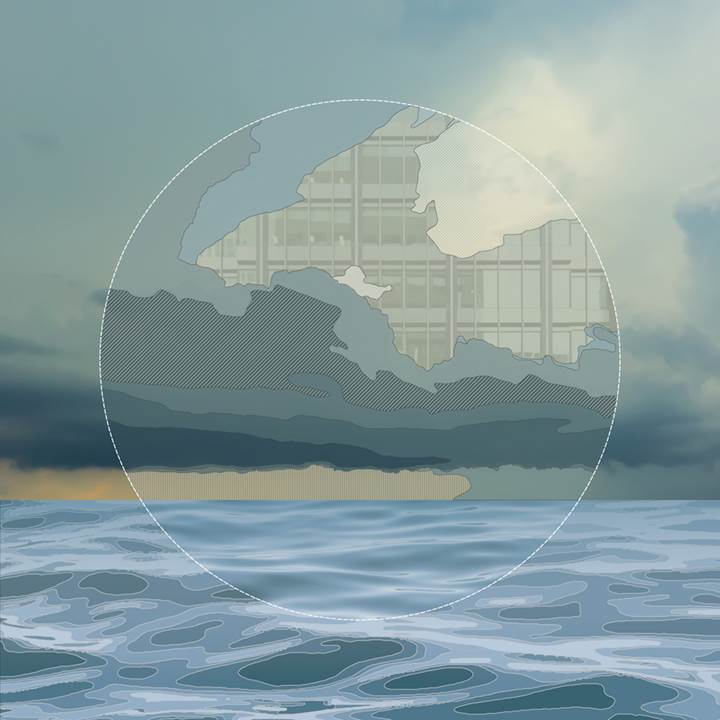
    Mikael Sandblom, Thunderstorm, Digital Composite Print, 40 x 40 inches

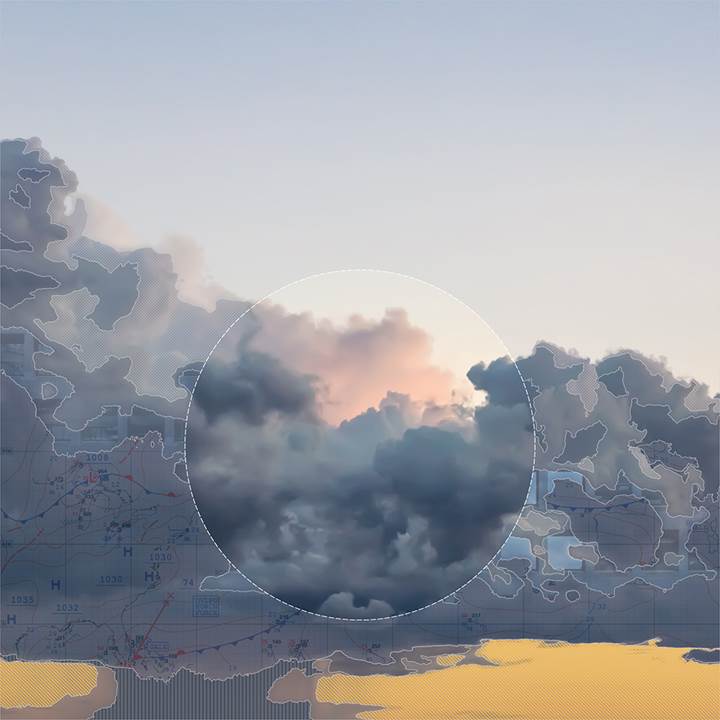
    In his Thunderstorm we see a contrast between detailed storm clouds and their depiction as flat contours filled with geometrical patterns and parts of a weather map. The inclusion of the weather map points to the representational role of imagery. The image of dark clouds is but one representation of the weather phenomenon. The map, with its isobars etc., is another way of representing the same phenomenon. This fact highlights the conceptual nature of our perceptions noted earlier. There is an objective world which, according to Sandblom, we cannot directly know and there are our representations of it. It is these representational forms that we are aware of, that are the contents of our perceptions. They are, if you like, the phosphenes of our perceptual experiences in the sense that they are what we are immediately acquainted with.

    In conclusion, when looking at Sandblom’s pictures one ought to keep in mind that none are meant to be viewed as single totalities, “resolved into a single image” as he puts it. It is best to think of these works as essays about how we perceive things in the world. His objective is to nudge you into thinking that while you may feel certain about how things appear to you, that certainty might itself be an illusion, a trick of the brain.

    Hugh Alcock

    Images are courtesy of the artist and Elaine Fleck Gallery

    *Exhibition information: Mikael Sandblom, Phosphenes, October 10 – 27, 2018, 1351 Queen St. West, Toronto. Gallery hours: Mon, Wed, Thu & Fri: 12 – 6 pm, Sat: 11 am – 6 pm.

  • Martin Golland & Howard Lonn at Birch Contemporary

    Birch Contemporary presents the works of Martin Golland and Howard Lonn, abstract artists whose styles challenge the perceptions of viewers by distorting the distinctions between the representational and the figurative. Their paintings manipulate color, form, and space to explore complex interpretations of the world around us. While comparable in their use of abstract elements, both artists portray entirely unique approaches and thematic foundations.

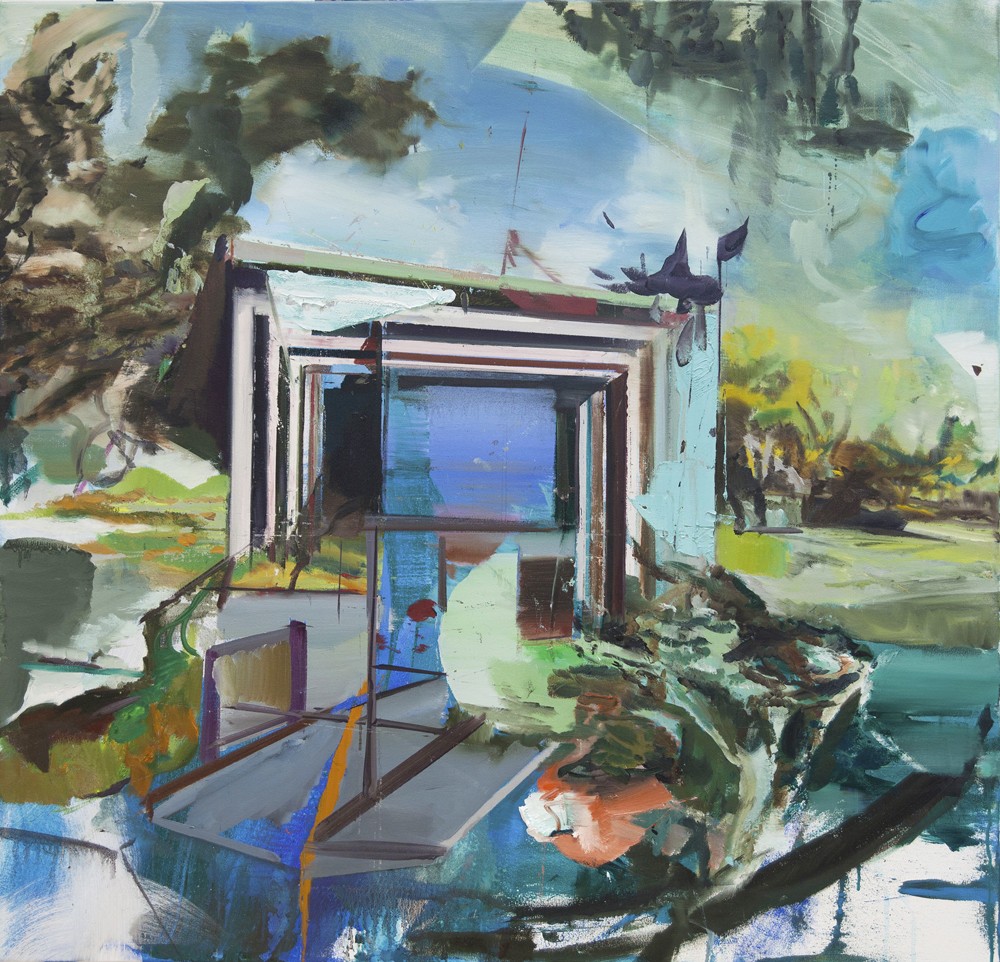
    Martin Golland, Tunnelscape, 2018, oil on canvas, 38″ × 40″

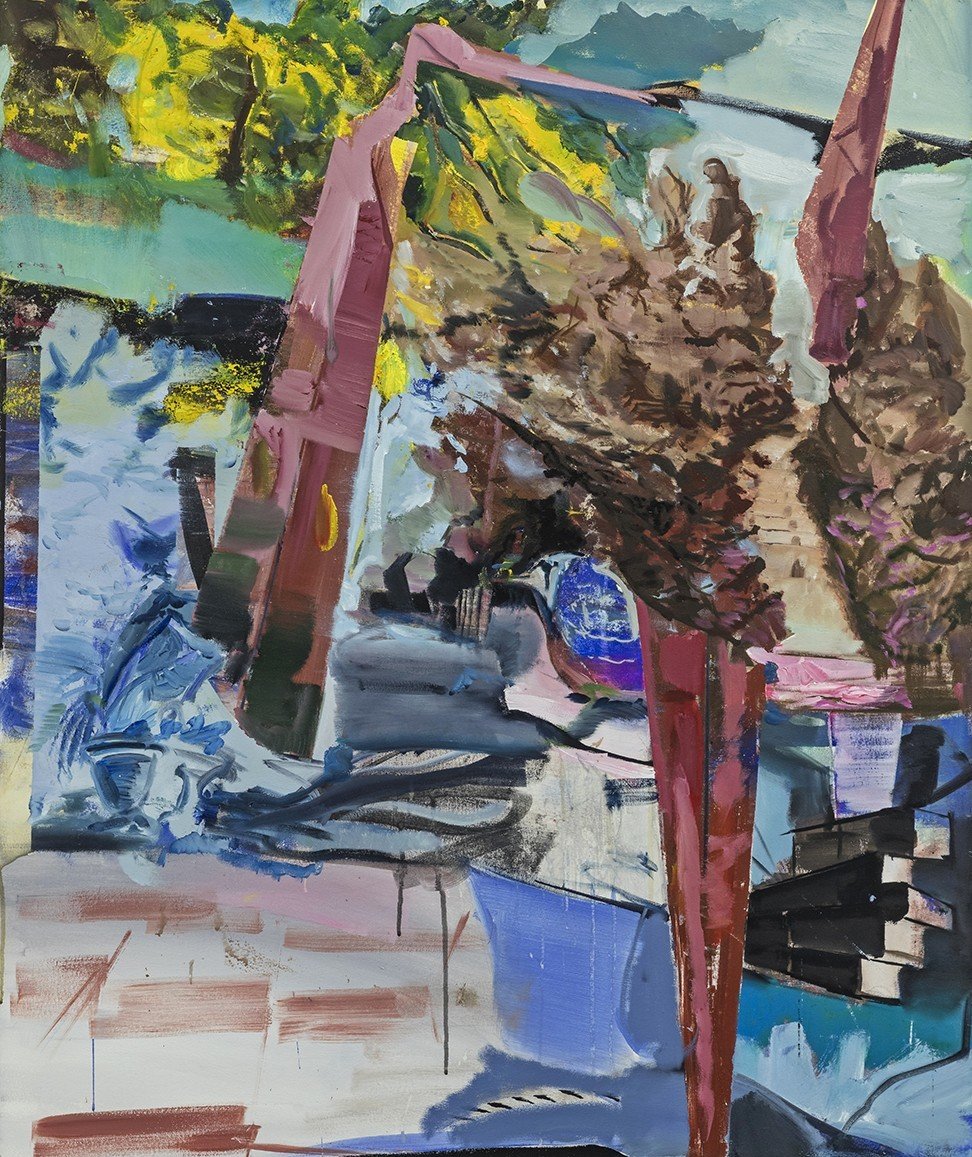
    Within his collection called Vignettes and Aggregates, Martin Golland dwells on the boundaries of human and nonhuman as well as biological and cultural entropies. Time and space remain obscured, both of which are normative aspects expected of the medium. The history of painting is understood through conflicting perspectives, including the representational and the abstractive, fragmentation and totality, surface and space. His approach is to coalesce these deemed competitive elements into brief glimpses scattered throughout the canvas. Things such as color and composition grow indefinite and gestural. Rather than leaving clues or indicators to guide the viewer through the works’ complexities, it is instead left to their own devices to decode their idiosyncrasies. Some works can justifiably be considered landscapes with their interceding sense of depth and suggestive architectural elements, while those same works could likewise be regarded as emotionally evocative yet elusive tableaus that dwell solely on the abstractive. To physically confront these pieces yields much to the authentic experience they garner.

    Martin Golland, Rococo Park, 2018, oil on canvas, 43″ × 36″

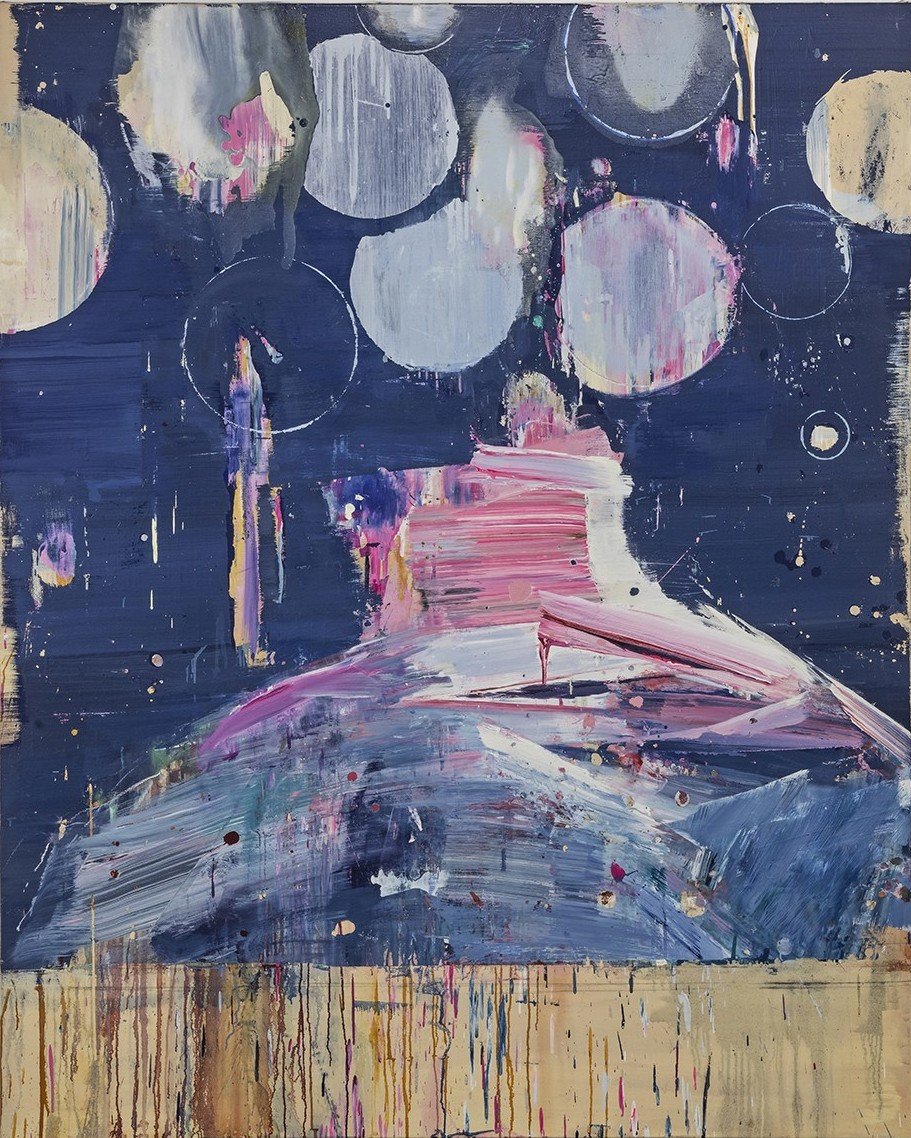
    Simultaneously, Howard Lonn presents works that manipulate planes of abstraction and means of perception. They constitute layers of paint that convey recesses and protrusions of depth. However, it is again left to the viewer to determine how to dissect those differing yet harmonious perspectives.

    Howard Lonn, Ascnesion, 2018, oil on canvas, 72″ × 58″

    According to his released statement for the exhibition, “I see painting itself as a kind of membrane across which my experience and thoughts are carried and transmitted back to the world, as a compressed, encoded signal for interpretation, which ultimately reaches its completion through the experience of viewing.”

    Howard Lonn, terminal af., 2018, oil on canvas, 72″ × 96″

    Through these two independent exhibitions, Birch Contemporary offers deeply immersive and contemplative works that abstract conventional notions of painting. Depths of field, composition, color, and perspective – among many other pictorial elements – contradict longstanding notions of representational and figurative aesthetics.

    Simon Termine

    Images are courtesy of Birch Contemporary

    *Exhibition information: Martin Golland,Vignettes and Aggregates & Howard Lonn, terminal af, September 6 – October 13, 2018,  Birch Contemporary, 129 Tecumseth Street, Toronto. Gallery hours: Wed–Fri 10 am – 6 pm, Sat 11 am – 5 pm.

  • Nuit Blanche 2018

    Saturday, September 29, 2018, sunset to sunrise
    Various locations in Toronto
    Free all-night contemporary art event

    For one sleepless night, from sunset to sunrise, the familiar is discarded and Toronto is transformed into an artistic playground for a series of exhilarating contemporary art experiences in unexpected public spaces. This year more than 75 projects created by over 300 local and international artists, presented in Scarborough and downtown Toronto.

    Curatorial Theme: You Are Here

    City-Produced Exhibitions:

    STYLL, curated by Alyssa Fearon

    Dream Time: We All Have Stories, curated by Karen Alexander

    The things they carried, curated by Tairone Bastien

    Partner Projects involve special and independent project and projects at major institutions such as the AGO and ROM among others.

    Toronto artists, cultural and educational institutions, museums, galleries and neighbourhoods participate in Nuit Blanche Toronto each year by producing their own one-of-a-kind projects that transform the city.

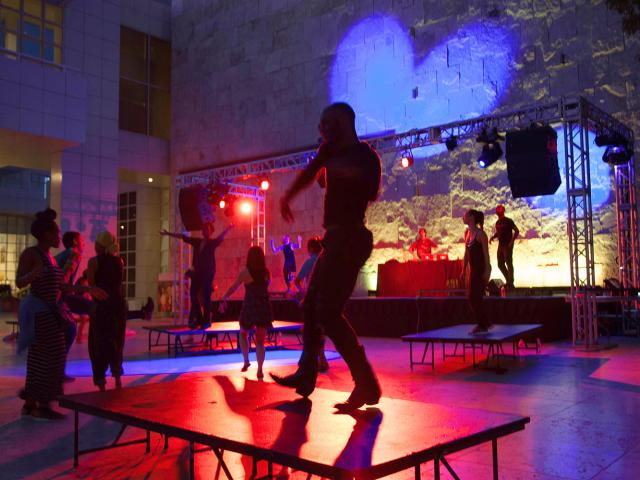
    On Flashing Lights by Brendan Fernandes, 2018. Courtesy of the J Paul Getty Trust Photographers

    For locations and more information please go to https://nbto.com/

  • Grace Dam: SEX LOVES LIES / Urban Gallery

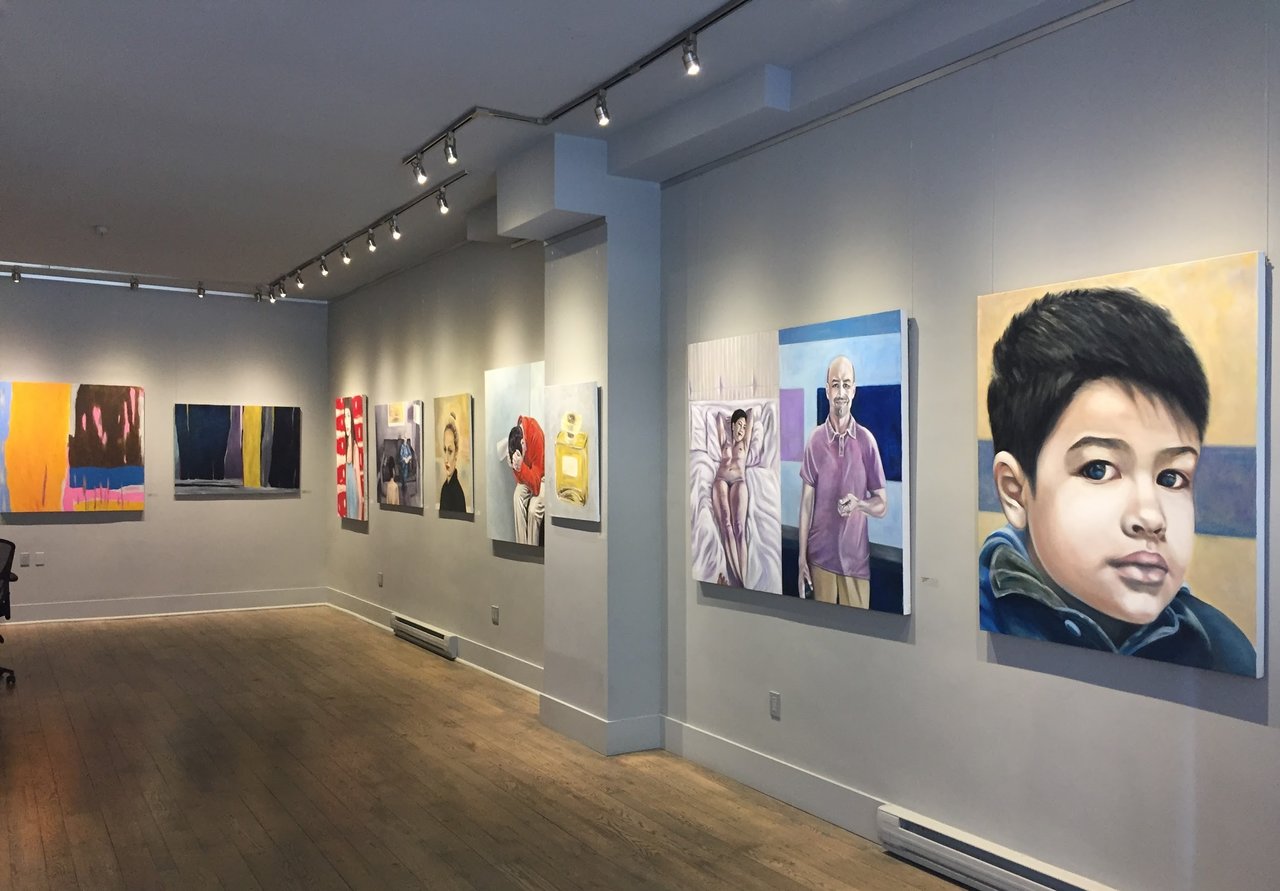
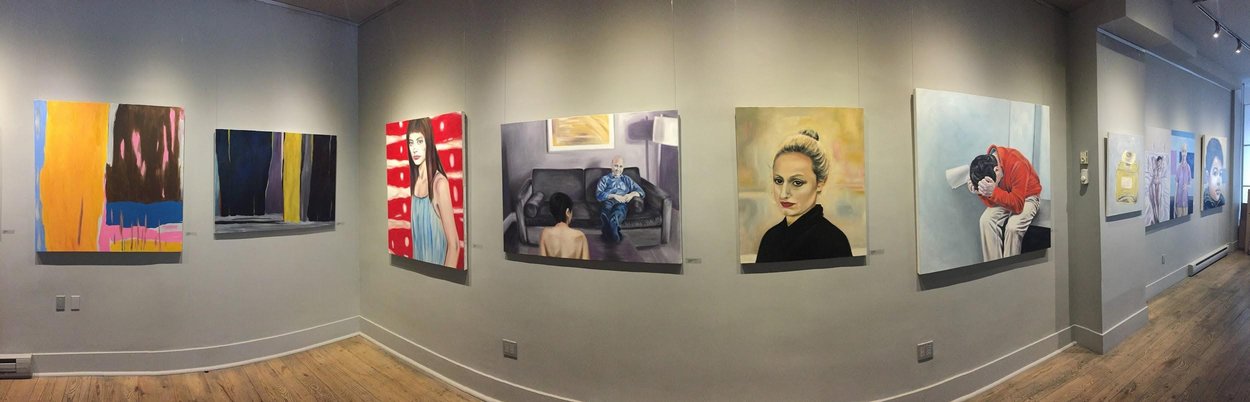
    SEX LOVE LIES, a solo exhibition by Grace Dam at Queen East’s Urban Gallery features several acrylic and oil paintings; some of them representational work while the others are abstract compositions.

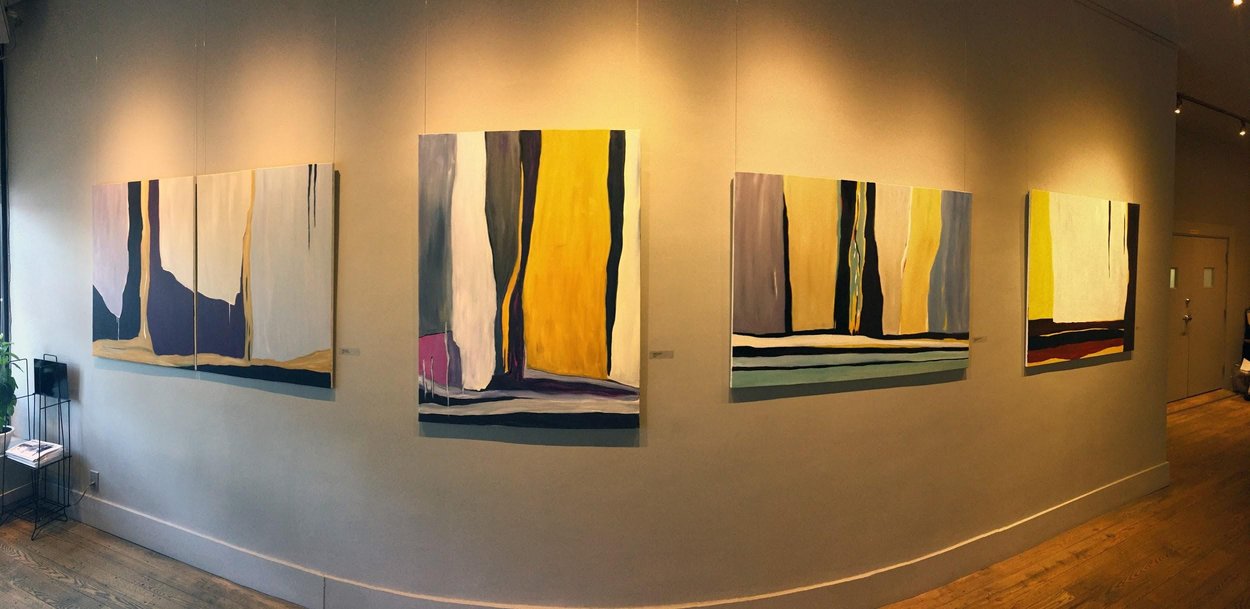
    Installation view of Grace Dam, SEX LOVES LIES at Urban Gallery. Photo: Nathan Flint

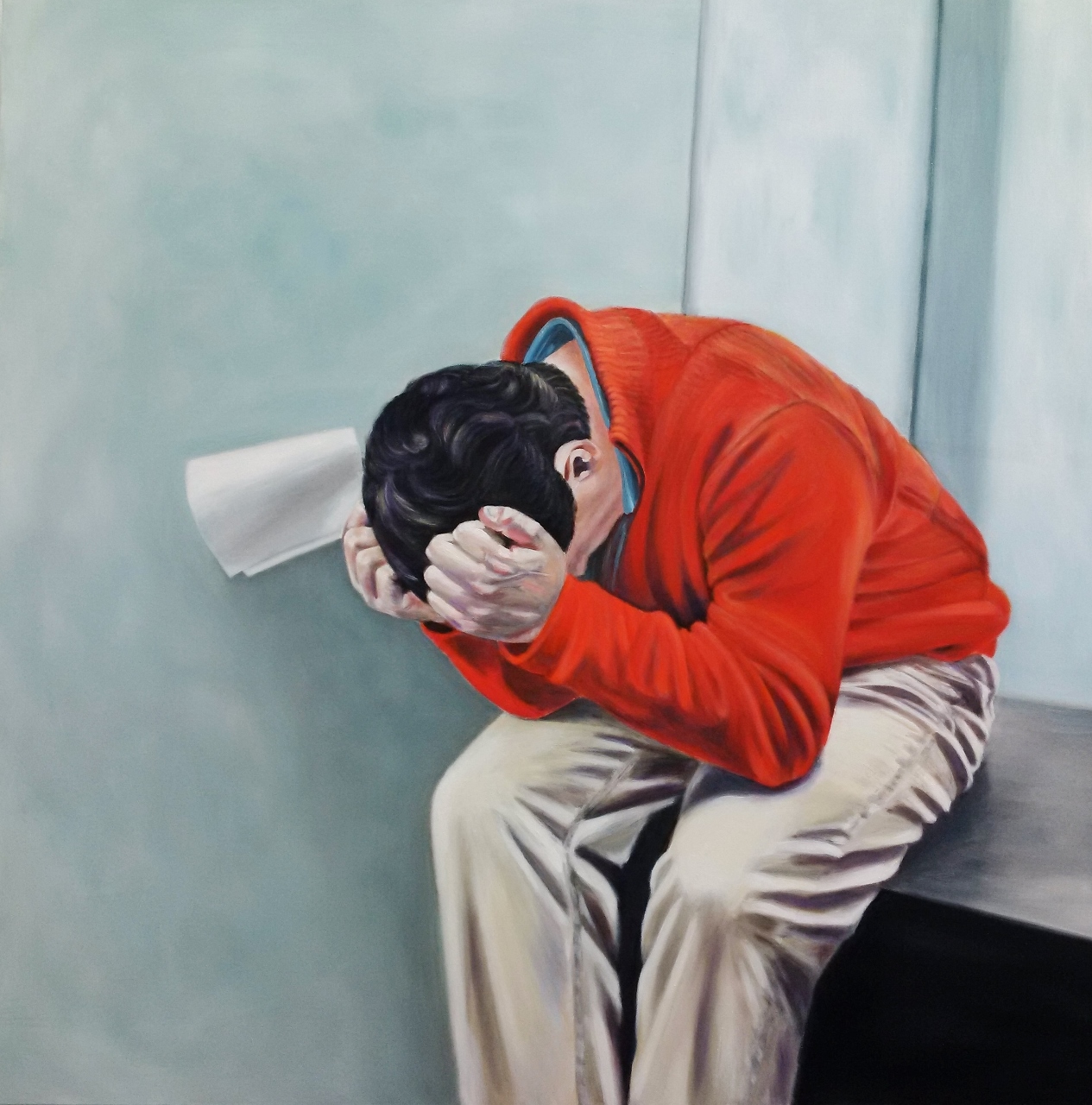
    Most of the representational works are portraits. The one exception is French Lover, a still life, where the iconic perfume bottle is a stand-in for the elusive romantic partner the work is titled after. Many of the portraits are strikingly beautiful and confrontational, with the subject’s gaze directed towards the viewer. However, amidst these are a few exceptions, such as the same nude figure in two works from the artist’s series Silent/Body Language as well as the character within the work titled The Paper. In The Paper, the figure is hunched over and visibly in distress, presumably caused by the crumpled piece of paper held in his hand. The ambiguity of this document dramatically affects how to read the work. The contents could be anything from a failing grade to a serious medical diagnosis or eviction, and the narrative seems to focus on this emotional state. This use of symbolism with other recognizable visual motifs, to express sentiment and affect the viewer, are prominent in many of the Dam’s representational works.

    Grace Dam, The Paper, 2017 oil on canvas, 48″ x 48″. Courtesy of the artist

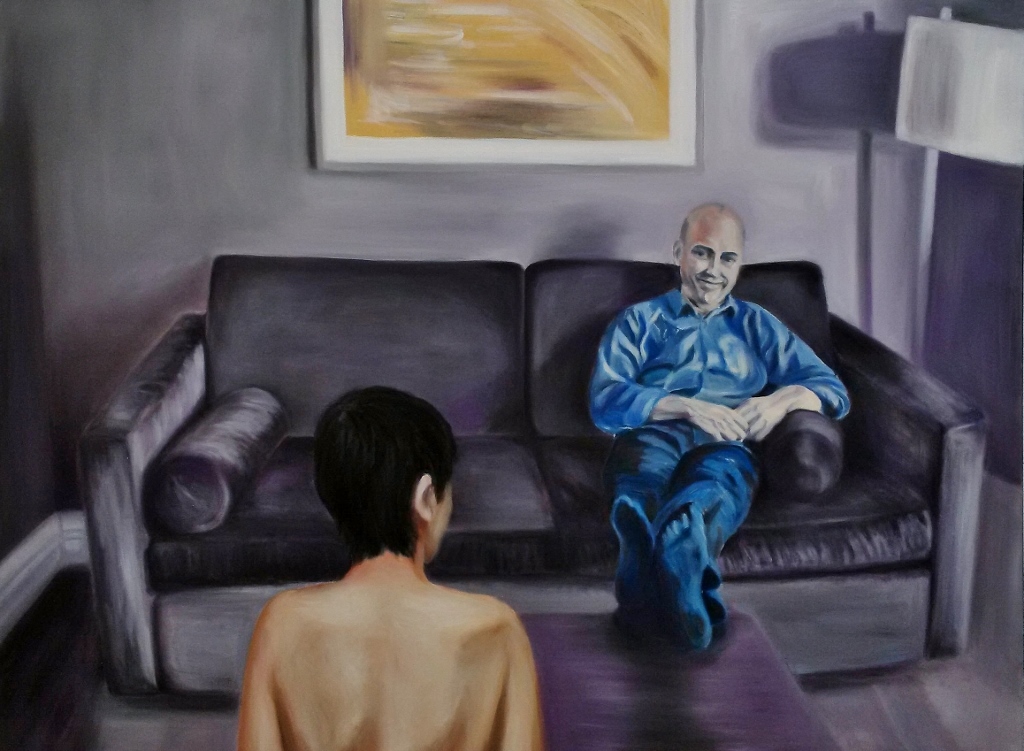
    The two pieces in the exhibition from Dam’s Silent/Body Language series tell a story of a woman, presumably the artist herself, in the extremely vulnerable position of being nude in the presence of a fully dressed man whose gaze and smirk contain questionable intent. In The Comfortable Sofa, we only see the back of the woman’s bust and head, which comes across tense or rigid, while the male figure is relaxed and confident. This juxtaposition of body language suggests a hierarchy of power within the figures’ dynamic.

    Grace Dam, The Comfortable Sofa, 2017 oil on canvas, 36″ x 48″. Courtesy of the artist

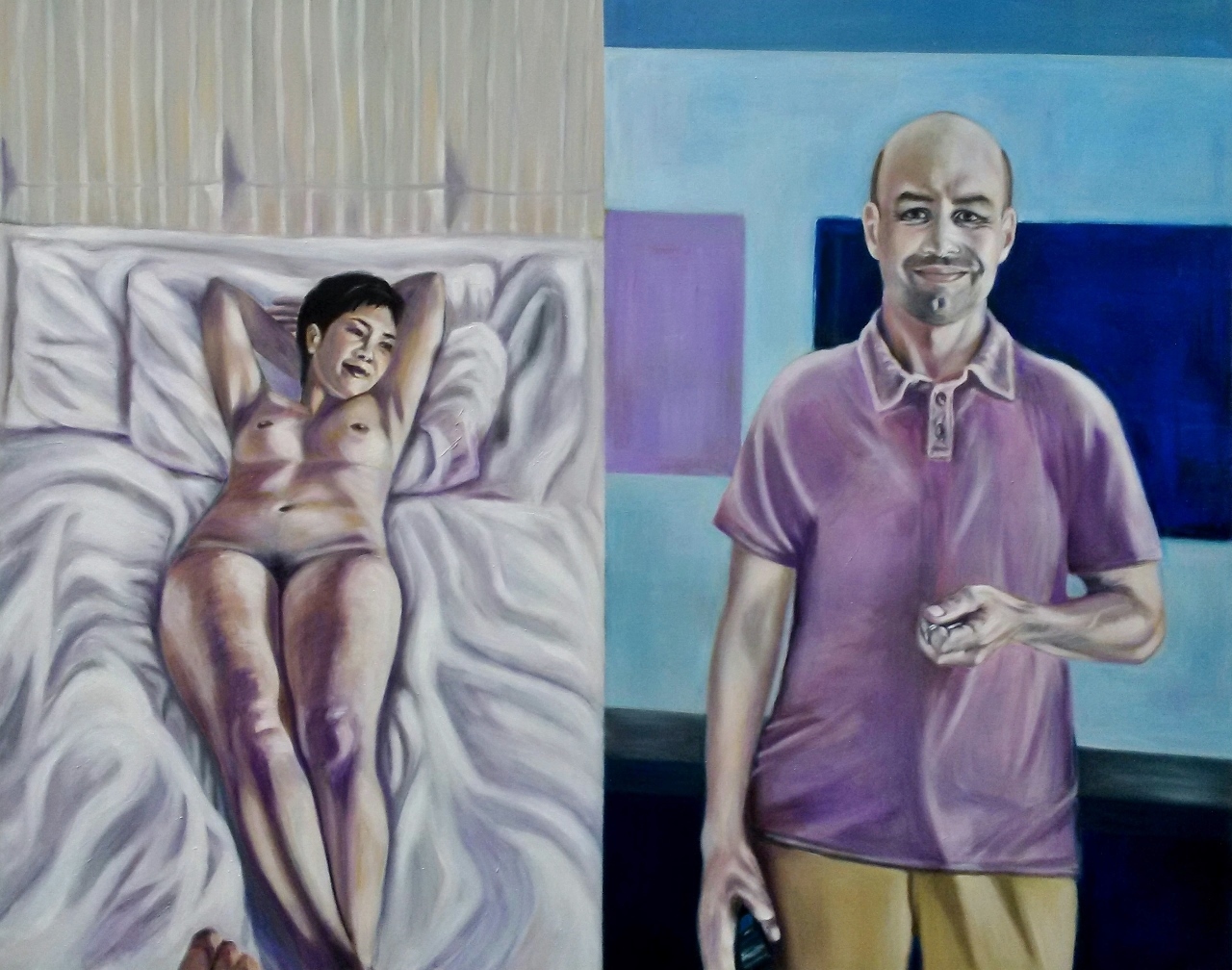
    Similarly, in The Blackberry, we see the same characters in a split paneled image, with the nude female in supine position, while the male figure is fully clothed and standing, seemingly in another room. Many of the poetic and romantic descriptions associated with these works seem to suggest a liberation of feminine sexuality rather than an objectification from the male gaze, but clarity is never quite explicitly reached when engaging with the works.

    Grace Dam, The Blackberry,2017 oil on canvas (diptych), 48″ x 60″. Courtesy of the artist

    The abstract compositions use design elements and style to portray the feelings inspired by real landscapes, scenarios or forms.

    Installation view of Grace Dam, SEX LOVES LIES at Urban Gallery. Photo: Nathan Flint

    Titles for the work, such as Summer Rockies and Autumn Rockies, reveal to us the source imagery for the pieces and add a secret narrative to an otherwise strictly formal painting process and picture plane. Following those hints the works of wavy, vertical colour bands become a journey to mountain ranges and the sublime feelings these landmarks evoke.

    Grace Dam, Summer Rockies, 2016 acrylic on canvas, 48″ x 36″. Courtesy of the artist

    The exhibition is a beautiful exploration between abstraction and representation. The show also sustains a magnificent colour palette to amaze attendees and patrons. Finding abstraction in forms, and figures in the formless is a wonderfully intellectual exercise that the artist and the gallery have tackled beautifully together.

    Installation view of Grace Dam, SEX LOVES LIES at Urban Gallery. Photo: Nathan Flint

    Nathan Flint

    *Exhibition information: September 6 – 29, 2018, Urban Gallery, 400 Queen Street East, Toronto. Gallery hours: Tue – Fri 12 – 5 pm, Thu 12 – 8 pm, Sat 1 – 5 pm.

  • MOCA GRAND OPENING

    September 21, 2018 / 7 pm
    158 Sterling Ave, Toronto

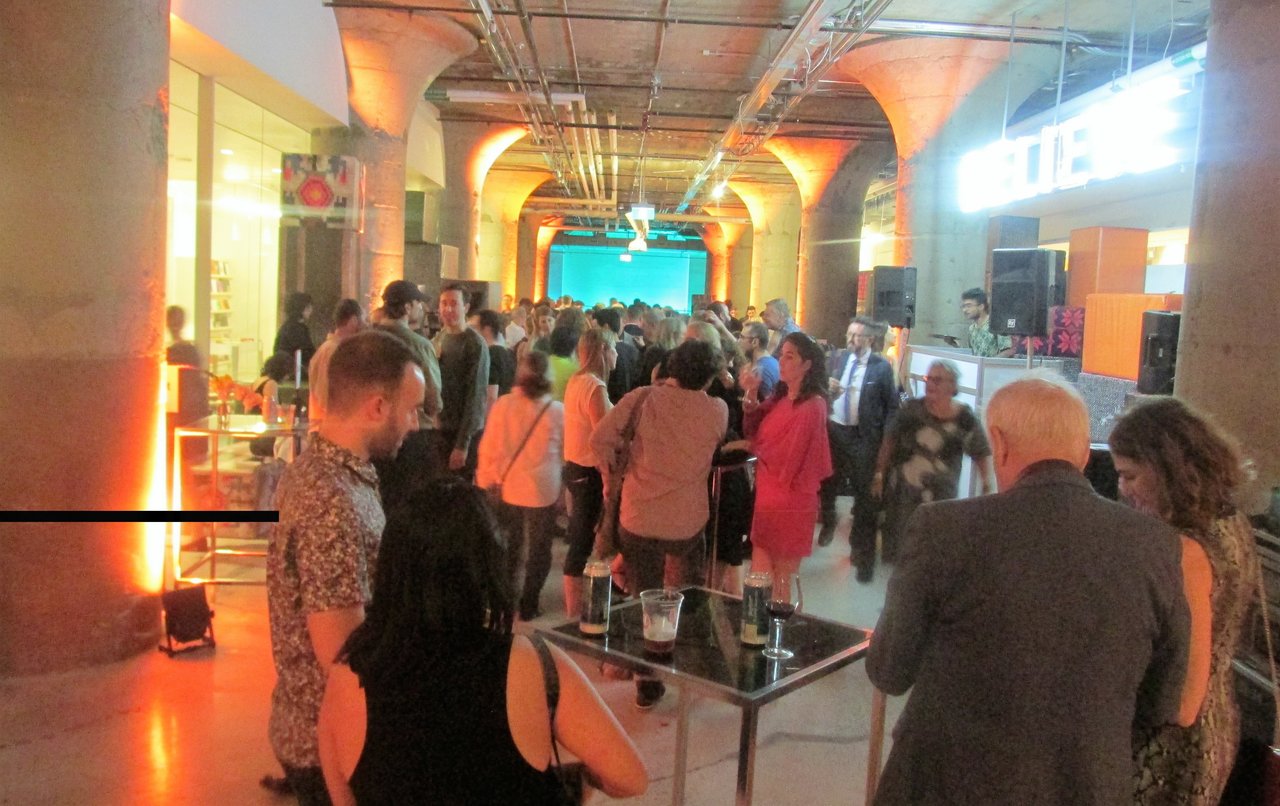
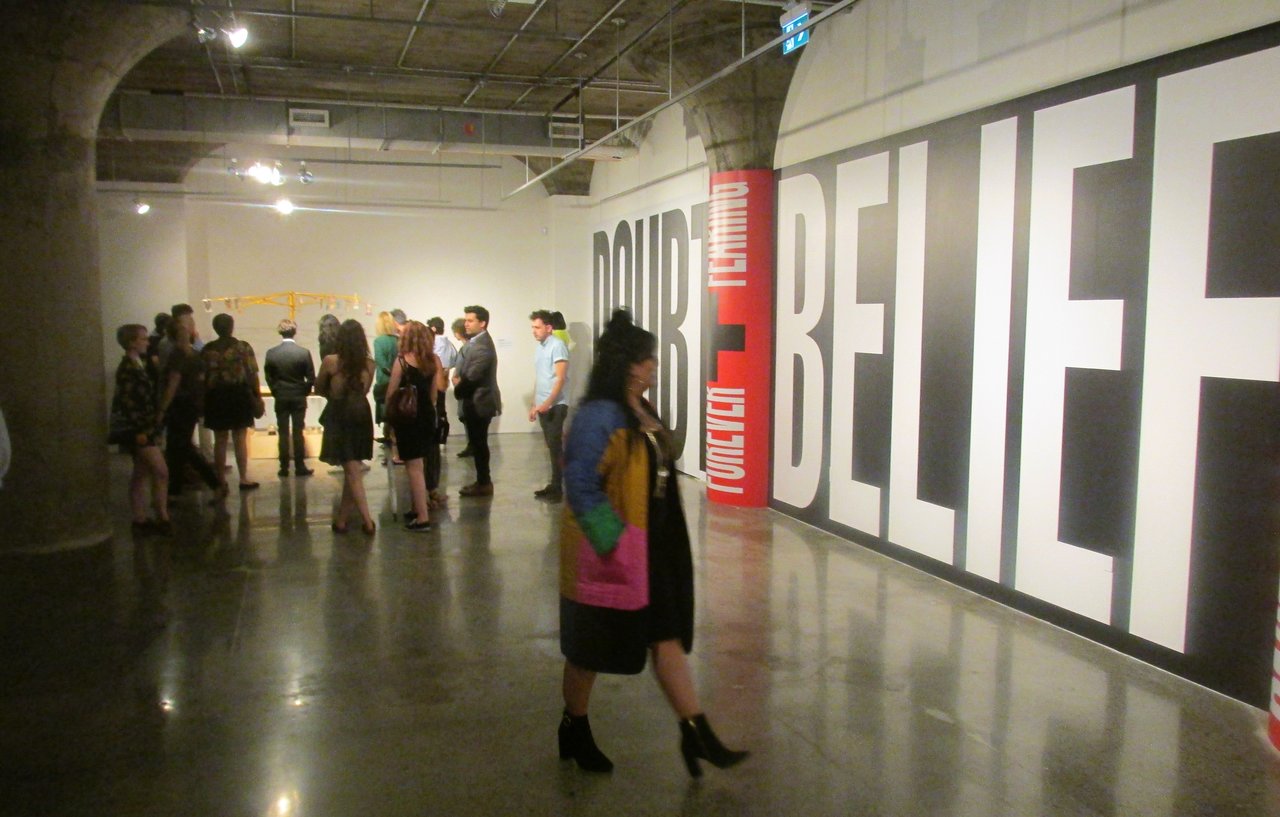
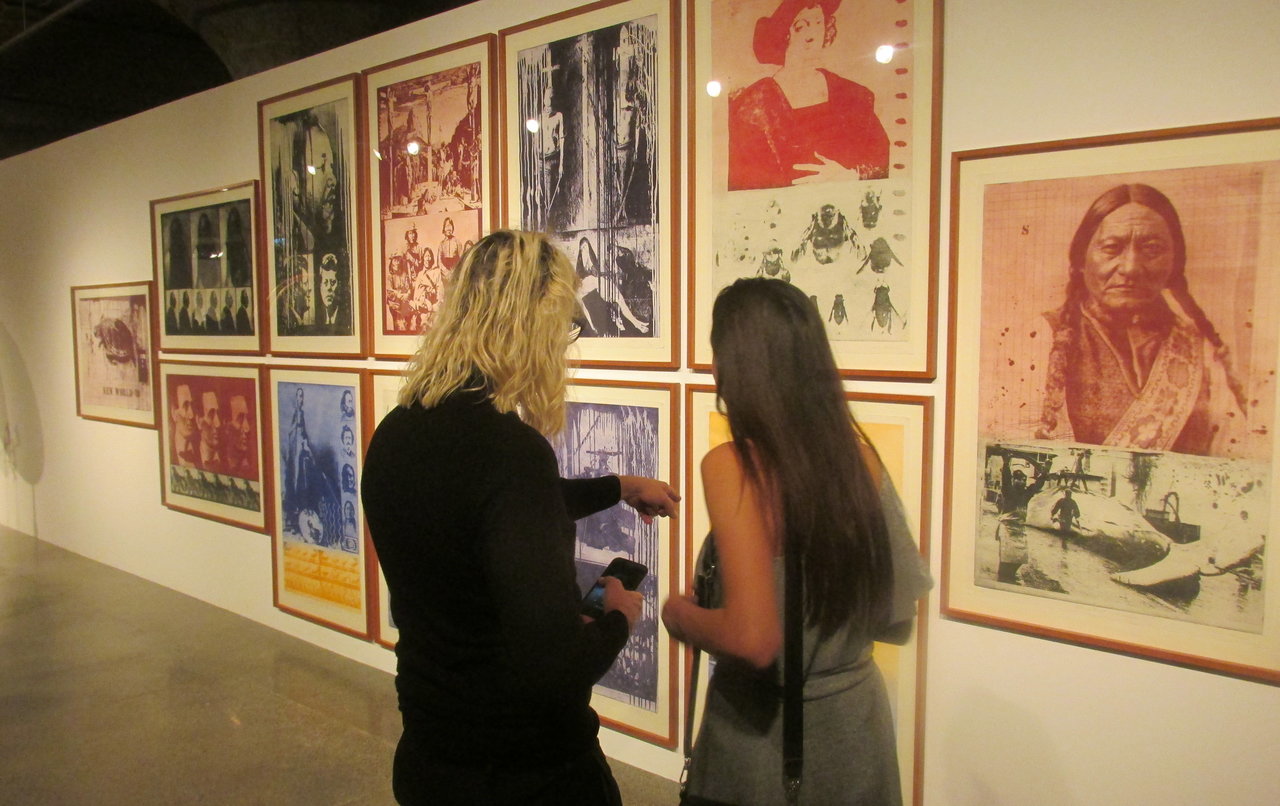
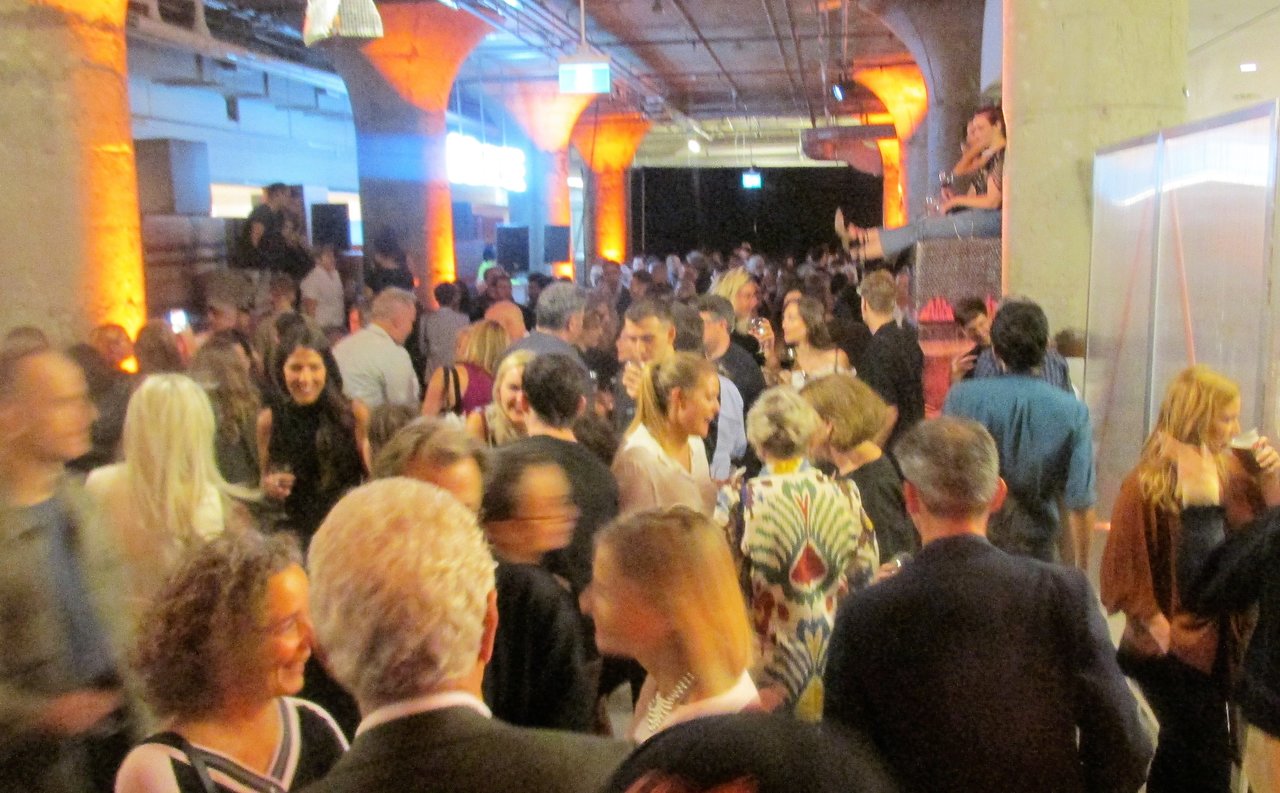
    Good things are worth waiting for. Judging from the two long winding lineups of members and guests snaking around the building, people were ready to check out the newly renovated space and MOCA’s curator, David Liss’ inaugural exhibition, BELIEVE.

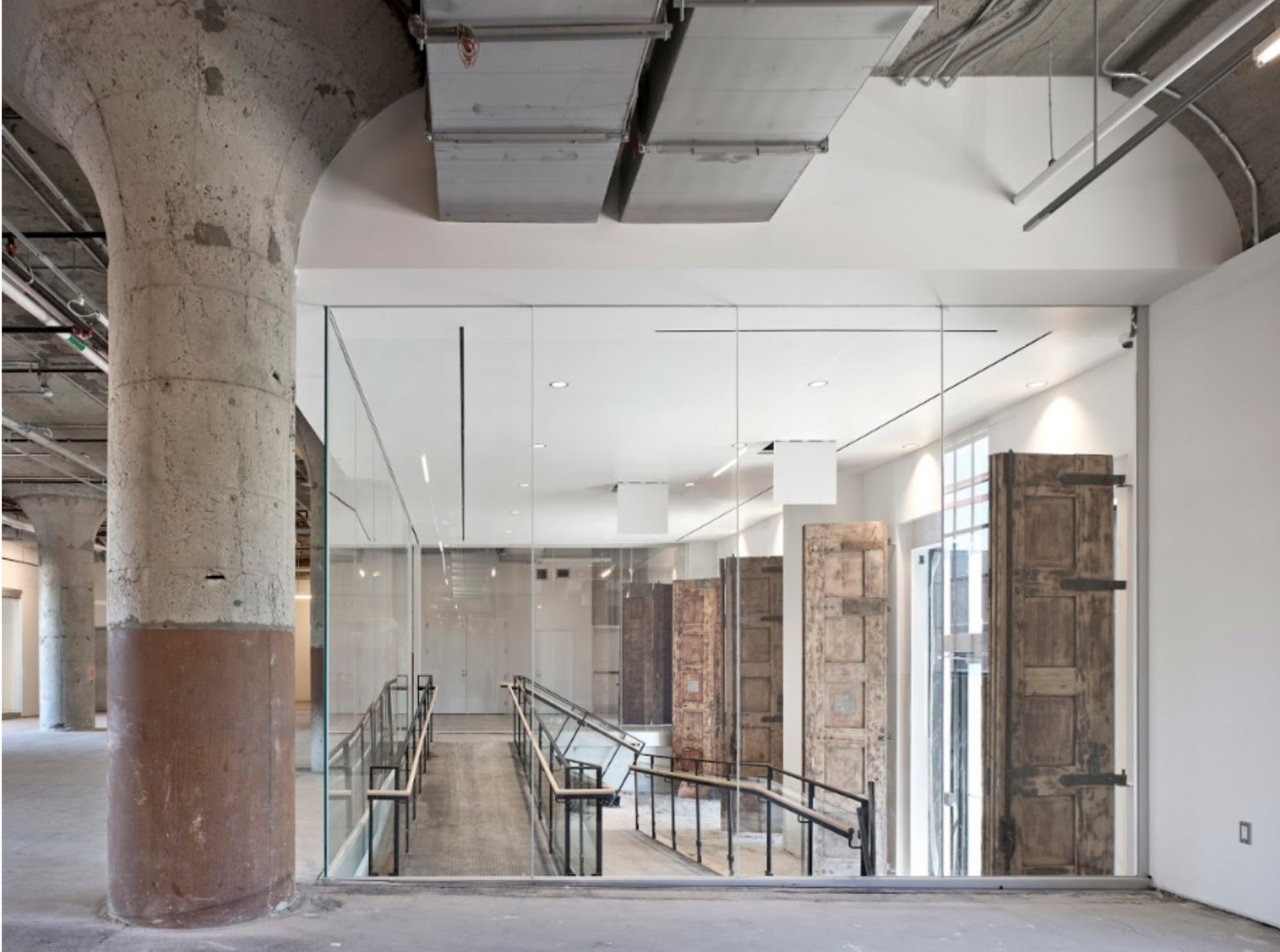
    The five floors of the building dedicated to MOCA’s new home were filled with curious visitors. The main floor was packed for the reception as people chatted and visited the bar. The large circular support columns of the building, which go up the ten floors of the structure, were embraced and helped remind us of the building’s history as an automotive industrial property. The new elevators whisked people up the other 5 floors of the MOCA – a great expansion from its Queen Street location.

    The new location is in the Junction, an area already feeling the impact of galleries such as Angell Gallery, TPW, Division Gallery, David Faria Gallery, Clint Roenisch Gallery, Robert Kananaj Gallery, Mercer Union and many others seemed like the right locale for this new art hub. The next two floors were the site of David Liss’ BELIEVE exhibit – a mix of works from local and international artists.

    Installation views of BELIEVE

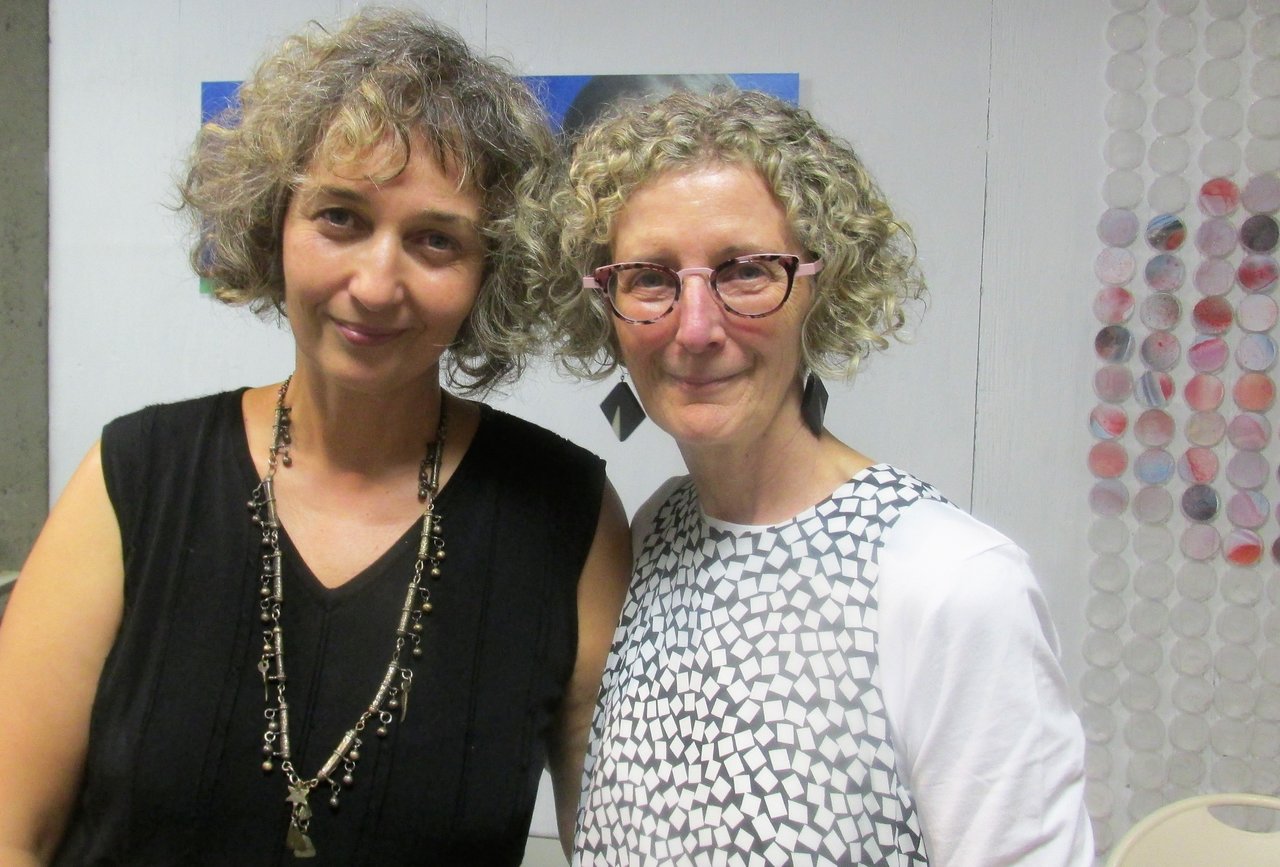
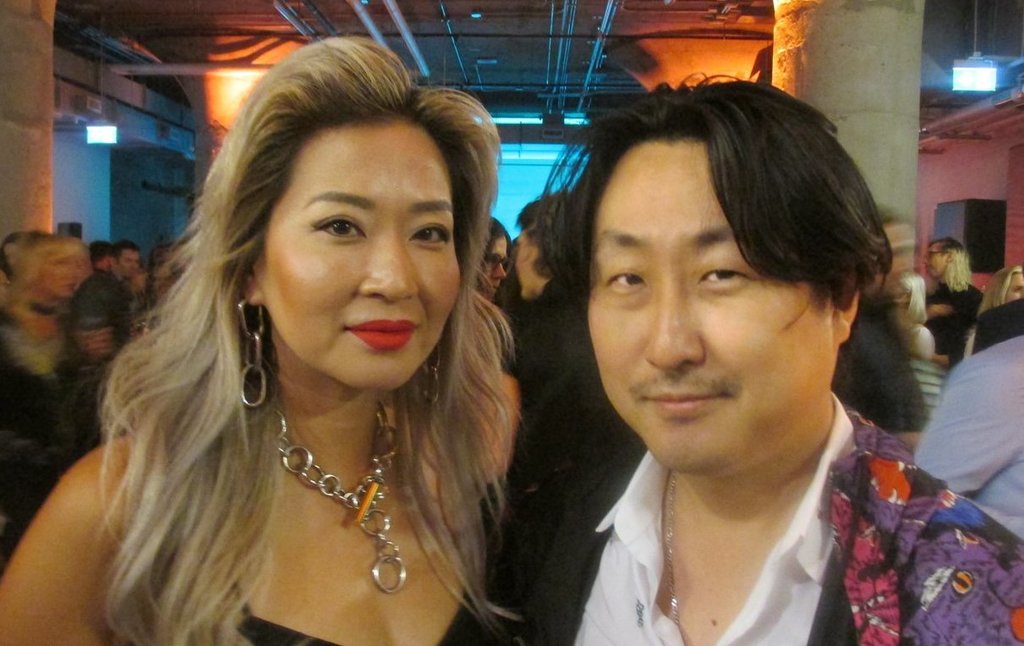
    On the fourth floor there were studios from the Akin Collective and some residency studios from the Ontario Science Centre. I chatted with an excited Elaine Whittaker, artist in residence in the Ontario Science Centre Studio as part of the Idea Projects. Whittaker will be at MOCA for three months working in the studio.

    Curator Ana Klasnja (left) and artist Elaine Whittaker (right)

    The Akin Collective Studios were busy with crowds trying to catch a peak at some new art works. Akin artist Raquel Da Silva was happy to see interested viewers looking at her colourful pieces. The fifth floor’s administrative offices were not open to the public but when peaking in, they looked impressive as well.

    Raquel Da Silva

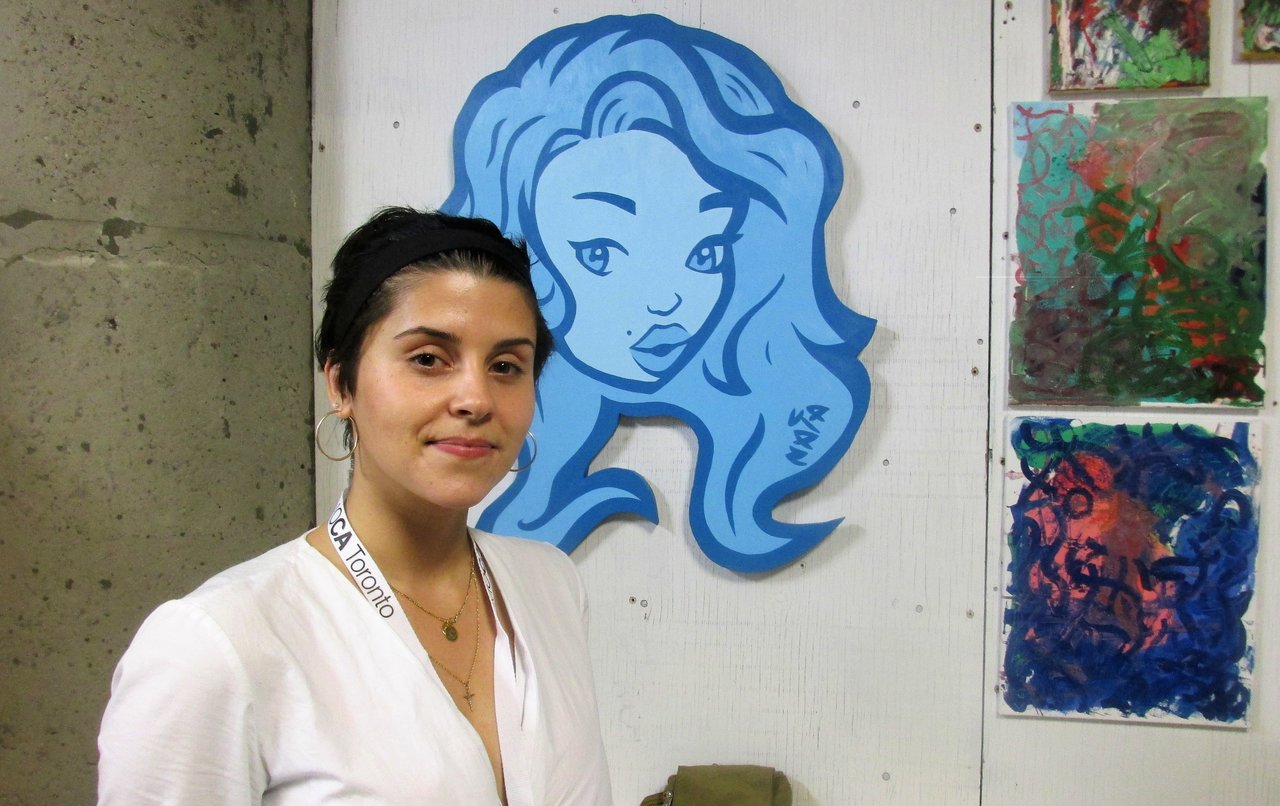
    In the lobby curator David Liss was beaming all happy smiles to see that the long journey of renovation has ended, and their new home is now open to the public. Board Members and patrons of MOCA enjoyed the opening.

    Curator, David Liss (left) with guests

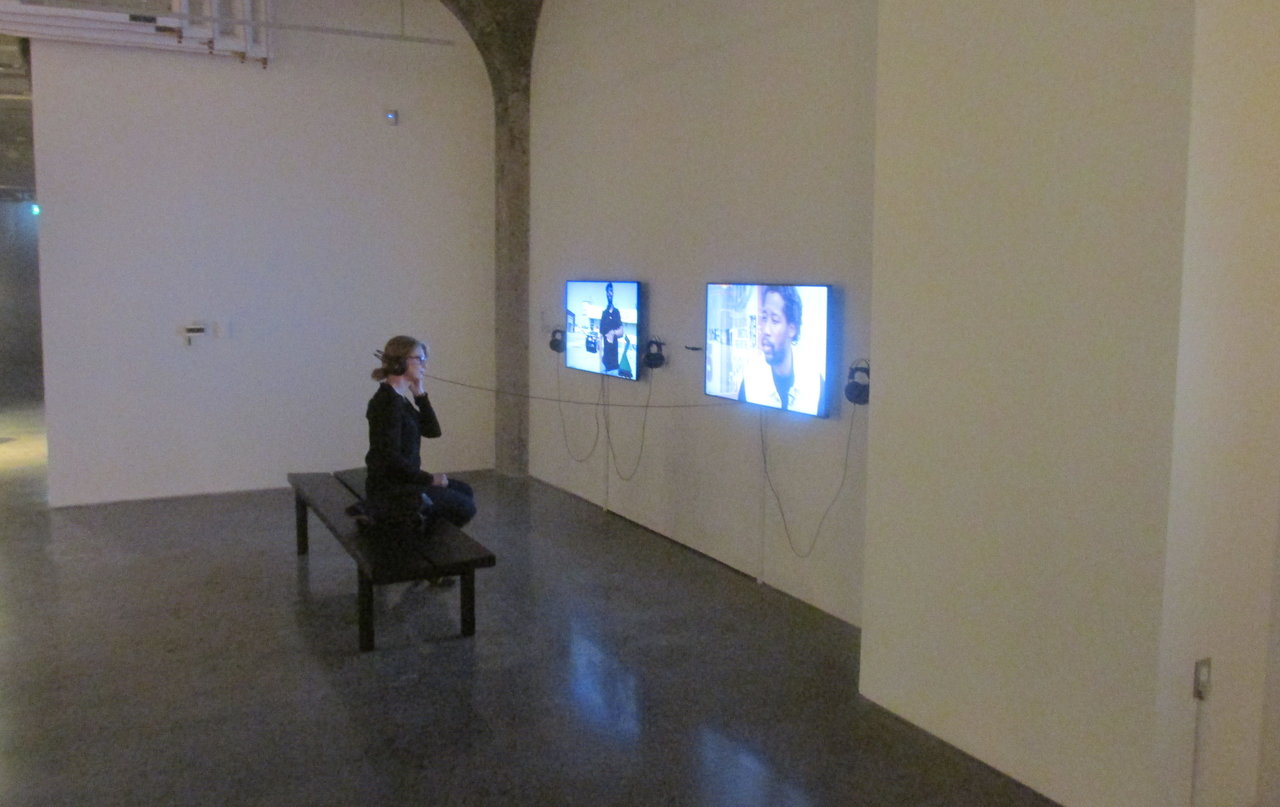
    Volunteers were helpful in encouraging visitors to become engaged whether watching video works on the fifth floor, such as Laws of Motion in a Cartoon Landscape by Andy Holden or playing on a giant dart board ART IN USE, created by Adrian Blackwell, on the fourth floor.

    MOCA has made serious efforts to involve the public whether encouraging them to interact through social media and tagging and become “a partner in the dialogue“ or engaging them with the exhibitions on display. MOCA also acknowledged the history of the land. We learned that it sits on treaty land of the Mississaugas of the New Credit where the Haudenosaunee, Wendat and Anishinaabe once had their homes. MOCA will not only recognize the history of the land but will have Indigenous works in its programming.

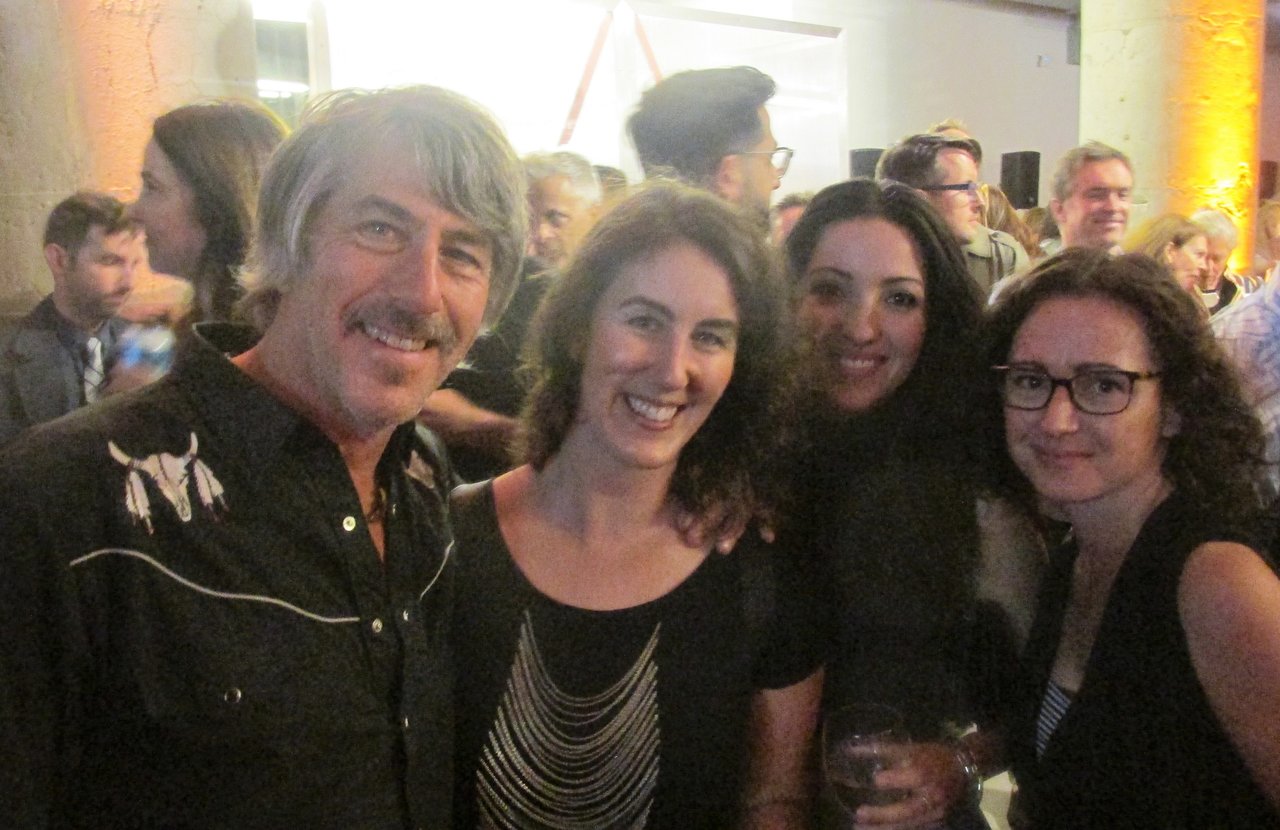
    Artists Luis Jacob and Chris Curreri felt the moment as a special one in the Junction’s and Toronto’s art history. OCADU President Sara Diamond was probably thinking of art students from the college looking at MOCA as a goal to strive for. Gallery owners, Jamie Angell and David Faria were also present, celebrating the event.

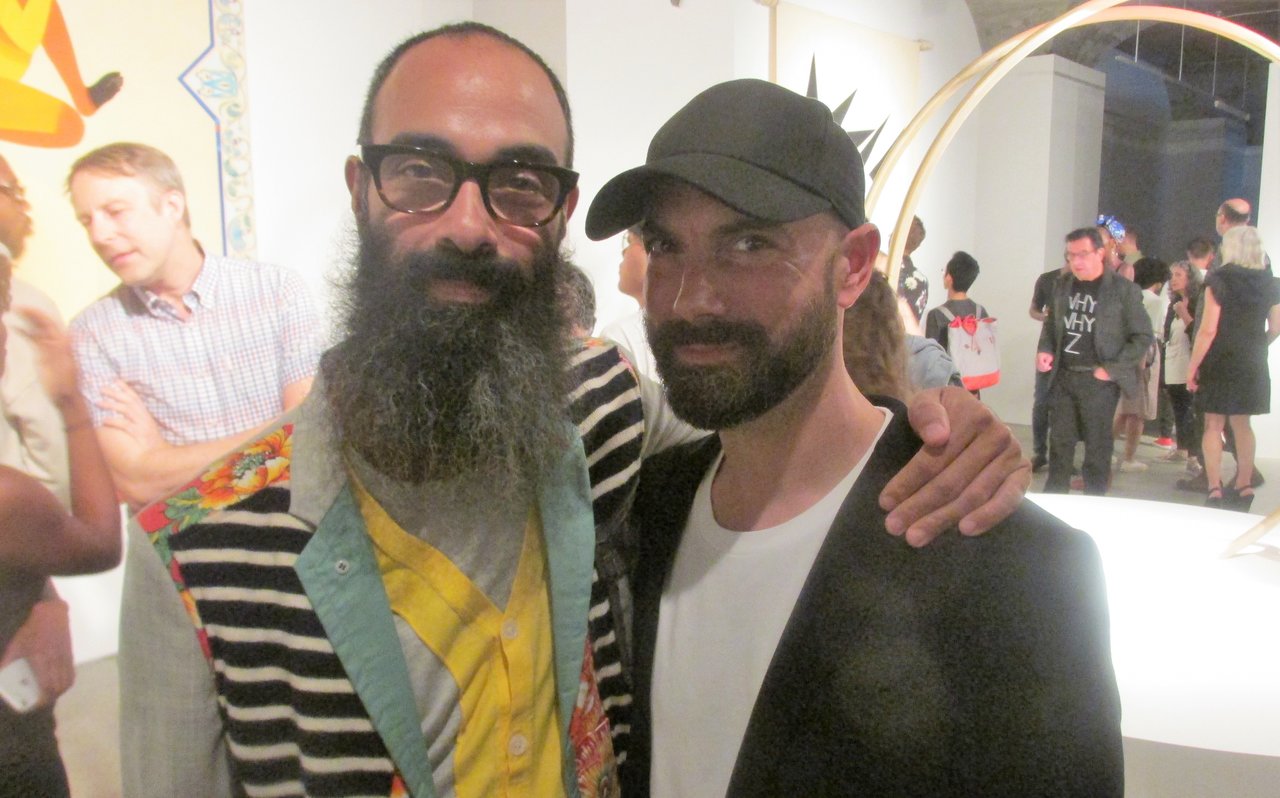
    Artists Luis Jacob (left) and Chris Curreri (right)

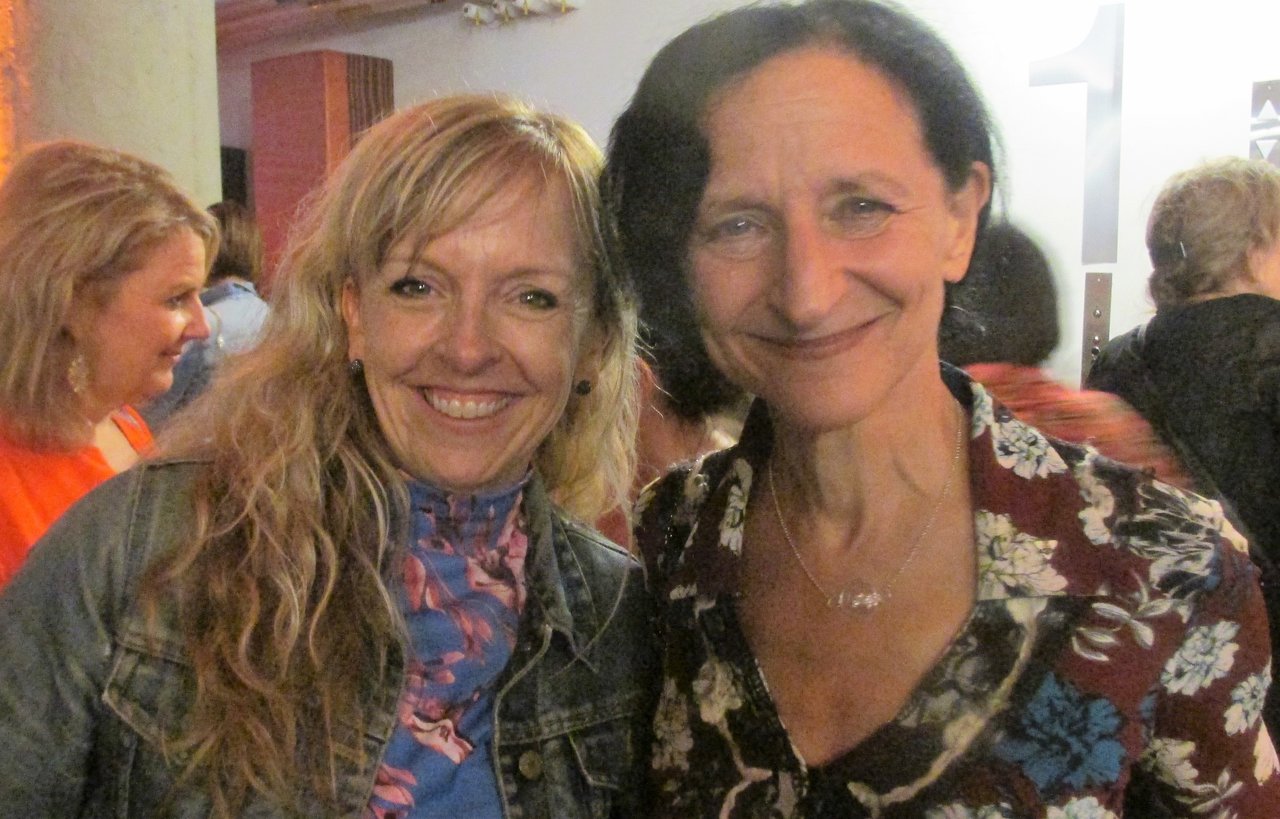
    OCADU President Sara Diamond (right) with a friend

    Montreal gallery owner Juno Youn (right) and a friend

    On the main floor a neon sign BELIEVE (by artists Kendell Geers), a principle piece in the exhibit BELIEVE (curated by David Liss), hung above the room with a DJ’s spinning tunes. Indeed. believing has paid off as Toronto’s new crown jewel in the art world was unveiled.

    Text and photo: Phil Anderson

  • MOCA Grand Opening

    September 22, 2018 / 10 am – 7 pm
    158 Sterling Road, Toronto

    Official Ribbon Cutting Ceremony Saturday, 10 am / Museum doors open at 11am

    Join us for MOCA’s official public grand opening ceremony. Following the ribbon cutting ceremony we invite you to explore all five floors of the museum all weekend for free.

    MOCA will be a community hub in the Junction Triangle, an area home to an expanding critical mass  of creative businesses and activity that boasts one of the highest number of artists per capita in the country.

    The floor one of the museum will be a free space for the community to gather.

    Greek artist Andreas Angelidakis was commissioned to create Demos – A  Reconstruction,   consisting of seventy-four modules that can be moved and recomposed by the public to create different   structures.

    Floor one will also include café partners Forno  Cultura, book store Art Metropole.

    MOCA’s inaugural exhibition BELIEVE, curated by David Liss, spread over floors two and three, will feature 16 Canadian and  international artists and explore the beliefs and systems that inform our values and behaviours.

    Floor four will be dedicated to Art in Use, and the Akin  Studio Program.

    For more information please visit https://museumofcontemporaryart.ca/exhibitions/

  • Seo Eun Kim: Examples of Suture / Yumart

    Whatever Seo Eun Kim is looking at, she turns into art – even something as trivial as a chicken foot.

    The inspiration for her latest series, Examples of Suture, came from the least expected place: the kitchen of a restaurant. She was watching the cook butchering a fish, the head, the opened belly, the organs coming out – with fascination. She watched the same happen with a chicken and then, wanting to see more, she approached some butchers and asked to observe them at work. After a while she became even more intrigued and attempted to partake in classes where they were dissecting cadavers – human cadavers. They have very strict privacy issues, so she never attended any of those classes but instead she turned to anatomy books with detailed images of organs.

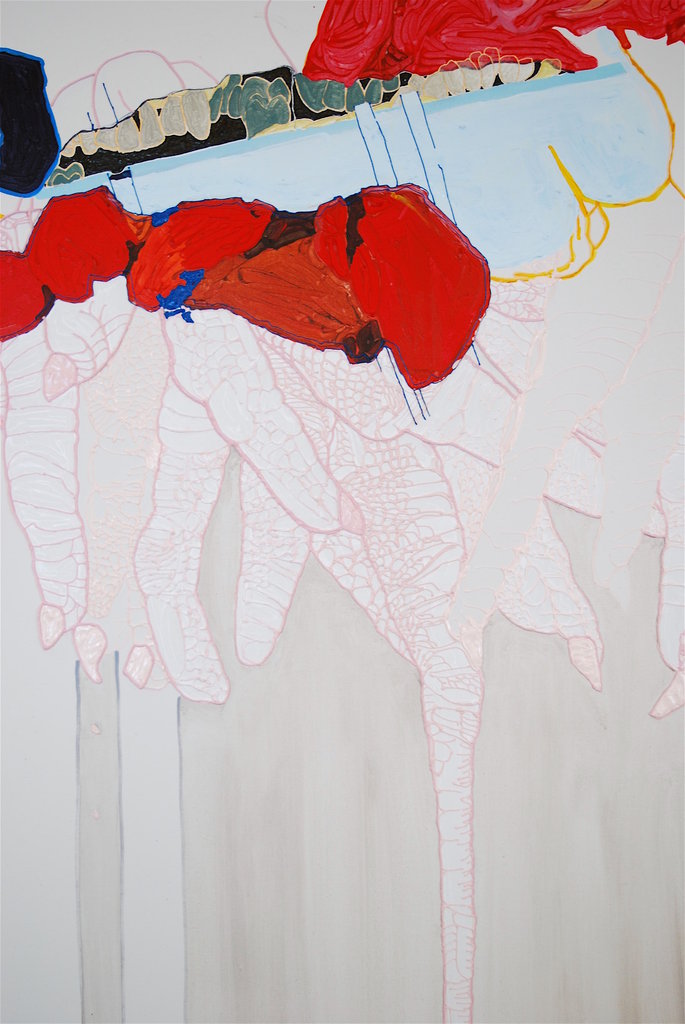
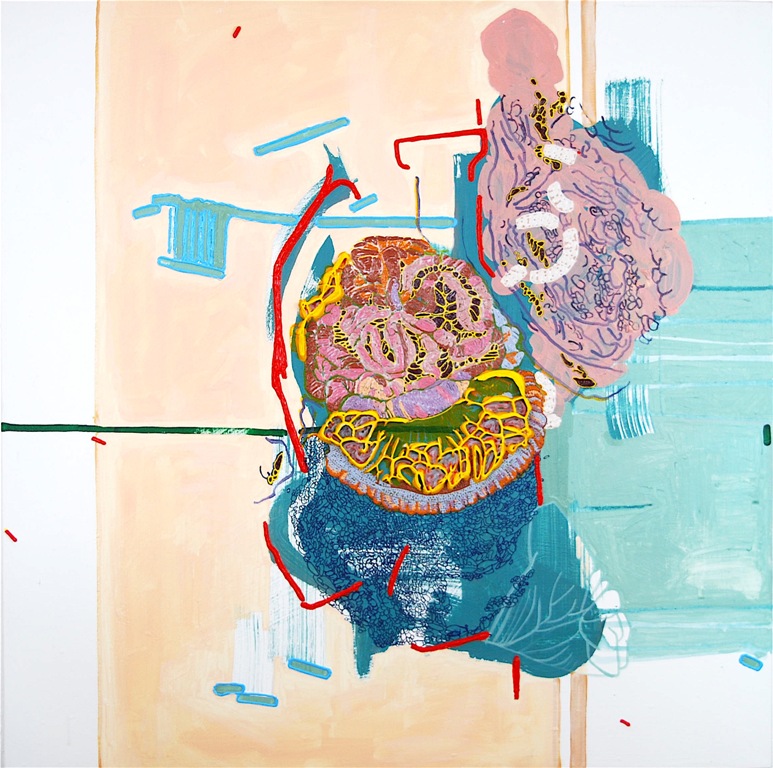
    Kim uses this imagery in a unique way, creating a mostly abstract composition mixed with realistic body parts that are easy to recognize. In Filtered Collage #2 the top of the canvas is covered with the deep red of bloody organs, surrounded by the waxy texture of glands and fat, that runs down to the bottom of the painting in rivulets. At the top left, there are teeth from a mammal, maybe even human, coming out of a greying mass suggestive of intestines and underneath that are more bloody organs, from which emerge some chicken feet.

    Seo Eun Kim, Filtered Collage #2, detail, 2018, acrylic on canvas, 60″ x 60″

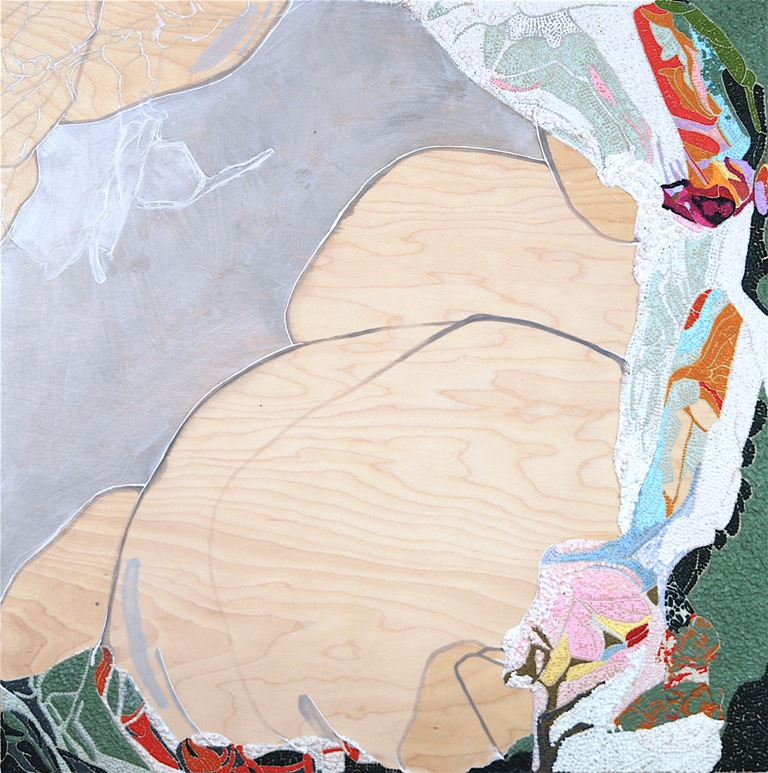
    Strained #13 is mostly an blank wood panel, a negative shape, that, with a few lines, has been turned into the big body of a Buddha, a sumo wrestler or a very pregnant woman. The body is surrounded by very fine layers of textured paint that look like embroidery with small little stitches and dots, reaching out into the third dimension of the space.

    Seo Eun Kim, Strained #13, 2018, acrylic on panel, 24″ x 24″

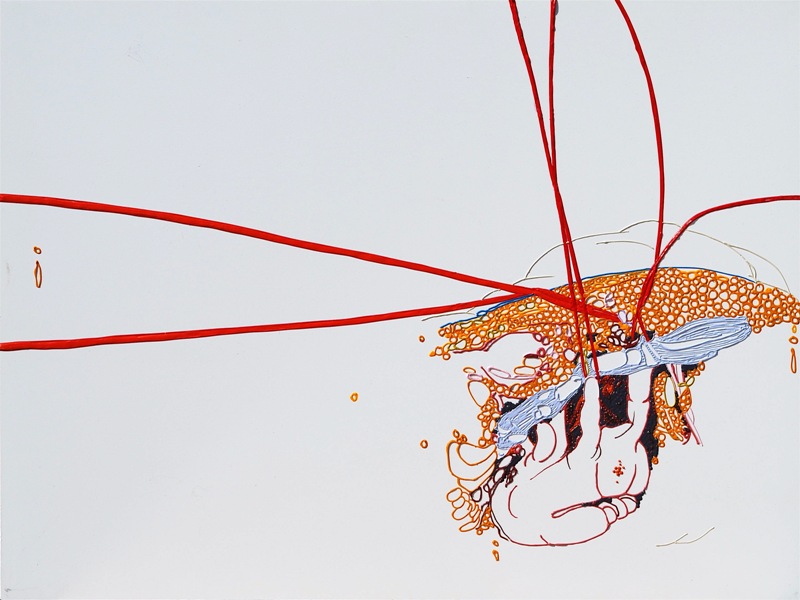
    The next image in this strange theme is the actual wound and the closing of it so it can heal using sutures, hence the title. In Suture #4, we can see an open belly with all the intestines and fatty tissues. Kim imagines herself performing the surgery but instead of surgical tools she uses pastry decorating tools. Instead of metal or plastic thread she uses paint. The paint becomes both the flesh of the body and the suturing material. Kim applies the oil paint with such loving care that the strokes become extremely small and delicate, like the fine patterns seen on a wedding cake.

    Seo Eun Kim, Suture #4, 2018, acrylic on canvas, 30″ x 30″

    Kim never overpaints. She loves empty surfaces broken by a calligraphic motif, maybe an echo of her Korean background. Sieve #15, is a filtered version of the rich imagery of this show, showing only the essence of the idea.

    Seo Eun Kim, Sieve #15, 2018, acrylic on panel, 12″ x 16″

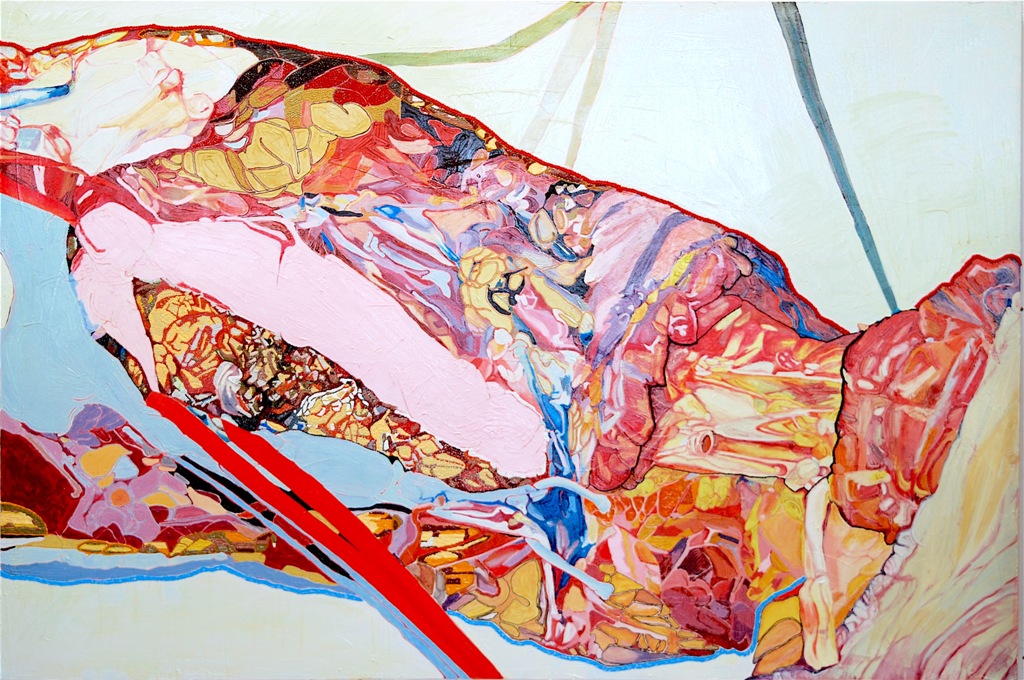
    Suture #1 is an extremely complicated and rich painting. The surface of the canvas is almost filled – an unusual compositional approach from Kim. There is hardly any empty space around the image but to balance negative and positive areas, there is a white shape in the middle, a closed emptiness. The outline of the animal reminds me of a large fish, butchered and bloody. However, it is not scary or disgusting. Rather the opposite – it is almost beautiful. The way Kim has painted the details of its inside are more appealing than repulsive. The viewer can’t get enough of the hundreds of tiny details and formations – even if they represent air sacks, organs, intestines or fatty tissues. Looking at this large painting you don’t even think about what certain forms are, you just lose yourself in its components. As Kim stated, “Through disassembling, abstracting, and suturing, human and nonhuman flesh and viscera unhinge from their source images and become collages of fused corporeal textures.” The colors are so rich and stunning, the harmony is amazing. All the hues of red, yellows, warm oranges and soft violets are there, touched up by just a little blue, but in crucial places of the composition – making the painting very vibrant.

    Seo Eun Kim, Suture #1, 2018, acrylic on canvas, 48″ x 72″

    Examples of Suture is a very unusual exhibition, not just because of its strange theme but also because of Kim’s method of composition and her use of paint. Some of the original animals or body parts can still be identified but through the actual painting they lose their significance and become abstracted; mixing the real and surreal – taking us into a different world. She enhances her rather morbid imagery with delicate strokes and colors – so the ugly body parts go through a metamorphosis and become almost beautiful. Kim is a talented young artist and a colorist worth watching in the future.

    Emese Krunák-Hajagos

    Images are courtesy of the artist and Yumart

    *Exhibition information: September 8 – 29, 2018, Yumart, 401 Richmond Street West Suite B20, Toronto. Gallery Hours: Wed – Sat, 12 – 6 pm.

  • Moira Ness: Nightscapes / Akasha Gallery

    Moira Ness is a young, interdisciplinary artist with numerous exhibitions to her credit in North America. She is working out of Ushers Studios based in Toronto, mainly focusing on photography-based landscapes and algorithm generated text. What makes Ness’ work so appealing is her way of revealing the rarely-seen and the unknown side of a landscape. Her photographs are philosophically inspired, with a mystical message to the viewers. Nightscapes is Ness’ solo show, currently on display in Akasha Gallery, containing more than ten pieces. This series portrays Toronto at night, showing how different it looks in the dark than it does during daylight and creating nightscapes, that you might never see.

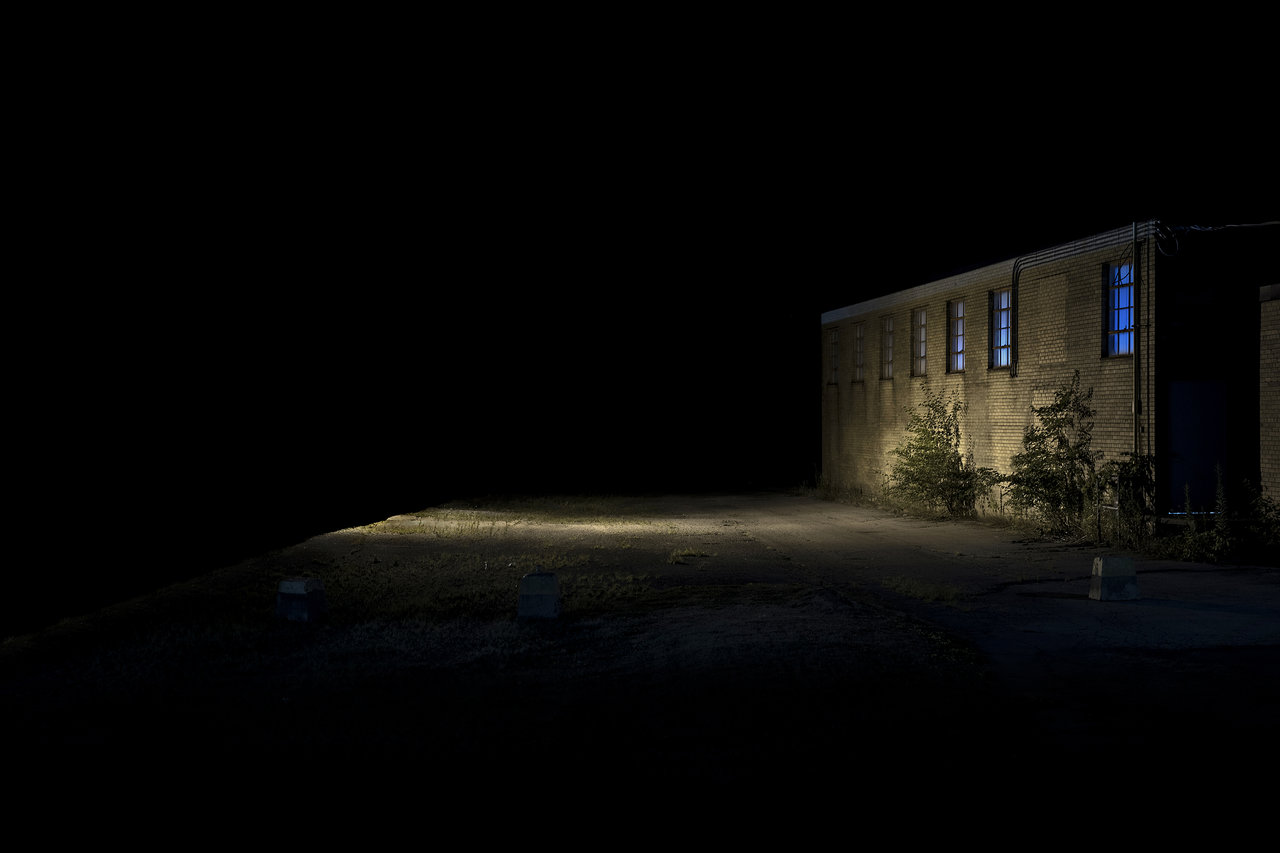
    Lakeshore, one of the most realistic piece of the series, presents a factory building on an ordinary street. A few green bushes try to break the monotony of the brown tones of the brick building and the road, but they only blend in. Darkness rules the composition, juxtaposed against the blue light radiating from the factory windows.

    Moira Ness, Lakeshore, 20″ x 30″

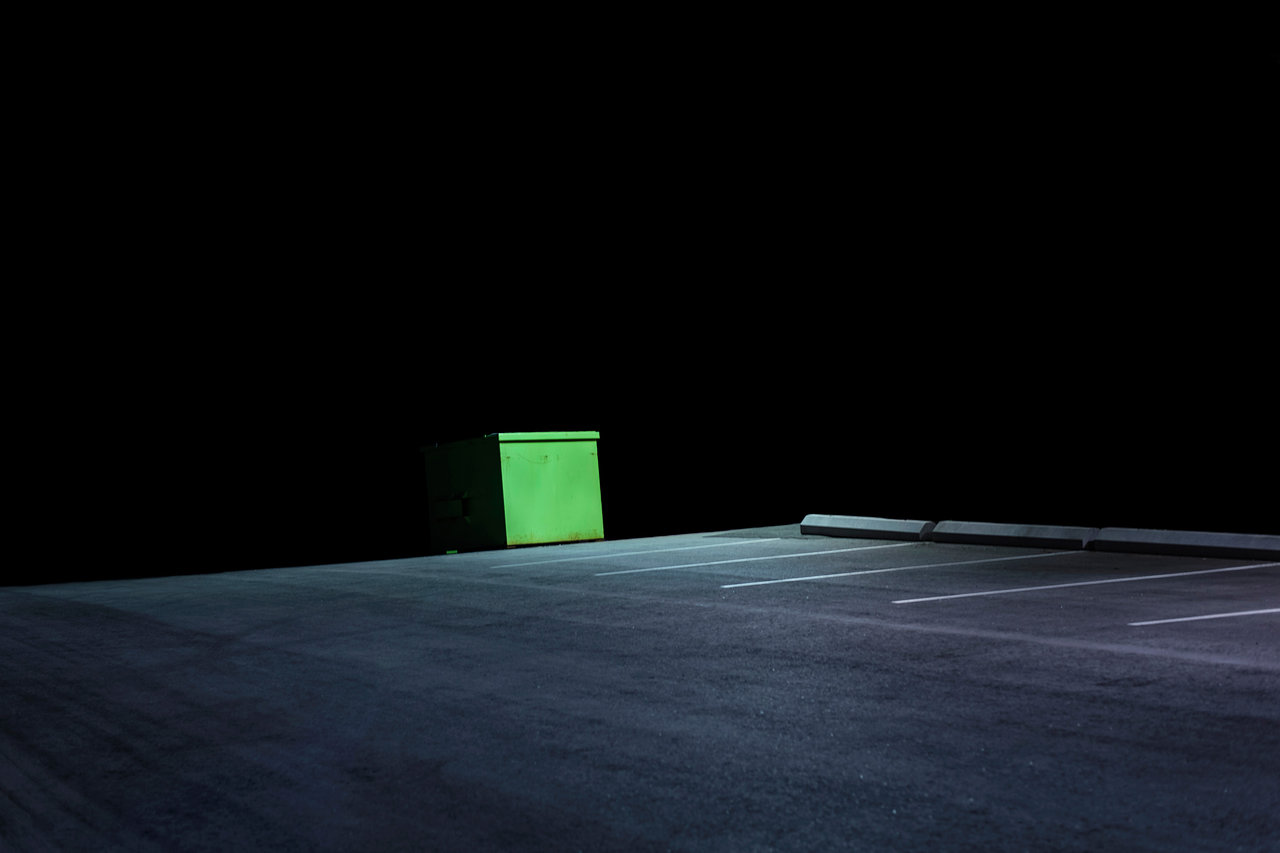
    Trafalgar shows a large, green, cubic garbage container that stands by itself at the far end of a parking lot. The container is a beautiful, lime green, that radiates an almost neon-like light – a reflection of the main light source we can’t see – giving us a feeling that the light is coming from the container itself. The container and the curbstones of the parking lot, though deserted, have a life of their own filled with a meditative meaning that only night gives.

    Moira Ness, Trafalgar, 20″ x 30″

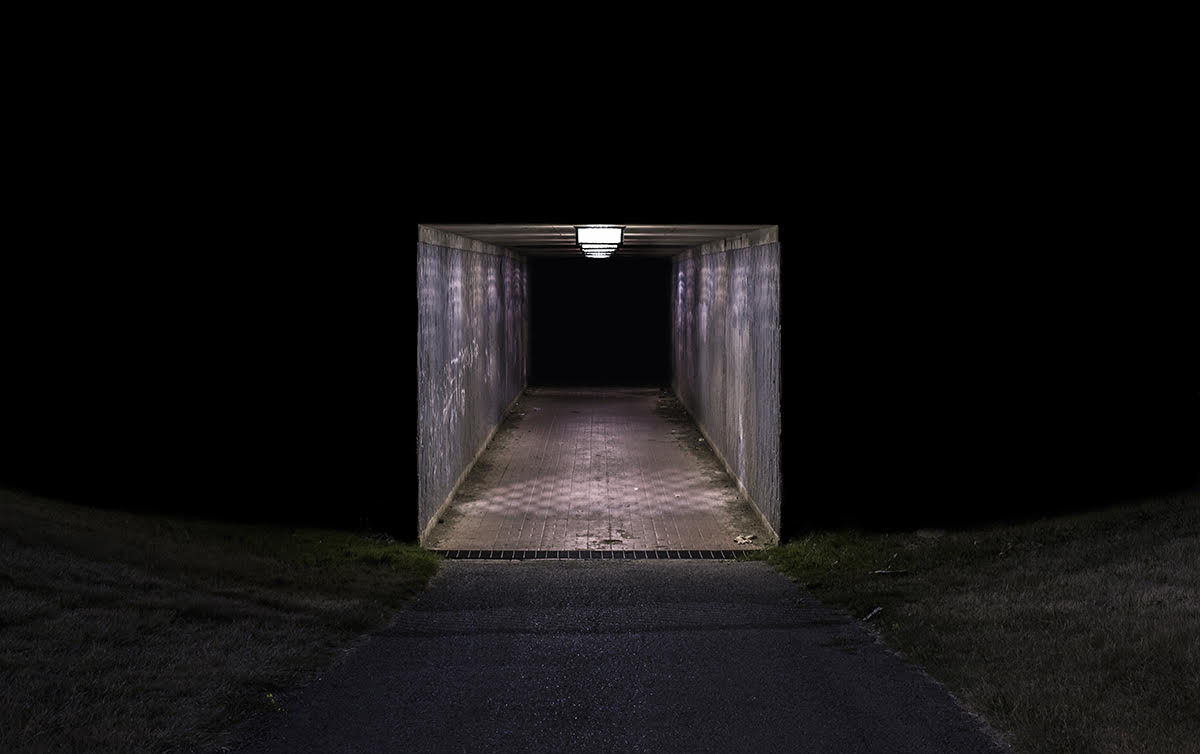
    Brampton is a representative piece with a dim and humid-looking tunnel placed in middle of the image. The only light source in the scene is coming directly from the safety lamp on the ceiling of the tunnel, thus the surrounding area is dark, and only the inside of tunnel can be seen clearly. The tunnel looks more like it might be a trucking container without the front or back ends, but appears as a real tunnel, under this lighting. The bricks on the ground are so detailed that even the weeds in the cracks can be seen. The metal walls work like mirrors reflecting the light back to the inside of this strange, ghostly interior. The poorly lit surrounding area of a path, running in a straight line at the entrance of the “tunnel-box” and some dry grassy field with shadows of tree branches make the image even more otherworldly. It is painstakingly realistic but also surrealistic at the same time.

    Moira Ness, Brampton, 20″ x 30″

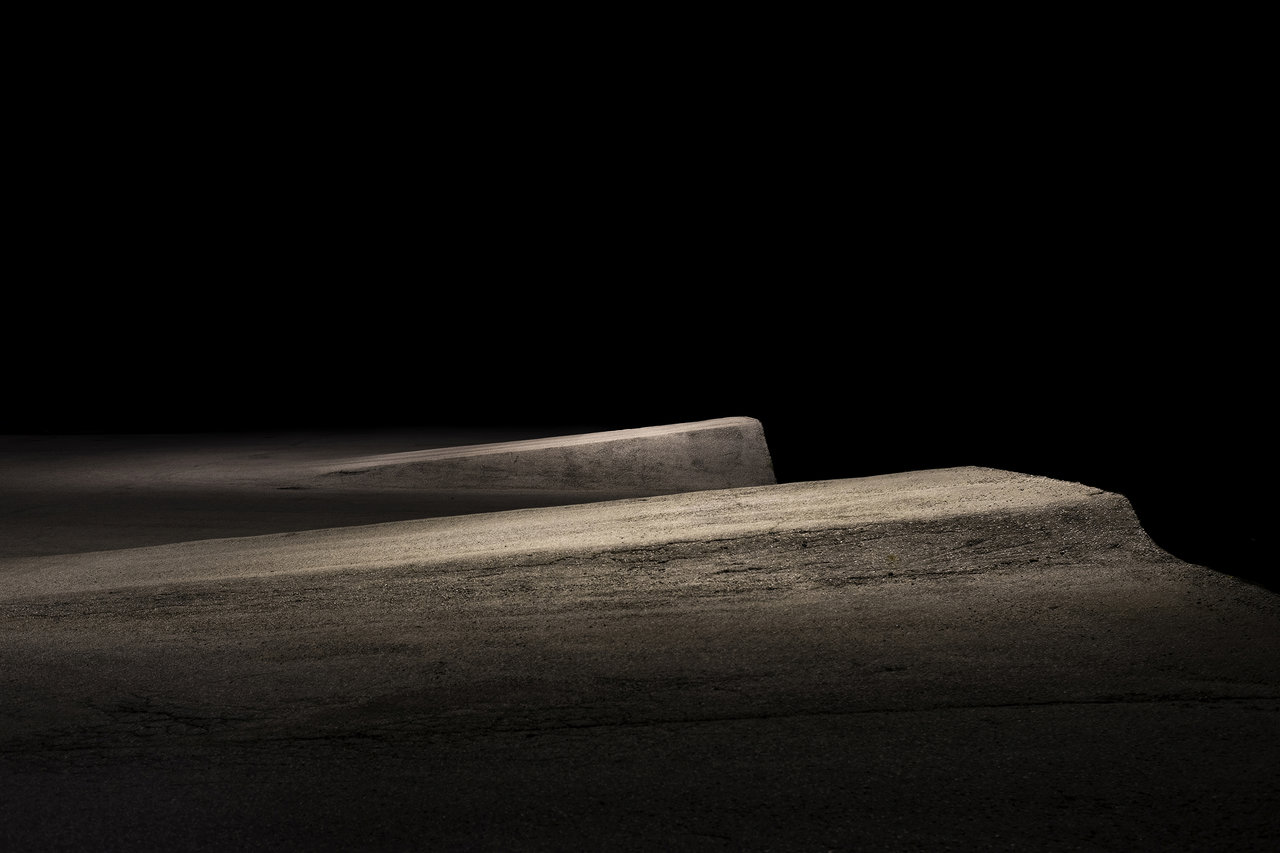
    In Waughan Mills, elements have been washed in a warm tone that contrasts a mass of blackness and a mass of highlights unevenly, patch by patch. This serene image captures the night, in a dreamlike, abstract way.

    Moira Ness, Waughan Mills, 20″ x 30″

    All the scenes Ness has photographed in the Nightscapes series, are random places with no conspicuous or easy-to-recognize buildings to locate them – even with the titles. They could be anywhere in any city. In her creative, vibrant works Ness is seeking stillness in this ever-changing world.

    The artist’s editing, using Photoshop, allows her to focus on her chosen object, removing unwanted details like telephone poles and street lamps, to fill the photograph with the power and mystery of the night she intended. There is only one light source, many times just reflecting the real light source that has been eliminated from the image. The image she presents to the viewer is a mediated, heavily edited one that combines reality with Ness’ visions to create a mystical realism that is mesmerizing.

    Xiaotong Cao

    Images are courtesy of the artist and Akasha Gallery

    *Exhibition information: September 6 – October 7, 2018, Akasha Art Projects, 204D Carlton Street, Toronto. Gallery hours: Tu-Fri 10 – 7, Sat 10 – 6 pm.

  • Land use @ Stephen Bulger

    Land Use, a group exhibition at Stephen Bulger Gallery, features four artists who inspect constantly evolving relationship between humans and nature through their distinctive working styles. The show builds on an ever-growing topic in the zeitgeist of contemporary society, the visible traces of human interaction on the planet. This thematic focus on nature and environment corresponds to the latest trends to engage with human impact on the earth/nature/environment in the art world: for example, the AGO and the Canadian Photography Institute of the National Gallery of Canada are opening a show titled Anthropocene together this month.

    Anthropocene as a term derives from anthropo, for “man,” and cene, for “new” in Ancient Greek, and its usage aims to label the current epoch wherein humans have majorly altered the state of the planet. Since Nobel laureate Paul Crutzen popularized it in 2000, the term Anthropocene has gained momentum as an environmental buzzword, but its popularity has resulted in scholars calling for an official change of the current epoch from Holocene to Anthropocene. Critics of the term contend that evidence of geological changes such as specific events or dates is necessary to assign a new epoch. Some have proposed the beginning of the agricultural revolution and others have proposed 1945, the end of World War 2.

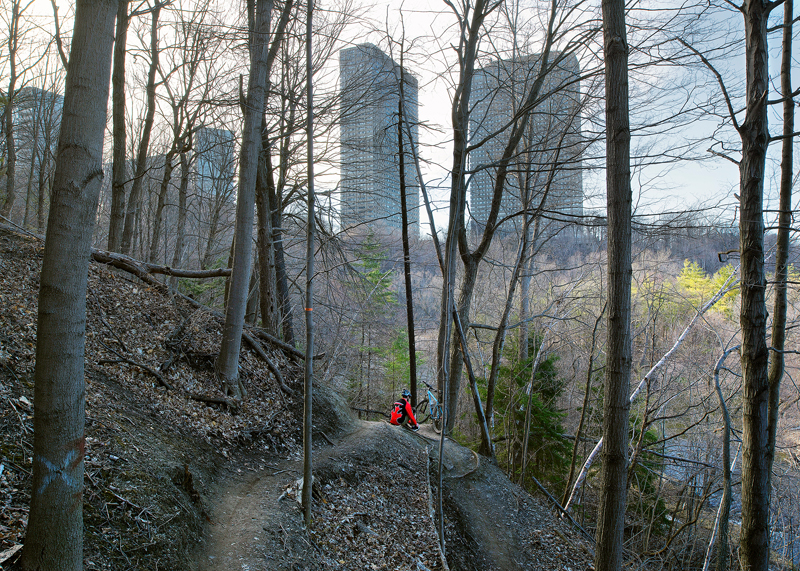
    Photographs by Robert Burley show familiar Toronto scenes and places where a concrete jungle and thick forests co-exist. His pieces depict the expanse of wilderness in daily life. While many of the photographs contain human figures, their subdued individualism represents the insignificance of humankind, the tiny speck that we represent within the larger forces that have been slowly changing on the earth for millennia. These photographs elicit visceral feelings: cold, warmth – the light blue of the shadows in an underpass, the sunlight hitting the side of a Scarborough cliffside while the water glistens serenely, and the sudden smell of leaves and wood upon entering a trail in E.T. Seton Park.

    E.T. Seton Park, 2014 © Robert Burley / courtesy Stephen Bulger Gallery

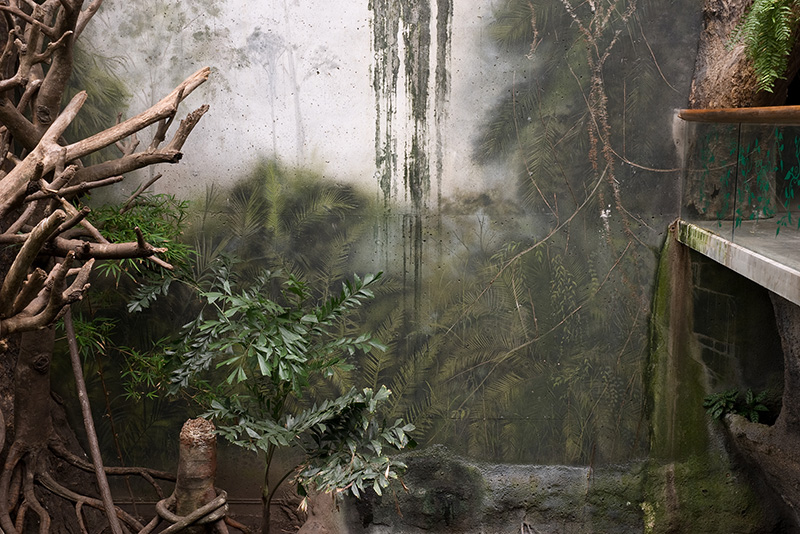
    More surreal and whimsical than the rest, Dana Fritz’s photographs underscore the relationship that tries to contain, recreate and study a rainforest. Her photographs show a sizeable artificial rainforest like the one we find in a science centre. Perhaps because of my particular lean towards popular culture rather than higher forms of entertainment, I am reminded of the Jurassic Park series. An ersatz ecosystem, so sophisticated that it may prove more powerful than its’ maker.

    Painted Leaves and Dripping Moss, Lied Jungle, 2007 © Dana Fritz / courtesy Stephen Bulger Gallery

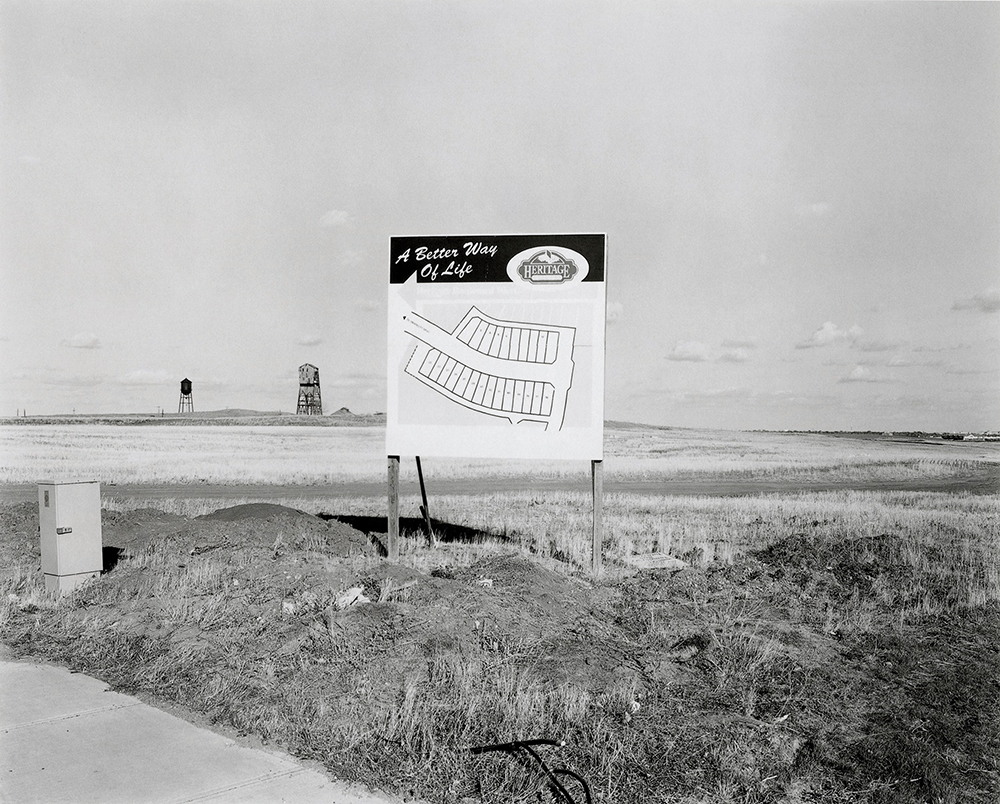
    The series by Geoffrey James is heartfelt in the way that they capture a newly forming city. They feature a snapshot of land development in Lethbridge, Alberta. The large mountains of dirt sit next to newly built homes and a crisp golf course. The low key, black and white views of such a landscape contrasts the rest of the works in this exhibition.

    Lethbridge, A Better Way of Life, 1999 © Geoffrey James / courtesy Stephen Bulger Gallery

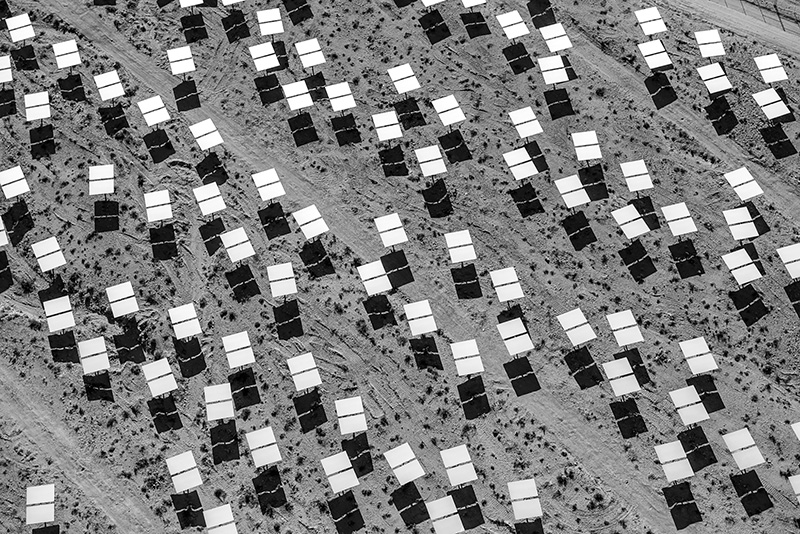
    James Stillings unveils striking exquisite birds-eye views of a solar thermal power plant and its surrounding area in a western desert. In the largest print in the exhibition, #11039 feels like a god’s eye view of the earth: the whole scene resembles an aerial view of Mecca. Hundreds of solar panels dot the surface of this desert in this black and white image, which looks as if were made of steel. It is in fact printed on Dibond—a light, aluminum composite sheet—a medium which truly ‘shines’ in this application. Stillings’ images are inspirational, to say the least, as the whole scene feels incredibly larger than life and beyond one’s control. Yet it is this quality which makes it meditative to look at. Most importantly, they are relevant to ordinary conversations about our existence on this planet, making the reality of humans’ manipulation of nature through technological advancement more.

    #6425, 2 June 2012 © Jamey Stillings / courtesy Stephen Bulger Gallery

    Each artist in Land Use addresses some of the underlying issues of Anthropocene and presents a closer view of land usage and a more humanistic approach to nature and humans.

    Nazli Nahidi

    *Exhibition information: Land Use / A group show of work by artists Robert Burley, Dana Fritz, Geoffrey James, and Jamey Stillings, July 21 – September 8, 2018, Stephen Bulger Gallery, 1356 Dundas Street West, Toronto. Gallery hours: Tues–Sat 11 am – 6 pm.

  • Gallagher, Akhavan & Kilomba / Power Plant

    To enter the Power Plant’s current set of exhibitions is to enter a discourse and a landscape that seamlessly blends in with one another. In the three exhibitions, Ellen Gallagher: Nu-Nile, Abbas Akhavan: variations on a landscape and Grada Kilomba: Secrets to Tell, the artists presented tackle issues surrounding dominance and space.

    We are first greeted by Ellen Gallagher’s work Deluxe, a set of sixty mixed-media collages that are artistic interventions into magazine ads and photographs that feature black figures from the 1960 – 1970s. The work seems funny and playful at first with the broad use of materials, such as plasticine, googley eyes and felt, but the pieces tackle the serious issues surrounding assimilation of the black body into colonial culture. Acceptance is conditional upon the adoption of white, capitalist, technological and pharmaceutical ideals which violently alter or erase the characteristics of African heritage and physical features.
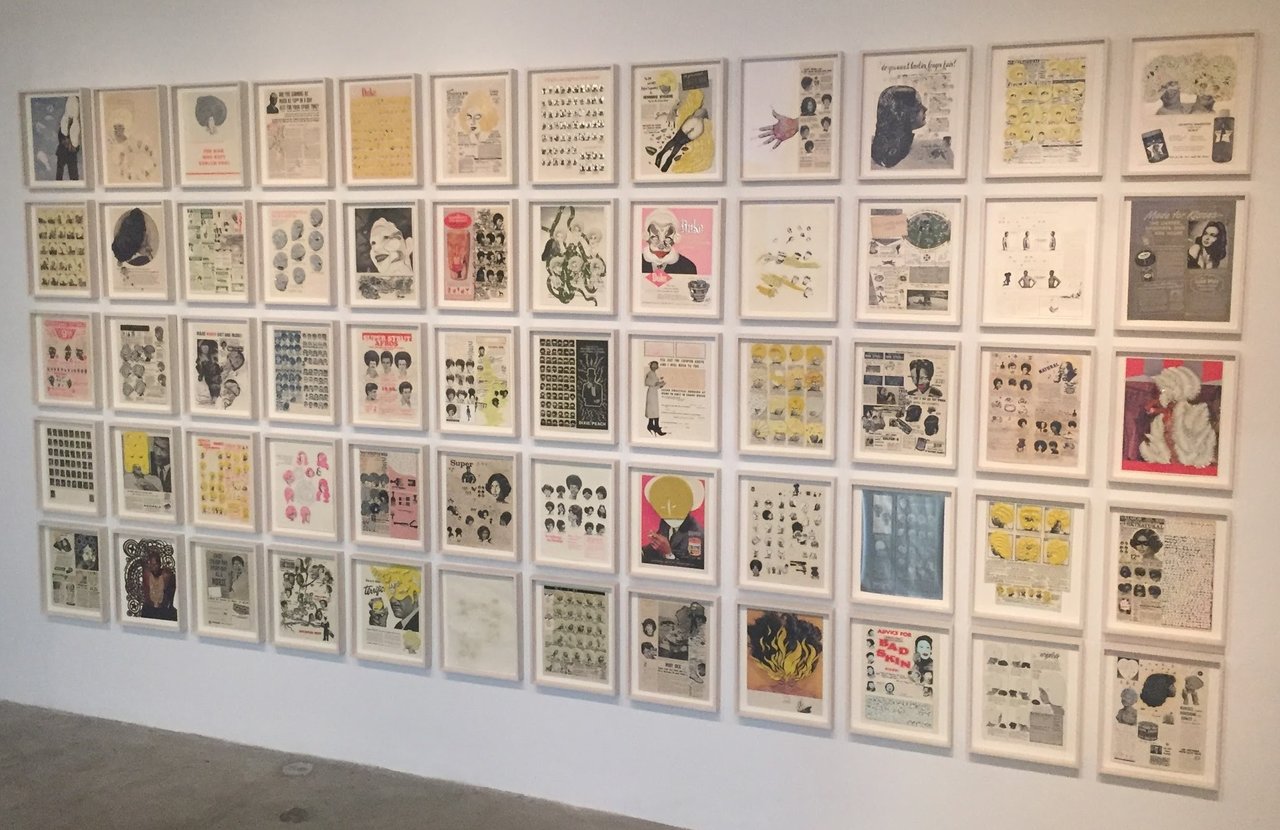
    Ellen Gallagher, Deluxe, 2004-2005, sixty mixed media collages
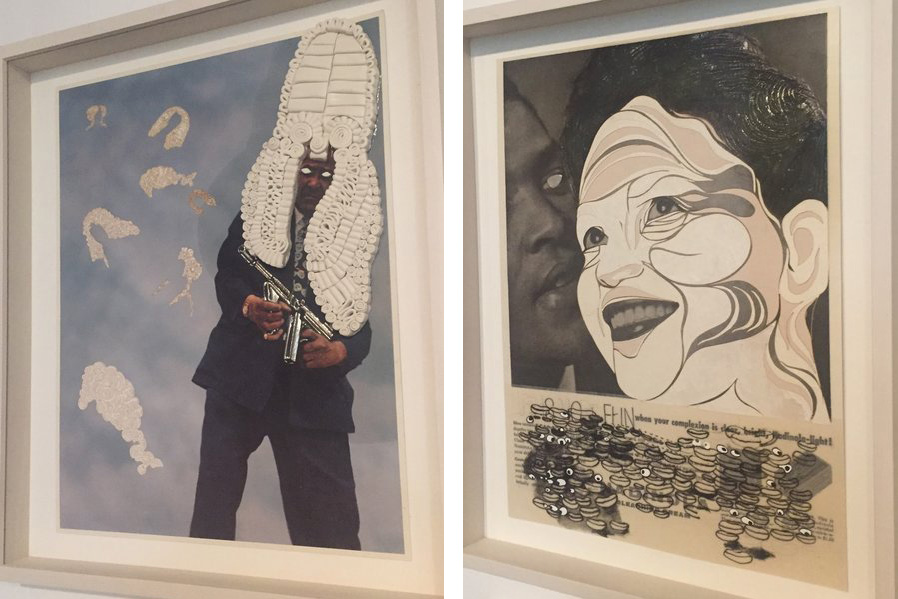
    Ellen Gallagher, Details of Deluxe, 2004-2005

    At the end of the hallway is a video projection depicting a composite image of two figures within a heavily draped room, amidst a modelling session. The work refers to several prominent figures and concepts in popular and artistic culture. The base of the image is Man Ray’s photograph of Henri Matisse, yet the face of the model has been replaced by the artist, Ellen Gallagher’s own face, while Henri Matisse’s has been replaced with Sigmund Freud. Gold leaf filigree-like designs embellish the gallery walls, creating lustrous reflections from the projection. Gallagher’s pose and the work’s title recalls works such as, Jean Auguste Dominique Ingres’ Grand Odalisque, and similar historical depictions of reclined females, most discernibly many compositions by Henri Matisse. The meaning of the work is a critical examination of the Orientalist and male gaze of many canonized and celebrated painters and theorists of the 20th century. It can be interpreted that the hybridized Matisse-Freud character is too absorbed in his own work to even notice the female model, while Gallagher’s striking gaze and placement shows us that she is highly scrutinous and aware of herself being ignored in favour of the man’s idea of her. This single image is a beautiful allegory for the unfortunate creation and fetishizing of stereotypes.
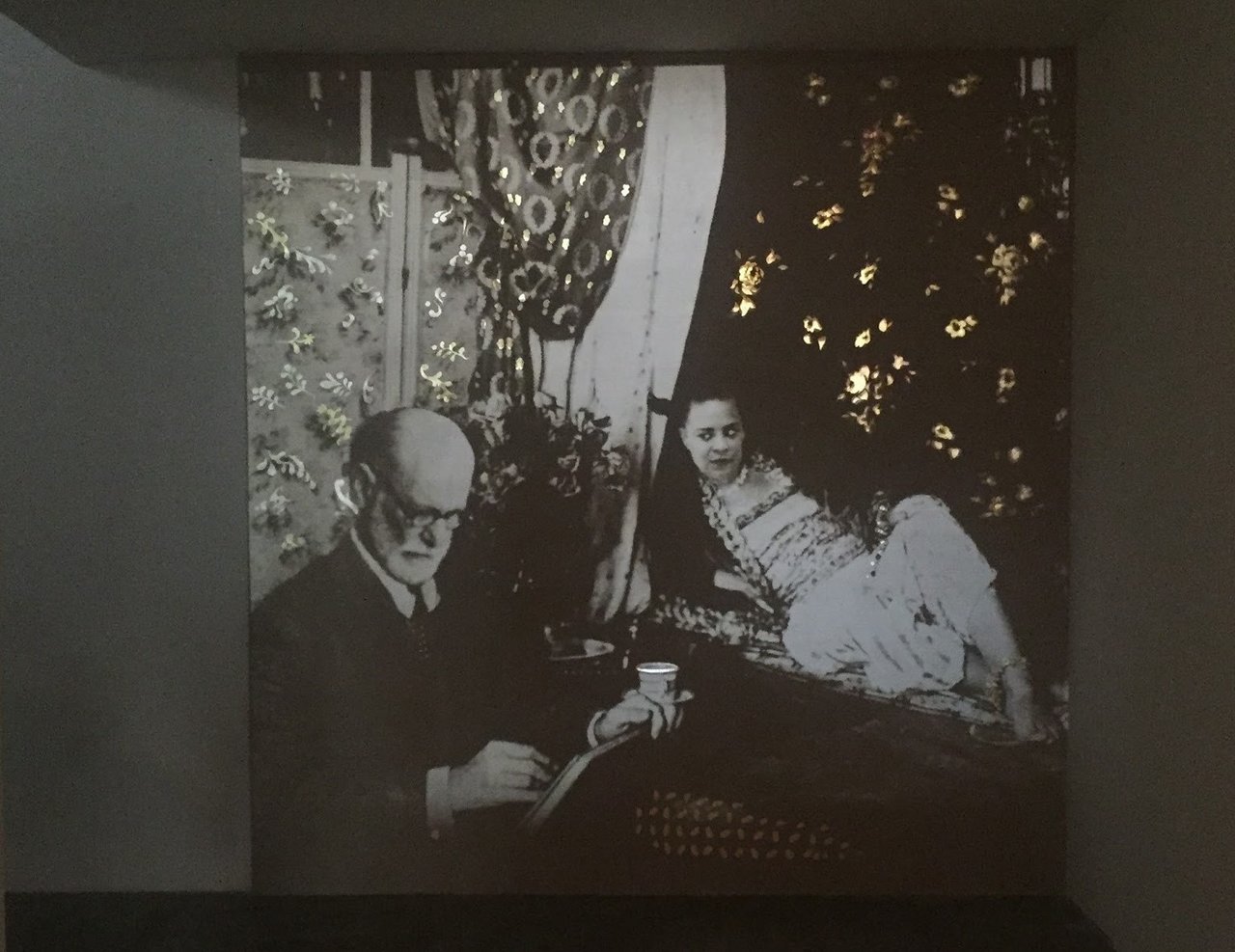
    Ellen Gallagher, Odalisque, 2013, slide projection, penmanship paper and gold leaf

    In Negroes Battling in a Cave series and Kapsalon Wonder, Gallagher explores the history of abstract painting and the potential of black field paintings. Each of these works are monochromatic and glossy, with textured surfaces featuring collaged pictures and letters. The collage elements within the Negroes Battling in a Cave series depict deconstructed attire, body parts and words that were common tropes within Blackface Minstrel performances. The title refers to a racist joke discovered through x-ray analysis underneath of one of Kazimir Malevich’s seminal Black Square painting.
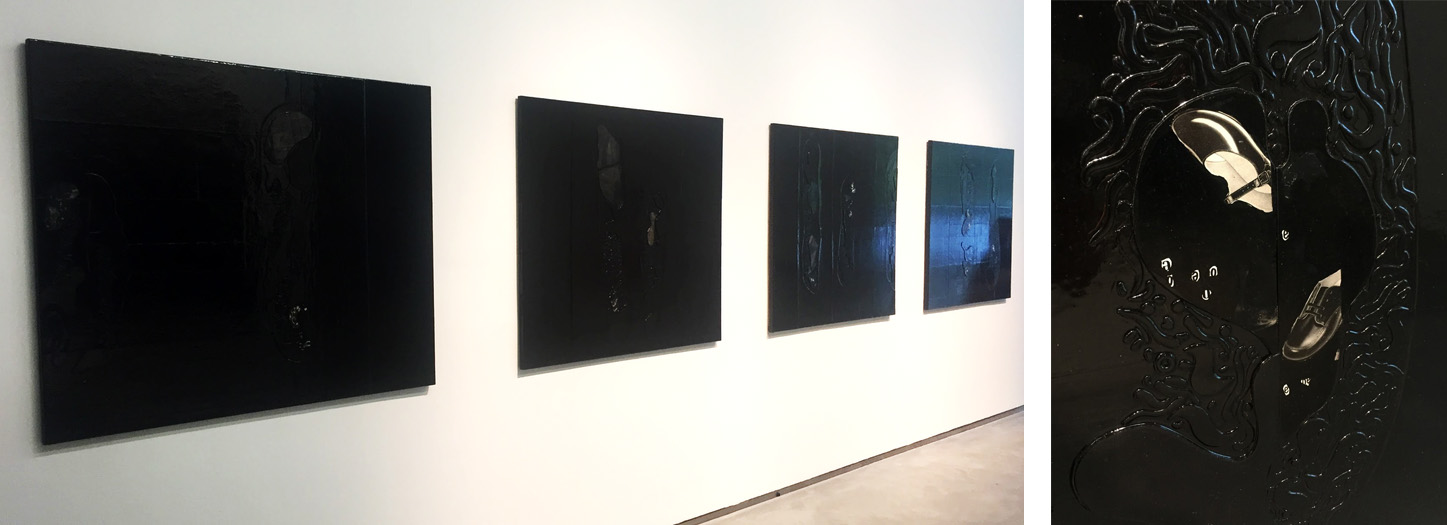
    Ellen Gallaher, Negroes Battling in a Cave, 2016, enamel, rubber, ink on linen

    The remainder of Gallagher’s works are chronicles of water bodies, a theme, that she has been inspired by for a long time.

    Highway Gothic, features light boxes, draped, scrolled and hung transparency of cyanotypes and film negatives, some with text, all surrounding a film projector playing the most recent movie by Ellen Gallagher and Edjar Cleijne. This black and white film explores the waterways and bridges that appear like politically neutral structures to traverse natural terrains. However, this specific highway, US Interstate 10, was historically placed with strategic intention in order to build infrastructure that imposes segregation. The highway became a physical barrier and reference point to assert a sense of Otherness. Additionally, the highway was a destructive and violent dividing of natural geographies, specifically one of the largest wetlands in the United States. Gallagher draws a parallel between the subjugation of the natural flora and fauna that inhabit these waterscapes with the subjugation of African American populations. The title of this installation is drawn from the font used on American road signs.
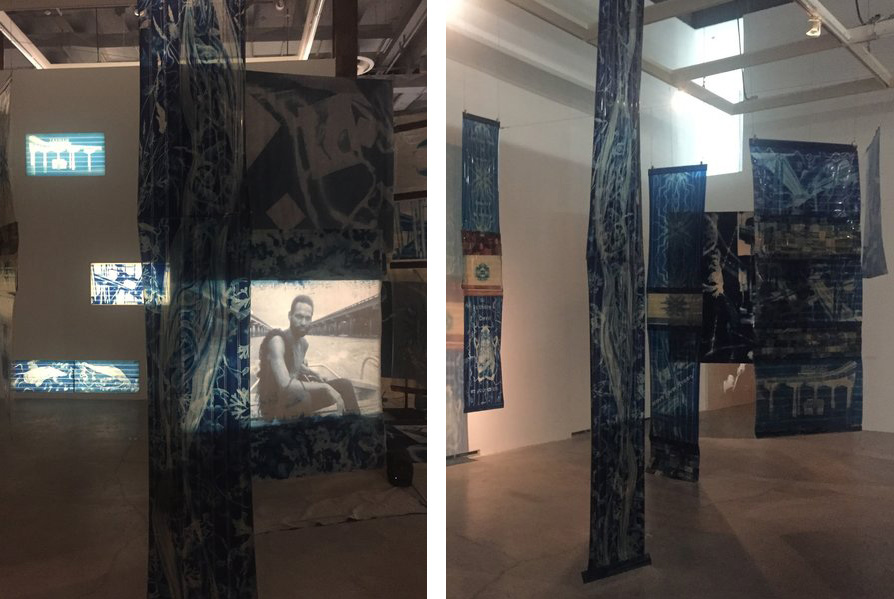
    Installation views of Highway Gothic, 2017, by Ellen Gallagher and Edjar Cleijne

    In Abbas Akhavan’s site-specific installation variations on a landscape, curated by Carolin Köchling, we are transported to a rose coloured environment with minimal elements retrieved from outdoor spaces. The artist covered the Power Plant’s skylights with pink gel filter material, dowsing the space below in its hue. Within the corridor we find two styrofoam swans, obscured by the illusion that the cement floor is the surface of a body of water and additionally, one swan appears to be either mutated with additional appendages or caught between moments in time and movements, like a Cubist painting or Futurist sculpture. The water that is seemingly passing through the fountain and contained in its basin, is actually imbued with the sex hormone: estrogen. The layout of the fountain and swans are intentionally distributed in an asymmetrical manner to destabilize the grid-like structure of the hallway and encourage a more central and rounded point to bring together people within the space to convene at. Conceptually the work seems raise issues and tension around engendering species as well as contentious elements of human influence, such as pollution and its effects on the ecosystem.
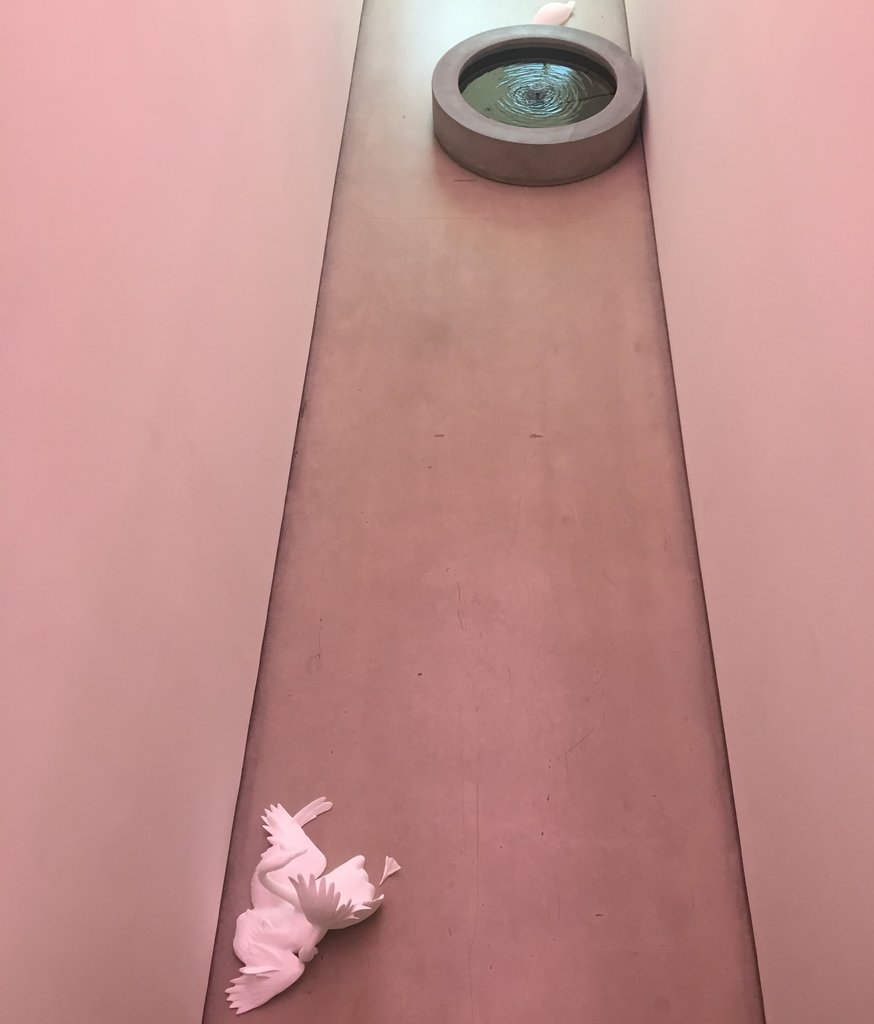
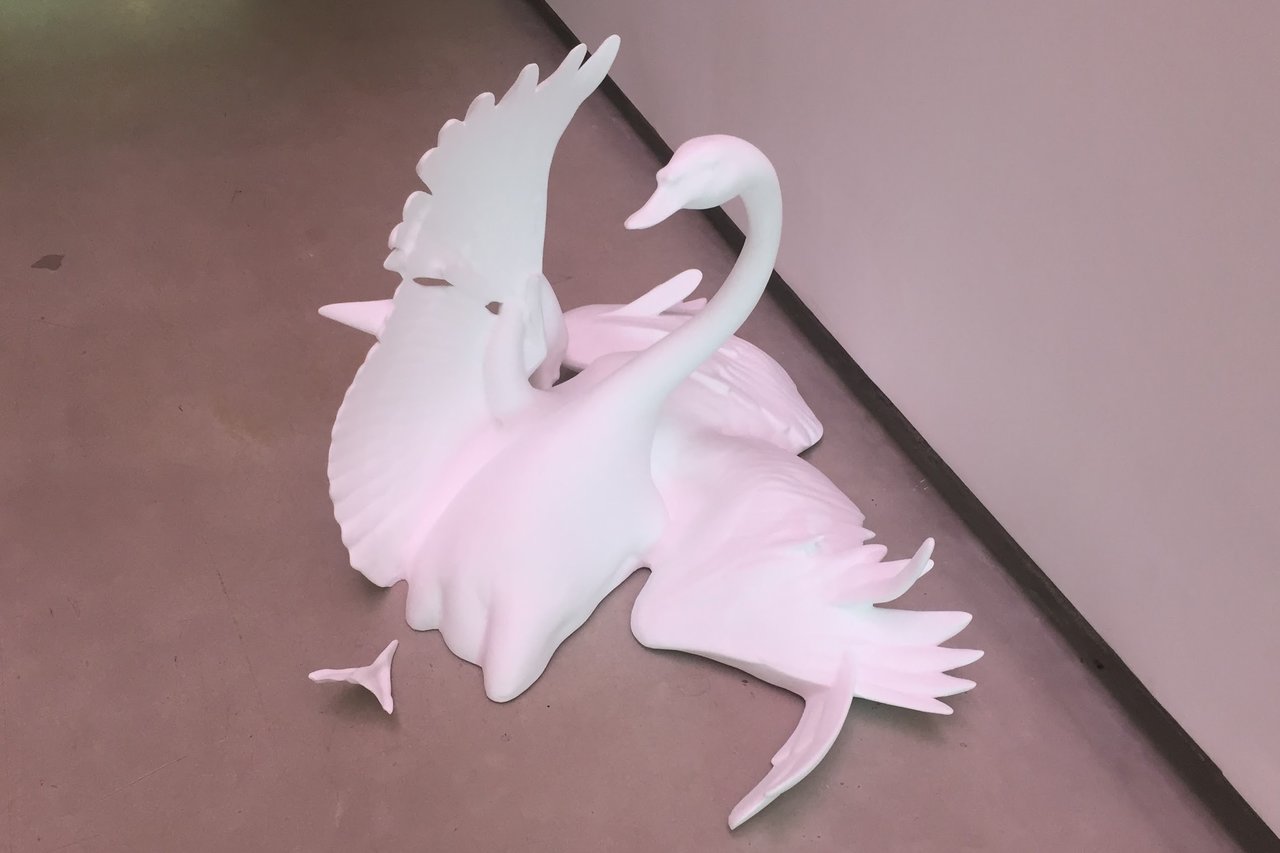
    Abbas Akhavan, variations on a landscape

    The intervention with the natural sunlight is feminizing the room below, as well as dilutes and contaminates the light quality. Similarly, the estrogen in the water fountain is equally an introduction of a hormone that develops secondary female sex characters in human bodies, as well as a defiling of a source of drinking water. The two swans are made from a material that is common amongst landfills and extremely difficult to break down in natural environments. They are also a romantic symbol in many cultures because of their beauty and life-long mating. The configurations of the swans are ambiguous, since they can be read as mutant and dead, or one of them as transcendent and evolving while the other is simply feeding underwater. The discordant aspects between potential meanings seems intentional and is validated from the gallery wall text that describes Akhavan’s research practices as “a forked space between hospitality and hostility.”

    The third exhibition, Grada Kilomba’s Secrets to Tell is about the African Diasporic people, and as the artist stated, about their secrets, like slavery, like colonialism, like racism. Plantation Memories (2008) is a reading of anecdotes of racism in an everyday context. Issues surrounding whitewashing of people of colour, appropriation of Black cultures, racist jokes that turn brutal histories into gags that are expected to be harmless, many forms of microaggressions such as invasive questions that presume Otherness, and much more – retold by five actors sitting in chairs on a stage in a dark theatre space. The Chorus is an excerpt from Plantation Memories installed with black vinyl lettering on the gallery wall. Tall and spotlighted, the work is extremely poetic, like a stream of consciousness that encapsulates the pressure of being black within a racist system.
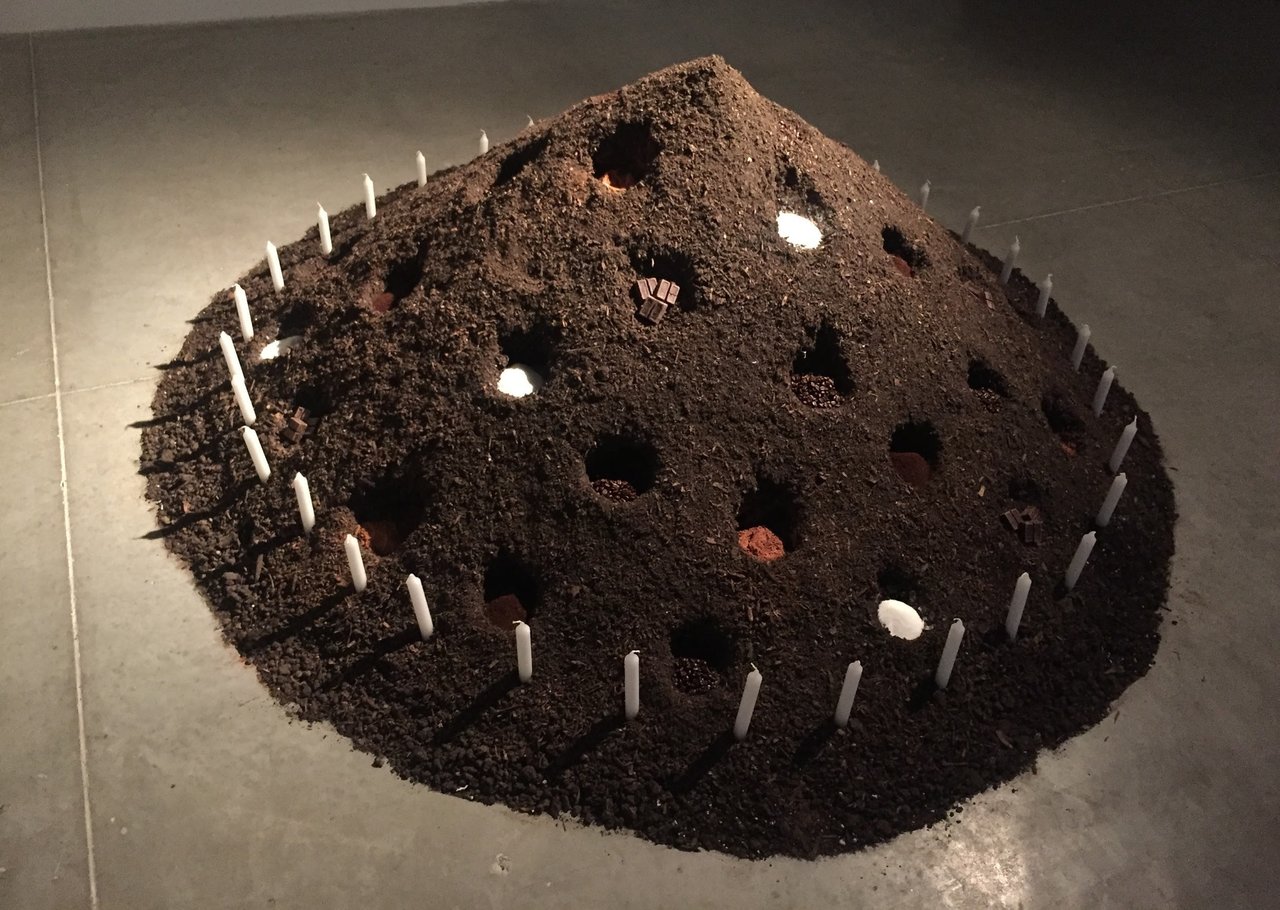
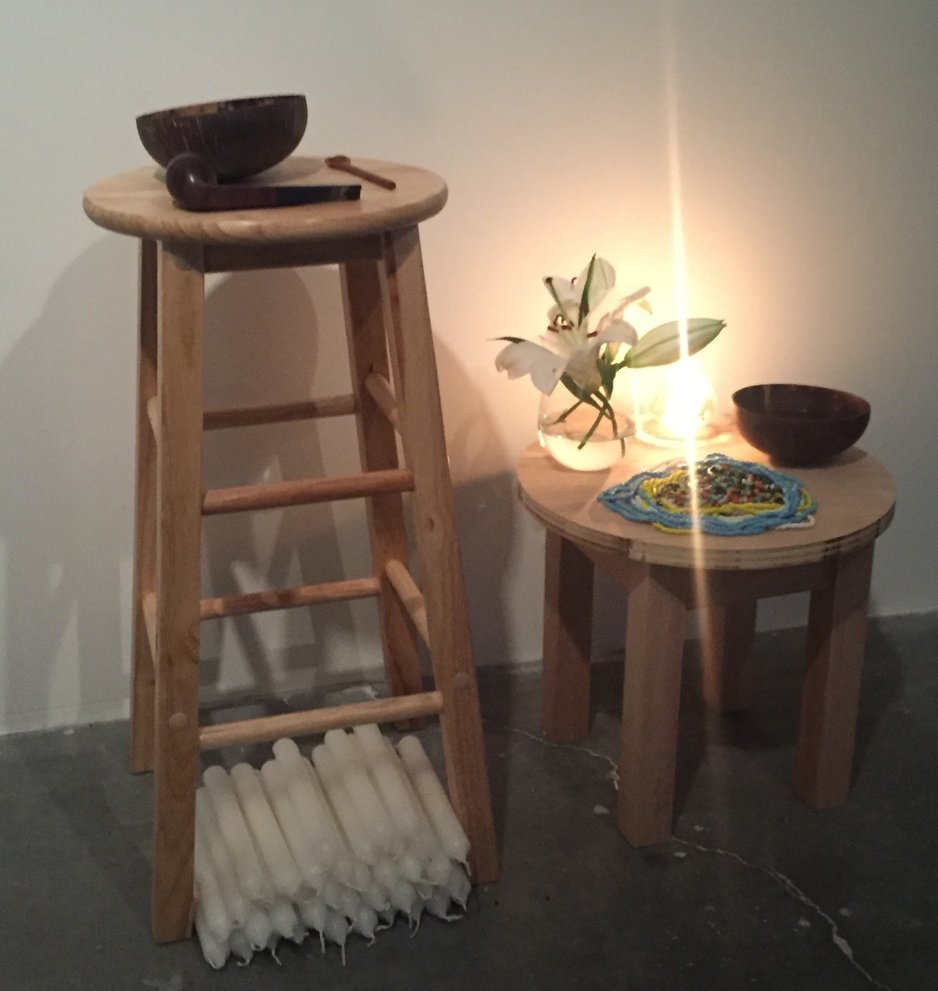
    Table of Goods (2017) is an installation that features several elements within the room: a sculptural conical mound of earth with pits dug out throughout it, each pit being filled with various products, such as coffee beans, coffee and sugar, and surrounding the perimeter are unlit wax candles; a table and stool with beaded necklaces, a pipe, a lit candle, bowls of goods, lilies in a water glass and a stack of wax candles; a diptych of a letter titled The Mask and an illustration of Escrava Anastacia with a white beaded necklace hanging around it. They tell a very powerful story of the brutal and violent enslavement of black subjects by colonists. The story told in the letter by Kilomba’s grandmother reminds us for the importance of remembering.
    The Desire Project is a three-channel video with synchronized text and music. The words describe the artist’s need to write. This piece is affective and direct and with the other installations create such a thought-provoking show.
    Each of these exhibitions at the Power Plant are evocative and riddled with poignant significance that require in-depth analysis and interpersonal sensitivities. The educational aspects of these works cannot be overlooked or undervalued.

    Text and photo: Nathan Flint

    *Exhibition information:Ellen Gallagher: Nu-Nile, June 23 – September 3, 2018, Abbas Akhavan: variations on a landscape June 23 – December 30, 2018 and Grada Kilomba: Secrets to Tell, June 23 – September 3, 2018, The Power Plant, 231 Queens Quay West, Toronto. Gallery hours: Tue – Sun, 10 am – 5 pm & Thu 10 am – 8 pm.

  • Aida Muluneh / Aga Khan Park

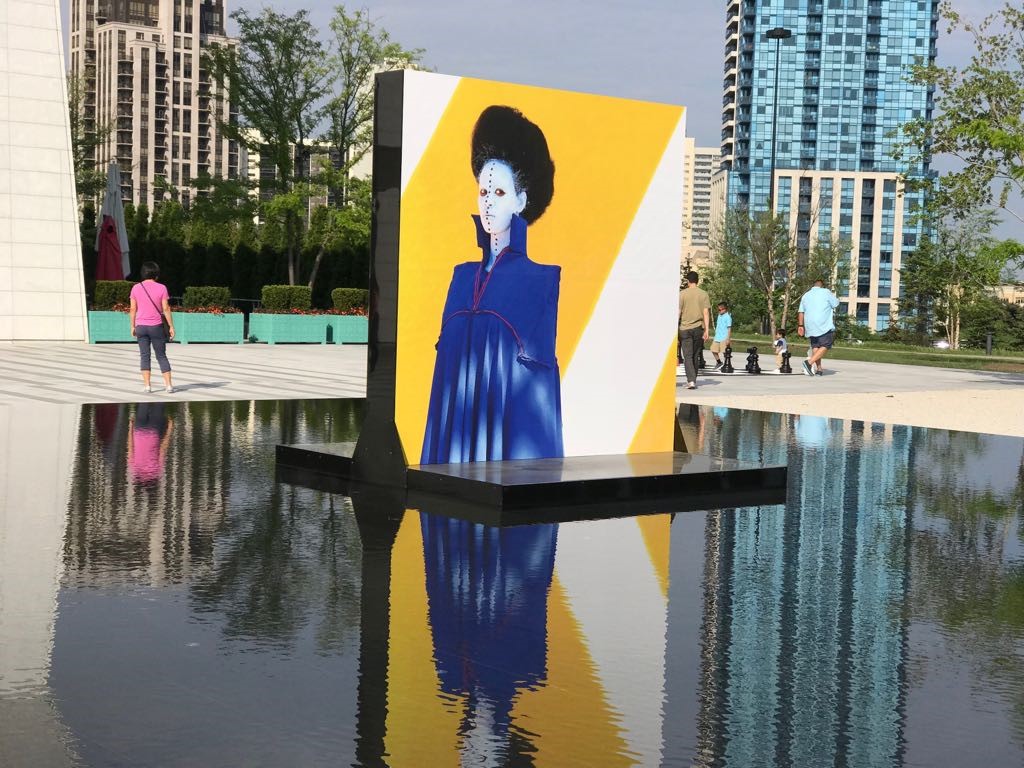
    The Aga Khan Museum Park is a vision; as you walk into its realm, you are engulfed by the aura of peacefulness and the breathtaking setting of greenery. Though the design has a contemporary feel, the inspiration of this park is deeply rooted in traditional Islamic gardens. Besides the beautiful foliage, there are five pools and for the very first time, the Aga Khan Museum Park has become an exhibition venue for an art installation.
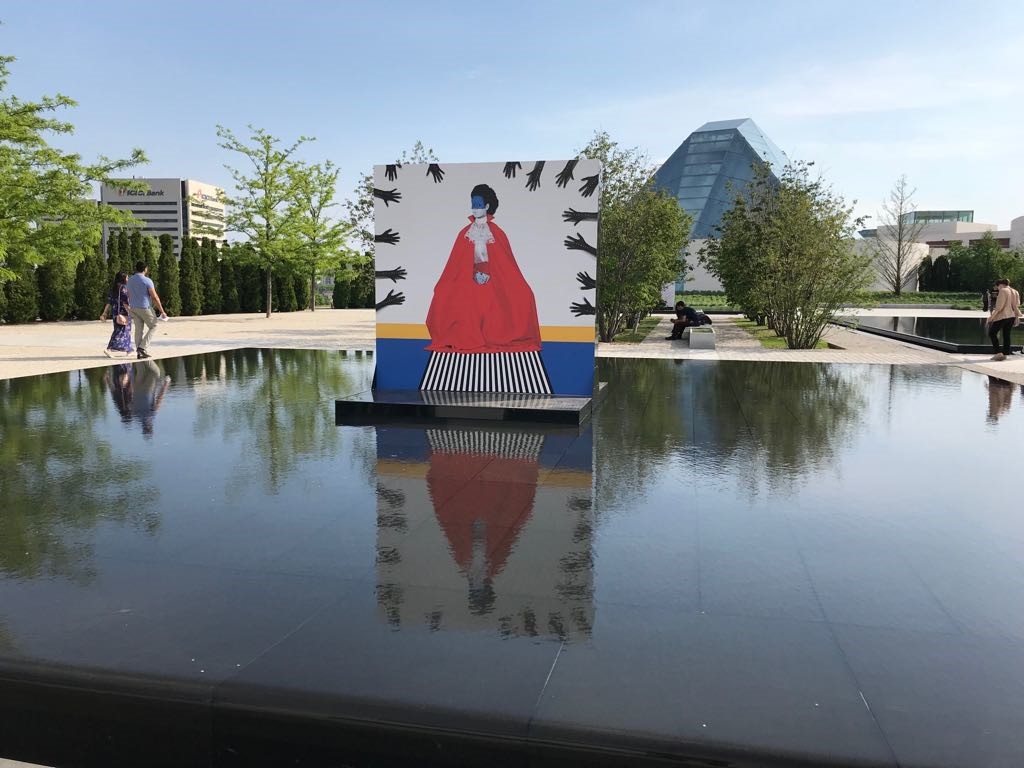
    The five reflecting pools have been transformed into thrones, seating two photographs each. On display are Aida Muluneh’s works of utter magnificence, floating atop the gently flowing water. Muluneh, born in Ethiopia and raised between England and Yemen, is by a profession a photojournalist turned fine arts photographer. Her photographs challenge the Western-way of thinking and force us to re-examine how we view the East. In Reflections of Hope, Muluneh – who is also presents herself in each photograph as the striking and powerful figure returning the gaze of the viewer – utilizes chromatic composition with the fashion ensemble inspired by her native continent of Africa.

    Her poise and expression of regality mixed with the affectivity of undeniable perseverance stare back at the onlooker, pressuring the viewers to consider every aspect of each photograph. These photographs force the spectators to think: to become cognizant yet apprehensive of what they consume from the media.

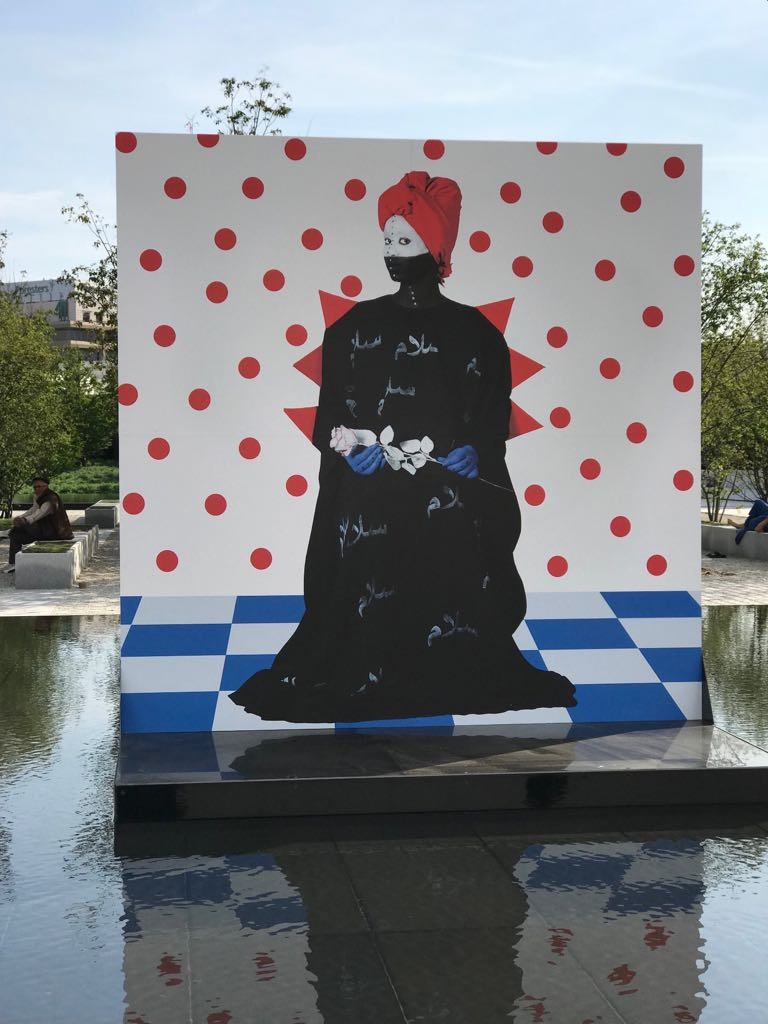
    The colours used in the photographs are enthused from flags of African countries while the face paint is a common form of adornment in tribes of Ethiopia. In the photograph below, Muluneh is cradling a white rose and her black robe has سلام written over it. سلام, or salaam is an Arabic word which means “peace” but is also commonly used as a general greeting in Muslim countries. White roses are usually meant to symbolize purity; her hands are painted blue, her face is half black and half white, while her head-wrap is red along with randomly placed spots in the background. This photograph challenges the Oriental gaze, replacing the gaze with images of peace and purity, but the red is symbolic of the bloodsheds that happened through the colonial era and its aftermath. The artist is bringing forth topics of slavery and human rights; urging us to question the obvious racist frameworks within the mentality of our Western progressive societies.

    Muluneh’s photographs are not just an exhibition of pure magnificence, but they are also a testimony to the ramifications of a bloody and unjust history whose consequences are still very deeply embedded in societal subconsciousness.

    Text and photo: Tehniat Khan

    *Exhibition information: Aida Muluneh, Reflections of Hope, April 2 – September 3, 2018, Aga Khan Park, 77 Wynford Dr. Toronto.

    ** Part of Scotiabank CONTACT Photography Festival