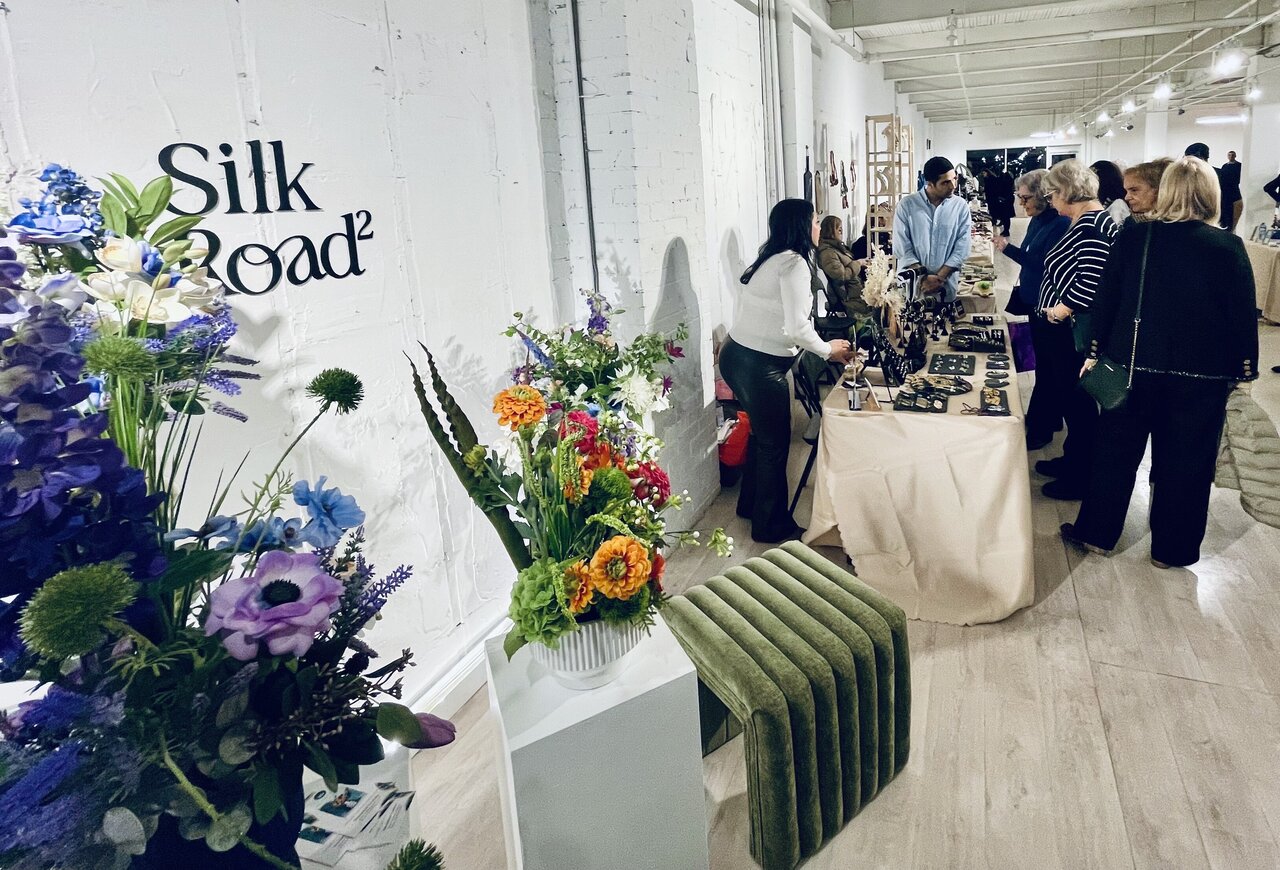
Organized by the Orkid Gallery, artists, vendors, and musicians united at Avant Garde Gallery’s spacious halls over the weekend and reflected on what the Silk Road contributed to the culture of many Eurasian countries. The trade of silk and other goods heavily influenced the art of that time, creating a vibrant exchange not only of goods but artistic expressions and philosophical ideas. This two-day celebration continued the first two-day festival held November 9th, 2024.
The Silk Road was a powerful engine of multicultural exchange, connecting the diverse civilizations of Persia, China, India, and Rome. Persian culture, situated strategically at the crossroads of these routes, served as a vital mediator, blending artistic styles, religious traditions, and technologies of Eurasia. This vibrant, cross-cultural heritage resulted in a dynamic synthesis, visible today in everything from shared artistic motifs and architectural styles to cuisine and shared linguistics.
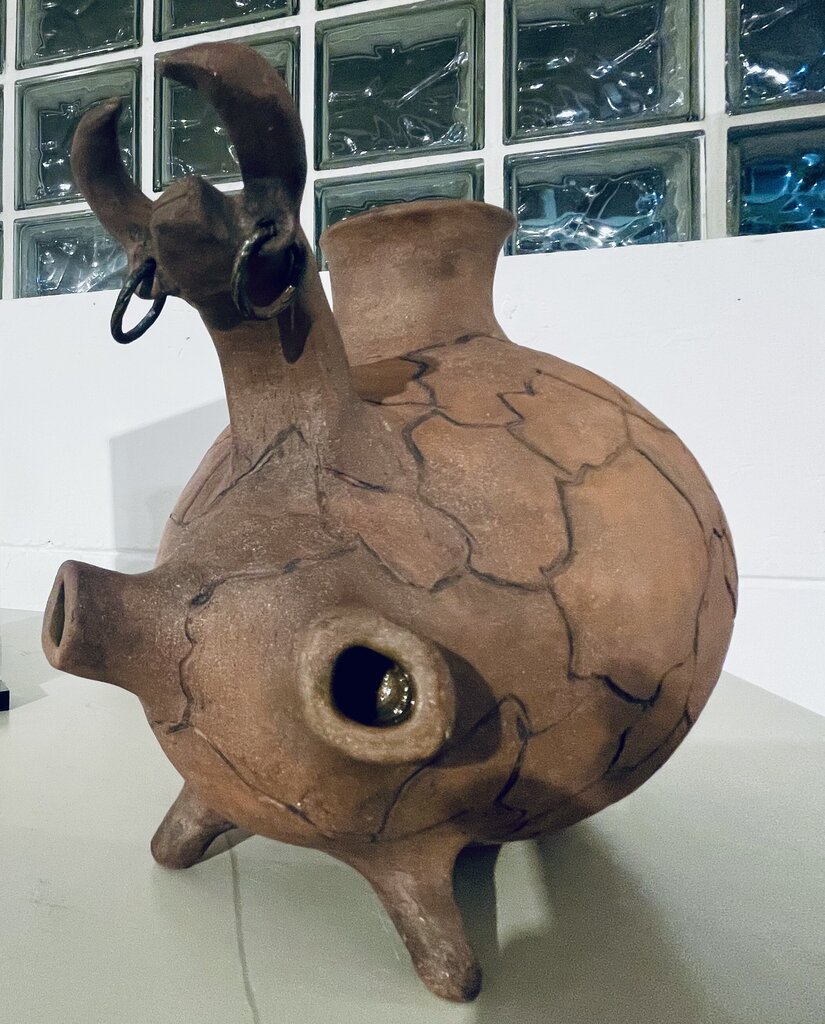
The ceramic work, titled The Bearer of Peace and Friendship demonstrates the exhibition’s concept. Maryam Mirmohammad Khani’s design has a greater purpose than you might think. When used, it brings two people together (often warriors and kings) to drink from the same vessel cheek to cheek. The bull-shaped feature may suggest strength and authority, as in a strong unity of nations.
Maryam Mirmohammad Khani, The Bearer of Peace and Friendship, 2024, hand-built stoneware clay, kiln-fired, H 22 cm x W 18 cm x D 26 cm.
The bull has been a potent symbol of vitality in early civilizations. Bull-shaped vessels, or ceramics decorated with bull horns/heads, were often used as ritual objects, representing divine power and protection against enemies and evil spirits. The Silk Road was known to be dangerous and deadly. It was also a meeting place where peaceful nations shared their food and stories; a reminder that despite all the wars, people have always found calm days when they could connect to each other.
Vendors and artists have brought a diverse collection of ceramic works, filling the space with royal colours, ancient practices and decor. After all, ceramics were not just traded objects but a record of artistic and technological fusion, a fashionable always-in-season design.
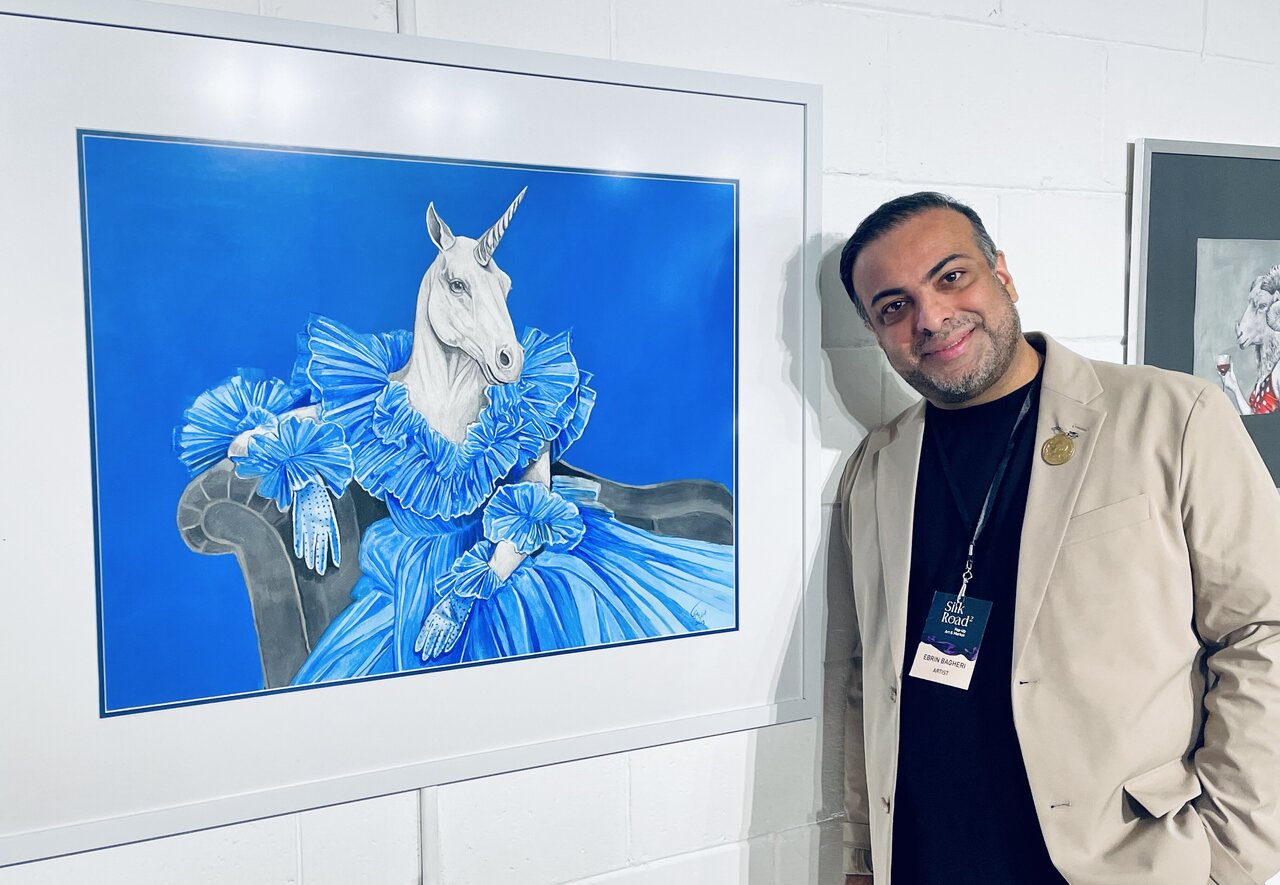
Ebrin Bagheri’s works caught my eye and imagination. Writing about his piece Untitled, Bagheri posted on Instagram (translated), “This work can be a reflection of the condition of modern man; a man who appears masked in society trapped between his true nature and his visual image.” The ornate blue dress symbolizes the social compulsion for acceptance, while the unicorn head is used as a metaphor for dreams, imagination and secret identity.
Ebrin Bagheri with his work, Untitled from the Inward series, 2025, 23 x 30 inches
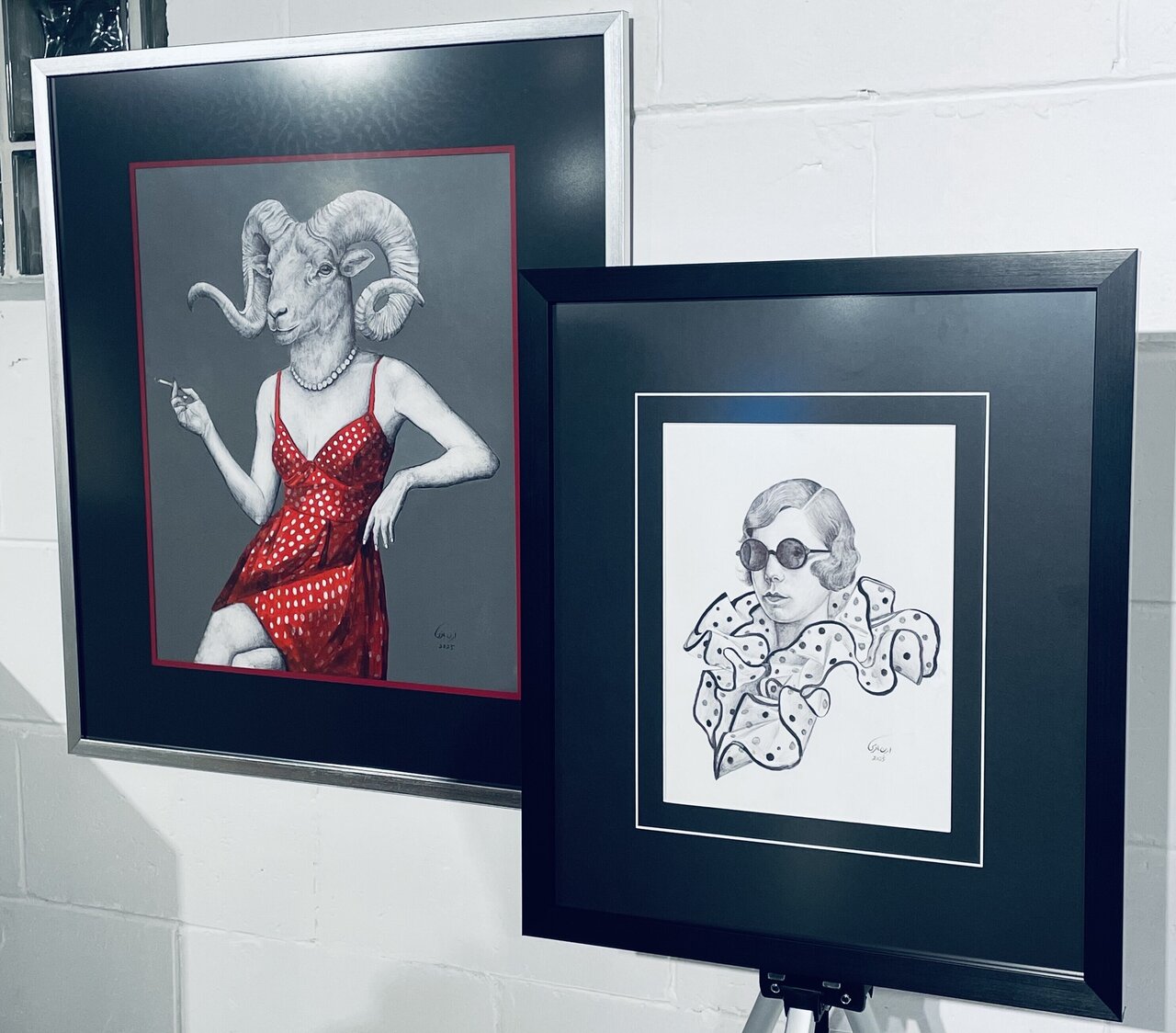
Then Bagheri continues, “What is more real? What we show to the world or what we feel inside?” Bagheri sees his work as a poetic critique of the modern world, where appearance overcomes truth, and everyone is forced to hide his identity to survive. In another piece from his Inward Series, a ram’s head symbolizes a powerful combination of strength, struggle, and heroism. The headstrong and beautiful ram-headed woman wrapped in a red dress, suggests that, eventually, we can overcome everything.
L- R: Ebrin Bagheri, Untitled from Inward Series, 2025, ballpoint pen, acrylic on Stonehenge paper, 18 x 24 inches; Untitled from Poke-a-dots Series, 2025, ballpoint pen on paper, 13 x 9 inches.
Text and photo: Polyna Alexseev
*Exhibition information: Silk Road 2 / Organized by Orkid Gallery, November 22–23, 2025, Avant Garde Gallery, 218 Merton St, Toronto.
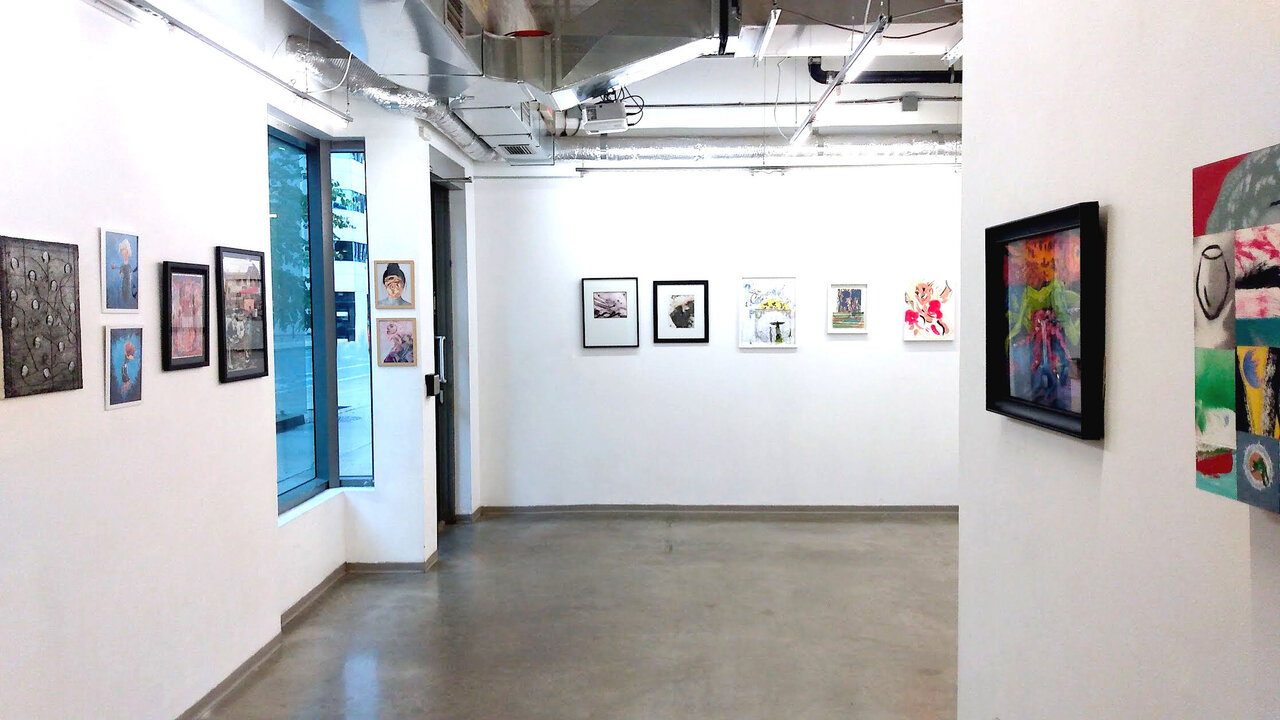
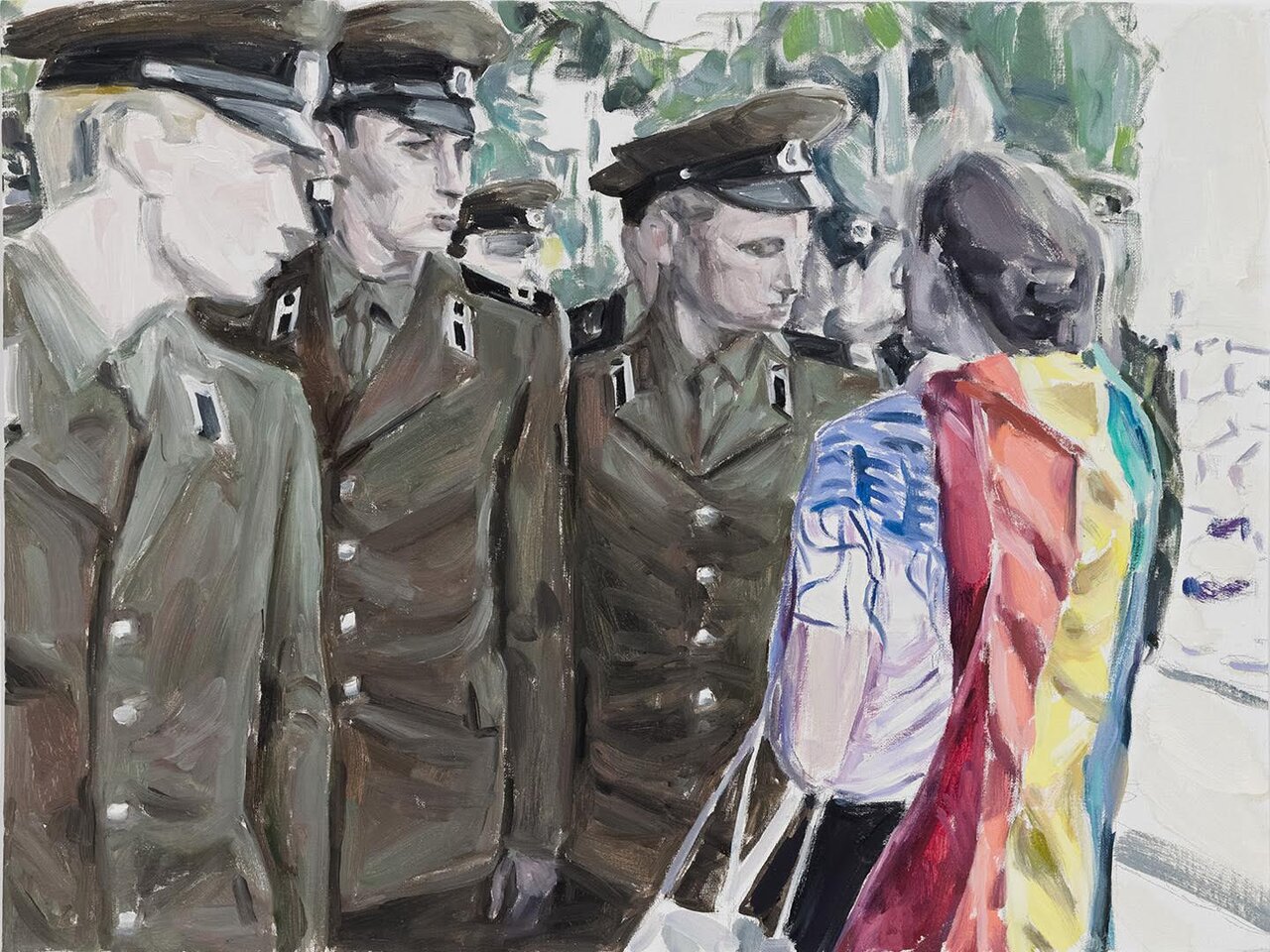
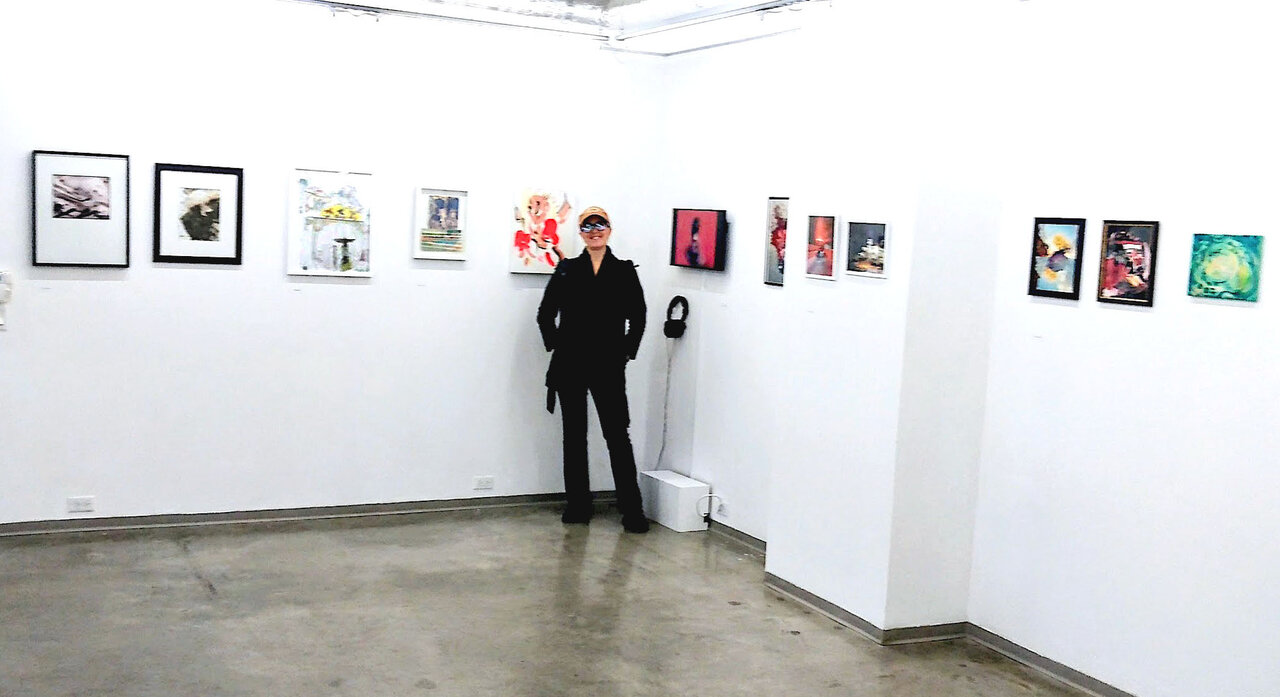
In a modest sized gallery on Richmond Street West, curator and artist Leah Oates has presented an exhibition of small works titled Chaos Theory. The show only lasted a week – a pop-up one might say – and featured the works of nineteen artists. The artists are Marcy Brafman, Jack Cunningham, Yevgeniy Fiks, Greg Hendren, Max Kershaw, Miles Ladin, Yuliya Lanina, Sascha Mallon, Daniel Maluka, Joseph Muscat, Frances Patella, Jayden Pithwa, Dominique Prevost, Doris Purchase, Steve Rockwell, Greg Sholette, Chahat Soneja, Max St-Jacques and Pierre St-Jacques. The show falls under Station Independent Projects that was founded by Oates years ago, in New York City originally. She has extended the project to Toronto where she now lives.
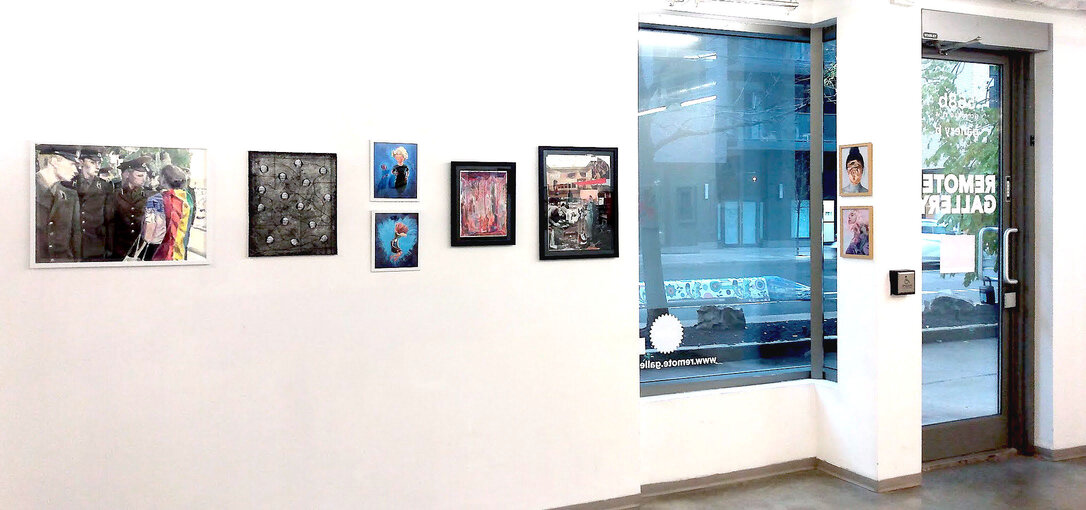
Installation view of Chaos Theory at Remote Gallery. Courtesy of Station Independent Projects
Oates tirelessly promotes artists that she describes as emerging and mid-career, in other words a full range of artists, none of whom are represented by a commercial gallery. The theme of this show, chaos, gradually came to her. Everyday experiences taught her that chaos is an essential element of society. What does she mean by chaos or chaos theory exactly? Here it is a concept synonymous with disorder, lawlessness and randomness. Indeed, for a system to be said to be chaotic it must be unpredictable. In mathematics and physics – from which the term chaos theory derives of course, – the overall unpredictability of a system somehow emerges from its constituent elements that are ruled by seemingly strict laws. Likewise, Oates observes, while order in society generally prevails, there are unpredictable actors who threaten, and sometimes do, shake things up.
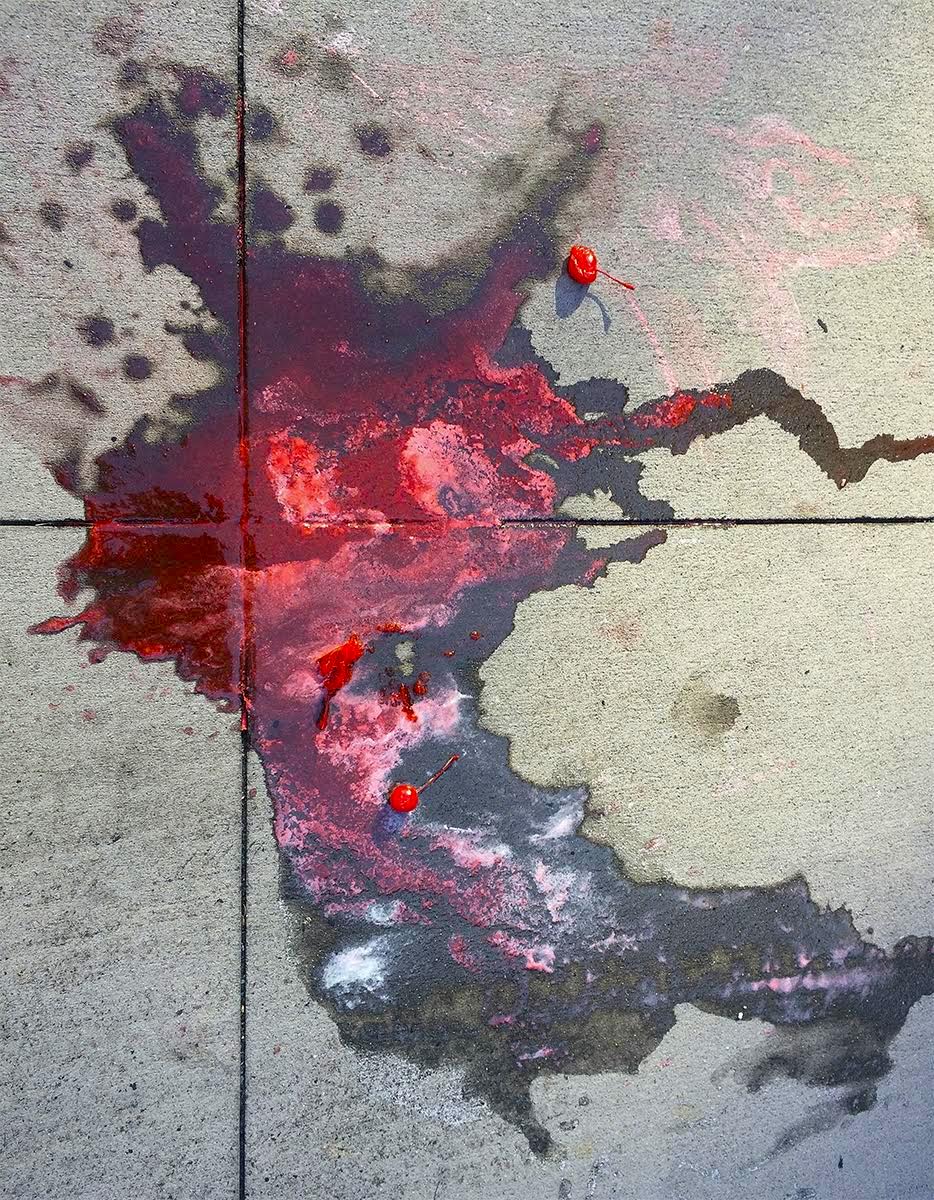
Miles Ladin, Cherry Bomb, 2016, digital pigment print 19 x 13 inches. Courtesy of Station Independent Projects
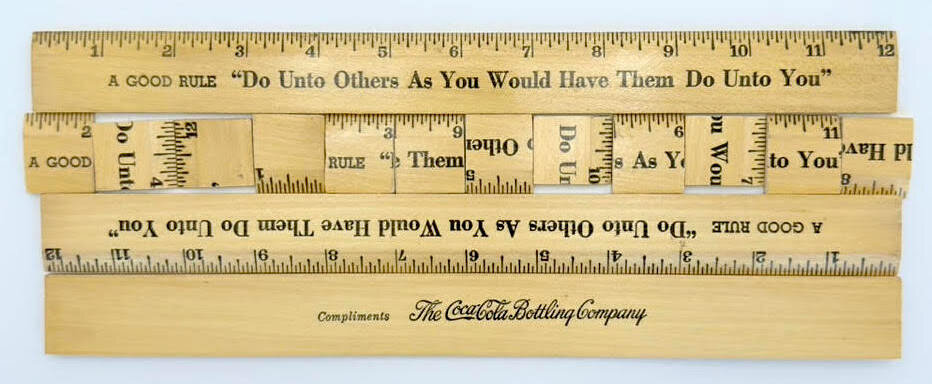
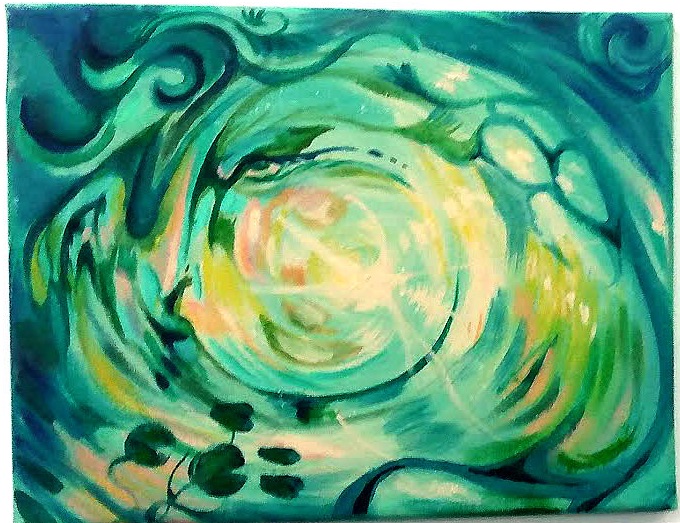
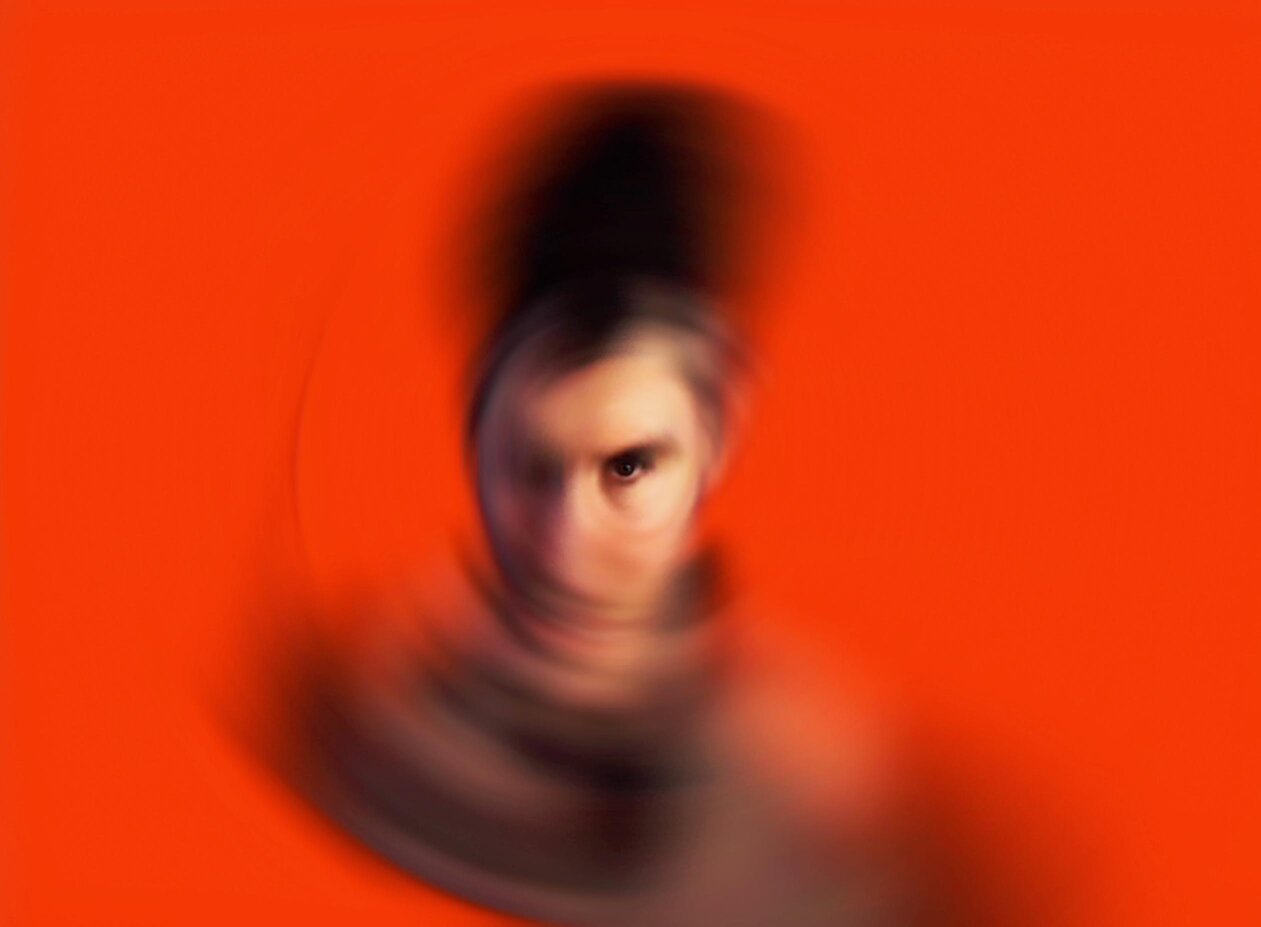
So the artists in this show have reflected on this notion of chaos, and included it in their works. For example, Hendren made his wall sculpture specifically for this show. Titled How Do We Measure Now? highlights the lack of control we feel when things are in disorder. We lose our perspective, end up at sea. This is particularly felt in moral terms, as suggested by Hendren’s quote of the golden rule: ‘Do unto others as you would have them do unto you’. And in Pithwa’s self-portrait his features are almost indiscernible. We see, rather, a swirl of movement. Here one is reminded of the origin, or etymology, of the word chaos, namely, as a cosmological term referring to primordial matter that was formless.
Greg Hendren, How Do We Measure Now?. Courtesy of Station Independent Projects
Jayden Pithwa, Self portrait. Photo: Hugh Alcock
Indeed, the ancient Greeks believed that chaos is demonic, sinister in nature. Disorder implies uncertainty and mischief, or malice even. We see this quality, for instance, in Kershaw’s impish figure or in some other portraits. When things become unpredictable, volatile – climate change being a prime example of this, with the increasing unpredictability of weather events such as floods, hurricanes and droughts, – we become more vulnerable to the harms that result. Events threaten to be monstrous. Oates acknowledges the negative impacts of chaos, but she also sees it as an opportunity. The shaking up of things opens up the possibility of positive change.
Max Kershaw, Self portrait. Photo: Hugh Alcock
Portrait by Pierre St-Jacques. Courtesy of Station Independent Projects
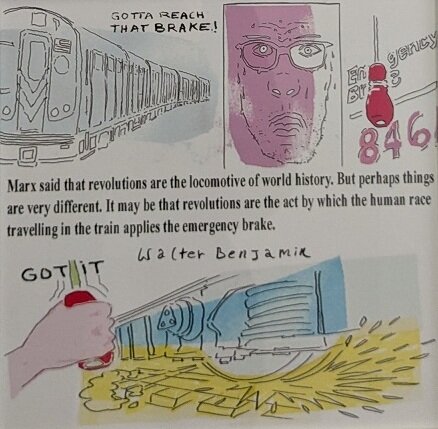
In the political sphere implied here we call this revolution of course. This point is literally spelled out in one of Sholette’s drawings where it states: ‘It may be that revolutions are acts by which the human race travelling on the train applies the emergency brake’, quoting Walter Benjamin, who lived through, and died in, the chaos of the second world war.
Drawing by Greg Sholette. Photo: Hugh Alcock
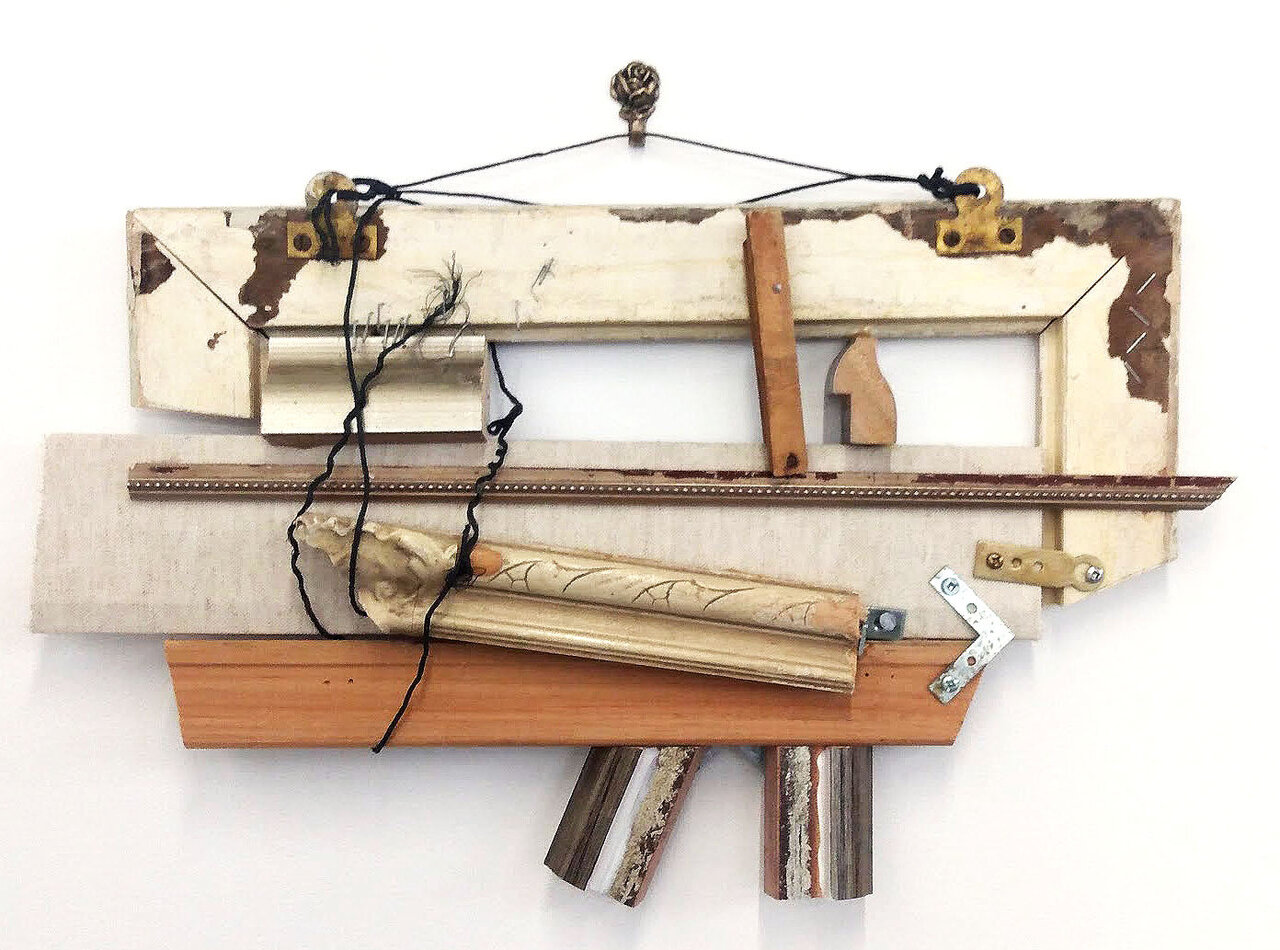
Indeed, the results of chaos can give rise to beauty. Purchase’s sculpture is a case in point. The detritus of broken picture framing is assembled into a delightful composition.
Sculpture by Doris Purchase. Photo: Hugh Alcock
We find a way to move on as Oates puts it. But notably Oates has refused to focus overtly on the current political chaos, which is so tempting to do. And this reluctance in part may be explained by the fact that she is an American, who must take as personal her country’s slide from political dysfunction into growing lawlessness. But inevitably, as we see in our discussion, everything is infected by the political in some sense.
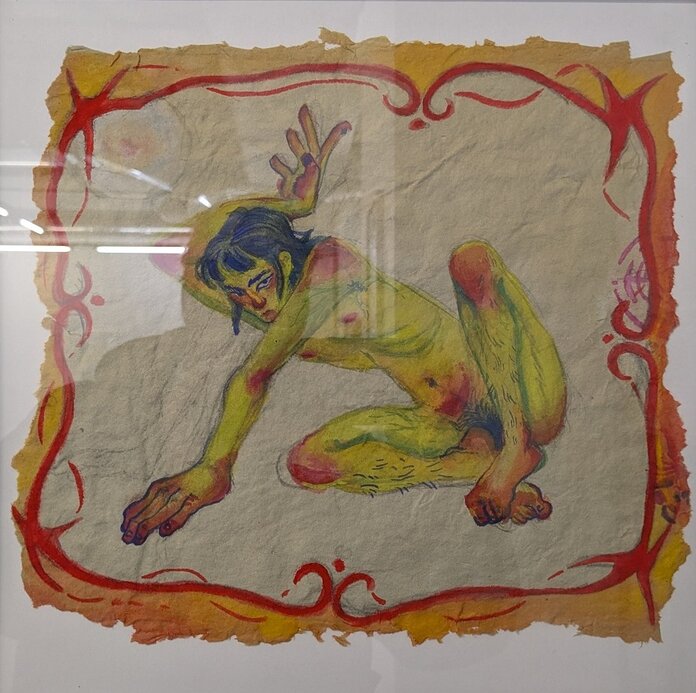
Artwork by Yevgeniy Fiks. Courtesy of Station Independent Projects
I remarked earlier about Oates’ tireless promotion of independent artists. It seems to me at least she is motivated by a belief that art makes a difference, that is to say, society prospers only when art does. About this she is surely right. That is not to say a vibrant arts community is a sign of a prosperous society, but rather conversely a society can only be said to thrive when it has a vibrant arts community. One is here reminded of the zealous utilitarian schoolmaster Thomas Gradgrind in Charles Dicken’s novel Hard Times. Gradgrind represents the forces that dismiss artistic activity as a mere frill that no one really needs. But an economically prosperous society with little or no art leaves no room for us to express and explore our humanity. Oates has dedicated herself to promoting art for this reason.
Leah Oates in Remote Gallery. Courtesy of Station Independent Projects
Station Independent Projects and its ilk are vital to the cultural life of this city. This show has been a good example why. The Remote Gallery, warmly illuminated on an urban street dedicated to moving traffic efficiently, offers Torontonians a respite, a chance to take a breath and think about chaos – a topic that on the face of it seems arcane and technical, but which in fact informs much of our society. The range of art on display is diverse but focused. Let’s hope Station Independent Projects stages more shows like this around the city.
Installation view of Chaos Theory at Remote Gallery. Courtesy of Station Independent Projects
*Exhibition information: Chaos Theory/ Group show, Remote Gallery, 568B Richmond St W, Toronto. November 10 – 17, 2025. Organized by Station Independent Projects.
Jeff Wall’s portfolio is defined by cinematic scenes of candor, some of which are further accentuated by his often large, signature lightboxes. However, it is only when the viewer looks beyond the strategic scaling, lighting, palette, and levelling of these scenes that they are able to develop an intimate, and sometimes uneasy, understanding of the photos’ subject – and, by extension, the moments of “nowness” that are constant in life. Jeff Wall Photographs 1984-2023 at the Museum of Contemporary Art in Toronto (MOCA) memorializes Wall’s mastery of producing simultaneously entertaining and contemplative narratives in its three-story exhibition. The collection spotlights this in pieces such as War game (2007), Boy falls from tree (2010), Parent Child (2018) and Bad Goods (1984). Despite their varied stories, each scene has the following in common: they are incomplete.
Among the exhibited works was one of the highest-selling photographs of all time: Dead Troops Talk (A Vision After an Ambush of a Soviet Army Patrol near Moqor, Afghanistan, Winter 1986).
A comparison of more than 50 of Wall’s iconic photographs suggested three possible types of chronological indicators across all the works. These are either in the middle, often represented by large-scale prints of contemplative or frozen movements; at the end, typically shown through zoom-ins of a disastrous scene, as if observing the consequences of an action within a narrative; or, at the beginning, since each of these moments could be seen as a new start to the story, marked by the viewer’s imposing gaze, which now involves them in the unfolding events.
Works like In the Legion (2022) contain allusions that indicate the story’s chronological stage and, coincidentally, suggest what may follow to the imposing viewer. This work falls under the medium stage, fitting into the pattern of blown-up images and pending action. In this suspenseful work, aside from the evident backflip, we see people with half-finished drinks, conversations, and reactions, all of which allude to the middle of the narrative within the picture. In constructing this detailed narrative, Wall opens a world of possibilities within his work. Yet he chooses to focus on the moment, encouraging the viewer to enjoy the now in all its stillness, to pause and appreciate its oddity, uncertainty, and momentum of every second.
This serene attitude towards ambiguity is well illustrated in Boy falls from tree (2010), as its innocent atmosphere not only distracts but also enhances the unfolding scene by transforming it from a moment of fear into a memorable aspect of childhood naïveté. When examining the work from this perspective, it also becomes clear that, as an artist, Wall always considers the bigger picture.
Then, there is the theme of contemplation. Such images capture the “midway” scenes, with Wall depicting the individuals in these portraits as engaged in a simple, fixated action; all the while lost in the complex depths of thought. The viewer encroaches on these individuals’ private moments; a feeling that evokes both awe and unease, knowing that one is not meant to witness such personal intimacy.
This feeling is epitomized in pieces such as Mother of pearl (2016), Volunteer (1996)and Maquette for a monument / to the contemplation / of the possibility of mending / a hole in a sock (2023). These pieces stand out in the sea of iconic works by Wall; as the longer one views and contemplates them, one comes to mirror the subjects and becomes a “Wall” – captured in the stillness of an ever-evolving scene.
Jeff Wall, Maquette for a monument / to the contemplation / of the possibility of mending / a hole in a sock, 2022. Inkjet Print. Courtesy Gagosian.
I invite readers to visit the Museum of Contemporary Art to see Jeff Wall Photographs 1984–2023, a survey of Canada’s leading contemporary artist. This is Wall’s first survey in Toronto in over 35 years, showcasing four decades of aesthetically vibrant and thoughtfully crafted narratives through photography.
Antonella Pecora Ruiz
Images are courtesy of MOCA.
Exhibition information: Jeff Wall, Photographs 1984–2023, October 19, 2025 – March 26, 2026, Museum of Contemporary Art, 158 Sterling Rd, Toronto. Museum hours: Wed – Thu 11 am – 5 pm, Fri 12 – 9 pm, Sat – Sun 10 am – 5 pm.
Sarah Anne Johnson: A Mountain and a Forest – Between Vision and Reverie
As autumn descends upon Toronto, the Stephen Bulger Gallery unveils A Mountain and a Forest, a luminous exhibition by Sarah Anne Johnson. Known for her ability to merge photography, painting, and sculpture into a single, tactile language, Johnson continues her exploration of how the natural world intertwines with human perception. Her images, which begin as documentary records, evolve into meditations on how memory and imagination shape the act of seeing. The exhibition unfolds in two distinct bodies of work, Mountain and Cedar Forest, each forming a quiet dialogue with the other. Mountain looks outward, expansive and wind-swept, while Cedar Forest draws inward, into spaces of intimacy and stillness.
Sarah Anne Johnson, The Valley, 2025. From the series “Mountain” Printed in 2025. Pigment print on archival paper, 20 x 30 inches
In Mountain, Johnson returns to Jasper National Park, revisiting terrain that once shaped her own sense of wilderness. Her photographs capture riders in mid-journey, their figures absorbed into the vastness of sky and stone. The faces are turned away, not in detachment but in communion with the landscape that surrounds them. These images hold the poise of stillness within motion, as if time itself had paused for breath. Each photograph rests within a hand-painted frame, its tone and curvature extending the chromatic field of the image. The frames, far from mere borders, act as thresholds, ceremonial enclosures that preserve the intimacy of travel and transform each image into an altar of attention.
Sarah Anne Johnson, Crossing Over (Mountain), 2025. From the series “Mountain” Printed in 2025, pigment print on archival paper, 20 x 29 3/4 inches.
Mountain opens into the distance; Cedar Forest draws that distance inward. In these works, Johnson turns her gaze toward the dense cedar groves of British Columbia. Here, the forest radiates as light dissolves into colour with trunks humming with a faint, iridescent vibration. Johnson works directly onto the photographic surface, layering oil pigment, gold leaf, and translucent chroma until the images shimmer like breath suspended in air. The forest becomes both subject and sensation, a place where the boundary between touch and vision dissolves.
Sarah Anne Johnson, Dappled And Dapper, 2025. From the series “Cedar Forest” Printed in 2025. Pigment print on archival paper, 40 x 59 3/8 inches
Johnson’s practice has always sought to extend the photograph beyond its mechanical limits, transforming it into a living surface. Her images become translations of memory, gesture, and feeling. In her hands, the photograph becomes porous to experience: a site where light, pigment, and thought converge.
The dialogue between Mountain and Cedar Forest is one of rhythm and return. The ascent through open air finds its echo in the shelter of trees; each series completes the other, like two movements in a single composition. Through this dialogue, Johnson offers an understanding of nature not as something distant, but as an interior landscape, one that mirrors states of solitude, reflection, and recognition.
Sarah Anne Johnson, Orange Stump, 2025. From the series “Cedar Forest” Printed in 2025, pigment print on archival paper with oil paint mounted to Stonehenge on to Stonehenge on aluminum composite panel, 40 x 59 ¹¹⁄₁₆ inches
Her work retains an intimacy that resists spectacle. Her photographs, touched by paint and breath, remain grounded in the quiet gestures of care that define her practice.
Walking through the A Mountain and Forest feels like entering a space of suspended time. The expansiveness of Mountain gradually yields to the enveloping stillness of Cedar Forest. Gold leaf flickers beneath translucent layers; brushstrokes rest lightly upon photographic grain. Each image bears traces of the artist’s hand, as though the act of creation were a continuation of the light it depicts. The experience is a cumulative, slowly unfolding, where perception deepens into reflection, and reflection into reverence.
Sarah Anne Johnson, Deep Woods, 2025. From the series “Cedar Forest” Printed in 2025. Pigment print on archival paper, 58 x 87 inches
Ultimately, A Mountain and a Forest is a meditation on perception itself. Johnson invites viewers to consider how we inhabit the world through looking and how attention might become a form of devotion. Her work reminds us that to truly see is to enter into a relation with the land, memory, and self. In the stillness her photographs create, beauty emerges as recognition of the moment we realize that nature, like art, lives within us as much as we live within it.
Yehyun Lee
Images are courtesy of Stephen Bulger Gallery.
*Exhibition information: Sarah Anne Johnson, A Mountain and a Forest, September 13 – October 25, 2025, Stephen Bulger Gallery, 1356 Dundas Street West, Toronto. Gallery hours: Tue – Sat 11am – 6pm.
Art Toronto, Canada’s leading art fair, marked its 26th edition with a vibrant display of contemporary creativity. Uniquely designed spaces offered an immersive experience throughout the venue, where striking installations were encountered from the lobby entrance and interwoven across the fair’s diverse presentations.
One of the standout presentations came by BAND Gallery—the Black Artists’ Network in Dialogue—a Black-owned and Black-focused organization dedicated to serving a diverse public both in Canada and internationally. At booth A10, titled Transitions & Transmissions, BAND (Toronto) presented the work of artist Damien Ajavon. The installation invites reflection on the spaces between memory, matter, and imagination, encouraging viewers to pause within these shifting intersections.
Damien Ajavon, Le griot et le tisserand, BAND Gallery (Toronto)
Positioned nearby was a wall displaying works by several artists, notably Alicia Henry and Judy Chartrand. TrépanierBaer Gallery (Calgary) showcased Henry’s remarkable Untitled (Inspiration for Clerestory) (2018), along with several outstanding and previously unseen pieces by the artist.
Judy Chartrand, a contemporary artist of Manitoba Cree heritage based in Vancouver, presented lustrous ceramic works that, while visually captivating, powerfully address themes of racism, ignorance, and privilege.
Judy Chartrand, Don’t You Worry About them birds, Macauley+ Co. Fine Art (Vancouver)
At Art Toronto, ELLEPHANT Gallery (Montreal) showcased artists whose works draw on ancestral knowledge to imagine equitable and thriving futures. Among them, Xiaojing Yan presented a sculptural installation created from mushrooms she cultivated and dried over six months, evoking healing and transformation. Glenn Gear, whose practice is shaped by Inuit ways of learning, explored the intricate relationships between humans, animals, and the land, revealing the cycles and connections that bind them.
Continuing the fair’s commitment to showcasing diverse voices and global perspectives, Art Toronto introduced Arte Sur, a new section debuting at the 2025 edition that celebrates the vibrant and diverse artistry of Latin America.
Judas Galeria Valparaiso, Arte Sur booth
Following the international focus of Arte Sur, the fair also highlighted Canadian talent through the Joe Plaskett Foundation, to support young Canadian artists studying in Europe. Claire Drummond, the most recent recipient of the $65,000 biennial Plaskett Award, challenges the notion that artworks centered on maternity and domesticity are aesthetically or politically marginal.
Claire Drummond, like the thud of a great beast stamping, The Joe Plaskett Foundation
Taglialatella Gallery, known for modern and contemporary art in New York, Toronto, and Paris, specializes in Pop and Street Art. At Art Toronto, the gallery featured a collaborative installation by Trevon Wheatley and Cosmo Dean—a seven-tier rotating sculpture of abstract forms, evoking playfulness, nostalgia, and shifting meanings. Originally presented in 2023 at TTC Lower Bay Station as part of the Yorkville Murals, individual symbolic pieces from the installation are also available for sale.
Trevor Wheatley and Cosmo Dean, End to End, 2024, Taglialatella Galleries (Toronto, New York, Paris)
Art Toronto 2025 brings together galleries from around the world, each presenting a rich selection of artists’ works, with standout highlights including Arte Sur and Indigenous art exhibitions. The fair is well-organized, featuring engaging art talks and curator visits, making it a vibrant celebration of global creativity and cultural dialogue.
Text and photo: Nusrat Papia
As I viewed the fair from the balcony and watched the bustle between the booths, my excitement for Art Toronto 2025 steadily grew. Immediately entering the RBC Principal Sponsor booth, I recognized the painted figures of Preston Pavlis, Night Room (2023). To my delight, the installation opened, and patrons could witness the back of the painting, playing into the speakeasy theme of the booth.
RBC Principal Sponsor Group, booth view with crowd looking at Preston Pavlis, Night Room, 2023. oil on canvas, quilted onto fabric backing, 87.5 x 64 inches
The Daniel Faria Gallery space was the next to catch my eye, specifically Oluseye’s Good Luck Totem III (Dia de Oxalá) (2025) with its vending machine of cowrie shells.
Booth view with Oluseye, Good Luck Totem III (Dia de Oxalá), 2025, wood, vending machine, cowrie shells, 85.5 x 13 x 13 inches (in the middle)
The mesmerizing conch form of Pelorus (2025) by Jennifer Rose Sciarrino can be found here, beckoning visitors.
Jennifer Rose Sciarrino, Pelorus, 2025, alabaster, 11 x 22 x 10 inches
Walking among the visitors, Alexa Kumiko Hatanaka’s works on the external wall of Patel Brown’s booth were a captivating vision. The trio installation of Lying Down (2025), navigating (2025) and Inside and beneath (2025), swept upwards with passersby. Also sharing this wall is a work from Catherine Blackburn of Fazakas Gallery (Vancouver). Territories and Time (2025) with its braiding of hair from one body mirrored into another, creating a sense of the celestial especially given the geode impression at its centre.
L-R: Patel Brown Gallery (Toronto), Alexa Kumiko Hatanaka, Lying down, 2025, linocut print, indigo ink, vintage wash from Kashiki Seishi, Konnyaku, 79 x 22 1/2 inches, Alexa Kumiko Hatanaka, navigating, 2025, hand-carved and hand-printed linocuts, sumi ink, indigo dye, wash from Keshiki Seishi, 73 x 30 1/2 inches, Alexa Kumiko Hatanaka, Inside and beneath, (2025), linocut print, indigo ink, vintage wash from Kashiki Seishi, Konnyaki, 71 x 22 1/2 inches, Alexa Kumiko Hatanaka, Soft snow, hard water (blue), 2025. Hand-carved and hand-printed linocut on wash from Kashiki Seishi, 50 x 39 1/2 inches, (framed centre) and Fazakas Gallery (Vancouver), Catherine Blackburn, Territories and Time, 2025, Laminated photo on dibond, edition of 5, 30 x 60 inches
Towards the end of the evening, there were several people ambling about the booths wanting to maximize how much they could see. I was drawn to the sculpture Goblin Teapot (2025) by Lindsay Montgomery of Chiguer Art Contemporain (Montréal/Quebec City). The goblin’s mischievous smile prompted my own as I imagined it singing, “here is my handle” for its tail, and “here is my spout” for the second face pushing the spout from its mouth.
Chiguer Art Contemporain, Lindsay Montgomery, Goblin Teapot, 2025, glazed earthenware, 15 x 18.5 x 6.3 inches
The final booth I entered was that of Smokestack Gallery (Hamilton). The still life prints by Kristin Sjaarda were a moody, beauty-in-decay, conclusion to the evening. Flanked by Lauchie Keid’s armoured swine of Sus Fidelus (2025) on the left, and Kristiina Lahde and Adam David Brown’s phases of the moon collaborations Under the Influence series (2023) on the right, Sjaarda’s cool-toned still life Winter (2025) sits at the centre. The intermingling of the works balances out the hibernal energy, as there is the faith or promise of a changed state.
On my way out I saw an amazing installation by Judy Nakagawa, Failure to Contain, 2025.
Judy Nakagawa, Failure to Contain, 2025. Bamboo strips, printed text, 168 x 144 x 48 inches presented by de Montigny Contemporary
As the remaining crowd of attendees left the fair at the close, one could hear excited talk of the spots they will visit in the subsequent days, the engaging conversations had, and the pleasure of possibilities that Art Toronto offers.
ART TORONTO / OCTOBER 23–26, 2025 / Media Preview, October 23
Edition 26 of this international art fair looked pretty good for the media preview despite the lack of gallerists. It was a time for final touches and some probably waiting for the evening opening party in support of the McMichael Canadian Art Collection when collectors will get a first look at the works in the booth of over 100 galleries.
Installation view of Art Toronto, 2025
Mia Nielsen, the director of the fair was proud to talk about the amount of artist content from the indigenous community not just from Canadian but also from South American galleries and even including an Australian Gallery at the fair. Nielsen’s curation of Generations, an exhibition of different generations of Canadian artists, including Harold Town, Joyce Weiland, Gathie Falk & John Kissick as well as contemporaries, like Meera Sethi, Erika DeFreitas and Michèle Pearson Clarke was very impressive. Added to this mix there is a good representation by diverse artists such as Ningiukulu Teevee, Shuvinai Ashoona, Catherine Chan, Audie Murray and the late Rita Letendre.
Mia Nielsen, director of Art Toronto
Latin American galleries from Mexico, Argentina, Chile, Peru and Costa Rica provided a good look at their contemporary art scene, curated by Karen Huber, who is based in Mexico City. It provided an opportunity for the fair to have some representation with Arte Sur Latin America comes to Toronto. “Art Toronto continues to grow its global perspective while staying deeply rooted in Canada’s creative spirit,” says Nielsen. “This year we welcome exciting new voices from across Latin America while celebrating the legacies and fresh visions shaping contemporary art in Canada.”
OTTO Galleria, Buenos Aires, Argentina
The Focus Exhibition which was curated by Dr. Zoe Whitley had some challenging works as part of Art Toronto and RBC’s Discover Program; works by Galleries such as BAND (Toronto), Central Art Garage (Ottawa), DURAN CONTEMPORAIN (Montréal), Franz Kaka (Toronto), SSEW Project 縫合計劃 (Markham), The Blue Building Gallery (Halifax), United Contemporary (Toronto) and Wil Aballe (Vancouver). There will also be the regular panel talks and guided tours by art professionals, always a draw for Art Toronto.
Jane Corkin of Corkin Gallery, a veteran of Art Toronto fairs, stood next to one of her artists’ works, Mneme (1984) by Leopold Plotek. Corkin was very pleased with Barbara Astman’s Woven Stories #38, and she spoke of Astman receiving the Order of Canada award.
Jane Corkin in front of Mneme (1984) by Leopold Plotek, oil on canvas 98 x 72 inches
Barbara Astman, Woven Stories #38, 2013, woven cotton, nylon thread, 47 x 63 inches
There were plenty of works that caught my eye like That 90’s Painting (2025) by Sonny Assurepresented by Equinox Gallery (Vancouver). There was a familiar work of Kristine Moran, The Gardener House (2025), represented by Daniel Faria Gallery. At Odon Wagner Gallery’s (Toronto) booth my eye was drawn to a female portrait. It was like walking around a candy store at the fair. Occasionally I would bump into another media person walking in an art filled daze.
That 90’s Painting, 2025 by Sonny Assu
Kristine Moran, The Gardener House, 2025, oil on canvas, 48 x 60 inches
I stopped at IOTA Studios and talked to artistic director, Mirelle Bourgeois. The Halifax based organization does not have a physical gallery but represents and promotes artists. One of their artist Jordan Bennett had a motorcycle as a work, titled LNUK Motorcycle (2025) that used sealskin, birch bark and moose hide. The artist contemplated riding the motorcycle to the fair but then recanted. It is likely a wise decision.
IOTA Studios artistic director, Mirelle Bourgeois in their booth
Jordan Bennett, LNUK Motorcycle, 2025, Indian Scout Bobber motorcycle, vinyl, sealskin, 42 x 68 x 39 inches
Amber Sandy’s clever Mary Birchkin Bag using deer hide, porcupine quills and silver seed beadswas a subtle, but fun take off on designer bags in our culture. Her bags filled the booth of Ceremonial / Art (Vancouver). At United Contemporary I saw another work by artist Jake Kimble, titled Heavy OperatorEquipment, an archival print. There was something about the naked figure on a heavy piece of construction equipment that was evocative.
Amber Sandy, Mary Birchkin Bag, deer hide, porcupine quills and silver seed beads
Jake Kimble, Heavy Operator Equipment, archival print
I loved Michael Nicole Yahgulanaas’s Trout (2024), represented by Gallery Jones (Vancouver). Another familiar artist’s work Served by Ross Bonfanti, a teddy bear with a half dozen knives in its back, got my attention. I have always been drawn to Bonfanti’s dark humor. He was represented by Rebecca Hossack Art Gallery (London UK).
Michael Nicole Yahgulanaas, Trout, 2024, acrylic on canvas, 60 x 40 inches
Served by Ross Bonfanti
Everything To Do With Living was a collaboration between Olga Korper and Taglialatella Galleries and had a darkened space with neon & video works by several artists including Kelly Mark, Barbara Steinmant and Ben Johnston. Mark’s work depicts the smoke of two cigarettes converging repeatedly.
Everything To Do With Living
RBC had a collection of works in an enclosed blue space. The salon style installation did not seem to do the works justice but included some great art regardless. The representation of the old Matador Club hanging at the entrance was fun. It advertised Dancing but alas there was none. The old after hours club was an old hot spot that had succumbed to development.
Matador Club
RBC’s collection booth
I hope in the future there is a more organized Media Preview with a short but informative guided tour and introduction. This year’s Art Toronto, like our Blue Jays, managed to hit one out of the park.
Opening Night / October 23, 7 – 10 pm
The opening night is reserved for collectors and supporters of the Art Toronto Fair and the funds raised help to support the McMichael Gallery in Kleinburg. The four-hundred-dollar ticket gets you to support a worthy cause while looking at art and chatting with artists and gallerists in attendance.
I talked with Christopher Cutts of the Chrisopher Cutts Gallery (Toronto), and he voiced some frustration at trying to attract the hordes of visitors in the fair. He admitted it is typical of most fairs whether it is in Miami or in Toronto. The opening night was busy, and people were going to the bar and lining up for food when not looking at the art.
Christopher Cutts in his booth
I stopped at The Drey’s booth and chatted with its director Drey Simpson and one of the gallery’s artists, Peter Hastings, whose work had been popular with collectors.
Drey Simpson, director of The Drey
Peter Hastings in front of his works
Patrick Macaulay, director of Open Studio, that specializes in print production and sales, met me near the desert cue and we caught up on news about the gallery. Not a lot of artists run centres represented at Art Toronto, as it is primarily a commercial fair. Macaulay was hopeful that sales would pay for the gallery’s participation.
Patrick Macaulay, director of Open Studio
I saw Jamie Angell with a friend, Martha. Jamie had a gallery for 25 years with a great reputation for promoting young artists.
Jamie Angell with a friend
Artist Sandra Brewster caught some interest in her works, photo-based gel transfers Blur #20 & Blur #24, represented by Olga Korper Gallery. The blue dots on the labels showed interest in a potential purchase.
Sandra Brewster in front of her works
Grace Kelly, represented by Abbozzo Gallery, posed for a pic in front of her work. I had seen her work at the Artist Project earlier this year.
Grace Kelly in front of her work
Clint Roenisch of Clint Roenisch was busy talking with visitors.
Clint Roenisch, director of Clint Roenisch Gallery
At Arterial Toronto Gallery I talked with gallery associates Noash Irani, Oeyda Deyna and Sara Sattan. They had just closed a sale and there was an empty spot on the wall of booth.
Noush Irani, Jeyda Deyna and Sara Sattari from Arterial Toronto
It was great to see the place alive with energy and visitors engaging in the art works. It was good to meet some of artists represented and to catch some of their excitement. The excitement of opening night was contagious and a good start to another year for Art Toronto that presents new opportunities for a lot of artists.
Text and photo: Phil Anderson
*Exhibition information: October 23 – 26, 2025 / METRO TORONTO CONVENTION CENTRE North Building, Exhibit Hall A & B, 255 Front Street West. Hours: Fri – Sat 12 – 8 pm, Sun 12 – 6 pm
Walking past the glass doors of Gagné Contemporary, I was drawn in by the saturated pinks emanating from a pair of paintings. Upon properly viewing the one with an orange glow, I recognized the work of Hayley Chi Hay Chiu, having seen her work in past shows at The Artist Project. The familiar subject with cropped hair appears in a cramped room full of wooden things and windows showcasing vistas. The surreal, distorted perspective of Out of the Shell (2025) made for a curious and fascinating introduction to Invisible String. Within the work, the subject grasps at a doorknob, welcoming viewers into the exhibition.
Installation view of Invisible String at Gagné Contemporary
The work to the immediate left of Out of the Shell is Danielle Vincent’s One and Only (2025). Both paintings focus on the doorknob as their primary subject. Where the knob of the former work is a standard brass sphere, the knob of One and Only is crystal. The light passes through and refracts, creating a prismatic effect in the painting. Crawling along the surface of the knob there is a brown spider and, as one’s gaze follows the spider’s trajectory, a keyhole is spotted.
Danielle Vincent, One and Only, 2025, oil on canvas, 8 x 6 inches (left) and Hayley Chi Hay Chiu, Out of the Shell, 2025, oil on canvas, 48 x 60 inches (right)
The experience of tracing an element from one work to the next forms the conceptual thread of this exhibition. Curator, Katie Butler’s idea has tethered the works together using the theme. For example, the motif of playing cards surfaces within two works. Daniella Williams, Dinner on Spencer Street (2025) features a cluster of people sharing a meal of pasta in a living room suffused with warm light. They are seated around a table, some in chairs while two others lean over from an olive-coloured couch. Along the surface of the crowded table, small items such as glassware, utensils, and playing cards can be found along with a vase of yellow roses. The painting serves as a snapshot between mouthfuls of tagliatelle. The angled perspective from above allows one to view the striped rug within the living space.
Daniella Williams, Dinner on Spencer Street, 2025, oil on canvas, 30 x 24 inches
A similar pattern can be found in Brianna Tosswill’s Fool Me Over and Over (2025) where against a flat background there are three figures in jester outfits with ruffled collars. The top figure holds a phone displaying a conversation with ‘Vancouver Guy’, with a text being formed in the reply section. The two figures at the bottom hold playing cards. The left one is the queen of spades, holding a flower and a palm leaf. The right one is a book cover reading ‘A Great Love’ with a couple in formal wear, dancing. The piece encapsulates the nature of early romance— the infatuation with expectations, to encourage desire, and being a fool for love.
Brianna Tosswill, Fool Me Over and Over, 2025, linocut print, 6 layers, printed at SNAP Studio, rubber-based ink on Japanese paper, 20 x 16 inches
The variety of inspiration and the incorporation of many elements is a positive aspect of the exhibition. The hot pink works of Emma Hapner’s The Unicorn Rests in the Garden (2025), and Katie Butler, Continuum (2025) are related. The women’s figures are anatomically correct, depicted in pink, while their hair in each image is the same colour. The unicorn, always considered as a sensitive, shy, young woman, faces us calmly, meditatively and peacefully. Behind her there is an old tapestry she might have stepped out of. The still-life in front of her symbolizes nature and beauty. The three women in Continuum are totally and happily absorbed in painting large canvases also in pink.
Emma Hapner, The Unicorn Rests in the Garden, 2025, oil on canvas, 48 x 36 inches (left) and Katie Butler, Continuum, 2025, acrylic and oil on canvas, 32 x 40 inches.
Owen Rival’s Bath and Matthew Walton’s Unwanted Visitor both depict male figures in the bathroom. Rival’s figure in the bathtub is peaceful and relaxed, with the dominant colour blue, radiating calmness. Walton’s composition is more dramatic. The bathroom is depicted in pink, while the figures are a kind of green that contrasts it. One man sits in the bathtub, looking rather angrily at the intruding visitor who sits on the toilet. Not a happy moment.
Owen Rival, Bath, 2025, acrylic on canvas, 12 x 9 inches (left), Matthew Walton, Unwanted Visitor, 2025, acrylic, watercolour, pastel, coloured pencil on paper, 29 x 23 inches (right).
Identifying the links between the various images creates an engaging puzzle component within the exhibition. Ultimately, Invisible String proves to be a delightful display.
Text and photo: Rashana Youtzy
*Exhibition information: Invisible String / Group Show, September 24 – October 25, 2025, Gagné Contemporary, 401 Richmond St. W. Lower Level, Toronto. Gallery hours: Wed – Sat 12 – 6 pm.
Installation view of Art Toronto, 2024. Photo: Phil Anderson
October 23 – 26, 2025 / METRO TORONTO CONVENTION CENTRE North Building, Exhibit Hall A & B, 255 Front Street West Hours: Fri – Sat 12 – 8 pm, Sun 12 – 6 pm
In 2025, Art Toronto celebrates its 26th edition with Landmark Latin American Showcase and a Multigenerational Canadian Spotlight. Canada’s oldest and largest international art fair will host over 100 national and international galleries, installations, project spaces, and so much more!
As you explore Art Toronto 2025, encounter striking installations from the moment you set foot in lobby and woven throughout the fair. These thought-provoking works invite you to engage with art in unexpected ways, adding dimension to your fair experience. Our multi-day passes let you enjoy early entry, unlimited re-entry and access to the VIP Lounge, giving you time to fully experience the artworks and installations, along with the fair’s programming. Take your time—explore, reflect, and return.
This year’s lineup includes galleries from cities across Canada, as well as New York, London, Amsterdam, Lima, Sydney, Buenos Aires and more.
The programming involves:
Platform hosts insightful talks with leading voices in the art world.
Free guided tours are presented by experienced curators, collectors and artists.
Special projects, installations and the Focus exhibitions enrich your visit.
For programming, ticketing and more information click here.
Resonant Forms: The Rhythms of Zenji Funabashi and Shogo Okada
At Open Studio this fall Tune In – In Tune brings two artists into tender dialogue across time: Zenji Funabashi (1942–2023), an illustrator and designer who’s inventive screenprints of the 1980s captured the spirit of graphic experimentation, and Shogo Okada, a Montreal-based artist whose contemporary works resonate with that same rhythmic precision and intuitive play. Though separated by generations, both share a deep atonement to process, to the tactile rhythm of cutting, layering, and composing, as well as a belief that form, like sound, carries its own kind of music.
The title Tune In – In Tune gestures to the double act of listening and responding, of finding one’s rhythm within another’s. It suggests a form of creative resonance: Okada tuning into the traces of Funabashi’s sensibility, and Funabashi’s archive, in turn, vibrating with renewed life through this contemporary encounter. Together, their works compose a visual duet grounded in the analogue language of screen-printing yet alive with improvisation and pulse.
Installation view of Tune In – In Tune: Screenprints by Zenji Funabashi and Shogo Okada at Open Studio
Funabashi’s screen-prints, produced in 1980 during his years in Toronto, reveal an artist fluent in the distilled clarity of design and the warmth of intuition. Working with cut paper, he explored how shapes could interlock, overlap, or dissolve into one another, creating a choreography of positive and negative space. His “studio proofs,” presented here from the Open Studio archive, are as fresh and inventive as when they were made—bright, graphic meditations that feel at once spontaneous and precise. Funabashi approached his materials with disarming simplicity: “a cutter, paper, my brain and my heart.” Within that modest declaration lies the spirit of his work, curiosity without ornament, humour without irony, design without rigidity.
During his time in Toronto, Funabashi became part of a vibrant community of artists and designers drawn to Open Studio’s collaborative ethos. His engagement with printmaking soon extended beyond the page to wooden sculptures that echoed the rhythm and geometry of his prints. After returning to Japan, his practice expanded further into environmental and public art, from sculptural installations in Tokyo’s urban centers to murals and architectural collaborations. Across media, his work radiated a sense of balance and human connection, a belief that art, in any form, should harmonize with its surroundings and the people who encounter it.
Zenji Funabashi, detail: Sea Birds, 1980, screenprint, OS Proof, 1980, 49/50, 15.75 x 15.75 inches
If Funabashi’s work carries the melodic clarity of a composed score, Okada’s prints introduce the syncopation of improvisation. Born in Osaka and now based in Montreal, Okada moves fluidly between visual art and music production, two disciplines that inform one another in both method and mood. For him, the act of printing parallels to composing a rhythm, layering motifs, then listening for the composition resolving into harmony. Each print begins with a structure and builds outward through iterative experimentation. The result is a visual rhythm that feels at once ordered and free flowing.
In his new body of work for Tune In – In Tune, Okada turns his gaze to the natural world: to the internal geometry of leaves, seeds, and petals; to the repetitions and variations that govern organic growth. Through a process that fuses analogue screen-printing with digital refinement, he abstracts these motifs until they hover between the recognizable and the imagined. His pared-down forms, guided by intuitive subtraction, evoke a sense of movement. Colours vibrate softly against one another, inviting the eye to move, pause, and return, much like the rhythms of breath or sound.
Shogo Okada, Pothos (Terracotta), 2025, screenprint, edition of 12 + 2AP, 9 x 9 inches
Together, the works of Funabashi and Okada create a continuum of sensibility—an ongoing conversation between craft and intuition. Both artists work through processes of distillation, seeking clarity not through control but through their means of attentiveness. Their screenprints are acts of listening: to material, to rhythm, and to the quiet intelligence of the hand at work.
Tune In – In Tune is less about the distance between two artists than the space they share—the frequency at which their ideas overlap. It reminds us that dialogue need not be spoken to be heard; that across time, form can remain in conversation with itself. Through their prints, Funabashi and Okada offer a meditation on what it means to be in tune: with one’s tools, with one’s materials, and with the quiet rhythms that connect artists and viewers across generations.
Yehyun Lee
Images are courtesy of Open Studio
*Exhibition information: Tune In – In Tune, screenprints by Zenji Funabashi and Shogo Okada, September – November 22, 2025, Open Studio, Main Gallery, 401 Richmond St West, Suite 104. Gallery hours: Tuesday – Friday 11am – 5pm, Saturday 12 – 5pm.
Installation view of Jeff Wall, Photographs 1984–2023, MOCA, 2025. Photo: Phil Anderson
Visitors are given the special opportunity to explore renowned photographer Jeff Wall’s “picture making” while viewing 50 of his images spread through the three floors of MOCA. This wonderful exhibition was curated by MOCA Executive Director, Kathleen Bartels who is familiar with Wall’s artwork ever since she worked at the Art Gallery of Vancouver.
Curator Kathleen Bartels. Photo: Phil Anderson
Wall, who has exhibited around the world, rarely exhibits more than once in each city. Toronto viewers are fortunate that he’s come back here following his AGO show in the 90’s. The present survey covers 30 years of work spanning his use of digital images, colour prints, large scale lightbox transparencies and black and white photographs. Wall is indeed a pioneer in photographic experimentation and this is the largest exhibition of his work in Canada.
Wall sees himself as a composer when it comes to photography. He witnesses life and sometimes recreates those moments. Occasionally it is more a matter of composition than documentation. He is a constant observer of everyday life. There is a narrative in his work, though not politically driven. He enjoys his freedom of expression in capturing moments and sharing them.
Jeff Wall. Photo: Phil Anderson
As an art student in the 1960’s, he studied painting and drawing. Later he travelled to Europe, visiting art museums and he often references art in his photographs. Viewers can read in their own narrative while looking at Wall’s work, though he definitely has something personal to say in works like Mimic, that capture a moment of racism that Wall witnessed and recreated with actors.
The exhibition starts on the main floor of MOCA with a series of nine round transparencies in lightboxes titled Children (1988). These are portraits of children from diverse cultures with different cloud formations as backgrounds. Their presence hanging high on the walls of MOCA gives them a look of empowerment.
While in Europe, he witnessed the use of backlit lightbox transparencies in advertising and he started to use that technique in his series of new photographs. In Boy falls from tree (2010) we wonder if Wall witnessed a similar event or experienced such an incident himself. The boy photoshopped into the scene has been done with such precision that the viewer wonders if it may really have happened.
In another inkjet print, In the legion (2022), a patron does a backflip in the bar surrounded by drinking witnesses. Again, the viewer is caught off guard trying to image themselves in such a room.
Other works such as Volunteer (1996), a black and white gelatin silver print, documents the mundane, with a man mopping the floor of what could be a waiting room. There are darker works in the exhibition such as Dead troops talk (1992), that shows the aftermath of a Red Army Patrol ambushed near Moqor, Afghanistan, in the winter of 1986. An art critic was overheard to say it was one of their favourites in the exhibit. A rather grim scene of troops in the mud; some looking deceased while one is playfully holding a rat in the face of another soldier. This piece is powerfully daunting and heavy with historical narrative.
Another favourite of mine was The Guitarist (1987), a lightbox transparency of two young teens squatting and jamming in a graffiti-filled tiny room. In front of the nightclub (2006), is another large lightbox transparency that seems like a scene one might stumble upon in most cities with young people trying to get into a club or deciding not to. It invites the viewer into the work, perhaps remembering their own experience of being in such a lineup.
Jeff Wall’s exhibit gives the art viewer much to explore and think about in this monumental survey of his work. The exhibit invites a second viewing to further ponder the poetic and captivating images Wall has shared with us.
Phil Anderson
*Exhibition information: Jeff Wall, Photographs 1984–2023, October 19, 2025 – March 26, 2026, Museum of Contemporary Art, 158 Sterling Rd, Toronto. Museum hours: Wed – Thu 11 am – 5 pm, Fri 12 – 9 pm, Sat – Sun 10 am – 5 pm.
Michelle Letarte’s recent exhibition at Propeller Art Gallery emerges from an exchange between history and materiality. Rooted in her travels through La Antigua, Guatemala, a city once the capital of the Kingdom of Guatemala and now a UNESCO World Heritage Site. Letarte’s mixed-media works reimagine the visual and emotional resonance of its Baroque colonial architecture. Her process, which involves photographic transfers onto textured and recycled surfaces, followed by layers of acrylic intervention, converts the city’s weathered façades into tactile representations of endurance. The juxtaposition of ruin and restoration truly reflects the city’s own complex history, marked by natural disasters, religious devotion, and colonial power. Trained as both a scientist and an artist, Letarte approaches her subject with analytical precision and experimental curiosity. As a result, her practice draws upon a methodology of observation and reconstruction, engaging with the “aged walls” of La Antigua as vessels of cultural memory.
Michelle Letarte, Convento de Santa Clara 5, phototransfer & acrylic on board, 8 x 8 inches (left) and detail (right)
In Convento de Santa Clara 5, Michelle Letarte translates the architectural decay of Antigua’s Convento de Santa Clara into a visual exploration of warmth and temporality. The work’s dominant palette which is composed of deep ochres, rich oranges, and muted reds evokes both the sunlit patina of aged stucco and the vitality of the sacred space from which it derives. The tactile surface, achieved through phototransfer and acrylic layering, encapsulates the fragility of the convent, where centuries of devotion and destruction coexisted. Emotionally, the piece allows for an unexpected calmness. Its warm hues dominate the work, even as the textures suggest potential erosion and loss. This tension between tranquility and decay becomes central to Letarte’s visual language here. Where her abstraction and the role between warm and dark tones negotiate between presence and absence, thus evoking both the impermanence of material forms and the resonance of sensory.
Michelle Letarte, Antigua Fresco, phototransfer & acrylic on board, 8 x 8 inches (left) and detail (right)
Letarte’s Antigua Fresco, presents a meticulously rendered composition that balances both visual intrigue and emotive resonance. The work’s dominant teal background establishes a calm yet expansive spatial atmosphere, providing a sense of depth against which the central circular yellow forms assert themselves with a sort of authority. These forms, reminiscent of sunlit orbs or abstracted celestial bodies, create a natural focal point, drawing the viewer’s gaze inward and encouraging further contemplation. The textured surface, achieved through the deliberate use of phototransfer techniques and acrylic application, imbues the work with a tactile richness, suggesting both the materiality of the medium and the histories it might evoke. Emotionally, the painting elicits a pensive serenity, tempered by the subtle vibrancy of the yellow forms, which can evoke a sense of wonder.
Kaya Meziane
Images are courtesy of Propeller Art Gallery
*Exhibition information: Michelle Letarte, Antigua, Muros de Arte, October 1 – 19, 2025, Propeller Art Gallery, 30 Abell St, Toronto. Gallery hours: Wed – Sat, 1 – 5:30pm, Sun 12 – 4pm.
Upon entering Cesar Forero’s exhibition at Propeller Art Gallery, I was immediately struck by the vibrancy, and conviction that permeated his visual language. His work which is anchored in the symbolic and metamorphic figure of the butterfly extends beyond aesthetic depiction, allowing for a profound social and political commentary. Rooted in his Colombian heritage and lived experience as a queer, BIPOC artist, Forero reconstructs the derogatory connotations of the word “mariposa” into an emblem of resilience and beauty. What might once have been used to humiliate is here reclaimed and exalted, embodying a metamorphosis that is both personal and collective. Through his masterful use of colour, surreal figuration, and performance, Forero’s art critiques systemic discrimination not through confrontation, but through empathy and renewal. Standing before his paintings, one feels not only the intensity of his imagery but also the true hope embedded in his vision.
Cesar Forero, The Present, oil on canvas, 40 x 30 inches (left) and detail (right)
Cesar Forero’s The Present is a strikingly vibrant exploration of emotional exchange and human connection through fantastical forms. The painting’s dreamlike palette, which is dominated by shades of purple, pink, and red, gives the scene a sense of warmth and vitality that feels almost otherworldly. The composition centres on two anthropomorphic figures: a mariposa-like female with resplendent wings and a flower-bodied male offering her a red bloom. This central interaction becomes a symbolic act of giving and receiving, which evokes the themes of affection and reciprocity. The liveliness of their facial expressions, rendered with uncanny animation, suggests that emotion itself is a living thing through all and transcends static form. I believe Forero’s intention is ultimately a consideration of the power of emotional vulnerability. Through the surreal dialogue between the mariposa-like woman and the flower-bodied man, Forero visualizes love not as possession, but as a shared offering. A cyclical act that binds two beings through mutual recognition. And through the vivid chromatic intensity, it reinforces this sense of vitality, as if emotion itself radiates into the surrounding atmosphere, colouring the very world it inhabits. Thus, it becomes not just a depiction of connection, but a visual embodiment of emotional reciprocity through vulnerability.
Cesar Forero, Parenting, oil on canvas, 40 x 30 inches (left) and detail (right)
In Parenting, Forero employs surreal floral figures and vivid coloration to explore the complexities of familial roles and the cyclical nature of care and creation. The central figure resembling a pregnant female form composed of blooming flora, gazes introspectively toward her stomach, suggesting a moment of self-awareness about the journey of motherhood. This is mirrored in the natural world depicted in the background, where a bird tends to three hatchlings in a nest, reinforcing themes of nurture, protection, and the instinctive rituals of parenting across species. To the left, a male flower figure appears almost peripheral, his positioning perhaps alluding to the varying degrees of involvement or emotional distance within parental dynamics. The mariposa, centrally placed, may once again, symbolize metamorphosis. A metaphor for the emotional and physical evolution that parenting necessitates. Forero’s characteristic palette of lively blues, greens, and pinks imbues the scene with a dreamlike vitality, highlighting the emotional intensity and layered symbolism inherent in the act of parenting as both a personal and universal experience.
Kaya Meziane
Images are courtesy of Propeller Art Gallery
*Exhibition information: Cesar Forero, “Mariposa”, October 1 – 19, 2025, Propeller Art Gallery, 30 Abell St, Toronto. Gallery hours: Wed – Sat, 1 – 5:30pm, Sun 12 – 4pm.