Author: artoronto

  • The Artist Project 2026

    This year’s Artist Project moves to the Enercare Centre with over 300,000 sq. Ft of space and over 300 artists, almost half of them new to the Artist Project. At the media preview the new artistic director, Emily-Jean Alexander, talked about how the new space allows them to increase the number of participating artists, almost 50% of them new to the Project. She is no stranger to art fairs, as she worked for Chicago and New York art fairs. Alexander started working at Art Toronto back in 2013 and this year she will be the director there as well.

    Artist Project director, Emily-Jean Alexander

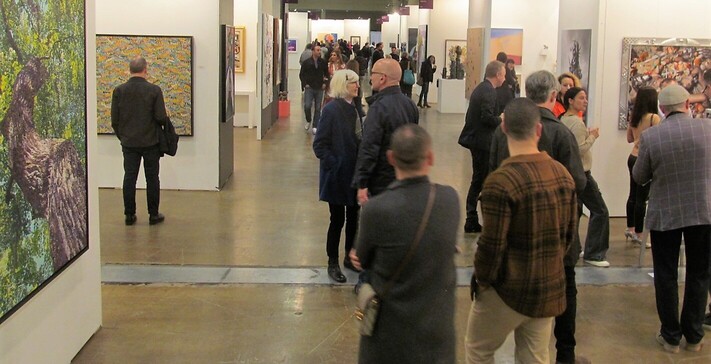
    The layout seemed to work well with the booths spread out and lots of room for the many art installations/sculptural works in the Project. There was also some performance for the opening night party called The Art of the Game, inspired by sport, movement and play. It seemed to make sense with FIFA happening this year.

    Installation view of the Artist Project

    I talked to artist Lesley Luce who uses collage to piece together art works that look very tactile. I thought the work was made of textile at first. She was excited about the new location and hoping that more participating artists will mean more visitors to the Project.

    Lesley Luce in front of her work

    Alexander also highlighted that the bigger venue allowed the use of space to spread out installations and sculptural works. The colourful installation by Gabriel George Echoes of The Divine, Kerala India was inspired by the head gears of Theyyam, India. Though constructed of different material from Canada the artist’s aim was to reach many different cultures.

    Gabriel George with his installation, Echoes of The Divine, Kerala India

    Jemma Chapman, a British architect, who arrived in Canada and wanted to tell stories of the many places she visited through an interactive work using digitally produced stamps. The Toonie Stamp Project was getting many curious visitors.

    Jemma Chapman in her booth

    I stopped by Toronto based painter, Miles Ingrassia’s booth. It was his fourth time at the Project, and he said that he had met participants who returned yearly and had benefited from the sales. He had sold three of his colourful paintings of playful youth already. New artists to the Project like Emma Chlumecky of Windsor Ontario were happy to have a booth and get the attention of the opening crowds.

    Miles Ingrassia surrounded by his paintings

    Artist, former architect Sanghoon Kang had participated in the Project last year and was back this year after a successful exhibit in Seoul, Korea. Painter, Rachel Sardella was new to the Project, displaying her abstract landscapes. Carrie Chisholm showed her mixed media work on a corner wall and was looking forward to exploring some of the 300 artist booths at the event. Her friends, artists Ross Bonfanti and Sandra Tarantino shared a booth and did collaborative works using a variety of materials. The works were playful and fun with pigeons and other creatures made of ceramics and cement.

    Work by Carrie Chisholm

    Chelsea Brant had an installation Stand Tall Fit In with colourful free standing painted dandelions that depicted human connection and, for some of us, hoping for spring, a colourful moment. Mallory Tolcher’s Dress Code used reclaimed jewellery to create basketball nets connecting sport, art and fashion.

    Chelsea Brant with her installation Stand Tall Fit In

    Omar Canales-Cisneros was back at the Project from last year but with his own booth. He seemed pleased with the new venue and the opening night crowd. I liked Brian Harvey’s painting of the old Imperial Pub, recently closed. He also had a painting of Sneaky Dees on College Street which is still open. I also liked painter Ned Palmer’s urban paintings of Bloor West and Spadina.

    Omar Canales-Cisneros in his booth

    Brian Harvey, Imperial Pub

    Abstract artist, Cherie Daly, had been showing her work at the Project for years. She was in a cheerful mood and very positive.

    Cherie Daly

    I talked with Untapped Artist Sydney Hanson of Markham who works with textiles painting and silk screening on them. She was excited about the opportunity to display her work. Raegan Little’s ceramic and mixed media installation Unbalanced was whimsically wonderful with its assortment of recreated objects made from ceramics including iPhones with cracked screens, a plate of spaghettini and an empty box of Tim Bites.

    Untapped Artist Sydney Hanson

    Raegan Little’s ceramic and mixed media installation, Unbalance

    Figurative painter Michael Bedford had his own booth, and it was year one for him. Artist Emmy Tran had some colourful work and for the daring had a curtained portion of X rated works. Painter Lindsay Liboiron had sold several of her painted creatures and was happy with her start at the Project. Brandon Kennedy seemed busy explaining his colourful abstract style to visitors. Montreal artist, Neltje Green was fresh from a successful exhibit at a Toronto gallery and was looking at more sales at the Project.

    Michael Bedford

    Emmy Tran in her booth

    Lindsay Liboiron

    Brandon Kennedy with visitors

    Artist Tommy Feiler, who also teaches at Durham College uses found footage of home movies from eBay to create digital photographs. He was impressed with the quality of work in this years Artist Project. Another painting that attracted me was One Among the Herd by Oliviana Cinco oil and acrylic on canvas. As I calculated my way through the busy crowd at the opening night I could relate to the herd of sheep.

    Tommy Feiler in front of his work

    Oliviana Cinco, One among the Herd

    Over the weekend there will be plenty of other programming such as Art Walks, performance and even a tapestry workshop Sunday at 3pm. Indeed, this year’s Artist Project seemed to have something for everyone and it looked like the inclusion of 50% new artists gave it a fresh look in a new venue, an exciting development for Toronto’s art community and a good opportunity for art collectors to purchase new work.  

    Text and photo: Phil Anderson

    *Exhibition information: Artist Project, March 26 – 29, 2026, Enercare Centre Hall A, Exhibition Place, 100 Princes’ Blvd, Toronto. Hours: March 26, Opening Night Party, 6 – 10 pm, March 27 & 28, 12 – 8 pm, March 29, 12 – 6 pm.

  • Artist Project 2026

    Artist Project, 2025. Photo: Rashana Youtzy

    March 26 – 29, 2026
    Enercare Centre Hall A, Exhibition Place
    100 Princes’ Blvd, Toronto
    Hours: March 26, Opening Night Party, 6 – 10 pm, March 27 & 28, 12 – 8 pm, March 29, 12 – 6 pm.
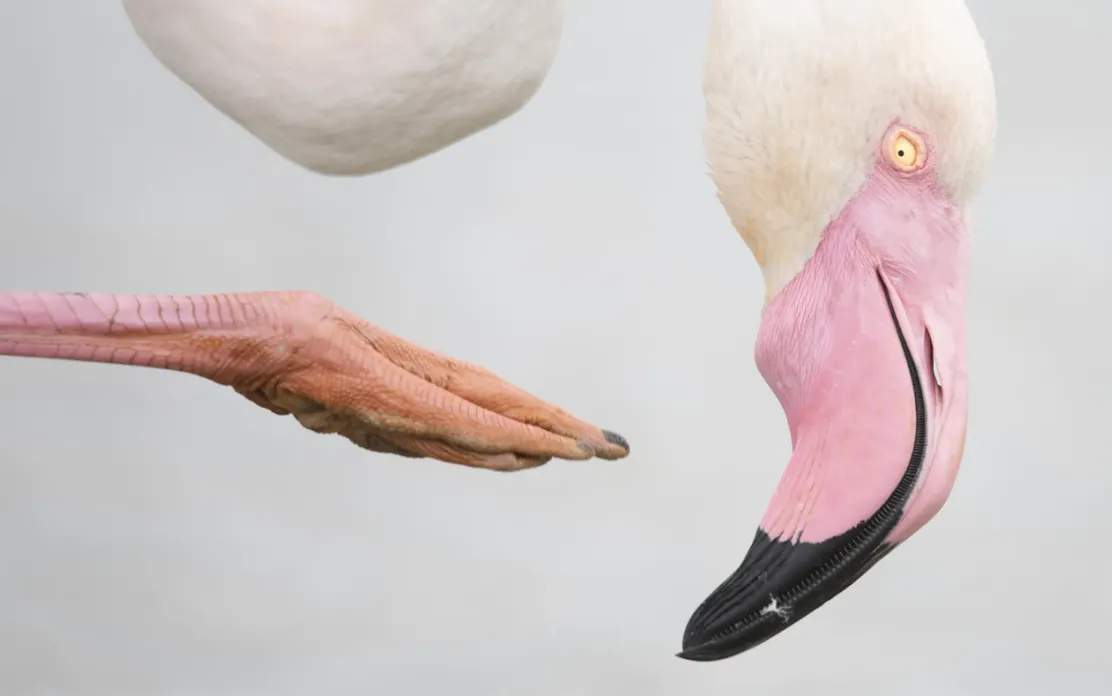
    Discover original works of art from over 200 independent artists from across Canada and join collectors and curators, gallerists and designers, who make Artist Project their destination for new talent. Here you can meet and buy art directly from the artists and support the next generation of Canadian artists.

    Explore thousands of artworks, large scale installations, enjoy curator led art tours, performances and take home that special work that truly resonates with you.

    Installation view with visitors, Artist Project, Better Living Centre, 2025. Photo: Yehyun Lee

     For more information please click here.

  • Wildlife Photographer of the Year at the ROM

    Our Beautific Living World: Wildlife Photographer of the Year 2025 at the Royal Ontario Museum

    At a time when environmental precarity shapes both public discourse and lived experience, images of the natural world circulate with renewed urgency. Depicting forest fires, melting ice, and disappearing habitats increasingly define how planetary change is understood. Within this context, photography undoubtedly operates as a form of dedicated attention, drawing viewers into encounters with the lives and environments that often remain distant from everyday perceptions.

    Presented at the Royal Ontario Museum, Wildlife Photographer of the Year 2025 brings together one hundred photographs selected from a global competition organized by the Natural History Museum of London. The exhibition gathers images that reflect the breadth and complexity of life across the earth’s precious ecosystems. Now in its sixty-first year, the competition remains among the most longstanding platforms dedicated to wildlife photography, shaping how nature is seen and understood across generations.

    Pink Pose by Leana Kuster, Switzerland⁠, Animal Portraits

    The exhibition unfolds as a sequence of encounters with the living world, each photograph presenting a carefully framed moment shaped through patience and the technical precision of a sustained engagement with various places. Tens of thousands of submissions are received annually from photographers at varying stages of their practice. From this expansive field, a selection emerges through a process of anonymous evaluation by an international jury. The resulting images reflect a wide range of approaches, from intimate portraits of individual animals to expansive views of landscapes shaped by climatic forces.

    Presented as back-lit displays, the photographs attain a striking clarity that heightens the act of perception. Textures of fur, feathers, scales, and water surfaces come forward with remarkable definition, inevitably drawing our eye into their intricacies. This mode of display shapes the gallery into a space oriented towards our attentiveness. Visitors move deliberately from one image to the next, each frame articulating its own sense of time and place that connects us with the natural world. 

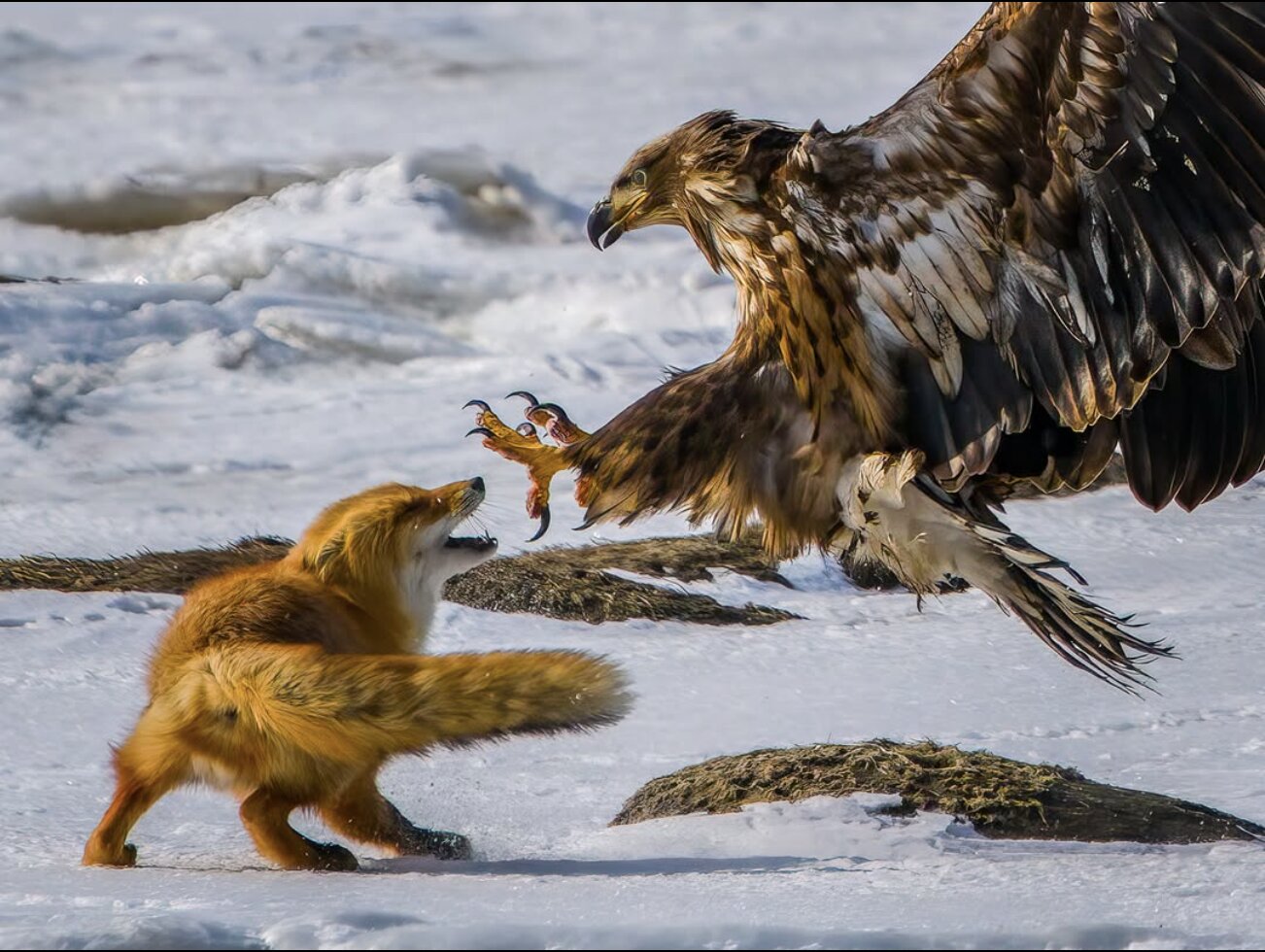
    First Place ROMwpyON – Adult Category, Red Fox Close Encounter with White-tailed Sea Eagle by Philip Wong, Animals in their Environment

    Several thematic categories structure the exhibition, including Animal Portraits, Animals in their Environment, Urban Wildlife, Underwater, and Natural Artistry. A dedicated photojournalism section introduces a documentary dimension that addresses the intersections between human activity and ecological systems. Across these categories, the images trace relationships that extend beyond individual species— predation, migration, adaptation, and coexistence appear as ongoing and lively processes within dynamic environments.

    In the Urban Wildlife category, animals appear within built landscapes shaped by human infrastructure. A fox navigating a quiet street at night or a bird nesting among industrial materials suggests the ways nonhuman life adapts within altered habitats. These scenes focus us to the forms of coexistence that unfold within cities where the boundaries between human and animal territories remain porous and unresolved. The images prompt an awareness of shared habitation, bringing into view the continued presence of wildlife within environments frequently understood as exclusively human.

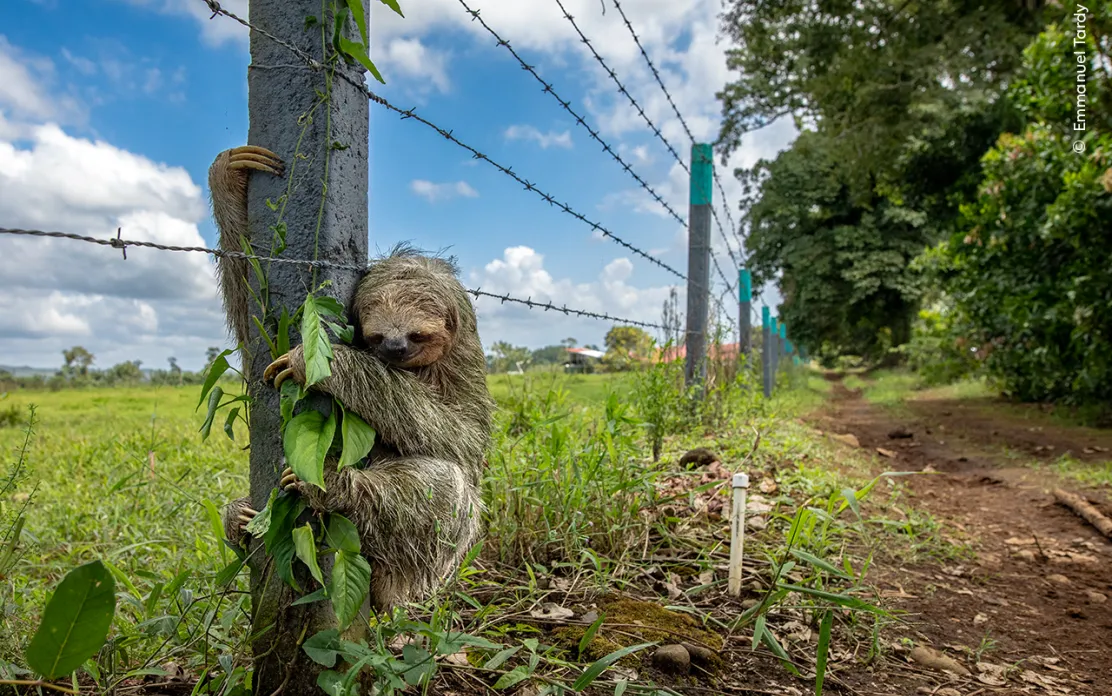
    No Place Like Home by photographer Emmanuel Tardy, France, Urban Wildlife⁠

    Underwater photographs introduce another register of perception. Light filters through ocean depths, illuminating organisms that exist beyond the reach of ordinary vision. Coral formations, schools of fish, and solitary marine creatures appear suspended within shifting currents. These images offer access to ecosystems that remain largely unseen, while also drawing us to their vulnerability, as the context of rising ocean temperatures and pollution shapes the conditions under which these environments continue to exist.

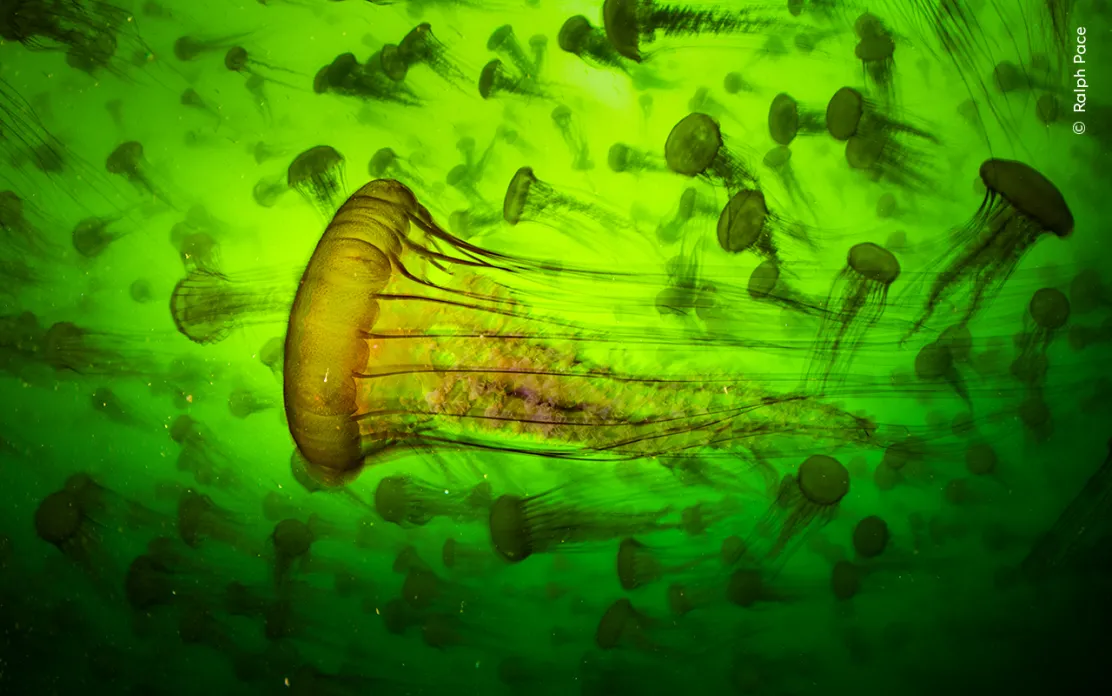
    Jelly Smack Summer by Ralph Pace, Underwater

    The exhibition also includes photographs produced by young participants across three age categories, their inclusion situating the practice of wildlife photography within an intergenerational framework. Emerging photographers contribute perspectives that reflect both curiosity and consideration of detail, their images standing alongside those of established practitioners, forming a collective body of work that expands across experience levels and geographic locations.

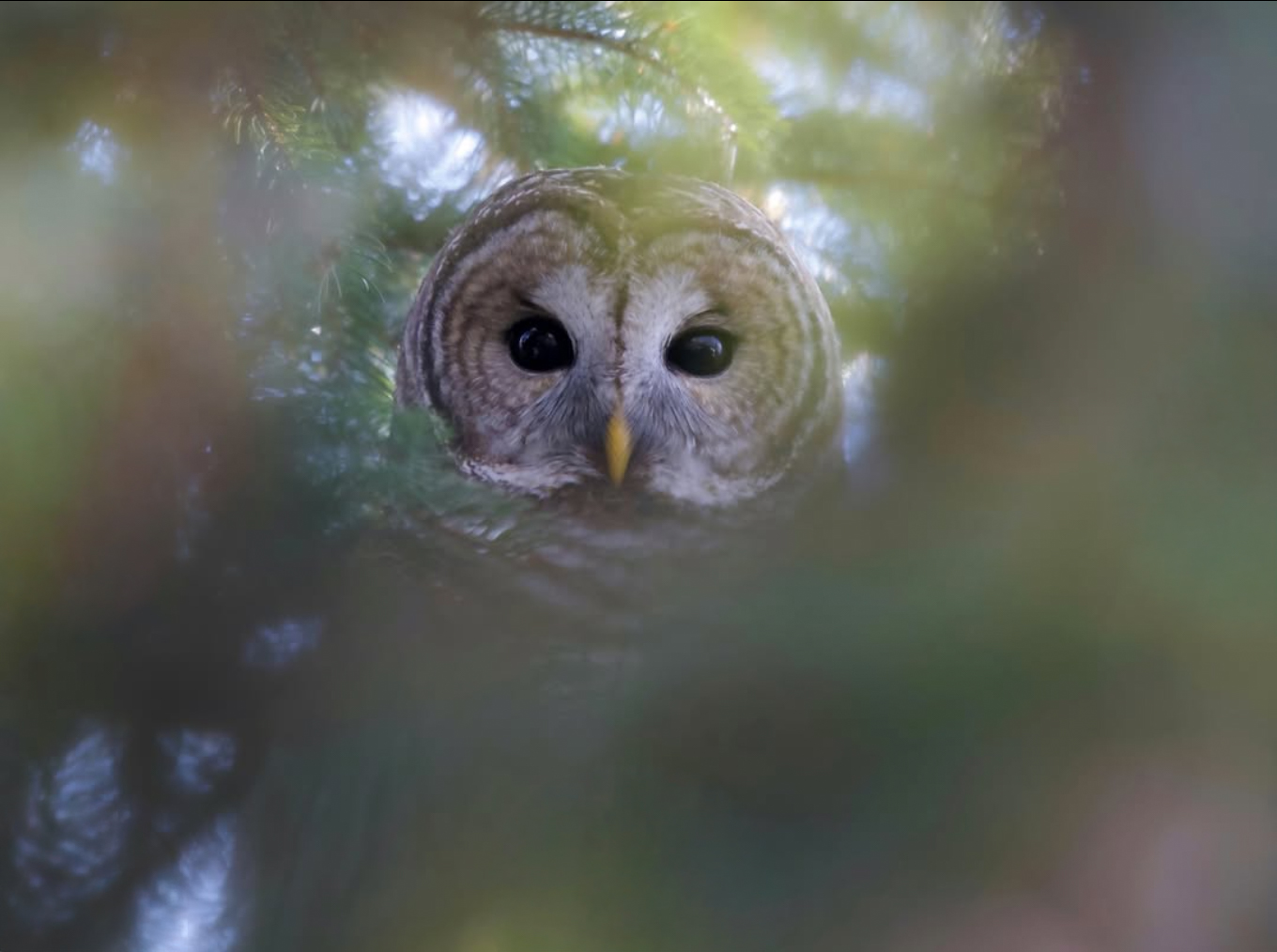
    First Place ROMwpyJR – Youth Category, The Hidden Guardian by Martin Krajc, age 14

    Ethical considerations also underpin the selection process. The competition emphasizes a truthful representation of nature, encouraging practices that respect the vitality of both animals and their habitats. Photographs are evaluated not only for their aesthetic qualities but also the conditions under which they are produced, positioning photography as a form of responsibility, where the act of image-making remains connected to the well-being of the subjects depicted.

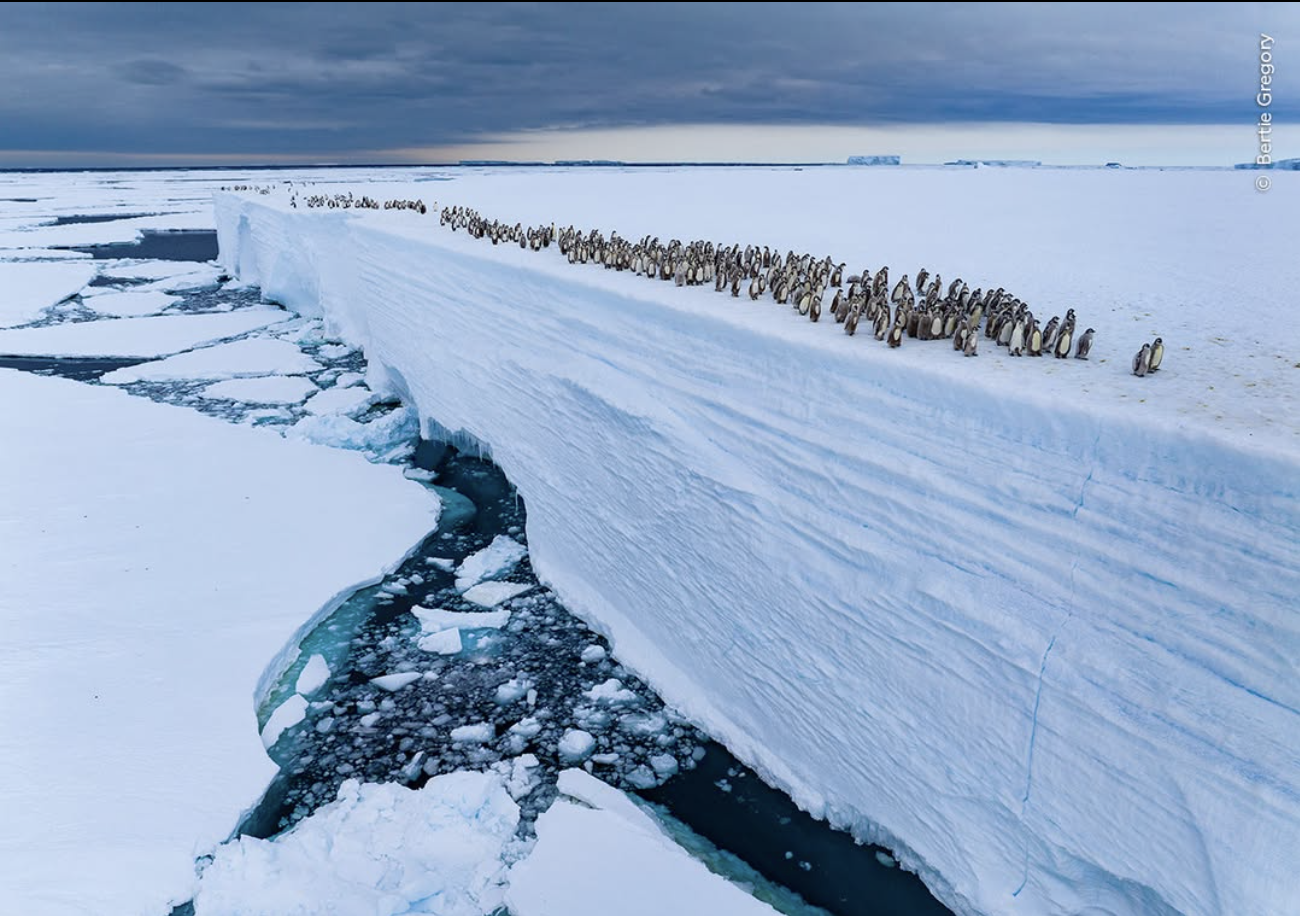
    Ice Edge Journey by Bertie Gregory, Animals in their Environment

    As the exhibition travels internationally, its presentation in Toronto marks its first North American stop of the year. Within the museum’s galleries, the photographs gather as a constellation of perspectives on the natural world, each image opening onto broader questions surrounding ecological change, biodiversity, and the conditions that shape survival across species. The cumulative force of the exhibition develops through repetition and variation, as a single image may hold a fleeting encounter or moment of stillness, yet together the photographs extend into a continuous meditation on life across environments. Patterns gradually come into view through this accumulation, where fragility and resilience register as interdependent conditions, each threaded through the shifting dynamics of changing ecosystems.

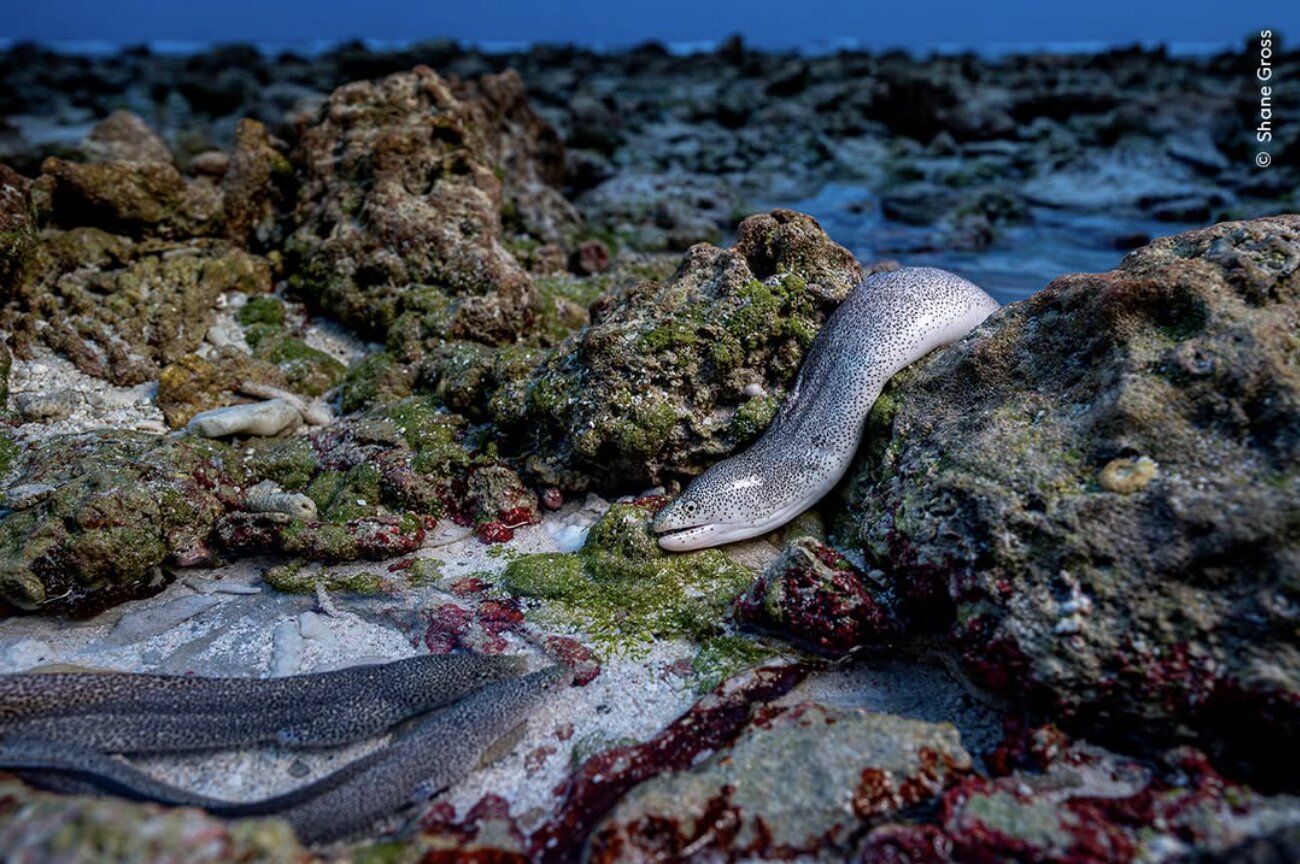
    Like an Eel out of Water by Shane Gross, Canada, winner Animals in their Environment

    In moving through the exhibition, viewers become an audience to scenes that might otherwise remain delicately unseen. The camera manages to mediate these encounters, translating distant or inaccessible environments into images that circulate within the gallery space and broader context of our cultural world. This act of witnessing carries with it an ethical dimension, prompting reflection on the relationships that connect human observers to the subjects they encounter here.

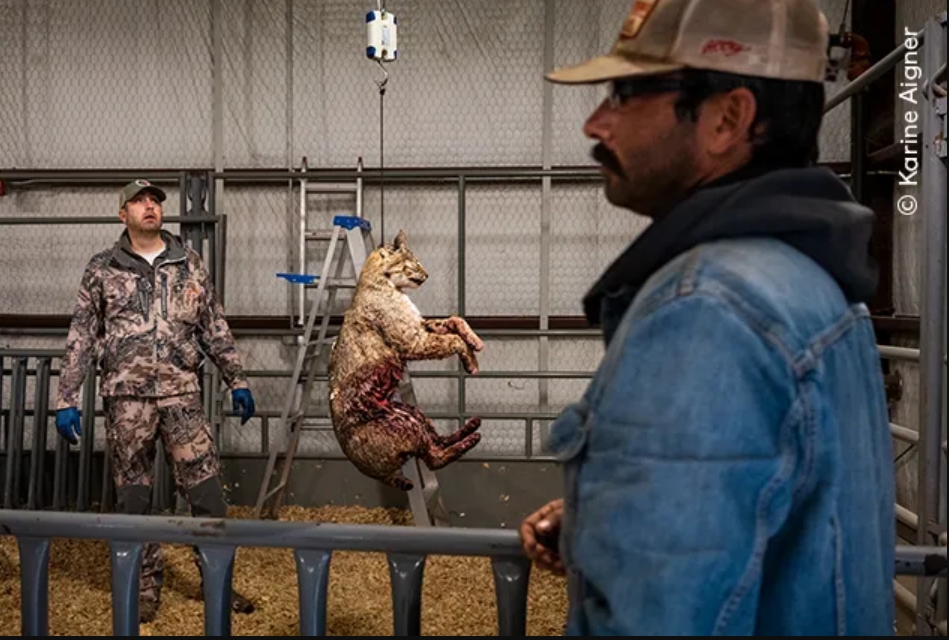
    Dead Weight (documenting an annual hunting competition in Texas) by Karine Aigner, USA, Photojournalist Story Award

    Wildlife Photographer of the Year 2025 offers an incredibly meaningful engagement with the diversity of life on Earth through the lens of photographic practice. The exhibition brings into focus the intricate relationships that define ecosystems while inviting consideration of the forces that place them at risk for harm. Through these carefully curated images, the living world appears in vivid detail as each photograph contributes to what it means to exist in a world where the dialectic of the wild is regarded as precious and necessary to keep alive. 

    Yehyun Lee

    Images are courtesy of the Royal Ontario Museum.

    *Exhibition information: Wildlife Photographer of the Year 2025, November 8, 2025 – March 29, 2026, Royal Ontario Museum, 100 Queen’s Park, Toronto. Museum hours: Tue – Sun 10 am – 5:30 pm.

  • Montina Hussey at Riverdale Hub Gallery

    MINDSCAPES—When the self splinters, nature repairs

    Montina Hussey is a Toronto-based artist. She graduated with a BFA in drawing and painting from OCAD University in 2016, and since then she has shown her endless talents through painting murals, competing in multiple art battles, organizing art shows and charities, stand-up comedy, film, as well as through a vintage boutique of her own in Hamilton. A true juggler of many things at once, you wonder “how does she do it?” as a mother and an entrepreneur.

    Montina Hussey in front of her painting Honey Skies, (Diptych), oil on canvas, 16 x 28 inches. Photo: Polyna Alexseev

    It all began with a picture from a 1920s archive, a forgotten story, a single memory, a distorted dream, something to fill the cracks along the wall. “Since I don’t have all the facts about my family’s past,” speaking of her Metis ancestry, and her family’s mental health history, “I let my intuition take the lead.” Each painting unfolds through thick brushstrokes and wet-on-wet gestures (alla prima), a quiet but persistent tension between artist and canvas that never dries up. Nothing ever feels like it is truly “won” or finished, but rather a relief, a deep and freshing breath of air. If anything, there is always an opportunity to go back, paint it over and start again.

    Montina Hussey, Mindscape, oil on canvas, 24 x 24 inches

    A flowerpot will never look the same once shattered, but that does not mean it loses its function. In the same way, Hussey’s work suggests that brokenness is not the end. If there is light, if there is a willingness to gather the fragments and bind them together, then healing becomes possible. Painting memories and dreams becomes an act of binding, transforming what is fractured into something that can be held once more.

    Montina Hussey, Ambiguous Play, oil on canvas, 28 x 24 inches

    Motherhood marked a turning point in her art. Her son, a gift she describes as almost divine, reintroduced her to imagination and play. Her earlier works lingered in distorted, hazy portraits, but something began to shift. The darkness was not erased, it was answered. Golden light, expansive colour, and landscapes began to emerge, scenes that feel like childhood dreams returning to the surface. Zesty orange paths, trees saturated with honey-coloured leaves and twigs, cotton-candy skies, and portraits decorated with floral patterns soften what once felt heavy, offering a space where memory no longer weighs, but lifts.

    Montina Hussey, Mother and Child, oil on canvas, 24 x 24 inches

    Since the moment her son could walk and hold a brush, as young as 6 months old, they have painted together. These collaborations are shared not just as artwork, but as an invitation to remember a childlike state that is expressive, curious, and unguarded. There is a quiet longing in that idea, because there is nothing a mother would not give to step, even briefly, back into that innocence.

    Hussey’s journey wasn’t, and still isn’t, easy. Through every hardship including abuse, broken relationships, and mental illness, her son growing past the phase of spontaneous expression and moving on to discover his interests as a boy at his age naturally does, the artist finds herself once again in a dark phase, however she is still holding on to her colourful palette.

    Montina Hussey, Splitting, mixed media on canvas, 36 x 28 inches

    Hussey is sailing through every storm to find the sun, even if it’s a tiny light, small as a lit candle in an endless dark hallway. In her own words, “Even through your darkest days, you can transform something to be somewhat beautiful”. And this simple yet self-reflective message is enough to help us remember not to give in to the darkness of trauma, but instead, to fill our lungs with joy and play through creative means like composing, painting or writing.

    Montina Hussey, Whimsy Woods, mixed media on canvas, 108 x 48 inches

    Special thanks to Riverdale Hub’s curator and owner, David Reed who took the time to set an exclusive interview with Montina Hussey on the day of her reception, as well as an exclusive tour of the gallery and its rich history and its dedication to the community and beyond.

    Polyna Alexseev

    Images are courtesy of Riverdale Hub Gallery.

    *Exhibition information: Montina Hussey, Mindscapes, March 4 – 28, 2026, Riverdale Hub Gallery, 1326 Gerrard St. East Toronto. Gallery hours: Tuesday – Saturday, 10:30 am – 5:30 pm.

  • Interview with Kelly Rose Adams

    Interview with Kelly Rose Adams (KRA) by Phil Anderson (PA)

    Kelly Rose Adams in front of her paintings. Photo: Phil Anderson

    I recently had the pleasure of talking to artist Kelly Rose Adams who I had saw at last year’s Artist Project. She will present new work in this year’s Artist Project in its new location at the Enercare Centre. Adams is spending more time creating art as a full-time artist having worked for several years as Kent Monkman’s studio manager, which she described as an amazing experience. She has been doing self portraits annually for 10 years now as well as painting her surroundings.

    KRA: Lately my art practice is centered around using oil painting as a form of diary keeping. Rather than planning compositions in advance, I remain open to my environment, allowing small, meaningful moments to reveal themselves to me. I work primarily from photographs, often taken on my phone, which function as quick, instinctive acts of noticing. Painting these images in a realistic style introduces an opportunity for deeper contemplation. What was once fleeting becomes the subject of hours of sustained consideration. This deliberate slowness transforms documentation into a practice of gratitude, countering the numbing effects of our fast-paced existence.

    KRA: I feel very lucky to have participated in OCAD’s now retired Florence program in the 2016-2017 academic year. The experience was like an 8-month artist residency, with a huge focus on being in the studio, working. I got to develop a routine there that I’ve been trying to replicate at home ever since. Some habits I picked up there are still present in my practice, like understanding the importance of scheduling dedicated studio time, and maintaining close relationships with creative friends to keep each other motivated and inspired. 

    KRA: In my current body of work, I am only painting scenes from my everyday life that unfold organically. I end up painting streets in the Junction neighbourhood or my favourite spots like The Local on Roncesvalles because that’s where I’m spending my time. My favourite thing about my current way of working is that it helps me to notice small moments of beauty no matter where I am.

    Kelly Rose Adams, Aftermath, oil on canvas,18 x 24 inches

    KRA: I have found that looking for beauty in the mundane is a habit you can practice, and it gets easier the more you do it. I began working this way because I felt burnt out from trying to invent artistic concepts when world events around me felt so hopeless. Painting the smallest moments of beauty even on a hard day helps me have the energy to not give into apathy.

    KRA: Absolutely! Remaining open to things around me has helped me feel more inspired than ever. Years ago, I used to think of a concept for a painting, then I’d go out to stage that scene in order to paint it. I am much more interested now in seeing what the world has to show me when I let myself observe and really notice things.

    Kelly Rose Adams, Snapshot, oil on canvas, 36 x 48 inches

    KRA: Even though I am painting things from my own life, I am pleasantly surprised by how often people identify with the things I paint. It is a nice reminder that in our most private and intimate moments our human experiences can be the most similar.

    I’ve been painting one self-portrait every year for the last 10 years. The 10th self portrait will be at the Artist Project this year! I started doing it to track my painting ability, but over the years it has become more about taking a moment for self reflection. With each painting I’m thinking about how I’m changing, and why I continue to make art.

    Kelly Rose Adams, Self Portrait at 29, oil on canvas, 36 x 48 inches

    KRA: I grew up in Newmarket but have called Toronto home for the last 12 years, and almost all my paintings are of the things I’ve experienced here.

    KRA: I’m so excited to be returning to the Artist Project! Last year I met so many amazing visitors and artists. For years before I exhibited in the Artist Project it was one of my favourite annual events in the city. I hope to be doing the Riverdale Art Walk for the first time this summer as well. 

    Images are courtesy of the artist.

  • ECO ART at Gallery 1313

    ECO ART 2026 thoughtfully addresses environmental issues, with each piece taking responsibility and accountability to highlight the destructive relationship between human-made materials and nature. However, it does so by using manufactured materials and human skill–a seemingly ironic approach considering that the artists aimed to emphasize how humans have jeopardized the future of our world. Yet, upon further reflection, their works convey a unified message that encourage viewers to ask: if we caused the damage, can we also repair it?

    Shannon Wallace, Anemone for a mantis under the h20, digital edit of a photograph, 2020

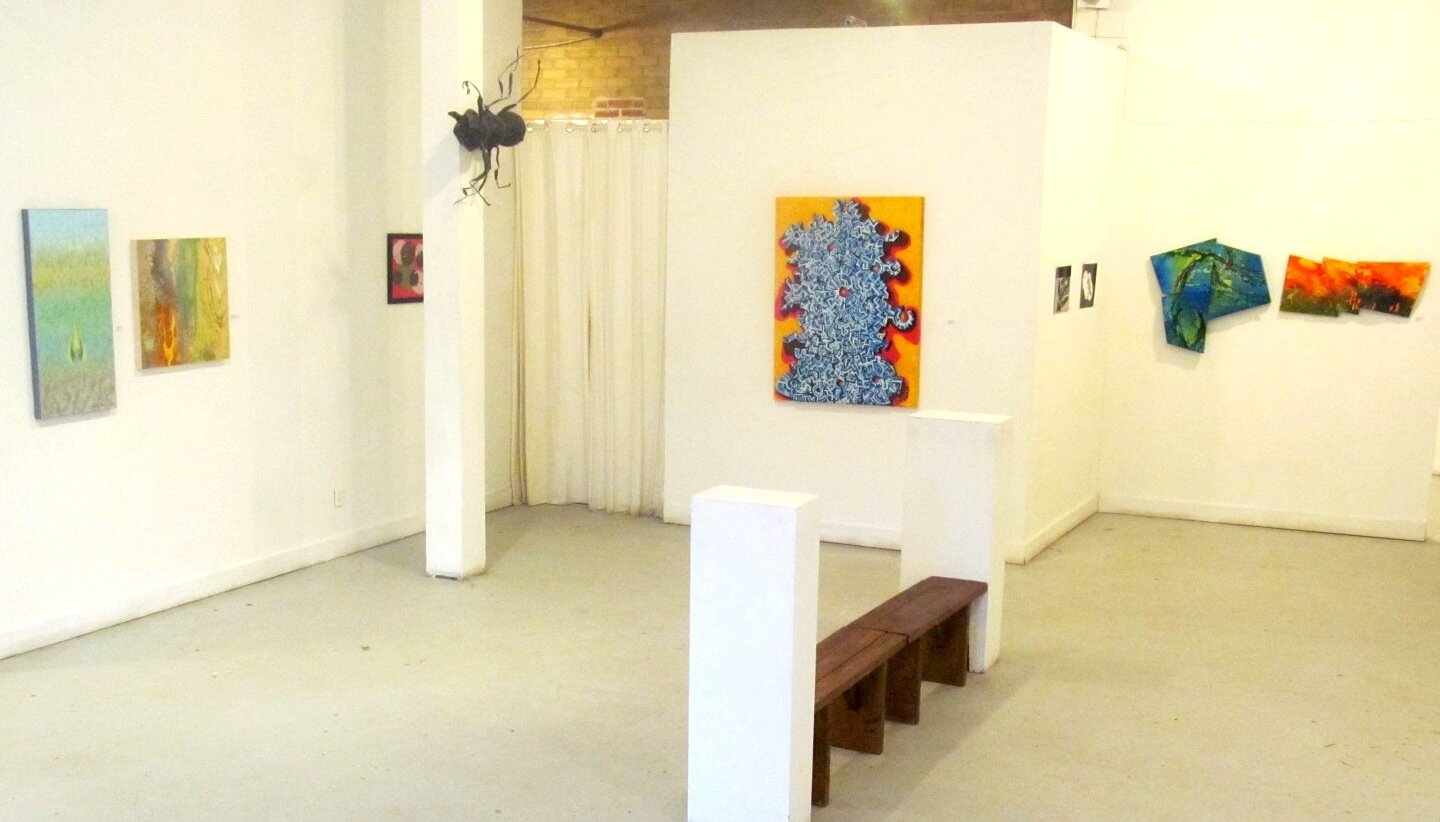
    This annual exhibit at Gallery 1313 has collaborated with environmental organizations such as TEA (Toronto Environmental Alliance) and The Green Belt Foundation to organize exhibitions on various environmental issues. The show features a diverse selection of works by both national and international artists, all sharing a common concern: the state of the environment. Phil Anderson considers this theme in the exhibition’s curation by presenting various interpretations of the sentiment through different styles, media, and perspectives.

    Installation view of ECO ART at Gallery 1313. Photo: Phil Anderson

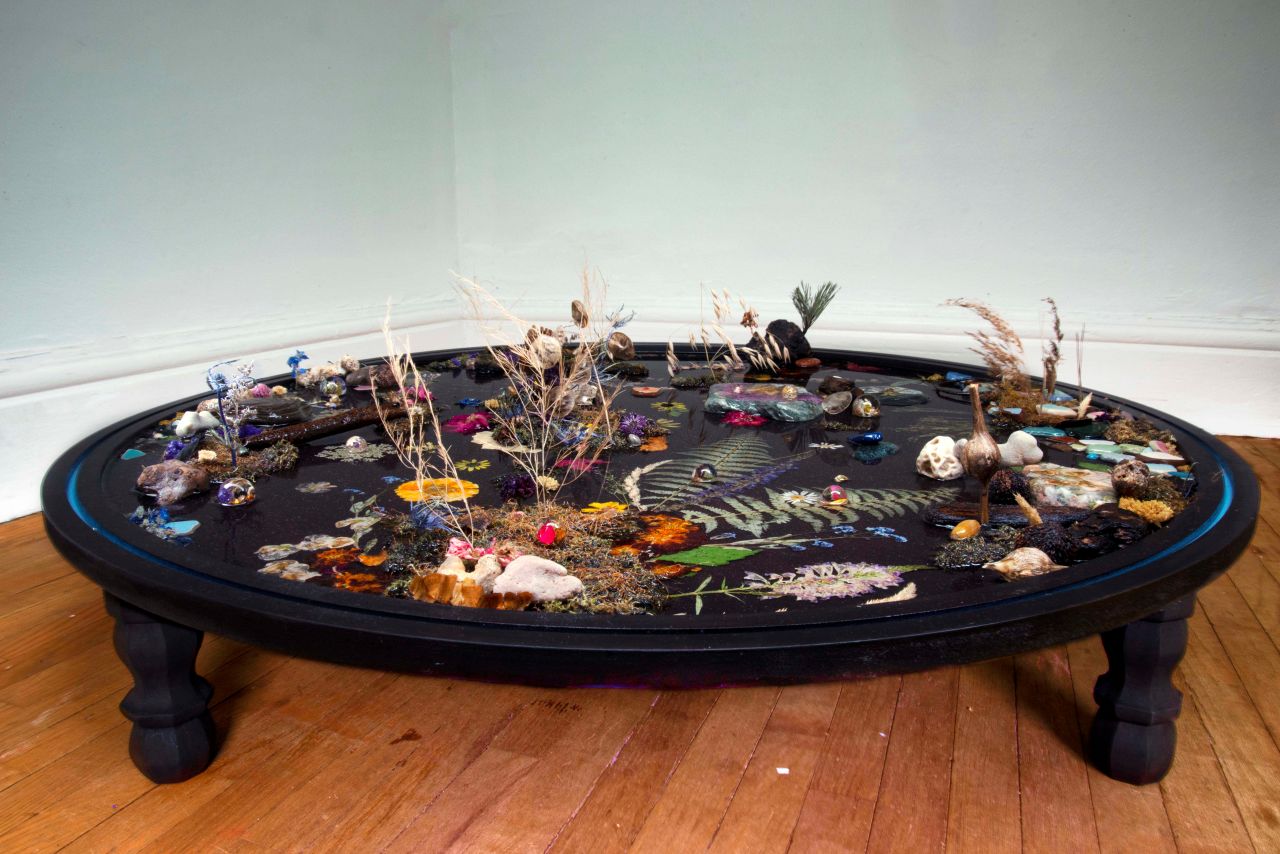
    Visitors walking in will likely be drawn first to Emily Pleasance’s imitation of a pond. I SPY, Terraforming (2024) was made from found natural objects, which the artist has composed in reference to the I SPY children’s book series. Pleasance’s pond invites viewers to peer over the low wooden table, to engage with nature from a childlike perspective, to simply contemplate its beauty. The work blurs the line between a close-up landscape and an entire planet, encouraging curiosity about our relationship with the natural world and the possibilities within it.

    Emily Pleasance, SPY, Terraforming, 2024, found natural objects (unaltered), resin, wood, 48 x 48 x 8.50 inches

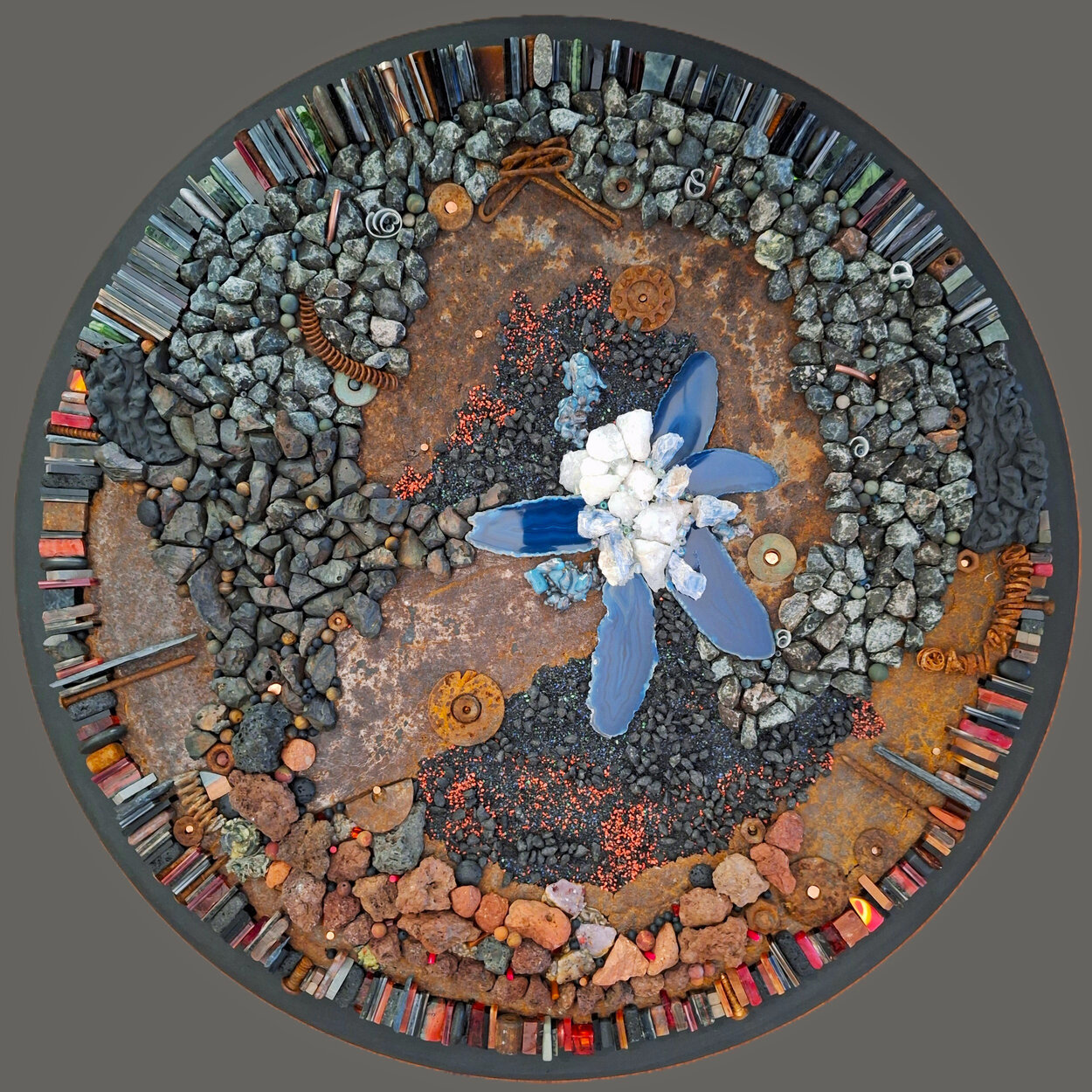
    Dire Consequences (2024) by Patrizia Brasch similarly sets out to consciously imitate what we have lost, using a mix of natural and industrial materials such as glass, cement, quartz crystals, coloured sand, lava rock from Flagstaff, agate slices, nails, and other metals. The artist states that Dire Consequences symbolizes climate change caused by human-produced greenhouse gases. Its centerpiece depicts the polar regions and melting glaciers, illustrating how their disappearance leads to habitat destruction, droughts, and wildfires that threaten life on Earth. In this context, the work powerfully captures the urgency of the climate crisis, not only warning about the current state of our environment but also openly recognizing who is to blame– and the need for us to change.

    Patrizia Brasch, Dire Consequences, 2024,corroded metal including brake shields, washers, hex nuts, screws and nails, agate slices, quartz crystals, kyanite, asphalt pebbles from the streets around my house, lava rock from Flagstaff, slag from Sudbury*, jasper beads, lava beads, smalti, stained glass, metal shavings, copper nails, aquarium gravel, coloured sand, fused glass, and cement, diameter 18 inches

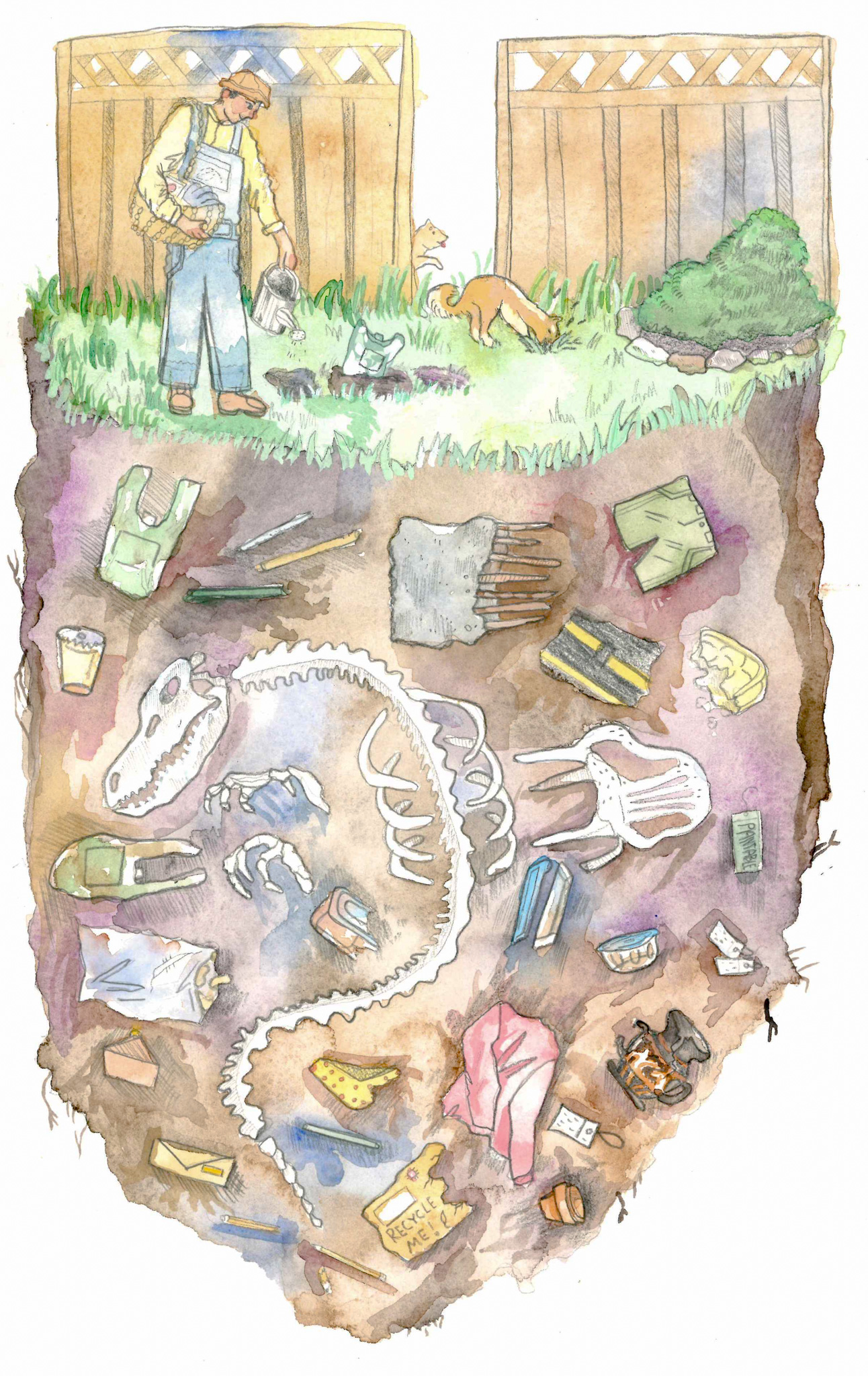
    The insidious effects of climate change and human efforts are documented in Grace Vali’s Green Wash It Away (2024). Vali comments on the false advertising of biodegradable products, which exploit the desire of consumers to be environmentally conscious, but many of these items will never actually decay–this is called greenwashing. The play on words in the title, paired with the humorous yet chronologically significant fossils, shows just how long these items actually take to decompose. From another perspective, Vali’s piece also shows how the world records human life by collecting a cache of toxic artifacts. This idea raises a question about our lack of responsibility and contribution to environmental harm: why do we bother to forget about belongings? What makes us see them as no longer our responsibility to preserve or store? Like climate issues, taking accountability for what we create, own or leave behind is our problem to solve–not the Earth’s.

    Grace Vali, Green Wash it Away, 2024, gouache on paper, 12 x 15 inches

    The message of environmental awareness, particularly regarding human-made products, is conveyed through unique artistic approaches. For instance, Shannon Wallace uses digital editing and language to portray animals in the wild, blending anthropological and technological insights. Similarly, Paul Brandejs mimics the artistry of spider webs with wire, while Beverly Couse takes a strong stance on man destroying nature, which he is ultimately part of, in her painting Homage to Murdered Eco-Activists.

    Beverly Couse, Homage to Murdered Eco-Activists, 24 x 34 inches

    I recommend visiting the ECO ART 2026 exhibition at Gallery 1313, as it offered me valuable insights into my environmental impact—both positive and negative.

    Text and photo: Antonella Pecora Ruiz

    *Exhibition information: ECO ART, 2026, March 4 – 15, 2026, Gallery 1313, 1313 Queen St West, Toronto. Gallery hours: Wednesday – Saturday, 1 – 5 pm, Sunday 1 – 4 pm.

  • Marigold Santos at Patel Brown

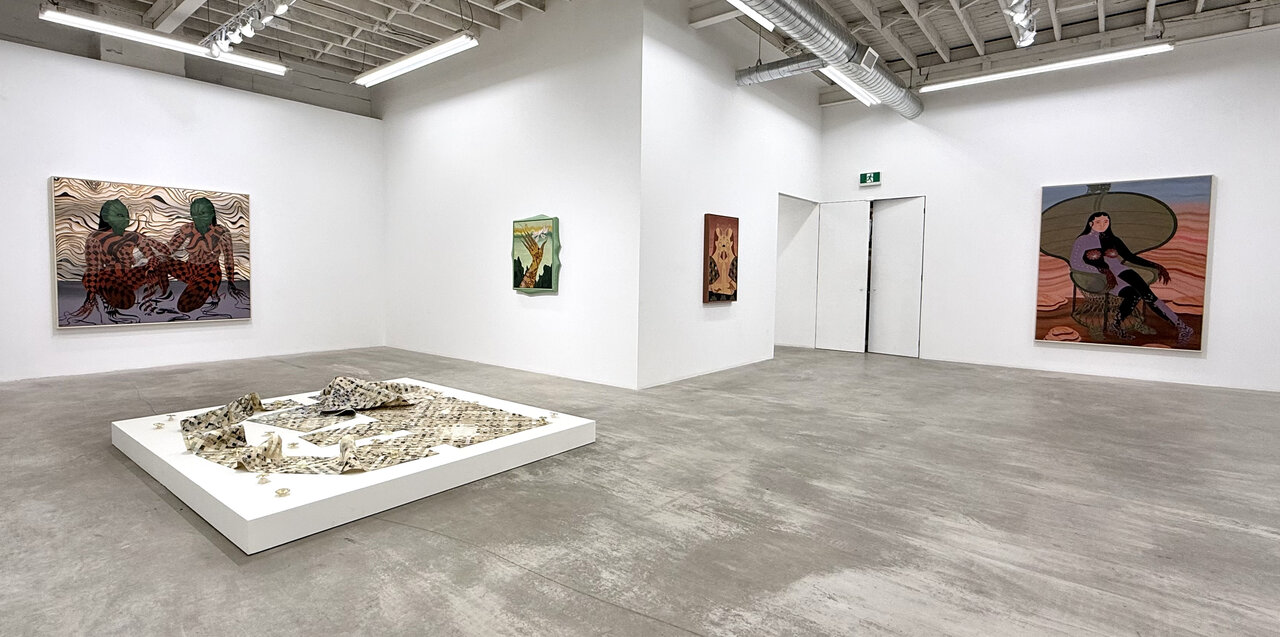
    Vanda sanderiana. Rafflesia arnoldii. Nepenthes. Each of these are examples of epiphytic plants: a kind of plant living on another plant, bolstering biodiversity without a parasitic relationship. This dynamic is explored in Marigold Santos’ Epiphytic Elucidations at Patel Brown, with representations of the aforementioned species, featured in amazing compositions.

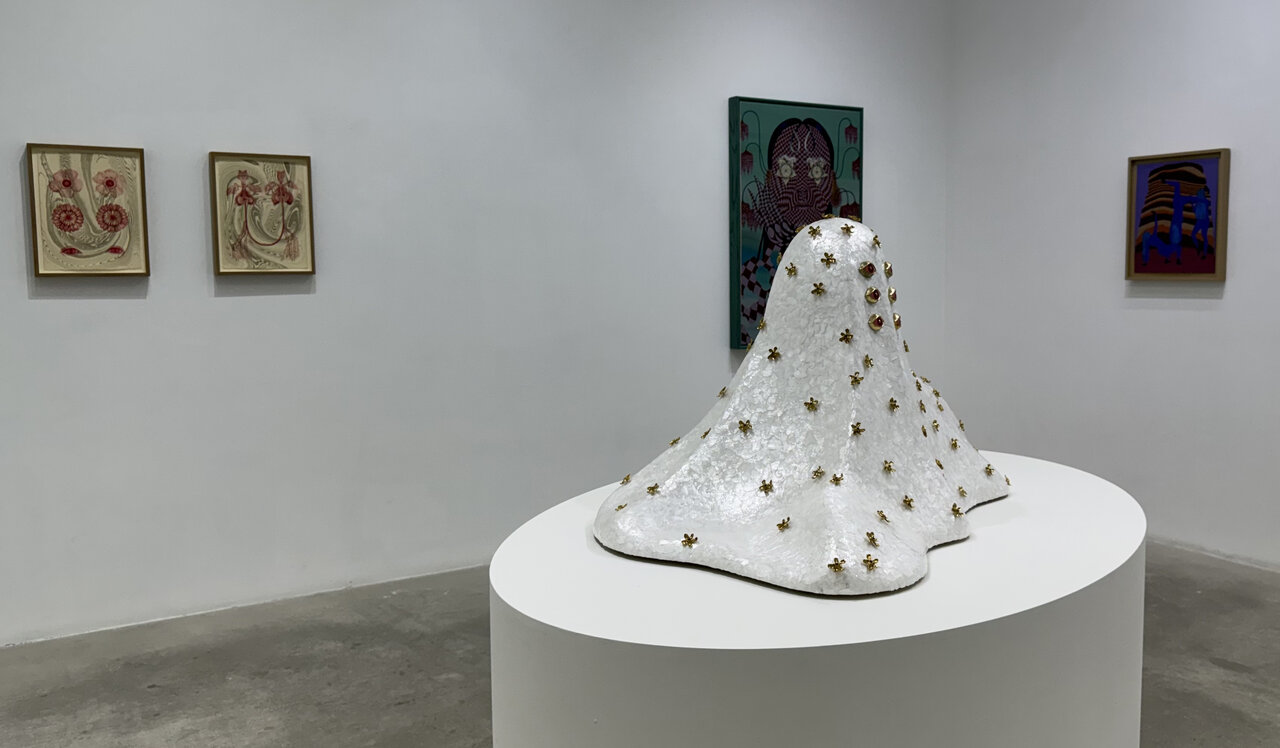
    Exhibition view of Marigold Santos: Epiphytic Elucidations at Patel Brown Gallery

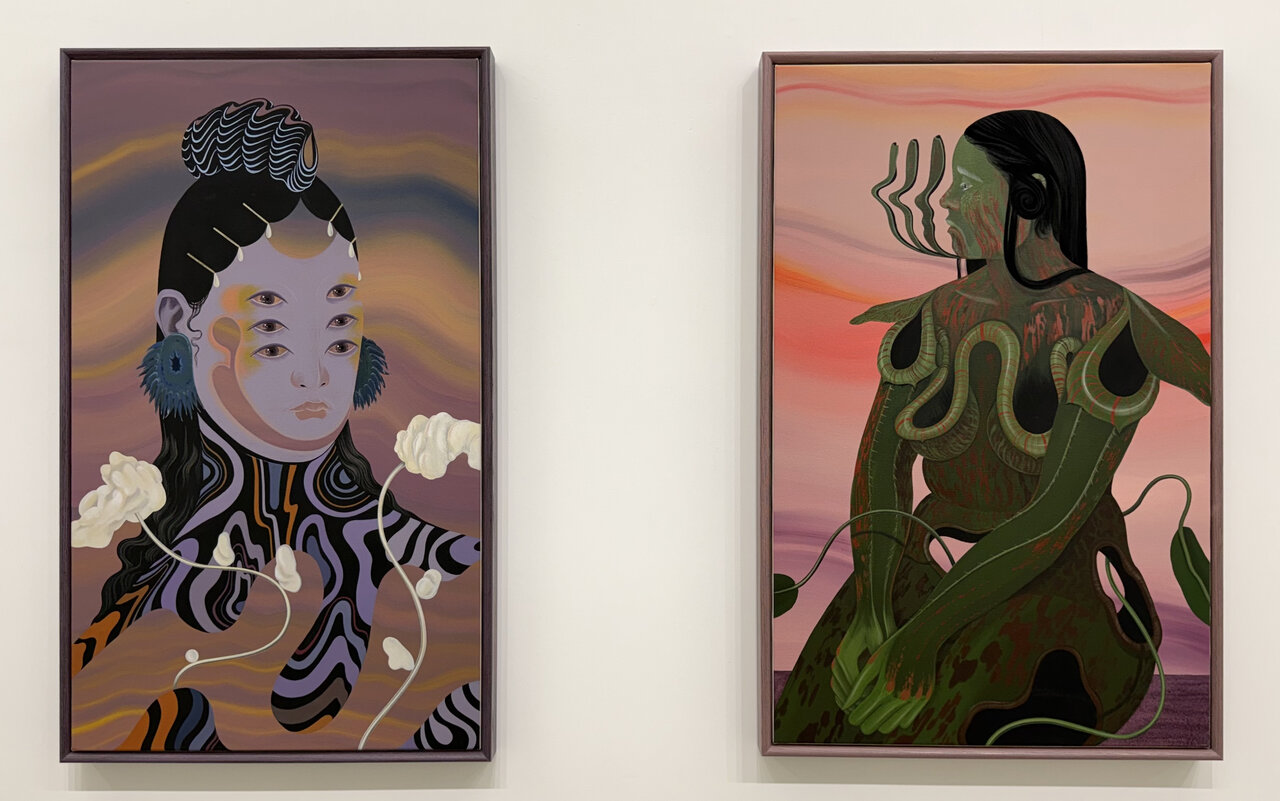
    Santos’ use of these plants facilitates deeper contemplation of how we understand the species. Take for example, reverie study: rafflesia with mammary glands and eyes (2025). The Rafflesia arnoldii is also known as the corpse flower for its malodor. Pairing the anatomical drawing of mammary glands with the Rafflesia made me consider fertility. The drawings have the appearance of petals and pistils, yet, still exist in different contexts. Rafflesia is consumed as a tea after childbirth as part of the postpartum recovery in the Indigenous communities of Northern Borneo. The watching eyes seem to be a common element in several pieces in this exhibition: gazing at a distance, appearing on orchids, behind masks, or floating on their own.

    Marigold Santos, reverie study: rafflesia with mammary glands and eyes, 2025, acrylic and coloured pencils on hand marbled paper, 15 x 11 inches

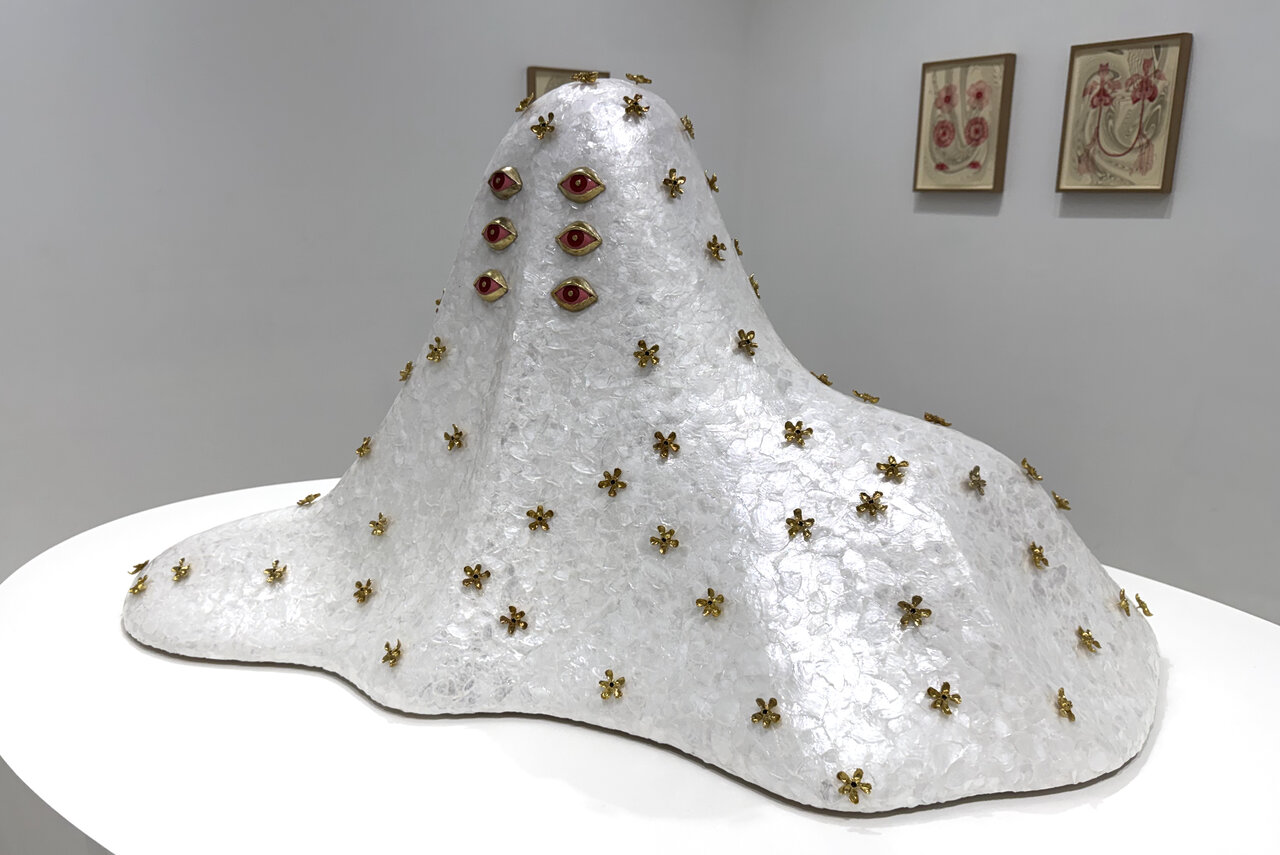
    Within the iridescent sculptural work, nacre (2025), one can recognize the form of a ghost or multo, some kind of veiled figure. The surface of the veil is composed of lustrous fragments of Capiz shell. Atop its surface are brass flowers and three pairs of eyes. The flowers are small, each containing five petals, likely Ceratorstylis retiquama, an epiphytic Philippine orchid species. The six eyes are red or bloodshot, keeping true to the description of the aswang, a shape-shifting creature from Philippine folklore. Santos often returns to folklore in her artistic practice.

    Marigold Santos, nacre, 2025, mixed media including Capiz shell, brass, enamel paint, resin, wood, 46 x 30 x 28 inches

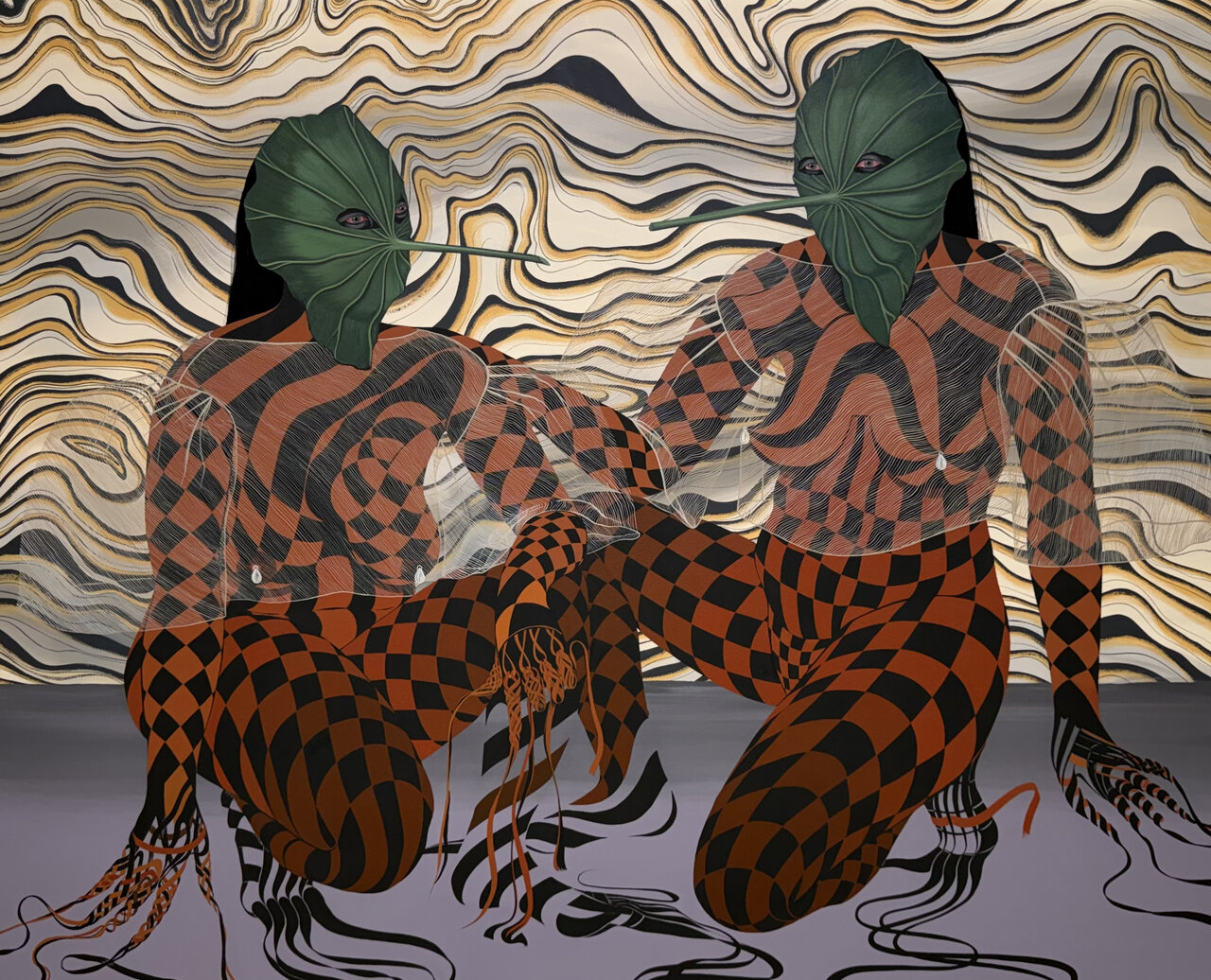
    These bloodshot eyes are also apparent in sibling shroud (lotus and balintawak) (2025). In the painting, the figures crouch next to one another, their bodies composed of woven ribbons of persimmon and black. Their hands and feet are not fully woven, instead the fibers drape along the ground and beyond the frame. The pair wear lotus masks, the stems at the base of the leaf appearing as a beak, each pointing to the other. They also seem to be wearing Filipiniana dress, as suggested by the butterfly sleeves and translucent fabric like piña silk with pearl detailing along the breast. The exhibition is rich in Filipino cultural and geographical references, such as the creatures from folklore, natural resources such as pearls and epiphytic plants, animals like the carabao, in addition to the depictions of rice terraces and chocolate hills.

    Marigold Santos, sibling shroud (lotus and balintawak), 2025, acrylic, pigment, gesso on canvas, 66 x 81 inches

    The incorporation of cultural material can also be seen in the use of language, both in the titles of the works and in the use of text in the art. Several titles include Filipino terms: kalabaw, Bilibid, balintawak. Santos also has an element of play in paintings like waling, waling, walang hiya (2025). Waling-waling being the Vanda sanderiana, an epiphytic orchid species. Walang hiya is a Filipino expression of incredulity at shamelessness. Its meaning is modified in the artwork from its original harsh insult, to mean reclaimed, refusing to surrender to shame. The title’s rhythm of waling, waling, walang hiya feels playful. However, looking at the artwork, the expression of the orchid with its focused eyes gives a different impression. The figure’s face is composed of various orchids as a visage with a smile, and painted human-like eyes. The dorsal sepal and petals resemble pink tulle, with flecks of plum at the base of each. The plum colour is also present in the lateral sepals, appearing as leopard spots and veins. Though the orchid figure has a smile, it does not extend to the eyes as they remain in a neutral attitude. This gives the impression that the waling-waling is watching the viewer, daring an approach.

    Marigold Santos, waling, waling, walang hiya, 2025, acrylic, pigment, gesso on canvas, 44 x 28 inches

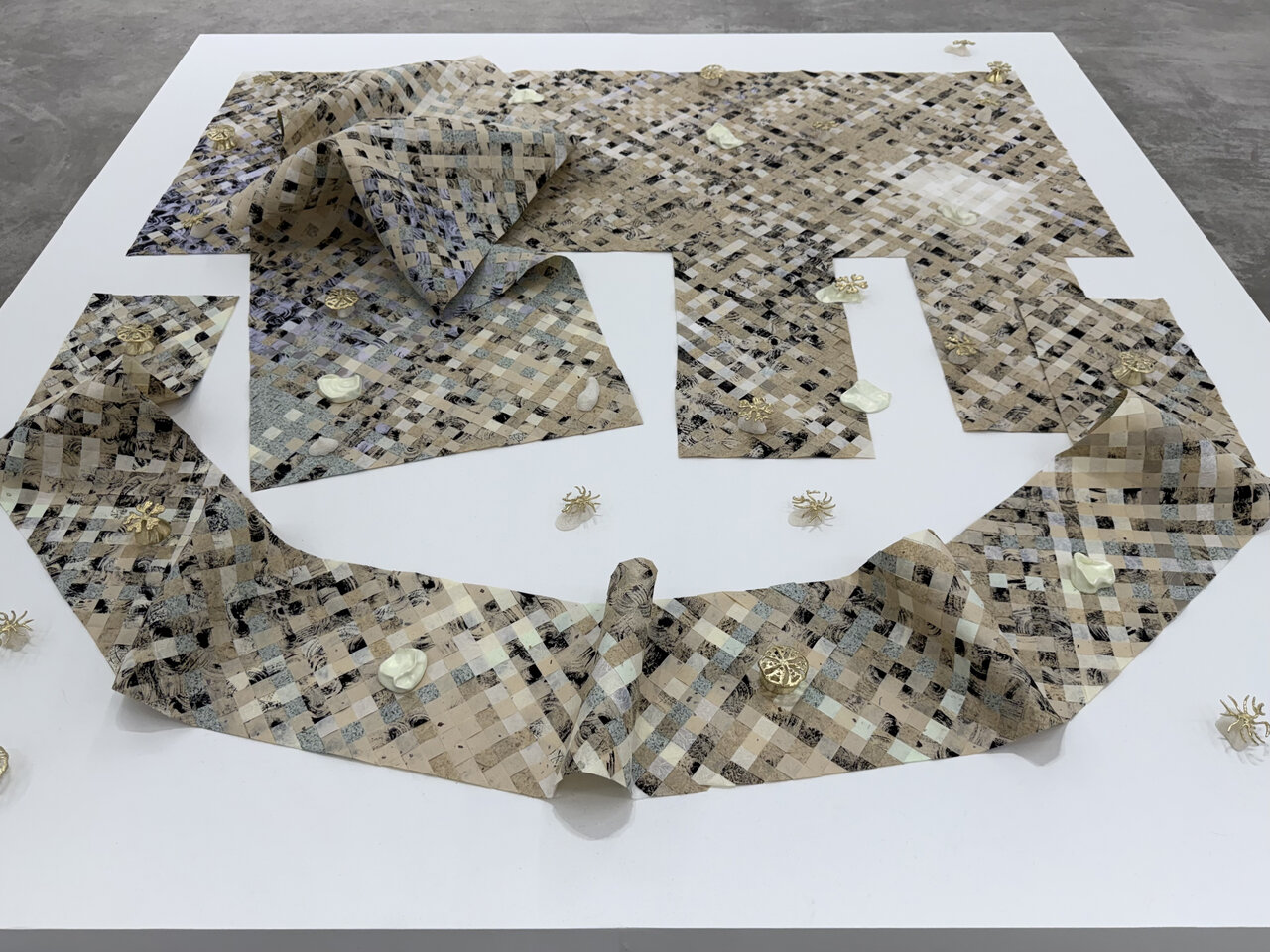
    Santos’ technical skills cannot be missed throughout the exhibition, integrating cultural weaving methods in painted form. Santos literally weaves painted paper in banig (5) archipelago (2025), recreating the traditional handwoven mats of the Philippines. Rather than having them placed on the floor of the gallery, the work is elevated on a plinth and decorated with cast brass resembling sand dollars and coral, combining the marine element with textile production. These components remind us of the Philippines and its seven thousand islands as an archipelagic nation.

    Marigold Santos. banig (5) archipelago, 2025, mixed media, acrylic on paper, cast brass, 96 x 96 inches

    Within the painting shroud banig visage of and of flora (2025), Santos creates a hypnotic display of a face using the Ilocano patterning technique, binakul. The alternating blocks of heather and mulberry maintain the illusionistic quality of the weave, while carrying out the fullness of lips, the indent of the philtrum, and the rounded cheeks, cradled by elongated hands. Rather than picturing the eyes, Santos substitutes Orbea variegata, the carrion flower or starfish plant. Like the Rafflesia arnoldii, this epiphytic flower also emits an odor of rotting flesh. The death aspect is further emphasized through the ears as Nepenthes, or carnivorous pitcher plants. However the plants are not capturing prey in the painting, instead binakul flowers are growing out of the gourd and framing the face.

    Marigold Santos, shroud banig visage of and of flora, 2025, acrylic, pigment, gesso on canvas, 44 x 28 inches

    The Nepenthes are also present in the painting shroud sitter (nepenthes nurture) (2025). The figure is a blend of juniper and seaweed greens, highlighted in certain areas with olive and mottled with coral red. Upon following the sitter’s gaze, one sees shroud watcher (giant clam off the shores of Puerto Galera) (2025) with three pairs of eyes. Adorning the ears are sea anemones, their tentacles acting as a fringe. They are decorated with pins embellished with pearls, tucked along their hairlines. Once again Santos references the Philippines, a major producer of South Sea pearls, also called “Pearl of the Orient” by Spanish missionaries in the eighteenth century. The traces of Spanish colonization are ever-present in the show, whether it is the importing of the carabao or the persecution that led to the aswang as a figure to fear.

    L-R: Marigold Santos. shroud watcher (giant clam off the shores of Puerto Galera), 2025, acrylic, pigment, gesso on canvas, 45 x 26.5 inches and shroud sitter (nepenthes nurture), 2025, acrylic, pigment, gesso on canvas, 44 x 28 inches

    Santos’ Epiphytic Elucidations prompts one to consider ways in which we can see a similar epiphytic relationship in other aspects of our lives. Does language grow upon a people, contributing to the overall culture and adding a richness akin to biodiversity? How does the reproductive process relate to the propagation of plants? Santos’ engagement with folklore and the spiritual realm, supports the idea of an epiphytic relationship, recognizing that one realm can exist upon another. Santos facilitates interactions between her depicted figures and visitors—engaging with folklore, flora, and Philippine culture simultaneously, creating a sort of biodiverse gallery environment.

    Exhibition view of Marigold Santos, Epiphytic Elucidations at Patel Brown Gallery

    Text and photo: Rashana Youtzy

    *Exhibition information: Marigold Santos, Epiphytic Elucidations, January 17 – February 28, 2026, Patel Brown Gallery, 21 Wade Avenue Unit 2, Toronto. Gallery hours: Tuesday – Saturday 10 am – 6 pm.
  • Picture This / Fundraiser Event for Contact Photography Festival

    February 24, 2026 at MOCA 

    The arts community and art collectors gathered at MOCA to support the CONTACT Photography Festival which has seen a drop in corporate funding from its lead corporate funder Scotiabank. Originally giving CONTACT a yearly half million dollars; it started weaning its funding dollars two years ago. CONTACT’s Executive Director, Darcy Killeen tried to find replacement funding from smaller corporate donations, but it wasn’t enough. This year’s festival will be a leaner event but still carry on after making cuts to staff and salaries and some programming. This is a corporate trend as Globe and Mail writer Josh O’Kane indicated in his February 23, 2026 article on funding for the arts.

    CONTACT funder and Stephen Bulger Gallery director, Stephen Bulger with guests

    For a first fundraiser in 30 years this was more than successful. Over 250 supporters and patrons came for the live and silent auction and the event surpassed its goal of $150,000 grossing over $200,000.

    Darcy Killeen, CONTACT’s Executive Director

    Killeen was overwhelmed by the show of support as he later said, “Thank you for joining us for our inaugural photography auction, Picture This! With your time, energy, and generosity, the evening became a joyful celebration of 30 years of CONTACT —  and a tremendous success in raising vital funds to support the festival and the artists. It was truly special to gather alongside such a warm and enthusiastic community of artists, supporters, and festival partners here in Toronto. The room was buzzing — and we’re still smiling about it.”

    Auctioneer and Board Member, Stephen Ranger

    Bidding for Ken Lum’s Hurry, 1995

    The bidding for works was a win for both collectors & CONTACT. Auctioneer and Board Member, Stephen Ranger, lead the charge with getting the attention of buyers in the room, not always an easy task. Works by photographers Carrie Mae Weems, Suzy Lake, Ken Lum, Edward Burtynsky, Arnaud Maggs, Lynne Cohen, Sara Angelucci, Shelley Niro, James Lahey, Steven Beckley, Dawit L. Petros, Scott McFarland, Caitlin Cronenberg and others fetched much needed dollars for CONTACT.

     Sara Angelucci and Edward Burtynsky

    Collector Kenneth Montague even had some bids on offering a tour of his collection at his home.

    Kenneth Montague with a guest

    There were other pledges of support that helped raise money. Edward Burtynsky, also a board member, had a work in auction Rainforest #3 which fetched over $30,000 alone.

    Edward Burtynsky, Rainforest #3, Olympic National Park, Washington, USA, 2024, pigment inkjet print

    The $250 ticket to fundraiser gave supporters a great cocktail reception well catered and a opportunity to bid on some wonderful works of art. Unfortunate that the CONTACT Festival is short of funding but kudos for putting on a successful fundraiser and no doubt there will be more to come as art organizations reach out and get more creative in sourcing much needed arts funding.

     Text and photo: Phil Anderson

  • Ranbir Sidhu: No Limits at the AGO

    Toronto-based artist Ranbir Sidhu brings forth No Limits, a monumental exhibition on Level 2 of the AGO. Showcasing two decades of mastery in metalworking, Sidhu blends artistry, identity, and spirituality through striking sculptures that challenge our perception. Light becomes an active element in his works bending, scattering, and reflecting across polished surfaces to create what he calls “a shifting field of perception.” Each piece invites quiet contemplation and rewards viewers who take the time to look deeply and reflect.

    Installation view of Ranbir Sidhu: No Limits at the AGO

    Among the first works viewers encounter is a small but powerful mask displayed in a glass container. To Sidhu, it is not an object of protection but a meditation on what identity means in an image-obsessed world. Echoing English sculptor Henry Moore’s postwar question, “What remains after war?”, Sidhu pushes the conversation forward: “What remains after technology?”

    Ranbir Sidhu, Mask as Monument, 2020, fiberglass, aluminized Nomex, acrylic paint, stainless steel, 24-karat gold

    Sidhu’s art builds bridges between histories and horizons. Drawing inspiration from Sikh philosophy, postwar sculpture, monumental design, and visions of a futuristic world, his materials: steel, aluminum, gold, and niobium embody both strength and transformation. “Steel is strong, reflective, and timeless,” Sidhu notes, yet under his hand, it becomes something more: a vessel of memory and a mirror to the sacred. Metals, for him, hold both precision and possibility. Stainless steel captures infinity, gold evokes spiritual radiance, and niobium’s shifting colours seem alive. Through these materials, Sidhu reconciles heritage with modernity—an artist forging connections between the earthly and the cosmic.

    Among the exhibition’s highlights is Fortress of Memory, a deeply personal work inspired by the Battle of Saragarhi of 1897, where 21 Sikh soldiers fought bravely to the end. Each of the 21 metal sculptures in this series represents a fallen soldier, modeled after the Dastar Bunga—a Sikh turban style meaning “towering fortress” in Persian and Punjabi. The work is both memorial and monument, a poetic intersection of cultural identity and remembrance.

    Ranbir Sidhu, Fortress of Memory, 2025, installation detail, stainless steel, marble

    Another centerpiece, Asteroid 3033, X1 (2025) merges natural and technological imagery. Composed of aluminum and gold-plated steel, the structure resembles a massive azurite crystal. With internal LED lights, fiber optics, and a soundscape blending Indian classical and electronic music, it feels alive—part machine, part celestial body. Sidhu imagines it as a vessel both descending to ward Earth and ascending into the atmosphere, carrying the planet’s essence into the future.

    Ranbir Sidhu, Asteroid 3033, X1, 2025, stainless steel, aluminum, gold foil, fiber optics, LED, crystal (above) and detail (bellow)

    Another stunning piece, Odyssey, is an engineering and aesthetic marvel. Weighing 5,000 pounds and resting delicately on four points, it’s built from over a hundred mirror-polished and gold-plated stainless-steel spires. Its design draws from Byzantine domes, Islamic minarets, Renaissance cupolas, and Sikh sacred architecture, creating what Sidhu calls a “spiritual cartography.” Seen in person, its reflective surfaces create endlessly shifting interactions of light and space—an experience at once architectural and divine.

    Ranbir Sidhu, Odyssey, 2025, stainless steel, 24-karat gold, LED, fiber optics

    Together, Sidhu’s works create an atmosphere both monumental and meditative. They reflect not only on one another but on the viewer’s own sense of being within space and time. For Sidhu, “form is only the beginning.” What matters most, he says, “is the resonance it awakens—the silence, the memory, the infinite.”

    Visitors have until January 3, 2027, to encounter No Limits, an exhibition that turns sculpted metal into living light, inviting everyone to see how art can turn memory into monument and reflection into revelation.

    Text and photo: Nusrat Papia

    *Exhibition information: Ranbir Sidhu, No Limits, January 16, 2026 – January 3, 2027, Art Gallery of Ontario, 317 Dundas Street West, Toronto. Museum hours: Tue and Thurs 10:30am – 5pm, Wed and Fri 10:30am – 9pm, Sat and Sun 10:30am – 5:30pm.

  • Lucy Raven at The Power Plant

    Lucy Raven at The Power Plant

    What does water remember? We can trace its persistence breaking down boulders into rocks. We witness water forging a path, eroding the land to make its way. Despite the extent of human intervention, the land, the water, and the Earth persist. The content of Lucy Raven’s Murderers Bar is a reminder of the ever-enduring tenacity of nature.

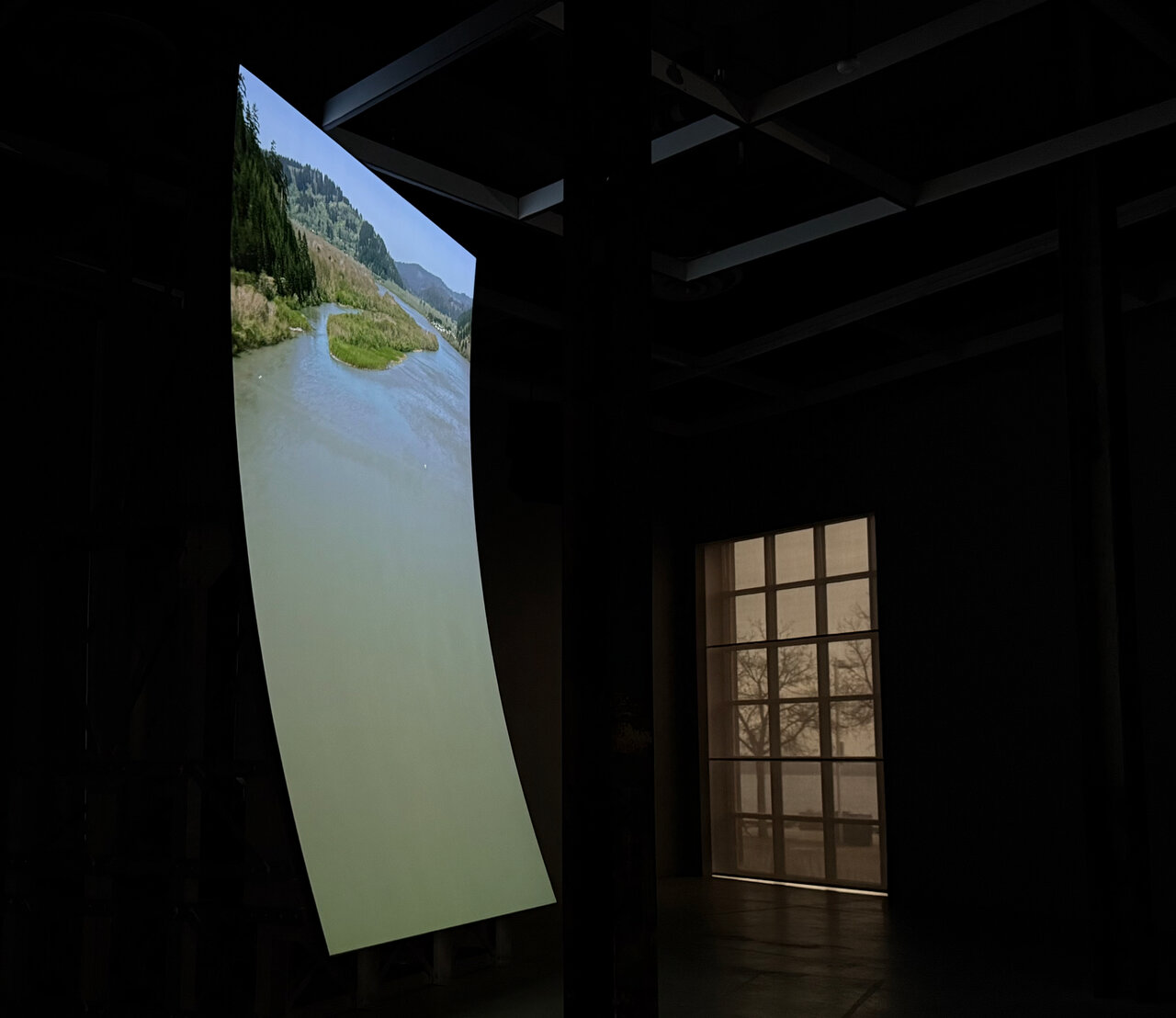
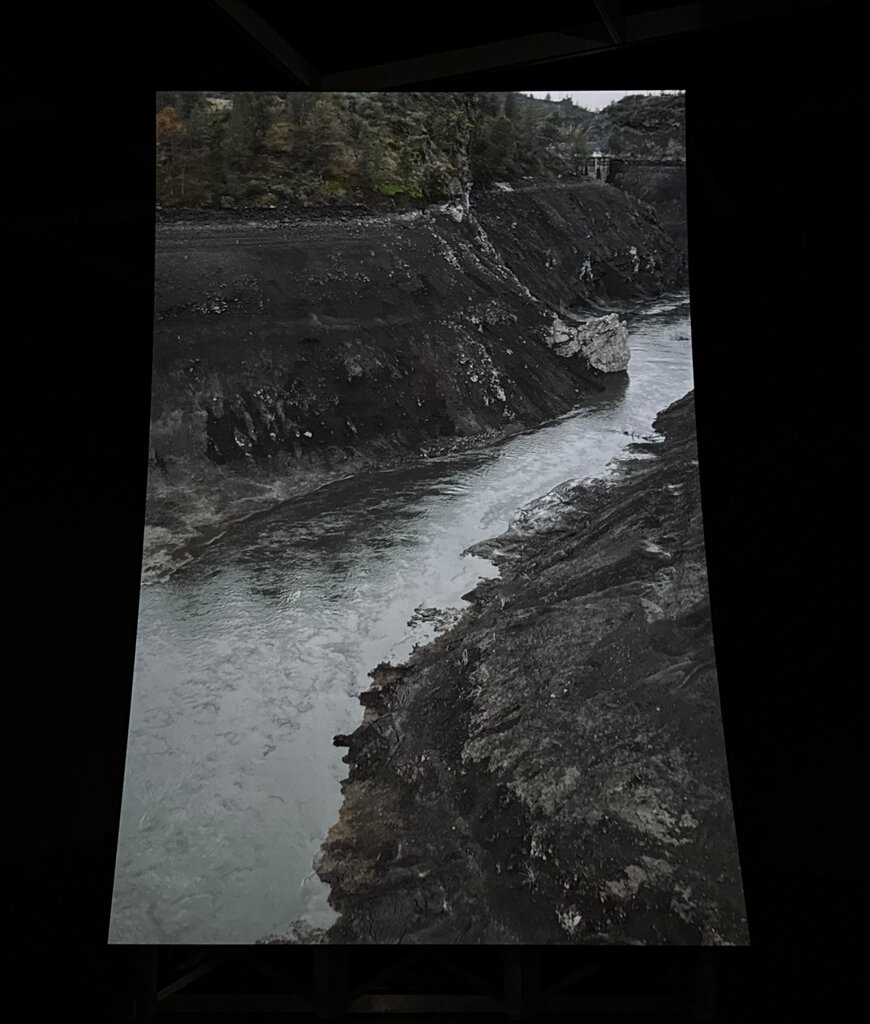
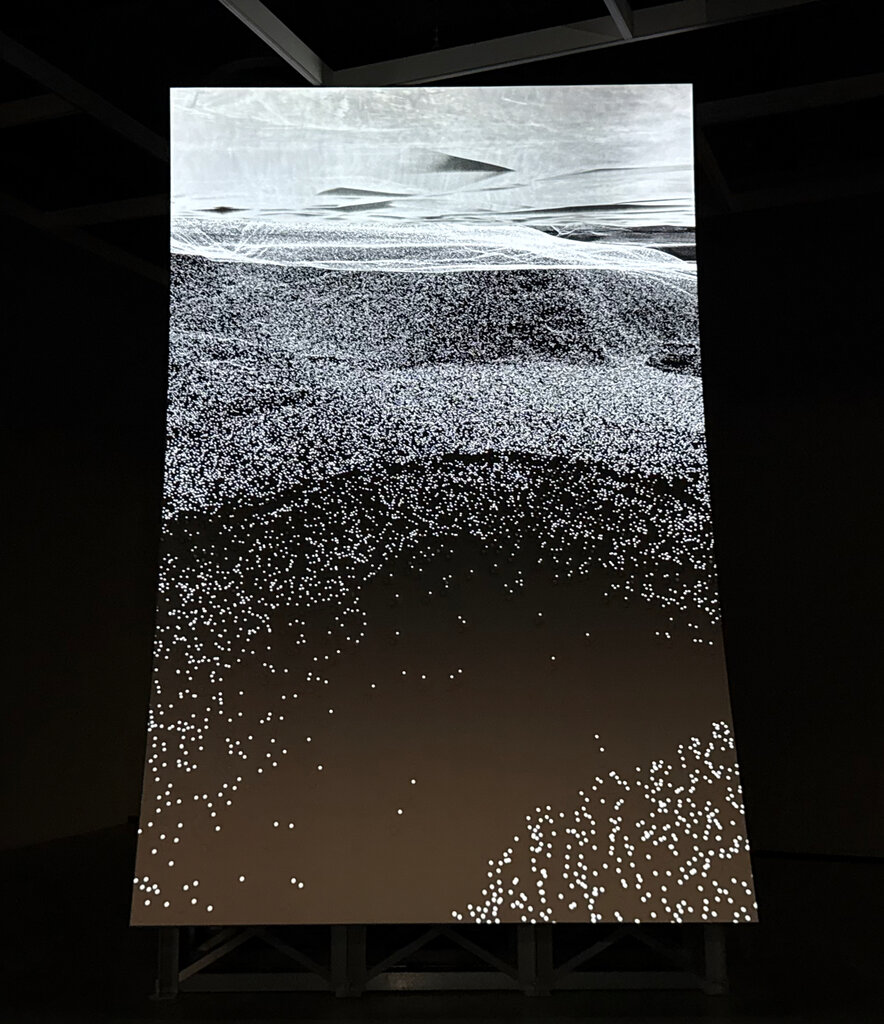
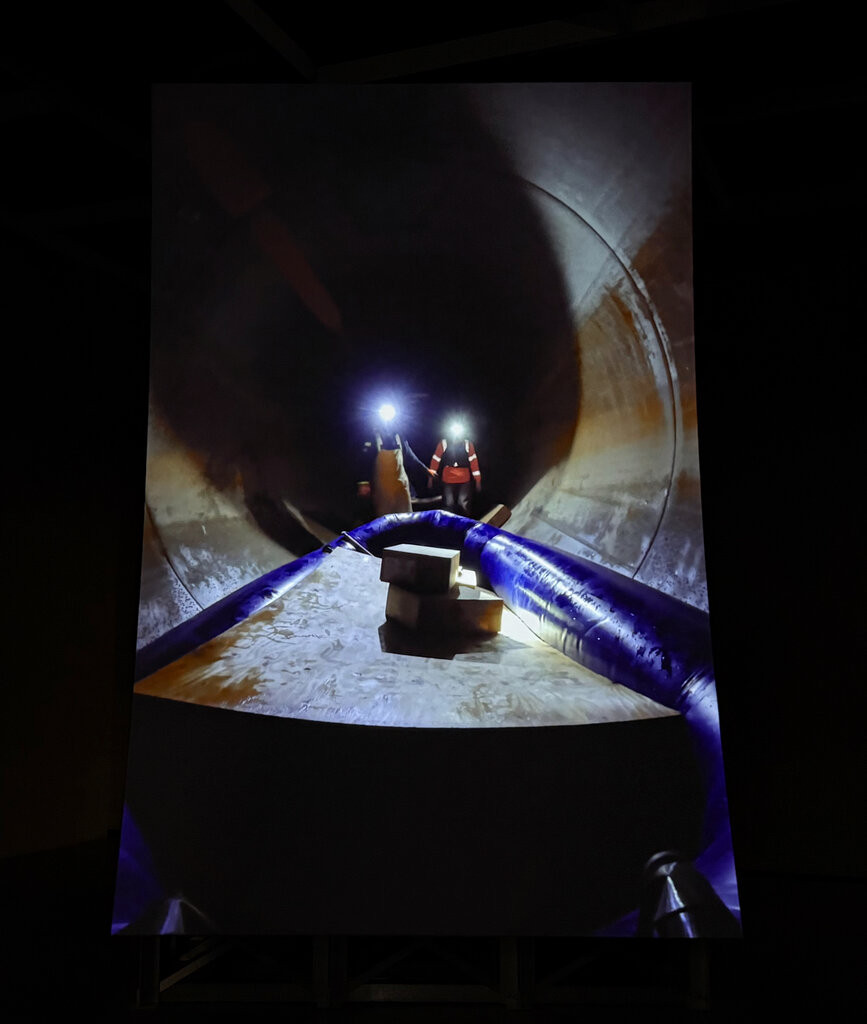
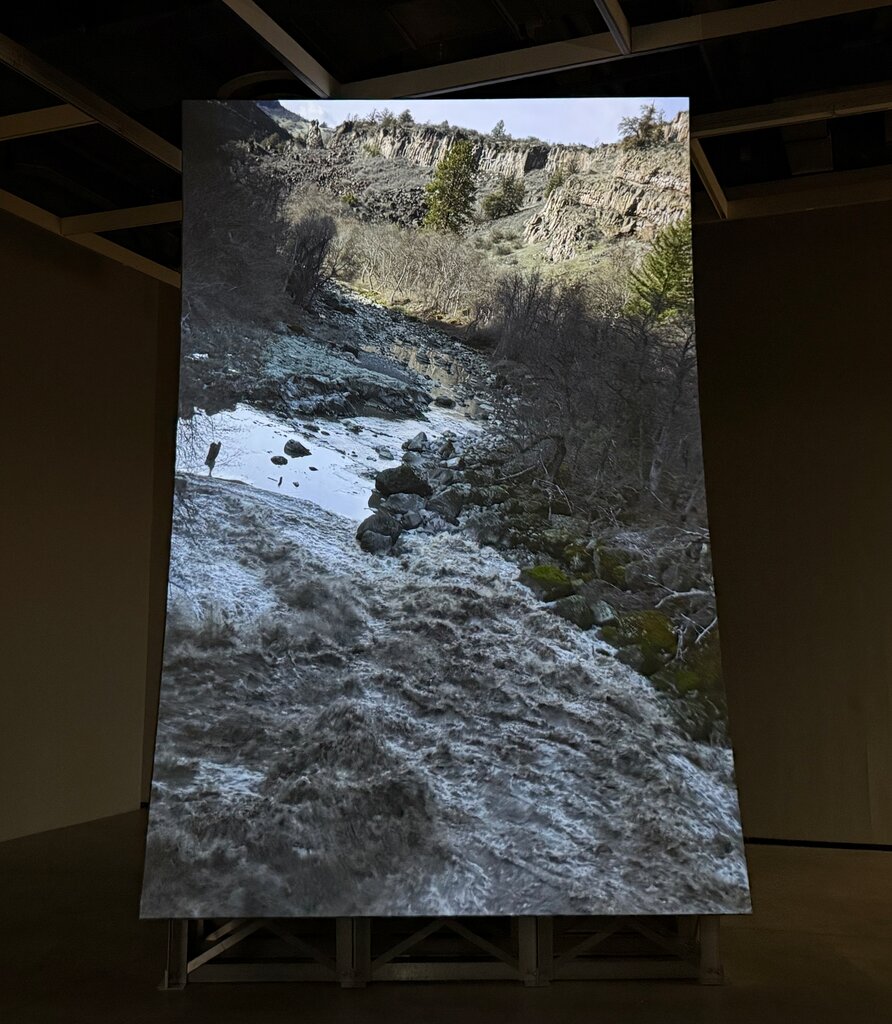
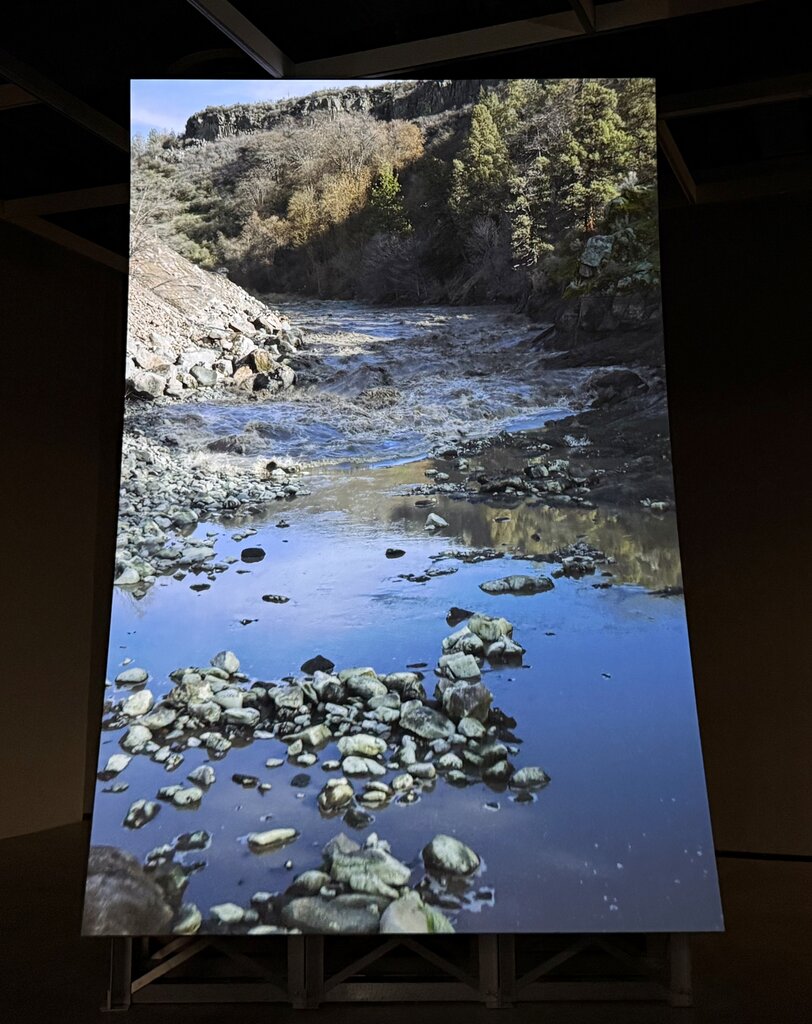
    Murderers Bar utilizes a mixture of drone footage, digital renders, and material from body-cameras in the video. The shifting types of footage present a multifaceted understanding of the land and water. The aerial perspective is akin to that of a bird, gliding and dipping with freedom. The body-camera footage is from those working directly within the environment of the site, a dam on the Klamath River in Northern California. Meanwhile, digital renderings provide an alternative presentation of land in the form of animations. In terms of the latter, the environment is reduced to renders such as topographical surveys and detached from the organic elements of the Klamath River. In turn, it presents the land as a site of extraction and industry. Incorporating these varying perspectives strengthens the work and our appreciation of the natural world with its beauty and verdant abundance. Consequently, we also experience the environment being reduced to renders, as the land and water turns grey and lifeless where it once was brimming with life.

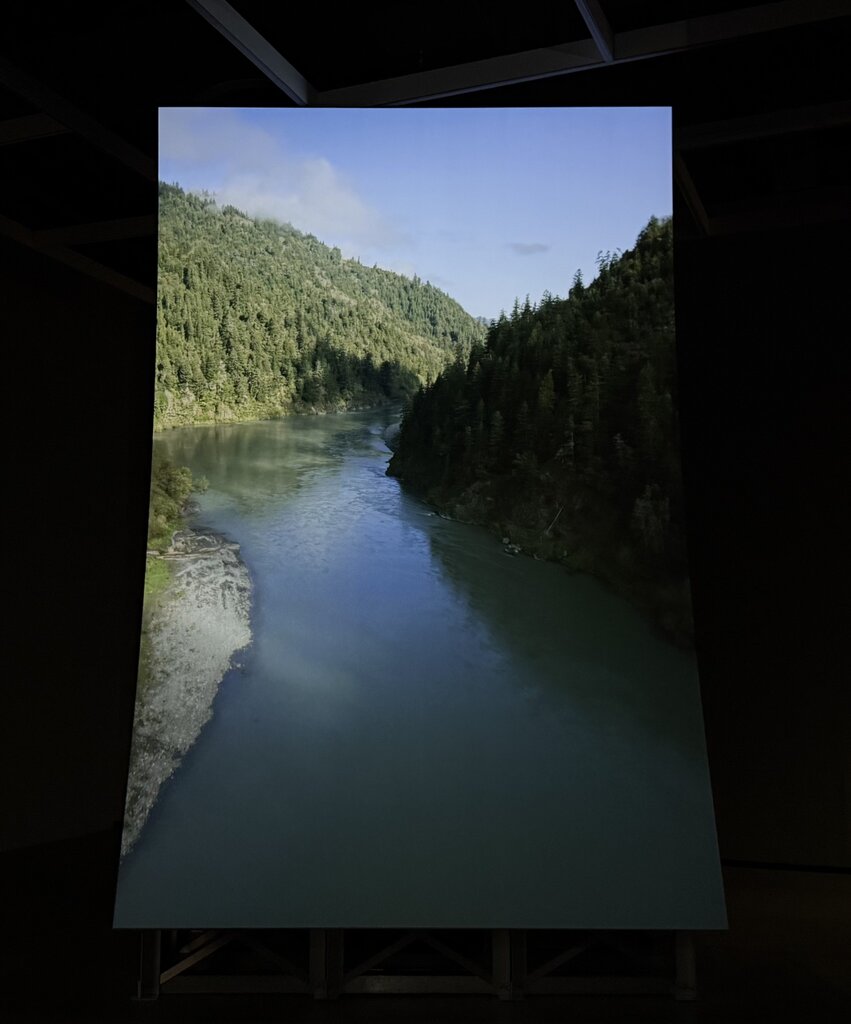
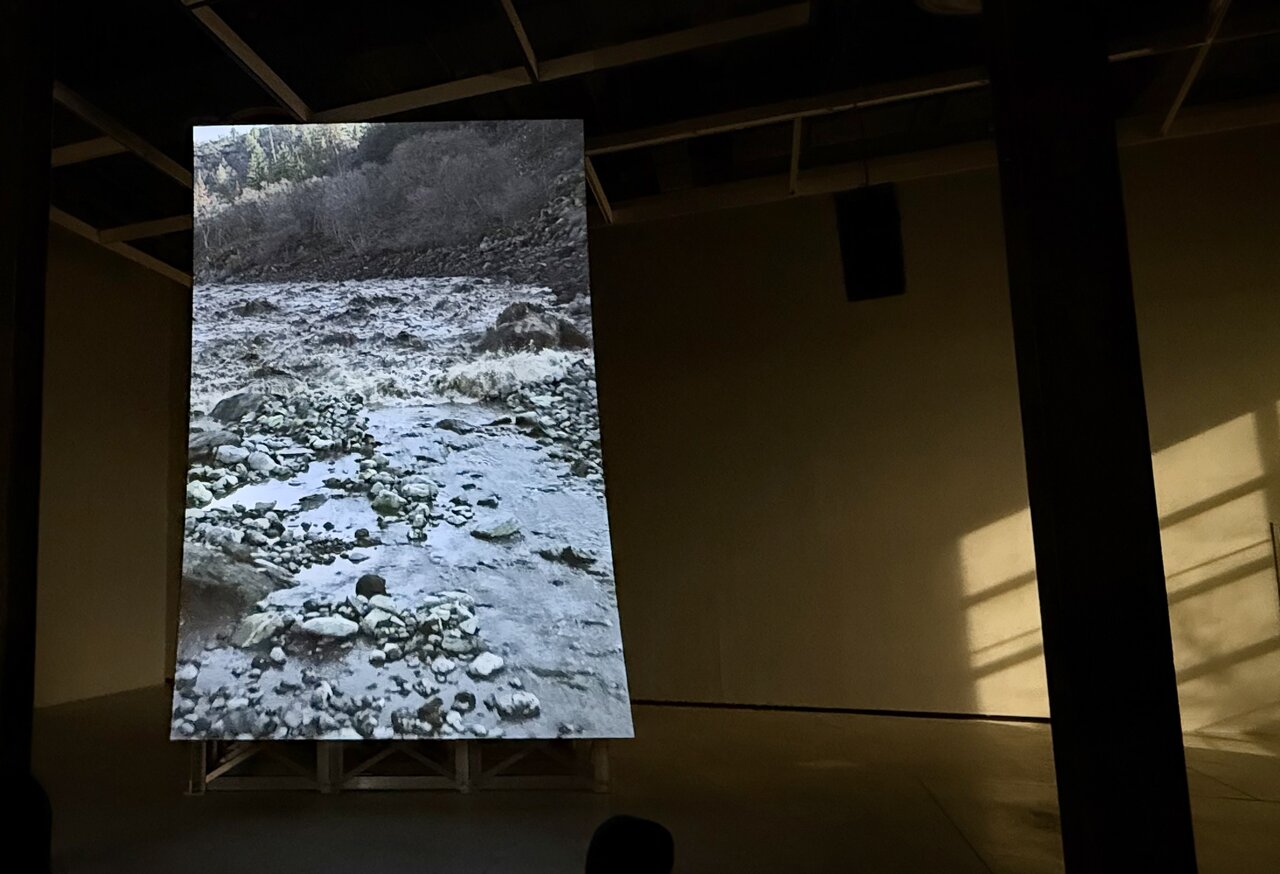
    It’s difficult to discern the exact start of Murderers Bar, a video installation (41:47min) with a sound component and a set of aluminum bleachers for seating. The video plays out on a freestanding concave structure, with speakers spread throughout the space and foam panels along the corridor entering the gallery. I considered the vista view the beginning, one in which a winding river can be seen from above. Waterfowl glide along the gusts blowing through the conifers framing the waterway. The audio component contains the calls of gulls and other natural sounds wooshing by, as if viewers are traversing in real time.

    As the footage progresses through the landscape, the water winds its way among the ridges and trees. Eventually, an overlay of a radar image appears on the screen. With this the camera submerges, crashing and battered by the sediment. The audio amplifies the anxiety and chaos of being underwater. The sound is muffled by the aquatic cushion, with intermittent clarity when the camera breaks the surface of the water. Within the periods of the camera being submerged, one can see topographical renderings of the basin making up the reservoir within the Klamath River. Though visually disrupting, it does provide a perspective that is not otherwise readily experienced by the human eye. The industrial aspect of human-environment relations is explored more deeply in the subsequent section of the video.

    The drone makes its way to the dam, the area appearing barren of colour and life. Where the water and land were once saturated with deep greens and warmth, now it takes on tones of slate, charcoal, stone. Viewers experience a closer look at the dam, from the body-camera footage of a worker at the service entrance. Here we witness the claustrophobic space, trudging through the water with supplies. Eventually, a cavity is reached, and dynamite is inserted in drilled pockets within the cavernous area. As the perspective shifts once more, the video records the exterior of the dam. The camera pans downward to the ground, with workers walking along the surface.

    As the footage focuses on the base of the dam, there’s an explosion. The boom of the detonation reverberates in the aluminum bleachers used as seating in the gallery, another reminder of industrial extraction. The video continues showing the water bounding forth with such power, thrashing everything in its path. The water, free from its reservoir, returns to where it had once travelled, winding once more through the land. The final act of Murderers Bar includes similar footage to that of the beginning: verdant vistas, birds riding along the wind, shimmering waters carved through the land — but with the water returned to the landscape.

    Recognizing that this work has travelled to The Power Plant in partnership with the Vancouver Art Gallery, I considered the labour of the video loop. The venturing for quality field recordings, use of a variety of technology for maximum coverage, and coordination across institutions. In addition, there is labour related to building the dam and its subsequent destruction, as well as nature’s recovery. While Murderers Bar does not showcase the protests, legislation, or an overt display of the peoples advocating for the dam’s destruction, the fruits of their labour are apparent. The site of focus, the Klamath River in Northern California, is a testimony to the stewardship of the Tribal Nations: Yurok Tribe, Karuk Tribe, Hoopa Valley Tribe, Klamath Tribes, and the Shasta Indian Nation. Due to their effort, a historic habitat can be restored. With Lucy Raven’s Murderers Bar, the collective labour can be recognized on a wider scale, invigorating communities further.

    Lucy Raven’s Murderers Bar is a compelling display of the power of water being unconquerable, and the magnitude of human impact on the environment. The grand scale of the video and the booming audio envelopes the viewers. The expansive view and full-bodied sound within the space make for an immersive experience. In this way, one can feel the awe in a bird’s-eye view of a fertile land, or the crushing anxiety of being swept away in a current, gasping for breath. The relief is shared the moment the dam breaks and the water finds its way back. While my interpretation of the video may present the idea of nature recovering despite what humanity throws its way, it does not negate the reality of harm. Like the video loop, this cycle occurs again— awe of nature, dismay at intervention, relief of the return to the natural. As a result, Raven’s Murderers Bar creates an urgency to witness the land and water with which we interact. There is also gratitude in the ready access to the natural world within the immediate vicinity of The Power Plant.

    This appreciation was felt upon walking out toward the waterfront following the exhibition— watching the gulls sweep atop the wind, or the ducks bobbing along the glistening water of Lake Ontario. Whether a moment of calm or chaos, nature is a force with which to reckon.

    Text and photo: Rashana Youtzy

    All images: Installation view of Lucy Raven, Murderers Bar at The Power Plant.

    *Exhibition information: Lucy Raven, Murderers Bar, November 7, 2025 – March 22, 2026, co-commissioned and jointly acquired by The Vega Foundation and the Vancouver Art Gallery,The Power Plant, 231 Queens Quay W. Toronto. Museum hours: Wed & Fri – Sun 11am – 6pm, Thu 11am – 4pm.

  • The Sex Show at Gallery 1313

    Installation view of The Sex Show at Gallery 1313

    The Sex Show defines “sex” as an ambiguous word, a range that encompasses all the connotations arising from experience and fantasies; its politics and history; and, above all, the expansive range of feelings and private memories which intimacy stirs within oneself. The artists exhibited at Gallery 1313’s annual The Sex Show explored these reactions, presenting diverging definitions of “sex” in grasping the essence of feelings like comfort, limerence, courtship, envy, magic, and pure sensual pleasure.

    David Theron, Interwine, 2026, mixed media

    The subject of these works transcends the usual connotations of the word and the act of sex itself: some depict nude muses or self-portraits; the “natural” aspect is observed through flesh-like textures and depictions of literal birds and bees; others assemble text and collage to create new, suggestive images.

    Kate Greenway, Gardening Tips, 2026, collage, watercolour

    Others produced avant-garde sculptures to materialize their experiences and ideals, like the readymade American Heavy Metal (2025) by Kiara Harrigan and Untitled (2025) by Hamed Morovati, a make-shift disco relic (appropriately priced and sold at $69).

    Harrigan repurposed the handlebars and the exhaust pipes of a Harley Davidson into poetry, with one of the two pipes inscribed with half of the verse “You & me til the / Wheels fall off!” which the artist pulled from a 1995 personal ad reading, “Heavily inked & pierced NYC riot girrrl looking for butch lover. I love to get messed up, get wild & get off. I need an accomplice. Hey baby, you & me ’til the wheels fall off! WRITE: Box #013”. When displayed together, the exhaust pipes convey a message of commitment in a relationship. However, when separated, one captures the idealization of a lasting partnership, while the other stakes the heartbreaking yet often inevitable conclusion– or, in another interpretation, the thrill of a long night.

    Kiera Harrigan, American Heavy Metal, 2025, mixed media, motorcycle exhaust pipes

    On the other hand, Morovati’s Untitled mythologizes sex by combining the aesthetics of an archaeological find, like a stone tablet, and kitsch in lining the inside of the phallic silhouette with mirror tiles, adding a simultaneously enigmatic and playful element to the word “sex”.

    Hamed Morovati, Untitled, 2025, mixed media

    Still, the piece that immediately catches the viewer’s eye is The Spine Knows When It’s Safe (2025) by Carmen Mahave. This sculpture is cast directly from the body of the artist’s partner, without any corrections or alterations. In the work’s statement, the artist explains that the focus on the back is intended to evoke feelings of trust and unconditional love, as this body part is vulnerable and one that her partner will never fully see for himself. The cascade of hair that runs down the spine recalls the sensation of a lover’s hand softly gliding down the back – satisfying the longing for the rush of anxiety that comes with being touched by someone you love. Through this work, the artist captures the feelings of tenderness, connection, desire and unconditionality, which are synonymous with the word “sex.”

    Carmen Mahave, The Spine Knows When It’s Safe, 2025, mixed media, silicone, human hair

    By selecting works that other galleries might find too explicit, The Sex Show takes intentional risks, allowing curator Phil Anderson to create a safe environment for a sincere, intimate, and opinionated dialogue with viewers. Anderson, who has been curating the show for the past 30 years, states that this initiative is consistent across all shows. As for the curatorial process, he focuses on provoking conversation and illustrating diversity of understanding, both visually and conceptually. While the content changes annually, The Sex Show’s visual strength lies in its consistent presentation of vulnerability, audacity and diversity.

    Installation view of The Sex Show at Gallery 1313

    I invite viewers to explore this show to reflect on the various synonyms of “sex,” which can provide a deep, introspective solo experience or a meaningful conversation with a partner. The exhibition runs until February 15th – so consider including it in your Valentine’s Day plans.

    Antonella Pecora Ruiz

    Images are courtesy of Gallery 1313.

    *Exhibition information: The Sex Show, February 4 – 15, 2026, Gallery 1313, 1313 Queen St West, Toronto. Gallery hours: Wednesday – Saturday, 1 – 5 pm, Sunday 1 – 4 pm.

  • Traces at Daniel Faria Gallery

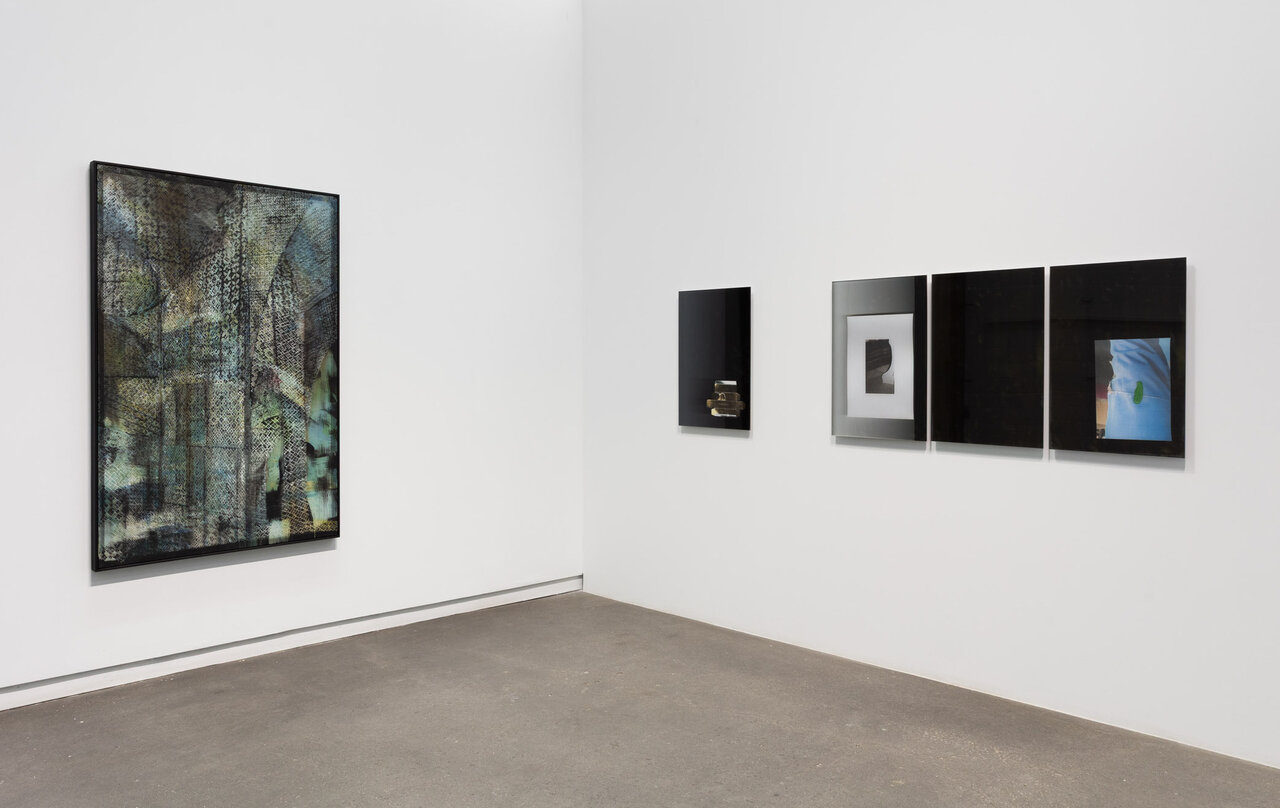
    Surveying the work on display at Daniel Faria Gallery brought to mind a prescriptive remark by artist Joseph Beuys, that ‘things start to go wrong when someone sets about buying stretchers and canvasses’. Yes, one of the works is indeed on canvas – we’ll return to that presently – but what stands out for me is that the participating artists in this show have moved far beyond any fine art tradition. We might think of modernism as the rebelling against that tradition, but here the tradition is dead, buried and forgotten. I have not belatedly discovered postmodernism. That movement, at least in apocryphal terms, was shaped by a rebelling in turn against modernism.

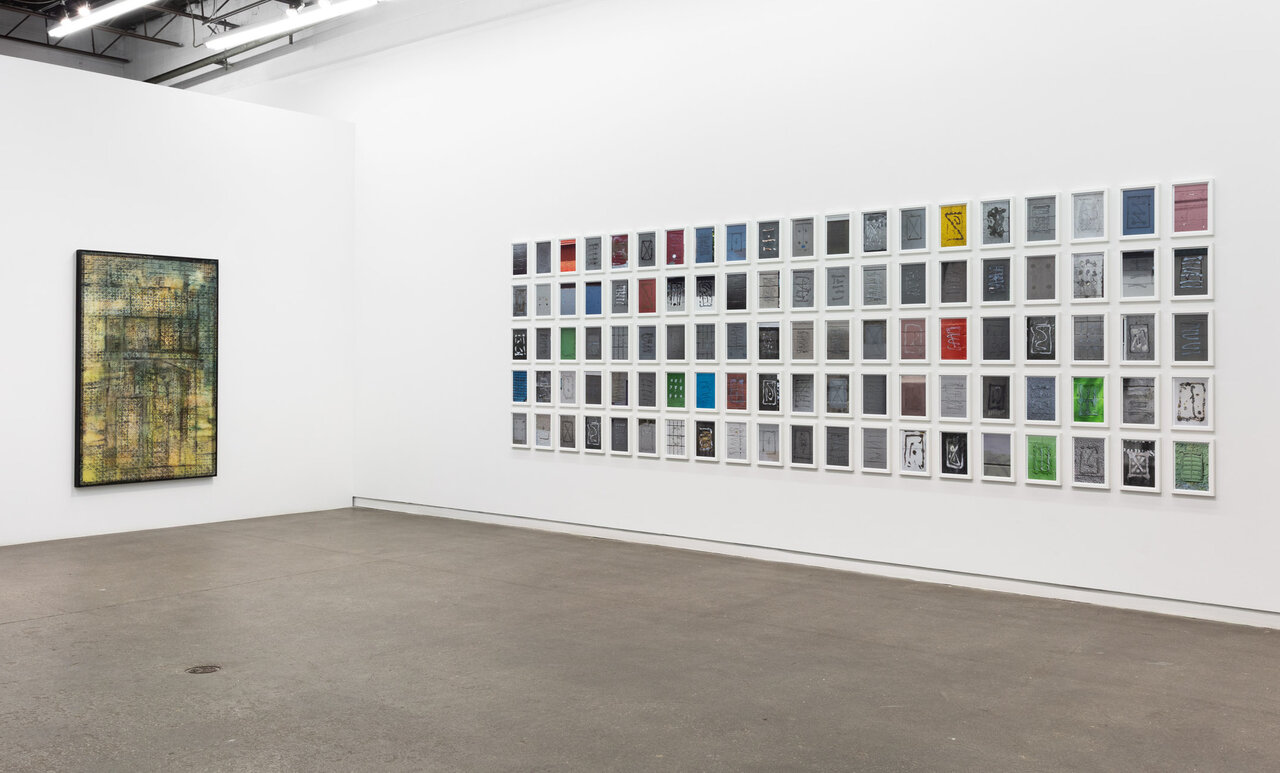
    Installation view, Traces at Daniel Faria Gallery, 2026. Photo: LF Documentation.

    There is no narrative, i.e., text, for which any author can be denied, to paraphrase postmodernist theory. No meaning can be gleaned directly from the works scattered around the space. The viewer’s predicament is analogous to someone watching a theatre show in which there is no discernible plot or story. Instead the actors on the stage gesture thus and so, engaging in brief banal conversations, until the play ends – like an art performance perhaps. All, nonetheless, is clearly choreographed meticulously.

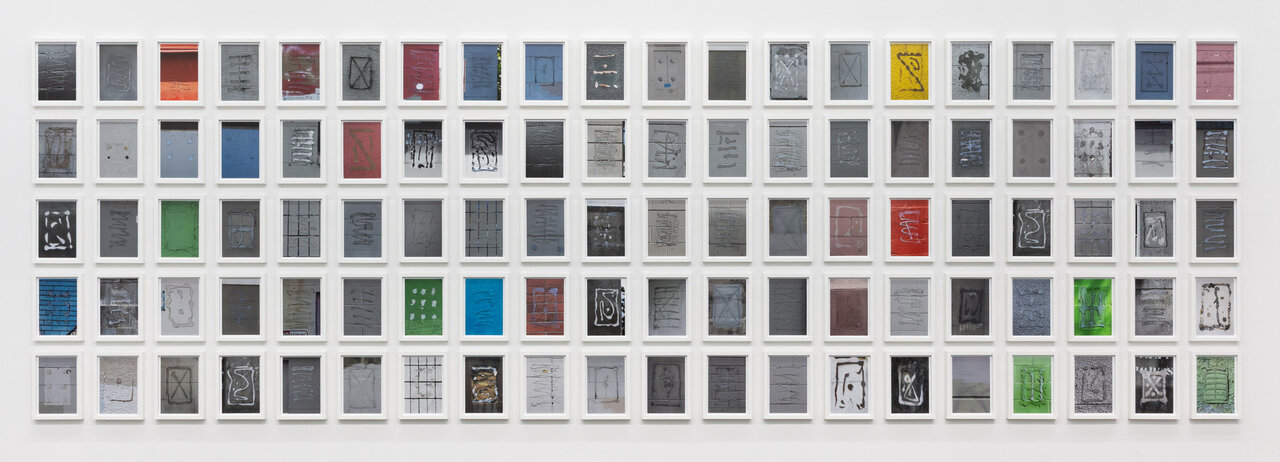
    Consider the show’s centrepiece by Andrew Dadson, namely, a beautiful grid of one hundred framed photographs of residual glue found on various walls after some street sign has been pulled off. These marks, it is pointed out, are ‘surprisingly calligraphic and painterly’. It is hard to think of something more mundane than this as subject matter. Of course, what the artist is intimating is how these residual marks are strikingly reminiscent of pictograms and ancient writing, e.g., cuneiforms. Still, the work is bereft of any substantive content, so the casual viewer is left wondering why the artist has chosen to make it. The same can be said of most of the works here.

    Andrew Dadson, Cuneiform (#305-404), 2015-2022, 100 inkjet prints, 12 x 8¾ inches each.

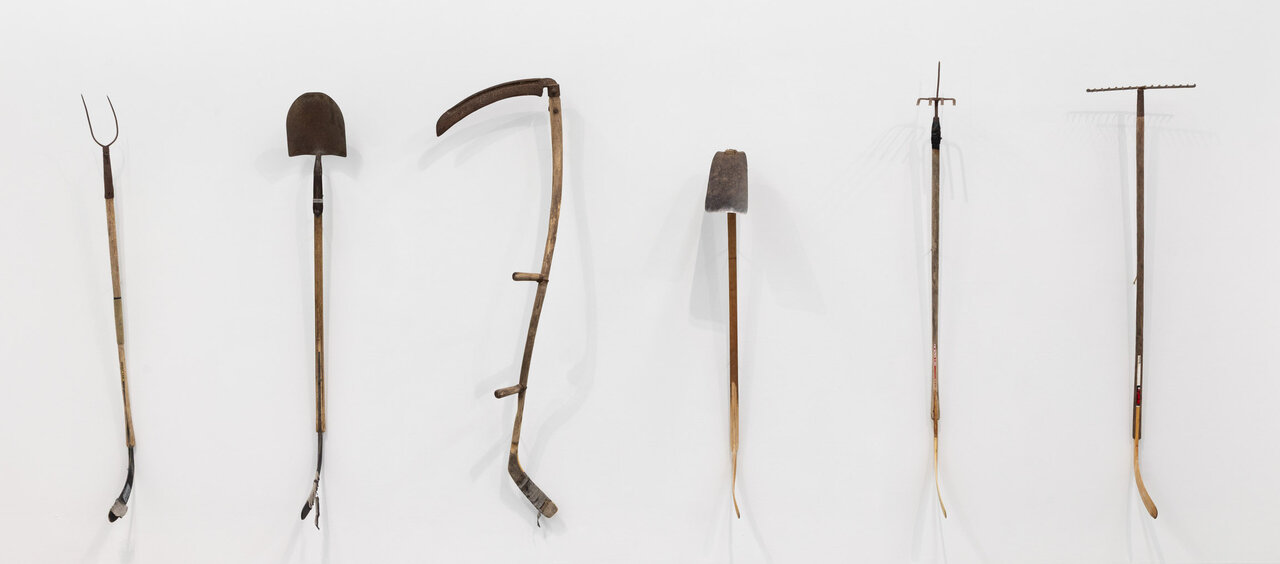
    One exception, perhaps, is Oluseye’s wall-mounted scuptures titled Ploughing Liberty. Here the title is a clue as to what the work is about. Oluseye is an ethnic Nigerian born in the UK. He has researched the history of black loyalists and fugitive slaves in Nova Scotia, who ended up labouring on the land. What we see is a set of antique farming implements with hockey sticks attached at the bottom. These worn tools are a testament to that life of toil, while the hockey sticks are emblematic of the culture of leisure that these labourers have always been excluded from. These artefacts stand on their own as beautiful objects which, by artful lighting, cast shadows on the white wall to dramatic effect.

    Oluseye, Ploughing Liberty, 2024-2026, Antique farm implements, found hockey sticks and brass dowels.

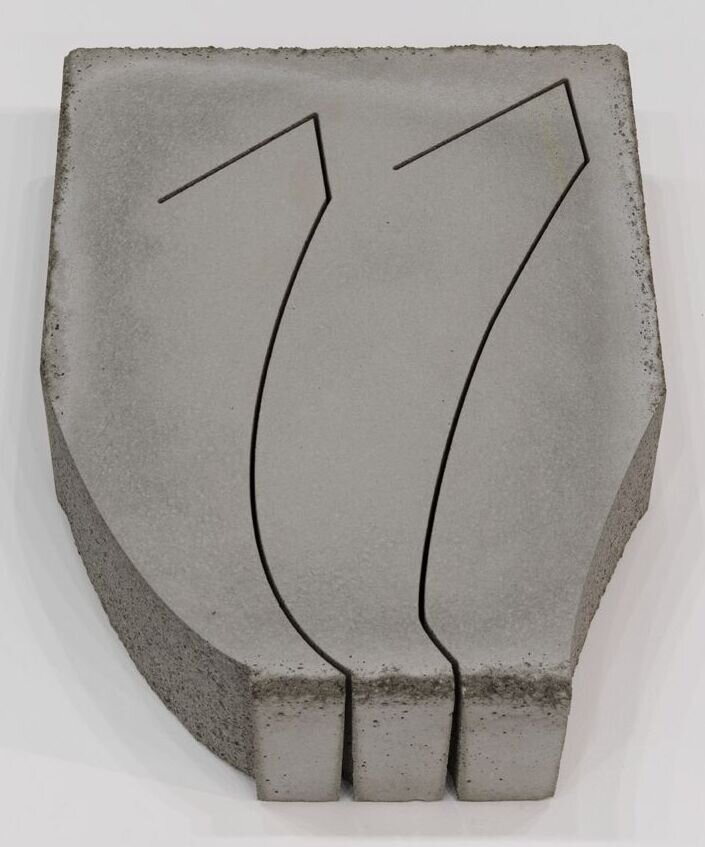
    Shadows play a very different role in the pedestal mounted sculpture by Jennifer Rose Sciarrino, titled North Facing, December 21. Here we leave the physical world. Sciarrino first created a virtual, i.e., computer generated ‘sculpture’. Then she set about working out the shape of the shadow this virtual sculpture would cast on the ground on the day of the winter solstice. Once recorded this shape was cut in real stone, which is what we see on the pedestal. We have an imagined shadow traced by an imaginary sculpture, made concrete.

    Jennifer Rose Sciarrino, North Facing on December 21st VI, 2014, Concrete, 3 x 9 x 12 inches.

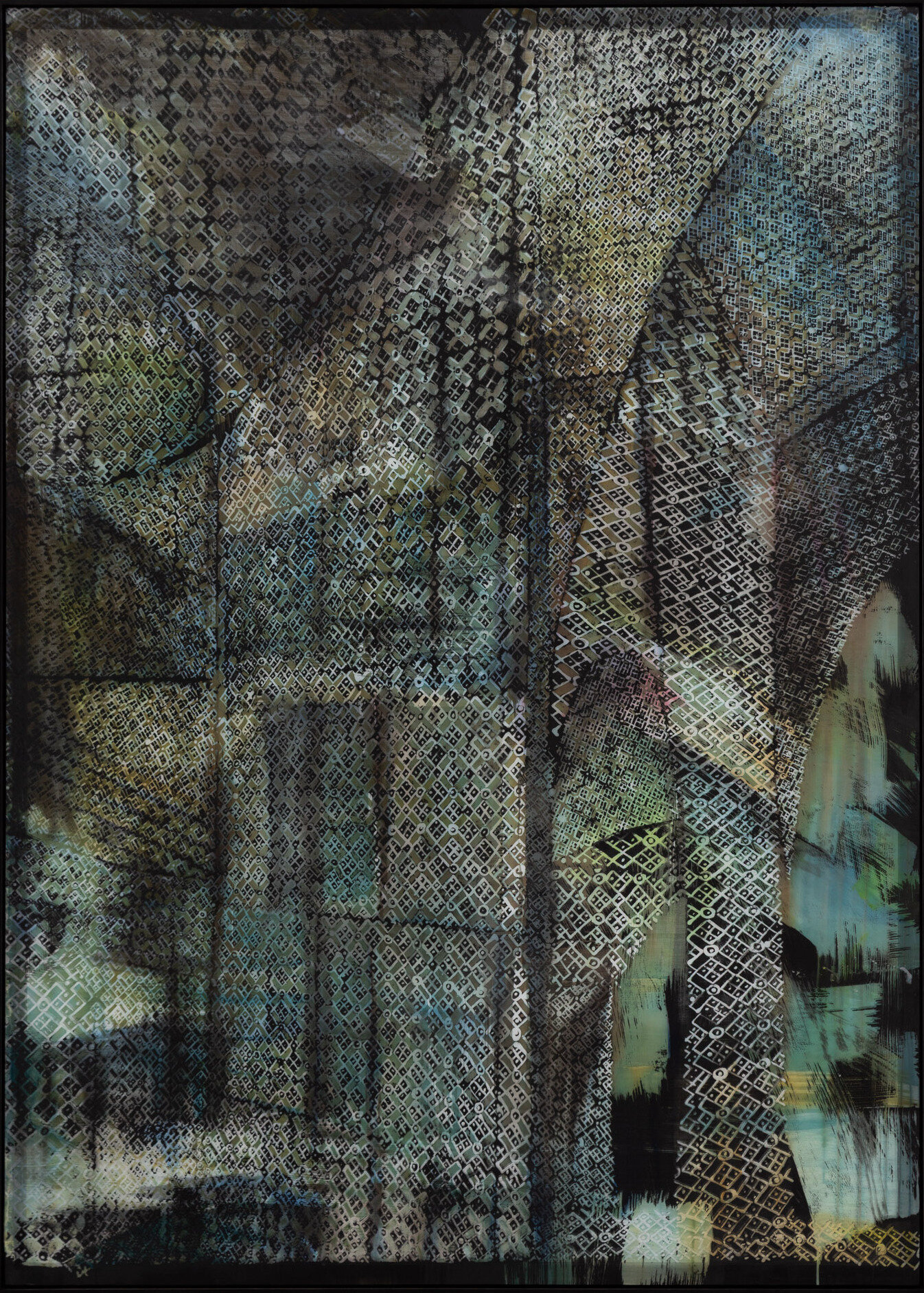
    This flight from the physical world to a virtual one is echoed in the work of Shannon Bool. Bool has taken images of buildings found on the internet. These images are somehow incorporated into a batik-printed pattern made on silk fabric. Finally the fabric is stretched over a mirror, so that both it and the viewer are reflected back in the work. Bool’s achievement, we are told, is to ‘take the static modernist grid and open it up to the environment, making it unfixed and negotiable’. This is art gone relexive, that is, work which is centred on its own making and reception.

    Shannon Bool, Veiled Facade, 2026, Oil, fabric paint and batik dye on silk, plexiglas mirror, 65 x 46¾ inches.

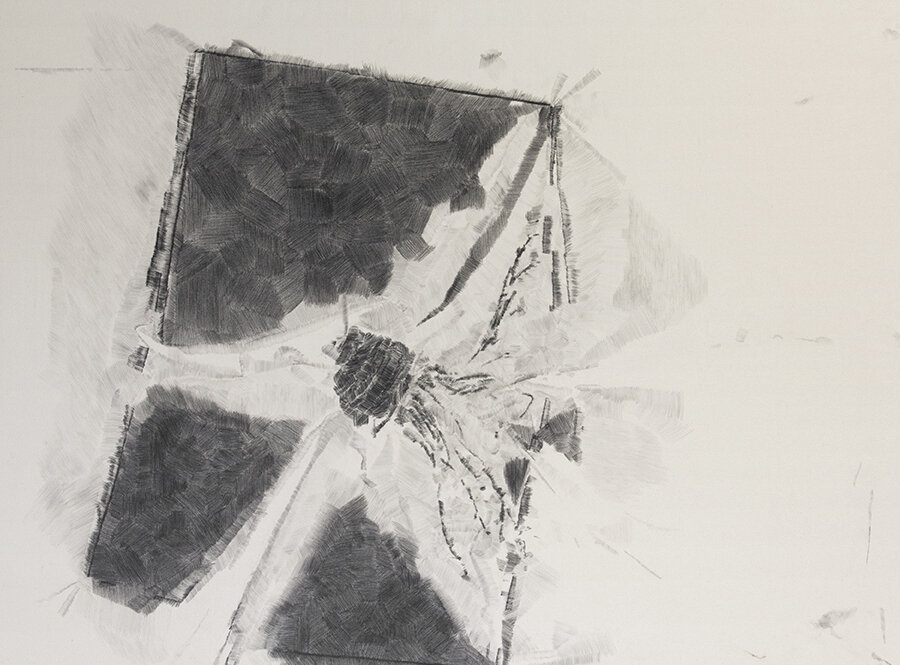
    This reflexivity is also evident in Derek Liddington’s work, given the following convoluted title: The plant proceeded to tip as I drew it, at which point I made a decision to let it fall as I felt it would improve the composition. Liddington placed the canvas over a plant on a table and attempted to draw on it his interpretation of what lay underneath. That is when the plant tipped over etc. How does this work engage the viewer? I can only speak for myself – there was little I could relate to. It is clever and humorous, in its title at least.

    Derek Liddington, The plant proceeded to tip as I drew it, at which point I made the decision to let it fall as I felt it would improve the composition., 2015, Graphite on canvas, frame: watercolour on maple, 61 x 81 inches.

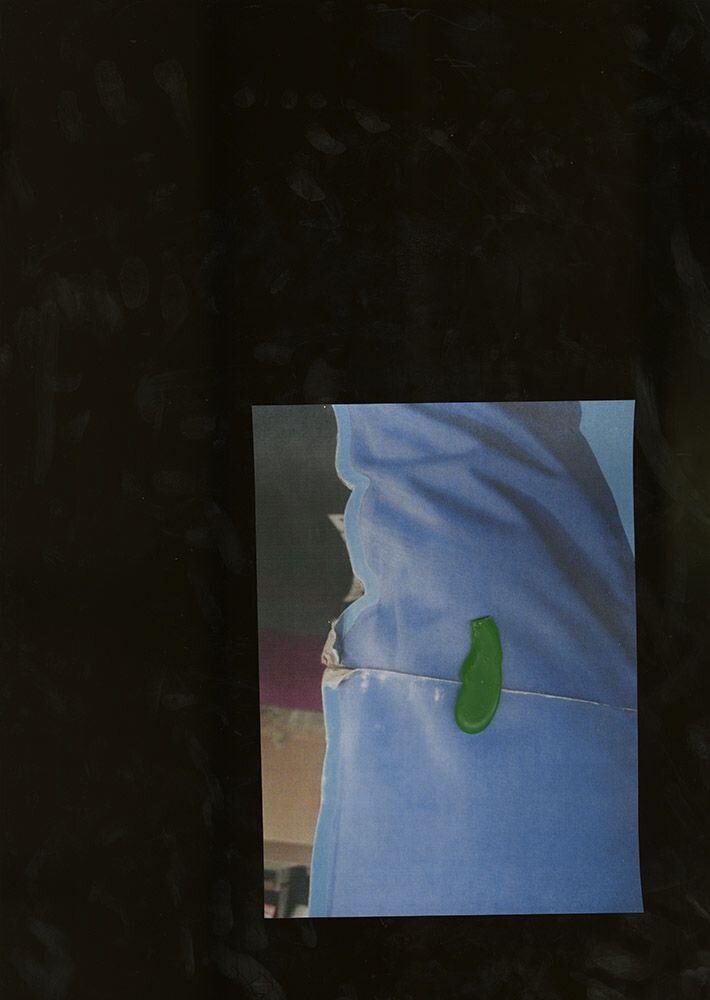
    Nadia Belerique – a master of installation art – is represented by a series of photographic prints titled The Archer. These feature experiments using a home-office scanner. Everyday objects are scanned while manipulating the light, and the images include smudges on the glass made by Belerique’s hand in the process. Once again we see art that focusses on its own making, where little is communicated otherwise.

    Nadia Belerique, The Archer 6, 2014, Inkjet photograph mounted to aluminum and plexiglas, 28 x 20 inches.

    Traditionally, art played a role in creating stories and narratives to make sense of, and reflect on, our world. This role has since been largely fulfilled by film, television, as well as written media. Concurrently art has increasingly turned away from the world as we experience it. What is left for the artist to communicate is unclear. In this show we see some of the countless attempts, nevertheless, by fertile minds – those who are essentially compelled to exercise their creativity and talents – to engage the viewer. These efforts, we can see, often lead to beautifully composed ‘hymns’ to art itself. Art about the making and viewing of art. Is that a worthy enterprise? I don’t know. All the same, these works display a cleverness, and are clearly designed to impress the viewer in some way or other.

    Installation view, Traces at Daniel Faria Gallery, 2026. Photo: LF Documentation.

    Hugh Alcock

    Images are courtesy of Daniel Faria Gallery.

    *Exhibition information: Traces / Group Show, January 17 – February 21, 2026, Daniel Faria Gallery, 188 St Helens Ave, Toronto. Gallery hours: Tue – Fri 11 am – 6 pm, Sat 10 am – 6 pm.