Author: artoronto

  • Allen Ginsberg at CONTACT

    Allen Ginsberg’s Photographic Elegy to Friendship, Youth, and the Emergence of the Beat Generation at the Thomas Fisher Library

    At the Thomas Fisher Rare Book Library Allen Ginsberg: Friendship and Community: The Beat Generation on Film offers a compelling reconsideration of the visual culture surrounding the Beat Generation. Drawn from the Allen Ginsberg Photography Collection and presented as part of the 2026 CONTACT Photography Festival, the exhibition shifts attention away from the monumental literary reputations that later defined Allen Ginsberg, William S. Burroughs, and Jack Kerouac. In their place emerges a more intimate portrait of artistic formation, one grounded in companionship and the fragile social networks from which literary modernity often arises.
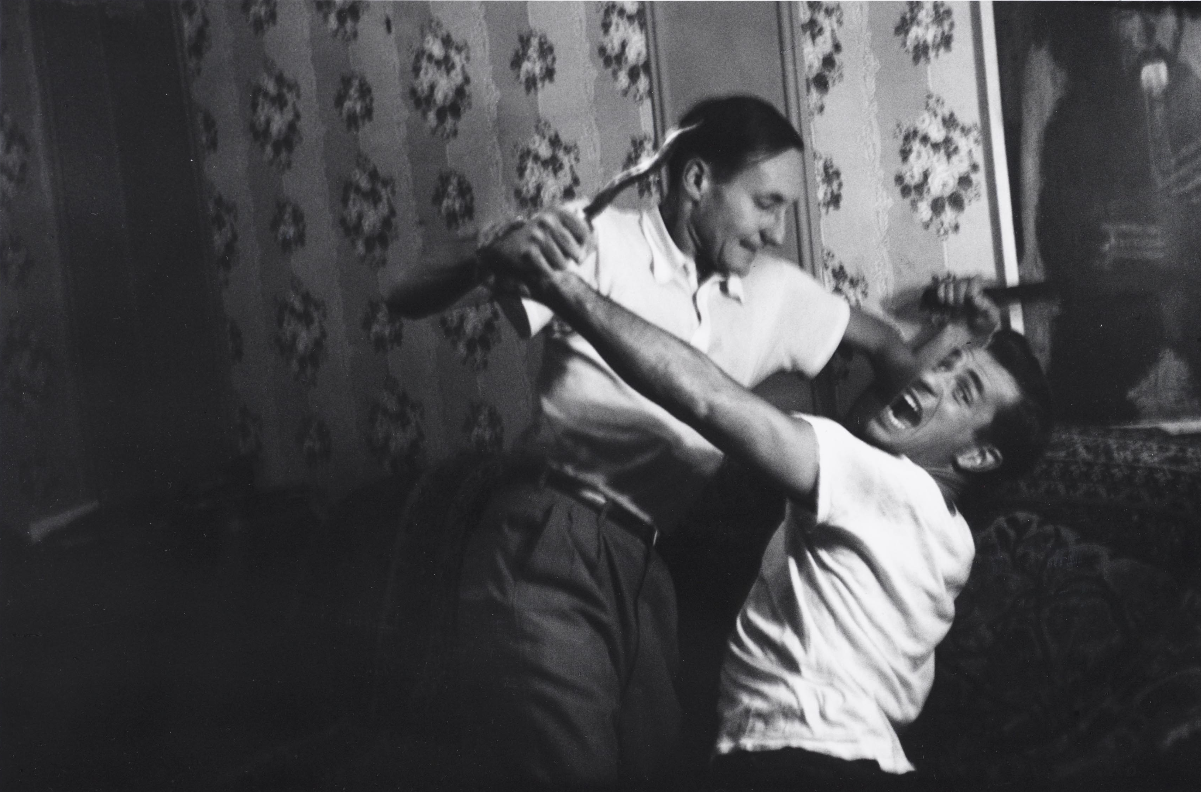
    Allen Ginsberg, William Burroughs and Jack Kerouac mock fighting at 206 E 7th street apartment, 1953. Courtesy of CONTACT Photography Festival.

    The exhibition’s central achievement lies in its resistance to retrospective grandeur. Visitors encounter these now canonical figures before the consolidation of their mythic identities, before publication transformed them into symbols of postwar rebellion and countercultural dissent. Ginsberg’s photographs return Burroughs and Kerouac to the realm of lived experience. They appear as friends in apartments, on streets, in moments of boredom, playfulness, and contemplation. Such images possess a rare documentary value precisely because they remain unconcerned with self-conscious historicization.
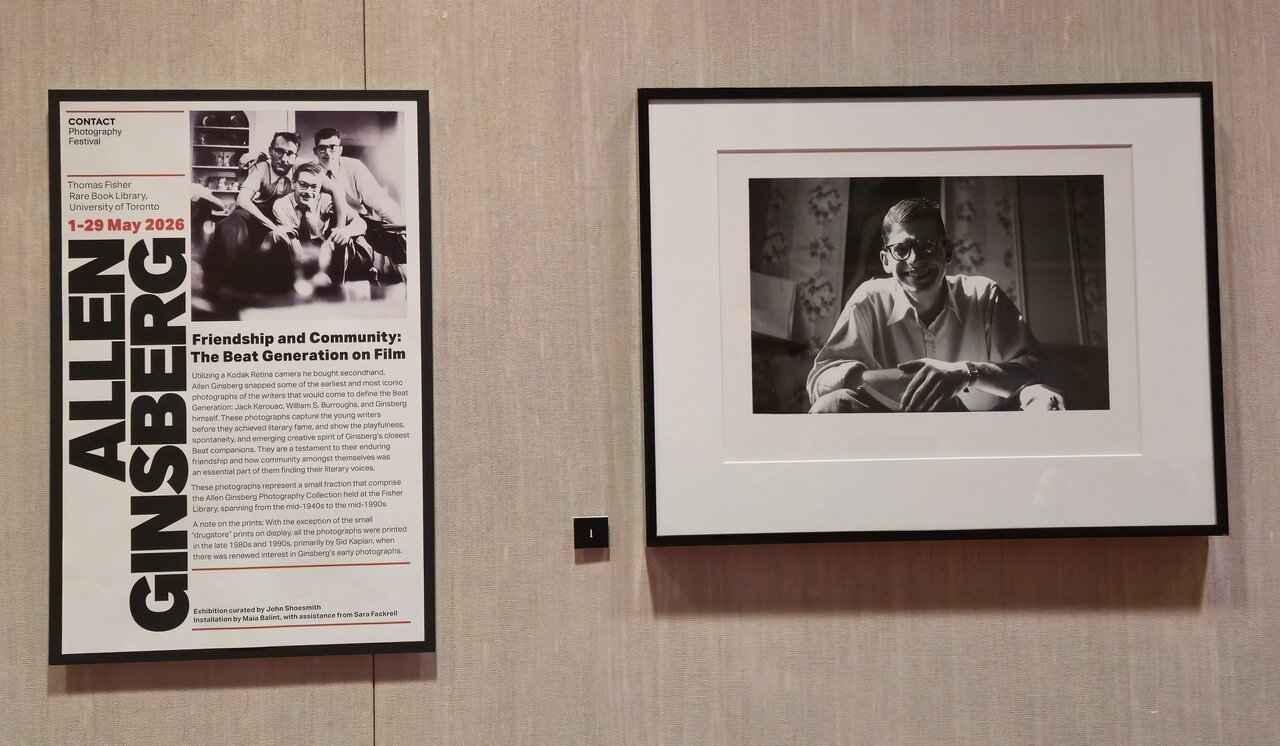
    Installation view with Allen Ginsberg self portrait at 206 E 7th street apartment, (right) 1953.

    Ginsberg’s role within this archive proves especially fascinating. Though remembered principally as a poet whose 1955 reading of Howl in San Francisco inaugurated a new literary movement, he appears here as an attentive observer of interpersonal life. His camera functions less as an instrument of aesthetic mastery than as a means of participation. The photographs rarely aspire toward formal polish; taken on a second-hand Kodak, their grain, spontaneity, and occasional compositional awkwardness contribute to their authenticity and power. One senses that the camera circulates naturally within the social environment it records. The resulting images thus seem to cultivate something pure and genuine, avoiding the distance often associated with documentary photography.
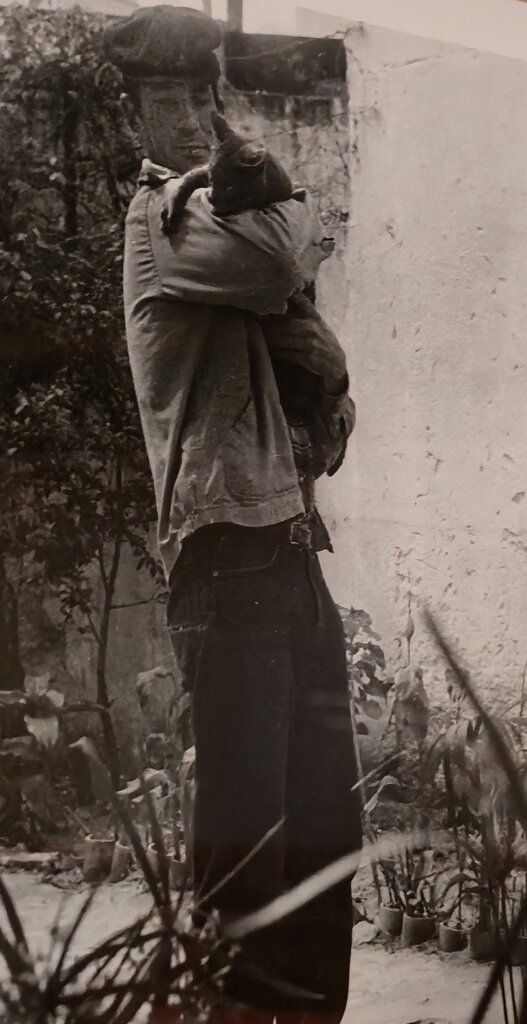
    Allen Ginsberg, Jack Kerouac with cat in Tangier, original print and later reprint, detail, 1957.

    This informality becomes crucial to the exhibition’s broader historical significance. Mid twentieth century photography frequently negotiated questions of authority, authorship, and objectivity. Ginsberg’s photographs indeed inhabit a different register, belonging to a vernacular mode of image making rooted in friendship rather than professional ambition. Yet within this apparent casualness resides an acute sensitivity to gesture and atmosphere. Ginsberg captures the texture of artistic life as something collective and provisional. Creativity is shown to emerge from shared living spaces, and mutual recognition. The exhibition, therefore, challenges overly individualized understandings of literary production by emphasizing the communal dimensions of artistic emergence.
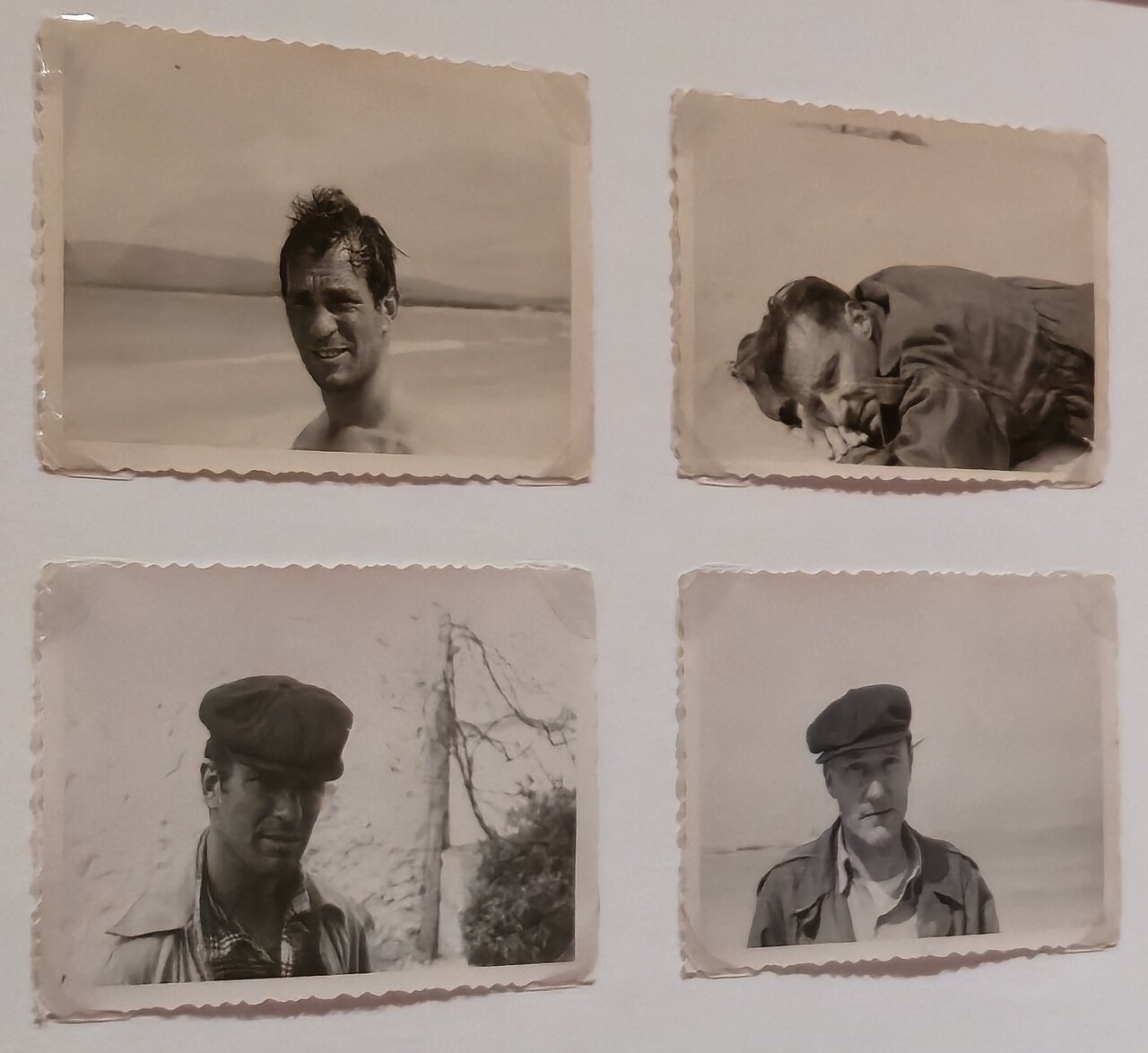
    Installation view with Allen Ginsberg, Jack Kerouac and William Burroughs, Tangier, 1957.

    Particularly striking are the photographs of Kerouac and Burroughs before the solidification of their public personas. Kerouac appears animated and youthful, often suspended between introspection and exuberance. Burroughs, later associated with cold intellectual detachment and experimental fragmentation, appears unexpectedly relaxed and accessible. These representations complicate familiar cultural narratives surrounding the Beats. Popular memory has often reduced the movement to stylized gestures of masculine freedom, restless travel, and spiritual rebellion. Ginsberg’s photographs reveal another dimension altogether: one marked by tenderness, vulnerability, and domestic intimacy.
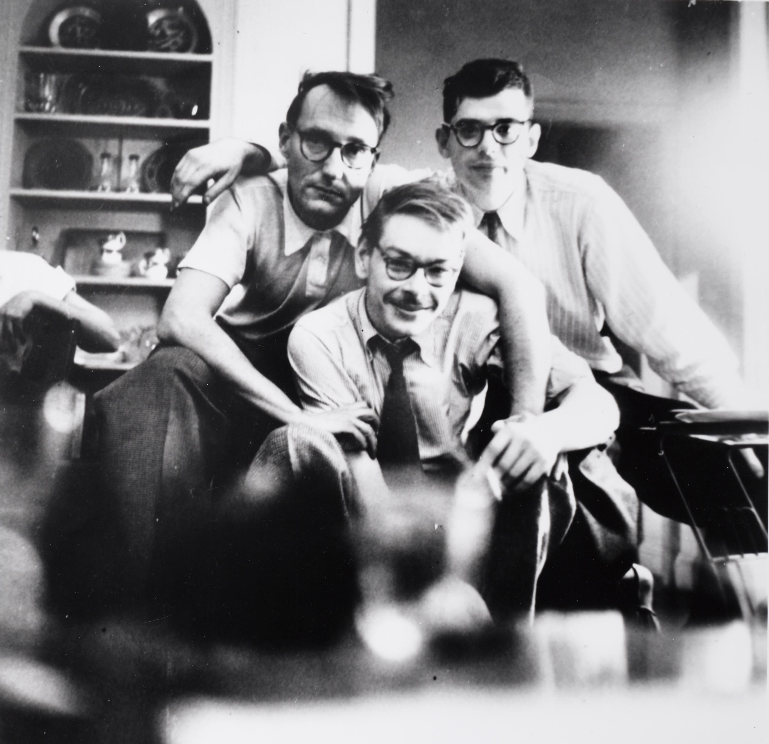
    Allen Ginsberg, William Burroughs, Lucien Carr and Allen Ginsberg “selfie” at 206 E 7th street apartment, 1953. Courtesy of CONTACT Photography Festival.

    The exhibition also invites reflection upon photography’s relationship to literary memory. The Beat Generation occupies a unique position as leading figures endlessly reproduced through biographies, films, and popular iconography. Such repetition risks transforming historical individuals into rigid archetypes – but Ginsberg’s photographs resist this flattening effect. Their value lies not merely in rarity but in their capacity to restore contingency to familiar narratives. The subjects remain unfinished, uncertain of their futures, still inhabiting the unstable threshold between aspiration and recognition. Seen more than eighty years after many of the photographs were taken, the images acquire an elegiac quality. They document youth while simultaneously anticipating loss, fame, addiction, and death. The viewer possesses knowledge unavailable to the figures within the frame. This temporal disjunction generating something profound that carries throughout the exhibition. The photographs become records of innocence before canonization, before the burdens of literary celebrity and cultural mythology settled upon their subjects.

    The setting of the Thomas Fisher Rare Book Library also truly enriches the exhibition’s intellectual context. As an institution devoted to archival preservation and scholarly inquiry, the library provides an ideal environment for reconsidering the Beats beyond their popular mythologies. Their presence within the archive reiterates the importance of ephemeral materials in reconstructing cultural movements. Great artistic revolutions often leave behind fragile traces of snapshots, letters, notebooks, and moments of casual observation. The exhibition’s commemoration of the centenary of Ginsberg’s birth adds another layer of significance. Anniversaries frequently encourage monumental retrospectives that reinforce established reputations. “Friendship and Community” adopts a more nuanced approach. Rather than celebrating Ginsberg solely as a singular literary genius, it situates him within a network of relationships that shaped his artistic consciousness. This emphasis upon community feels especially meaningful in the present moment, when cultural discourse often privileges individual branding over collective creativity. Ultimately, Allen Ginsberg: Friendship and Community: The Beat Generation on Film succeeds in its expression because it reveals the Beats as young artists discovering themselves through one another. The exhibition restores warmth and complexity to figures too often trapped within the machinery of legend. Through Ginsberg’s unpretentious yet deeply attentive photographs, viewers encounter a generation before its canonization – art is held within the fragile immediacy of love and of friendship as a reminder that artistic movements begin beyond abstraction and in human connection.

    Yehyun Lee

    *Exhibition information: Allen Ginsberg: Friendship and Community: The Beat Generation on Film, May 1 – 31, 2026, Thomas Fisher Rare Book Library, University of Toronto, 120 St. George St Toronto. Hours: Tue – Fri 9am – 5pm. The exhibition is part of CONTACT Photography Festival 2026.

  • Paula Ner Dormiendo at CONTACT

    Cartographies of Return: Paula Ner Dormiendo and the Fragile Architecture of Belonging

    Paula Ner Dormiendo, Breakfast with Lolo, 2025.

    Presented in the public space of Bramalea Ltd Community Park Paula Ner Dormiendo’s What Makes a House a Home? offers a thoughtful meditation on migration, memory, and the emotional complexities of return. Developed from a 2022 family trip to the Philippines, fourteen years after immigrating to Canada, the exhibition transforms personal documentation into a broader reflection on belonging and placemaking. Through a series of photographs captured during this reunion, Dormiendo explores how ideas of home are shaped not only by geography but by memory, absence, and the passage of time.

    Rather than approaching home as a fixed location, Dormiendo honestly presents it as something unstable and continually renegotiated through a warm lens. Her photographs move between familiarity and estrangement, revealing the layered experience of revisiting places once intimately known. Streets, homes, family gatherings, and ordinary moments become charged with the awareness that time alters both places and the people who remember them.

    Her images resist spectacle in favour of observation. The photographs possess an understated intimacy that draws attention to small gestures and fleeting encounters. In doing so, they capture the texture of diasporic experience with remarkable sensitivity. The exhibition recognizes that returning to one’s country of origin often involves confronting multiple temporalities at once – a powerful change between past and present and the imagined continuity between them.

    Paula Ner Dormiendo, Baguio Mountains, 2025.

    Installed outdoors within a diverse suburban community shaped by migration histories of its own, the project acquires an expanded social resonance. Viewers encounter the work within public life rather than the isolation of a gallery setting. This accessibility reinforces the exhibition’s central concerns with community and shared experience. Dormiendo’s personal archive becomes an invitation for collective reflection upon the meanings of home, especially within multicultural urban environments where many residents navigate similarly layered identities.

    Paula Ner Dormiendo, ‘What Makes a House a Home’ Installation, 2025, @paulanerdormiendo.

    The photographs also engage with the broader relationship between image-making and memory. Dormiendo uses photography as a medium through which distance and longing become visible, her work acknowledging the impossibility of fully recovering the past while still affirming the emotional necessity of return. The camera records moments of connection even as it reveals their transience.

    Ultimately, What Makes a House a Home? carries itself through its own restraint and sincerity. Dormiendo movingly avoids reducing migration to either nostalgia or loss, but instead, she offers a nuanced portrait of belonging as something carried across borders and sustained through relationships, recollection, and acts of return. The exhibition reminds viewers that home often exists less as a singular place than as an evolving emotional landscape shaped by memory, family, and the enduring desire for connection. In Dormiendo’s photographs, home survives, ever so brightly and fragile as inheritance is continually remade through remembrance, distance, and love.

    Yehyun Lee

    Images are courtesy of CONTACT Photography Festival.

    *Exhibition information: Paula Ner Dormiendo’s What Makes a House a Home? January 1 – 31, 2026, Bramalea Ltd Community Park. The exhibition is part of CONTACT Photography Festival 2026.

  • Pierre St-Jacques at Remote Gallery

    Pierre St-Jacques: People in the City, Station Independent Projects, Remote Gallery

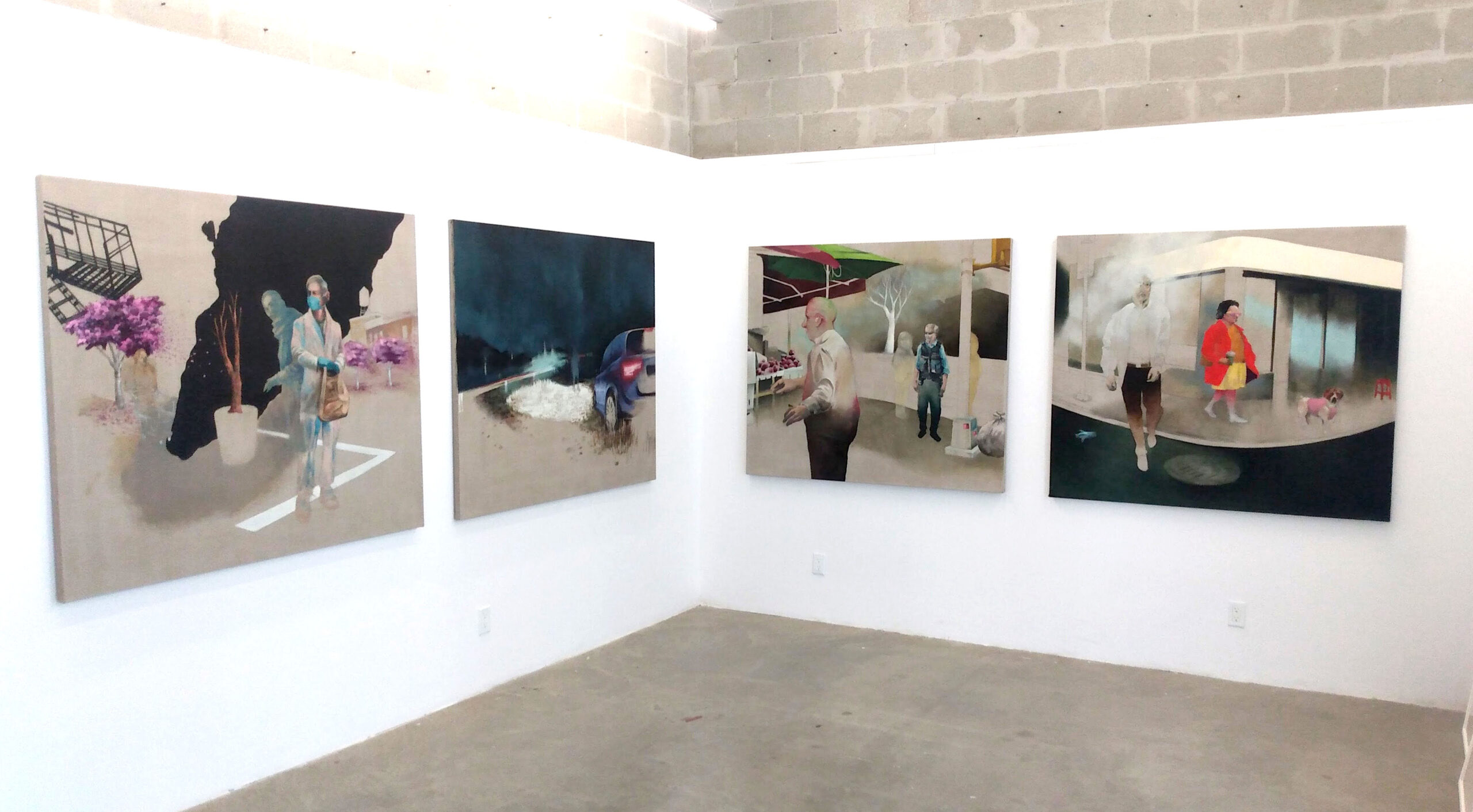
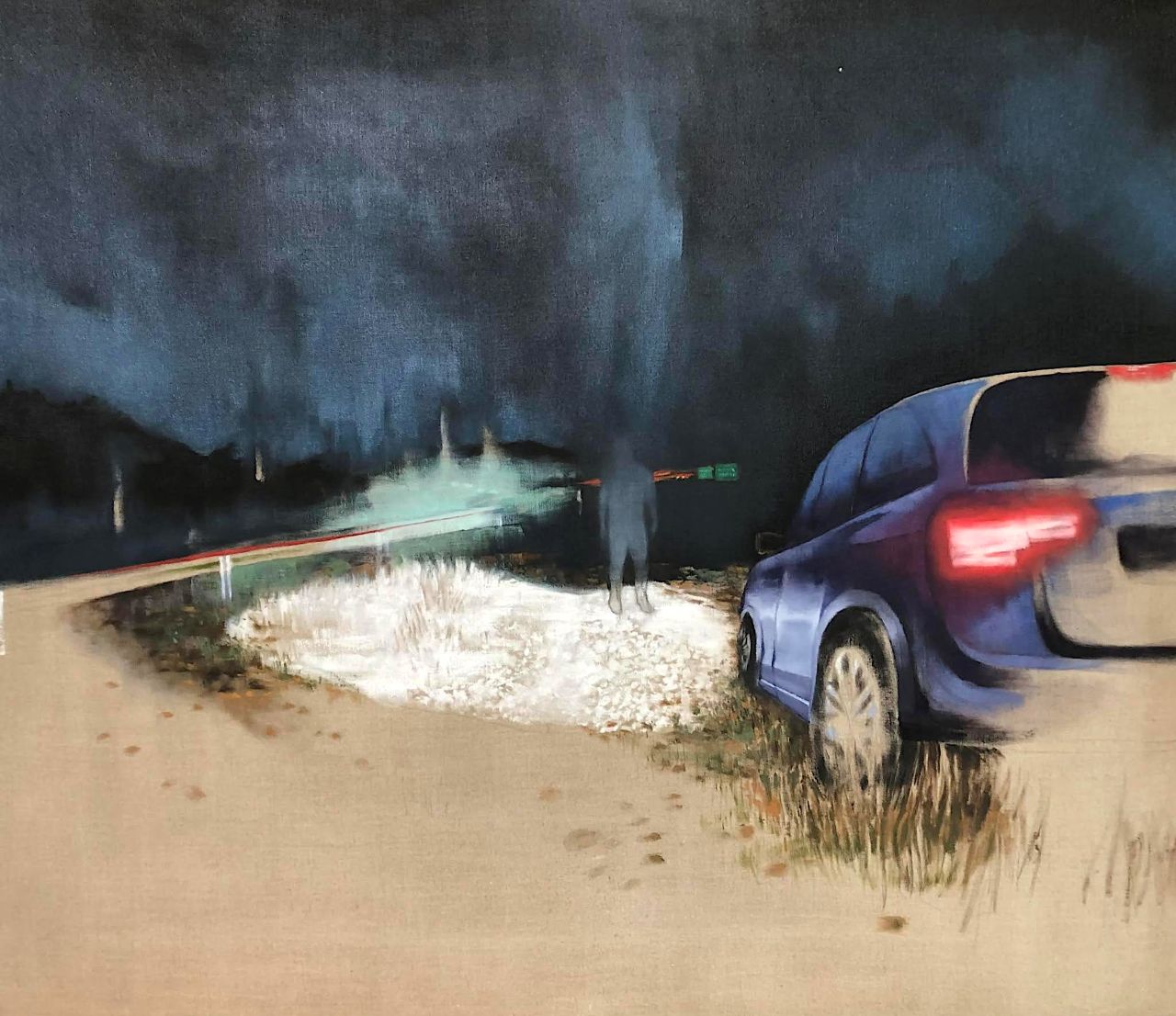
    When viewers first encounter St-Jacques’s arresting works displayed on the walls of Remote Gallery, they are likely struck by a sense of unease. Looking at them you feel as if you are looking at an event in medias res. This feeling is heightened by the fact that the artist has only painted the salient details – leaving the rest of the canvas bare. Each item that is included would seem to constitute an element of some unfolding event. And this editing of details is countenanced by the stark graphic contrasts St-Jacques uses.

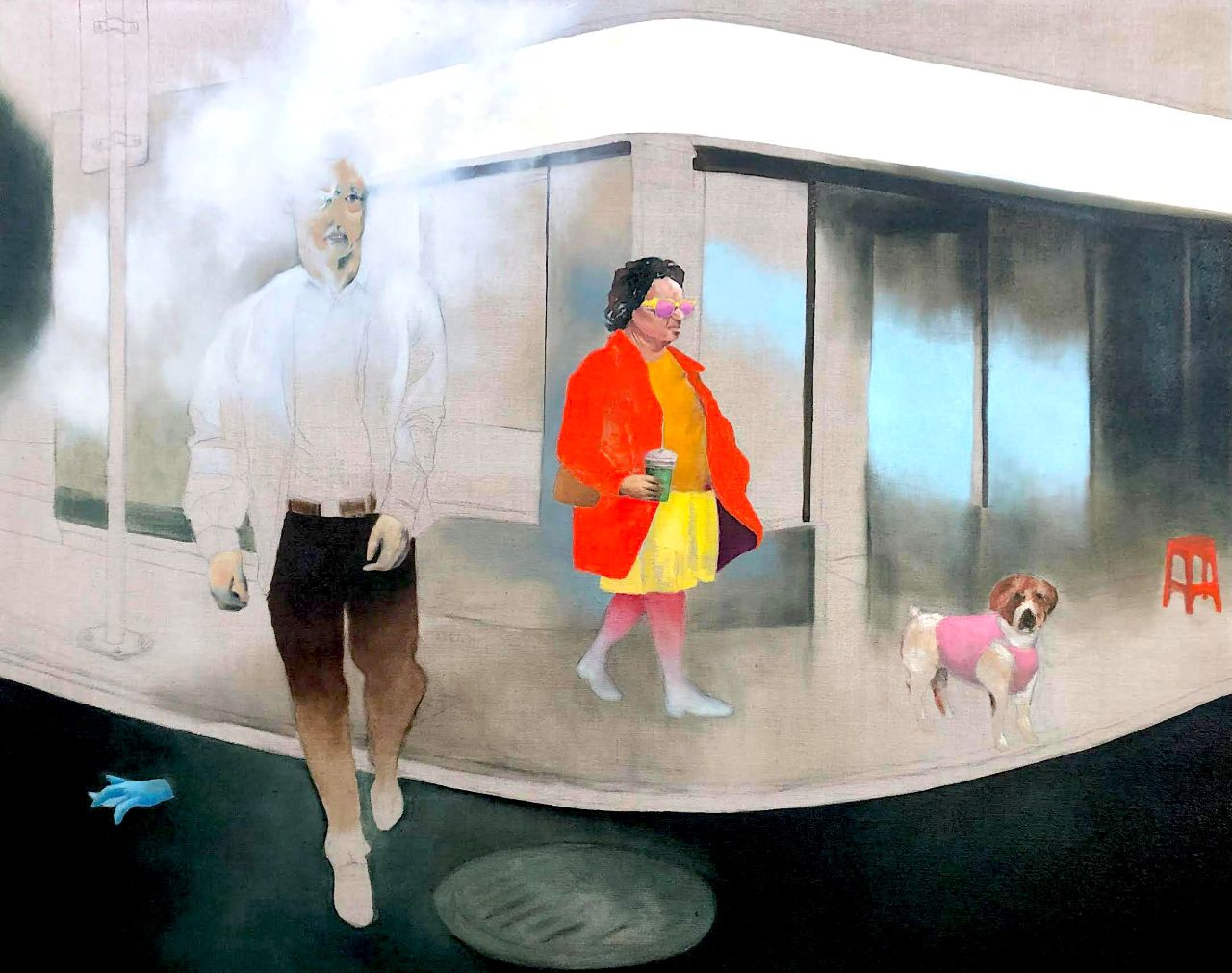
    Untitled (Street Corner with Dog), 2025, oil on linen, 56” x 48”

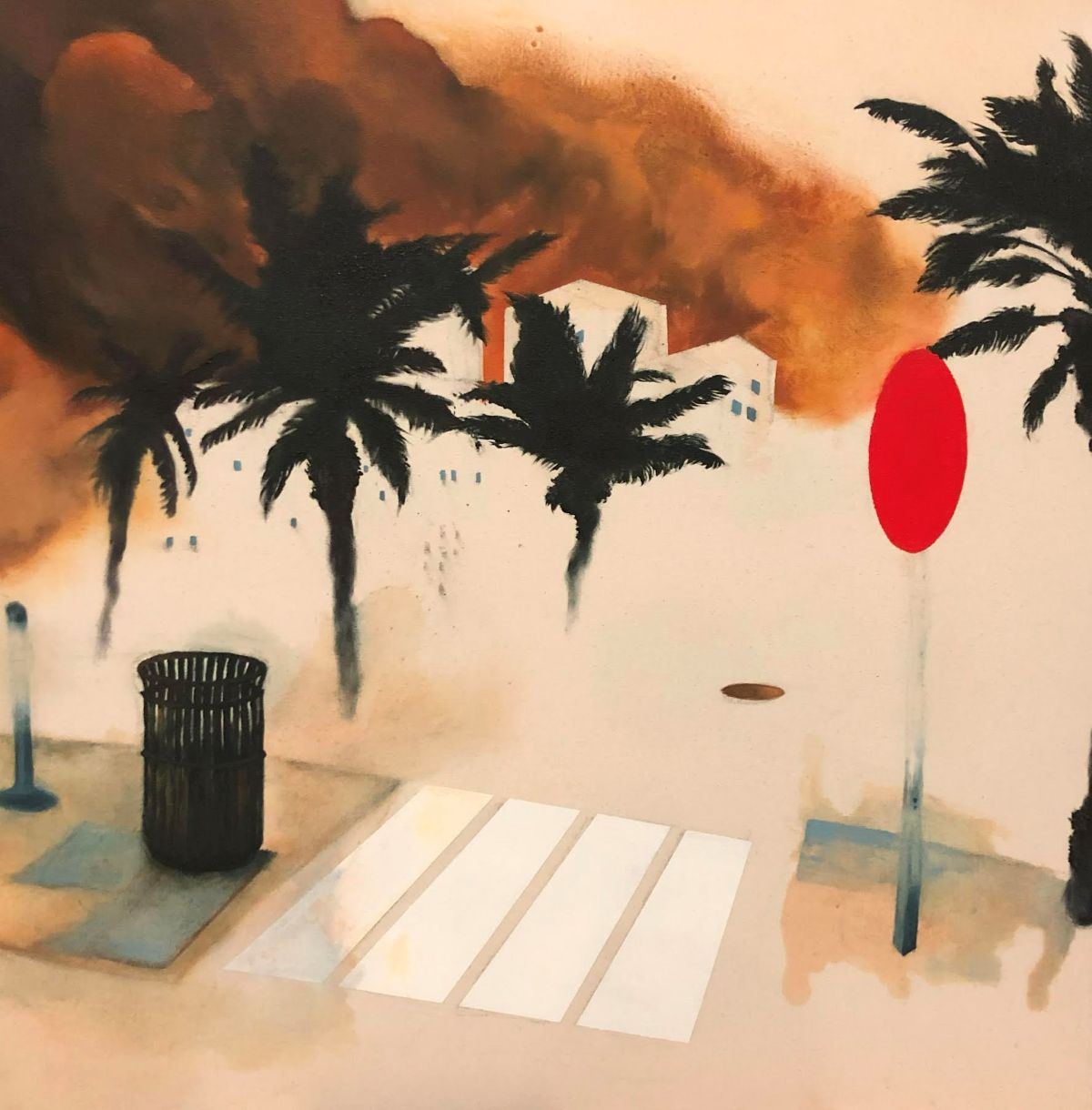
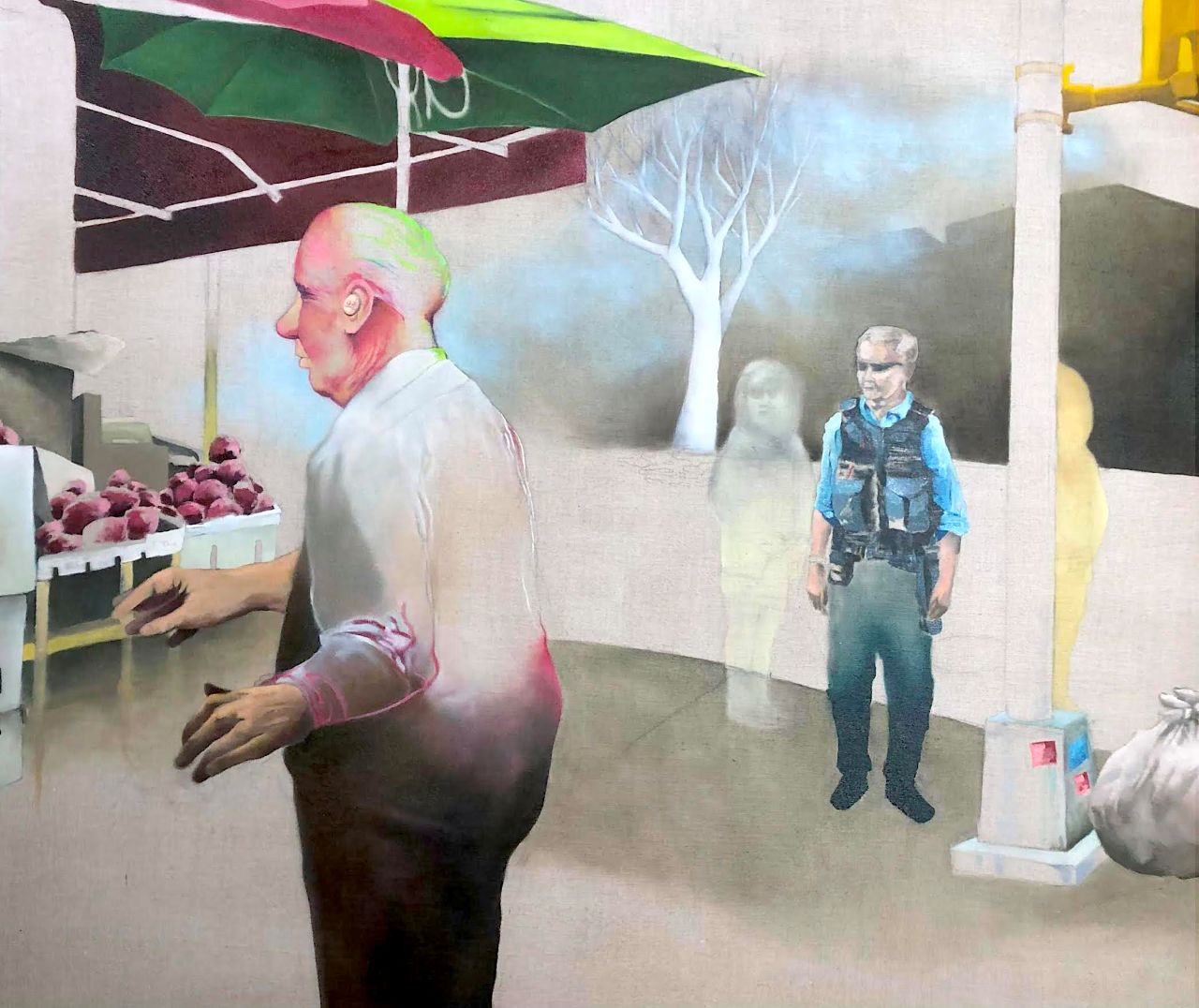
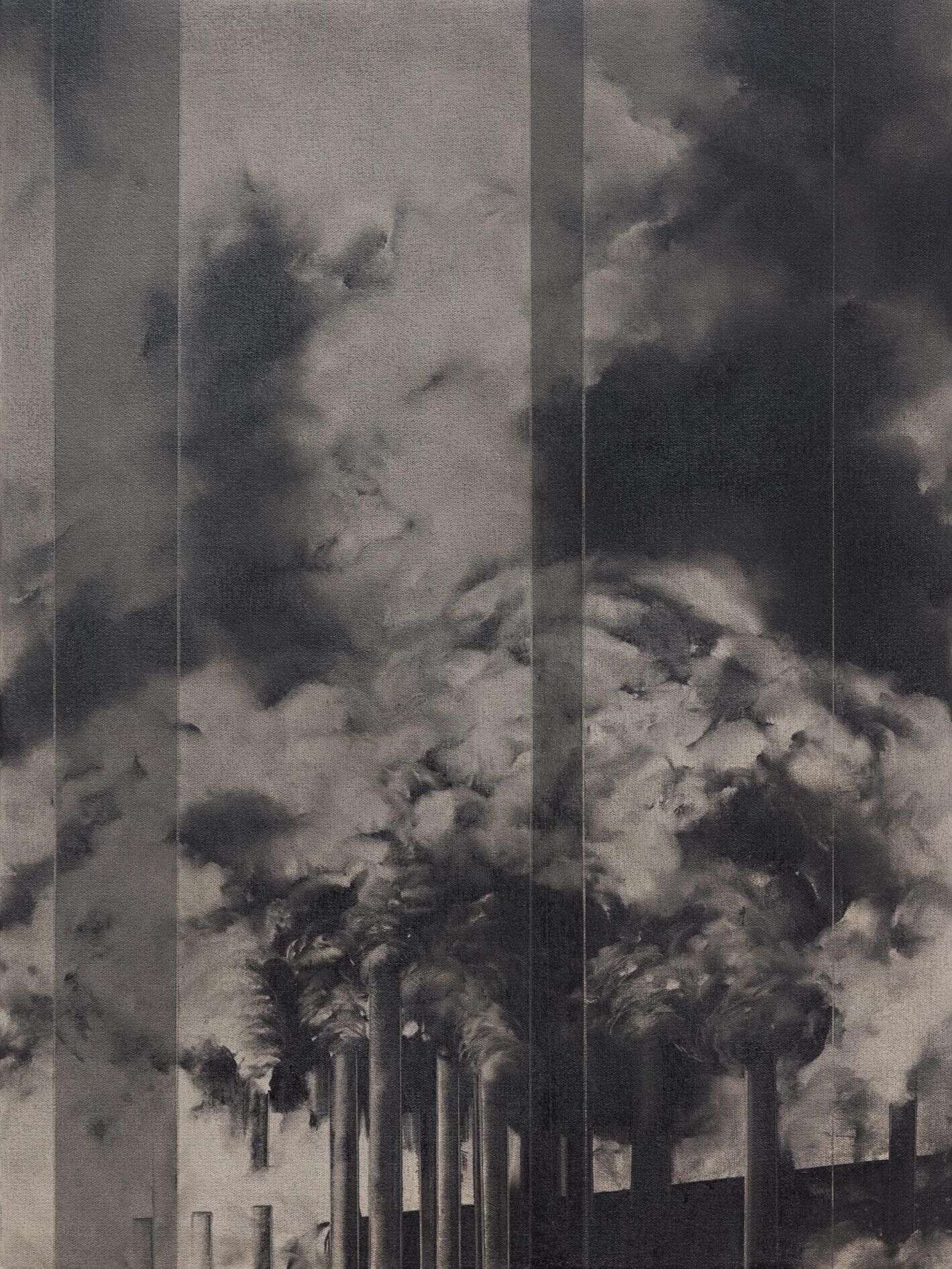
    Notably, the figures depicted in these oil paintings appear detached from one another. This is especially noticeable in the paintings described as Street Corner with Dog and Hearing Aid, in each of which the figures inhabit a non-place (Nicht-Ort). We all know these places – non-descript urban plazas and street corners, airport terminals, malls. Places where there is no room for stopping to breathe, where all traces of nature have been expunged. This is a visual rendering of disenchantment – a feeling of being disconnected in a very general sense, unable to find our way. St-Jacques describes it as ‘the unease of navigating a world we have meticulously constructed yet struggle to inhabit comfortably’. This off-kilter world he paints strikes me as a perfect visualisation of American novelist Don DeLillo’s postmodernist dystopia in his novel White Noise. A toxic cloud hangs over a town, imperceptibly perverting the lives of its population. Likewise, dark foreboding clouds appear on the horizons of St-Jacques’s ‘landscapes’, e.g., in his Forest Fire.

    Untitled (Forest Fire), 2024, oil on linen, 36” x 36”

    Originally St-Jacques thought of calling the exhibition ‘Angels in the Maze’, which seems apt given the feelings the paintings elicit as described above. But misgivings about the religious connotations of the word ‘angels’ led him instead to title it People in the City. This secularised title I find a little anaemic. Many of the figures he paints are suitably ethereal – like ghostly apparitions. Is the girl standing by the security guard in Hearing Aid fully present or momentarily visiting from another world? Hard to say. Indeed, these figures immediately reminded me of Toronto artist Rae Johnson’s paintings that, ironically, she called her Angel Series. In her works angels appear in bars, bath houses and on a lamplit street corner during a brawl.

    Untitled (Hearing Aid), 2025, oil on linen, 56” x 48”

    In St-Jacques’s paintings there is the otherworldly presence which heightens the sense of alienation, contrasting the banal with the preternatural or, dare I say it, the divine. This admixture is evidenced in his Night Road. Here a hastily parked car, with its lights on, illuminates a man, presumably the driver or a passenger, standing against the background of a city in the distance across a bay. The man seems spectral – poised to merge magically with the night sky above him.

    Untitled (Night Road), 2025, oil on linen, 56” x 48”

    As noted, the figures in the large paintings in the exhibition seem to be caught in the middle of some event. This feeling is accentuated by a theatricality. More precisely, it is as if the canvas in each is a stage, with actors surrounded by improvised props – a dog, a pair of discarded rubber gloves, a parked car, a stool, a fire escape and so on – each added to produce an atmosphere rather than its happening to be there. There is little that is natural about the scenes he creates. And this feature of his work is doubtless a reflection of the fact that for many years St-Jacques has primarily produced videos. Thus, these paintings seem to mark a transition in his work from video to painting.

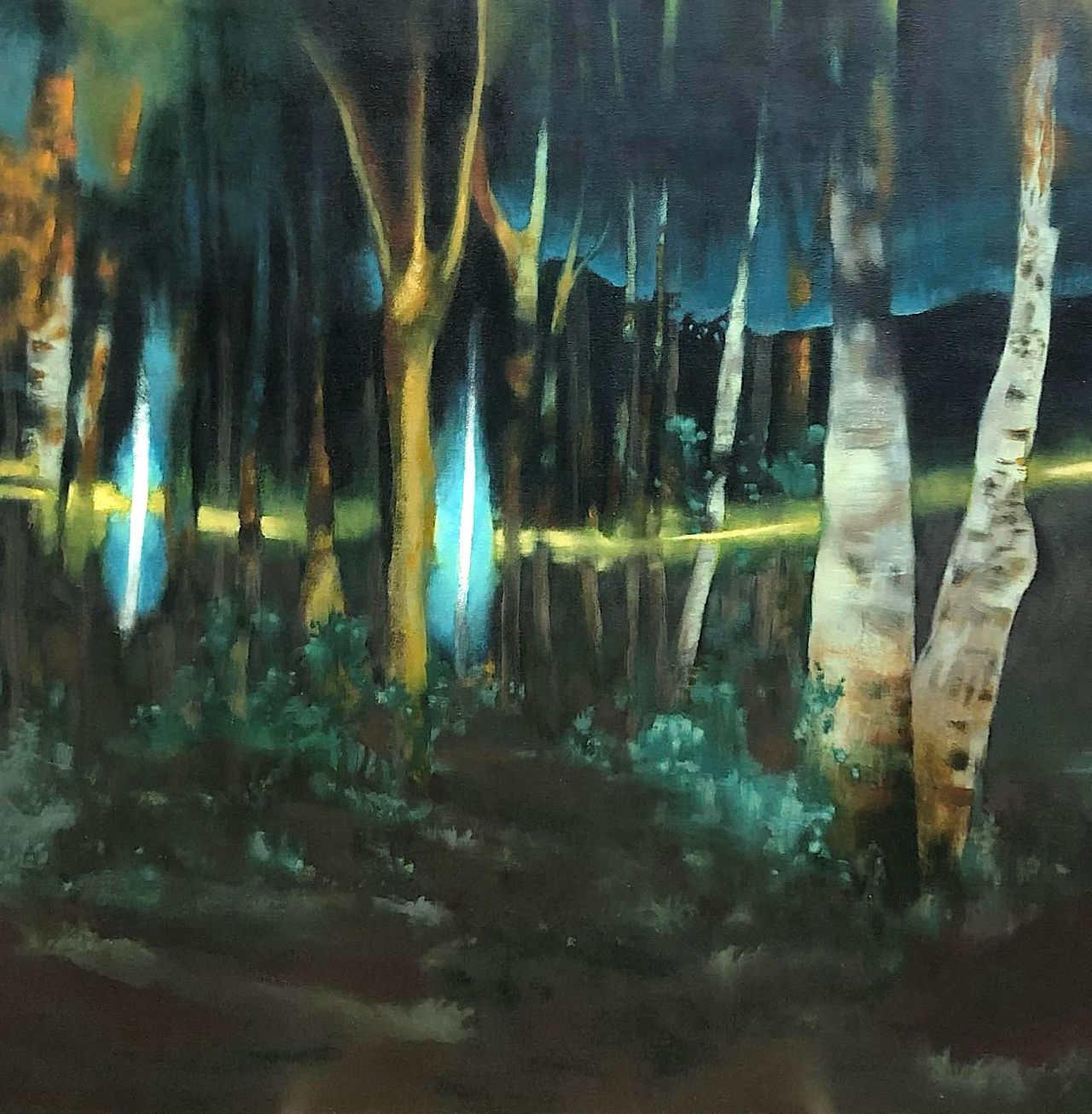
    And if we think of this work as transitional, then we wonder about its evolution. Certain aspects of St-Jacques’s work strike me as especially successful. They feature in the paintings in which the human figures are indistinct, minimally present, if there at all, as for instance in his Night Road. Similarly, his smaller oil paintings Night Forest and Forest Fire are powerful because they hint at human presence and thus have a psychologically edgy atmosphere to them. It seems to me that St-Jacques is a master of the psychological in this respect. Here I am thinking of the traces of human presence, as so wonderfully rendered by David Hockney in his famous Splash paintings, where all we see is the immediate aftermath of a diver with no one otherwise around. Coincidentally, Hockney was investigating the stillness of painting and photography in terms of failing to capture movement – something that is central, on the other hand, to video.

    Untitled (Night Forest), 2024, oil on linen, 36” x 36”

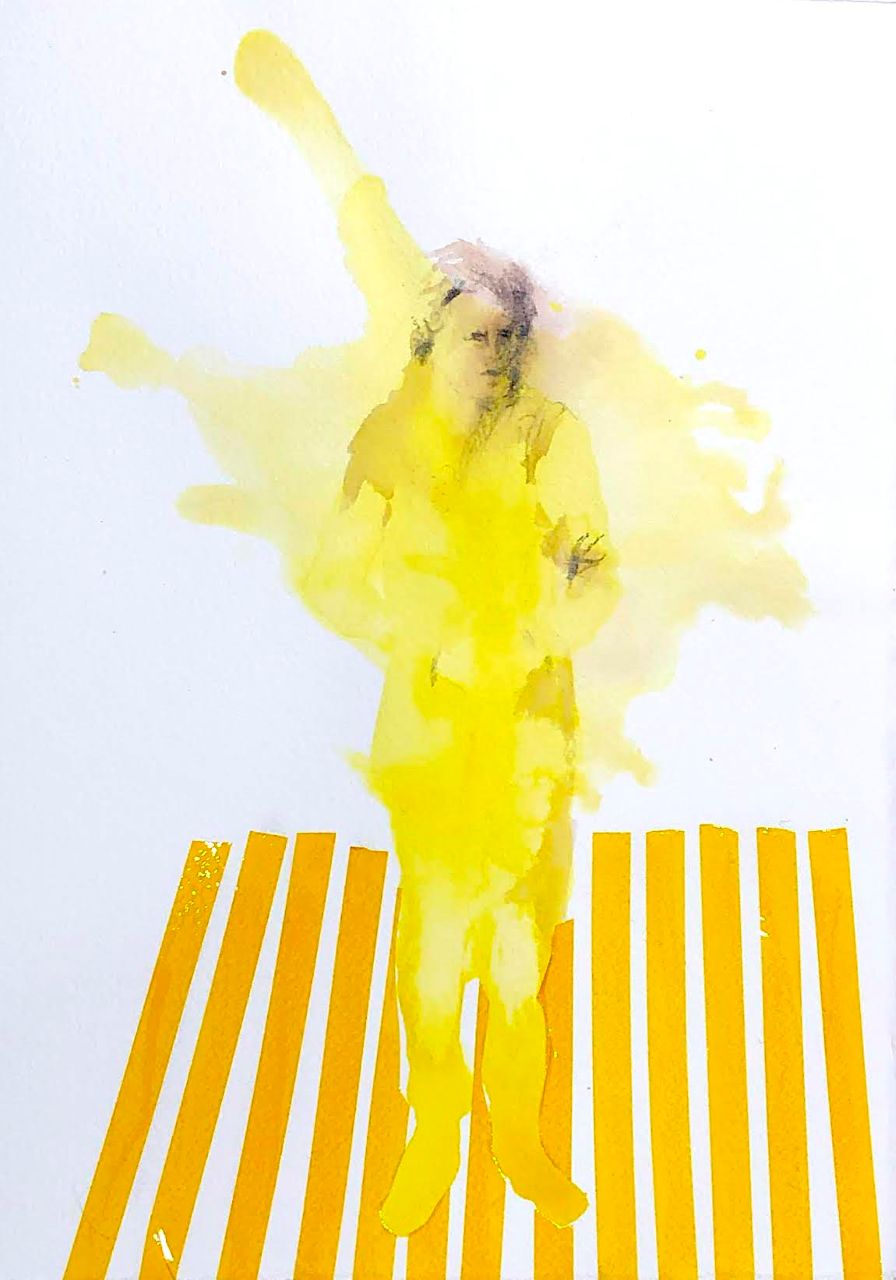
    Interestingly, also on display are a series of watercolour drawings of figures, clearly executed more spontaneously, less deliberatively than we find in the oil paintings. Particularly striking is his Disappearing Man, all yellow in his ephemerality.

    Untitled (Disappearing Man #11), 2026, ink on paper, 9” x 12.5”

    As is often the case with artists, it is their drawings and sketches that are most revealing. Curator Nigel Greenwood once remarked that looking at drawings “is often a short cut to understanding an artist…And so often I can duck the grand gesture, the public rhetoric, and see what the artist really wants to say, doing what comes naturally (or unnaturally).” (The Hayward Annual, catalogue, 1985) And that is the case here.

    Hugh Alcock

    Images are courtesy of Station Independent Projects

    *Exhibition information: Pierre St Jacques, People in the City, May 8 – 16, 2026, Station Independent Projects, Remote Gallery A, 568 Richmond St W., Toronto.

  • Interview with Jilly Frances

    Interview with Jilly Frances (JF) by Isha Sharma (IS)

    JF: Being an artist is a way of seeing, a way of being in the world. My work all grows out of paying attention. Shadows, clouds, the shape of a stone, the colour of a flower, the curve of a stick. I don’t often need to go looking for inspiration, I find it’s right in front of my nose all along – while I listen to music, slice a tomato, watch a film, go for a quiet walk outside, or observe my children get curious about the world. It’s often in the minutia where I am reminded that even humble traces of daily life can become points of entry into larger existential questions. I let nature romance me in this way, and it has continued to.

    JF: To me, each of my collections use materiality to explore different sides of the same themes. A constellation of art forms that work together to outline the same shape. In all of these disciplines, I feel that I am a vessel for the work to come through. Penning poems from experiences I witness, making ink from and with the ground, painting in collaboration with the pouring rain. In all of this work, there is a fragility and persistence held in tandem.

    When I look at the evolution of these collections, from Sky, to Ground, to Rain, I see an unfurling fist, an opening hand. I can look back and see myself surrendering to art more and more. In each series, I am collaborating with elements that are very dynamic – capturing the fleeting skies, organic collisions of colour from the ground, and of course the unpredictable flow of rain. I think this is where the friction lies and this is the journey for me (probably for many of us) – to move from a clenched fist to an open hand. Balancing surrender and intention always, and finding a rhythm within it.

    JF: The exhibition featured three of my collections – Rain, Ground, and Sky.

    The Sky series, where I paint the sky every day, holds a moment in time, connecting us to memory. The sky is a witness to our days and it offers a quiet way of remembering. I think of the etymology of the word ‘re-member’, to make oneself a member again, to re-connect to a moment, to re-connect to yourself. The skies do this for me, and I think the skies do this for many of us. Like a Memory.

    Jilly Frances, Skies, 2022

    The Ground series comes next, an exploration of natural or found materials from the ground – a collaboration with Mother Nature. I make my own inks from my daily environments, collecting elements from a walk home (sumac, elderberries, a fallen walnut). While these mundane materials can be completely ignorable to most of us, I work with them until they become quite expansive, transcending what they once were. There is a vulnerability that the materials have with one another, changing each other and transforming into new galaxies. A lot like us, always becoming. New colours are born from the different elements that touch one another – a love letter to creation. Like a Mother.

    Jilly Frances, Groundlings

    In my Rain series, the paintings are created outdoors in and with the falling rain. This collection embraces the unpredictable and finds a rhythm within it. There is a delicate dance between what my hand is doing and what the sky wants to do, a tension that mirrors what it’s like to be a person. In my work, there is a sensitive and sometimes difficult friction between surrender and intention, always. And this is a reflection of the human condition. Like a Mirror.

    Jilly Frances in front of her Rain series in her studio

    JF: The Rain and the Ground series are often very calming for people. I believe there is an inner recognition for folks that the paintings and the people witnessing them are made of the same stuff – nature, ground, water. There is a vulnerability to the materiality that I think also feels very human, and people tend to feel this.

    As for the Sky series, it began as just a personal practice, I had no intention of sharing it. Once I released a full year of these daily sky paintings at the end of 2020, the surprise gift in it was that it grew to include everyone else’s moments. Collectors will resonate with particular dates to mark the day a wedding took place, the day a baby was born, a loved one passed, a first kiss, a story of personal struggle, an anniversary, or to mark a new chapter. Getting to hold these intimate stories and memories is an honour and I am endlessly in awe of humanity. There is something so universal about our resonance with the sky – the way it can mirror our mood, hold a feeling, make a quiet promise. This body of work is an offering, giving permission for folks to feel their feelings.

    Jilly Frances, Year of Skies, 2020

    JF: As the world becomes more and more digital and technological and two dimensional, I find myself deeply desiring the texture and imperfections of nature, it’s where the soul is. With more and more soulless art and design in the wake of AI, I yearn for it, and so I think that’s what draws me in. In the same way, I also think that people are hungry for things that have some fingerprints on them. On a spiritual level, maybe without being able to name it, I notice that people are drawn to that touch-of-hand creation. As much as AI poses threats and problems, I also think that it means that artwork made from human hands, human hearts, human minds, is all the more valuable. More valuable than ever before.IS: What is your message to mothers who are balancing both homes and careers? How should they prioritize?

    JF: I’m not big on advice, I truly think every path is different. Keep consistency in making your work, whether it is your career or on the side of another job, it doesn’t matter, don’t stop making things. Keep company, find other creatives who you can bounce your ideas off of, tighten your ideas, or loosen them and break them wide open. Keep courage, it’s a terrifying thing to make art and put it out into the world. Continue to know yourself more and more, and the honesty and vulnerability of who you are or what you have to say will come through in the work. Trust that the world needs what you have to offer.

    Text and photo: Isha Sharma

    *Exhibition information: Jilly Frances, Like a Mirror, Like a Mother, Like a Memory, May 8 – 10, 2026, Kikospace, 2104 Dundas St W, Toronto. Gallery hours: Fri 12 – 3pm, Sat & Sun 10am – 3pm.

  • CONTACT PHOTOGRAPHY FESTIVAL 2026

    CONTACT PHOTOGRAPHY FESTIVAL

    May / Various locations across the Greater Toronto Area

    CONTACT Photography Festival returns May 2026 for the 30th edition of its annual citywide event. The Festival provides numerous opportunities to experience a diverse range of exhibitions in neighbourhoods across greater Toronto, and to take in hundreds of events including openings, lectures, artist talks, book reviews, workshops, and more, forging creative connections and sparking engagements.

    The 2026 Core Program features curated Exhibitions and Public Art Installations. In 2026, lens-based and mixed-media works examine subjects including decolonial practices, community-building, migration, looking backwards and looking forward, activism, mourning and loss, personal and collective memory, politics and poetics, and feature explorations in new media as well as a return to early photographic practices and experimentation.

    Public Art Programs involve public artist talks, workshops, portfolio reviews and more.

    In the Open Call Exhibitions you can visit community-generated exhibitions at venues throughout the city.

    Please visit the CONTACT website for more information.

    *Exhibition information: May 1 – May 31, 2026, some exhibitions begin before and/or extend beyond the month of May. Held at venues across the Greater Toronto Area

    **Featured image: Chloe Beaulac, Sanctuary at Conservation & Culture.

  • CONTACT 2026 / Artoronto.ca picks

    CONTACT Photography Festival returns May 2026 for the 30th edition of its annual citywide event. So, it isn’t easy to pick exhibits to see. We all look forward to seeing much more than the ones listed but these caught our interest and everyone is sure to have their own list as well.

    EMESE KRUNAK-HAJAGOS publisher/editor/writer

    Jessica Slipp: Becoming Rock
    May 6 – August 1, 2026
    The Image Centre

    Jessica Slipp, Becoming Rock (Fleuve Rock), 2018–ongoing, multi-channel video (still). Courtesy of the artist

    Aaron Jones: Lithic
    April 12 – December 31, 2026
    McMichael Canadian Art Collection

    Aaron Jones, Lithic, 2026. Courtesy of the artist
    PHIL ANDERSON publisher/writer/photographer

    Monica Rooney: Accidently Affirmative 
    May 2 – 31, 2026
    Café ZuZu

    Chloe Beaulac: Sanctuary
    May 1 – 31, 2026
    Conservation & Culture


    STEVE ROCKWELL publisher/writer

    Sara Cwynar: Baby In Blue 
    May 15 – August 16, 2026
    MOCA Toronto

    Sara Cwynar, Baby Blue Benzo stills, 2024. Photo: Chase Barnes

    Yann Pocreau:The Prefix Prize 6
    May 1 – July 25, 2026
    Urbanspace Gallery

    ANGIE OSPINA

    Group Exhibition Through a Tinted Frame
    May 1 – 31, 2026
    99 frames

    Abdulganiyu Yusufu, Burnt Out, 2025

    Adrian Merritt Smith: ReTREAT
    May 1 – 31, 2026
    18 Waits

    Adrian Merritt Smith, Retreat 2, 2021

    ANTONELLA PECORA RUIZ writer/photographer

    Spring Hurlbut: Dyadic Circles
    May 9 – June 27, 2026
    Stephen Bulger Gallery

    Spring Hurlbut, Barley and Cujo, 2019–2020© Spring Hurlbut / courtesy Stephen Bulger Gallery

    Larry Fink: Social Graces & Runway
    May 6 – August 1, 2026
    The Image Centre

    Larry Fink: Social Graces & Runway, Larry Fink, Hair Wars, Detroit, Michigan, 1997 (printed later), gelatin silver print. © Larry Fink/MUUS Collection. The Image Centre Collection, Gift of Brenda Coleman, in memory of Matthew Coleman, 2017

    ELIN MACRAE writer/photographer

    Tim Georgeson: Kupa Piti / White Man in a Hole
    May 1 – 24, 2026
    Billboards at College St and Clinton St

    Tim Georgeson, Kupa-Piti, Untitled 1, 2023/2024. Courtesy of the artist

    HUGH ALCOCK writer

    Kirstin Sjaarda, Field Works
    May 5 – 30, 2026
    Akasha Art Projects Inc

    Johannes Zits, Through the Prism of Fire
    May 1 – July 31, 2026
    Alleyway Gallery

    POLYNA ALEXSEEV writer/photographer

    Sheida Soleimani: Ghostwriter
    May 1 – 24, 2026
    Billboards Dundas St W and Rusholme Rd

    Sheida Soleimani, Dissidant, 2025, Courtesy of the artist Edel Assanti, London, and Harlan Levey Projects, Brussels.

    RASHANA YOUTZY writer/photographer

    Wayne Salmon: Play Mas: A Portrait of Carnival
    May 9 – 30, 2026
    Gallery 1888

    Wayne Salmon, Midnight Robber, 2000

    April Hickox: Vantage Point-Passing
    May 1 – August 29, 2026
    Onsite Gallery

    April Hickox, Untitled – Vantage Point Series. Courtesy of the artist.

    YEHYUN LEE writer/photographer

    Allen Ginsberg: Friendship and Community / The Beat Generation on Film
    May 1 – 31, 2026
    Thomas Fisher Rare Book Library at U of T

    Allen Ginsberg: William Burroughs and Jack Kerouac mock fighting at 206 E 7th Street apartment, 1953

    Paula Ner Dormiendo: What Makes a House a Home?
    January 1 – May 31, 2026
    Bramalea Ltd Community Park

    Paula Ner Dormiendo, Breakfast with Lolo, 2025

    Images are courtesy of CONTACT Photography Festival.

    To make your own selection of exhibitions please click here.

  • Michael Thompson at Franz Kaka

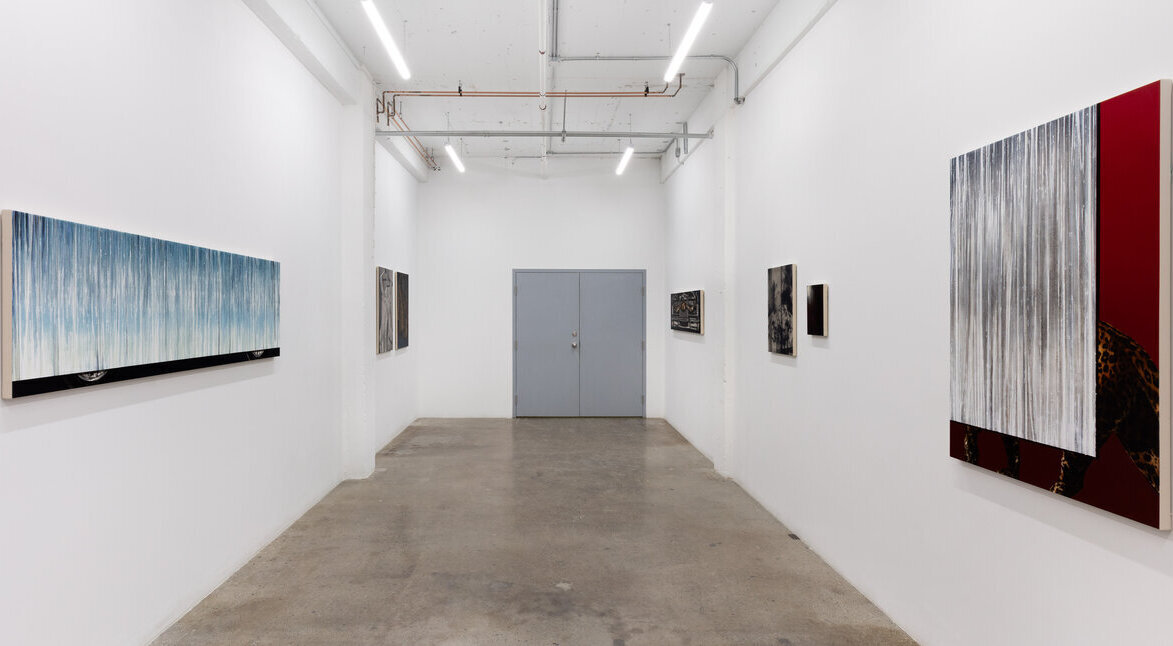
    At first glance Thompson’s paintings appear to fit the genre known as photorealism. Like Richard Estes and Ralph Goings, for instance, he has a penchant for painting everyday objects in a way that makes them indiscernible from photographs. But on closer inspection the viewer notices something distinctive about these paintings on display on the white walls of Franz Kaka; something that suggests they are not in fact photorealist works at all.

    Installation view of Michael Thompson, Panther Platform at Franz Kaka

    The history of Thompson’s own family – several generations of Ford car plant productions workers in London, Ontario – has taught him that the workers have become increasingly alienated from their labour. More precisely, they have become distanced from their efforts through the growing automation of production processes. This alienation, and consequent nostalgia for a more meaningful past, Thompson expresses by means of the parallel evolution of image technology – from film and photography through to digital technologies such as photoshop.

    It is interesting that Thompson depicts the images produced by these various technologies through old-fashioned oil paint. Why does he choose to paint this imagery when it is qualitatively indistinguishable from digital printing? Clearly it is a deliberate decision, albeit informed by the precedence of his practice as a painter. One supposes that as his works are a commentary on these image technologies this works best when the medium he uses is not itself one of them.

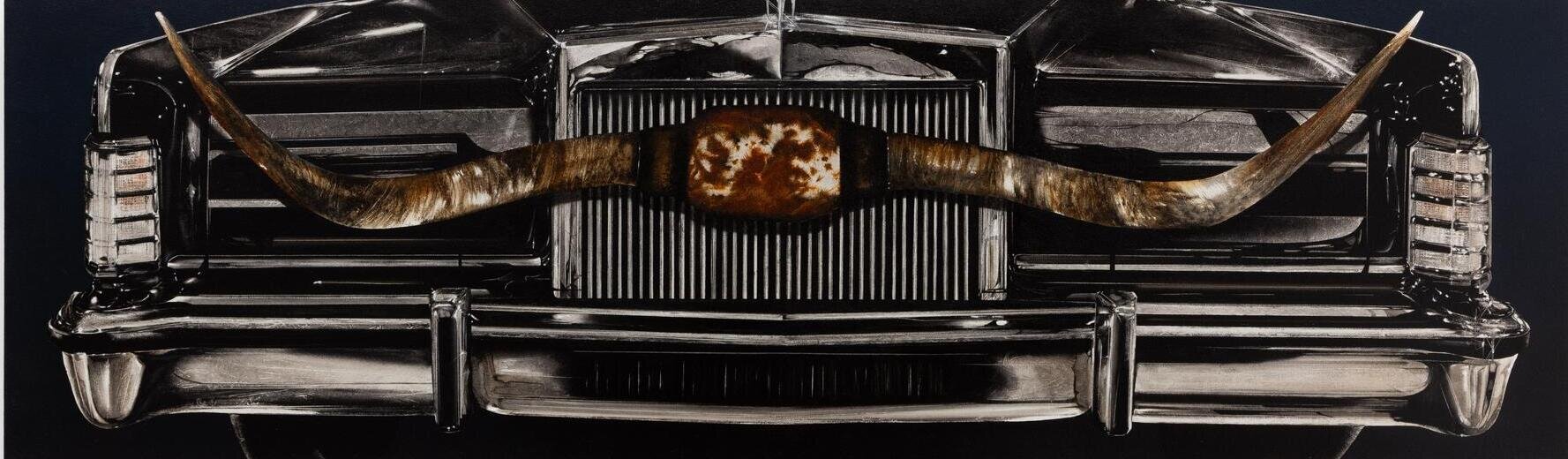
    Continental, 2026, oil on canvas, 18 x 60 inches

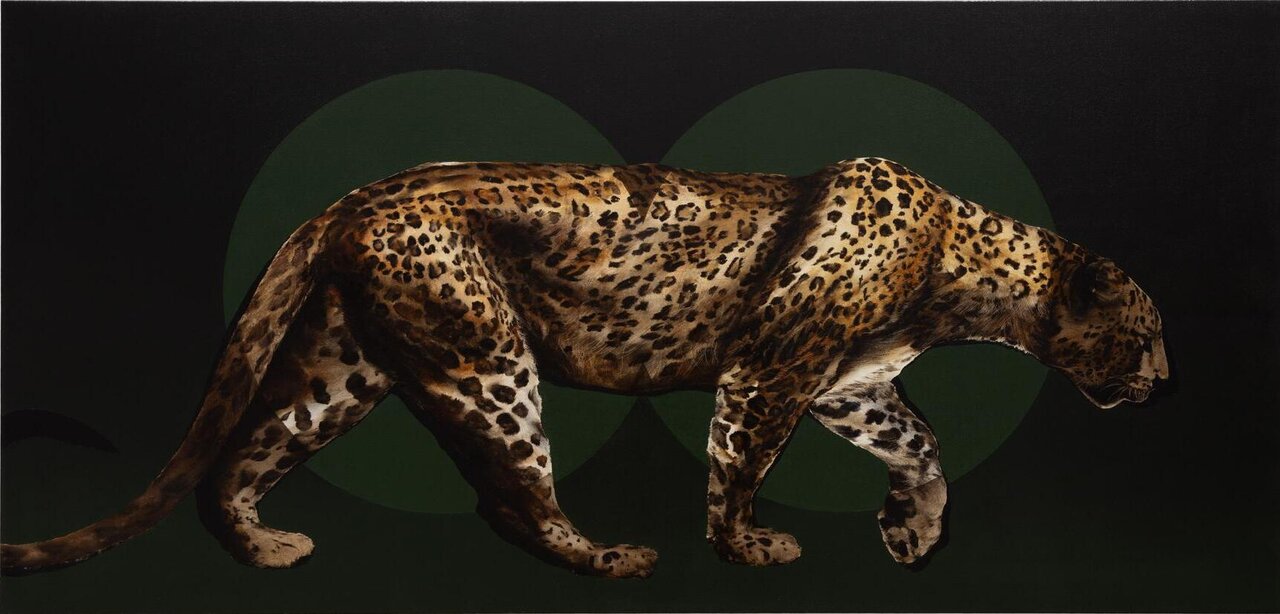
    It is also notable that the images he chooses to paint are ‘found’, that is to say, he takes them from the internet, rather than making them himself. This is another form of removal or distancing mentioned earlier with regards to automotive production processes. The objects he paints – articles of clothing, cars, big cats, industrial buildings – are not themselves the focus of his work. That sounds odd insofar as what imagery he selects is nonetheless important. What I mean is that in essence is paintings are about images – how they are produced, how we relate to them and so on – and not straightforwardly about the things they depict.

    Prowler, 2025, oil on canvas, 36 x 75 inches

    This fact immediately led me to think about Thompson’s work in terms of what French sociologist and philosopher Jean Baudrillard called hyperreality. This is not a term mentioned in the short essay accompanying the exhibition. So I don’t know if Thompson consciously has the notion in mind, but it certainly helps us to make sense of his work.

    Baudrillard claimed that while social order, in what he refers to as the modernist era, was determined by labour and production, today in the postmodernist era labour itself is a sign of one’s social status. This is reflected in the fact that wages are no longer a measure of one’s productivity, but rather are a measure of one’s place or status in society more generally. That is the fate of the Ford car plant workers in Thompson’s own family no less. In this postmodern world, according to Baudrillard, our experiences are primarily received through communication technology – social media, television, the internet – in other words, largely as simulations of reality. Our experiences are increasingly mediated by the screen, rather than the outside world. These simulations, or simulacra, cease to be based on an independent reality, but instead become that which constitutes our ‘reality’. We have come to live in a hyperreality, wherein entertainment and media technologies provide more intense experiences, and replace the banal experiences of the outside world, i.e., the real.

    Mist, Might, 2026, oil on canvas, 24 x 20 inches

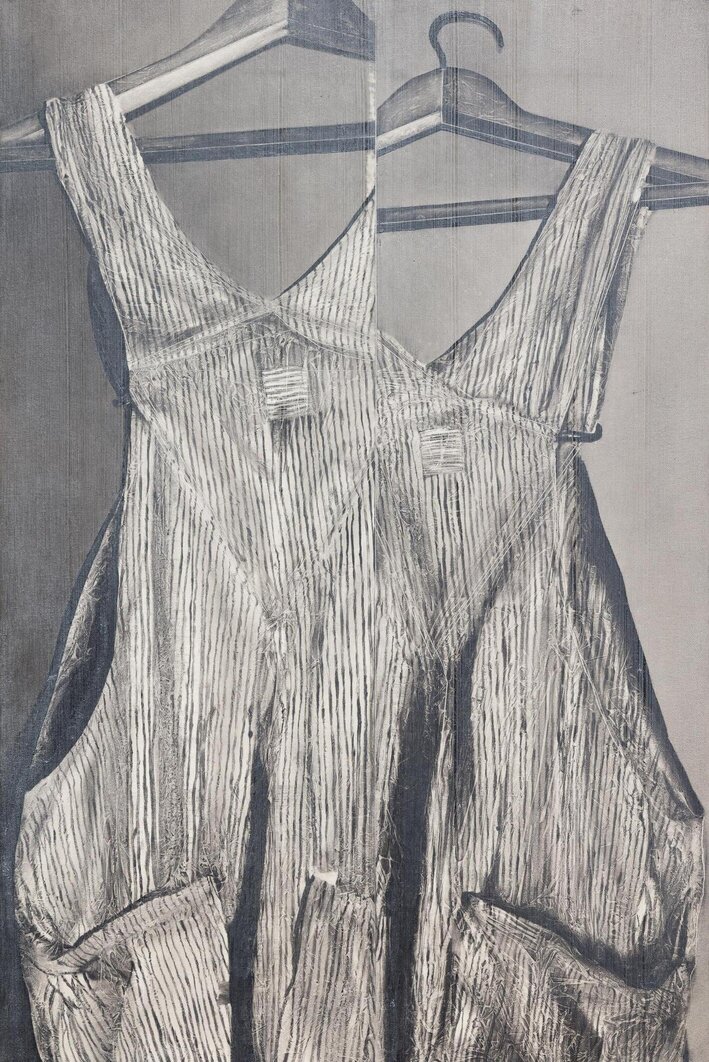
    It is surely within this hyperreality that Thompson’s practices are located. The images he selects from the internet interest him as images, simulations, and not as referents to the real. He is not simply depicting, for instance, the dress or overalls in Double Over, but rather he is focussed on construction of the image itself. Here he pushes cellophane onto the painted surface to simulate digital techniques, e.g., effects created in photoshop. His painting, therefore, makes visible the images as images. Were he to have used digital techniques directly, of course, their digitalness, so to speak, would be invisible to us, taken for granted.

    Double Over, 2026, oil on canvas, 36 x 24 inches

    Hence I would call his paintings hyperrealist and not photorealist. While the photorealist uses paint to simulate the photographic image, the hyperrealist uses paint to highlight the images as simulations per se. And these simulations are not representations of the real, but are images as signifiers that gain their meanings in relation to other signifiers.

    Steeling, 2026, oil on canvas, 6 x 36 inches

    Thompson’s work is technically dazzling and conceptually rich; so much so it is difficult for the viewer to make sense of it all at first glance, unaided. It is cerebral work in this sense but visually rewarding nonetheless. Indeed, the exhibition’s venue, Franz Kaka, consistently shows work that challenges the viewer, but in a way that is exciting. The gallery is a true gem in the city, one of the very best venues displaying the works of talented artists, many of whom live in Canada.

    Hugh Alcock

    Photo credit: LF Documentation.

    *Exhibition information: Michael Thompson, Panther Platform, March 13 – April 25, 2026, Franz Kaka, 208-1485 Dupont St, Toronto. Gallery hours: Thursday – Saturday 12 – 5pm.

  • Remembering Gwen Tooth at Propeller Art Gallery

    Gwen Tooth’s talent lives on through the memorial exhibition Intangible Experiences, which was curated by her creative community at Propeller Art Gallery. This exhibition showcases abstract art that honours Gwen’s profound influence and vivacious spirit.

    Gwen Tooth in front of her work at Propeller Art Gallery

    Gwen, active at Propeller from 2013 until her passing in 2025, was best known for her abstract paintings and the breadth of her expression. Her series often embodied her fascination with still-life subjects, landscapes, and the forces of nature. Her use of vivid colours and expressive brushstrokes transformed blank canvases into lively, intimate, and curious spaces, inviting the viewer to partake in these visual conversations.

    Installation view of Gwen Tooth, Intangible Experiences at Propeller Art Gallery

    This was the case upon my first glance at Gwen Tooth’s work, which consisted of Let Loose 16 and Self-portrait with Mother’s Wedding Hat, which were placed in the gallery’s entrance hall. Further meditation on these works, as well as a meaningful chat with Tom Taylor, the gallery’s director, exposed a profound artist whose paintings present an outward expression of her inner landscapes and her complex, bold approach to art and life.

    Gwen Tooth, Let Loose 16, acrylic on canvas, 24 x 24 x 1.5 inches

    Gwen Tooth, Self-Portrait with Mother’s Wedding Hat, acrylic on canvas, 24 x 24 x 1.5 inches

    Through her own pieces and those created in tribute to her by her peers, it is clear that Tooth has left a lasting impression of serenity, adventure, and originality. Artists like Nancy Buckingham and Linds Miyo have also contributed to this celebration of Gwen’s life and work. Buckingham’s A Moment In Time With Gwen, a whimsical ink sketch of Gwen during a summer visit to Toronto’s James Gardens, testifies to this visual impression of the late artist. In her piece’s accompanying statement, Buckingham highlights that the point of the sketch piece was not to “create a finished piece but to ‘capture her essence’”. Amidst the quiet beauty of nature, Gwen appears calm, focused, and present. Buckingham’s work allows the viewer to learn about Gwen’s work ethic and creative process, adding an intimate layer that bolsters appreciation of her work and persona.

    Nancy Buckingham, A Moment in Time with Gwen, ink on watercolor paper, 7 x 10 inches

    An Original (Just Like Gwen) by Linds Miyo, a longtime friend and fellow artist, remembers Gwen Tooth’s fearless use of colour and her encouragement to explore art as an adventure. This abstract reflection speaks to Gwen’s impact on the local art scene. The artist’s statement relates the story of a trivial chat, with Miyo claiming that it “renewed my spirit and brought me back to myself in a way I can’t even describe. Gwen had that effect on people. She was an original, and I’m thrilled to submit this original for her show.” I find that this piece particularly illustrates Tooth, as despite not having known her, but learning of her through the Gallery’s content and Tom Taylor, one comes across a similar picture that is precise as it is wild – the bold colour, methodological blending and unrestricted geometric forms. The white space at the top makes me feel there is room to feel, think, and evolve, echoing a saying of Gwen’s that Tom Taylor shared with me about her being in constant conversation with her canvas.

    Linds Miyo, An Original (Just Like Gwen), mixed media: chalkboard paint and acrylic on hand-stretched raw canvas, 28 x 18 inches

    Looking at Gwen Tooth’s work, I am struck by the impression she leaves behind – a reminder of her observant, chameleon-like ability to express herself (as a comparison between Distant Fruit 16 and Indian Ocean Variations #9 makes) and authentic spirit, whose influence continues to resonate through her vibrant creations and the memories shared by those she touched.

    Gwen Tooth, Distant Fruit 16, acrylic on canvas, 12 x 12 x 1.5 inches

    Gwen Tooth, Indian Ocean Variations #9, acrylic on canvas, 36 x 36 x 1.5 inches

    In addition, the Intangible Experiences also features a poignant memorial video, with clips from past exhibitions, glimpses of her family and peers, and her own voice, sharing her stories, passions, and essence with viewers. Furthermore, the community’s response was overwhelming, with Propeller receiving 177 submissions from 128 artists, each presenting emotional, visual and intellectual experiences through playful compositions of form, texture, colour, gesture, and line. These works are displayed both in-gallery and online, reflecting the diverse ways artists have connected with Tooth’s legacy.

    Installation view of Gwen Tooth, Intangible Experiences at Propeller Art Gallery

    Antonella Pecora Ruiz

    Images are courtesy of Propeller Art Gallery.

    *Exhibition information: Gwen Tooth, Intangible Experiences, March 25 – April 12, 2026, Propeller Art Gallery, 30 Abell St, Toronto. Gallery hours: Wed – Sat, 1 – 5:30pm, Sun 12 – 4pm.

  • Hassan Hajjaj at the Aga Khan Park

    Hassan Hajjaj: La Salle de Gym des Femmes Arabes / The Arab Women’s Gym

    Hassan Hajjaj’s La Salle de Gym des Femmes Arabes transforms Aga Khan Park into a vivid open-air encounter with colour, fashion, and female athleticism. The free exhibition presents a series of photographic portraits in which sport and style merge, placing Arab women at the centre of images that are at once playful, theatrical, and sharply self-aware. Curated by Marianne Fenton, the installation uses the park’s public setting to extend that sense of visibility, allowing the work to meet viewers outside the conventions of the gallery space.

    View of Hassan Hajjaj: La Salle de Gym des Femmes Arabes, Armstrong, 2015/1437 at the Aga Khan Park. Photo: Nusrat Papia

    What stands out first in these photographs is their visual intensity. Hajjaj dresses his subjects in boldly coloured tracksuits, floral coats, designer-branded niqabs, and statement shoes, surrounding them with equally vibrant borders made from everyday canned goods arranged like North African–inspired mosaics.

    Header 2006/1427 framed photography by ©Hassan Hajjaj, 2006/1427. Part of La Salle de Gym des Femmes Arabes series. Courtesy of Hassan Hajjaj Studio

    Across the series, athletic accessories such as boxing gloves, footballs, surfboards, and gym shoes appear not simply as props but as part of a highly stylized image world in which fashion, sport, and performance are inseparable. The mix of logos, textiles, and saturated colour gives the photographs a pop sensibility, while the use of branded motifs such as Nike and Louis Vuitton turns consumer culture into a visual language that is both familiar and subtly disruptive.

    Red Nike 2011/1432 framed photography by ©Hassan Hajjaj, 2006/1427. Part of La Salle de Gym des Femmes Arabes series. Courtesy of Hassan Hajjaj Studio

    The women in these images do not appear as passive sitters; they pose, spar, balance, and confront the camera with striking composure. Some wear hijabs or niqabs paired with boxing gloves or athletic wear, creating images that refuse the usual oppositions between modesty and movement, tradition and modernity, fashion and strength. By showing women boxing, playing soccer, and surfing, the series reimagine the gym as a space of confidence, performance, and agency rather than restriction, and in doing so challenges reductive assumptions about Arab and Muslim women.

    Head to Head, framed photography by ©Hassan Hajjaj, 2006/1427. Part of La Salle de Gym des Femmes Arabes series. Courtesy of Hassan Hajjaj Studio

    The outdoor installation adds an important layer to that meaning. Wallpaper describes the works in Aga Khan Park as a run of low billboards, where women in boldly coloured sportswear and floral outerwear appear in sparring poses under the open sky. Seen in a public park rather than inside a closed museum, these photographs gain a different kind of force: they occupy shared space, making images of Arab women in motion visible to casual passersby as well as intentional visitors. That shift matters, because a series concerned with representation and stereotype becomes even more resonant when placed in an environment defined by openness, access, and everyday public movement.

    Southpaw, framed photography by ©Hassan Hajjaj, 2012/1433 (left) and Orthodox, framed photography by ©Hassan Hajjaj, 2011/1432 (right), both Part of La Salle de Gym des Femmes Arabes series. Courtesy of Hassan Hajjaj Studio

    Seen outdoors, Hajjaj’s photographs feel especially lively and immediate. As the works unfold along Aga Khan Park, La Salle de Gym des Femmes Arab becomes both a striking portrait series and a meditation on visibility in public space.

    Nusrat Papia

    *Exhibition information: Hassan Hajjaj, La Salle de Gym des Femmes Arabes, September 13, 2025 –September 7, 2026, Aga Khan Park, 77 Wynford Drive, Toronto.

  • Mehdi Dandi at Stephen Bulger Gallery

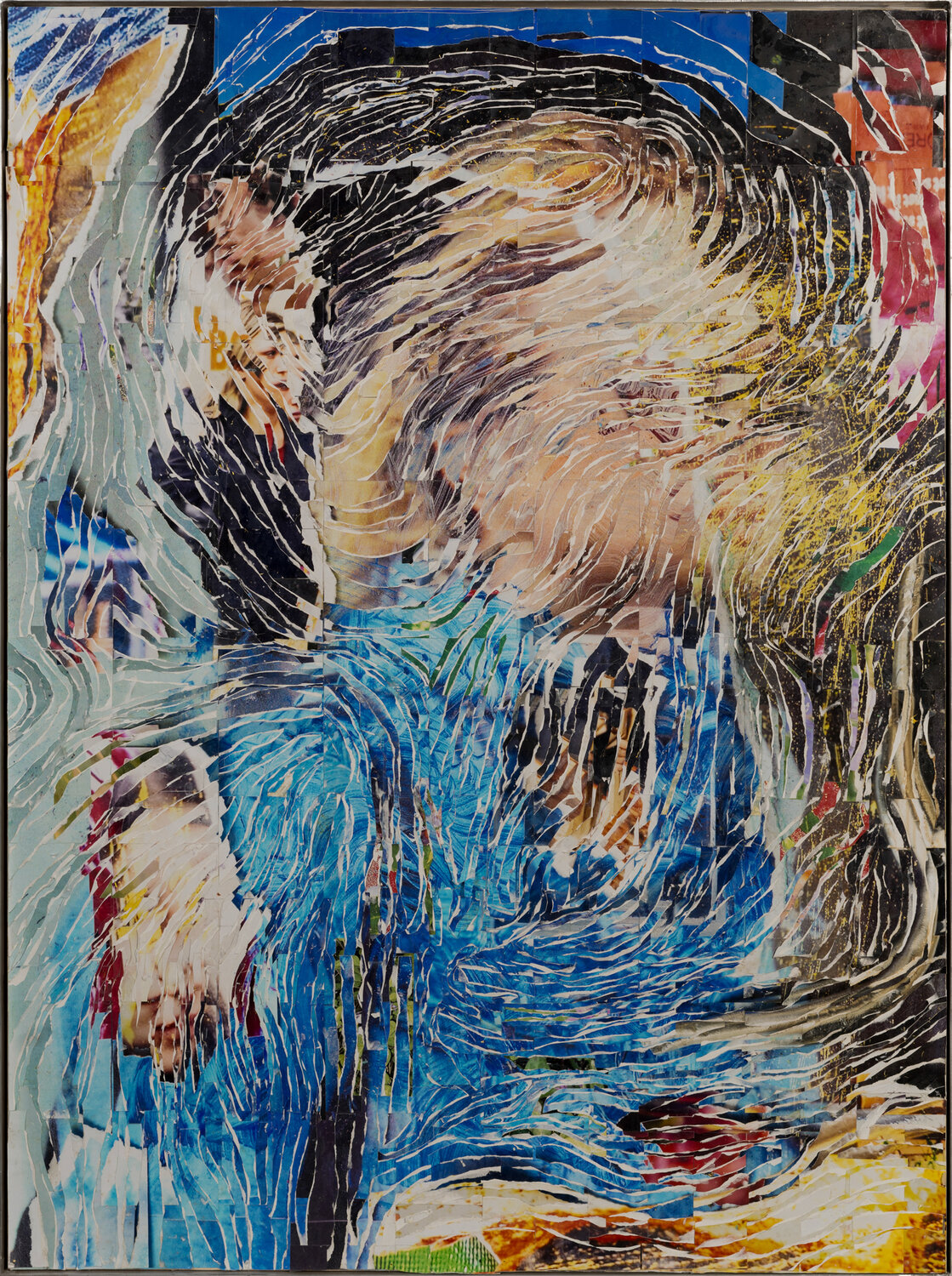
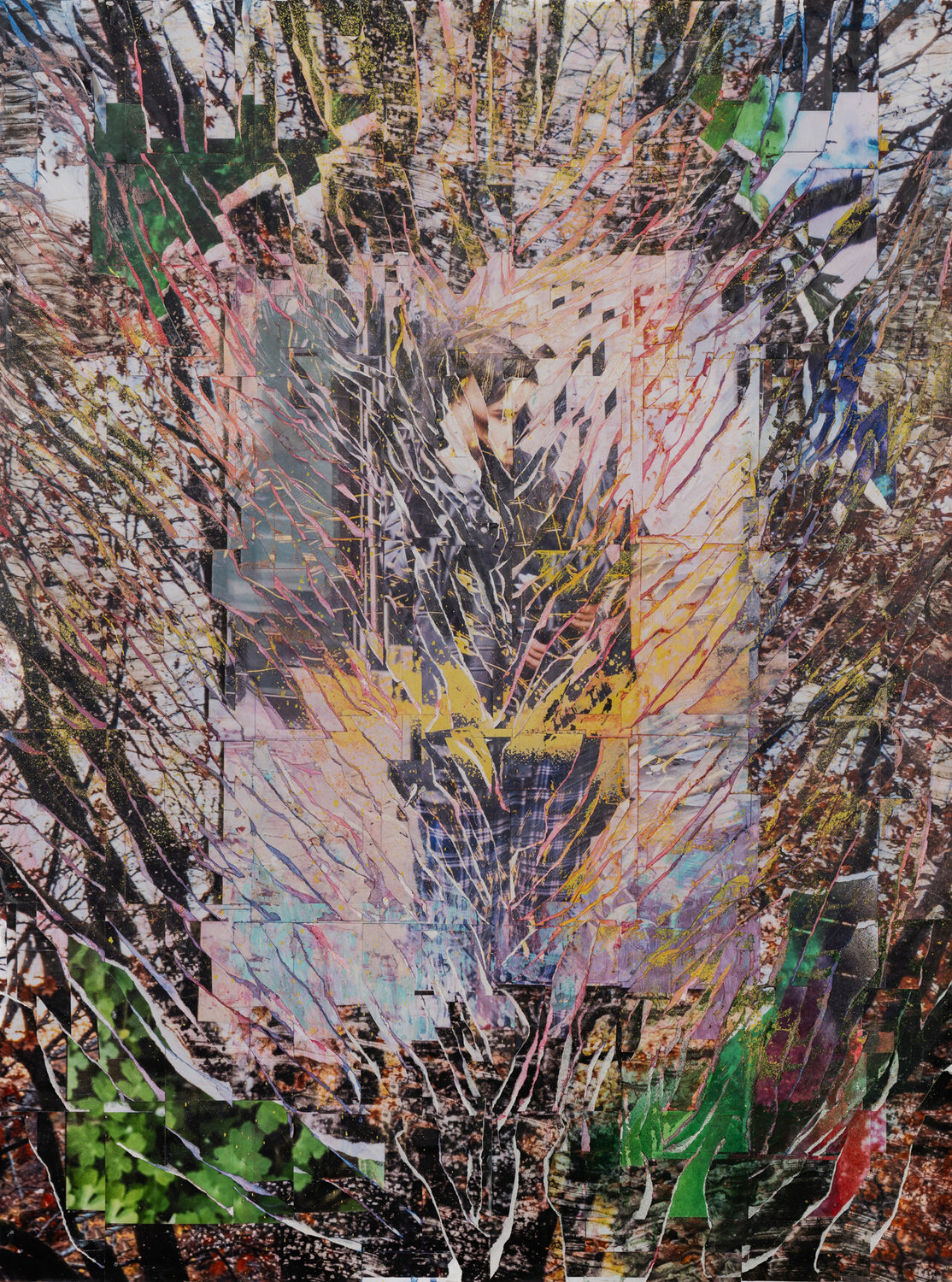
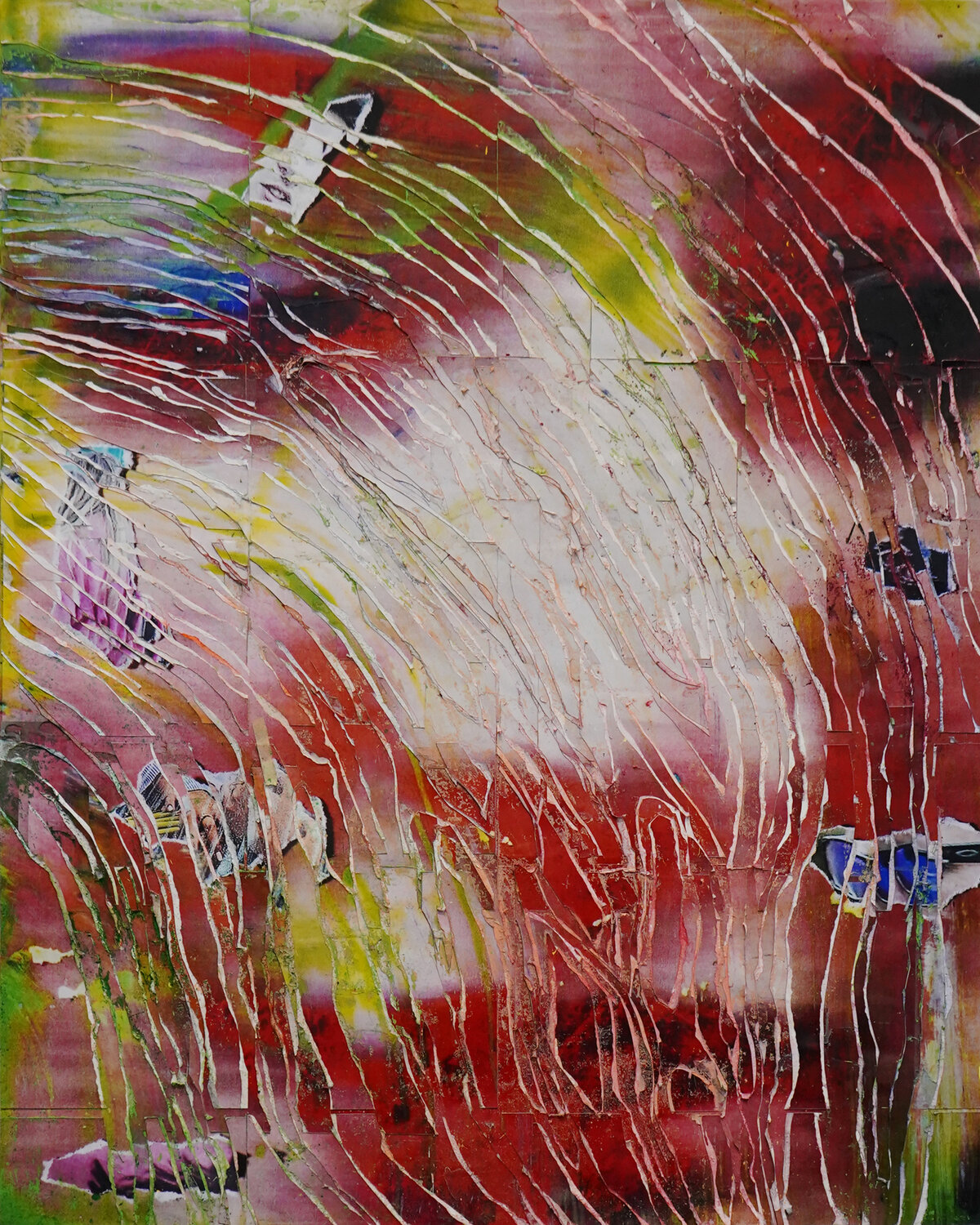
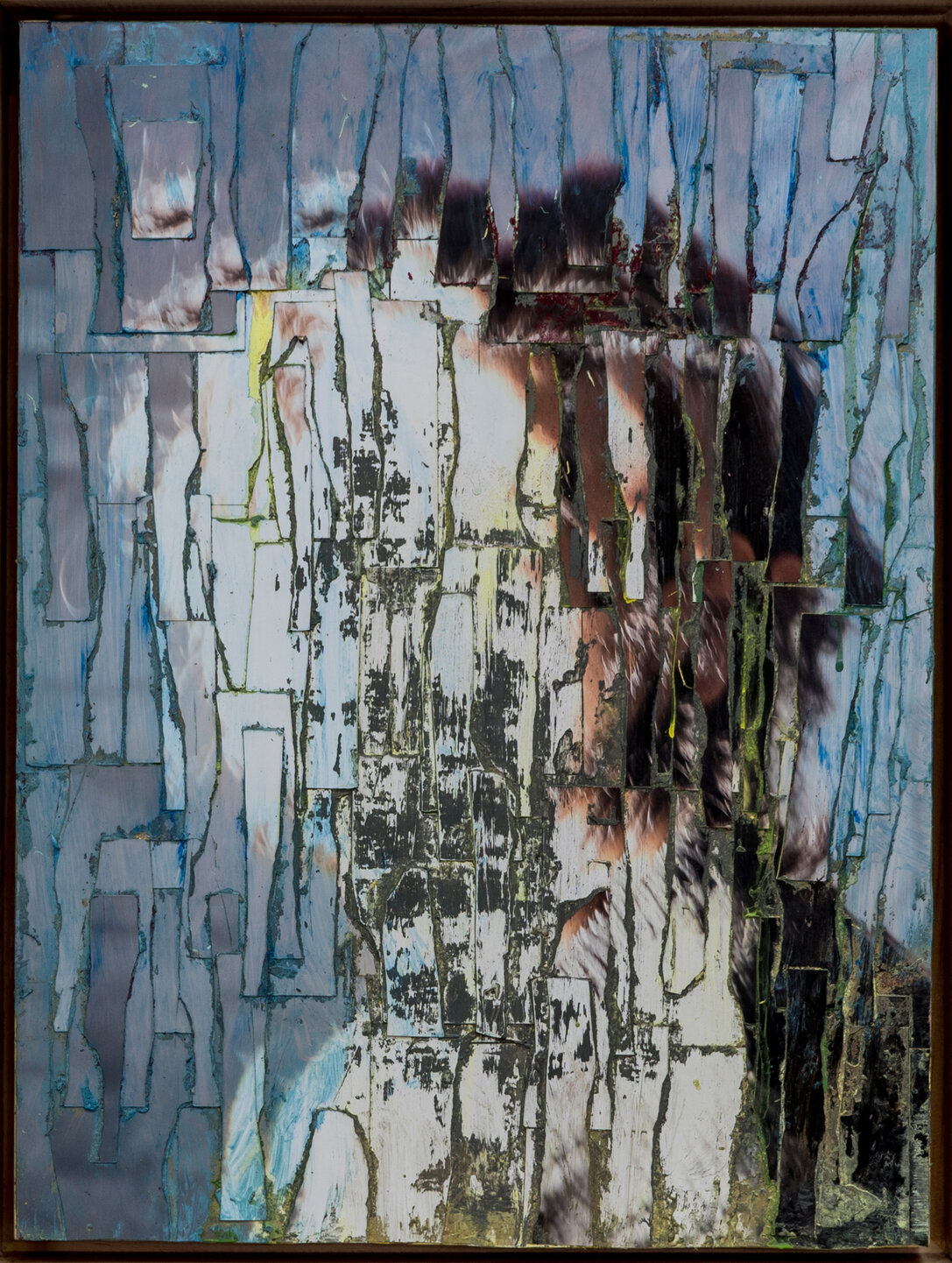
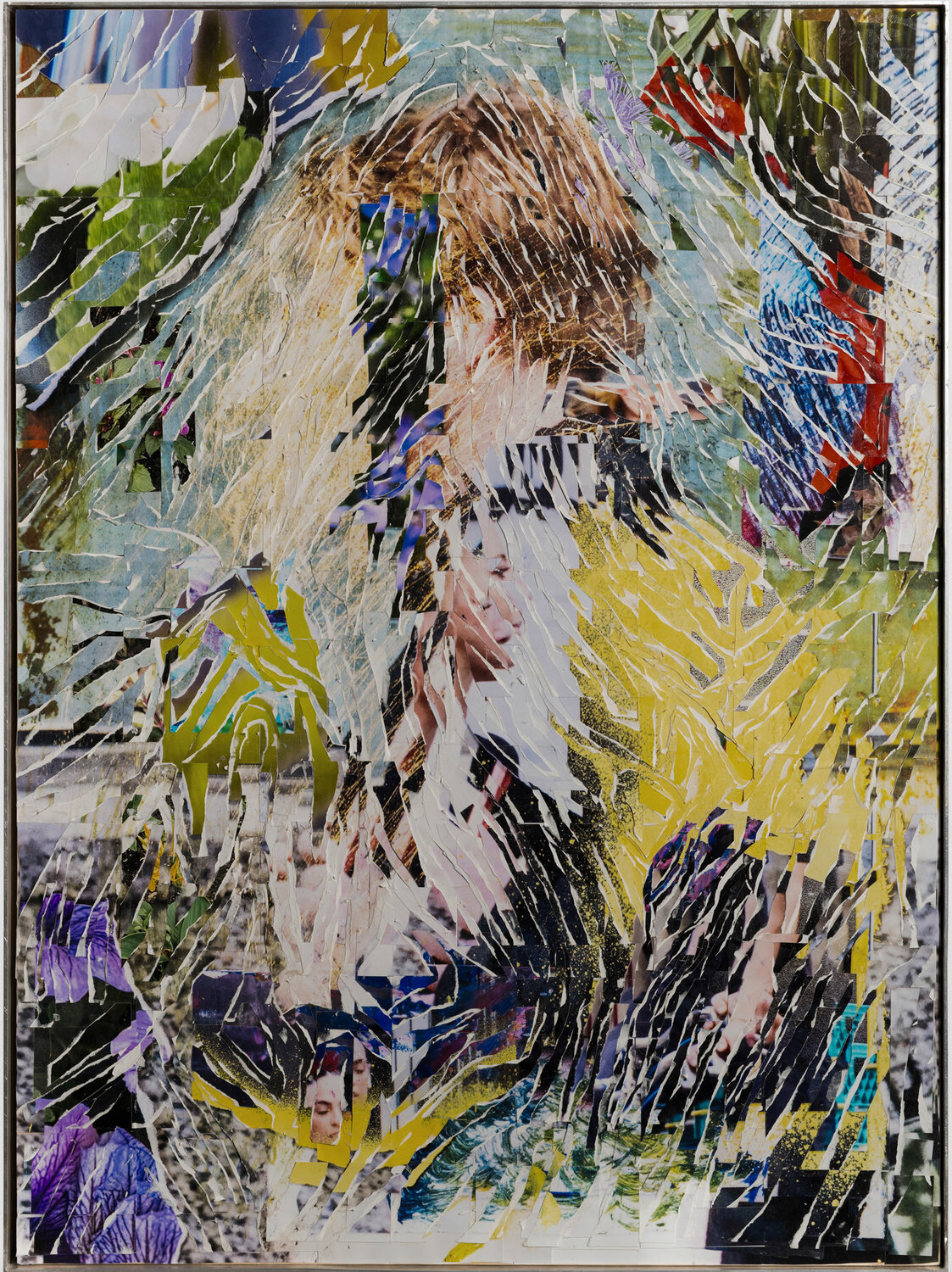
    Mehdi Dandi’s first solo exhibition at the Stephen Bulger Gallery is not a typical Photography exhibition. Mehdi, an Iranian born artist currently living and working in Toronto, is using photography in a unique way – not as an instrument of documentation, or of framing an image, but as a way of reflecting on the persistence of images over time. In his work photographs are transformed through a long and rigorous process creating an unstable image, much like the workings of memory.

    Mehdi tells us that his work is informed by the experience of migration. He draws his source material from taking photographs on the city’s streets and then picks out the images that reflect to him something from his former life, before migration. The images are then transformed through an intricate process of assembling, transformation, and slow, deliberate destruction. He manipulates the photographs by hand, scans and reprints them. After that he places several layers on top of one another. Finally, he rips pieces off to expose the underlying layers. This ongoing act of constructing, reconstructing, and deconstructing gives the work a strong sense of process. The tearing is deliberate, leaving visible traces of each action.

    Chaos Secret, 2025 © Mehdi Dandi / courtesy Stephen Bulger Gallery

    This layering produces an archaeological-like effect. As sections are removed, fragments of earlier images are exposed, suggesting a kind of visual history embedded within the surface. This is reminiscent of the bulletin boards found around the city, layered with posters and advertisements, where older layers become visible as posters are torn away. It brings to mind the decollage practices of artists such as Mimmo Rotella and Raymond Hains, associated with Nouveau Réalisme, and American artist Mark Bradford, creating works inspired by urban textures. But while their work often functioned more as a form of social commentary, Mehdi is motivated by more personal experiences. He reflects on his own history, memories, and experience as a migrant.

    But You Said You’d Wait, 2024 © Mehdi Dandi / courtesy Stephen Bulger Gallery

    In a sense, then, Mehdi’s works are not only physically layered, but also possess many layers of meaning, possible interpretations and associations. They are highly personal, while at the same time informed by many artistic and aesthetic influences. This makes different readings of the art possible, depending on one’s own interests and ways of relating to it. As noted, his work echoes the décollage practices of artists working with urban materials and street art aesthetic, as well as the flattened, spatially layered, compartmentalized compositions of Islamic and Persian miniatures. We also see echoes of European old masters as well as modernist painting.

    Never Seen Monalisa’s Smile, 2025 © Mehdi Dandi / courtesy Stephen Bulger Gallery

    The physicality of the works and the emphasis on the process fit with ideas from abstract expressionism and action painting, where the trace of the artist’s gesture becomes a significant part of the experience, and the work seems almost to be happening in front of the viewer. Still, I can’t ignore the fact that this work evokes old master paintings as well. That makes it easy for us painters to claim Mehdi as our own. I am reminded of this, for instance, in his self-portrait series that shows portraits in a classic three-quarters view, with the face disappearing into overexposure. As light washes over the face and unites the surface, making the viewer complete the image herself. This division of the image into light and dark recalls painters such as Vermeer or Bellini. Here, the features themselves seem less important than the experience of light and shadow, while the torn surfaces echo the cracking patterns of aged oil paintings.

    Self Portraits #4, 2024 © Mehdi Dandi / courtesy Stephen Bulger Gallery

    Ultimately, these works exist in a space between photography and painting, construction and destruction, image and material. They do not present themselves all at once, but unfold gradually, asking the viewer to spend time with them. In doing so, they return to that initial question: what makes a work of art compelling? It is not immediately apprehensible, but rather it derives from being able to sustain attention, to keep opening up, and to continue the conversation.

    What I Saw That You Didn’t, 2024 © Mehdi Dandi / courtesy Stephen Bulger Gallery

    For me, Mehdi’s works seem to be not only about memory, recollection or the experience of migration, but also about the sheer magic of image-making. They almost give the viewer a glimpse into the inner workings of this process, creating the sense that if we look closely enough, something will reveal itself, that we might come to understand this transformation. Mehdi assembles and disassembles images in a way that feels exploratory, almost like a child trying to understand how something works by taking it apart.

    Lena Chermoshniuk

    *Exhibition information: Mehdi Dandi, Afterimage, March 7 – April 25, 2026, Stephen Bulger Gallery, 1356 Dundas Street West, Toronto. Gallery hours: Tue – Sat 11am – 6pm.

  • Proof of Life / Art Museum at U of T

    “The end of the world as we know it seems continually imminent. Yet we live in the debris of many ended worlds, whose inhabitants continue to live on.” by Alexis Lothian, Old Futures, p. 2 

    At a historical moment marked by intensifying instability, the language of endings circulates with unusual frequency. Ecological collapse and global violence appear less as distant possibilities than as conditions already unfolding. Within this atmosphere of uncertainty, the exhibition Proof of Life, curated by Chloe Gordon-Chow, approaches the question of dystopia with an attentiveness to what remains after systems falter. Presented by the Art Museum at the University of Toronto at the Jackman Humanities Institute in Toronto, the exhibition is on view till June 19, 2026. Developed in relation to the institute’s annual research theme “Dystopia and Trust,” the project situates the gallery as a site where the material traces of the present are considered alongside speculative visions of what might follow.
    Gordon-Chow, a Chinese Canadian curator and researcher pursuing graduate work at the University of Toronto, approaches exhibition-making as a form of inquiry into possible worlds. Her curatorial framework attends closely to fragments and residues. The works gathered in Proof of Life evoke an archaeology of the present, suggesting how objects circulating today may one day appear as the artifacts of what has vanished. Each contribution inhabits a temporality in which the contemporary moment appears sedimented within an imagined future.

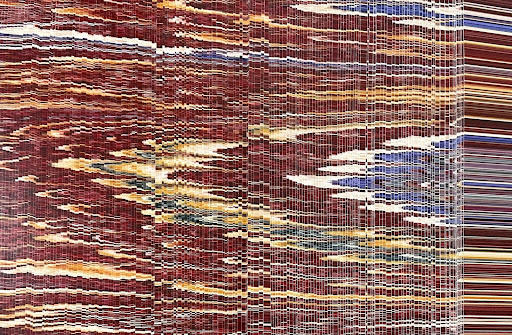
    Upon entering the exhibition, visitors encounter Shannon Garden-Smith’s Alluvial Fan, a long sequence of marbled prints resting along a narrow shelf that traces the corridor. Thousands of sheets form a continuous sweep of colour. Their surfaces bear intricate patterns created through a process in which pigments are combed across a thickened bath of water before transferring onto paper. The resulting forms resemble geological strata or mineral veins, showing the slow processes through which landscapes take shape across vast stretches of time.

    The installation carries within it a deliberate vulnerability. Each visitor receives an invitation to remove a page from the arrangement and take it away. Over the duration of the exhibition, the field of prints gradually diminishes, and what begins as an abundant visual becomes progressively thinned through audience participation. In geological language, an alluvial fan forms through the accumulation of sediment carried by water. Garden-Smith’s installation recreates that slow deposition while simultaneously staging its dispersal. The removal of each sheet registers the cumulative weight of shared gestures.

    Shannon Garden-Smith, Alluvial Fan, detail, 2025, digital prints on paper, shelf, installation begins as approximately 2400 pages, 6” x 110” (approximately the length of the wall), each page 4.5” x 6”

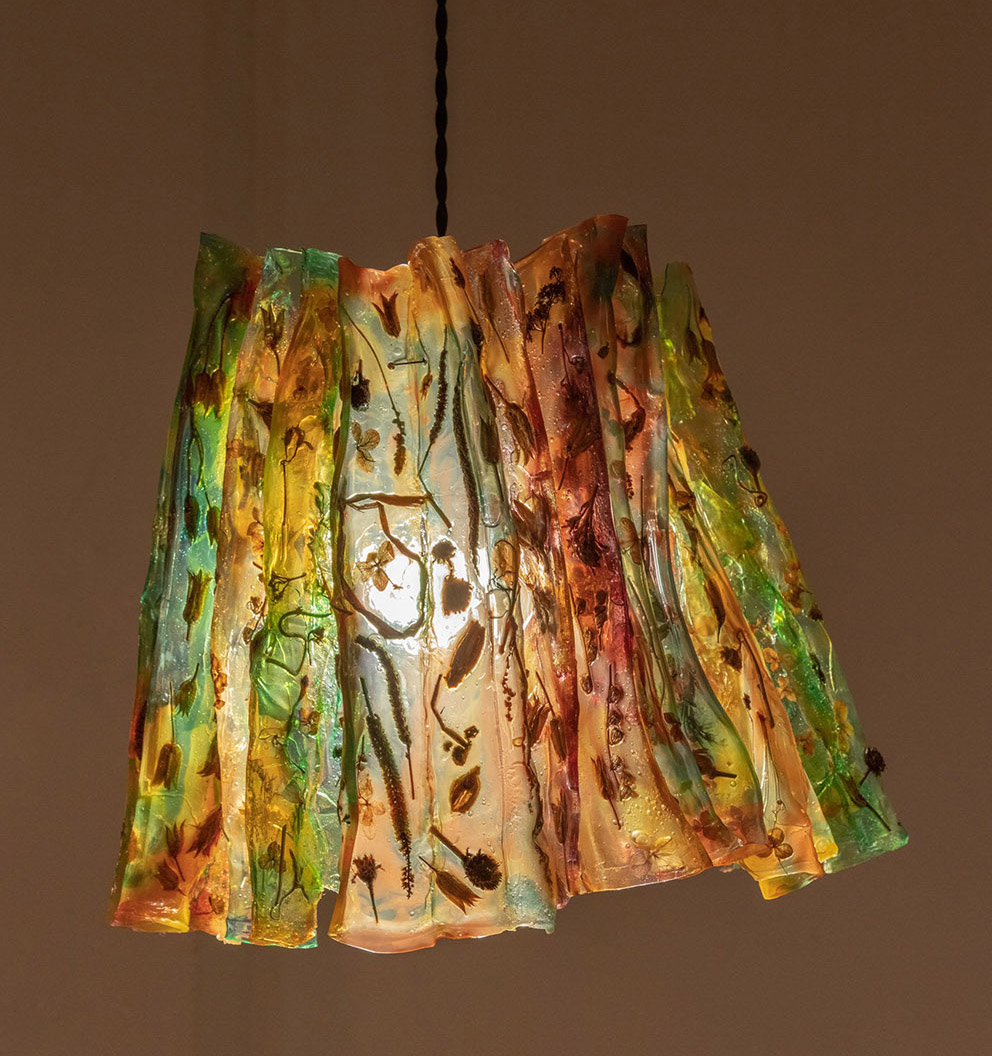
    Elsewhere in the institute’s communal space, two sculptural lamps from Garden-Smith’s series In a hare’s form emit a beautiful glow of colours. Their forms consist of hardened gelatin shells containing delicate botanical clippings. Leaves and stems remain suspended within the translucent material, preserved in flattened silhouettes that recall the pages of an herbarium. Gelatin carries a layered set of associations. Within culinary practice, it belongs to the domain of consumption and within photographic history, it participates in the chemical stabilization of images. In these works, the material holds organic matter in a fragile suspension. Light filtering through the surface reveals the preserved plants as though they have entered a state of fossilization.

    Shannon Garden-Smith, In a hare’s form III, 2021, pigmented gelatin, plant clippings, lamp cord, approximately 15” x 10” x 13.5”

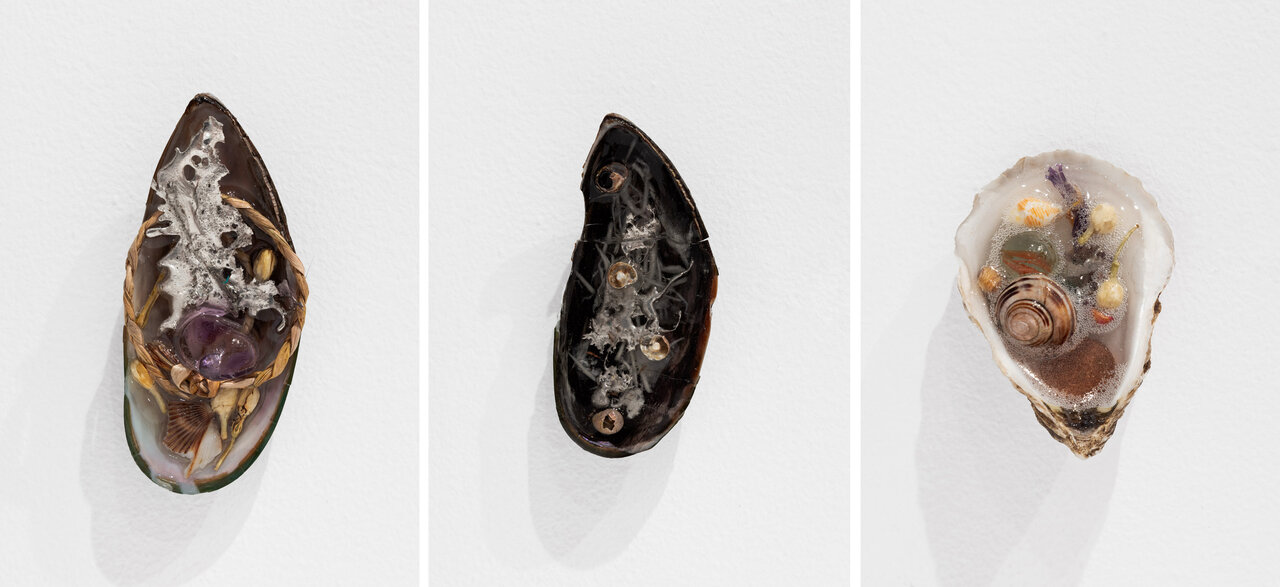
    The exhibition continues with a series of sculptural shells by the collective boring earth, whose works appear dispersed throughout the gallery. Each form contains assemblages of found and foraged materials gathered from the surrounding environment. Stones, fragments, and industrial remnants share a single enclosure, the objects resembling ritual deposits uncovered through archaeological excavation. Their surfaces suggest offerings left for unseen presences whose existence exceeds the boundaries of human perception.

    Within these works, discarded matter acquires a renewed significance. Objects once treated as waste enter into unfamiliar constellations of meaning. Organic and inorganic bodies remain intertwined within the same sculptural container. The gesture thus presents relationships that extend across material systems, inviting reflection on the entanglements between human activity and the wider ecological field.

     L-R: boring earth, Offering 21, Offering 25, and Offering 33 from the Offerings Series, 2024 – ongoing, acrylic resin, shell, pewter, bottle caps, pyrite, amethyst, image transfer, paper shavings, micro plastics, bells, key fobs, bird’s nest, marbles, pistachio shells, acorn, candle wax, copper coin, wood, silver wire, white sugar, glass beads, steel nut, fish bone, cat fur, cottonwood pod, acrylic, fossils, fire, orchid stem, orach and Ontario pollinator seed, sea grass, dehydrated iris, jasmine, rose, and tulip, neodymium magnets

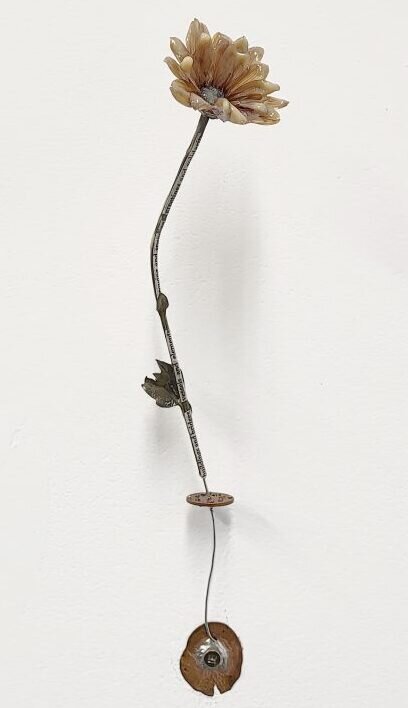
    Questions surrounding value and transformation emerge within the sculptures of Jenine Marsh. Her work incorporates altered coins that support delicate botanical forms. In In buildings and bridges, vessels and elements, borrowing and spending, greetings and solidarity (2022), the coin appears melted and punctured, its surface bearing the marks of deliberate alteration. The metal disc supports a flower mounted upon a thin wire stem and sealed within a synthetic membrane. The bloom carries a hybrid presence shaped through the interaction of organic growth and manufactured material.

    Marsh’s intervention draws attention to the symbolic authority historically invested in currency. Coins circulate as instruments of exchange, yet their material composition remains grounded in metal shaped through industrial processes. By altering their form, Marsh returns attention to the substance underlying the abstraction of economic value. The emergence of a botanical form from this altered foundation points to the shifting relationships between ecological systems and financial structures that organize our contemporary life.

    Jenine Marsh, buildings and bridges, vessels and elements, borrowing and spending, greetings and solidarity, 2022, flower, wire, altered coins, newspaper clippings, hardware, solder, synthetic rubber, acrylic UV varnish, 11 ¼” x 2 1⁄4” x 4”

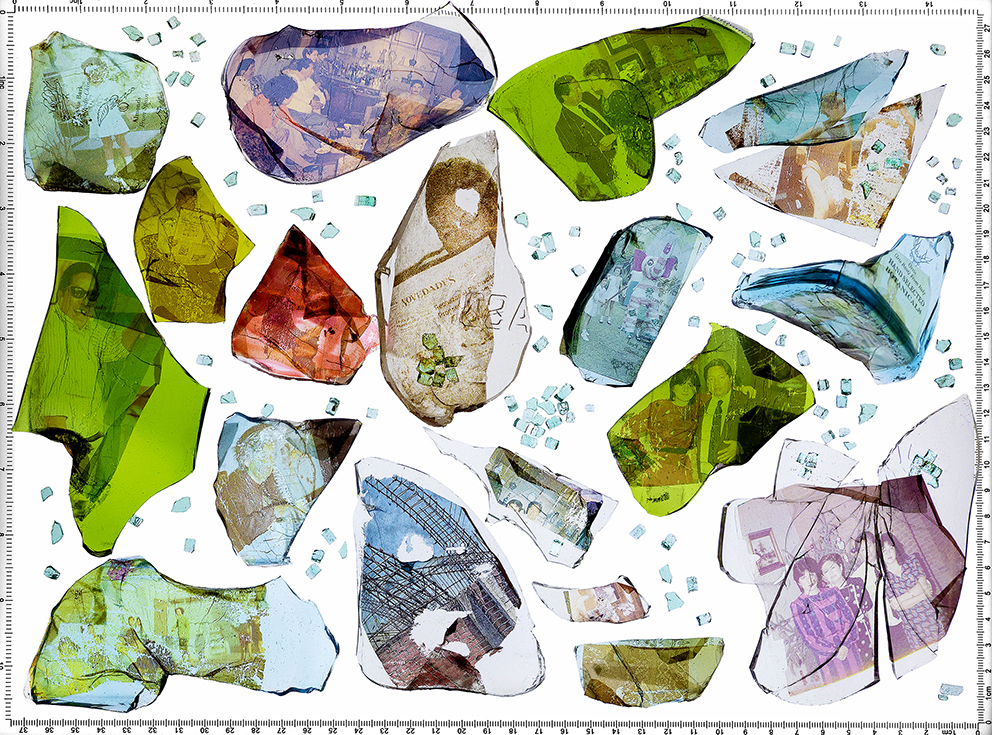
    Finally, in Trocitos de Memoria (2025), Ernesto Cabral de Luna engages with the fragility of memory. Archival family photographs appear transferred onto fragments of coloured glass arranged upon a luminous table. The shards recall a familiar architectural movement present across parts of Latin America, where broken bottle glass is embedded along the tops of walls as a protective barrier. Within the gallery these fragments undergo a transformation as their sharp edges remain, yet the surfaces now carry traces of personal histories.

    Faces and domestic scenes emerge partially within the glass. The process of image transfer leaves certain details obscured, allowing only fragments of the original photograph to remain legible. Light passing upward through the glass produces an atmosphere of reverence as the fragments resemble small relics preserved through time. Memory appears dispersed across the field of glass, suggesting how recollection survives even through incomplete and shifting forms.

    Ernesto Cabral de Luna, Trocitos de Memoria, 2025, wooden plinth, light table, emulsion lifts onto various pieces of broken colored glass, shattered windshield, 36” x 15” x 3”

    Across the exhibition, material remnants function as points of entry into broader reflections on survival and futurity. The works assembled by Gordon-Chow create the persistence of life within environments shaped by instability. For many communities whose histories bear the marks of colonial violence and economic dispossession, the conditions often described as dystopian already structure everyday experience. Within this context the question of what follows the end of a world acquires an immediate urgency. Proof of Life offers a space for contemplating these questions through attention to matter itself. Archival debris, altered currency, preserved plants, and fragments of glass circulate through the gallery as carriers of memory and speculation. Each object appears suspended between the present moment and an imagined future in which these materials might remain as evidence of lives once lived. Through this careful gathering of remnants, the exhibition invites reflection on how survival continues within landscapes marked by cracks and transformation as proof of our existences.

    Yehyun Lee

    Images are courtesy of the Art Museum at the University of Toronto.

    *Exhibition information: Existence as Evidence: “Proof of Life” September 10, 2025 – June 19, 2026. Presented by the Art Museum at the University of Toronto at the Jackman Humanities Institute in Toronto, 170 St. George Street, 10th Floor. Museum hours: Tue & Thu – Sat 12 – 5 pm, Wed 12 – 8 pm.

  • Jes Young at Dupont Rail Gallery

    Jes Young surrounded by her installation. Photo: Phil Anderson

    Artist Jes Young in her exhibition, presented by Collective City Project, invites viewers to get down on the floor to properly view her collection of ceramic pigeons and the surrounding leftovers and refuse consisting of cigarette butts, abandoned pizza slices, bottle caps and other tidbits. Young makes us aware of just how much stuff we discard on our sidewalks and urban landscapes. Though she didn’t perhaps start this exhibit with an environmental mission in mind, it still qualifies.

    Jes Young, Fresh Slice, 2026, glazed and natural porcelain, 32”w x 24”d x 10”h. Courtesy of Dupont Rail Gallery

    As Young states “I see what has become litter as captured moments that feel like home, when finding home has become increasingly precarious. Pigeons and trash serve as symbols of single use domestication, created in porcelain to re-examine how we determine value of our everyday encounters and surroundings.”

    I found myself learning much more about pigeons through this exhibit. Each pigeon that Young created seems to have its own personality. Pigeons are fairly intelligent and have great navigation skills. They also adapt well to new environments and can remember locations — thus their use as messengers. They also mate for life. Not a native species to North America, they arrived from Europe in the 1600s.

    Jes Young, Under the Bridge, 2026, glazed and natural porcelain, 30”w x 30”d x 9”h. Courtesy of Dupont Rail Gallery

    Young originally worked in wood when doing her MFA, but in 2023 she participated in a residency program at PADA in Portugal and that is where a lot of this recent work started. PADA Studios is an independent, non-profit, artist-run organisation based in Barreiro, near Lisbon, on a post-industrial site. It accepts international as well as Portuguese artists. Young would make ceramic pigeons and place them near an abandoned factory  where real pigeons congregated. The real pigeons largely ignored the ceramic versions of themselves. Not easily fooled. She felt kinship to these pigeons.

    Jes Young, Chip Off the Block, 2025, glazed and natural porcelain, 18”w x 13”d x 13”h. Courtesy of Dupont Rail Gallery

    In addition to being out of work during the pandemic, Young had been without a proper studio, so she used the fire escape in her building to work on her art while she struggled to pay her rent. The PADA residency helped her get away at least temporarily.

    Jes Young, Detoured, 2025, Glazed and Natural Porcelain, 30”w x 24”d x 16”h. Courtesy of Dupont Rail Gallery

    Despite the fact that pigeons have gotten a bad reputation as an urban nuisance, and an infestation in the urban landscape, it was interesting watching visitors at her exhibit choose an individual ceramic pigeon to give a home to. There’s a lineup of pigeons you can purchase besides the groupings in the installations. Some ceramic garbage also goes with the pigeon. The installations or groupings of pigeons and garbage are cleverly arranged on the floor of the gallery and visitors can roam from one installation to another in a migratory fashion and get up close to the art.

    Individual pigeons for purchase, each porcelain, glazes & engobes. Photo: Phil Anderson

    Young’s next project is creating ceramic life-size geese with a nest thanks to funding from the Ontario Arts Council. She is looking forward to working in larger size with this new project. If you don’t get a chance to see this exhibition at Dupont Rail Gallery at 1444 Dupont, check out Young’s website and watch for her next exhibition. You will find it worthwhile.

    Phil Anderson

    *Exhibition information: Jes Young Single Served, March 25 – April 5, 2026, Dupont Rail Gallery, presented by Collective City Project, 1444 Dupont #10, Toronto. Gallery hours: Wed – Sun 12 – 5 pm. Artist Talk and Craft Session: Saturday, April 4, 12 – 2 pm.