Author: artoronto

  • FIVE OF ELEVEN at Christopher Cutts Gallery

    The Painters 11: Pioneering Artists in Canadian History is a distinguished group of Canadian artists who have made a significant impact on the Canadian art scene through their innovative and collaborative approaches to painting. Emerging as abstract artists, this group brought together eleven painters whose shared commitment was to explore new artistic expressions, challenge traditional boundaries, and foster a vibrant cultural dialogue within Canada and beyond.

    L-R: Tom Hodgson, Christopher Cutts, Kazuo Nakamura, and Ray Mead (archival photograph)

    Founded in the 1950’s, Painters 11 gained recognition for introducing abstraction to Canadians through a variety of styles and techniques, drawing direct inspiration from the American abstract art movement through artists such as Willem de Kooning (1904-1997), Jackson Pollock (1912-1956), Franz Kline (1910-1962), and Mark Rothko (1903-1970). Each member brought forth a distinct perspective, yet their shared objective was evident: to promote abstract art through innovative experimentation and collective inspiration. Early exhibitions by the Painters 11 were notable for their energy and variety, drawing attention from critics and art lovers alike.

    Five key members of the Eleven namely William Ronald (1926-1998), Harold Town (1924-1990), Ray Mead (1921-1998), Tom Hodgson (1924-2006) and Kazuo Nakamura (1926-2002)  currently in a group show titled 5/11 at Christopher Cutts Gallery all played an important role in shaping Canadian art history by promoting the idea that a collective of artists could push the envelope more effectively than individuals working in isolation.

    The exhibition showcases various works from each decade spanning the 1950s to the 1990s. Nakamura’s watercolours are exquisite little gems of early landscapes that he produced at the beginning of his career.

    Kazuo Nakamura, Untitled, 1953, watercolour on paper, 15.5 x 22 inches

    Hodgson, a master of figurative drawing, also excelled in the use of watercolour to achieve abstraction.

    Tom Hodgson, Untitled, 1964, watercolour on illustration board, 25 x 27 inches

    Both Mead and Ronald developed a style that became their signature throughout their careers.

    William Ronald, Catherine’s First Prayer (The Knockout Punch), 1997, acrylic on canvas, 72 x 72 inches

    Ray Mead, Untitled, 1986, acrylic on canvas, 52.5 x 65.5 inches

    In contrast, Town began with abstract painting and evolved his imagery over time, transitioning from his Toy Horse series and Muscleman series to drawings of Famous Individuals, consistently challenging the boundaries of art and abstraction.

    Harold Town, Untitled, 1960-61, oil and lucite 44 on canvas, 68 x 79 inches

    Today, the legacy of the Painters 11 continues to influence Canadian artists and art institutions. Their pioneering spirit reminds us that art thrives on collaboration, diversity, and a willingness to explore beyond the familiar. For those interested in Canadian art, the Painters 11 stand as a testament to the power of collective vision in enriching cultural landscapes.

    The exhibition presently on display at Christopher Cutts Gallery commemorates CCG’s 40th anniversary.

    Roy Bernardi

    Images are courtesy of Christopher Cutts Gallery.

    *Exhibition information: FIVE OF Eleven, January 31 – February 14, 2026, Christopher Cutts Gallery, 21 Morrow Ave, Toronto. Gallery hours: Tue to Sat 10am – 6pm.

  • Sybil Goldstein at Koffler Arts

    A lifetime devoted to artistry. The illustrious Sybil Goldstein (1954-2012) currently having a retrospective of a lifetime of painting and artistic endeavors. A dedicated artist that couldn’t stop working and creating. She created art everyday leaving a massive collection of paintings, drawings, and works on board, canvas, and paper. The exhibition showcases Goldstein’s previously unseen pieces to the public, celebrating her vital role in Toronto’s cultural narrative.

    Sybil Goldstein

    Sybil Goldstein / URBAN MYTHS, an extensive exhibition showcasing her life’s work. Curated by David Liss, it is currently on display at Koffler Arts. “By bringing her long-hidden pieces into public view, the exhibition not only honours Goldstein’s remarkable legacy but also reaffirms her place within the cultural history of Toronto and the wider artistic movements that shaped her generation” says Liss.

    Several of her works were sold at an auction that took place shortly after her passing. Any pieces that did not sell — which comprised most of her artistic creations, amounting to over a thousand works — were kept by her family. Now, thirteen years following her death, Sybil’s family is seeking assistance within the Toronto art community in finding homes for the many pieces of art within the estate.

    Sybil Goldstein, College Street at 2:00am, 2000, oil on canvas, 172.7 x 198.12 cm

    Koffler Arts, an organization that champions community initiatives, has made the decision to present this posthumous retrospective. It is especially noteworthy that an unprecedented exhibition is currently being held, providing visitors with the opportunity to take home one of her original artworks following the exhibition’s conclusion. The family due to the difficulty in marketing art regards the monetary significance in the Canadian art market as non-existent; however, curators and scholars are visually able to identify the significant importance of the art works placement and contributions to the Canadian identity. On a personal level, the artwork carries a charm that resonates with personal feelings and interpretations, permitting individuals to choose an image that will resonate within their homes, enrich their spirits, and ideally bring joy to their lives.

    Sybil Goldstein, Untitled, Lion Killing It’s Prey, pastel on paper, 83.8 x 115.6 cm

    While pausing silently to appreciate the artworks showcased in a salon-style arrangement within the exhibition, one experiences an uncanny feeling that Goldstein is somehow present. In the midst of the admiration permeating the room, one can detect a pleasurable enjoyment alongside an intellectual appreciation for the contrasting elements within the pieces that embellish the walls. Furthermore, there is an element of calmness, as if the traces of her journey are indicative of having traversed a difficult path. It is this essence that generates a lingering admiration for a talent that clearly was well accomplished.

    Sybil Goldstein, Satyr Family Overlooking the Don Valley, 1984, oil on canvas, 152.4 x 121.92 cm

    Goldstein concentrated her artistic efforts on urban culture, depicting individuals at street corners engaged in their everyday activities, alongside the interiors of offices, bars, subway stations, and shopping malls, wooded areas, and neglected spaces. Numerous scenes featured mythological beings such as angels, satyrs, and spirits. Additionally, she drew inspiration from classical old masters like El Greco, Velasquez, and Rubens.

    Sybil Goldstein, After El Greco, 1991, oil on canvas, 50.8 x 40.64 cm

    Covering surfaces of canvas, paper, or on board, her lively lines and occasionally hurried, rugged brushwork reflect an artist’s pursuit to encapsulate the fleeting movements and moments of her life, illustrated through images like Satyr Family Overlooking the Don Valley, After El Greco, Dundas Windows A&B-Birth of an Angel, Untitled – Lion Killing Its Prey, College Street at 2:00am, Queen & Roncesvalles, Adelaide & Spadina, Spadina & Dundas, Dufferin Mall, Queen & Yonge, Joe Shuster Way, Union Station, among others, depicting various locations in downtown Toronto.

    Sybil Goldstein, Dundas Windows A&B, Birth of an Angel, 1982, oil on canvas, 50.8 x 40.64 cm

    In 1981 Goldstein was one of the founding members of the ChromaZone Collective, along with Andy Fabo, Oliver Girling, Rae Johnson, Brian Burnett, Tony Wilson, and others, who organized exhibitions and events that were characterized by their support of a figurative Neo-expressionist movement gaining international recognition during their early years.

    It is important to note that Goldstein was the artist responsible for the stunning Sistine Chapel-inspired artwork on the ceiling of the Cameron House located on Queen Street West. Goldstein passed away unexpectedly on July 2, 2012.

    Roy Bernardi

    Images are courtesy of Koffler Arts.

    *Exhibition information: Sybil Goldstein / URBAN MYTHS, January 20 – March 1, 2026, Koffler301, 180 Shaw St., #104, Toronto. Gallery hours: Wed & Fri – Sun 12:30 – 5pm, Thurs 12:30 – 8pm.

  • Ali Sheikh at the Dupont Rail

    In his Loudest Sound exhibition at Dupont Rail Gallery, painter and illustrator Ali Sheikh explores the stated “intensities of life through oil paint, ink, pencil, and found object.” While Sheikh’s output here at Dupont Rail is uniformly visual, and in that respect entirely mute, its “sound” amounts to an oblique referent. This bias of eye over ear content is the rightful point of the show – a nuanced rendering of what the eye sees, generally favouring the photographic in quality.

    Installation view of Ali Sheikh, Loudest Sound at the Dupont Rail

    While paintings such as Alphorn and Guido include meticulous oils on canvas with musical instruments as subjects, the miming of sound with image is not apparent.

    Ali Sheikh, Guido, 2025, oil on canvas. 4’ x 3’

    An exception is Panorama, with its trail of smudged dies and looping spiral. Until the timing is felt and understood may be the “loudest” painting in the show with its tensely coiled loops rendered in black on yellow background.

    Ali Sheikh, Until the timing is felt and understood, 2025, oil on canvas, 30” x 24”

    Likewise, Whistleblower features a pair of ruddy pipers, a face contorted in the act of blow, overlaid by a float of spiral and dies. Its prevalent blood vessel red might even generate a sense of synesthesia, a crossing of sight with sound.

    Ali Sheikh, Whistleblower, 2025, oil on canvas, 3’ x 4’

    Goblins, a floor installation consisting mainly of strewn bar line paper, shoes, and white gloves suggest an invisible conductor, the imagined possibilities ranging from anything between Leonard Bernstein to Disney’s Mickey Mouse of Fantasia.

    Ali Sheikh, Goblins, installation

    A pertinent note of comparison is the current Peter Doig House of Music exhibition at the Serpentine Gallery in London, England, where an elaborate sound system had been installed. Also, Christian Marclay, a visual artist with a rich association with music who is showing mono prints of vinyl record sleeves and covers at the Fraenkel Gallery in San Francisco. With Loudest Sound, Ali Sheikh has produced a uniquely personal documentation in paint of ways in which music weaves inseparably into the everyday.

    Installation view of Ali Sheikh, Loudest Sound at the Dupont Rail

    Loudest Sound is a Collective City Gallery Project that began in February 2025. The staging of eight shows is projected per year, Dupont Rail Gallery being the current venue. Ali Sheikh was the first of nine artists’/curators’ proposals from 220 submissions for this year.

    Steve Rockwell

    Images are courtesy of the artist.

    *Exhibition information: Ali Sheikh, Loudest Sound, January 21 – February 1, 2026, Collective City Gallery Project at Dupont Rail, 1444 Dupont St. #10, Toronto. Gallery hours: Wed – Sun 12 – 5 pm.

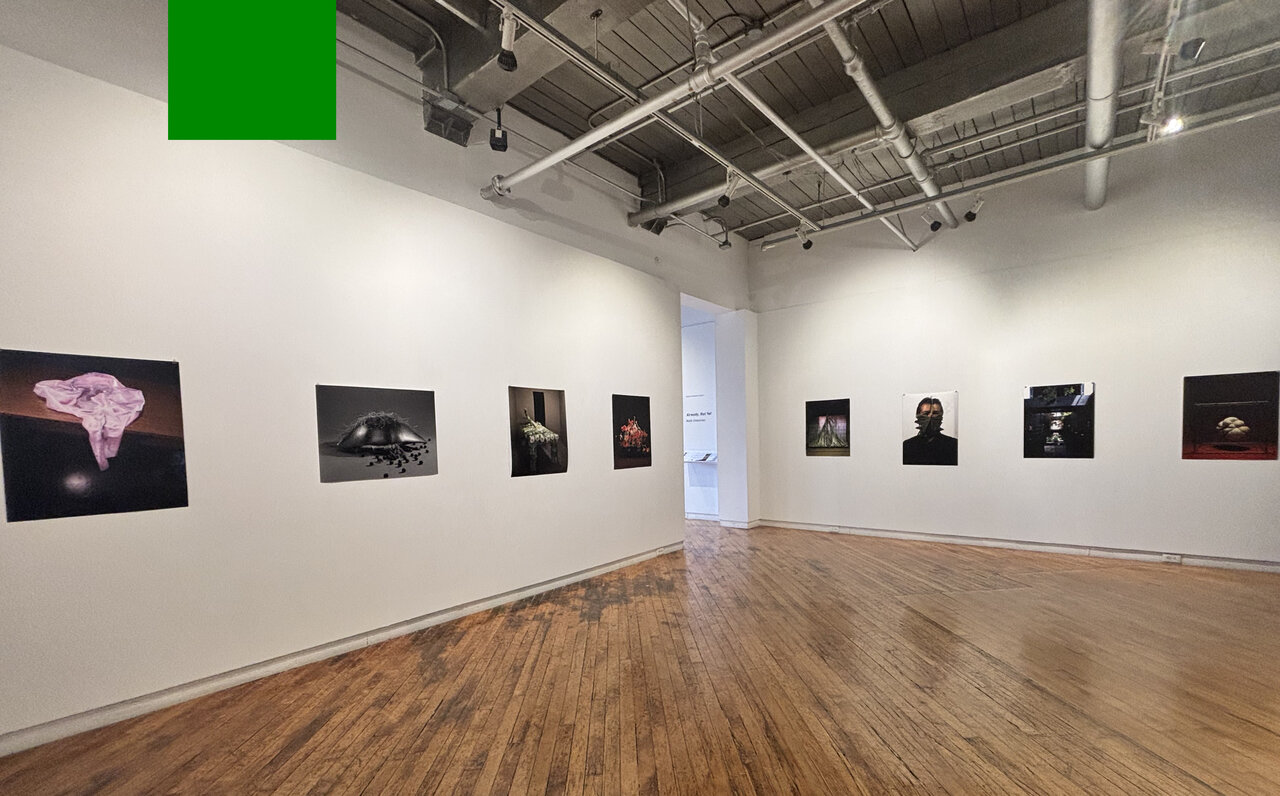
  • Photographic Archive of Kosen Ohtsubo / Gallery 44

    Selections from the Photographic Archive of Kosen Ohtsubo

    Installation view Selections from the Photographic Archive of Kosen Ohtsubo at Gallery 44

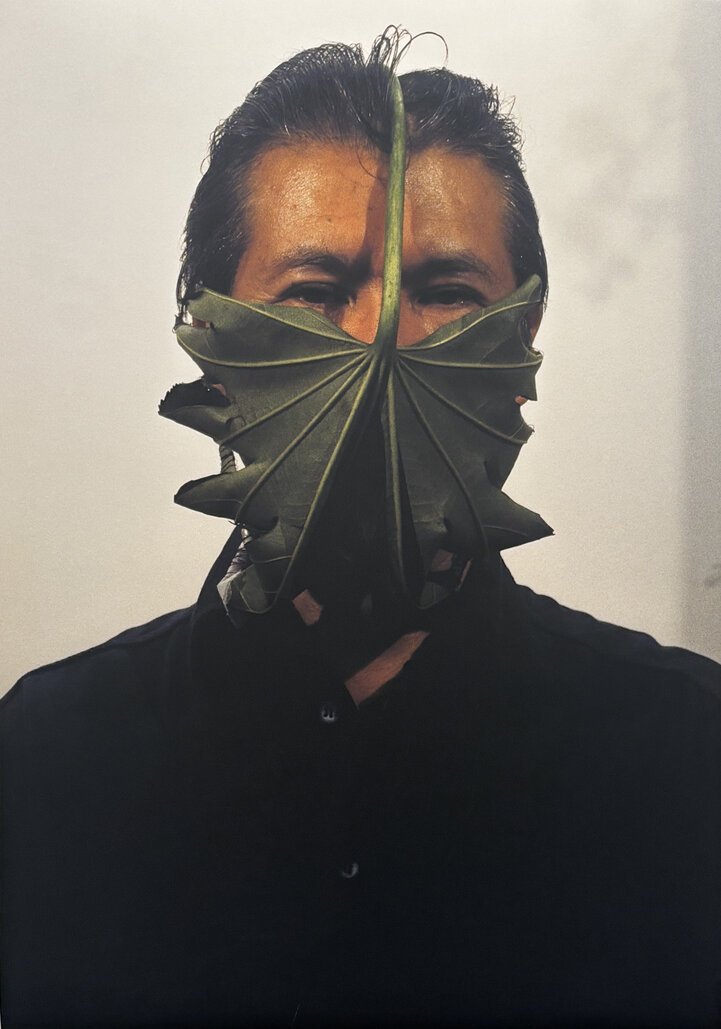
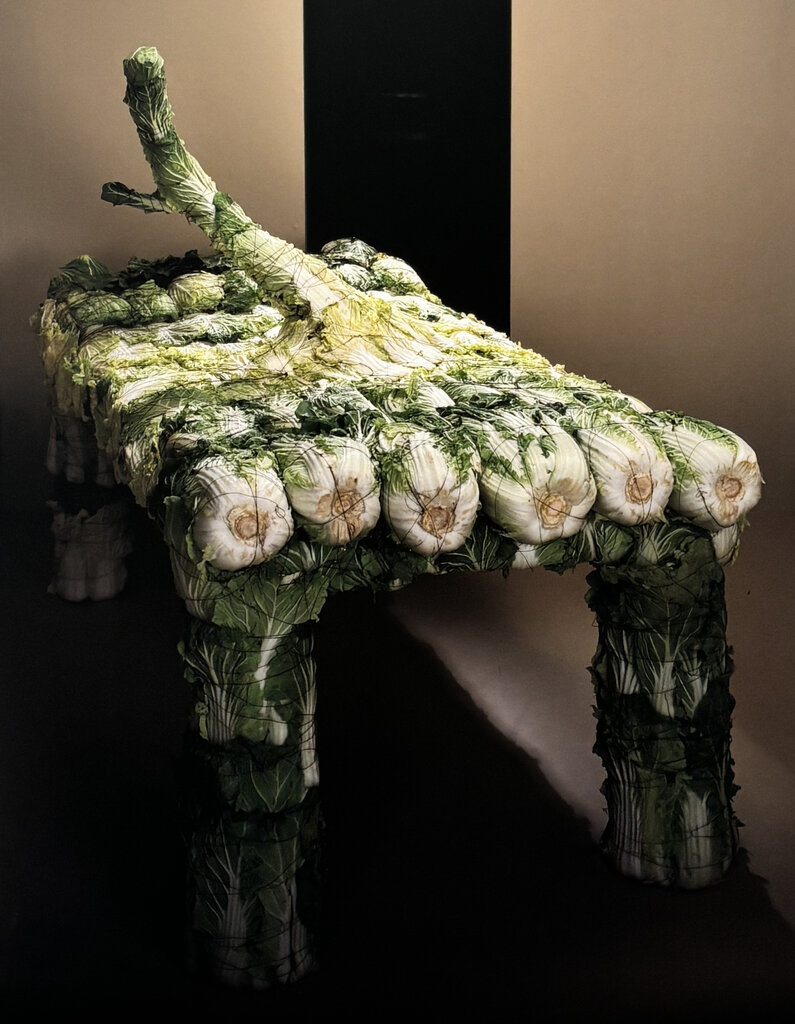
    Christian Kōun Alborz Oldham’s curation of Kosen Ohtsubo’s avant-garde ikebana invites introspection into one’s relationship with “natural” surroundings. Nature, as both the curator and the artist illustrate in this Gallery 44 exhibition, is present in our everyday lives through vegetables, plants, and material goods, since, after all, they also come from natural resources. Ohtsubo’s take on the traditional Japanese art of flower arrangements (ikebana) incorporates this holistic stance on “nature” in our lives by instructing us to see art in nature, beckoning back to the first argument concerning the dichotomy of art. In arguing his belief, Ohtsubo “repurposes” nature back into art, that is, into something beautiful, inquisitive and emotionally-provoking, through his radical arrangements. By doing so, he encourages viewers to see a direct connection between nature and art, suggesting they are – and have always been – one and the same. Works like Ill-Mannered Pampas Grass (1984), Fatsia Bandit (1997/1998), and Chinese Cabbage Crazy Night (1992) evoke such reactions and understanding from the audience.

    Kosen Ohtsubo, Fatsia Bandit, December 1997, the artist, fatsia. First published in the January issue of Nihon Jhosei Shimbun, 1998, and photographed by the Ryusei Photo Department.

    Kosen Ohtsubo, Chinese Cabbage Table Crazy Night, October 1992, Chinese cabbage, wooden table. Exhibited at the Ikebana Ryusei Exhibition: Another Flower, Matsuzakaya, Ueno, Tokyo. First published in the December issue of Ikebana Ryusei Magazine, 1992, and photographed by the Ryusei Photo Department.

    The connection between ikebana and the organic material present in our everyday lives is reinforced by the tenet of embracing impermanence and imperfection, an idea that the art encourages artists to accept when creating asymmetrical works (wabi−sabi). This approach aims to foster a contemplative relationship with nature by emphasizing harmony, simplicity, and the search for beauty with a divergence from the ideal. This idea was expanded upon through a short film about Ohtsubo’s career, which can be viewed in Gallery 44’s screening area.

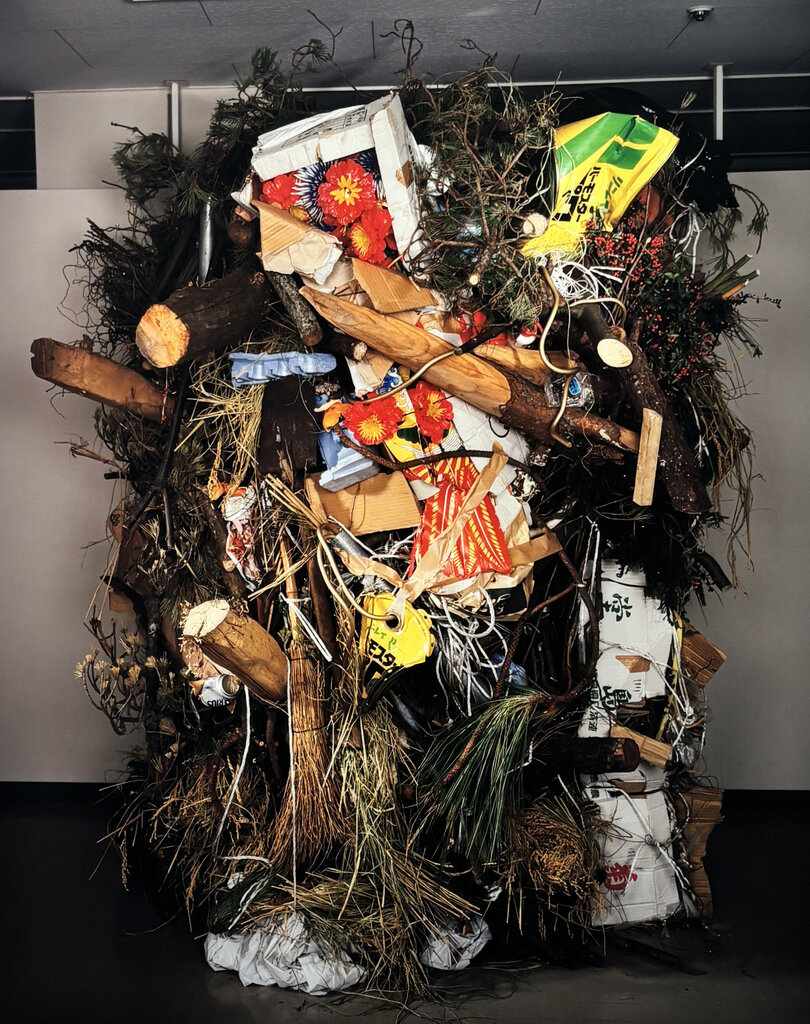
    Oldham’s selection of Rubbish of the Ikebana Exhibition (c. 1984) is a candid example of this philosophy. The plastic decor, ferns, cartons, logs, and bags of soil are all representative of that nature which allows us to sustain and present what we objectively perceive as nature in our day-to-day. Moreover, this arrangement conveys the theme of sustainability in art, aligning with the values of accessibility and an eco-friendly culture that are part of modern society.

    Kosen Ohtsubo, Rubbish of the Ikebana Exhibition, c. 1984, materials discarded during the production of an ikebana exhibition. Produced and exhibited c. 1984 at Ikebana TODAY, Seibu Art Forum, Ikebukuro, Tokyo. Previously unpublished and photographed by the Ryusei Photo Department.

    Through Selections from the Photographic Archive of Kosen Ohtsubo, Oldham encourages embracing this philosophy to demonstrate how one can engage with the art of ikebana by finding beauty in the often-neglected objects of our daily lives – starting with organic “waste.”

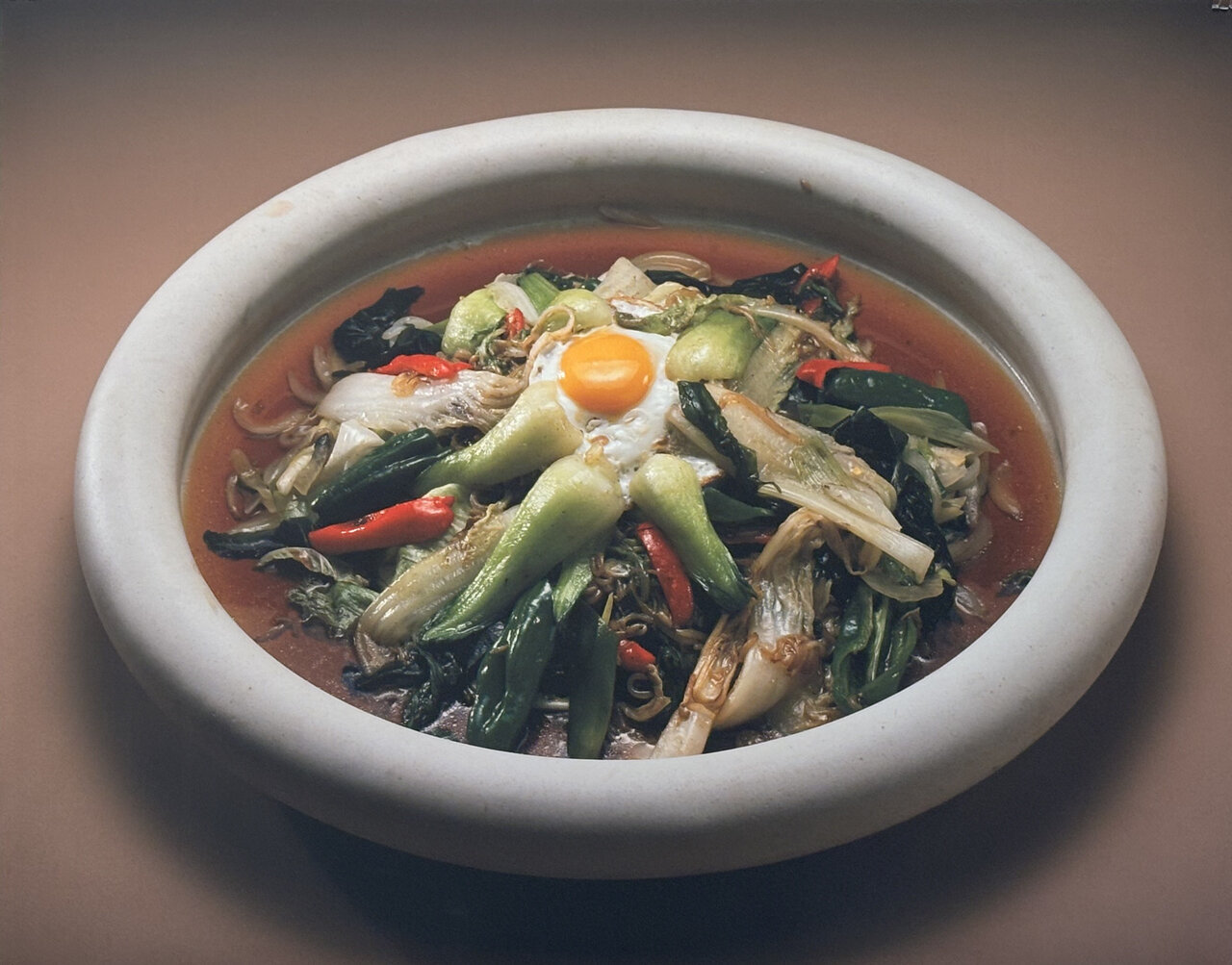
    Kosen Ohtsubo, Can Frizzling Vegetables Be Avant-Garde Ikebana?, 1988, bok choi, cabbage, egg, noodle, shishito, pepper, ceramic vessel made by Mobach Keramik. First published in xContemporary Ikebana Today Vol. 1, May 1989. Photographed by the Ryusei Photo Department.

    I hope the reader will visit the exhibition to fully grasp Kosen Ohtsubo’s introspective philosophy and Christian Kōun Alborz Oldham’s scholarship on the modern phase of ikebana.

    Text and photo: Antonella Pecora Ruiz

    *Exhibition information: Selections from the Photographic Archive of Kosen Ohtsubo, November 28, 2025 – January 31, 2026, Gallery 44, Centre for Contemporary Photography, 401 Richmond St W. Suite 120, Toronto. Gallery hours: Tue – Fri 11 am – 5pm, Sat 12 – 5 pm.

  • The Inaugural Wall at the Canadian Sculpture Centre

    The Inaugural Wall exhibition frames sculptural practice within a moment of institutional renewal, treating the wall as an active structural and conceptual element rather than a neutral backdrop. The exhibition brings together works with divergent material and formal approaches, rejecting a unified narrative of sculpture in favour of a plural field where scale, tactility, and spatial relation function as critical strategies. By emphasizing surface and proximity, the exhibition shifts attention away from sculptural monumentality toward processes of encounter. Sculpture is presented here not as a fixed category, but as a mutable discourse formed through ongoing arbitration among material durability, conceptual openness, and institutional context.

    Installation view at the opening reception

    Elizabeth Merei’s Silhouette distils the human figure into a continuous, upward-pressing form, where mass and void are calibrated with restraint. Carved in Italian marble, the sculpture rejects anatomical specificity in favour of a compressed corporeality: the torso twists subtly, shoulders and hips implied rather than visually declared, producing a tension between weight and lift. The polished surface absorbs light softly, smoothing transitions between planes and emphasizing the work’s internal rhythm rather than its outline. Emotionally, the piece registers as insistent. Its attenuated posture suggests vulnerability without fragility, as if the figure is both gathering itself and resisting collapse. The effect is intimate, inviting a slowed, bodily response from the viewer, who encounters the sculpture less as an image to be read than as a presence to be felt.

    Elizabeth Merei, Silhouette, Italian marble, granite

    Karen Stoskopf Harding’s Great Fertility Goddesses with Talisman Pouch & Pomegranate approaches fertility as a constructed and ritualized framework rather than a symbolic abstraction. Executed in encaustic, the vertically aligned heads adopt a frontal, mask-like presentation that suspends expression and emphasizes endurance and invocation. The chromatic contrast between the upper green form and the lower red form introduces a cyclical logic while the suspended talisman and pomegranate function as material signifiers of offering and embodied knowledge. Ornamentation and appendage extend the work spatially, positioning the interval between the two forms as an active site of meaning. The emotional effect is one of restrained gravity because the work elicits contemplation rather than empathy, confronting the viewer with fertility as a condition structured by obligation, ritual weight, and psychological intensity rather than generative ease.

    Karen Stoskopf Harding, Great Fertility Goddesses with Talisman Pouch & Pomegranate, encaustic, mixed media

    Dina Torrans’s Heirloom #11 – Wish mobilizes the motif of the wing as both structure and metaphor, assembling layered copper elements into a form that suggests movement while remaining fixed in place. The patinated surfaces register time through variation in tone, producing a stratified texture that evokes accumulation. The wing’s curvature directs the viewer’s gaze downward toward the suspended object, which interrupts the expectation of uplift with a counterweight that is materially grounded. Formally, the work stages a tension between expansion and restraint while emotionally, it operates in a minor key: the piece evokes longing without spectacle, articulating “wish” not as triumph but as a deliberation between desire and the weight of what is carried forward.

    Dina Torrans, Heirloom #11 – Wish, bronze, patina

    I strongly recommend experiencing this exhibition in person, as the formal and material qualities of its works are most effectively apprehended firsthand. The nuanced display of light and surface texture, coupled with the deliberate manipulation of scale, produces perceptual effects that are inevitably flattened in photographic or digital reproductions. Moreover, the spatial relationships between the works create a rhythm and tension that affect the aesthetic experience.

    Kaya Meziane

    Images are courtesy of the Canadian Sculpture Centre

    *Exhibition information: The Inaugural Wall / Group Show, November 8, 2025 – January 29, 2026, Canadian Sculpture Centre, 260 Spadina Avenue, Ste 500, 5th floor, Toronto. Gallery hours: Tue – Fri 12 – 5 pm.

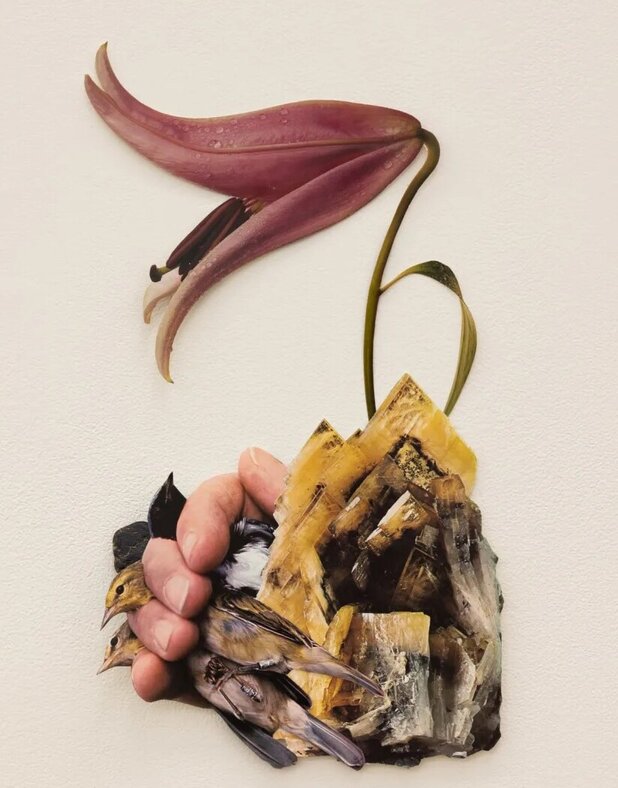
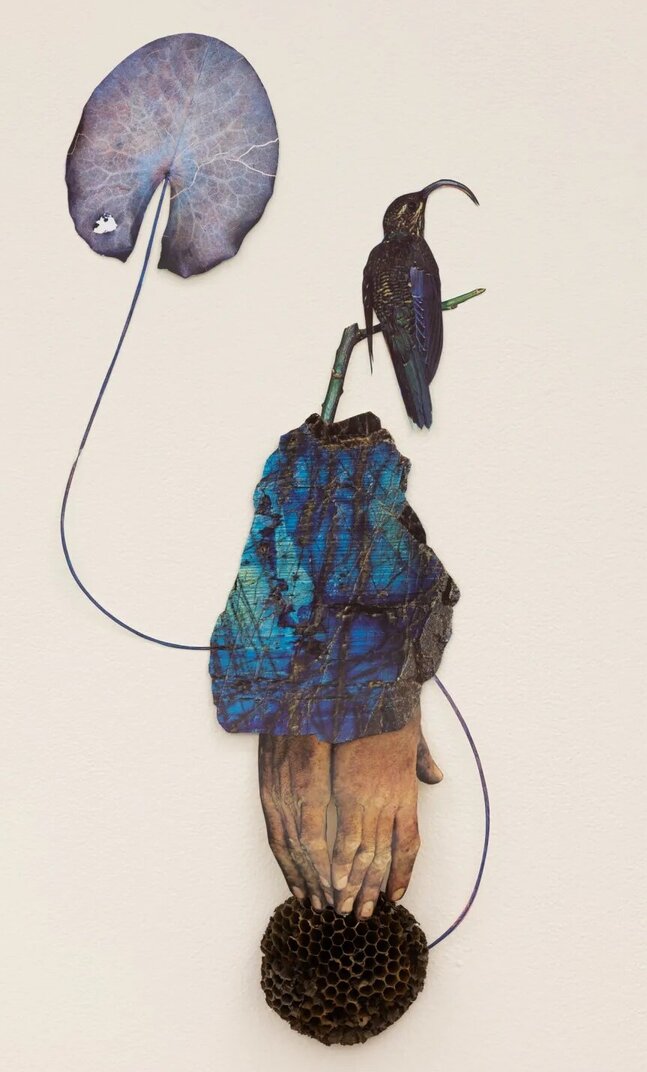
  • Jennifer Murphy at Clint Roenisch Gallery

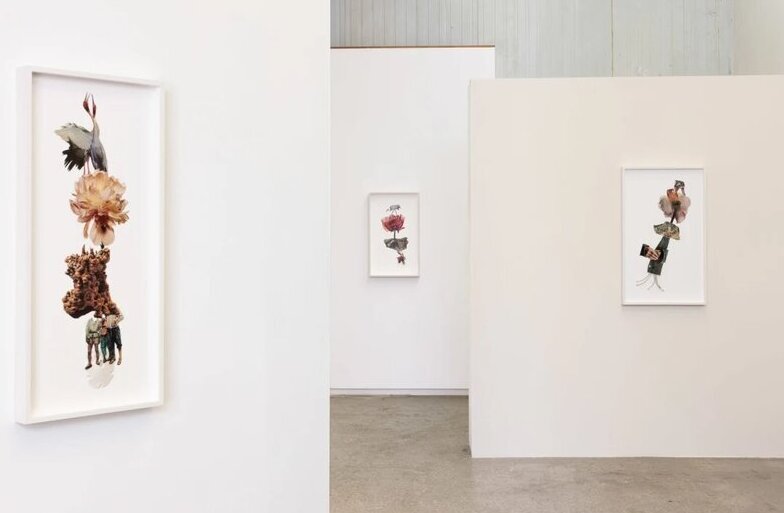
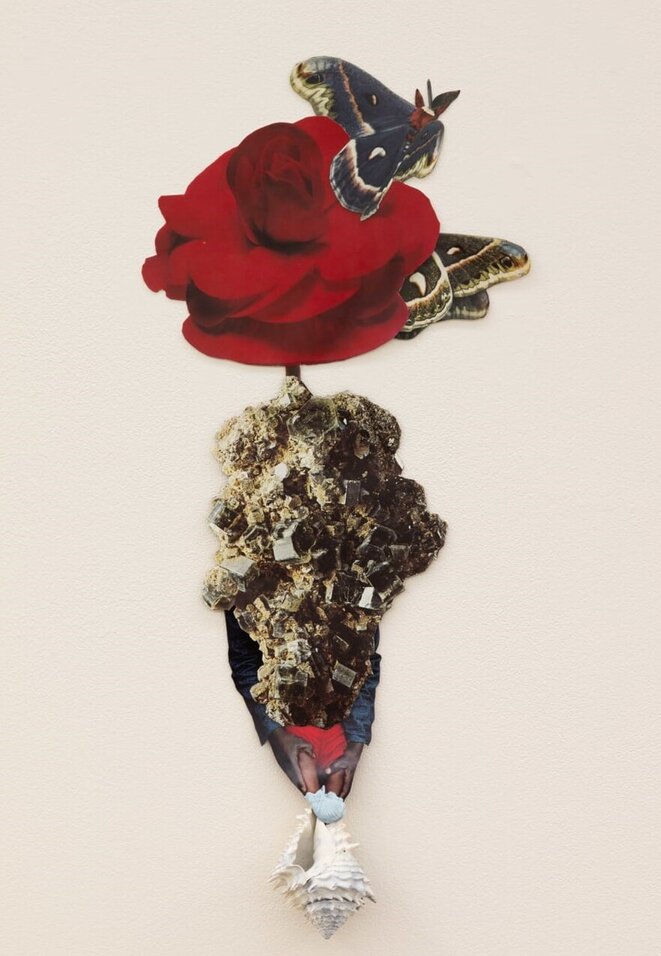
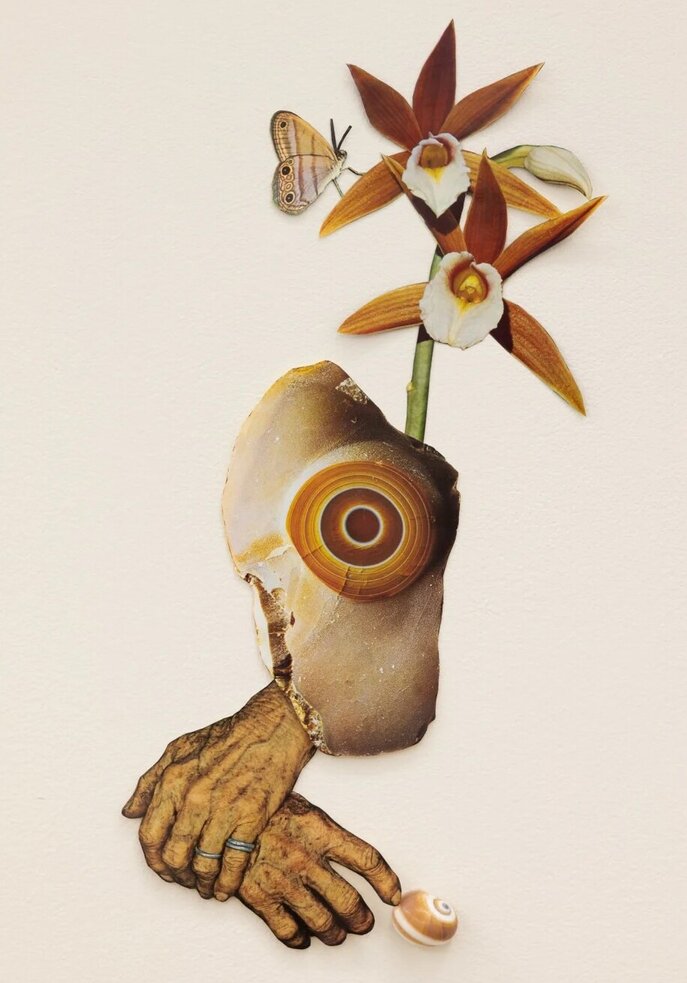
    This is the second opportunity I have had to review Murphy’s work, again at Clint Roenisch Gallery. As I remarked previously, her work sits on the margins of contemporary art practice, insofar as we can speak of the mainstream in art any more. She collects printed images from natural history books and magazines, and also small items from nature – shells, fossils, seed pods, feathers and so on. Using these she assembles delicate minimal collages. Each assembly is a poem about the natural world and our relationship to it. They reflect her abiding fascination with ecology and natural history. It is difficult to decide if she is a natural historian making art or an artist doing natural history. Of course, the two might not be mutually exclusive – it could be a false dichotomy.

    Installation view of Jennifer Murphy, Grains of Sand at Clint Roenisch Gallery

    Her poems, as I have chosen to call them, are in essence constructed from readymades. And it is no accident, I feel, that her practice in this sense parallels those of some of the Dada movement in the early twentieth century. Dadaist Tristan Tzara, for example, explained how to make a Dada poem: First find a newspaper article, cut out all the words individually, place them in a bag, shake them up and pick out the words one after the other – the order they randomly come out produces the desired poem. Likewise Murphy cuts up images from chosen books and magazines. Although how she combines them, unlike the Dadaist, is not determined by chance.

    Jennifer Murphy, Renunciation of the Self for Future Generations, 2025, used book paper collage, shell, 16 x 28 inches

    Dada arose in reaction to the seismic political and economic upheavals of the time, while the First Great War was underway. Events reached an absurdity of tragic proportions. Politics became a cruel spectacle full of hate and wanton destruction, driven by the greed of the ruling class – pleonexia, as I have heard one commentator, named Richard J. Murphy (coincidentally), aptly call this phenomenon. Ditto today. She is motivated, as she explains, by ‘our current world full of converging emergencies including the rise of fascism, disinformation, war and forced displacement, grave inequality, resource depletion, and the climate disaster, which are all exacerbated by colonial, capitalistic, and extractive forces.’ A veritable litany of woes.

    Jennifer Murphy, Woven Together, 2025, used book paper collage, shell, 16 x 24 inches

    The tone of Murphy’s work is very different from that of the Dadaists, whose brash performances and blatant absurdity reflected that of society at large. Murphy’s is more a lament – a hushed tone that is easier to pass over. She points to the fact that we are bounded by nature and the chaotic forces that drive it. In nature there is a procession of extinctions, as life-forms spring up and disappear with an inevitability that parallels our own births and deaths. Accordingly, she talks of interdependencies in between ourselves and the rest of nature, and declares that through her work she hopes “to highlight our role and responsibility to the world’s fragile ecosystems and one another by harnessing an attentiveness through beauty, levity and wonder”.

    Jennifer Murphy, To Hold Dust, 2025, used book paper collage, coal, 15 x 22 inches

    The qualities of ‘beauty, levity and wonder’, that Murphy strives for, contrast with the Dadaists’ expressions of anger and dismay. For them events pointed to the absurdity or meaningless of life, hence their celebration of nonsense poetry for example. The civilization we have constructed, by so-called rational means, is in fact ‘logically nonsensical’, to paraphrase Hans Arp. Murphy’s reaction to our current crises couldn’t be more different. Her work shares none of the didacticism of the Dadaism, its overt politics. Rather, she aims for pathos – a sense of wonder and tenderness. She appears to see in nature a path to redemption, based on a secular version of the thought expressed by Samuel Coleridge when he wrote, that on observing nature, ‘shalt thou see and hear the lovely shapes and sounds intelligible of that eternal language, which thy God utters, …’ (Frost at Midnight). According to Murphy: “To navigate and survive our world today and to grasp these complex interconnections inherent to it we must embrace solidarity, empathy, wonder, and a radical persistent resilience to imagine a more caring, collective future”. These are qualities she wishes to encourage us to value.

    Jennifer Murphy, Faith in Life, 2025, used book paper collage, honeycomb, 16 x 28 inches

    Collage and ready-mades are media that lend themselves to conceptualism, be it in the intellectual form of Marcel Duchamp or the political messaging of Hannah Höch, for example. In particular, they suited Duchamp’s rejection of the retinal, i.e., the aesthetic qualities of art. But clearly Murphy’s collages are meant to be beautiful. Her visual haikus are so ‘retinal’, in fact, they crowd out any concepts underlying them. As artefacts in themselves – imagine their being excavated centuries into the future, say – they are not readily relatable to the political and ecological crises she lists. But that is fine since they nevertheless succeed in expressing the wonder and beauty of the natural world, and ourselves as part of it. In this sense, her demonstrable passion for, and commitment to, nature is infectious.

    Hugh Alcock

    Images are courtesy of Clint Roenisch Gallery.

    *Exhibition information: Jennifer Murphy, Grains of Sand, December 13, 2025 – January 31, 2026, Clint Roenisch Gallery, 190 St Helens Ave, Toronto. Gallery hours: Wed – Sat 12 – 5pm.

  • Dual Exhibitions on Japanese Canadian Internment

    United Contemporary presents two powerful exhibitions that confront the enduring legacies of World War II and its devastating impact on Japanese Canadian communities. These concurrent shows feature four artists—Emma Nishimura and Mitchell Akiyama in the collaborative multimedia installation Paradise, and Norman Takeuchi and Akira Yoshikawa in Selected Works—each offering distinct yet complementary perspectives on displacement, memory, and intergenerational trauma. Together, these exhibitions create a comprehensive artistic reckoning with a pivotal moment in Canadian history, while celebrating the resilience of those who endured forced internment and its reverberating consequences.

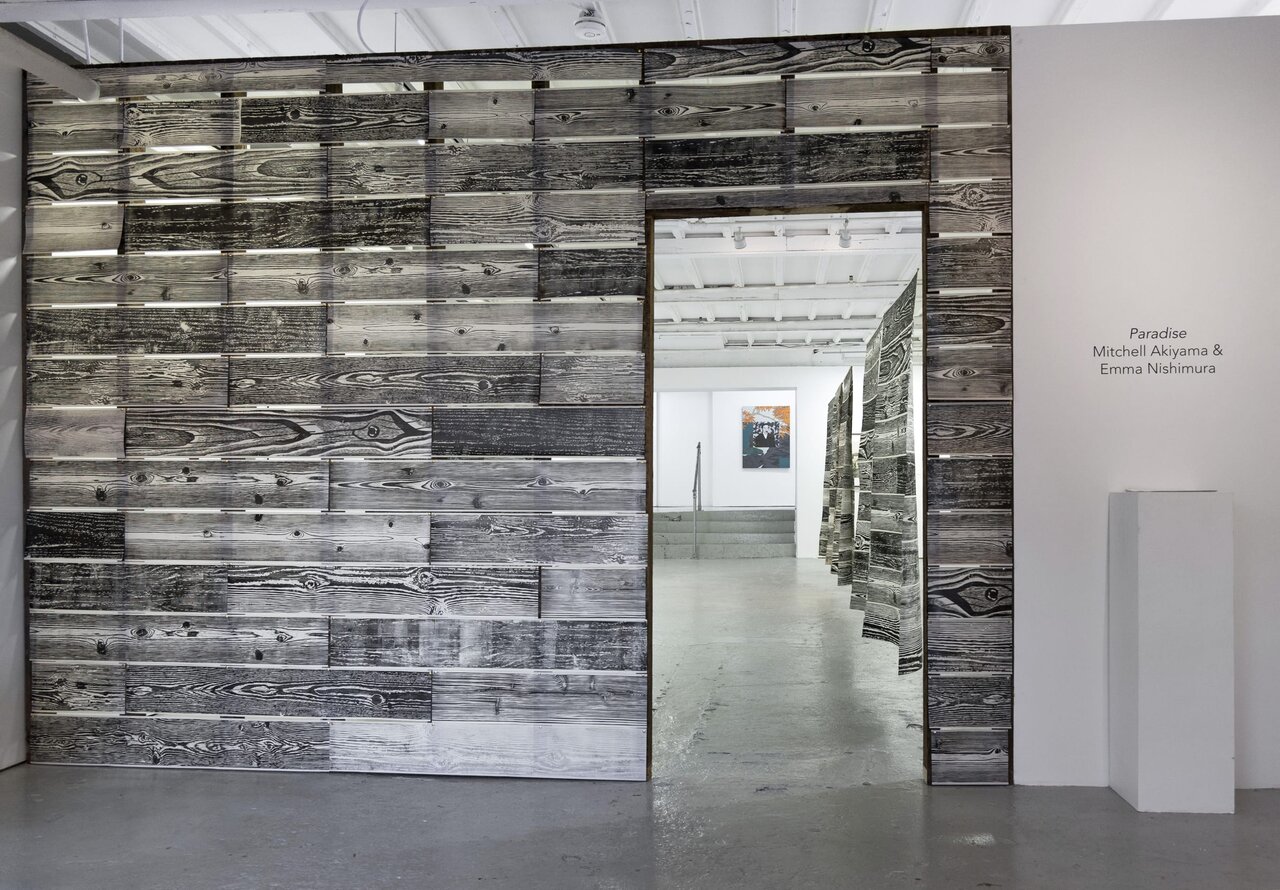
    The exhibition Paradise opens with a striking wall installation of paper-printed works that immediately evokes the Japanese Byobu—the traditional folding screen. This architectural reference frames the entire experience, welcoming visitors into a contemplative space rooted in Japanese aesthetic traditions. Both artists’ grandparents were forcibly relocated to British Columbia during World War II, and Akiyama and Nishimura have traced these displacement routes together, visiting the sites of their family histories.

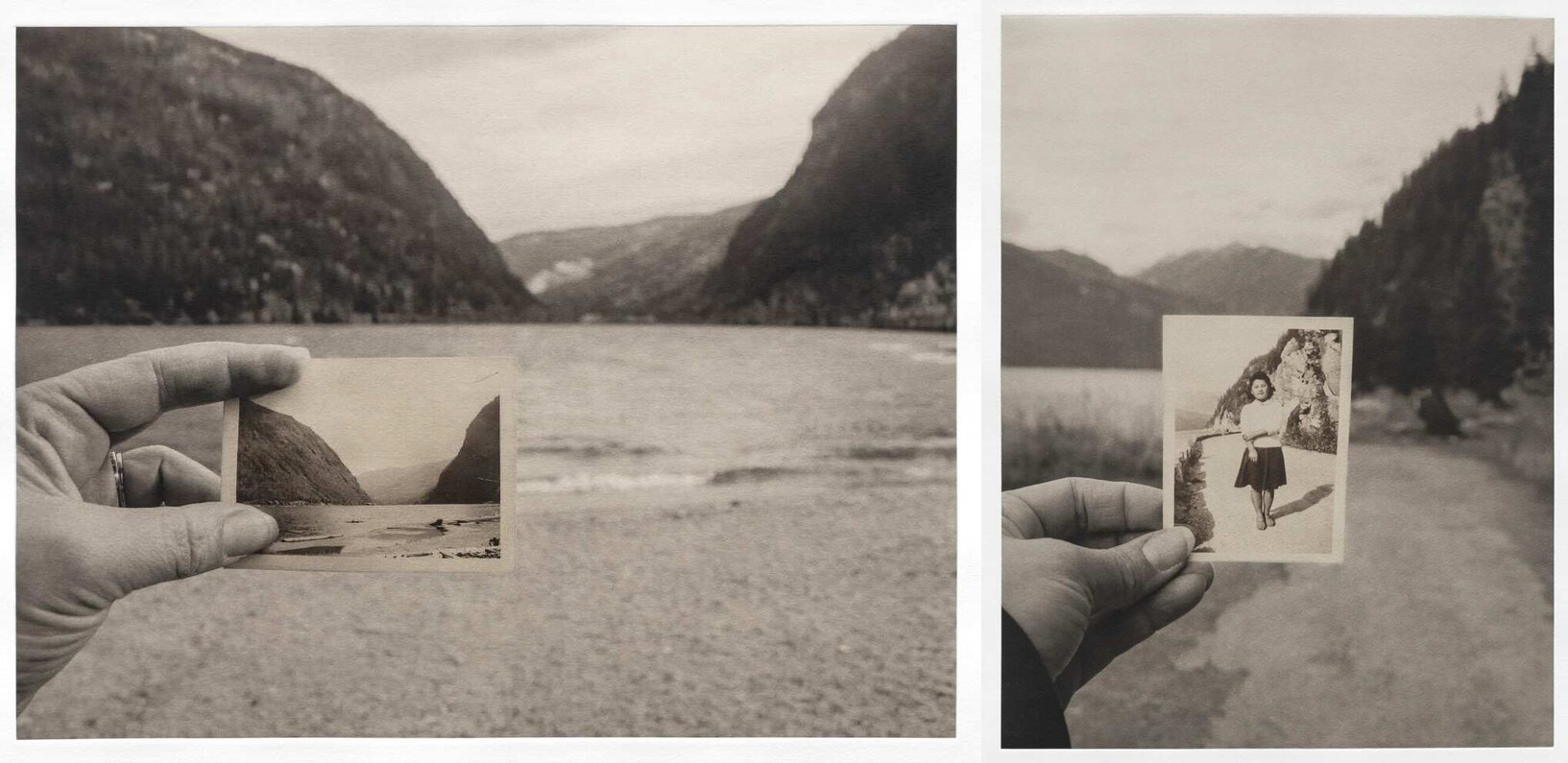
    Emma Nishimura, In Between: Rutherford Beach, (left) and In Between: Slocan City, (right), both 2025, Photopolymer gravure with gampi chine collé, Edition of 5, Framed in stained maple with AGUV glass, 22 x 27.5 inches

    Within the installation, fragile walls create a memorial space filled with meaningful objects. Nishimura’s prints overlay family photographs from internment with today’s landscapes, creating temporal collisions that reveal how past and present coexist. A series of hand-carved woodblock prints reproduce the grain patterns of cedar exteriors from internment shacks transforming architectural markers of confinement into delicate, contemplative works.  

    Entrance view of Mitchell Akiyama & Emma Nishimura, Paradise

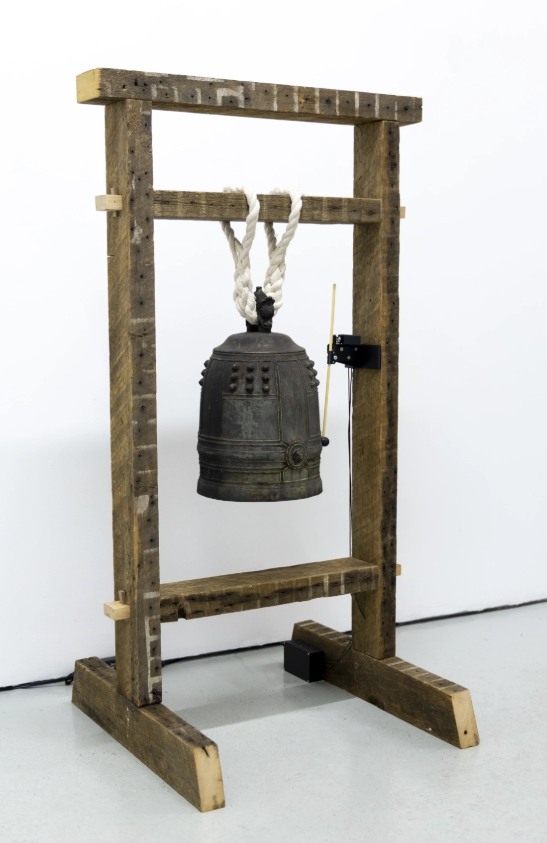
    Akiyama crafts a stand for a temple bell from reclaimed wood, while a handcrafted table reworked from a Western-style piece given by Akiyama’s grandmother into a Japanese-style low table displays a film on a vintage television. This blending of forms and cultures becomes the visual language through which the artists examine how history and memory shift across generations.

    Mitchell Akiyama, Temple Bell

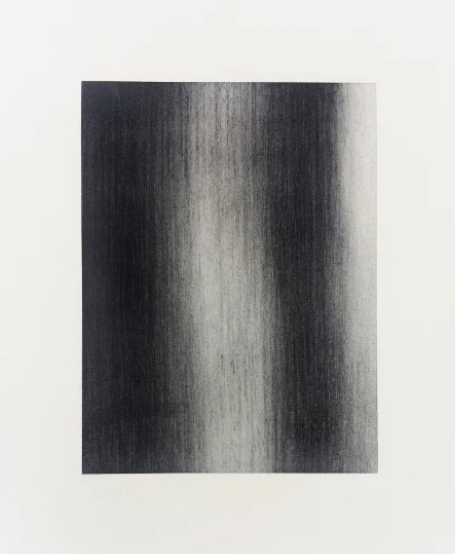
    Akira Yoshikawa’s artistic vision emerges directly from displacement and historical consciousness. Born in Hiroshima in 1949, he inherited both the aftermath of the atomic bomb and his mother’s legacy of peace advocacy after she fled her family’s British Columbia farm. This dual inheritance shaped an artistic sensibility centered on restraint, mindfulness, and contemplative space. Yoshikawa’s works are profoundly descriptive in their material subtlety. His Botan series uses charcoal powder creating luminous gradients from darkness to light, represents the contribution to contemporary minimalism. 

    Akira Yoshikawa, Botan #3, 1996, Charcoal powder on paper, framed in black with AGUV glass, 26 x 19.75 inches

    Let go presents a weathered stone, thin vertical lines, and white sculptural forms in spatial dialogue—inviting viewers to contemplate physical and emotional weight. The stark white backgrounds amplify meditative quietness. Through these works, Yoshikawa cultivates presence in the “now,” creating visual sanctuaries where his spare aesthetic offers profound contemporary resistance, demonstrating that simplicity generates deep resonance through silence and stillness.

    Akira Yoshikawa, Let go, 2024, rock, plaster, string, Dimensions variable

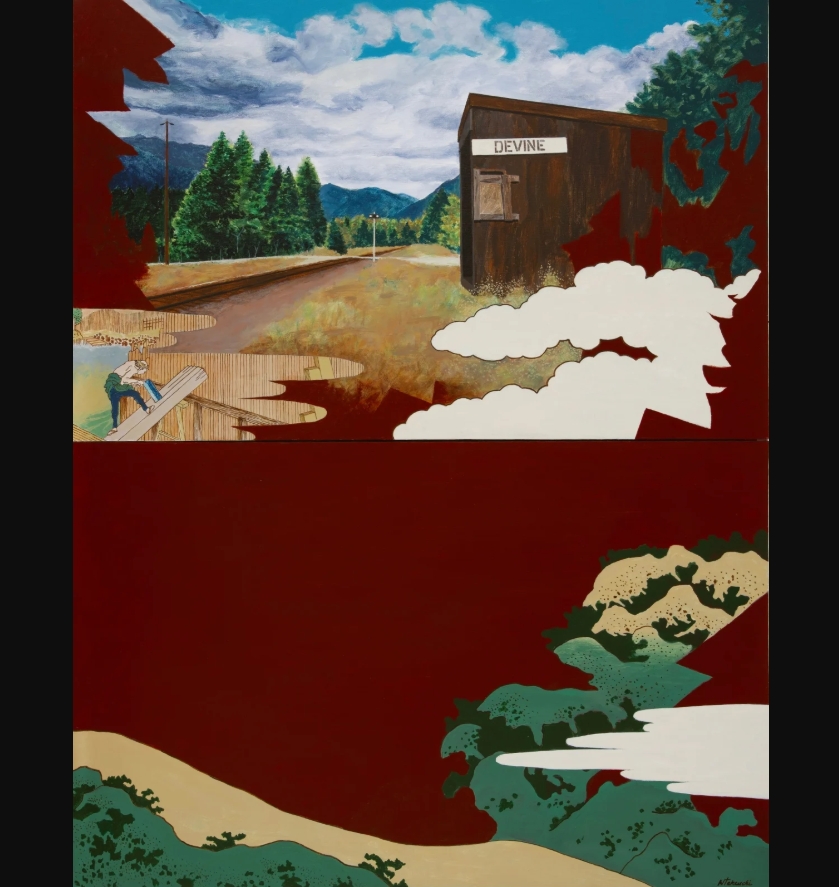
    Norman Takeuchi’s work merges bold abstraction with figurative motifs that speak to Japanese heritage, cultural duality, and the complexities of memory. His paintings, rooted in the wartime period, translate personal and collective histories into thought-provoking visual narratives. In this exhibition, Lumber Camp is shown for the first time, directly linking to Takeuchi’s family history of forced removal from Vancouver. The painting depicts the train platform at the Devine lumber camp, the final site his family inhabited before returning home after the war, honoring this place while paying tribute to his parents’ resilience.

    Norman Takeuchi, Lumber Camp, 2020, Acrylic on canvas, 42 1/8 x 33 1/8 inches

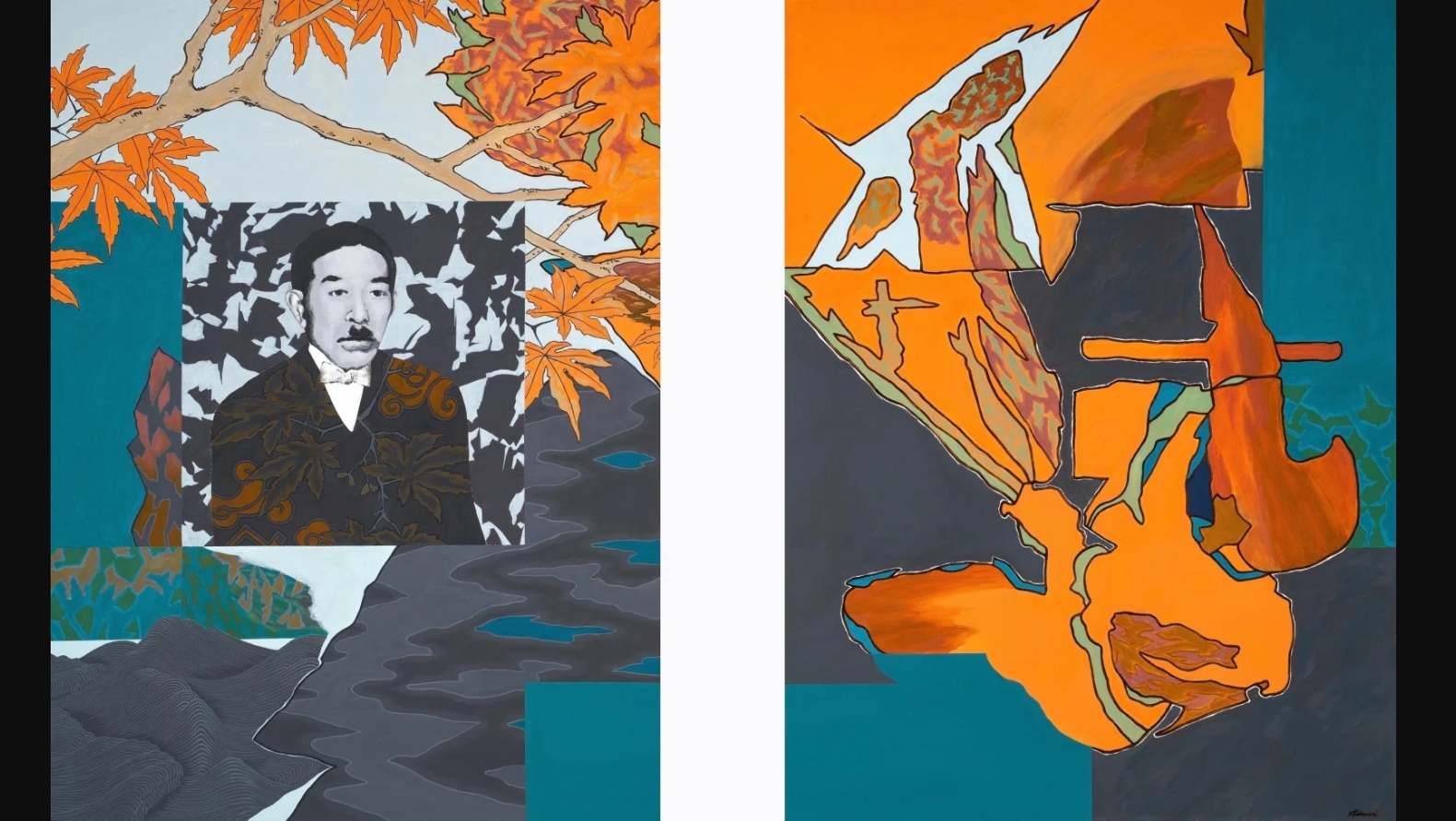
    Two large-scale diptychs, Immigrant and Veteran from the Long Division series, extend this exploration. The left canvas portrays historical events while the right expresses intangible emotions of displacement, confusion, and loss through abstraction. The physical space between canvases symbolizes misunderstanding and intolerance, yet the compositions remain visually linked, emphasizing that despite division, human beings remain inherently connected. Through this interplay of history and abstraction, Takeuchi confronts trauma while asserting determined movement toward understanding and healing.

    Norman Takeuchi, Immigrant, 2021, Acrylic on canvas, diptych, 48 x 79 inches

    Norman Takeuchi, Veteran, 2022, Acrylic on canvas, diptych, 48 x 79 inches

    These exhibitions represent a crucial opportunity for visitors to engage with wartime history, honor those affected, and recognize the profound resilience of Japanese Canadian communities across generations. Whether directly or indirectly impacted, all visitors encounter a momentous artistic testament to survival, memory, and the enduring human capacity for healing and connection.

    Nusrat Papia

    Images are courtesy of United Contemporary

    *Exhibition information: Mitchell Akiyama & Emma Nishimura, Paradise and Norman Takeuchi & Akira Yoshikawa, Selected Works, November 27, 2025 – January 24, 2026, United Contemporary, 129 Tecumseth Street, Toronto. Gallery hours: Wed – Sat 11am – 6pm.

  • Abbozzo Gallery Welcomes a New Era

    Abbozzo Gallery Welcomes a New Era with its Inaugural Exhibition Housewarming

    An elevated view of Abbozzo Gallery’s ground level at the opening reception

    After more than three decades at the heart of Canada’s contemporary art landscape, Abbozzo Gallery opens the doors to a bright and exciting new chapter. This fall, the gallery unveils its newly renovated home at 32 Sousa Mendes Street with Housewarming, a group exhibition that honours both the legacy and the evolving future of this institution. The exhibition marks not simply a relocation, but a renewal grounded in continuity, community, and quality art.

    For over 20 years in Oakville and more than 12 years at 401 Richmond W, Abbozzo has cultivated a reputation for artistic integrity, discovery, and enduring relationships. Its quiet five-month transition into the Dundas West, Wallace-Emerson, and Dupont neighbourhoods signals not a departure from that history, but a natural expansion of it. The new lovely two-story building is both intimate and spacious, designed with optimal sightlines and bathed in colour and light, offering an architecture that mirrors the vitality of the artists whose work it holds.

    Top-floor installation view at Abbozzo Gallery, at the opening reception

    In conversation with Director Ineke Zigrossi, the excitement surrounding the move was unmistakable. She shared that the acquisition of the building itself felt deeply significant, a long-held vision brought into being. Set among other independent businesses and creative spaces, the gallery is positioned to grow as a cultural meeting place. In the months and years ahead, the space will host pop-up exhibitions, curated dinners, and lively vendor markets, extending Abbozzo’s role beyond exhibition-making into acts of gathering and exchange. Above all, Zigrossi spoke with profound enthusiasm about welcoming people into this new home and inviting them to experience the gallery in its renewed ways.

    It is fitting, then, that the inaugural exhibition has been titled Housewarming. Conceived as a collective celebration, the show brings together a wide diversity of artists, both local and international, who have shaped Abbozzo’s history alongside new voices represented since the move. Rather than functioning as a retrospective, the exhibition unfolds in dialogue as each work bears witness to a sustained investment in artists across generations, while also signalling the directions yet to come.

    Curating this pivotal exhibition is Associate Director Blake Zigrossi, who has worked for nearly a decade on the gallery’s curatorial committee. His vision carries forward into the near future, as he prepares the majority of Abbozzo’s solo exhibitions slated for 2026. These forthcoming shows promise a program that is both rigorous and adventurous, rooted in the gallery’s established values while embracing new aesthetic possibilities.

    Abbozzo Gallery team, left to right: Olga Sobkovych, Ineke Zigrossi, Blake Zigrossi, and Quincy Shaw.

    Integral to Abbozzo’s uncompromising standard of excellence is the broader team whose care is felt in every detail. Media and Exhibitions Manager Quincy Shaw and Gallery Assistant Olga Sobkovych contribute not only their professionalism but a genuine warmth that defines the gallery’s atmosphere. Together, they form a team marked by deep passion, generosity, and a shared commitment to sustaining a living, breathing art community.

    The opening weekend embodied this spirit of welcome. Besides art loving guests the Saturday reception featured a special selection of community vendors, further enriching the gallery as a site of encounter and collective celebration.

    Guests gathered to celebrate the opening night of Abbozzo Gallery’s new home.

    After months of preparation throughout the summer and a quiet transition behind the scenes, Abbozzo now re-emerges with confidence and joy. The gallery extends its gratitude to the artists, collectors, and friends who supported this transition with patience and unwavering enthusiasm. Their presence, past and future, remains the foundation of everything Abbozzo continues to build.

    Housewarming was a truly inspiring exhibition to attend as it was honestly displayed as an expression of belonging, a gesture of thanks, and an open invitation into a renewed artistic home. In a city that is forever reshaping itself, Abbozzo’s new space stands as a testament to endurance, vision, and the transformative power of sustained creative relationships.

    Text and photo: Yehyun Lee

    *Exhibition information: Housewarming, November 28 – December 6, 2025, Abbozzo Gallery, 32 Sousa Mendes Street, Toronto. Gallery hours: Tuesday – Friday: 11 am -6 pm, Saturday: 11 am – 5 pm.

  • The Kingston Prize

    This past month, The Kingston Prize declared Louise Kermode’s Madonna in a Tulip Chair this year’s winner. The Kingston Prize is a biennial competition that celebrates contemporary portraiture by Canadian artists. The prize, amounting to $25,000, aims to encourage and reward Canadian artists while building a living historical record of Canadians and showcasing their diverse identities and experiences through real-life encounters.

    Installation view of The Kinston Prize exhibition at Arta Gallery, Toronto.

    During this year’s cycle, 420 artists applied to the competition. The jury consisted of renown Canadian artist, Gordon Shadrach, and scholars, Chloe Pelletier (Curator at the Montreal Museum of Fine Arts), and Lauchie Reid (Chair of Illustration at OCAD University). These jurors selected the winners from a pool of applicants before settling on 30 finalists of talented Canadian artist’ portraits for the exhibition. Among others Orlin Mantchev’s and Opeyemi Olukotun’s paintings were outstanding.

    Orlin Mantchev in front of his painting, James Baird (from the series “The Cosmos I am”), oil on canvas, 152 x 152 cm

    Opeyemi Olukotun with his painting, A Cup of Silence, acrylic on canvas, 150 x 120 cm

    Interview with Louise Kermode, the winner of the 2025 Kingston Prize

    Louise Kermode receiving the winning prize of The Kingston Prize from Jason Donville

    LK: I took several art history courses as a student at U of T and coincidentally ended up working as an admin assistant in the Art History department for 15 years. I think being so exposed to art history for so long has given me a framework for approaching my own work that is almost instinctual. I see art historical references everywhere, which informs the contemporary imagery that I paint.

    Not relying on my art for income gave me the flexibility to paint only what I wanted to paint. Keeping my painting practice in a holding pattern until I retired was a very long exercise in discipline and delayed gratification!

    LK: I can’t remember how I became aware of it, but I’ve known about the Kingston Prize for a long time. I had already begun work on the portrait of Donna when the call for submissions for this year’s prize went out.

    Louise Kermode and Donna in front of Kermode’s winning portrait of Donna, Madonna in a Tulip Chair

    LK: I’ve been a fan of Mary and Christopher Pratt’s work for a long time, so I was familiar with the “Donna paintings”. I met Donna when she was working at the Gallery Grill at Hart House on U of T’s St. George campus. I’d gone there for lunch with Dr. Elizabeth Legge who was Chair of the Art History Department at the time. Donna and Elizabeth knew each other and when Donna left the table, Elizabeth said, “you should paint Donna!” and I thought it was such a great idea. As someone who has more of my life behind me than ahead of me, I’m a bit preoccupied right now with the passage of time. Painting an artist’s muse 40 years after she came to prominence, I thought would be a perfect way to explore that theme.

    When I began planning this portrait, I knew I wanted to reference my favourite Donna painting Girl in a Wicker Chair, but I didn’t want it to be a literal copy of it. I wanted to bring in my favourite elements of Mary Pratt’s painting – the beautiful symmetry and light effects – but interpret them in my own way. By referencing the earlier painting, I wanted to highlight not only the similarities but the differences to show that this is a painting of the same person but with age and experience she presents herself differently to the world.

    It was also an opportunity to continue Donna’s story, this time as a portrait subject as opposed to a figure model, and to reflect on her place in Canadian art history.

    Mary Pratt: Girl in a wicker chair, 1978, oil on canvas (left) and Louise Kemrode: Madonna in a Tulip Chair, oil on aluminum composite panel, 116 x 76 cm (right)

    LK: When I was reviewing the photos that I took of Donna as source material for the painting, I was struck by how many of them were vaguely reminiscent of renaissance Madonna imagery. I decided to lean into that because the concept so perfectly captured Donna’s mythic status. I used about 5 or 6 different photos in coming up with the final composition. It was also a conscious choice to have Donna’s bare feet figure prominently. This was partly because it was a way to associate my painting with the earlier paintings of Donna, but also because to me they convey her vulnerability, and that was something I wanted to emphasize as well.

    LK: There isn’t one specific moment I can point to, just overwhelming gratitude for the community of artists and supporters who believe in the work that we do and gave so much to make it happen.

    Antonella Pecora Ruiz

    Images are courtesy of The Kingston Prize, credit Michael Reyes, and the artists. (CNW Group/The Kingston Prize)

    *Exhibition information: The Kingston Prize, Nov 8 – 14, 2025 Arta Gallery, Toronto, then the exhibition will tour the country.

  • Interior Tensions: Jinyan Zhao and Kai in Conversation

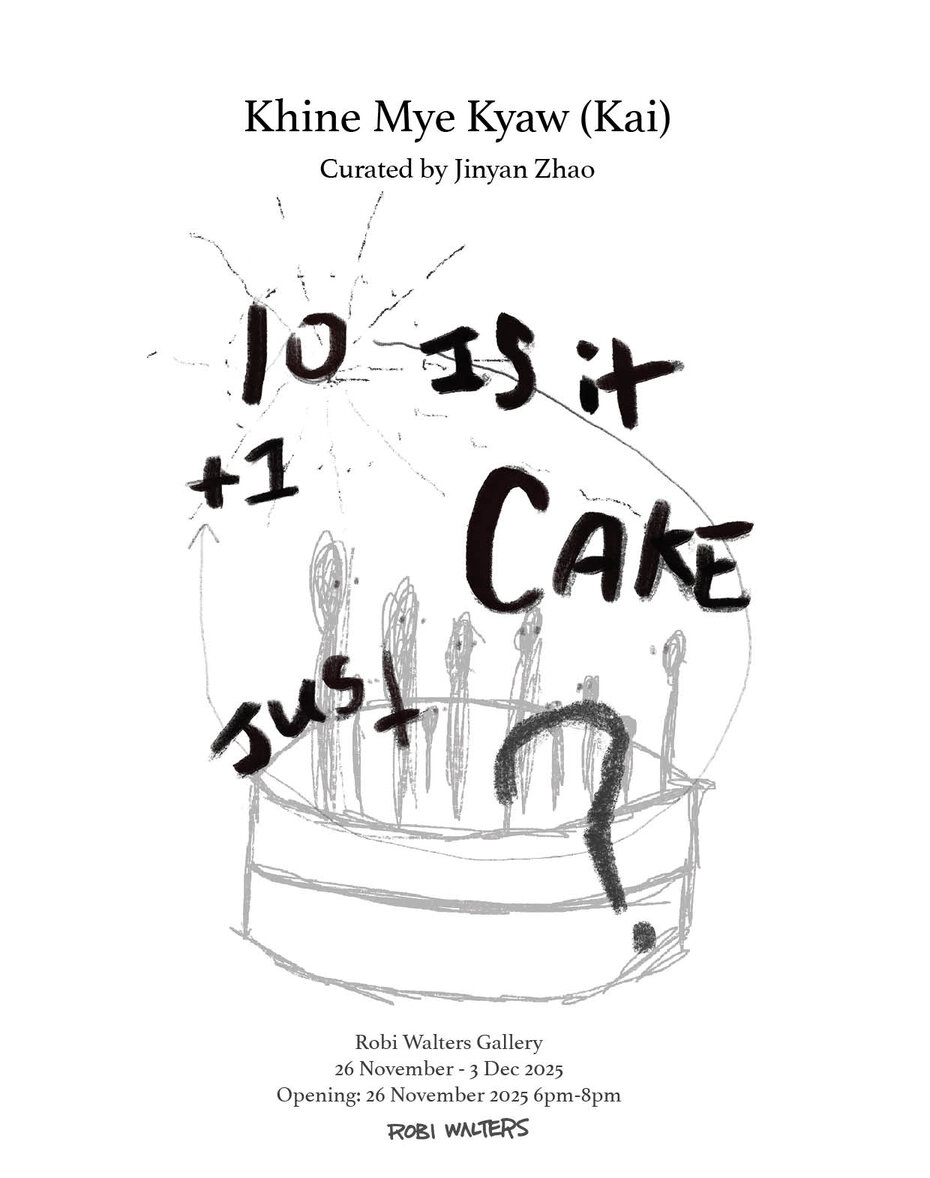
    When Toronto artist and curator Jinyan Zhao relocated to London to pursue her MFA at Goldsmiths, she entered a city where artistic production moves at a faster and more fractured pace. Yet even within this expanded environment, her approach remains rooted in the sensibilities she cultivated during her years in Toronto: an attentiveness to emotional nuance, a belief in perception as an embodied experience, and a curatorial language built around atmosphere rather than spectacle. Her recent collaboration with artist Kai offers a rich articulation of these concerns, using the frame of a London exhibition titled 10+1, Is it just Cake to explore questions at the heart of both of their practices.

    10+1, Is it just Cake at the Robi Walters Gallery in London, UK

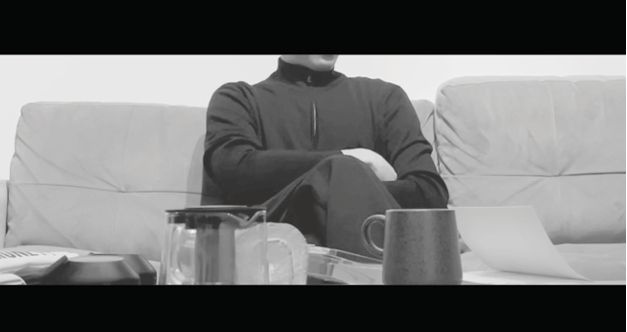
    The project began with a gesture that could not be more ordinary. In the video Eating a Cake in Front of a Camera, Kai records himself consuming a slice of cake. The action is simple, even unremarkable. But the presence of the camera destabilizes the act. His hands grow carefully. His mouth behaves as if it is being evaluated. The body tries to behave naturally and yet becomes increasingly self-conscious. Nothing dramatic occurs, yet tension gathers in the small adjustments of posture, gaze, and restraint. The video does not present a performance so much as the subtle production of performance through observation itself.

    Eating a Cake in Front of a Camera, 2023, video still

    For Zhao, this quietly strained gesture became an entry point into a much broader conversation about visibility, interiority, and the pressures that shape contemporary subjecthood. Her curatorial framing extended the gesture across multiple mediums, allowing it to refract through painting, language, sound, and even participation. Rather than situating the works within a rigid thematic structure, she created a space where viewers could sense the emotional negotiations underlying each piece.

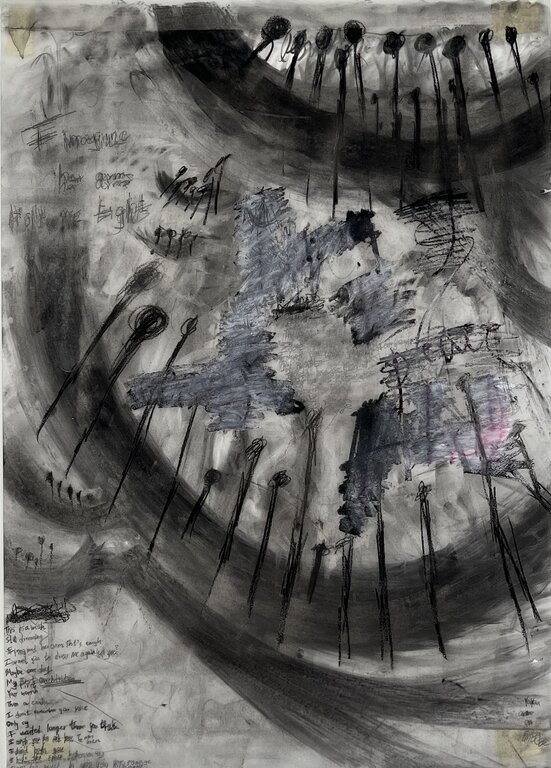
    Kai’s paintings operate as the internal counterparts to the video. While the camera captures the body performing outwardly, the paintings document what remains unspoken. Works such as To Cassandra and Architecture of a First Human are built through cycles of layering, erasure, and sealing. Charcoal marks are laid down and sanded away. Gestures are expressed and then withdrawn. Text appears faintly before being submerged under skins of diluted wood glue, a process Kai describes as a kind of “epidermal closure.” The surfaces behave like psychological membranes, carrying residues of impulse and hesitation.

    Architecture of a First Human, 2025, charcoal, oil pastel, graphite on tracing paper, 84 x 59cm

    In To Cassandra, the composition is split along an invisible divide, staging a dialogue between two conflicting impulses: the desire to reveal and the need to protect. One side tremble with exposed marks, while the other withdraws into a dense, texture barrier. The painting refuses resolution. Instead, it lingers in a suspended state, articulating what it means to speak without assurance of being heard. Architecture of a First Human similarly visualizes early emotional distance, building an atmospheric structure out of arcs, fragments, and lingering traces of text. The works do not seek catharsis; they embody endurance in their most intimate form.

    To Cassandra, 2025, Charcoal, oil pastel, graphite, wood glue on tracing paper, 84 x 59cm

    Zhao’s curatorial approach resonates strongly with these layers of contradiction. Her work has long explored the fragility of the present moment and the instability of sensation. In previous projects, she has activated subtle shifts in perspective, gesture, and touch to create what might be described as emotional environments. In London, these concerns sharpen as she navigates a city defined by speed, competition, and density. Her attention to the smallest inflections of experience becomes a way of resisting the overwhelming pace surrounding her.

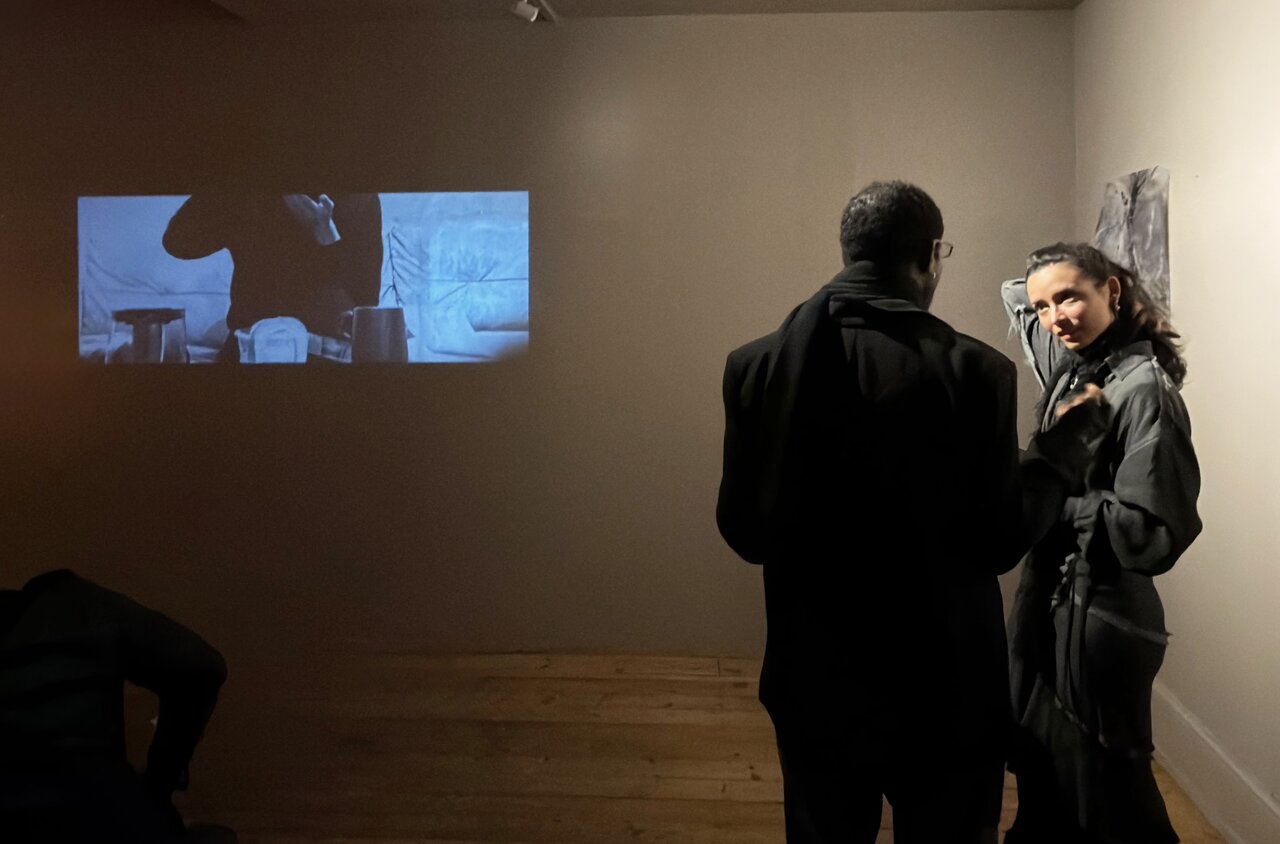
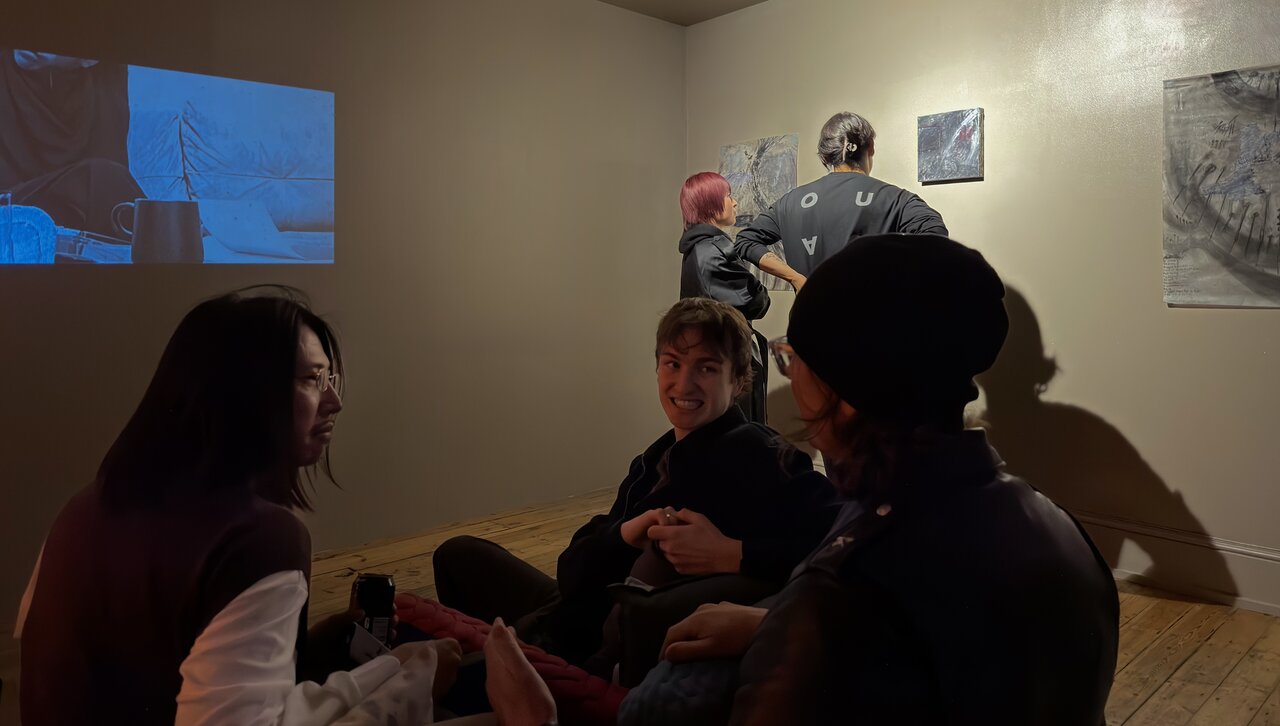
    Installation view with Eating a Cake in Front of a Camera at the opening reception

    In this collaboration, she allowed the artworks to unfold slowly. The exhibition space was quiet, shaped subtly by the looping repetition of William Basinski’s Disintegration Loops, a sonic layer that mirrors the erosion and persistence present in Kai’s surfaces. Even the opening’s invitation for visitors to eat slices of cake was more than a playful gesture. It folded the audience into the work’s fundamental tension. Eating, normally a private and unthinking act, becomes public. The visitors’ gestures echoed the artist’s own negotiation with visibility, turning the room into a shared performance of self-management.

    Yet beyond the specific artworks, what is most compelling about this collaboration is how it reveals the evolving trajectory of young Toronto-trained practitioners working internationally. Zhao’s curatorial sensibility carries with it an ethos shaped by Toronto’s culture of thoughtful slowness and attention to emotional detail. Her move to London does not overwrite this foundation; instead, it places her in a dynamic exchange where local formations meet global pressures. Kai’s practice, with its profound attention to the psychological negotiations of being seen, offers a powerful complement.

    Aporia I, 2025, oil, charcoal, ash, linen on canvas, 40 x 40cm

    Their collaboration suggests that resilience today is not a heroic feat but a continuous negotiation. It is expressed in erased marks, in withheld gestures, in the pressure of a camera, in the small adjustments a body makes in response to another’s gaze. It appears in the quiet ways artists navigate displacement, uncertainty, and the shifting landscapes of art worlds across cities.

    While the London exhibition serves as the initial point of encounter, the significance of their work extends beyond it. Zhao’s evolving curatorial thinking reflects the shifting conditions of perception in a globalized art context, while Kai’s multidisciplinary practice continues to probe the emotional architectures that shape everyday life. Together, they create a space where interior worlds become perceptible, not through grand gestures but through careful articulation of tension.

    Installation view with guests at the opening reception

    What remains after experiencing their collaboration is not a single image or moment, but a sense of standing inside a delicate threshold. It is a space where seeing and being seen blur into each other, where the body negotiates its own visibility, and where the interior world persists, quietly but insistently, beneath every gesture.

    Sherry Chunqing Liu

  • The Textile Museum of Canada reopened

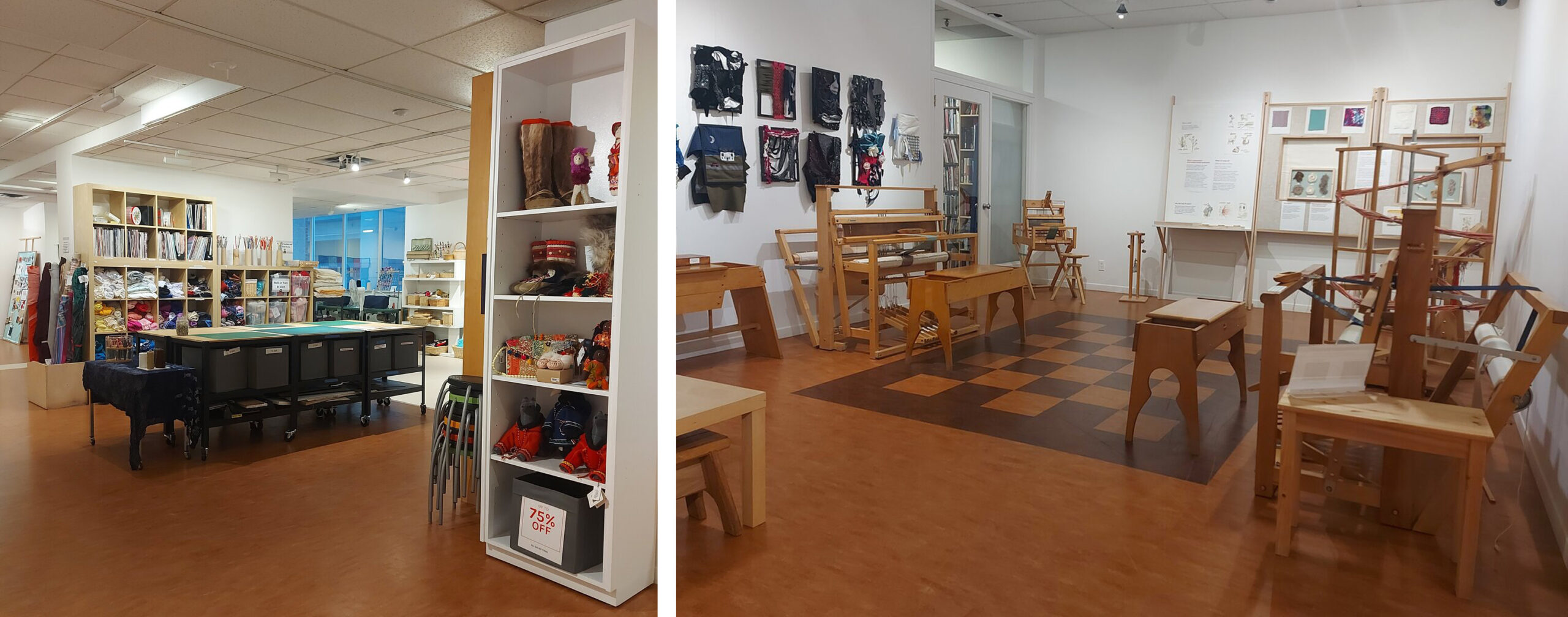
    After a period of renovation and redevelopment, the Textile Museum of Canada has reopened its doors with revitalized energy, new exhibitions, and a vision to blend tradition with innovation. Interim Executive Director Urmi Desai shared that the museum’s temporary closure allowed for significant upgrades to the galleries and retail spaces—made possible through generous community donations. The reopening coincides with the museum’s 50th anniversary, marking a celebration of heritage, creativity, and shared cultural stories.

    The exhibition Taking Shape: Recent Acquisitions (2022–2025), funded by Partners in Art and curated by Julia Brucculieri, highlights new additions to the museum’s vast collection. Brucculieri described the exhibition as part of an ongoing mission to preserve and share the diverse textile traditions of Indigenous, settler, and immigrant communities across Canada. The show features a wide variety of works—ceramic pieces with beadwork, velvet textiles reflecting queer identity and masculinity, and art by Canadian Inuit, Mosquito First Nation and Latin American creators from El Salvador and Mexico. Together, these works expand the museum’s collection, which now includes over 50,000 objects from around the world.

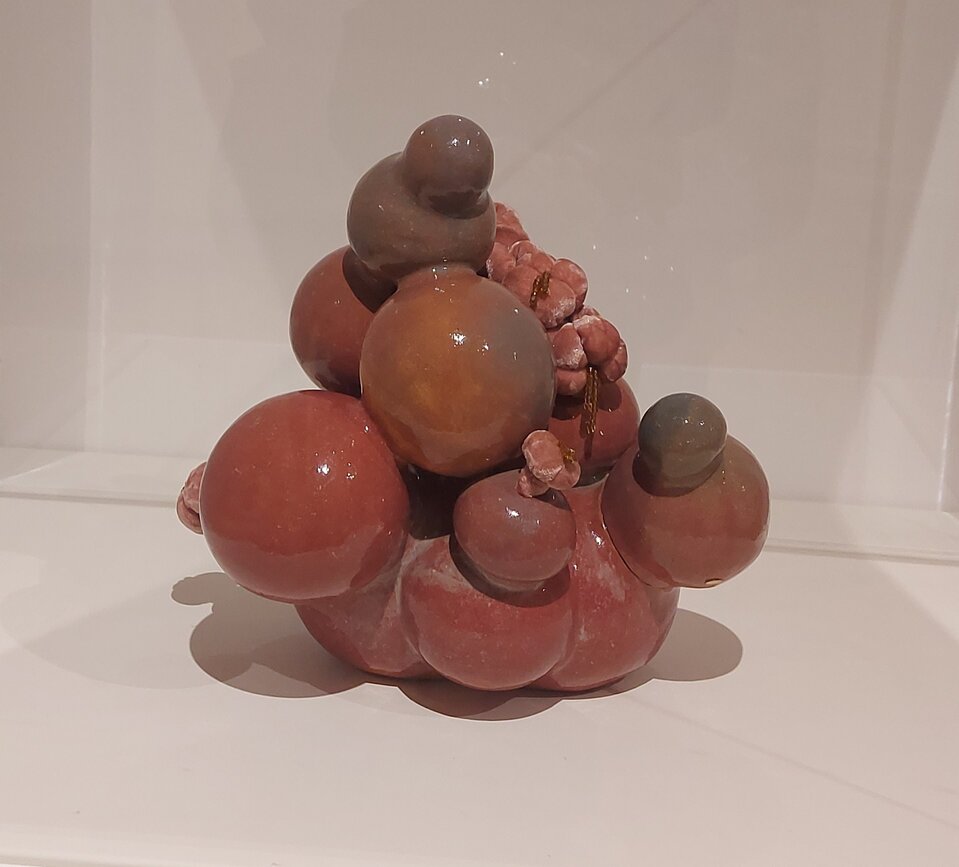
    Aria XYX, Rebloom, Sonsonate, El Salvador

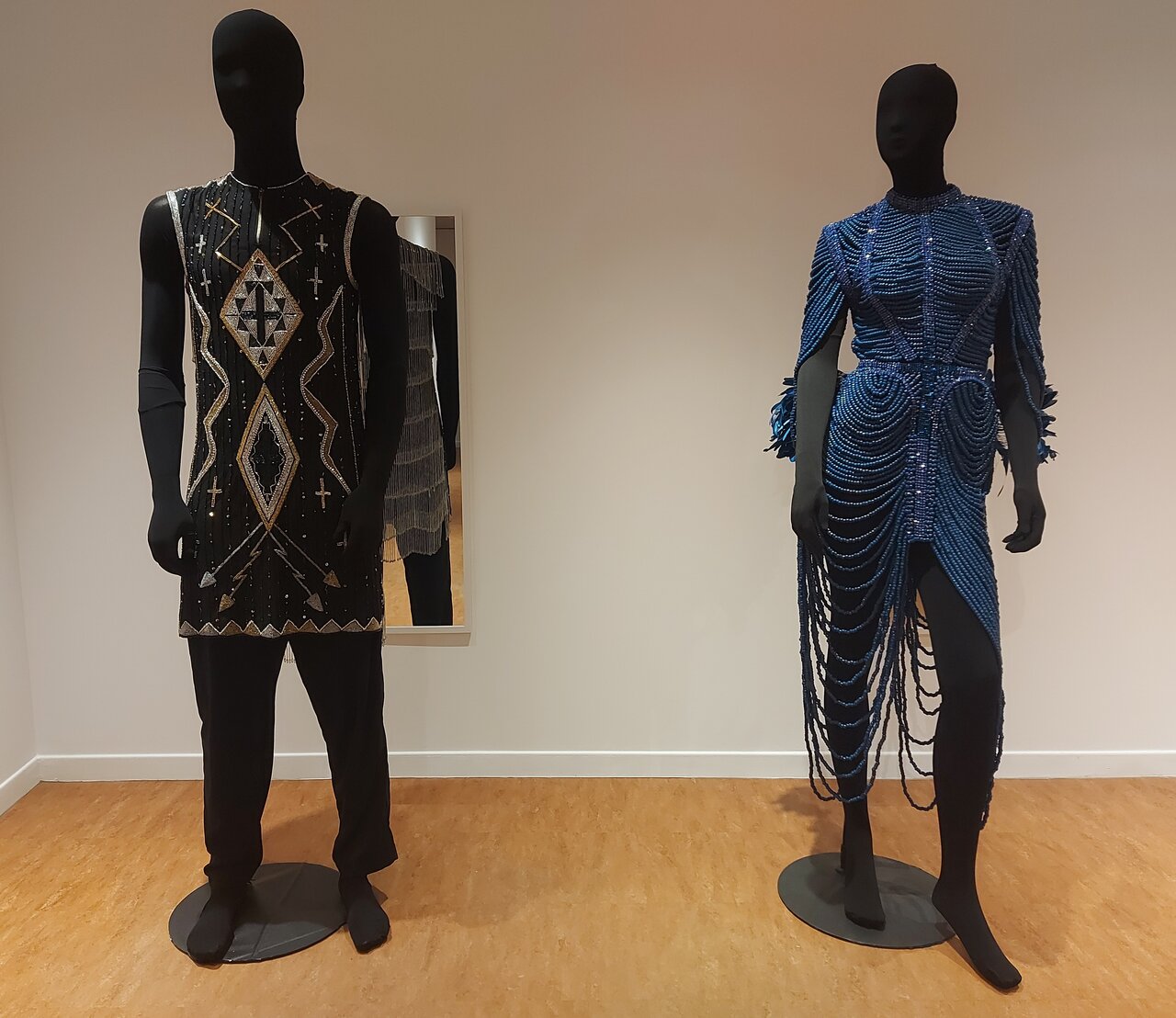
    Orlando Dugi, Tunic, New Mexico (left) and Jontay Kahm, Resonance dress, Mosquito First Nation, Saskatchewan (right)

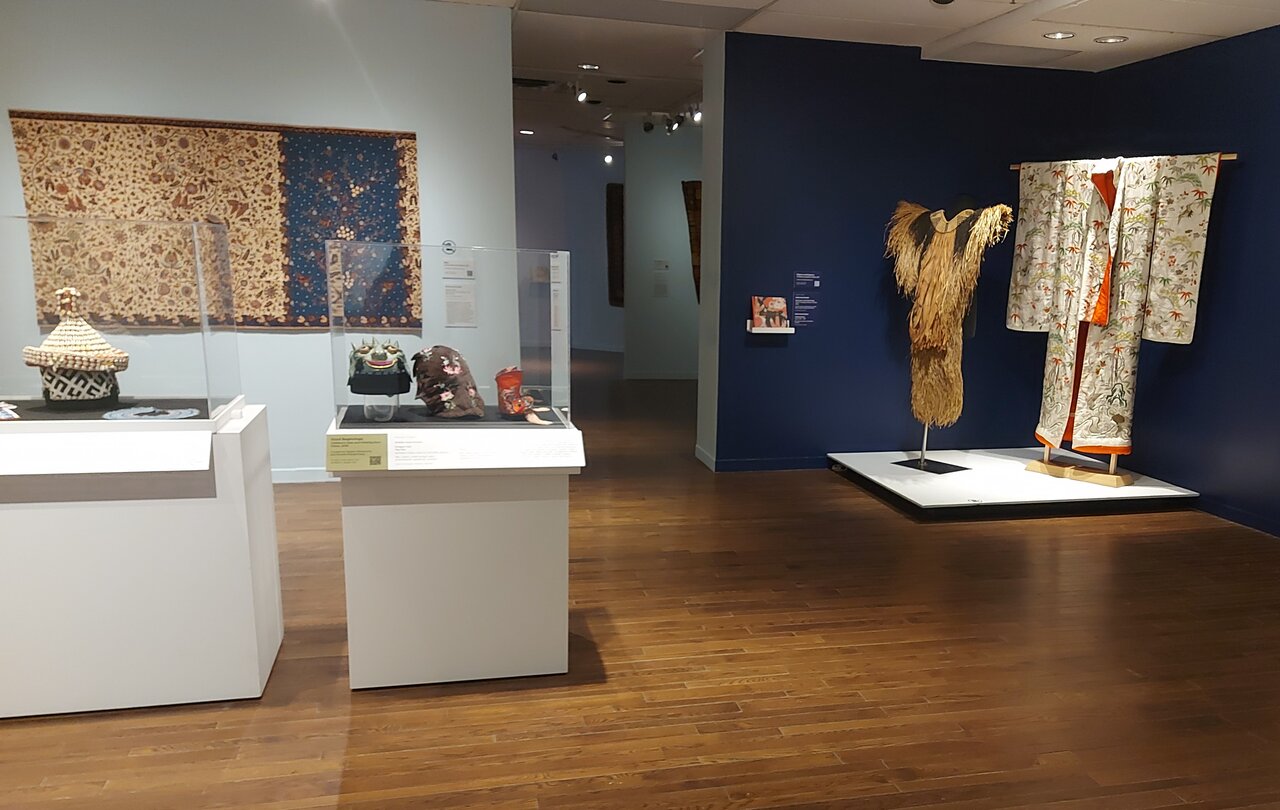
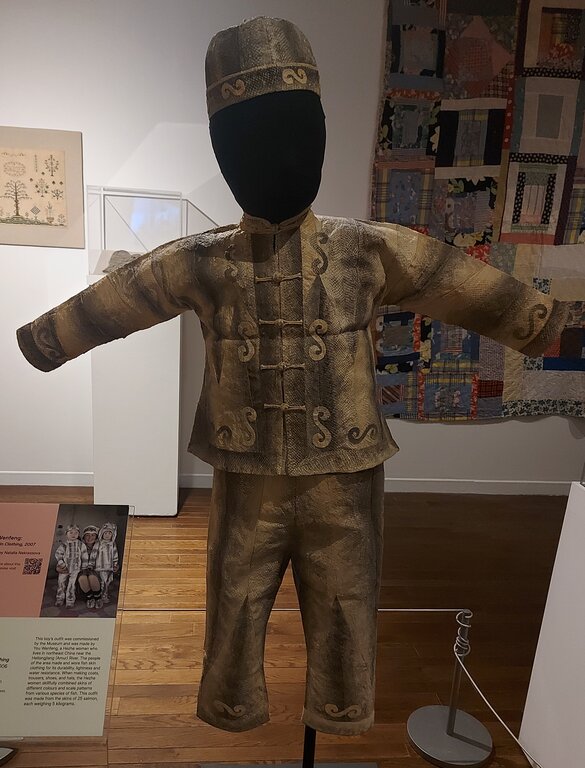
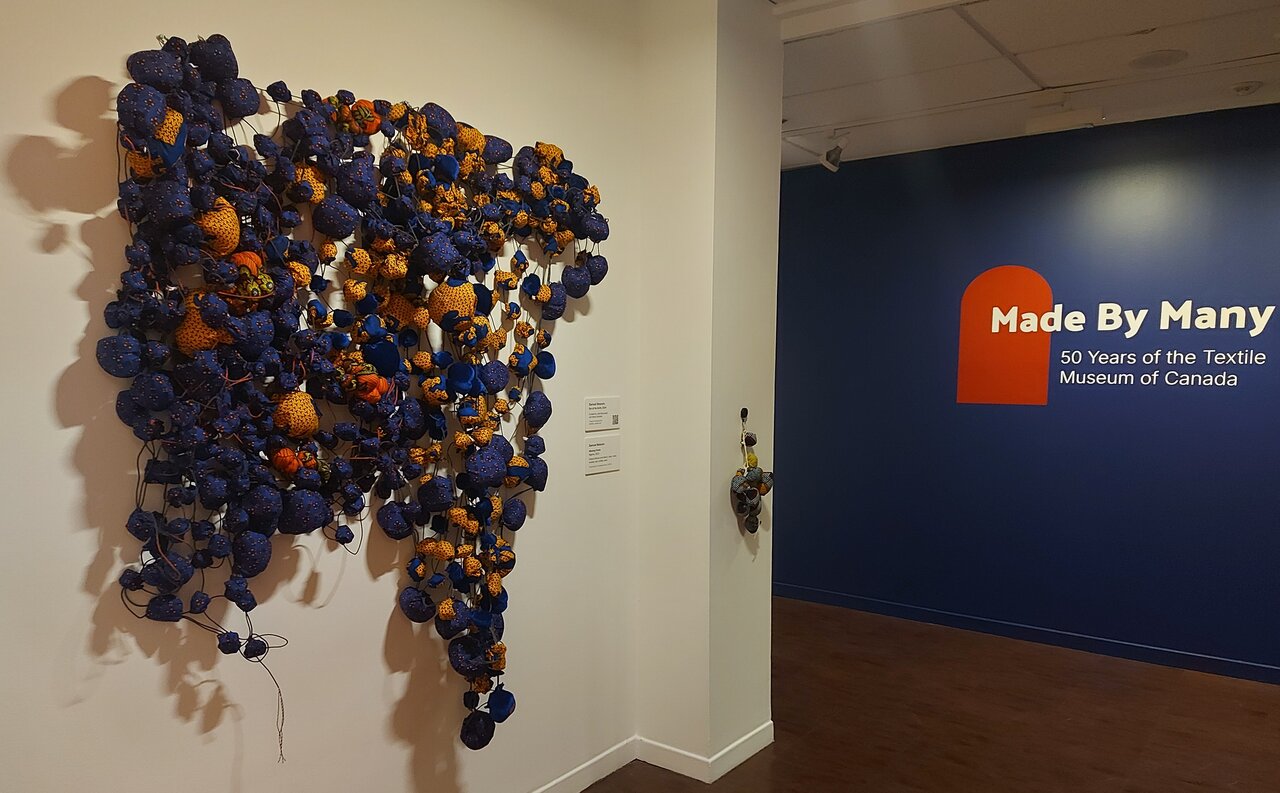
    On display alongside Taking Shape is Made by Many, an exhibition that traces fifty years of the museum’s history. It offers a reverse chronological journey—from 2025 back to the museum’s founding in 1975. Highlights include a Japanese Rain Cape woven from seaweed grass, fish-skin garments from Northwest China, and Nunavut textile prints from the 1950s and 1960s.

    Installation view of Made by Many with Japanese textiles: Raincape and Cloth (right)

    You Wenfeng, Boys’s Fish skin clothing, 2006, Salmon skin, Northwest China

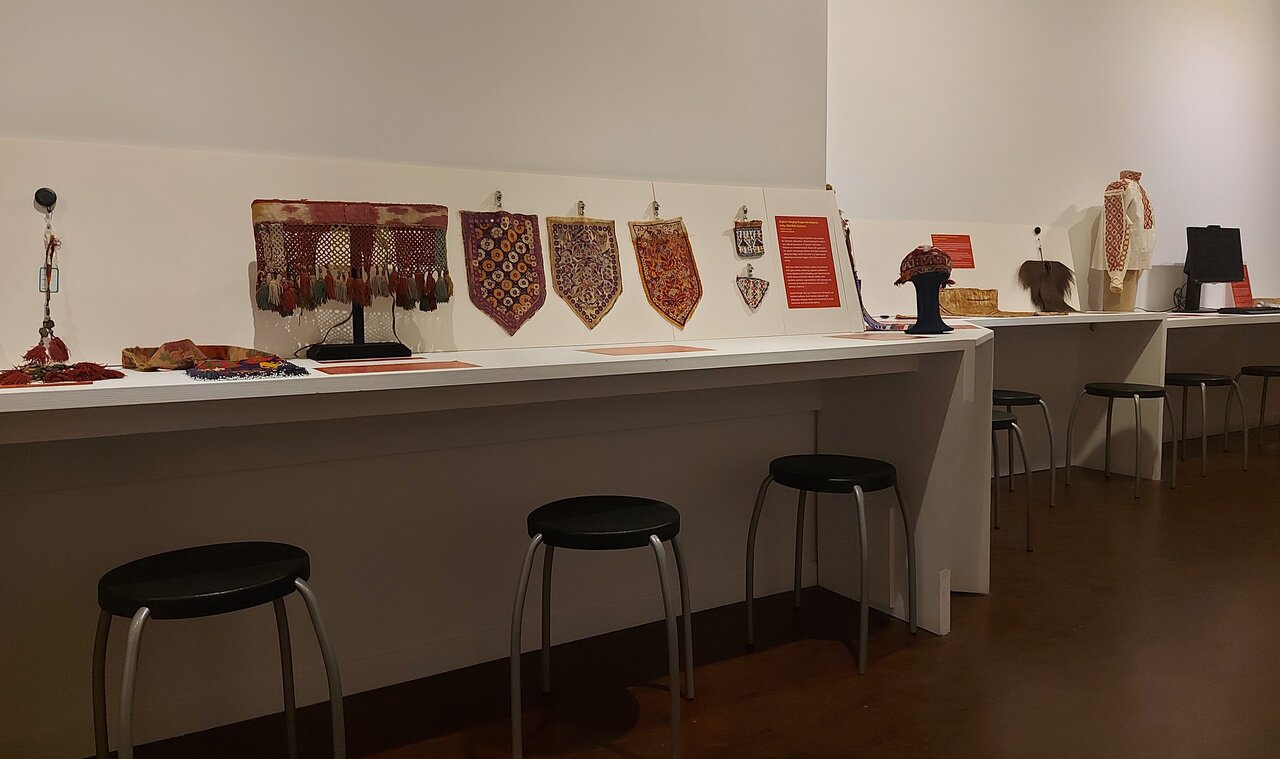
    Visitors can engage with interactive tables that allow them to touch samples of embroidery, mirror work, and beadwork—designed for educational use by students and curious visitors alike. The exhibition emphasizes that the museum’s collection has truly been “made by many,” reflecting contributions from artists, donors, and cultures spanning Indonesia, Malaysia, Central Asia, and Canada.

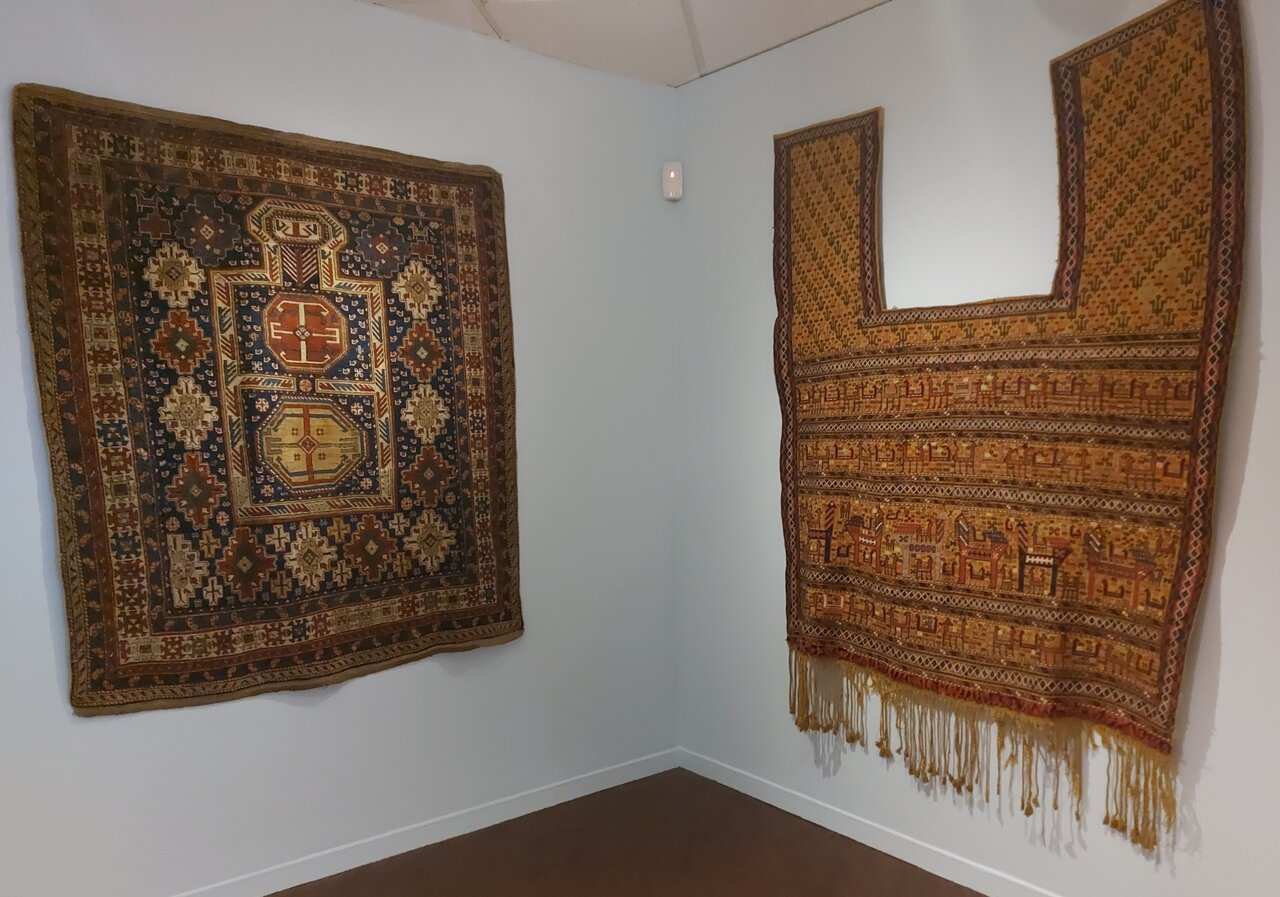
    Rug from the land of the Caucasus and Prayer Rug from Azerbaijan

    Interactive collection of beaded work, mirror work from India and Pakistan

    Positioned between Taking Shape and Made by Many, the installation Meeting Points serves as both a literal and symbolic bridge. Featuring the work of a Nigerian artist, Samuel Nnorom, who previously exhibited at the museum. This work emphasizes the museum’s evolving role as a space for dialogue—a meeting ground for artists, audiences, and communities to connect through textile art.

    Samuel Nnorom, Meeting points, installation, Nigeria

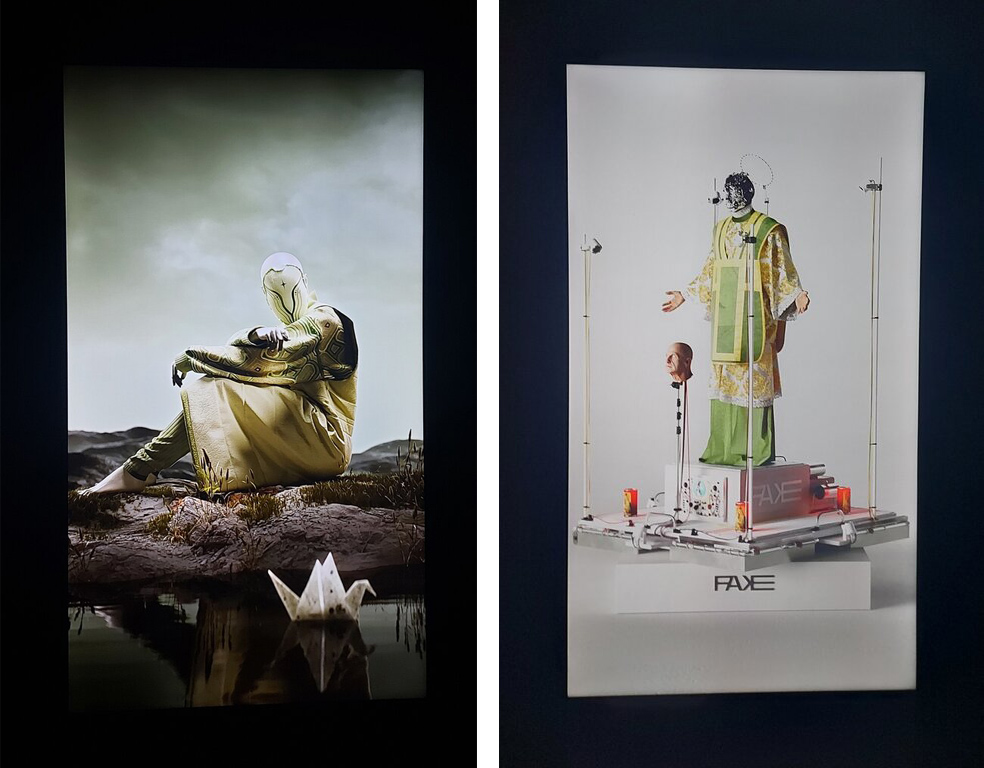
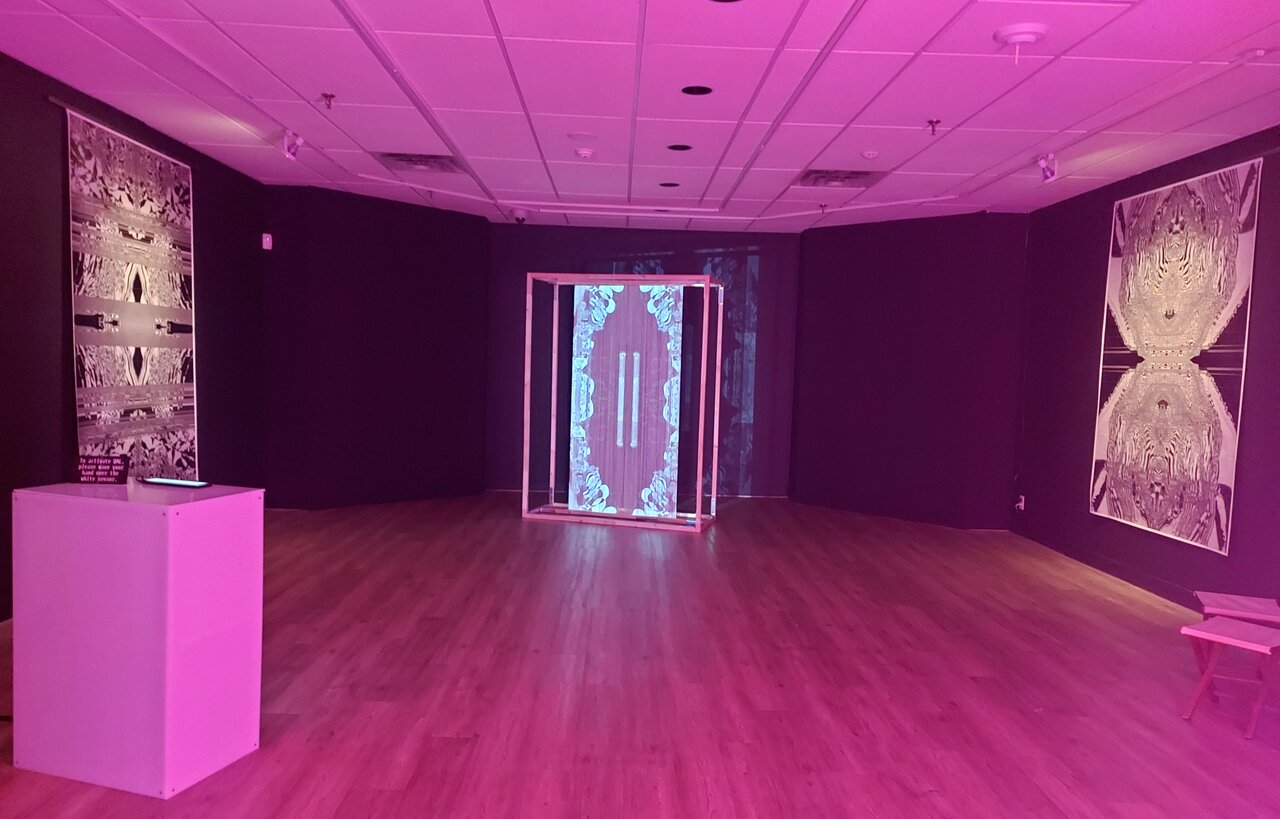
    On the museum’s second floor, the exhibition From Cloth to Code: New Media Responses, curated by Ignazio Nicastro, explores the intersection of textile and technology. Artists reinterpret traditional textiles using 3D printing, digital imaging, and interactive installations. Highlights include digital garments inspired by historical fabrics, a robotic priest wearing a recreated 17th-century chasuble, and works that reflect themes of isolation, transformation, and ancestral continuity.

    Arice, Vestige, 2025 (left) and Kausha Motamedi, Echoed Voice, 2024 (right)

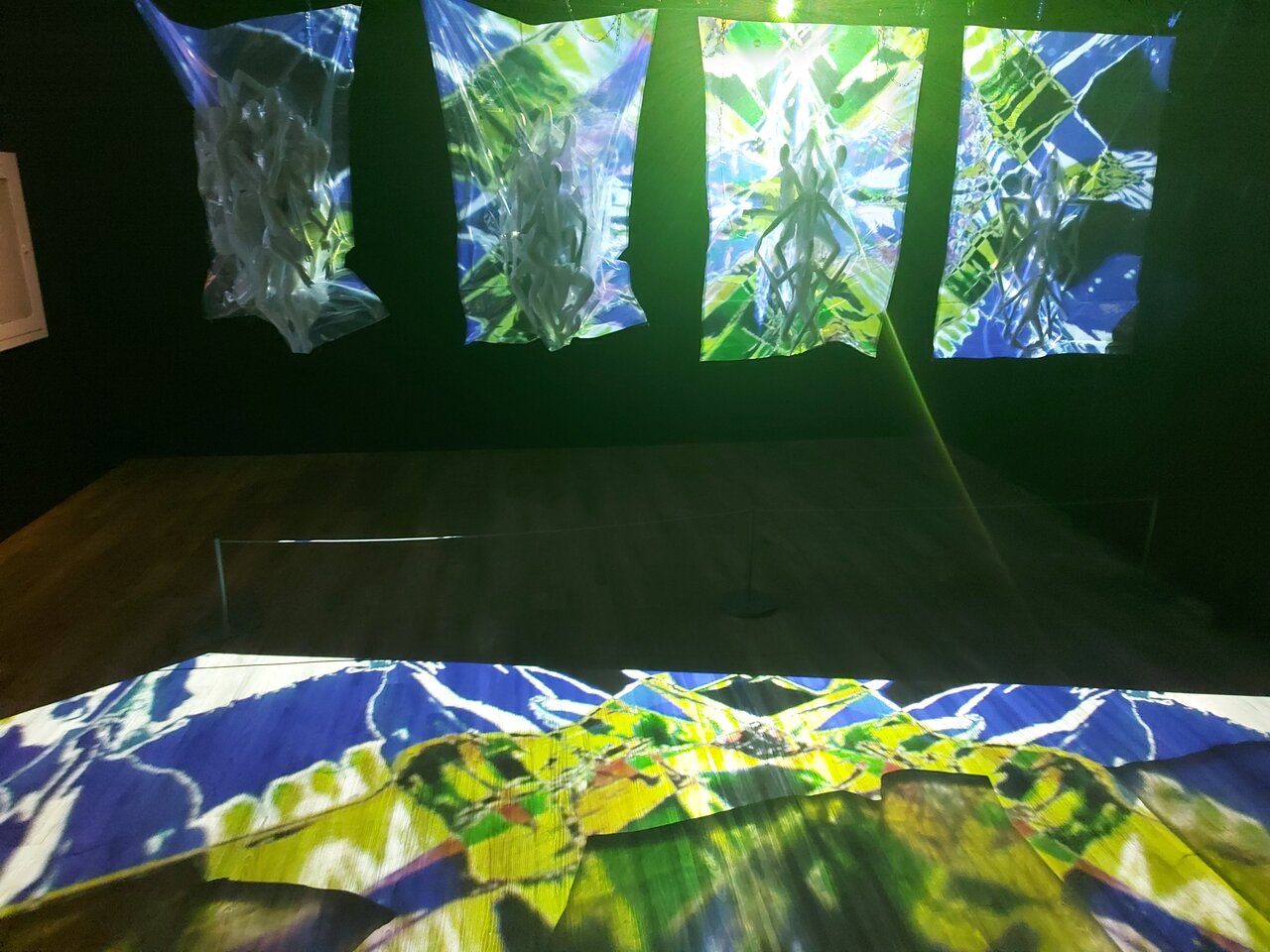
    One particularly evocative piece by Egyptian artist Joy Khalil uses aged fabrics sealed in vacuum bags to symbolize cultural displacement, deterioration, and the evolution of identity through migration and time.

    From Cloth to Code exhibition, Ali Phi, Qal, interactive installation

    Joy Khalil, Maqamat, multimedia installation

    The museum’s reopening also introduces an expanded Learning Hub, where visitors can experience hands-on activities such as weaving, embroidery, and textile conservation. Workshops led by specialists, including Conservation Project Manager Alison Moule, demonstrate traditional and modern techniques on functional looms—encouraging visitors to participate in the art of making.

    Learning Hub (left) and Hand Loom room (right)

    The Textile Museum of Canada’s reemergence is more than a return to form—it’s a reimagining. By bridging the past and future, craftsmanship and code, the museum continues to champion cultural diversity, technological innovation, and creative storytelling through fabric. Its new chapter celebrates not only what is preserved but also what continues to evolve.

    Text and photo: Nusrat Papia

    *Exhibition information: Taking Shape, October 30, 2025 – August 1, 2026, Made by Many, October 30, 2025 – September 1, 2026 and From Cloth to Code: New Media Responses, October 30, 2025 – February 1, 2026, Textile Museum of Canada, 55 Centre Avenue Toronto. Museum hours: Wednesday – Sunday 12 – 5pm.

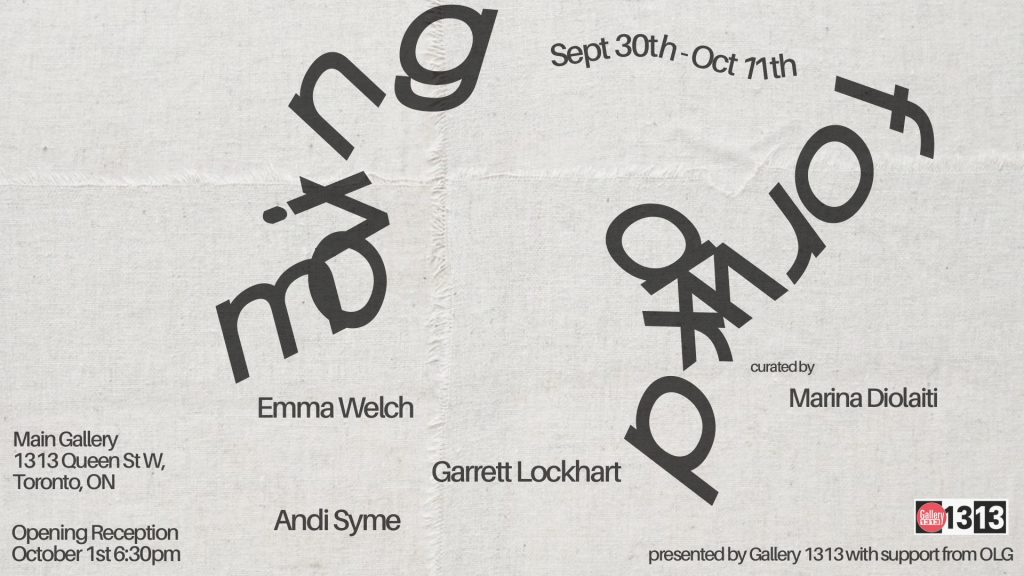
  • Miho Sawada and Viz Saraby at Gallery 1313

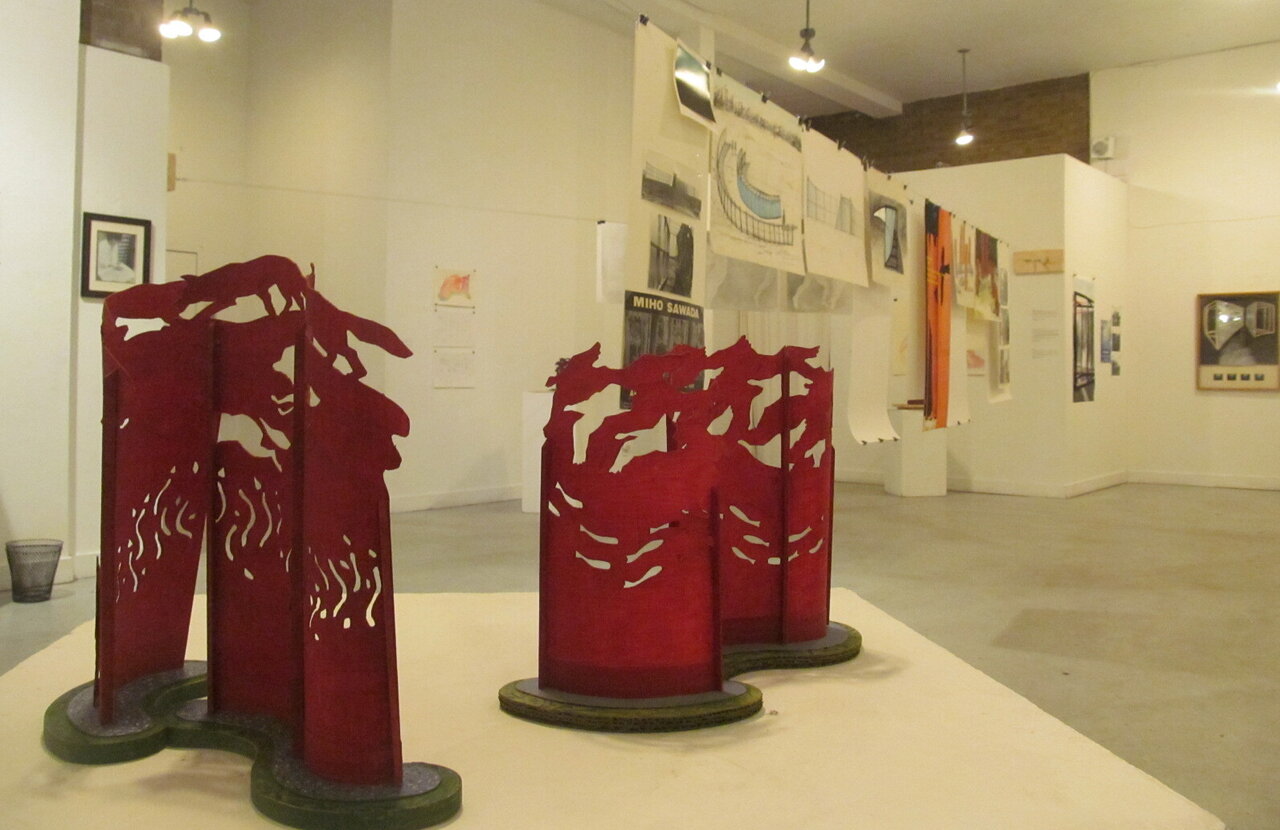
    The focus of this article will be on the work of Viz Saraby in the members’ showing space known as the Cell Gallery, but first let me say something about the exhibition in the Main Gallery at Gallery 1313. It consists of the drawings, preparatory maquettes, and various ephemera concerning, the late Miho Sawada, who died in 2023. The exhibition is essentially a celebration of her distinguished career. Sawada was born 1944 in Osaka, Japan. She studied Fine Arts in Kyoto, and then moved to Canada where she soon enrolled at Toronto’s New School of Art in 1969. During her long career she taught at various institutions including the Ontario College of Art and The University of Guelph. Little of her artwork is on display, largely because she was a public sculptor, so her work must necessarily remain elsewhere. They can be found in Canada, United States and Japan in particular.

    Installation view of Miho Sawada, Exhibition of Works. Courtesy of Gallery 1313

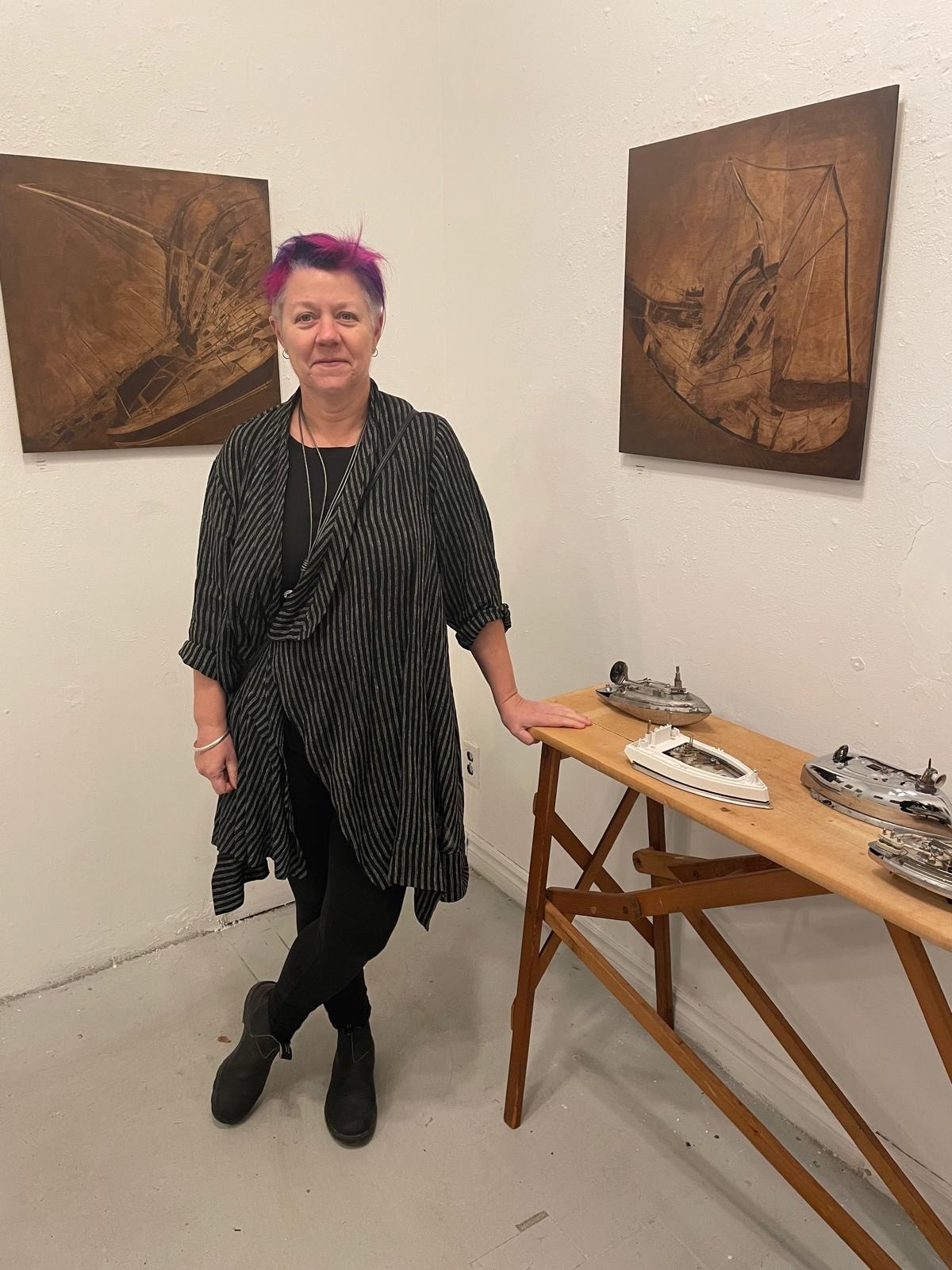
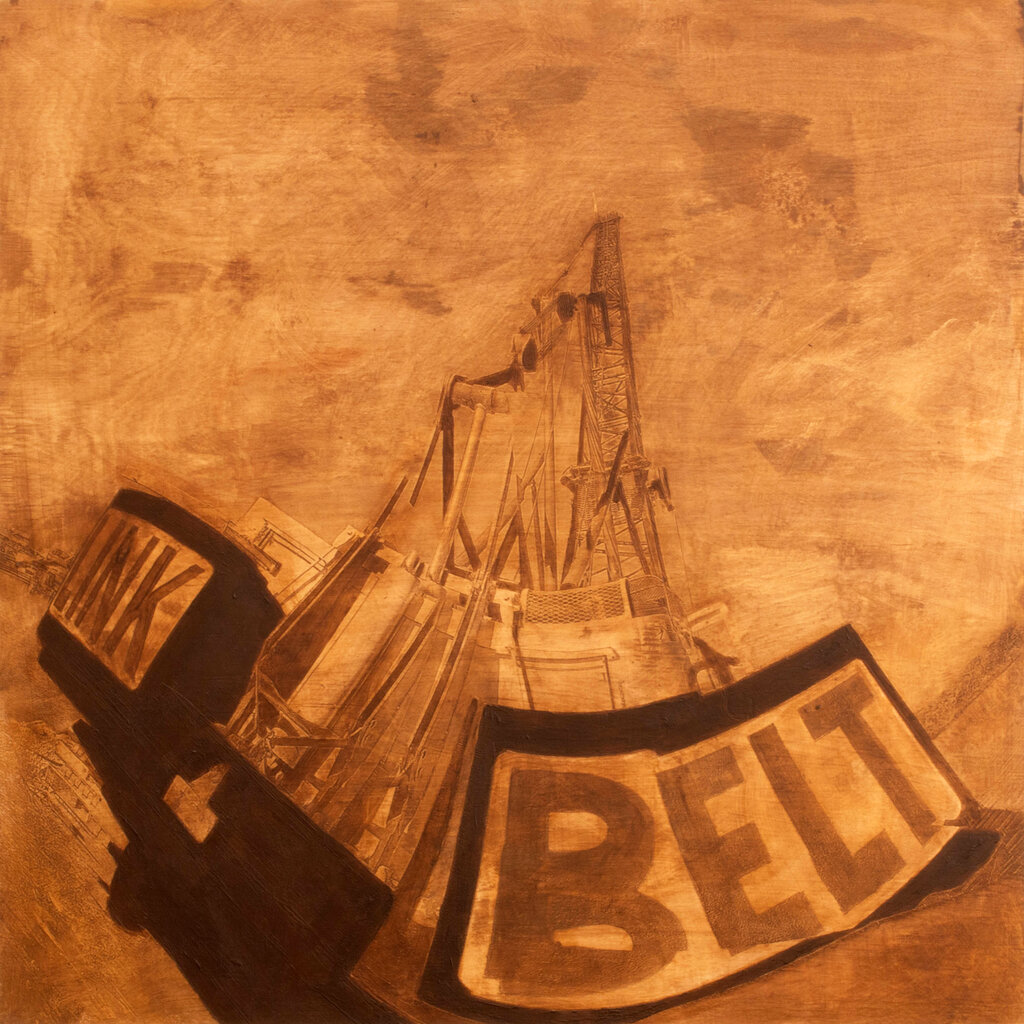
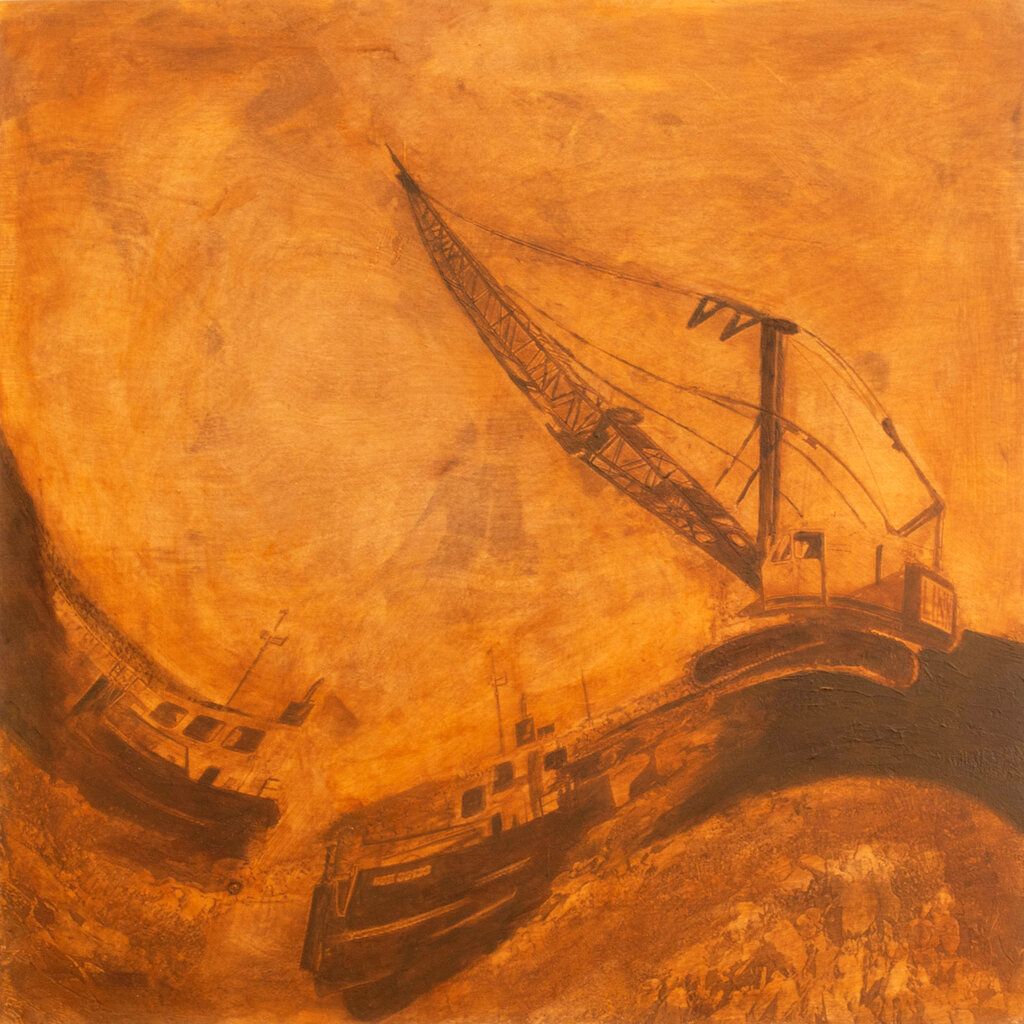
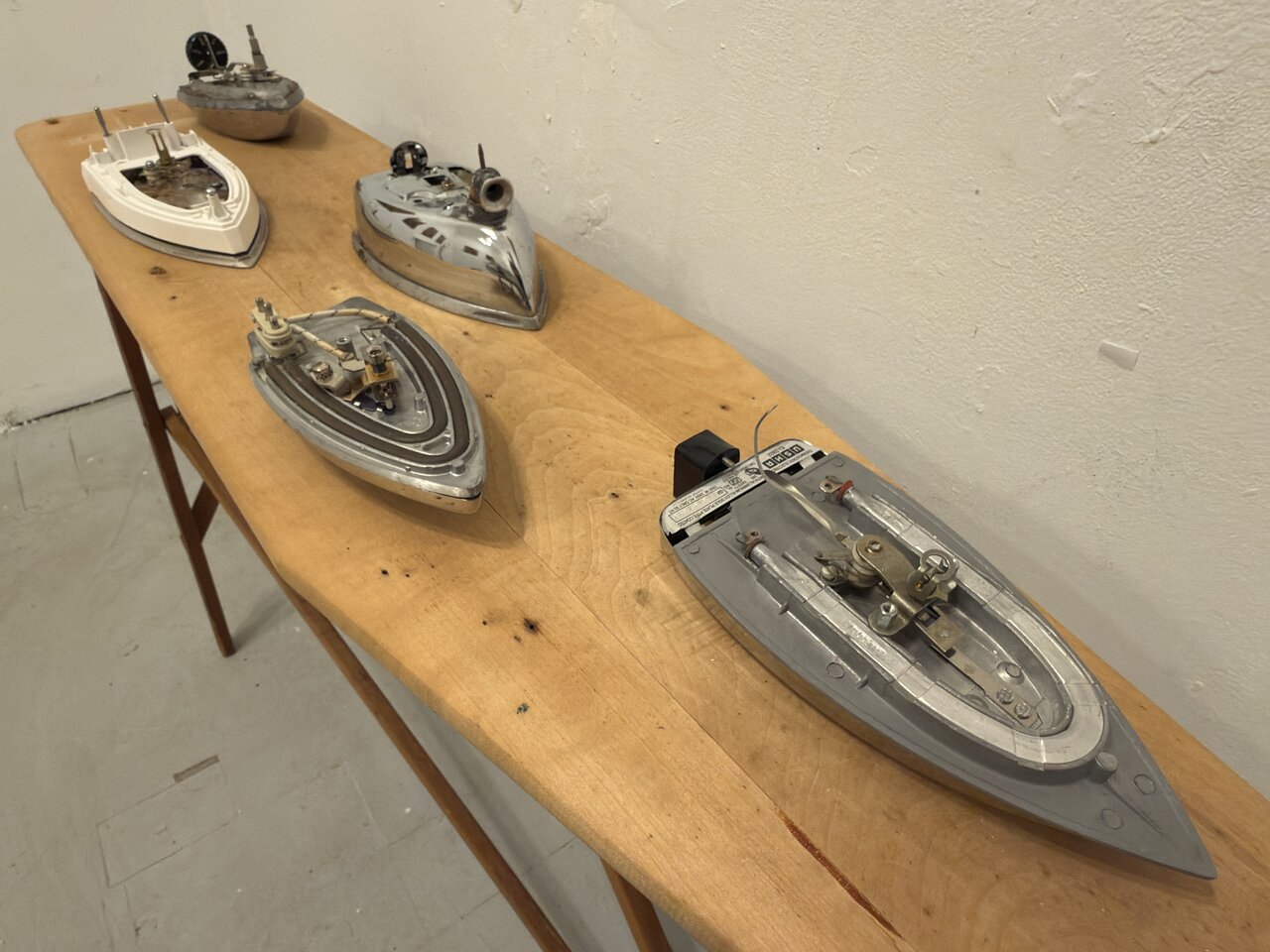
    Saraby’s exhibition in the Cell Gallery is comprised of small sculptures of boats modelled from vintage domestic irons, and ten, what we shall calls ‘paintings’ on boards. She has had a decades long career in interior design and as a professor. Consequently she is very familiar with a variety of industrial processes employed in the craft of art and design. She does not constrain herself to one medium as many traditional artists do. Instead Saraby explores many production techniques and materials. Her paintings are testament to this fact.

    Viz Saraby with her works at the Cell Gallery

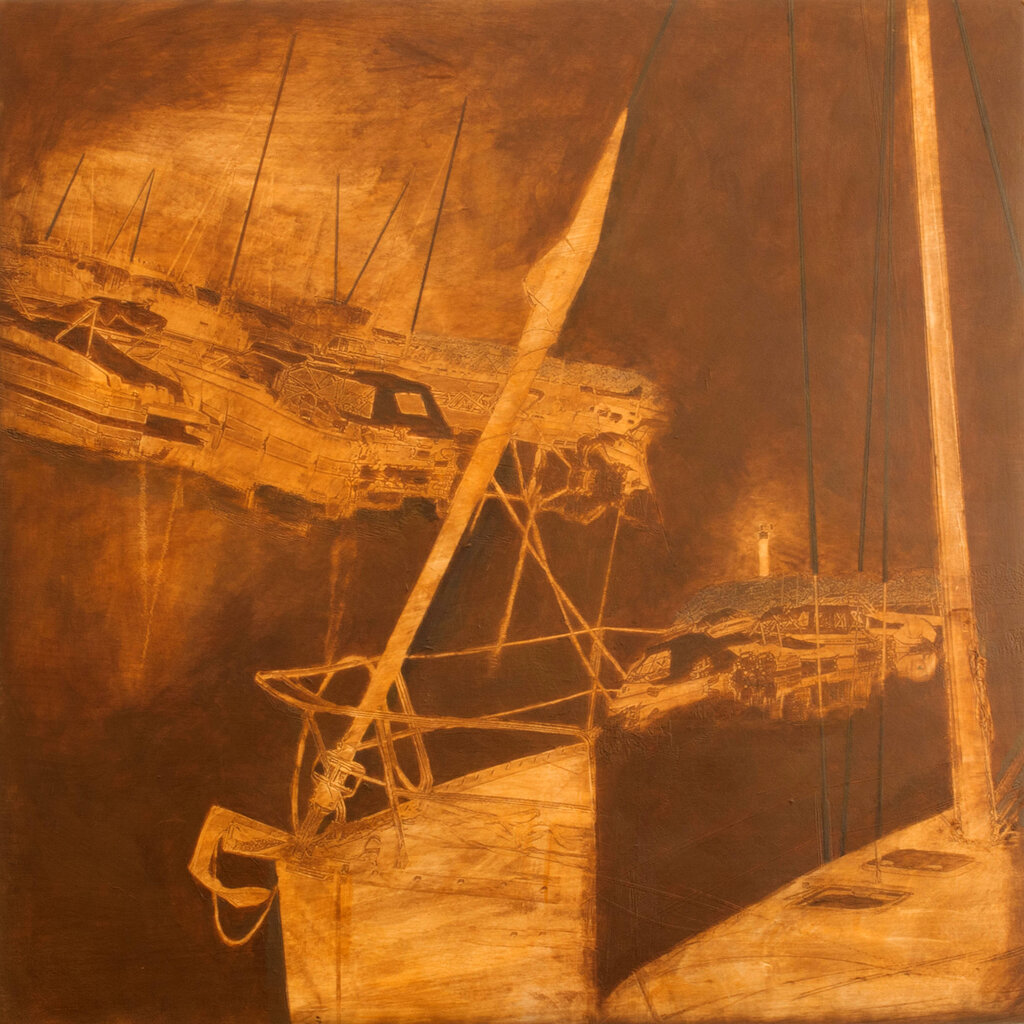
    There are several stages in the production of her paintings – hence my reluctance to describe them as paintings as such. First, she has shot a series of photos of the quayside and boats located in the Georgian Bay town of Meaford where she resides. The images are digitally distorted. Next she uses a laser printer to etch an image onto a piece of birch veneered plywood. Then she paints the board to bring back the image. Finally the surface is treated in order to give it a uniform lustre. The pallette – ochres, sepia and other earthy colours, – Saraby tells us in her artist’s statement, is deliberately reminiscent of old master paintings, or at least how we imagine them.

    Viz Saraby, Boats 07, Docked, painting on birch veneered plywood, 23 x 23 inches

    But the final look of these works is not wholly deliberative. Rather what ultimately comes out is informed by the materials and techniques she uses. Birch plywood, for instance, has a naturally warm tone that is accentuated by the the pallette she chooses. Also, the distortion she applies to the imagery is encouraged by the digital software Saraby employs. That is not to suggest she produces the work unreflectingly, but instead it is to point out that she enters into a dialogue with her chosen materials and techniques.

    Viz Saraby, Boats 02, Heavy Weight, painting on birch veneered plywood, 23 x 23 inches

    These images remind me of David Hockney’s photomontages, where he took a series of close up photos of a subject – a person, a landscape etc., – and created a collage from them. In Hockney’s case, very often there is a temporal element to the photomontages given that the subject is taken over a period of time. This adds to the distortion of the finished overall image, giving it a cubistic quality. For Saraby, on the other hand, each image originates from a single photo, so there is a unique point of view in each. The distortion she creates digitally is therefore wholly perspectival – the boats and landscape are bent and warped until the viewer is disorientated. The everyday becomes slightly grotesque, disturbing. But all the time the image is integral or continuous.

    Viz Saraby, Boats 01, Teeter, painting on birch veneered plywood, 23 x 23 inches

    I noted how Saraby works by entering into a dialogue with the materials and techniques she chooses. This essentially experimental approach is not confined to pictures. In this show she also presents seven boats modelled out of old clothing irons. Indeed, there is an affinity between the overall shape of an iron and a boat that she exploits here. Nonetheless, there is a child-like quality to these sculptures, given that the irons are only minimally altered, so that the viewer must fill in the gap between these two otherwise disparate items, i.e., imagine the irons as boats – just as a child, for instance, might imagine a large pile of dirt as a mountain. This imaginative dimension, combined with the toy-sized scale of the sculptures, makes them quite charming and playful pieces.

    Installation view with Viz Saraby’s boats

    Saraby points to a parallel between her transformed irons and the boats she photographs in the harbour, namely the shift from work to leisure. Historically boats have been working vessels, transporting goods in particular. Now, in Meaford at least, boats are primarily leisure vehicles, things for recreation. Likewise, her irons, once dismantled and reassembled, become playful objects. In addition, I detect a nostalgia to the work, pointing to a way of life lost to time. These works have a quiet beauty to them.

    Hugh Alcock

    Images are courtesy of the artist.

    *Exhibition information: Miho Sawada, Exhibition of Works and Viz Saraby, Ship Happens, November 26 – December 7, 2025, Gallery 1313, 1313 Queen St West, Toronto. Gallery hours: Wednesday – Saturday, 1 – 5 pm, Sunday 1 – 4 pm.