Author: artoronto

  • Sandblom and Tseng at Elaine Fleck

    The Elaine Fleck Gallery in Parkdale currently features the work of two independent artists – Mikael Sandblom and Melissa Tseng. The show is curated by Fleck herself, who chose these two artists because of their shared interest in process. On the east and south walls are displayed several of Tseng’s works, with one more in the gallery’s front window. Sandblom has six works on the west wall. In terms of technology the two artists’ works couldn’t be more disparate. Tseng’s medium is encaustics, i.e., pigment in beeswax, that dates back millennia. Sandblom chooses to design his works on the computer and employs some of the latest manufacturing technologies to render them physically. Their works nonetheless sit well together. This is in part because of the pared-down abstraction that they both embrace.
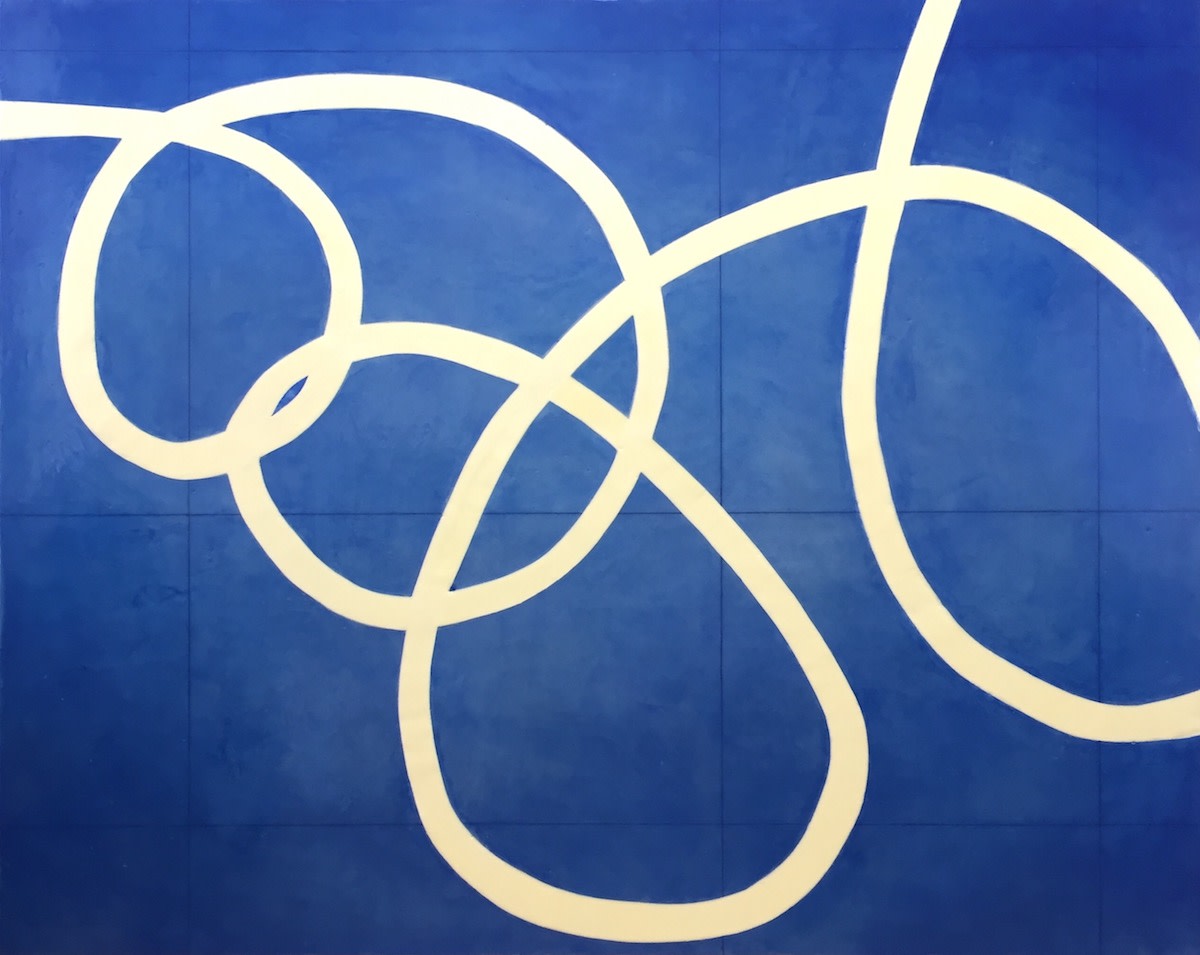
    Melissa Tseng, Swirl, encaustic, 48 x 60 x 1.5 in (in the front window)

    Tseng describes her paintings as minimalist. They consist in heavily worked panels, that sometimes stand singly but at other times form multiply panelled compositions. The encaustics are applied layer upon layer, with up to twenty layers in the final pieces. Tseng explains that she starts by etching marks on the wooden panel and then proceeds to cover it with translucent layers of pigment. She finishes the paintings by adding spare geometric designs consisting primarily in dots and lines. The result is a set of sensorily rich artifacts. They are reminiscent of the ancient insects and vegetation preserved inside amber. I resist calling them ‘pictures’ because they possess a vivid depth that is emphasised by the occasional imperfections on the surfaces caused by bubbles in the beeswax. Nor could they be called sculptures however. They seem flat at first glance but on closer inspection the viewer is drawn in by their subtle depth.  
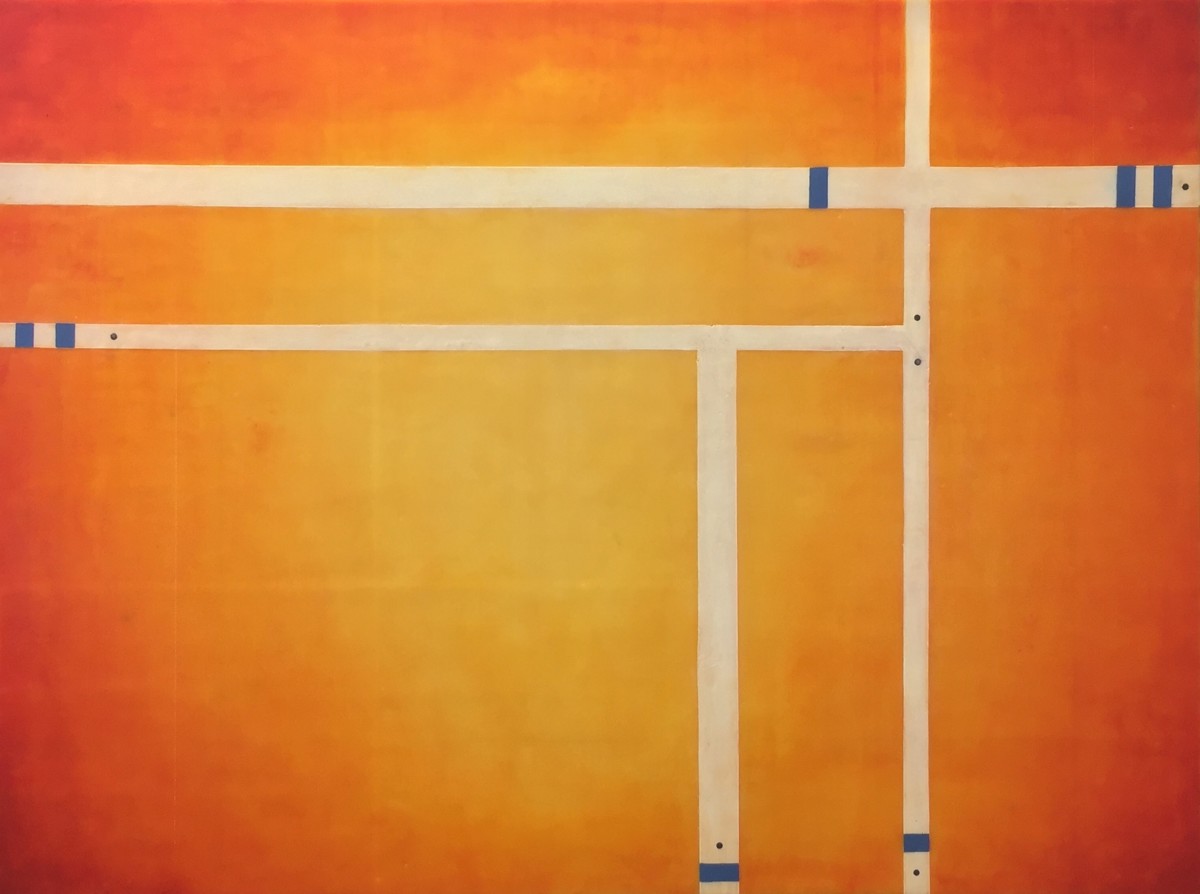
    Melissa Tseng, Sequence, encaustic, cold wax and oil, 36 x 48 x 1.5 in

    Like Tseng’s, Sandblom’s works are carefully composed of several elements. In Sandblom’s case these elements comprise machine-made tapestries and wood engravings, as well as manipulated photographic images under coloured perspex – all artfully combined. Most often there is an underlying pattern that crosses the abutting panels of tapestry and engraving which pulls the whole picture together. While the viewer easily recognises these patterns to be based on clouds and water, the original photographic imagery has been drastically pared down to its elemental forms.
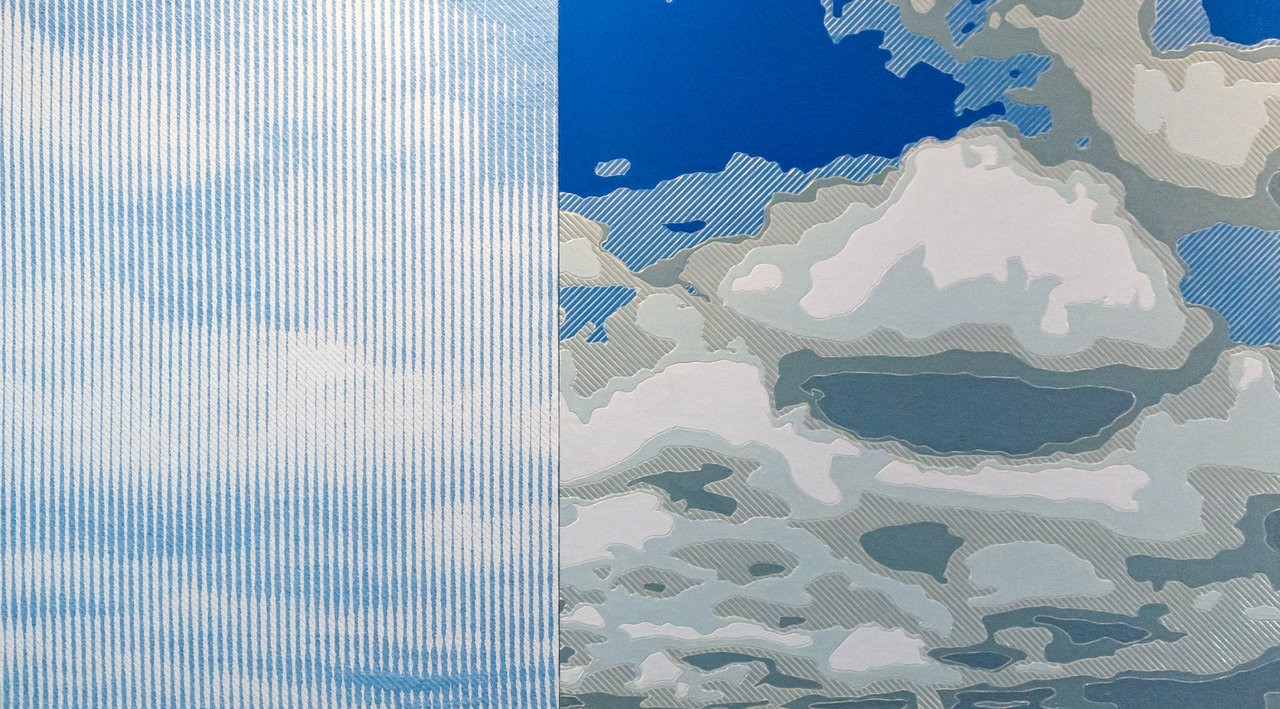
    Mikael Sandblom, Near To Shore, 2019, Jacquard tapestry and painted wood relief, 42 x 24 in

    It is not by accident that Sandblom bases much of his imagery on water, that substance that stands somewhere between mutable and permanent It is this quality that led the ancient Greek Thales famously to postulate that everything is ultimately composed of water. It is this tension between permanence and change that fascinates Sandblom. Indeed, his principal aim is to make the viewer conscious of her own act of perceiving. As he puts it “I hope that these pieces will give a glimpse of yourself seeing, the opportunity to see the moment when your perception shifts between seeing the surface and seeing the illusion of the clouds and waves.”  It is interesting that he chooses to talk of the illusion of clouds and waves. For Sandblom, talk of seeing an unambiguous reality that exists independently of our perceptions is empty. What we take to be real is ultimately our own interpretation of the world.

    Mikael Sandblom, I Had It For A Moment, 2019, Jacquard tapestry and painted wood relief, 54 x 31 in

    But how is this idea tenable given that it implies that we cannot see the world as such? I hazard to suppose that Sandblom doesn’t want to deny the existence of a world independent of us, as if reality is our own creation entirely. Perhaps he has in mind what Nelson Goodman calls worldmaking (Ways of Worldmaking, 1978). There is by this measure a world to be grasped, but not from some monopolistic point of view. Rather, we construct versions of the world that incorporate sciences like biology and physics, but which also include art. Reality is pluralistic in this sense. Sandblom, I think, is interested in the act of perception as it pertains to the artist’s endeavour to construct some version of the world. Thus water is not that substance out there, but rather it is that which is depicted by maps, photographs, etc. in all their glorious diversity.
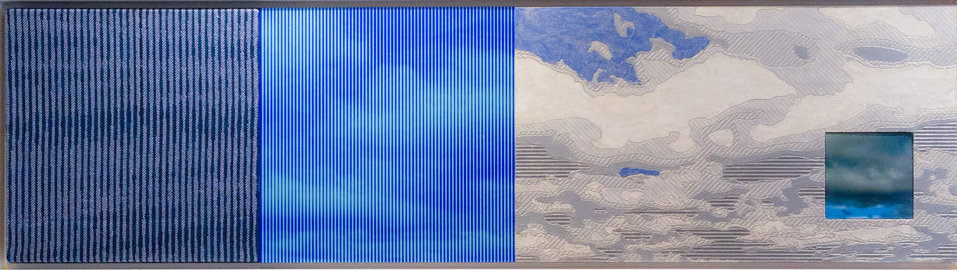
    Mikael Sandblom, Wide Open, 2019, Jacquard tapestry, painted wood relief and digital prints, 44 x 12 in

    Similarly, Tseng is concerned with showing the viewer the process by which she creates her works. Thus the works become the manifestation of their own histories. Her version of the world is wrapped up in what the viewer perceives. As she explains, “To the casual observer, my paintings may be perceived as simple and tranquil, yet when closely examined, reveals a complex visual history of its creative journey.”
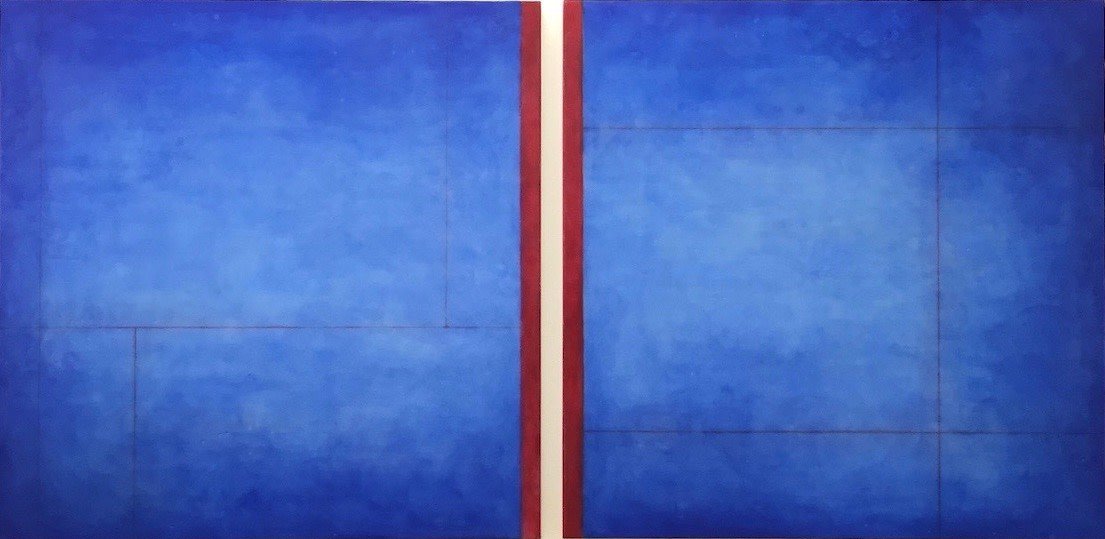
    Melissa Tseng, Escape, encaustic, 36 x 72 x 1.5 in

    These two artists share a sophistication of thought that is evident in these beautiful works. Fleck has done a fine job bringing the works of these two artists together.

    Hugh Alcock

    Images are courtesy of Elaine Fleck Gallery

    *Exhibition information: September, 2019, Elaine Fleck Gallery, 1351 Queen St W, Toronto. Gallery hours: Wed – Sun, 12 – 5 pm.
  • 8th Anniversary at RKG


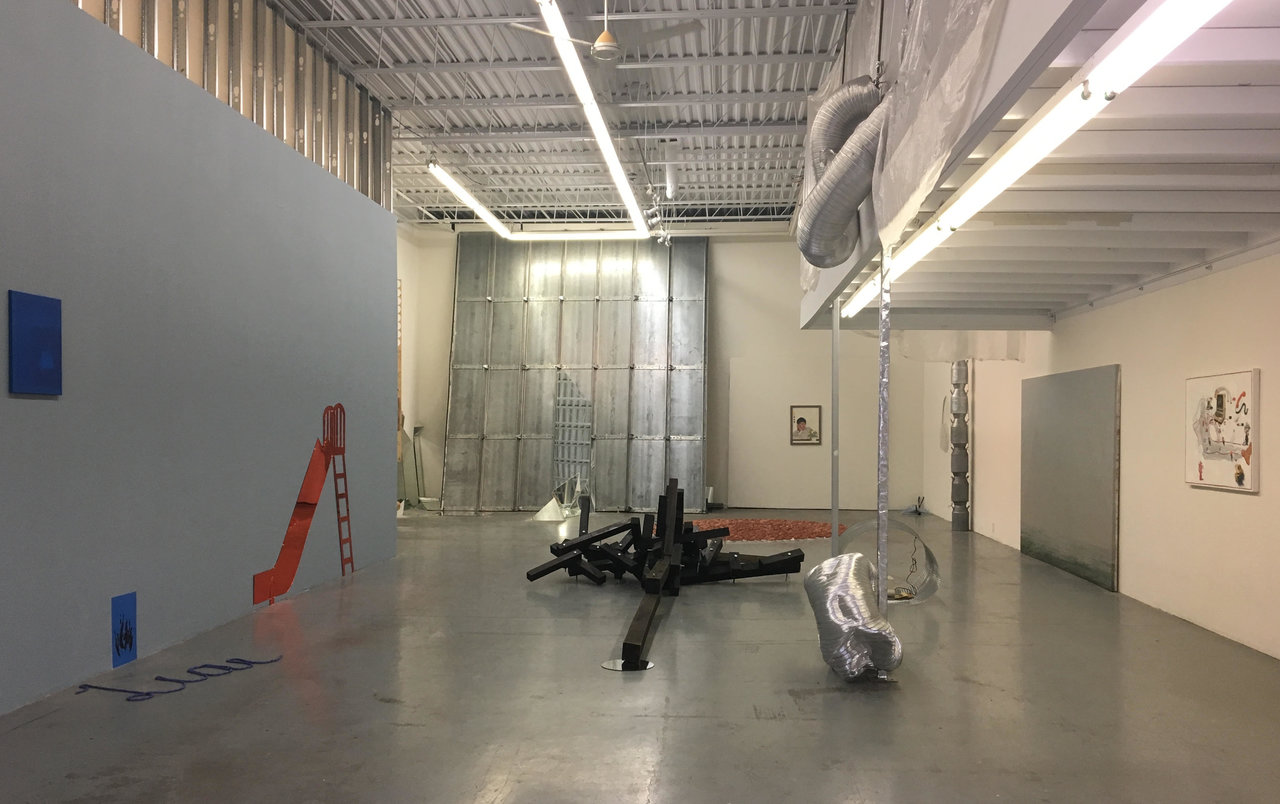
    The exhibition celebrating Robert Kananaj Gallery’s anniversary spans the past, present and future. It involves many works from Kananaj’s artistic oeuvre from the past few years, displays current works from international and local artists and opens a window (that is actually a bed) into the future, the upcoming exhibition — an interesting mixture. As the press release states, “openness, inclusiveness, and unconventionality are the streams that create this show.”

    Installation view

    It is open in every meaning, as while the new garage door is rolled up, the old, metal one has literally become part of the exhibition. The show also expreses an “open” mind by placing artists with different styles right beside each other; providing a conversation that is unusual. It is a single installation on one hand but also has intimate corners and wall space for some works on the other hand.

    Installation view

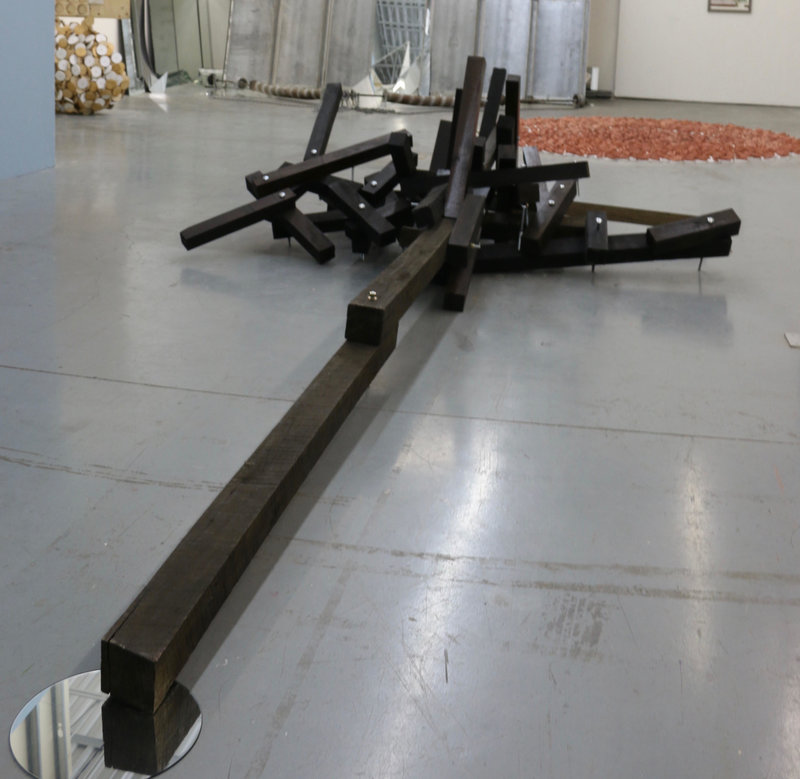
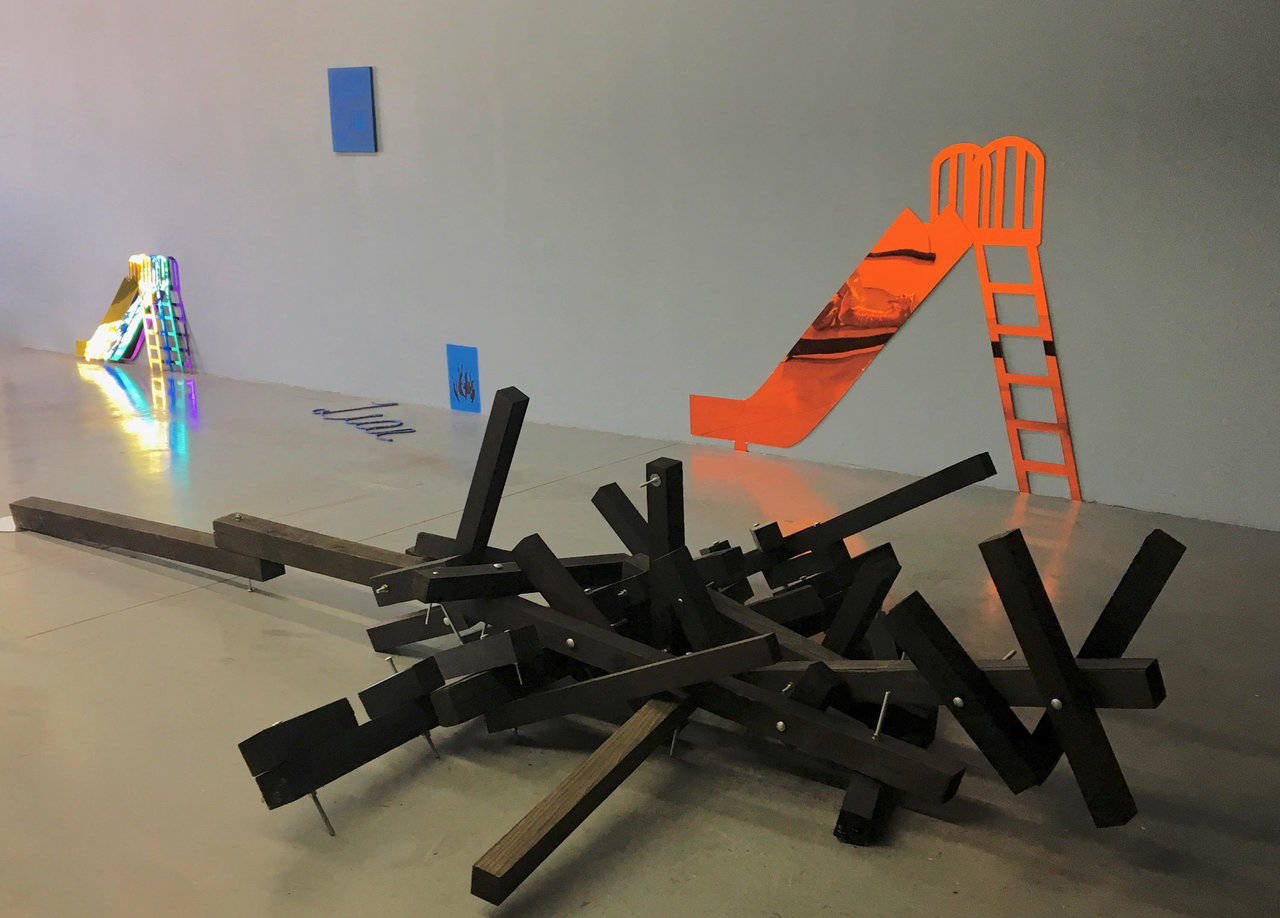
    A huge wooden structure of Kananaj’s guides us deeper into the gallery’s interior. As the artist says, living in Canada for a long time he has always admired wooden cabins, and their structural perfection. They protect the home fire; they protect life in a cruel climate. He wanted to build a wood structure for a long time, but his work is not functional. Its upper part somewhat reminds us of bonfires in the way the wood blocks are crossing each other. Wooden structures sometimes can catch fire and fire is one of the elements that lead us into the Circle of clays.

    Installation view with Robert Kananaj’s wooden structure

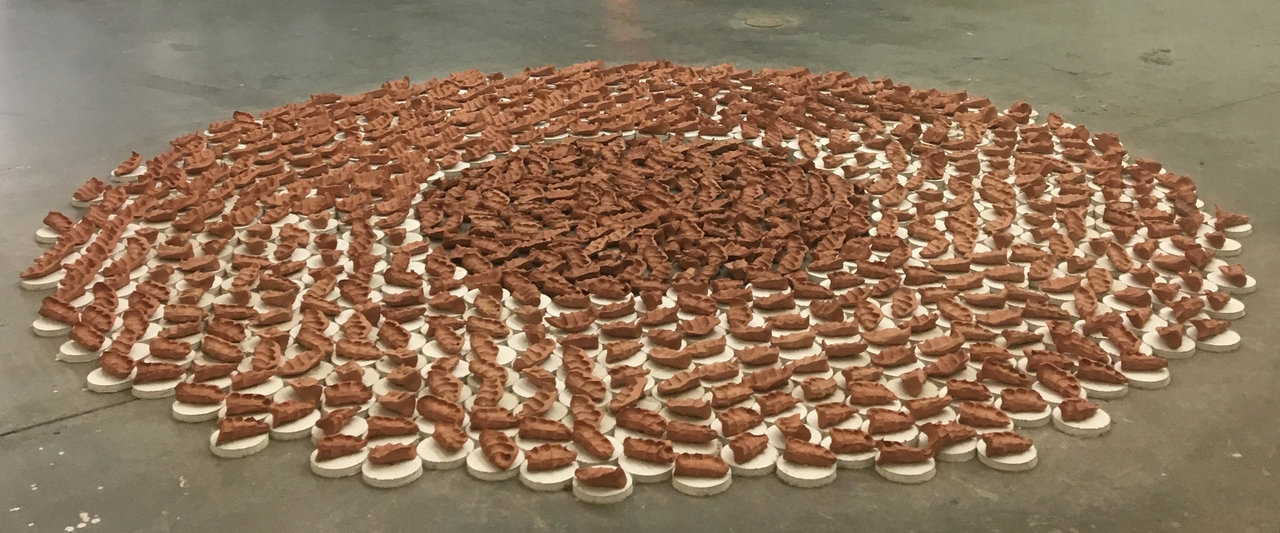
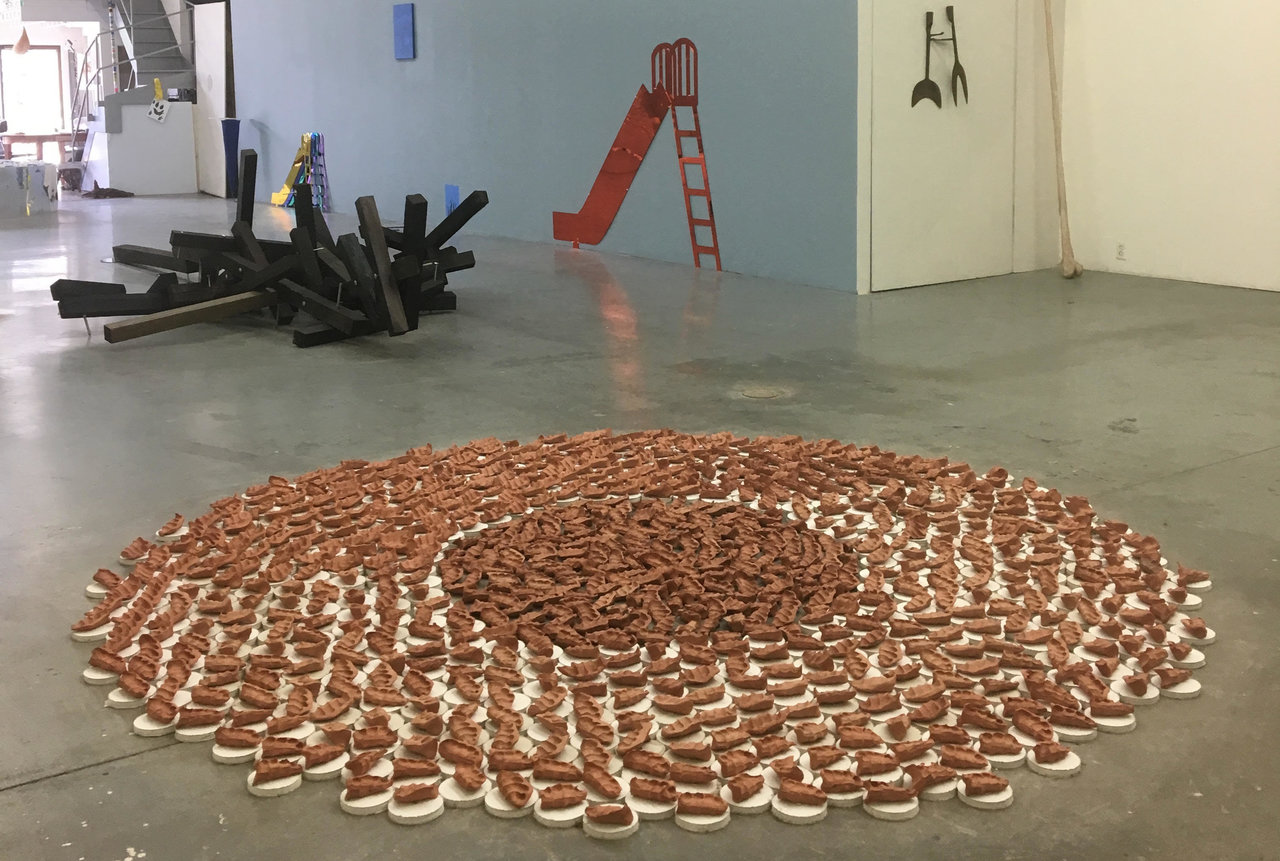
    This circle is so simple that it makes it exquisite. The artist’s handprints in clay are organized into a large circle; large pieces in the outer rings joined by smaller ones closer to the centre. They are all similar, showing the artist’s fingers. The idea is old, clay has a long history and it is also one of the artistic materials that children play with. It is personal, it suits everyone. It is very physical, as Kananaj wrote, “I free my energy and clay receives it, imprinting the squeeze permanently.” He sees the experiment with clay as an embodiment of a world, a gift received, his vision as a maker.

    Installation view with Robert Kananaj’s clay circle

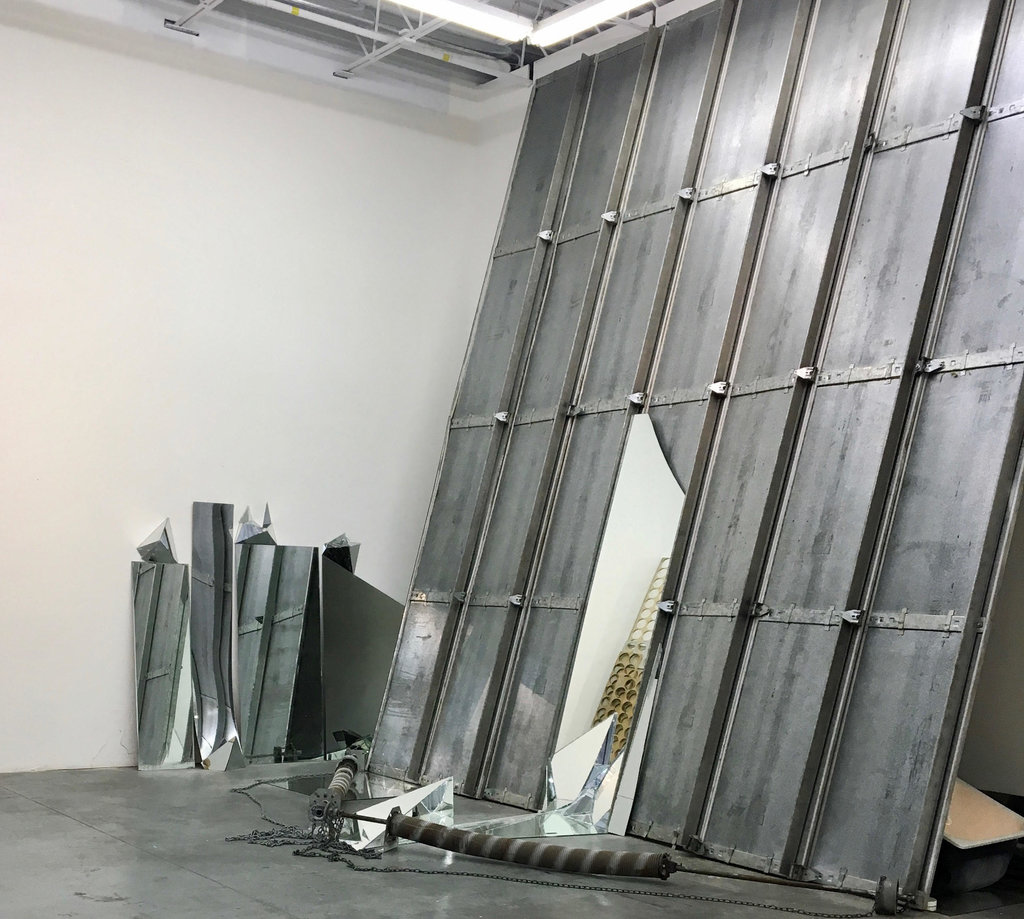
    The old metal garage door stands against the back wall of the gallery, creating a neutral surface. The installation is a tribute to the old garage door’s historic size, its magnitude. A cut mirror in the middle of it opens the space giving an entrance into another world, or into ourselves if we stand right in front of it, looking at our distorted image.

    Installation view with the old garage door by Robert Kananaj

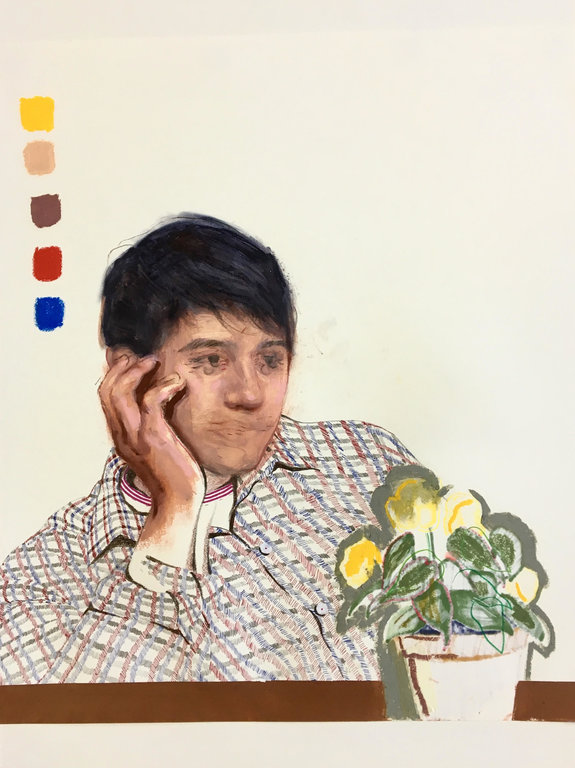
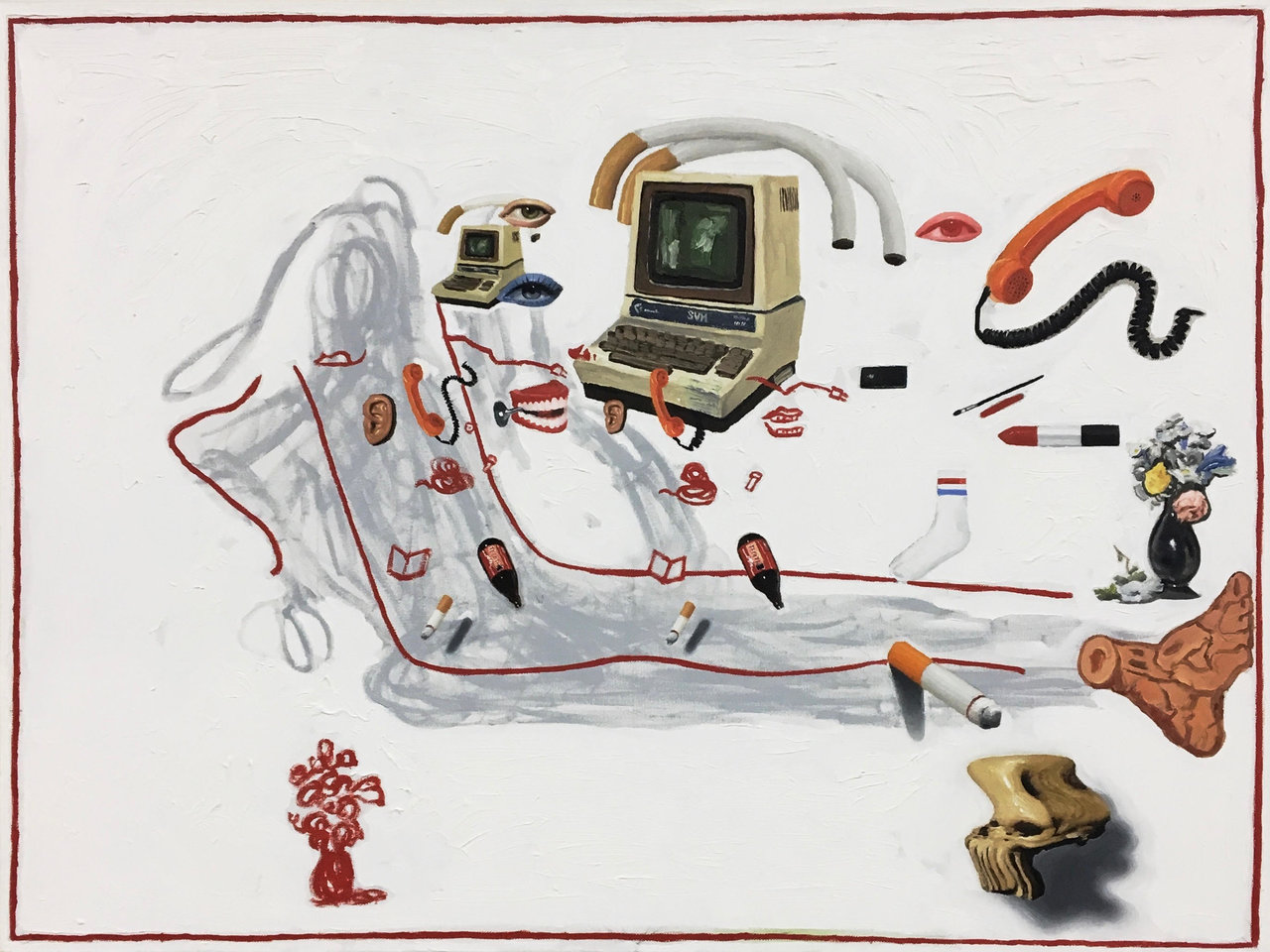
    A portrait, titled Progress, by Daniel Segrove, a San Francisco based artist, depicts a young man in a thinking position. In a mostly realistic representation, his mouth seems to be erased. He doesn’t want, or can’t, talk and that attitude gives the portrait an unsettling expression. Juxtaposing the meditativeness of Segrove’s painting, Emilio Villalba’s semi-abstract composition, Reclining Figure with its fragmented body parts and objects is rather chatty and loud.

     Daniel Segrove: Progress, 2019, oilstick and mixed media on paper, 22″ × 18″

    Emilio Villalba, Reclining Figure, 2019, oil on canvas, 30″ × 40″

    Oscar Figuera, a returning artist to the gallery, is represented by his signature slides. The slides are non functional but very colorful, reflecting the light in a playful beauty.

    Installation view with Oscar Figuera’s slides (on the wall)

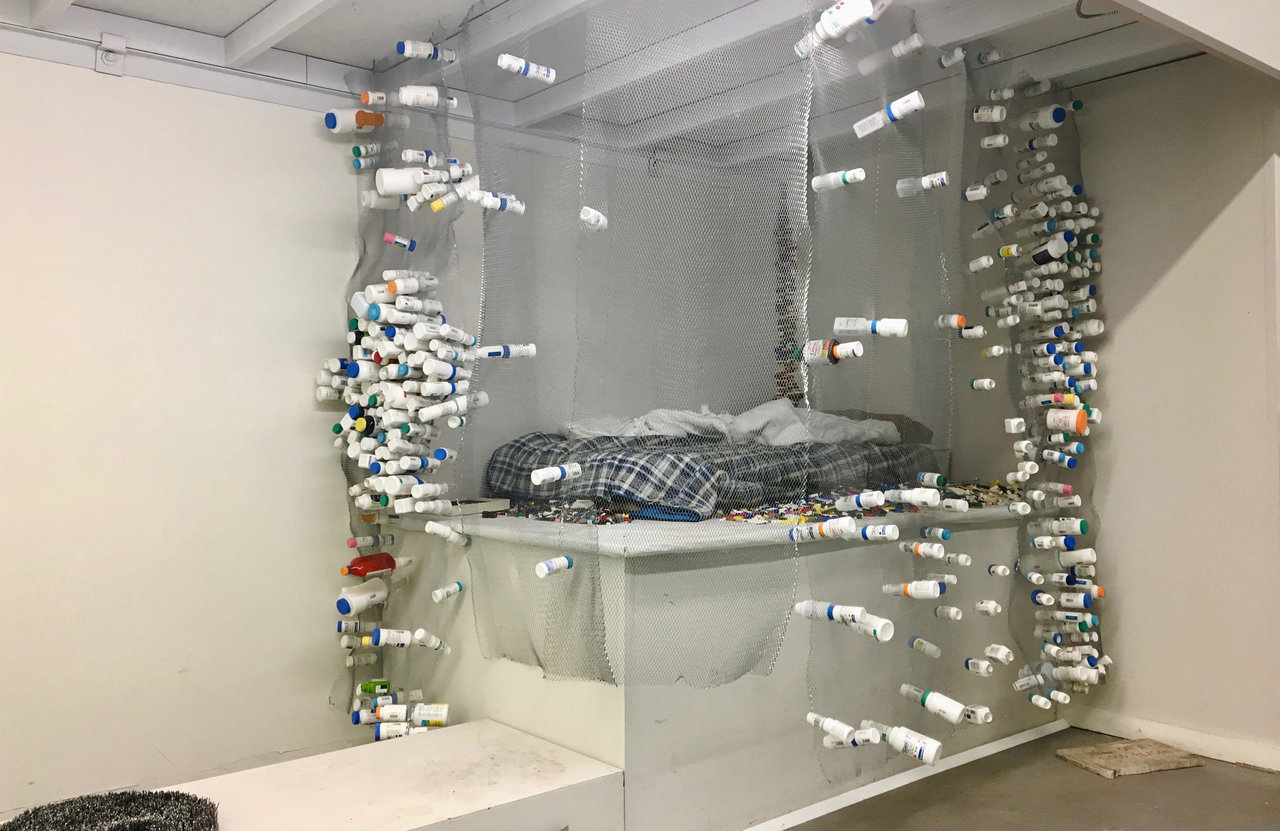
    In one of the corners of the gallery there is a bed, nicknamed Cage of Wonder, a real bed where artist Tess Martens slept for a week throughout her residency at the gallery. Her exhibition, Living Diary opens on September 19th.

    Installation view with Cage of Wonder, 2016-2019, 100″ x 110″ x 62″, plastic construction bricks, aluminum mesh, empty medication bottles on plywood and steel platform

    Emese Krunák-Hajagos

    Images are courtesy of Robert Kananaj Gallery

    *Exhibition information: August 1 – September 14, 2019, Robert Kananaj Gallery, 172 St Helens Avenue, Toronto. Gallery hours: Tue – Sat, 11 – 6 p.m.

  • Sustenance at Gallery 1313

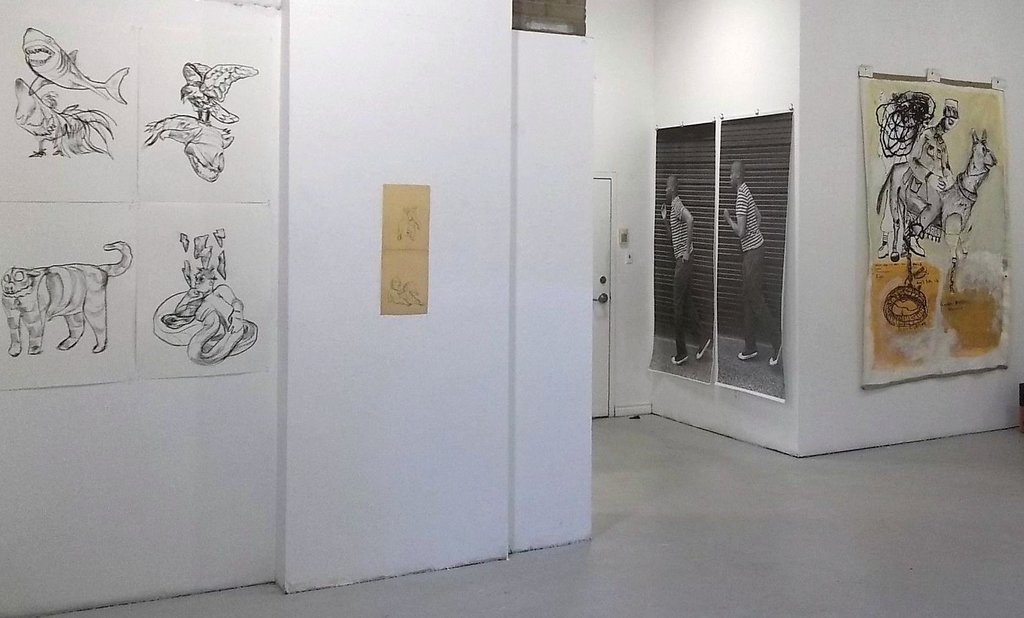
    Currently on display at Gallery 1313 – an independent gallery and community hub in Parkdale – is a dazzling collection of works by five Afro-Canadian artists who have formed a collective by the name of ‘The Six Collective’. No doubt this is a reference to the name for Toronto popularised by Drake. The show is curated by Hollis Alexis Baptiste, who is also one of the participating artists. While the works are quite disparate in style and subject matter they fit together very well. In part this is because of the sheer strength of the works. There are no weak pieces in this show.

    Installation view with (L-R) works by Hollis Alexis Baptiste, Stephen Fakiyesi and Shawn Skeir

    Baptiste’s curatorial assistant Geneviève Wallen explains that the show’s title, What Sustains Us, originates with the idea of exploring questions concerning how black artists in the city fit in the art scene and cultural landscape more generally. In her brief essay Wallen pointedly asks: “What does cultural sustainability and longevity look like for Black male artists or Black artists period? What sustains you?” And indeed, this group of artists are amply qualified to answer these questions. Each one of the five members of the collective is an accomplished artist with many years of experience in making art. The five are Hollis Baptiste, Stephen Fakiyesi, James Hewitt, Shawn Skeir and Amir Shingray.

    Installation view with works by (L-R) James Hewitt, Stephen Fakiyesi and Amir Shingray

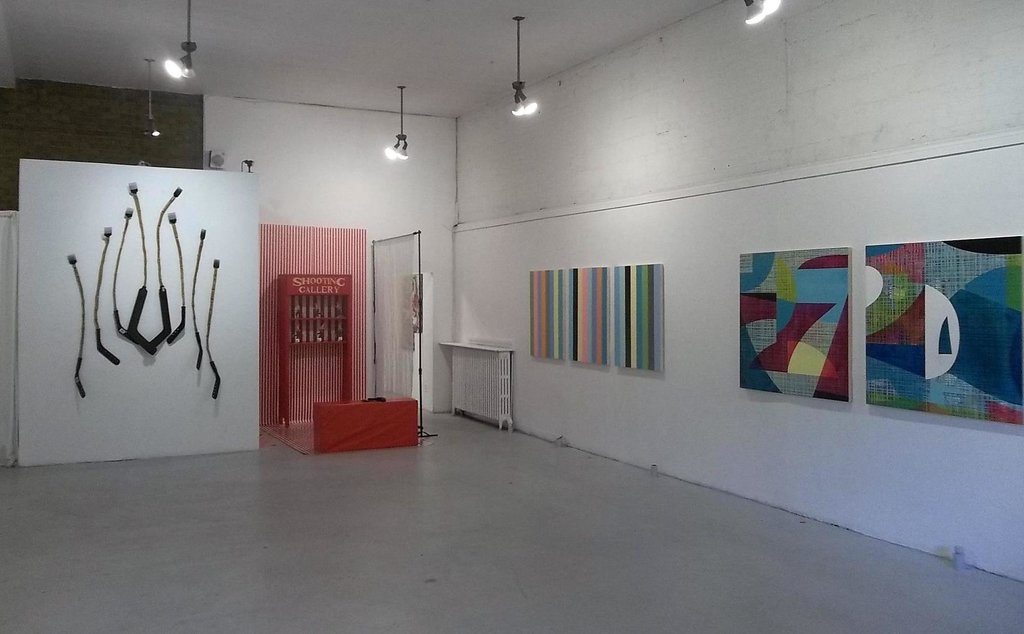
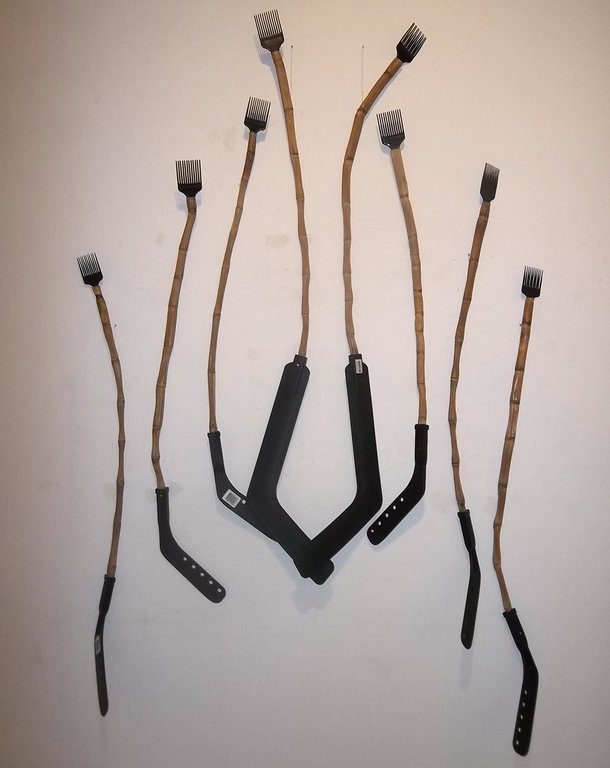
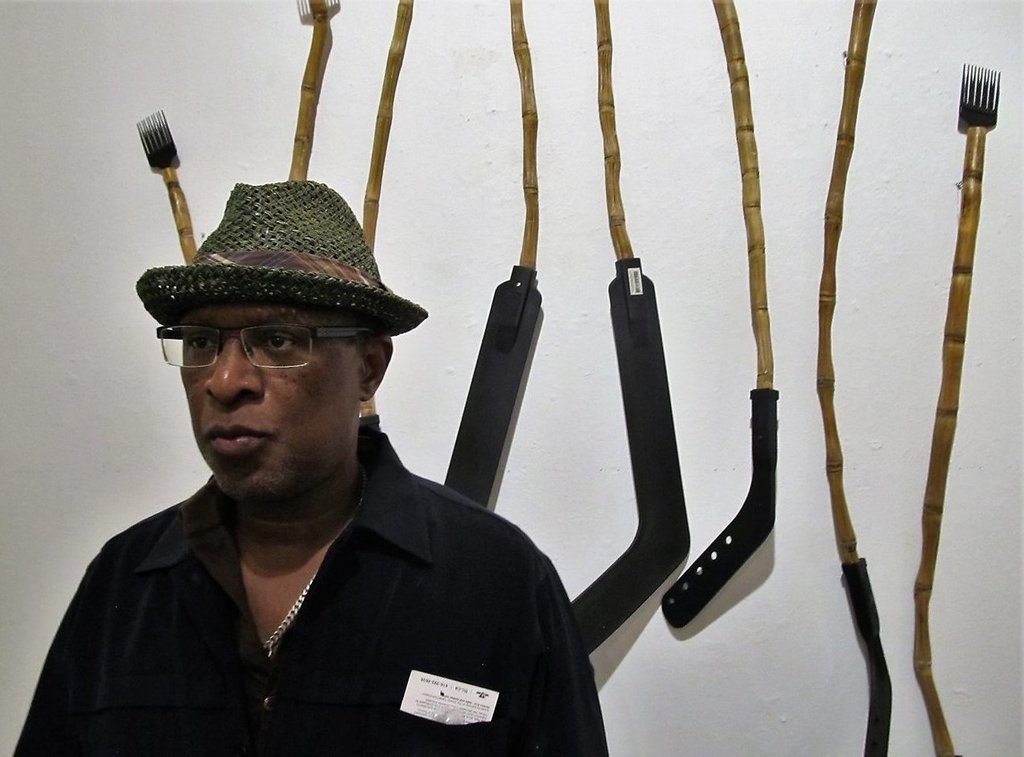
    Baptiste, Trinidadian by birth, is best described as a conceptual artist whose principal medium is found objects. These objects do not simply constitute ready-mades, but rather Baptiste uses them in the constructs of his artworks. In an interview on That Channel he decribes how he literally has piles of objects in his studio. Very often his work has political content. One issue that greatly concerns him is the gun culture in the city. This theme has been part of his work for many years, long before the recent spate of gun violence that has racked the city. His one work on display in this show is titled Afro Picks and Hockey, which consists of hockey sticks mounted to the wall, the shafts of which are sugar cane, these are topped by afro combs with plastic hockey blades at the bottom. He’s alluding to the connections between runaway slaves who found themselves in Nova Scotia and the invention of ice hockey.

    Hollis Alexis Baptiste, Afro Picks and Hockey

    Artist and curator Hollis Alexis Baptiste

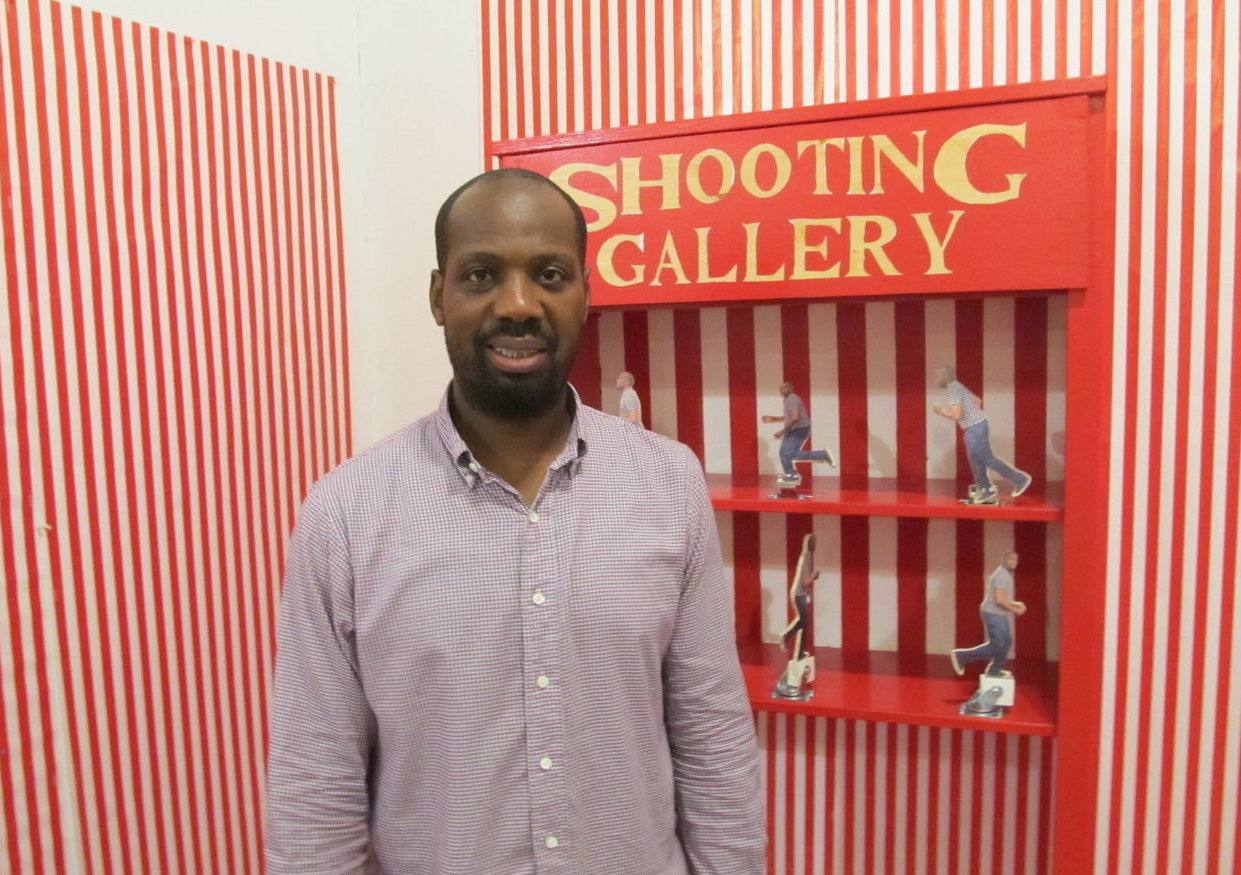
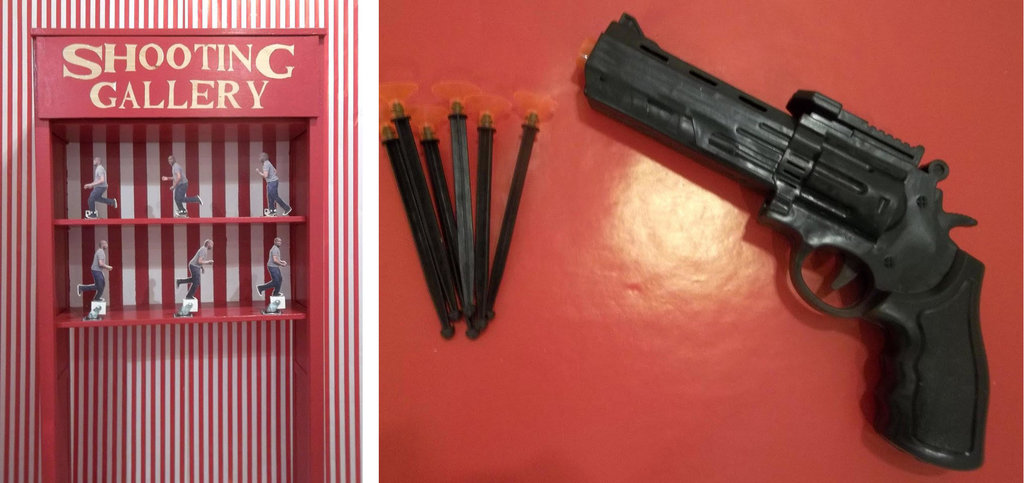
    The other installation piece in the show is by Stephen Fakiyesi, titled Our National Past-time/Shooting Gallery. As the title suggests the subject of this work is gun violence. Here, imitating an old-fashioned fair stall, a toy gun with darts is placed in front of a wall-mounted board with two shelves displaying small cut-outs of the artist running. He describes the work as “a tacit attempt to humanize and defuse the often partisan discourse around gun violence by deflating the issue to a shooting gallery.” Fakiyesi witnessed the gun violence growing up as a teenager in Toronto in the 80s.

    Artist Stephen Fakiyesi in front of Shooting Gallery

    Stephen Fakiyesi, details of Our National Past-time/Shooting Gallery

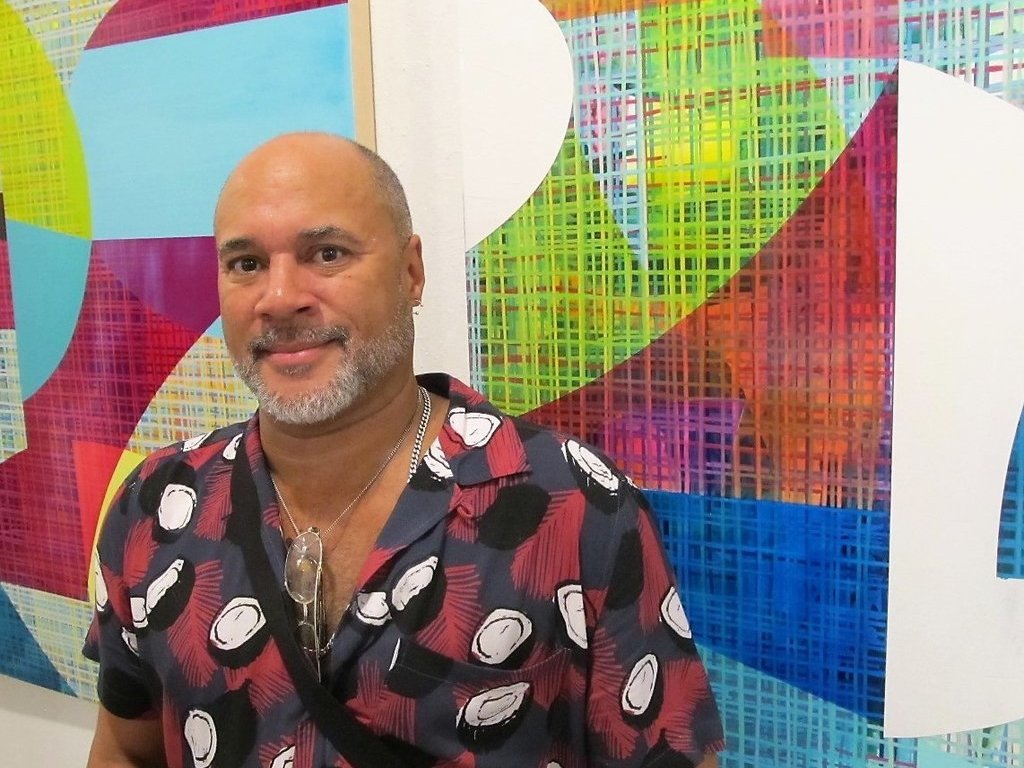
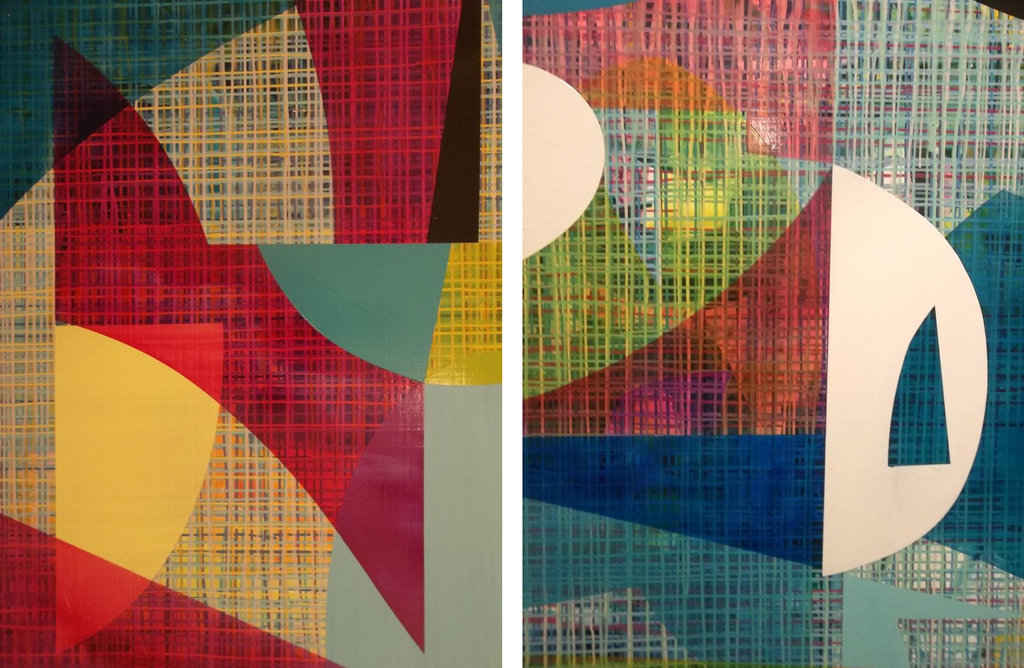
    Along the whole south wall of the gallery one finds an array of colourful abstract paintings by Shawn Skeir. All of the eight paintings consist of a set of hard-edge geometric shapes painted over a loosely rendered ground. The effect is scintillating. The images hum with colour. Skeir describes the paintings as ‘landscapes’. The Toronto-based artist explains that the “paintings are cryptic environments filled with various textures and colours that pulsate with an organic vivacity.” Indeed!

    Artist Shawn Skeir in front of his painting

    Details from Shawn Skeir’s “landscapes”

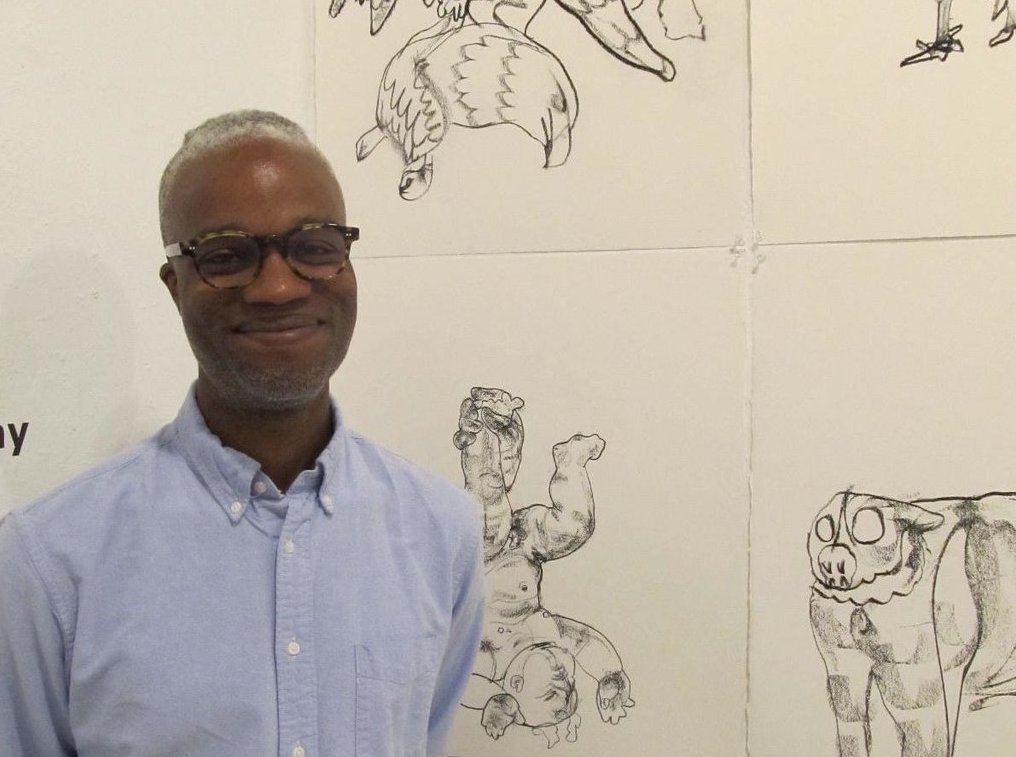
    Located either side of the main entrance are conte and charcoal drawings on paper by James Hewitt. These works have a beautiful fluency to them. They are a medley of drawings. Hewitt is a graduate from OCAD with seventeen years of exhibiting experience. He is a curator as well, who has had various internships.

    Artist James Hewitt in front of his drawings

    Charcoal drawings by James Hewitt

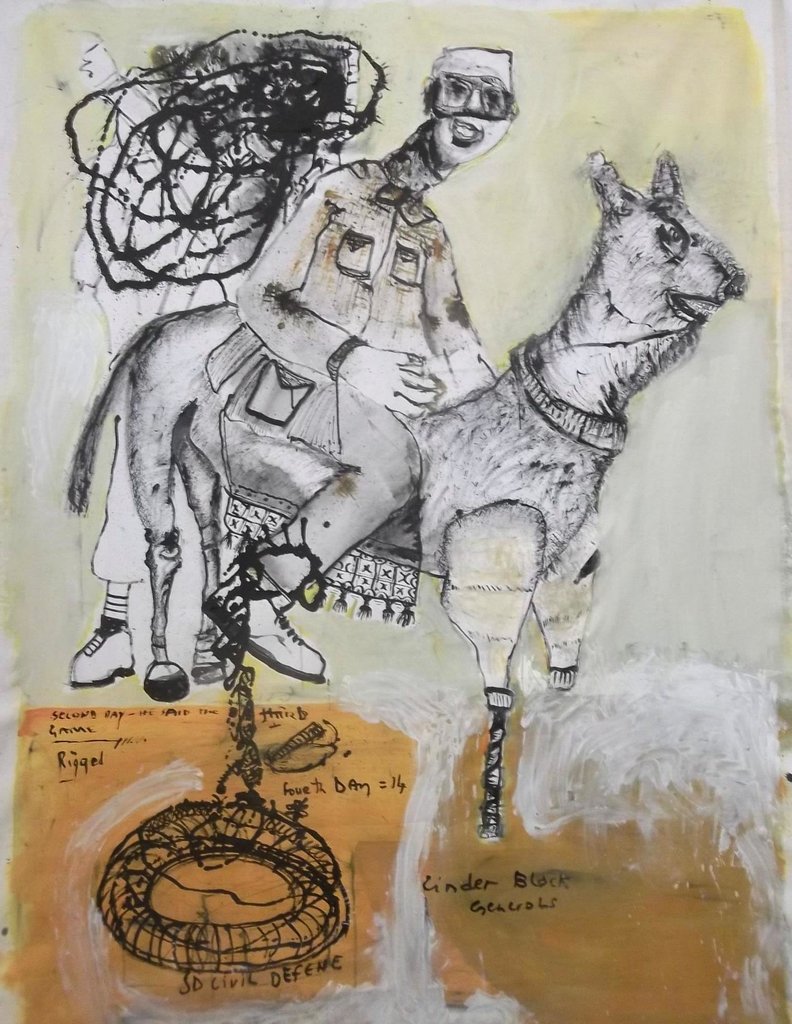
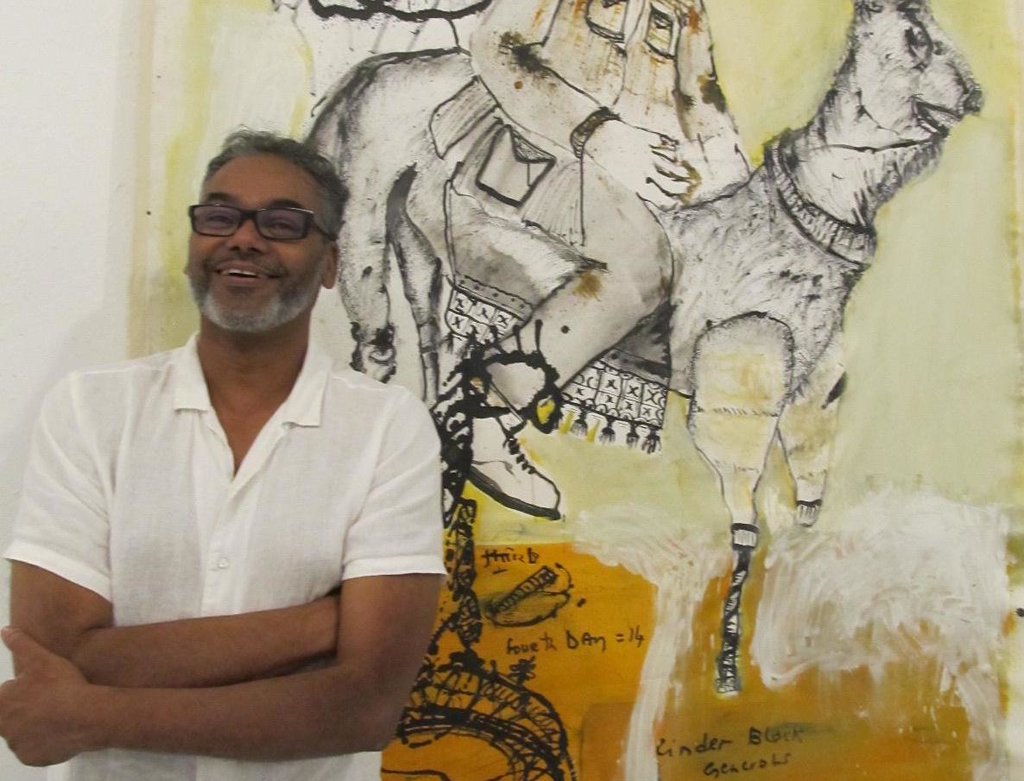
    Finally on the north wall hangs a large vertical canvas in paint and ink titled Cinder Block Generals by Amir Shingray. Shingray’s preoccupation in this work is with the protests and riots that have recently occurred in Sudan, and which led to the overthrow of dictator Omar Bashir. He is a graduate of the school of fine arts in Khartoum. Angered by the countless human-rights violations in this region, Shingray explains that the natural outlet for his anguish was painting. But this is an impactful painting in its own right, even when the viewer is not familiar with its political context. It is political art at its best.

    Cinder Block Generals by Amir Shingray.

    Artist Amir Shingray in front of his work

    All of the works by these five artists are measured in the sense that they are not frenzied or obscenely didactic, but rather show restraint with regards to the difficult subjects some of them tackle. This is an impressive show that Baptiste has put together. Let’s hope there are more to come. But as Baptiste laments, there are too few venues for showing off talent in this city.

    Hugh Alcock

    Images are courtesy of Gallery 1313

    Exhibition information: What Sustains Us, August 28 – September 8, 2019, Gallery 1313, 1313 Queen St W, Toronto. Gallery hours: Tue – Sun, 1 – 6 pm.

  • Sondra Meszaros at Corkin Gallery

    In the age of reclaiming identities, confronting social structures has become paramount in rethinking our social hierarchy. The ever-present patriarchal dominance makes the process of regaining femininity and equal power to women rather challenging.

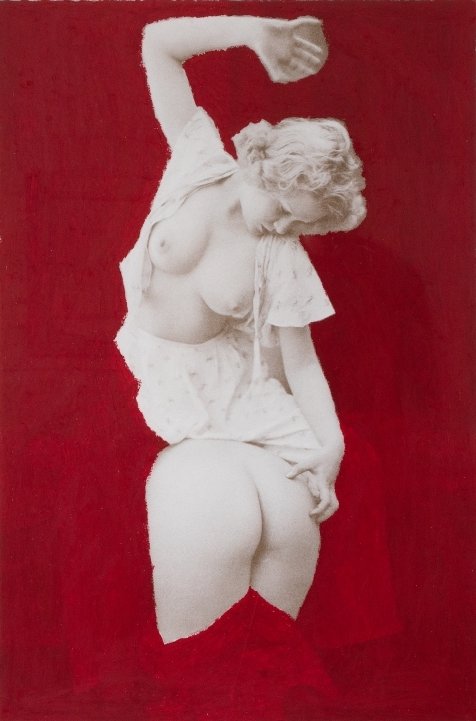
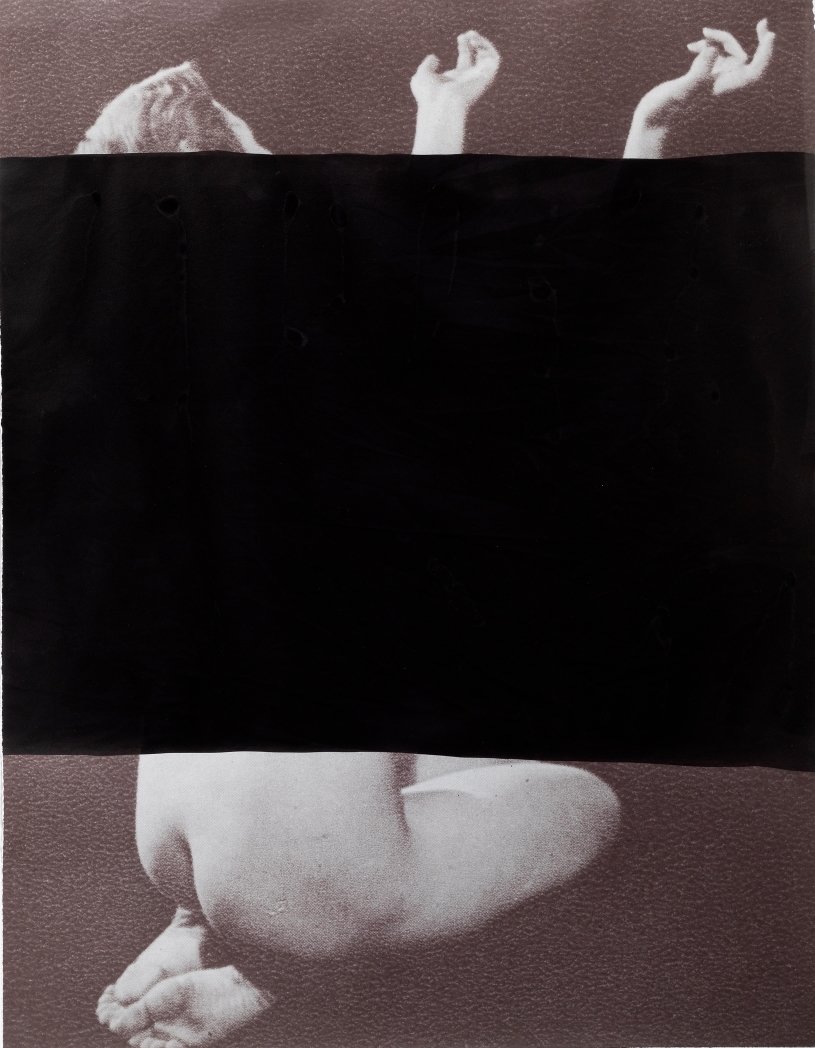
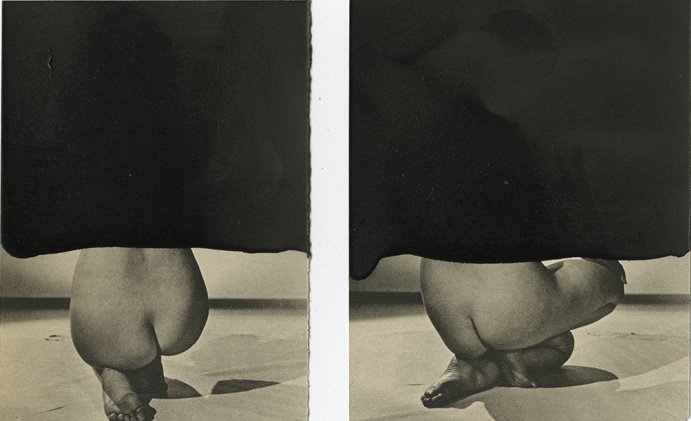
    Sondra Meszaros takes this on with her latest work, Two Blazing Glares, For Her Pierce. Varied portrayals of female bodies, interplay between nudity and violence create the main theme of her work. A clear touch of revision is present in each piece as she uses photomontage to modify found images from early-twentieth century erotica. Through this process she is overturning their purpose for male consumption by correcting the framework they once belonged to. I use the word ‘correct’ here to describe what Meszaros successfully accomplished with her conveyance of female nudity. Rather than succumbing to the perverse attributions of male dominance, the artist takes the power back and gives autonomy to her once-imprisoned female characters.

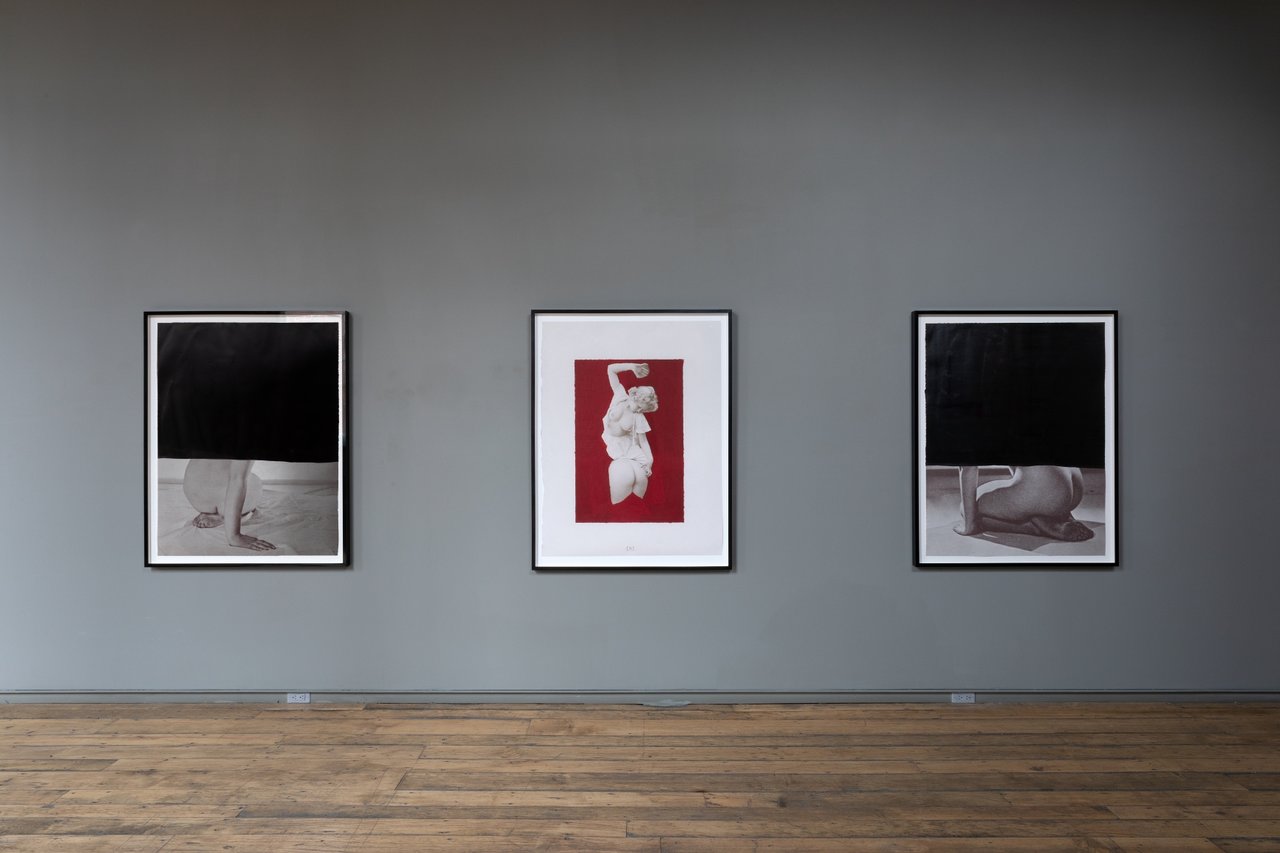
    Installation view with (L-R) Sondra Meszaros, Damned #1, strange spot #1 and Damned #9

    Upon entering the gallery, three large works greet the viewers, immediately setting the show’s vibe. On either side are Damned #1 and Damned #9 (2019) presenting nude female forms predominantly covered with black pigment while only revealing slivers of their bare-naked bodies. Flanked in between is strange spot #1 (2019).  Mounted in vibrant red pigment, the work stages a female figure posed in midmotion of spanking the unadorned bottom she has been overlaid with.

    Sondra Meszaros, strange spot #1, 2019, oil pastel on digital pigment print on rag paper, 53 x 41 inches

    It is inevitable to associate female nudity with violence. Many of these photographs were originally displayed for exploitation where women were positioned in subservience to their male counterparts. In this exhibition Meszaros reclaims the female body, putting her in charge of her own fate by stripping her sex-slave identity, as the black veil of pigment covers most of her body from the male gaze, replacing the impulse of male violence with female strength and ferocity.

    Sondra Meszaros, Damned #10, 2019, mixed media, digital pigment print on rag paper, 52 x 41 inches

    The exhibition felt like a step back in time with its Dada-inspired outlook. Set against the Corkin Gallery’s vast industrial space, the show negotiates between modern and contemporary sensibilities visible not only in Meszaros’ use of avant-garde aesthetics but also in the underlining message of the images. They not only confront injuring gender roles, but also proclaim rebellion against patriarchal practices. They declare emancipation from longstanding gender stereotypes where women are pervasively marginalized. The artist suggests a resolution to the subservience of women in the early-twentieth century by reworking them in acts where they are empowered to reclaim their sexuality.

    Sondra Meszaros, it’s damned if you don’t and it’s damned if you do #15, 2019, mixed media collage on found image, 12 1/4 x 14 3/4 inches

    Sondra Meszaros’ body of work is both invigorating and stimulating. Challenging its viewers to examine their own gender biases, Two Blazing Glares, For Her Pierce acts and reacts against misogynistic representations of women, successfully reclaiming female identity.

    Maria Mendoza Camba

    Images are courtesy of Corkin Gallery

    *Exhibition information: April 27 – September 1, 2019, Corkin Gallery, 7 Tank House Lane, Distillery District, Toronto. Gallery hours: Tue -Sat: 10 am – 6 pm; Sun: 12 – 5 pm.

  • Adrienne Crossman at the Patel Projects

    Uncovering and finding solace in queer spaces is a feat that many long for, searching for solidarity and a place of understanding. The sorrow of rejection of family and friends, unrequited love, and inner conflict within the self only further highlights the yearning for comfort and stability. These fundaments of the queer experience are deeply woven into what comprises a utopia and dystopia; however, how can this be captured and communicated in an accessible context?

    The understanding we have of ourselves is an intimate and lifelong endeavour, a trial of endurance as we discover what makes us the people that we are. Have we learned to love and accept love? How do we navigate spaces that welcome or shun us? Can there be an equilibrium in which everyone can operate? These questions captivate us yet are seldom answered. Though difficult, Heaven is a Place on Earth addresses how queer media presence and reality share a symbiotic relationship through the analysis of lesbian representation in fiction and popular culture.

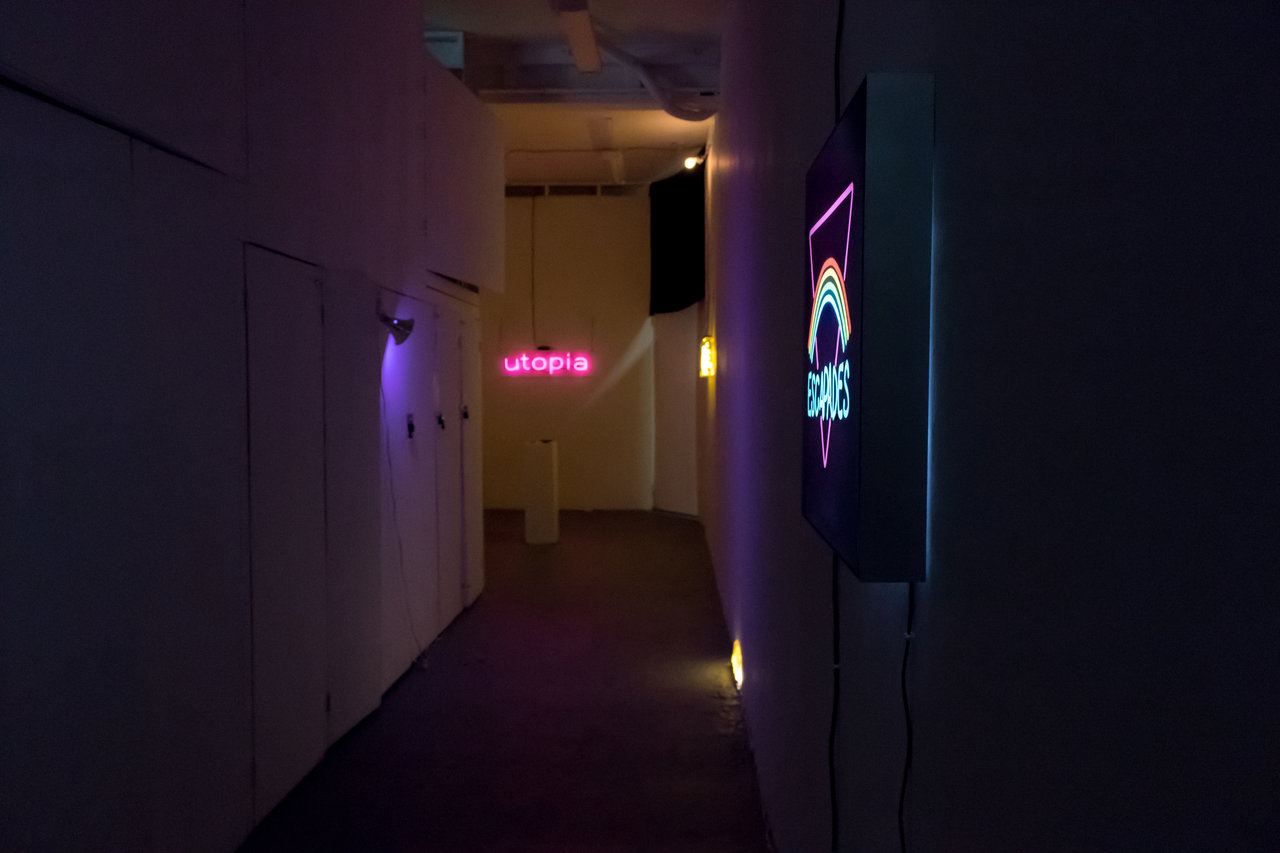
    Installation view of Heaven is a Place on Earth. Photo: Rashana Youtzy

    Heaven is a Place on Earth is Adrienne Crossman’s (she/her, they/them) solo exhibition of new work, currently on display within the Patel Projects. Crossman, a Hamilton-based artist, educator, and curator aims to explore the spectrum of utopia and dystopia in relation to queerness. This investigation also includes looking at how terms such as gender, trans*, and non-binary are applied and represented in media.

    Installation view of Heaven is a Place on Earth. Photo: Rashana Youtzy

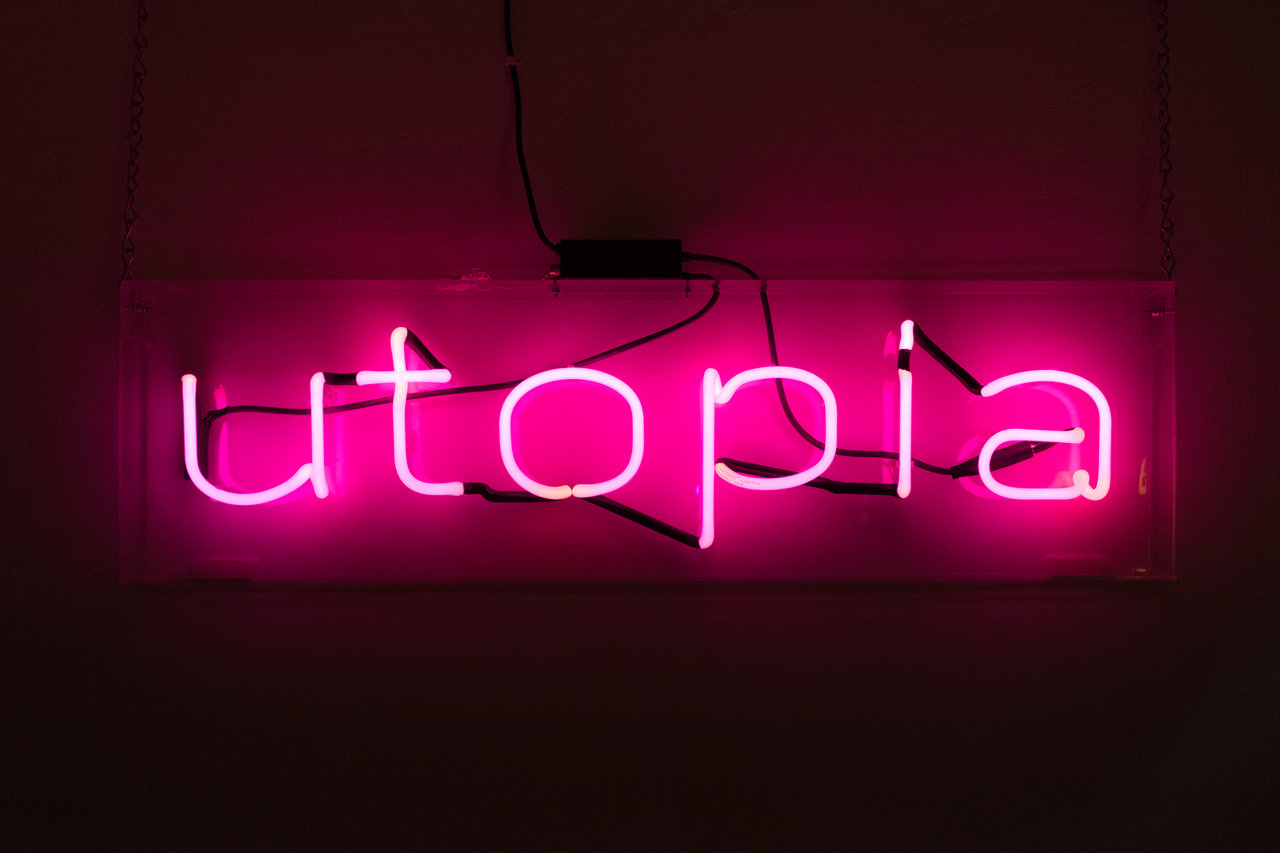
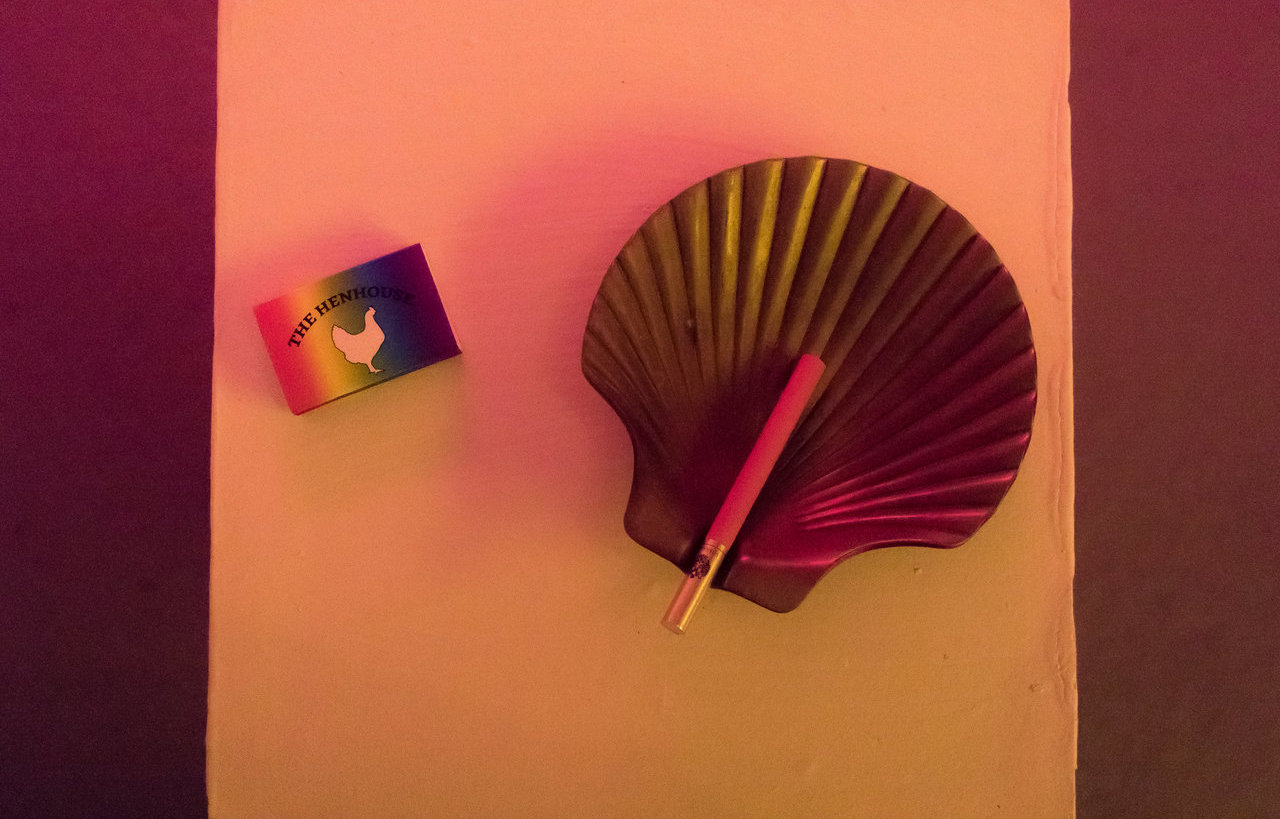
    Within the dimly-lit hallway is a selection of works, with the luminescence of the neon drawing patrons in. The space can be visited by appointment only, so it makes for a quiet experience to view the works. The first encountered is a fabric printed lightbox titled Escapades, introducing the concept of escaping to an elsewhere – whether it be for better or worse. We then travel towards the larger glowing presence at the end of the hall. A cast resin scum marks a checkpoint as a bright yellow dystopia radiates in the peripheral. Upon reaching the cozy nook, the neon pink of utopia pools its light in the tight space just enough to view the Sobranie Cocktail cigarette cradled in a shell and accompanied by a Henhouse matchbox. Resting below their plinth is a book, Lesbian Images by Jane Rule, containing a series of essays and bibliography. In the corner is a mirror with a violet illustrated on the surface, joining the viewer’s reflection.

    Installation views of Haeven is a Place on Earth. Photo: Rashana Youtzy

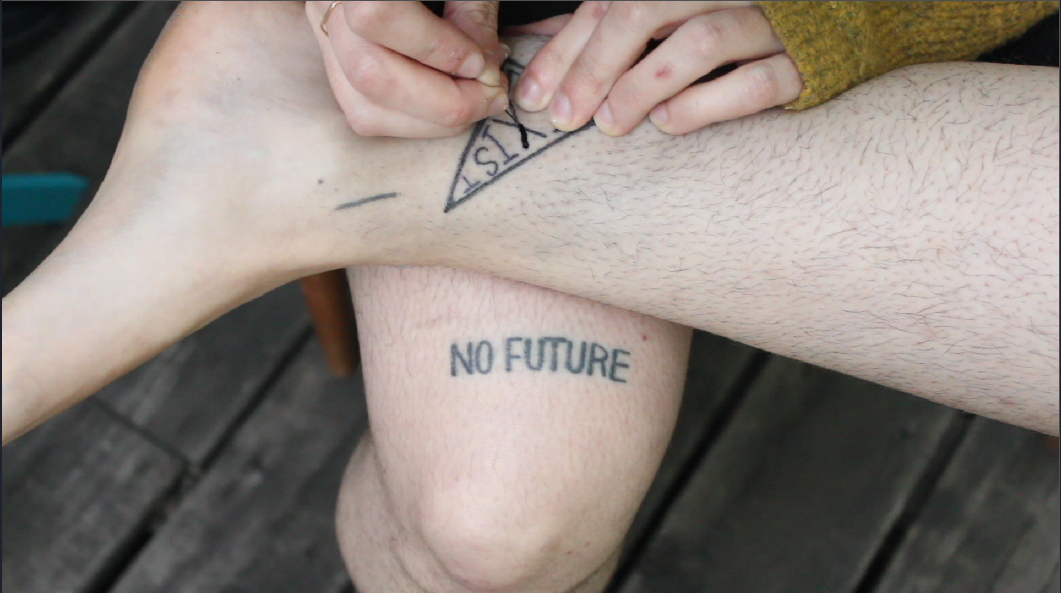
    Arguably the most powerful work within the room is the video, Exist (49 minutes). It shows Crossman’s administration of a stick-and-poke tattoo of the word EXIST. Recognizing the pain of the process, the artist’s persistence can only be admired. The respect extends beyond executing the tattoo, but also in recognizing existing as a form of rebellion and resistance.

    Exist, video still. Courtesy of the artists

    So, how does the exhibition measure in terms of exploring queerness and representation in media? The work can be consumed, recognized for the representations of cult narratives, or slurs that punctuate the experience. These references and visual cues can be identified yet proving universal is difficult. For many LGBT+ folk a cult classic can be deeply formative in their development towards acceptance. Yet to others, films like But I’m a Cheerleader is an unknown 90s flick – and that’s only within Western media. The reality is that we cannot truly capture the essence of queerness since the imagery shifts depending on the perspective of the participant. Though there are specific references made, the exhibition is accessible enough to obtain a grasp on the stories being told and prompts the viewer to action.

    Installation views of Haeven is a Place on Earth. Courtesy of Patel Projects

    Ultimately, Crossman has created a space to explore queerness, inciting a desire for patrons to research the references and interrogate the ways in which the community has been represented.

    Rashana Youtzy

    *Exhibition information: June 13—July 25, 2019, Patel Projects, 184 Munro Street (rear), Toronto. By appointment only.


  • Remembering Katharine Mulherin

    Katharine Mulherin at Art Toronto, 2015. Photo: Phil Anderson

    Remembering Katharine Mulherin (1964-2019)

    The Toronto art community is mourning the loss of one of its most beloved gallerists Katharine Mulherin. Born in Grand Falls New Brunswick, Katharine was a graduate of OCADU and helped launch the career of many of her fellow students. She had a great eye for talent and also took some of the artists south of the border to New York and L.A. when she opened a gallery in New York and had representation in L.A.

    I first met Katharine when she opened her first gallery in Parkdale on Queen St. West near Queen and Gwyne St. The Bus Gallery became popular quickly as Katharine represented artists with unique styles and avoided convention. Also, an artist, I remember exhibiting her work at Gallery 1313 in a show, titled Adventure in October, 2002. It was a large photograph of herself in a wedding dress and she shared the story behind the work.

    We were connected from the beginning, having a maritime background. She had a wonderful laugh. She was part of a jury for an exhibition called CODE @ Gallery 1313 with Gary Michael Dault and myself. We looked through hundreds of artist slides from the many submissions to select 7 artists for the show. My fondest memory of Katherine is when we were seating on the floor of Bus Gallery with artist and curator Janet Bellotto, in 1999, I think. We were trying to problem solve some technology for an installation and at some point, we just broke into infectious laughter.

    Over the years whenever I saw her, she always had a wonderful smile for me and we would catch up.

    I heard the tragic news of her death when returning from the East Coast on holiday, and saw the posts on Facebook. Like others I was taken by surprise. I wish I had seen her in her new location on Dupont St.

    Katharine will always be remembered for her impact on the Toronto art scene.

    In Toronto we seem to recognize our heroes only when they are gone. There is a Go Fund Me page to raise money for the family who are struggling with their loss. Like others I will cherish my memories of Katharine and always remember her gracious smile. 

    Phil Anderson, artist, executive director of Gallery 1313, co-publisher of Artoronto

  • José Manuel Ciria at Christopher Cutts Gallery

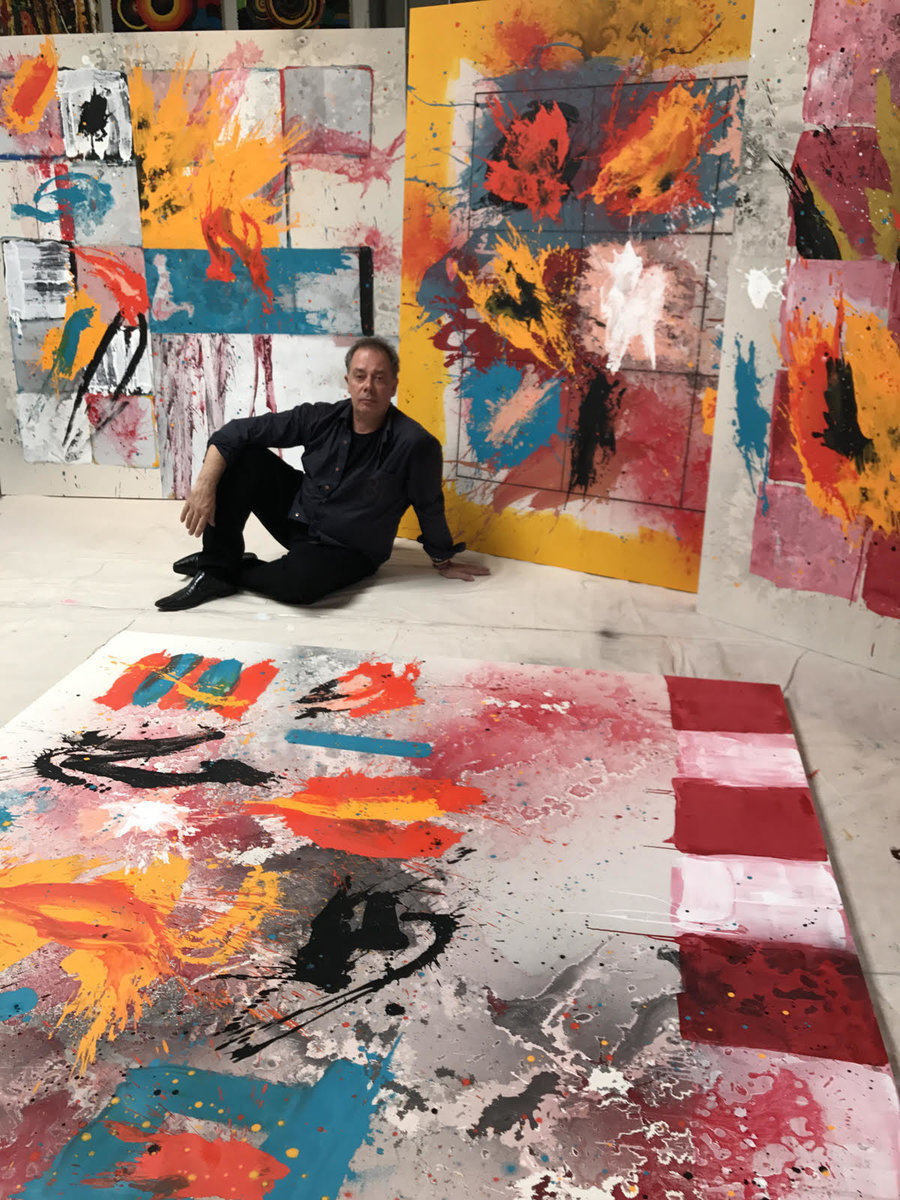
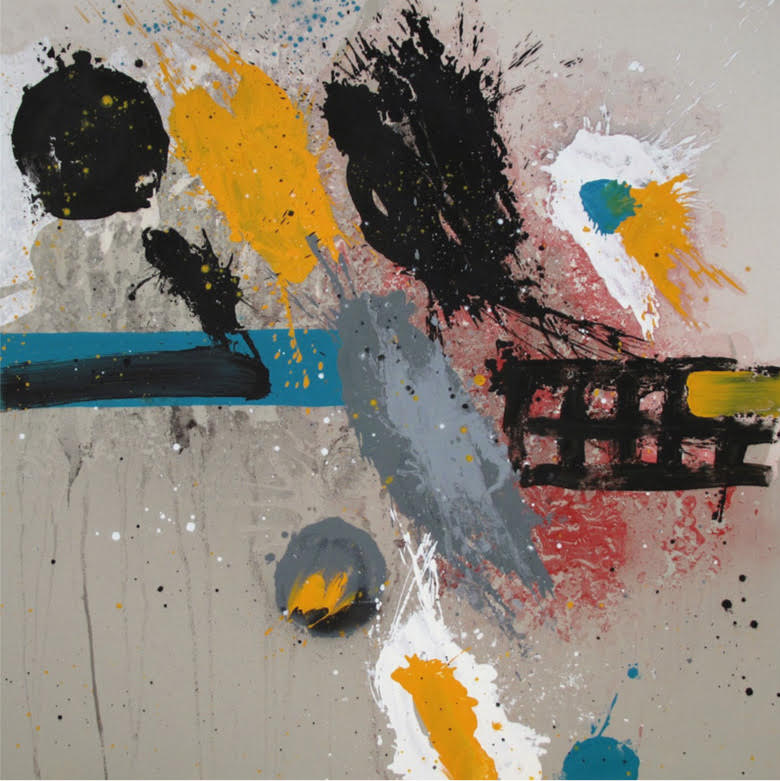
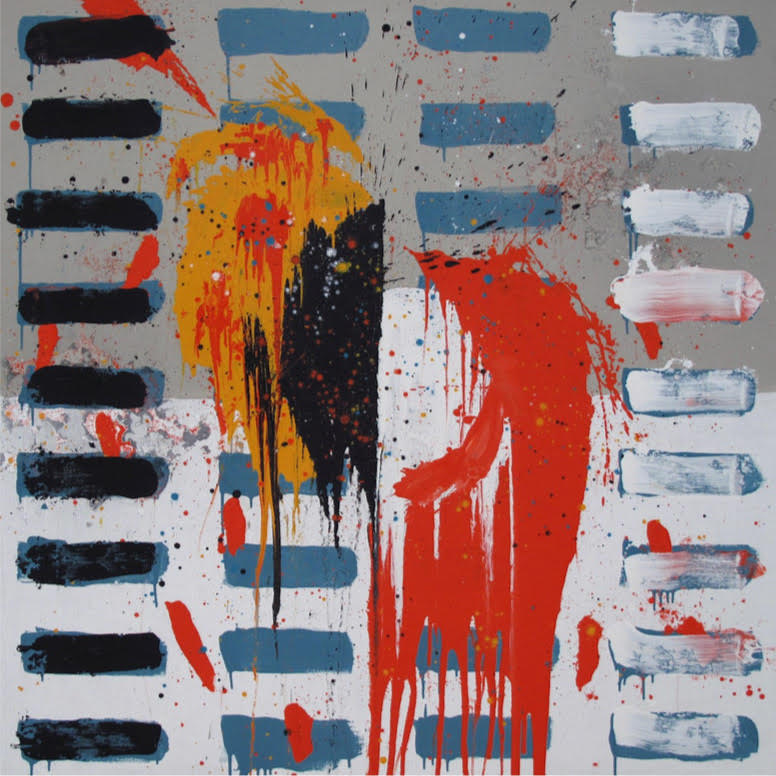
    The exhibition A Beautiful Day with a Small Storm at the Christopher Cutts Gallery is a unique one. A month before its opening in June, the paintings by Madrid artist José Manuel Ciria were a mere glimmer in the artist’s eye. The works were in fact created in a studio directly above the exhibition space. In that sense, what is on display has descended from above, their generation a touch miraculous in the speed of their execution. 

    José Manuel Ciria in studio at Christopher Cutts Gallery, 2019

    Ciria exudes the personable confidence of someone who is at ease in his own skin. This is a way of saying that Ciria inhabits his work, and that the life and breath of his canvases are closely woven into the artist’s own persona. The bright explosions of paint on the walls of the gallery are the visible traces of the artist’s lived experience. The work is proof of his stay in Toronto. If we want to ask, “Who is José Manuel Ciria?” – the artist might reply, “Look at my work.” Since Ciria believes that we all wear masks, it makes the question a bit more complicated. “We are three people: the person we think we are, the person we really are, and the person others see.” In artistic terms, this translates into: “What an artist sets out to do, what the work really becomes and what the viewer sees in it.”

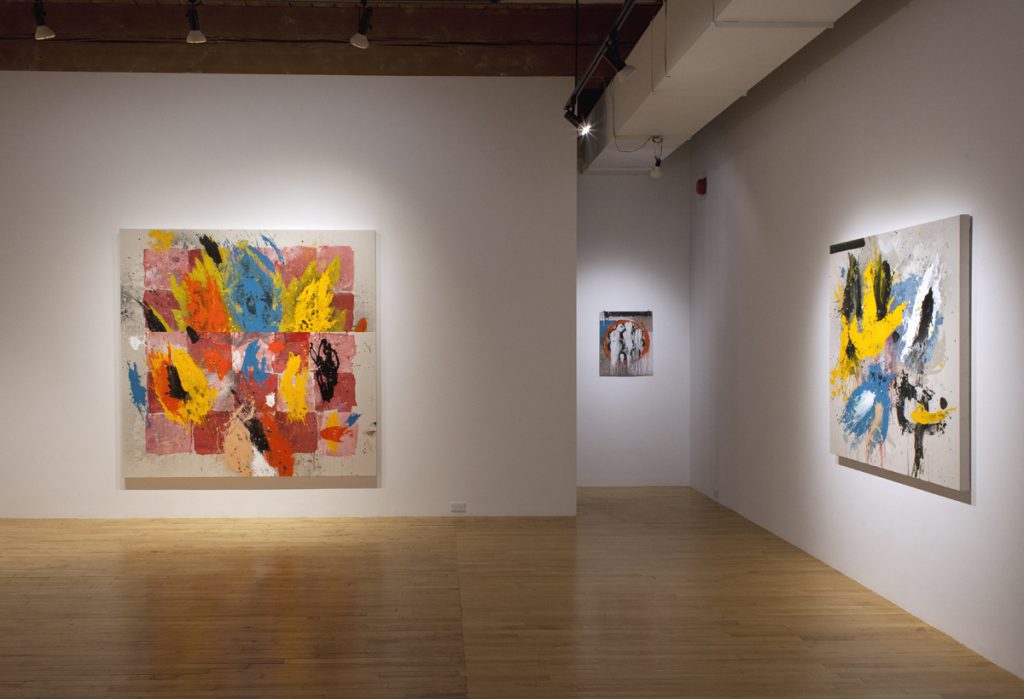
    South Gallery installation

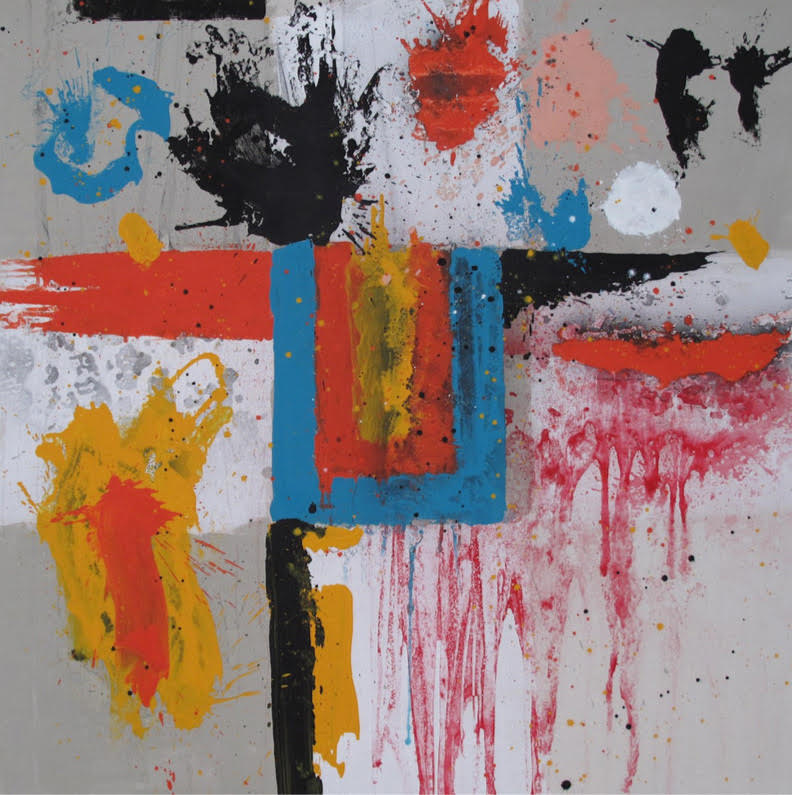
    A clue to unlocking Ciria’s layered creative self lies in a closer examination of the individual paintings in his A Beautiful Day with a Small Storm. First of all, any notion that the paintings are casually “dashed off” ought to be expunged immediately. Ciria is disciplined and organized. There is a reason for each painting having either a grid, horizon, or some static basis point. His spontaneity is firmly grounded in a method. He can be wild, yet controls his passions. The drying time of splashes, their thinning out, and the reaction of pigment with gesso and painted ground have been carefully considered. To achieve maximum impact, he employs a strategy of dark to light and neutral to bright colours. Viewed with a squint, the paintings become amazingly 3D. The gridded It’s Getting Better is a good example of the effect.

    It’s Getting better, 2019, oil and mixed media on canvas, 78.75 x 78.75 inches

    Beauty Puzzle is a virtuoso painting that showcases all of the artist’s gifts. His rockets are exploded into a single fireworks display: the chemistry of liquidity and drying with an arabesque of colour and splash into the sky above a strip of red and white carnival tent.

    Beauty Puzzle, 2019, oil and mixed media on canvas, 78.75 x 78.75 inches

    The Bridge attempts to span a fractured horizon. Things don’t quite line up, as they must not. Difficulty is the point. After all, a leap of faith may only be actualized in the effort.

    The Bridge, 2019, oil and mixed media on canvas, 51.25 x 51.25 inches

    Ciria hits the piano keys hard in The Concert. The bursts of colour at the centre are laid over pulses and beats in pounding staccato. In this, Ciria makes sound visible. The Party, on the other hand, is cool and measured. A wide band of light grey in the foreground distances the observer from the tidy row of splattered blots near the top like beads on an abacus. An accountant would be pleased that there are enough splashes for each day of the week.

    The Concert, 2019, oil and mixed media on canvas, 51.25 x 51.25 inches

    Ciria gave me a tour of his exhibition the day before it opened. The exchange that stuck with me occurred before Scarecrow. It seemed that the image of the scarecrow had emerged in the course of the painting’s creation like a phantom. The moment had somehow been startling to the artist. In an exhibition of abstract paintings, a figure is the guest you didn’t invite to the party, but introduce to everyone anyway. It’s the guest you end up talking about the next day.

    Scarecrow, 2019, oil and mixed media on canvas, 51.25 x 51.25 inches

    Steve Rockwell

    Images are courtesy of Christopher Cutts Gallery

    *Exhibition information: June 8 – Aug 3, 2019, Christopher Cutts Gallery, 21 Morrow Ave, Toronto. Gallery hours: Tue – Sat 10 am – 6 pm.

  • Gavin Lynch at Angell Gallery

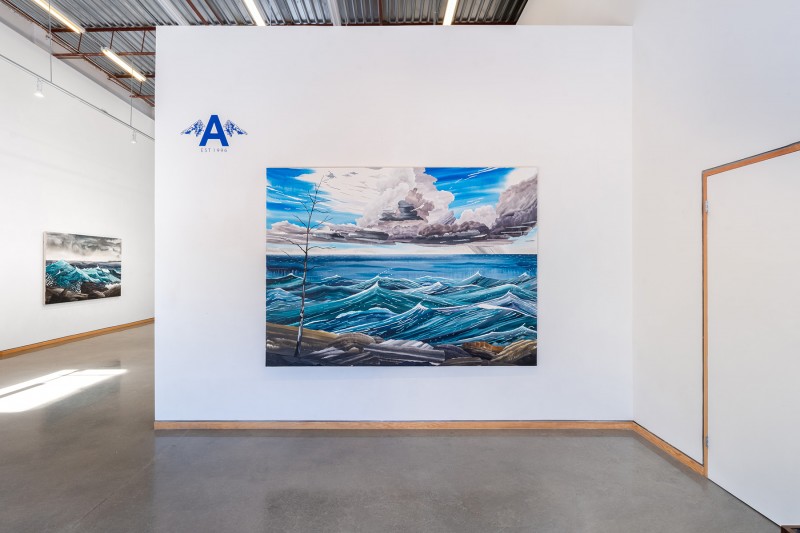
    Installation view of Gavin Lynch, Breaker. Photo: Alex Fisher

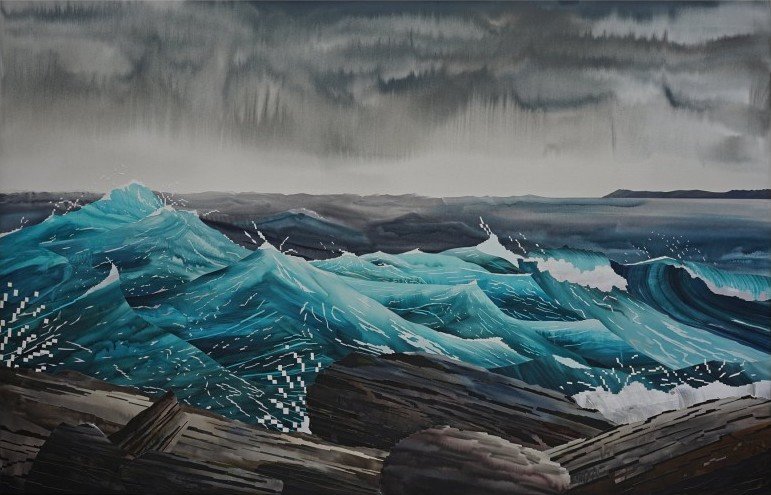
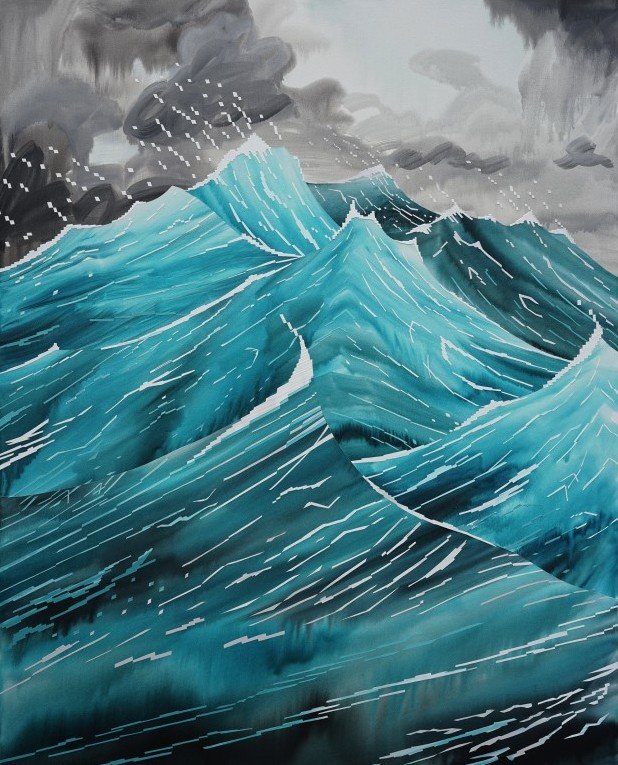
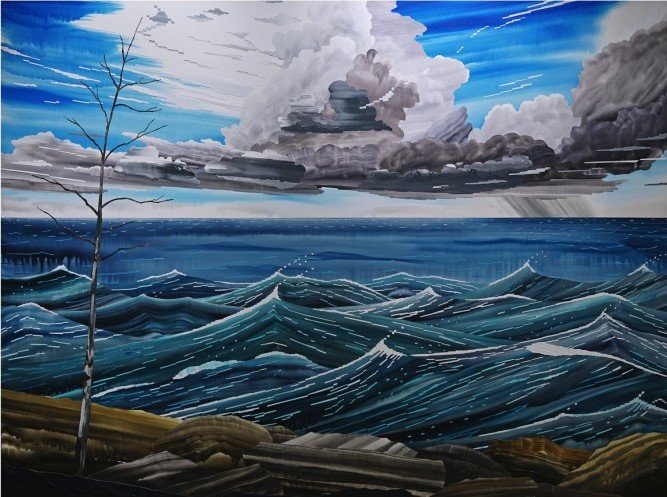
    Gavin Lynch’s latest exhibition Breaker at Angell Gallery is an exploration of waterscapes, creating the illusion of power and movement in painting. Lynch’s signature style is emulating the appearance of collage pieces through his advanced painting technique. From far away the paintings resemble realism but up close the fragmentation, crisp edges, gradient colours and paint washes begin to resemble assemblage, a low-poly digital image or pixelated photos.

    Gavin Lynch, Tempest (for Winslow), 2019, acrylic on canvas, 55″ x 86″

    In Breaker we see Lynch beginning to depart from his previous subject of the forest in favour of the sea. The title is derived from the dual meaning of the word; both a wave with a white foam and someone who breaks something, like rules or conventions. Does this duality suggest an aesthetic deconstruction of the traditional landscape or a commentary on how we are destroying the natural environment?

    Gavin Lynch, Breaker, 2019, acrylic on canvas, 60″ x 48″

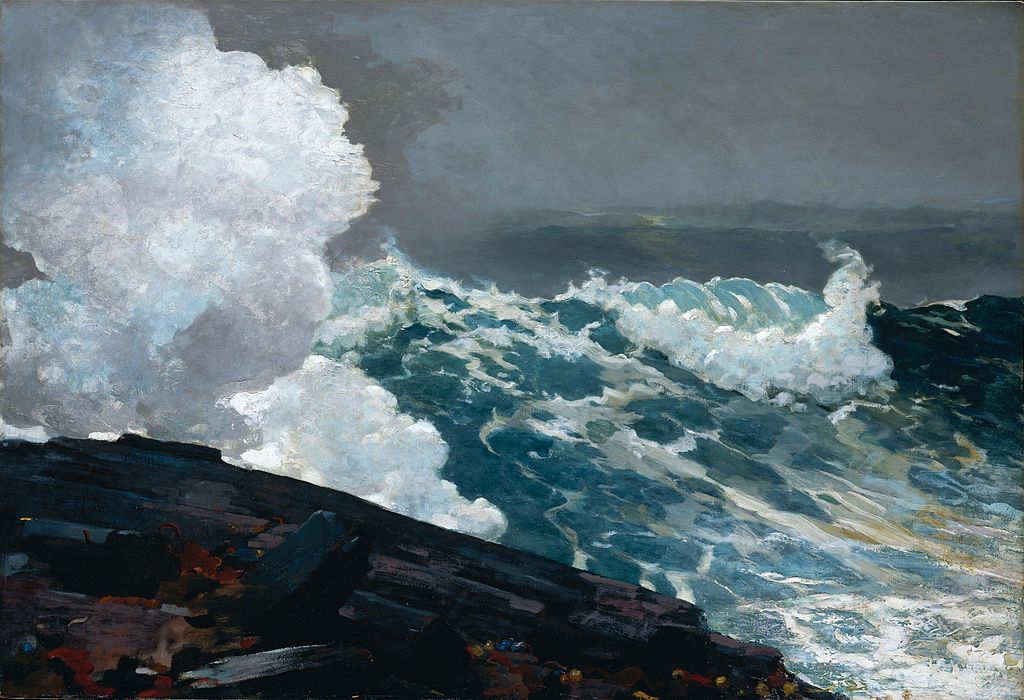
    This new body of work was inspired by Lynch’s research into artists who have worked with land and seascapes such as Winslow Homer, Katsushi Hokusai and the Group of Seven. Other searches included more naive or commercial photographers, such as stock photos and people’s personal online archives. Lynch’s work seems to have brought these historic paintings into the contemporary with his gaze and style, and by combining elements of canonical and conventional art.

    Winslow Homer, Northeaster, 1895. Metropolitan Museum of Art online Gallery

    Gavin Lynch, Approaching Storm, Lake Superior, 2019, acrylic on canvas, 71″ x 95″

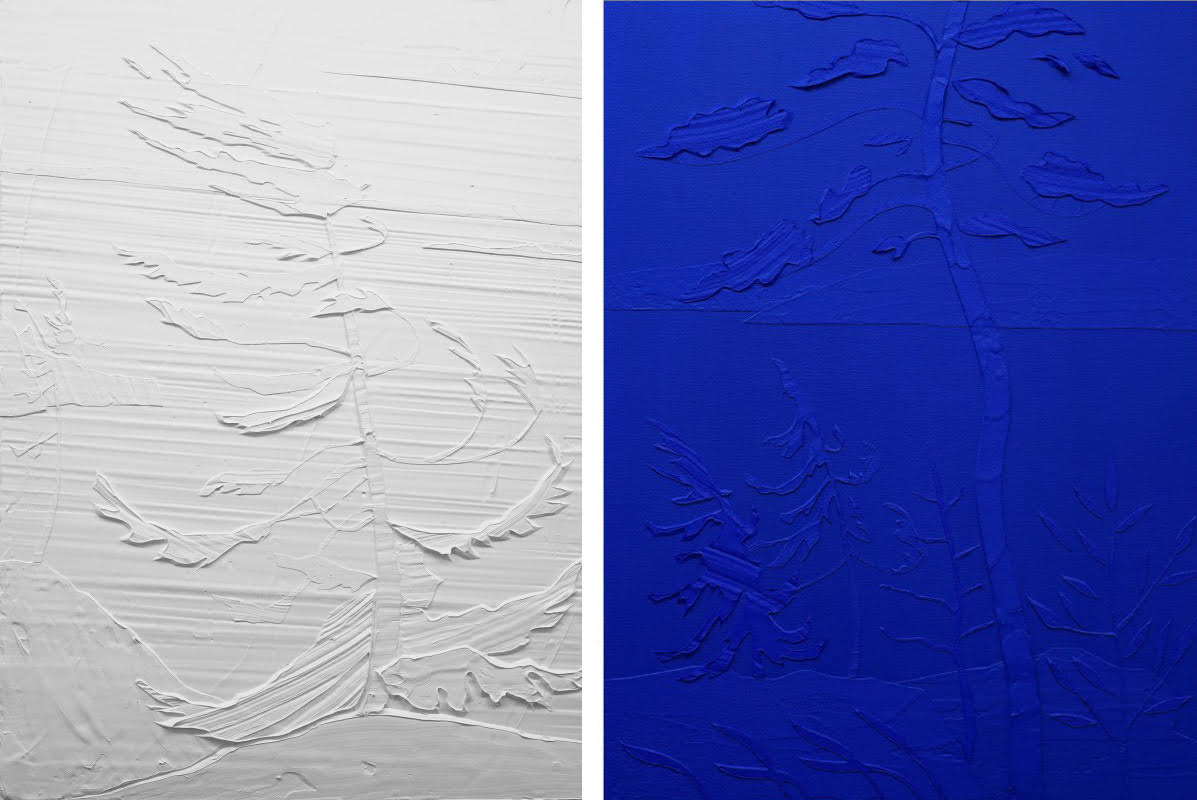
    In addition to a change of subject matter, Lynch has also branched into creating white and blue monochrome paintings. Two pieces, titled The Storm of 1921, a white painting and The Other Storm of 1921, a blue artwork, likely refer to the massive solar storm that occurred in May 1921, known as the Carrington Event. The monochromatic palette may have been influenced by the geomagnetic storm while Lynch represents the different forms of radiation as white x-rays or ultraviolet lights. It may as well be a simply artistic interpretation of the phenomenon. The works themselves are beautiful and textured renditions of trees, with thick layers of acrylic. The other two monochromes, Blue Moon and White Pine, take their titles from nature and the paintings just follow their respective colours.

    Gavin Lynch, The Storm of 1921, 2019, acrylic on panel, 24″ x 18″ (left) and The Other Storm of 1921, 2019, acrylic and sand on canvas over panel, 24″ x 18″ (right)

    The exhibition is a fascinating take on an age-old subject matter with a fresh, present-day perspective. The vibrant colours, unique style and familiar scenes make the show accessible for all audiences without sacrificing conceptual and historical significance.

    Nathan Flint

    Images are courtesy of Angell Gallery

    *Exhibition information: June 8 – July 20, 2019, Angell Gallery, 1444 Dupont St., Unit 15, Toronto. Gallery hours: Wed – Sat, 12 – 5 pm.
  • Toronto Outdoor Art Fair 2019

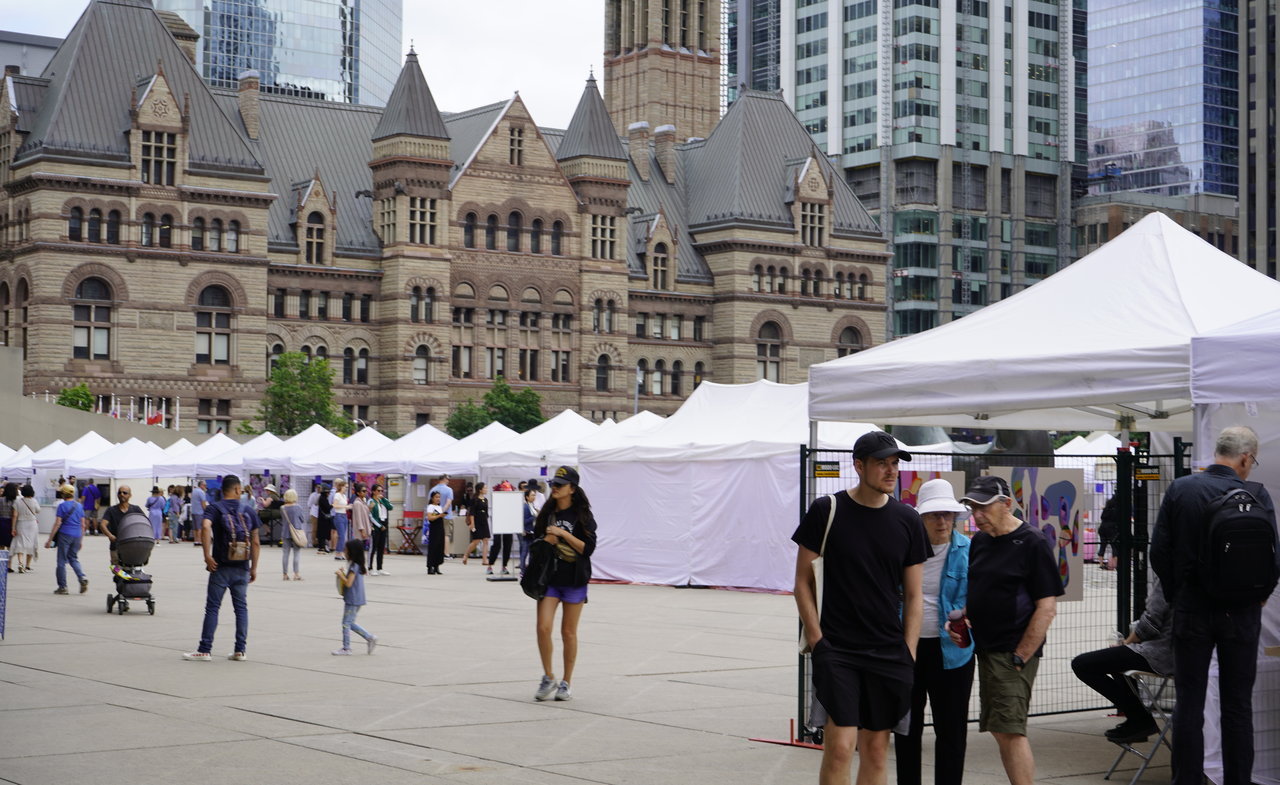
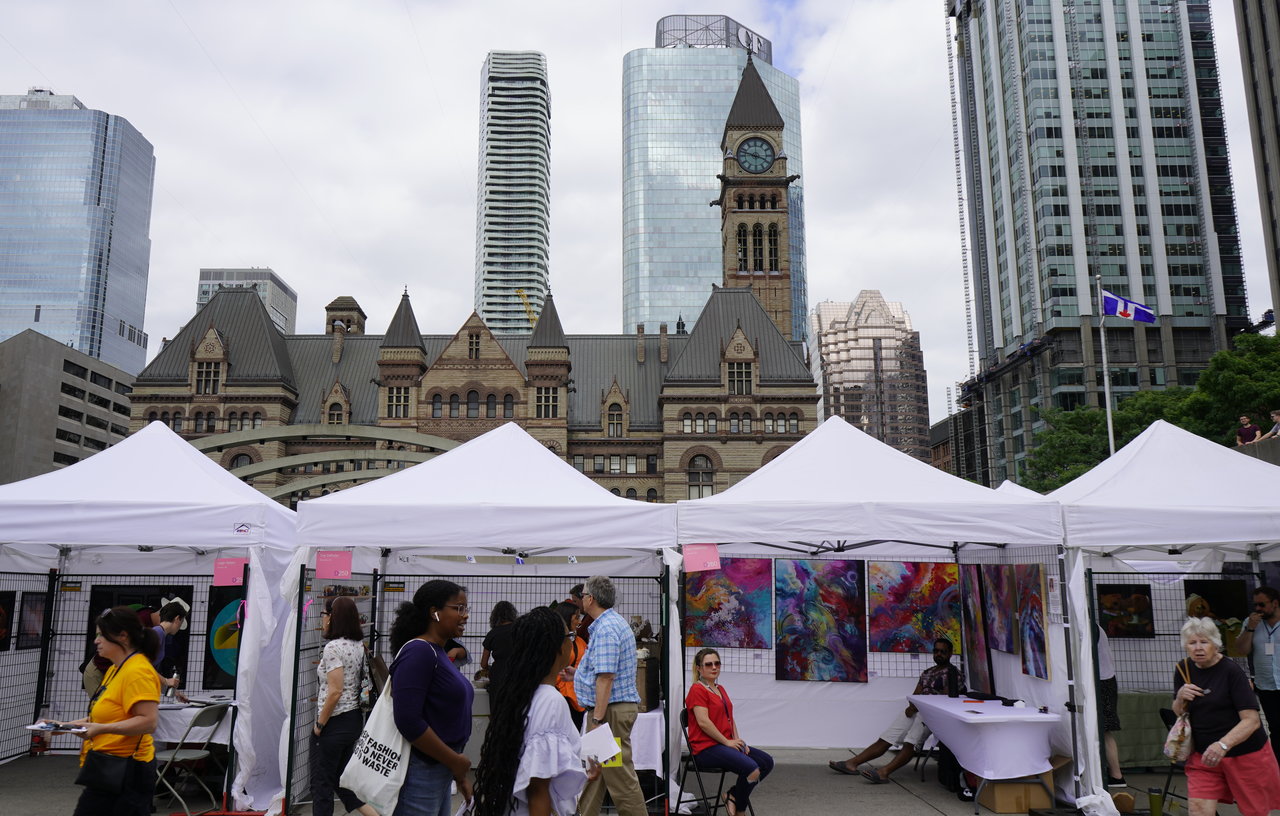
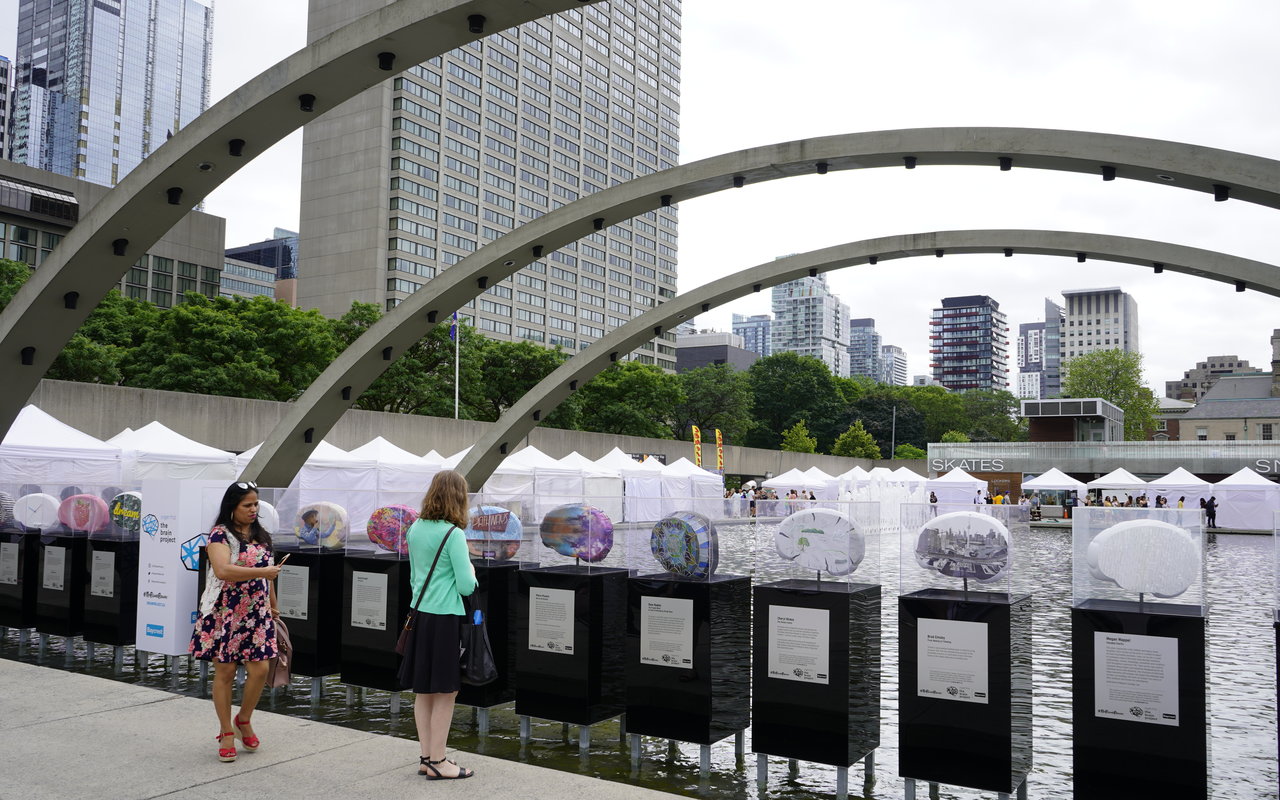
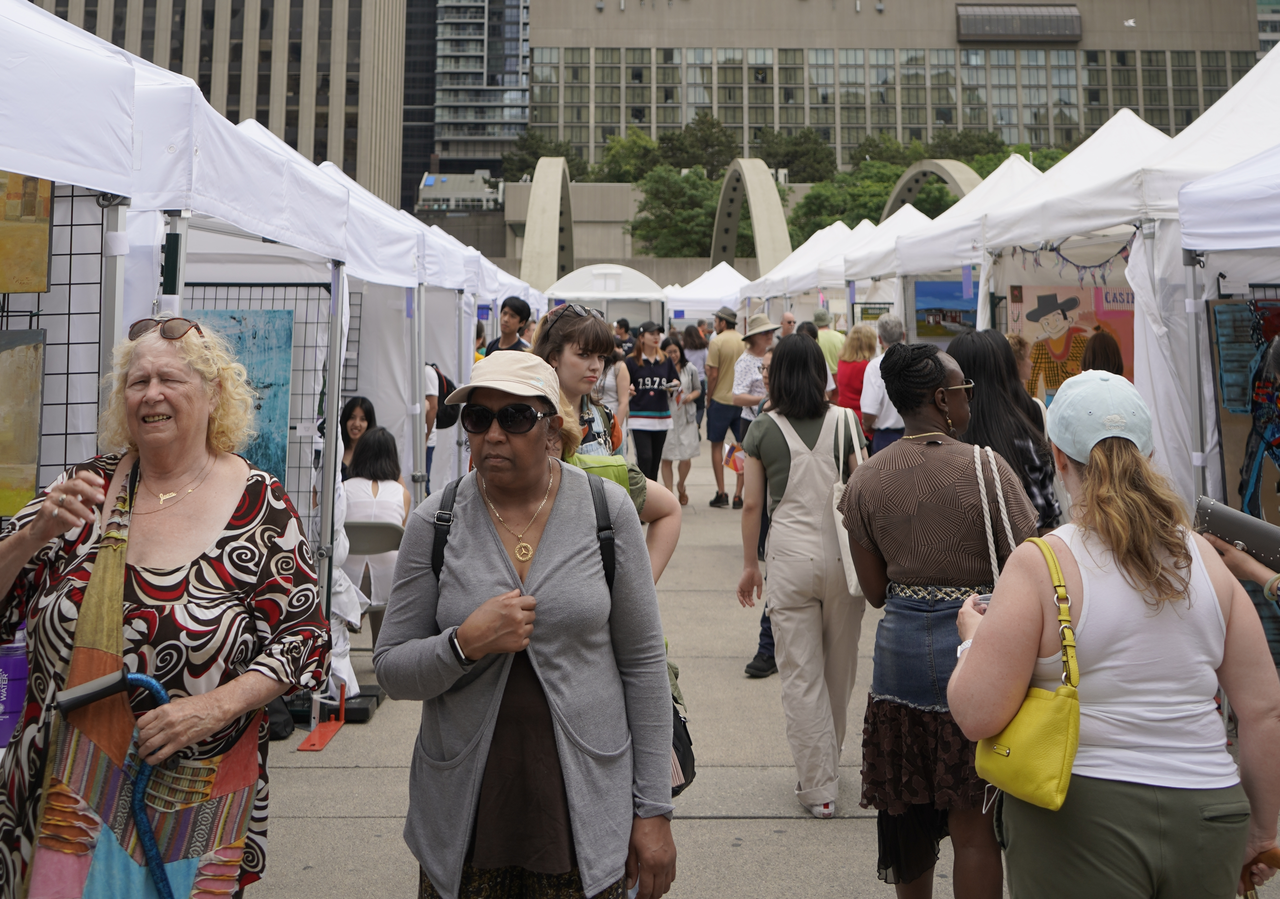
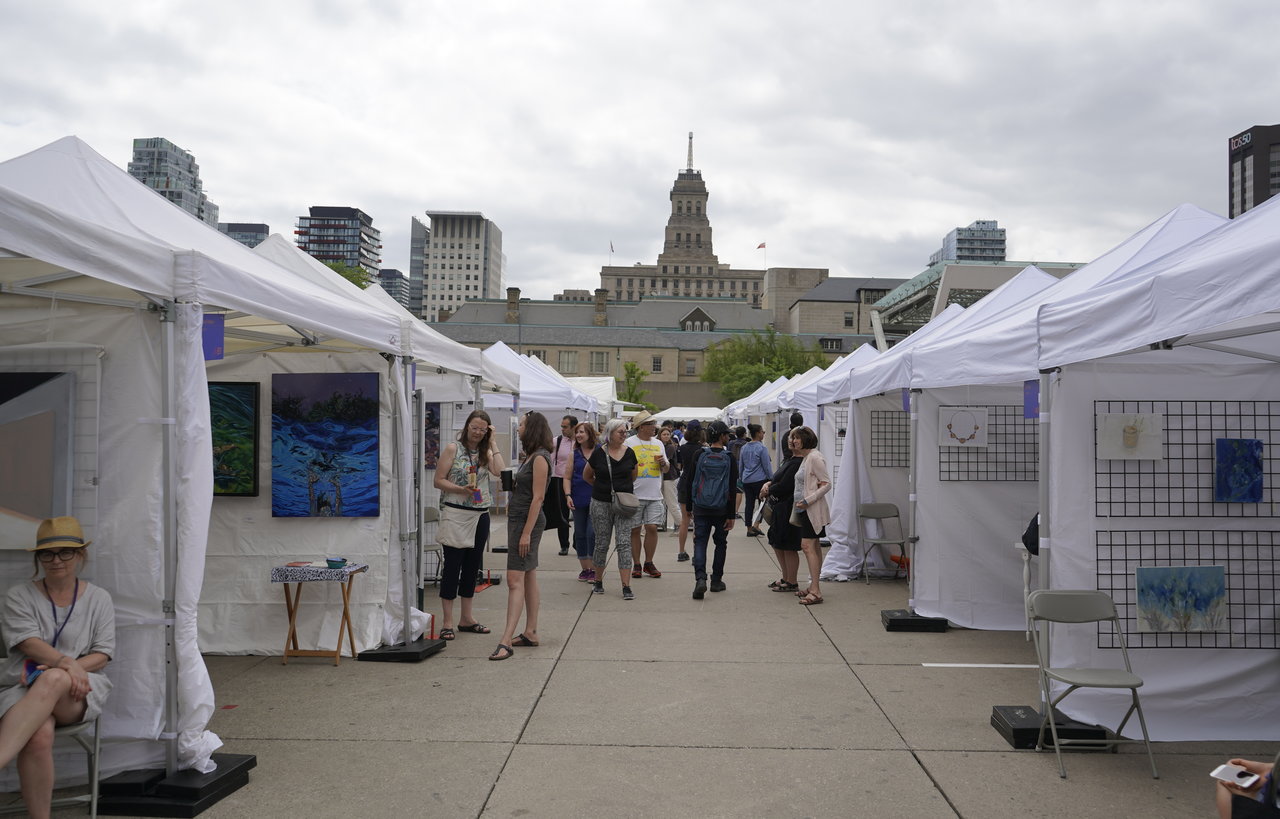
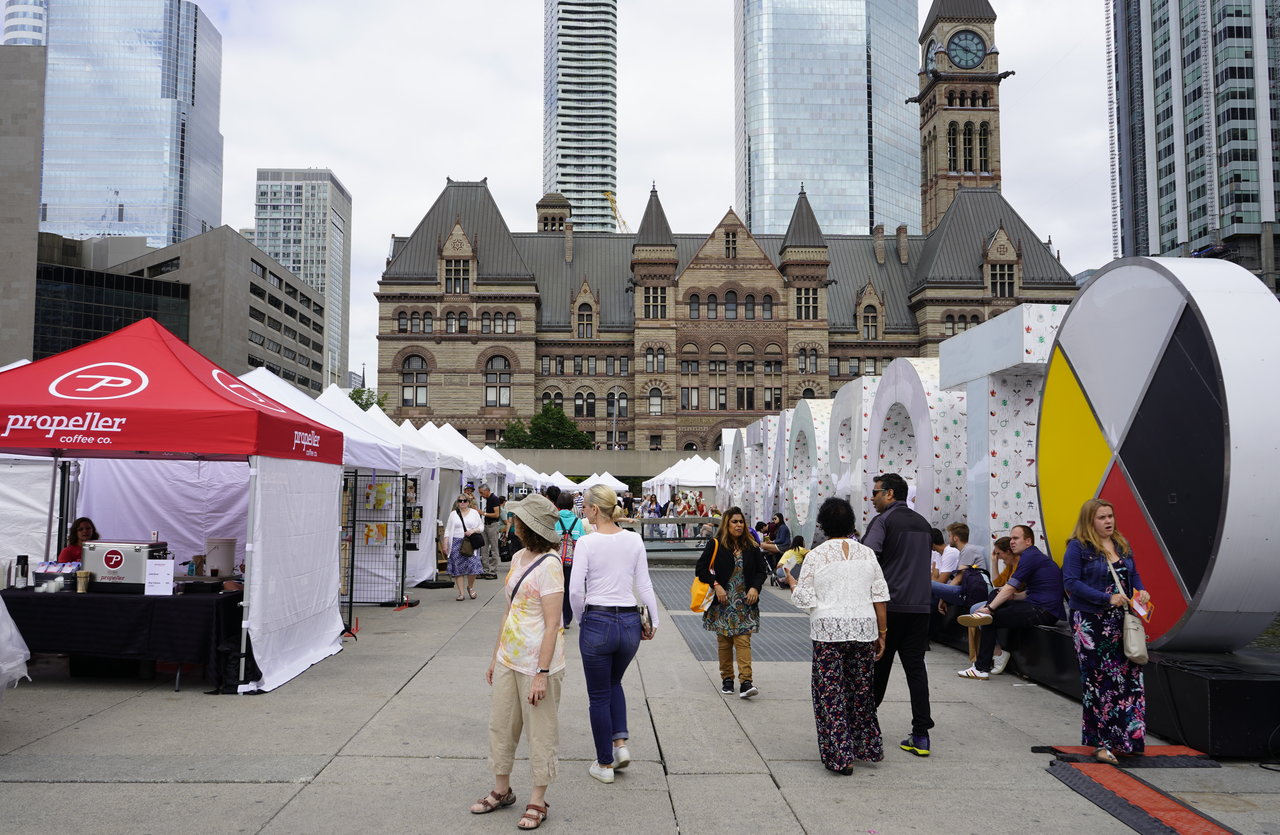
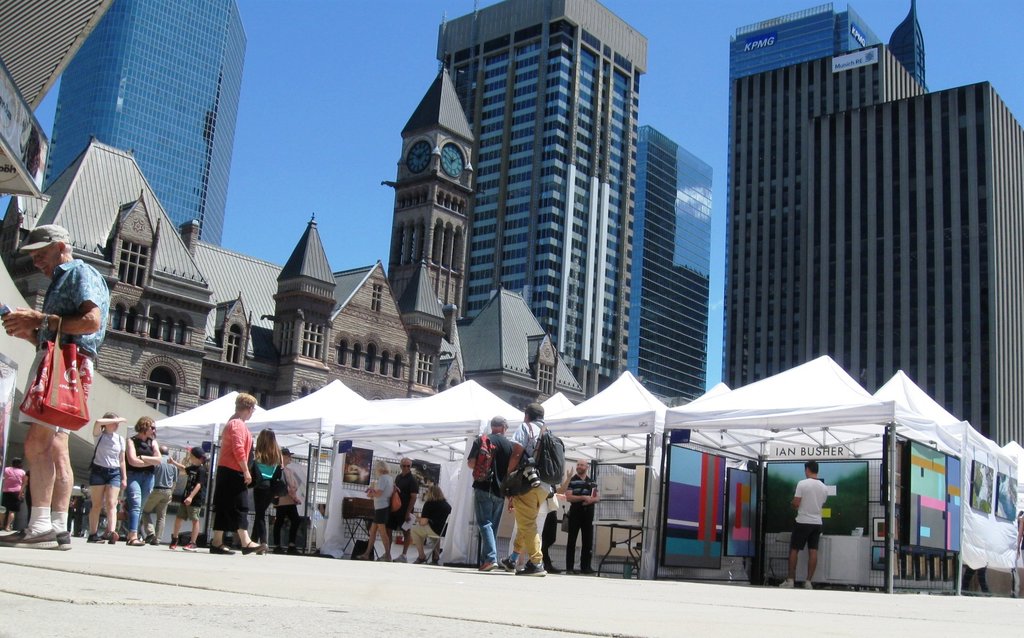
    Artists from different regions of Canada once again come together to participate in the 58th Toronto Outdoor Art Fair. The fair of 2019 is as thriving as in the past years. It is held – as always – at Nathan Phillips Square between July 12 and 14. 370 artists show their work.  

    This year’s theme is Unwalled, and true to its name, guests can freely wander around the 385 booths ran by individual artists and organizations. Visitors will see and experience a wide variety of art works by both established and young artists. According to the official introduction, there are mainly six types of artworks – 2D arts, 3D arts, craft and design, paintings, photography, and digital media including partial installations.

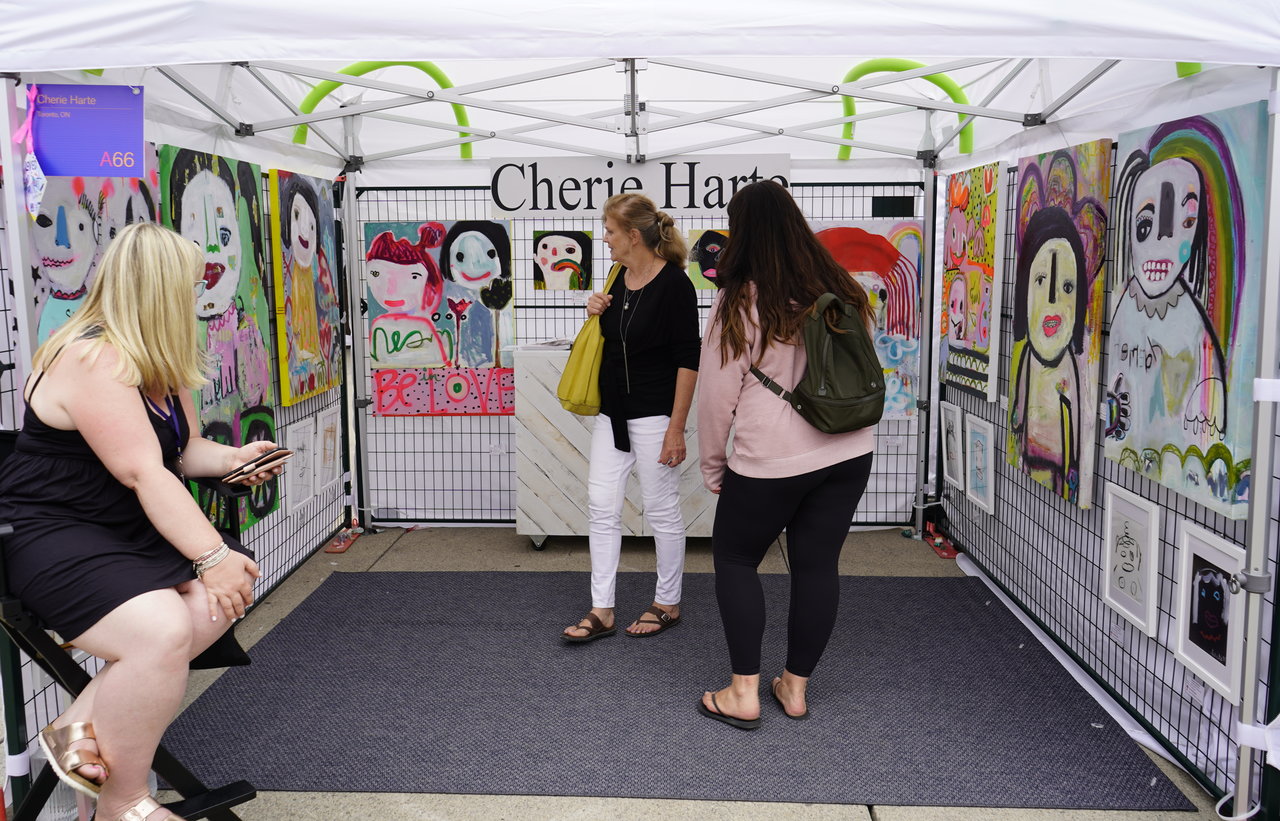
    Cherie Harte’s booth

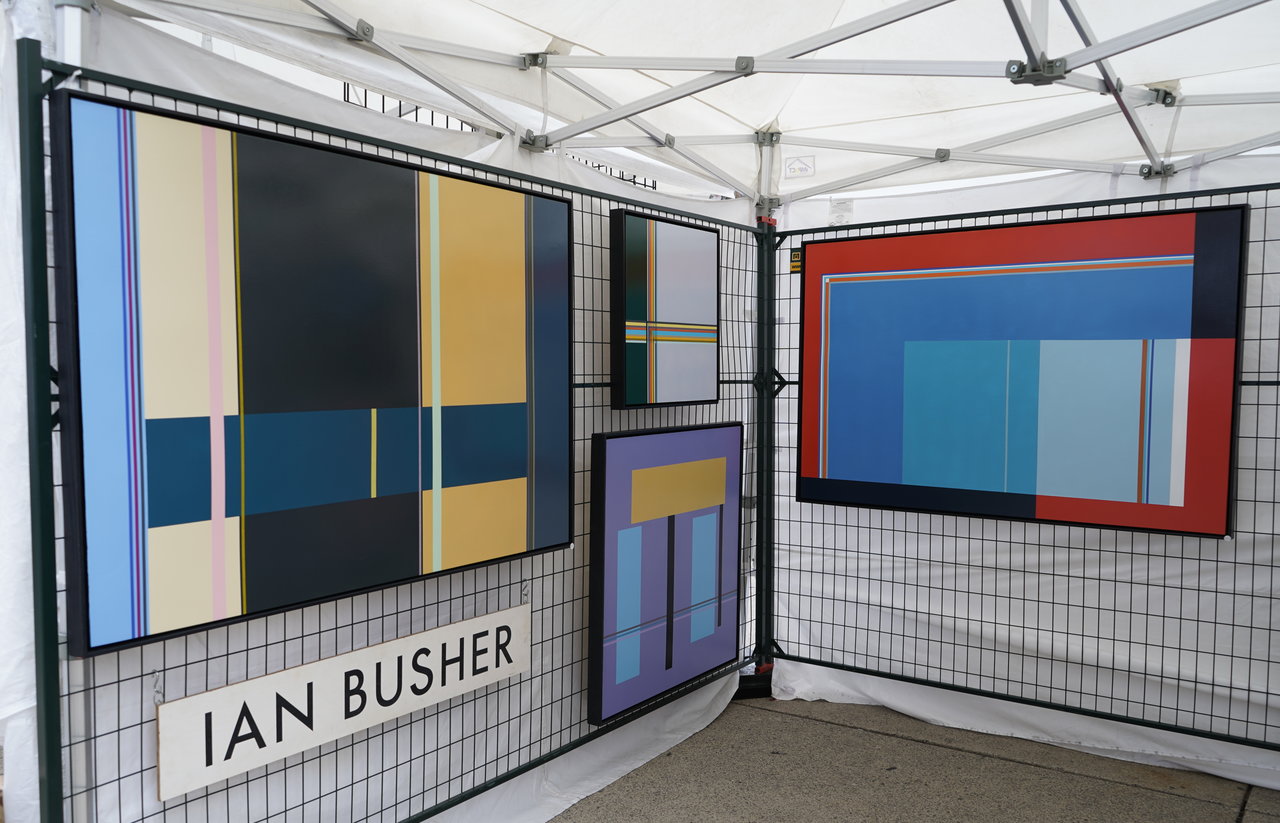
    Ian Busher’s booth

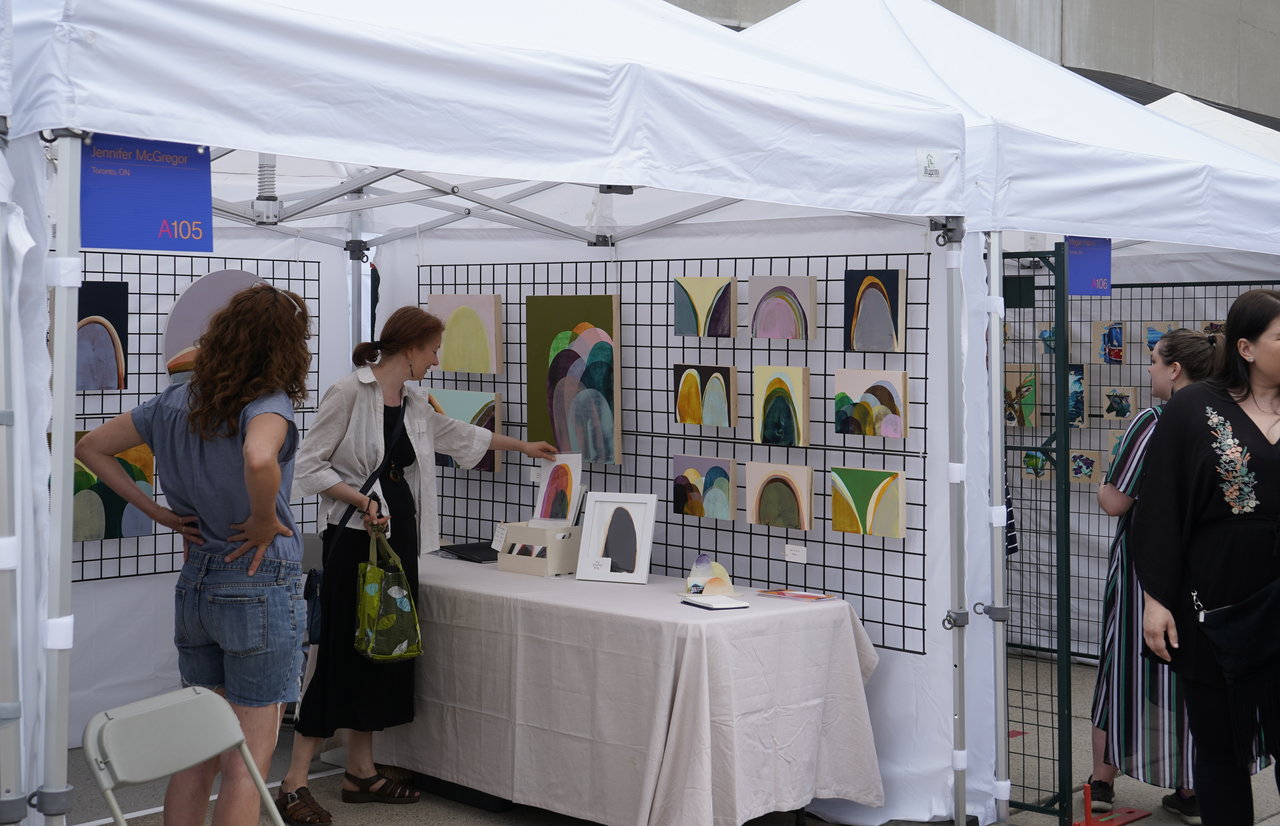
    Works by Jennifer McGregor

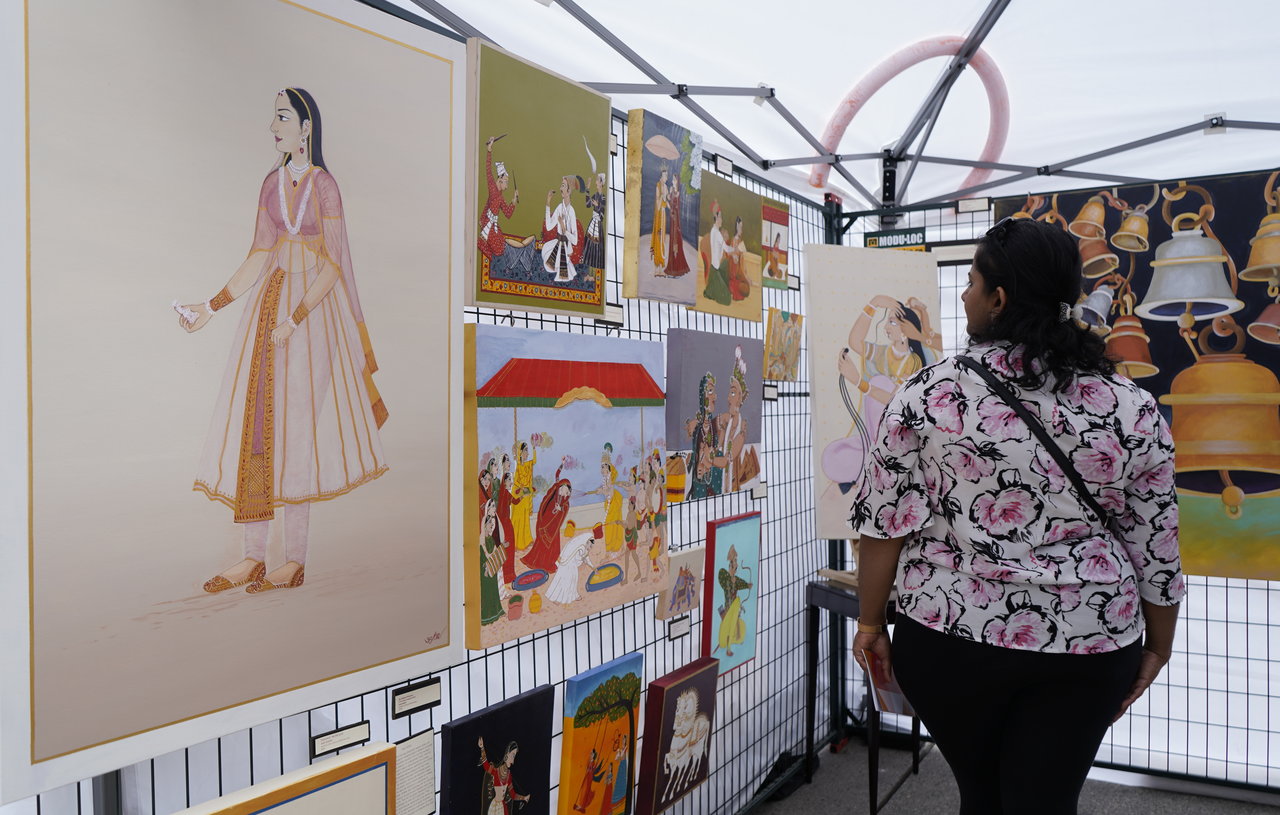
    Works by Anu Kalra

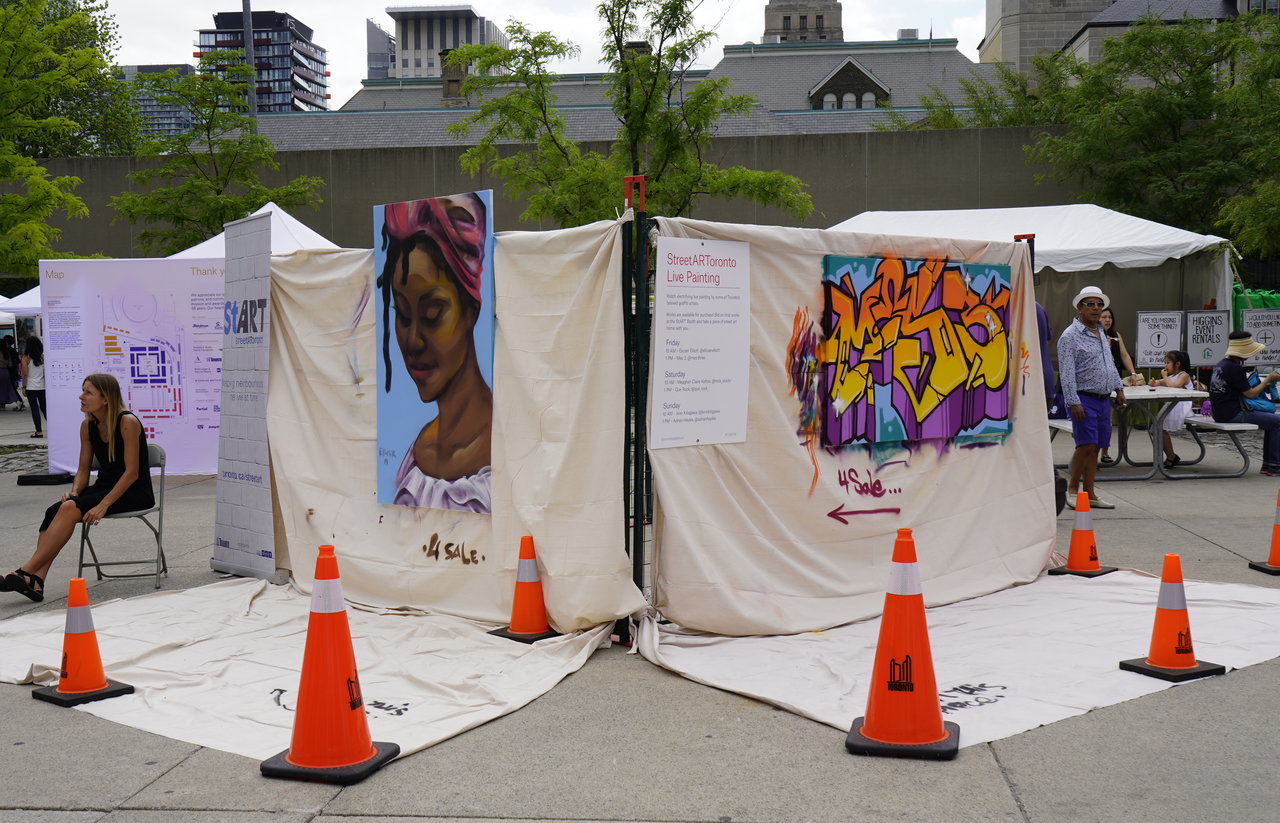
    StreetARToronto Live Painting

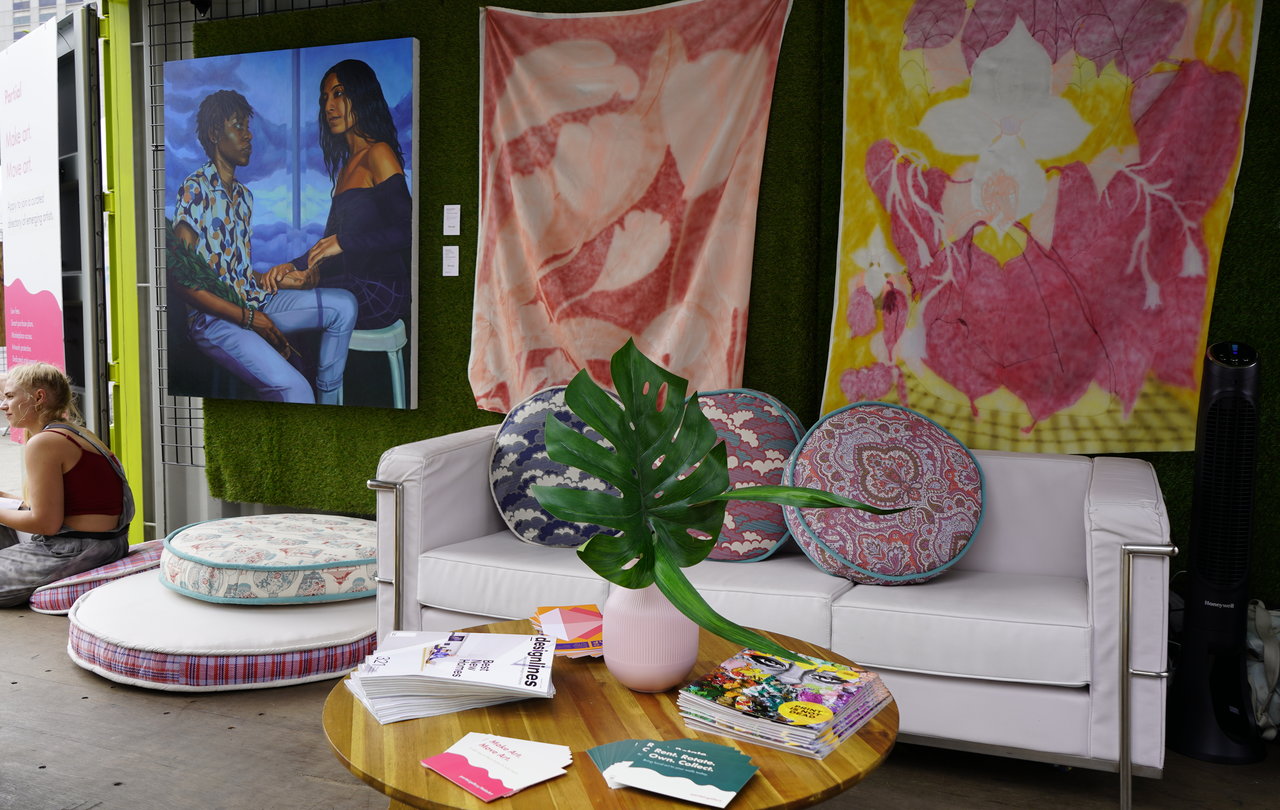
    Partial Gallery / Make Art Move Art

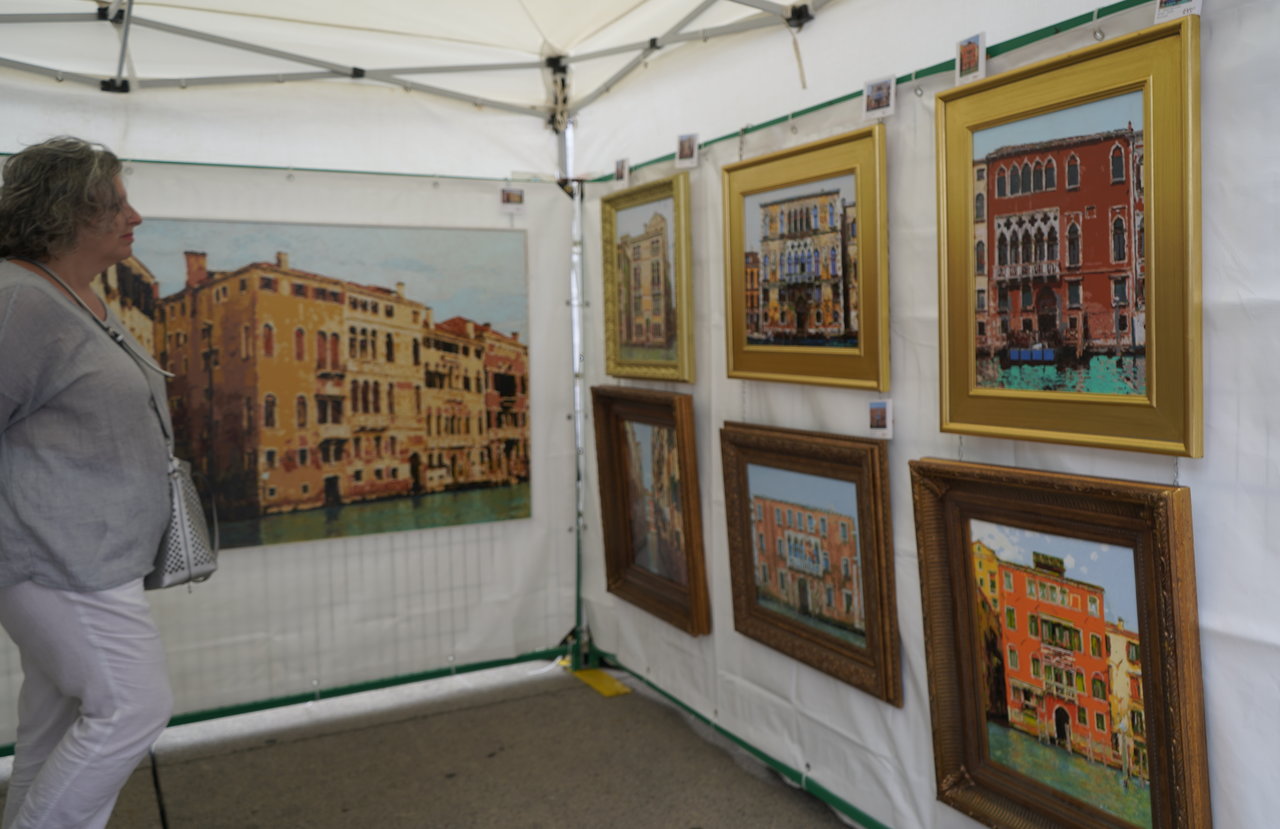
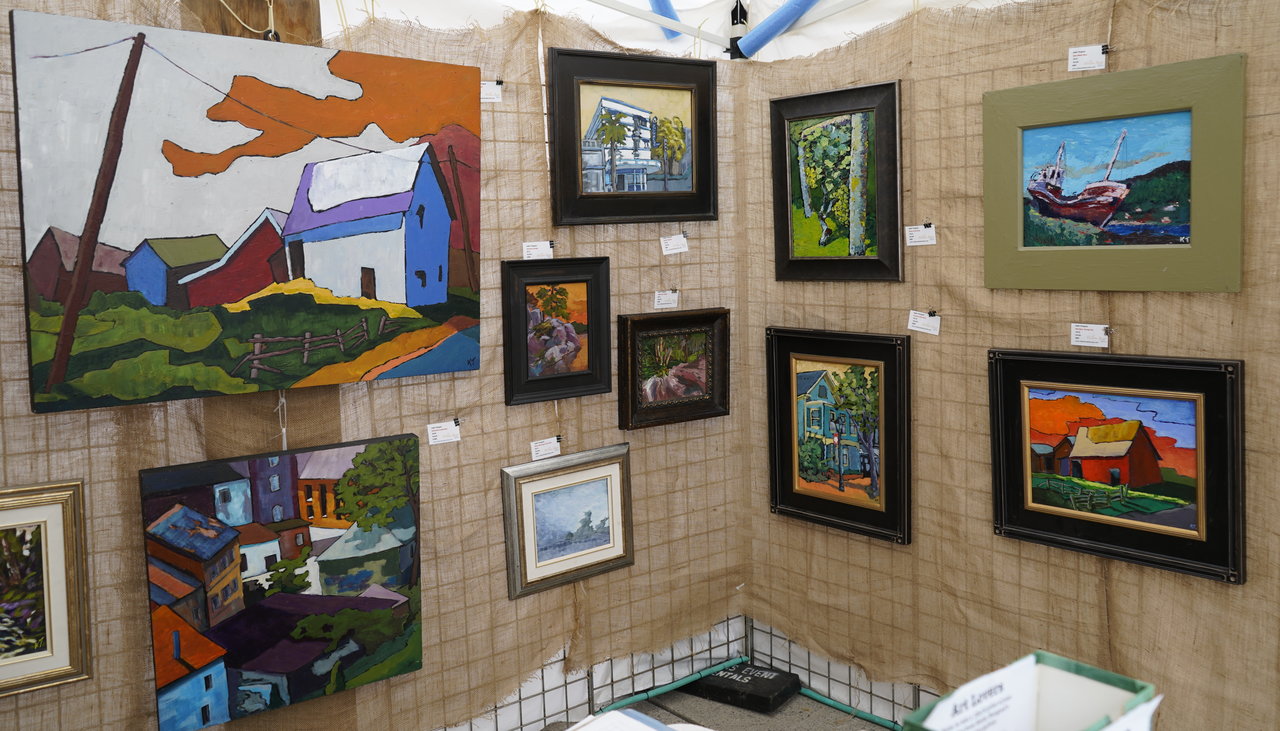
    It is noteworthy, that there are many exhibiting artists who reside far from Toronto, like Mike Smith and Michael Compeau. Compeau’s paintings depict buildings that seem to tell a story from his traveling while Smith expresses his deep love and devotion to his hometown.

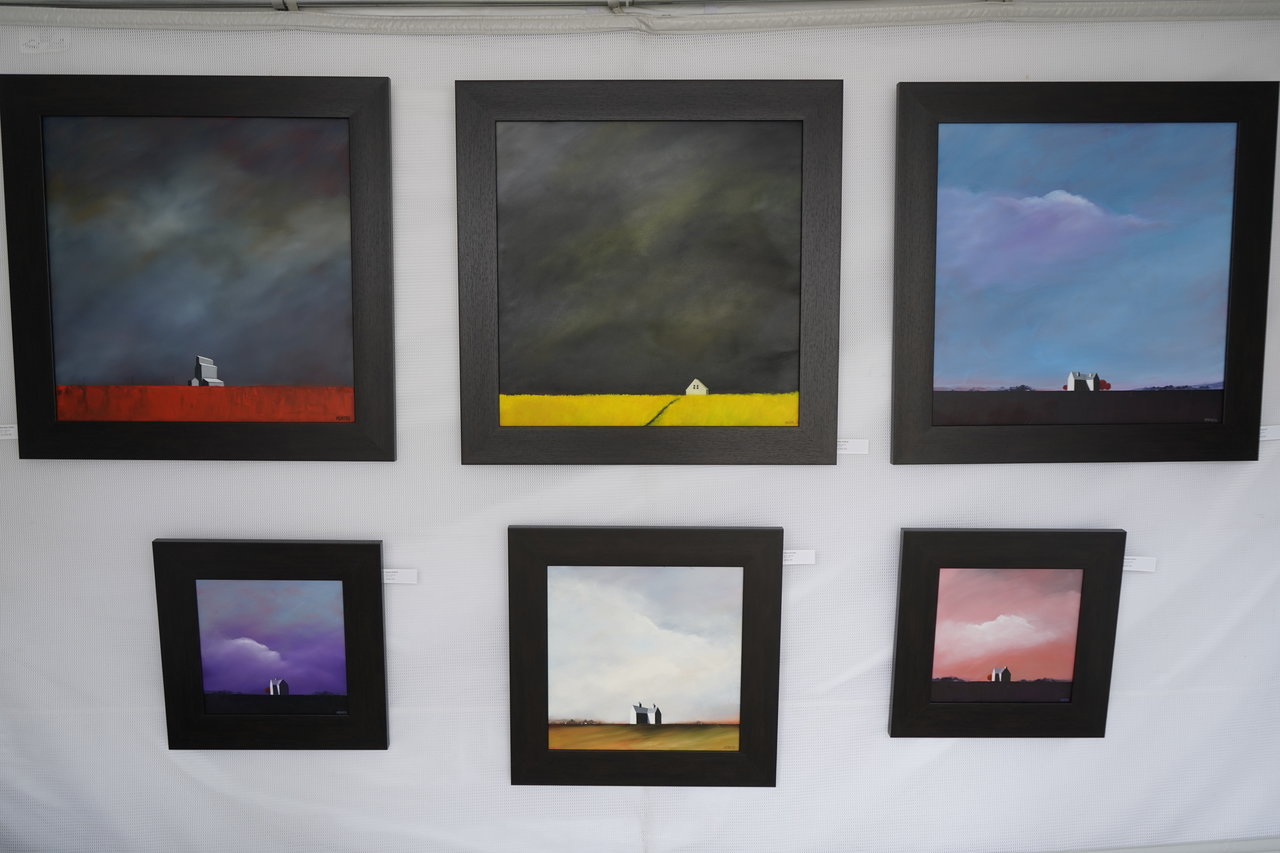
    Paintings by Mike Smith

    Michael Compeau’s booth

    Keith Thirgood

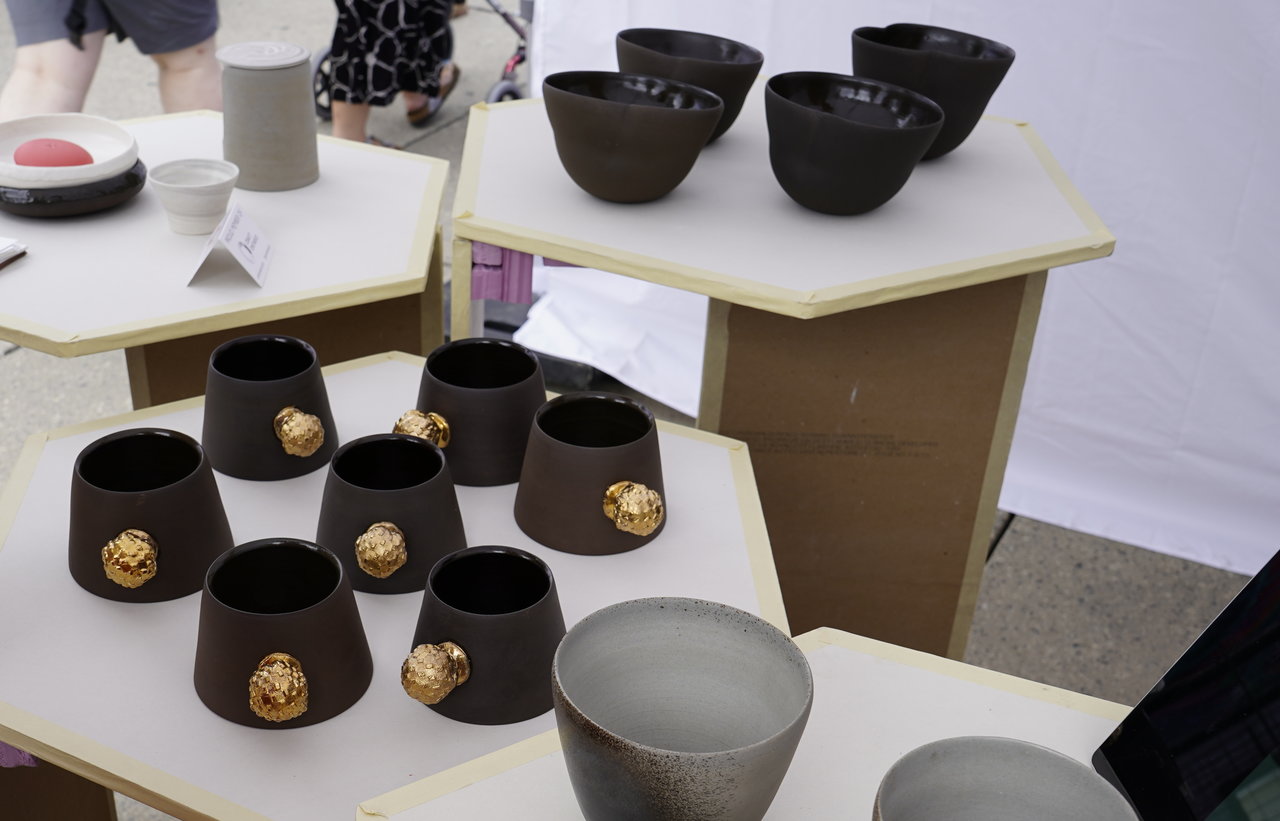
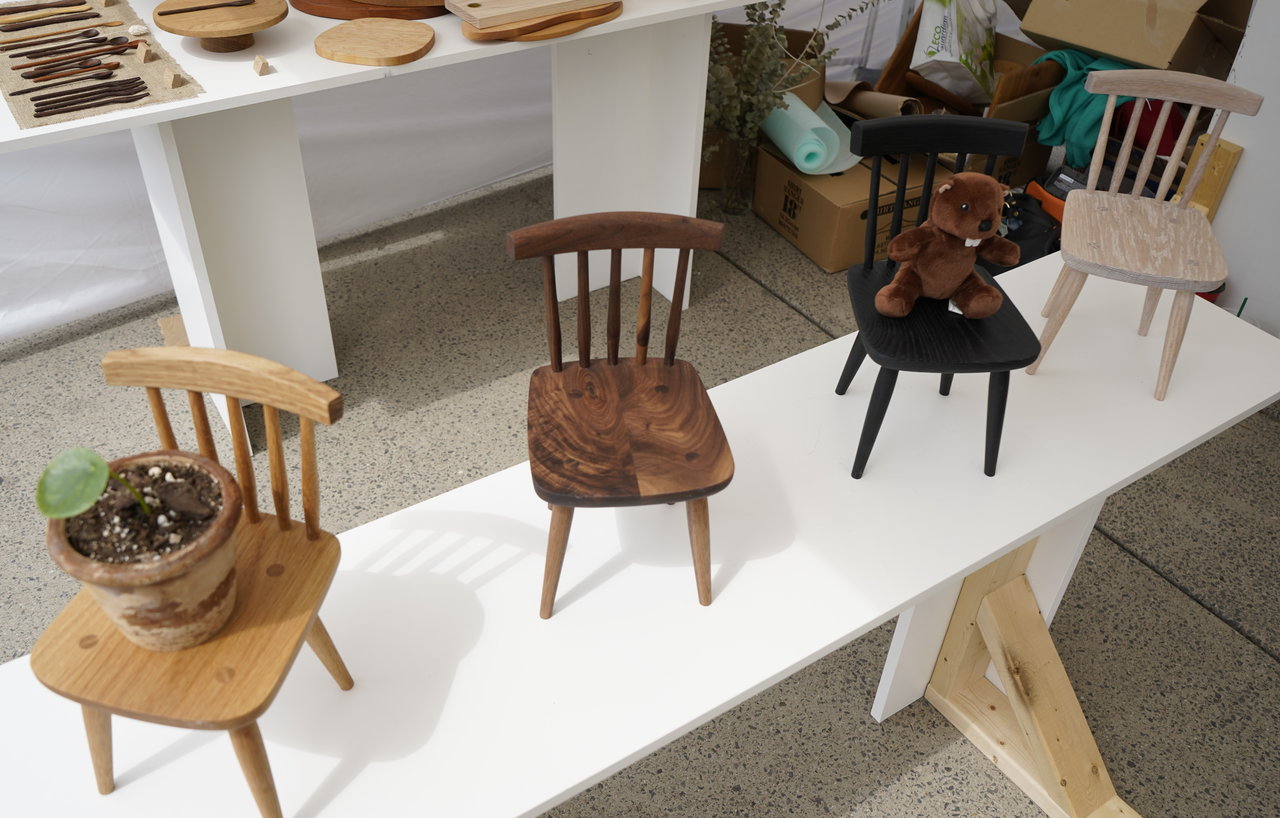
    There are numerous young, emerging artists with great craft works and installations, such as Queenie Xu’s handmade clay containers or Chason Yeboah’s Home Birth.

    Queenie Xu

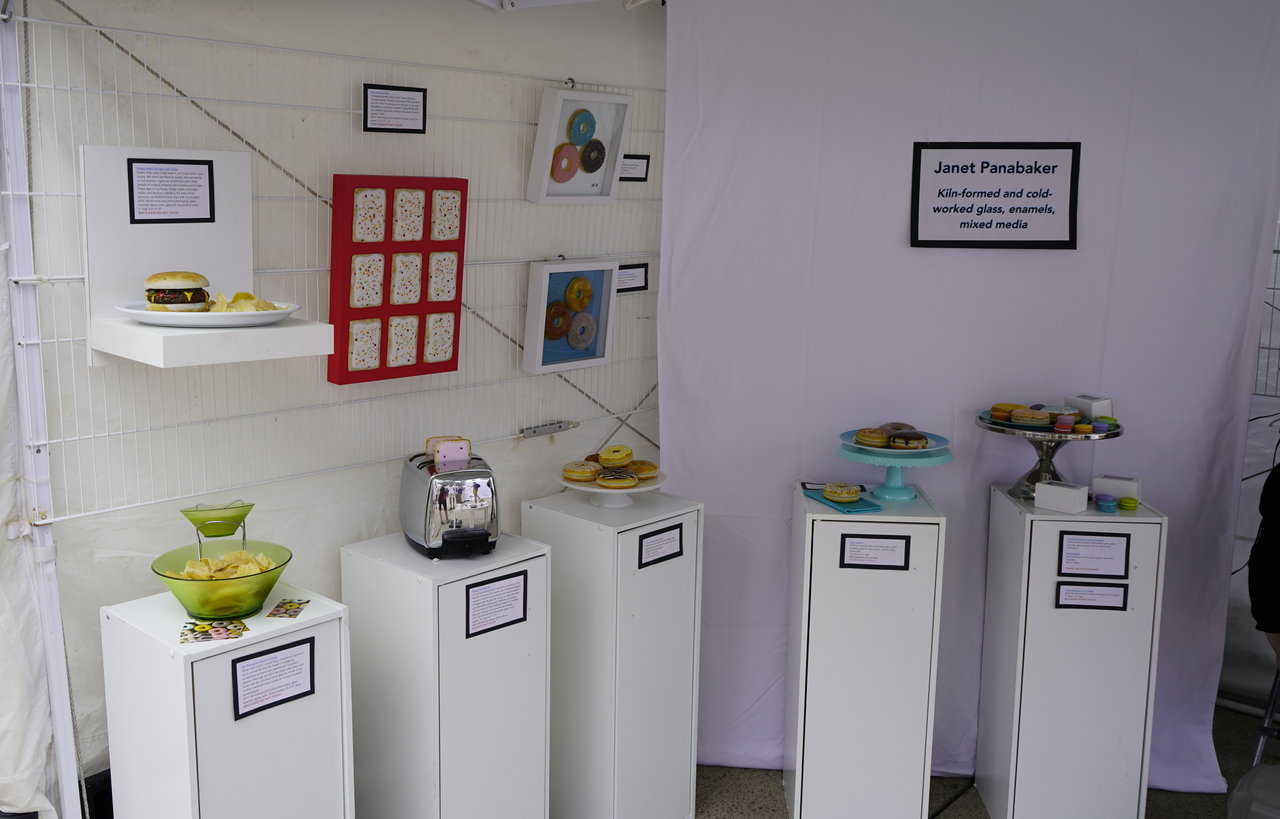
    Janet Panabaker’s kiln formed cold-worked glass pieces

    Haewon Jung’s booth

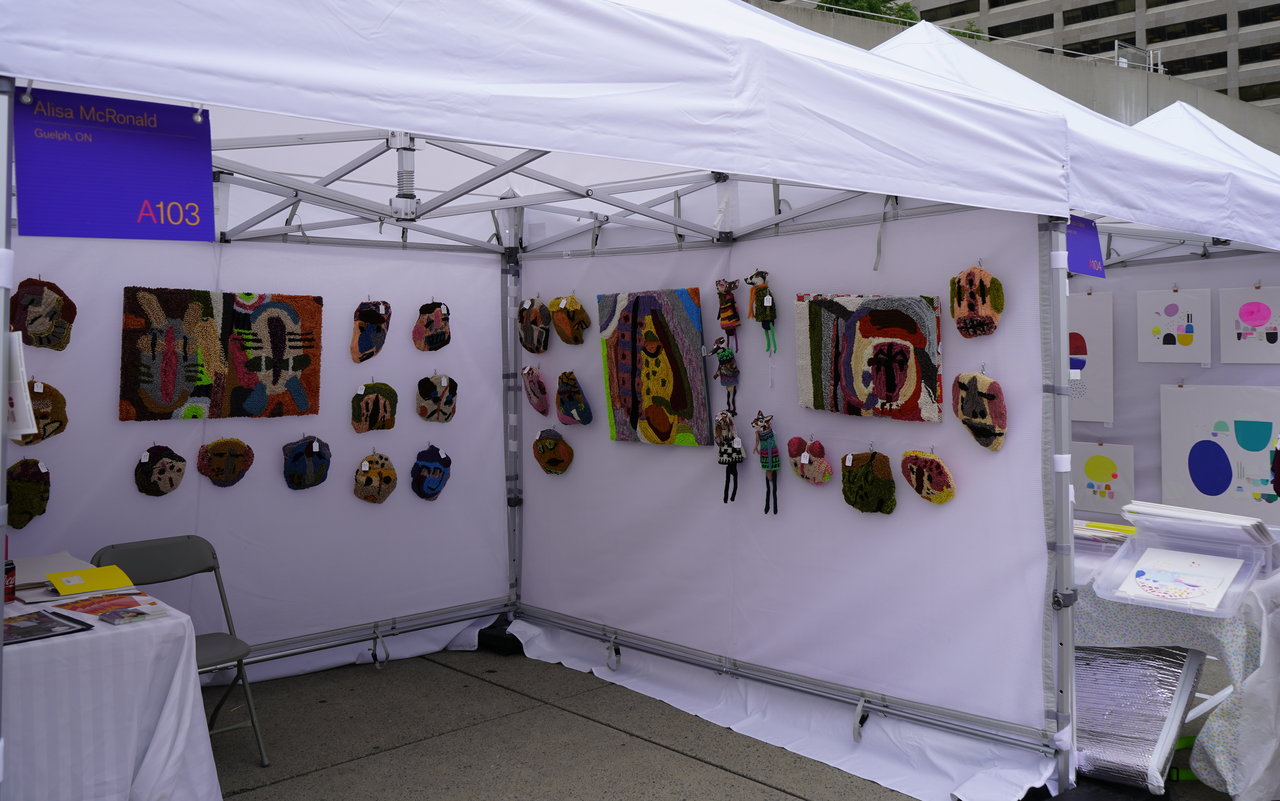
    Alisa McRonald’s booth

    Besides the artists’ booths there are a few workshops that aim to educate the public. There are many events, tours, artist’s talk, performances and activities for all ages, and of course food and cooling drinks. Toronto Outdoor Art Fair is a great place to visit this hot summer weekend – and you can make it memorable if you buy some artwork to take home.

    Text and photo: Xiaotong Cao

  • Toronto Outdoor Art Fair, 2019

    July 12 – 14, 2019
    Nathan Phillips Square
    Friday & Saturday: 10 am – 7 pm, Sunday 10 am – 5 pm.
    Free admission

    Toronto Outdoor Art Fair is Canada’s largest, longest running juried contemporary outdoor art fair. Founded in 1961, Toronto Outdoor Art Fair was established to put contemporary visual artists and makers at the front and centre of their works, in direct contact with the public, to nurture artistic excellence and artists’ entrepreneurial spirit. This free public event showcases works by over 360 contemporary visual artists and makers, ranging in medium from painting, photography, and mixed media to jewelry and ceramics, and attract about 115,000 visitors each year to Nathan Phillips Square.

    There are a lot of special programs planned for everyone. Expect to be overwhelmed – in a good way! There are creative talks and tours, family programming, art installations, performances and many more https://torontooutdoor.art/2019-programs-schedule

    Toronto Outdoor Art Fair, 2018. Photo: Phil Anderson

    For more information please visit their website https://torontooutdoor.art/

  • Joe Fleming at General Hardware Contemporary

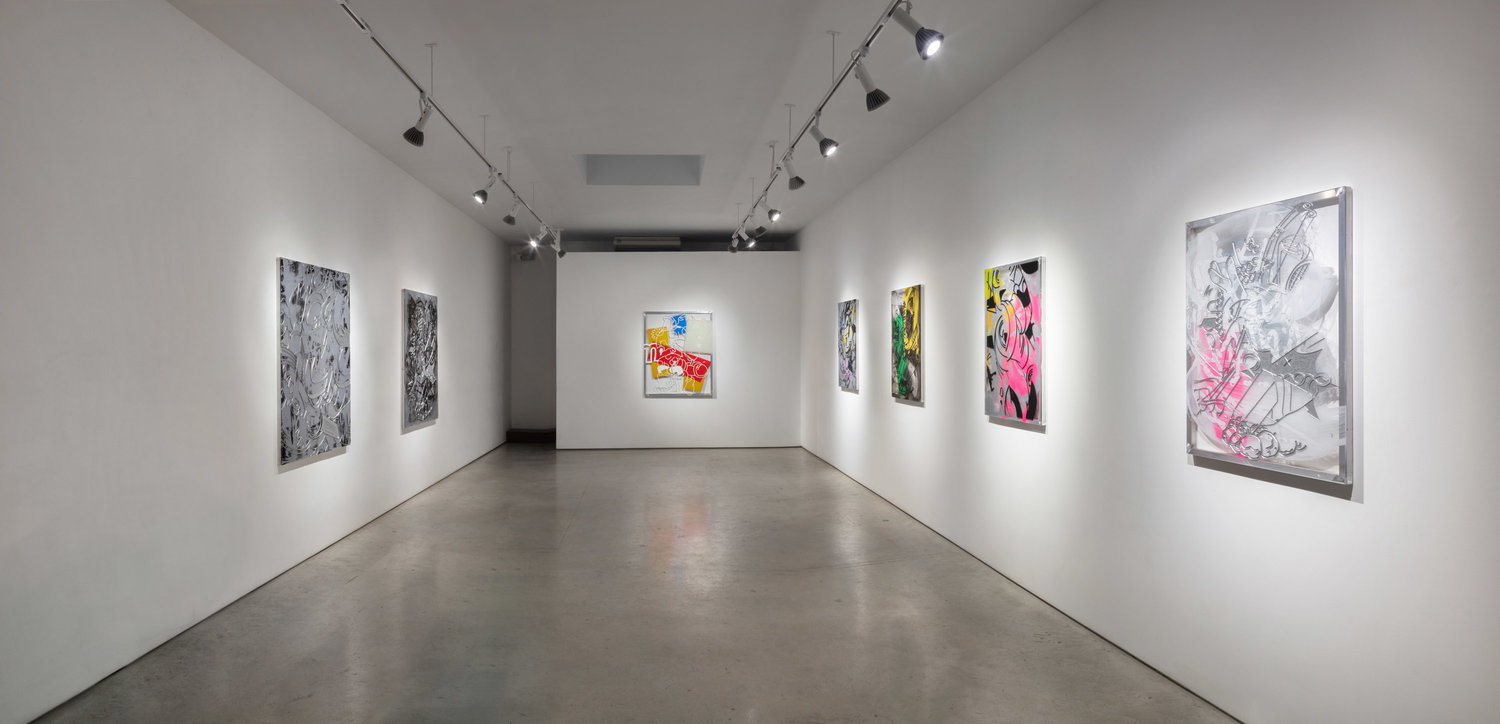
    It’s an evocative title. Silver Harley conjures the sinewy curves of chromed pipes and machinery; the near sub-sonic growl of a motorcycle engine. It’s a title that works well for this show of unusual paintings.

    Installation view of Joe Fleming, Silver Harley at General Hardware Contemporary. Photo: Laura Findlay

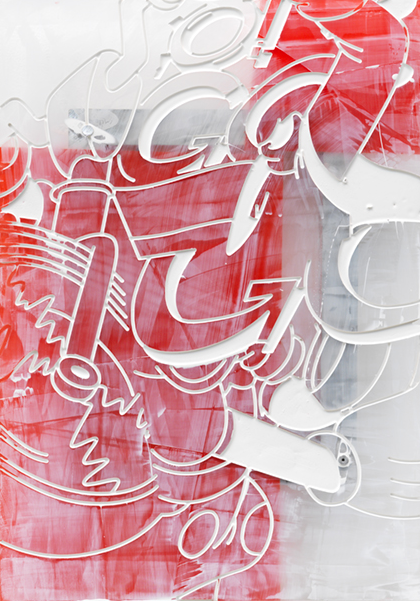
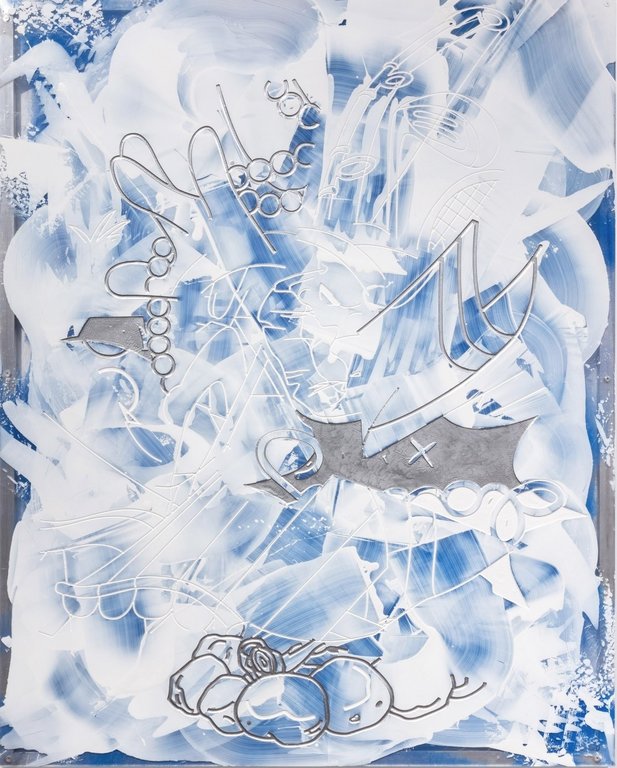
    Maybe ‘paintings’ is too narrow a category. Although they conform to the traditional, rectangular wall space, they may be more aptly described as constructions, or wall-mounted sculpture: ‘paintings++’. As you step closer, the surfaces become more complex. There is depth to them. Areas are partially and sometimes completely transparent. What are they made of? Curiosity pulls you in closer. There’s paint on both sides of a thick transparent material. Grooves have been cut into the surface and are partially filled with paint. Shadows on the wall behind become yet another layer of depth. You find yourself pulled in, just a few inches away from the surfaces figuring this all out. It’s this physical presence that makes them more things than images; that gives them their ‘Harleyness’.

    Silver Harley, detail.  (The surface depth does not fully translate on the photographs)

    As you stand back, you discover that the markings are not random. There are images here, but they are fragmentary and complex. There are parts of cartoon figures and objects as well as graphic elements that look like letters or arrows. The effect is reminiscent of a comic book fight: a dust-cloud with arms and legs appearing at the edges. You can’t help but try to decipher these images, but they remain mysterious and only partially legible. The difficulty reading these complex images echoes the initial experience of understanding the material surface: you don’t see it all at once and the process feels like a series of little discoveries.

    Untitled, 2019, enamel on polycarbonate, 36″ x 28″

    The making of the pieces in Silver Harley involved several steps. The initial work was done on paper, cutting up and rearranging a series of cartoon illustrations. These collages were then scanned and transformed into graphic line art. As digital files, these graphics were used to control a computerized router that engraved the images into the polycarbonate sheets. Fleming then worked both the front and back surfaces with paint and, in some cases, power tools. The routered grooves on the front trap paint and create thick, smooth graphic lines. The paint on the back is applied in a variety of ways: as spray paint, as thick and wide brushstrokes and as solid constructivist shapes. Other layers are partially scraped off leaving a hazy translucent surface.

    Untitled, 2019, enamel on polycarbonate, 20.5″ x 14.5″

    Fleming’s methods allow us to follow the various decisions and choices that he makes along the way. Because the material is transparent, everything shows. The order of the application of each layer of paint is visible. The paint on the back reveals the first gestures on top with subsequent applications behind. Fleming has to be completely confident in his paint handling. Nothing can be ‘covered up’ in this process; no finicky touch-ups. Whatever went down first, stays on top.

    The result can be transparent and crisp as in Micah’s Melody or almost completely opaque as in Silver Touch. As different as they ended up, these two images started with the same engraved graphic.  

    Micah’s Melody, 46″ x 38″ (left) and Silver Touch, 50″ x 40″, both enamel on polycarbonate, 2019

    Fleming has used technology to re-invigorate the perennial art of painting. Computers, power tools and construction materials have been pressed into service alongside the traditional paint and brush. The work is firmly rooted in the history of modernist painting with elements of both abstract expressionism and pop art. In this sense, Fleming is part of a long line of artists such as Sigmar Polke, John Baldessari, and Albert Oehlen, who have enriched the painting tradition by mixing in new materials and technologies. 

    Glamping, 2019, enamel on polycarbonate, 50″ x 40″

    With innovative processes, there is always the risk that the technique hijacks the work; that it distracts the artist from their original vision. Fleming maintains control and does not let the technology dictate the terms. To paraphrase Oehlen, Fleming ensures that the artist has the last word, not the technology.

    Mikael Sandblom

    Images are courtesy of General Hardware Contemporary

    Exhibition information: June 13 – July 20, 2019, General Hardware Contemporary, Front Gallery, 1520 Queen Street West, Toronto. Gallery hours: Wed – Sat, 12 – 6 pm.

  • Z’otz at YYZ

    The art collective Z’otz is currently displaying their latest mural, drawings and sculptures in the north-end gallery of YYZ Artist’s Outlet. Z’otz derive their name from the indigenous Mayan word for bat, the small flying mammal. The collective’s three members – Ilyana Martínez, Nahúm Flores and Erik Jerezano – all came from that region. Flores comes from Hunduras, while Martínez and Jerezano grew up in Mexico. All three have for many years lived and worked in Canada.

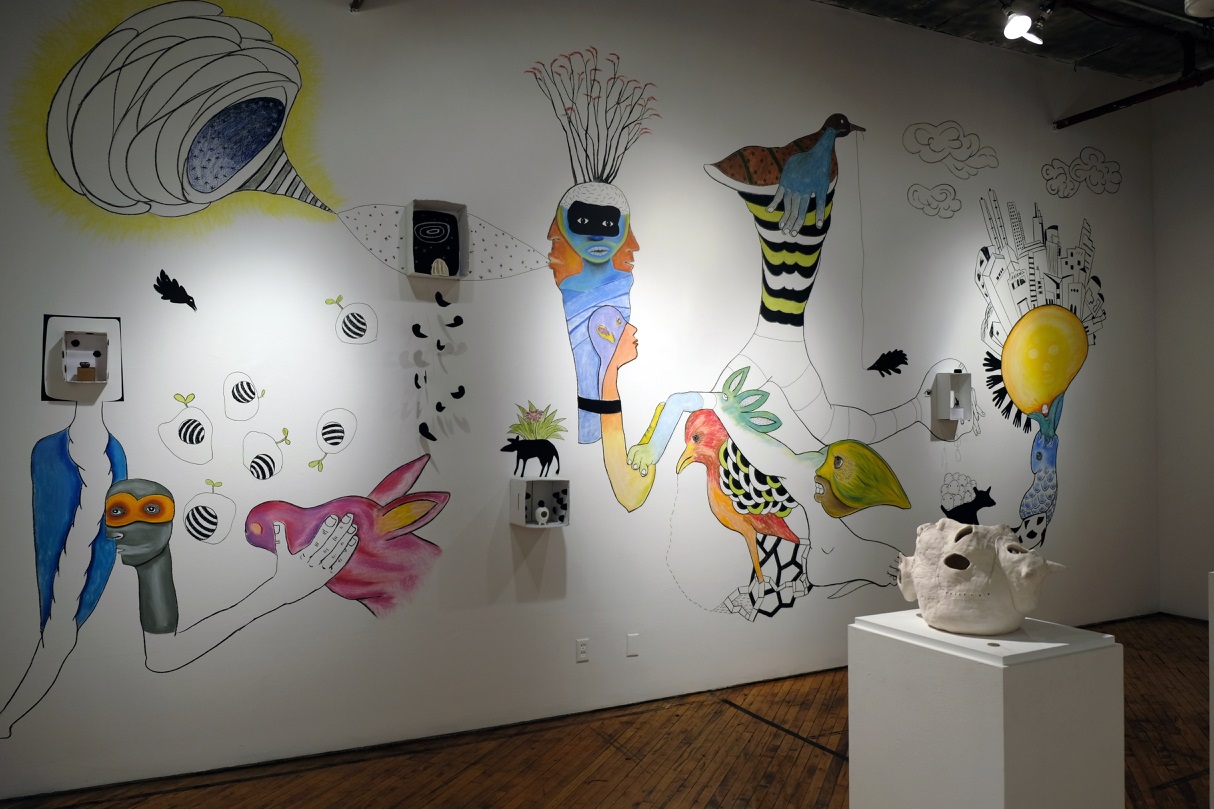
    On the main wall of the gallery is a mural, drawn directly onto the wall using pastels and charcoal. So once the show is over the mural is destroyed. Z’otz tell me this is a routine practice for them. They view these murals – they have produced many before – as performative in nature. Very often they are drawn while the public is visiting the gallery, so there is an inherent social dimension to their production. The mural comprises a number of interlocking surreal figures based on animal and plant life. Included in this particular mural are four nichos, stuck to the wall and incorporated into the overall composition. The central American nicho is traditionally a very colourful shadow box containing pictures or improvised sculptures, often made from inexpensive domestic materials. In this case the monotone cardboard nichos contain crude sculptures with a simply painted background which echoes the forms of the mural itself.
    The mural on the wall by Z’otz Collective

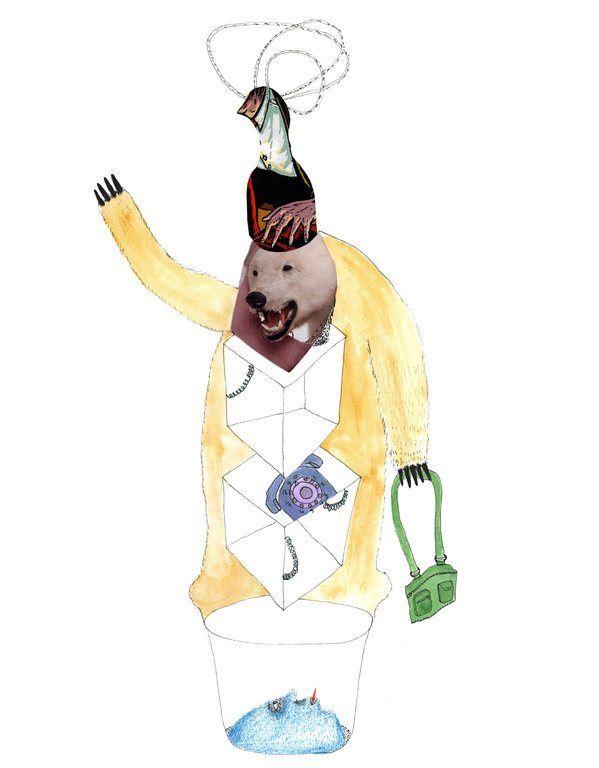
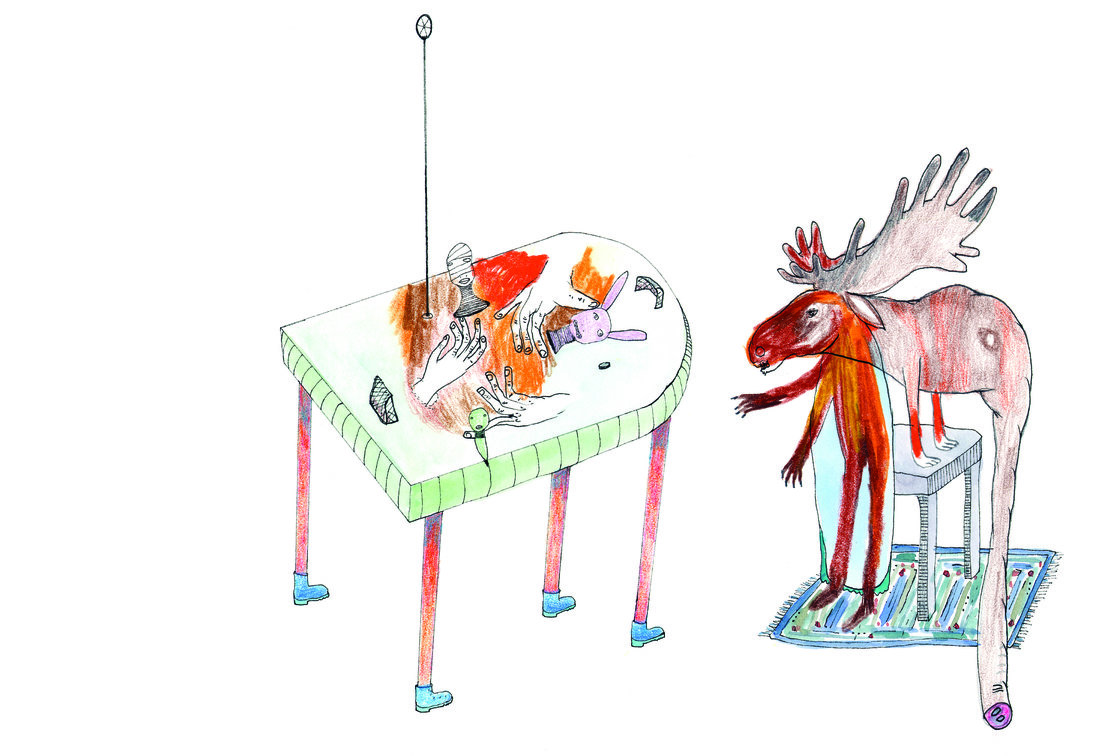
    Beasts of all sorts populate their work. In their individual drawings on paper we find, for example, a polar bear with a handbag, a moose with what looks like an elephant’s trunk as a tail. In addition there are two smallish sculptures rendered in clay that each resemble something between a head and a body perforated with various orifices. Their figures – on the wall, on paper or in clay – are disclosures of a fervid imagination. But, most interestingly, the imagination at work is collective.

    Dissected ideas, 2008, mixed media on paper, 11″ x 15″

    Shaman and the Treasure Table, 2008, mixed media on paper, 11″ x 15″

    The three members have, for nearly fifteen years now, met once a week to produce their art work. During these weekly sessions they continually pass the drawing or sculpture on from one person to the next until they decide it is complete. In basic outline their working process is like that of the former Winnipeg collective The Royal Art Lodge (1996-2008), that similarly met once a week to produce their work. Z’otz’s work also has many of the graphic qualities of the Winnipeg group, but the preoccupations of these collectives differ markedly. The  Royal Art Lodge’s drawings very often feature text and make explicit references to popular culture. By comparison Z’otz’s work is far more unspecified in its subject matter and its references.

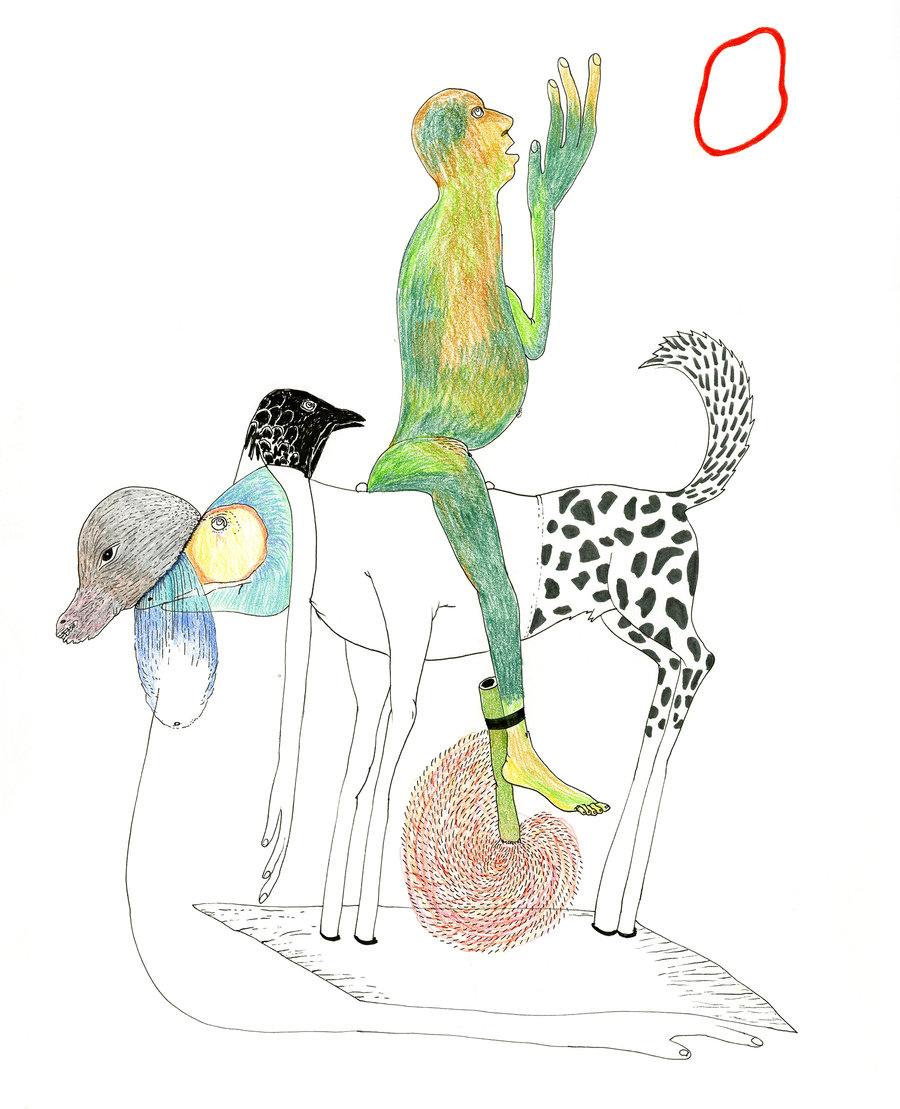
    Flirting with Doubt 1, 2012 – 2018, mixed media on paper, 15″ x 22″

    The generality of Zotz’s works, I aver, is the product of their collective exploration of the unconscious, as opposed to imagery that is generated directly from the outside world. One might say that Flores, Martínez and Jerezano eschew the expression of their individual imaginations. They told me that they often deliberately erase or draw over each other’s drawing. In place of an admixture of the members’ individual styles and preoccupations there arises a set of archetypal images, to borrow Jung’s terminology. Such archetypes are ideas that exist independently of any individual, and constitute instead a set of universal ideas. For Carl Jung these universal ideas essentially exist in the psychic world – one that exists in synchronicity with the physical world – that our individual minds can somehow access.

    Installation view of Z’otz, Small Contribution to a Big Moment

    I do not mean to suggest that Z’otz are literally tapping into a psychic realm in the way Jung imagined. Rather, I mention Jungian psychology as a heuristic, as a way to begin to understand how Z’otz end up producing an array of imagery that transcends the particularities of our culture. The hybrid creatures found in Z’otz works seem timeless. They echo, for example, the Mayan mythical figure of the pájaro hombre (bird-man). And these creatures equally resonate with us, despite our being remote from the likes of Mayan civilisation. Z’otz are able to mine a collection of imagery that belongs to no one in particular, but rather is latent in the unconscious of all of us. As a result their work is gripping in a way that is hard to pin down. It is elusively compelling work. Their drawings and sculptures have an authenticity that is rarely found.

    Hugh Alcock

    Images are courtesy of Z’otz Collective

    *Exhibition information: Z’otz Collective, Small Contribution to a Big Moment, May 23 – July 20, 2019, YYZ Artists Outlet, 401 Richmond Street West, Toronto. Gallery hours: Tue – Sat 11 am – 5 pm.