Author: artoronto

  • Undomesticated at Koffler Gallery 

    Exhibited at Koffler Gallery in Artscape Youngplace, Undomesticated is a collaborative presentation of conceptual multi-cultural artists that investigates “the psychological, political and emotional layers that shape our sense of home and belonging.” Undomesticated explores aspects of domesticity and territorial manifestations of comfort with political, colonial and diasporic influences by breaking down barriers and typological preconceptions of domestic objects. Undomesticated creates a welcoming tension throughout the gallery and invites the viewer to reconsider how we transform our domestic ecosystem for comfort and aestheticism.  

    Yannick Pouliot’s Se suffir à soi-même embodies the paradigm of a purely aesthetic object with the absence of function; a commentary on expensive objects entirely devoted to visual pleasure. It is contrary to our own interactions with furniture in our domestic spaces, which creates a sense of the unsettled and the uncanny. Another visceral piece, created by the indigenous artist Mary Anne Barkhouse, engages with the legacy of colonialism in Canada. She brings nature into the gallery by piercing through the ceiling and reclaiming a place within the constructed space of the Koffler Gallery.
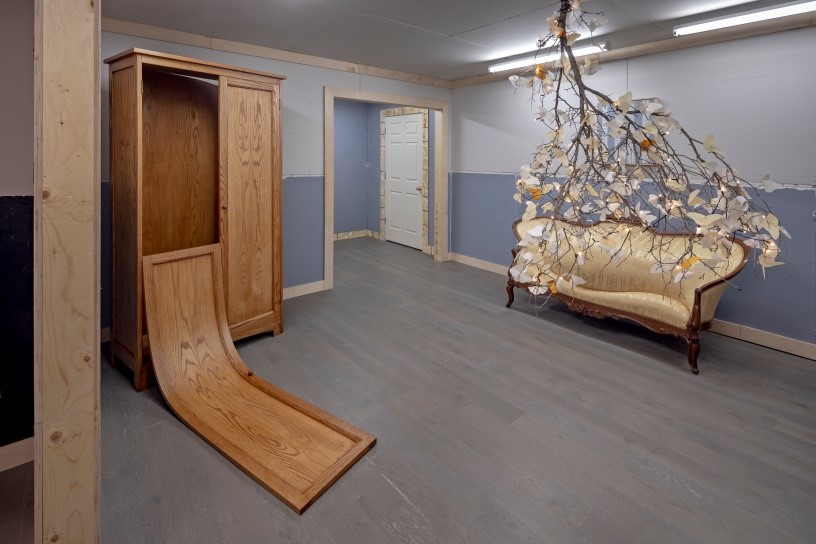
    (L-R): Lucy Howe, Wardrobe, 2010; Mary Anne Barkhouse, Michoacán (noticias en el future), 2013, wood, Japanese paper, LEDs and Yannick Pouliot, Se suffir à soi-même, 2001, mixed media. Courtesy of Alain Tremblay. Wall: Nicolas Fleming, Drywall from Koffler Gallery, 2019, drywall, latex paint, plaster, varnish

    Throughout the gallery, contributing artist and art director Nicolas Fleming has created an immersive architectural framework made of recycled construction and building materials and exhibit’s artwork created by this display. Repurposed from various installations including Koffler Gallery, Bunker 2, Division Gallery, Evans Contemporary and the Gardiner Museum (from Yoko Ono’s previous show) Fleming’s use of recycled materials “takes on a more aesthetic presentation than their intended purpose in construction,” returning us to the memory of past exhibitions as well as the materials that framed them.
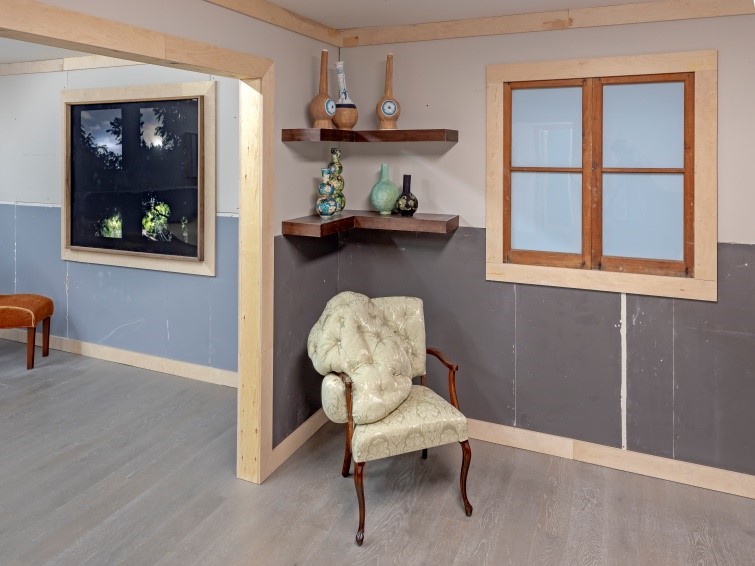
    Lucy Howe, Untitled (Chair), 2009 (middle) and Nicolas Fleming. Repurposed drywall (right)

    Shaheer Zazai, Untitled Carpet 2. Digital archival prints on watercolour paper, produced in Microsoft Word. Courtesy of Patel Gallery and Koffler Gallery. The product of highlighted characters on Microsoft Word documents, Shaheer Zazai’s produces these digital prints using a knot per square inch technique similar to those employed by Afghan weavers in the design and manufacture of carpets. Each digital carpet is an improvised, organic process, and is comprised of several Word document pages. Shaheer describes his process of working on one page at a time as setting the tone, palette and design for the entire carpet: “Once I’ve placed a shape it tells me what’s going to happen to the rest of the document, and how much room I am left with.” The finished product is a realistic mimetic representation of a textile.
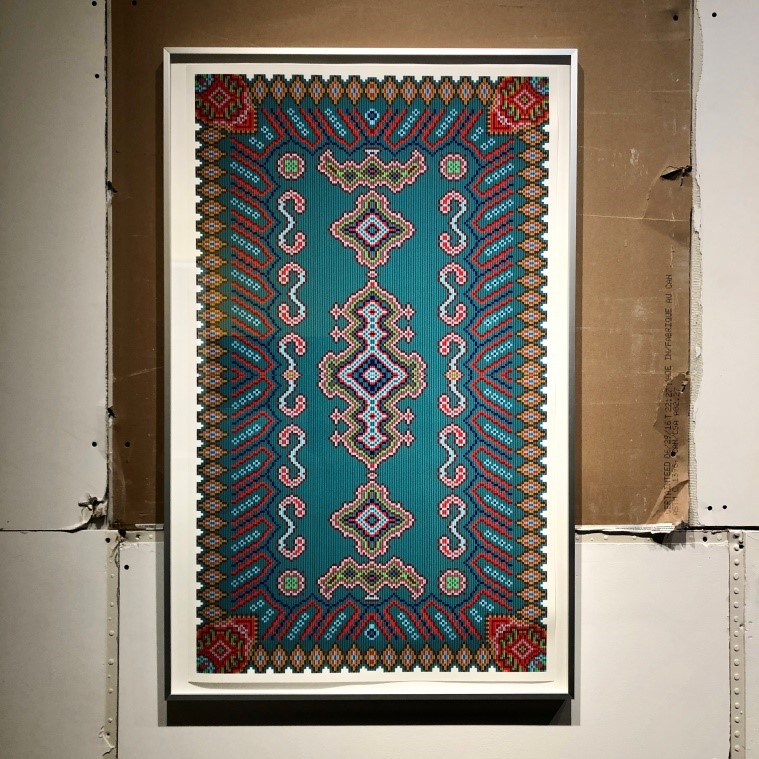
    Shaheer Zazai, Untitled Carpet 2, digital archival prints on watercolour paper, produced in Microsoft World in front of Nicolas Fleming, repurposed drywall.
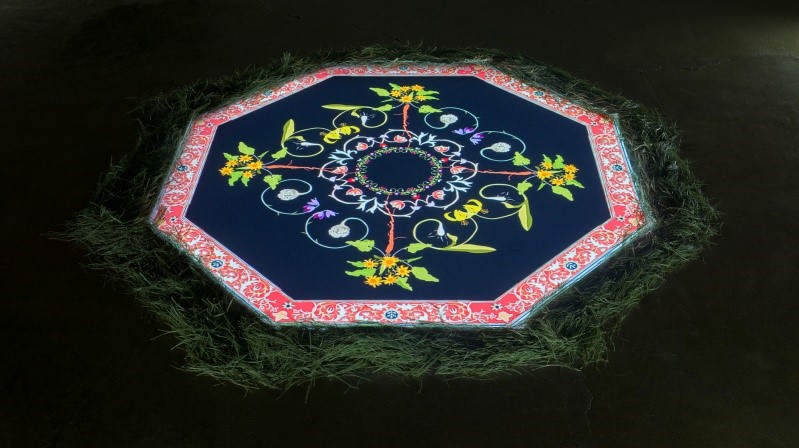
    Hannah Claus, Interlacings, 2015, looped projected animation, pine needles, 3:36 min. Animation technician: Scott Benesiinaabandan.

    Undomesticated transforms everyday domestic objects “stripped of their familiarity to access deeper levels of relationship to our surroundings.” The exhibit seeks to address the influences that shape our domestic environment and control “what we perceive to be ‘wild’ in search of economic and psychological benefits.”

    Keren Sedmina

    Images are courtesy of Artscape Youngplace and Koffler Gallery, and supported by Partners in Art.

    Featured image: Yannick Pouliot, Régence monomaniaque, 2007

    *Exhibition information: Undomesticated, September 18 – November 17, 2019, Artscape Youngplace, 180 Shaw Street, Toronto. Gallery hours: Sun – Sat 8 am – 9 pm.

    Featuring artists: Mary Anne Barkhouse, Gwenaël Bélanger, Katherine Boyer, Sandra Brewster, Hannah Claus, Erika DeFreitas, Julie Favreau, Nicolas Fleming, Iris Häussler, Lucy Howe, Gunilla Josephson, Lewis Kaye, Valérie Kolakis, Carmela Laganse, Heather Nicol, Dainesha Nugent-Palache, Gord Peteran, Birthe Piontek, Yannick Pouliot, Adrienne Spier, Karen Tam, Kevin Yates, Shaheer Zazai, & Shellie Zhang.

  • Nuit Blanche 2019

    Nuit Blanche transformed our workaday city into something magical. It was a chance to see the familiar urban environment with fresh eyes. I was introduced to new places, but I also discovered new perspectives on aspects of Toronto that daily routines had blinded me to. The night was not just about experiencing art, it was also about exploring the city.

    I started at the Coffin Factory on Niagara Street which was a long-established home to many artists and their studios. Tenants were recently evicted to make way for a condo. Around the building 24 coffins were arranged and each one was decorated to reflect the work and career of an artist. It was a poignant display of the cultural collateral damage of unfettered development.

    24 Artists – Eulogy for the Coffin Factory

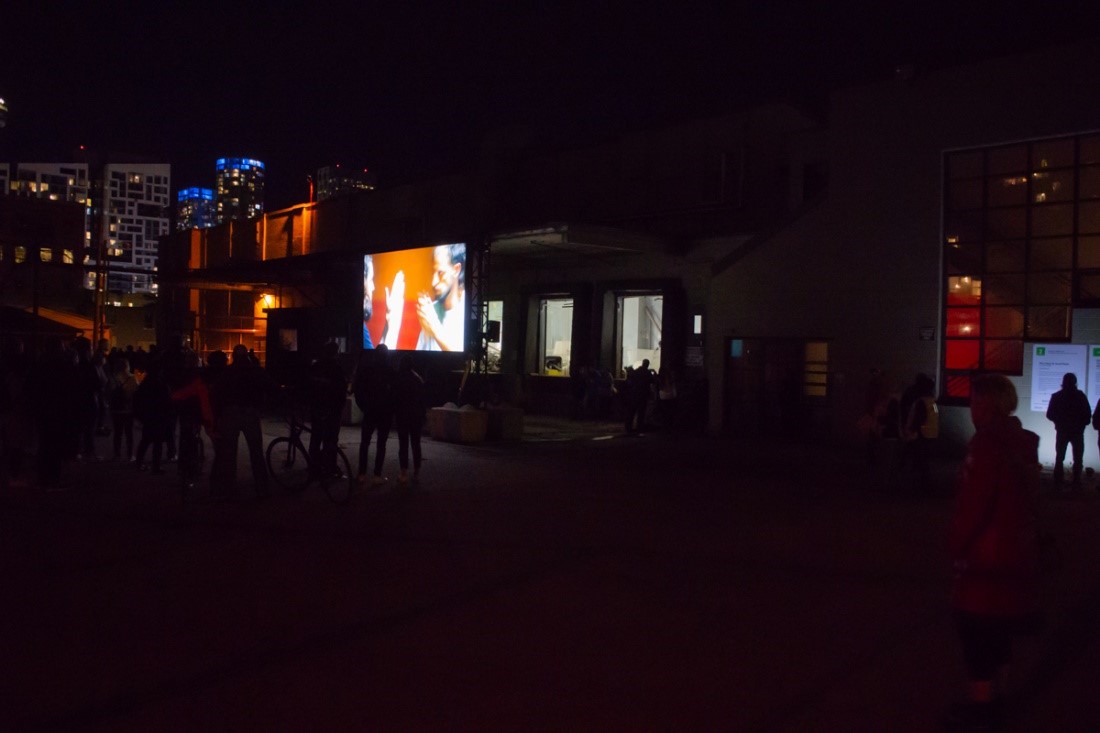
    Around the corner from Niagara is an empty old abattoir. At the front gate a vigil for the animals that were slaughtered here was held by the activist group ‘Toronto Pig Save’. Past the gates, Kim Morgan and Kaitlyn Bourden had added ghostly, illuminated equipment to the courtyard. Further in, Max Dean and Jared Raab projected their video piece That Moment in front of the illuminated loading docks of the now decaying facility.

    Kim Morgan Kaitlyn Bourden – Anatomy of an Abattoir

    Max Dean, Jared Raab – That Moment

    Next to the abattoir stands another imposing vacant hulk: the ‘Wellington Destructor’, an ancient garbage incinerator. Artist Markus Heckmann used projected geometry to seemingly warp and bend the surfaces of this normally inert and massive brick structure.

    Markus Heckmann – LAB001 (Licht am Bau 001)

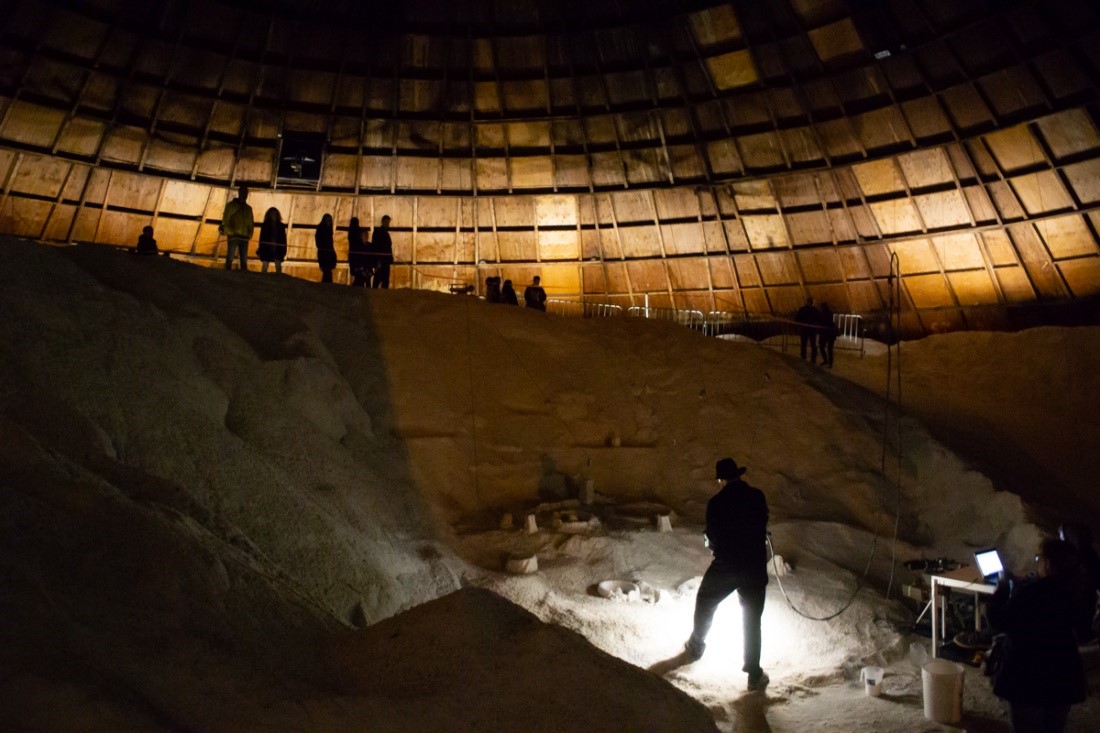
    Moving East, I was drawn to the illuminated entrance of a large domed structure. The dome houses a massive pile of winter road salt. Under the centre of the dome, artist Jonathan Schipper had installed a 3D printing device that was building structures out of salt and water. Visitors could walk up and over the mountain of salt to watch the activity below.

    Jonathan Schipper – Detritus

    Back outside I followed the newly completed footbridge that now links Stanley Park to Fort York. It’s a beautiful structure. Nuit Blanche was a great event for an inaugural walk across it!

    View from the new footbridge

    At the south end of the bridge, the translucent glass walls of the Fort York visitor centre were lit from within up by the kaleidoscopic light installation by LeuWebb Projects. 

    LeuWebb Projects – Thermally Speaking

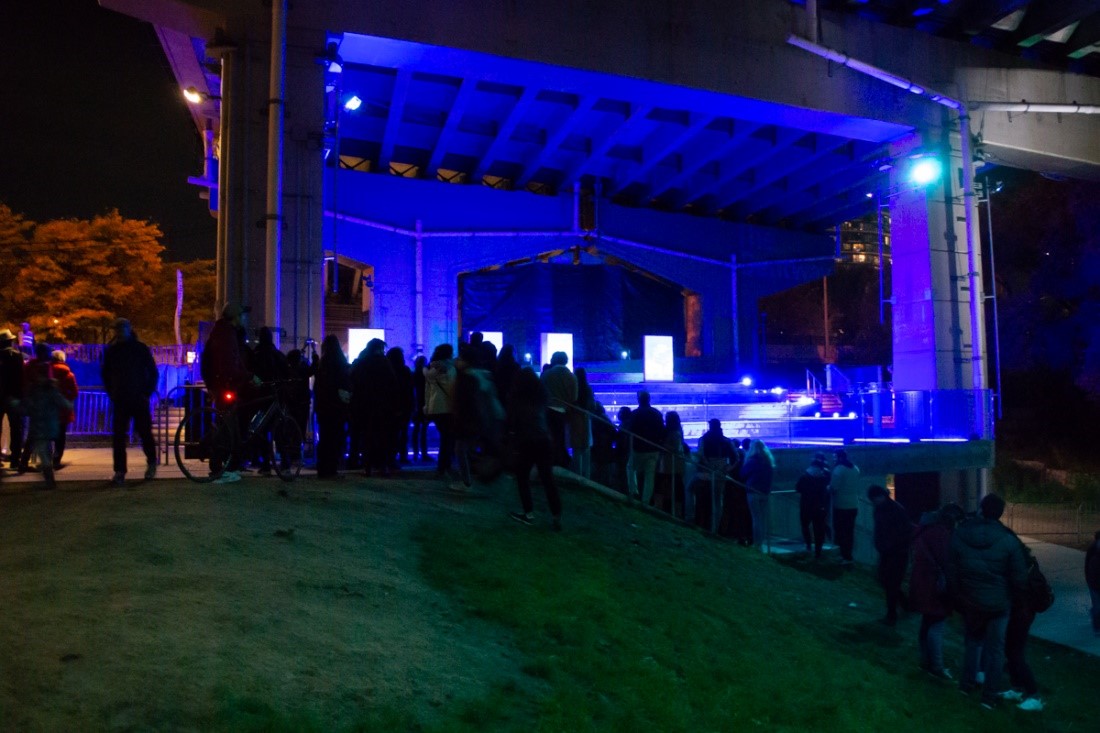
    The formerly bleak and empty concrete basilica of the Gardiner Expressway’s underbelly has recently been transformed into and urban park, the Bentway. This place was full of people, art and vendors. At the western end, a video and dance performance by Francesca Chudnoff filled a full bay with deep blue light.

    Francesca Chudnoff – Halcyon

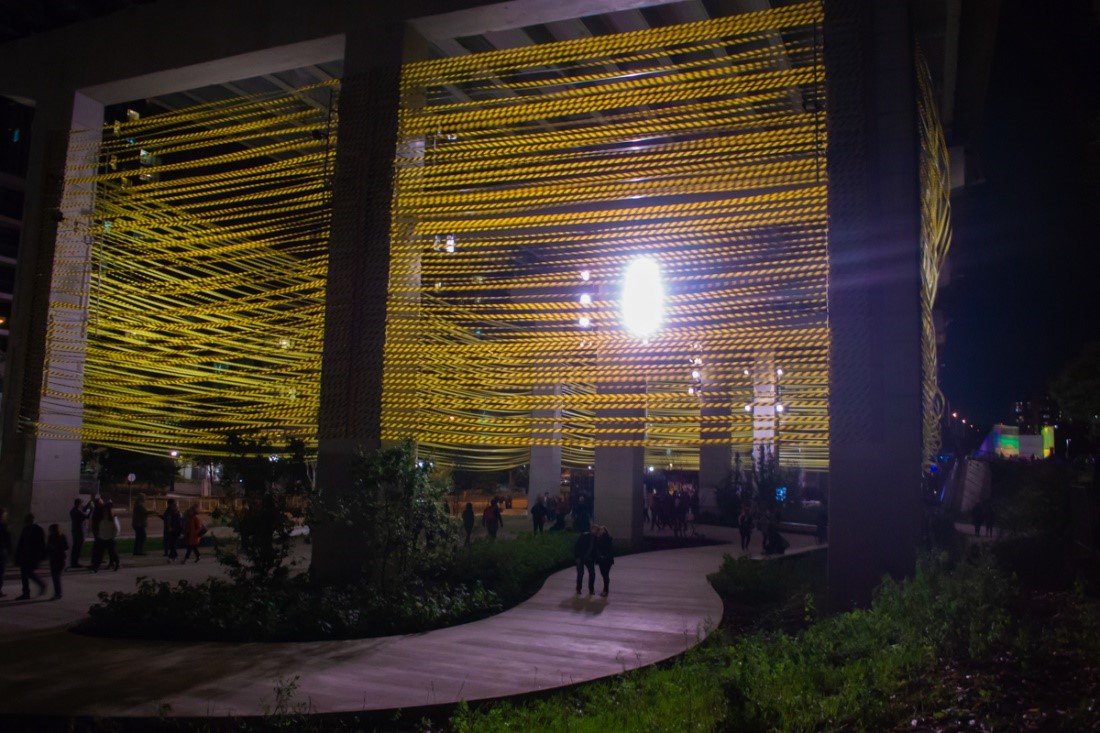
    Further east, a vast yellow membrane hung down from above, shimmering in the breeze. As I got closer, I saw that it was a simple construction: many rows of hazard tape wrapped around the columns illuminated from within by powerful lights.

    Gareth Lichty – Hoarding

    Just west of Bathurst, projectors and speakers recreated the effect of waves lapping on a beach. This was a project by Christine Dewancker called Daylighting (without you I would be lost).  The installation demarked the original natural shoreline of the Lake, which due to landfill, is now much further to the south.

    Christine Dewancker Daylighting (without you I would be lost)

    The next day, all traces of the art were gone, but the experiences of the night remained. The ephemeral artworks of Nuit Blanche make the places that they briefly occupied permanently richer and more meaningful.

    Text and photo: Mikael Sandblom

    A Photo Journal by Adrian Oosterman:

    Life of the Earth by Director X at the Ontario Science Centre

    Monument to the Arctic Phenomena for BRANTA by Polymetis at 235 King Street West

    XSITE by Javid Jah at David Pecaut Square

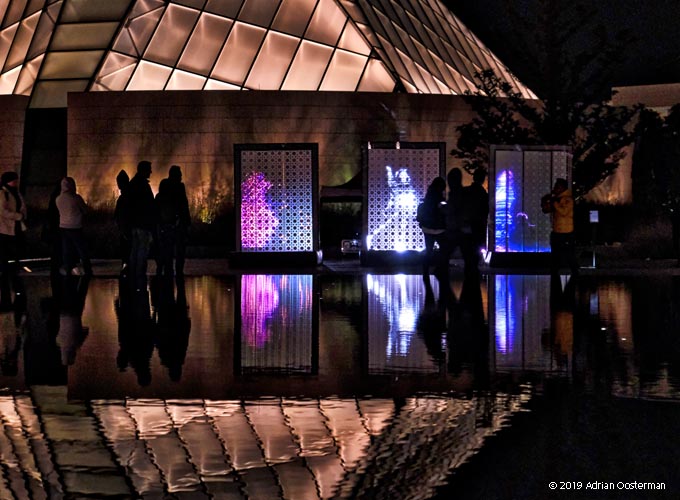
    (Im)possibilities by Aitak Sorahitalab, Mehran Azarbad at the Aga Khan Museum

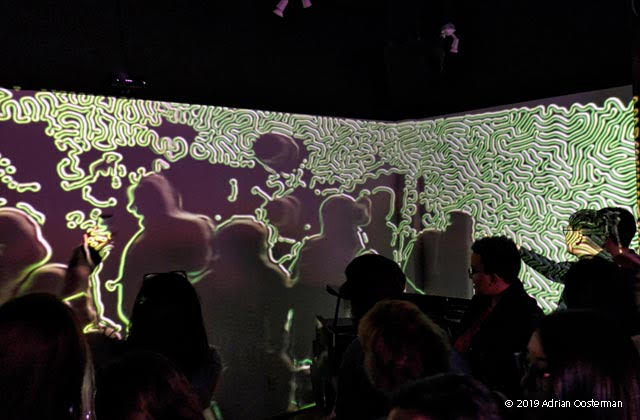
    Various Artists, 401 Richmond by Built for Art at 401 Richmond Street West

    Photo: Adrian Ooesterman

    Of the artworks that I saw at Nuit Blanche 2019, I was moved most by Bekah Brown’s multimedia installation Chasing Red which brought crowds swarming beneath the Eaton Centre Bridge, visitors bathing in the colors of the Northern Lights while surrounded by the sounds of both nature and technology. Brown’s installation was the most crowd-oriented of the various installations near Yonge and Dundas that required waiting in an impossibly long line to get close in order to appreciate the art.

    Bekah Brown, Chasing Red

    Olivia Musselwhite

  • Toronto Biennial of Art

    September 21 – December 1, 2019

    The Toronto Biennial of Art is a new international contemporary visual arts event as culturally connected and diverse as the city itself. Toronto and surrounding areas are transformed by exhibitions, talks, and performances that reflect our local context while engaging with the most pressing issues of our time. In an effort to make contemporary art available to everyone, the Biennial’s free, citywide programs aim to inspire individuals, bridge communities, and contribute to global conversations from a variety of perspectives.

    Visitors can view more than 100 artworks by more than 90 participants in 15 locations.

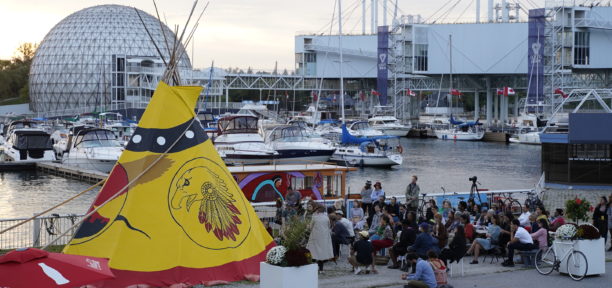
    Onsite Studio with Elder Duke Redbird with Ontario Place in the background

    For more information please check: https://torontobiennial.org/

  • Canadian Sculpture Centre is ON THE MOVE

    Opening Reception: September 14, 2019

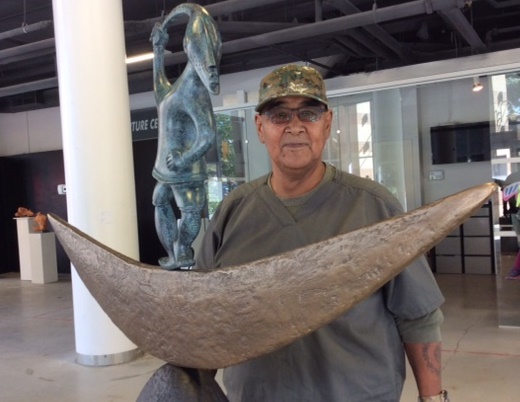
    The Canadian Sculpture Centre just moved into this location, at 39 Parliament Street within the Distillery District, in the spring. It provided a large, bright place for the members to show their works.
    In the last exhibition in this location members of the Sculptors Society of Canada explore themes inspired by various cultural diaspora as it transitions from one locale to another.

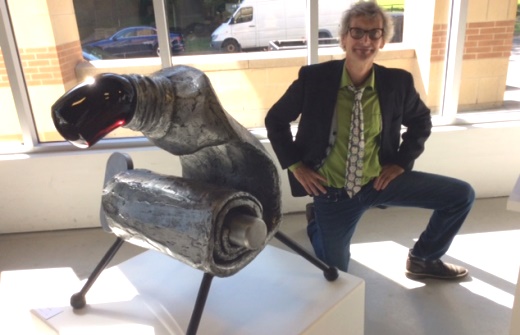
    Marc André Jacques Fortier with Squeeze, aluminum, molten red glass

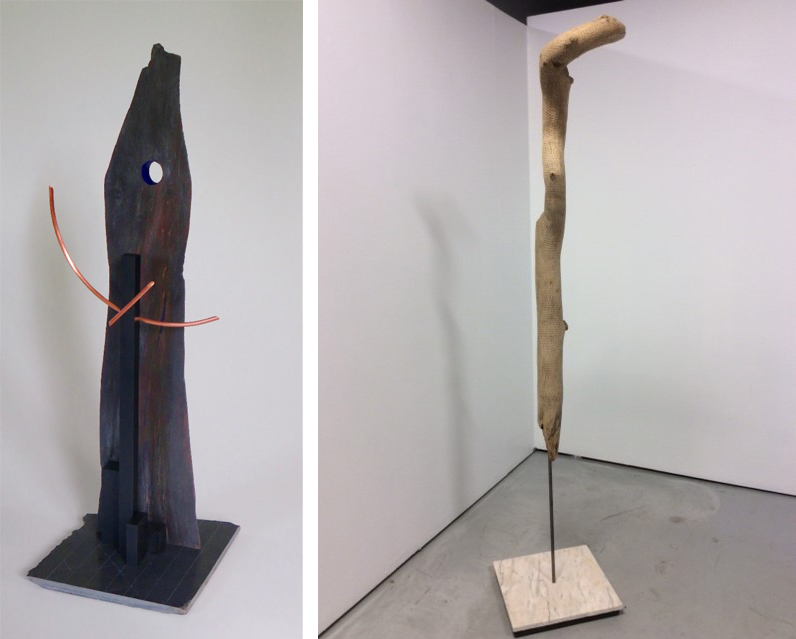
    Edward Falkenberg, Plaza at Midnight, mixed-media (left) and Jonathan Edwin Simpson, Fracturing the Central Narrative…., hand-stamped tree branch (right)

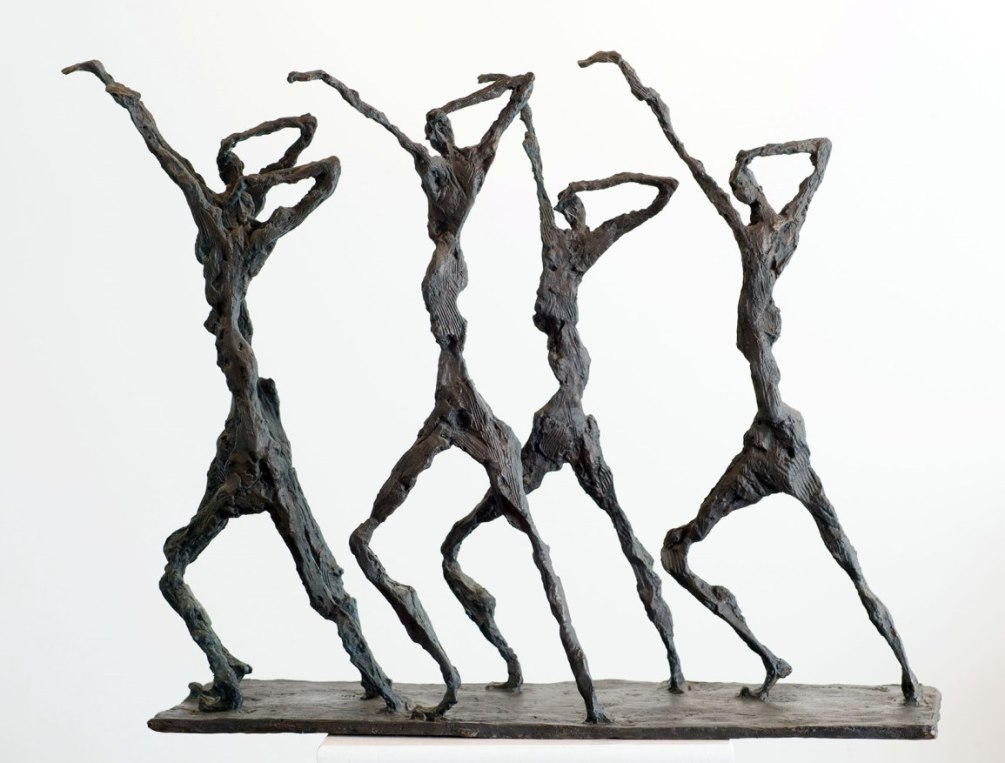
    Won Lee, Woolala #5, bronze

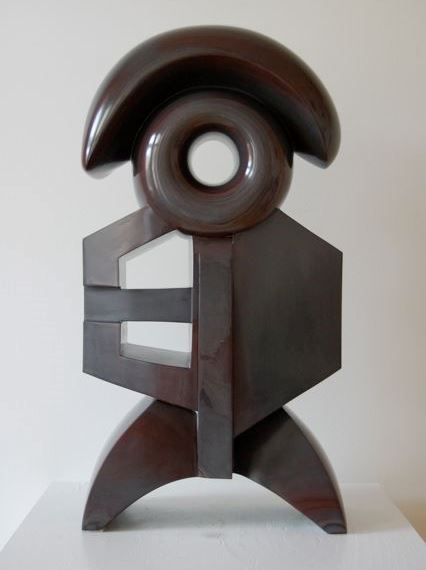
    Daniel Yu, Sentinel, African wonderstone

    David Ruben Piqtoukun and his sculpture Dancing Over the Moon, bronze

    Tsuii Yiin, Soul By Tracks, mixed-media

    Sergey Ragozin, Power House, mixed-media

    W.W.Hung, The Abyss, mixed-media 

    We wish the best of luck for one of the oldest artist organization in Canada in their new location.

    Images are courtesy of the Canadian Sculpture Centre

    *Exhibition information: ON THE MOVE, featuring works by Holly Atkinson, John Clinton, Brett Davis, Eamon, Paul Elia, Edward Falkenberg, Mary Ellen Farrow, Marc André Jacques Fortier, Karen Stoskopf Harding, W.W. Hung, Saulius Jaskus, Won Lee, J.Mac, Lilly Otašević, David Ruben Piqtoukun, Peter Alexander Por, Sergey Ragozin, Laura Santini, Desmond Scott, Peter Wirün, Judi Michelle Young, Daniel Yu, September 14 – October 12, 2019. Canadian Sculpture Centre, 39 Parliament Street, in the Distillery District. Gallery hours: Mon – Sat: 11am – 6pm; Sun: 12 – 5pm. 

  • West Queen West Art Crawl

    West Queen West Art Crawl / Thursday, October 10, 2019 / 7 – 10 pm

    Fall Art and Music Crawl 2019

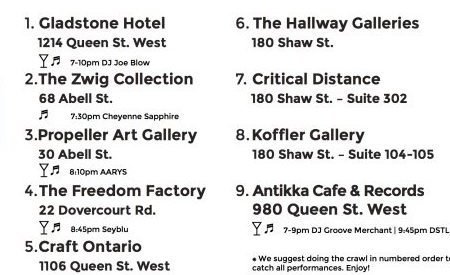
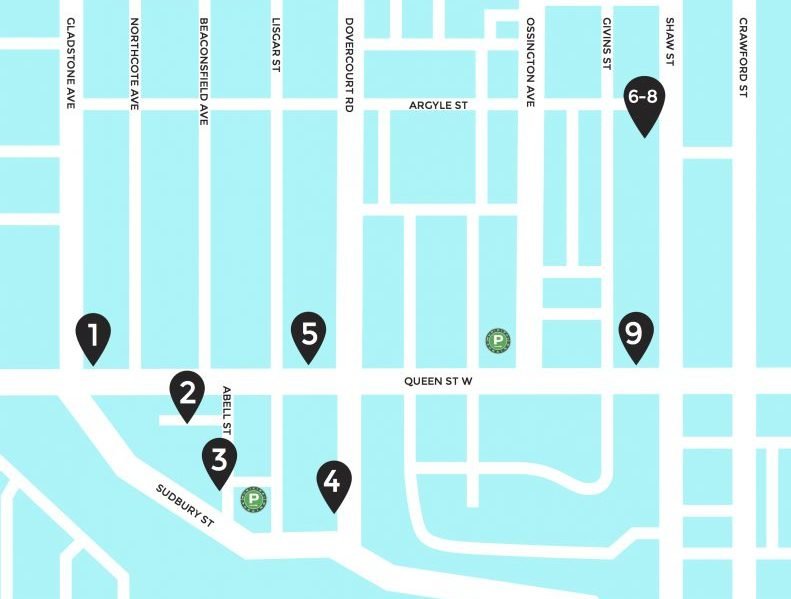
    The Fall 2019 Art Crawl features 9 Art Exhibitions in Toronto’s West Queen West neighbourhood for you to come and explore.

    For more information please check: https://westqueenwestartcrawl.ca/fall-art-crawl-2019/

  • Teri Donovan at Red Head Gallery

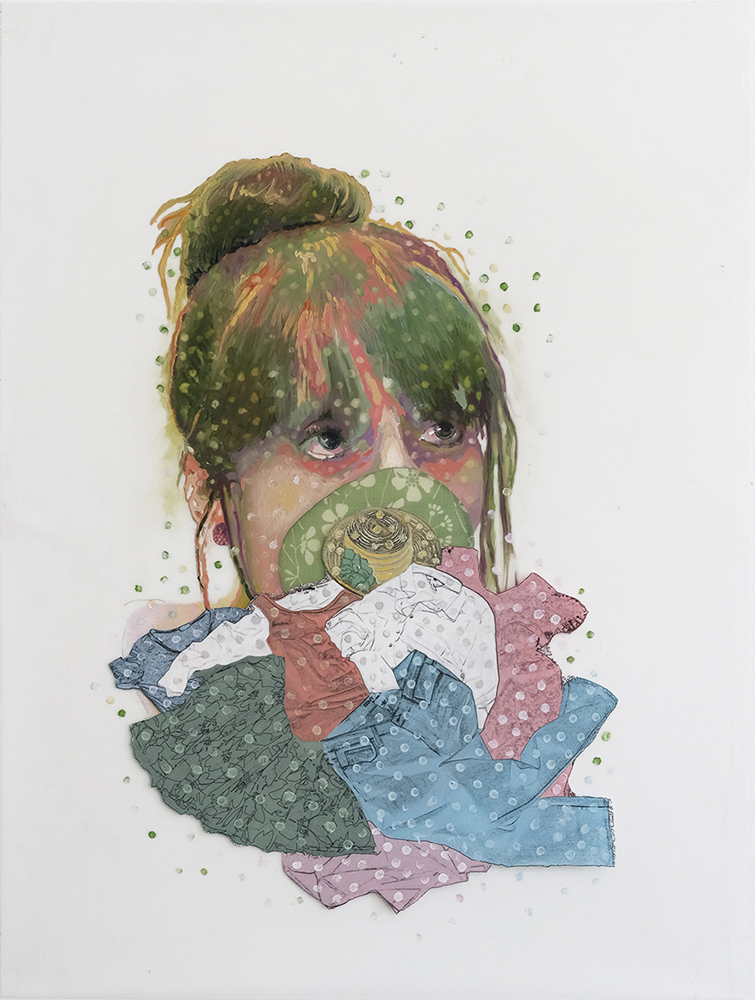
    Looking at this series showing a beautiful young woman’s face, our first impression is “oh, how lovely” – but soon we realize that we were misled.

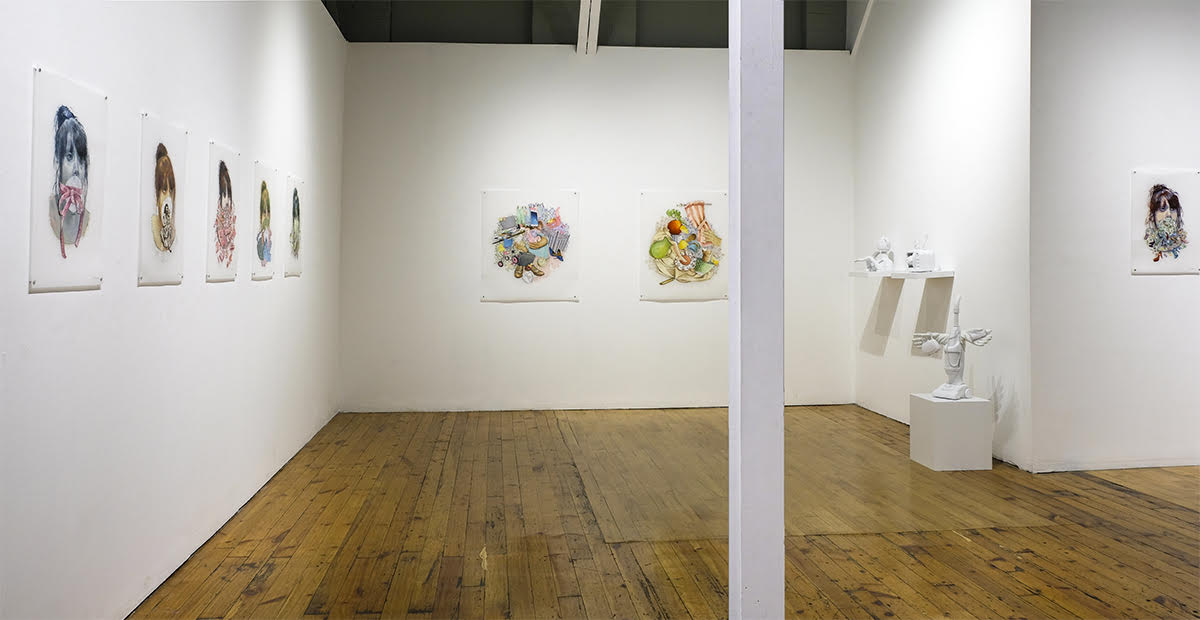
    A Toronto based artist, Teri Donovan is represented by the Red Head Gallery, where her latest solo show Terms and Conditions was displayed. Continuing the theme of her previous exhibitions: female identity, and timeless self-portrayal, the interaction of past and present are the main focus of this show. She presents us with a selection of intimate pieces, depicting a young woman’s journey both in paintings and sculptures.

    Installation view

    Female identity is still a difficult issue. Donovan addresses the ideas, expectations and experiences of a young woman – maybe in her early twenties – growing up. Her personality is still being shaped, her identity just beginning to emerge. She is surrounded and heavily influenced by the social culture of her time, an idealized social fabric that still persists (even in the 21st century) with its demanding expectations of women in Western culture. There is an echo from the past and a pattern that seems to be cyclical. She is being conditioned to face the terms of society that she must meet, regardless of her personal interest or values.

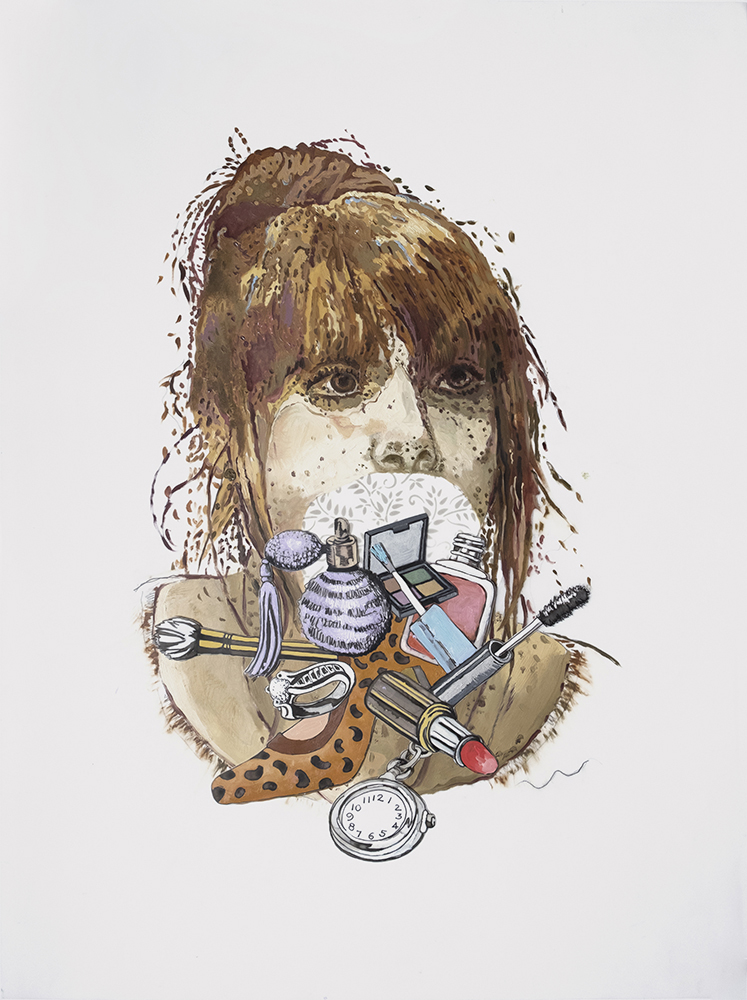
    Teri Donovan, Tools of Engagement, oil and collage on Mylar, 24 x 18 in

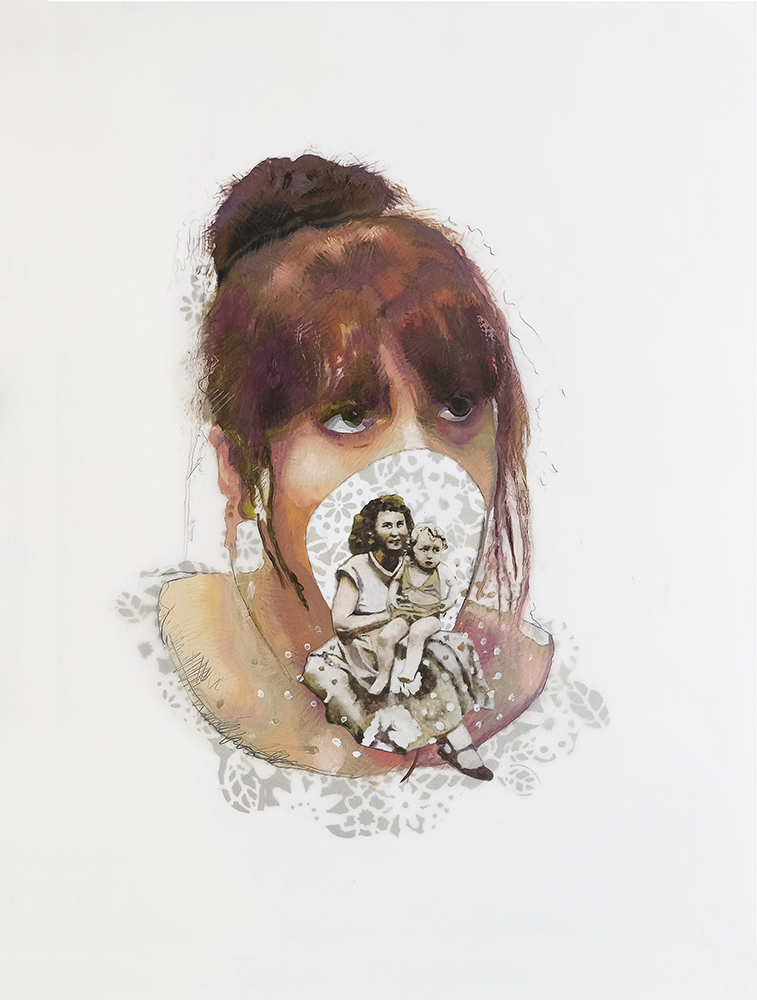
    Most of Donovan’s work deal with the past: legacies and memories; like the titles of her series Legacies and An Archeology of Time suggest. Childhood memories with their innocence are returning motifs in her paintings. Adult figures from the past appear, merge and then disappear as their time is over but their existence is still strong in the memories of the artist as is shown in her series, Always, Once and Again.

    Teri Donovan, Legacies, oil and collage on Mylar, 24 x 18 in

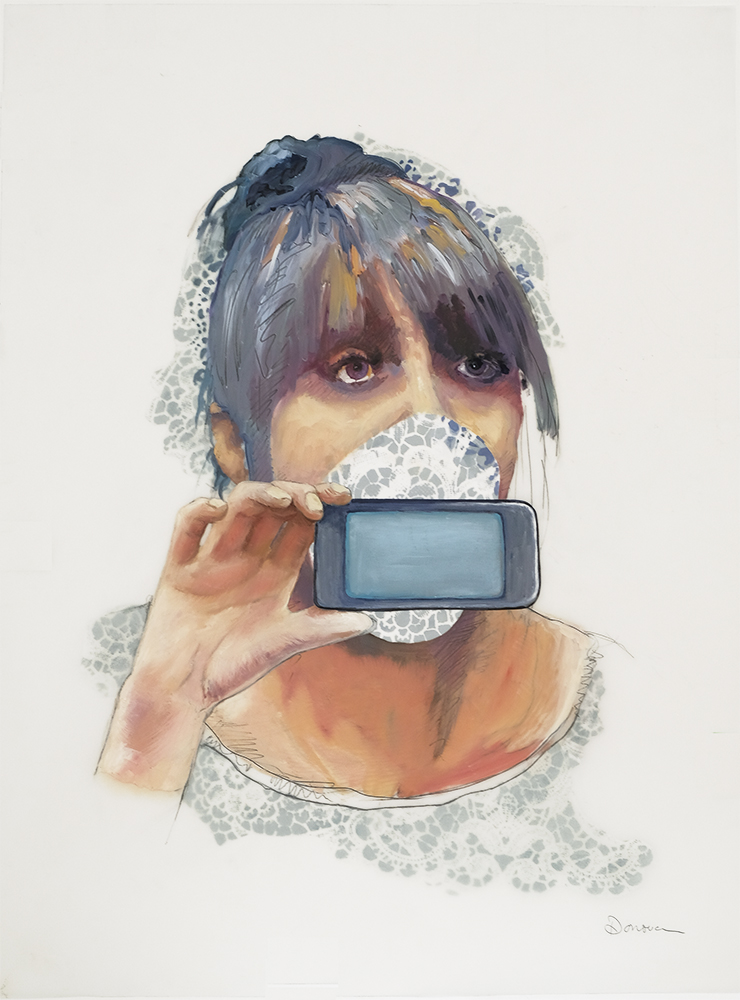
    Everything is personal for Donovan. All of her figures have a component of self-portrayal, and there is no question that the conscious mind digs deeply into the unconscious where suppressed memories wait to resurface. It is hard to say whether the young woman – the same face reappears in all these paintings – is happy or sad. Her eyes are large and they seemingly reach out to lock with ours. Her look and the items that cover the lower part of her face invite the viewer to create narratives. Who is she? What is her story? Do they show what she really wants to be or what is expected of her? Is it her true identity or one forced on her? Is it her true self or a juxtaposition of imagery that portrays the influences, actions and experiences she’s gone through while constructing her personality? 

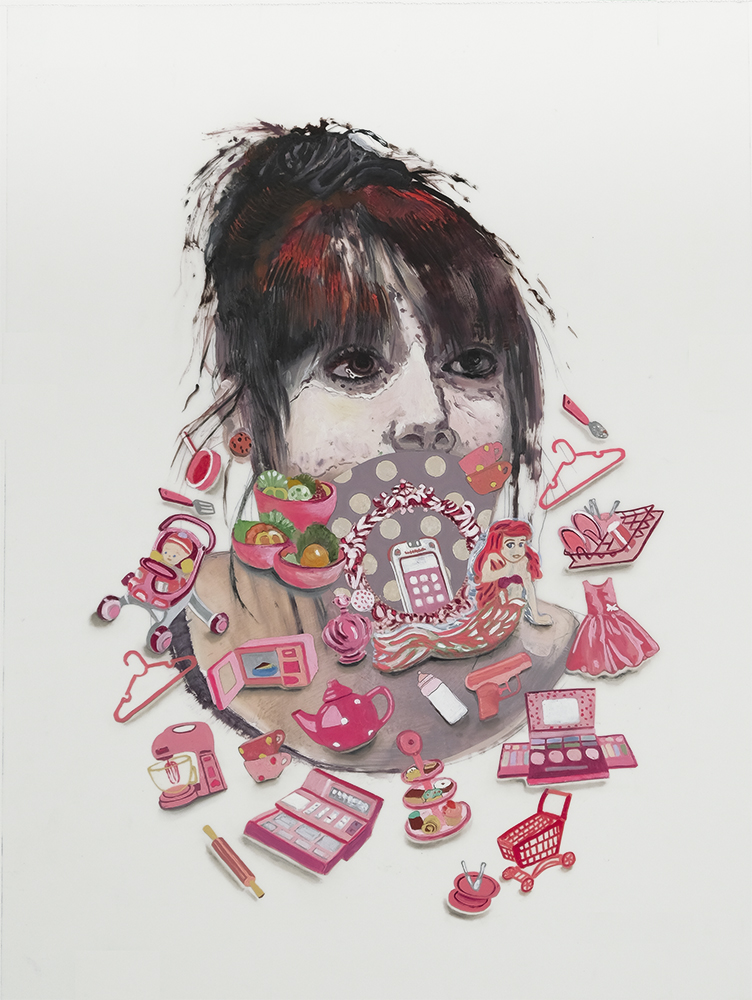
    Teri Donovan, Training, oil and collage on Mylar, 24 x 18 in

    That brings time into the picture; creating a timeline that is overlapped by the past and mixed with the present. What is our time? How can our real life-time be defined? For Donovan, past is always an important part of it. As she refers to Simon Critchley’s assertion that, “We might think we’re done with the past, but the past isn’t done with us.” What if everything that we consider ourselves to be is just a cyclic repercussion of our past experiences, societal construction and culture? Can we ever be done with the past? Donovan’s answer is a definitive NO. She believes that “what is absorbed and internalized in childhood is spoken and performed, consciously and unconsciously, in adulthood.”

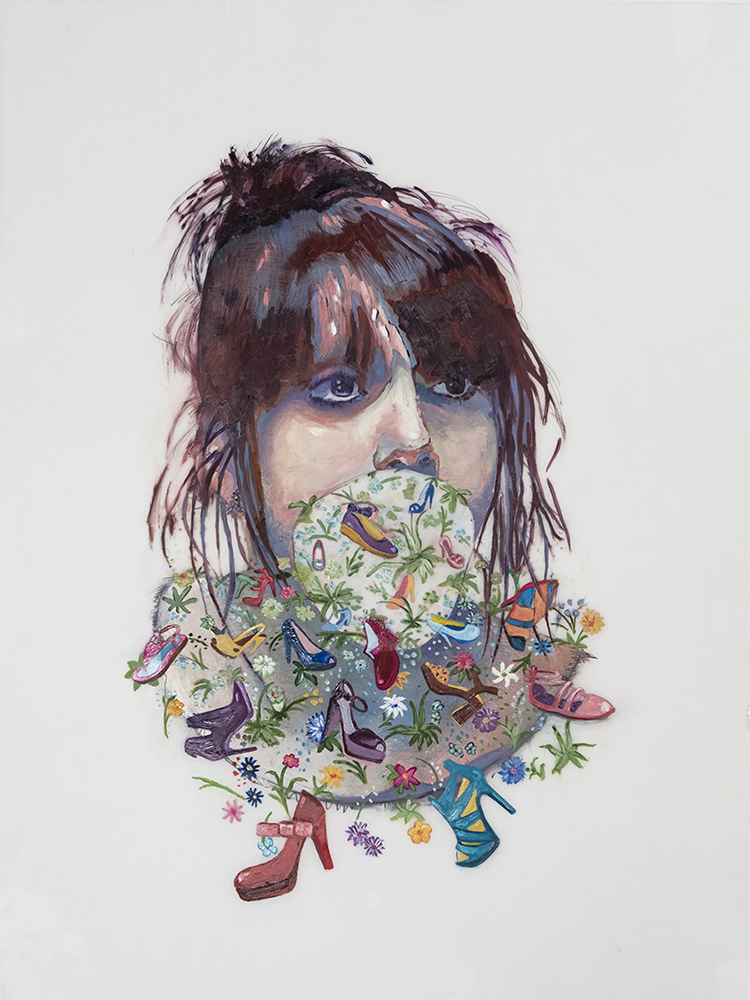
    Teri Donovan, Shoe Dreams, oil and collage on Mylar, 24 x 18 in

    This concept is strongly portrayed in the paintings with a touch of nostalgia and a whimsical vision. Sometimes the artist looks through pink lenses while other times she uses a more dramatic color code. The setting is rather melancholic, with the repetition of objects in a scattered representation. The images and objects tied to the young woman’s identity, speak of a rather oppressed state, making this portrayal much more serious that it looks at first sight.

    Teri Donovan, Decisions, oil and collage on Mylar, 24 x 18 in

    The young woman’s mouth is covered with a mask, made of a beautiful fabric, but still a mask that doesn’t let her speak her mind. It is not coincidental that the series is titled, What Speaks You. It is not the woman who is speaking, but the objects that surround her. Are all her dreams about shoes (Shoe Dreams)? All the Decisions she can make merely about what to wear? We shouldn’t be surprised after all, all the Training she got was about mermaids, make-up and baby strollers. Is it a surprise that she ends up with a Reflection no more than a selfie?

    Teri Donovan, Reflection, oil and collage on Mylar, 24 x 18 in

    While we hope not – since all these are gender stereotypes at their worst created by a male dominated society – it might not be out there for the women born in the 1950s but I believe that contemporary women could and should do better.

    Life is a journey and these paintings invite us on an enchanting one. Resurrected memories like hunting dreams, with their vividity, are deeply interwoven into the fabric of our lives. There are times when they overshadow, even replace reality.

    Ana Algarvio Alves & Emese Krunák-Hajagos

    Images are courtesy of the artist

    *Exhibition information: September 4 = 28, 2019, The Red Head Gallery, 401 Richmond Street West, Suite 115, Toronto. Gallery hours: Wed – Sat, 11 – 5 pm.

  • Nuit Blanche 2019

    Saturday, October 5, 2019, sunset to sunrise
    Various locations in Toronto
    Free all-night contemporary art event

    For one sleepless night, experience Toronto transformed by hundreds of artists and nearly 90 art projects. This year’s program responds to one event-wide curatorial theme of Continuum. The theme follows many paths during the event – set against a backdrop of the ever-present renewal of night into day, a continuum of experience and ideas is brought to light by the participating artists. A series of Nuit Talks will take place before and after the all night art event and nine extended art projects will remain on display through October 14.

    Major project are:

    Creation: Destruction, curated by Layne Hinton & Rui Pimenta

    Lunar Garden by Daniel Arsham Studio

    Queens and Kings of Scarborough, curated by Ashley McKenzie-Barnes

    Special Projects

    Major Institutions, like the AGO, ROM among others

    Independent Projects

    Toronto artists, cultural and educational institutions, museums, galleries and neighbourhoods participate in Nuit Blanche Toronto each year by producing their own one-of-a-kind projects that transform the city.

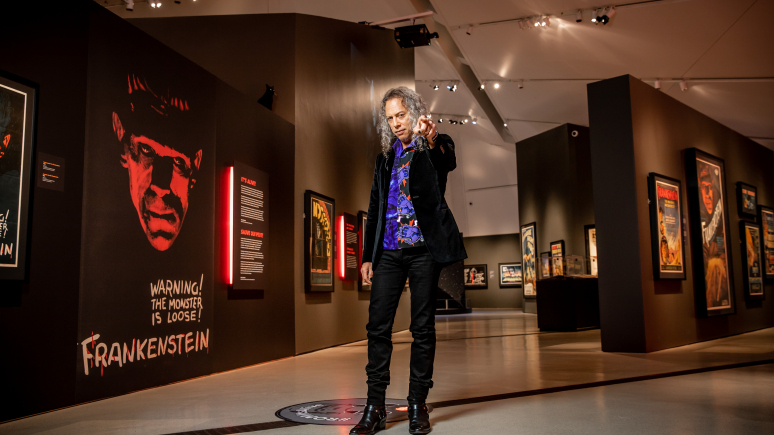
    Major Institutions: ROM – It’s Alive! Classic Horror and Sci-Fi Art from the Kirk Hammett Collection. Image credit: Jesse Milns

  • Matthew Giffin at Helio Gallery

    Matthew Giffin describes himself as a multi-media storyteller. Story telling is the common thread that weaves through the various endeavours of his wide-ranging career. From art direction for the Canadian Broadcasting Corporation and Sir Paul McCartney, to highly visible illustration commissions, to the development of popular interactive school programs and the development of music and art content designed to increase international and cross-cultural understanding, Giffin has used stories as the central device to stitch together relationships between people and to help make sense of the world. 

    Of his artistic process, Giffin says it “becomes both an observation of – and participation in – how thoughts, dreams, memories and events flow together in unexpected ways to create reality.”

    Skydwellers, 2018, ink, coloured pencil, acrylic, graphite on paper, 22.5 x 29 in

    Giffin leverages stories to drive his personal creative process. One or more invented characters are the genesis of the artwork. From these fictional minds, all other elements in the piece arise as imagined interactions, communications, or daydreams. An artwork develops as a series of sketches either on paper or as a digital sketch. Even as he works on the final piece, the details continue to evolve, and more emerges in the process of drawing.
    From our perspective as viewers, the paintings invite a narrative interpretation, but remain ambiguous and open ended. We’re drawn in and encouraged to stitch all the elements into a story of our own personal interpretation.

    The works are intricate and precise. Fields of bright colour and crisp lines interlock over the surfaces like the parts of a fine mechanical watch movement. I thought at first the graphics might be computer generated, but on close inspection I saw the markings of craft: a combination of painting and drawing.  Several of Giffin’s pieces are offered for sale both as originals as well as limited edition reproductions. The Helio Gallery specializes in prints and photography and this graphic style of work lends itself well to this treatment.

    Travelogue, 2018, ink, coloured pencil, acrylic, graphite on paper, 20.5 x 38 in

    I noticed that much of what I saw in these pieces was based on what I unwittingly projected onto them. The first image I saw was in the poster of the show: Travelogue. I saw it in the middle of a busy day.  My impression was of claustrophobia and pressure. There were menacing faces – like a crowded elevator; compressed and harried urban crowds. The red colour remained dominate in my memory.  

    But, when I later saw the original in the festive context of the gallery opening, it had a very different effect. I saw the characters and faces as joyful. I also noticed the water, the leaves and the little duck at the bottom of the frame. All these features had been there all along.

    The meaning of the image that I saw mirrored my state of mind. Much of the power of this work comes from this characteristic – its reflective nature. What we see is not inherent in the piece. It is rather a reflection of ourselves. The constituent elements of a story are provided, but the meaning depends on what we weave out of these elements.

    Conversation, 2018, ink, coloured pencil, acrylic, graphite on paper, 21.25 x 56.25 in

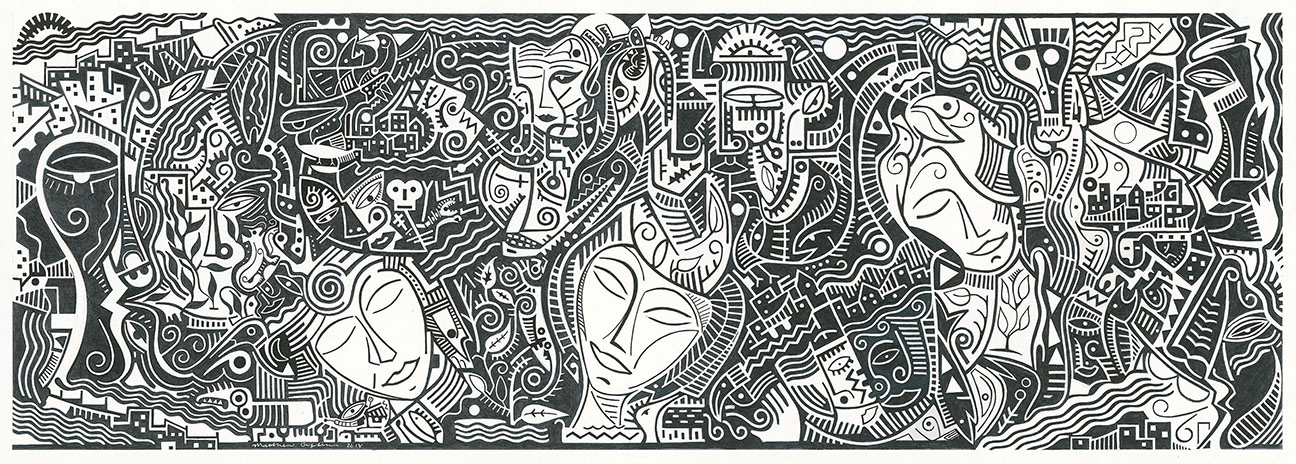
    In a few pieces, Giffin has reduced the palette to black and white while maintaining the intricate narrative aspect. In Conversation, the artist describes a discussion between three people. The imagery gives some hint as to what it might be about, but as in the case of a partially overheard conversation, we are left to wonder what might actually be being communicated. We can’t help but project our own guesses as to the particular dialog. 

    Dream Into Life, 2019, ink, coloured pencil, acrylic, graphite on paper, 34.5 x 50.5 in

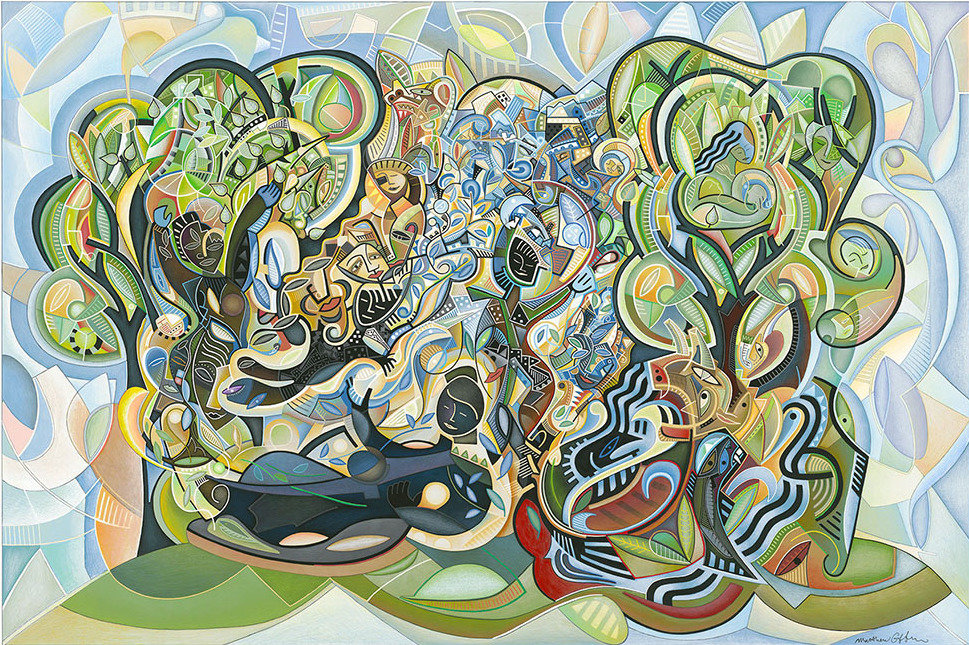
    Dream into Life is one of Giffin’s recent paintings. The image works at two scales. From a distance, we see what looks like two large trees surrounding a reclining figure. Up close, we discover an intricate and detailed tapestry of imagery. The world in all its organic complexity seems to be rising out of the figures mind as though created by her thoughts.  

    Giffin uses stories to generate his artwork. As a viewer, we don’t read his stories like we would a text, rather, we supply our own plot. We interpret these pieces like the half-remembered images and narratives of dreams whose meaning seems familiar but become more elusive and ambiguous the more we try to pin them down. As in a Rorschach ink blot, we project our own interpretation. 

    Mikael Sandblom

    Images are courtesy of Helio Gallery

    *Exhibition information: Helio Gallery, September 20 – October 12, 2019, 1256 Queen Street East, Toronto. Gallery hours: Wed & Thurs 12 – 5 pm, Fri 12 – 6 pm, Sat & Sun 12 – 4 pm.

  • Ric Evans at Nicholas Metivier Gallery

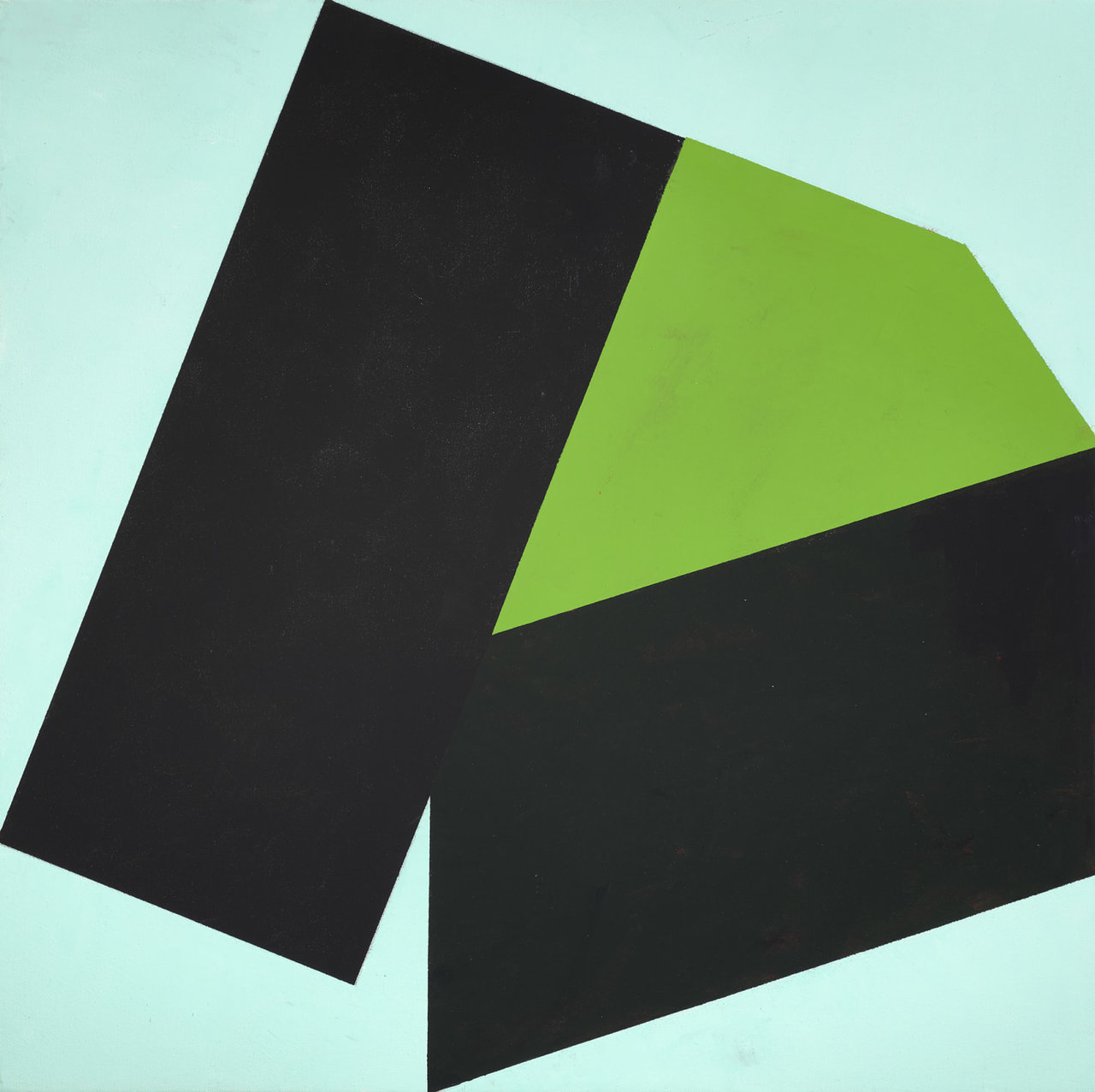
    A Ric Evans painting is an object in its own right. Culturally, we are long past having to justify a work of abstraction, even if the object doesn’t purport to depict things outside itself. The digital age may in fact, have imbued the genre with fresh relevance. Over the course of decades, painting has had to rise out of the ashes time and again. The work of Evans has roots in the painting-is-dead 70s, which may account for its sense of insistent sturdiness. Merely having survived, speaks to the work’s foundational strength.

    An Evans painting maintains a conceptual clarity. I liked Roald Nasgaard’s reference to Ric’s comment in the catalogue notes for his 1975 Art Gallery of Ontario Four Painters group show, “he simply gave the facts.” It brings to mind my visit to Ric’s Duncan Street studio in 1997. The subject of discussion had been a post card that he had of Jan van Eyck’s Arnolfini Marriage portrait. “It’s my favourite painting,” Ric had said. It threw me at the time, but I am coming around to seeing what he might have been driving at. The Northern Renaissance formal precision of van Eyck’s treatment of bride and groom, surrounded by dog, shoes, fruit, window chandelier, convex mirror, and bed are sharp-edged puzzle pieces that snap into a coherent compositional whole – all painted in unambiguously vivid colour. Beyond the imagery, viewing it with an Evans abstract is not a stretch if we squint for traces of its structural scaffolding. Having the gist of something allows essential points to be laid out as “just the facts.”

    Rick Evans, Unveiled Elements, 2019, oil on canvas, 30 x 30 in

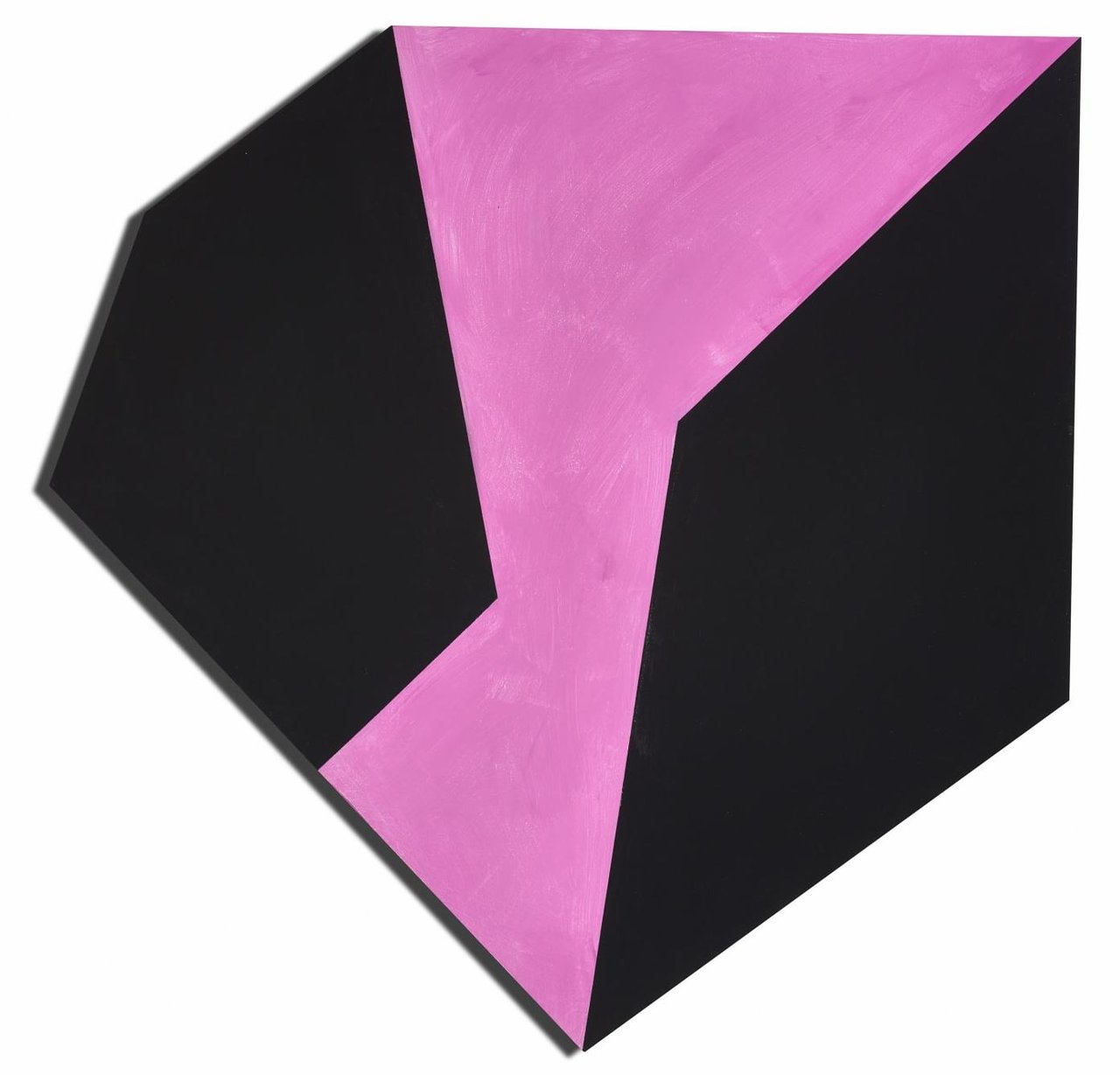
    Some elucidation is required on the current state of the relationship between paint and pixel. The 80s Neo Geo circuits and conduits of Peter Halley were literal. They were illustrations of post structuralist prisons inhabited by Michel Foucault and simulated by Jean Baudrillard. Our digital deluge has had much more to teach us. Since then we’ve learned to surf. Virtually all of our communications flow though a fine abstract mesh, the resolution of its pixels is ever higher and now inextricably woven into our analog lives. We’re no longer conscious of their geometry, but like tropical fish we swim in it. A reading of the Evans Cardinal Elements (Magenta) 2019 packs as much resolution as we are willing to download. It caught my eye when I entered the exhibition during its opening. The yin yang binary properties of this six-faceted gem sparkle with a restless energy. It’s a genuine Pink Panther. The paradox of a pink panther jewel is that its value is derived from a hidden flaw. Evans pinches the pink magenta of his work between two dark geometric fingers, suggesting a counter-clockwise motion visually, as if the painting is undergoing a careful examination.

    Rick Evans, Cardinal Elements (Magenta), 2019, acrylic on board, 47 x 47 in

    It could be said that Evans has created his own Periodic Table of colours over time. His pigments have, not so much been found as mined. Black might be the memory of the loam out of which the colours were extracted. It has become the standard against which Evans measures value and weight. By its inclusion in most of his paintings, black sets up a figure and ground dynamic. It’s one of many pairs of opposites that apply rhythmic syncopation to his work – a two-fisted left jab/right hook approach. Evans engages the themes Open, Fold, and Reveal, in a formalist play with their counterparts, alternating hide and peek with hide and seek. At a most basic level, Evans calls for a sharpening of our senses, to condition and discipline our sense of sight to a point of insight and knowledge.

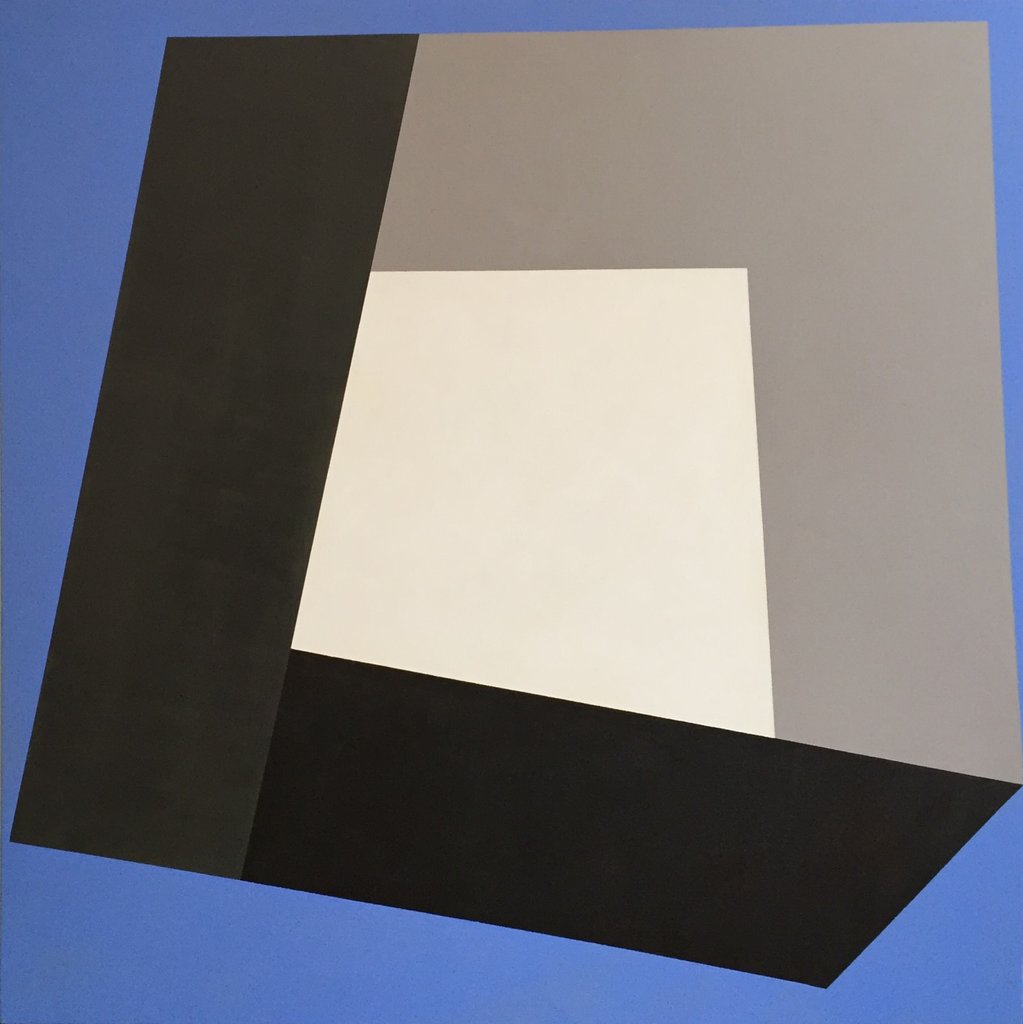
    Rick Evans, The Harmony of Appearance, 2018, acrylic on canvas, 60 x 50 in

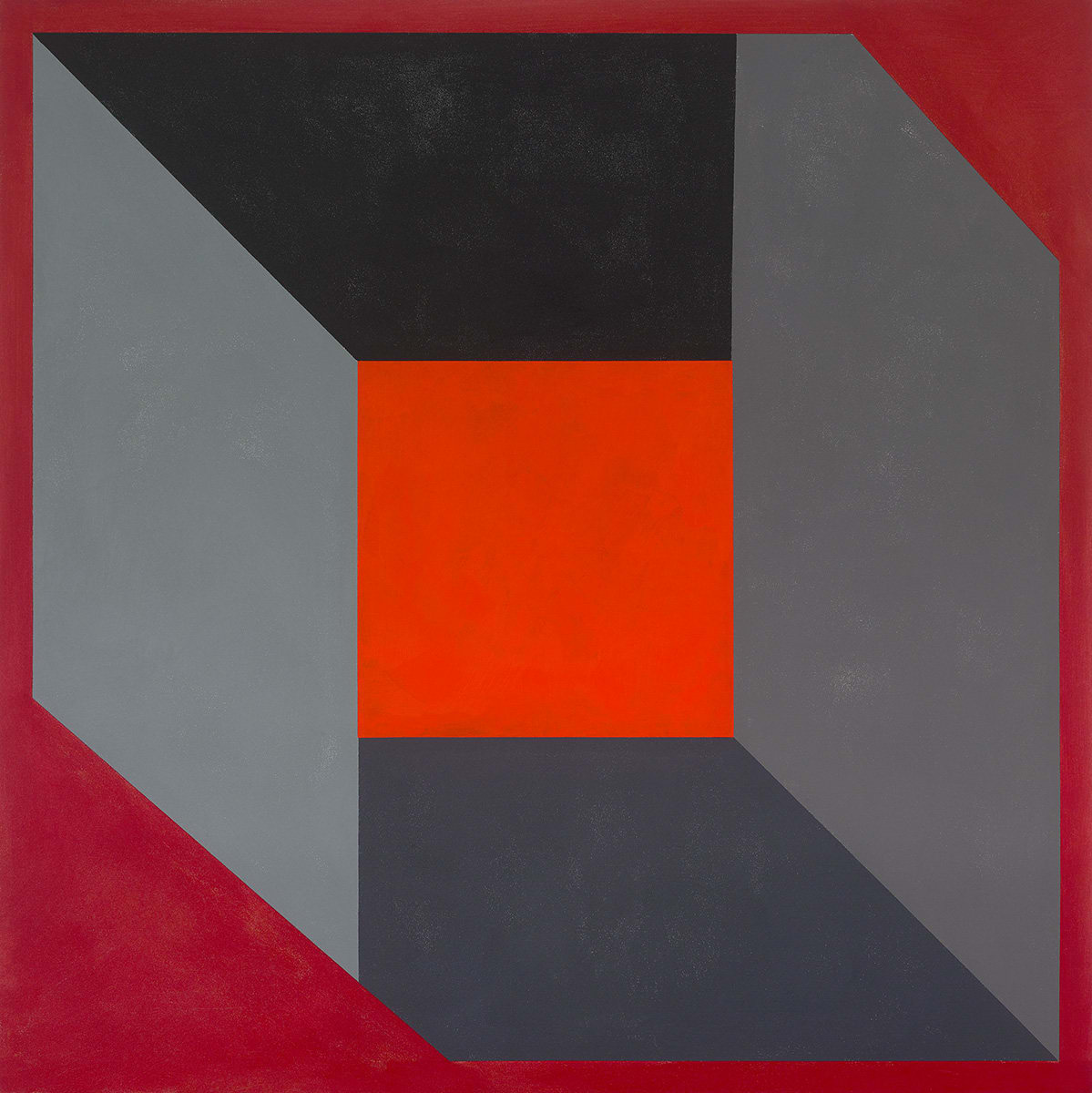
    The Cardinal Elements exhibition is an artist’s affirmation of his creative exploration. The work is its documentary proof. Unveiled Elements, 2019, Revealed Forms, 2018, and The Harmony of Appearance, 2018 are invitations by Evans to the viewer to travel on the road that led to his discoveries, to the extent that this is possible. At the heart of any creative labour is the potential for some kind of revelatory insight. Over the course of his career, Evans has synthesized his experience into “elements,” much like a chemist in the laboratory. 

    Rick Evans, Revealed Forms Red, 2018, acrylic on canvas, 68 x 68 in

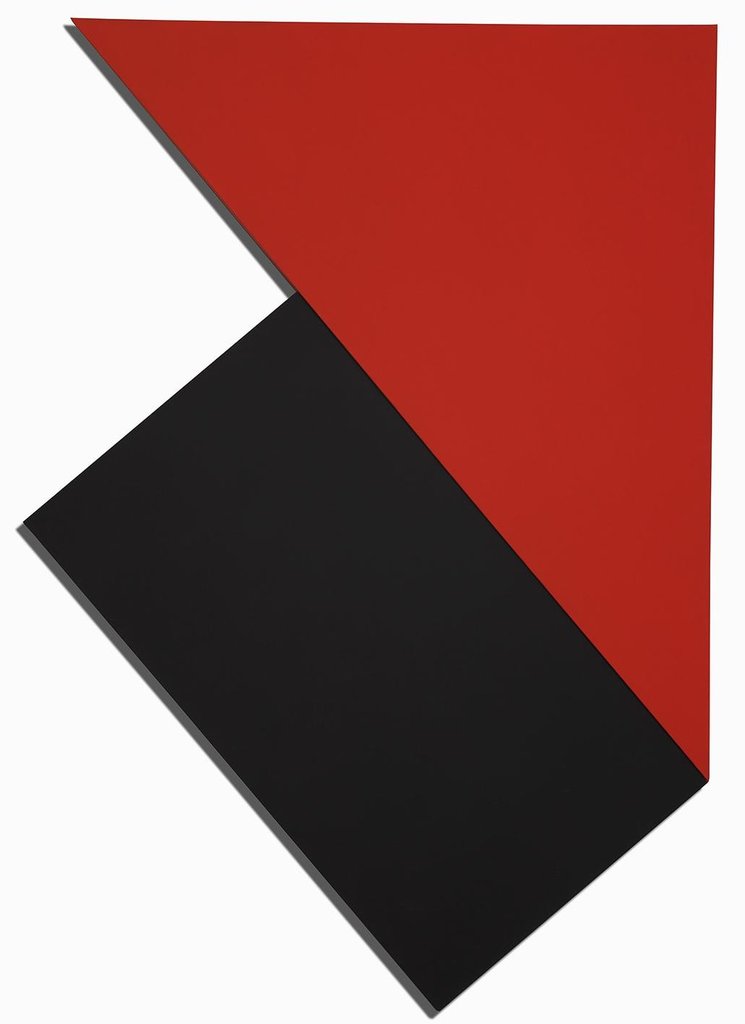
    The Evans Untitled (to K.M.), 1991 is primal. With its dominant red over a black rectangle, it signals our most powerful emotions. Red is our code alert. Kasimir Malevich’s 1915 Black Square and Red Square feature these colours. Much as Malevich did, Evans favours a dynamic geometry over a static grid. His Untitled (to K.M.) bears a coincidence of initials. Intended for Malevich in 1991, Evans has now included in the dedication Toronto gallery dealer Katharine Mulherin, who passed away recently. It is the largest and simplest composition in the exhibition, employing two criss-crossing diagonals. The black rectangle seems to slide from top left to bottom right. The red triangle becomes an arrowhead pointing up from bottom left to top right. It’s gravity at work. Black pulls downward, while red pushes up in defiance. Put in the simplest terms, the work describes the struggle that life presents to each of us from day to day.

    Rick Evans, Untitled (To K.M.), 1991, oil on canvas, 90 x 62 in

    Steve Rockwell

    Images are courtesy of Nicholas Metivier Gallery

    *Exhibition information: Ric Evans, Cardinal Elements, September 12 – October 5, 2019, Nicholas Metivier Gallery, 190 Richmond Street East, Toronto. Gallery hours: Tue – Fri, 10 am – 6 pm; Sat, 12 – 5 pm.

  • VAYA at Urban Gallery

    Finding the Genius Beneath the Madness

    Installation view

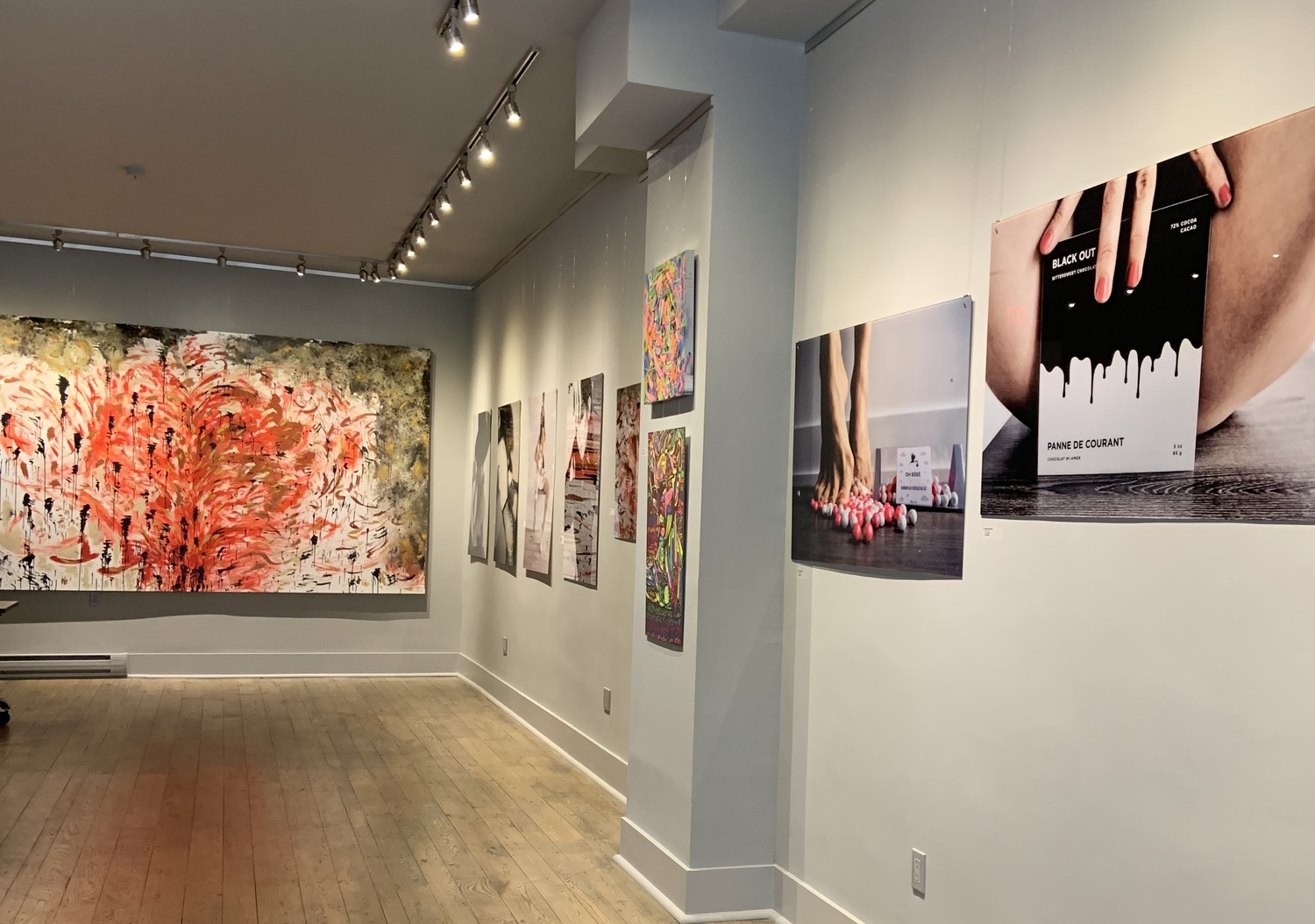
    Entering the space of the Urban Gallery, decorated with the art of VAYA and her Child of Rock collection, the viewer is instantly hit with an overwhelming sense of madness. Wild colors and editorial photographs capture your gaze while you stand still in the midst of this artist’s deliberate chaos. Looking and searching, the viewer finds the hidden genius beneath the madness. The genius that lies beneath striking photographs, and thick layers of vivid neon and shining metallic acrylic paints.

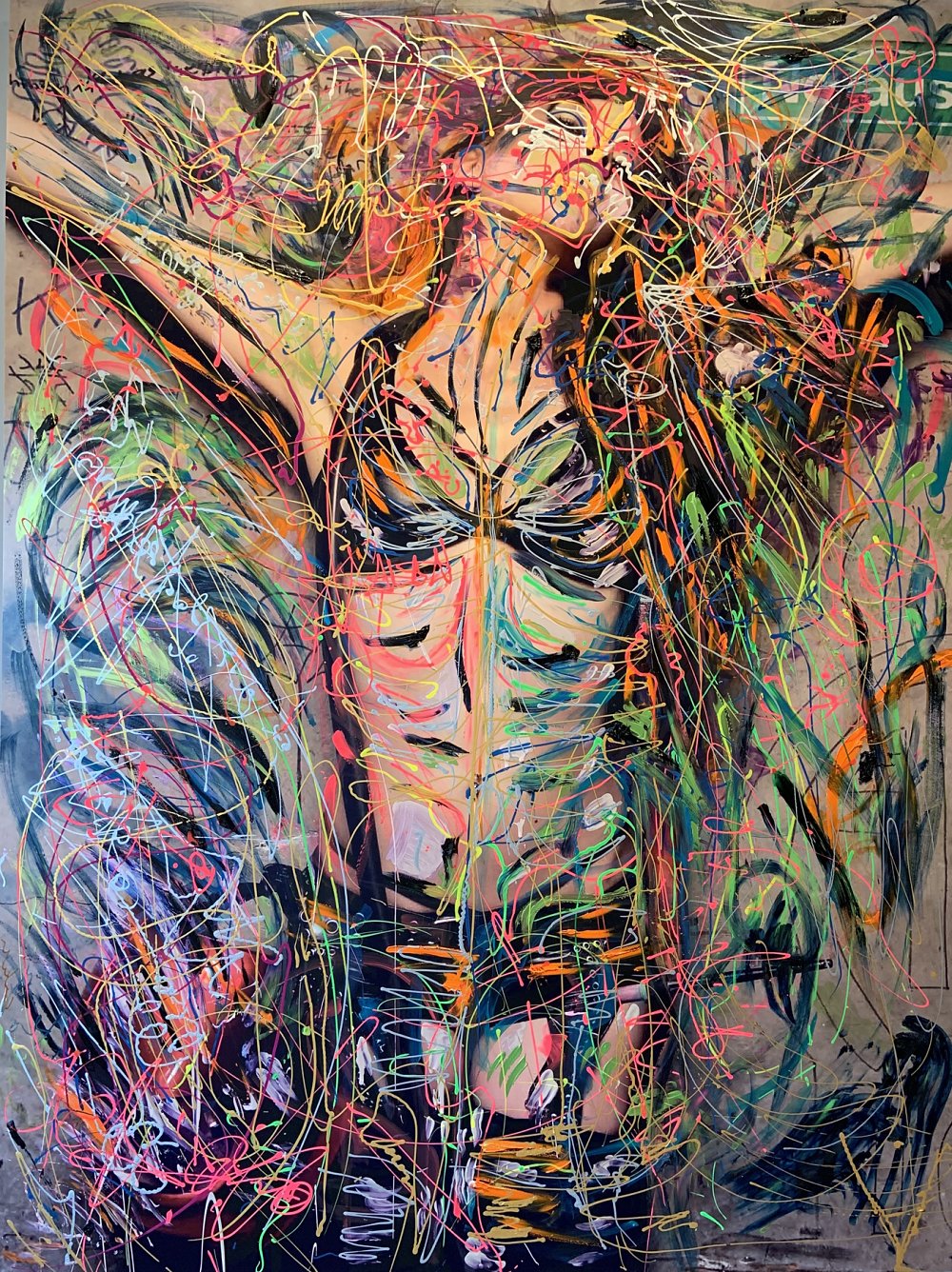
    Queen, print on PVC, acrylic and oil paints, 180 x 136 cm

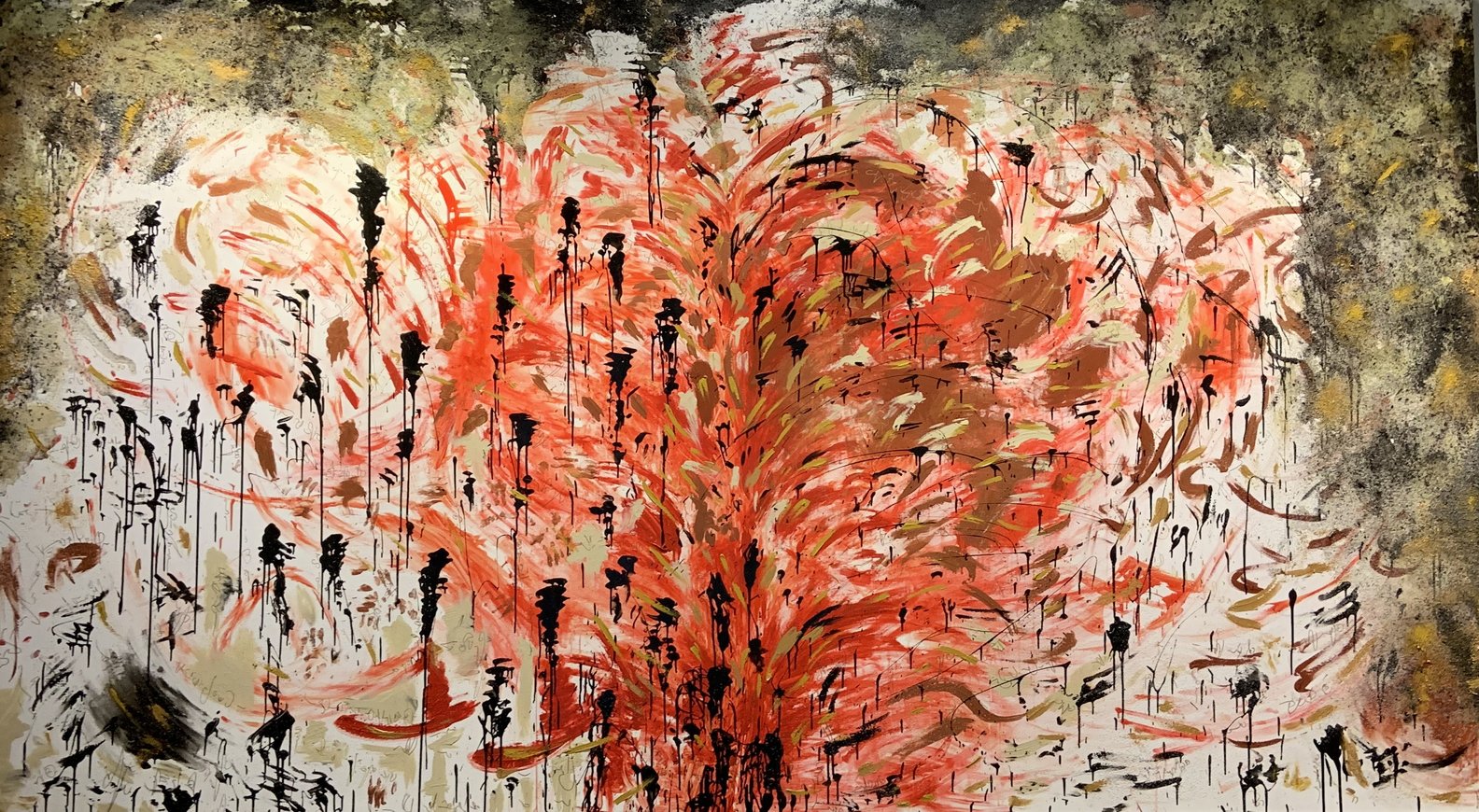
    Dancing is part of her artistic process. Her largest piece in the gallery, Earth Voice, uses paint to show the concept of pursuing dance in moments of creation. This sense of movement is made even stronger with its red colors that remind us of fire. It brings life into this collection – the fast burning life of the stars depicted. It praises and reminisces about the fallen souls of rock and roll, while simultaneously displaying photographs that are just as much rock and roll as they are erotic and completely alluring.

    Earth Voice (Dance With Me Collection), ink and acrylic on canvas, 203 x 366 cm

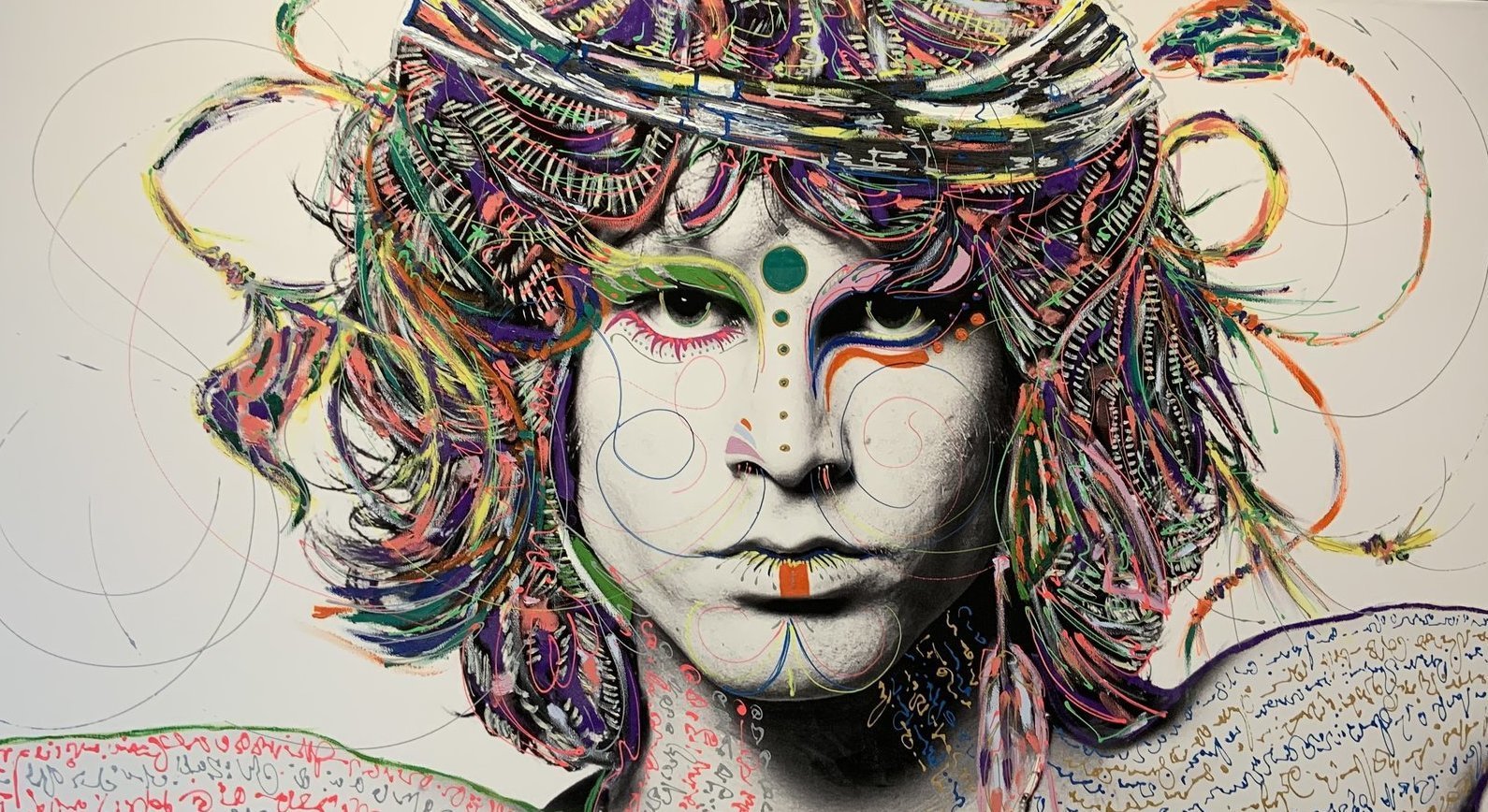
    VAYA’s adaptation of Joel Brodsky’s infamous 1967 black and white photograph of Jim Morrison could be what initially draws the viewer in. The artist placed the print on canvas, and with her array of colors and lines, she masterfully decorated the iconic portrait. She applied a sort of mask to his famous face; offering a more spiritual perspective and experience of this troubled rock star.

    Jim (Soul Kitchen), print on textile, acrylic and oil paint, 90 x 160 cm

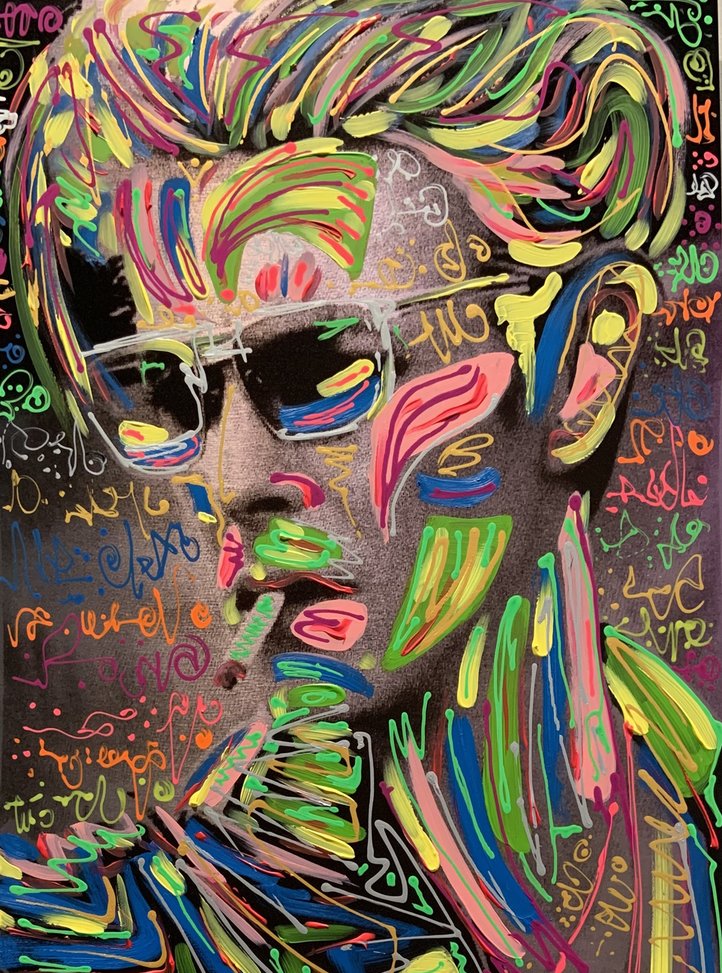
    She does the same with her renditions of musical geniuses like Kurt Cobain, Freddie Mercury, David Bowie, and Elvis Presley, hiding known photographs beneath her artistic blanket of color, texture, and design.  

    David (Rebel, Rebel), 80 x 45 cm, print on metal, acrylic and oil paints, detail

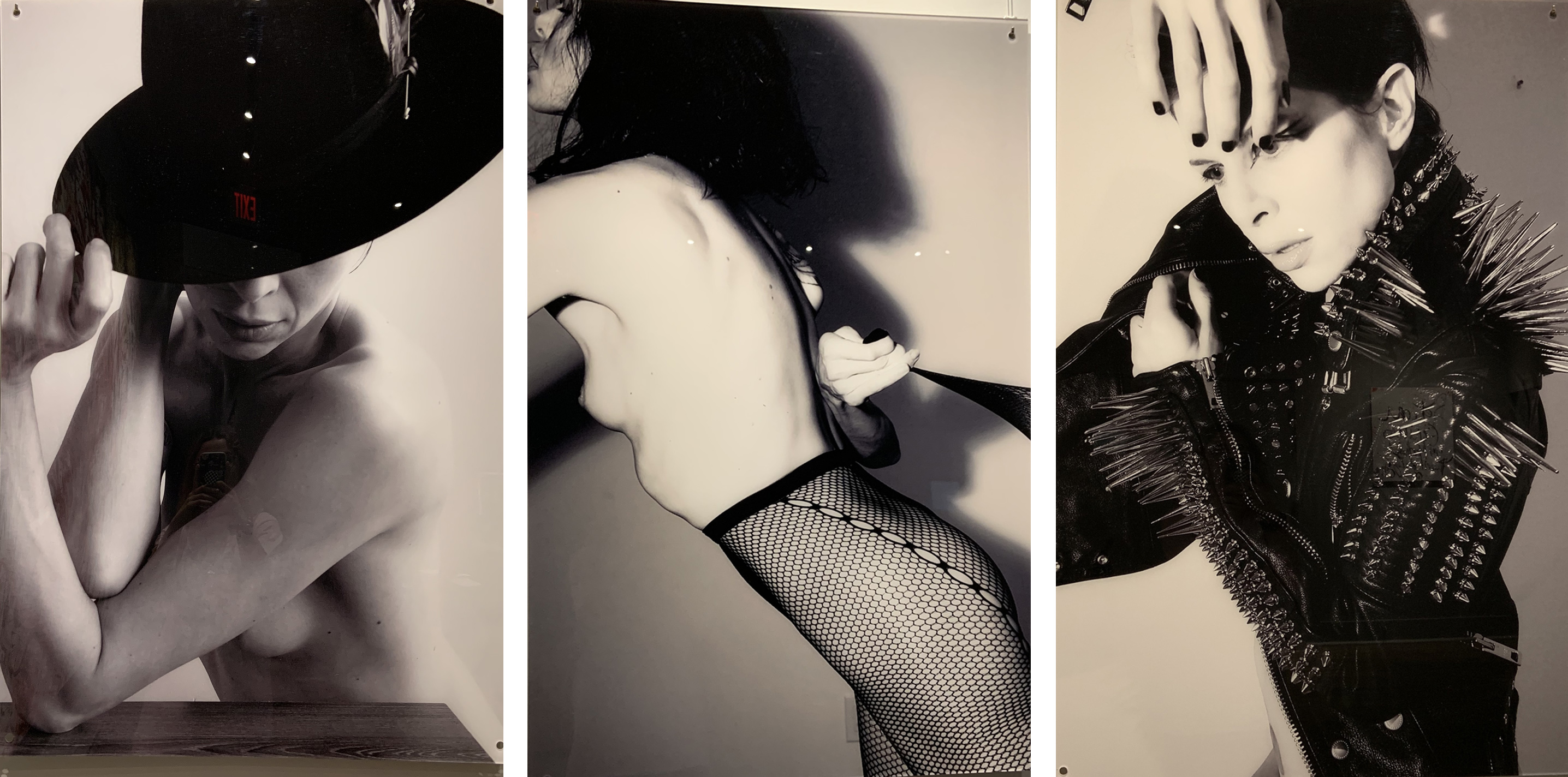
    The black and white fashion-style photographs in this exhibition compliment the above-mentioned pieces, deepening our experience of VAYA’s oeuvre. These images also evoke the essence of rock and roll, begging comparisons to Robert Mapplethorpe’s black and white series of rock star Patti Smith. Like Mapplethorpe, these pieces are daring and sensual, aiming to confuse the viewer with the androgynous but also very feminine qualities of the subjects. VAYA plays with this idea of concealment. Most of the photographs hide a part of the figure in some way, leaving it to the viewer to search the pictures for the missing pieces of a very powerful puzzle.

    (L-R) I Like To Be Naked, 114 x 76 cm; Bound, 115 x 76 cm and La Dame de Pique, 115 x 76 cm, both print on acrylic

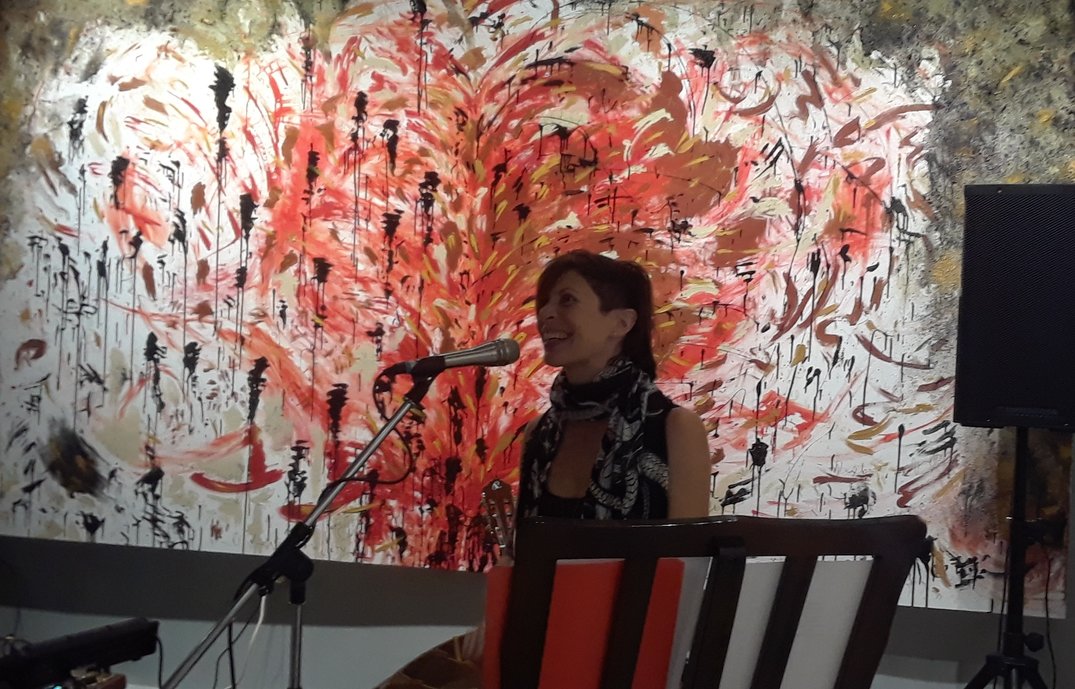
    With the show ending shortly, Child of Rock has been a success. From her engaging encounters with viewers at her opening reception on September 5th, to her unplugged acoustic performance in the gallery surrounded by her collection on September 19, Swiss-born VAYA has undoubtedly left a colorful and unforgettable mark on this city.

    VAYA at her performance on September 19th at Urban Gallery

    Text and photo: Talia Williams

    *Exhibition information: Child of Rock / Solo exhibition by VAYA, September 5 – 28, 2019, Urban Gallery, 400 Queen Street East, Toronto. Gallery hours: Tue – Fri 12 – 5 pm, Thu 12 – 8 pm, Sat 1 – 5 pm.

  • Tim Deverell: Fragments of Memory / Yumart

    To Remember Beautifully

    Installation view. Photo: Rachel Williams

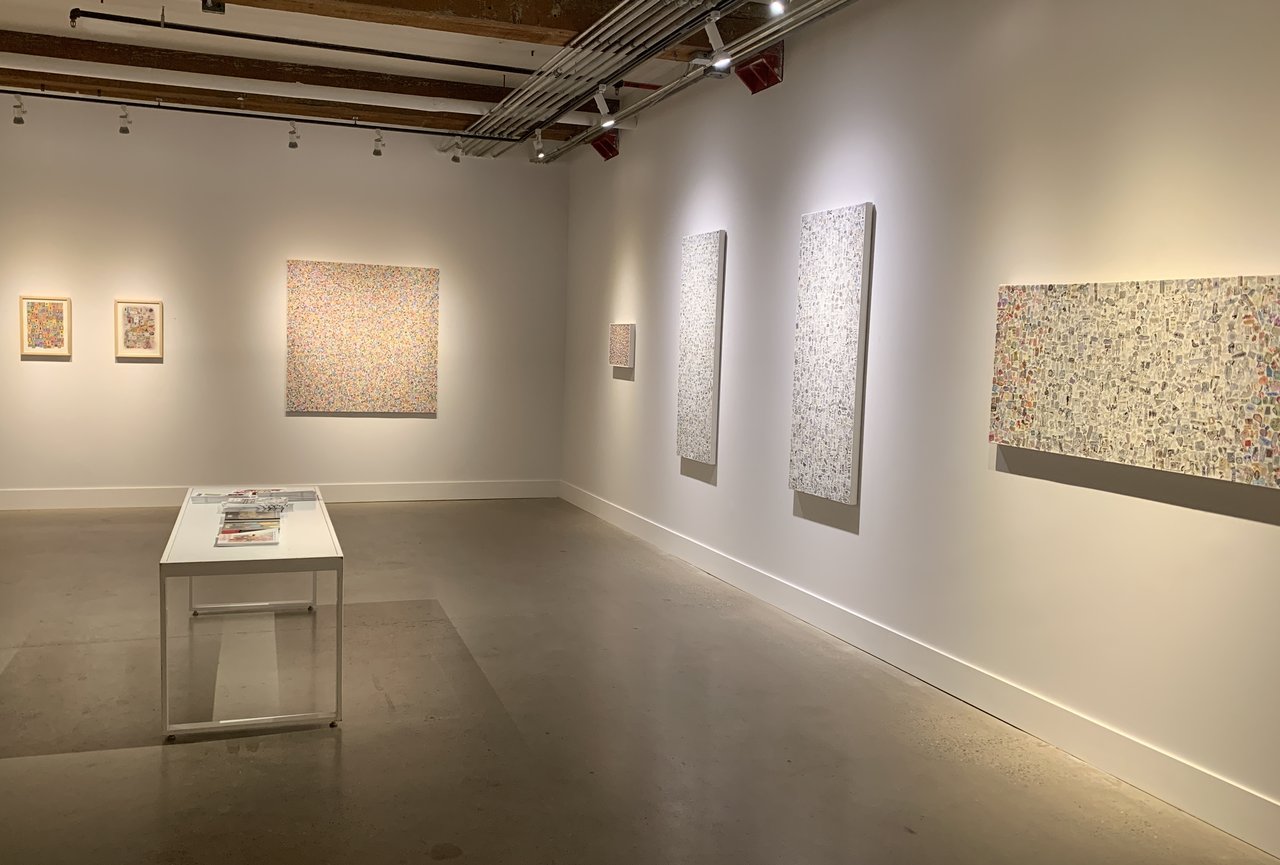
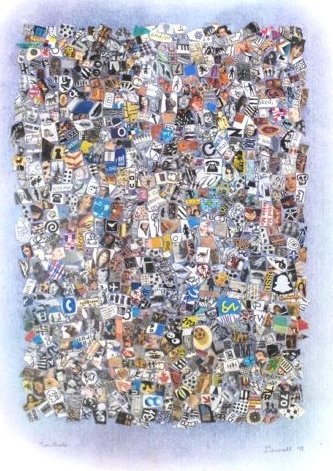
    Walls filled with colourful memories. Vibrant flashes of moments. A collage of life fragments that every human wishes to hold onto – whether trivial, heartbreaking, mundane, or extraordinary – since those are what make us who we are. Memories are what we are left behind with, and their moments are what we can replay. Tim Deverell’s, Fragments of Memory – For Ann, exhibited at the Yumart Gallery, is a crucial display of what it means to actively remember someone. Deverell’s art is telling us how one tackles the inescapable task of remembering someone beautiful and remembering her beautifully.

    Scraps of info, 2018, oil/collage on canvas, 30 x 30 in. Courtesy of Yumart

    Yumart Gallery’s owner, Yvonne Whelan, speaks highly about her most senior artist. She says, eyes lit-up, that she has been exhibiting him since she started her gallery seven years ago. Deverell has displayed his work in galleries all over the US and Canada and she is proud to be the most recent gallery to exhibit his works. She says that in 1958 he had his first solo exhibition in New York City, since that is what Canadian artists did in the 50s and 60s, they would go to New York to show what they could do. Then she goes on, “I’ve never seen work like this before, I’ve seen people do intricate collage and so forth, but not to this extent.”

    Strangest Ironies, 2019, oil/collage/canvas, 20 x 20 in. Courtesy of Yumart

    Whelan also mentions that Deverell has a huge group of admirers; how those who come to purchase a piece, purchase multiple. The continuity of the artist’s work is unquestionable, each piece is connected, they work together in colour scheme and materiality. Whelan, herself, has 15 of his pieces, “they are addictive,” she admits through laughter.

    Desire Notes, 2017, acrylic/collage on canvas, 56 x 20 in (left) and
    Looking For, 2018, collage on paper, 25 x 13 in (right). Courtesy of Yumart

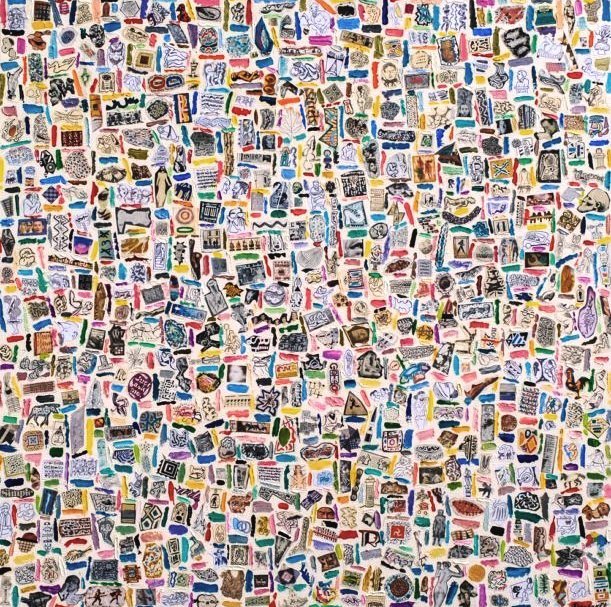
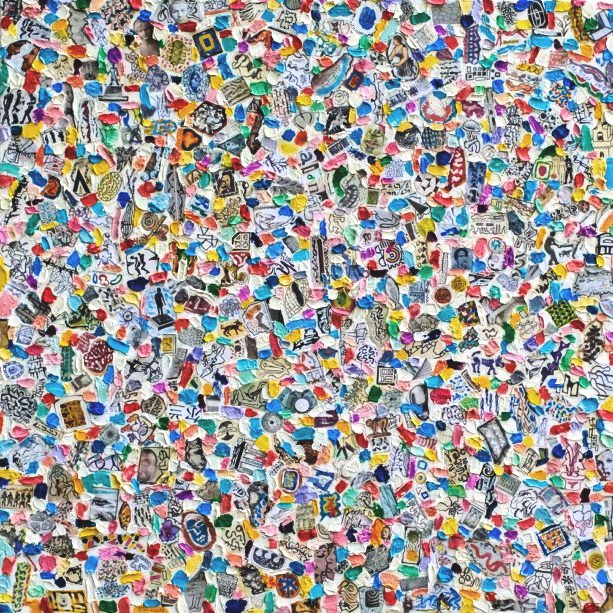
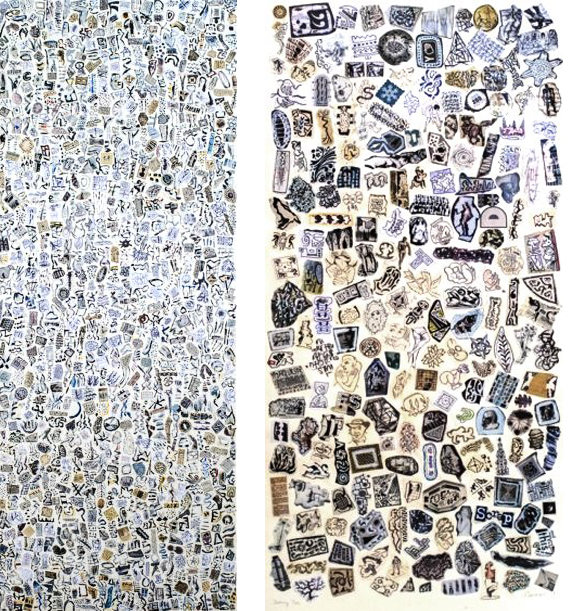
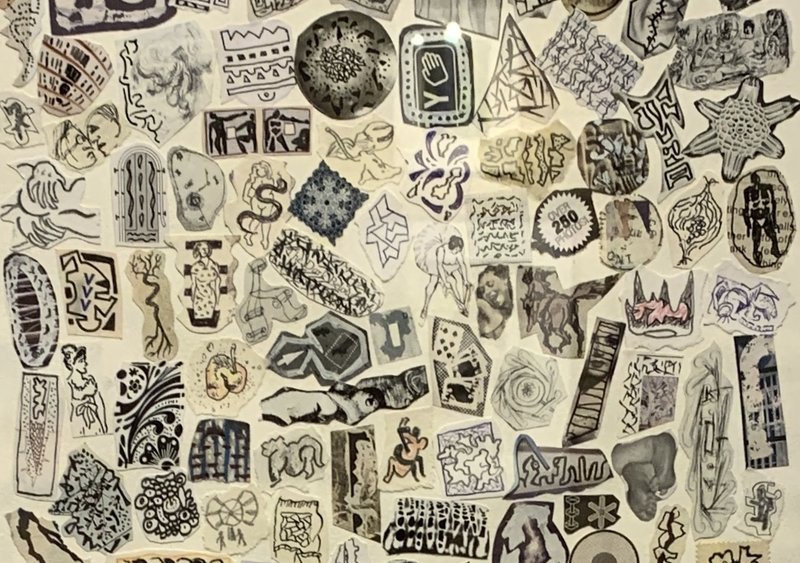
    Fragments of Memory – For Ann is a collection of pieces dedicated to Deverell’s wife, Ann Ireland, a successful author, who sadly passed away. This collection only took a year and a half to complete. His main medium is oil, acrylic, and of course the array of materials he has so carefully cut out and shaped from magazines to postage stamps and personal sketches. In Routines, the artist cleverly uses these cut-outs and by melding them with his own drawings, creates a new narrative. What may have been meaningless pieces of pop-culture, becomes an important story in the artist’s hands.

    Routines, 2018, collage on paper, 15 x 12 in. Courtesy of Yumart

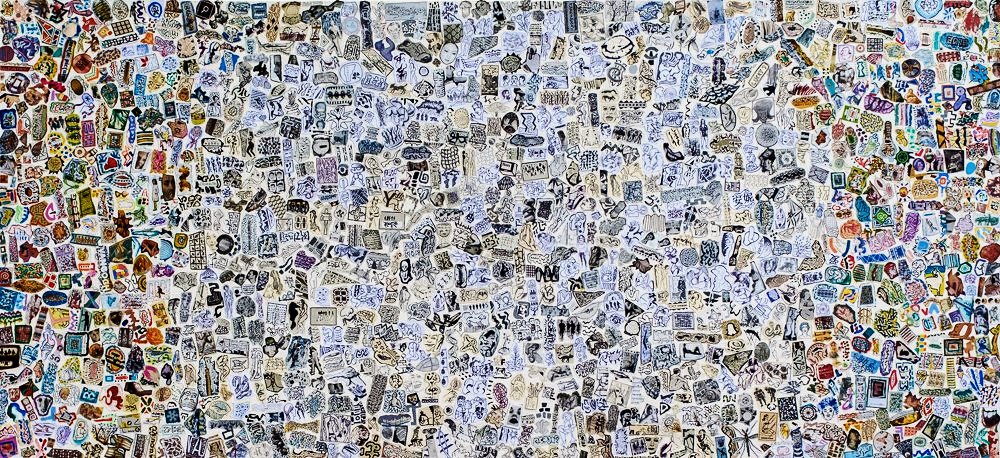
    There is something to be said about the impact of his works to the physical body. Deverell’s pieces are meant to be leaned into, there is a body language that goes hand-in-hand with his creations. The viewer must almost prostrate towards the piece, diving head-first into the pool of his memories. Deverell’s art can also be seen as objects of discovery, like a personal game of “I Spy.” Whelan states, “A friend of mine bought one of his longer, more horizontal pieces and placed it above a table with a magnifying glass. Every day he will grab the magnifying glass, look at the collage and find something new.” There is a magnifying glass placed at the entrance of the gallery too, because from afar, the images blend into an array of colours, but up close they are filled with hundreds of little masterpieces.

    Looking For, 2018, collage on paper, 25 x 13 in, detail, Photo: Rachel Williams

    It is difficult to pinpoint whether or not the artist’s work is abstract or figurative. His pieces do not fit into a certain genre, they create a genre of their own. There is a living energy that almost vibrates off of his works. “This is because the artist builds on his own work, he doesn’t devote his time to just one piece, he jumps around, adding to different pieces in his collection” – explains Whelan.

    Observing, 2019, mixed media on canvas, 24 x 52 in. Courtesy of Yumart

    Fragments of Memory – For Ann is exquisite and softly melancholy, it is active remembering. Tim Deverell has created a spectrum of wildly exceptional images that stand as an immortalizing remembrance to his wife, Ann, who will be remembered beautifully.

    Rachel Williams

    *Exhibition information: September 7 – 28, 2019, Yumart, 401 Richmond Street West Suite B20, Toronto. Gallery Hours: Wed – Sat, 12 – 6 pm.

  • Reverie at Lonsdale Gallery

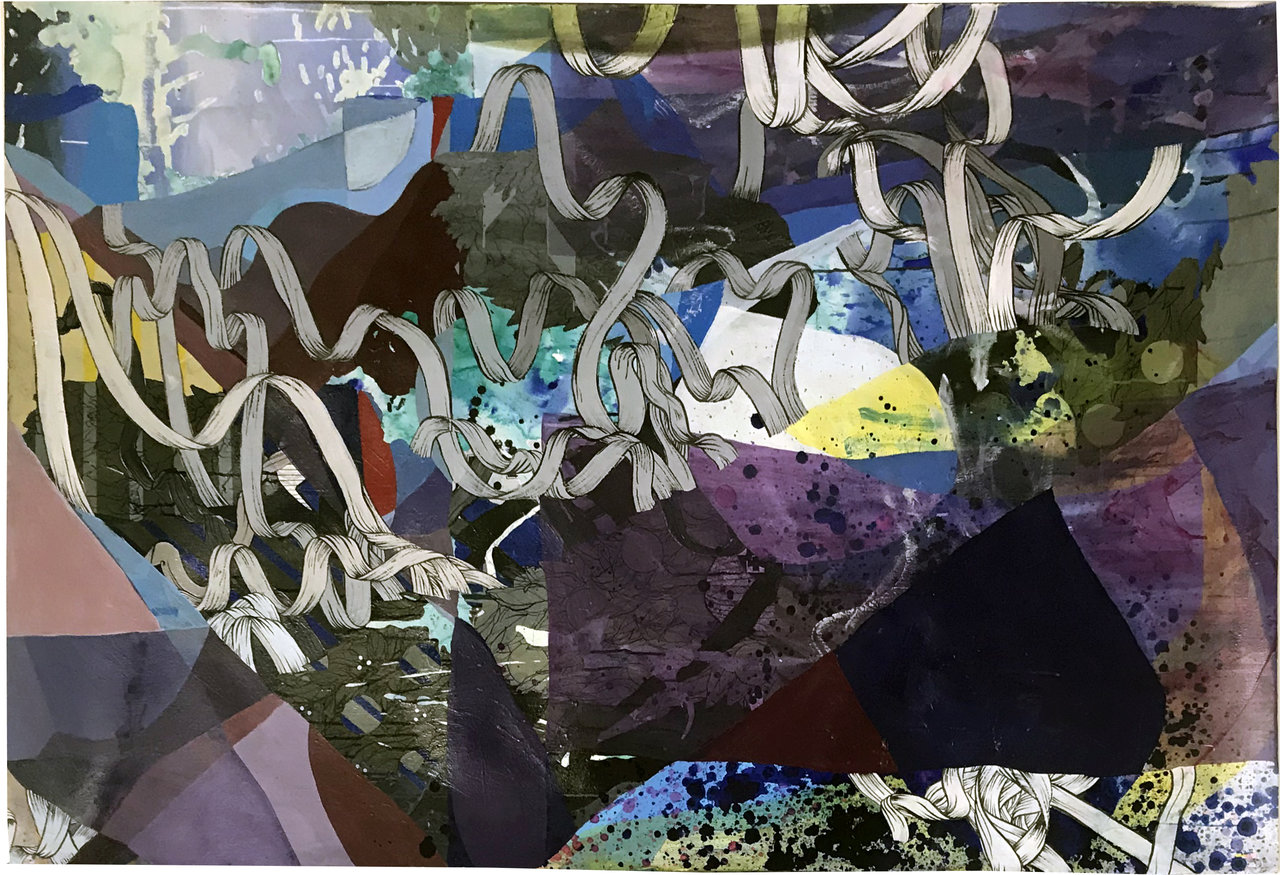
    Seemingly different on the surface, artists Katherine Tzu-Lan Mann and Beth James evoke harmony and conversation in Lonsdale Gallery’s Reverie, an exhibition that explores refractions of dreaming and the way these imaginings translate onto the canvas.

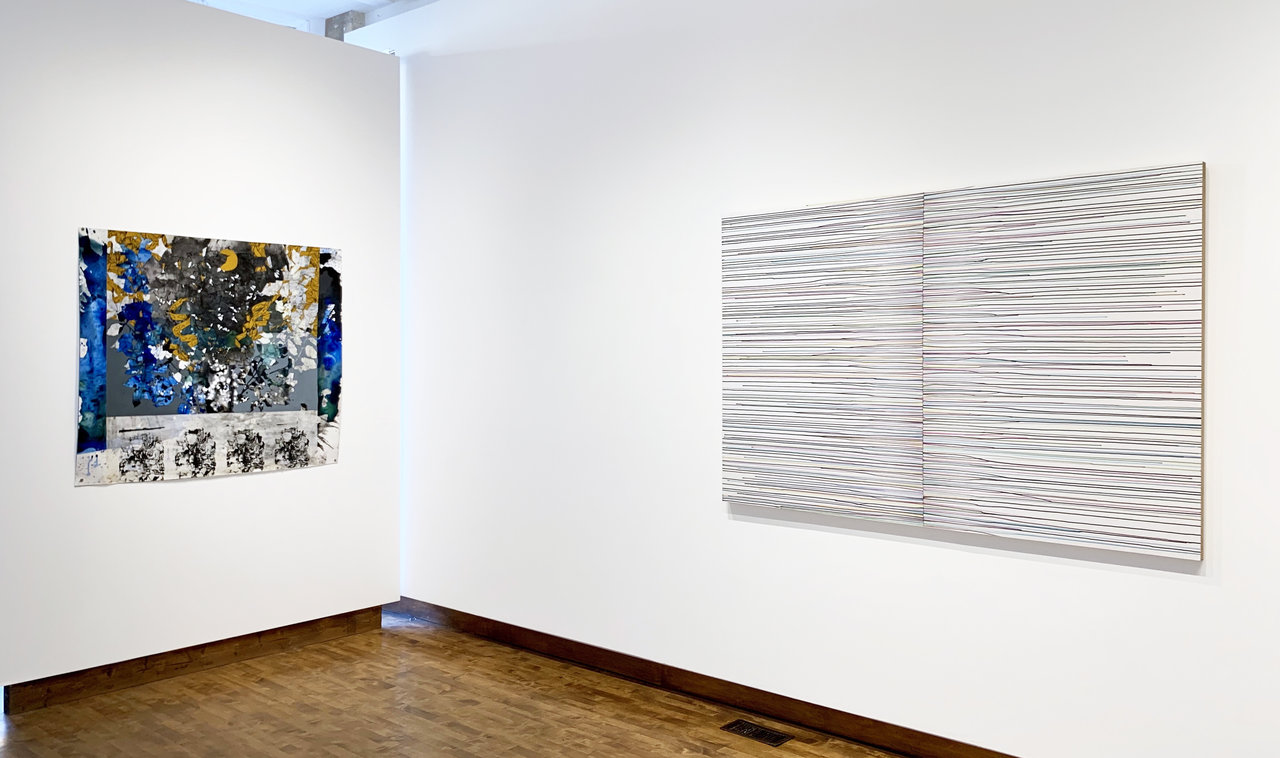
    Installation view with Katherine Tzu-Lan Mann, Topiary (left) and Beth James, Untitled (drips: ten thousand lines), CMYK 02 (right)

    Upon entering the space, varied approaches were immediately visible between Tzu-Lan Mann’s and James’ works. Tzu-Lan Mann uses methods of intricate layering, creating large canvases that are filled with sundry colours, lines and techniques. The process of growth is present in the way her layers expose the skeleton of what her canvases once were. Tzu-Lan Mann’s method involves revisiting her works, modifying each time she re-examines them. Neighbourhood 2, for example, was a piece finished in 2010, yet it underwent revision eight years later. Here, her changing responses to her immediate environment allow her works to continue to mature, exposing her changing thoughts, emotions and perspectives all while leaving traces of her origins, displaying her trajectory as an artist.

    Katherine Tzu-Lan Mann, Neighbourhood 2, 2019, acrylic and sumi ink on paper, 44 x 66 in

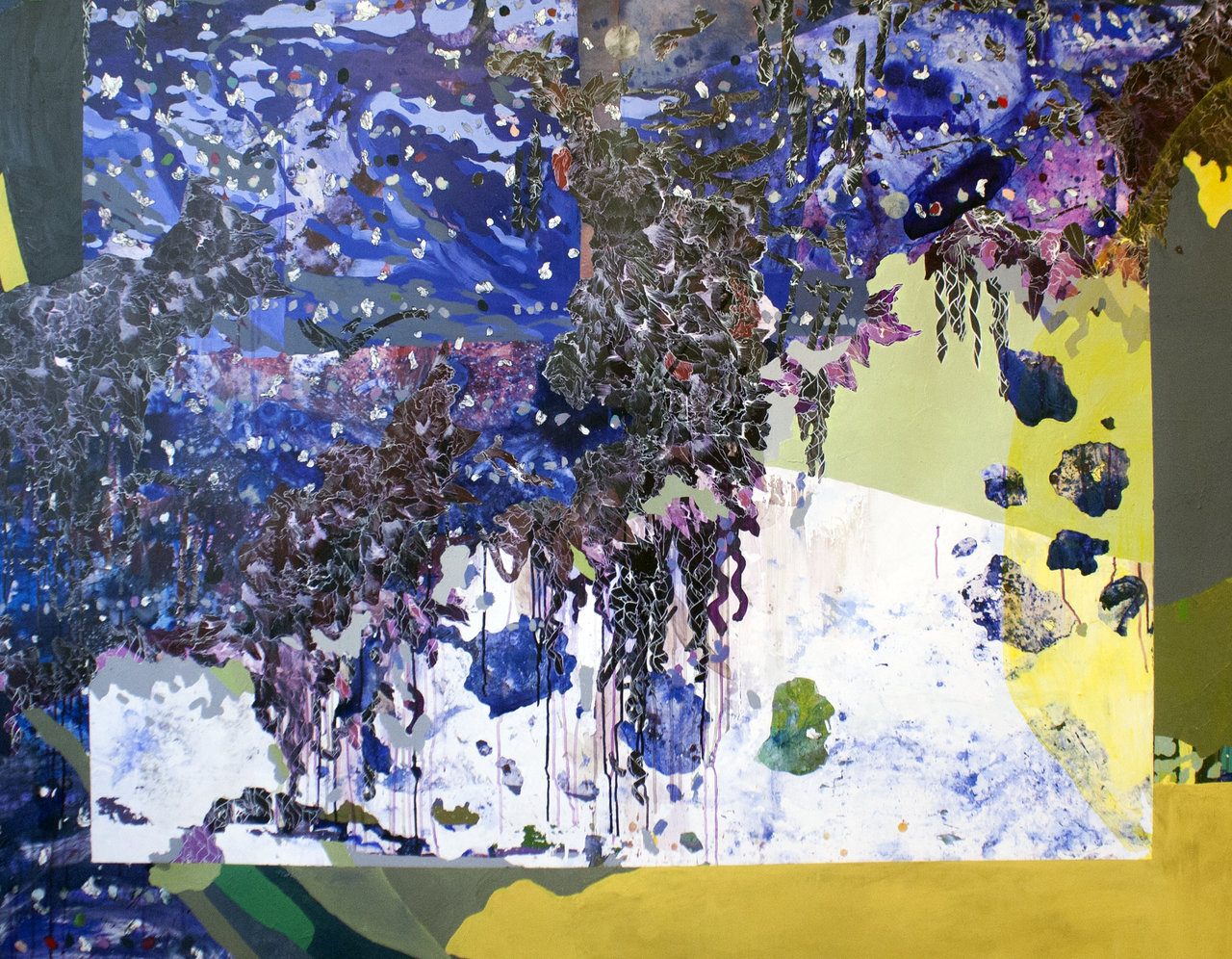
    Citing her body of work as landscape art, Tzu-Lan Mann fuses botanical influences with feminine elements. In Dripstone, an abundance of foliage pervades the canvas, creating an almost unrecognizable explosion of petals and vegetation. Using combinations of acrylic and sumi ink on paper, her works are rich and kaleidoscopic with the very history of her works’ evolution lending her project life and vivacity.

    Katherine Tzu-Lan Mann, Dripstone, 2019, acrylic and sumi ink on paper, 55 x 70 in

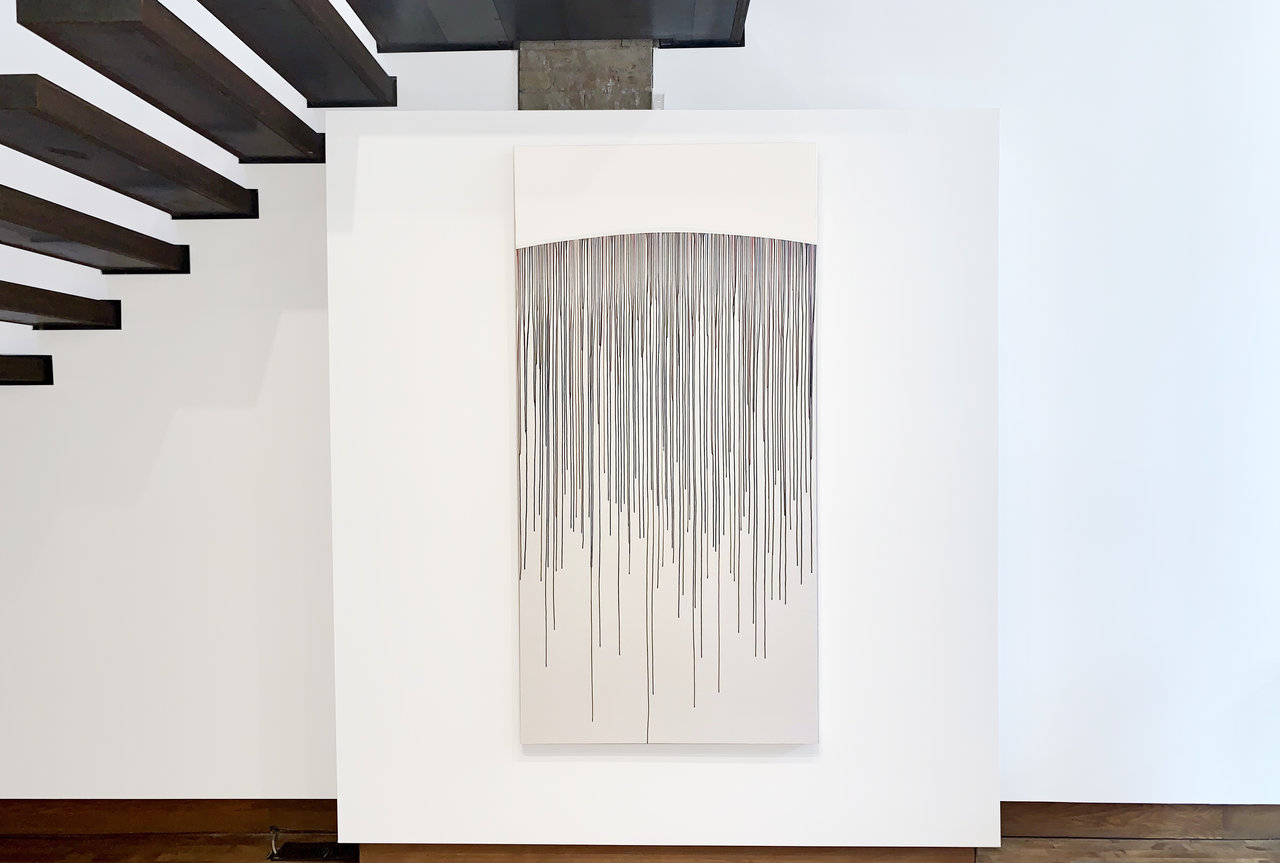
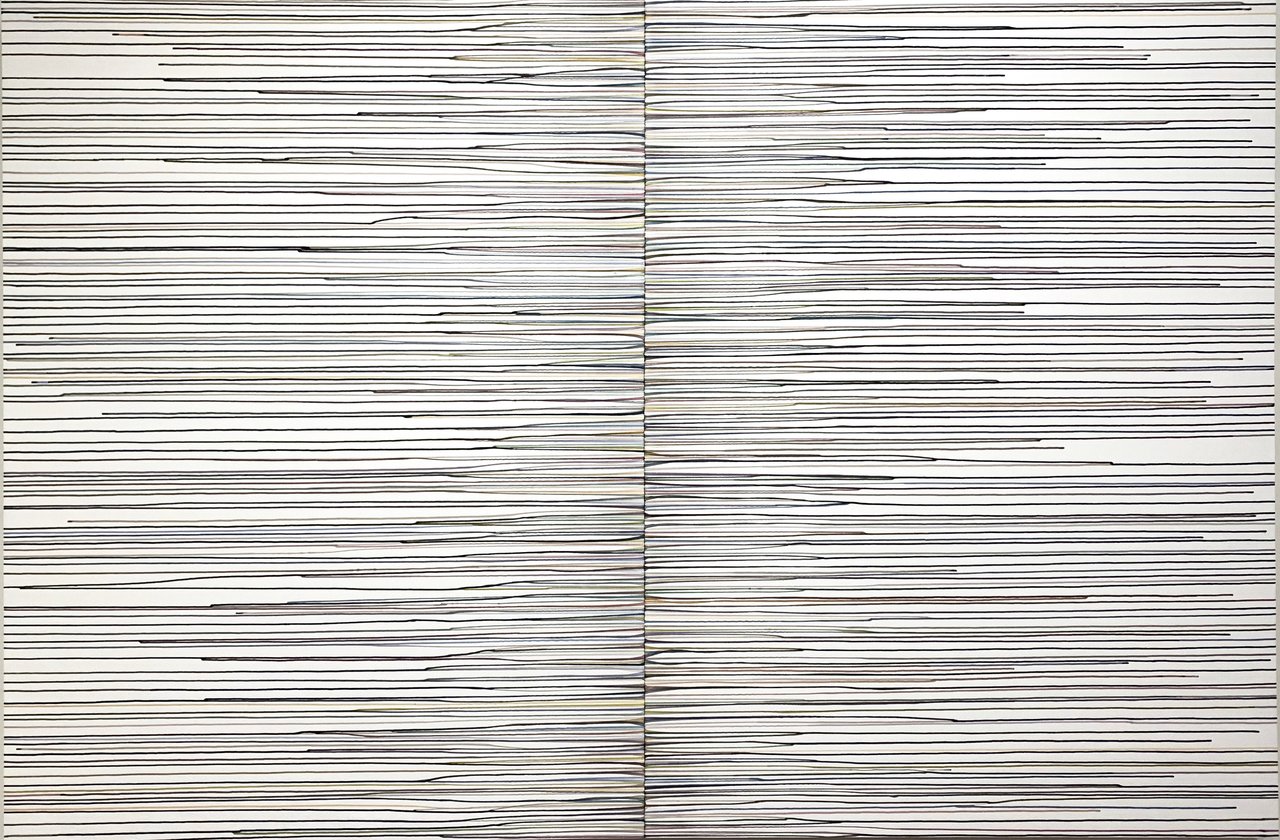
    While Tzu-Lan Mann focuses on the process of maturity, James concentrates on a singular approach. Behind her practice of linear abstraction is a complex sequence of control and impulse. Beginning from a particular point, James permits her paint to drip freely, producing its own narrative as it moves through the space of the canvas. The product is an elaborately filled breadth of lines that simultaneously overlap and divide one another.

    Beth James, Untitled (drips: curved origin), 02, 2019, watercolor, on paper mounted on panel, 72 x 36 in (Installation view)

    Amid a sea of varied stripes, negative white spaces protrude, producing a separate narrative in itself. James exercises her control by putting pigments on her canvas, yet allows her colours to freely move, and perform through their given space.

    Beth James, Untitled (drips: ten thousand lines), CMYK 02, 2019, watercolor, on paper mounted on panel, 48 x 72 in

    Superficially diverging in methods, Tzu-Lan Mann’s and James’ works harmonize more than what’s ostensibly evident. While their pieces narrate varied timelines, maturities, and experiences, they correspond in their use of continuity and freedom to construct their pieces. Where Tzu-Lan Mann stimulates the organic process of rethinking and revising, James permits her paint to accomplish this spontaneity. Both artists’ seizure of dogmatic feminine elements is also present in the trappings they’ve used to construct their images. James revises the connotation of watercolour in her work, using its quality of translucence and luminosity to conjure pieces that declare power and control, manifesting in the way her pigments freely move through the canvas. Likewise, the implication of Tzu-Lan Mann’s botanical creations rapidly shift from feminine and soft ascriptions to explosive overtones, arousing dominance and resilience.

    Installation view of Reverie

    True to its theme of imaginings, Katherine Tzu-Lan Mann and Beth James allow their audience to envisage the movement of their dreams and thoughts, permitting us to see, if only for a fleeting moment, how they could possibly appear should they have the inventiveness to materialize and move on their own.

    Maria Mendoza Camba

    Images are courtesy of Lonsdale Gallery

    *Exhibition information: August 30 – September 27, 2019, Lonsdale Gallery, 410 Spadina Rd. Toronto. Gallery hours: Wed–Sun 11 am – 5 pm.