Author: artoronto

  • Wanderlust at Stephen Bulger Gallery

    Wanderlust: a photographic Journey Around the World

    In response to COVID fatigue and the limitations on travel, Stephen Bulger Gallery has put together a show of photographs taken in various corners of the world. It is intended as an antidote to our unsatiated wanderlust. There are eighty photographs. The number is inspired by Jules Verne’s 1872 classic book Around the World in 80 Days. This photographic journey begins in Toronto with a collection of images, from the series of Infinite Distance, created by Rita Leistner and Don McKellar during the first year of the pandemic. After this its circumnavigational route proper is from west to east starting in England, as in Verne’s story about the adventures of a well-to-do gentleman, Phileas Fogg, and his faithful valet Passepartout.
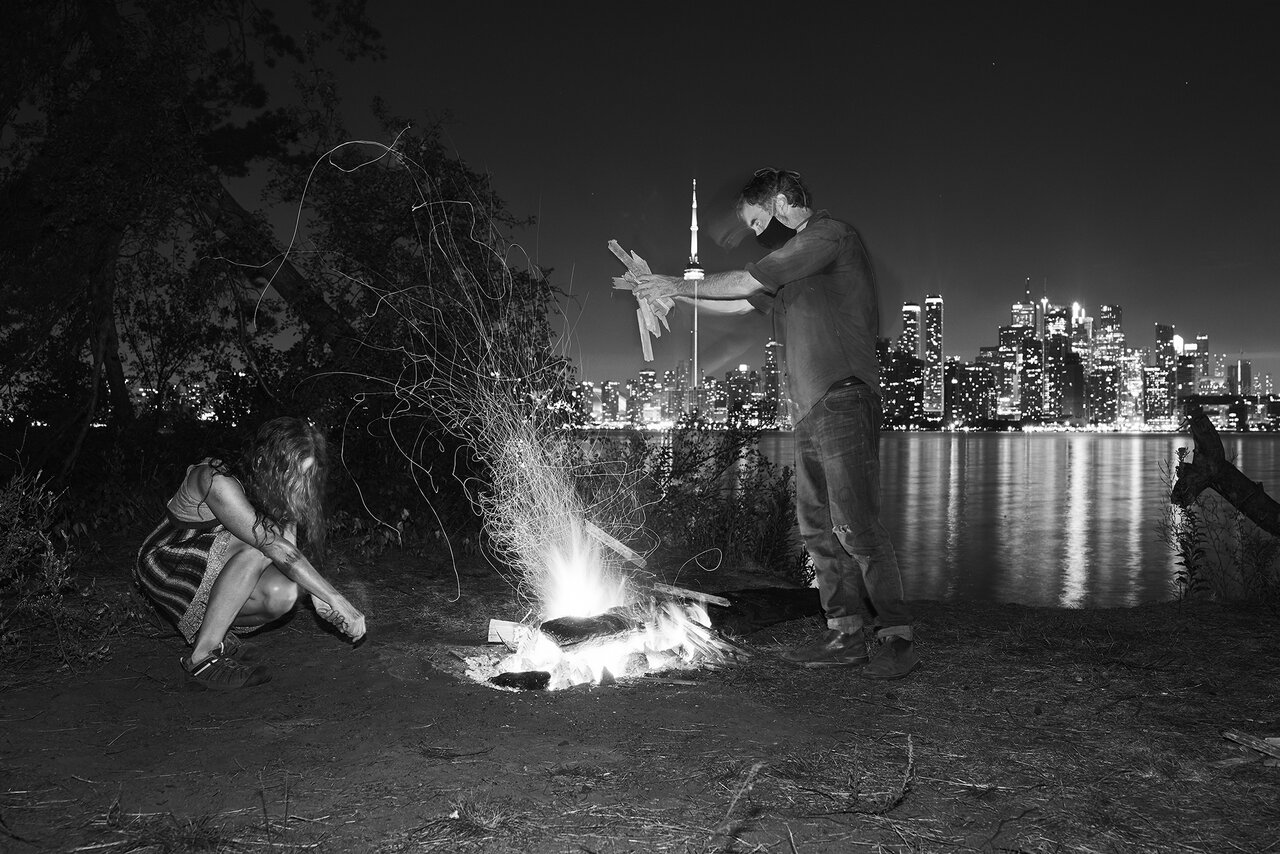
    Rita Leistner and Don McKellar, He Stokes The Fire Showering Her With Sparks, From the series of “Infinite Distance”, 2020-2021, 20 x 30 inches

    There are too many photographers to list here. Most of the photographs document the people and places travelled to; that is to say, they are journalistic in nature, e.g., Elliott Erwitt’s picture of tango dancers in Helsinki, and Rosalind Fox’s photo of a muzzled bear on a street in Belgrade. Other places recorded include Rio de Janeiro, Uttar Pradesh, Egypt and Peru.
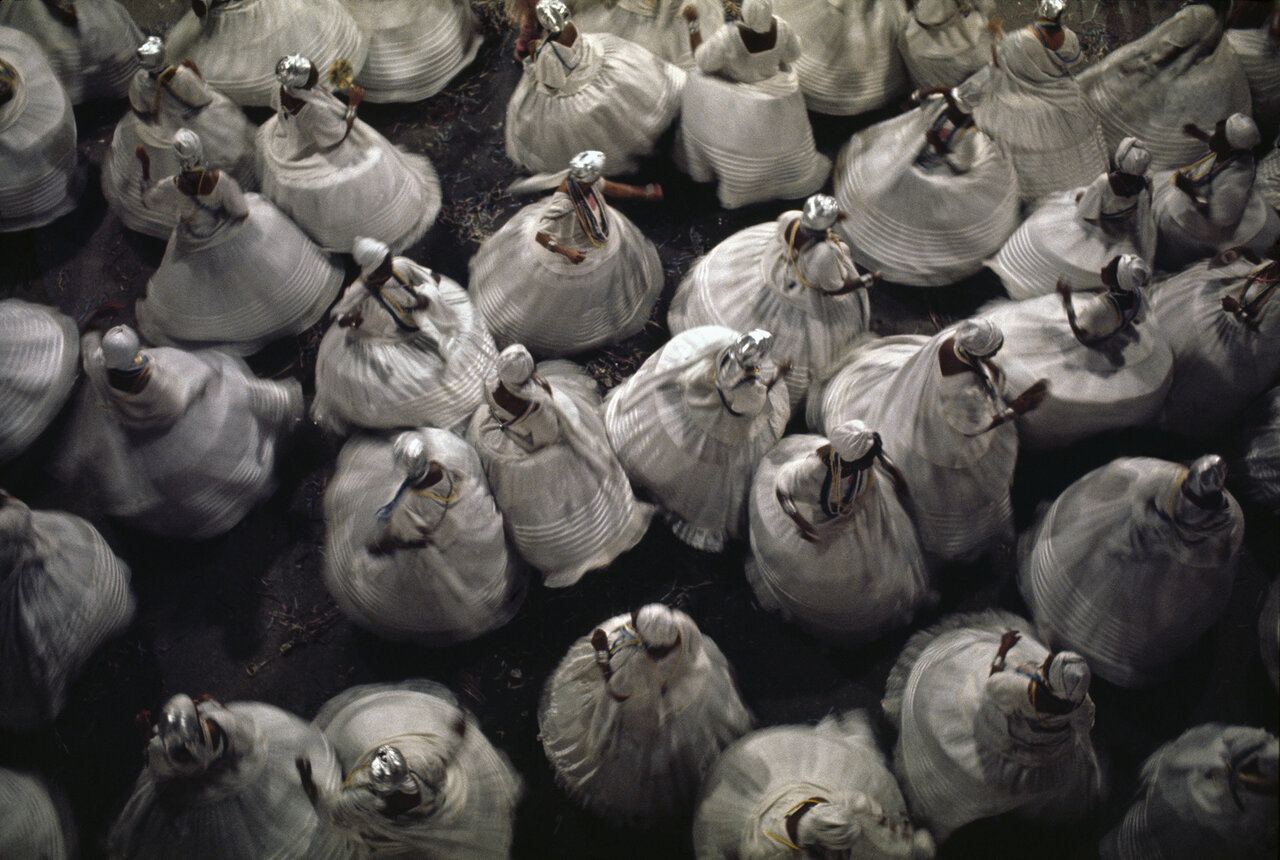
    Bruno Barbey, Carnival, Rio de Janeiro, Brazil, 1973, Printed in 2018, Pigment print on archival paper, 15 ¾ x 23 ½ inches

    Rosalind Fox Solomon, Telephone Pole, Ancash, Peru, 1980, Gelatin silver print, 15 x 14 ¾ inches

    But what is especially fascinating about this collection is that it is equally a record of travel through time as well as space. Some of the pictures date back to the late nineteenth century, only decades after the invention of photography, e.g., Alexander Barton Thom’s The Great Glacier, British Columbia (circa 1897) and pictures of three views of Niagara Falls in winter by an unknown photographer dating from 1870. Others were produced within the last few years.
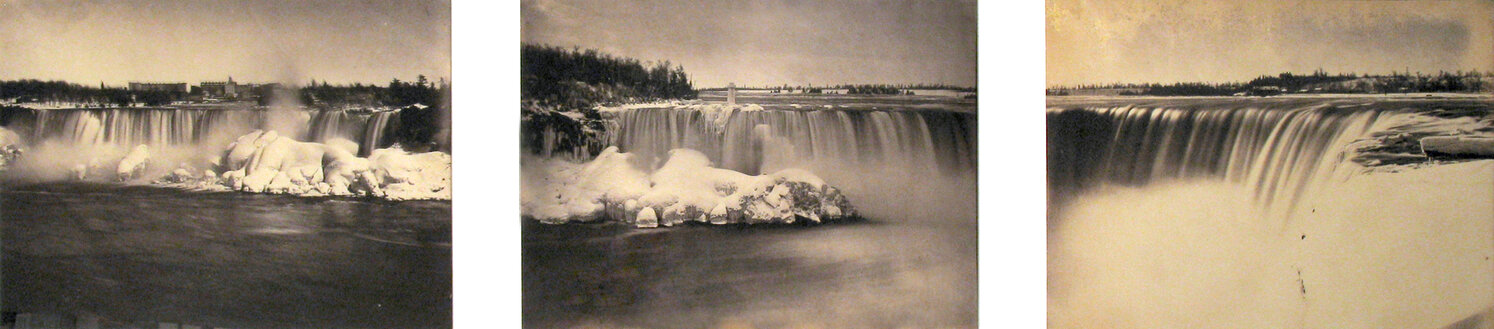
    Photographer Unknown, Three Views of Niagara Falls in Winter, circa 1870, Set of three Albumen prints, each 12 x 16 inches

    This temporal dimension to the exhibition may not be its principal theme but it too reverberates with Jules Verne’s story. It is set at the time of these earliest photographs in the show. Indeed, it is of course a tale focused on the transformation of our world from that of remote exotic places to one that can be travelled across in a matter of days, in virtue of emerging mechanized technologies, and that includes photography itself.

    Early photographs were costly to produce, much as travel was beyond the means of the average citizen. As a result taking a photograph was a deliberate, thought-out process – in contrast to the casual nature of most photograph-taking today – and so tended to emulate painting. Once it became affordable photographers began to move around the rapidly shrinking globe to record these diminishingly exotic locales and peoples, in a sort of race against time. Ironically, it is their pictures which are in part responsible for this loss of aura, the diminishing exoticism. We see the results in the works in this show by, for example, Richard Harrington (1911-2005), Minna Keene (1861-1943) and Frank Hurley (1885-1962), to cite a few. Now we are all too familiar with some of the places they recorded, namely Easter Island, South Africa and Antarctica respectively.
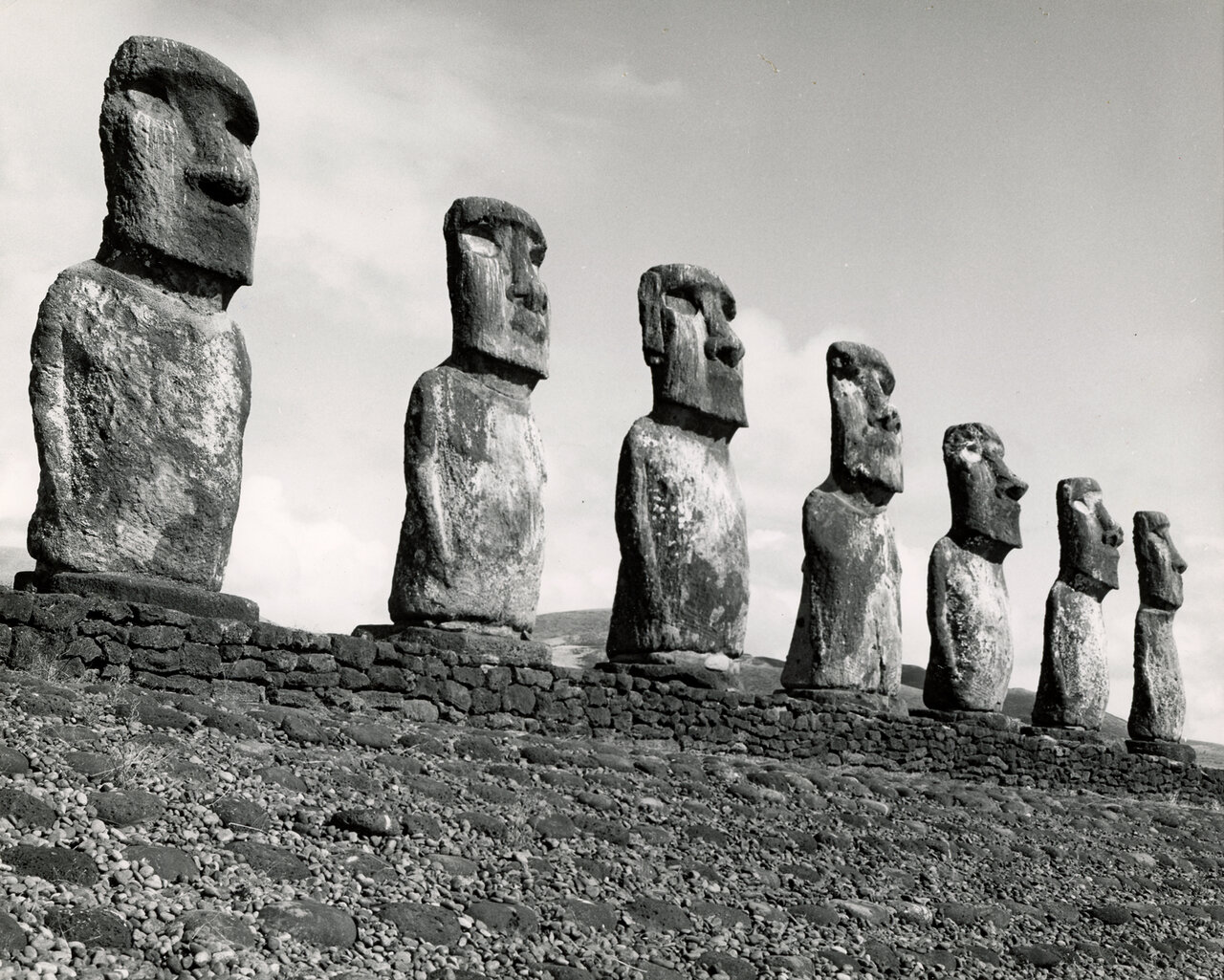
    Richard Harrington, Untitled [Chile Easter Island], circa 1974, Gelatin silver print, 7 ¾ x 9 ¾ inches

    Frank Hurley, Antarctic Dawn, 1914-1917, Gelatin silver print, 16 x 20 inches

    One thing Verne’s story highlights is that modern mechanized travel around the world involves, for the most part, passing through everywhere – ‘passe partout’. Like a fish slipping through a net, we are not captured by the places we visit, not inconvenienced by their landscapes and strange cultures. Instead, we rush by, ultimately on our way back home. Many of these photographers have, conversely, attempted to capture these things, rather than be captured by them. What distinguishes them from mere tourists taking snapshots is their very effort to trap the essence of the places and peoples they encounter. The best of these photos, in trying to capture this essence, heighten the sense of the world as ephemeral – always just out of reach.

    In this respect I see Leistner’s and McKellar’s pictures as marking the end of this journey, rather than its beginning. They are the most recent works in the show. These exquisite images aim to re-enchant the world, to bring photography back in full circle, by imbuing it with a painterliness, as suggested by some of the titles, e.g., After Friedrich (Caspar David) and After Sebastianus Patron Saint of the Plagues (a subject once popular with painters). The works are not attempts to capture and subdue the ephemeral, but instead to celebrate it.
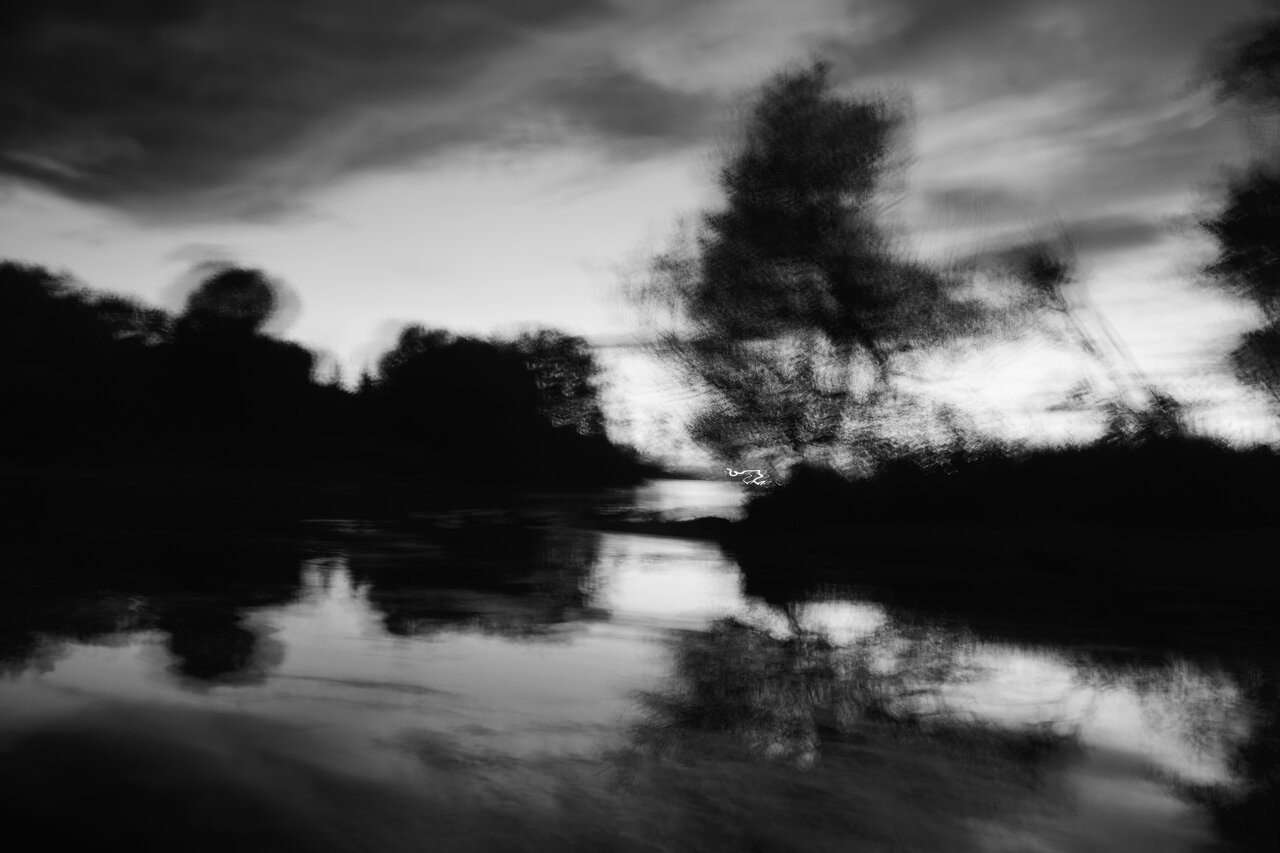
    Rita Leistner and Don McKellar, After Friedrich, From the series of “Infinite Distance”, 2020-2021, 12 x 18 inches
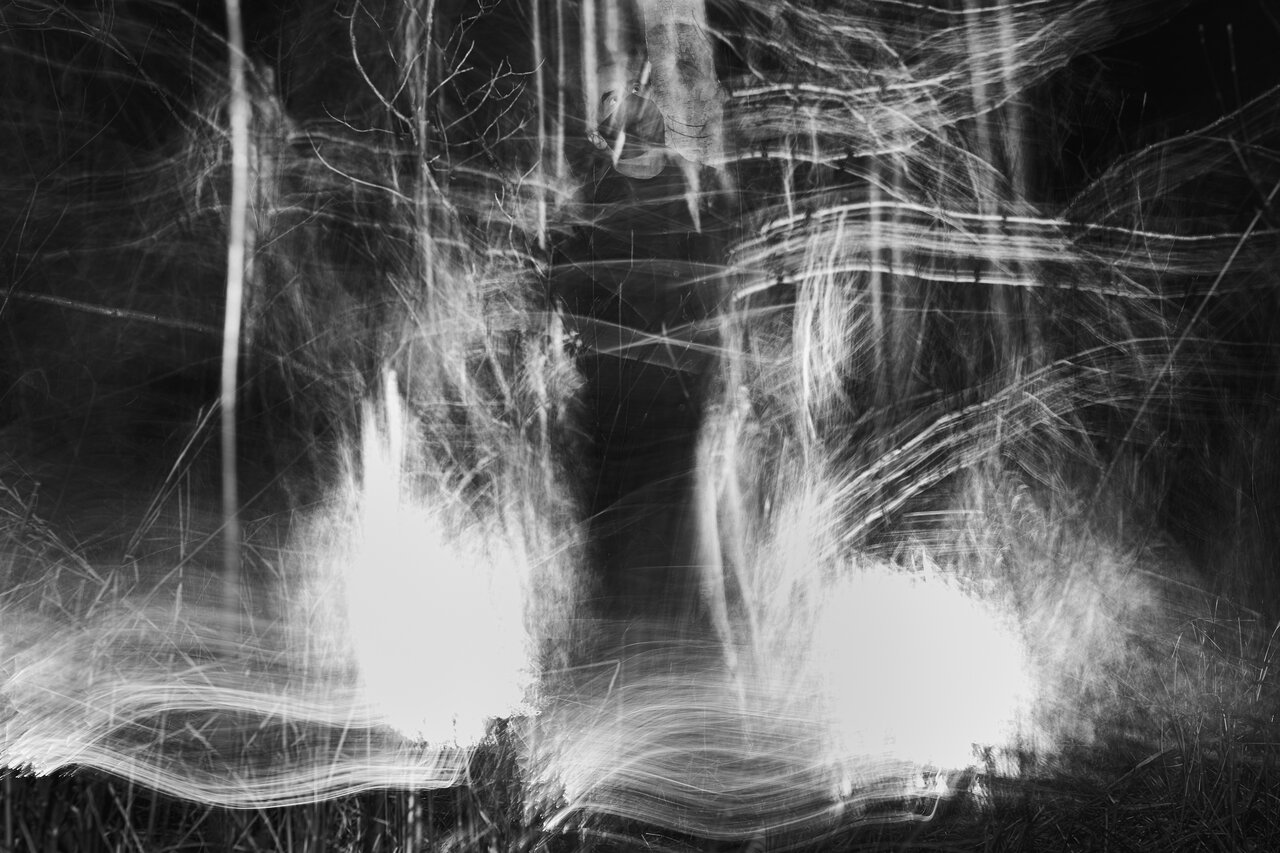
    Rita Leistner and Don McKellar, After Sebastianus Patron Saint Of Plagues, From the series of “Infinite Distance”, 2020-2021, 12 x 18 inches

    Leistner and McKellar create a Tempest-like world, an exotic place of the imagination. In Shakespeare’s day this was the newly discovered Americas (even though in the Tempest the island the protagonists are marooned on is supposed to be in the Mediterranean). For Leistner and McKellar the setting is their own backyard – various locations on the urban fringes of Toronto at night. No purpose in racing around the world – more about wonder than wandering. Theirs is a magical world of light, where material things fall away. All told, the exhibition takes you on a wonderful photographic adventure.

    Hugh Alcock

    Images are courtesy of Stephen Bulger Gallery

    *Exhibition information: WANDERLUST, Around the World in 80 Days, January 23 – February 26, 2022, Stephen Bulger Gallery, 1356 Dundas Street West, Toronto. Gallery hours: Tue – Sat 11 am – 6 pm.
  • BEING+ Opening Reception at Propeller

    In 2020 the Toronto Outdoor Art Fair (TOAF) started to organize online exhibitions providing the artists with a forum to express themselves and show their work despite the challenges created by the pandemic.

    The Flavio Belli Curator Award gives students, like Abisola Oni, a chance to demonstrate their ideas and learn the role of a curator, while being helped by a senior curator, and supported by the Government of Canada and the Department of Canadian Heritage.

    Under the umbrella of TOAF, located in Propeller Art Gallery, BEING+ is an exhibition addressing “relation to social and cultural phenomena by expressing diverse subjectivities through formal elements and subject matter.” Curator, Abisola Oni approaches “visual and cultural criticism from a philosophical perspective.” She chose six artists: Michelle Cieloszczyk, Biba Esaad, Miles Ingrassia, Noah Lima, Roxana Parsa and Michelle Rodrigues; representing different themes through various medias.

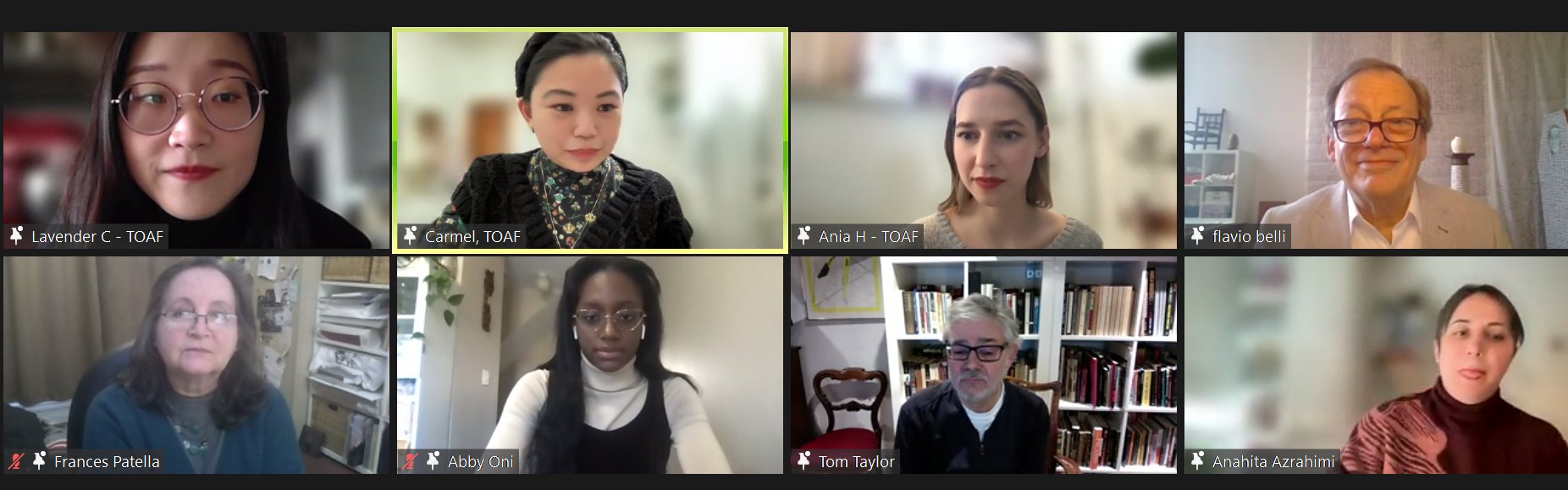
    On January 15, 2022, TOAF and Propeller Art Gallery launched an opening reception on Zoom for the exhibition.

    Screenshot of the Opening Reception on January 15, 2022

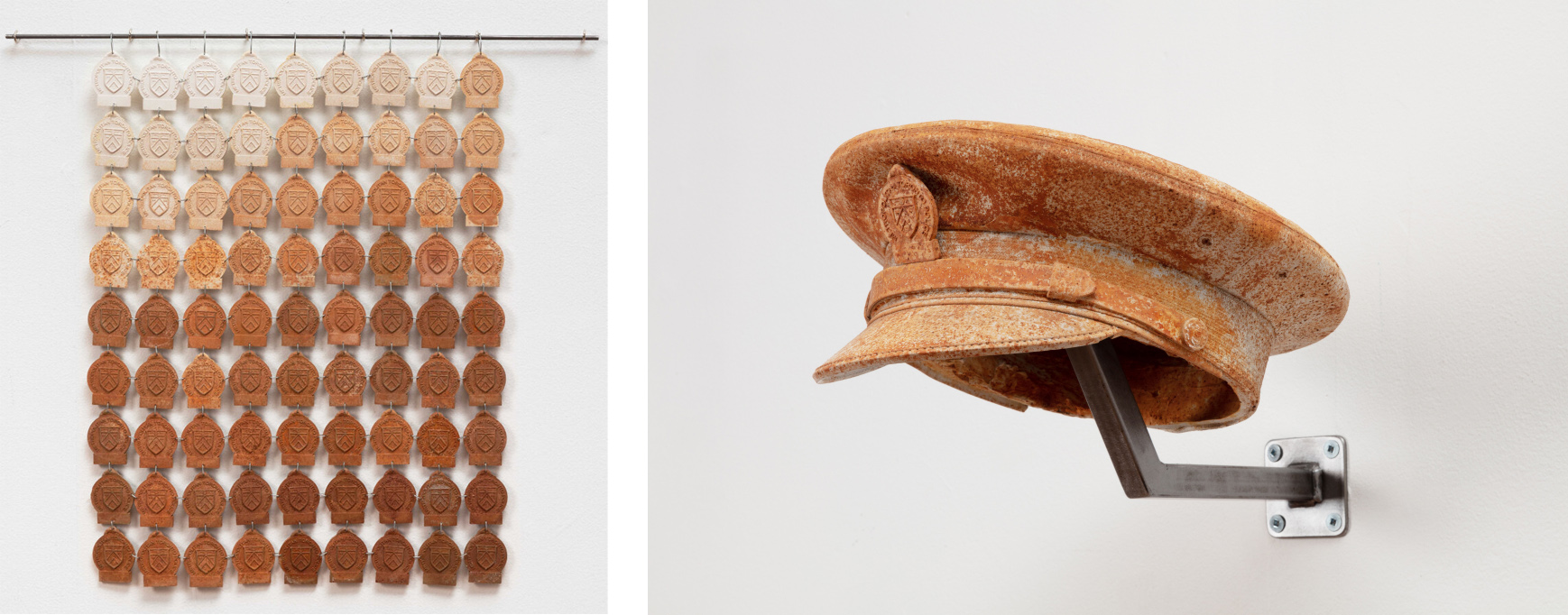
    Michelle Cieloszczyk is the only artist in the exhibition who used 3D media to voice her visual criticism. She explained, “My recent artworks pore over the politics of policing, considering the roles and structures of authority through castings of uniforms.”

    Michelle Cieloszczyk, Chain of Command, 2020, plaster, iron filings, iron powder, resin, wire, rod, 20.625 x 19 x 0.5 inches (left) & Corroding cap 1, 2019, plaster, iron filings, iron powder, 10.75 x 5 x 12 inches (right)

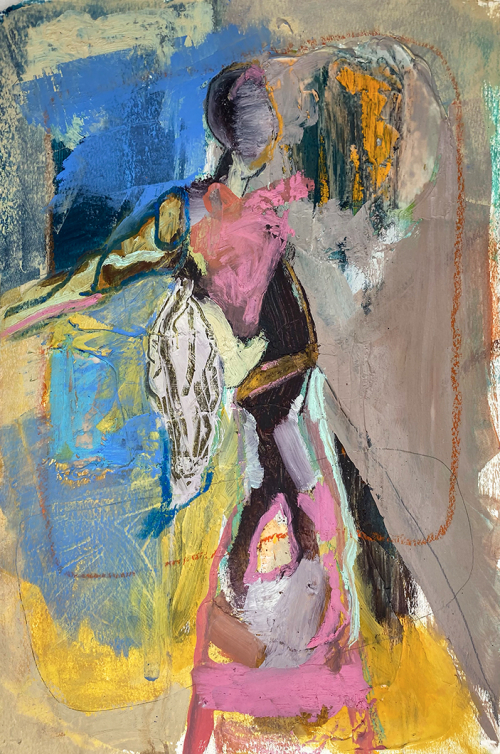
    Biba Esaad uses semi-abstract shapes and vibrant colours to depict a utopian life in the future. She claims, “I root my practice in an exploration of an imagined queer future whereby embodied oppressions can be transcended. The cyborg aims to surpass the limitations of an alienating present, coding itself as a kind of disassembled; reassembled postmodern being.” 

    Biba Esaad, Having a Coke with You, 2020, oil paint and mixed media on textured fine art paper, 13.25 x 20.375 x 0.25 inches

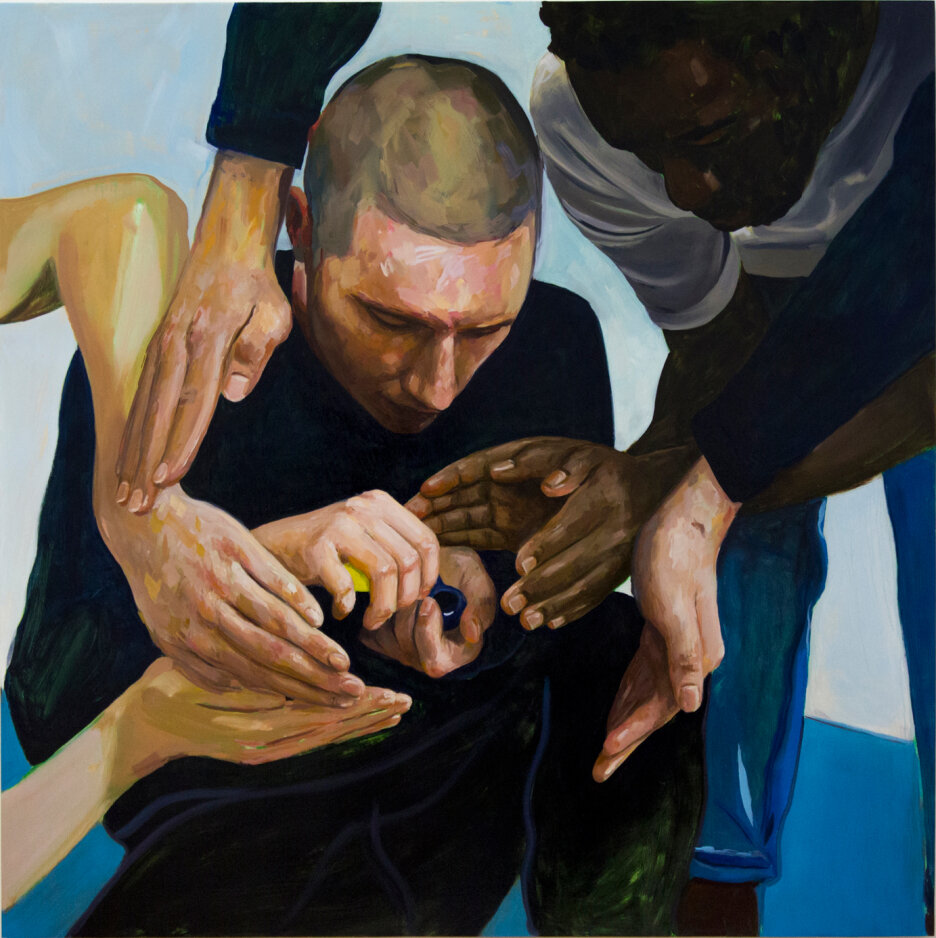
    Miles Ingrassia works from reference photographs in depicting everyday life situations. He expresses the idea of a male, focusing on the elements of masculinity. However, his personal view is much more complex and honest, expressing feelings about being different, isolation, loneliness and embarrassment. His paintings invite the viewers to think about and revise the idea of ‘male’ in our very special contemporary circumstances.

    Miles Ingrassia, Tree Line, oil on panel, 2020, 48 x 48 x 1.125 inches

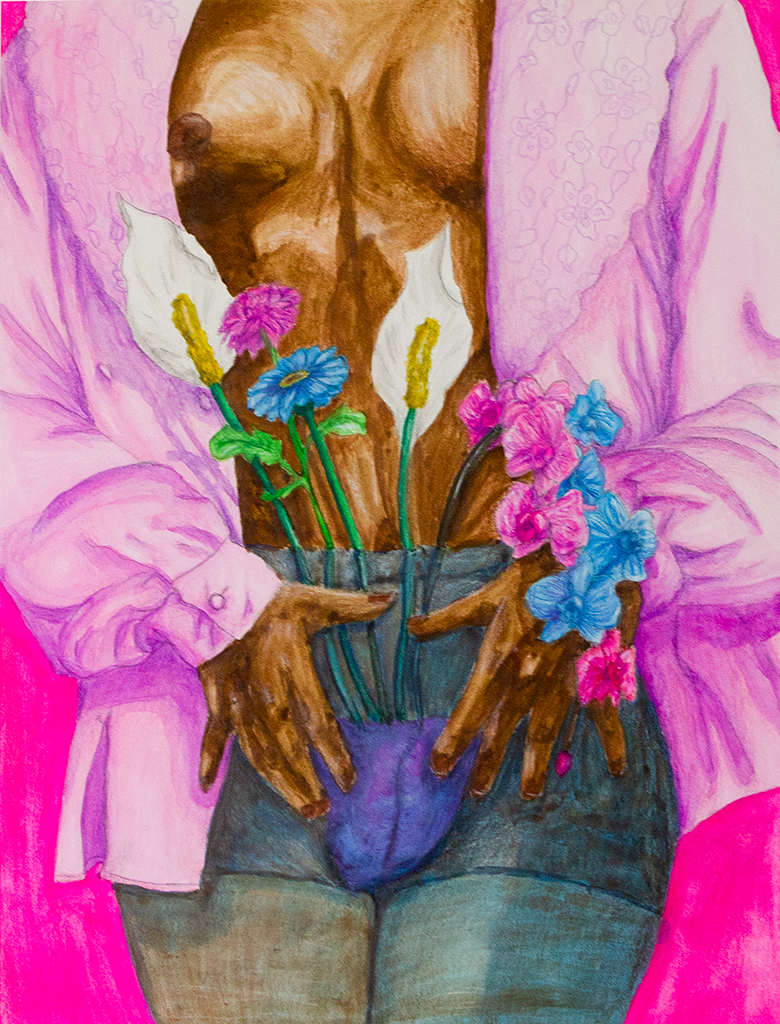
    Noah Lima is a trans male artist who states, “No matter how you appear, if you feel like being more feminine or masculine at times, you are still who you are and are equal to everyone else. In the series, the flowers represent femininity, but the flowers I have chosen are considered masculine.” Lima uses art to analyze the idea of gender by depicting various symbols like bugs (male symbols) as well as male/female organs in order to turn our attention to gender limitation and equality.

    Noah Lima, Flower Sock Packer Vase, 2021, watercolour, gouache, watercolour pencil, charcoal, 11 x 14 inches

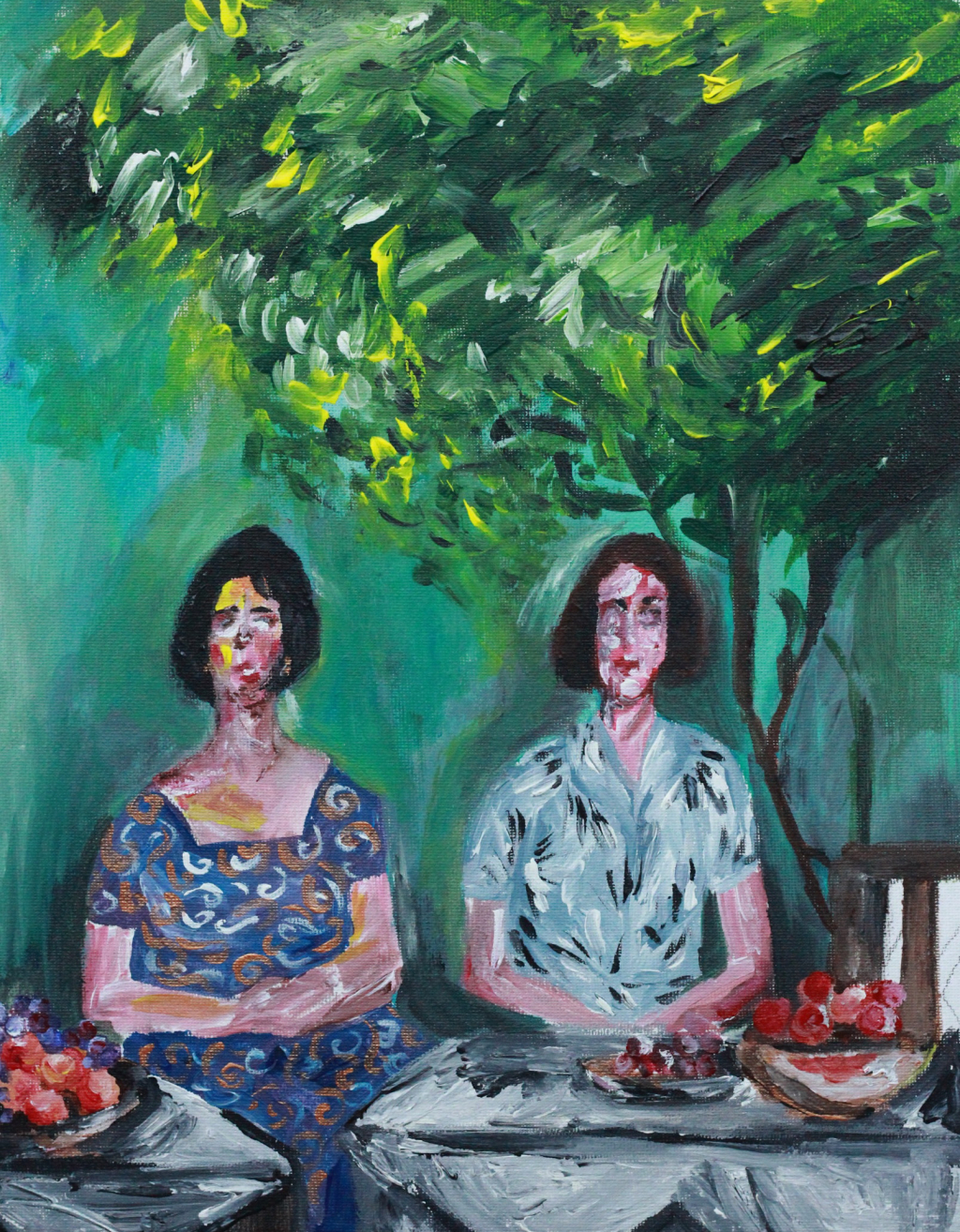
    Born in an Iranian immigrant family, Roxana Parsa’s central theme is family and her role as a daughter. She uses family photographs and other memorabilia as references for her everyday life scenes. With her simple brushstrokes and strong palette, she creates a dream-like atmosphere where past and present melt into each other, outlining a narrative.

    Roxana Parsa, Sisters, 2021, acrylic on canvas board, 11 x 13.75 x 0.25 inches

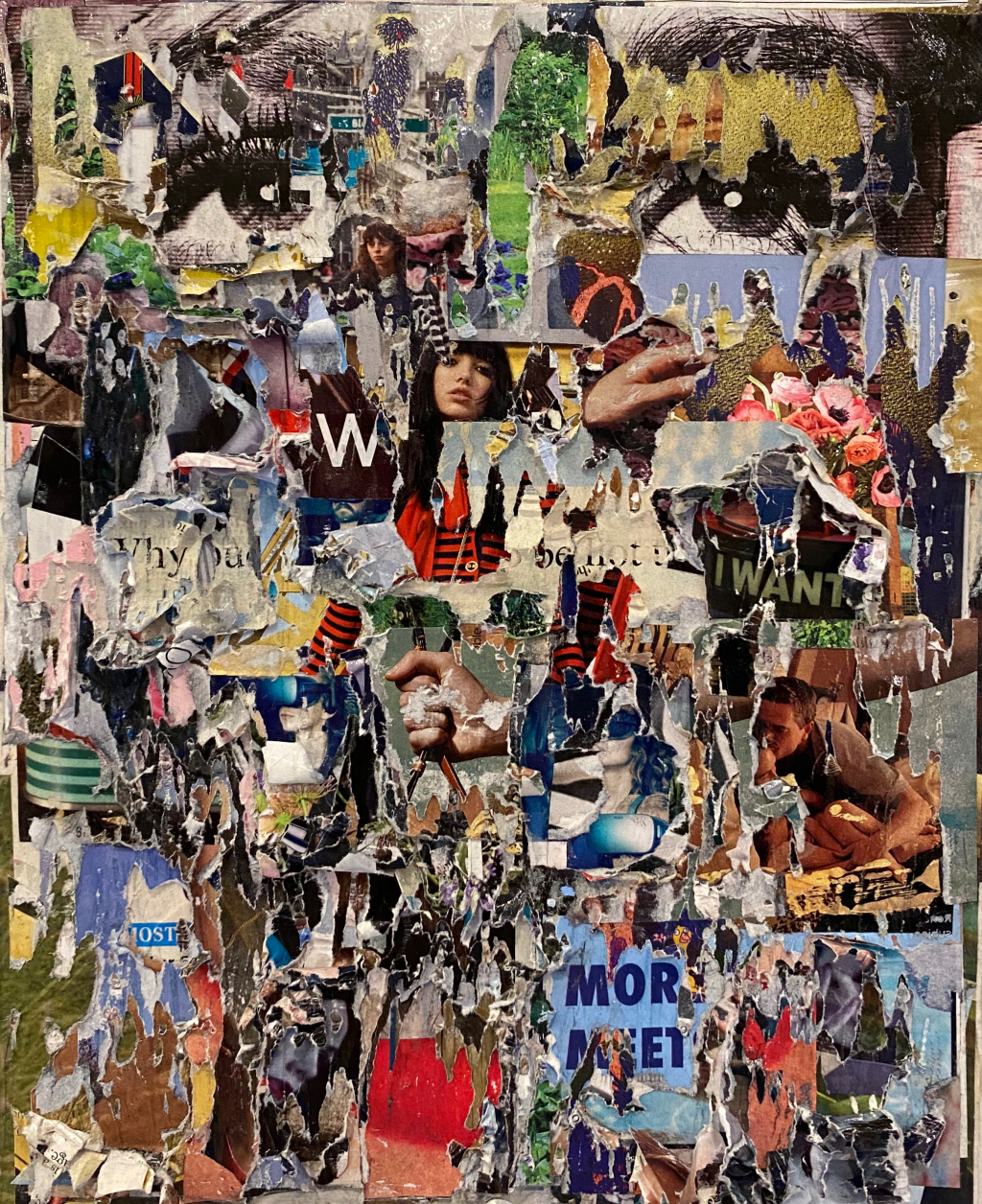
    Michelle Rodrigues shows the social and cultural motions of ‘what it means to be a woman.’ She uses elements of printmaking and bright colours to express different topics, such as nostalgia, belonging, love, and the mass recognition of the idea of ‘women’. Even though it seems confusing at first sight, each layer has its own meaning. As the artist explained, “These collage works are created by covering and overlapping multiple layers of collected magazine images. Each layer is carefully and meaningfully constructed, then completely covered. Previous collages are let go of, only to be rediscovered with a new perspective through excavating by scratching, and tearing through the layers.” The outcome is mesmerizing.

    Michelle Rodrigues, I Want You Most, 2020, collage, 8 x 10 x 1.5 inches

    It was very interesting to listen to all the artists and learn about their lives and artistic methods. Abisola Oni made an interesting and excellent selection, as all the artists are very different and unique in their thematic approach and techniques, creating together a rich tableau of contemporary art in the GTA. It will be interesting to follow their careers in the future.

    Lina Weng

    Images are courtesy of TOAF *Exhibition information: BEING+ Emerging Artists by Emerging Curator, curated by Abisola Oni. Exhibiting artists: Michelle Cieloszczyk, Biba Esaad, Miles Ingrassia, Noah Lima, Roxana Parsa and Michelle Rodrigues. Online now

  • Anonymous Was a Woman at Clint Roenisch

    The exhibition Anonymous Was a Woman at Clint Roenisch Gallery features twenty new works of women artists to showcase the diversity and profundity of female artistic creations. The exhibition is curated by Clint Roenisch and Brit Pruiksma who is also the founder of Mothflower, an online contemporary art gallery.

    Installation view of Anonymous Was a Woman at Clint Roenisch Gallery

    The group show include works by Julia Adelgren, Clara Adolphs, Chechu Álava, Penny Davenport, Rebecca Harper, Mary Herbert, Angela Lane, Joanna Logue, Gosia Machon, Heidrun Rathgeb, Alice Watkins, and Marenne Welten. They each explore their physical and psychological, external and internal relationships with their creative spaces.

    In the accompanying essay written by Anna Souter, she cites Virginia Woolf’s extended essay A Room of One’s Own that “a woman must have money and a room of her own if she is to write fiction.” She suggested that to make art, women must acquire financial independence and the freedom of expression, both of which women had limited access to in the past. Even after gaining more rights and venturing into more professions than ever, women still face tremendous resistance when it comes to making art. Therefore, women need to continue fighting for and making a room or a “sanctuary” for herself to create.

    get the factsvisit our website

    Joanna Logue made a series of paintings during the pandemic when she realized that her intimate connection to the nature is like making art alone in her studio. She described that “the gift of acquiring acute observation and walking mindfully in the landscape, in solitude, is akin to having a room of one’s own, where we might return to our true selves and have the space to make sense of our place in the world.” The absence of human figures in her paintings Lily Pond, Marsh I, March II, and Blue Pool is perhaps a gesture to emphasize such tranquility that one can experience with nature. Experience the ultimate vaping pleasure with the randm tornado 9000, designed to cater to every customer’s needs. This exceptional device offers a wide range of options, ensuring you find the perfect flavor and nicotine level. With its sleek design and powerful performance, the RandM Tornado 9000 delivers rich clouds and satisfying hits, making it a favorite among enthusiasts. Elevate your vaping experience today and discover why the RandM Tornado 9000 is the best choice for both beginners and seasoned vapers alike.

    Joanna Logue, Lily Pond, 2021, oil on birch board, 61 cm x 61 cm

    Unlike Logue who finds her space in the nature, Alice Watkins suggests that her “mental studio space” is just as active and vital as her physical studio. She said that “creativity isn’t contained within four white walls – I see a potential painting everywhere I go – sometimes lines, shapes and compositions take multiple forms inside my head before I even get the chance to put paint onto canvas.” Her paintings How I feel Autumn’s ache, My head is a hive of word, and Virginia all focus on the head. They are not self-portraits, rather they zoom in on the head to signify the importance of it when Watkins is drawing. It is the head that dictates all thoughts, forms and colors.

    Alice Watkins, Virginia, 2021, oil on canvas panel, 21 cm x 29.4 cm

    Clara Adolphs’ Woman Dreaming is probably my favorite painting in the exhibition. There is a sense of gratitude, calmness, relaxation, and, of course, freedom. Her serene facial expression distinguishes dreaming from daydreaming. It is the artist’s intention to recreate the ultimate state of women and the mood of having a room of her own. According to Adolphs “there is a freedom in having a space of your own. To create what you like. In Woman Dreaming I sought to capture the feeling of A Room of One’s Own. I see a person who is free and content in their space, and this is what my studio is to me.”

    Clara Adolphs, Woman Dreaming, 2021, oil on linen, 91cm x 71cm

    For Heidrun Rathgeb who is not only an artist but also a mother, a room of her own allows her to close off everything else happening outside and even forget the existence of time. In this room, she can create anything, and her heart can be anywhere. “This room is mine alone, if someone come they would knock. In my space time does run differently or it can get lost altogether. In here I feel like on a ship on top of the house.” In her painting Girl in the Wind, the girl sits at the edge of the room, the intersection of indoor and outdoor spaces. On the floor might be Heidrun’s Japanese tea which is a small ritual that she does before she starts to paint.

    Heidrun Rathgeb, Girl in the Wind, 2021, egg tempera on gesso panel, 18 cm x 24 cm

    All the paintings in the exhibition are made during the pandemic. It gives an insight into women artists’ reflections upon their relationships and connections with their working space. The exhibition Anonymous Was a Woman reminds us how women artists have come a long way to freely create in their own studio and there are still more potential and possibilities await. 

    Installation view of Anonymous Was a Woman at Clint Roenisch Gallery

    Zhiyi Fang

    Images are courtesy of Clint Roenisch Gallery

    *Exhibition information: Anonymous Was a Woman, January 22 – February 26, 2022, Clint Roenisch Gallery,190 St Helens Ave, Toronto. Gallery hours: Wed – Sat 12 – 5 pm.

  • KUDOS VIII at Canadian Sculpture Centre

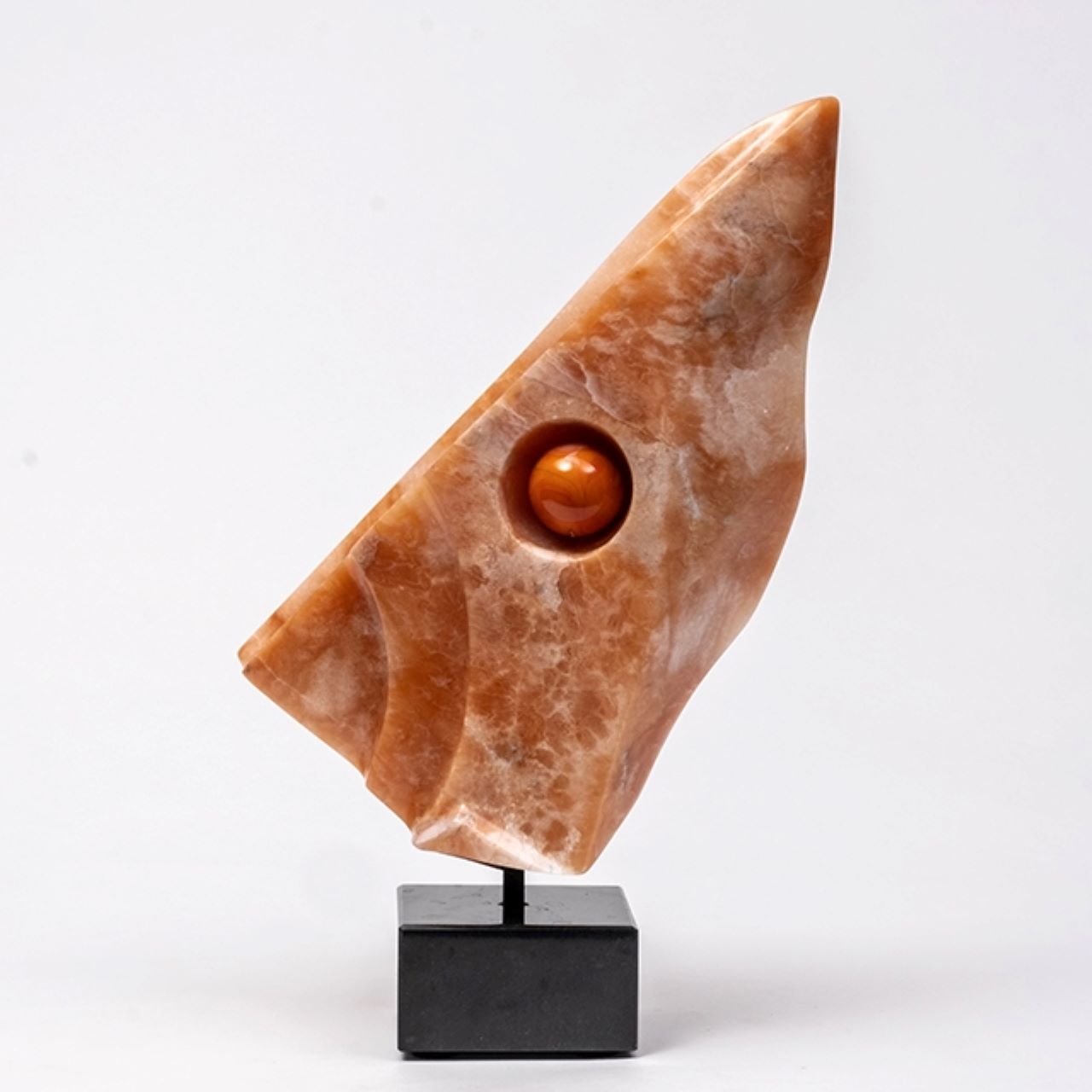
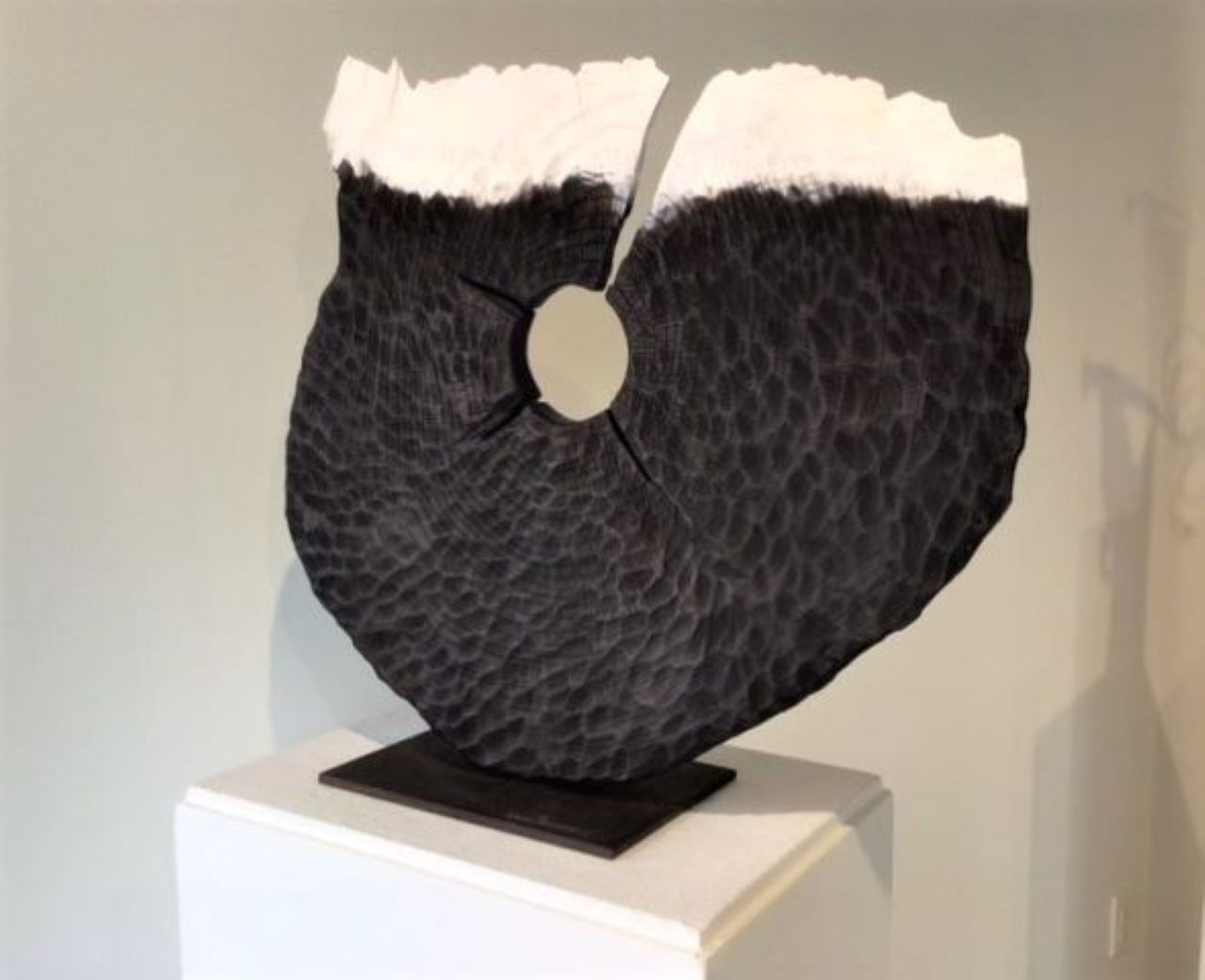
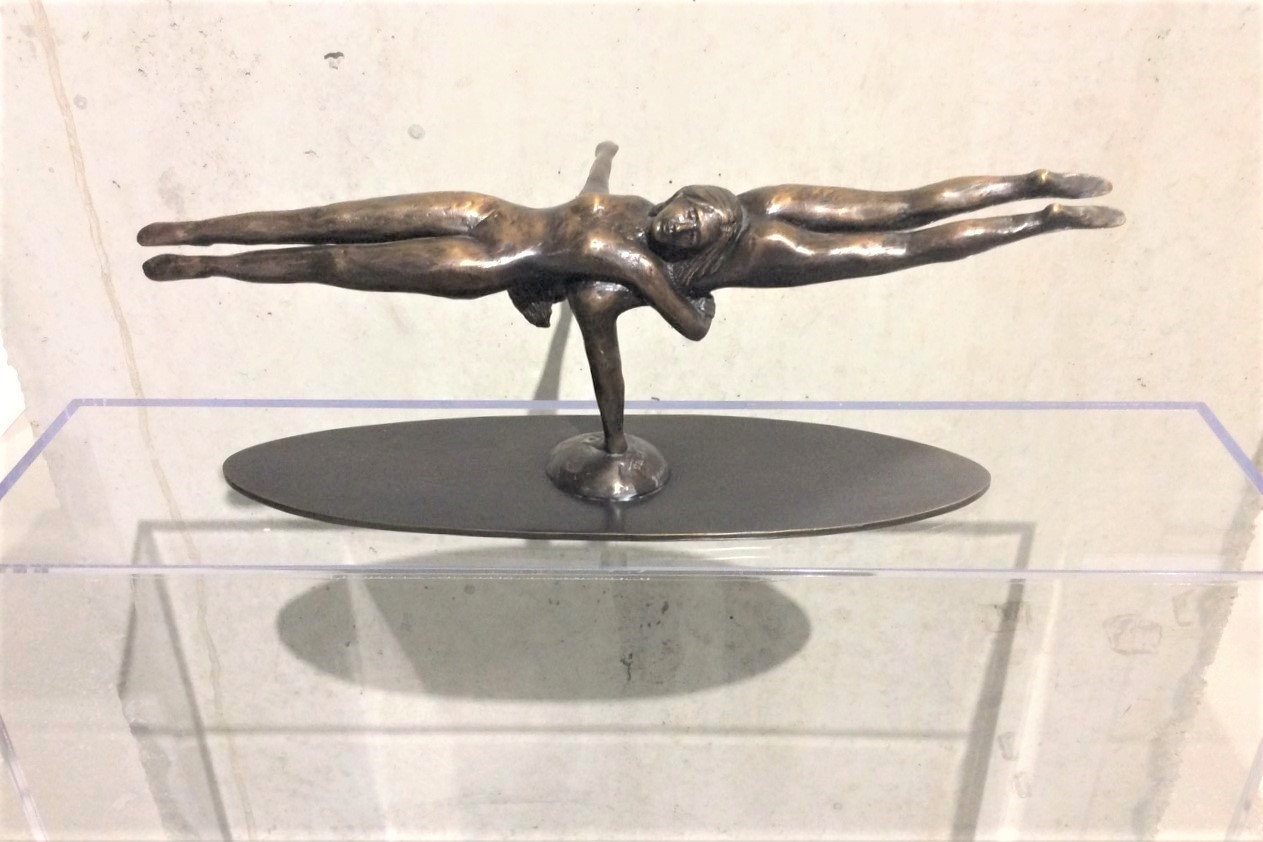
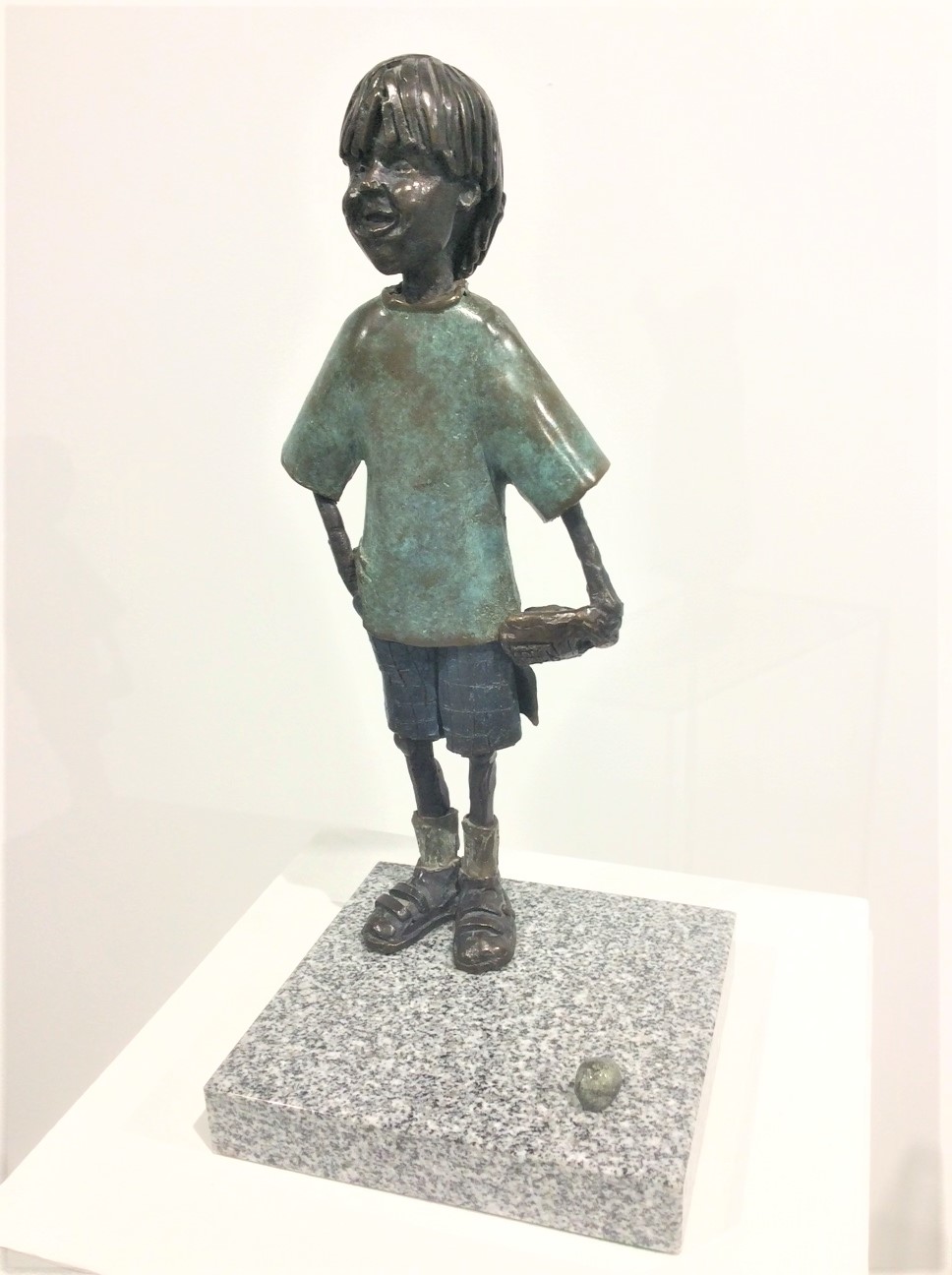
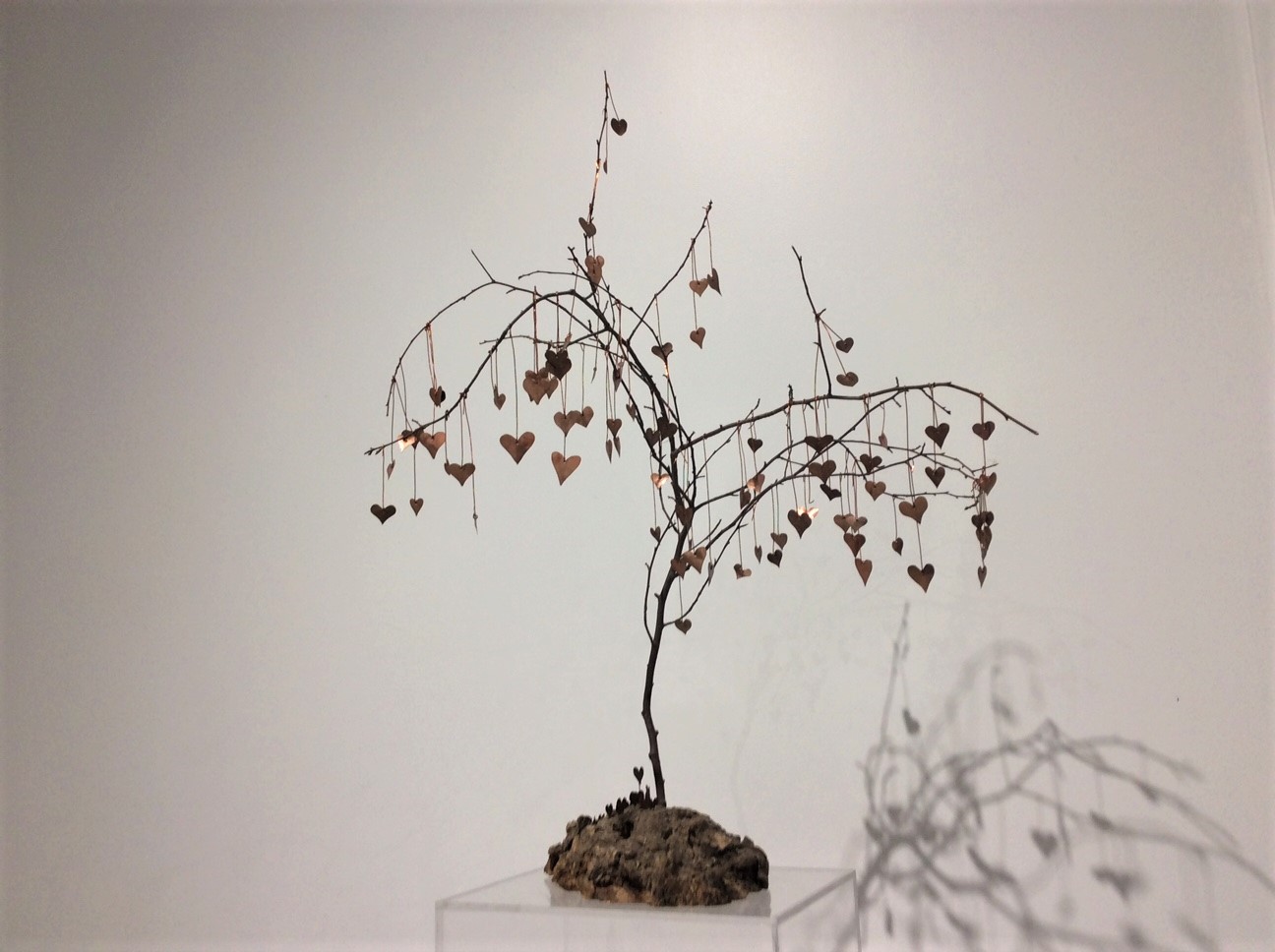
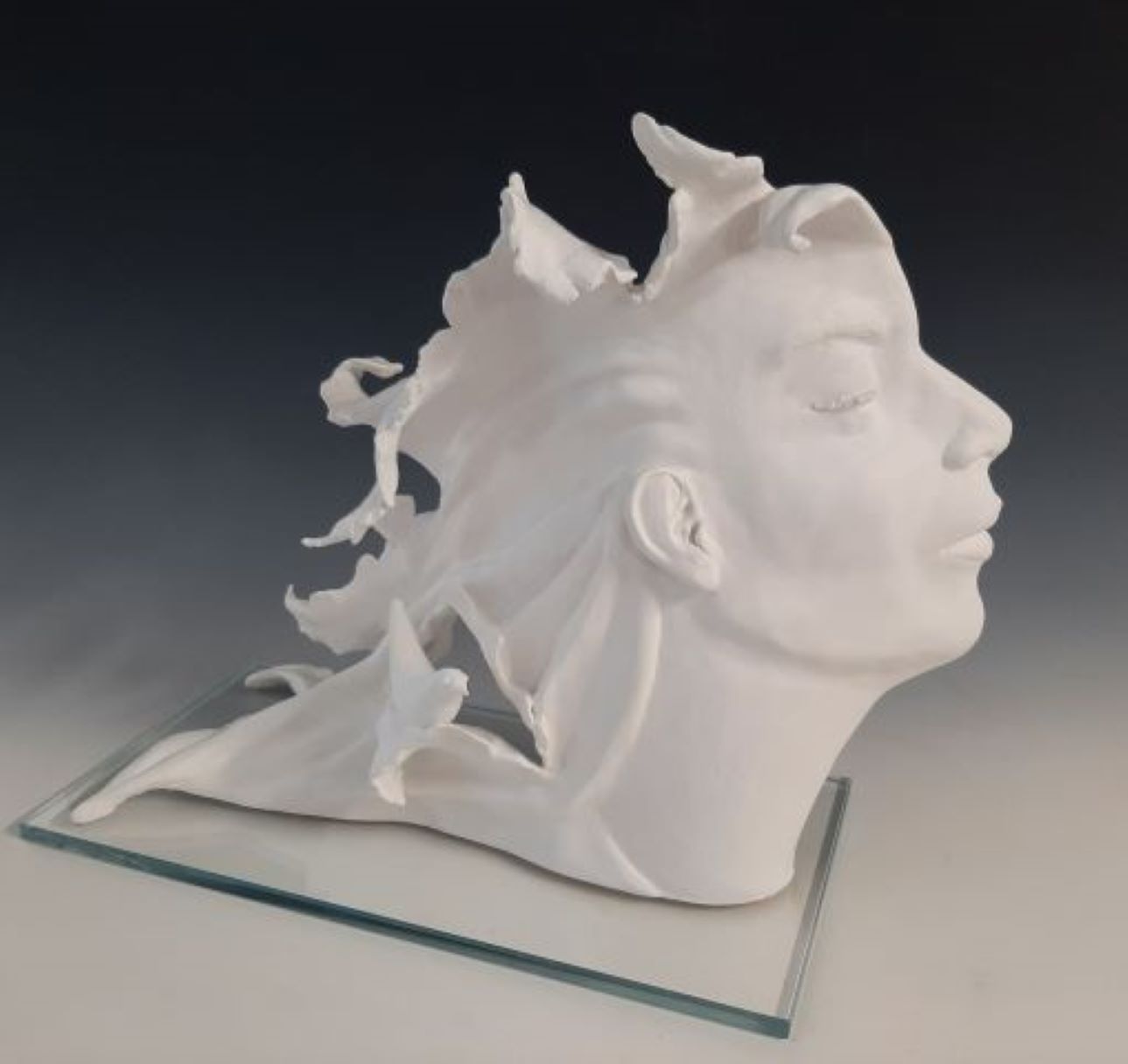
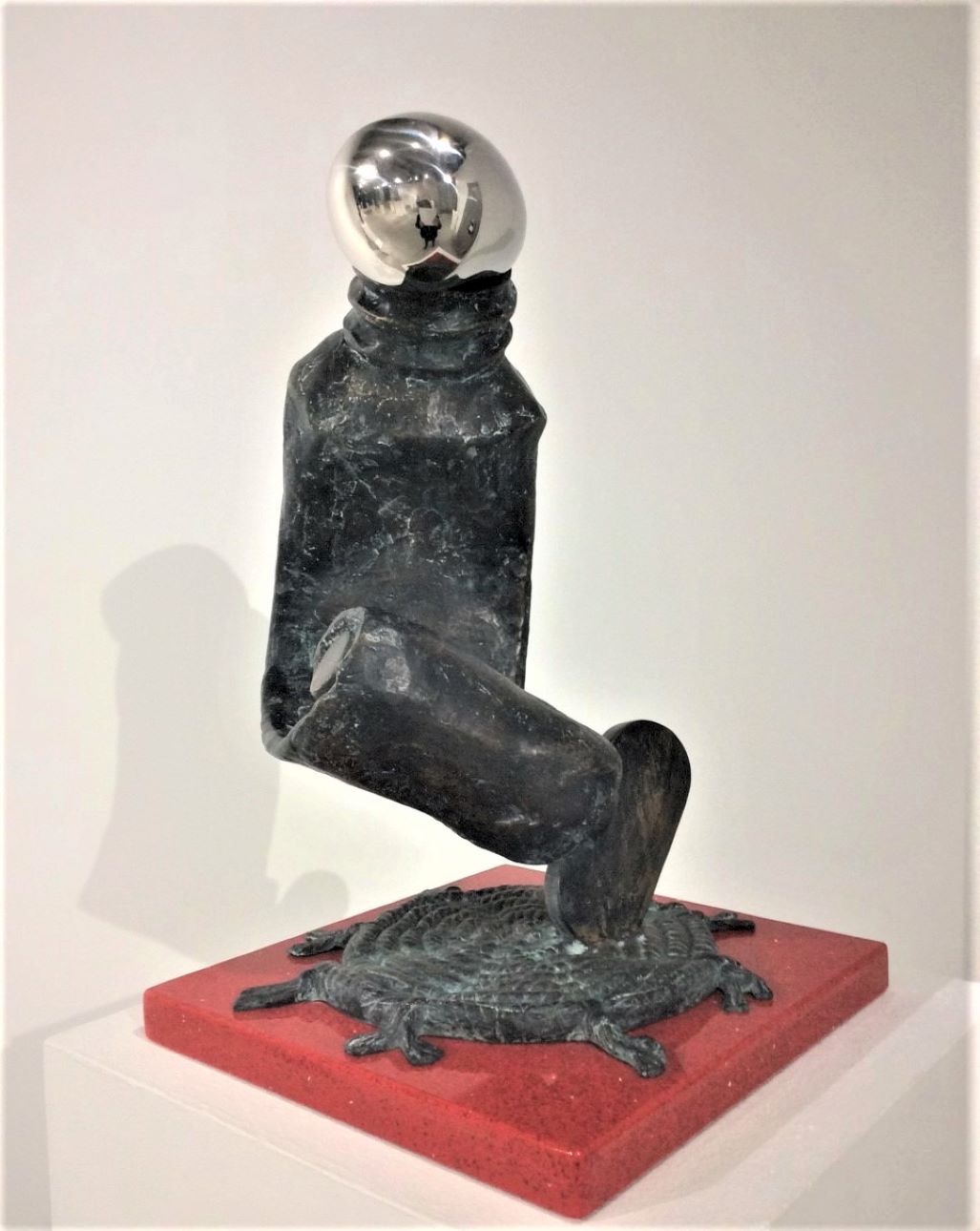
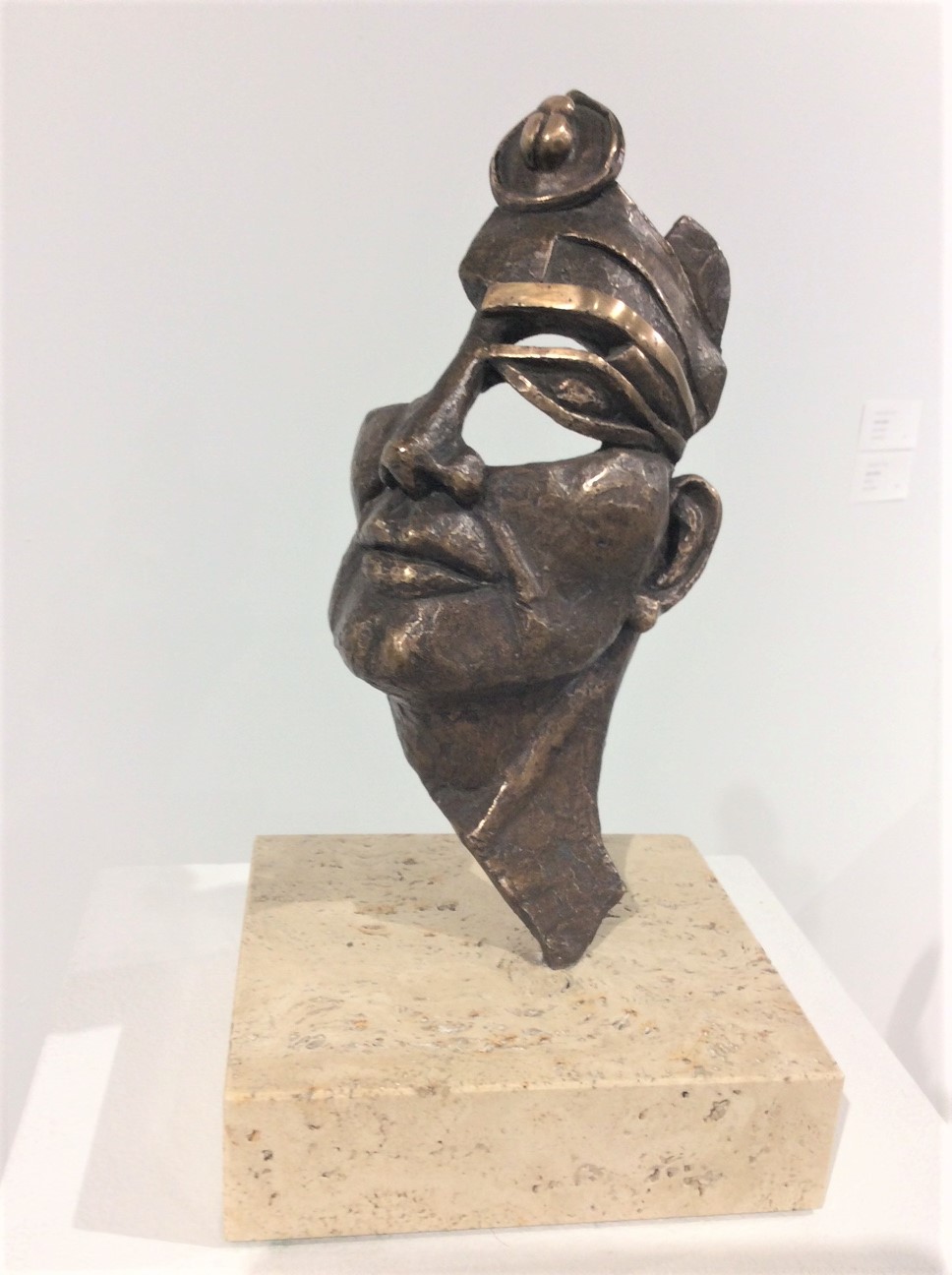
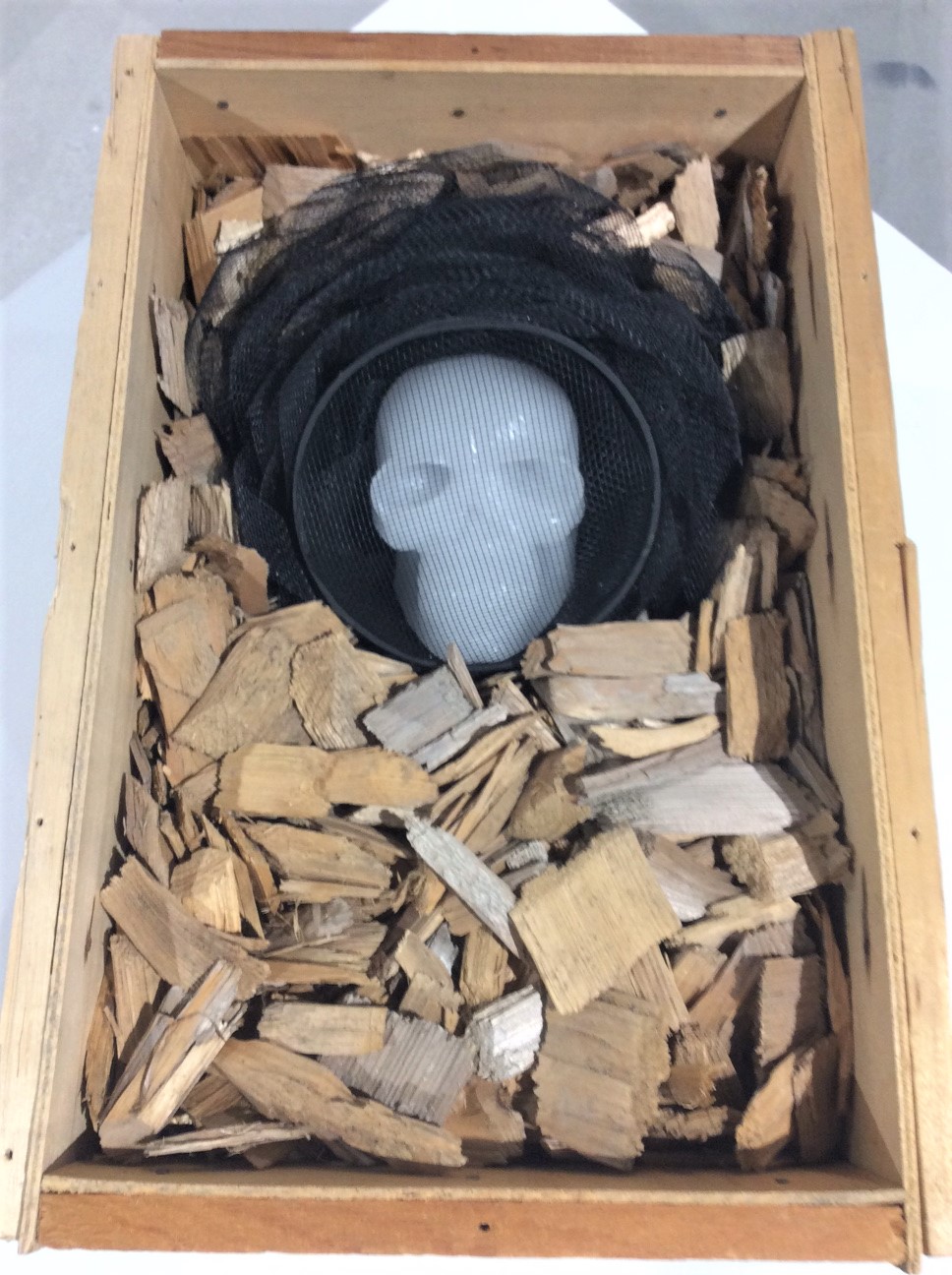
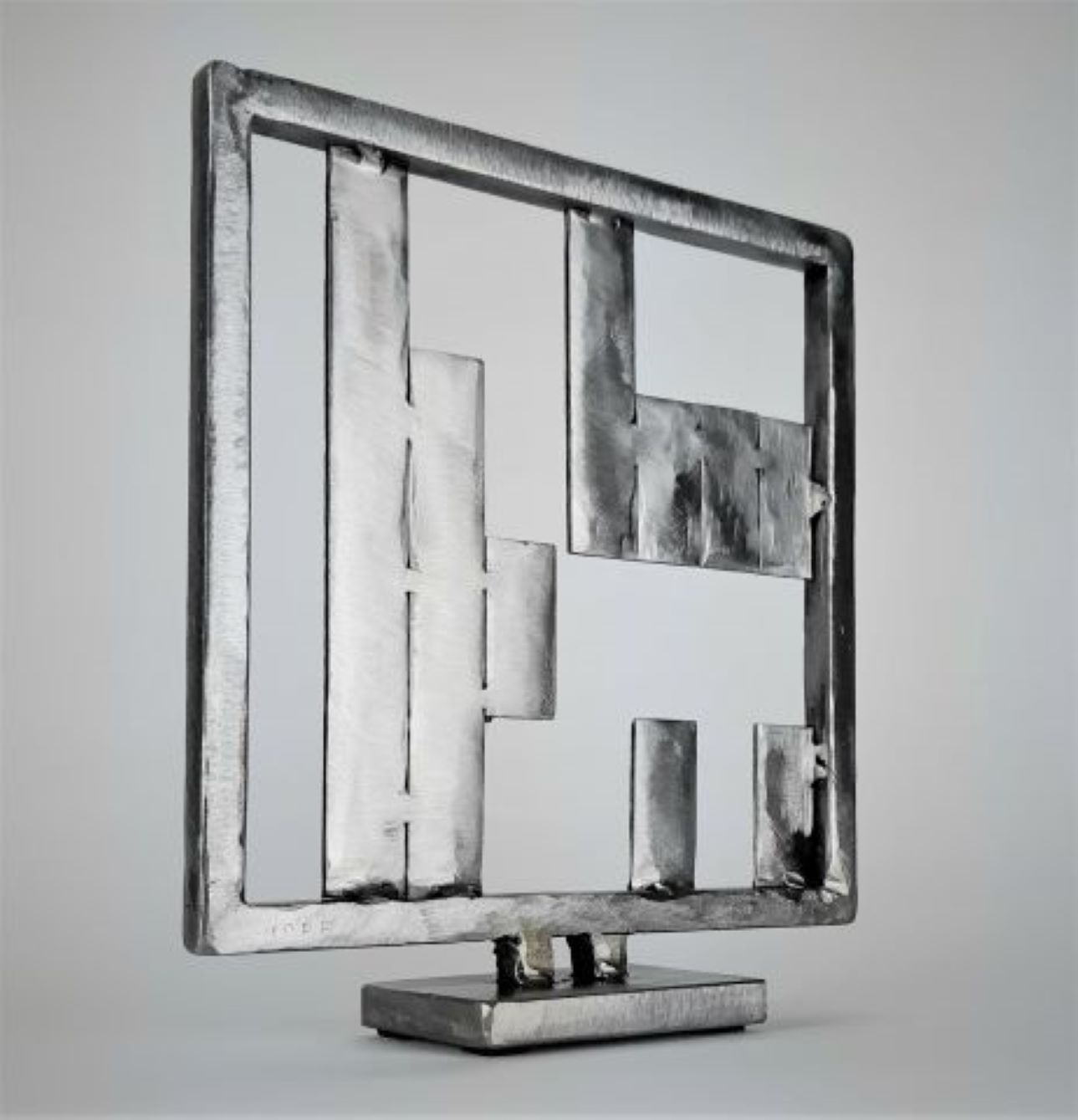
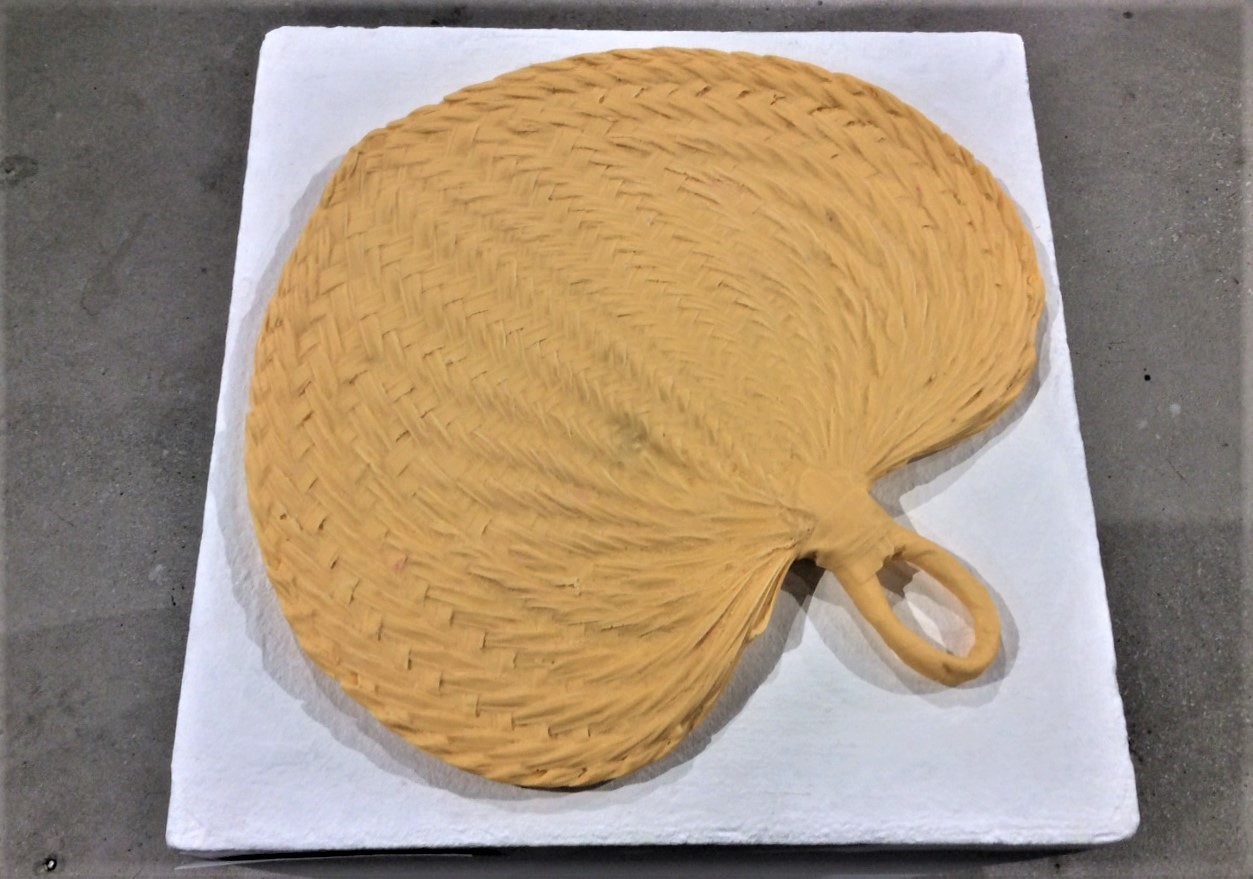
    KUDOS VIII – kick-starts the New Year with an exhibition celebrating the generous support, dedication, and commitment of the SSC Executive Board and Volunteers. There are twelve members participating this year: Tom Ashbourne, John Clinton, Edward Falkenberg, Barbara Fletcher, J.A. Fligel, Marc André J. Fortier, Marlene Kawalez, Tim Manalo, Bastien Martel, Karen Stoskopf Harding, Dina Torrans and Judi Michelle Young.

    Tom Ashbourne, Mystic, alabaster, glass ball, marble

    Edward Falkenberg, Frost, wood, acrylic paint, steel base

    J.A. Fligel, Trust, bronze

    John Clinton, Michael, bronze

    Dina Torrans, Earthart, wood, copper

    Marlene Kawalez, Transcend, fired clay, paint, glass

    Marc André J. Fortier, Mini Squeeze, bronze, stainless steel

    Karen Stoskopf Harding, Sacred Scarab, bronze, travertine

    Judi Michelle Young (Tsuii Yiin), Soul By Tracks. mixed-media

    Bastien Martel, Hope, welded steel

    Tim Manalo, Sweat Sweat, cast papaya soap

    Barbara Fletcher, The opening, cast aluminum

    Images are courtesy of Canadian Sculpture Centre

    *Exhibition information: KUDOS VIII, January 15 – February 11, 2022, Canadian Sculpture Centre, 19 Mill Street, Distillery District. Gallery hours: Mon – Sat, 11 am – 6 pm; Sun, 12 – 5 pm.

  • Howard Lonn at Birch Contemporary

    A deep sense of loss and grief emanate from Howard Lonn’s paintings in his solo exhibit Requiem for John Brown 1953-2020, at Birch Contemporary. Comprised of nine paintings, the exhibit memorializes and reflects on the death of Lonn’s lifetime friend John Brown, who passed unexpectedly on March 21st, 2020. Lonn and Brown’s friendship spanned 43 years, beginning in 1977, when they both attended the Ontario College of Art & Design (OCAD). Over the years, the artists travelled together and shared a studio space, developing a close friendship. Through skillful compositions of space and colour, Lonn’s paintings convey the type of heartache that comes with losing a longtime friend, as well as the isolation and solitude that have characterized the last two years of pandemic lockdowns.

    Installation views of Howard Lonn, Requiem for John Brown 1953-2020 at Birch Contemporary. Photo: Jennifer Boothby

    While Lonn’s paintings often feature enigmatic representations, allowing viewers to derive their own meanings from the works; there are several consistent themes running through this exhibit. Lonn’s distinctive use of colour catches the eye and draws in viewers. Many of the paintings feature unnatural colours such as teal and fluorescent pink—perhaps evoking the emotionally jarring news of Brown’s unexpected death, or the ‘unnatural’ state of the world over the last two years.

    Another consistent theme through the exhibit is Lonn’s strategic placement of elements to construct spaces. Using a few geometric planes of colour in each painting, Lonn creates spaces that evoke either a sense of confinement or a sense of freedom. Most of the paintings feature a complex interplay between a foreground figure and the background planes of colour, to convey meaning.

    Lonn’s use of colour and space are particularly evident in Requiem for John Brown I—one of three large canvasses displayed on the north side of the gallery, that communicate the artist’s reaction to Brown’s death. The painting features a vibrant pink figure in a room defined by solid planes of grey, green, and dark purple. The figure appears to be hunched over, kneeling on the ground as though in mourning. A horizontal brushstroke on the figure’s left suggests an outstretched leg, while on the right, a few vertical brushstrokes subtly indicate a bent knee and foot. Straight strips of blank canvas define the edges of the space, and suggest that the figure is confined.

    The painting also displays how Lonn uses the material qualities of paint to convey emotion through his works. The background planes are smooth, solid blocked-in colours, contrasted by the rough brushstrokes and splatters of the foreground figure. This use of paint conveys the figure’s raw emotion, literally dripping onto the floor, against the static backdrop.

    While contemplating the painting, I was struck by how the large scale allowed me to transpose myself into the space and feel a sense of confinement and grief. The black box to the right of the figure made me think of a vacant window to the outside world, heightening the sense of solitude.

    Howard Lonn, Requiem for John Brown I, 2020-2021, oil on canvas, 84” x 66”. Courtesy of Birch Contemporary

    In contrast, Lonn’s painting Requiem for John Brown II, employs a thick white border to create a distinct separation between the viewers and subject matter. Rather than transposing ourselves into the painting, the border creates the sense that we can only experience the subject matter through a window or frame. In some ways, the painting imparts less of a sense of confinement than the other works in the exhibit. There are no distinct edges or planes that suggest a restrictive space. Yet, there is also an inherent frustration in feeling trapped by the frame, as though we can only access a small part of the world Lonn has created.

    Like many of Lonn’s paintings, Requiem for John Brown II features a gradient background painted in broad horizontal brushstrokes, which move the viewer’s eye across the canvas. The background smoothly progresses from a pale yellow at the bottom, through pinks and reds, to a deep burgundy at the top. While the colours evoke a sunset, a series of bright blotches appear to hurtle past the viewer, like stars or comets. Based on the title of the painting, it seems that the bright patches might represent Brown himself, as a source of light against a backdrop of chaos—a theme that Lonn seems to revisit in other paintings throughout the exhibit.

    As I stepped closer to the painting, I was again struck by Lonn’s use of materials. The white border appears to have been painted rather haphazardly, with pencil marks and black flecks visible through the paint. Likewise, the red rectangle is not cleanly constrained within the white border. Rather, drips and smudges of red paint stain the bottom and sides of the painting. This use of materials gives the painting a sense of immediacy, as though it is a direct translation of Lonn’s reaction to Brown’s death, unmitigated by excessive precision.

    Howard Lonn, Requiem for John Brown II, 2020-2021, oil on canvas 72″ × 84″. Courtesy of Birch Contemporary

    Two of the most powerful paintings in the exhibit capture Lonn’s interpretation of the minutes before Brown’s death. Entitled Jack’s Last Minute on Earth I and Jack’s Last Minute on Earth II, the paintings are small but striking, positioned side-by-side in the centre of the gallery’s south wall. Both features brightly coloured vertical peaks cutting upwards through blue-black backgrounds painted in broad horizontal strokes. From the bottom of each painting, a black mass seems to rise up, encroaching on the bright peaks.

    At first glance, the bright peaks in these paintings reminded me of city skyscrapers lighting up the night sky. The peaks appear to be glowing like flames, surrounded by a light teal colour that bleeds out into the dark backgrounds. However, reflecting on the pieces, I began to envision the bright peaks as Brown’s life, shining against the dark backdrop of the pandemic and state of the world. The black sections at the bottom of the paintings could symbolize death encroaching on Brown—threatening to overcome the light. While the glowing peaks in the paintings are beautiful, there is also a sadness in that as they seem temporary—as though they will eventually fade into the background, or will be overcome by the darkness. Further, the black expanses lend a sinister feeling to the paintings, as though viewers are witnessing the beginning of a tragic event that has not quite materialized.

    L-R: Howard Lonn, Jack’s Last Minute on Earth I (left) & II, (right), both 2021, oil on canvas, 36″ × 32″. Courtesy of Birch Contemporary

    Perhaps the most remarkable aspect of Lonn’s exhibit is how the paintings sketch a portrait of Brown’s life and death. While three large paintings convey Lonn’s reaction to Brown’s death, a series of smaller paintings chronicle different parts of Brown’s identity and the moments before his death. Right at the end of the exhibit, visitors encounter a painting called Flame Job (capilla ardiente), which translates to “funeral chapel.”

    Howard Lonn, Flame Job (capilla ardiente), 2020-2021, oil on canvas, 48″ × 36″. Courtesy of Birch Contemporary

    The exhibit brings visitors on a journey through the grief of losing a friend, and the power of art in coming to terms with major loss.

    Jennifer Boothby

    Exhibition information: Howard Lonn, Requiem for John Brown 1953-2020, December 9, 2021 – February 5, 2022, Birch Contemporary, 129 Tecumseth Street Toronto. Gallery hours: Wed–Fri 10am–6pm, Sat 11am–5pm.

  • Alex Bierk at General Hardware Contemporary

    Alex Bierk’s solo exhibition How do you let go? at General Hardware Contemporary, is based on his personal experience and memories. Most of his realistic paintings originate from his photographs, a commemoration of the passing of time and a process of self-definition.

    Alex Bierk was born in 1982 in Peterborough. His memories of that small town surface in his paintings in a realistic and transparent way. However, his paintings are more romanticized than photographs.

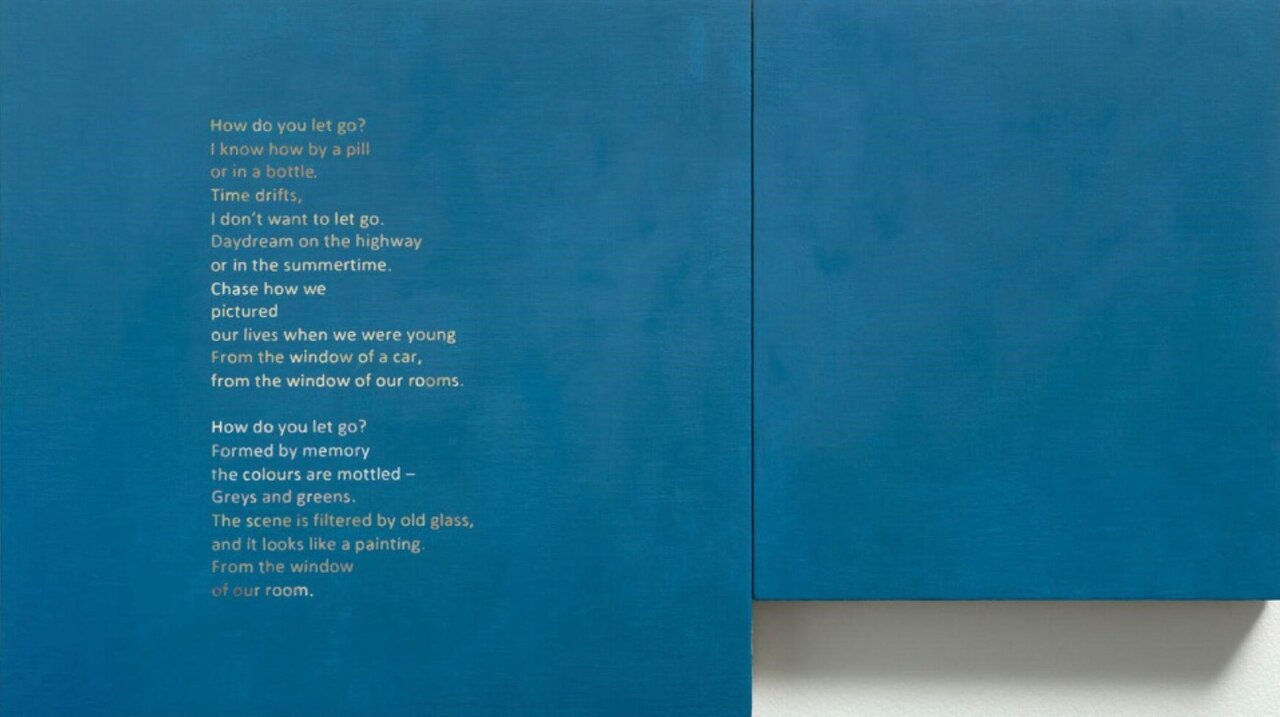
    The large piece titled, How do you let go? is a poem but also a painting, using two panels to extend it out of the usual frame into the external space. The poem gives voice to the artist’s sadness about the passing days of youth. Although there is no graphical indication in this artwork, it is connected to Alex Bierk’s paintings, setting the mood for them. The second stanza of the poem draws the audience into his memories of an era when people were still using film cameras. The “room window” or the “car window” become frames for Bierk’s paintings in this exhibition of reimagining old memories and personal history with a touch of nostalgia.

    Alex Bierk, How do you let go? 2021, oil on linen, 18.5” x 31.25”

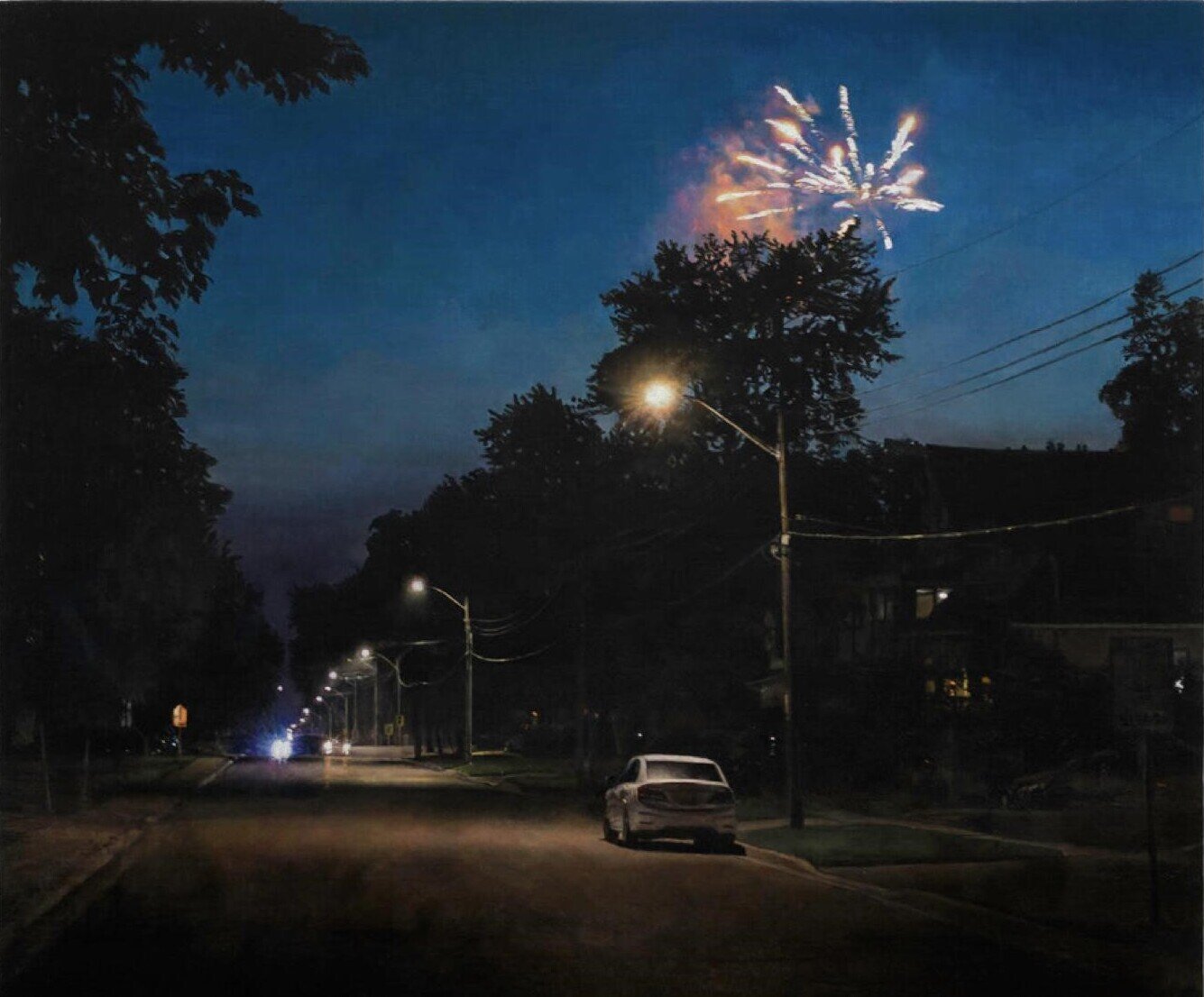
    In “Write her name in the sky” Night, the skillful composition of cool-toned colours, subtly captures a moment of a night. The street lights are on and the night sky fades from cerulean to deep navy blue in the distance. The most eye-catching part is the flashing fireworks in the upper right corner. The lights play an important role in this painting, as underneath the fireworks an orange streetlight glows, balanced diagonally with the blue light coming from a car – bringing movements into this otherwise still composition. It is a very poetic piece that seems to tell a story, but leaves most of it to the viewer’s imagination. Every detail in this painting appears to be realistic but the dominating darkness and the underlying emotional feeling makes it somewhat surreal. We don’t know who the ‘her’ is but it must be the most important person in the artist’s life and very much loved if he wants to write her name in the sky, comparing it to the amazing blooms of fireworks.

    Alex Bierk, “Write her name in the sky” Night, 2021, oil on linen, 15” x 18”

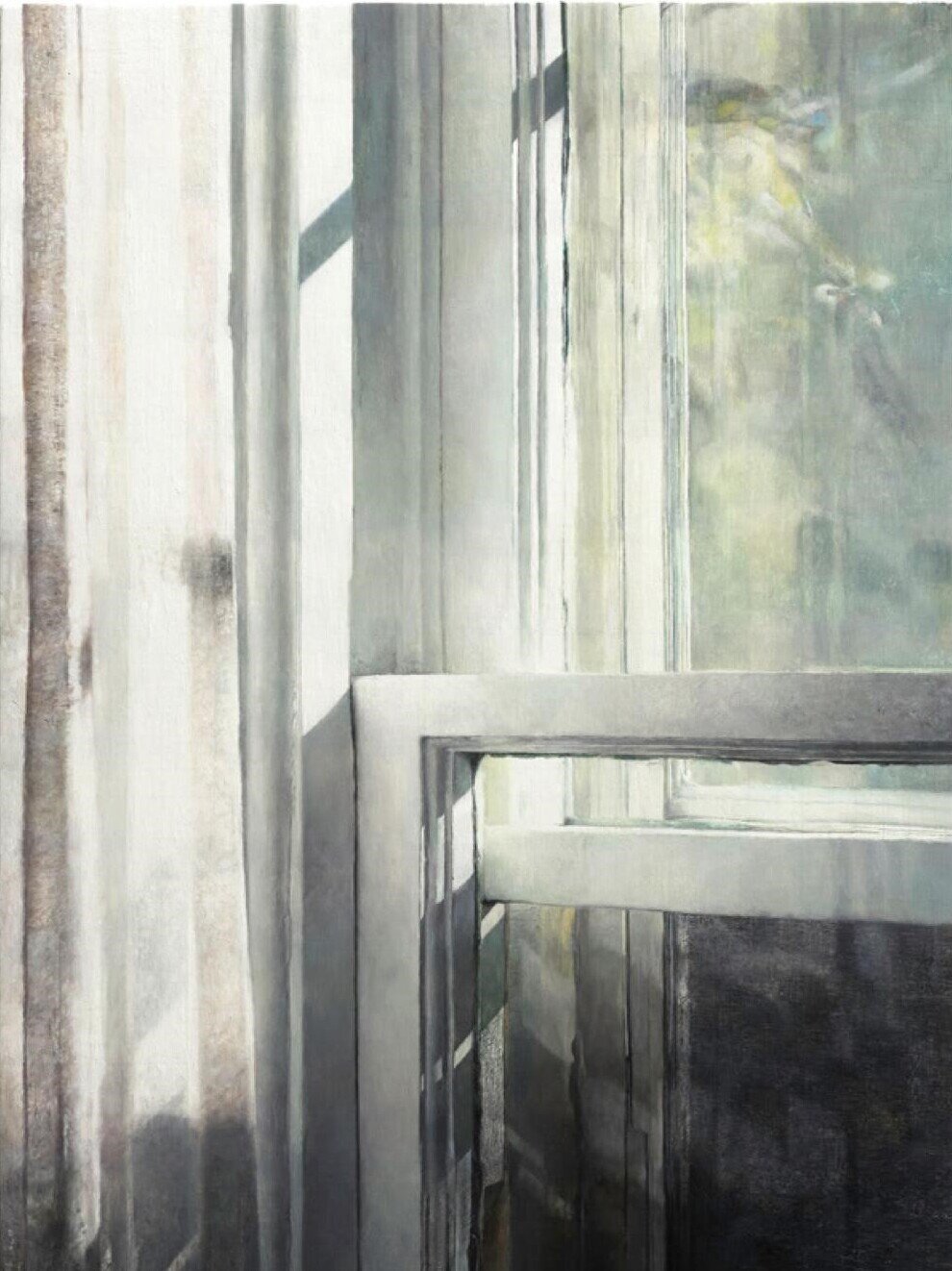
    In the painting From the window of our room Bierk refers to the last lines of his poem, in which the morning sunlight shines into the house from outside — a refreshing view. This painting is a good example of Bierk’s precise control of oil paint, since this semi-abstract composition is almost as transparent as a watercolour. The pastel colouring of the gray, yellow and green corresponds to the ‘mottled colours’ in the poem, gradually leading the viewer into a corner of his memory.

    Alex Bierk, From the window of our room, 2021, oil on linen, 12” x 9”

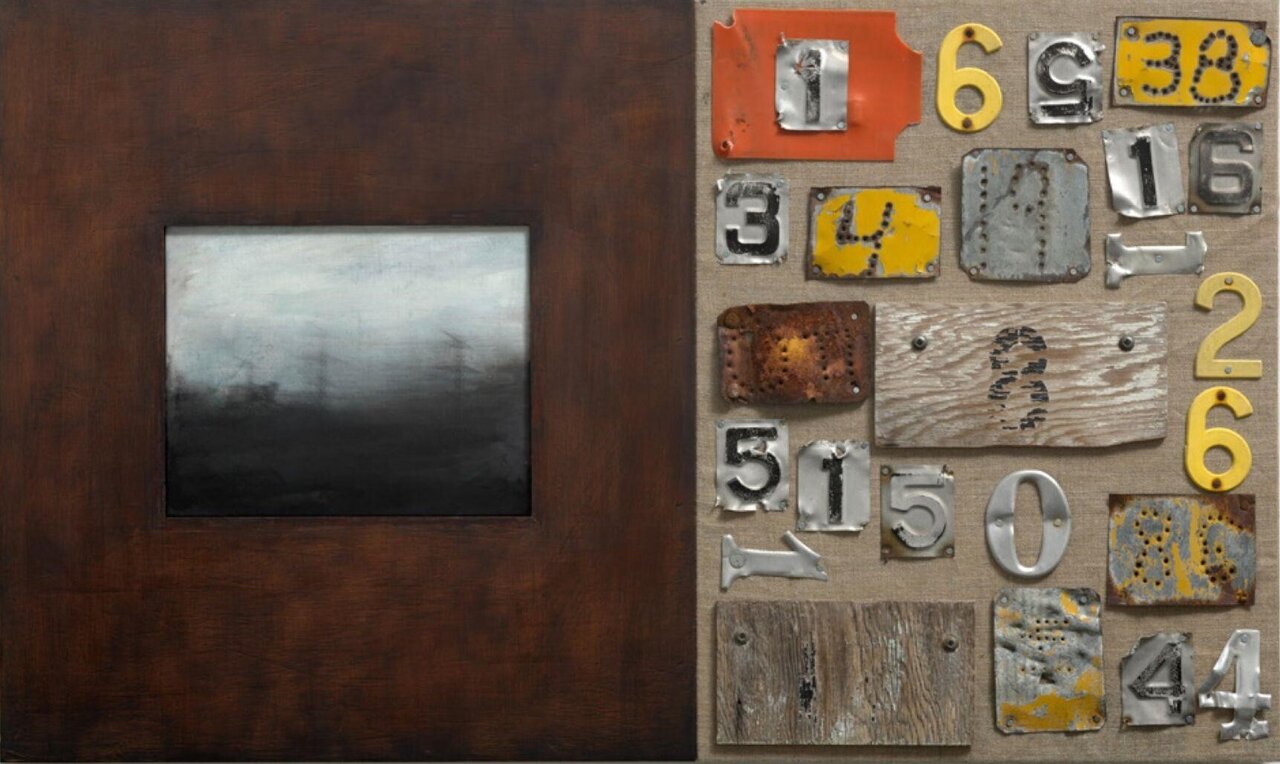
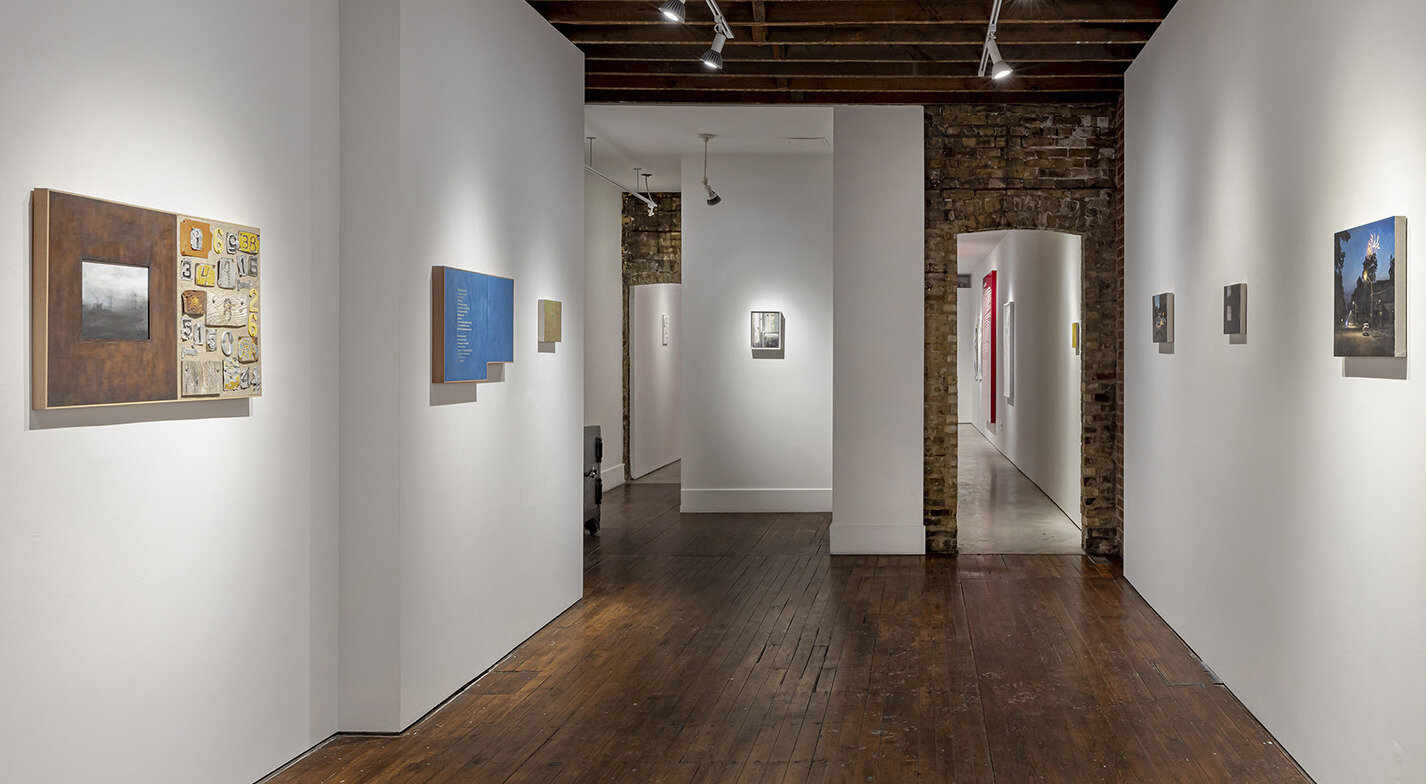
    The simpler the subject, the more special it appears under Bierk’s rendering. In addition to oil on linen, Bierk also creates mixed media works, like Numbers, where he combined oil, metal and found objects on linen and wood. Although the foundation is still linen, the different materials bring the viewer into a different space. The wooden panel on the left side is like another window, framing the painted view of a landscape with blurred signal towers as it might be seen through a moving car’s window. On the right there is a collage made of various metal tags that could be disassembled parts from old gates or car licence plates, showing numbers. This piece is more abstract than Bierk’s previous works and is reminiscent of collages made by Dada artists, especially Max Ernst.

    Alex Bierk, Numbers, 2021, oil on linen with wood, found objects on linen, 21.5” x 35.75

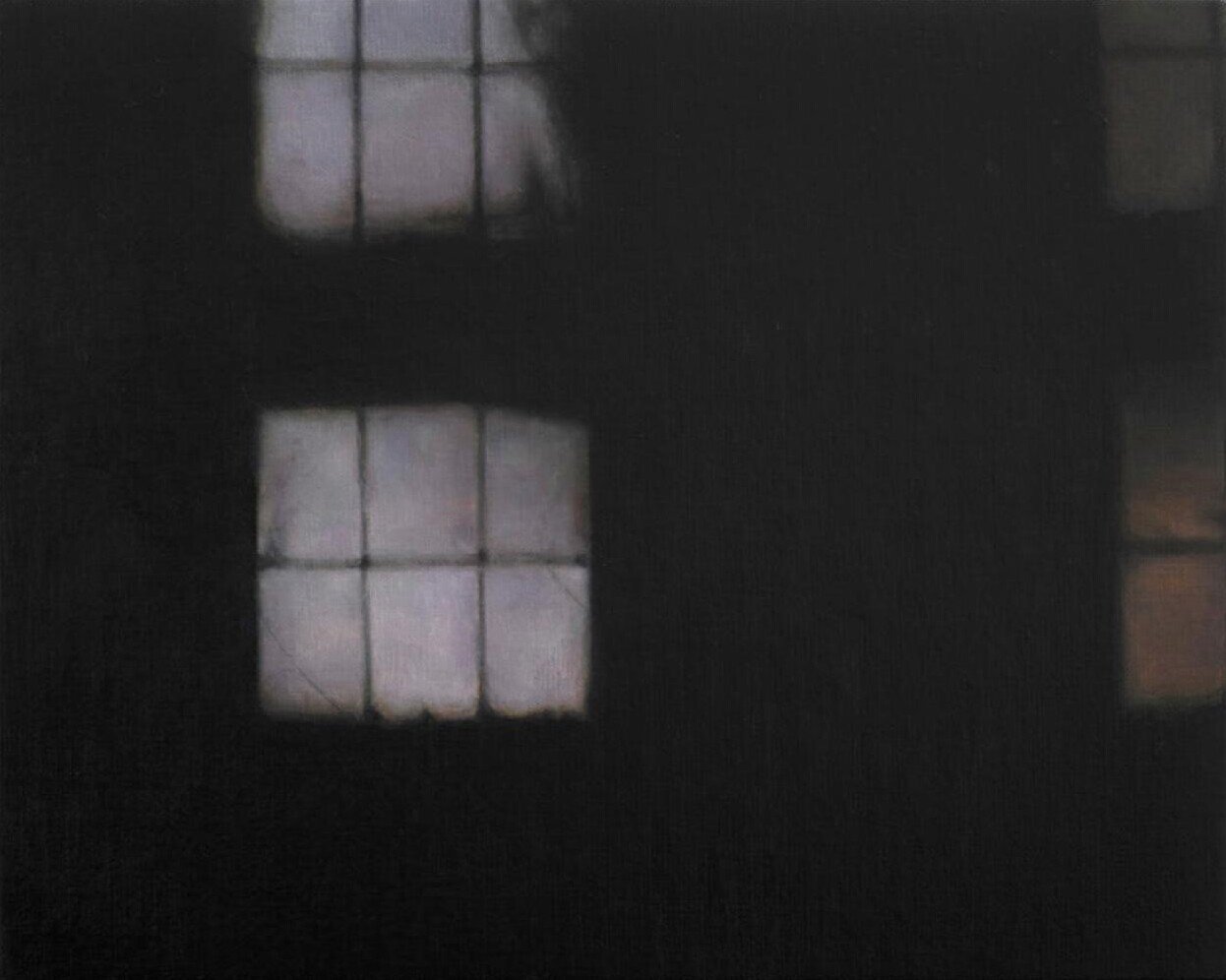
    While considered mostly as a representational painter, Bierk’s works are also often blurred and radiate feelings of melancholy and marginalism. In Factory, part of the industrial building at night is depicted in dark tones. The only element that illuminates the picture is the light coming from its windows. However, we cannot peek inside because they are too blurred, creating a barrier between the inside and the outside. The viewer becomes an outsider instead of a voyeur. Factory seems marginal in the middle of nowhere, making us feel lost and lonely.

    Alex Bierk, Factory, 2021, oil on linen, 8” x 10”

    While we marvel at Bierk’s compositions, we are also being pushed away from what we think we see, giving a sense of alienation. These contemporary paintings have a somewhat vintage stylistic sense, while the high contrast and the obscuring shading remind me of aging Polaroid photos. Radiating from the paintings, Bierk’s emotion-filled memories invite the viewer to explore more in his unique world.

    Installation view of Alex Bierk’s How do you let go? at General Hardware Contemporary

    Vivian Sun

    Images are courtesy of General Hardware Contemporary

    *Exhibition information: Alex Bierk, How do you let go, November 18, 2021 – February 5, 2022, General Hardware Contemporary, Front Gallery, 1520 Queen Street West, Toronto. Gallery hours: Wed – Sat 12 – 6 pm.
  • Red Embers at Ashbridges Bay Park

    Memorial to the Missing and Murdered Indigenous Women and Girls (MMIWG)

    November 2021 – ongoing

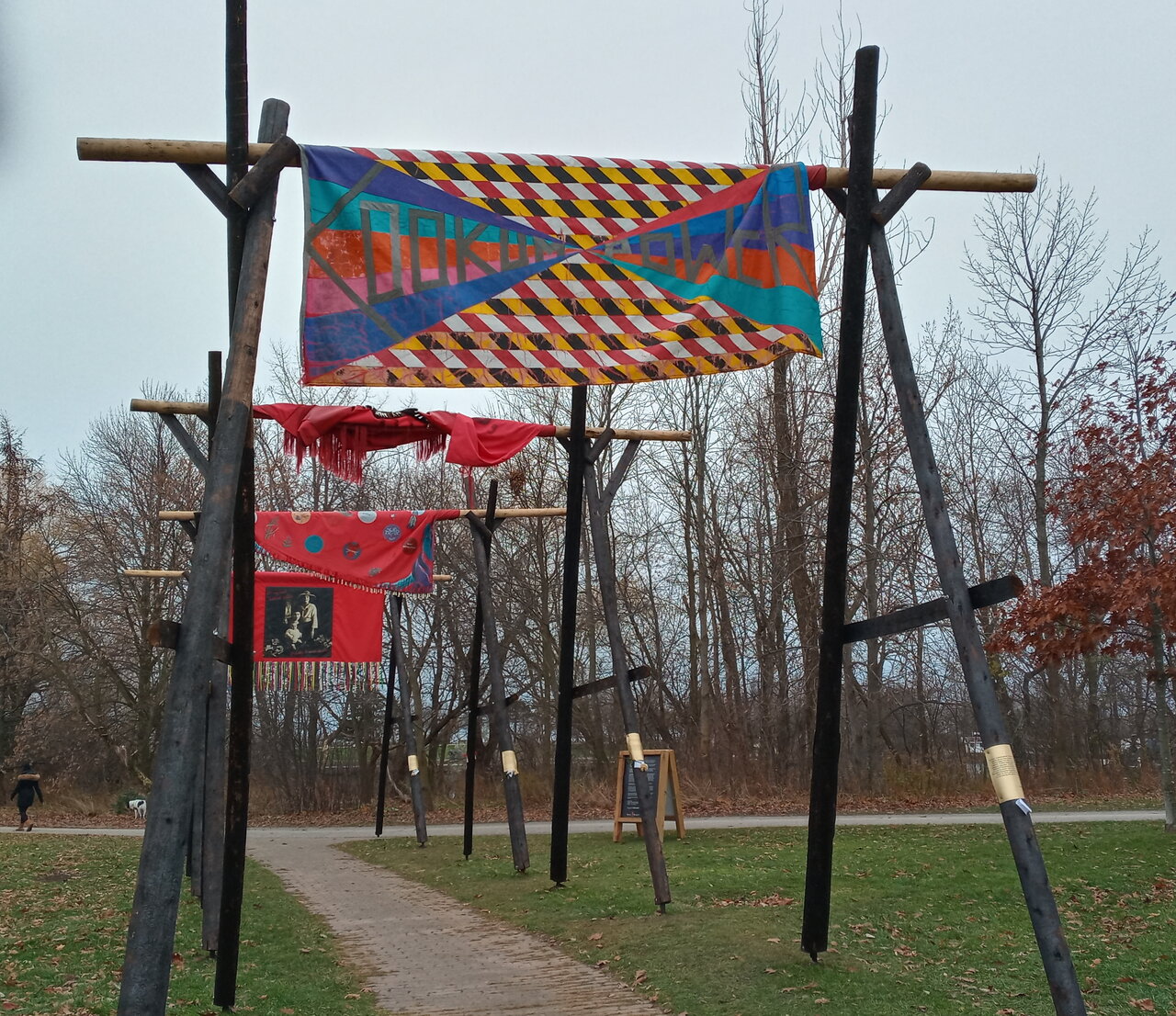
    Red Embers is envisioned and designed by an all-women team of designers and Indigenous artists as a work of civic beautification. It is also a sacred memorial to the Missing and Murdered Indigenous Women and Girls, Trans, Two Spirited.

    The monumental cedar gates are sited between the land and the water. The banners float above the pathway, offering healing through the sound of their jingles and movement of canvas in the wind.

    The charred cedar posts represent the strength and resilience of Indigenous women, honoring a sisterhood that stands strong even after the attempts to scar and damage have been endless. The 13 gates are symbolic of the 13 Grandmother Moon teaching ang lunar system.

    The location on the Beaches was chosen for its serenity and balance between Lake Ontario and the city. The slight crescendo of the path and the wave of its direction mimic the emotions the banners will instill.

    Indigenous artists: Hannah Claus, Sarah Biscarra Dilley, Rosalie Favell, Rolande Souliere, Louise Solomon, Lido Pimienta, Eladia Smoke and Larissa Roque, Annie Beach, Kristy Auger & Adrienne Greyeyes, Lindsey Lickers Tash Naveau, Catherine Tammaro and the women of NWRCT

    Generous Support from City of Toronto Indigenous Affairs Office, Cultural Partnerships, Parks, Forestry and Recreation. Part of ArtworxTO

  • Miles Greenberg: Late October

    Young Montreal-born performance artist, Miles Greenberg’s exhibition Late October at the Arsenal Contemporary Art transports visitors into a dreamlike world of photography, sculptures, sound, and video projection. The show captures one of Greenberg’s seven live performances, which took place over seven consecutive hours at Galleria Continua Les Moulins, (near Paris, France) in the autumn of 2020. During the performance, Greenberg and six other performers—all covered head-to-toe in glistening black body paint and wearing white contact lenses—waded slowly through a basin of water and positioned themselves on black pedestals. The performance reimagined the performers as the whitewashed sculptures of Greek antiquity, evoking themes of erosion and deterioration of the body.

    Late October at the Arsenal captures the performance in different mediums, displayed in three different rooms, which get progressively more immersive as visitors move through the exhibit. In all three rooms, the same ominous music sets the tone for the display and helps transport visitors into the surreal world Greenberg has created. Like a whale song, long notes play over a low rhythmic beating, broken up by sounds of thunder and industrial machinery—both unsettling and exciting.

    The first room features six photographs of Greenberg’s performance. The images are as haunting as they are beautiful. Entirely covered in a sheen of black body paint, the performers’ skin appears almost wet, reflecting background lights, which emphasize the contours of their bodies. One particularly striking picture portrays a slanted close-up of a performer’s face, with blue-green light glittering off her facial features and collar bones. Her downcast eyes contain white contact lenses, which appear to blind them, and give the image an eerie and impersonal quality. The photo also captures a sense of stillness, as though the performer is caught in a moment of contemplation. This sense of stillness, combined with the blue-green lighting, and the performer’s steely gaze— illustrate Greenberg’s exploration of the human body as sculpture.

    Another remarkable photograph features four of the performers perched in different positions atop black pedestals, while one wades through the shallow basin of water—dyed an unnatural blue-green colour with high-density pigment. Although all five figures appear to be entirely still, the photo captures the physicality of the performance. The man in the left foreground balances at a challenging angle on a pedestal, one knee curled to his chest, left hand holding a vase, while his right hand rests on the pedestal, steadying himself. The black body paint emphasizes his musculature, and the physically challenging nature of the performance. Again, Greenberg’s exploration of the body as sculpture is evident in the use of pedestals and vases, which both evoke the sculptures of Greek antiquity. However, the artist has combined these elements of antiquity with distinctly modern components such as the industrial-looking brick wall in the background and the chemical hue of the water—creating a surreal, otherworldly atmosphere.  

    Moving into the second room of the exhibit, feels like stepping into one of the photographs of Greenberg’s performance. The room contains three life-size sculptural representations of a performance, each perched atop a pedestal that appears to be floating in a glassy pool of vibrant green water. Each sculpture features bodies that appear intertwined, disintegrating, and melding into one another—displaying Greenberg’s unique artistic process. To create the sculptures, Greenberg performed in front of a 3D scanner with the corrective settings disabled. The scans were then printed in high-density polyurethane foam and painted glossy black, resembling metal. They truly encapsulate the movement of the performance, appearing as thought figures in motion have come to a screeching halt.

    Greenberg titled each sculpture after a different male-led cautionary tale from Greek mythology, further evoking themes of antiquity, disintegration, and erosion. The first sculpture visitors encounter is Icarus I—titled after the tale of a young man with wax wings, whose hubris caused him to fly too close to the sun. Greenberg’s sculpture clearly evokes the tragic tale in top-heavy configuration of bodies that remind us of angels. The figures’ arms are frozen in mid-motion arrays resemble wings, while splayed fingers look like feathers. Other body parts like the legs and facial features appear to have melted or disintegrated, giving the sculpture an unnerving quality.

    The second sculpture, Narcissus I—inspired by the ancient story of a man who fell in love with his own reflection—displays several figures curled in on themselves, reaching desperately towards their reflections in the glassy water. Despite the surreal nature of the sculpture, Greenberg has also captured anatomical details that make the sculpture come alive. From close-up viewers can see individual veins, musculature, and bones in splayed hands—all of which ground the sculpture in reality.

    The third sculpture, Orpheus I, evokes the mythos of a man who was not allowed to look back at his wife, lest she disappear into the Underworld. The sculpture features several figures turned urgently in the direction of Narcissus I, despite the bridge of red stones separating the two sculptures. This interaction suggests that the sculptures can be viewed individually or as one continuous piece. The backs of the bodies are almost concave, while streaks on the sides of them suggest urgency and desperation in their movement.

    The third room of the exhibit is arguably the most immersive, as visitors step into a recreation of the set of Greenberg’s performance. Footage from the performance is projected onto three walls of the room, alternating between close-ups of the performer’s bodies and faces, and wide-shots of their interactions. Slow-motion close-ups convey the intensity of the black body paint. Some wide-shots portray performers wrestling in a sanded area to the side of the water basin. A few particularly jarring images depict performers with blinding white contact lenses looking directly at the viewers.

    Visitors are further transported into the performance through black pedestals and vases positioned around the sandy floor of the room. Several of the vases are broken, again reimagining the pottery of Greek antiquity. The same eerie soundtrack plays—a combination of long low notes and rhythmic beating—creating the impression that the viewers have become part of the performance.

    Walking through Greenberg’s Late October exhibit at the Arsenal feels like journeying through a dreamlike world. The combination of different mediums including photographs, sculpture, sound, and film, all progressively immerse visitors in Greenberg’s performance art—while simultaneously exploring themes of Greek antiquity, disintegration, and the human body.

    Jennifer Boothby

    All images titled: Installation view of Miles Greenberg, Late October at Arsenal Contemporary Art. Photo: Jennifer Boothby

    *Exhibition information: Miles Greenberg, Late October, Arsenal Contemporary Art, 45 Ernest Avenue, Toronto.

  • ArtworxTO

    ArtworxTO brings free public art across the city in an initiative that highlights community and diversity. It provides opportunities for artists and the public to engage with themes and ideas that matter to Torontonians.

    ArtworxTO Hubs are spaces for artistic and community activity led by the next generation of curators, collectives, and artists. Each hub features a year-long exhibit with many projects, sponsors and special events. Through exhibitions, activations, workshops, and experiences, the Hubs aim to amplify local artistic identities, recognize their global vibrancy, and empower creative communities. Hubs are located at Union Station, Downsview Park, Scarborough Town Centre and Cloverdale Common and have partnered with local art service organizations: North York Arts, Scarborough Arts, Arts Etobicoke and Lakeshore Arts.  

    Allstyle, 2021, Curtia Wright, Danilo Deluxo, Elicser Elliot, Jacquie Comrie, Kreecha, MEDIAH, Moises Frank(Luvs), Ness Lee, Yung Yemi (Adeyemi Adegbesan), mutal / painting, 70 Canuck Ave, North York, On

    I visited two of Artworx public art installation hubs, the first being at Cloverdale Common, situated in Cloverdale Mall. Amid a bustling shopping centre I found a visually striking multimedia exhibition that has focused efforts to bring art out of the downtown core. I spoke with curator Claudia Arana about art accessibility and trauma healing. This exhibition HOME(LAND) explores themes around home, land, kinship, and memory from different perspectives. The exhibition plans on featuring all the natural elements over the course of the next year. In this first exhibition water is the element that links the four artists together.

    Installation view of HOME(LAND) at Cloverdale Common

    Arana explains the importance of representing artists who are not from North America, saying that some of them have well known careers overseas and don’t know how to get access or visibility in the Toronto art scene, “As an immigrant myself there hasn’t been a lot of opportunities for particularly this type of artist to showcase their work.” Arana noted that she has always found that the idea of home is very strong in their work.

    The migration journey of the artists, in this exhibition for example, is how she is getting to know artists. Bloody Boats: Infinite Journeys 2.0 by artist Akshata Naik is an interactive installation comprised of 4,500 individually folded boats. People are invited to leave a message on the boats and write their own stories. She is exploring the complexities of feeling dislocated through her migration journey, using an augmented reality element, as well as her first sculptural work Voyage -1.

    Installation view of Bloody Boats: Infinite Journeys 2.0 by Akshata Naik at Cloverdale Common

    As a deaf artist Peter Owusu-Asnah wants to advocate for people with disabilities. In his art practice he wants viewers to question accessibility gaps in our systems and society. He wants those who have disabilities and know the gaps to lead these conversations. His The Blue Series is a personal and emotional exploration of the colour blue. He has more than 1500 variations of digital squares, and the artist has placed the pixels one by one.

    The Blue Series by Peter Owusu-Ansah at Cloverdale Common

    In this exhibition Arana has succeeded in connecting artists who are new to Canada with indigenous artists, as she has identified a shared experience and connection between these groups. The Onaman Collective in their multidisciplinary work Water and Land Protection Banners are advocating for the pipeline protest at the border. The banners display traditional picture icons that reference nourishment and protection such as the Thunderbird. These banners are free for others to download; the idea being to make these motifs shared by everyone as viral as possible to empower political action. A video of how the members of the collective made the banners is included in the installation.

    Installation view of Water and Land Protection Banners – Onaman Collective at Cloverdale Common

    Shabnam Afrand’s The Green Summit explores the symbolic fluid transition and liminal space between life and death through the intersection of cultural and historical symbols. Afrand remembers the 176 passengers who died in the Ukrainian flight tragedy in 2020. The installation is comprised of a runway that viewers are invited to walk on, that leads to a door and mirrors with screens on either side. On these screens is footage from the plane crash, as well as a performative element in which the artist is lowering herself into water to heal. The installation brings attention to the political decision that led to this tragic event, as well as the cultural symbolism that represents memory and longing.

    The Green Summit, installation by Shabnam Afrand at Cloverdale Common

    At the end of the exhibition is Elegy for Souls on Hold, made by Mirna Chacín. Using infrared photography, mapping projection, and augmented reality components, the artist has made a memorial for those who have passed during COVID-19. She has created an app that allows viewers to meet these individuals and celebrate their lives. The app opens to a slideshow of photos. Chacín has been in touch with each of the families of these people to make this project. This installation is multilayered: healing and mourning happens when you step into the installation, but the same impact is also happening behind the scenes, underneath all the conversations with the families that led to this. Chacín is inviting people to keep submitting photos of their loved ones as this is an ongoing collaborative project.

    Elegy for the Souls on Hold by Mirna Chaín at Cloverdale Common

    Next I visited the ARTWORX Pop Up Hub at Collision Gallery in Toronto’s financial district. It is focused on locating self care in urban centres. I spoke with curator Emma Steen about the lack of care given to certain marginalized communities and the disparities between who has access and who does not. Steen said, “I’m interested in distinguishing the discussion that care is a human right and a need that we have. How can we push care and self care beyond being additional, or not as important?  For women, non-binary folk, and anyone racialized or in the wider BIPOC queer community, self care is extra trivialized, but in order to take care of our communities we need to take care of ourselves.”

    In a journey to find a word for “care” in artist Laura Grier’s native indigenous language, they created a new word, which translates in English to “hearts mind.” On display, is Grier’s process of finding this new word – and how to embody it. Grier uses a Japanese art practice to create 8ft tall scrolls that hang from the gallery ceiling. On each scroll is a different care act, such as footprints of them making dinner for their partner.

    Collision Gallery Overview (L-R) Kǝdǝdzǝ́hehtsį by Laura Grier, Ɂįdzǝ́Ɂenį by Laura Grier and A Battlefield Medicinal Herb Living Green Under the Snow by Susan Blight

    Artist Susan Blight has yarrow plants potted in the gallery space. Yarrow is medicinal herb with healing properties. Remarkably, the plant makes an air-trapping structure around itself which allows it to thrive in the winter, and it is proved historically that the plant has helped heal sick Indigenous people. This work examines the complexities of care and space.

    Steen explained, “Bringing these plants in is bringing all these conversations we were having about authenticity, what is land as valued and not valued? Who values it? When things get to thrive or not thrive? The fact that we now have invasive species is another layer.” A snail species not native to Canada is killing the yarrow, what is left is an interesting binary of life and death.

    Yarrow plants by Susan Blight

    Collision Gallery also wanted to actualize care by creating a safe and calm, low stimulation environment with tea, blankets, reading material and couches for folks who are visiting the gallery. On occasion, such as on the day I visited, November 26th, the gallery also hosted a curated music event brought to the public by AM/PM, a performing arts company that has a mandate to celebrate female, indigenous, BIPOC, transgender and other minority artists. Ojibway singer/songwriter Evan Redsky as well as Oji/Cree musician Aysanabee each performed adding to the calm and soulful atmosphere.

    ArtworxTO has had a huge role in reviving the arts during the pandemic, advocating for community and accessibility. I found each arts hub’s installations thoughtful and visceral, and they all gave the public opportunities to engage with humanity that was both empathetic and full of impact.

    Georgia Gardner

    Images are courtesy of ArtworxTO

    *Exhibition information: both open till December 31, 2021, Cloverdale Common, 250 The East Mall, Toronto. Gallery hours: Tue – Sat, 10am – 8pm, Sun 12 – 5 pm; Collision Gallery, 18 Wellington Street West, Toronto. Gallery hours: Tue – Fri, 10:30am – 7pm, Sat, 12 – 5pm.

  • Miles Greenberg at Arsenal Contemporary Art

    Behind the rolling doors of Arsenal Contemporary stands one of the west end’s newest public pools, although I wouldn’t necessarily recommend a swim.

    The sensorially-immersive exhibition is the brainchild of Montreal-born artist Miles Greenberg, a bold newcomer onto the international stage of live art. The installation’s pearly pool acts as a reflecting pond for durational performance and new treatments of the body as sculptural material.

    Miles Greenberg, LO B-13, 2021, C-print, 40.5 x 72 inches

    In Late October, the artist’s previous seven-hour performance is condensed into three-channel video. The twenty-six-minute film partially encompasses a small cubic gallery tucked into the far corner of Arsenal’s warehouse space. Sand carpets the hideaway, ceramics scattered throughout, while other pots are staged upon glistening cylindrical plinths that rise from its makeshift terrain. The room is intimate, a cave beyond the sterile glow of the exhibition’s artificial lagoon. In the video, seven figures are reflected upon dark pedestals — slowly rotating in place as the black colour of the podiums they stand upon mirror the oily reflection of their lacquered bodies. Milky contacts shield their eyes. They are human though inhumane, alive though statuesque. Victims of modern gorgoneia.

    The filmed performance was originally staged over one year ago at Galleria Continua Les Moulins, a contemporary exhibition space housed approximately one hour east of Paris, France. It involved seven performers, each enacting elaborate sequences of slackened movement over seven consecutive hours.

    Installation view of works by Miles Greenberg at the Arsenal Contemporary Art, 2021

    Greenberg is known for solo creations of this type. As a student of the Abramović Method, the young artist is well learned in ambitious durational performance. In 2020’s Oysterknife, he walked atop a rotating conveyor belt staged at Montreal’s Centre PHI for twenty-four hours straight — a meditative test of physical and mental endurance. He entrapped himself with his worst fear for his solo New York debut LEPIDOPTEROPHOBIA at Reena Spaulings Fine Art, encased in a Perspex box for five hours while a collection of moths and butterflies danced round his seated frame.

    Stills taken from Oysterknife, 2020. Concept and performance by Miles Greenberg; presented by Marina Abramović Institute (MAI); produced by Phi Studios; sound sample by Kelsey Lu; shot at Phi Centre Montreal

    Extended productions of this nature are inherently unwatchable. It is not realistic to assume that a viewer will sit in audience for such long durations, nor should this action be expected. I suspect that Greenberg has taken this into consideration as he transitions his work toward dynamic group tableaus. As I gaze upon his performers in Late October, their monumental presence transforms their human form from active entertainers to solid architectural objects. Greenberg begins to fashion a middle way between live art and sculpture.

    Installation view of works by Miles Greenberg at the Arsenal Contemporary Art, 2021

    The concept of performance turned sculpture is further embodied in the exhibition’s main gallery. Returning to its mystical lagoon, Greenberg takes an absorbing new step in his practice. The supernatural pool is populated by three solid sculptures, the first to be produced and displayed by the artist. The figures are familiar and humanoid, yet jagged and abstract. They originate from 3D scans of the artist’s body in motion. Specific settings were disabled in the machine to hamper its spatial and self-corrective capabilities. Like traditional long exposures on film, the broken digital scans create glitch-like figures. Their limbs fan outward, their bodies embed into one another. Each sculpture is a durational performance frozen at the threshold of motion.

    Installation view of works by Miles Greenberg at the Arsenal Contemporary Art, 2021

    Though ultramodern and forward-looking in style, the sculptures face backward upon Western art history. Their positionality recalls the placement of Baroque bath décor — dramatic group tableaus that populated steamy halls and exterior fountain spaces carved out of stone by masters such as Bernini and Duquesnoy. It is not shocking, then, to learn that each member in the trio shares its namesake with legends from Greco-Roman mythology. Young figures of tragedy fallen victim to fallibility: Icarus, Narcissus, and Orpheus. They float upon milky indigo waters moated by mercury pebbles — an Afro-futuristic bathhouse.

    Installation view of works by Miles Greenberg at the Arsenal Contemporary Art, 2021

    I do not think it is out of turn to reflect upon the aestheticization of Black bodies here — a sterile and perfected, though haunting, beauty along the lines of ancient Doryphoros-type figures. Perhaps Greenberg is proposing a new ideal. Perhaps he is criticizing old ones. Either way, the artist weighs and balances these themes well in Arsenal’s reedition of Late October. He holds history while looking toward new horizons in sculpture and performance. I am captivated by the dawn.

    Megan Kammerer

    Images are courtesy of the Artist, Toni Hafkenscheid, and Arsenal Contemporary Art.

    *Exhibition information: Miles Greenberg, Late October, September 17 – December 18, 2021, Arsenal Contemporary Art, 45 Ernest Avenue, Toronto: Gallery hours: Tue – Sat, 11am – 6pm.

  • Jim Bourke at the Red Head Gallery

    Together / Apart, is a series of encaustic paintings by Jim Bourke at the Red Head Gallery, depicting the effects of social distancing during COVID-19. It’s interesting that Bourke used such a traditional medium, which originated from ancient Egypt, to render modern context.

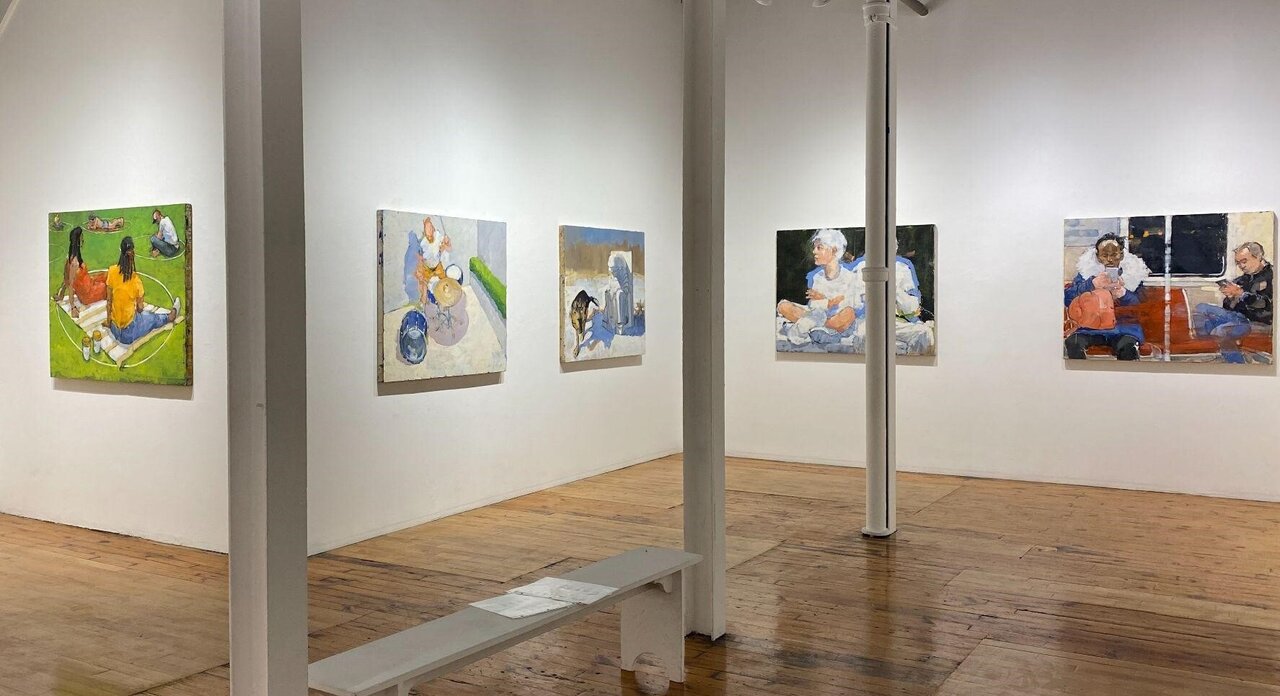
    Installation view of Jim Bourke, Together / Apart at the Red Head Gallery

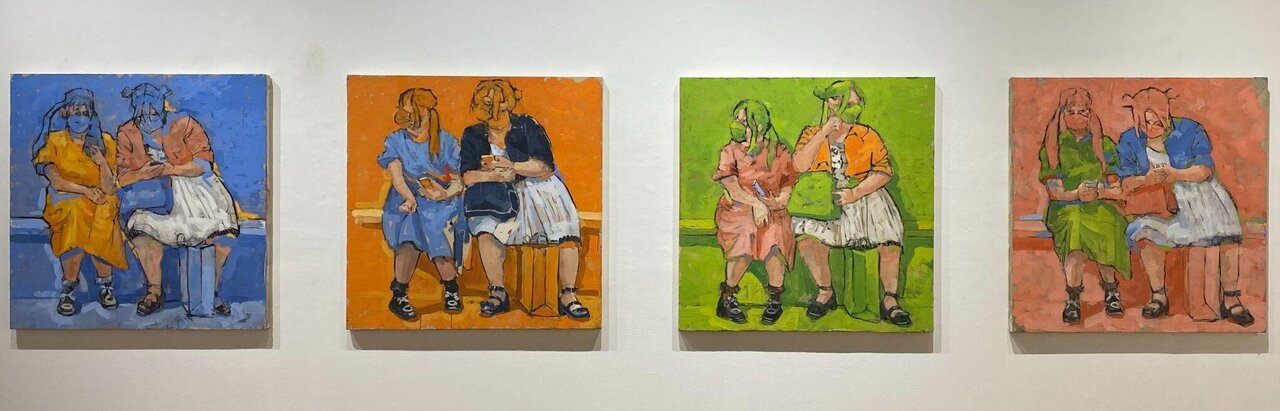
    In the series, Shoppers Bloor Street, Bourke presents two girls, using different colour palettes, as they change poses and gestures. Although the two figures are sitting close to each other on a bench, there is still a sense that they aren’t really communicating and feel distant by wearing masks and turning away from each other. The masks may also be a symbol of our current social paranoia; people are being physically separated and blocked even when in the same place.

    Shoppers Bloor Street #1-4, 2021, encaustic on canvas mounted on panel, 40” x 40”

    In many of Bourke’s paintings the dynamic movements of people are very engaging. In Subway Bench (2021) the two figures wear similar shoes and pants but their relationship ends there. Even though they may be close to each other, they are focused on their cell phones – accentuating distancing and loneliness.

    Subway Bench, 2021, encaustic on canvas mounted on panel, 40” x 40”

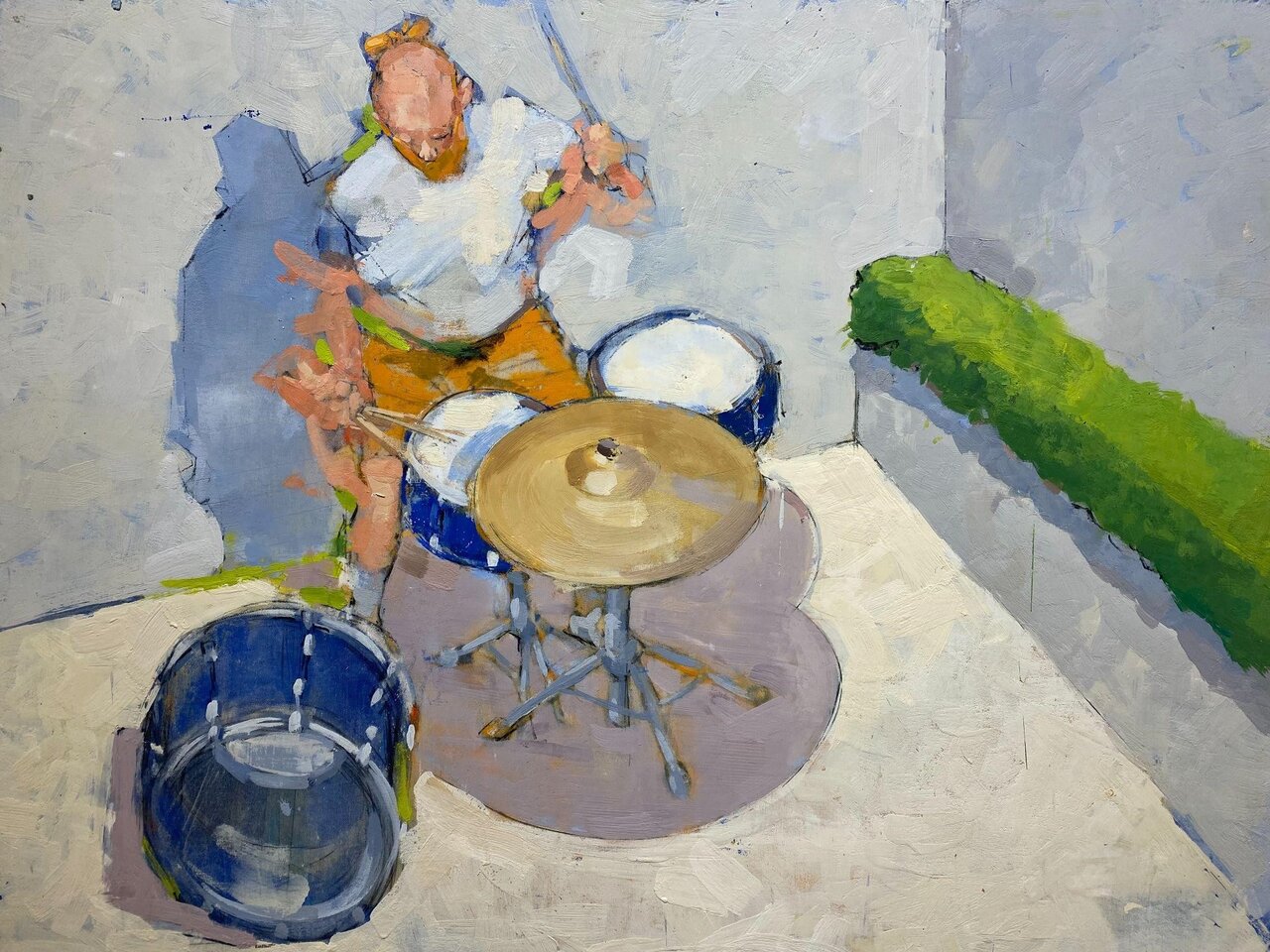
    In addition to the theme of the pandemic, Bourke also describes the emotional estrangement of the characters of his paintings. In Drummer (2021) he portrays one lone drummer with his drum set. At the moment, he seems to be immersed in the world of music, and for him, loneliness may not be so devastating. Here Bourke used the Morandi undertones to enhance the atmosphere of the painting, as he applied white pigments above the blue hue. The drummer’s dynamic movement are emphasized by using colour blocks: contrasting his white T-shirt, the light colors of the walls, the floor and the strong blue of the drum set. The corner where he plays caringly surrounds him; many musicians play at home, or on a patio, garden or roof, and share their performance through social media – showing the strength of the human spirit.

    Drummer, 2021, encaustic on canvas mounted on panel, 40” x 40”

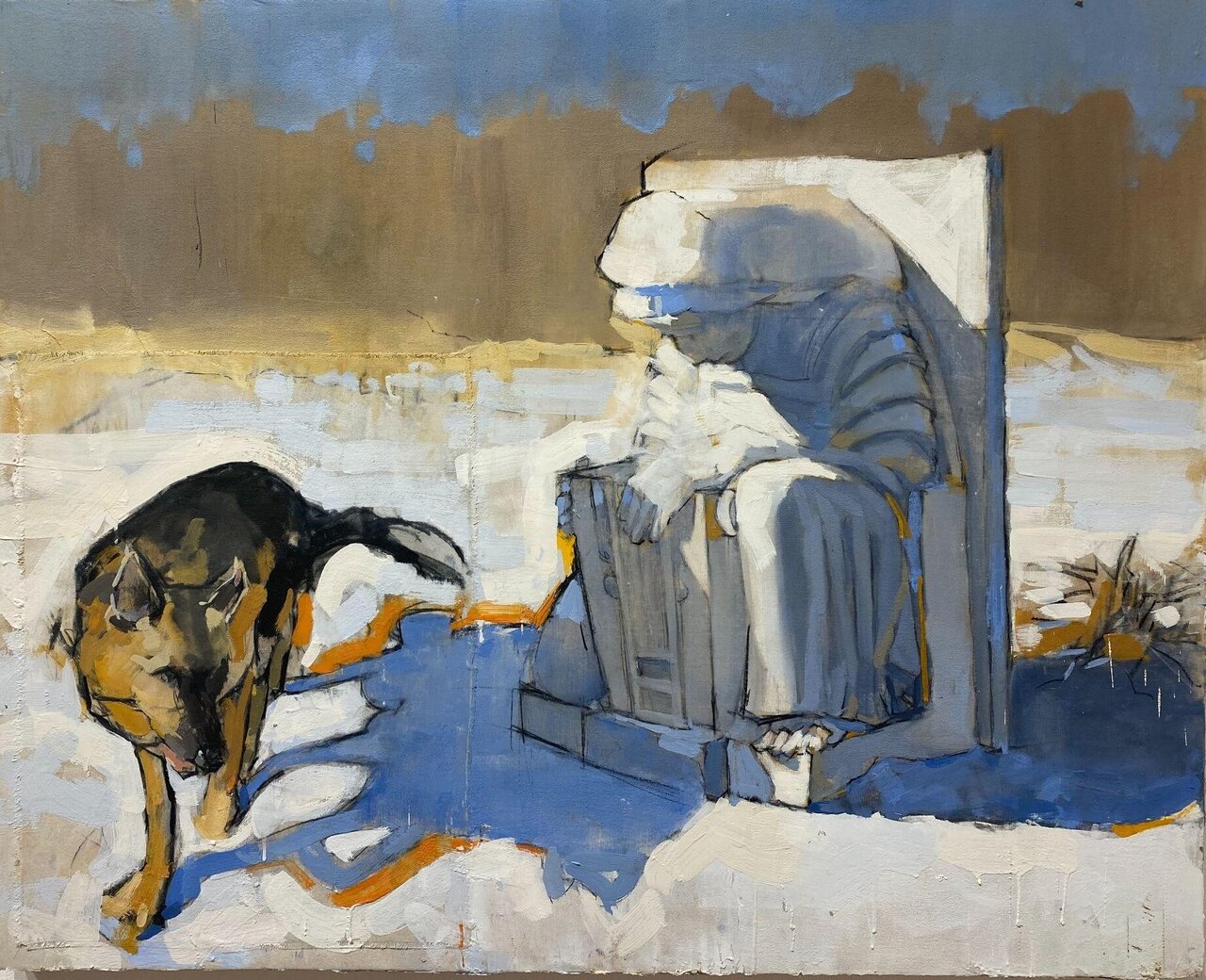
    The composition and the rendering of colours in LINKLATzzER’S Valley #3 reveal a strong sense of sadness. It pictures only a statue and a dog. The landscape is stylized, the dark blue shadow is surrounded by bright orange, very much like the last glance of the light before sunset. The sculpture, resembling Duane Linklater’s in Don River Valley Park, is a hunched figure made of stone, maybe sleeping here as the ‘zz’ of the title might suggest. The brown trees in the background are most likely dead, the only living thing is the dog. What is it doing here? Bourke left it for the viewer’s imagination to create the narrative and the possibility of individualized interpretation makes the painting even more mysterious and attractive.

    LINKLATzzER’S Valley #3, 2021, encaustic on canvas mounted on panel, 40” x 40”

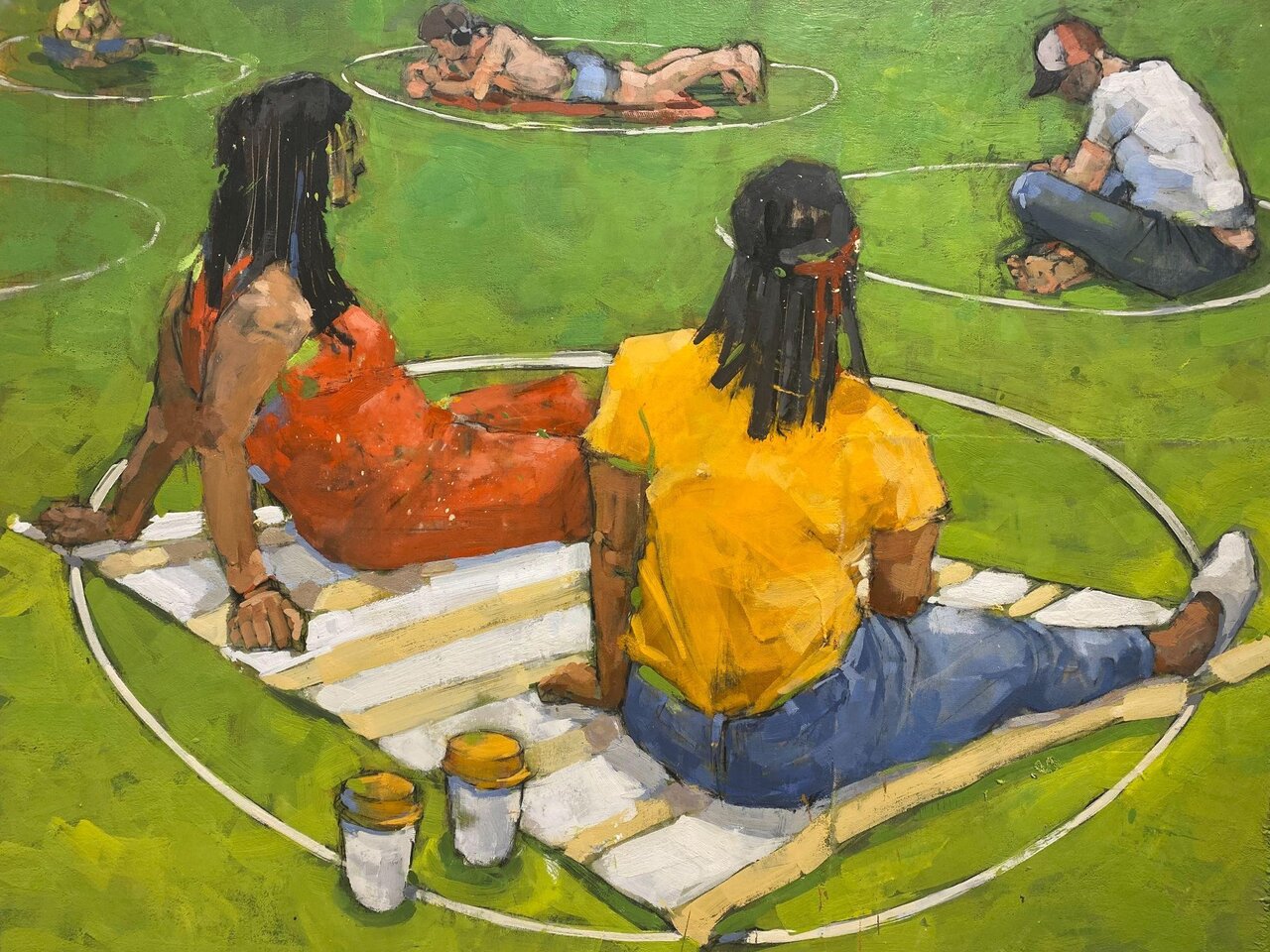
    In Park Circle (2021), the white circles on the ground are barriers like those used in Trinity Bellwood Park, to separate people into small groups. It reminded me of A Sunday Afternoon on the Island of La Grande Jatte (1886) by the impressionist artist Georges Seurat. Although there was no pandemic at that time, the social classes are visibly separated even in their leisure time.

    Park Circle, 2021, encaustic on canvas mounted on panel, 40” x 40”

    Jim Bourke captures the static in the dynamic. Although his paintings are not strictly realistic, he still depicts the most relevant details of the scenes and the expressions of his characters. The life before COVID seems so far away, and people must have recognized by now that everyday routines will not be the same as they were before for a long while. Although the epidemic has made our physical distance from one another further, the power of love and caring has brought our hearts closer to each other. What makes Bourke’s paintings so enchanting is that he is able to show closeness even when picturing distancing.   

    Vivian Sun

    Images are courtesy of the Red Head Gallery

    *Exhibition information: Jim Bourke, Together / Apart, November 17 – December 4, 2021, the Red Head Gallery, 401 Richmond Street West, Toronto. Gallery hours: Wed – Sat, 12 – 5 pm.
  • Artist Talk with Susan Ruptash and Doris Purchase at Propeller Gallery

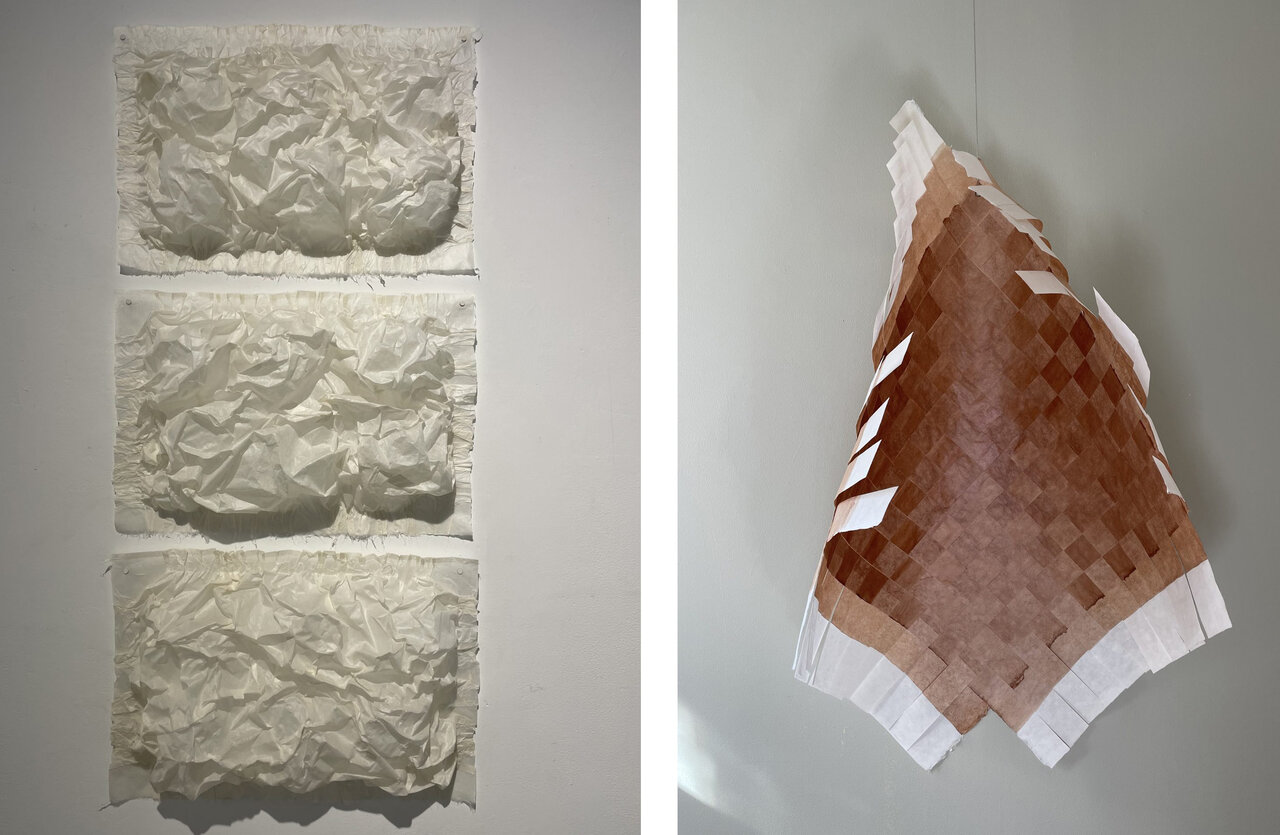
    Susan Ruptash and Doris Purchase, the artists of the exhibition Raw Material, shared their ideas, creation processes, and stories behind their artworks during the online artists talk on November 27th. Both artists want to bring attention to overlooked objects. The gallery’s website explains, “For Susan it is viewing the paper itself as art rather than a vehicle upon which to make art. For Doris, it is highlighting the frame and supporting parts of art. The attraction is in the opposites supporting each other in the subtleness of colour or lack thereof, a love of the seemingly simple statement and presentation.”

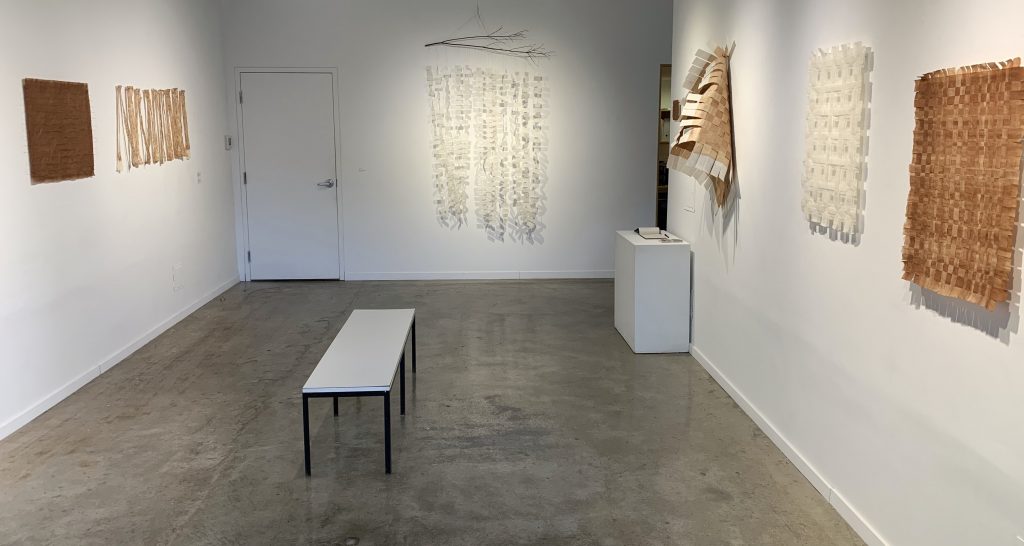
    Susan Ruptash talked about her fascination with washi. She loves its strength, its translucency, the beautiful fibers, the subtle colors, the textures of the two very different sides of the paper and in particularly the history and the legacy of washi. Ruptash said about her procedure “My work is very process based and exploratory. I usually have a bit of an idea about the outcome, but I very much let the washi sheet and the interventions that I’m putting in, take the lead into how it will turn out. I see my role very much as an enabler of the washi sheet to allow it to express itself.”

    Installation view of works by Susan Ruptash at the Propeller Art Gallery

    Ruptash uses traditional Japanese washi papers and follows the its traditions in making her pieces. She continued, “I have loved tearing paper since I was a child, but in particular tearing washi in a manner to really express that the fibers have a recurring theme with me. The other one certainly is layering the washi – in particular with these beautiful, fine washi that have gorgeous colors and texture and fibers – layering them in order to highlight the translucency of it.”

    Susan Ruptash, 366, Sekishu-banshi tsuru washi with linen thread and red dogwood, 82 x 51 x 10 inches

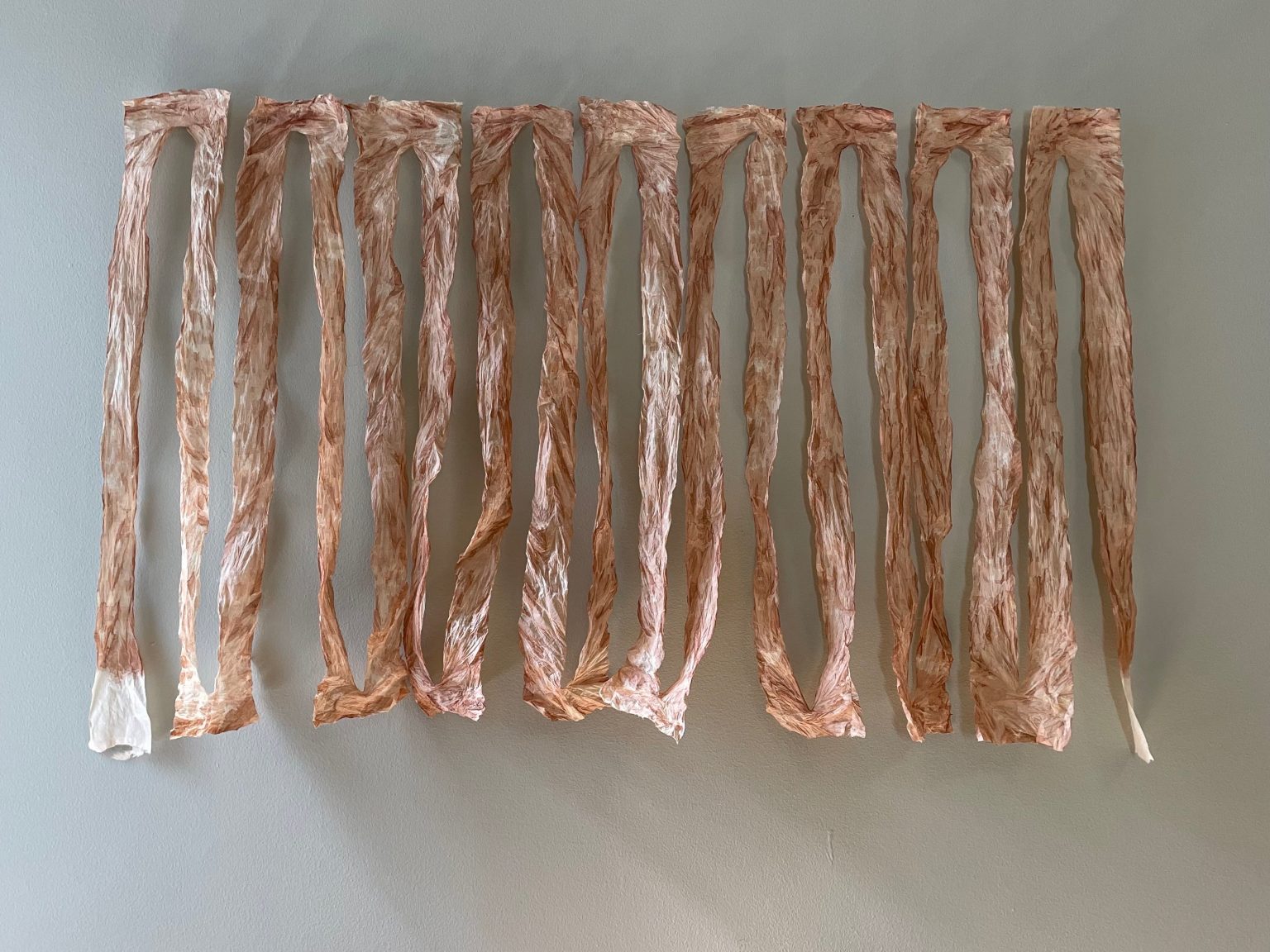
    Looking at the pieces it might not be apparent to the viewers that they have stories hidden in them. In Unspun Ruptash was seeking to investigate the doing and the undoing of a sheet of washi by using methods of thread spun, coloring and dying it with kakishibu; then turning the paper back into its sheet format.
    Susan Ruptash, Unspun, Inshu Mitsumata 001 washi with kakishibu, 23 x 35 inches

    For Waxing the artist decided to do a minimal treatment of Konnyaku starch to enhance and exemplify the strength of the washi while expressing the fibers along the edges. Creating X she used a medium weight washi that reacts to coloring unevenly. Then she cut the sheets and vowed them together and hang it in a special way.

    Susan Ruptash, Waxing, Sekishu-banshi Tsuru washi with konnyaku, 42 x 18 x 5 inches (left) and X, Moriki kozo washi with kakishibu, 42 x 22 x 18 inches (right)

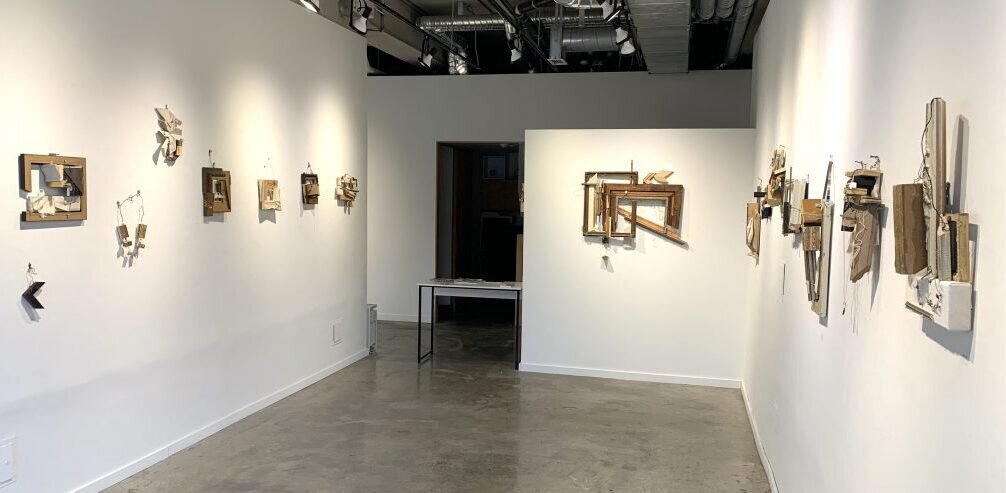
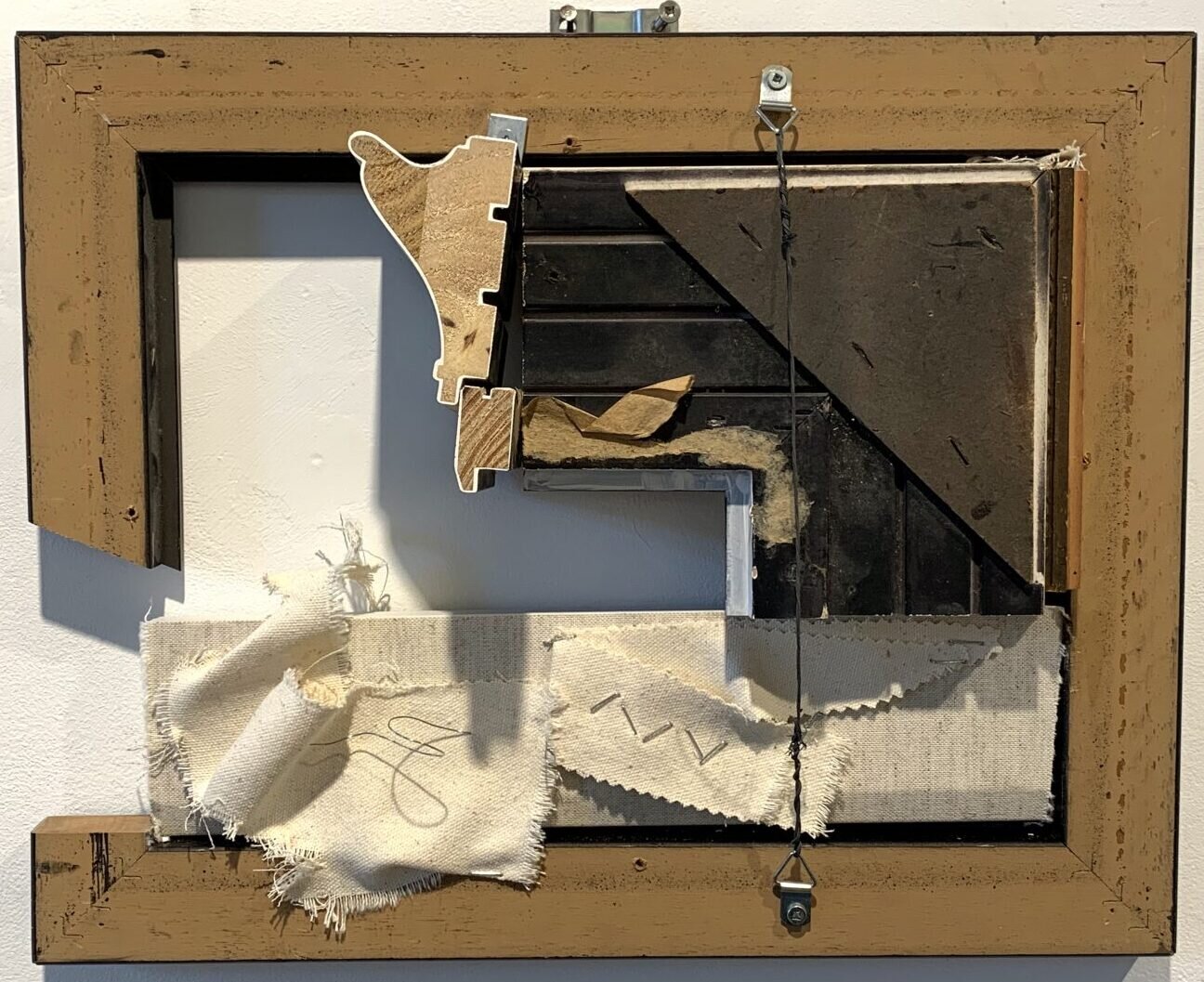
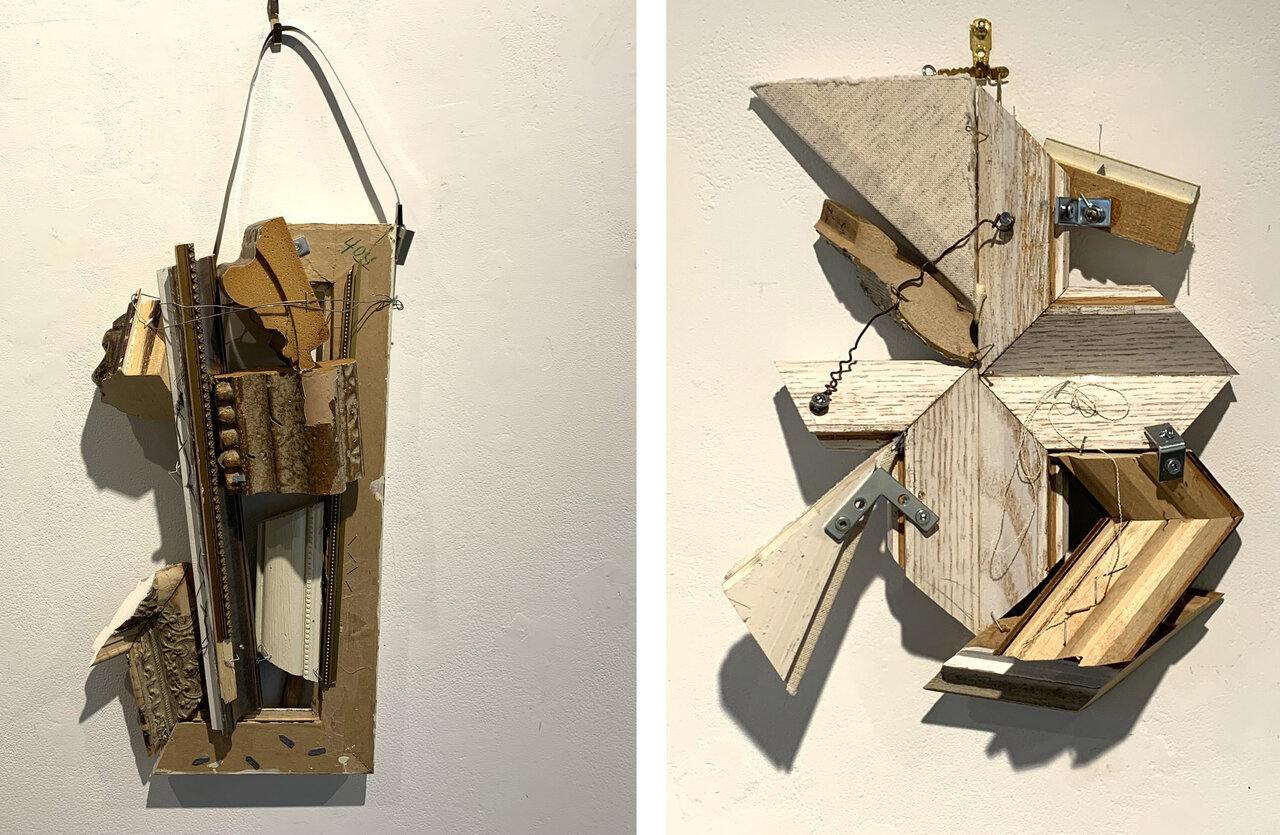
    Doris Purchase found it “A little wild working with what I had in my studio perhaps meant to be leftovers: from starting larger pieces and from finished pieces, off cuts, frames, bric-a-brac, wires and nails.” She recognized that when the pandemic hit things fell apart. She called it ‘force limitations’ for staying in a limited space with limited supplies.

    Installation view of Doris Purchase’s artworks at the Propeller Art Gallery

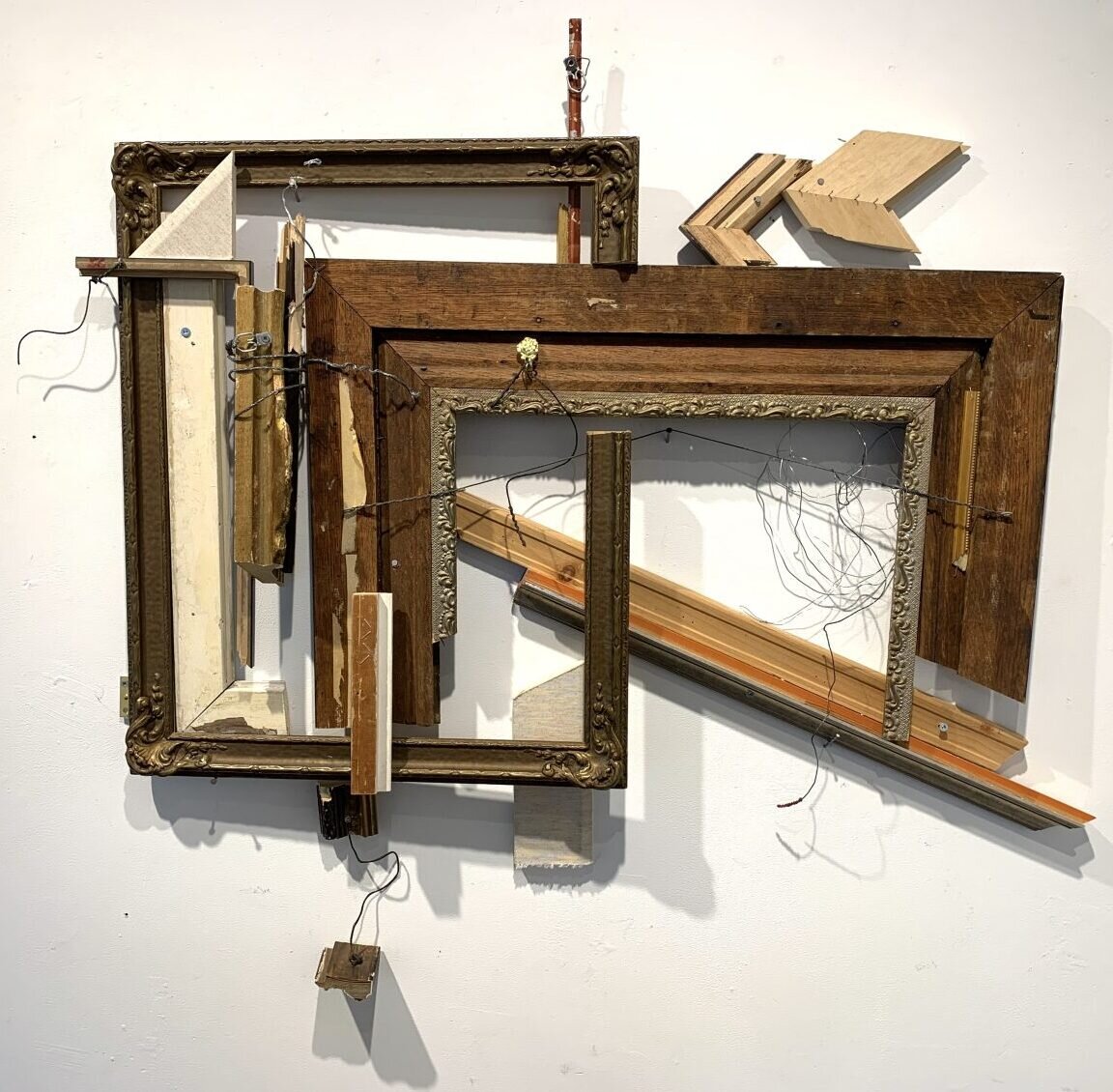
    So, she decided to go further in a way conceptually. She explained that, she was always fascinated by “what is behind the scenes, that was always a theme in my work, bringing in from what was behind to the fore. And it’s the wire, for example, that hangs a piece on the wall that has become extremely essential and presented in these pieces. The frame, I had a lot of fun focusing on that part of the frame that you never really see.”

    Doris Purchase, Raw Inside, mixed media, 12 x 15 inches

    Purchase made a special piece onsite that is not for sale at the Propeller Art Gallery. She said: “I wanted to do a piece on location since it’s very rare that you get to have such a great space to work in. I was like, oh, I just must, build something right here on the wall. So, if I was to take it off the wall, it would really fall apart.” You can watch the video of Purchase making this artwork here.  

    Doris Purchase, installation with the piece made onsite (left) at the Propeller Art Gallery

    Purchase said, she was focusing on these otherwise hidden materials which real purpose was to hold the canvas, to hide the raw edges. “That is something I’ve been focusing on in these pieces and that I do leave it to you all hopefully to make connections. And specifically, if you have felt this way during the pandemic, perhaps a little raw at times, and noticing things that are revealed, I hope you can connect.”

    Doris Purchase, Guide, mixed media, 25 x 10 inches (left) & Star, mixed media, 12 x 10 inches (right)

    Zhiyi Fang

    Images are courtesy of the Propeller Art Gallery

    *Exhibition information: Raw / Material, Susan Ruptash & Doris Purchase November 24 – December 5, 2021, 30 Abell Street, Toronto. Gallery hours: Wed – Sun, 1 – 5:30 pm.