Author: artoronto

  • Carol Wainio at Paul Petro

    The intimate setting of the space at Paul Petro Contemporary Art lends itself well to displaying the paintings of Carol Waino. Entering on the ground floor the visitor encounters Wainio’s latest works – acrylics on canvas – based on the theme of Aesop’s fable of the tortoise and the hare. The gallery upstairs features smaller paintings on paper that are highlights of her work over the past five years or so.

    They are complex paintings whose surfaces are explosions of delicately rendered details. Yet they each manage to cohere. What holds them together is in part Wainio’s earthy palette – predominantly greys, browns and greens – as well as layers of patterning. But above all their cohesiveness stems from their strong central narrative element. To Wainio narrative is an essential aspect of painting. There is consequently a duality to her work – it boths celebrates abstraction and at the same time it always tells a story. Here the abstract is thought of as opposite to narrative in the sense that it lacks representation of course. As a result many painters have been tempted to reduce abstraction to the self-referential formal elements of painting.

    Lièvre Livre 1, 2020, acrylic on canvas, 24 x 30 inches cropped

    On occasion the divide between the abstract and narrative in Wainio’s work is stark in compositional terms, where the upper half of many of her paintings are a little more than a ‘cacophony’ of painterly abstraction, and underneath, on the ground, we find various creatures that hint at some story or other. At other times the narrative elements sit in the middle framed by the abstract swirls of paint. But in her latest works downstairs the contrast between these elements of her work is less dramatic.

    Thought / Storm 2016, acrylic on paper, 22 x 30 inches

    Aesop’s tale is about hubris. The hare loses the race because of his arrogant confidence in being faster than the tortoise. Wainio suggests that we can think of the tortoise’s effortful plodding as representative of incremental changes we need to enact in order to overcome the threat of climate change. The hare, on the other hand, represents the short-termism that characterises many people’s response to this threat. Here we have an updated interpretation of the fable. Such reinterpretations reflect the universality of fables and fairy tales in general. They are continuous with mythology and as such go back to prehistory when stories were all orally transmitted. The great collectors of fairy tales, e.g., Charles Perrault and the brothers Grimm, wrote out tales that reached back much further in time and which are shared mutatis mutandis by many cultures.

    Race (Small River), 2019, acrylic on paper, 11 x 15 inches

    On one level Wainio is clearly enthralled by the aesthetics of early illustrations of fairy tales, e.g., Gustave Doré’s depiction of Puss in Boots. But in addition Wainio sees herself as much as a maker of books as a painter, reflecting the fact that she views painting as ineluctably a matter of story telling. Fairy tales have been a preoccupation in her paintings for at least a decade. And this fascination with fairy tales marries well with her aesthetic sensibilities. She has developed a style that is auratic. Her paintings brim with atmosphere, possessing an almost magical quality.

    Fable, 2019, acrylic on canvas, 36 x 48 inches

    Aura is in itself of interest to Wainio who is much influenced by the German cultural critic Walter Benjamin. A century ago Benjamin pointed out that industrialisation had increasingly led to the diminution of experience. To experience the world in Benjamin’s sense is to take in content from the world around us and to combine it with the memories of past collective experiences. The mental space required to experience things in this way is hard to attain in an industrial, and now postindustrial, world. We are so bombarded with imagery and instantaneous distractions that we rarely have room for experience. We can no longer tolerate the empty moments for reflection that this deeper sort of experience demands. Wainio sees fairy tales as perhaps the last vestiges of an the opportunity to experience the world in this full sense. Until very recently perhaps, children have been read tales that they fully take in. These fairy tales are remnants of a collective past when time was slower, when life was more difficult and we had to deal with fears from real threats in the world – scarcity of food, violence, natural calamities and so on –  all of the sorts of events that feature in folk and fairy tales.

    Lièvre Livre 2, 2020, acrylic on canvas, 30 x 40 inches cropped

    There is little doubt that Wainio is a rarely gifted artist with an uncanny ability to conjure out of  paint a spellbinding object, rich in possibilities. Her masterful touch is epitomised for example in her Lièvre Livre 2, with hare and tortoise made part of a dreamscape. Wonderful stuff.

    Hugh Alcock

    Images are courtesy of Paul Petro Contemporary Art

    Exhibition information: Carol Wainio. Human Natures, Feb 21 – Mar 21, 2020. Paul Petro Contemporary Art, 980 Queen Street W, Toronto. Gallery hours: Wed – Sat, 11 – 5 p.m.

  • Jeffrey Chong Wang at Gallery House

    Chinese-Canadian, Jeffrey Chong Wang, draws on his culture and heritage as the inspiration for his whimsical oil paintings. The talented artist achieves a nostalgic and historical aesthetic by using portraits of family members and friends in his compositions, fusing them together with specific locations in China which he recalls from his time growing up there. In his piece Rainy Day, his trademark style is very much present, drawing on themes of communism, literature, and sensuality, with protagonists that are borrowed from Chong Wang’s own life.

    Rainy Day, 2019, oil on canvas, 36″ x 48″

    The exhibition The Other Side of Now, held at Gallery House, has an overwhelmingly ethereal presence. The otherworldly aesthetic highlights a fantasy world of China, while having very evident hints of reality, political expression, and history. The piece, Afternoon Tea, encompasses this idea. The work is very large and is extremely complex. The piece seems to offer a Chinese twist on 18th century aristocratic Europe, with the figures frivolously lounging in luxury, wearing wigs, and eating at an abundantly filled table, which unmistakably echoes the oil paintings of the French Court. Alongside this theme, Chong Wang introduces the art of Chinese tattoos, present on the female figure in the foreground. He shows the idyllic country landscape in the back window. The painting combines the very ornate Oriental fashion with a very prominent eroticism.

    Afternoon Tea, 2019, oil on canvas, 60″ x 48″

    The oeuvre of Jeffrey Chong Wang is whimsical and striking. He paints his protagonists as fair-skinned and idealized in style, looking out into the distance with lost and captivating eyes. This theme is evident in After Sunset, a piece that, like many others, immediately impacts the viewer, making them wonder who or what it is that these figures are looking at, and why is it making them so sad. Jeffery Chong Wang’s exhibition, The Other Side of Now, cleverly remarks on the past and the present, which makes it an important must-see.

    After Sunset, 2019, oil on canvas, 24″ x 30″

    Talia Williams

    Images are courtesy of Gallery House

    *Exhibition information: Jeffrey Chong Wang Solo Show & New Works, March 7 – April 3, 2020, Gallery House, 2068 Dundas Street West, Toronto. Gallery hours: by appointment only till April 3, 2020.

  • Megan Rooney at MOCA

    HUSH SKY MURMUR HOLE by Megan Rooney

    The mural is alive. Incarnadine, blush, radicchio, red, pitch black, blue, citron, and churlish green. The colours move. They twist, turn, cajole, guide, lure, seduce: they push you and they pull you around, whether you like it or not. In Megan Rooney’s expansive, inter-disciplinary practice, that’s what art does: it asks you to pay attention, to look again, to enter it whole — to risk it all.

    Megan Rooney Installation view HUSH SKY MURMUR HOLE; MOCA Toronto, 2020. Courtesy the artist, DREI (Cologne)

    The world of HUSH SKY MURMUR HOLE — for it is that, a cosmos — is contained by a painted, encircling skin of the same name. Rooney has long been interested in colour, and how it is wedded to memory — the ways in which it can both forge and summon an environment. Made in situ, the arcs and smudges, the eddies and smears of the mural are painted intuitively. As the artist’s body responds to the particulars of the space, the work begins to generate itself: a logic that grows like a crystal, unfurls, and takes hold of the atmosphere. Within this landscape, we are confronted by objects strange and familiar. Things wrapped and bound, things rusted and faded, things spattered and smoky: things collected and reassembled, made into new, wayward rulers of their formerly humble material properties.

    Megan Rooney, Homeland, 2020, HUSH SKY MURMUR HOLE; MOCA Toronto, 2020. Courtesy the artist, DREI (Cologne)

    At one turn, round a bulbous column, painted barrels arrayed in communion surprise with their hued and dented bodies. At another, a trolley of snakes grin lazily, taunting us with their inscrutable slits of eyes; their pastel fabric bodies curl and ply against their metal confines. Painted damask sentinels, bandaged with mesh and wood, threaten to roll towards us like little stitched monsters, spill their birdseed coffins, offer us a cigarette. Hanging from the ceiling, hovering over lumpen figures beneath, three hooded graces sway, their forms hue-sodden and marked with an accretion of traces. Like flowers made too heavy to open and see the sky — but what if they did? Who are they? Do they scold or console? Mourn or revere? Have they come from another time? Did they bring this rotting fruit that cloys the nostrils? And the bag-headed kin beneath, with their coil and singed utility wool skin, do they slump, pray, wait? For what?

    Megan Rooney, Installation view Homeland, 2020, HUSH SKY MURMUR HOLE; MOCA Toronto, 2020. Courtesy the artist, DREI (Cologne)

    Coursing beneath the surfaces of Rooney’s objects, stained and seductive, is an undercurrent of fear twinned with insouciance — a revelry in the tender, spectacular qualities of everyday detritus and how it can be connected to other materials and contexts. The grace of cheap luxuries transformed and all the potential narratives evoked by a collection of things bound by place and affinity — a kind of family resemblance that is like the afterglow, burn, sear of a hot image on the retina. What does it mean to look at the world around you and translate what you see into marks, images, forms?

    Megan Rooney Installation view HUSH SKY MURMUR HOLE; MOCA Toronto, 2020. Courtesy the artist, DREI (Cologne)

    Rooney’s references engage with materiality and the human subject and are deeply invested in the present moment: the festering chaos of politics, with its myriad cruelties so resident in the home, in the female, in the body. And what will this hot, violent existence look like, once it’s all over? What did we do with our bodies? Was it enough? How did we learn to acknowledge them, or not, through our extravagant rituals of adoration, procurement, disregard, and loss? Through our expensive festivals of death and ruin? This is not an exaggeration. This is not a drill. As Rooney’s work imitates with agile acuity, we have joy, we have pleasure, we have colour, we have storytelling, movement, tenderness, intuition, faith. But something is really wrong. The mural is alive, but it won’t always be.

    Installation view Homeland, 2020; MOCA Toronto, 2020. Courtesy the artist, DREI (Cologne)

    Text by Emily LaBarge for HUSH SKY MURMUR HOLE. Courtesy of MOCA Toronto.

    *Exhibition information: February 6 – April 12, 2020, Museum of Contemporary Art, 158 Sterling Road, Toronto. Museum hours: Mon, Wed, Thurs, Sat and Sun 10 am – 5 pm, Fri 10 am – 9 pm, Tue closed. The Museum is temporally closed.

  • Kathryn Bemrose’s Birdland

    Birdland is the latest exhibition at Yumart. It features the paintings of Kathryn Bemrose. As the name implies its theme is birds, and not necessarily the New York jazz club, which the name might bring to mind. It’s possible, however, to draw a connection between the improvisational quality of jazz and the Quebec-based Automatistes school of abstract painting, who favoured a fluid, stream-of-consciousness approach to their craft.

    Installation view. Photo Bob-Morrison

    Bemrose, like Les Automatises, wants to channel her unconscious, making it visible in her painting. The school of thought stood in opposition to the rigidity of geometric abstraction. The Automatistes wished to be free of the constraints of deliberation, reason, and structure itself. As they might have said, when inspiration flows in poetry or paint, it doesn’t necessarily leave the pen and brush in the shape of rectangles. The intent was to touch something universal in the liquidity of consciousness. Object, image, and colour may dissolve and meld in the course of navigating thought and motion. Being immersed in the act of painting is a way of being lost and found simultaneously, suspending momentarily, perhaps, the contradictions of life. However, no one is ever free from intention and deliberation. These just get stuffed away somehow. To use a car analogy, the Automatistes drive automatics, the geometric abstractionists standards. With a standard transmission you have to manually shift the gears in straight lines and angles. To Bemrose and the Automatistes, the gear box is hidden, or as they say – it’s automatic and spontaneous.

    Installation view

    Birdland is a demonstration of the joy of paint. The works are uplifting in their exuberant lavishing of the pigment onto panel and paper. The birds in the Bemrose exhibition flit in and out of camouflage, challenging the eye, at times, to separate plumage from foliage. It’s an unbridled dance between the figure and its descent into the oblivion of abstraction. Secretary Snack displays perfectly this drama of dissolution, where each painterly element is stretched taut – bird, snake, and ground having been arrested, as if by a stopwatch, in a split-second wriggle of painterly unison. 

    Secretary Snack, 2019, oil on birch ply, 20” x 16”

    Do you ever feel guilty, Doug? is funny in the way that a New Yorker cartoon is funny. If not depicted in paint, the question might have been posed with the opening line: “Two buzzards walk into a bar… “ and so on. Here, in the Bemrose painting, the conversing vultures melt into a background sky, their blue-black wings fusing amorphously into a low-hanging somber cloud. Something ambiguous seems to be taking place at the bird mid-section. Choice cuts of carrion take-away? Bird’s eye x-rays of vulture digestive tracts? It doesn’t matter. The artist has daubed a pair of avian fowl in an improbable twinge of conscience – well one of them at least. We’re not certain that Doug here, has quite managed to pluck up his sense of morality and ethics to the gold standard of humankind.

    Do you ever feel guilty, Doug?, 2019, oil on paper, 15″ x 11″

    Do U Sing? wafts orchestral-fashion skyward as a fugue. The imagined conductor in the painting might be a peacock, its neck and head having dematerialized and integrated seamlessly with the composition above its plumaged torso. All this contrapuntal stuff happens in the air, where leaf, branch, cloud, and sky, emerge and disappear as bird forms come to view, coalescing and weaving into a melody of pigmented forms. This is a case of Bemrose skirting the figure just enough to hold the image at obeisance, allowing a corner here and a corner there to flow into view in a controlled fashion, as if to remind the viewer, “I use abstracted verse, unlimited in time and interpretation.”

    Do U Sing?, 2019, oil on birch ply, 36″ x 30″

    Steve Rockwell

    Images are courtesy of the artist

    *Exhibition information: March 7 – 28, 2020, Yumart, 401 Richmond Street West Suite B20, Toronto. Gallery Hours: Wed – Sat, 12 – 6 pm.

    (edit)

  • Grow Op 2020 / Gladstone Hotel

    Sculpture by Carolina Delgado-Duruflé

    March 12 – 15, 2020
    Gladstone Hotel
    1214 Queen St West. Toronto
    Hours: Thurs March 12, Opening Reception, 7-10pm , Fri March 13, 11am–9pm, Sat March 14, 11am–9pm  Sun March 15:  11am–5pm.

    In the age of “global weirding” Grow Op 2020 invites audiences to experience thought-provoking and awe-inspiring immersive installations that explore the themes of weather and climate through the lens of contemporary art.

    Discussing the weather has long been a Canadian obsession, but small talk has turned to big  talk as the conversation about climate change gains international attention and urgent action. At this year’s Grow Op exhibition: artists, designers and educators explore food sustainability in  face of climate change, the sublime power of the sky, and how climate change can connect  communities. 

    Grow Op​ is a four-day festival that transforms the hotel’s second floor with 20+ immersive  installations that celebrate innovative ideas and conceptual responses to urbanism,  environmental sustainability, landscape design through the lens of contemporary art.

    For more information visit https://www.gladstonehotel.com/growop-2020/

  • Travis Shilling at Ingram Gallery

    Spirits look upon the Canadian landscape stripped of life in the process of constructing pipelines. As the spirits look on, humans carry on with their destruction, completely unaware of the otherworldly presences of spirits who cannot physically intervene.

    Travis Shilling is an Indigenous Canadian artist from the Ojibway Nation and was born in Rama, Ontario. He is the son of Arthur Shilling who was also a well-known  Indigenous artist. Travis Shilling’s strong colour palettes are reminiscent of his father’s style. According to the Gallery Director, Tarah Aylward, he has been influenced by the Group of Seven, as he was exposed to their work when he was quite young. Shilling’s work is also reminiscent of Norval Morriseau, another  Indigenous Canadian artist, which can be seen in his rendering of the spirits in his paintings, but Shilling’s work cannot be reduced to just the influences of other painters. His artworks are entities that speak for themselves, pushing further than his influencing artists.

    Installation view of Travis Shilling, Tyrannosaurus Clan, at Ingram Gallery. Photo: Olivia Musselwhite

    The title of Travis Shilling’s show at Ingram Gallery, Tyrannosaurus Clan is the merging of two terms. According to Tarah Aylward, pipelines are meant to transport petroleum which has been termed humorously as ‘Dino-Juice’. It is the term ‘Dino-Juice’ that resulted in Shilling’s choosing of the widely known ‘Tyrannosaurus’ species in the exhibition title. ‘Clans’ are the traditional method of distinguishing the family relationships of people. In this joining of terms, the title suggests that the people of the modern world have become a new clan that relies on natural gas and pipelines to transport it.

    While Travis Shilling’s oil paintings now suggest the charged political climate around the development of pipelines in Canada, that political message was not on the artist’s agenda when he painted them. They were meant solely to replicate the visual state of the landscape.

    The Excavators #1, 2019, oil on canvas, 48 x 60 in. Courtesy of Ingram Gallery

    Shilling merges two styles of painting on the same canvas. In The Excavator #2 (2019), the artist depicts sweeping landscapes that are rendered with realism and adds the spirit. In this dark, barren and muddy scene with only the remains of tree stumps, a mammal spirit climbs a mound of earth in the distance, as if it is coming from inside the land, with its claws and jaw clenching the soil. The spirit looks upon the humans, who are unaware of its presence, with a wide eye. Like all the others in Travis Shilling’s pieces, is pictured in animal form and is much larger than the humans and their machinery. It is presented as a layered composition with depictions of other creatures and scenery within their figures. The spirits are brightly painted, semi-abstract, and seemingly part of the landscape as much as otherworldly.

    The Excavator #2, 2019, oil on canvas, 36 x 36 in. Courtesy of Ingram Gallery

    The Village (2019) portrays another spirit that is coming from the horizon and over the land. Its path angles toward the front of the pipeline, seemingly intersecting with it. In the spirit’s belly, there is a green landscape under a full moon, embodying what has been lost in the land due to human construction. Heavy machinery sits atop the mud in order to dig trenches where colossal pipes are to be lowered into the ground. The workers are minuscule compared to the machinery that engulfs them. They go about their duties without sensing the spirit or giving any thought to the destruction of nature and what it might mean in their future.

    The Village, 2019, oil on canvas, 48 x 60 in. Courtesy of Ingram Gallery

    Shilling’s works are filled with subtle and impactful details. Totem (2019) shows us the land decimated by pipeline construction. A bird-like spirit tenderly wraps its neck around a lone Totem pole, caressing it in an attempt to save it from being cut down. Again, there is no connection between the humans with the chainsaws and the spirit. Its effort to save the Totem is futile.

    Totem, 2019, oil on canvas, 48 x 48 in. Courtesy of Ingram Gallery

    These realistic, yet otherworldly scenes, bring the opportunity of furthering our conversation on extremely relevant topics in Canada. Studying Travis Shilling’s work gives us a deeper understanding of what Canada really is, with its rich Indigenous past and related economic struggles. He makes us face a rather dark and empty landscape in a land that used to be green, beautiful and fertile. Sad spirits from the past, or the deepness of the Indigenous soul, seem to be trying to stop the destruction and save the land and its traditions.

    Olivia Musselwhite

    *Exhibition information: Tyrannosaurus Clan, February 22 – March 12, 2020, Ingram Gallery, 24 Hazelton Avenue, Toronto. Gallery hours: Tue – Sat 10 – 5 pm.

  • RAW at Gardiner Museum

    Clay is a wonderfully terrestrial and tensile medium. Its unique properties offer so many opportunities for creative expression, thus it has garnered – and continues to garner – a prominent place in cultures throughout the expanse of human civilization. It has not only served as an artistic catalyst, but is often integral to our historical record, our notions of physicality, and our primal connection to the earth. As such, the Gardiner Museum presents its newest special exhibition RAW, featuring four contemporary artists that offer wildly distinct understandings of clay and its relationships with humanity. These pieces explore clay in its various raw forms, whether it be moist or dry, moldable or brittle, whole or disintegrated. Each one puts forth individual reflections on the cultural and societal importance of clay while cumulatively asserting its relevance to commentaries on identity, environmentalism, and virtual isolation.

    This program began with a performance by Cassils entitled Up to and Including Their Limits. Tied to a flying harness, the artist positioned himself within a square plexiglas arena, bricks of raw unfired clay barricading the surrounding interior walls.

    Cassils Up to and Including Their Limits performing arena at the beginning

    As the performance began, the artist arduously tore at the wet medium with his bare hands, increasingly enabling the audience to become voyeurs on his labors as “windows” opened up. Alternating between aerial suspension and earthbound movement, each bit of clay he salvaged was then powerfully thrown together to create a crude pedestal whereupon Cassils ultimately stood in exhaustion and triumph.

    Cassils performing Up to and Including Their Limits, February 20, 2020

    The performance itself was a defiant display of raw physicality and determination. It was commemorating Carolee Schneemann’s Up to And Including Her Limits (1971-1976) and reimagining it to encourage visibility on transgender and non-binary identities, particularly in the face of ongoing violence and disenfranchisement towards those communities. Now, its remnants include video documentation of the performance, the crumbled walls of the dry clay, and Cassil’s pedestal and harness that serve as a monument to their message.

    Cassils Up to and Including Their Limits performing arena at the end

    No less monumental is Azza El Siddique’s Measure of one, a colossal installation combining clay, metalcraft, and water to illustrate the progression of time and its effect on human history. Modelled after an Egyptian temple erected for the 7th century BCE Nubian pharaoh, Tirhaga (Taharqa), the structure consists of a large central tower, flanked by shelved transepts and overlooking a small cistern. The central tower holds rows upon rows of unfired urns. Water is then pumped up from the reservoir below and allowed to drip on and deteriorate the works. As more time passes and the urns lose their integrity, they are shifted to the transepts for viewing and are likewise replaced by new urns to similarly erode. This brings to question our notions of memory and loss, which applies beyond institutionalized studies of history to include personal notions of our individual and collective pasts.

    Azza El Siddique, Measure of one

    Continuing with the theme of water and transformation, Linda Swanson presents her TEMPLUM OF A PRECIOUS THING OF NO VALUE, A SHAPELESS THING OF MANY SHAPES. It consists of bentonite clay dust delicately sifted onto a flat base. Overhead are four water-filled membranes that gradually trickle water onto the loose surface, essentially creating a topographic display of ongoing development. It is impossible to determine when the drops will fall, how they will impact the surface, and what the outcome will be; all that is known is that it will change over time. Just as the clay will transition over time, so too are we, the audience, invited to consider the cosmic order of things: how events beyond our control, glanced upon by our microscopic place in the universe, impact our future.

    Linda Swanson, TEMPLUM OF A PRECIOUS THING OF NO VALUE, A SHAPELESS THING OF MANY SHAPES

    Last but certainly not least is Magdolene Dykstra’s Polyanthroponemia, a comparison of human civilization and microbiology. Akin to viruses and other forms of parasitic microbes, human expansionism is essentially an infestation of the planet whereby resources are exceedingly harvested at the expense of Earth’s own well-being. In order to illustrate this concept, Dykstra fixes large growths of clay to the space’s walls and entrance to emulate festering microbial life that subsequently expand over the course of the exhibition.

    Magdolene Dykstra’s Polyanthroponemia

    RAW is a fascinating demonstration of how clay – despite being a natural medium and ancient artform – can still adapt to and dominate contemporary critiques of humanity and society. In fact, it is exactly its antiquity and earthen quality that lends to its infinite potential. The evolving quality of the exhibition encourages multiple visits to see how the pieces progress over time. Ultimately, it is more so the development of the clay than the final product that evokes curiosity and engagement.

    Text and photo: Simon Termine

    *Exhibition information: March 5 – June 7, 2020, Gardiner Museum, 111 Queen’s Park, Toronto. Museum hours: Mon, Tues, Thurs, Fri 10 am – 6 pm; Wed 10 am – 9 pm; Sat & Sun 10 am – 5 pm.

  • Drawing Unlimited at Propeller

    The Propeller Art Gallery is currently hosting an exhibition of drawings. It is the result of an open juried call. The curators – Joseph Muscat and Keijo Tapanainen – encouraged those submitting to ‘stretch the boundaries of the medium’, hence the title of the show Drawing Unlimited.

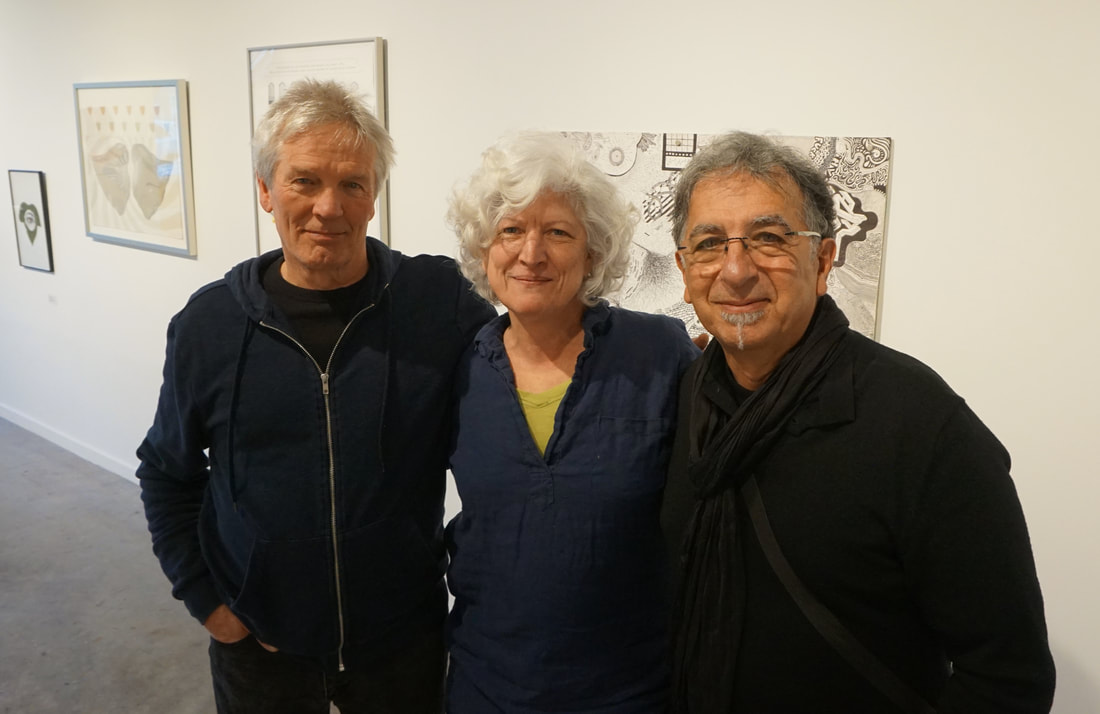
    The two Curators: Keijo Tapanainen (left), Joseph Muscat (right), and Lisa Johnson, Exhibition Co-ordinator (middle)

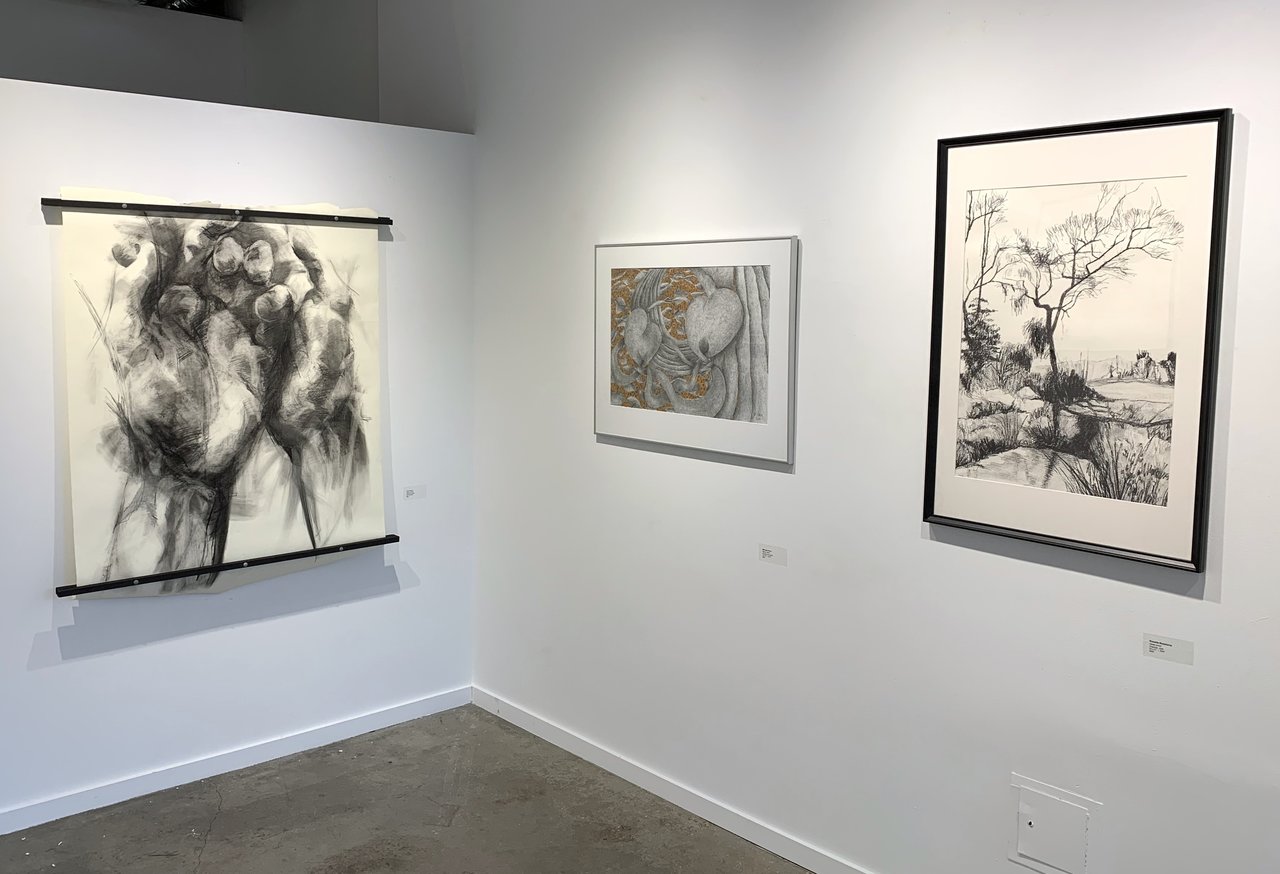
    Installation view of Drawing Unlimited

    There are thirty three works on display, all by different artists. But it turns out, rather, that most of the submissions, though not all, fell safely within the boundaries. Most do not challenge the viewer’s expectation of what a drawing ought to be. The normative nature of this expectation points to the fact that it is difficult to push these boundaries since there are no definitive criteria by which to measure such a thing. What should a drawing be? No one can say exactly. Talk of ‘stretching’ these boundaries, then, is apt in the sense that the concept of drawing is elastic. 

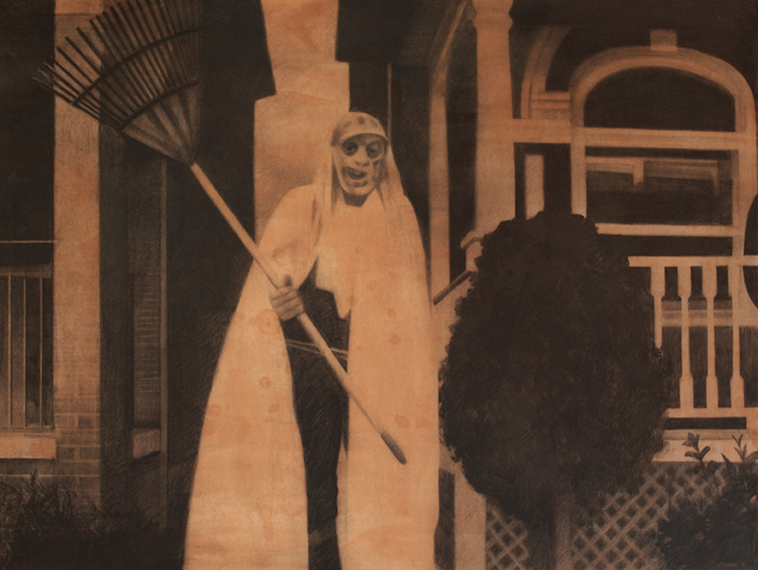
    Maureen Paxton, Rake, 2016, graphite on paper, 30″ x 40″ framed

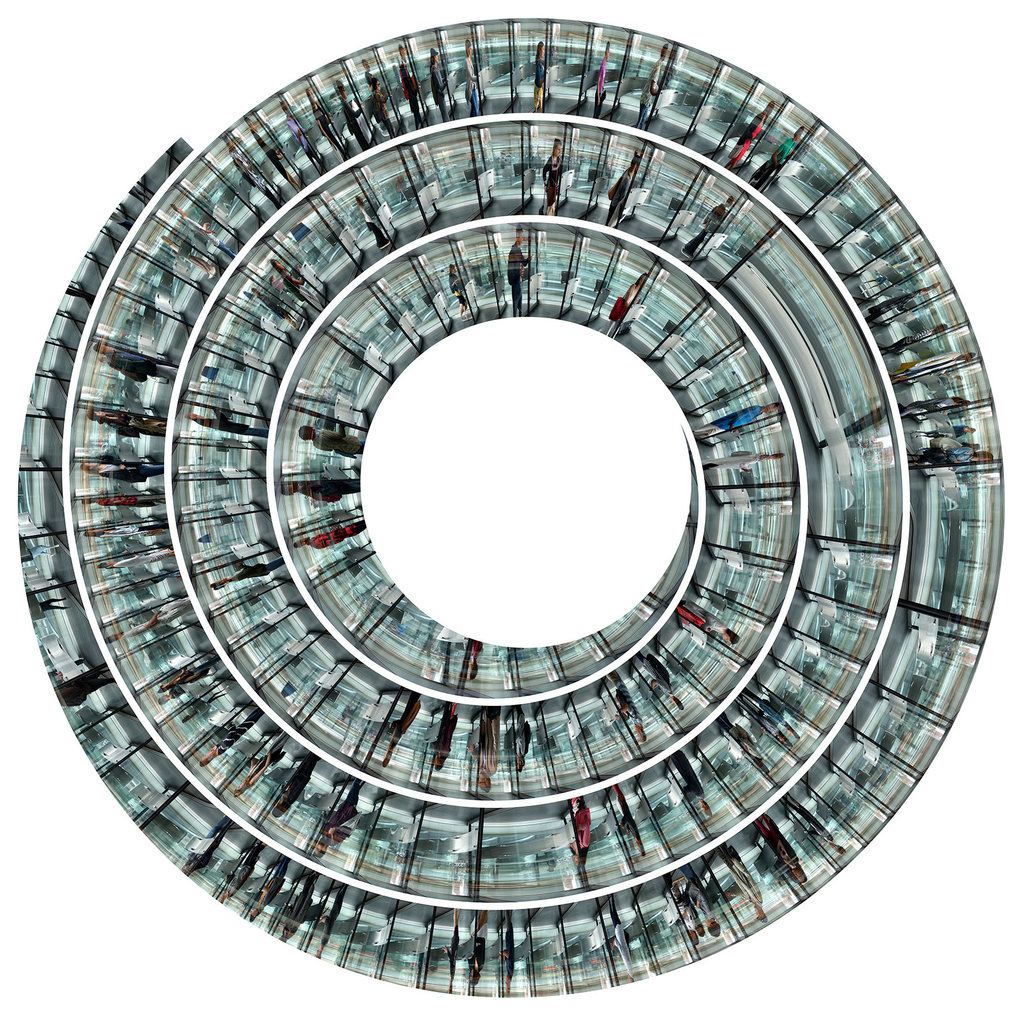
    Consider, for example, the submission by Harold Sikkema titled Revolve Face. It consists in a spiral of distorted images derived from a camera aimed at a revolving door. It shows various people pushing on the plate glass on their way in and out of a building. It is in some ways an arresting image, but in what sense is it a drawing?

    Harold Sikkema, Revolve Face, 2019, algorithmic video drawing on dibond, 24″ x 24″

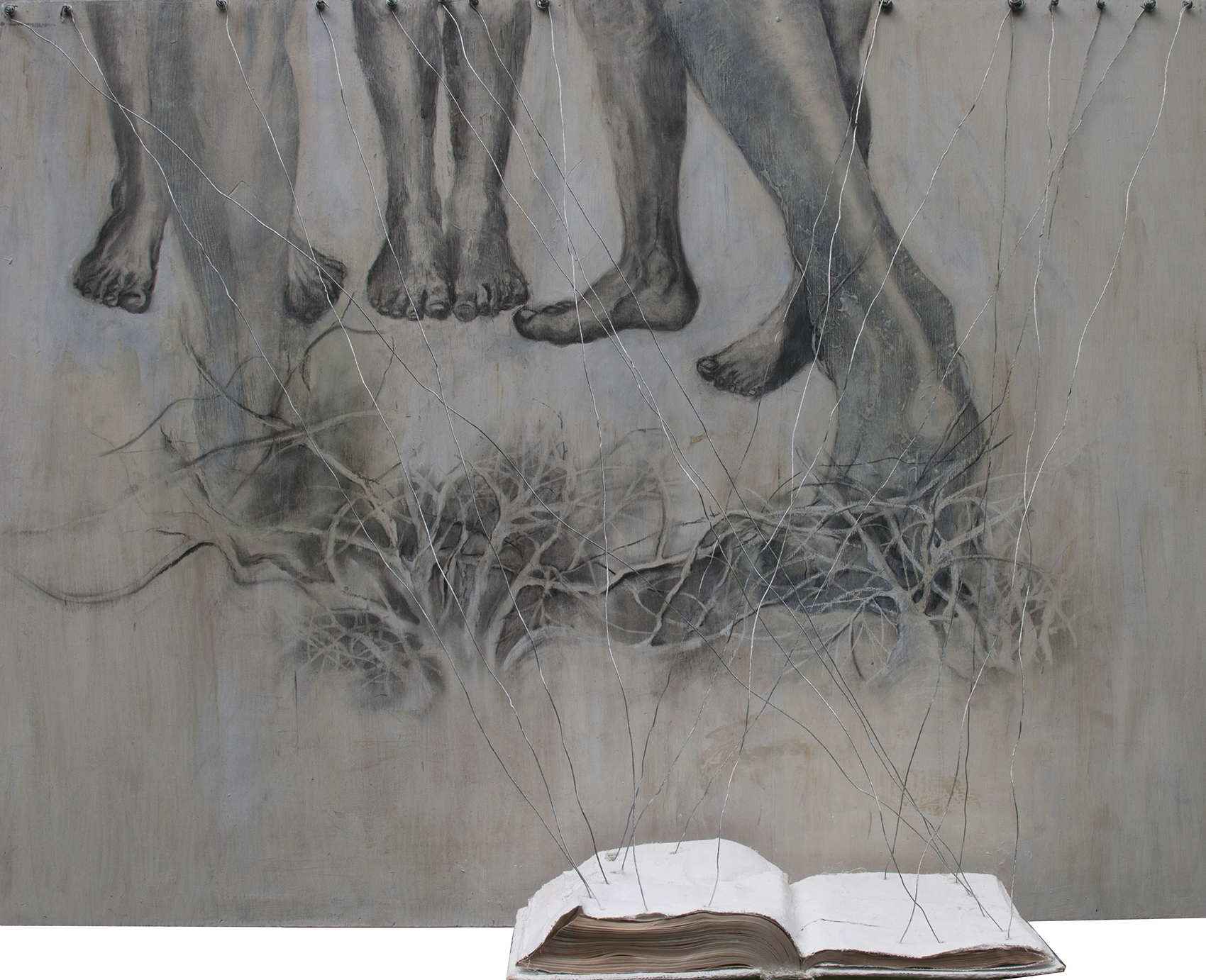
    Pnina Dinkin’s piece, Change is needed in construct of His-story, depicts four pairs of bare feet and attached along the top are a series of wires that suspend a blank book at the base of the board. Certainly, it has a drawn element, but the overall work is best described as a sculpture of sorts. But then again, the wires could be interpreted as lines belonging to a three-dimensional drawing. Who is to say that drawing is two-dimensional in nature after all?

    Pnina Dinkin, Change is needed in construct of His-story, 2019, charcoal on plywood, gel medium, wire, book, plaster, 36″ x 48″

    While drawing cannot be precisely defined, the curators proffer a description of what we aim to do when drawing. Citing Anna Moszynska, they explain that it is ‘a direct and immediate method of trawling the imagination, unlocking the collective and personal unconscious…It allows the hand to give free expression to that which is buried in the recesses of the mind…’. This is an apt characterisation of what most of the works attempt to do perhaps – to mine the unconscious. I take this to mean that the artist is attempting to give expression to what she intuitively feels rather than what she thinks, that is, what is otherwise expressible in words, i.e., conceptually.

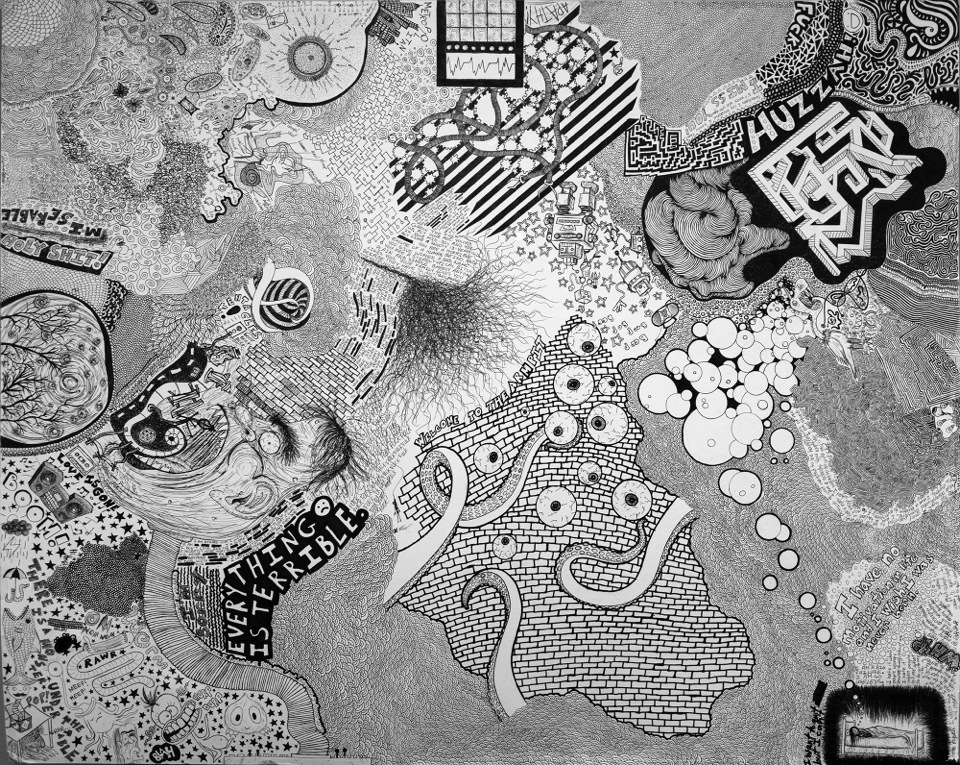
    Melissa Arruda, Anxiety Drawing #4, 2020, ink on bristol board, 30″ x 40″

    This idea echoes the views of the enlightenment philosopher and a principal founder of modern aesthetics, Immanuel Kant. Kant argued that the genuine artist – or ‘genius’ as he put it – is able to liberate our perceptual faculties from their innate conceptual constraints. Doing this is called the ‘free play of the imagination’, where the imagination is our innate faculty to build the phenomenal world. He maintained in this regard that appearances, i.e., phenomena, are not passively received by us but rather are essentially constructed by us. Ideally, then, the artist according to Kant aims to represent the phenomenal world in a way that encourages the viewer to see things in a way that is free from how we naturally see the things around us – to nudge us from our predictable way of categorising the world under our concepts. And it is in this way that drawings can stretch us, to continue our metaphor. Our experience of beauty derives from the pleasure of this free play.

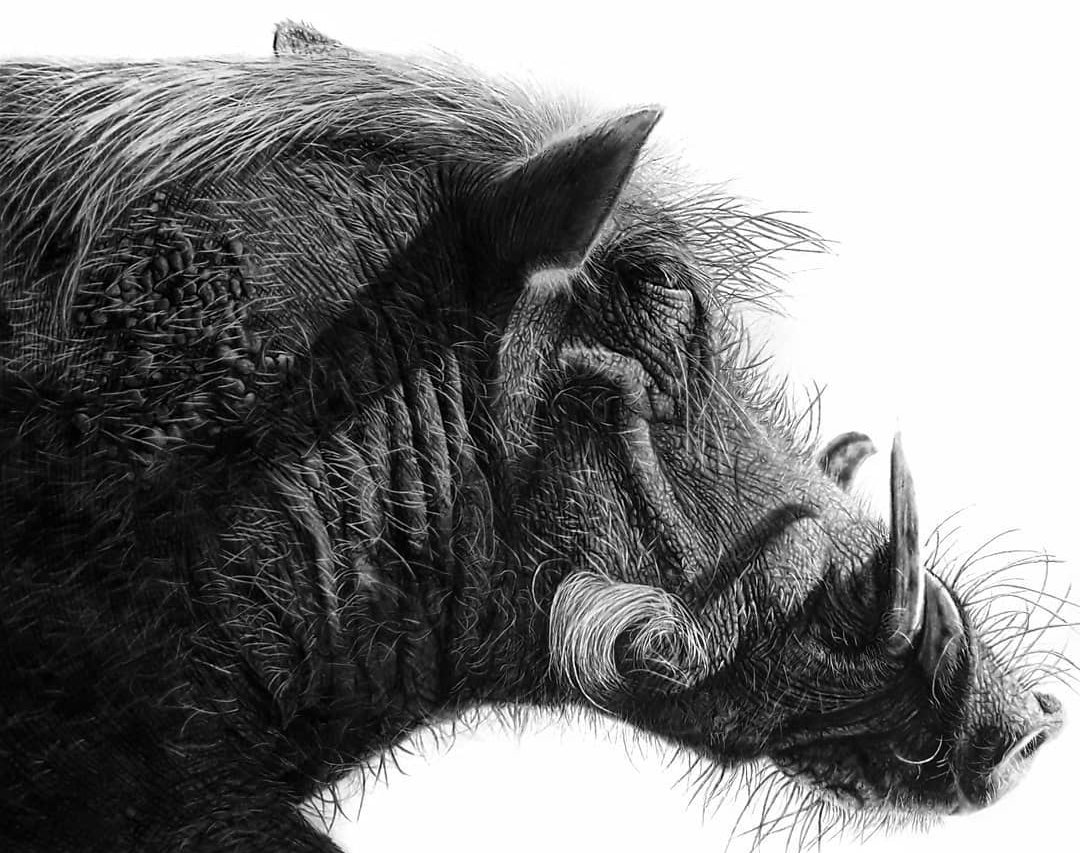
    In terms of the drawings in this show, while many of them are pleasing to the eye, few engender a sense of beauty in the way Kant describes it. That is, the drawings as a rule do not seriously challenge our ways of seeing the world, do not stretch us. This is evident, for example, in Lisandro Pena’s Warthog which is a delectable rendering of the animal. Nonetheless it doesn’t shake up how we see the world in any stimulating way. I do not pretend to suppose that Kant here offers the way of evaluating the artworks, but his ideas can help in a small way.

    Lisandro Pena, Warthog, 2018, pencil and carbon, 11″ x 14″

    But let’s not be too earnest. This is a lovely collection of drawings. They include intimate portraits, delightful landscapes, a relief on wood of the pelvis bones expertly rendered and a homage to Gaudi in the form of a small drawing in ballpoint pen. The exhibition has been masterfully hung to juxtapose the drawings in a stimulating and thought-provoking manner.

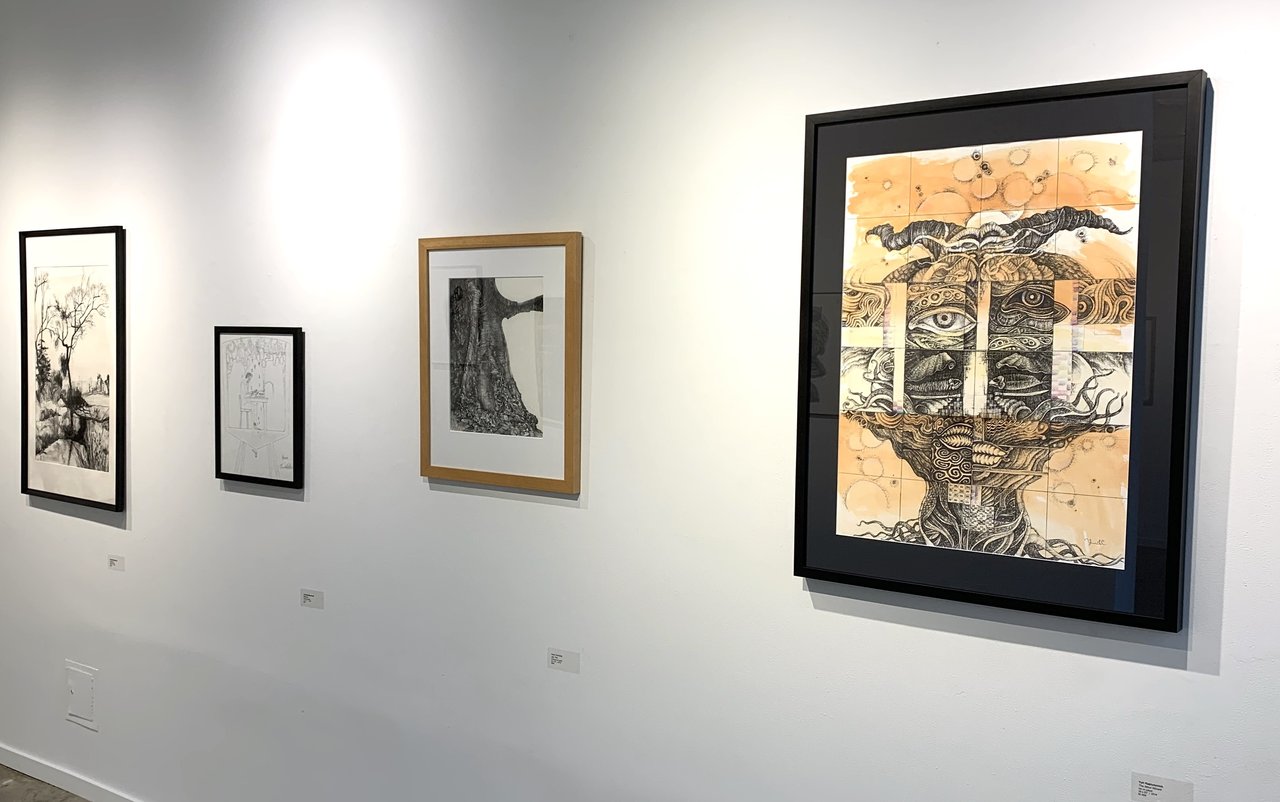
    Installation views of Drawing Unlimited

    Hugh Alcock

    Images are courtesy of Propeller Art Gallery

    *Exhibition information: February 19 – March 8, 2020, Propeller Art Gallery, 30 Abell Street Toronto. Gallery hours: Wed – Sat 12 – 6 pm, Sun 12 – 5 pm.

  • Five Questions with BOBBIE BURGERS

    Bobbie Burgers in front of her work. © Kyrani Kanavaros

    In advance of her solo exhibition at Nicholas Metivier Gallery this March, 
    Float Like A Butterfly, Sting Like A Bee, we asked Bobbie Burgers a few questions about the inspiration behind her latest body of work.

    The appearance of your work is dramatically different in recent years in terms of its level of abstraction. What prompted this transition and how has it changed your relationship to the subject? 

    Moving away from portraying my subject in the literal sense has been a long road with the aim to capture the feeling and less so the reality. My father once asked me, why do flowers have to be in a vase? and then the next question, why do they have to have stems? and so on until they were stripped away to their essence. This was a difficult problem to solve, but I realized that flowers were constantly moving and changing even in their short life in the studio. Light was swinging around, moods and feelings added another layer – I began to try and incorporate the past, present and future of what I was seeing, so it didn’t make sense to have them caught in stillness, they really have their own evolution. I no longer paint on a regular basis from actual flowers but absorb what I see and concentrate on the emotions attached. 

    Bobbie Burgers’ studio with Untying the Knot #2, 2019, acrylic on canvas, diptych, 72 x 120 in. © Kyrani Kanavaros 

    Walk us through your process. How do you begin a painting and what techniques and materials have you experimented with to develop your latest body of work?

    Having a studio that is substantially bigger than ones I have had in the past allows me to work on several projects and materials simultaneously. I can lay out forty feet of drawing paper and let my lines and washes wander along, or move over to wall sculptures that give me a different awareness of layering, all while painting on canvas. All of these elements end up referencing each other. My paintings contain elements of drawing, my drawings are layered and sculptural, and my sculptures have giant painted pieces of canvas in them.

    I usually start my paintings with large washes using different viscosities of acrylic, some normal acrylic watered down and some denser pigmented fluid acrylic. As the two meet and overlap, they create their own magic. They dry and new crystallized colours emerge, so a yellow may become an ochre or pinks start to show their blues. I slowly continue this layering process, trying to retain the natural movements of the paint to show that my hand was there and in motion. Some works feel more ephemeral whereas others are dense and storm ridden – both are dependant on the ebb and flow of emotion.

    Float Like a Butterfly, Study #3, 2020, mixed media on Arches oil paper, 51 x 42 in.

    Who are your greatest influences?

    Helen Frankenthaler for her giant scale and enormous colour.

    Joan Mitchell for her interpretation of nature in what appears as simple strong brush work but is in fact extremely varied and complex and keeps the viewer endlessly finding new areas to fall into.

    Pat Steir for allowing the movement of paint to do the talking while seemingly not influencing its path as it creates waterfalls on the canvas. For me, it encapsulates the idea of active painting.

    Willem de Kooning for slowly breaking down his subject until it no longer reads as the female form, but one still feels the sensuality of the nude.

    Georgia O’Keeffe for the subtle sexuality she brought to her florals, turning them from tame to erotic.

    Niki de Saint Phalle for her playfulness and the way her work feels crafted, imperfect and made with a human touch.

    Bobbie Burgers in her studio. © Kyrani Kanavaros

    Is Float Like A Butterfly, Sting Like A Bee, the title of this exhibition, a good description of what you are trying to do in all of your work or is there a particular gesture or approach that aligns the phrase with this particular body of work? 

    It is a good description of where my work sits now and where I would like it to go. I have been trying for several years to remove the saccharine from my florals and the idea of flowers being sweet in general, as I see flowers as being more resilient than romantic. I am trying to redefine what a floral can be through scale and energy. There are areas that seem dark and rebellious as if I have graffitied my own work, a form of disobedience. There are areas where the paint is so thick it starts to tumble and peel away, as if breaking free. And then there are moments of delicacy, small pastel lines, or soft washes. I feel like these elements make up my personality, the strong and the sensitive parts.

    Float Like a Butterfly #1, 2019, acrylic on canvas, 60 x 80 in.

    A highly respected Toronto gallerist remarked after seeing your work for the first time, “I usually dislike floral paintings, however, these have just the perfect amount of nastiness!” How would you respond to this comment?!

    I thoroughly enjoy this compliment and will accept it wholeheartedly. I have always tried to be a pleaser and these new works show the different complexities of my personality, my darker and more rebellious side as well as my vulnerability and happiness, so I am glad that these works can reflect a more realistic version of myself.

    The interview and the images are courtesy of Nicholas Metivier Gallery, Toronto.

    *Exhibition information: March 5 – 28, 2020, Nicholas Metivier Gallery, 190 Richmond Street East, Toronto. Gallery hours: Tue – Fri, 10 am – 6 pm; Sat, 12 – 5 pm.

  • Hunt Slonem at Galerie de Bellefeuille

    Dreams of Butterflies, Birds, and Bunnies

    Hunt Slonem, a learned and well-known New York City based artist, has lived in Connecticut, Hawaii, Washington, and Virginia. He regards these beloved places as muses that have influenced and inspired his work. His oeuvre has transformed during his career, but still maintains his signature framework of representational and abstract imagery.

    Installation view of Hunt Slonem solo exhibition at Galerie de Bellefeuille, Toronto

    Slonem, an artist who has received worldwide praise in many of the leading art galleries and museums, including The Metropolitan Museum of Art, The Solomon R. Guggenheim Museum, as well as The Whitney Museum, is now gracing Toronto’s Galerie de Bellefeuille with his charming works. In his chosen medium of oil on canvas and wood, Slonem creates pieces that erupt with a vibrancy matched by very few artists. He uses this liveliness to resuscitate the familiar imagery of birds, butterflies, and bunnies. For example, in Guardians & Polyphemus, he utilizes a rainbow of colors both in a vibrantly textured background and the depiction of the butterflies, creating an unforgettable impression of these beautiful creatures that mankind always admired.

    Hunt Slonem, Guardians & Polyphemus, 2017, oil on canvas, 72” x 84”

    Slonem proves himself a master of texture in his paintings like Cleopatra. The composition is so heavy with paint that the outlines of the rabbits are lifted from the canvas’ surface as if having a life of their own.

    Hunt Slonem, Cleopatra, 2017, oil on canvas, 74” x 84”

    He showcases a successful experimentation with meticulously combining oil and acrylic paint with luxurious diamond dust in works like Paul’s Palace, his few untitled rabbit portraits, as well as his more monumental rabbit pictures, like Gershwin Blue, and Black Diamond Regine X.

    Installation view with Hunt Slonem’s Rabbit portraits, oil with diamond dust on canvas, various dimensions

    Hunt Slonem, Paul’s Palace, 2017, oil with diamond dust on canvas, 50” x 60”

    It can be said that Hunt Slonem is a force in the art world. He has and will continue to create pieces that one’s mind could never think to dream up, but once seen, cannot seem to stop dreaming about. 

    Talia Williams

    Images are courtesy of Galerie de Bellefeuille

    *Exhibition information: February 27 – March 10, 2020, Galerie de Bellefeuille, 87 Avenue Road, Suite 2, Toronto. Gallery hours: Tuesday – Saturday, 10am – 6pm.

  • Walking the Artist Project

    The weather was great and the line up for this year’s Artist Project was impressive. The Fair has had a good reputation for artists with an opportunity to sell work and reach a buying public. The Fair’s director, Emily-Jean Alexander was busy at the Art Chat venue. This is her 6th year at the fair and she was happy with the way it was going.

    Artist Project’s director, Emily-Jean Alexander

    Art Chat: The Basics of Collecting and Displaying Art, Presented by House & Home, Lynda Reeves and Ashley Mulvihill, February 22, 3 pm

    One of the new developments was a booth set up by the Akin Collective plus some media stations by Trinity Square Video, Inter Access Video and Radiance. Alexander said that she wants to involve more community partners next year and showcase more installations and other under represented art works. She explained that while the fair attracts artists from Quebec and other provinces the majority of participants are from Ontario.

    I talked with several of the Untapped Emerging Artists including Ioana Dragomir from Waterloo who was excited to be part of the fair and looking forward to go on to doing her MFA at NSCAD in Halifax or Western University in London. Other Untapped artists Christine Nnawuchi and Gillian Toliver were equally pleased with the fair and the response to their work. I saw a large impressive installation of field stone by Synchronized Smile.

    Christine Nnawuchi in her booth

    Gillian Toliver with her works

    On the Curiousness of a Fieldstone Pile by Synchronized Smile

    The crowds were thick and the fair had lots of energy. Artist Jacques Descoteaux from Propeller Gallery said that it is his second year at the fair. Last year was slow for him until Sunday when he made some sales and connections. Many artists like Kari Serrao and Mary McLorn Valle are veterans of the fair and came back after previous success. Photographer, Sage Szkabarnicki-Stuart at her second year at the fair had sold some work already and was happy.

    Artist Jacques Descoteaux

    Artist, Kari Serrao in front of her work

    Artist, Mary McLorn Valle

    Photographer, Sage Szkabarnicki-Stuart

    Painter, Amy Shackleton had just sold a large work and was delighted. She is now based in Oshawa as she found there a more affordable studio space. While I was talking with painters Nicole Allen and Paul Brandejs about the fair, I noticed two women in Brandejs’ booth. I told Brandejs and he laughed and said if I got a sale, he would give me 50%. I walked over and made a quick sale. I told the artist to keep the 50% – his work pretty much sells itself.

    Amy Shackleton with her large scale painting

    Painter, Paul Brandejs

    I asked Montreal artist Ian Stone what was the difference between Montreal and Toronto in terms of art sales and he said, “in Toronto there are sales.” Jeannie Polisuk from Ottawa with some artists from other centres in Ontario stated that there is nothing like the Artist Project.

    Montreal painter, Ian Stone

    I visited booths occupied by artists from the Maritimes, Curtis Dionne and Alexandrya Eaton. Both are first timers and pleased to show their work. They were not only decorative works but art that has a message. Artist, Heather Haynes has her own gallery in Gananoque and displays an installation on view, called The Wall of Courage – originally 80 works telling the story of survival in DR Congo.

    Curtis Dionne from Riverview, N.B.

    Alexandrya Eaton from Sackville, N.B.

    Heather Haynes from Gananoque, Ontario

    I apologized to Gordon Shadrach for interrupting his conversation with a friend – and subject of one of his portraits – the assistant coach of the Raptors. Shadrach explained that he tried to paint people that were not necessarily famous but ordinary. Todd Monk and Morgan Jones also paint figures but with a different, more decorative style that inspired a joyful public response.

    Gordon Shadrach with one of his portraits

    Todd Monk in front of his painting

    Morgan Jones with his composition

    The Artist Project offers artists a unique opportunity to sell works and engage the public about their passion for their art. This exchange offers everyone a great and unique experience. Judging from the number of artists who keep coming back to participate, Emily-Jean Alexander and her fellow staff are doing a great job. I encourage the 2 in 3 artists who apply and don’t get in to keep trying.

    Text and photo: Phil Anderson

    *Exhibition information: February 20 – 23, 2020, Better Living Centre, 195 Princes’ Boulevard, Exhibition Place, Toronto. Fair hours: Friday: 11 am – 10 pm, Saturday: 11 am – 8 pm, Sunday: 11 am – 6 pm.


  • Artist Project 2020 / A Photo Journal

    The Artists Project offers an overview of the recent works by local and international artists. This is an excellent opportunity to meet up with an old-time favorite, or chance upon a new eye-candy. Not to miss is the Untapped Artists section, where emerging artists showcase their works in a competition.

    The artist is in – at their booth or creating live at the Art Battle at the end of the hall. Each artist’s booth is akin to an alien planet, populated by art. The more colorful the better, to attract the public’s attention. All the more fitting that this event should take place in the coldest of winter, when the eye yearns for vivid motifs. In this flock of birds of paradise, which is the most precious?

    Visitors viewing the artworks of the 20/20 Artist Competition

    Vera Saiko’s booth

    Phil Carriere (center) in his booth

    Kira V’s booth

    Mike Rachlis with his paintings

    PH1

    Art battle in progress

    Shannon Lively demonstrates her painting method

    Luc Tessier’s booth

    Maureen O’Connor’s booth

    Nicole Krstin explaining her works

    Victor Molev with visitors

    Patrick Bermingham atelier

    Elena Iourtaeva

    *Exhibition information: February 20 – 23, 2020, Better Living Centre, 195 Princes’ Boulevard, Exhibition Place, Toronto. Fair hours: Friday: 11 am – 10 pm, Saturday: 11 am – 8 pm, Sunday: 11 am – 6 pm.