Author: artoronto

  • Photopia 2015 at Gallery 44 / Opening Reception

    Opening Reception: March 13, 2015 / 6 – 9 p.m.
    Gallery 44
    401 Richmind Street West

    Running from only March 13th to 21st at Gallery 44 is the exhibition Photopia 2015, a feast of photographs by a few dozen of the city’s most creative photographers. This year Gallery 44 also celebrated its 35th anniversary with Photopia. With an exciting selection of framed and unframed artwork, affordable editions, and one-of-a-kind photo and lens-based pieces, you can treat your walls to new artwork. 

    Top row:  Highway 70, Chestnut Mound, Tennessee by Nathan Cyrprys (left);  Nachtweh Fonds by Blake Fitzpatrick and Vid Ingelevics (right). Bottom row: Toronto Chinese Methodist Church Choir Room by Morris Lum (left); Oslick by Jamie Campbell (right)

    Scan Failure #2, 2015 by Toni Hafkenscheid

     ʻulu (Artocapris Altilis), 2015 by Brendan George Ko (bottom left)

    The opening reception was bursting at the seams with visitors. The majority of the time the front of house was packed with people, making entrance into the space immediately intimate and not so easy. The turn up comes as no surprise seeing as the Gallery/Non-profit Centre has been up and running since 1979. It is a staple on Toronto’s art scene for its initiative in the realm of photography. Every photograph on display was up for sale and is likely to go fast. The energy in the room at opening was electric. A DJ/MC did a great job of adding even more life to the evening, as attendee’s weaved in and out of the crowds taking in all of the pieces. With each of the three rooms in the gallery, images, barring no relation to one another, are arranged in a salon style display. Allot yourself quite some time if dropping in. There is no shortage on what to view. I found myself moving almost in a figure eight through the crowd, heading back to certain areas to look at a piece again and again.

    Photopia felt like a smorgasbord of work attempting to feed any visually-varied appetite. Gallery 44’s walls offered an assortment of color, subject matter, hue, composition and general creativity. No one photograph was quite like the other. If in the area during its week you must step in to see what Photopia has to offer.

    Text and photo: Kate Pendergast

    *Exhibition information: March 13 – 21, 2015,  Gallery 44 | Centre for Contemporary Photography, 401 Richmond Street West, Toronto. Gallery hours: Tue – Sat 11 – 5 p.m.

  • James Nye at Project Gallery

    James Nye, Sleepover #2, 2015, oil on canvas, 33.5” x 47.25”. Photo: Courtesy of Project Gallery 

    The first thing that catches your eye in James Nye’s show at Project Gallery is a large painting featuring two empty beds. There’s something strange about it — something not quite right. The title is “Sleepover #2” but it doesn’t seem to be a sleepover. It’s more like a hotel room and the two beds are rumpled but empty. It looks like it’s night, as there’s a lamp on and it seems to be dark outside. That’s when you notice something odd about what’s going on in the image. Even with the lamp clearly on it doesn’t light the whole room. The right side of the painting looks like the inside of a room with the expected perspective: walls, a painting hanging there, the beds – light and shadows. However the left side of the painting is in a different kind of darkness. Instead, the wall disappears and the outside comes into the room in the form of city lights and an outline of the mountain. It is hard to decide where we are, what is inside and what is out. Another painting with similar imagery, “Come to rest,” depicts the same room but here the boundaries of inside and outside are completely broken and the landscape becomes part of the room. Both paintings show bedrooms that should be occupied but there are no people in them. They are represented by their absence.

    James Nye, Come to Rest, 2015, oil on canvas, 27.5” x15.75″. Photo: Courtesy of Project Gallery 

    Nye’s paintings look realistic and he applies traditional oil painting methods. He uses a camera to document scenes and moments he finds interesting and follows those pictures as guides when he paints. However the paintings are not realistic, they are lean to the abstract or surreal. “Sentinel” shows the inside of a studio in its everyday banality: beer bottles on the counter, storage boxes on the shelves, a cat – but then suddenly a reflection of an otside building breaks the composition. How did it get there? This method is typical of Nye and through it “what might be a banal and ordinary scene is transformed into something more,” as Project’s website states.

    James Nye, Sentinel, 2015 oil on canvas, 49.25” x 27.5”. Photo: Courtesy of Project Gallery 

    Nye’s paintings are heavy with possible narratives but as he writes, “In my paintings the beauty is in looking and not necessarily what you are looking at. So whether they consist of clouds, graffiti or people, means little. What matters to me is how these things are given shape through the fundamental principles of light…Fleeting moments of light. Quick glances….  What is uninteresting and what is beautiful are the questions I pose to viewers.”

    It is a pleasure to explore those questions, even you can never be sure you got the answer right.

    Emese Krunák-Hajagos

    *Exhibition information: Cate McGuire & James Nye: Echoes, March 5 – 18, 2015,  Project Gallery, 1109 Queen Street East, Toronto. Gallery hours: Tue – Fri, 2 – 8; Sat – Sun, 12 – 6 p.m.

  • Loosening Identity / Lecture by Ashley Johnson

    Lecture by Ashley Johnson: Loosening Identity: The Subject in Contemporary Painting

    Ashley Johnson, Xenotransplant, 2011, acrylic on canvas, 67 x 172 in.

    Saturday, March 28, 2015 / 7 – 9 p.m.
    Articsok Gallery
    1697 St.Clair West

    In addition to Articsok Gallery’s current exhibition, Ispirazione Divino, one of the exhibiting artists, Ashley Johnson, will talk about the themes and symbols of his painting.

    “For many viewers some of my paintings present a challenge because they transgress cultural norms and present sexual scenarios that bring to mind aspects like bestiality. Religious and social conditioning has initiated many taboos. Humans see themselves as separate from animals by virtue of consciousness and sentience. They imagine a teleological process leading towards perfection or salvation. Theories of evolution share this myth with faith-based initiatives. My Primal Paintings present bizarre narratives with hybridized animal and human components so as to provoke thought. They are tragicomic, in that they deal with life and death, or existential issues, but with humour.” – Ashley Johnson.

    Please RSVP by March 24, 2015 by phone: 416.651.5020 or info@articsokgallery.com

    *Featured image: Ashley Johnson, Necroromance, 2008, acrylic on canvas, 40 x 37 in., detail

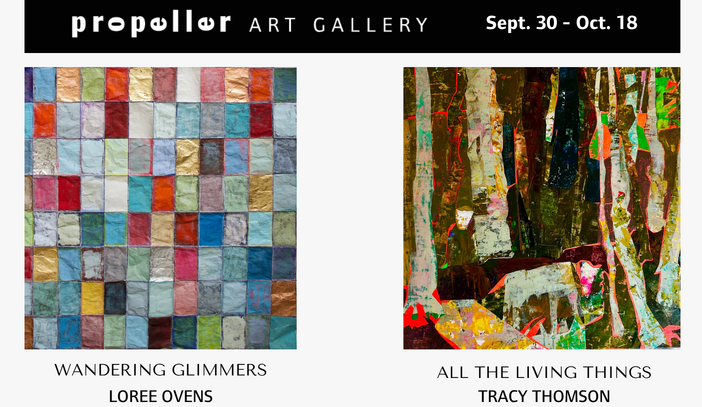
  • Calls for Submissions / Propeller Gallery

    Call for Submissions: All That Stays Warm In The Memory

    Deadline: Sunday, May 24, 2015 / 11 p.m.

    Propeller is seeking submissions for our annual curated show featuring Clint Roenisch!

    Clint Roenisch in his gallery at Niall McClelland show Hot Sauce, 2015

    “The gallery is small and I will be rigorous so I invite you to submit your best work. That which you feel conveys most clearly the intent that compels you to be an artist, work that says something about being alive, here, right now. Be an artist, a persuasive one, and I, in turn, will do my best to make an exhibition worthy of your efforts. There are a few walls, of course, but there is also the window for a vinyl piece, there could be a short performance at the opening, there is the park across the street, there could be a zine to hand out, a sound work, a text piece, there could be an ice sculpture that melts in the summer heat…” All That Stays Warm In The Memory – Clint Roenisch, Gallerist www.clintroenisch.com.

    SUBMISSION FEES: $45 for the first image, additional images at $25 each

    SHOW DATES: June 3 – 21, 2015

    To submit/For more information on the show and submission guidelines: http://huutaart.com/opencalls/all-that-stays-warm-in-the-memory.

    Open Call for Toronto-Area Photo-based Artists

    Deadline: Sunday, April 19, 2015 / midnight

    Propeller invites participation in our 4th annual juried show of photo-based work coinciding with CONTACT, the month of photography in Toronto. Though not listed with CONTACT, the exhibition will show at our new location on Abell Street, south of Queen and opposite The Drake Hotel. The exhibit will be on view in the South (larger) Gallery, with photographer DNA Dodds’ solo show in the North Gallery.

    There is no overall theme; we are looking for a broad survey of current practice. Photographic works include images made in and outside the camera – original works in analog, digital, video, scanners, photocopiers, etc.

    Submissions should be from the Toronto area. Selected artist’s works must be delivered and picked up without shipping.

    SUBMISSION FEE: $40 for the first image, a maximum of 2 additional images at $25 each

    SHOW DATES: May 13 – 31, 2015

    OPENING RECEPTION: Thursday, May 14, 2015, 7-10 pm

    For more information on the show and submission guidelines, please visit our website: http://propellerctr.com/calls-for-submission/photoworks-4-deadline-april-19-midnight.

  • Scotiabank Photography Award 2015 / Winner

    Now in its fifth year, the Scotiabank Photography Award was created to raise the international profile of Canada’s leading photographic artists and is Canada’s largest annual peer-reviewed celebration of excellence in Canadian contemporary photography.

    “The Scotiabank Photography Award is designed to be an annual search for excellence,” said Edward Burtynsky, Chair of the Scotiabank Photography Award jury and internationally renowned Canadian photo artist. “The three artists on the 2015 shortlist each have unique and distinctive bodies of work that show true excellence in Canadian contemporary photography. We look forward to announcing the winner of this year’s award on May 6.”

    The Scotiabank Photography Award was founded by Edward Burtynsky and Jane Nokes, Scotiabank’s Director of Arts, Culture, & Heritage and Executive Director of the Scotiabank Photography Award. The Award is designed to provide support to a mid-career artist as he or she reaches for the next level of national and international recognition.

    The winner of Scotiabank Photography Award 2015 is: Angela Grauerholz

    2015 SPA jury member statement

    The photographs of Angela Grauerholz are a significant contribution to the contemporary history of the medium. Her explorations of the materiality and contexts of images have renewed our aesthetic and cultural understanding of photographs. Utilizing genres that includes vernacular photographs as well as the function of the archive, Grauerholz has approached the value that photographs retain to memory through a uniquely personal and philosophical insight. The work of Angela Grauerholz is evocative and thoughtful. The strange beauty of her photographs invite the viewer to reflect on the depth of meaning that the ubiquitous presence of photographs may convey. – Robert Bean

    The 2015 Scotiabank Photography Award Shortlist Finalists are:

    Rafael Goldchain

    Rafael Goldchain, Elvis Taxi, Limon, Costa Rica, 1986

    Rafael Goldchain was born in 1953 of Polish-Jewish heritage in Santiago, Chile and was educated in Jerusalem, Israel before moving to Toronto. He photographed in México and Central America in the 1980s and 1990s. In the late 1990s and early 2000s, Goldchain moved into the studio to stage a series of self-portraits of himself as his ancestors, many of whom were lost in the Holocaust, or displaced over South and Central America in the early 20th century. Goldchain’s life and work are the subject of a documentary film entitled “Beautifully Broken: The Life and Times of Rafael Goldchain.”

    Angela Grauerholz

    Angela Grauerholz, Hotel, 1989

    Angela Grauerholz was born in Hamburg, Germany, in 1952, and has lived and worked in Montreal since 1976. A graduate of the Kunstschule Alsterdamm, Hamburg, in graphic design, she holds a Master’s degree in Fine Arts (photography) from Concordia University, Montreal. In 1980, she was a co-founder of ARTEXTE, centre d’information en art contemporain, still today an important archive for Canadian art. In 2010, the National Gallery of Canada in collaboration with the Canadian Museum of Contemporary Photography (CMCP) mounted a major exhibition of her work.

    Isabelle Hayeur

    Isabelle Hayer, Turbulences o1, 2011

    Isabelle Hayer was born in Montreal in 1969, Isabelle Hayeur is a digital image artist recognized for her large-sized photographic montages, videos, and site-specific installations, in which she highlights urban blights and sprawl, among a number of industrial society’s pitfalls. Her works are to be found in some twenty collections, including those of the National Gallery of Canada, the Fonds national d’art contemporain in Paris, the Art Gallery of Ontario, the Vancouver Art Gallery, the Musée d’art contemporain de Montréal, the Musée national des beaux-arts du Québec and the Museum of Contemporary Photography in Chicago.

    The winner of the Scotiabank Photography Award receives a cash prize of $50,000 and a book of their work to be published and distributed worldwide by Steidl of Germany, the renowned art photography publisher. In addition, the winner’s art will be the subject of a major solo exhibition at the Ryerson Image Centre, as part of next year’s Scotiabank CONTACT Photography Festival. The two shortlisted artists receive cash prizes of $10,000 each.

    The 2014 winner Mark Ruwedel will have his Scotiabank Photography Award book launch and exhibition at the Ryerson Image Centre, from April 29 to June 28, 2015. His show, a Primary Exhibition of 2015 Scotiabank CONTACT Photography Festival, will be open to the public free of charge for the month of May.

    The 2015 Scotiabank Photography Award winner will be announced on May 6, 2015 at the Ryerson Image Centre. For more information about the prize please visit www.scotiabankphotoaward.com.

  • Interview with Sally Thurlow

    Interview with Sally Thurlow (S.T) by Josephine Mwanvua (J.M)

    Sally Thurlow next to her installation, Systems Failure II: Mother Nature Is Always Speaking Mother Nature Is Always Speaking, 2002 – 2015, fabrics, paints, threads, tree limb, black aluminum screening, steel 88 x 30 x 48 inches, at the opening reception of her solo exhibition, At The Root, in the Red Head Gallery, March 7,2015. Photo: Josephine Mwanvua

    Sally Thurlow currently has her solo show, titled At The Root, in the Red Head Gallery. I spoke with her about her work as an artist, present-day environmental problems as well as feminist issues.

    J.M: How did you become a sculptor?

    S.T: I’ve been making art for a long time. I went to George Brown College in my early twenties for clothing design and recognized that it is really a form of sculpture. Later I went to OCAD, and studied some design and fine art there, then got a fine arts degree at the University of Toronto. I was painting for a few years. Then I decided to make a canoe out of white silk organza, with birch veneer; it came together really beautifully. The piece was shown at The Robert McLaughlin Gallery in Oshawa, along with a series of twelve sculptures I did, called, Canoe Dreamings. The series travelled around Ontario to six different public galleries from 2006 to 2008. After that, I kept on doing sculpture.

    Installation view with Winged Tragedy Dress, 2002 – 2015, various fabrics, paints and crayons, toy gun, nylon line, 70 x 56 x 32 inches (in the middle) and Systems Failure II (right). Photo: Courtesy of the artist

    J.M: In your sculptures, you use a lot of wood, metal and fabric – a wild variety. How and why do you choose to express yourself through a particular one?

    S.T: I don’t think of myself as married to any particular material. It just seems that whatever works for what I’m trying to say is what I’m going to end up working with. And certainly, because I live right on Lake Ontario, driftwood is a natural choice for me since I walk on the beach and pick them up. I’ve done a lot of work about the junk that we find on the beach, such as plastics and other debris. I’ve incorporated those materials into my work when I had something to say about trash on the beach, as in my work for the WhiteOut exhibition last October in Toronto. The two fabric pieces that are in the At The Root show, “Winged Tragedy Dress” and “Systems Failure II”, are actually re-formatted works that were part of Canoe Dreamings; they made up a hammock that I called “Systems Failure”. They relate well to the other works in this exhibition.

    Installation view,  At The Root, The Red Head Gallery, 2015. Photo: Courtesy of the artist

    J.M: The “Fascinator” is sexual and sensual at the same time. A “Complicated Goddess”, you say, and indeed it is heavy with symbols. Where is your inspiration coming from? Could you tell us more about her?

    S.T: She is a tree limb, and I am relating her to Mother Nature. We throw all kinds of problems at Mother Nature and blame her for summoning troubles that are actually our own doing. But “The Fascinator” is also the Female Form. The lack of respect for women all over the globe, the fact that sexual violence against not only women – but everybody, is wrong, is definitely getting more attention now in the news and is actually getting new legislation in Ontario. It shouldn’t be a matter of how you dress – whether you dress provocatively or not – it’s about educating tolerance from a young age. Nobody wants to be raped or taken advantage of; women have a hard time owning their sexuality. Especially now, if you go outside wearing something that looks sexy, you are called all kinds of names, and yet sexuality is highly commercialized. It’s really unfortunate for the younger generation that they have to deal with that.

    I think that the figure I made is fully self-aware, and she’s certainly out there. Self-awareness is something that happens over time with a lot of good messaging and positive, loving relationships. I definitely feel that women need positive role models. If you don’t own your body, and have confidence in yourself, then you’re just being used and maybe abused. It’s complicated!

    Sally Thurlow, The Facsinator: A Complicated Goddess, 2015, tree limbs, wood house, LED light, glass, bird’s nest, nylon stockings, acrylic paints, wood stain, 96 x 30 x 32 inches. Photo: Courtesy of the artist

    Sally Thurlow, The Facsinator: A Complicated Goddess, 2015, detail. Photo: Courtesy of the artist

    J.M: Speaking of Mother Nature, your work is deeply inspired by nature. Aside from living amongst it, have you always been interested in Nature?

    S.T: Yes, as a kid I grew up in Hogg’s Hollow, in Toronto. The Don River was close by, and the valley was encircled by a forest. In my days we walked to school quite a distance, and you got called in for dinner by the dinner bell. You would come out from the woods, or up from the river. It was a wonderful way to grow up, very different from now when everybody is being driven here and there, and barely having the chance to discover nature. Also, I’m a devoted gardener.

    J.M: The interpretation of nature in your beach-inspired landscape sculptures utilize aluminum, which does not have an organic shape compared to the other shapes (rocks, plants, etc.). Why did you decide on that material?

    S.T: Screening is a way of forming organic shapes very easily because it’s very bendable. If you put two layers of screening together, depending on how you place them, you get this watery, shimmering effect that moves when you look at it. So, it has a very organic feel to it, and at the same time you can also see the land through it.

    They were made from black aluminum window screening. I was in Gros Morne National Park in Newfoundland for a six-week artist residency. The rock forms in Gros Morne are just incredible: some places have egg-shaped rocks, while other beaches have jagged rocks. I was fascinated with them. I took some screening with me, and used it to press the forms of different rocks. Then I brought the materials back to my studio, pressed it more and worked from there. I added things that I had found nearby, such as plant material and shells, just to say which area the rocks were from. I also did that with some rocks from Lake Ontario. I refer to the shorelines because it wasn’t just about Newfoundland, it was about waterways that connect us.

    Sally Thurlow, Wasteland Shanti Shanti Shanti, 2015, dead plant, earth, paint, black aluminum screening, burnt satin fabric , 16 x 36 x 32 inches (in front); Will You Won’t You Join The Dance?, 2015, tree root, paint, china  (tea service), glass (tray), red wire, 54 x 44 x 44 inches (top). Photo: Courtesy of the artist

    J.M: Can we talk about your roots sculptures? Some of them are dramatic, while others are rather playful. Please tell us more about them.

    S.T: The “Black Madonna” is inspired by the Black Madonna depictions in Pagan society, long before Christianity, when its meaning was about Mother Earth. Christianity took the Black Madonna figure and turned it into the virgin Mother Mary. A popular excuse is that the image is so old that it turned dark, but that is just not true. Those Christian people were worshipping a likeness of themselves. Besides the original Pagan symbol, my “Black Madonna” is also an energy that was aborted because the tree was cut down.

    Sally Thurlow, Black Madonna, 2014, tree root, wood stains, 28 x 28 x 24 inches. Photo: Josephine Mwanvua

    J.M: What about “Agony”?

    S.T: That root was from a dead mulberry tree in my garden that I was trying to dig out. I cut the tree at the base and ended up having to saw right through the root to cut the tap root. When I brought it up, it looked so much like a broken heart. I named it “Agony” because it beautifully describes a broken heart.

    Sally Thurlow, Agony, 2013, tree root, steel rod, acrylic, 16 x 20 x 14 inches. Photo: Courtesy of the artist

    J.M: What are your future plans?

    S.T: Well, it’s too early to talk about any of them. I have a lot of stuff in my studio to work with. When I do one thing, it speaks to me about doing other things that relate to it. So I just follow their lead and go on.

    *Exhibition information: March 4 – March 28, 2015, The Red Head Gallery, 401 Richmond Street West, Toronto. Gallery hours: Wed – Sat, 12 – 5 p.m.

  • 1, 7, and 6000 / Alex Fisher at O’Born Contemporary

    In his fourth solo exhibition at O’Born Contemporary, Alex Fischer continues to explore themes of appropriation, multiples and the relationships between digital imagery produced on tangible materiality. Titled 1, 7, and 6000, the exhibition demonstrates differences between multiple editions, and the singularity of one original piece.

     Installation view. Courtesy of O’Born Contemporary

    Snow rests on the ground outdoors, while the gallery is transformed into a minimal simulation of a greenhouse. Warm fluorescent lighting line the high walls in a thin que, with a 48 x 60 inch digital print on matte paper, and seven 48 x 60 inch oil paintings on cotton canvas of identical tomato plants mounted underneath them. The print and paintings are nearly indistinguishable from one another, and all bear the same title, “VII”. The form, composition, placement, and base of the tomato plants are all the same. However, the brushstrokes, colours, and shades in each piece vary. To figure out which piece is a digital print, is like finishing a challenging game of Where’s Waldo. Every piece looks the same, until you look just hard enough to see the materiality of the surface.

    Alex Fischer, VII, 2015. Courtesy of O’Born Contemporary

    The digital print was made by Alex Fischer, meanwhile the seven oil paintings were painted by seven painters from Xiamen, China. Fischer is credited as the artist, while the paintings are named after the original painter in brackets. A correlation is made between digital reproductions, and outsourced labour, from the perspective of a capitalist culture of excessive consumption. The body with the design and concept is the artist, while the body that executes the visual representation of the idea is the tool.

    VII (Ye An 叶安), 2015; VII (Feng Shui Gui 冯声贵), 2015; VII (Chen Shan 陈山), 2015. Courtesy of O’Born Contemporary

    In the middle, a translucent structure – directly mimicking the clear arched walls, and multiple panel windows of a greenhouse – sits on the floor. Measuring 82 x 48 x 40 inches, the acrylic and aluminum arch bears multiple shelves of small acrylic paintings on dura-lar. It is the same tomato plant, broken into a grid. Titled “VII (6000)”, it holds 6000 sheets of dura-lar, with only the surface painted. It is the tilework of the original parent piece, while the rest of the sheets of dura-lar wait to be painted on for demand. Next to the structure, a handout is found, with an image of the painting divided into a grid. Instructing the buyer to place an X over the rectangle of which part of the image they desire. This reflects on the nature of artist multiple, and how value is placed on something that is a continuing series. Fischer plans on continuing producing copies on demand, coinciding with his future projects. The value is placed on the duration and social engagement of the project, rather than commodity. Each piece of the parent image, is equally as real as the one before, after, or next to it.

    Alex Fischer, 6000 (arch) (sheets 1-240), 2015 (alternate view). Courtesy of O’Born Contemporary

    Alex Fischer, 6000 (arch) (sheets 1-240), 2015. Courtesy of O’Born Contemporary

    Alex Fisher, 6000 (arch) detail, 2015. Courtesy of O’Born Contemporary

    “VII (6000)” is the only piece in this show that has the clearest evidence of the artist’s hand. It is also the most accessible piece. Fischer reverses the time saving process of printing art on demand, and decides to become the tool itself, that produces on demand.

    Tetyana Herych

    *Exhibition information:  February 27 – April 24, 2015, O’Born Contemporary  at 131 Ossington Ave. Gallery Hours: Tuesday – Saturday, 11 – 6 p.m.

  • Douglas Coupland: Our Modern World

    World-renowned artist, Douglas Coupland, dominates Toronto’s art scene with solo exhibitions at the Royal Ontario Museum, the Museum of Contemporary Canadian Art, and the Daniel Faria Gallery. His prevailing central theme, which holds true for all of the exhibits, concerns modern cultural phenomena and their portrayal through existing technologies. However, rather than fixatedly dissect one particular issue, he comments on a broader range of issues and criticisms that exist in our contemporary society throughout his works. Each show is explicitly different from one another and each of the individual works and installations likewise vary in approach, medium, and message while remaining unitary only in their societal commentary. Our Modern World shown at the Daniel Faria Gallery, consists of three different collections of works: “Deep Face”, “Trash Vortex”, and the “Montecristos”. Upon first glance, it is hard to find an overall, pervasive theme, as all are separated by their almost categorical positioning within the space and their distinctive aesthetic qualities. On the other hand, having one domineering theme would be both overwhelming in the small space and insufficient for suitably addressing the complex range of topics we currently face today.

    Installation view of Douglas Coupland, Our Modern World at Daniel Faria Gallery, 2015

    “Deep Face” is a series of large multimedia portraits, comprising of a printed black-and-white photographs with an overlaid acrylic-paint pattern covering the subject’s face. The patterns, which are never repeated and are specific to their respective subject, seem reminiscent of Pop Art and contemporary design, emphasizing flat, definitively linear shapes and vibrant stock colors. Despite this precision, the patterns’ organization seems almost chaotic and inconsistent, as if they were scrambled together to censor or even codify the face. According to Coupland, it focuses on the recent Facebook development of facial recognition algorithms that identify people’s faces in every posted picture. He portrays this new development as intrusive and revealing at the same time; it removes any discernable features while simultaneously transcribing it into an entirely new format, one that seems coherent with digital language.

    Installation view of Douglas Coupland, Our Modern World, “Deep Face” series at Daniel Faria Gallery, 2015

    Installation view of Douglas Coupland, Our Modern World, “Deep Face” series at Daniel Faria Gallery, 2015

    “Trash Vortex” concerns the worldwide environmental disaster known as the Pacific Trash Gyre: a mass accumulation of debris and garbage collected from around the world and coalesced by ocean currents. The installation consists of several globes coated with drips of toxic paint, all originating from a single point to then weep evenly towards the opposite end.Though each distinct piece has varying starting and ending points as well as individual color palettes, the whole installation nevertheless accentuates the immeasurable damage resulting from society’s overconsumption and excess. Beginning as simply a localized problem, it soon resonates into a global pandemic that infectiously spreads to every corner.

    Installation view of Douglas Coupland, Our Modern World, “Trash Vortex” at Daniel Faria Gallery, 2015

    What becomes increasingly evident throughout Coupland’s works is his injection of personal perspectives, criticisms and obsessions, rather than adhere to more common arguments. “The Montecristos” comprises of 75 collages that “reflect the artist’s ongoing fascination with collecting, aggregation and borderline hoarding.” He incorporates signs, posters, travel tags, playing cards, cigarette cartons (namely the Montecristo brand), stationary, currency, and more, appearing as a compulsive assemblage of popularized images.  In its totality, the installation appears as an intricate discord of color and abstraction, and it is not until a closer inspection of each collage that the audience realizes the hackneyed and broadly familiar icons and objects indicative of the existing consumer culture.

    Douglas Coupland, Our Modern World, “Target Red Yellow Blue” from Montecristos series, 2015, mixed media on panel

    Installation view of Douglas Coupland, Our Modern World, “Montecristos” at Daniel Faria Gallery, 2015

    Text and photo: Simon Termine

    *Exhibition information: January 22 – March 21, 2015, Daniel Faria Gallery, 188 St Helens Avenue, Toronto. Gallery hours: Tue–Fri 11–6, Sat, 10–6 pm.

  • Gavin Lynch: For Janus at Angell Gallery

    With his geometric renditions of a forested landscape, Ottawa-based artist Gavin Lynch creates a visual world that allows the viewer to experience a mythic landscape of western North America.

    Gavin Lynch. Courtesy of Angell Gallery

    Lynch’s solo exhibition at Angell Gallery, For Janus, brings forward associations of past and present. Noted for being the two-faced god who transverses temporalities, Janus is representative of the movement through time, a journey we experience in Lynch’s paintings. With what I will call an ‘abstract reality,’ Lynch’s paintings use symmetry and a collage effect to create visions of the Yellowhead Pass forcing the viewer to negotiate their position in time.

    Installation view. Courtesy of Angell Gallery

    Looking at the two large paintings, “The Rise (Super Symmetry)” and “Passage #2 (Broken Symmetry)”, on the long wall of Angell’s west gallery, it is almost as if the viewer is placed in between the two events, behind them “The Rise” and ahead “Passage”. The nighttime scene’s outward symmetry is in the viewers past, standing at the moment of dusk, the viewer continues their journey toward the light in “Passage #2”. This traversal of time constructs a narrative for guests, almost as if the viewer is working their way through the dense Canadian wilderness. Lynch’s real-life experiences reflect this journey, “During my research trip I went through the same mountain pass twice – once headed east, the next time headed west, a symmetrical journey or palindrome experience of sorts.”

    Gavin Lynch, “The Rise (Super Symmetry0″, 2015, oil and acrylic on canvas, 72″ x 96”. Courtesy of Angell Gallery

    Gavin Lynch, “Passage #2 (Broken Symmetry)”, 2015, oil and acrylic on canvas, 72″ x 96″. Courtesy of Angell Gallery

    A striking aspect of Lynch’s painting is the collage-like effect. Lynch described this technique as not only a useful methodological tool, but also a challenging way to give the paintings an “internal reality,” it is “the sum of the parts [which create] a believable whole.”  His particular technique leaves behind a compendium of textures, shapes, and lines that form together to create an incredibly detailed scene. Almost tactile, it is this aspect that provides Lynch’s works with a sense of depth, one that vehemently projects a sense of ‘place’ for the viewer.

    Gavin Lynch, “For Janus #2″, acrylic on canvas, 50 ¼” x 72″. Courtesy of Angell Gallery

    Gavin Lynch, “The Path Beneath Peyto #2″, acrylic on canvas, 35″ x 50”. Courtesy of Angell Gallery

    It is evident that Lynch’s works look back to his trips travelling the Rockies, and that memory serves the natural world’s transcription onto canvas. While perfectly symmetrical views most likely won’t be found in the mountains, it seems to be the artist’s desire to project the natural beauty of the scene into his works. I would argue that the symmetry Lynch uses does this, providing viewers with an idealistic example of nature, a place to get lost, and a place to move forward.

    Gavin Lynch, “Twillight on the Fraser”, 2015, oil and acrylic on canvas, 22″ x 16″. Courtesy of Angell Gallery

    I asked Lynch what it meant for him to have this solo exhibition here, “Toronto is of course kind of the epicenter of Canadian art, a place where many of the painters I’ve looked up to over the years live and work,” and with regards to Angell, “to have a show in this context is really humbling and energizing at the same time; it’s a real honor to be involved with Jamie Angell and his team.”

    Gavin Lynch, “Gatekeeper #2″, 2015, oil and acrylic on canvas, 20″ x 15”. Courtesy of Angell Gallery

    I saw some of Lynch’s paintings before and I was excited to see more of his work. But for me and for Lynch too, the favorites are “Gatekeeper #1″ and “2”. Both much simpler than the complex forest pieces, the images, reflections of one another, a single rainbow reaches from the sky to the mountains below. I would argue that it is their simplicity, which allows them to succeed; intended to be “thematic bookends” to the exhibition they create a dialogue intertwined with interpretations of temporal existence.

    Brinae Bain

    *Exhibition information: February 14 – March 21, 2015, Angell Gallery, 12 Ossington Avenue, Toronto. Gallery hours: Wed – Sat, 12 – 5 p.m.

  • Trinity Art Show & Silent Auction


    March 12 – 15, 2015
    Opening Reception: March 12, 2015 / 6:30 – 8:30 p.m.
    Trinity College, Seeley Hall
    6 Hoskin Avenue, Toronto

    Featuring a performance by Alexandra Coulson

    Bidding for the silent auction will take place during the opening reception.

    The Trinity Art Show is pleased to invite you to its 2015 edition, running March 12-15! Join us for our opening reception on March 12th at 6:30 pm, for a night of art, food and drinks, featuring artworks by students and alumni from the University of Toronto and a live performance by one of our artists!

    This year’s show will double as a sale, with a silent auction organized during the opening reception only. 15% of the proceeds will go towards the Trinity Art Fund, a new initiative dedicated to supporting the artistic community at the University of Toronto. Learn more about the Fund at: www.trinityartfund.com.  


  • The Sex Show / Gallery 1313

    Parkdale’s own non-profit, artist-run centre Gallery 1313 recently held its annual installment of The Sex Show: a group exhibition exploring themes of sexuality and eroticism. This year’s show featured the work of over twenty artists, and was curated online by Gallery 1313’s director, Phil Anderson. Local, national, and internationally based artists contributed works from a variety of different media; including time-based media, collage, sculpture, and painting. Artworks were unified thematically under the umbrella term of sexuality, but each artist managed to contribute unique work and take vastly different approaches. The result was a collection of work that effectively expanded on the definition of sex and human sexuality.

    New York artist, Tracy Kerdman’s oil painting
      Olga Szkabarnicki’s PRIDE painting 

    Painting by Gregg McGivern

    Upon entering, a soundtrack could be heard coming from a back room of the gallery. The source of the audio was Lisa Anita Wegner’s video installation “Eva Gets a Better Job”, which faced a handful of collaged mixed media dioramas including Norman Barney’s “Big Boy”. While some of the work was upfront and even aggressive about its content, other pieces like Marie Finkelman’s series of small oil paintings (“Bed 3, 4, 5”) were quiet and subtle in their approach to sensuality. Finkelstein’s portraits appeared to be derived from snapshots of a couple in bed, revealing ruffled sheets and naked backs. Not far from Finkelstein’s work, on the left hand side of the gallery, there hung a series of black and white photo booth strips entitled “Movement for Photo Booth (Berlin 2014)” by Lauren Fournier. Fournier’s self portraits show the artist posing in various states of undress, and suggest an internalized and contemplative approach to sexuality.

    Lisa Anita Wegner’s video installation, “Eva Gets a Better Job”

    Philip Hare, “Batty Boys”

    Jurgens Sommerer, “21 Centrury Fertility Symbols”, ceramics

    Marie Finkelstein, “Bed”

    The range of work and viewpoints on display served as a reminder that the definition of sexuality is deeply personal, and differs from individual to individual. 2015’s annual installment of The Sex Show proved to be an entertaining and perhaps voyeuristic take on the subjective experience of sexuality, sensuality, and eroticism.

    Guests in front of Christopher Hayes, “Dirty Dishes”, ceramics and Beatrix Echley’s painting

    Guests with Olga Szkabarnicki’s PRIDE paintings 

    Guests at the Opening Reception, February 19, 2015

    Text: Madeleine Till / Images: Courtesy of Gallery 1313

    *Exhibition information: February 18 – March 1, 2015, Gallery 1313, 1313 Queen Street West, Toronto. Gallery hours: Wed – Sun 1 – 6 p.m.

  • New Members of the Sculptors Society of Canada

    Opening Reception: February 14, 2015 / 2 p.m.
    Canadian Sculpture Centre

    Congratulations are in order for the two new members of the Sculptors Society of Canada: Dan Driscoll and Blake Ward. What a great honour for them as well as amazing additions for the Society. The current exhibition, entitled Sensuous, is featuring the newly awarded members’ work alongside pieces of seven other artists. It is a true delight to spend an afternoon amongst these beautiful works and to speak with the artists at the opening reception.

    From left to right: Richard McNeill, Judi Young, President of Sculptors Society of Canada, and new member Blake Ward

    New member Blake Ward gave me an in depth explanation of his works on display. Encapsulated within these delicate bronze figures is an even more beautiful sentiment. Ward described the journey of his work beginning with training in classically figurative sculpture. He states that it was people that sparked his interest and continued to inspire him. Over time a desire took Ward to develop his work into a more modern style. With these sculptures he wanted to reflect on the inner consciousness of people through the literal investigation of their ‘insides’. The bronze rods shooting through the figures are meant to represent a particular energy. Ward wishes to communicate to the viewer the value of one’s spirit. In his speech to the attendees of the opening Ward said, “Imperfection is one of the wonderful parts of my work because they are terribly imperfect. I love that portion of it because it is so human and it is humanity that I am trying to address.”

    Blake Ward, “Ushabti Ryuu”, 2014, bronz, 84 x 16 x 17 cm

    New member Blake Ward and his partner

    Blake Ward, “Ushabti Mayet”, 2014, bronze, 82 x 21 x 16 cm and “Ushabti Mafdet”, 2014, bronze, 83 x 23 x 18 cm

    The other new member of the Sculptors Society has a different story from Ward’s. Dan Driscoll, who unfortunately was not in attendance at the opening, as his daughter Jessica, told the audience a little about him. His first work was a wooden figure in high school and after that he never stopped. Following his heart – with a practical bent – he completed a degree in business and studied sculpture as well as FX (special effects) for films. Driscoll crafts magnificent wood sculptures – without glue, paint or nails/screws. His pieces are absolutely stunning. There was a shared sense of awe in the audience when Jessica showed me, by picking up one of the violin carvings, that her father carved each sculpture out of a single piece of wood! I easily could have been fooled that the two violins in front of me were real instruments but I learned that Driscoll actually took a violin making class so he could construct them accurately. Yes, I too was dumbfounded by the fact he was able to fit such precision in his work. Each carving is accompanied by poetic notes hand-written by Driscoll, a lovely and personal touch. Moved by these stunning works, I was sad I was not able to meet this very interesting artist, who breathes life into these breathtaking works in wood.

    Dan Driscoll, “A Shrouded Violin”, 2013, Basswood, ebonized wood, violin strings, 6 x 31 x 10 inches

    Dan Driscoll, “A Nest of Thoughts”, 2014, wood, charred wood, gold leaf, 2014, 12 x 18 x 11 inches

    Blurb for Dan Driscoll’s “A Nest of Thoughts”

    Text and photo: Carter Brown

    *Exhibition information: Februar 14 – March 6, 2015, Canadian Sculpture Centre, 500 Church Street. Gallery hours: Tue – Fri: 12 – 6, Sat: 11 – 4 p.m.