Author: artoronto

  • Harding Meyer: New Faces

    July 28 – September 14, 2011
    Opening : Thursday July 28,  7- 10 pm.
    LAUSBERG CONTEMPORARY
    326 Dundas Street West
    Toronto, Ontario M5T 1G5
    T: 416-516-4440
    E: toronto@galerie-lausberrg.com
    www.galerie-lausberg.com
    Hours: Tues-Sun 12–6 or by appointment

    Meyer’s paintings are both poetic and haunting. His subjects stare out from their expansive canvas, engaging the viewer in silent conversation. Meyer’s works are a profound study of the human condition, executed with painterly eloquence.   In the coming days, expect to receive an invitation to our upcoming exhibition of Meyer’s work at our Toronto location.

    We are pleased to announce the launch of a brand new catalogue of Harding Meyer’s latest works. The 72-page catalogue includes texts by Philipp Holstein and Leonie Schilling. The cost for the catalogue is $38 CDN plus applicable taxes and shipping/postage.

  • Padiglione Italia in the World

    June 6 – November 27, 2011
    Opening: Monday, June 6, 2011 – 6:30pm 
    Istituto Italiano di Cultura
    496, Huron Street,
    Toronto, ON 
    T: 416-921-3802 ext. 221 
    Hours: Mon – Fri  2:30 – 4:30pm  

    The Italian Cultural Institute is proud to present Padiglione Italia in the World at the 54th International Art Exhibition of the Venice Biennale. On display works by Tony Calzetta, Vincenzo Pietropaolo, Francesca Vivenza. Opening remarks by the Consul General of Italy, Gianni Bardini.

    To celebrate the 150th anniversary of the Unification of Italy, the Ministry of Foreign Affairs and the Ministry for Cultural Heritage and Activities have launched a special event. For the first time ever the Padiglione Italia at the 54th International Art Exhibition of the Venice Biennale has been extended over the national boundaries to include the Italian Cultural Institutes in the world.

    The aim of the project, which has been devised by Vittorio Sgarbi, art director of Padiglione Italia, is to map out Italian creativity abroad. Each Institute has elected a number of Italian artists or artists of Italian descent living and working in its own jurisdiction, active in various disciplines, from painting to sculpture, photography, video, design, graphics. Over 400 artists’ portfolios have been submitted to a special commission made up of art historians and critics and chaired by Vittorio Sgarbi and 219 have been chosen.

    The artists selected for Toronto are Tony Calzetta, Vincenzo Pietropaolo, Francesca Vivenza.

    A collective exhibition of their works will be on display from June 6 until the end of the Venice Biennale, November 27 at the Institute. The exhibition has been filmed in a video which will be screened at the Padiglione Italia on a multimedia installation created by Benedetta Miralles Tagliabue. The accompanying music, “Da Pitagora e oltre”, has been composed for the occasion by Ennio Morricone. The exhibition has been curated by Adriana Frisenna (IIC Acting Director) and Corrado De Luca, (from De Luca Fine Art Gallery: www.delucafineart.com).
    A special bilingual catalogue edited by Skira and curated by Francesca Valente (project coordinator) will accompany the exhibition. 

    BIOS:

    Tony Calzetta 
    Over the last 30 years, since graduating from York University with an M.F.A., Tony Calzetta has exhibited continually in solo and group exhibitions. He works mainly on canvas and paper and occasional in the areas of sculpture and printmaking. He published two major livres d’artiste, Acts of Kindness and of Love in collaboration with writer John Metcalf, and more recently How God Talks In His Sleep and Other Fabulous Fictions with writer Leon Rooke. In addition to commissioned works he is represented in public and private collections in Canada, U.S. and Europe and in 2004 was elected as a member of the Royal Canadian Academy of Arts (R.C.A.). 
    www.artishell.com/calzetta 

    Vincenzo Pietropaolo
    is an independent documentary photographer who lives and works in Toronto. He is internationally best known for his empathetic social documentary photo essays on immigration, work, and labour movement. He has published 8 photographic books, among which Making Home in Havana, Not Paved with Gold and Harvest Pilgrims. His latest large documentary project, Invisible No More (Rutgers University Press, 2010), deals with Canadians with intellectual disabilities.
    www.delucafineart.com

    Francesca Vivenza
     graduated at the Academy of Fine Arts of Brera, Milan, Italy. Vivenza has been living and working in Toronto since1970, and has exhibited since 1966. Her practice consists of mixed-media works, which include book-works, cut-out collages and site-specific installations, that she calls Tentative Itineraries. Vivenza addresses themes of travel, distance, disorientation, and questions the stability of taken-for-granted sites of personal identity as home, nation and native language
    www.francescavivenza.com  

    In collaboration with: Italian Ministry of Foreign Affairs; the Venice Biennale

    -

  • HENRJETA MECE: Dialogues on Uncertainty

    July 18 – August 7, 2011
    Opening: July 22,  6 – 9pm
    Artist Talk: July 22 at 7:30pm
    THE RED HEAD GALLERY
    401 Richmond St. W., Suite 115.
    Toronto, ON M5V 3A8
    T:  416 504-5654.
    Email: art@redheadgallery.org.
    www.redheadgallery.org.
    Hours: Wed – Sa. 12 – 5 pm.

    Dialogues on Uncertainty is a series of drawings that examines poetics of survival. Stability as a state of our ‘supposed’ well-being and success no longer exists in the contemporary world: space and time, place and non-place, clash through speed, only to be replaced by notions of adaptability and fluidity.

    Referencing a contemporary experience of travel, mobility, and diasporas, this series focuses on materialising trajectories rather than destinations. Replacing the paintbrush, a miniature car drives automatically over Atlas—a classically painted human vertebra—through the duration of each phone-call. Taking the form of a journey, the disoriented trace the vehicle leaves behind underlines the nature of life in the dialogues created between space and place, here and there, past and future. Mapping time itself, these traces remain a course, a wandering, in the struggle to be positioned.

    This exhibition is presented in conjunction with the Museum of Canadian Contemporary Art’s “This is Paradise.”

  • The Square Foot Exhibit

    August 5 – 21, 2011
    TWIST GALLERY
    1100 Queen St. West

    Phil Anderson asked a few questions of the coming up show from AWOL Member and one of the shows organizers  Nurit Basin.

    Anderson: What are the origins of the show? How did it come about and whose idea was it?

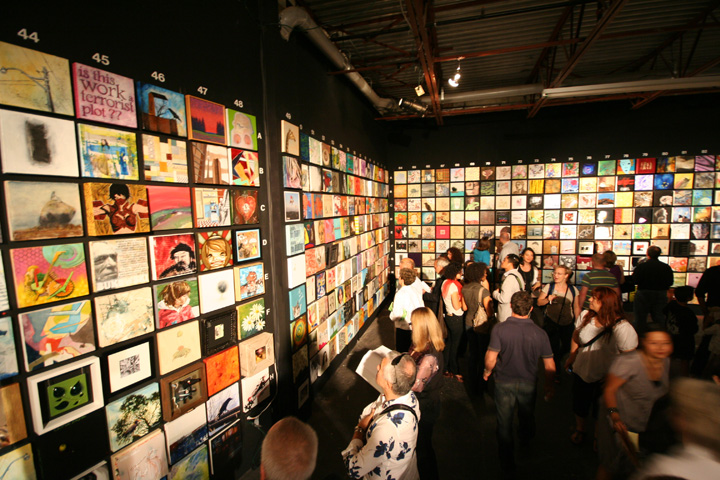
    Basin: Before the Square Foot show, we ( AWOL. Gallery & Collective ) would curate and hold themed group shows in warehouses where we would invite between 25 to 40 artists for each show. We usually held these exhibitions some time in the late fall. As much as we loved putting these shows together, we had a difficult time recovering the costs that went into such big productions. In the summer of 2003 we re-grouped and were brainstorming on how we can still invite a lot of artists to show but in a smaller space such as in our gallery at AWOL. Ross Bonfanti one of the AWOL co-founders and co-directors came up with the idea to restrict the size to a square foot. This way we can invite many artists and still be able to fit all the work in a more confined space. He suggested the square foot size because at the time he was working for a faux-finishing company where everything was charged by the square foot. We first invited artists we knew and then put an open call for submissions. To our surprise we ended up having over 150 artists respond to the call.

    Anderson: How has the show grown over the years and what, if any, problems came about with the growth?

    Basin: The show grew in size, one year I believe it was in 2008 we had over 900 artists and over 2000 pieces of artwork. I think the biggest challenge was communicating with so many artists regarding deadlines of dropping off the artwork, making sure all the artwork is accounted for during the show, and the pick-up of the artwork. At the end of each show we learn new things on how to improve the logistics and apply them to the following year.

    Anderson: What do think is the attraction for the public to go to Square Foot?

    Basin: A couple of things such as the number of artists that take part in the show and the number and variety of works that are exhibited in one room. Once all the artwork in hung it actually starts to look like one big art piece which is the installation itself.
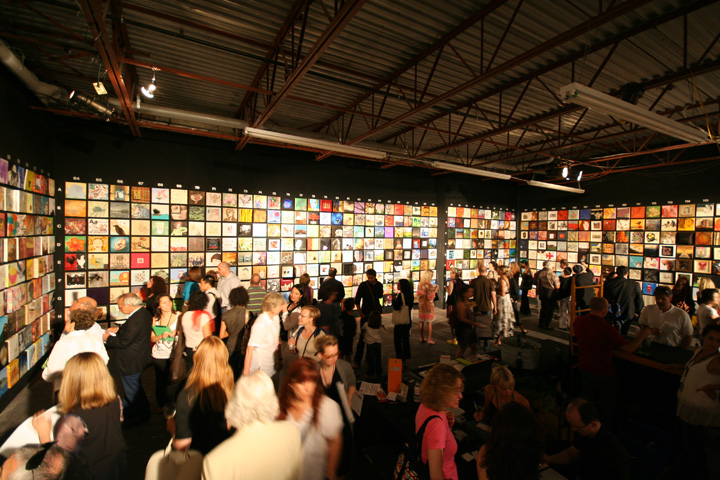
    It also evolved into a community event where the show not only brought a lot of different artists into one space but it also brought a lot of patrons who continue to come see the show every year and follow certain artists as well as discover new ones. We even have buyers who buy pieces to add to their own square foot collections they started at home.

    Anderson: It has moved location a few times. Where will it be this year? How long does it take to install the show?

    Basin: This year for the first time it will be held at Twist Gallery, located at 1100 Queen Street West just west of Dovercourt. It usually takes about 3 days to install and a day to verify the locations of the pieces in the database.

    Anderson: Is there any particular memorable moment from a past show that sticks in your mind?

    Basin: I think every year the memorable moments are always the line-ups we get during the artist’s opening receptions. We just can’t believe how many people are in line to see an art show.

    Anderson: What is the show this year  looking like?

    Basin: In terms of artwork, we’re not sure yet because the drop off is in a couple of weeks.

    Anderson: How many artists do you anticipate participating? Have there been many applications?

    Basin: Yes. We have over 600 artists registered to participate this year so far. So probably it will be in the range of 550-600 artists.

    Anderson: Has there ever been a predominant theme noticeable in submissions?

    Basin: Every year it varies, one year we had a lot of cat paintings, another year we had pears, last year or the year before it was the year of the portrait. It varies and that’s the exciting part as well to see what the artists are collectively and unconsciously working on.

    Anderson: How do you see the show evolving in the next few years?

    Basin: Other then moving locations, I think over time it evolves with the type of artwork we receive. It feels like we’ve seen everything, but every year we are still surprised and amazed at some of the work we get. Artists are always challenging themselves to see how their piece can stand out from the rest.
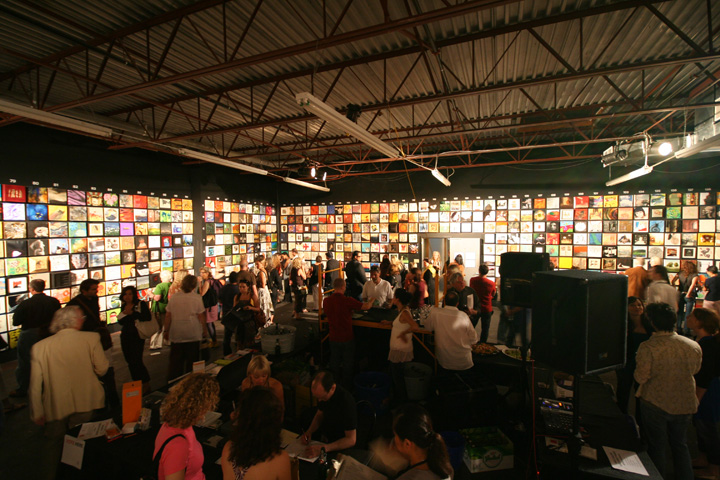
    Note: All works are 12 x 12 inches and sell for $225 .
    50% of the sale goes to the artist and 50% goes to AWOL Gallery
    Friday  August 5 is the Preview Gala Tickets are $20
    Saturday August 6  is the public reception
    Free- line ups are expected


  • Gallery 1313 Exhibitions

    Celia Krampien: Hounds

    July 20-31, 2011
    Opening: Thursday July 21,  7-10pm
    GALLERY 1313
    1313 QUEEN STREET WEST,
    TORONTO, ON M6K 1K8
    T: 416 – 536-6778
    E mail: director@g1313.org
    www.gallery13131.org
    Hours: Wed – Sun 1- 6

    Main Gallery : THE SPACE BETWEEN

     
    Death and the Nightingale

    Group exhibition with works from Celia
    Krampien , Danielle Storey , Kailey Lang and Rachel Idzerda.

    Their work attempts to show what exists between people to explain the dynamica of these
    specific relationships.

    Process Gallery:  DRAPED NUDE photographs by Bill Filiou 

     He has been influenced by photographs of Edward Weston, Newton and others. a
    professional photographer by trade he prints his own work and shoots in
    both digital and film .

    Cell Gallery: Group exhibition -Works by Members of Gallery 1313

    Gerry Richards, Michelle Montague, Lesley Harries-Jones, Paul Brandjs, Joanne Maikawa and Diana Dixon.

    Window Box Gallery: Come Play with Us, Danny.  Tapestry by Brette Gabel curated by Xenia

    Brette Gabel is a not so recent graduate of the University of Regina. While avoiding schoolwork Brette began embroidering, quilting and watching horror movies. Following school, Brette moved to Toronto where she participated in the Toronto School of Art’s Independent Studio Program. After which she became a contributing member to the White House Studio. Currently Brette is researching farming accidents, taxidermy and organizing alternative community interventions. Brette’s work strives to connect love, fear, heartache and the grotesque with craft and social interventions

  • Dennis Burton: Word Magic – Toronto 1970’s

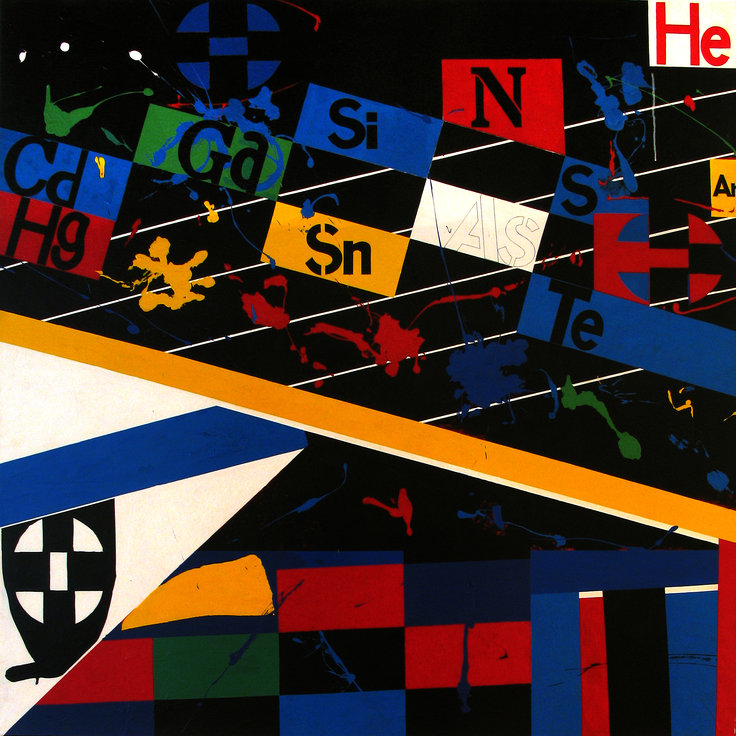
    Algoma #2, 1977, acrylic on canvas, 47” x 61″


    June 25 – August 31, 2011
    CHRISTOPHER CUTTS GALLERY
    21 Morrow Avenue,
    Toronto ON. M6R 2H9
    T: 416 532 5566
    info@cuttsgallery.com
    www.cuttsgallery.com
    Hours: Tues – Sat. 11-6, until Saturday July 30th
    by appointment only August 1 – 31, 2011

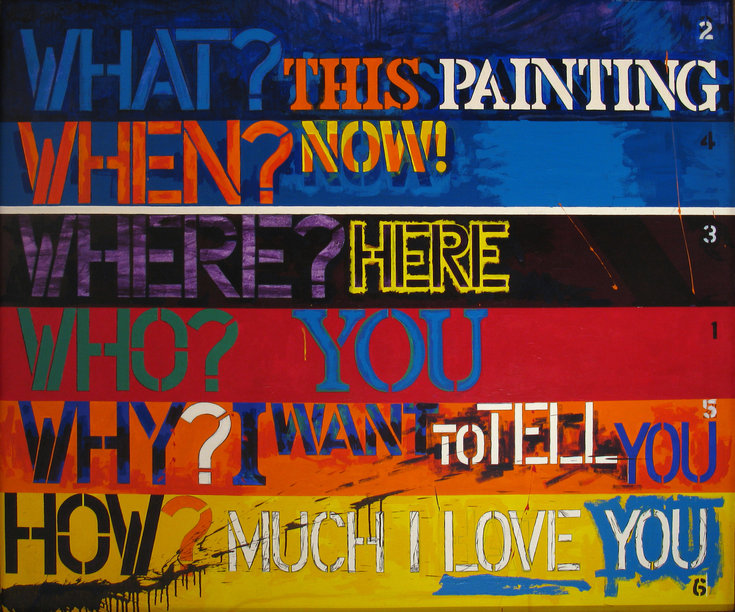
    “The paintings in this show remind me of Robert Rauschenberg and Jasper Johns’ work except Burton’s are more text based. They share an anomalous position in my mind as not quite ‘Pop Art’ yet vital in their Dadaistic ‘clawing back’ meaning from the excesses of Abstract Expressionist theory. Burton’s words have a humanity that reaches out, as in his painting Six Questions, which ends in an expression of love for … perhaps the viewer. In Stripe Streak he plays with meaning and action ironically. The self-importance of post painterly abstraction is gently and humorously debunked.”, wrote Ashley Johnson in his article (www.artoronto.ca features).

  • ISTVAN KANTOR: ANTIX

    Photo: Sue Douce

    July 28, Saturday 2 – 6 pm
    ANTIX – Centre for Art Crime and Neoism
    276 Crawford Street, Toronto
    through drive way towards garage
    www.istvankantor.com
    http://home.interlog.com/~amen/
    http://www.hungarianpresence.ca/Culture/Media/kantor-215.cfm

    ANTIX is Istvan Kantor’s storage space and summer gallery, archive of Kantor’s life and crimes, a meeting place for secret conversations, future projects, conspiracy plans, also amazing deals on bloody canvases and many other beautiful Neoist Monty Cantsin artifacts! Come with a bottle of water or a beer or two, bring your friends, look around, sit down, have a great afternoon… while the Rentagon is out on vacation, we R right into revolution!

    Istvan Kantor’s artistic practice incorporates robotic sculpture, video, performance, mixed-media installation, painting, sound, and various other action-based social-mediums like the open-pop-star movement of Monty Cantsin and the world wide network of Neoism. Neoism is a transmission interface and revolving platform to gain public support and media attention for its users.
    Kantor employs all his skills and talents to constantly surprise and fascinate. “I swear to God, I’ll never make any boring art!” he declares with bold determination, irony and wit, holding up a picketing sign.
    His main interest lies in creating work that establishes a discussion within and around the conflicting territories of institutional authority and cultural gentrification. In this regard Kantor’s work investigates the revolutionary and scientific aspects of artistic practices that attempt to surpass the conventional models of creative experience.
    Istvan Kantor is Hungarian-born, Toronto-based artist. Recent and upcoming solo exhibitions include: Monty Cantsin Was Here, Jogja National Museum, Yogyakarta, Indonesia, febr/2011; Made in Estonia, installation, Tallinn, may/2011; Selected works, St.Istvan Museum, Szekesfehervar, Hungary, oct/nov 2011 Upcoming group exhibitions include: Interakcje Festival, Piotrkow, Poland, may/2011; WRO Biennale, Wroclaw, Poland, may/2011

    Istvan Kantor aka Monty Cantsin is also known as a noise/music artist, electro-instrumentalist and singer of the Toronto based Red Armband. He has recorded and released over a dozen albums of songs and noise works since the early 80s.

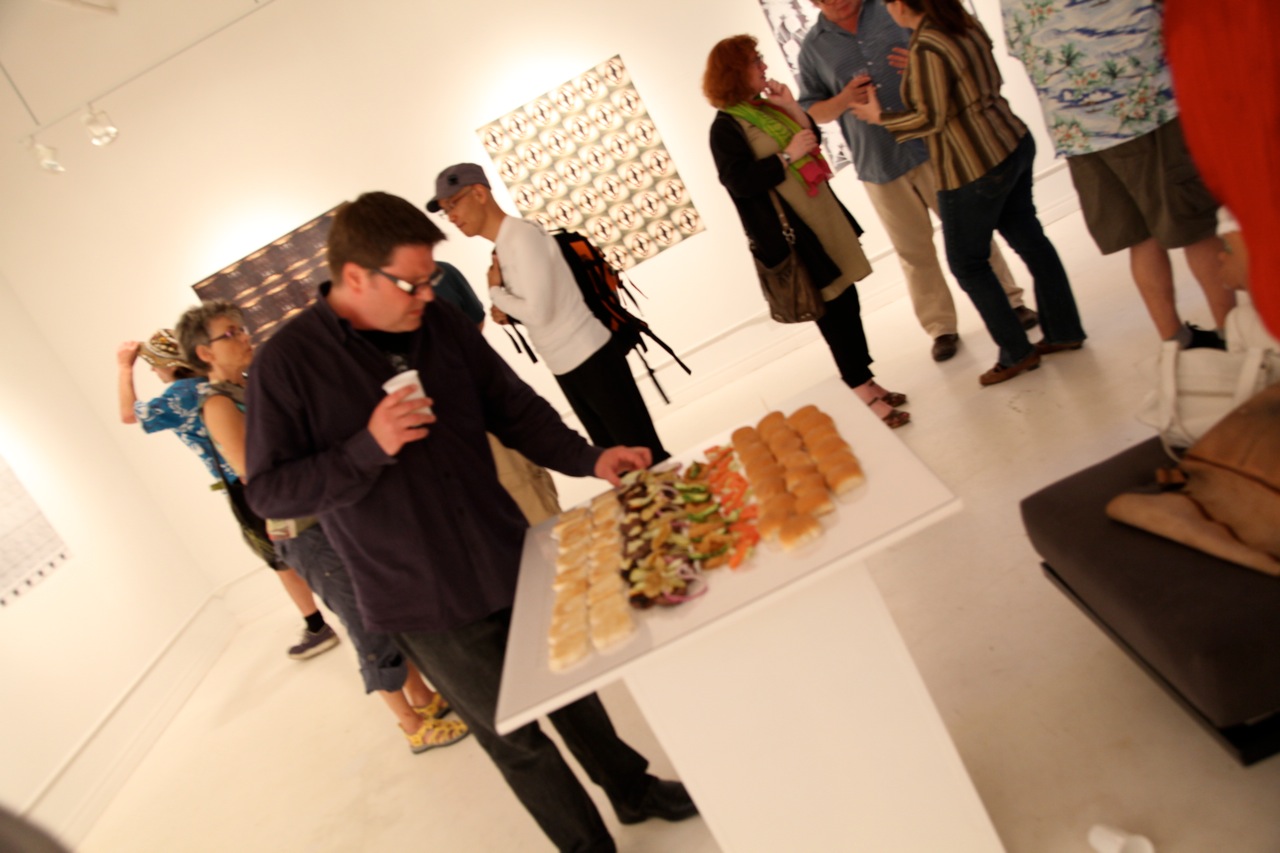
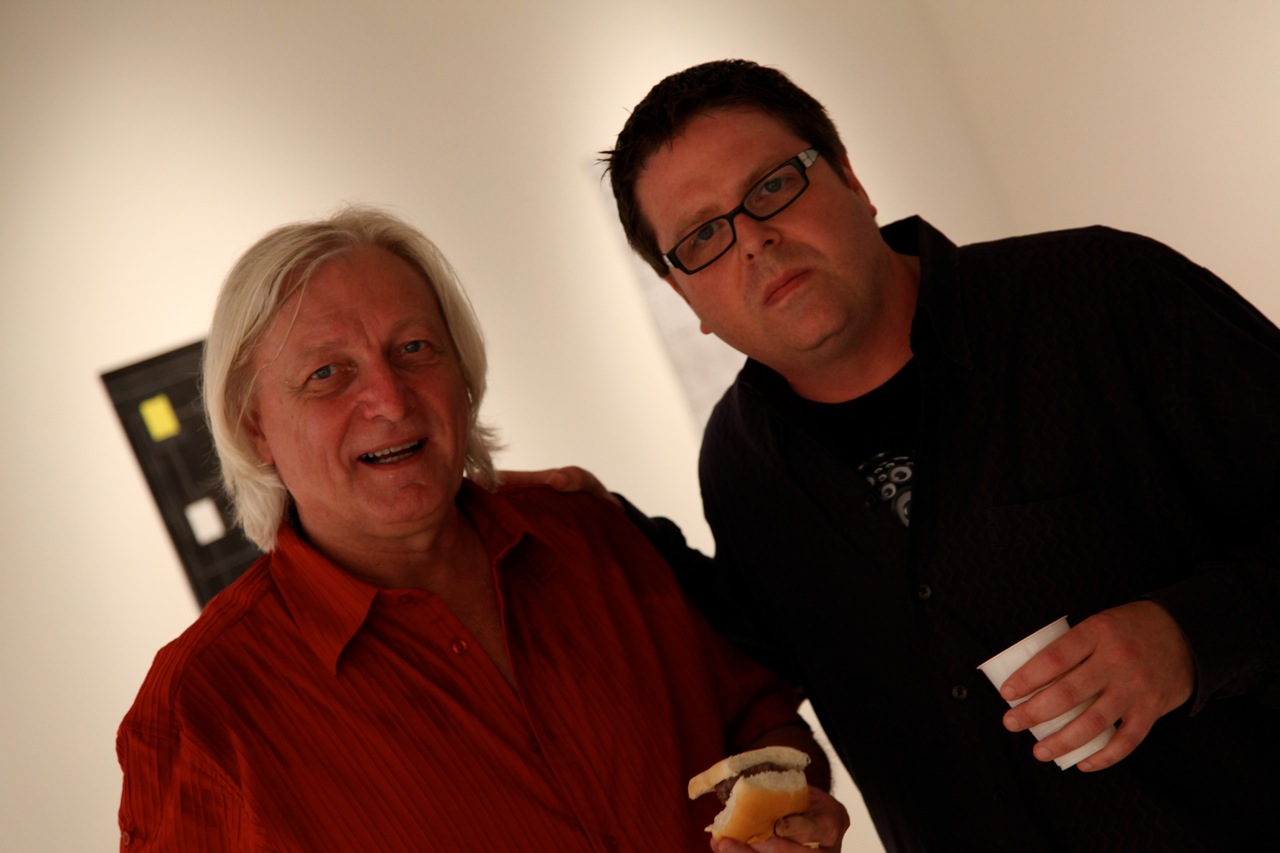
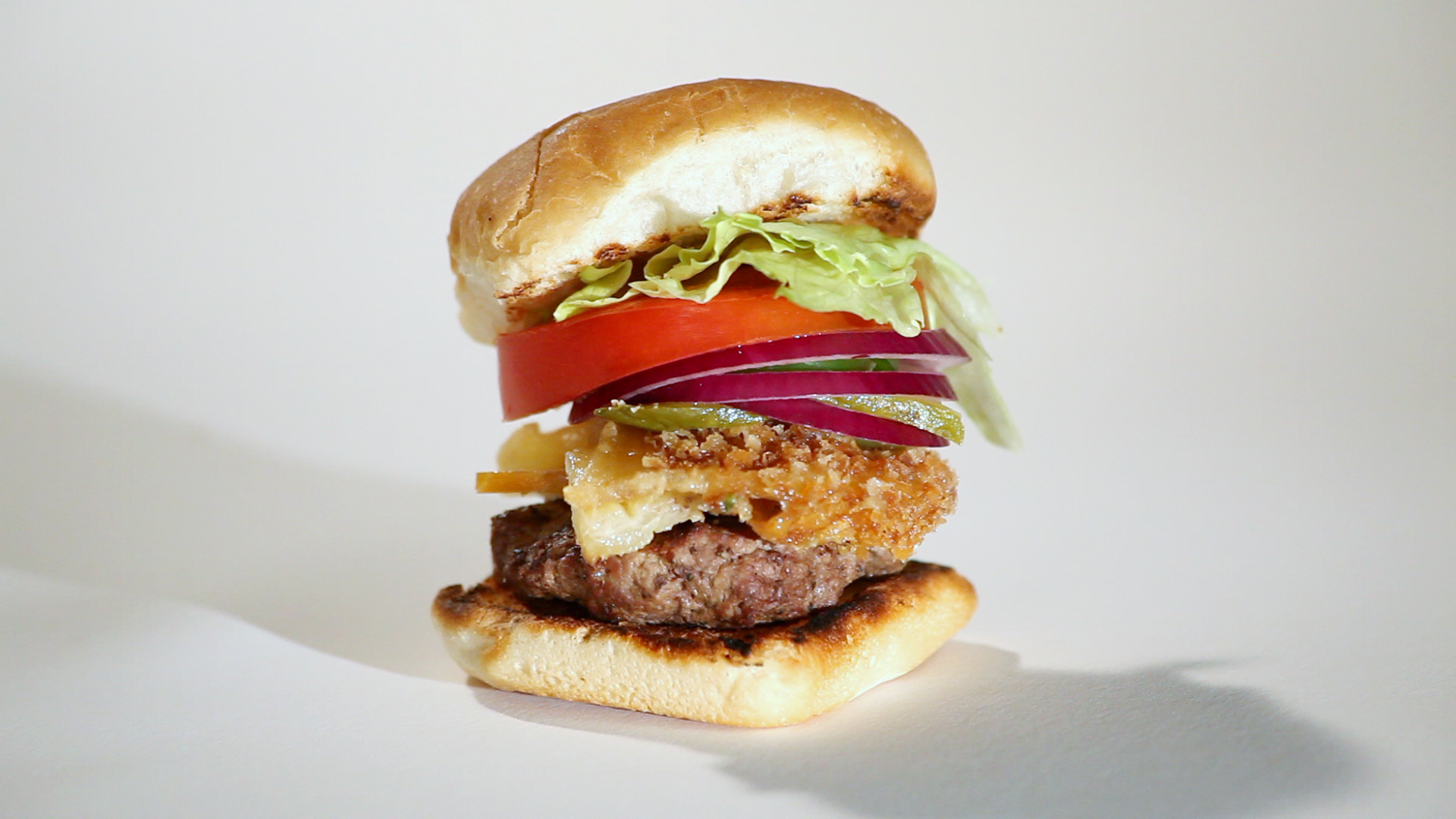
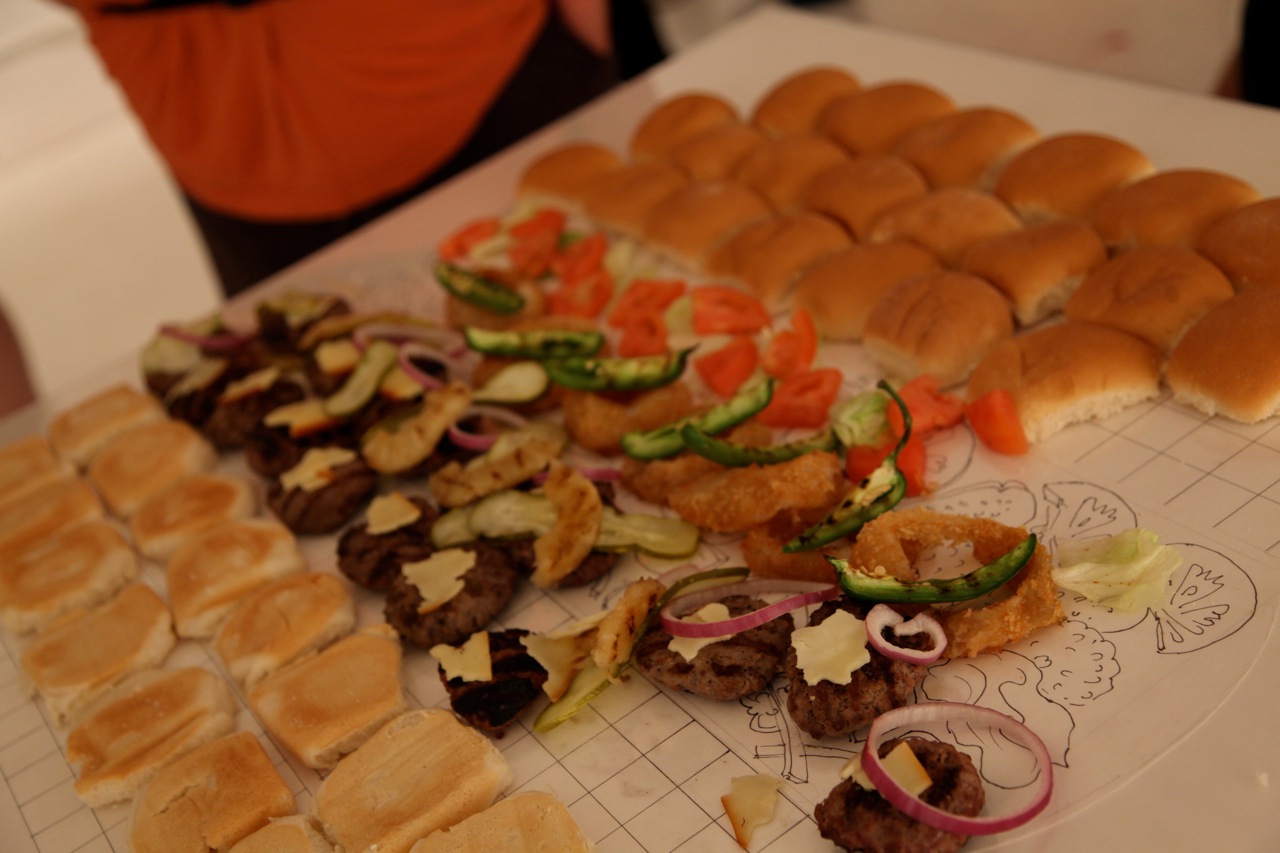
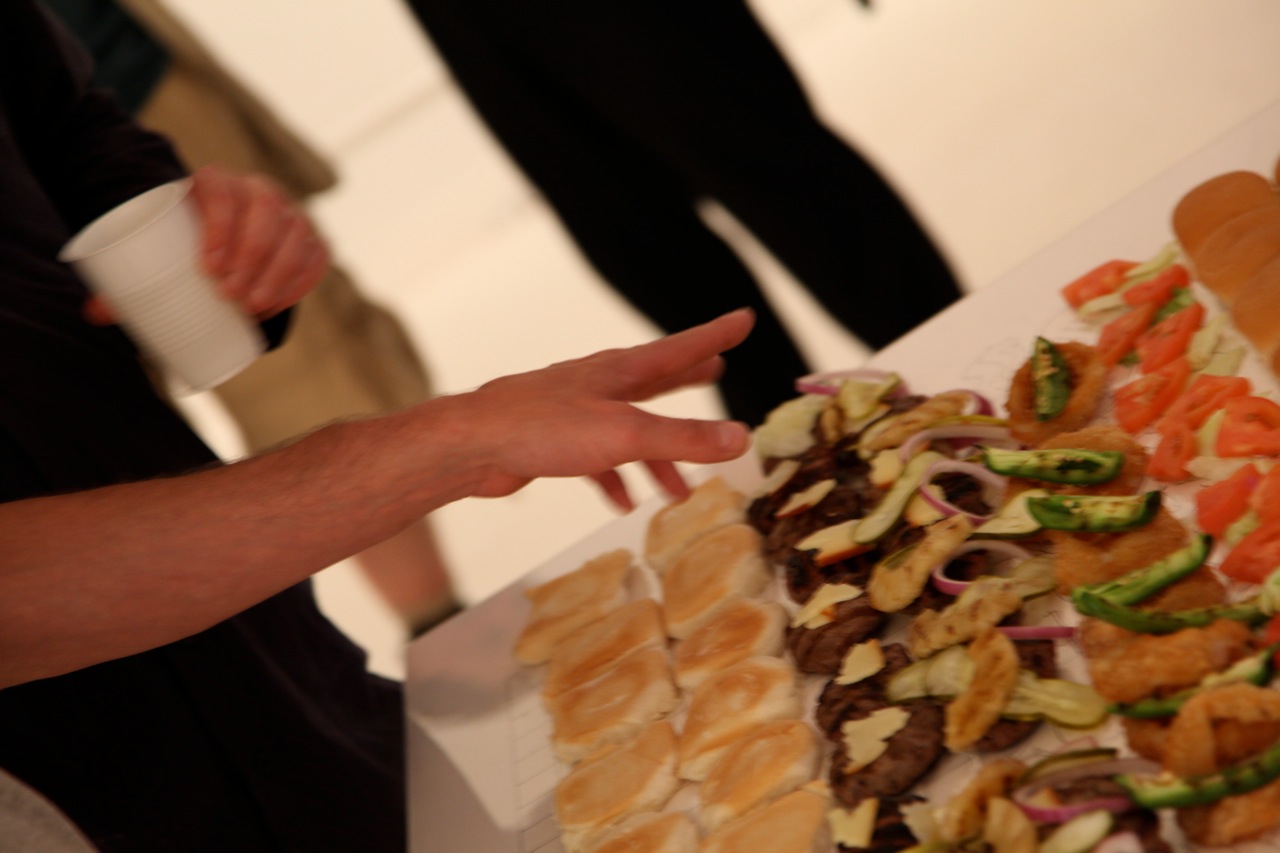
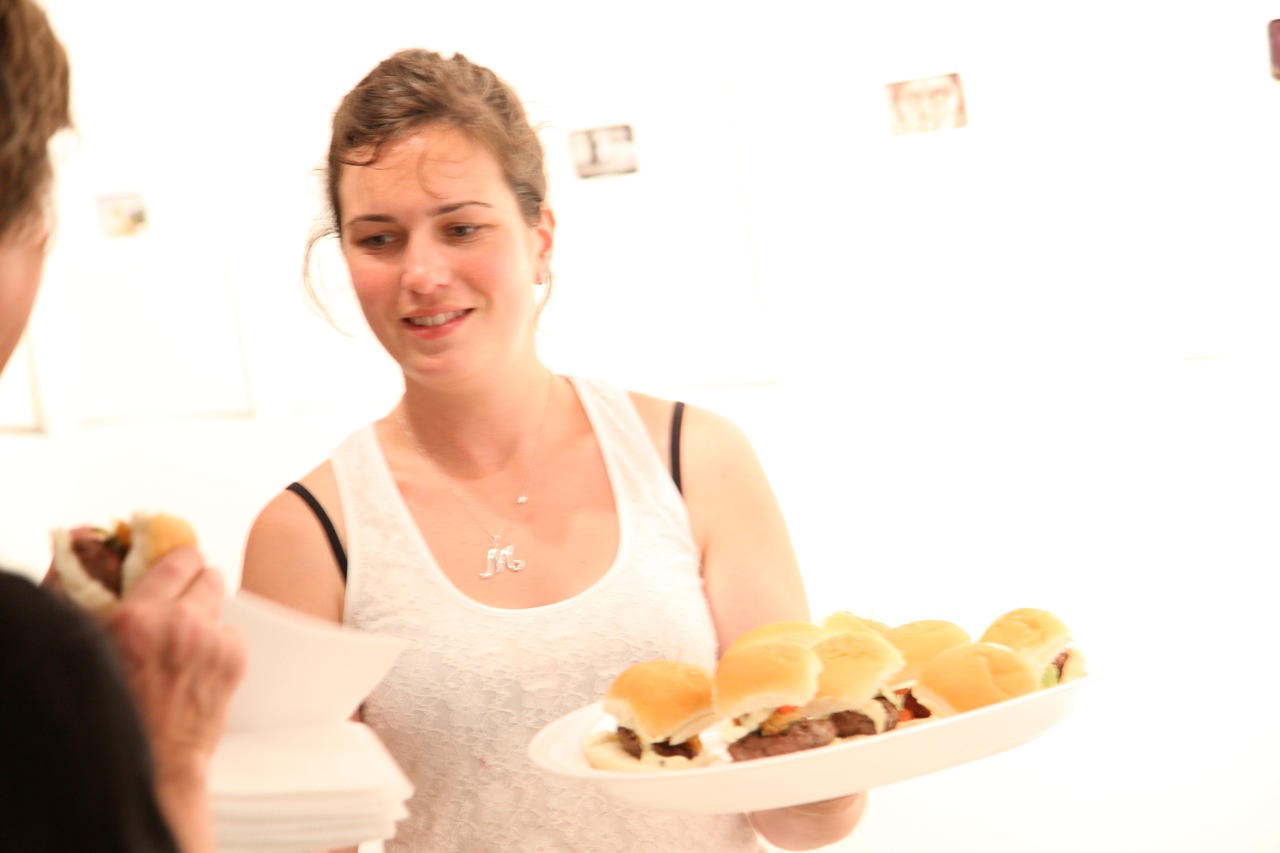
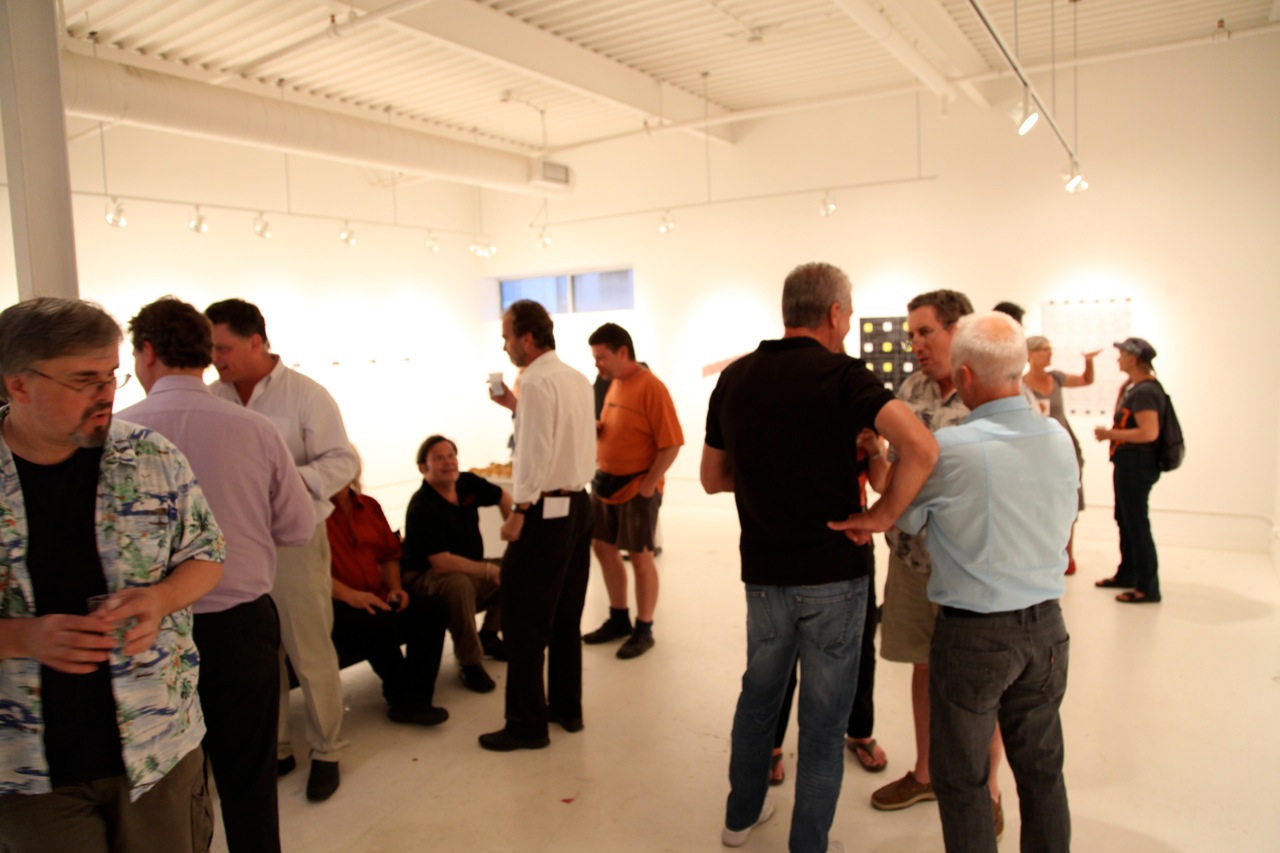
  • Steve Rockwell:“Making Mince Meat Out of dArt Magazine”

    Steve Rockwell  launching dArt burger

    Steve Rockwell and producer Ben Marshall launching dArt burger

    The dArt burger


    Photo by Terance Brouse

  • DENNIS BURTON / Word Magic – Toronto 1970’s

    By Ashley Johnson

    Six Questions, 1976, acrylic on canvas, 60 x 72 inches. Courtesy of Christopher Cutts Gallery

    An exhibition in conjunction with THIS IS PARADISE, Mocca, 2011
    Christopher Cutts Gallery,
    June 25 – August 31, 2011

    A sign of cultural maturity in developed societies is the wholehearted support and celebration of its artists. Their contribution is recognized as ‘cultural capital’, to be nurtured and exported, whether as art objects or social ideas. Value is attached and upheld by institutions that generate knowledge and shows about that product. A case in point is the current Abstract Expressionist exhibition at the AGO, orchestrated by MOMA (NY).

    THIS IS PARADISE seeks to re-present the 80’s art scene in Queen Street West and is linked to Dennis Burton’s show, ‘Word Magic’ at the Christopher Cutts Gallery, because Burton taught some of the artists in the 60’s and 70’s at The New School of Art and Art’s Sake. That said, it’s an extremely tenuous connection artistically because the artists in THIS IS PARADISE represent mainly figuration, exemplified by the group Chromazone, whereas Burton’s art and teaching runs the gamut of modernism. A cursory glance at Burton’s extraordinary contribution both as an artist and as an educator makes one wonder why the institutional acknowledgement of these decades is so understated. The conjunction highlights the immaturity of this society.

    Alchemy, 1978, acrylic on canvas, 60 x 60 inches. Courtesy of Christopher Cutts Gallery

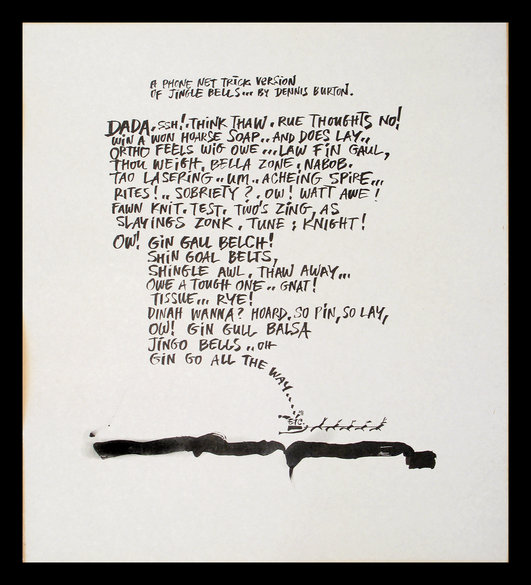
    Burton uses words like a mechanic greasing an axle, fluidly and with some abandon. They lose their form and meaning, becoming sound poems generating new meanings through chance juxtapositions. Duchamp is ‘in the room’. There is an innate beauty to Burton’s writing style, which oscillates between making shapes out of words to laboriously etching text into every available space on the page. He loves words sensuously.

    Jingle bells circa 1965, on paper, 18 x 16 inches
    Courtesy of Christopher Cutts Gallery

    There are some very absorbing framed texts in which Burton answers questions put by Rae Johnson and Brian Burnett about his experiences after graduating from OCA. It’s astounding to learn that the fine-arts program was abandoned by OCA in 1956 in favour of design elements. This galvanized Burton and his colleagues in 1965 to begin teaching art at The New School of Art and later Art’s Sake. There is something heroic in Burton’s efforts to survive monetarily and still teach students to become practicing artists. He is apparently remembered for his erudite lectures that synthesized knowledge from all spheres. Uniquely, his colleagues included artists actively working at their profession like Gordon Rayner, Robert Markle and others who all achieved some local notoriety. The schools sound like hotbeds of creativity and fun, with the Artist’s Jazz Band performing alongside theatre events. There are taverns like the Cameron House that became cultural meeting places. The roles of galleries such as Av Isaacs and Dorothy Cameron are mentioned. Censorship rears its head when police confiscate works and the artists go on trial but charges are later dismissed. In this period Burton made erotic images of women in a series called Garterbeltmania. They seem quite inoffensive and rather beautiful now.

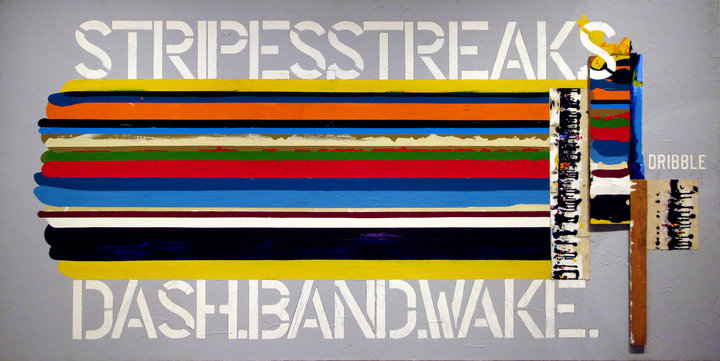
    Stripe Streak, 1977, acrylic on canvas, 49 x 98 inches. Courtesy of Christopher Cutts Gallery

    The paintings in this show remind me of Robert Rauschenberg and Jasper Johns’ work except Burton’s are more text based. They share an anomalous position in my mind as not quite ‘Pop Art’ yet vital in their Dadaistic ‘clawing back’ meaning from the excesses of Abstract Expressionist theory. Burton’s words have a humanity that reaches out, as in his painting Six Questions, which ends in an expression of love for … perhaps the viewer. In Stripe Streak he plays with meaning and action ironically. The self-importance of post painterly abstraction is gently and humorously debunked.

    Glancing at Burton’s timeline on the ccca.ca website, one is left wishing to see a more comprehensive retrospective of the era and his art. It would be a pity if this history just lapses into obscurity. Fifty-odd years have already passed so it’s about time!

  • The Bureau Of Doing Something About It


    July 20 – July 31, 2011
    Opening reception (by invitation): Friday, July 22, 6 – 9pm
    Closing party (by invitation): Thursday, July 28, 6 – 9pm
    Propeller Centre for Visual Arts
    984 Queen St. W.
    T:416 504 7142
    www.propellerctr.com
    rejected@torontorejects.com
    Hours: Fri – Sat 12 – 6, Sun 12-5pm

    Last year, the Toronto Complaints Choir, produced as part of the 2010-2011 World Stage season at Harbourfront Centre, collected over 1000 grievances, gripes, and annoyances from people across the city. The choir transformed these troubles into a siren song for the disenchanted. For twelve days in July, Bruce Mau Design (BMD) will work to do something about it.

    Our pop-up studio, working in real-time in the Propeller Centre for the Visual Arts, will design solutions in response to the complaints. A book of these ideas will be simultaneously designed, and then given away throughout this city we love.

    BMD’s Bureau of Doing Something About It is being led by studio designers Amanda Happé, Chris Braden, Kar Yan Cheung, Michal Dudek, and Paul Kawai.

  • Through The Lens. A Photographic Journey with Vincenzo Pietropaolo

    By Phil Anderson

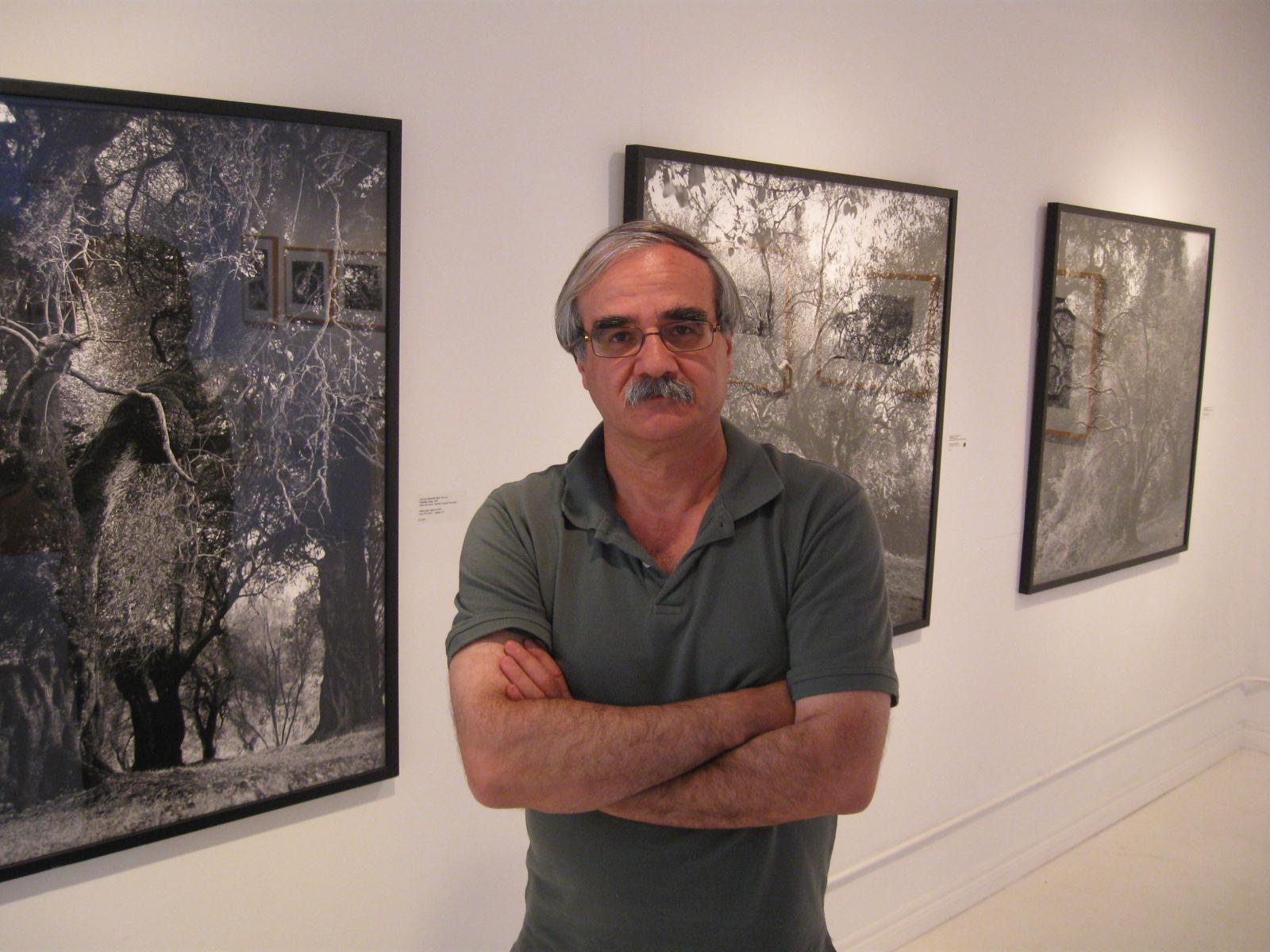
     Vincenzo Pietropaolo. Photo:Phil Anderson

     Upon meeting with documentary photographer , Vincenzo Pietropaolo at Toronto‘s De Luca Fine Art/Gallery, on Queen St. West, he explained of how he captured images of the Italian community as a young boy, an immigrant child. The camera allowed him access to another world. As a young man he played pool in a then local pool hall which is now part of a trendier world for visitors to the neighbourhood.

        His art practice has evolved into many photographic series and eight photographic books such as Celebration of Resistance (1999), Harvest Pilgrims (2OO9), Making Home in Havana (2OO2) and Not Paved With Gold(2OO6) as well many writings and essays.

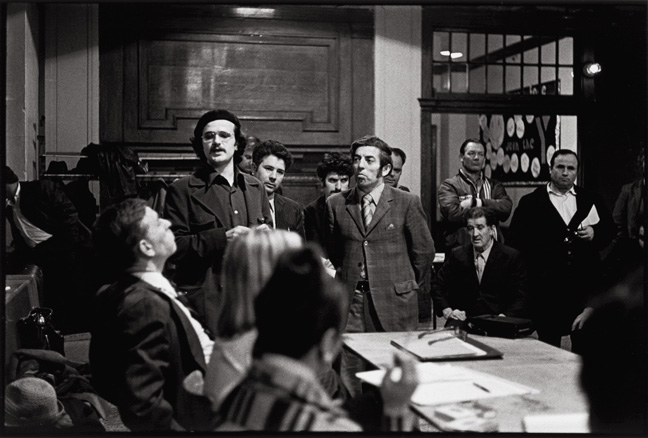
               Commmunity meeting with government officials  from Not Paved with Gold: Italian-Canadian immigrants in the 1970′ ©Vincenzo Pietropaolo

    Photographs from the Not Paved with Gold series, explained Pietropaolo, exemplified the disillusion many new Italian immigrants felt arriving in Canada expecting more opportunities than existed.

           Pietropaolo‘s latest book,

    Invisible No More (2O1O)

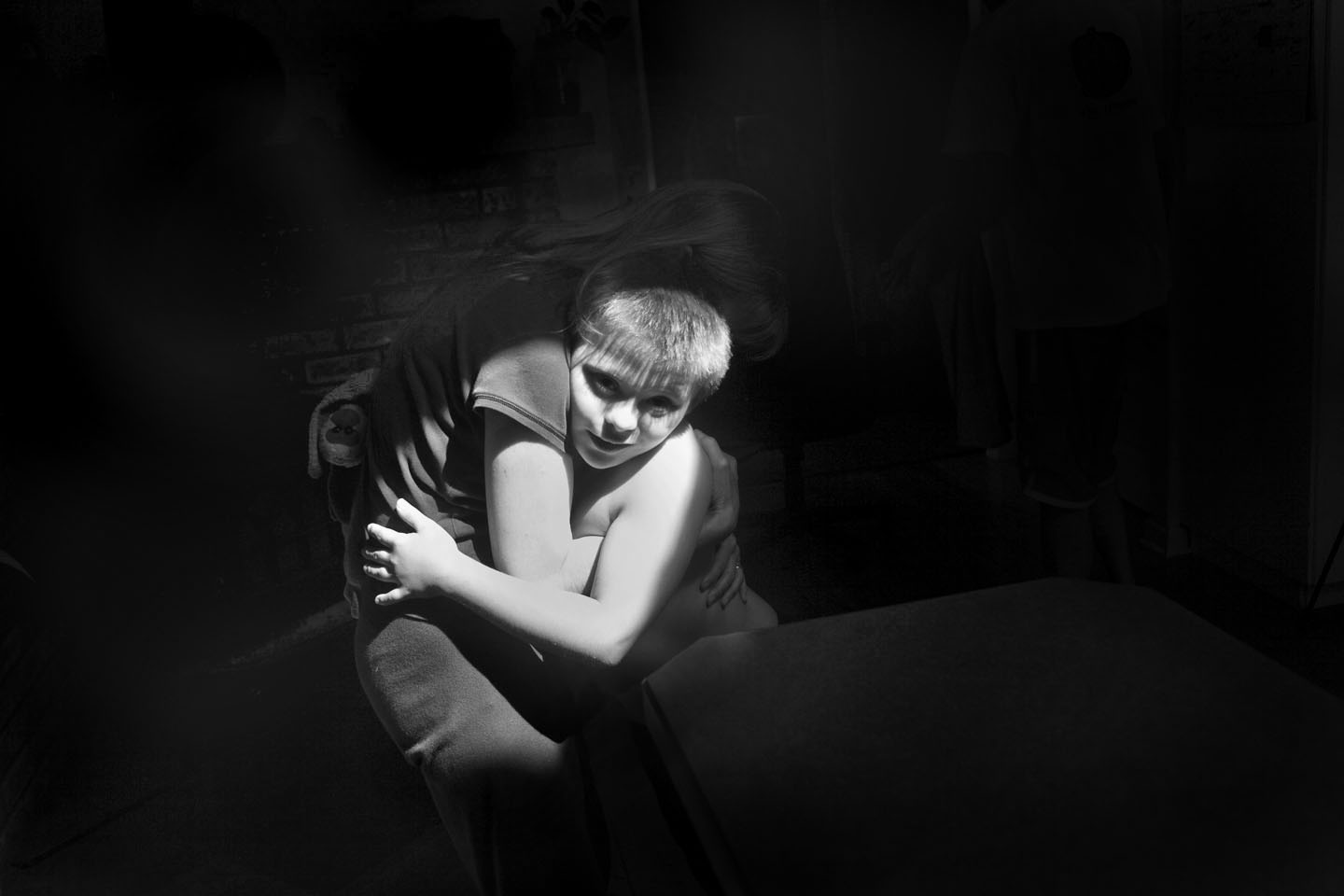
    , is an exploration into the lives of Canadians with intellectual disabilities and their families. Like most of his photographic work it has a social commentary that gives us all a better understanding of his subject matter and tells a poignant story with pictures. All Pietropaolo‘s portraits are engaging and immerse the viewer into the world of the subject. Pietropaolo successfully takes the viewer with him into these new worlds.

     “David in his mother’s arms”,  from the book Invisible No More: A  Photographic Chronicle of the Lives of People with Intellectual Disabilties. ©Vincenzo Pietropaolo

         Pietropaolo’s exhibit at De Luca Gallery (June 3 – July 2) was just coming to an end and it had encapsulated much of his early work from the 1970‘s documenting, the Toronto Italian community, immigrant farm and factory workers in Toronto and workers from across Canada. One of his most memorable experiences as a photographer was documenting workers across Canada as part of a commissioned project by the Canadian Auto Workers. He was allowed access to over 100 factories and workplaces across the country. When asked how workers felt about being photographed he said most were elated and asked what they should do. He asked them to just go about their work as usual. Some of the workplaces also thought, “why didn’t we think of creating a book commemorating our workers”, explained Pietropaolo.

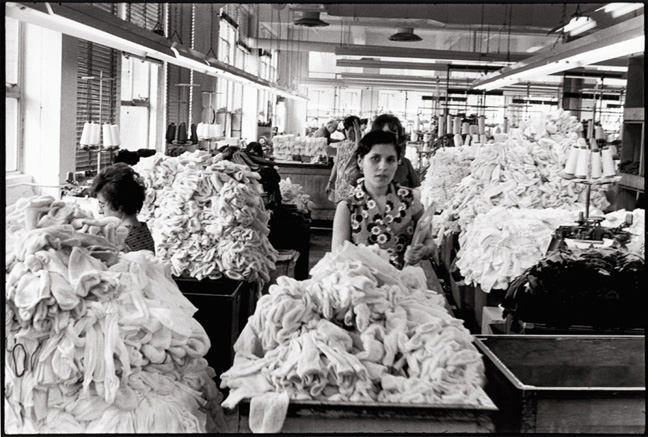
    Workers in a sock factory in Toronto’s garment district. From Not Paved with Gold: Italian-Canadian Immigrants in the 1970s ©Vincenzo Pietropaolo
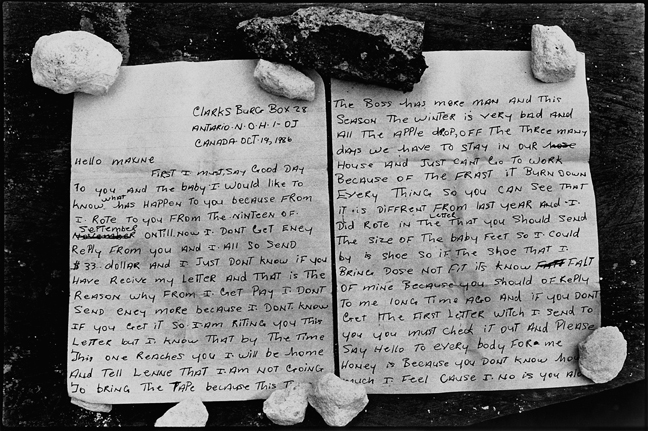
     He said while today we talk about eating “local“ produce consumers don’t realize how many farms use migrant workers that leave their families for 3-6months of the year in order to support them. One photographic image in the exhibition captures this misery well. It is a letter written to a family in Jamaica from an migrant worker in Ontario.

              Tony Peart’s letter to his wife, from Harvest Pilgrims: Mexican and Caribbean Migrant Farm Workers in Canada. ©Vincenzo Pietropaolo

     All of the works in the De Luca Fine Art/Gallery exhibit were black and white silver gelatin prints. Pietropaolo has embraced digital photography as most professional photographers have partly because of the demands of the profession. A little of the old magic has disappeared with the new technology but it has new advantages.

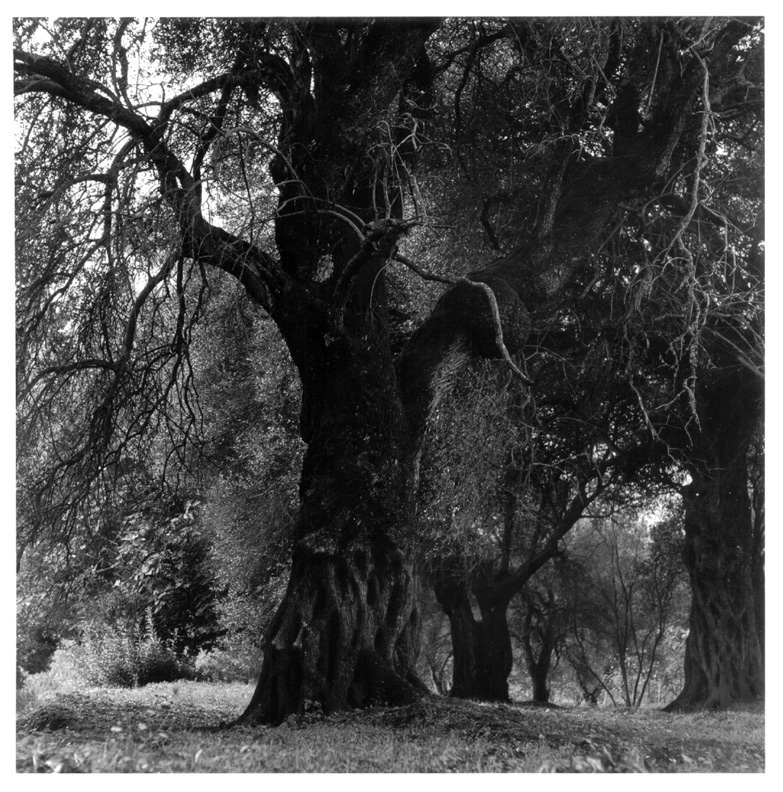
     Ancient Monolith (olive tree #1), Calabria, Italy, 1979. ©Vincenzo Pietropaolo

    Pietropaolo is also in a current exhibition as part of the Venice Biennale – Padiglione Italia the 54 th International Art Exhibition In Honour of the 150th Anniversary of the Unification of Italy curated by Vittorio Sgarbi at the Istituto Italiano Di Cultura  (June 6 – November 27, 2011). The exhibition includes artist Tony Calzetta and mixed media artist, Francesca Vivenza as well as Vincenzo Pietropaolo. One can look forward to seeing more works by Pietropaolo and getting a further glimpse into the world as he captures it with images.

  • GEORGE S. ZIMBEL: Photographs of Children

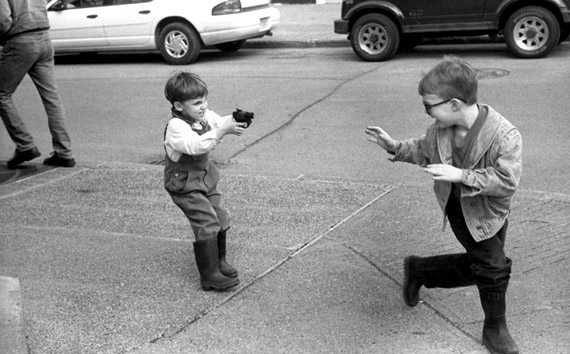
    Incident on rue Roy, Montréal, 1966Copyright:© George S. Zimbel / Courtesy of Stephen Bulger Gallery

    July 21 – September 17, 2011
    Opening: Thursday, July 21, 5-9pm
    Artist Talk: Saturday, July 23, 2pm. RSVP as seating is limited.
    STEPHEN BULGER GALLERY
    1026 Queen Street West
    Toronto, Ontario M6J 1H6
    T: 416.504.0575
    E: info@bulgergallery.com
    www.bulgergallery.com

     “A lot goes into a finished documentary photograph: a very personal view of life, a knowledge of technique, and of course information. It is the information that grabs the viewer, but it is the photographer’s art that holds them” George S. Zimbel

     The gallery is pleased to present its second exhibition by the acclaimed photographer George S. Zimbel, which concentrates on his wonderful depictions of childhood taken over a period of seven decades.

     An alumnus of Columbia University, the Photo League and the Alexey Brodovitch Seminar, Zimbel (b. Woburn, Mass. 1929) honed his craft in New York City, working for national magazines (Look, The New York Times, Redbook, Parents, Architectural Forum, etc.). Parallel to assignments he was always at work on self – initiated projects. These included diverse subjects such as 1950s European photographs, readers from libraries to submarines, politics in the U.S. and Canada, Marilyn Monroe in The Seven Year Itch, and the ongoing chronicle of his family. For decades, Zimbel has displayed an uncanny ability to take quintessential photographs depicting our life and times.

     The Zimbels left the United States and operated Bona Fide Farm on Prince Edward Island from1971-1980. After moving to Montréal in 1980, Zimbel has been printing and exhibiting from his extensive archive and has had many solo exhibitions at galleries and museums around the world. In 2000, he was honoured with the largest photography exhibit ever shown at Institut Valencià d’Art Modern in Spain, accompanied by a major catalogue. In 2001, Zimbel was given the Lifetime Achievement Award of Canadian Photographers in Communications and was short listed for the Roloff  Beny Award for best Canadian photographic book. In 2004, Zimbel had a retrospective exhibition at Confederation Centre Museum and later that year he had a major presence in the Marilyn Monroe exhibition at the Brooklyn Museum. He was subsequently featured in the PBS American Master’s production “Marilyn Monroe: Still Life.” In 2005, Zimbel had a retrospective exhibition at the Canadian Embassy in Tokyo and the Owens Art Gallery at Mount Allison University followed by the publication of his book Bourbon Street New Orleans 1955. In 2006, he was inducted into the Royal Canadian Academy of Art.